
About this episode
The hosts trace classic car design history through Dick Teague’s work at AMC, including how he led styling and later moved into executive leadership. They also discuss how AMC handled model-year updates—often keeping changes minor without retooling the entire vehicle. The conversation then pivots to early automotive terminology, setting up a definitional question about the difference between a “horseless carriage” and a “car.”
Rose reveals the AMC exec who was a child actor, Emily dives into the first roadtrip with an internal combustion engine.
Recorded @iapdx
Recorded & mixed by Emdognightmare & Queen of the Vans
Editor: Emdognightmare
Production & research Queen of the Vans & Emdognightmare
Find us: Car Krush
Stay updated w/ our newsletter
Hugs, thank you & high fives to Greg Meleney for the killer tunez!

AMC Gremlin
"yeah, I mean, that goes on, that goes on into the Gremlin and the Pacer and the Hornet. I mean, he's, he's the man. He's, like, the guy calling the shots."
The AMC Gremlin is a small 1970s car with a very unusual, compact shape. In the discussion, it’s brought up as one of the cars that came out of that AMC design era.
The AMC Gremlin is a compact, quirky 1970s hatchback known for its distinctive “short-deck” proportions. The hosts mention it as part of the design legacy they attribute to Dick Teague’s influence at AMC.
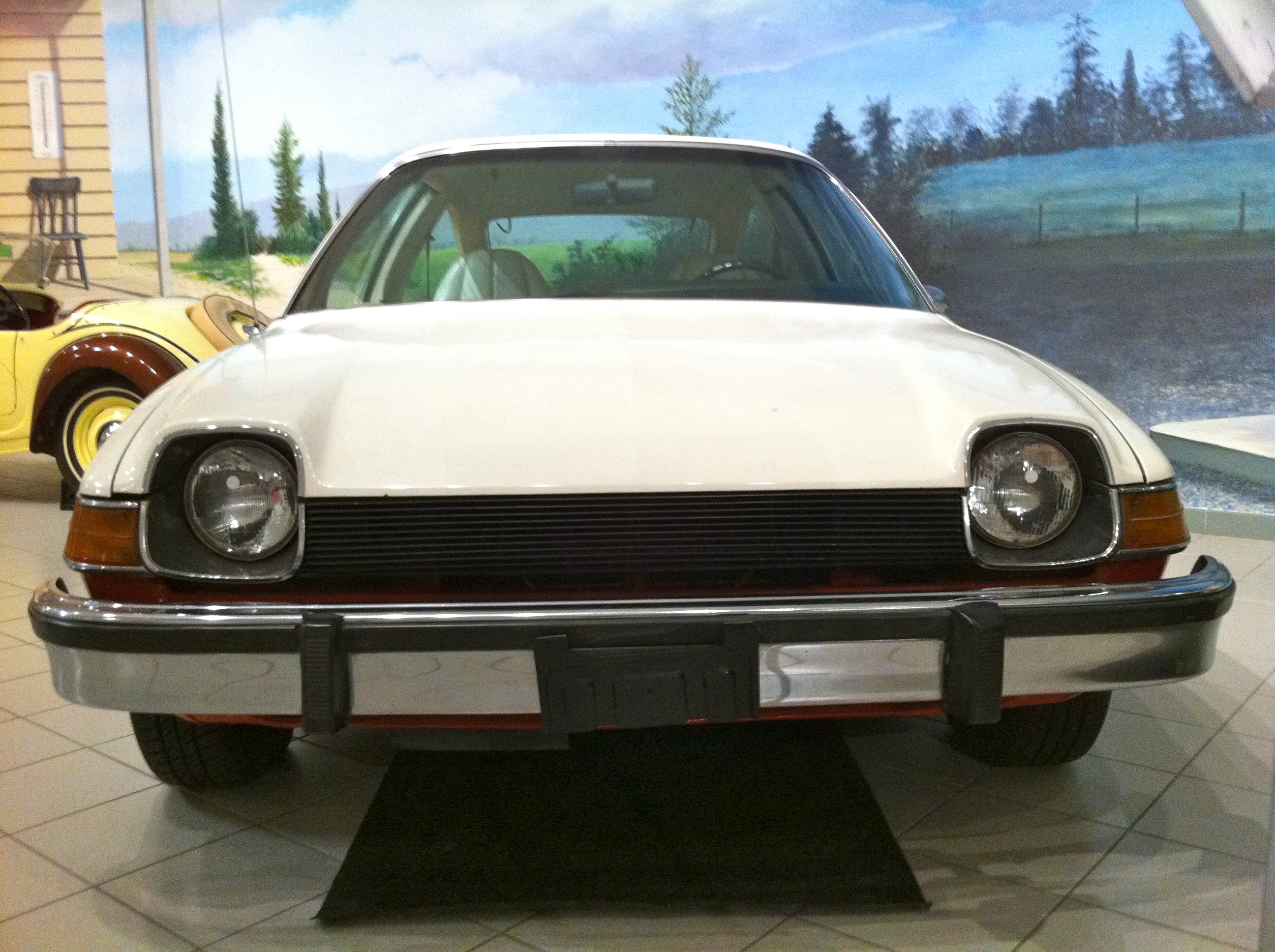
AMC Pacer
"yeah, I mean, that goes on, that goes on into the Gremlin and the Pacer and the Hornet. I mean, he's, he's the man. He's, like, the guy calling the shots."
The AMC Pacer is a 1970s AMC car with a very distinctive, boxy look. The hosts mention it as part of the same design lineage they’re talking about.
The AMC Pacer is a 1970s AMC hatchback famous for its unusual styling and very upright, spacey cabin packaging. It’s referenced here as another example of the AMC design direction associated with Dick Teague.

AMC Hornet
"yeah, I mean, that goes on, that goes on into the Gremlin and the Pacer and the Hornet. I mean, he's, he's the man. He's, like, the guy calling the shots."
The AMC Hornet is a 1970s compact car from AMC. It’s mentioned here as part of the same set of cars that came out of that design period.
The AMC Hornet is a 1970s AMC compact that became known for being a practical base for performance variants. The hosts list it alongside the Gremlin and Pacer to describe the broader AMC design era they credit to Teague.
retooling the whole car
"So, like, year-to-year changes that were really minor without retooling the whole car and stuff. So, uh, there is, though, there is their Cavalier where the front fender matches the rear quarter"
“Retooling” is what factories do when they need new equipment to build a redesigned car. The point here is that the changes between model years were small enough that they didn’t have to overhaul the entire production setup.
In auto manufacturing, “retooling” means changing or replacing production tooling (like stamping dies and assembly fixtures) to build a new design. The hosts say AMC made year-to-year changes that were minor without retooling the whole car, implying updates were more cosmetic or localized.
rear quarter
"So, uh, there is, though, there is their Cavalier where the front fender matches the rear quarter, and so it sort of, like, looks like a car that's going two different directions"
The rear quarter panel is the big body panel behind the rear wheel. They’re talking about how the shape/fit between panels can affect how the whole car looks.
The rear quarter panel (often shortened to “quarter”) is the large body section behind the rear wheel and extending toward the trunk. The hosts use it to describe how the front fender and rear quarter alignment can make a car look like it has mismatched styling.
front fender
"So, uh, there is, though, there is their Cavalier where the front fender matches the rear quarter, and so it sort of, like, looks like a car that's going two different directions"
The front fender is the outer panel over the front wheel. It’s part of the car’s body shape, and in this discussion they’re comparing how different panels line up.
A front fender is the outer body panel above the front wheel that helps define the car’s shape and protects the wheel area from road debris. Here it’s used in a styling/fitment comparison with the rear quarter panel.
horseless carriage
"So it was Bertha Benz. She was out there doing it, and she wrote a book... My question is, what is the difference between a horseless carriage and a car? I thought"
“Horseless carriage” is an old-fashioned way of saying “early car,” from the time people were still comparing it to horse-drawn vehicles. They’re about to ask what the difference is between that term and what we call a car today.
“Horseless carriage” is a historical term for early automobiles, used before “car” became the common word. The hosts are setting up a question about what makes an early vehicle count as a “car” versus the older, transitional terminology.
Request an Explanation
Heard something you'd like explained? We'll add it to this episode.
Sign in to request explanations for terms you heard.
Want to learn more?
Browse our glossary for plain-English explanations of automotive terms, jargon, and concepts.
Help improve this episode
See something that's not quite right? Our annotations are AI-generated and can sometimes miss the mark. Click the flag icon on any annotation to suggest a correction.