
About this episode
The hosts trace early auto history and the language around it, moving from carriages to “cars” and the rise of the Model T. They also break down how early designs borrowed from bicycle tech, pointing to Ford’s 1896 Quadricycle. The conversation gets specific with period engineering details like the “coiled tube radiator” layout on an ’03 Cadillac, then pivots to finishing methods, quoting an old description of japanning ingredients.
Emily learns about horseless carriages, Rose explains the process of japanning.
Recorded @iapdx
Recorded & mixed by Emdognightmare & Queen of the Vans
Editor: Emdognightmare
Production & research Queen of the Vans & Emdognightmare
Find us: Car Krush
Stay updated w/ our newsletter
Hugs, thank you & high fives to Greg Meleney for the killer tunez!
horseless carriages
"Emily BB26: [4.0s] in the late 1800s, the horseless carriages were a j- the transition between a carriage and a car. Uh, and many were designed like carriages, so they had, like, large wheels."
“Horseless carriages” means early cars that were basically trying to replace horse-drawn carriages. They often looked like carriages even though they didn’t use horses.
“Horseless carriages” is an early term for the first automobiles—vehicles meant to replace horse-drawn carriages. The key idea is the transition period where the new technology was still styled and sized like carriage travel.
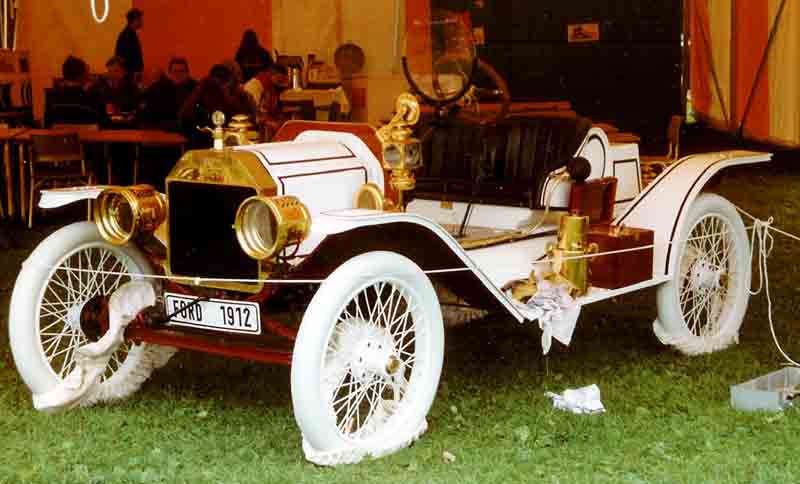
Ford Model T
"Emily BB26: Well, the answer to my question is it's a gray area. Yeah, it is. [10.0s] Rose BB26: ... “Century of Style,” ... [6.0s] Emily BB26: So car became a widely used term in the early 1900s, especially after the advent of the Model T Emily BB26: karros."
The Ford Model T was one of the first cars that many regular people could afford. It helped make cars common, not just a novelty.
The Ford Model T was a landmark early mass-market car that helped popularize automobiles in the early 1900s. The hosts connect it to the era when “car” became a widely used term, reflecting how quickly cars entered everyday life.

1896 Quadricycle
"Rose BB26: Still others, including Henry Ford, borrowed bicycle technology. Ford's first self-propelled motor car, the 1896 Quadricycle, was basically a four-wheeled bike, just as the earliest German Benz and French De Dion-Bouton had been motorized tricycles."
The 1896 Quadricycle was one of Ford’s earliest attempts at a self-propelled vehicle. The idea was close to a bicycle, but with a motor—an early step toward real cars.
The 1896 Quadricycle is an early Ford self-propelled vehicle that the hosts describe as essentially a four-wheeled bicycle concept. It’s notable because it shows how early car designs borrowed familiar bicycle technology before dedicated automotive engineering became standard.

Oldsmobile Curved Dash
"Emily BB26: ...clamor for inexpensive cars like the Curved Dash Olds and the Model T Ford. The Curved Dash Old is a big one. That's a fucking big one."
The Curved Dash Olds was an early Oldsmobile that lots of people wanted because it was relatively affordable. It also had a recognizable look, including a short front end.
The Curved Dash Olds (Oldsmobile) is highlighted as an early, popular inexpensive car. The hosts emphasize its distinctive styling—especially the short front—which helped it stand out in the early mass-market era.

1901 Duryea
"Rose BB26: ...and the Duryea. The 1901 Duryea used a body style originally designed for carriages. Fish motif had a symbolic Christian significance."
The 1901 Duryea is an early car that started with a body design meant for horse carriages. It shows how early cars borrowed a lot from carriage design.
The 1901 Duryea is discussed as an early car that originally used a body style designed for horse-drawn carriages. That’s a key historical point: early automobiles often reused carriage coachwork before automotive-specific body design became common.
Japanning
"The average commercial Japan usually comprises the following ingredients: linseed or other oxidizing oil, gums or pitches, dryer, color, and solvent." I mean, so like I think this is kinda interesting. This is how the article starts."
Japanning is an old-school way of coating or finishing surfaces to make them look shiny and last longer. In this segment, it’s discussed as a paint/finish step used on early cars.
Japanning is a traditional finishing process used to create a glossy, durable surface on products—here, applied to automobile manufacturing. The hosts quote an old industry description of the ingredients and emphasize that it was considered important for appearance and “finish.”
linseed
"The average commercial Japan usually comprises the following ingredients: linseed or other oxidizing oil, gums or pitches, dryer, color, and solvent."
Linseed is a type of oil (from flax) that’s used in old paint/coating recipes. It helps the coating dry and harden into a protective layer.
Linseed (flaxseed oil) is an ingredient used in traditional coatings because it can oxidize and form a tougher film as it dries. In the quoted “Japanning” description, it’s part of the base chemistry for the finish.
solvent
"The average commercial Japan usually comprises the following ingredients: linseed or other oxidizing oil, gums or pitches, dryer, color, and solvent."
A solvent is a liquid that helps paint or coating mix and spread evenly. It usually evaporates as the finish dries.
A solvent is a liquid used to dissolve or thin materials so they can be applied as a coating. In the quoted “Japanning” recipe, solvent is part of the mixture that helps the finish be spread before it dries.
Request an Explanation
Heard something you'd like explained? We'll add it to this episode.
Sign in to request explanations for terms you heard.
Want to learn more?
Browse our glossary for plain-English explanations of automotive terms, jargon, and concepts.
Help improve this episode
See something that's not quite right? Our annotations are AI-generated and can sometimes miss the mark. Click the flag icon on any annotation to suggest a correction.