
About this episode
The hosts kick off with “mostly on our first impressions of the all-new redesigned 2027 Kia Telluride,” including pricing for their EX AWD test car and the biggest drivetrain shake-up: “So the 291 horsepower 3.8 liter V6 is gone.” They weigh comfort and ride quality against steering/vibration and low-speed drivability quirks, then dig into usability—physical controls vs touch, climate-screen frustration, and lane-centering behavior. The conversation closes by comparing the Telluride’s comeback odds against the Highlander, especially once the hybrid arrives.
The 2027 Kia Telluride gets a major redesign, but is it enough to keep this three-row SUV among the best in its class? On this week's episode, we discuss the Telluride's powertrain, styling, comfort, and biggest competitor. We also answer audience questions about navigation systems, satellite radio, and why manufacturers are charging for certain telematics software.
SHOW NOTES:
0:00 Intro
0:36 What's New on the 2027 Kia Telluride
02:29 What we love about the 2027 Kia Telluride
10:57 What we dislike about the Telluride
20:17 Ride Quality, Handling & Driving Dynamics
29:12 Safety Tech & Features Overview
33:20 Competitors, Buying Advice & Final Thoughts
36:06 Audience Question: Navigation, SiriusXM & App Subscriptions
LINKS:
Overview: 2027 Kia Telluride: https://www.consumerreports.org/cars/kia/telluride/2027/overview/?EXTKEY=YSOCIAL_YT
Test Results: 2026 Hyundai Palisade: https://www.consumerreports.org/cars/hyundai/palisade/2026/overview/?EXTKEY=YSOCIAL_YT
2026 Toyota Highlander: https://www.consumerreports.org/cars/toyota/highlander/2026/overview/?EXTKEY=YSOCIAL_YT
2026 Toyota Grand Highlander: https://www.consumerreports.org/cars/toyota/grand-highlander/2026/overview/?EXTKEY=YSOCIAL_YT
Best & Worst Infotainment Systems: https://www.consumerreports.org/infotainment-systems/screen-stars-in-car-infotainment-systems/?EXTKEY=YSOCIAL_YT
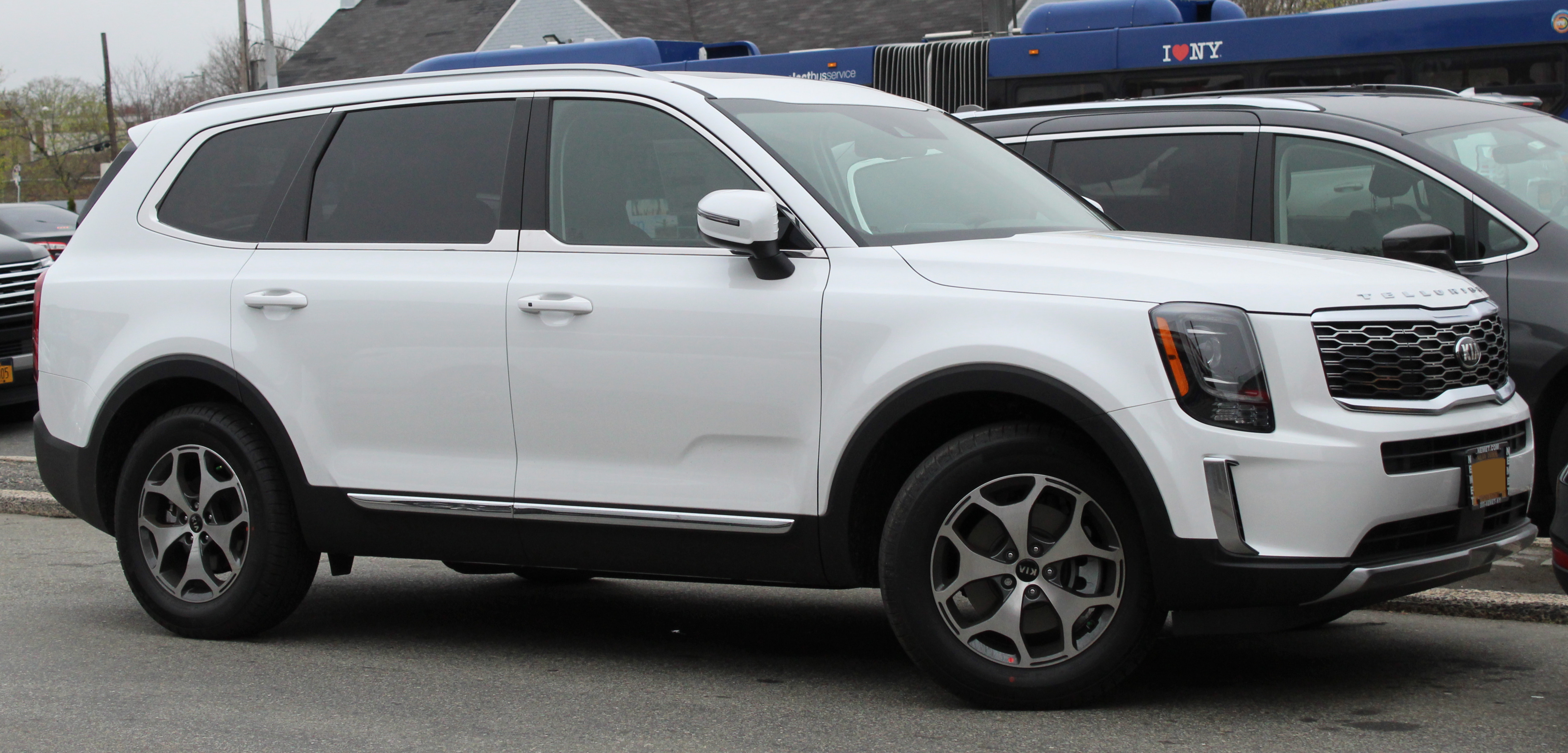
2027 Kia Telluride EX AWD
"mostly on our first impressions of the all-new redesigned 2027 Kia Telluride. And these impressions are going to be based on the the test vehicle that we purchased for our program. And that's an EX all-wheel drive with a out-the-door price of $48,080."
This is the 2027 Kia Telluride in the EX trim, with all-wheel drive. They’re talking about their first impressions based on the exact test car they bought, including what it cost “out the door.”
The 2027 Kia Telluride EX AWD is a midsize three-row SUV that’s getting a full redesign for the 2027 model year. In this episode, the hosts focus on a specific test configuration: the EX trim with all-wheel drive (AWD) and an out-the-door price of $48,080.
all-wheel drive (AWD)
"And these impressions are going to be based on the the test vehicle that we purchased for our program. And that's an EX all-wheel drive with a out-the-door price of $48,080."
All-wheel drive (AWD) sends power to all four wheels, improving traction when roads are slippery or uneven. In SUVs like the Telluride, AWD is often paired with a specific drivetrain setup and can affect how the vehicle feels in low-grip conditions.
out-the-door price
"And that's an EX all-wheel drive with a out-the-door price of $48,080."
“Out-the-door” price is the total cost you pay at the end—car price plus the extra fees and taxes. It’s the number you’d use to compare deals.
Out-the-door (OTD) price is the total amount you pay to take the car home, including the vehicle price plus taxes, registration, and dealer fees. It’s a more realistic number than the sticker price because it reflects the final checkout total.

2026 Hyundai Palisade
"it is, you know, shares its platform and some mechanical bits with the Hyundai Palisade, the 2026 Hyundai Palisade, which we've already tested both the regular Palisade and the Palisade Hybrid."
The Hyundai Palisade is a similar family SUV from Hyundai. They bring it up because the Telluride and Palisade are built on related hardware, so what Hyundai does can hint at what Kia will do.
The 2026 Hyundai Palisade is a closely related midsize three-row SUV that shares platform and some mechanical components with the Kia Telluride. The hosts mention it because the Telluride’s redesign uses shared underpinnings and similar engineering decisions.
platform
"It is larger and heavier than before. As with the original model, it is, you know, shares its platform and some mechanical bits with the Hyundai Palisade, the 2026 Hyundai Palisade..."
A platform is the shared “base design” a car is built on. If two cars share a platform, they’re built with similar underlying structure and parts.
A vehicle platform is the shared engineering foundation—things like the chassis architecture, mounting points, and major structural design. When two vehicles share a platform, they often also share some mechanical components and production efficiencies.
turbocharged four cylinder
"Powertrain-wise, there is some, they're switching it up. So the 291 horsepower 3.8 liter V6 is gone. Now it's a, Ryan's crying. Now there's a 2.5 liter turbocharged four cylinder with 274 horsepower with an 8-speed automatic."
A turbocharged four-cylinder is a smaller engine that uses a turbo to push extra air in. That helps it make more power than you’d expect from its size.
A turbocharged four-cylinder engine uses a turbocharger to force more air into the cylinders, allowing a smaller engine to make strong power. Compared with a naturally aspirated engine, turbocharging can improve torque and efficiency, especially at lower RPMs.
8-speed automatic
"Now there's a 2.5 liter turbocharged four cylinder with 274 horsepower with an 8-speed automatic. And for the first time, big news, the Telluride will be available as a hybrid."
An 8-speed automatic is the car’s automatic gearbox with eight different gear settings. It helps the engine stay in the right “power band” for smoother driving.
An 8-speed automatic transmission uses eight gear ratios to keep the engine operating in a more efficient or responsive range. More gears can help with smoother acceleration and better fuel economy, depending on the calibration.
hybrid
"And for the first time, big news, the Telluride will be available as a hybrid. And this was, this would be a 2.5 liter turbo four cylinder as well with electric drive, 6-speed automatic, not an 8-speed and a total system output of 329 horsepower."
A hybrid uses both a gas engine and an electric motor. It can save fuel by using electricity in certain situations and by recharging the battery when you slow down.
A hybrid powertrain combines an internal-combustion engine with an electric motor and battery. The goal is to improve efficiency and reduce fuel use by using electricity for some driving and by recovering energy during deceleration.
total system output
"And this was, this would be a 2.5 liter turbo four cylinder as well with electric drive, 6-speed automatic, not an 8-speed and a total system output of 329 horsepower."
Total system output is the combined power of the gas engine and the electric motor together. It’s the “overall” power number for the hybrid system.
Total system output is the combined power from all sources in a hybrid system—typically the engine plus the electric motor(s). It’s reported as one number so buyers can compare the overall strength of different powertrains on the same basis.
driving position
"And I've never, I don't think I've ever said this, like as the first thing that I like about a car, but the driving position, yeah. It's like the first thing that stuck out to me, because it's easy to get in and out of the access is pretty good."
Driving position is how you sit while driving—seat height, how far you reach the pedals, and how the steering wheel lines up. If it’s good, it’s easier to drive for a long time and easier to get in and out.
Driving position is how the seat, steering wheel, pedals, and overall cabin layout position your body while driving. A good driving position reduces fatigue and makes it easier to control the vehicle comfortably, especially in an SUV where ingress/egress (getting in and out) matters.
body control
"I do like the way it rides. I'm a little mixed on that because I think the bump absorption is good. It's a little bit loose when it comes to body control, but it's still pretty comfortable."
Body control is how well a vehicle manages its body movement over bumps and during cornering—think how much it leans, bounces, or feels “loose.” When body control is weak, the ride can feel less composed even if it’s still comfortable.
powertrain
"And then the powertrain, this is very mixed because I like the grunt that it has. But there are other things I don't like, and I'll save that for after."
Powertrain is the parts that make the car move and send that power to the wheels. That includes the engine and the drivetrain, and it can affect how smooth or rough the car feels.
Powertrain refers to the components that generate and deliver drive power—typically the engine, transmission, driveshafts, differential(s), and related systems. When someone says they’re “mixed on the powertrain,” they usually mean the engine/drivetrain feel, smoothness, or response.
chassis shutter
"I did feel some like vibrations coming through the steering wheel, but it wasn't too terrible. Like chassis shutter or more from the powertrain?"
Chassis shutter means the car’s body feels like it’s shaking or shuddering. It’s different from a rough engine feel—this is more like the whole structure is vibrating.
Chassis shutter is a vibration or shudder sensation that comes from the vehicle’s structure (the chassis/body) rather than from the engine or drivetrain. It’s often felt as a rhythmic shake under certain conditions and can point to mounting, alignment, or structural stiffness issues.
optional paint color
"So that color is, that is an optional paint color. It's called black jade green."
An optional paint color is a color you choose that usually costs extra. It’s not always included in the standard price of the car.
An optional paint color means the exterior color isn’t included in the base price and is typically offered as an extra-cost choice. In this segment, the hosts call out a specific paid color option by name.
Land Rover
"And the styling of the outside, people were comparing it to a Land Rover, which I thought was interesting."
Land Rover is a brand that makes luxury SUVs. They’re using it as a comparison to explain what the Kia’s styling looks like to them.
Land Rover is a luxury SUV brand known for distinctive, upscale styling and off-road heritage. The hosts use it as a reference point to describe how the Telluride’s exterior design reminds them of that design language.
Jeep
"I think it looks more like a Jeep with that grille, which is fine. ... It kind of has that Jeep-ish type grille."
Jeep is a car brand famous for SUVs with a particular look. They’re saying the Kia’s front grille and headlight shape remind them of Jeep styling.
Jeep is a brand strongly associated with rugged SUV design, including recognizable grille shapes and headlight proportions. The hosts specifically compare the Telluride’s grille and overall front-end look to a Jeep-like style.

Land Rover Range Rover
"...of panel. Yeah. I think maybe that's a little bit Range Rover-ish, right? The current Range Rover. I'm glad you..."
The Range Rover is a large, luxury SUV made by Land Rover. It’s designed to be comfortable on regular roads but still capable on rough or uneven terrain. People mention it a lot because it’s one of the most premium SUVs in the lineup.
The Land Rover Range Rover is a luxury SUV known for its upscale interior, off-road capability, and high-end comfort. It often comes up in discussions because it represents the brand’s flagship approach to blending daily drivability with serious terrain ability. In a podcast, it’s a common reference point when people talk about design cues, trim levels, or what “premium” looks like in an SUV.
head and tail lights
"...it has just kind of this kind of sleek sort of semi-futuristic shape and the head and tail lights are just kind of unique and really stand out."
Headlights are the lights at the front of the car, and taillights are at the back. The exact shapes matter because other drivers can recognize the car from far away.
Headlights are the front lights used for night driving, while taillights are the rear lights used for visibility and signaling. Their shape and design are often a major part of a vehicle’s identity and how it’s recognized at a distance.
grille
"And even that grille, like I can see a lot of people not liking the grille. It's really kind of in your face, but it also kind of, I feel like when you're coming up behind people on the highway..."
A grille is the front “face” area of a car—usually the patterned opening between the headlights. It can affect airflow, but it’s also a big part of how the car looks.
The grille is the front opening (often with a mesh pattern) that sits between the headlights. On modern cars, it’s mostly a styling element but also helps with airflow to cooling systems.
front bumper
"And then it's got that weird like bumper that is huge, right? The front bumper is like kind of large."
The front bumper is the body panel at the very front of the car designed to absorb minor impacts and protect key components. Its size and shape also strongly affect the vehicle’s overall “stance” and visual proportions.

Dodge Power
"...me of this is an old, old reference. Rick Simon's Dodge power wagon from Simon and Simon. It was an 80s private..."
The Dodge Power Wagon is a tough, older-style pickup truck made for heavy work and rough driving. It’s the kind of vehicle people remember because it shows up in older TV references. The podcast brings it up as an example tied to that “Simon and Simon” mention.
The Dodge Power Wagon is a classic heavy-duty pickup known for its rugged, work-oriented design and off-road capability. It’s especially notable in pop culture because it has been referenced through media like “Simon and Simon,” which the podcast is alluding to. That’s why it comes up: it’s a recognizable example of an older, tough truck identity.
bump absorption
"It definitely is very comfortable and really definitely more comfortable, better bump absorption than the last Telluride."
Bump absorption is how smoothly the car soaks up bumps in the road. If it’s good, you feel less bouncing and jostling when you hit rough pavement.
Bump absorption is how effectively a vehicle’s suspension reduces the shock from road irregularities like potholes and speed bumps. Better bump absorption usually means less harshness and less jarring movement for passengers.
Kia Palisade
"And I honestly think better than the Palisade as well. From a bump absorption standpoint, not necessarily body control."
The Kia Palisade is another Kia family SUV that’s close in size to the Telluride. They mention it because they’re comparing which one feels smoother over bumps.
The Kia Palisade is Kia’s similarly sized three-row SUV, often compared directly with the Telluride. Here it’s used as a benchmark for ride comfort, specifically bump absorption, meaning how well the suspension smooths out impacts.
center console intrusion
"Love the lack of center console intrusion. You know, that's one of my pet peeves, is my right knee."
Center console intrusion means the middle part between the seats takes up too much space. If it intrudes, it can crowd your knees; if it doesn’t, you feel more comfortable.
Center console intrusion refers to how much the center console (the area between the front seats) takes up space and interferes with leg room. Less intrusion can make it easier to sit comfortably—especially for the driver’s right knee area.
headroom
"in terms of plenty of headroom, lots of space and adjustability."
Headroom is how much space you have above your head. More headroom usually means you won’t feel cramped in the back seat.
Headroom is the vertical space between a person’s head and the roof or overhead structure. In SUVs, headroom strongly affects comfort for taller passengers, especially in the second row.
recline adjustability
"lots of space and adjustability. You can, you know, it has really long range moving it forward and backwards and really long recline adjustability."
Recline adjustability is how much you can lean the seatback backward. If it adjusts a lot, it’s easier to find a comfortable position for your height and seating preference.
Recline adjustability is how far a seatback can be tilted backward from upright. More recline adjustment lets different body types find a comfortable driving or riding position, and it can also affect perceived headroom and leg comfort.
under leg support
"And also for me anyway, really good under leg support. You know, it's high."
Under-leg support is how well the seat cushion supports your legs. If it’s good, your legs feel less tired during longer rides.
Under-leg support refers to how well the seat cushion and seat height support the underside of your thighs and legs. Good under-leg support can reduce fatigue on longer trips and improve comfort for different leg lengths.
emergency flashers
"But for me, there are some, you know, normalish controls that I like, like the emergency flashers button. Now that's a hang up of mine."
Emergency flashers are the hazard lights that blink all the turn signals together. They’re used to warn other drivers when you’re stopped or something’s wrong.
Emergency flashers (hazard lights) are the button that makes all turn-signal lights blink at the same time. Drivers use them to warn other road users when the car is stopped or in danger.
capacitive touch button
"it's large, it's physical, it's centrally located, meaning it's not a capacitive touch button. I'm a little lukewarm on the ignition button..."
A capacitive touch button is a control you press without a physical click; it detects touch through the user’s skin and the button’s electrical field. The speaker prefers physical, tactile buttons because they’re easier to hit quickly and confidently while driving.
climate controls
"But at least there's, and then there's the whole climate controls, right? Like there are physical climate controls... temperature, fan speed, and airflow mode..."
Climate controls are the dashboard systems used to manage cabin temperature and ventilation. In this segment, the hosts specifically discuss physical climate buttons for temperature, fan speed, and airflow mode.
center stack
"I can do with the physical buttons on the center stack and they show up in the main screen."
The center stack is the main cluster of controls and screens mounted in the middle of the dashboard. It often houses audio, climate, and drive-mode controls, and this speaker prefers using its physical buttons.
transmission
"in terms of the good grunt you talked about, and very smooth shifts... I thought the transmission was pretty responsive..."
The transmission is the gearbox that selects the appropriate gear ratio so the engine can deliver the right amount of power and speed. In this segment, the hosts judge how responsive and smooth the transmission feels during acceleration and passing.
downshift
"I thought the transmission was pretty responsive when you just kind of give it a little bit of nudge, you know, of the gas puddle, it does typically downshift when you want it to."
A downshift is when an automatic transmission changes to a lower gear to increase engine speed and provide more acceleration. The speaker describes the transmission responding by downshifting when the driver “nudges” the accelerator.
sport mode
"I had to put it in sport mode to actually like feel comfortable like passing on the highway. So I just felt like it was a little bit underpowered"
Sport mode is a button that makes the car respond more quickly when you press the gas. They used it because it helped the SUV feel better for passing.
Sport mode is a driving setting that changes how the vehicle responds—often by sharpening throttle mapping, holding lower gears longer, and sometimes adjusting shift behavior. Here, it’s used to make passing feel easier, implying the default calibration is less aggressive.
V6
"Was it V8? V6. V6 for you. V8. I was like, where did I miss that?"
A V6 is an engine with six cylinders. They’re comparing it to a V8, and the number of cylinders can change how much punch the car feels like it has when you try to pass.
A V6 is an engine with six cylinders arranged in a “V” shape. Compared with a V8, a V6 typically makes less peak power and torque for the same displacement class, which can affect how strongly it accelerates during passing—especially in a heavier SUV.
V8
"Was it V8? V6. V6 for you. V8. I was like, where did I miss that? Wow. That would be a fantastic Palisade."
A V8 is an engine with eight cylinders. People often expect a V8 to feel stronger when accelerating or passing compared to a V6.
A V8 is an engine with eight cylinders arranged in a “V” configuration. In enthusiast discussions, V8s are often associated with stronger acceleration feel (more torque and power potential), so mentioning V8 vs V6 is a shorthand for why passing might feel better or worse.
lower rpms
"It hangs out in lower rpms a lot and that's lower rpms when it sounds is worse."
RPM is how fast the engine is spinning. At lower RPMs, some engines feel and sound rougher, with more vibration.
“RPM” (revolutions per minute) is how fast the engine spins. When an engine is operating at lower RPMs, it can produce more noticeable vibration and a rougher-sounding character, especially if the engine is lugging or working harder than it should.
torque
"It said, sorry, it has that torque though. So it will lug and it will give you that sensation,"
Torque is the engine’s pulling force. More torque helps you move from a stop, but if the engine is asked to do that at very low RPMs, it can feel strained and sound rough.
Torque is the twisting force an engine produces, and it’s what helps the vehicle accelerate from low speeds. In this segment, the host says the engine has torque but can “lug,” meaning it may be forced to work at low RPMs where the sound and vibration become more noticeable.
lug
"It said, sorry, it has that torque though. So it will lug and it will give you that sensation,"
To “lug” an engine means it’s running at too-low RPM for the load, so it struggles to maintain smooth operation. That can create extra vibration, harshness, and an unpleasant sound until the transmission/engine speed rises again.
lift off
"But like if you lift off at, you know, get the motor out of the equation, it's quiet."
“Lift off” refers to easing off the accelerator pedal. The host is describing how the cabin is quiet when the engine is not driving the car (with the engine’s influence reduced), which helps isolate the engine noise as the main source of sound.
turbo four
"It has some presence. And then it's got this really kind of not great sounding turbo four."
A “turbo four” is a small 4-cylinder engine with a turbo. It can pull strongly at low speeds, but it may also sound different than you’d expect in a smooth, quiet SUV.
A “turbo four” is a turbocharged inline four-cylinder engine. Turbocharged small engines often make strong low-end torque, but they can also have a distinct intake/exhaust sound and character that some people find mismatched in a quiet, family-oriented SUV.
panoramic panel
"Yeah. So we have kind of a panoramic panel or seamless panel with the driver screen, what they call the climate display and then the center screen with all of like the infotainment features."
A panoramic panel is a wide screen area that looks like one big display. Here, it’s used to show the driver information, including climate settings, in a more “screen-like” dashboard layout.
A panoramic panel is a wide, continuous-looking display surface used to present information across a larger area of the dashboard. In this Telluride example, it’s part of the driver’s screen setup that combines the climate display and other information.
climate display
"So we have kind of a panoramic panel or seamless panel with the driver screen, what they call the climate display ... And it's made up of all these like thin white lines. And it's just not easy to use."
A climate display is the part of the dashboard screen that shows and lets you adjust the car’s heating and air conditioning. They don’t like it here because it’s tucked behind the steering wheel, so you have to look around more to change settings.
A climate display is the screen area dedicated to showing and controlling HVAC settings like temperature and fan speed. This segment criticizes the Telluride’s climate display because it’s positioned behind the steering wheel and requires more visual attention and hand movement than the driver would prefer.
infotainment
"So we have kind of a panoramic panel or seamless panel with the driver screen, what they call the climate display and then the center screen with all of like the infotainment features."
Infotainment is the car’s main screen system for things like music, maps, and phone features. They’re saying the Telluride has infotainment on the center screen, but the climate controls are shown somewhere else, which makes it harder to use while driving.
Infotainment is the in-car system that combines entertainment and information functions—typically things like audio, navigation, phone integration, and vehicle settings. In this segment, the hosts contrast the center screen’s infotainment with the climate display behind the steering wheel.
climate panel
"And I'm guessing the quickest thing is going to be just using that weird climate panel. And I don't know if people are going to be using the extra climate menu..."
The climate panel is where you control the car’s heating and air conditioning. If those controls are hard to find or take extra steps on the screen, it can pull your attention away from the road.
A climate panel is the set of controls used to manage cabin heating, ventilation, and air conditioning (HVAC). When climate functions are buried in menus or share screen space with other controls, it can increase driver distraction compared with dedicated physical knobs/buttons.
touch bar
"And then they have a touch bar. So it's like touch capacitive below the screen. And it has the shortcuts that you see in a lot of KIAs and Hyundai's really nice shortcuts..."
A touch bar is like a strip on the dashboard that you tap instead of pressing a real button. Since it doesn’t feel like a normal button, it can be easier to hit the wrong thing unless you’re looking.
A touch bar is a narrow, touch-sensitive control strip—often placed near the driver—used to trigger shortcuts or menus. Because it lacks physical “click” feedback, it can be harder to use accurately without looking, increasing the chance of input mistakes.
rolling stop
"I did have some low speed hesitations, less from us, full stop, but more from a rolling stop."
A rolling stop is when you slow way down and move through without fully stopping. They’re saying the car hesitates more in that “creeping” moment than it does after a complete stop.
A rolling stop is when you slow down and creep through an intersection or stop sign without coming to a complete stop. The hosts say the Telluride’s powertrain feels more hesitant in this situation than when they do a full stop.
power surges
"if I'm pulling out onto sort of a busier secondary road and I get pretty hard... then it, the whole thing feels a little frenetic... power surges up and down a little bit and some, you know, bumpy upshifts"
Power surges are when the car’s acceleration feels uneven—like it jumps forward, then backs off, then jumps again. They’re saying it happens when they accelerate pretty firmly from a stop or slow roll.
Power surges are noticeable, uneven changes in delivered acceleration—where the car seems to lurch forward and then ease off repeatedly. The hosts describe this as the power “up and down” during harder-than-gentle throttle inputs, along with bumpy shifts.
bumpy upshifts
"power surges up and down a little bit and some, you know, bumpy upshifts and those kinds of things."
Bumpy upshifts are when the car changes into a higher gear and it feels jerky instead of smooth. They’re describing that as part of the uneven acceleration they felt.
Bumpy upshifts are harsh or jolting gear changes when the transmission moves to a higher gear. The hosts link this to the “frenetic” feeling they notice during stronger throttle inputs.
heaves up
"if you... go over like an undulation and the whole car, like heaves up a little bit. How does it deal with that after the fact?"
“Heaves up” means the car lifts up noticeably when the road changes shape. It’s like when you go over a dip or hump and the whole body rises. If it happens too much, passengers can feel more bouncing or floating.
“Heaves up” describes a vertical body motion where the car rises noticeably over an undulation. The hosts use it to illustrate how the suspension responds not just to a single bump, but to longer road features that move the whole car up and down. Excessive heave can contribute to a floaty feel in the cabin.
underdamped
"they get good bump absorption, but they make the car so soft. It feels a little under, underdamped in the sense that now the rest of the car is floaty"
“Underdamped” means the suspension doesn’t slow the bouncing down enough. So after you hit a bump, the car keeps moving a bit instead of settling right away. That’s why the ride can feel floaty or bouncy.
“Underdamped” describes a suspension that doesn’t use enough damping to control oscillations after a bump. Instead of quickly returning to level, the car continues to bounce or float, which the hosts link to a “soft” feel. It’s essentially the difference between absorbing the hit and then settling quickly.
secondary ride
"primary ride, secondary ride... So, like, you drive the old Telluride... So, so it's just not settling all the time. It doesn't settle as quickly as you would like to have seen."
“Secondary ride” is how the car behaves after the bump is over. Even if it absorbs the impact, the suspension can still keep bouncing for a moment. The hosts are saying this car doesn’t calm down quickly, so passengers may feel more motion afterward.
“Secondary ride” refers to what happens after the initial bump—how quickly the suspension settles and stops the car from continuing to oscillate. The hosts say the Telluride feels underdamped, so it doesn’t settle as quickly as they’d like. That can translate to more lingering motion in the cabin, especially with multiple passengers.
primary ride
"This struggles with that a little bit... like we always joke, like primary ride, secondary ride, primary ride really, I think, like to the average consumer is bump absorption is more important."
“Primary ride” is how the suspension handles the first hit from a bump. It’s the part most people notice right away—whether the car feels like it soaks up the impact. The hosts say that matters more to most buyers than how the car behaves after the bump.
“Primary ride” is the suspension’s initial response to a bump—how well it absorbs the first impact. The hosts contrast it with later motion after the car has been disturbed, arguing that most consumers prioritize bump absorption because it’s what you notice immediately. In other words, primary ride is about the first impression over rough pavement.
pitching
"the body control is very, there's no head tossing, no pitching, or it's just very,"
“Pitching” is when the car tilts forward or backward over bumps. For example, the front might dip while the back rises (or vice versa). The hosts say the older Telluride had less of that, so it felt more stable.
“Pitching” is a rotational body motion where the car’s nose and rear move in opposite directions—like the front dipping or the rear lifting. The hosts mention “no head tossing, no pitching” as a sign of better body control, meaning the suspension keeps the cabin steadier over impacts. Less pitching generally improves perceived stability and comfort.
steering is vague
"This is a little bit, the steering is vague. There's not a lot of feedback."
When people say steering is “vague,” they mean the wheel doesn’t clearly communicate what the front tires are doing. It often feels like there’s less on-center feel and less feedback, so small steering inputs don’t translate into confident, predictable movement.
feedback
"This is a little bit, the steering is vague. There's not a lot of feedback."
Feedback is what you feel through the steering wheel that tells you how the car is responding. Better feedback usually makes the car feel easier to control.
In steering feel, “feedback” refers to the information the driver gets through the steering wheel about traction and vehicle response. More feedback typically makes the car feel more communicative and easier to place precisely in a turn.
throttle
"you can't do much with the throttle to kind of make a little minor adjustments. It's just not as responsive as the old Telluride."
The throttle is basically how you ask the engine for power. Here they mean the SUV doesn’t react as quickly or precisely when you press the pedal to fine-tune your speed.
The throttle is the driver’s input that controls how much engine power is requested. In this segment, they’re saying the newer Telluride is less responsive to throttle changes for “minor adjustments” while cornering.
shifter stock
"The shifter stock. Oh, the twist action. The action's fine. It's where it is."
The shifter stock is the gear lever itself. They’re saying where it’s located makes it uncomfortable for their leg and hard to see depending on how they sit.
The shifter stock is the physical lever/rod you move to select gears. This segment criticizes its placement and how it interacts with the driver’s leg position, affecting comfort and visibility.
twist action
"The shifter stock. Oh, the twist action. The action's fine. It's where it is."
Some gear shifters don’t just move side-to-side; they also twist. They’re saying the twist part feels okay, but the shifter’s position isn’t.
“Twist action” describes a shifter mechanism that requires twisting the lever (not just moving it straight) to select gears. The hosts say the twisting itself feels fine, but the overall shifter placement is the problem.
ignition start
"and then they put the ignition start on the inside. That's a little weird."
They’re talking about the push-button that starts the car. They don’t like where it’s placed because it can be hard to see from their driving position.
“Ignition start” here refers to the push-button start location and how it’s positioned relative to the driver. The hosts find it odd because, depending on seating position and steering wheel angle, it can be hard to see.
muscle memory
"You would get used to it, of course. Yeah. Muscle memory will kick in."
Muscle memory means your body learns a movement after doing it many times. They’re saying you’d probably get used to the button and shifter layout over time.
Muscle memory is the automatic, learned movement pattern your body performs after repeated practice. The hosts suggest you’d eventually reach the start button and shifter without thinking because you get used to their positions.

Hyundai Genesis
"...n, right? I mean, that's how a lot of Hyundai Kia Genesis used to be with, with the monostable center conso..."
Genesis is a line of cars made by Hyundai that focuses on a more upscale, luxury-style interior. The podcast is talking about how the inside layout is designed, including the center area where controls are located. It’s mentioned because the speaker is comparing that layout to other cars they’ve seen.
The Hyundai Genesis refers to the Genesis brand and its vehicles, which were built to compete in the luxury segment with a focus on comfort and feature content. In the podcast context, it’s mentioned in relation to interior design and layout—specifically how controls and consoles are arranged. That kind of discussion often comes up when people talk about ergonomics and how a cabin feels in daily use.
ACC, adaptive cruise control
"as along with the ACC, the adaptive cruise control speed readout. So that's a little bit annoying."
Adaptive cruise control is like regular cruise control, but it also watches the car in front of you. It can automatically slow down and speed up to keep a safe gap.
Adaptive cruise control (ACC) automatically maintains a set following distance from the car ahead by adjusting your speed. Instead of holding a constant speed like traditional cruise control, it can slow down and speed back up as traffic changes.

Ford Expedition
"...he driver screen. So we're talking about like the expedition, which I hate and I don't think anyone likes for ..."
The Ford Expedition is a big SUV made to carry more people and luggage. It’s often used for family trips because it has a lot of space. The podcast is bringing it up because the speaker doesn’t like it and thinks others may not either.
The Ford Expedition is a full-size SUV built for families and larger groups, with seating and cargo space meant for everyday use and road trips. It’s frequently discussed because it’s a common choice in the full-size SUV category and can be compared in terms of size, comfort, and driving feel. In the podcast, it’s mentioned in a more critical tone, likely tied to how it drives or how it fits the speaker’s preferences.
third row seat
"And that's what I'm calling an uncomfortable, but spacious third row seat. So like space is actually not bad."
The third row seat is the back-most row in a three-row SUV. It’s usually the tightest row, so headroom and legroom matter a lot for comfort.
A third row seat is the rearmost seating in a three-row SUV, typically intended for kids, occasional adult passengers, or short trips. Fit can vary a lot based on headroom, seat cushion shape, and how much space the second row leaves behind it.
Advanced Driver Assistance Systems (ADAS) standard equipment and impressions
"So as a resident, Advanced Driver Assistance Systems person, I would just like to go into a little bit about what systems are equipped as standard on the vehicle... And I feel like in the Telluride, I didn't get as much of that."
They talk about the car’s safety tech and what it’s like to use. The big takeaway is whether the lane-centering feature feels smooth or “jumpy.”
The hosts list the Telluride’s standard driver-assistance features and then share real-world impressions of how they behave. A key focus is lane-centering stability versus unwanted side-to-side motion.
blind spot warning
"So it comes standard with blind spot warning, AEB and Ford collision warning with pedestrian and cyclist detection, rear cross traffic warning..."
Blind spot warning is a safety feature that watches for cars you can’t see in your mirrors. It warns you when it’s risky to change lanes.
Blind spot warning uses sensors to detect vehicles in areas you can’t easily see in your mirrors. It alerts you when you’re about to change lanes, helping reduce side-swipe crashes.
AEB
"So it comes standard with blind spot warning, AEB and Ford collision warning with pedestrian and cyclist detection, rear cross traffic warning..."
AEB is a system that can automatically brake if the car thinks a crash is about to happen. It’s meant to prevent or lessen the impact if you don’t react quickly enough.
AEB (Autonomous Emergency Braking) detects an imminent collision and can automatically apply the brakes to reduce speed or avoid impact. It’s designed to help when the driver doesn’t react in time.
pedestrian and cyclist detection
"So it comes standard with blind spot warning, AEB and Ford collision warning with pedestrian and cyclist detection, rear cross traffic warning..."
This feature helps the car recognize people and bikes ahead. That way, the safety system can warn you or brake more appropriately than if it only looked for other cars.
Pedestrian and cyclist detection is a type of forward-collision sensing that identifies people and bicycles, not just cars. This enables more targeted warnings and braking when those road users are in the vehicle’s path.
rear cross traffic warning
"So it comes standard with blind spot warning, AEB and Ford collision warning with pedestrian and cyclist detection, rear cross traffic warning, rear occupant alert..."
Rear cross traffic warning alerts you to vehicles approaching from the sides when you’re reversing out of a parking spot. It’s meant to reduce accidents caused by limited rear visibility.
auto high beams
"..., rear occupant alert, auto high beams, lane keeping assist, lane departure warning, lane centering assistance..."
Auto high beams automatically turn your headlights up or down depending on what’s around you. It helps you see better while avoiding glare for other drivers.
Auto high beams automatically switch between high beams and low beams based on detected traffic and lighting conditions. The goal is to keep visibility high without blinding other drivers.
lane keeping assist
"..., auto high beams, lane keeping assist, lane departure warning, lane centering assistance, adaptive cruise control..."
Lane keeping assist is safety tech that helps you stay in your lane. If you start to drift, it can nudge or steer you back.
Lane keeping assist helps keep the car from drifting out of its lane by providing steering corrections when lane markings are detected. It’s typically an assistive system rather than full autonomous driving.
lane departure warning
"..., lane keeping assist, lane departure warning, lane centering assistance, adaptive cruise control..."
Lane departure warning watches if you’re drifting out of your lane. It alerts you—especially if you didn’t use your turn signal.
Lane departure warning monitors lane position and alerts you if the vehicle begins to leave the lane without signaling. It’s usually a warning (visual/audible) rather than a steering intervention.
lane centering assistance
"..., lane departure warning, lane centering assistance, adaptive cruise control, a direct driver monitoring system... If you have lane centering on, which is supposed to keep you like straight way to the center, but they tend to just like kind of maneuver within the lane line for no reason. And I feel like in the Telluride, I didn't get as much of that."
Lane centering assistance tries to keep the car centered in the lane by gently steering. The hosts are saying some cars move side-to-side too much, but the Telluride seems to do it more smoothly.
Lane centering assistance is a driver-assistance feature that actively steers to keep the car near the middle of the lane. The hosts discuss how some Kia/Hyundai/Genesis systems can “ping-pong” within lane lines, while the Telluride feels more stable—suggesting better tuning of the steering control.
direct driver monitoring system
"..., adaptive cruise control, a direct driver monitoring system. Holy. That's a lot and that is standard."
This system watches the driver to make sure you’re paying attention. If it thinks you’re distracted, it can alert you and may limit the car’s assist features.
A direct driver monitoring system uses cameras or sensors to watch the driver’s attention and behavior. If it detects distraction or inattention, it can warn the driver or reduce/disable certain driver-assistance functions.
intervention
"So you get the intervention first, which is kind of pretty smooth. And if it's something that you can help, you can kind of override it if you need to."
Here, “intervention” means the car steps in and helps steer you back into the lane. The idea is that it corrects you first, then warns you afterward if you still need help.
In driver-assistance systems, “intervention” is when the car actively takes action—typically steering—to correct your lane position. This segment describes a sequence where steering intervention happens first, followed by a warning if the situation becomes more serious.
steering wheel vibration
"And you can choose if you want a steering wheel vibration or if you want audible alert. Which do you prefer? Steering wheel vibration."
Steering wheel vibration is when the wheel shakes slightly to get your attention. It’s an alert method that can be less distracting than a loud sound.
Steering wheel vibration is a haptic alert method used by driver-assistance systems to notify the driver without relying on loud beeps. In this segment, the hosts discuss choosing vibration versus an audible alert for lane departure warnings.
wireless Android Auto
"So we do have standard wireless Android Auto and Apple CarPlay, which I think should be pretty ubiquitous across all vehicles at this point, but it's not."
Android Auto lets you use your phone’s compatible apps on the car’s screen. “Wireless” means you can connect without plugging your phone in.
Android Auto is Google’s in-car phone integration that mirrors compatible apps and navigation onto the vehicle’s infotainment screen. “Wireless” Android Auto means you don’t need to plug your phone in for the connection, which makes setup and daily use easier.
dual wireless phone chargers
"And then we have a standard dual wireless phone chargers. Love those. Yeah, that's a pretty sweet setup. So you and your passenger can charge your phone."
Dual wireless phone chargers let two people charge their phones at once without plugging in cables. You just set the phones on the charging pads.
Dual wireless phone chargers provide two charging spots so both the driver and passenger can charge phones at the same time without cables. Wireless charging uses induction, which is convenient but can be slower than wired charging depending on the phone and charger output.

Toyota Highlander
"I think it is going to be a strong entry into this race. I think that the Highlander is going to be a strong competitor. Absolutely."
The Toyota Highlander is another family SUV with three rows. In this segment, the hosts compare it to the Telluride, mainly talking about price and how the trims/features line up.
The Toyota Highlander is a three-row midsize SUV that competes directly with the Kia Telluride in the US family-SUV market. Here, it’s used as the Telluride’s likely “strongest competitor,” with pricing differences and similar feature content driving the comparison.
MSRP
"And they were charging like well over MSRP for a while there."
MSRP is the price on the car’s official sticker—the number the manufacturer suggests. If someone charges well over MSRP, they’re selling it for more than that sticker price.
MSRP (Manufacturer’s Suggested Retail Price) is the sticker price a carmaker recommends dealers sell the vehicle for. When the hosts say dealers were charging well over MSRP, they’re describing a markup—often driven by limited supply and high demand.
Telluride Hybrid
"... So we'll have to see if that carries over to the Telluride hybrid. There's a chance for this to be fixed. And yeah,..."
The Telluride is a family SUV with three rows of seats. The podcast is talking about a possible hybrid version, which would use a different kind of power system to improve efficiency. They’re basically waiting to see if that hybrid idea happens and gets fixed if there were issues.
The Telluride is a three-row SUV designed to carry families with a focus on space and everyday comfort. In the podcast, it’s specifically mentioned in connection with a potential hybrid version, which is a common reason to discuss it—because hybrid updates can change fuel economy and powertrain behavior. The conversation suggests they’re watching whether that hybrid plan will come to fruition or be improved.

Toyota Grand Highlander
"if I had to buy a car in the segment, I'd buy a Grand Highlander personally. But it's much more money."
The Toyota Grand Highlander is a bigger Toyota SUV with three rows. The hosts are comparing it to the Telluride and saying it usually costs more.
The Toyota Grand Highlander is a larger, three-row version of the Highlander aimed at buyers who want more space. Here it’s used as a benchmark within the same family-SUV segment, with the hosts noting it costs more than the Telluride.

Honda Prelude
"...David says, I saw, I saw your review on the Honda Prelude. I went to a couple of dealers to look at it and ..."
The Honda Prelude is a Honda sports car, usually a two-door coupe. It’s meant to feel fun to drive rather than just be practical transportation. The podcast mentions it because someone looked into buying one after seeing a review.
The Honda Prelude is a sporty coupe that Honda produced for multiple generations, known for its driver-focused feel and classic styling. It’s often discussed by enthusiasts because it represents a simpler, more performance-oriented era of Honda’s lineup. In the podcast context, it’s likely being referenced due to a recent review or interest from someone shopping for one.
embedded serious XM app
"discovered Honda is not providing an embedded serious XM app in the car. This was a deal breaker for me."
This is about whether the car has satellite radio built into the screen. If it doesn’t, you might not be able to use that service the same way without using your phone or another device.
An embedded satellite-radio app means the car’s infotainment system includes a built-in interface for satellite radio. If the app isn’t included, you may need a phone-based or aftermarket solution to get satellite-radio-style content.
embedded navigation
"discovered Honda is not providing an embedded serious XM app in the car. This was a deal breaker for me. It also seems that the Prelude does offer embedded navigation, although it's only for three years and then it becomes a paid plan."
Embedded navigation means the car has its own built-in GPS and maps. Sometimes it works for free for a while, and then you have to pay to keep using it.
Embedded navigation is a built-in GPS/navigation system that’s integrated into the car’s infotainment screen. It typically relies on the car’s connectivity and subscription terms, so the navigation features can change or become paid after a trial period.
wired or wireless versions
"because most vehicles now come either wired or wireless versions of it. So you can use that, but not everyone is going to want to use that."
When Android Auto or Apple CarPlay are described as wired or wireless, it refers to how your phone connects to the car. Wired typically uses a USB cable, while wireless uses short-range connectivity, which can affect setup time and reliability.
Apple CarPlay
"38% are using Apple CarPlay or Android Auto. Oh, you're saying they're not even, oh, I see. They're not even using a system."
CarPlay lets you use your iPhone apps on the car’s screen. Your iPhone is still the main source of the apps and data.
Apple CarPlay is a smartphone-to-car system that brings compatible iPhone apps to the vehicle’s infotainment display. Like Android Auto, it generally depends on the phone for data and app functionality.
vehicle's built-in navigation system
"And then the vehicle's built-in navigation system, 30%. So you have most people likely using their phone or their phone connected to the system, but that doesn't mean that's an excuse for OEMs to not equip navigation."
A vehicle’s built-in navigation system is the infotainment unit’s own GPS mapping and route guidance, rather than relying on a phone app. Depending on the setup, it may require connectivity for live traffic and map updates, or it may work with preloaded maps.
Android Automotive
"Honda has recently started turning their fleet over with infotainment systems that are powered by Google Automotive, Google's Android Automotive, not to be confused with Android Auto. So there's also Google's Android Automotive with Google Automotive Service,"
Android Automotive is software that runs inside the car itself. It’s not the same as Android Auto, which mainly shows your phone apps on the screen.
Android Automotive (often called Android Automotive OS) is an in-car operating system that runs apps inside the vehicle’s infotainment hardware. It’s different from Android Auto: instead of mirroring a phone, the car can run services directly, though some features may still depend on connectivity.
"Honda has recently started turning their fleet over with infotainment systems that are powered by Google Automotive, Google's Android Automotive, not to be confused with Android Auto."
Google is the company behind the software services mentioned here. They power parts of the car’s connected features and navigation experience.
Google is referenced as the provider of the in-car software ecosystem behind Android Automotive and related services. In this context, it’s the company whose platforms enable connected navigation and app functionality in supported vehicles.
offline maps
"after that, you can still use the map, but it has to be pre-downloaded. So you have to go into your Google Settings in your vehicle, and you have to go into the Privacy Center, Offline Maps, and then you have to turn on Auto Download Offline Maps."
Offline maps are map data saved to the car. That way navigation can still work even if you don’t have live data—if you downloaded it ahead of time.
Offline maps are navigation maps stored on the vehicle so routing can work without a live internet connection. The segment explains that with certain in-car systems, you may need to pre-download maps and enable an automatic offline download setting in the vehicle’s privacy/offline settings.
hotspot
"Or, and they don't tell you this because they want you to get their plans, you can use your phone as a hotspot. And they don't want you to know this."
A hotspot means your phone shares its mobile internet with the car. That can let the car get live features when it otherwise wouldn’t.
A hotspot is a way to share a phone’s cellular data connection with the car, letting the vehicle get internet access for connected services. In this segment, it’s presented as an alternative to relying on pre-downloaded data when live updates aren’t available.
live updates
"So long story short, if your vehicle has Android Automotive, you can still use the features. You just can't get live updates. You have to have everything pre-downloaded or use a hotspot, which is now your phone bill."
Live updates are the “current” information the car gets over the internet. If you don’t have a connection, the car may only use what you downloaded earlier.
Live updates are real-time or regularly refreshed data delivered over a network connection, such as current traffic, map updates, or connected services. The segment notes that with Android Automotive, you may lose live updates if you don’t have connectivity, requiring pre-downloaded content instead.
Volvo
"But certain OEMs will give longer trials than others. So like Volvo, you'll get four years,"
Volvo is mentioned because it may include a longer trial period for connected services. After the trial, you might need to pay or rely on offline features.
Volvo is mentioned as an OEM that offers longer connectivity trials than some competitors. The point is about how long you can use connected features before you may need paid plans or workarounds like offline maps or a phone hotspot.
SiriusXM
"And what about the serious, the lack of serious XM in this Honda Prelude? Is there a way, [2502.5s] there's really no way? Go through your phone. Okay. Yeah. Unfortunately. Yeah."
SiriusXM is a paid radio service with lots of channels. In this conversation, the car doesn’t have it built in, and that’s why someone is unhappy about the car.
SiriusXM is the subscription satellite-radio provider the hosts are discussing. They’re treating it like a “deal breaker” because the Honda Prelude in question lacks built-in SiriusXM, and they’re debating whether automakers will stop offering it or move away from built-in satellite radio.
satellite radio
"And what about the serious, the lack of serious XM in this Honda Prelude? Is there a way, [2502.5s] there's really no way? Go through your phone. Okay. Yeah. Unfortunately. Yeah."
Satellite radio is a radio service that comes from space, not regular radio towers. The big question here is whether the car already has it built in, or if you have to use your phone instead.
Satellite radio is a paid radio service that broadcasts music and talk channels from satellites, so reception isn’t limited to local terrestrial towers. In the segment, the hosts discuss whether a car has built-in satellite radio (specifically SiriusXM) and whether that feature can be replaced or added via phone apps or interfaces.
subscription fee
"So for Toyota and Nissan and Ford, some of those require a subscription no matter what. So even if your vehicle has the [2545.3s] capability of using navigation, you're not going to get anything unless you pay that subscription [2549.3s] fee."
Some car features only work if you keep paying a monthly or yearly fee. The hosts are comparing which brands lock features behind subscriptions versus offering them as one-time purchases or included with certain trims.
A subscription fee is ongoing payment required to keep certain in-car services working, even if the vehicle has the hardware capability (like navigation or connected features). The hosts explain that some automakers require a subscription no matter what, while others bundle it with a trim or offer different purchase models.
SD card
"And then there are others [2554.4s] where you can have a one-time purchase and then it might come included with the trim that you buy. [2559.9s] And then you can actually download updates onto an SD card for free."
An SD card is a removable memory card used in some vehicles to load software updates or map data. The segment mentions a system where updates can be downloaded onto an SD card for free, which is a different approach than always relying on cellular connectivity.
offline data
"And then those systems will still work with offline data from the mapping suppliers like Tom [2577.0s] Tom or here."
Offline data means the maps are already saved, so navigation can still work even if you don’t have cell service. That’s what they’re describing with “offline data” from map providers.
Offline data means the navigation/maps are stored in the vehicle (or on a device) so the system can still guide you even without a live internet connection. The hosts mention that some systems can use offline map data from mapping suppliers like TomTom or HERE.
Request an Explanation
Heard something you'd like explained? We'll add it to this episode.
Sign in to request explanations for terms you heard.
Want to learn more?
Browse our glossary for plain-English explanations of automotive terms, jargon, and concepts.
Help improve this episode
See something that's not quite right? Our annotations are AI-generated and can sometimes miss the mark. Click the flag icon on any annotation to suggest a correction.