209. The EPA Ruling, The Right To Modify, What is SEMA Garage w/ Jim Moore
About this episode
SEMA Garage’s Jim Moore breaks down how emissions compliance works across the EPA and CARB, then connects it to “right to modify” and the practical need for data access—especially as ADAS systems get recalibration-sensitive. The conversation also tours Tech Transfer CAD access (vs. scanning), why tolerance stacking matters, and how SEMA-certified emissions pathways can streamline approvals. Along the way, they discuss sequential transmissions, aftermarket tradeoffs like NVH, and how SEMA advocacy and membership influence regulation.
Jim Moore, VP of OEM & Product Development at SEMA, joins the show from SEMA Garage in Diamond Bar, CA to break down the EPA's new ruling recognizing SEMA Certified emissions as a legal pathway, how CAD data and Tech Transfer help aftermarket manufacturers build parts, and why the fight over ADAS and the Right to Modify is the next big battle for the industry.
Take your build up a whole new level with 6XD Gearbox: https://6xdgearbox.com
Code "Minnoxide5" for 5% off
High Performance Academy: https://hpcdmy.co/Minnoxide
Use code "MINNOX" for 55% off ANY course
Use Code "MINVIP" for $300 of the MINVIP Package
Tuned By Shawn: https://www.tunedbyshawn.com
Code "Minnoxide" for 5% off! Ship With
Sure Thing Logistics: https://www.surethinglogistics.net
MORE BIGGER Turbo T-Shirts: https://www.minnoxide.com/products/more-bigger-t-shirt
0:00 Visiting SEMA Garage and Meeting Jim Moore
5:14 CAD Data, Reverse Engineering & What Is SEMA Garage
14:21 The June 29 EPA Ruling: History of Emissions Regs & SEMA Certified 20:29 How SEMA Garage Helps Small & Large Manufacturers
26:54 SEMA's Economic Impact & Jim's Automotive Roots
32:06 Software-Defined Vehicles
37:49 Growing SEMA: Goals & Protecting Modification Rights
43:31 ADAS Regulation: Getting Ahead of the Next Fight
49:17 Modern Tech, Classic Cars, Crate Engines & EO Certification
54:43 Decoding the VECI Label & Engine Families
1:00:26 From Aftermarket to Factory, Trends, Trucks & Powersports 1:05:58 The Real Cost of Skipping Compliance: Counterfeits & Consequences
1:11:44 Joining SEMA: Costs, Member Benefits & CAD Data Access
1:17:23 PRI, Small Track Advocacy & Trump's Right-to-Repair Order
1:22:13 How SEMA Got the President's Attention
Seema
"My name is Jim Moore. I'm the vice president of OEM and Product Development for Seema, which is a really long way of saying, I oversee our Seema Garage program."
Seema is a company that runs a program called Seema Garage. They help people with things like meeting emissions rules and engineering/testing support.
Seema is described as running a program called Seema Garage. In this segment, it’s positioned as helping members with emissions compliance, engineering support, and vehicle technology integration.
EPA
"helping them through all the testing procedures that are both EPA required and CARB, California Air Resource Board."
The EPA (U.S. Environmental Protection Agency) sets federal emissions rules and oversees compliance testing requirements. In this segment, it’s mentioned alongside California’s rules as part of the testing procedures members must handle.
CARB
"helping them through all the testing procedures that are both EPA required and CARB, California Air Resource Board."
CARB (California Air Resources Board) is California’s regulator for air quality and vehicle emissions. The segment emphasizes that compliance testing may need to satisfy both EPA and CARB requirements.
ADAS system
"vehicle technology, which is one of our fastest growing areas of service in the garage. And that is helping our members understand how their products integrate into a lot of the new digital ADAS systems and other technology features in modern vehicles today."
ADAS systems are driver-assistance technologies that use sensors and software to automate or support driving tasks (like lane-related functions and braking interventions). The segment connects ADAS to how vehicle changes can affect calibration and behavior.
lane splitting
"But when it comes to ADAS, I was thinking about this because California has lane splitting. Sure. I'm curious. Lane filtering."
Lane splitting is a motorcycle practice where a rider moves between lanes of slower or stopped traffic. The segment raises it because ADAS systems may be calibrated to detect motorcyclists and can behave unpredictably when they see them.
lane filtering
"Sure. I'm curious. Lane filtering. Filtering. Filtering to be technically accurate."
Lane filtering is closely related to lane splitting and generally refers to motorcycles moving through traffic gaps at low speed. The speaker notes the terminology and then ties it to how ADAS systems interpret motorcyclists.
calibrations
"So most of the systems actually take into account the motorcyclists on the road, and it's programmed into many of their calibrations, but it can cause a lot of unpredictable responses."
Calibrations are the tuned settings for sensors and control logic in an ADAS-equipped vehicle. The segment says systems may be programmed to account for motorcyclists, but that can still lead to unpredictable responses.
Tesla
"And I mean, if anybody's been in a Tesla with on full self-driving mode, which is probably one of the longest running and most common of the autonomous systems out there, you know what it means to get like a false reaction..."
Tesla is referenced as an example of a vehicle with long-running autonomous/driver-assist features. The speaker uses it to illustrate how perception issues (like shadows) can trigger unexpected braking.
false reaction
"you know what it means to get like a false reaction when you're on the freeway and all of a sudden a shadow line falls across the road and you'll slam on the brakes."
A false reaction is when an automated driving system responds as if it detected a hazard when it actually didn’t. The segment uses an example where a shadow triggers braking behavior, illustrating how perception errors can lead to sudden interventions.
SEMA garage
"When it comes to SEMA garage then, [203.4s] can you define what this split looks like? Because you're obviously working with OEs to some degree, [207.9s] right?"
SEMA Garage is a SEMA program that helps aftermarket companies work with car manufacturers (OEMs) and deal with rules. The goal is to make it easier for aftermarket builders to get the info they need.
SEMA Garage is a program/initiative associated with the SEMA organization that helps connect the aftermarket with OEMs and the regulatory process. In this segment, it’s framed as a “bridge” that gives aftermarket members access to OEM departments and technical resources.
OEM
"Because you're obviously working with OEs to some degree, [207.9s] right? What's that split between working in OEs and aftermarket?"
OEMs are the companies that make the car in the first place. In this discussion, it means the “factory” side that aftermarket companies try to coordinate with.
OEMs means “original equipment manufacturers”—the companies that build the vehicle or its major systems. In the aftermarket context, working with OEMs can mean access to engineering teams, technical documentation, and internal data used to develop compatible parts.
tech transfer
"We work with a number of manufacturers to actually house their CAD data on a shared database here at SEMA called Tech Transfer, [282.6s] and it allows aftermarket manufacturer, product manufacturers to enroll in that system."
Tech Transfer is a shared SEMA system that stores digital design files. It lets aftermarket companies access those files so they can design parts that fit correctly.
Tech Transfer is the shared database at SEMA where manufacturers can host CAD data. The segment describes it as a way for aftermarket product makers to enroll and download factory design files to build parts more accurately.
aftermarket manufacturers
"And it's, you know, this is again a perfect example of that. We work with a number of manufacturers to actually house their CAD data on a shared database here at SEMA called Tech Transfer, [282.6s] and it allows aftermarket manufacturer, product manufacturers to enroll in that system."
An aftermarket manufacturer makes parts that aren’t from the car’s original maker. In this segment, they’re using shared CAD files to design new parts for specific vehicles.
An aftermarket manufacturer builds parts that are not made by the vehicle’s original equipment manufacturer. Here, the speaker describes aftermarket companies enrolling in a system to access OEM CAD data for designing components like intakes.
intake
"let's say you're an intake manufacturer and you want to build an intake for the new Ford Mustang, [292.3s] you can actually download the factory CAD file for that engine..."
An intake is the part that brings air into the engine. This segment is about designing an intake that fits the engine correctly using factory digital files.
An intake (in this context, an intake system) is the airflow path from the air filter into the engine. Aftermarket intakes are commonly designed to improve airflow characteristics and fitment, and here the speaker uses CAD access to design an intake for a specific Ford Mustang engine.

Ford Mustang
"let's say you're an intake manufacturer and you want to build an intake for the new Ford Mustang, [292.3s] you can actually download the factory CAD file for that engine..."
The Ford Mustang is a popular American sports car with lots of aftermarket parts. Here it’s just the example of a car you could design a new intake for using factory digital files.
The Ford Mustang is a long-running American sports coupe/pony car that has a large aftermarket ecosystem. In this segment, it’s used as the example vehicle for how aftermarket companies can download factory CAD files to design parts like an intake.
reverse engineering
"When we scan a vehicle, [325.3s] which is kind of what we would refer to as reverse engineering. So at that point, we gain a vehicle"
Reverse engineering means figuring out how something is made by studying it closely, often by measuring or scanning it. In this segment, it’s what you’d do if you didn’t have the factory digital files.
Reverse engineering is the process of analyzing a product to understand its design—often by scanning or measuring it—so you can recreate or design compatible parts. The speaker contrasts it with using factory CAD files, which avoids the need to scan a physical vehicle.
0.0 file
"What I like to refer to as kind of the 0.0 file. And then you move to a manufacturing."
A “0.0 file” is the perfect digital version of the part—like the blueprint with no errors. Using that reference helps make sure the real parts line up correctly.
A “0.0 file” here refers to the ideal, nominal CAD geometry—an intended baseline with no manufacturing deviation. The point is that building from the perfect digital reference reduces uncertainty about whether parts will fit.
manufacturing tolerance
"And then you move to a manufacturing. There's a tolerance where as long as it's within a tolerance, it fits."
Manufacturing tolerance is how much a part is allowed to be slightly off from the perfect size. If several parts are each a little off, they can add up and cause things not to fit right.
Manufacturing tolerance is the allowed “slop” in how accurately a part can be made. Even if two parts are each within tolerance, combining multiple tolerated dimensions can cause fitment problems.
stacking those tolerances
"So in the world of manufacturing... you start stacking those tolerances, you get issues which anybody's worked on a car and you're like, the whole matches the thread."
Stacking tolerances is when small manufacturing variations in multiple parts accumulate together. The result can be a part that technically meets specs individually but still binds or doesn’t assemble correctly in the real world.
SEMA sphere
"At what point does somebody go, all right, I need to get into the SEMA biosphere or whatever sphere you want to call it, the SEMA sphere maybe."
They’re talking about the SEMA community—where lots of aftermarket and specialty car companies connect. The “sphere” just means the broader industry around SEMA.
This phrase refers to the broader SEMA ecosystem—an industry community centered around specialty automotive products and aftermarket builders. It’s used here as a shorthand for getting involved in that world of tooling, manufacturing, and trade activity.
solid shifter joint
"because you get, for example, like the company I work for, CarPoy, we just released this new solid shifter joint, right? And it's like it causes more NVH."
It’s a stiffer part in the shifter linkage that makes the gear changes feel more precise. The tradeoff is that it can make the car feel noisier or more “vibraty” inside.
A solid shifter joint is an aftermarket linkage component that replaces a more compliant (rubber/bushed) connection with a stiffer one. The goal is usually sharper shifter feel and less play, but it can transmit more vibration and noise into the cabin.
NVH
"we just released this new solid shifter joint, right? And it's like it causes more NVH. Like anybody that's just trying to get a point A to point B card..."
NVH means noise, vibration, and harshness. If a part increases NVH, it usually makes the car feel louder or more vibrating than stock.
NVH stands for noise, vibration, and harshness. It’s a way enthusiasts and engineers describe how much unwanted sound and vibration a modification adds, and how “harsh” the ride feels.
Sport Activity Vehicle
"Off-road. Off-road. And the overall kind of sport utility vehicle is probably the healthiest financial and fastest growing segment in the industry."
An SUV is a taller, more spacious type of vehicle, often used for both daily driving and light off-road. The speaker is saying SUVs are doing especially well in sales and interest.
A sport utility vehicle (SUV) is a vehicle category built around a higher seating position and typically more cargo space, often with off-road-capable options. The speaker frames SUVs as a major growth area that influences what you’ll see at SEMA.
sequential transmissions
"When you get to a certain level in a build, whether it be drag racing or drifting, road course or just the badass streetcar, you'll have to upgrade your transmission. And when we're talking sequential transmissions, there's no one on the planet with a stronger gearbox than 6XD."
A sequential transmission is a gearbox where you shift one gear at a time in order. It’s common in racing because it can make shifting quicker and more repeatable.
A sequential transmission lets you shift through gears in order (typically up or down one step at a time) rather than using an H-pattern. In motorsports, sequential gearboxes are popular because they can deliver faster, more consistent shifts under load.
6XD
"And when we're talking sequential transmissions, there's no one on the planet with a stronger gearbox than 6XD. And the proof is in the pudding here, folks."
6XD is a company/brand that makes racing-style gearboxes. In this segment, they’re being praised as a top choice for serious builds that need a transmission that can handle hard use.
6XD is a gearbox brand associated with aftermarket sequential transmissions. The host is positioning 6XD as especially strong for high-power drag racing and other performance builds, citing how many competitors use it.
emissions compliance
"Because we do have our emissions compliance. Because we do emissions compliance, it is heavily tied to regulatory requirements, making sure that all of our equipment continues to meet and maintain those regulatory requirements."
Emissions compliance is about following the rules for how much pollution a vehicle or emissions system is allowed to produce. It usually means keeping the equipment working correctly so it still meets the legal limits.
Emissions compliance means ensuring a vehicle, engine, or emissions-related equipment meets the legal limits for pollutants set by regulators. In practice, it ties operations and maintenance to rules so the system continues to pass required standards over time.
California Air Resource Board
"Anybody that's been in the United States knows that when it comes to emissions, you've got the EPA and you've got the California Air Resource Board."
CARB is California’s agency that sets rules to control air pollution. For cars, it can mean stricter emissions requirements than the federal rules, so businesses may have to follow both.
The California Air Resources Board (CARB) is California’s agency responsible for air quality and vehicle emissions regulations. Because California often has stricter standards than the federal government, automakers and aftermarket businesses may need to meet both EPA and CARB requirements.
Clean Air Act of 1991
"And that is, if you go back to when the Clean Air Act of 1975 was created,"
The Clean Air Act is a big U.S. law that created the rules for controlling air pollution. The speaker is using it as background to explain how current emissions regulations came to be.
The Clean Air Act of 1975 is a major U.S. federal law that established the framework for regulating air pollution. It’s referenced here as the historical starting point for understanding today’s emissions rules and enforcement.
Environmental Protection Agency
"the Clean Air Act created the Environmental Protection Agency. That agency was developed as a part of that new regulatory structure."
The Environmental Protection Agency (EPA) is the U.S. government agency that helps set and enforce rules to protect the environment. Here, it’s the federal body overseeing emissions rules.
The Environmental Protection Agency (EPA) is the U.S. federal agency responsible for enforcing environmental laws, including vehicle emissions regulations. In this context, the EPA provides federal oversight over state air-quality rules.
Air Resources Board
"So California created the Air Resource Board to help manage their own air quality because the Air Resource Board in California predated the EPA, but the EPA has federal oversight."
The Air Resource Board is California’s agency for air-quality rules. The episode compares it to the EPA to explain who controls emissions standards at the state vs federal level.
The Air Resource Board (in California) is the state agency responsible for managing and regulating air quality. The episode contrasts it with the EPA by noting that California’s board existed before the EPA and has federal oversight.
grandfather California
"The EPA agreed to grandfather California in to allow them to maintain their own emissions standards. And that's how it kind of balances the state versus federal superiority issues."
“Grandfather California” means the federal government lets California keep its own emissions rules. It’s a way to allow state standards while still keeping federal control in place.
To “grandfather California” means the EPA allows California to keep its own emissions standards under certain conditions. This is a key part of how the U.S. system balances state rules with federal oversight.
California Executive Order
"As we fast forward through time, California developed its own rules and regulations. And one of those was the California Executive Order and anybody that is coming in for emissions testing..."
A California Executive Order is an official rule or directive from California. In this episode, it’s mentioned as part of the process for getting emissions-related products approved.
A California Executive Order is a formal directive used by California regulators to establish requirements that can affect emissions compliance. Here, it’s referenced as part of the pathway for products to be tested and approved for sale.
emissions testing
"And one of those was the California Executive Order and anybody that is coming in for emissions testing and wants that kind of true, I have the license to sell my product in all 50 states and I've proven it's legal."
Emissions testing is how regulators check whether a vehicle (or emissions-related product) meets pollution rules. The speaker is saying you need proof from testing to sell legally.
Emissions testing is the process of measuring a vehicle or product’s impact on exhaust pollutants to verify it meets legal requirements. In the episode, it’s tied to proving compliance for selling products across states.
CEMA
"So CEMA several years ago created a program called CEMA certified emissions. And it was really designed to help our members..."
CEMA is the group the speaker says created a program to help companies prove their products meet emissions rules. The goal is to avoid having to go through California’s process only.
CEMA is referenced as the organization that created a program to help members prove emissions compliance without relying on California’s exclusive pathway. In this segment, it’s tied to the creation of a certification-style route for selling products.
emissions device
"So they could use this CEMA cert thing, but since CEMA didn't have an official recognition, there's still a lot of ambiguity in the market."
Emissions devices are parts on a car that help reduce pollution from the exhaust. The speaker is saying the product must not interfere with those parts.
Emissions devices are components on a vehicle that control or reduce exhaust pollutants, such as systems intended to meet emissions standards. The episode emphasizes that compliant products should not tamper with these devices.
National Vehicle Emissions Lab
"These are the people that run their National Vehicle Emissions Lab in Ann Arbor. They came over and audited all of our programs in Detroit."
The National Vehicle Emissions Lab is an EPA testing facility. The speaker is saying the EPA’s emissions experts reviewed their program.
The National Vehicle Emissions Lab is an EPA facility focused on testing vehicles and emissions systems. In the episode, it’s used to emphasize that the EPA audited and inspected the program.
Ann Arbor
"These are the people that run their National Vehicle Emissions Lab in Ann Arbor. They came over and audited all of our programs in Detroit."
Ann Arbor is a city in Michigan. The host mentions it because the EPA has an emissions-testing lab there.
Ann Arbor is a city in Michigan where the EPA operates a National Vehicle Emissions Lab. In the episode, it’s referenced as the facility that performs emissions testing and audits programs.
Detroit
"These are the people that run their National Vehicle Emissions Lab in Ann Arbor. They came over and audited all of our programs in Detroit."
Detroit is a city in Michigan. The speaker says the EPA audited the program there, which implies an in-person review.
Detroit is referenced as the location where the EPA audited the program. It’s used here to show that the EPA not only reviewed the program on paper, but also inspected it in person.
California EO
"So right now, we're thrilled that [1068.3s] we've been able to achieve this. We think it's a huge benefit for our members and frankly, anybody [1072.9s] that just wants the potential alternative to a California EO."
In this context, “EO” is a California approval that says an aftermarket emissions-related product meets California’s rules. The discussion is about how people can get approval without relying only on California’s process.
An “EO” here means an Executive Order from California’s emissions authority, which approves an aftermarket product as compliant. The host is contrasting California’s approval system with federal EPA pathways, and explaining that CEMA certification can be used to support an EO application.
California still has authority
"And that's part of the [1092.2s] balance between carb and EPA. Now, what's really interesting is that our CEMA certified testing"
Even if a product is approved for most of the U.S., California can still require its own emissions approval. So you may still need California-specific paperwork to sell there.
The host is describing how California retains its own emissions authority even when other states accept federal or industry certification pathways. Practically, that means California-specific approvals (like a California EO) can still be required for sales or use in California.
pass and a fail
"methodology and results and thresholds for what constitutes a pass and a fail actually mirrors [1118.9s] the California EO."
In testing, “pass” means the product meets the emissions limits, and “fail” means it doesn’t. The host is saying CEMA’s rules are set up to match California’s limits.
“Pass and a fail” refers to the certification test outcomes based on predefined thresholds. The host emphasizes that CEMA’s testing methodology and thresholds mirror California’s EO criteria, so the same product results can support both approvals.
cover letter
"So members who have that CEMA certification can quite literally just put a [1127.2s] cover letter on that CEMA certification report, submit it to carb as their application for an EO."
A “cover letter” is being used as part of the documentation package to apply for a California Executive Order. The host claims that the CEMA certification report already contains the necessary test data, so the cover letter is the administrative step to submit it to CARB.
make model year trim packages
"all the vehicle coverage that that product now will apply [1144.7s] to in their make model year trim packages."
This means the approval isn’t just for a car model name—it’s for specific versions of that car. The report lists which make, which model year, and which trim levels the product is approved for.
“Make model year trim packages” describes the specific vehicle configurations covered by an emissions approval. The host says the CEMA report includes vehicle coverage details down to make, model year, and trim, which are the exact categories regulators use to determine applicability.

Volkswagen Eos
"...ped guide our members through over 800 California EOs. We have deep research or deep understanding of w..."
The Volkswagen Eos is a car with a special roof that can open and close. The podcast mentions it in connection with emissions rules and approvals. That’s about whether certain emissions-related parts are allowed for that vehicle.
The Volkswagen Eos is a compact luxury-oriented car that’s known for its retractable roof design. In the podcast context, it appears in a discussion about California emissions-related “EOs,” which are approvals tied to emissions equipment and compliance. That makes it relevant when talking about which vehicles can be supported or modified within legal emissions frameworks.
fast track program
"And we actually call that a fast track program. So to help our members navigate that California EO process even faster. And really the only difference is it relieves the burden of review from California."
A “fast track program” is a quicker way to get approval. Instead of starting over, regulators can use what was already submitted, so the process takes less time.
A “fast track program” is an expedited regulatory pathway where California relies on an already-submitted report and approval work done at the federal level. The goal is to reduce back-and-forth requests for extra information during review.
C-Migrage certification process
"On average, it takes less than 90 days to go through the C-Migrage certification process. So and that's inclusive of getting the product in. We write the test letter."
“C-Migrage” sounds like a specific approval workflow for aftermarket parts. The host says it’s designed to be faster, and it includes helping with the testing paperwork and getting the right vehicle for the process.
“C-Migrage” (as spoken) appears to be the name of a certification pathway/process for getting aftermarket products approved. The speaker describes it as taking less than 90 days on average and includes steps like writing a test letter and guiding what vehicle is needed.
test summary report
"compile it into the test summary report that is the basis of that actual C-Migrage certification."
A test summary report is the official write-up of test results. In this program, engineers use it as the key document that supports certification.
A test summary report is a compiled document that organizes results from emissions or performance testing. Here, it’s described as the basis for the certification decision after engineers review the collected data.
supercharger
"We're talking about exhaust, superchargers. Anything that touches airflow, engine management, fuel management, spark, all the way to, as they"
A supercharger is a device that forces more air into the engine. More air can mean more power, but it usually requires tuning so everything runs correctly.
A supercharger is a forced-induction device that uses engine power to compress intake air before it enters the engine. That denser air can increase power, but it also changes airflow and engine calibration needs.
engine management
"Anything that touches airflow, engine management, fuel management, spark, all the way to, as they"
Engine management is the car’s computer system that controls how the engine runs. If you change parts that affect airflow, the computer may need to adjust fuel and spark to match.
Engine management is the vehicle’s electronic control system (ECU) that regulates how the engine runs. It coordinates inputs like airflow, fuel, and ignition timing to maintain proper operation—especially important when airflow changes from modifications.
fuel management
"Anything that touches airflow, engine management, fuel management, spark, all the way to, as they"
Fuel management is how the car decides how much fuel to inject and when. If you change airflow-related parts, the car has to adjust fuel so the engine burns correctly.
Fuel management is how the ECU controls fuel delivery (how much fuel and when) to match operating conditions. With modifications that affect airflow, fuel management must be recalibrated to keep combustion efficient and emissions compliant.
spark
"Anything that touches airflow, engine management, fuel management, spark, all the way to, as they"
Spark is what ignites the fuel in the engine. If you change airflow or fueling, the timing of that ignition may need to change too.
Spark refers to the ignition timing and energy used to ignite the air-fuel mixture in an internal-combustion engine. Changes to airflow and fueling often require spark timing adjustments to avoid misfire or knock and to meet emissions targets.
airbox
"everything that happens from the front of the airbox to the tail of the rearmost catalytic converter, if there's multiple catalytic converters, is protected by the emissions regulation."
The airbox is part of the intake system that channels air into the engine. It’s part of the path the speaker says emissions rules cover when you modify intake-related components.
An airbox is the intake enclosure that routes and conditions incoming air before it reaches the engine’s intake tract. The transcript frames it as the start point for what emissions regulations protect in a modified setup.
emissions regulation
"is protected by the emissions regulation. So then from my understanding then, we're not necessarily, this recent ruling or whatever you want to call it, it doesn't necessarily pull back on anything."
Emissions regulation is the law about how much pollution a car is allowed to produce. The speaker is saying certain modification areas are covered by those rules.
Emissions regulation is the set of legal requirements that limit what a vehicle can emit and how modifications must be handled to remain compliant. The speaker uses it to define what parts of the intake/exhaust/engine-control chain are covered.
dino time
"Unlike a lot of manufacturers, or I should say service providers in the marketplace, you're going to pay for dinotime."
“Dino time” means time on a dyno (a machine that measures engine output). It’s usually billed by the hour, along with extra costs like fuel used during testing.
“Dino time” is shorthand for dyno time—paid hours using an engine dynamometer to run controlled tests. The speaker contrasts their pricing approach with service providers that charge per dyno session and per consumables like fuel.
certified test fuel
"An example is test fuel. We have to use certified test fuel. Certified test fuel is like, if you think California fuel is expensive, try a 55-gallon drum of certified test fuel that's anywhere from $50 to $80 a gallon."
Certified test fuel is a specific, standardized gasoline used for official testing. It’s expensive because it has to meet strict requirements so test results are fair and consistent.
Certified test fuel is a standardized fuel used for regulatory or certification testing so results are repeatable and comparable. The speaker emphasizes its cost and availability constraints (including a 55-gallon drum price range).

Tesla Semi
"... a significant percentage of our population. Like semi truck drivers are a similar figure, right? And it..."
The Tesla Semi is an electric truck used to move goods. Instead of using diesel fuel, it runs on electricity. It’s meant for long-distance hauling like other freight trucks.
The Tesla Semi is an electric heavy-duty truck designed for long-haul freight. It’s significant because it targets a major segment of the trucking industry with an all-electric powertrain, which can change operating costs and logistics planning. The podcast mentions it alongside the idea of “semi truck drivers,” tying it to real-world fleet use.
SEMA show called FutureTech
"There's a fantastic area of the SEMA show called FutureTech. And ironically, the SEMA garage helps organize that particular area of the show each year. And the goal of FutureTech is to really help our industry see what are the trends looking way ahead…"
FutureTech is a special section of the SEMA show that looks ahead at what car technology might look like years from now. Instead of just showing what’s new this year, it tries to predict what will change the industry later.
FutureTech is a dedicated area within the SEMA show focused on long-range automotive technology trends. It’s meant to look beyond what’s on the show floor right now and instead highlight technologies expected to reshape the industry over the next decade or more.
software defined vehicles
"Software defined vehicles is a word that we kind of keep hearing. And we think about we're coming out of an area where if you want to tune a suspension…"
A software defined vehicle is a car where software controls a lot of how it behaves. That can make it easier to update or “tune” the car’s settings without swapping as many physical parts.
A software defined vehicle is one where key functions are controlled primarily by software rather than fixed hardware. That enables features like over-the-air updates and easier tuning of behavior through software calibration changes.
algorithm
"…you are now going to get to a point where you can just change your algorithm. You can adjust the calibration."
In this context, an algorithm is the software logic that determines how a vehicle system responds. The speaker is contrasting older hardware-based tuning with newer software-based tuning where you can change the logic controlling behavior.
brake modulation
"…suspension calibration or brake modulation or chassis tuning. How are all of these different tools going to enable the next generation of modifier to express themselves?"
Brake modulation is how the car manages braking force as you press the pedal. Tuning it can change how smooth or how “grabby” the brakes feel.
Brake modulation is the controlled way the braking system applies and varies braking force. In performance and tuning contexts, software can change how smoothly or aggressively the brakes respond to pedal input.
chassis tuning
"…brake modulation or chassis tuning. How are all of these different tools going to enable the next generation of modifier to express themselves?"
Chassis tuning is adjusting the vehicle’s handling characteristics by changing how the chassis systems work together. With software-defined vehicles, that can include control logic and calibration across multiple subsystems, not just springs and shocks.
California EV mandate program
"So I got to ask, what's the opposite? ... What scares me is if SEMA didn't exist. ... I think back to what last year, last year, we challenged the California EV mandate program. So California had a had codified program ... that said by 2035, they were going to outlaw internal combustion engines and gas vehicles."
The host is talking about California’s plan to push people toward electric cars and away from gas cars. The concern is that it could make it harder to buy non-electric vehicles in the future.
This refers to California’s policy plan to phase out new internal-combustion vehicles and require electric vehicles (EVs) instead. In the discussion, it’s framed as a rule that would limit what consumers can buy by a target year (2035).
EV
"So California had a had codified program ... by 2035, they were going to outlaw internal combustion engines and gas vehicles. ... you'd only be able to purchase an electric vehicle. ... It wasn't anti EV."
EV means electric vehicle—cars that run on electricity instead of gasoline. The discussion is about rules that would push more sales toward EVs.
EV stands for electric vehicle, meaning a car powered primarily by electric motors and electricity stored in a battery. The segment uses EV in the context of policy that would restrict the purchase of non-electric vehicles.
internal combustion engines
"So California had a had codified program ... that said by 2035, they were going to outlaw internal combustion engines and gas vehicles."
An internal combustion engine is the classic gas or diesel engine that powers most cars today. The conversation is saying the mandate would eventually ban new gas-engine vehicles.
Internal combustion engines (ICE) are engines that burn fuel (like gasoline or diesel) inside the engine to create power. The segment contrasts ICE vehicles with electric vehicles as part of the EV mandate discussion.
California's emission standards
"Well, 12 other states have an agreement with California to follow California's emission standards. ... 12 other states now ... 40% of the US population by 2035, we're going to lose the ability to choose to buy a vehicle outside of an electric vehicle."
These are California’s rules for how much pollution cars are allowed to produce. The segment says other states may copy those rules, which can spread the impact beyond California.
California’s emission standards are the rules California sets for vehicle pollution limits. Other states can adopt California’s standards, which is why the segment discusses multiple states agreeing to follow California’s approach and how that could affect vehicle choice nationally.
congressional review act
"SEMA challenged that legally. And we won. We won that case through a congressional review act. And California was barred from being able to institute that law."
This is a federal process where Congress can step in and overturn certain government rules. Here, it’s mentioned as the mechanism that helped stop California from enforcing its EV mandate.
The Congressional Review Act (CRA) is a U.S. law that lets Congress review certain federal regulations and potentially overturn them. In this segment, it’s used to explain how SEMA’s legal challenge resulted in California being barred from implementing the EV-related rule.
transmission interfaces
"GM. Sorry, everyone else at the end of 2025 day announced their new transmission interfaces for our GM listeners, which is a solution for those with four L and six L series transmissions."
This is a device that helps a new engine computer “talk to” the car’s transmission. It lets you use aftermarket tuning without the car fighting the factory transmission controls.
A transmission interface is an electronic adapter/module that lets an aftermarket engine management system communicate with a specific transmission. In practice, it’s how the ECU can control or coordinate shifting/gear behavior with the transmission instead of relying on the factory setup.
standalone ECU
"you can finally rip out that rinky dink almost two decade old OE setup and get set up with everything that a standalone ECU has to offer without the compromise."
A standalone ECU is an aftermarket computer that controls the engine. It gives you more tuning options than the factory computer, especially for modified builds.
A standalone ECU is an aftermarket engine control unit that fully manages engine functions (fueling, ignition, and often more) instead of using the factory ECU. Enthusiasts choose it to get more tuning freedom and features than the OEM system allows.
OE setup
"So whether you have a drift car, drag car, or a high powered street car, you can finally rip out that rinky dink almost two decade old OE setup and get set up with everything that a standalone ECU has to offer"
OE setup is the factory setup your car came with. The host is saying you can replace that factory electronics arrangement with aftermarket parts.
OE setup means the original equipment (factory) configuration—typically the OEM ECU and related control systems. The speaker contrasts it with aftermarket electronics like a standalone ECU and transmission interfaces.
plug and play solutions
"Check out the various plug and play solutions for your platform as well, including some install videos."
Plug-and-play means the parts are made to connect easily to your car. It’s usually quicker to install and less likely to require cutting or custom wiring.
Plug-and-play solutions are aftermarket parts or wiring harnesses designed to connect to the vehicle with minimal modification. The goal is faster installation and fewer integration headaches compared with custom wiring.
SEMA membership
"Do you see how do we make SEMA better? What does better look like? I guess that's a question. Better looks like bigger, more members, a larger community."
They’re talking about how joining SEMA (the trade group for the specialty-equipment market) helps the organization speak louder. More members means more influence when dealing with rules and regulations.
This segment discusses how SEMA’s membership size and composition affect the organization’s influence. The speaker argues that recruiting more specific stakeholders (like independent tire shops) strengthens SEMA’s voice in regulatory and industry discussions.
8S calibration numbers
"if a member wants to put a winch or a bumper or a wrap or a lift kit on their truck, they're going to need access to some of the 8S calibration numbers so they can adjust those calibrations"
These “calibration numbers” are settings inside the car’s computers. If you change the truck with mods, you may need the right settings so the car still behaves correctly.
“8S calibration numbers” refers to specific calibration data used by the vehicle’s control systems. Calibrations set how the car’s computers interpret sensors and command systems, so access is important when adding hardware like bumpers, winches, wraps, or lift kits.
lift kit
"if a member wants to put a winch or a bumper or a wrap or a lift kit on their truck, they're going to need access to some of the 8S calibration numbers"
A lift kit raises the truck higher off the ground. That can change how the car’s sensors and systems work, so sometimes you need adjustments after installing one.
A lift kit raises a truck’s ride height by changing suspension components. Because it alters tire size/geometry and how the vehicle’s systems “see” the world, it can affect the operation of driver-assistance and other integrated systems.

Chevrolet C8
"...xample, like we just got access to the TCU on the C8? That took over the entire car world. Like that i..."
The Chevrolet Corvette is a sports car built for fast driving. The TCU is a computer that helps control the automatic transmission. When people talk about getting access to it, they mean they can better understand or adjust how the car shifts.
The Chevrolet Corvette is a high-performance sports car known for its engineering and value in the supercar conversation. In the C8 generation, access to the car’s TCU (transmission control unit) is a big deal because it can affect how the transmission behaves and how the car is tuned. That’s why it comes up when people discuss what modern tech enables for performance and diagnostics.
TCU
"Is there any concerns that are we going, like for example, like we just got access to the TCU on the C8? That took over the entire car world."
TCU means the car’s transmission computer. It decides when and how the transmission shifts, so changing it can change how the car drives.
TCU stands for transmission control unit. It’s the onboard computer that manages how an automatic transmission shifts and behaves, and it can be a key target for tuning on modern cars.
emissions front
"We learned a hard lesson on the 8S front. We learned a hard lesson on the emissions front. We were late to the game on emissions."
“Emissions front” means the part of the business focused on meeting pollution rules. Here, it’s about how those rules affected what they could do.
“Emissions front” is the speaker’s shorthand for the compliance effort focused on meeting vehicle emissions requirements. In this context, it frames how regulatory constraints influenced their approach to modification and data access.
emissions laws
"We learned a hard lesson on the 8S front. We learned a hard lesson on the emissions front. We were late to the game on emissions."
Emissions laws are rules about how much pollution a vehicle is allowed to produce. They can affect what kinds of modifications are permitted.
Emissions laws are regulations that limit what pollutants a vehicle can produce. The speaker is arguing that these rules can shape what aftermarket modifications are allowed and how much access to vehicle data is granted.
stock vehicle
"doing real research on modified vehicles versus stock vehicles to understand how these systems reacted differently."
Stock vehicles are cars in their original, factory setup. The speaker is comparing them to modified cars to see what changes after you add parts.
Stock vehicles are cars in their factory configuration, without aftermarket modifications. The speaker contrasts stock vehicles with modified vehicles to measure how integrated systems react differently.
NHTSA
"where we're able to have conversations with NHTSA, with IAHS, with the FIA, which is a global regulator [2555.0s] of safety and mobility initiatives."
NHTSA is the U.S. government agency that focuses on vehicle safety. When rules about modifying cars come up, they’re one of the main groups involved.
NHTSA is the U.S. National Highway Traffic Safety Administration, the federal agency that regulates vehicle safety and investigates safety-related issues. In the context of modifications, it’s a key authority because it influences what changes are allowed and how safety compliance is evaluated.
FIA
"where we're able to have conversations with NHTSA, with IAHS, with the FIA, which is a global regulator [2555.0s] of safety and mobility initiatives."
The FIA is a major international organization for auto racing and safety standards. It’s brought up here because safety rules and standards can affect both racing and road vehicles.
The FIA (Fédération Internationale de l’Automobile) is the global governing body for major motorsport and also plays a role in setting standards and safety-related guidance. Mentioning it alongside regulators signals that the discussion spans both road-safety policy and motorsport-style safety thinking.
adaptive cruise control
"I mean, when you've got manufacturers that have been putting these adaptive [2631.3s] cruise control, lane keeping assist, automatic emergency braking, rear cross traffic assist, [2636.2s] all of these different systems have been present down in cars for probably the last eight to 10"
Adaptive cruise control is cruise control that can slow down and speed up to keep a safe distance from the car in front. If you modify the car, the sensors may need recalibration so it keeps working correctly.
Adaptive cruise control is an advanced driver-assistance feature that automatically adjusts a car’s speed to maintain a set following distance from the vehicle ahead. Because it relies on sensors and calibration, changes to the vehicle can affect how accurately it works.
lane keeping assist
"these adaptive [2631.3s] cruise control, lane keeping assist, automatic emergency braking, rear cross traffic assist, [2636.2s] all of these different systems have been present down in cars for probably the last eight to 10"
Lane keeping assist is the system that helps keep the car from drifting out of its lane. It uses sensors to watch the lane lines, and modifications can throw off that sensing.
Lane keeping assist is a driver-assistance system that helps keep the vehicle centered in its lane by using cameras and/or sensors to detect lane markings. Like other ADAS features, it can require recalibration after modifications that affect alignment, sensors, or mounting points.
automatic emergency braking
"these adaptive [2631.3s] cruise control, lane keeping assist, automatic emergency braking, rear cross traffic assist, [2636.2s] all of these different systems have been present down in cars for probably the last eight to 10"
Automatic emergency braking is a safety feature that can brake for you if it thinks you’re about to hit something. If the car’s sensors aren’t calibrated correctly after changes, it may not work as intended.
Automatic emergency braking (AEB) is a safety system that detects an imminent collision and can apply the brakes automatically to reduce speed or avoid impact. Because it depends on sensor accuracy and system calibration, modifications can create safety and compliance concerns.
rear cross traffic alert
"these adaptive [2631.3s] cruise control, lane keeping assist, automatic emergency braking, rear cross traffic assist, [2636.2s] all of these different systems have been present down in cars for probably the last eight to 10"
Rear cross traffic assist helps warn you about cars coming from the sides while you’re backing up. If you modify the car, the sensors may need to be checked so it can detect correctly.
Rear cross traffic assist is an ADAS feature that helps detect vehicles approaching from the side when reversing out of a parking spot. It typically uses sensors (often radar) and can be sensitive to changes that affect sensor position or calibration.
recalibrate
"it became apparent pretty quickly. It's like, unless we can start to adjust [2652.6s] and recalibrate some of these systems post modification, we're going to hit a really [2657.8s] hard pain point."
Recalibration means re-tuning the car’s safety systems so they “read” the sensors correctly. If you change something on the car, the system may need to be recalibrated to work right.
Recalibration is the process of adjusting an ADAS system’s settings so its sensors and control logic match the vehicle’s current configuration. After modifications, recalibration may be necessary to keep features like braking and lane assistance operating safely.
federal motor
"Because up to this point, most of the legal requirements, the federal motor [2687.8s] is going to need to do."
This is referring to U.S. federal rules for vehicle safety. The speaker is saying that modifications have to fit within those legal requirements.
“Federal motor” appears to be the start of a reference to U.S. federal vehicle safety law/regulations (commonly the Federal Motor Vehicle Safety Standards framework). The point is that there are existing legal requirements that modifications must navigate.
catalytic converter
"At the regulatory level from an emissions test, most like catalytic converters have to have a useful life of 150,000 miles. After that, you would be expected to replace the catalytic converter."
A catalytic converter is a part in your exhaust that helps clean up the gases coming out of the engine. If it wears out, your car can fail smog/emissions tests.
Catalytic converters are emissions-control devices that reduce harmful exhaust gases by converting them into less harmful substances. The episode discusses how they’re certified for a “useful life” and how that affects whether a car can pass emissions testing.
useful life of 150,000 miles
"At the regulatory level from an emissions test, most like catalytic converters have to have a useful life of 150,000 miles. After that, you would be expected to replace the catalytic converter."
Regulators set a mileage range where an emissions part (like a catalytic converter) is expected to work well enough to meet the rules. After that mileage, the car may fail emissions testing and you may need to replace the part.
In emissions regulation, a catalytic converter is certified to keep meeting emissions requirements for a defined mileage “useful life.” The host says that certification target is 150,000 miles, after which the vehicle may be expected to replace the converter to pass testing.
smog test
"If you live in California, you're going to go to a smog test. If your car's got 200,000 miles and you're no longer passing a smog test, you might have to go buy a catalytic converter."
A smog test checks whether your car is polluting too much. If your emissions system isn’t working well, you may have to fix or replace parts to pass.
A smog test is an emissions inspection that checks whether a vehicle’s exhaust meets legal limits. The host uses it to explain why high-mileage cars may need emissions parts replaced to pass.
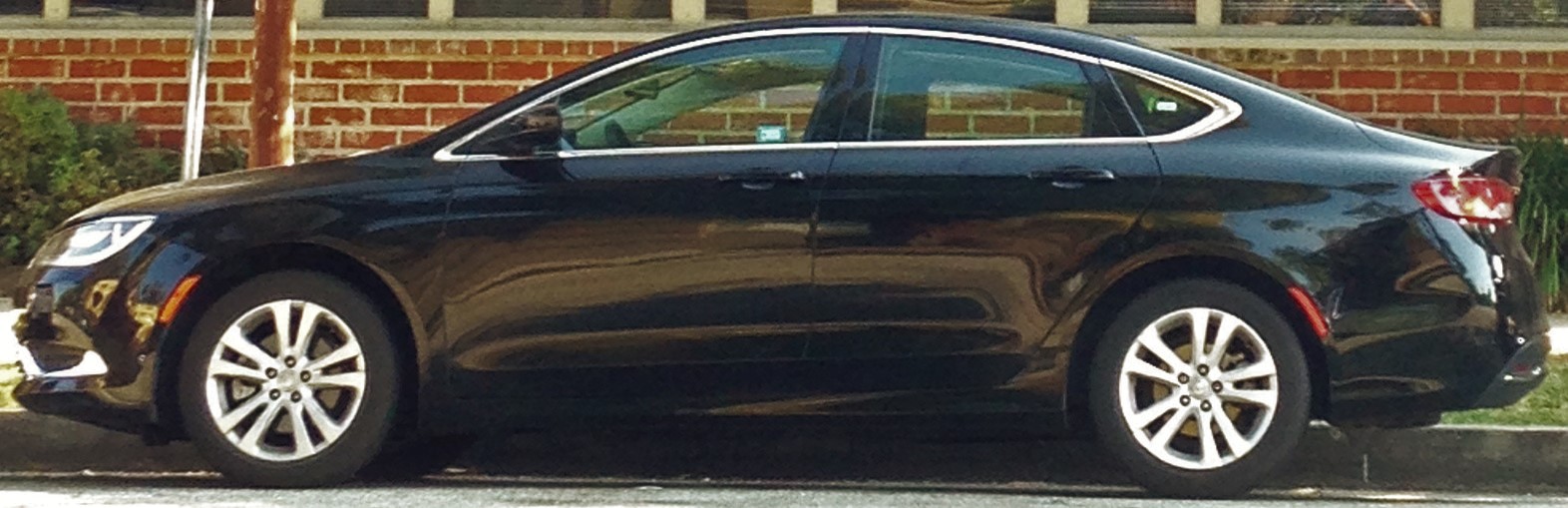
Chrysler 2005 Chrysler
"...l post moving, right? If we're talking about like 2005 Chrysler 300, right? Like, yeah, does that after a certain..."
The Chrysler 200 is a midsize sedan, meaning it’s a regular passenger car with room for everyday driving. The podcast mentions it in a context that sounds like they’re talking about older Chrysler models. If you’re shopping used, it’s mostly about whether the specific year you want has been well maintained.
The Chrysler 200 is a midsize sedan that was produced for several model years and is often discussed as a practical, mainstream option rather than a performance car. The podcast context references “2005 Chrysler 300,” which suggests the conversation may be comparing or clarifying what “200” refers to. Either way, it’s relevant because it sits in the broader category of older Chrysler sedans people remember or consider when talking about used-car choices.

2005 Chrysler 300
"If we're talking about like 2005 Chrysler 300, right? Like, yeah, does that after a certain age of being out of the market 20 years now, do does it start to get affected by less rules or whatever was set at 2005, for example, still carries?"
The host mentions a 2005 Chrysler 300 to ask whether older cars get treated more leniently over time. The point is whether emissions rules change just because the car is older.
The Chrysler 300 is referenced to illustrate the question of whether older cars eventually face fewer emissions/modification restrictions. The host frames it as “is the goal post moving,” using a 2005 model as an example of a car that’s been out for decades.
emissions systems
"So any vehicle post 1975, you are legally required to maintain the emissions systems that was present on that vehicle at the level it was originally certified at."
Emissions systems are the parts on a car that help keep exhaust pollution under control. The host is saying that for many older cars, you’re expected to keep those parts working the way they were originally certified.
Emissions systems are the factory-designed components that control exhaust pollutants (for example, catalytic converters and related hardware). The host says post-1975 vehicles must keep those emissions systems at the certification level they originally met.

1986 Monte Carlo
"So if you go out and buy a 1986 Monte Carlo, whatever that vehicle was originally certified at is your threshold to what you can do to modify it. You can't exceed that limit."
The host brings up a 1986 Chevrolet Monte Carlo to explain emissions rules for older cars. The idea is that you can’t just remove or heavily change emissions equipment—you’re expected to keep it working like it was when the car was certified.
The Chevrolet Monte Carlo is used here as an example of how emissions rules can limit modifications. The host says that for a post-1975 vehicle, you generally must keep the emissions systems at the level it was originally certified, and that “threshold” limits what you can change.
crate engine
"We're at a point now in our industry where we're producing such great products, you can go out and buy a crate engine at 350 to"
A crate engine is a new engine you can buy ready to install, like it’s shipped in a crate. The host is saying regulations may not fully match how easy it is to buy and swap modern engines.
A crate engine is a brand-new engine sold as a complete unit (often with accessories) that can be installed in a vehicle. The host calls it part of the “wonky” gap between modern parts availability and how regulation has caught up.
over the counter EFI system
"[2970.2s] You can put a 300 plus horsepower crate engine in there with a modern over the counter EFI system [2977.2s] and tune it to probably be twice the horsepower..."
EFI means the car uses electronics to deliver fuel instead of a carburetor. “Over-the-counter” just means you can buy the kit without needing a custom shop build.
EFI (electronic fuel injection) replaces carburetion with electronically controlled fuel delivery. An “over-the-counter” EFI system is typically sold as a consumer/aftermarket kit rather than a custom, one-off solution, making swaps and tuning more accessible.
direct injection
"[2995.6s] And it's, it's, it's fantastic when you think about a point where [2990.0s] performance has now unlocked the ability to also improve emissions. [2995.6s] That's one thing that I constantly discuss on this show is every time for some reason, [2999.7s] there's some sort of regulation when it comes to direct injection."
Direct injection is when fuel is sprayed straight into the engine’s combustion area. It helps modern engines run cleaner and more efficiently, but it can be harder to modify because the electronics and tuning matter a lot.
Direct injection is a fuel system where fuel is sprayed directly into the combustion chamber instead of into the intake tract. It’s widely used in modern engines because it can improve efficiency and emissions, but it also brings regulation and calibration complexity for modifications.
helicat
"there's a positive to it. I mean, I remember when the first helicat came out and everybody was scratched in their head saying like, this is a 700 horsepower car with a factory warranty."
“Helicat” is a fan nickname for Dodge’s Hellcat cars—big-power muscle cars that came from the factory. People used to be surprised by how much power they made with a warranty.
“Helicat” is a nickname enthusiasts use for a high-output Dodge Challenger/Charger platform built around the Hellcat engine family. It’s shorthand for the modern factory muscle-car setup that made 700+ horsepower feel mainstream.
California compliant EOD crate motors
"In California, there's a program called, well GM used to call it their E-Rod. So there are California compliant EOD crate motors that you can literally put in a vehicle."
These are crate engines that are approved to pass California emissions rules. The approval usually depends on the whole setup, not just the engine.
California-compliant EOD crate motors are crate engines that have been certified to meet California emissions rules. The key point is that the certification is for a specific, approved package—not just the engine itself.
wiring harness
"an emissions compliant crate motor, you would have to have the engine, the wiring harness, the ECU, the catalytic converters, all together as a singular kit."
A wiring harness is the set of wires that connects the engine to the car’s electronics. For an emissions-approved swap, the correct harness matters because it helps the engine and emissions systems work the way they were certified to.
A wiring harness is the bundled set of wires and connectors that routes power and signals between engine components and the vehicle’s electronics. For certified engine swaps, the harness is often included because it must match the approved emissions and control strategy.
EO number
"But assuming you follow all those rules and you have an EO number for that, you can go to your smog station, they're going to open up, they're going to see a crate motor, they're going to see an EO number, they're going to go check on their computer and find out that that's a valid EO number."
An EO number is a California emissions approval ID. If your engine swap has the right EO number, the smog shop can verify it’s legal for emissions testing purposes.
An “EO number” is an Environmental (emissions) approval number used in California to certify that a specific aftermarket product meets emissions requirements. For crate engines, the EO number ties the engine and its required emissions hardware to a specific approved configuration.
Request an Explanation
Heard something you'd like explained? We'll add it to this episode.
Sign in to request explanations for terms you heard.
Want to learn more?
Browse our glossary for plain-English explanations of automotive terms, jargon, and concepts.
Help improve this episode
See something that's not quite right? Our annotations are AI-generated and can sometimes miss the mark. Click the flag icon on any annotation to suggest a correction.