207. Nelson Racing Engines, 2000HP Streetcars, the SSC Tuatara, Fast and the Furious w/ Tom Nelson
About this episode
Nelson Racing Engines traces its roots from SCCA road racing and street-racing escalation to a professional shop built around machining, dyno work, and forced-induction. The conversation covers how they make power reliably—through careful line honing, lubrication priming, sensor-heavy safety packages, and per-cylinder tuning—plus the business shift toward standardized crate-style packages. Big highlights include pump-gas turbo numbers, a twin-turbo 427 Corvette, and the SSC Tuatara’s LS-based, custom rotating assembly. The episode also dives into Fast & Furious build logistics and extreme speed-record verification.
Tom Nelson of Nelson Racing Engines has been building twin turbo engines for over 30 years. He shares stories about the SSC Tuatara's 281 MPH record run, 2,000HP streetcars, and the 68 Charger that ended up in Fast & Furious.
Take your build up a whole new level with 6XD Gearbox: https://6xdgearbox.com
Code "Minnoxide5" for 5% off
High Performance Academy: https://hpcdmy.co/Minnoxide
Use code "MINNOX" for 55% off ANY course
Use Code "MINVIP" for $300 of the MINVIP Package
Tuned By Shawn: https://www.tunedbyshawn.com
Code "Minnoxide" for 5% off! Ship With
Sure Thing Logistics: https://www.surethinglogistics.net
MORE BIGGER Turbo T-Shirts: https://www.minnoxide.com/products/more-bigger-t-shirt
0:00 - Intro
0:18 - Tom Nelson's Origin Story & Early Racing Days
2:48 - Starting the Business: Grandma's Garage to Machine Shop
12:11 - Growing NRE: Hot Rod Magazine, ESPN & Twin Turbo Fame
19:52 - Engine Rebuilds, Trophy Trucks & Jet Boat Racing
41:58 - The Mirror Image Turbo: Patent, Manufacturing & Going Public
44:17 - Breaking His Back in 2016 & Remote Tuning from a Body Cast
47:39 - Turbos vs Blowers
52:53 - In-House Builds, Roadster Shop & the AWD GTO
55:48 - AI, 3D Printing & the Four-Valve 500ci Dream Engine
1:01:20 - The SSC Tuatara: Engine, Record Runs & 281 MPH
1:16:13 - Reliability, Customers & Valve Train Tech
1:20:16 - The Secret Project, Shelby Code Red & Custom Parts
1:26:35 - The Alien Intake & Crankshaft Balancing Deep Dive
1:34:33 - What Tom Is Most Proud Of & What's Next for NRE
1:40:48 - The Maximus: 68 Charger Build plus The Fast & The Furious

Ford Got Ford
"...f in here that's different. You got LS stuff, you got Ford Hemmy stuff. But what does 20 years ago look like..."

Chevrolet Corvair
"...ing with cars. So he had, as a kid, he had like a Corvair that he was SCCA road racing. And then that went ..."
The Chevrolet Corvair is an older American car with a design that puts the engine in the back. In the podcast, it’s mentioned because someone raced one in SCCA events. That’s a big reason it comes up—people used it for real driving and competition.
The Chevrolet Corvair is a classic American car best known for its rear-engine layout, which was unusual for its era. The podcast context specifically mentions it being used for SCCA road racing as a kid, highlighting its role in motorsport and enthusiast driving. That’s why it’s a memorable topic: the Corvair’s design made it a distinctive platform for handling-focused builds.
SCCA road racing
"So he had, as a kid, he had like a Corvair that he was SCCA road racing. [44.0s] And then that went into a 70 Boss Mustang."
SCCA is a club that organizes car racing events in the U.S. “Road racing” means cars compete on a track course, not in a straight-line drag race.
SCCA road racing refers to events run by the Sports Car Club of America, which organizes amateur and club-level racing in the U.S. “Road racing” means racing on closed circuits (not drag strips), typically with production-based or prepared cars.
top loader
"And he had, you know, it's got 410, top loader, all that stuff. [52.1s] And he was road racing that."
A “top loader” is a type of manual transmission used in some older muscle cars. It’s being mentioned because Harris’s dad’s Mustang had that specific gearbox setup.
“Top loader” is a nickname for a specific style of manual transmission used in classic muscle cars, where the shift mechanism is mounted on top of the gearbox. It’s mentioned here as part of the 1970 Boss Mustang’s drivetrain setup.
twin turbocharged
"And then from there, he actually twin turbocharged a Pantera in the garage. [62.8s] So that was kind of cool because he did a, like back then, obviously they didn't have"
Twin turbocharged means the engine uses two turbochargers. Turbos cram more air into the engine, which can make it produce a lot more power.
“Twin turbocharged” means using two turbochargers to force more air into the engine, allowing higher power output than naturally aspirated operation. With two turbos, builders can tune boost response and airflow characteristics for the specific engine setup.

Pantera
"And then from there, he actually twin turbocharged a Pantera in the garage. [62.8s] So that was kind of cool because he did a, like back then, obviously they didn't have"
The Lamborghini Pantera is a classic supercar with the engine in the middle. In this story, Harris’s dad turbocharged it twice (twin-turbo) as a home project.
The Lamborghini Pantera is a mid-engine V8 supercar from the 1970s/early 1980s era, known for its dramatic styling and strong performance. Here, it’s specifically described as being twin-turbocharged in a garage build.
drawing through
"So that was kind of cool because he did a, like back then, obviously they didn't have [68.8s] the tech that they do now. [70.2s] So he had like Delaroto's drawing through a pair of Rage's on like a manifold."
“Drawing through” is describing how the turbo pulls mixture/air through the intake system. It’s a way of setting up forced induction that’s different from more modern turbo plumbing.
“Drawing through” describes a turbo setup where the turbocharger pulls air/fuel mixture through the intake system in a particular arrangement. It’s often associated with older carbureted or unconventional forced-induction plumbing rather than modern direct injection layouts.
manifold
"So he had like Delaroto's drawing through a pair of Rage's on like a manifold. [76.8s] And it was pretty cool as a kid."
A manifold is a part that channels air into the engine. In turbo setups, where and how it’s arranged matters for how the engine breathes.
An intake manifold is the engine component that routes air (and sometimes fuel, depending on the setup) from the intake system to the engine’s cylinders. In turbo builds, manifold design and placement can strongly affect airflow and boost behavior.
rods
"Back in the day, we were rebuilding rods. [591.0s] What people would do when they rebuilt a rod is they would cut an angle into the rod."
“Rods” here are the connecting rods inside an engine. They connect the piston to the crankshaft, and if they’re not made right, the engine can run poorly or wear out faster.
In an engine, “rods” usually means connecting rods, the parts that link the pistons to the crankshaft. The discussion here is about rebuilding connecting rods and how their geometry affects how they behave under load.
honed
"So when you honed it, there wouldn't be a shadow there. [603.3s] So we were doing that. [604.2s] So when you gave the product to the person, like the whole rod looked like it was honed and bitching,"
Honing is a careful grinding/finishing step that smooths and shapes a metal surface to the right specs. Here, it’s being used to make the rod’s surfaces come out looking right and staying straight.
“Honing” is a precision abrasive finishing process used to achieve the correct surface finish and geometry. In this context, honing is being used to make the rod’s bearing surfaces look correct and to avoid visible defects (“shadow”) that would indicate the part was altered improperly.
rod bolts
"but essentially it was bending the rod bolts and everybody at that time was doing it, you know, [616.0s] and he was like, dude, like you're fucking bending the rod bolts right now, you know,"
Rod bolts are the bolts that hold the connecting rod’s bearing cap in place. If the parts are forced to fit in a way that bends the bolts, the alignment can be wrong and the engine can wear out or fail sooner.
“Rod bolts” are the fasteners that clamp the connecting rod’s bearing cap to the rod. The host is describing a bad practice where the rod is modified so that clamping causes the bolts/cap area to bend, which can compromise alignment and durability even if it looks good after machining.
true the shoes
"and he showed me how to, like one of the biggest things he showed me is how to true the shoes [633.9s] and the stones in."
“True the shoes” means getting the honing tool’s contact pieces perfectly aligned. If they’re crooked, the grinding step won’t make the surface straight, even if it looks finished.
“True the shoes” refers to making the honing abrasive shoes (and their contact surfaces) perfectly straight/aligned before honing. The host emphasizes that if the shoes and stones aren’t aligned, the honing process won’t produce a straight, correctly shaped surface.
stones
"and he showed me how to, like one of the biggest things he showed me is how to true the shoes [633.9s] and the stones in. [634.9s] So like the stones and the shoes, they've got to be totally straight"
In honing, “stones” are the abrasive pieces that grind the metal. If the stones aren’t set up correctly, the surface can come out uneven or curved.
In honing, “stones” are the abrasive segments that do the cutting/finishing. The host notes they must be straight and properly seated so the honing stays uniform and doesn’t create taper or bowing.
line hone
"And when we line hone, like what I will never do and that you see shops do all the time and [693.4s] probably anybody watching this will just be like, I use a fucking idiot or whatever, but [697.8s] I will never loosen the cap when we line hone because people will line hone and they can't,"
Line honing is a precision machining step where a shop re-machines the engine’s bearing holes so they line up correctly. It helps the crankshaft fit the way it’s supposed to, which affects smoothness and oiling.
Line honing is a machine-shop process used to straighten and size a set of related bearing bores in an engine block (often main bearing caps). The goal is to restore correct alignment and dimensions so the crankshaft can spin with proper oil clearance.
mains
"And then the rest of the block cuts so they can get their dimensions right vertically. [713.9s] But to me, you got mains that are all like this when they do that. [717.7s] So you just, you want to get the, you want to get the mandrel as straight and true as possible"
“Mains” are the main bearings that support the crankshaft in the engine block. If those bearing areas aren’t straight and correctly sized, the crank can bind or wear faster.
In engine-building talk, “mains” refers to the main bearing journals and their bearing bores in the engine block. When the speaker says the mains are “all like this,” they’re describing misalignment or uneven machining that can hurt crankshaft fitment.
mandrel
"But to me, you got mains that are all like this when they do that. [717.7s] So you just, you want to get the, you want to get the mandrel as straight and true as possible [723.1s] before you put it in there."
A mandrel is a straight, precision tool that helps the machine cut the engine parts accurately. If it’s not aligned, the shop can end up with bearing holes that aren’t the right shape.
A mandrel is a precision tool used to guide or support machining so the cut happens in a straight, controlled way. Here, the speaker emphasizes getting the mandrel “straight and true” before line honing to avoid incorrect bearing alignment.
pro touring
"So for me, like I was always into like [743.4s] pro touring style cars, cars that handled, [746.8s] braked and accelerated."
Pro touring is a style of build focused on modern handling and braking performance in classic cars. It typically means upgrading suspension, steering, and drivetrain components so the car drives like a contemporary performance machine rather than just looking fast.

Corvette
"Maybe. So he was a big car builder at the time and he had a show on Discovery called American Hot Rod. [809.5s] Oh, yep. Okay. So we did a twin turbocharged 427 in this Corvette. You know, back then when I was"
The Corvette is Chevrolet’s famous performance car. Here, the guest is talking about a Corvette build with a twin-turbo 427 engine, meaning it’s heavily modified for much more power.
A Corvette is Chevrolet’s performance sports car line, known for big-engine power and a strong aftermarket. In this segment, the speaker mentions building a twin-turbo 427 Corvette, which highlights how the platform can be pushed far beyond stock output.
427
"Oh, yep. Okay. So we did a twin turbocharged 427 in this Corvette. You know, back then when I was"
“427” is the engine size—427 cubic inches—which is a big V8. A twin-turbo 427 is a way of making that already-large engine produce even more power.
“427” refers to the engine displacement in cubic inches—an iconic big-block V8 size associated with classic American performance. In the context of a twin-turbo 427, it signals a high-displacement V8 that can make huge power when boosted, but also requires careful engine building to handle the stresses.
pump gas
"[826.0s] we're making like a thousand horse of pump gas and everybody's like, no way, no way you're making [830.4s] that reliably. And you know, we were, but at that time, like right now it's like you probably how old"
Pump gas is the regular gasoline you can buy at a gas station. When a turbo engine makes huge power on it, that’s impressive because the engine has to avoid “knock” (bad combustion).
“Pump gas” means gasoline you buy at regular retail stations, not race fuel. In high-boost turbo builds, using pump gas is notable because it limits how much compression and boost you can run without knocking.
American Hot Rod
"[851.5s] it wasn't back then, you know. So anyway, we did that, we did the thing on American Hot Rod and it [859.9s] kind of showcased like, oh my God, man, they made 1500 horsepower on this thing."
“American Hot Rod” is a car media brand that featured their build. The host is saying that coverage helped them get noticed in the car community.
“American Hot Rod” is mentioned as a media outlet that showcased their turbo build. In this context, it’s used to explain how the project gained early notoriety with enthusiasts.
David Freiberger
"[859.9s] kind of showcased like, oh my God, man, they made 1500 horsepower on this thing. And it had a little [865.3s] build and that was kind of nice. Gave us some notoriety. And then this guy, David Freiberger, [870.5s] I don't know if you're familiar with him or not."
David Freiberger is referenced as the person the host worked with on multiple major turbo projects. The episode frames him as a key relationship that helped the builder get notoriety through media coverage and TV.
SEMA
"[865.3s] kind of nice. Gave us some notoriety. And then this guy, David Freiberger, [870.5s] I don't know if you're familiar with him or not. So I would always go to SEMA and I would see him"
SEMA is a big auto show for aftermarket parts and custom cars. Builders and tuners go there to show what they make and meet other people in the scene.
SEMA is the Specialty Equipment Market Association show, a major annual trade event focused on aftermarket automotive parts and custom builds. People in the tuning and fabrication world use it to network, showcase products, and meet customers and builders.
anvil motor
"[877.7s] and just badger the shit out of him. You know, like he'd see me coming down and I'd be like, [882.6s] oh, David, dude, we gotta do something. We And I had done it enough to where [888.2s] he was finally like, okay, you know, you can take this anvil motor that we had. And"
“Anvil motor” is slang for an engine that’s built to be very strong. The idea is that it can survive hard use and big power changes.
“Anvil motor” is a nickname for an engine that’s treated as extremely tough and durable. In context, it suggests they had a robust base engine that could handle the stresses of a major turbo upgrade.
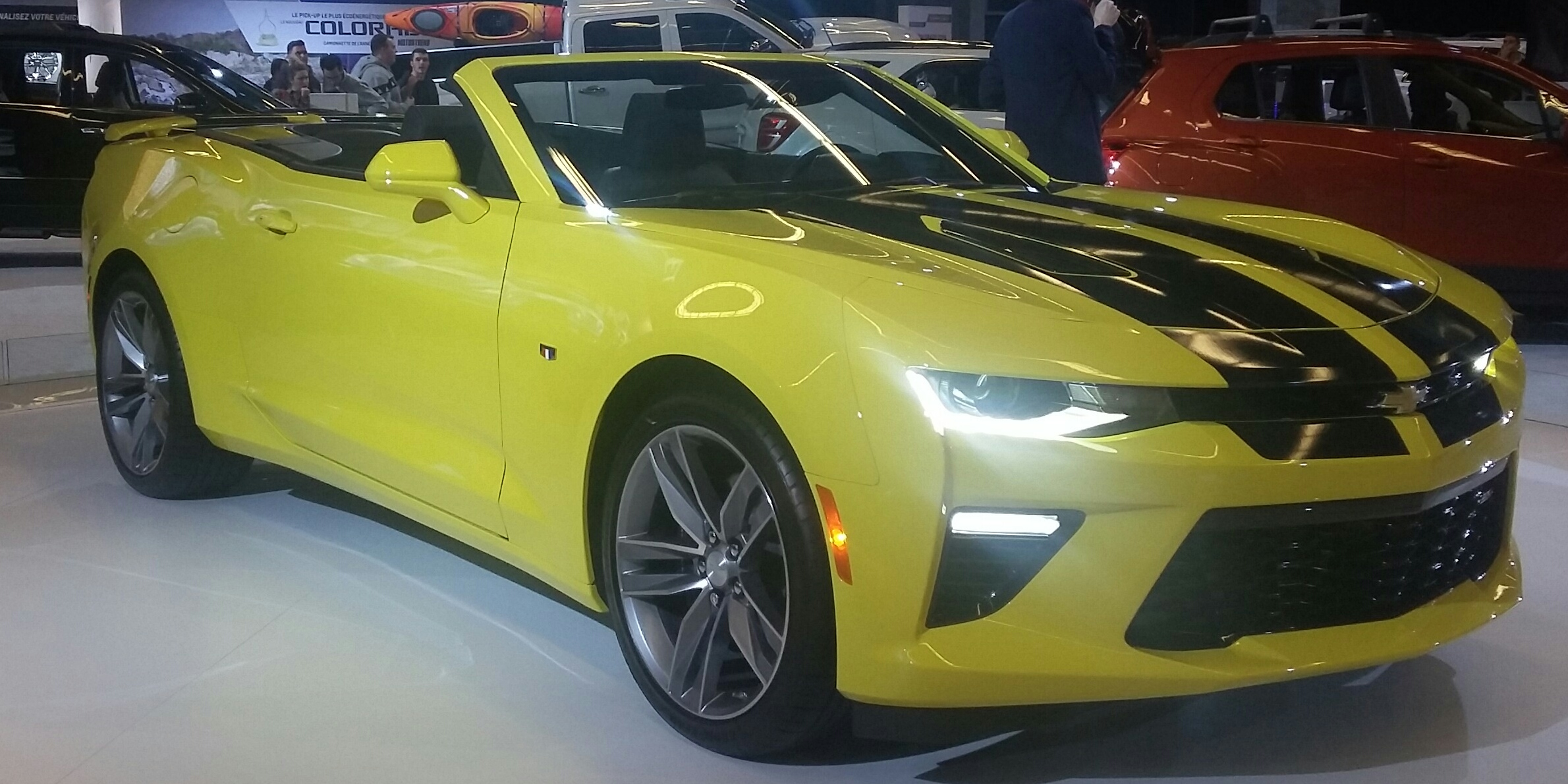
Chevrolet Camaro
"[900.6s] he had a 70 Camaro in his backyard. I'm like, well, we should probably, [907.1s] you know, throw this in something so you could take it to the track. And he was like, I don't know."
A “70 Camaro” is a 1970 Chevrolet Camaro muscle car. People like it for big power builds because there are lots of parts and it’s a strong base for modifications.
The Chevrolet Camaro is a classic American muscle car platform, and the “70 Camaro” refers to the 1970 model year. It’s a popular choice for big turbo builds because the engine bay and aftermarket support make it relatively straightforward to fit high-power setups.
1500 horsepower
"[911.9s] And I ended up sending my tow truck driver over there, you know, getting the car. And we built [916.2s] this really nice 1500 horsepower engine and the car ended up being called the F-bomb. And David"
“1500 horsepower” means the engine makes an enormous amount of power. Cars that can do that usually need a lot more than just a stock engine—they need strong parts and careful tuning.
“1500 horsepower” is an extremely high power output, typically associated with purpose-built turbo engines and careful fuel/boost management. At this level, drivetrain strength and cooling become as important as engine tuning.
ESPN TV show
"[935.6s] because he had like, I think we ended up getting like the cover twice from that on Hot Rod, which [941.7s] back then print meant something. Yeah, print was like the thing is like you blew up a million views [948.6s] on the internet or something, you know. So we got that and then it turned into an ESPN TV show."
They say it later became an ESPN TV show. The point is that the car build got big enough attention to reach mainstream TV.
The host says the project coverage eventually turned into an ESPN TV show. This highlights how extreme builds can move from niche magazines/online attention into mainstream sports entertainment.
engine shop
"kicked off, you know, where we are now is we're basically just an engine shop. We have had a full blown super car shop for 15 odd years, which I don't do anymore because it took too much time away from my family."
An engine shop is a place that works on engines—building them, repairing them, or modifying them for more power. Here, it means they’re mainly doing engine-related work day to day.
An engine shop is a specialized automotive business focused on building, rebuilding, and modifying engines. In this context, the host is describing a shift away from a full supercar shop toward hands-on engine work.
super car shop
"We have had a full blown super car shop for 15 odd years, which I don't do anymore because it took too much time away from my family. But yeah, that's what that's got us here, you know."
A super car shop is a shop that works on expensive, high-performance cars. In this episode, the host is saying they used to do that kind of work but now they do more engine-focused work.
A super car shop is a high-end performance-focused workshop that typically handles specialized repairs, upgrades, and custom builds for exotic or track-oriented cars. The host says they scaled back from that broader role to concentrate on engine work.
fuel injection
"And like, I absolutely love what I do. Like I love coming in here, putting motors together. I love figuring out like fuel injection stuff. I love sizing turbos."
Fuel injection is how a car feeds fuel into the engine using electronically controlled valves. It helps the engine get the right amount of fuel for smooth running and better efficiency.
Fuel injection is a modern way of delivering gasoline (or other fuels) into the engine by using electronically controlled injectors. Instead of relying on a carburetor, the system meters fuel based on engine conditions like throttle position and engine speed.
sizing turbos
"I love coming in here, putting motors together. I love figuring out like fuel injection stuff. I love sizing turbos. So I'm in here working every day now."
Sizing turbos is choosing the right turbo for the engine. A bigger turbo can make more power at high RPM, while a smaller one usually spools faster for better low-end response.
Sizing turbos means selecting the right turbocharger size and configuration for a specific engine and target power. The turbo’s compressor and turbine characteristics affect boost response (how quickly it spools) and how much airflow it can support at higher RPM.
sequential transmissions
"road course, or just the badass three car, you'll have to upgrade your transmission. [1164.9s] And when we're talking sequential transmissions, there's no one on the planet would have stronger [1169.5s] in a gearbox than 6xd."
A sequential transmission is a racing-style gearbox where you shift to the next gear in order. Instead of choosing any gear like a normal manual, it steps through them one-by-one.
A sequential transmission is a gearbox where you move through gears in order (like 1st → 2nd → 3rd), rather than an H-pattern you can shift to any gear. It’s common in racing because it can be faster and more consistent under load.
6xd
"And when we're talking sequential transmissions, there's no one on the planet would have stronger [1169.5s] in a gearbox than 6xd. And the proof is in the pudding here, folks. Half the fd field is rocking [1173.9s] a 6xd and even 3000 horsepower vipers have not been able to tame the best that 6xd has to offer."
6xd is a company that makes racing transmissions. The point they’re making is that their sequential gearboxes are built to survive hard launches and big power.
6xd is a gearbox brand being promoted here specifically for sequential transmission strength and durability. The host claims that a large portion of the FD (Formula Drift) field runs 6xd gearboxes, and that even very high-power cars (like 3000 hp Vipers) can’t “tame” what 6xd can handle.
fd field
"And the proof is in the pudding here, folks. Half the fd field is rocking [1173.9s] a 6xd and even 3000 horsepower vipers have not been able to tame the best that 6xd has to offer."
“FD” means Formula Drift, a major drifting competition. When someone says “the FD field,” they mean the competing cars/teams in that series.
“FD” here refers to Formula Drift, a professional drifting series. Saying “half the FD field” is a way of claiming 6xd gearboxes are widely used by top-level drift teams.
put 87 in
"Like, for example, is it a customer putting 87 on accident or what [1203.3s] exactly does a rebuild come from? Well, we definitely have like, we have a customer that put 87 in [1210.4s] on purpose because he was actually like, too lazy or not too lazy, he just didn't want to [1216.6s] spend the money on 91."
“87” and “91” are different grades of gasoline. Higher octane generally helps prevent the engine from detonating/knocking, which can damage the engine if you use too-low fuel for a high-performance tune.
“87” and “91” are gasoline octane ratings, which indicate how resistant the fuel is to knock (premature combustion). Using a lower-octane fuel than an engine is tuned for can increase knock risk and, in extreme cases, lead to overheating and internal engine damage.
head was torched
"And, you know, I mean, [1223.5s] the head was torched, the block was torched. And it happened twice."
“Torched” here means the engine got so hot or burned so badly that the cylinder head was damaged. It’s the kind of damage you can see after severe knocking or overheating.
“Torched” is a slang way of describing severe overheating or combustion damage to an engine cylinder head. In the context of running too-low octane, it often points to detonation/knock or extreme thermal stress that can damage metal surfaces and combustion chambers.
trophy truck application
"This one we tuned down slightly, but we have it in a trophy truck application. And so [1264.7s] they had 1300 miles of just like something that we would never ever do to a car. And we have a tear [1273.8s] down on that."
A trophy truck is an off-road race truck built for desert racing. The “application” part means the engine is being used in that kind of rough, demanding off-road environment.
A trophy truck is a purpose-built off-road race truck designed for desert racing, typically with long-travel suspension and high durability under repeated impacts. Using an LS supercharged package in that context implies the engine is expected to survive harsh, sustained loads.
tear down
"And so [1264.7s] they had 1300 miles of just like something that we would never ever do to a car. And we have a tear [1273.8s] down on that. And that is like an autopsy, like I am so excited to take that apart because I could"
A “tear down” means taking the engine apart. It’s done to see what’s worn out or broken so you can figure out what caused the problem.
A “tear down” is the process of disassembling an engine or drivetrain to inspect internal components for wear, damage, or failure causes. The host compares it to an “autopsy,” emphasizing that the goal is to diagnose what went wrong and why.
pistons
"take the pistons out, send them to engineering, look at the barrels, see how the barrels are wearing."
Pistons are the parts that move up and down inside the engine cylinders. After a tough run, builders inspect them to see how much wear happened and whether the engine is healthy.
Pistons are the moving parts inside the engine cylinders that compress the air-fuel mixture and transfer combustion force to the crankshaft. Inspecting piston “barrels”/cylinder wear after hard use helps diagnose clearances, lubrication issues, and ring or cylinder damage.
data log
"Like, for example, they sent me a data log. And on that data log, I'm like, man, how long were you wide open?"
A data log is like a recorded report from the car’s sensors while it’s running. It helps the builder see what the engine was doing during the run—like how hard it was being pushed and how hot things got.
A data log is a recorded file of engine sensor readings over time (like throttle position, RPM, temperatures, and pressures). In performance tuning, it’s used to see what the engine was actually doing during a run, not just what the driver felt.
wide open throttle
"And he was like 80 miles. I was like, you're fucking wide open for 80 miles. He's like, yeah, man, I'm like, oh my God."
Wide open throttle means the driver is asking for full power—throttle pedal all the way down. It’s one of the harshest ways to run an engine, so it’s great for finding weak spots.
Wide open throttle (WOT) means the throttle is fully opened, commanding maximum airflow and fuel delivery for the engine. It’s a key condition for testing durability because it creates the highest cylinder pressures and thermal load.
jet boat racing
"we did this boat motor for like, have you ever heard of jet boat racing? Yeah. So that's like 45 minutes wide open throttle,"
Jet boat racing is boat racing where the boat is pushed by a jet system rather than a propeller. It can be very hard on the engine because it often runs at high power for long periods.
Jet boat racing is a motorsport where boats use a jet drive instead of a traditional propeller. The engine and cooling demands can be extreme because the setup often runs long, high-throttle sessions and depends heavily on water flow for heat management.
water
"he put it in the water and ended up routing water the way I didn't want him to route the water and he cooked the exhaust valves,"
“Routing water” means where the cooling water is sent in the engine. If it doesn’t cool the right areas, parts can get too hot and burn out.
Here “routing water” refers to how cooling water is directed through the engine to remove heat. If the water path is wrong, hot spots can form and components like exhaust valves can overheat and fail.
exhaust valves
"he cooked the exhaust valves, which we did like four times on the dyno."
Exhaust valves are the parts that let the spent gases out of the engine. They run very hot, so if something causes overheating, they can burn or fail.
Exhaust valves are the engine’s valves that open to let burned gases leave the combustion chamber. They’re heavily heat-stressed, so overheating them (like from poor cooling or exhaust routing) can quickly lead to failure.
dyno
"which we did like four times on the dyno. And there was already a pre warning on that."
A dyno is a machine that tests an engine on a stand. It lets you measure power and see how the engine behaves under load without needing to drive it on the road.
A dyno (dynamometer) is a test stand that measures engine output—typically horsepower and torque—while the engine is run under controlled load. Builders also use dynos to validate fueling, cooling, and durability before real-world runs.
supercharged
"let's say you buy a twin turbo LS or a supercharged LS for me, I mean, we've done now."
A supercharger is a device that forces extra air into the engine. More air (and fuel) usually means more power.
A supercharger is a forced-induction device that uses engine power to compress incoming air before it enters the engine. More compressed air lets the engine burn more fuel, which is how supercharged builds make significantly more power than naturally aspirated versions.
twin turbo LS
"let's say you buy a twin turbo LS or a supercharged LS for me, I mean, we've done now."
“LS” is a popular GM V8 engine. “Twin turbo” means two turbochargers are added to make a lot more power than stock.
“LS” refers to General Motors’ LS-series V8 engine family, and a “twin turbo LS” means adding two turbochargers to that engine. The point is that it’s a common swap/build platform where forced induction can be packaged as a complete performance setup.
headers
"That's making headers, making the wire harness, doing the line work, completely assembling it and dynoing it."
Headers are special exhaust parts that help gases leave the engine more easily. They’re often used on performance builds to support more power.
Headers are exhaust manifolds designed to improve exhaust flow from the engine’s cylinders. On turbo or supercharged builds, better exhaust flow can help the system spool more efficiently and support higher power levels.
wire harness
"That's making headers, making the wire harness, doing the line work, completely assembling it and dynoing it."
A wire harness is the bundle of electrical wiring that connects sensors, actuators, and the engine control unit (ECU). In an engine package, the harness work is crucial because it ensures the ECU can communicate correctly with everything the build adds or changes.
rebuild
"Well, we started that with rebuilds, you know, and the rebuild, like the guy starting off doing a rebuilds, that's a tough game, because you got a guy that, you know, has an engine, you're going to rebuild this thing..."
A rebuild means taking an engine apart and fixing it so it works like it should again. It’s different from building a brand-new setup from scratch.
An engine rebuild is a restoration process where an existing engine is disassembled, inspected, and repaired or replaced with new/updated internal parts as needed. The host contrasts rebuild work (repairing a customer’s existing engine) with full “package” builds (top-to-bottom new assembly).
Campshaft profile
"And it's not, oh, you know, this Campshaft profile is a little better. And I actually like the exhaust valve seat width on this head a little better."
The camshaft profile is the “timing and shape” of the cam that controls when the engine’s valves open. Changing it can make the engine feel stronger at different RPMs.
A camshaft profile describes the shape of the cam lobes—how long and how aggressively the valves open and close. Small changes to the cam profile can shift power where it makes best (low-end torque vs. high-RPM horsepower).
head gasket
"And this head gasket works better, this piston, you know, and over the course of all these years, you come up with being able to have like an engineered package."
The head gasket is a seal between the engine block and the cylinder head. It helps keep the engine’s fluids and combustion gases in the right places.
A head gasket seals the cylinder head to the engine block, preventing combustion gases and coolant/oil from mixing. If the head gasket fails, you can get overheating, loss of compression, or oil/coolant contamination.
engineered package
"And over the course of all these years, you come up with being able to have like an engineered package. And then for us, it's like, let's order 50 blocks, cranks, let's order, you know, whatever, 20, 30 sets of pistons."
An engineered package means the parts are chosen as a coordinated set, not picked one by one. That helps the engine work correctly because everything is meant to fit and function together.
An engineered package is a matched set of engine parts designed to work together—rather than random “best of” components. The goal is to reduce compatibility issues and improve results because the shop has tested and refined the combination over many builds.
blocks
"And then for us, it's like, let's order 50 blocks, cranks, let's order, you know, whatever, 20, 30 sets of pistons."
The engine block is the main metal body of the engine. It holds the cylinders and supports the crankshaft.
In engine-building, “block” usually means the engine block—the main casting that houses the cylinders and supports the crankshaft. It’s the foundation part that determines displacement and many fitment details.
cranks
"And then for us, it's like, let's order 50 blocks, cranks, let's order, you know, whatever, 20, 30 sets of pistons."
The crankshaft is the part that turns the engine’s motion into rotation. Stronger or better-designed crankshafts help the engine survive higher power.
“Cranks” refers to crankshafts, the rotating shaft that converts the up-and-down motion of pistons into rotational motion. In performance builds, crank selection affects strength, balance, and how much power the engine can safely handle.
crate engines
"So that that was probably the biggest and best decision from a money making standpoint for the shop was to go into the crate engines."
A crate engine is a ready-to-install engine you buy as a complete package. It’s usually faster and more predictable than building everything from scratch.
Crate engines are pre-built engines sold as complete units (often with standardized components) rather than fully custom builds. They’re popular for performance shops because they reduce uncertainty and speed up turnaround compared with one-off engine machining and sourcing.
prime the motor
"We beat it up pretty good. I mean, what we do first is we will prime the motor. So we'll fill a can up, pressurize the can."
Priming the motor means making sure oil is flowing before the engine starts. It helps prevent metal parts from rubbing without lubrication for the first few seconds.
Priming the motor means getting oil circulating before the engine is actually started. This reduces the chance of dry starts and helps ensure critical parts like lifters and rocker arms are lubricated immediately.
lifters pumped
"We got oil and everything. We got the lifters pumped. We got oil. We make sure that the valve cover is off and oil is dripping off every single rocker arm."
On a pushrod engine, lifters are components that transfer motion from the camshaft to the rocker arms. Pumping the lifters means filling them with oil so they can operate correctly and maintain proper valve timing and lubrication.
pushrod motor
"This is on a pushrod motor, of course. Right. And then with the plugs out, then we'll spin the motor because there'll be an air pocket in it, most likely."
A pushrod motor is an engine design where a rod system moves motion from the cam to the valve mechanism. It relies on good oiling so the valve train works correctly.
A pushrod motor uses pushrods to transmit camshaft motion to rocker arms that operate the valves. This architecture is common in many high-performance engines, and it makes oiling the lifters and rocker arms especially important during startup and testing.
exhaust temp
"We'll check every cylinder for temp. So like you might have an ejector that's not connected or clogged or something. So immediately we're on exhaust temp on every cylinder to make sure that, you know, all holes are hot."
Exhaust temp is how hot the exhaust gets. If one cylinder’s exhaust is hotter or cooler than expected, it can signal something wrong with that cylinder’s combustion or airflow.
Exhaust temp is the temperature of the exhaust gases leaving each cylinder. Checking exhaust temperature cylinder-by-cylinder helps catch issues like a clogged or disconnected exhaust component that could indicate a problem with combustion or flow.
load the rings
"And then we bring it up to 2500 RPM and then, then we'll load the rings. So you'll vary the load. These days, it could be one or two cycles of 10 to 15 minutes of getting the rings put in the cylinder wall."
Loading the rings is a break-in step for the piston rings. They run the engine in controlled bursts so the rings properly seat and seal inside the cylinders.
“Loading the rings” refers to the controlled break-in process where piston rings seat against the cylinder wall. During dyno testing, they vary load and run short cycles to establish proper ring seal without overheating or scuffing.
cylinder wall
"These days, it could be one or two cycles of 10 to 15 minutes of getting the rings put in the cylinder wall. So you just have tension on the ring constantly, you know, on and off, pushing it in the cylinder wall."
The cylinder wall is the inside surface of the engine where the piston rings move. The rings have to seat properly on that surface for good sealing.
The cylinder wall is the inner surface of the engine block where the piston rings ride. Ring seating and sealing depend heavily on the cylinder wall condition and the break-in procedure used during testing.
cut the filter
"Then we will cut the filter. So we'll make sure that there's actually, depending on sometimes we cut the filter before or after. But cut the filter, like if you walked in that room, you saw like, looks like toilet paper, but there's all these filter elements hanging."
Cutting the filter is a way to inspect what the filter caught. If it’s full of unusual debris, it can be a sign something isn’t healthy in the engine.
Cutting the filter means inspecting the filter media by physically sectioning it to see what debris or contamination it captured. It’s a diagnostic check to confirm the engine’s “health” during testing by looking for abnormal particulate or metal.
RPM
"we'll come in like a maybe 5500 RPM pull, you know, data log it, dual pull, check for knock."
RPM means how many times the engine spins each minute. If you hear “5500 RPM,” that’s the engine speed they’re testing at.
RPM stands for revolutions per minute, and it’s how fast the engine’s crankshaft is spinning. When the host says “5500 RPM,” they mean they’re pulling the engine at a specific speed so they can compare behavior and data consistently.
knock
"data log it, dual pull, check for knock. I'm pretty good about checking for knock on the LS stuff."
Knock is when the fuel burns in an abnormal, harsh way inside the engine. Tuners watch for it because it can cause serious damage if it’s happening.
Engine knock is abnormal combustion where the air-fuel mixture detonates too aggressively, creating a pinging/hammering effect. It’s dangerous because it can damage pistons and bearings, so tuners check for it during dyno pulls and adjust the tune if needed.
static timing
"on a lot of these, you have to check a static timing when you fire it up. So you want to verify that your hall effect is in the right spot"
Static timing is checking the ignition timing baseline when the engine isn’t running. If it’s wrong, the engine can start off with the wrong spark timing and get damaged quickly.
Static timing is setting/confirming ignition timing with the engine not running (or in a non-running reference state) to ensure the base timing reference is correct. If static timing is off, the engine can be effectively “tuned wrong” from the first pull, leading to immediate severe issues.
hall effect
"So you want to verify that your hall effect is in the right spot and that your timing actually is what it is."
A Hall effect sensor is a sensor that tells the computer where the engine is in its cycle. If it’s mounted or aligned wrong, the computer can fire the spark at the wrong time.
A Hall effect sensor is an electronic sensor used to detect position/rotation (often crank or cam position) so the ECU can schedule ignition and fuel correctly. If the Hall effect sensor is mispositioned, timing can be wrong and the engine may fail almost immediately under load.
fuel curve
"And then we'll go in and adjust the fuel curve to that particular engine"
The fuel curve is the tune that decides how much fuel the engine gets at different speeds and loads. Changing it helps the engine run right and make the power you want.
The fuel curve is the ECU’s programmed relationship between engine operating conditions (like RPM and load) and how much fuel is injected. Adjusting it tailors the air-fuel mixture so the engine makes the intended power safely and consistently.
oil pressure
"It's got good oil pressure. Before it leaves the door, you know that like the whole oiling system, there's no debris in the oil"
Oil pressure tells you whether the engine is getting enough oil to lubricate everything. If oil pressure is too low, the engine can wear out or get damaged fast.
Oil pressure is the force of lubricating oil circulating through the engine’s bearings and moving parts. Adequate oil pressure is critical during high-load dyno testing; low pressure can indicate a problem with the oiling system and can quickly lead to engine damage.
injectors
"All the injectors are firing, the wiring is, you know, certified, it works."
Injectors are the parts that spray fuel into the engine. If they aren’t firing correctly, the engine won’t run right or make the expected power.
Fuel injectors are electronically controlled valves that spray fuel into the engine in precise amounts and timing. The host’s point is that the injectors must be firing correctly as part of validating the engine before it goes to the customer.
wiring is certified
"All the injectors are firing, the wiring is, you know, certified, it works."
“Certified” wiring means the electrical connections have been checked so the engine’s sensors and ignition parts are getting the right signals. Bad wiring can make the engine run wrong or not run safely.
“Certified” wiring here implies the harness and connections have been verified to ensure correct electrical signals to sensors/ignition/coils. In performance builds, wiring errors can cause misfires, wrong timing, or sensor faults that lead to poor running or engine damage.
safety package
"We've actually developed this thing, it's called a safety package where we put these zero to 100 sensors on everything."
A “safety package” is extra monitoring added to the car/engine so problems get noticed early. The host says they add lots of sensors to help prevent failures.
A “safety package” is an added set of monitoring/controls intended to reduce the chance of catastrophic failures by detecting problems early. Here, the host says they use “zero to 100 sensors” to watch critical conditions across the build.
zero to 100 sensors
"We've actually developed this thing, it's called a safety package where we put these zero to 100 sensors on everything. And then we"
“Zero to 100 sensors” means they add a lot of sensors to monitor the engine. More sensors can help spot trouble before it turns into a big failure.
“Zero to 100 sensors” is the host’s way of describing extensive instrumentation—adding many sensors to measure engine/vehicle conditions. More sensor coverage can help catch issues like knock, overheating, oil pressure problems, or misfires sooner.
fuel duty
"[1997.3s] even have in the program like measuring fuel duty. So let's say the guy steps on it and, you know, [2005.9s] it's low on gas or the pump fails, it'll measure a duty spike."
Fuel duty is a way to measure how long the fuel injectors are being told to spray fuel. If something goes wrong—like the fuel pump can’t keep up—the computer can notice it and take protective action.
“Fuel duty” refers to the fuel injector duty cycle—the percentage of time the injectors are commanded to open. By monitoring it, the system can detect abnormal fueling conditions (like low fuel pressure or a pump issue) and respond before damage happens.
duty spike
"[2005.9s] it's low on gas or the pump fails, it'll measure a duty spike. And that duty spike, [2011.6s] then we can go in and we can, you know, cut the motor so he's not going to just grenade it, you"
A duty spike is when the computer suddenly commands the injectors to spray much more fuel than normal. If that happens because the fuel system can’t deliver it, the system can recognize trouble quickly.
A “duty spike” means the injector command jumps to a higher duty cycle than expected. In this context, it’s used as a diagnostic signal that something in the fuel supply is failing, so the ECU can trigger protective behavior.
grenade it
"[2011.6s] then we can go in and we can, you know, cut the motor so he's not going to just grenade it, you [2016.8s] know, or oil pressure drops below a specific cut the motor, you know, over boost, cut the motor,"
“Grenade it” just means the engine gets destroyed suddenly. The point of the safety cut is to prevent the car from driving in a way that could cause that kind of damage.
“Grenade it” is slang for catastrophic engine failure—when an engine is pushed into conditions that cause rapid, destructive damage. Here it’s used to describe why the safety logic cuts the engine when sensors detect dangerous states.
over boost
"[2016.8s] know, or oil pressure drops below a specific cut the motor, you know, over boost, cut the motor, [2025.8s] all these little things, we do it in a safety package, you charge like $550 for this, for the"
Over boost is when the turbo/supercharger makes too much pressure. Too much boost can stress the engine, so the computer may shut it down to keep it safe.
“Over boost” means the turbocharger or supercharger is producing more boost pressure than the engine management system considers safe. Excess boost can raise cylinder pressures and temperatures, so the ECU may cut the motor as a protective measure.
Holley
"[2029.8s] sensors and the wiring and the programming. And that's kind of like a nice little insurance policy [2035.3s] for the guy buying the motor. What are all these, do you have like a standard, [2040.8s] are these all Holley, all the engines that you sell here? Most are Holley."
Holley is a company that makes performance parts for engines, including engine control systems. The host is saying it’s a common choice, so it’s easier to find someone who knows how to tune and support it.
Holley is an aftermarket performance brand best known for engine management systems and fuel/injection components used in swaps and high-power builds. In this episode, the host says most of their customers run Holley because it’s widely supported and easier to get help for.
life racing
"[2046.3s] but we do a lot of life racing on the super high end stuff. We do MoTeC on some of the high end stuff. [2059.1s] So we've done a lot of stuff, but I like to stay with one thing. I found that the Holley is"
Life racing is a brand of race engine computer/tuning system. The host is saying it’s their preferred option for certain high-end builds and that it’s related to Cyvex.
“Life racing” is presented as a high-end engine management platform used on super high-end builds. The host also connects it to “Cyvex,” suggesting they’re related or that one is derived from the other, and frames it as better than MoTeC for their preferences.
MoTeC
"[2046.3s] but we do a lot of life racing on the super high end stuff. We do MoTeC on some of the high end stuff. [2052.3s] We just did a Hall Tech. So we've done, we've done, I mean, we used to do electromotive all the time."
MoTeC is a brand of race-grade engine computers. It’s designed for tuning and monitoring, and the host is saying it’s generally easier to use than the alternative they mentioned.
MoTeC is a high-end motorsport engine management brand known for advanced tuning and data logging. The host contrasts it with “life racing,” saying MoTeC is more user friendly, while the other system is viewed as better for their application.
Cyvex
"[2119.3s] just, I think it's better than the MoTeC. It's harder to, have you ever heard of Cyvex? [2125.4s] Yes. So Cyvex is an off of life racing. Gotcha."
Cyvex is another engine computer/tuning system brand. The host is basically saying it’s connected to the “life racing” system they were talking about.
Cyvex is mentioned as being “off of life racing,” implying a relationship between the two engine management/tuning ecosystems. The host is unsure about the exact corporate/technical relationship, but the point is that Cyvex is part of the same family of systems.
raw torque
"And while you're doing this, you need to be looking at this gauge that's swinging around as raw torque noting in your mind [2212.3s] that every 500 RPM, you're going to write down what kind of torque it made."
Torque is the twisting force an engine makes. “Raw torque” here means the dyno’s direct torque reading as they test and record it at different RPMs.
“Raw torque” refers to the torque reading the dyno reports without additional interpretation or correction steps beyond the measurement process. Nelson notes watching a gauge and recording torque at intervals (every 500 RPM) to build a torque curve.
nitrous
"I mean, try imagine hitting nitrous. I used to hit nitrous all the time. And then like, [2221.8s] you'd hit it and then like try to, you know, automatically adjust how much water you're going to grab on the thing, you know?"
Nitrous is a system that injects a special gas into the engine to make more power. It can dramatically increase output, so you have to manage it carefully during testing.
Nitrous (nitrous oxide) is an engine power-adder that injects gas to increase oxygen availability, allowing more fuel to be burned and producing a big power boost. Nelson compares his early dyno-loading method to the way nitrous changes engine behavior and requires careful control.
engine masters contests
"And then in 04, we were doing this thing called the engine masters contests where like 50 of the best engine builders get together and then we basically race the engines [2239.9s] on dinos."
Engine Masters is a competition where engine builders bring engines to be tested on a dyno. They’re judged using a consistent power/torque test range so results are comparable.
“Engine Masters” is a competition format where engine builders test engines on dynos and are ranked using standardized scoring. In this segment, Nelson explains the scoring method: average horsepower/torque over a specific RPM band (2500 to 6500) becomes the final contest number.
Dynamic Test Systems
"And so we [2262.6s] bought this dynamic test systems, which is DTS, which was bought by a company called Superflow"
Dynamic Test Systems (DTS) is the name of the dyno equipment used to measure engine power. Nelson says it works great, but it has trouble when engines make extremely high horsepower.
Dynamic Test Systems (DTS) is a dynamometer brand Nelson Racing Engines uses for engine testing. He notes that DTS is still his current dyno, but it struggles when power levels get very high.

Cadillac DTS
"... so we bought this dynamic test systems, which is DTS, which was bought by a company called Superflow n..."
The Cadillac DTS is a luxury sedan, meaning it’s designed to be comfortable and upscale. In the podcast, the “DTS” term also appears in a testing context, so it may be discussed as part of equipment or measurement. Either way, the car name refers to Cadillac’s larger, comfort-focused model.
The Cadillac DTS is a full-size luxury sedan from Cadillac, built to provide a comfortable, high-end driving experience. The podcast context references “Dynamic Test Systems” (DTS) and Superflow, which suggests the acronym is being discussed in a technical or testing context rather than the car itself. Still, the DTS name is commonly recognized as Cadillac’s flagship-style sedan of its time.
Superflow
"which is DTS, which was bought by a company called Superflow [2269.7s] now."
Superflow is a company that makes dyno testing equipment. Nelson mentions it because it acquired the DTS dyno system his shop uses.
Superflow is a company involved in dynamometer equipment, and Nelson says DTS was bought by Superflow. That places Superflow as the corporate owner of the dyno platform used in this shop.
rev limiter
"It has trouble now with the big horsepower. Like I got I need to add another break to it. [2284.6s] Anytime we're over 2500, that thing is just pissed. It starts literally taking the water, [2289.8s] turning it into steam. And so if you don't have the rev limiter set, sometimes it could just [2294.4s]"
A rev limiter is like a built-in “RPM ceiling” for the engine. It stops the engine from spinning too fast, which helps prevent damage.
A rev limiter is an engine control feature that prevents the engine from exceeding a set RPM limit, protecting the engine from over-rev damage. Nelson warns that with very high-power engines, if the rev limiter isn’t set, the dyno test can become unsafe or uncontrolled.
steam
"Anytime we're over 2500, that thing is just pissed. It starts literally taking the water, [2289.8s] turning it into steam. And so if you don't have the rev limiter set, sometimes it could just"
Here, “steam” means the dyno’s water gets heated so much it turns into vapor. That’s a sign the system is being pushed beyond what it was designed to handle.
In this dyno context, “steam” describes water being heated rapidly by the dyno’s load/braking system until it vaporizes. Nelson uses it to explain why the dyno’s water-based load control can become problematic at extreme horsepower levels.
KOD
"that's since what are you doing 2500 horsepower engines on? Is that KOD? Is it just about any [2301.5s] package we sell?"
KOD is a shorthand term people use in racing/engine talk. In this clip, it’s mentioned as a possible explanation for what’s going on with the extreme horsepower setup, but the full meaning isn’t spelled out here.
KOD is an acronym used in some drag-racing/engine-building circles, often referring to a specific engine failure mode or outcome. In this excerpt, it’s asked as a possibility for what kind of setup is making “2500 horsepower engines.” The exact meaning isn’t fully established in the provided text.
Chevy
"Okay. Who does the best like power wise? Yeah, Ford Chevy or Mopar? [2315.12s]"
Chevy (Chevrolet) is a major car brand. In this question, it’s being compared with Ford and Mopar for power-making ability.
Chevy is the common shorthand for Chevrolet, another major American automaker Nelson includes in the “who makes the best power” comparison. It points to Chevrolet engine platforms and performance culture.
Mopar
"Okay. Who does the best like power wise? Yeah, Ford Chevy or Mopar? [2315.12s]"
Mopar is a nickname people use for Chrysler’s performance cars and engines (often Dodge). Here it’s part of a common comparison between American brands for making power.
Mopar is the enthusiast nickname for Chrysler’s performance lineup (including brands like Dodge and Plymouth historically). Nelson uses it as shorthand in a classic American “Ford vs Chevy vs Mopar” power debate.
horsepower per cube
"But like horsepower per cube, probably a coyote, but big blocks are,"
It means “how much power you get for the engine size.” Two engines can have different total sizes, so this lets you compare them on a more even basis.
“Horsepower per cube” is a shorthand for how much power an engine makes relative to its displacement (the engine’s total volume). It’s often used to compare different engines fairly when their sizes differ.

coyote
"But like horsepower per cube, probably a coyote, but big blocks are,"
“Coyote” is a nickname for a Ford V8 engine. People like it because it’s a strong, upgrade-friendly engine that can make a lot of power without needing a huge displacement.
“Coyote” refers to Ford’s modular V8 engine family (commonly the 5.0L Coyote) known for making strong power with relatively small displacement. In street/drag builds, it’s popular because it’s modern, supports aftermarket upgrades, and responds well to tuning.
10 three
"Yeah, what's the biggest block you got in here? That truck had it was a 10 three."
This sounds like they’re talking about an engine that’s about 10.3 liters in size. Bigger displacement usually means the engine can make more torque and power, especially in drag/street builds.
“10 three” is almost certainly shorthand for a 10.3-liter big-block displacement (10.3L). In engine talk, that kind of number is used to describe how much volume the engine displaces, which strongly influences potential power and torque.
deck
"like I'll show you guys it's it's a 12 and a half inch deck. So it makes that motor look like a baby, you know, this thing is ridiculous."
“Deck” is an engine-building measurement that affects how much room the engine has internally. Changing it can help you build a bigger-displacement engine.
In engine building, the “deck” height is the distance from the crankshaft centerline to the engine’s cylinder head mounting surface. A taller deck can allow a larger displacement build (more stroke and/or bigger bore) and affects how the engine is packaged.
mechanical sympathy
"When did you start seeing it as art? Did you always have mechanical sympathy and how things look and interact or 100% it was always for me, like one of my things is functional mechanical art."
It means being respectful of how the car’s mechanical parts work. Instead of beating on it, you try to avoid stressing components in ways that cause premature wear.
“Mechanical sympathy” is the idea that you should treat mechanical components with care—understanding what stresses them and how to operate them without abusing them. In engine-building contexts, it often means designing and tuning for durability and smooth interaction between parts.
Miramid's turbos
"I mean, we patented the Miramid's turbos because I, I couldn't handle looking at conventional one rotation turbos,"
This sounds like a specific turbo design/patent by the builder being interviewed. He’s saying he created it so the turbo setup could be arranged more symmetrically instead of looking “off.”
“Miramid’s turbos” appears to be a branded/engine-builder-specific turbocharger design or patent by Nelson Racing Engines’ Tom Nelson. The key point in the discussion is that he says he patented them to avoid conventional one-rotation turbo layouts and to keep the engine bay symmetrical.
intake tubings
"and like I used to build these header sets and intake tubings and everything was lopsided all the time."
Intake tubings are the pipes that move air into the engine. How they’re routed can change how cleanly the build fits and how the engine breathes.
“Intake tubings” are the piping and ducting that carry air from the intake system to the engine (and often to the turbo inlet). Their routing affects packaging and can also influence airflow quality and tuning.
V8
"made it in sizes that were, you know, actually pertinent to the V8."
A “V8” is an engine with eight cylinders arranged in a V shape. It’s a popular engine layout for making strong power, especially in performance builds.
“V8” is an engine configuration with eight cylinders arranged in a V shape. It’s a common layout for high-power street and drag builds because it balances smoothness with strong torque potential.
Request an Explanation
Heard something you'd like explained? We'll add it to this episode.
Sign in to request explanations for terms you heard.
Want to learn more?
Browse our glossary for plain-English explanations of automotive terms, jargon, and concepts.
Help improve this episode
See something that's not quite right? Our annotations are AI-generated and can sometimes miss the mark. Click the flag icon on any annotation to suggest a correction.