
254: How Do You Spell My Kid's Name? - Live from Bathurst
About this episode
Bathurst live from a powered RV site turns into a mix of race-week logistics, rulebook gripes, and team strategy talk. The hosts walk through setup and scrutiny, fuel measurement procedures, and how tire choices (including nitrogen and wider fronts) have complicated the car’s feel after major changes. With three drivers sharing seat time, they debate stint order, traffic, and data consistency. Between stories about security, snoring, and Vegas/Disney name-spelling chaos, the episode lands on what to watch for before Sunday’s six-hour race.
Peter and Tom is joined by Fireman Rick and Glen who are part of the pit crew for the VSP Security BMW M4 at the Bathurst 6 Hour Production Car race. The boys discuss what is involved in preparing a race car for the event from adding nitrogen to the tyres and for new radios to work at the unique location at Mount Panorama. Tom has obtained his race licence for next year.
Follow us on Instagram and email us [email protected]
Bathurst
"Podcast: All Torque Car Podcast Episode: 254: How Do You Spell My Kid's Name? - Live from Bathurst [808.0s] so the changes"
Bathurst is a famous Australian motorsport venue where racing events are held, often attracting both professional teams and privateers. In a conversation like this, it usually signals they’re talking about a race format, competition level, or driving experience tied to that event.
practice
"But we realized the last practice was at five o'clock for an hour."
Practice is the time before the main event where drivers go out to learn the track and try different setups. It helps teams prepare so they’re ready when qualifying or the race starts.
“Practice” refers to on-track sessions where teams and drivers can test setup, tires, and driving approach before qualifying or the race. In motorsport, practice timing and session length can affect how much data teams collect.
Red Flag
"And then we had Red Flag two or three times. So then they extended it."
A red flag means the race is stopped because something unsafe happened on the track. Everyone has to slow down and wait for officials to clear the danger.
A “red flag” is a race-control signal that stops the session immediately due to a dangerous situation on track (like an accident or debris). Drivers must slow down and follow officials’ instructions until the track is declared safe.
teams
"You have to sort of log in, like register. Like all the teams are turning up."
A “team” is the group running a car in the event—drivers plus the people who set up and support the car. They usually have to check in or register for the event.
In racing events, “teams” are the organized groups that bring cars, engineers, and drivers to compete. Each team manages car setup, strategy, and logistics, and they typically have to register for the event.
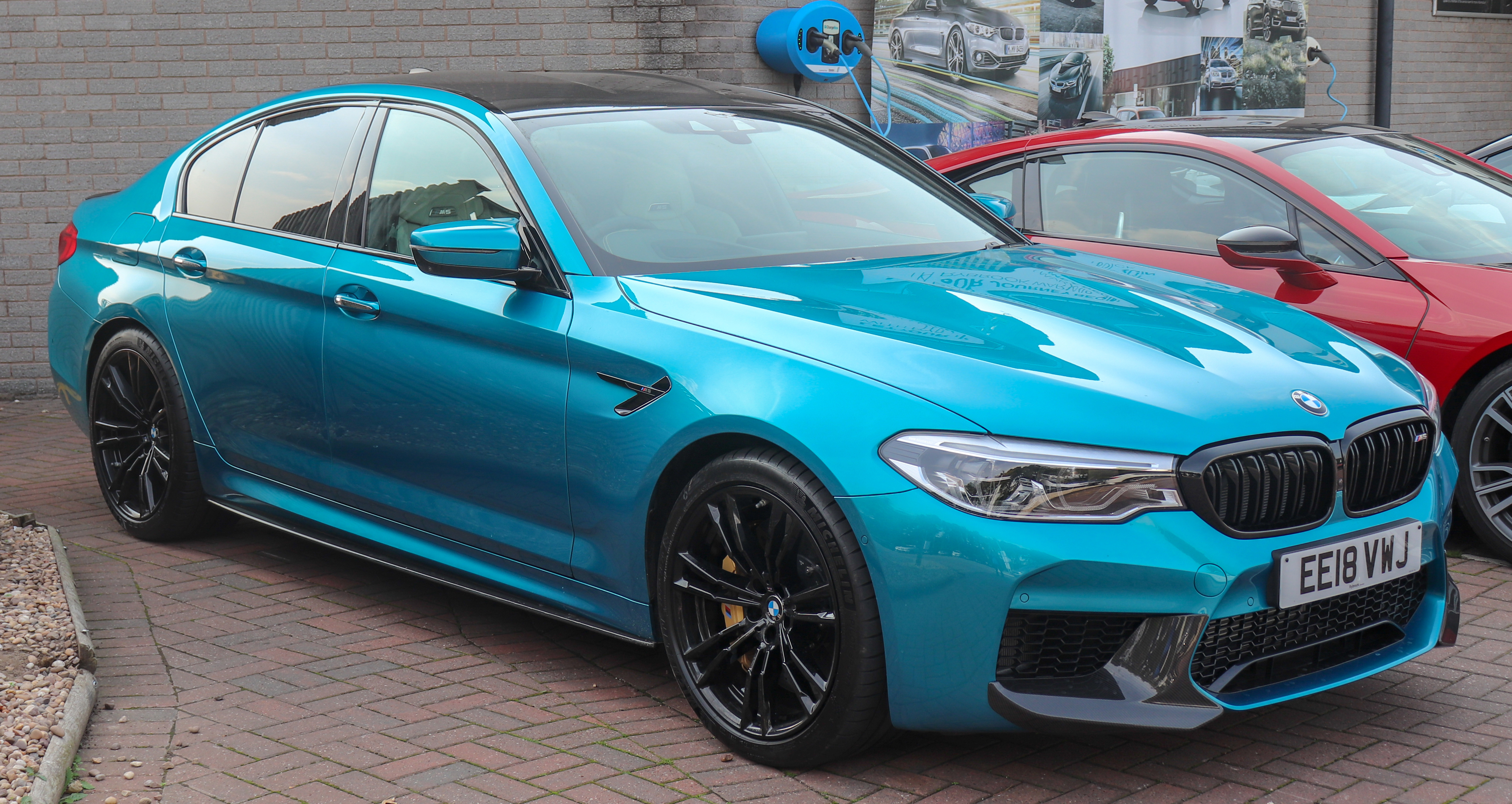
BMW M5
"pit. It's the Mercedes M5 or something."
The BMW M5 is a very fast version of a regular BMW sedan. It’s made for people who want strong acceleration and sporty handling, but still want four doors for everyday driving. It’s often mentioned because it’s one of the most performance-focused sedans BMW makes.
The BMW M5 is a high-performance sedan from BMW’s M division, built to deliver sports-car-like acceleration while still being a practical four-door car. It often comes up in discussions because it represents a “fast luxury” approach—strong power, advanced driving hardware, and a focus on everyday usability. In a podcast, it’s a common reference point when people talk about modern performance sedans and how they compare to other top-tier models.
PPE
"[512.0s] I think inside the pits [513.0s] they have to wear full [514.0s] PPE. [515.0s] Or gear up outside."
PPE means personal protective equipment—gear people wear to stay safe. In a race pit, it can include fire-resistant clothing and protective gloves/eye protection because things are dangerous and fast-moving. It’s basically the safety gear for working on cars during an event.
PPE stands for “personal protective equipment.” In motorsport pits, PPE can include items like fire-resistant clothing, helmets, gloves, and eye protection to reduce injury risk from fuel, hot surfaces, and debris. The key point is that pit lane work has specific hazards, so PPE requirements are enforced.
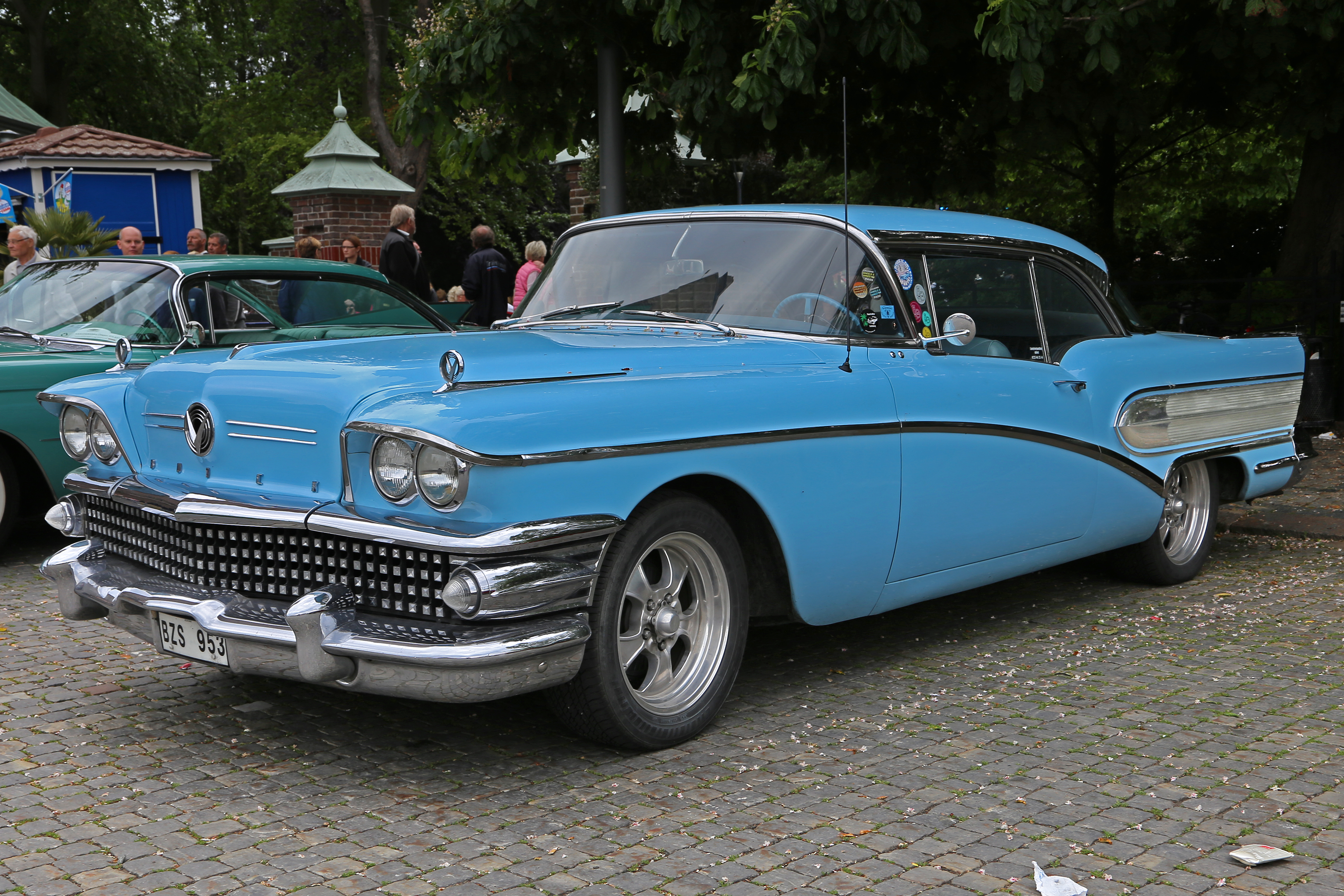
Buick Century
"how much fuel. Because in this 21st century we still don't know"
The Buick Century is a regular-size family sedan made by Buick. People often ask about it because they want to know how much fuel it uses in everyday driving. If you’re considering one, fuel economy is usually one of the first things to check.
The Buick Century is a midsize sedan that was produced for many years, known more for comfort and everyday practicality than for high performance. It comes up in fuel-cost discussions because owners and shoppers often focus on how much gas it uses and what that means for day-to-day driving. In the podcast context, the question is specifically about fuel consumption—an important factor for older, used sedans like this one.
fuel tank capacity
"Is it an 80 litre tank and you measured 81 litres that went in? No. Because I hadn't got me at the 81. It's a hundred litre tank. Okay. But actually it's 110."
They’re talking about how big the fuel tank is and how much gas it can take. Sometimes the number on paper doesn’t match what you can pour in, because the tank may not be completely empty when you refuel.
They’re discussing how much fuel a car’s tank can hold (fuel tank capacity) and how that affects refueling measurements. The key point is that the stated tank size doesn’t always match what you can actually add at the pump, especially if the tank isn’t truly empty.
refueling measurement / tank not empty
"But we put no because the they measure it. That's why it has to go there empty. Yep. But you put balls in the like say a hundred like"
They’re saying the measurement only makes sense if the tank is really empty first. If there’s still fuel left, the amount you add will be less than the tank’s full capacity.
The hosts imply that the tank must be brought to a specific state (effectively empty) for the measured liters added to be meaningful. If you refuel before the tank is truly empty, the pump volume won’t line up with the tank’s rated capacity.
nitrogen
"[663.0s] I was listening [664.0s] in the pits today [665.0s] was the nitrogen [666.0s] and the tires [667.0s] so you never had nitrogen"
They mean filling the tires with nitrogen gas instead of regular air. The idea is that it can keep tire pressure steadier, especially when the tires heat up during hard driving or racing.
They’re talking about using nitrogen in the tires. Nitrogen is an inert gas that can help tires maintain more consistent pressure over time and temperature swings, which matters in racing where pressures change quickly.
tires
"[664.0s] in the pits today [665.0s] was the nitrogen [666.0s] and the tires [667.0s] so you never had nitrogen [668.0s] no [669.0s] never done it before"
They’re talking about tires as part of the race setup. In racing, the tires are a big deal because they control how much grip you have and how the car feels as the track and tire temperatures change.
Tires are being discussed in the context of racing setup changes. In motorsport, tire choice and prep (including pressure management and gas fill like nitrogen) can strongly affect grip, wear, and consistency lap-to-lap.
air pressure
"I fought again yeah right that the how do you say the air air pressure it doesn't expand or it doesn't expand as much so it doesn't warp the tire like no it doesn't overheat"
Air pressure is how much air is inside the tire. It changes how much the tire squishes when you drive, which affects grip and how hot the tire gets.
Tire air pressure affects how much the tire sidewall flexes under load. Higher or lower pressure changes the tire’s contact patch shape and can influence heat buildup and wear patterns.
tire expansion and heat (thermal growth)
"it doesn't expand as much so it doesn't warp the tire like no it doesn't overheat but some of the figures that I was getting today or hearing the fucking thing expands just as much as air"
When tires get hot, things inside and in the rubber can expand. That expansion can change how the tire holds its shape and can make it run hotter or wear differently.
The discussion is about how tire materials and the air inside respond to temperature. As temperature rises, air pressure increases and tire components can expand, which can contribute to changes in shape, wear, and overheating behavior.
warp
"it doesn't expand as much so it doesn't warp the tire like no it doesn't overheat"
“Warp” means the tire changes shape while you’re driving. If it deforms too much, it can affect grip and make the tire wear faster.
“Warp” here likely refers to tire deformation—how the tire’s shape changes under heat and load. Excessive deformation can come from incorrect pressure, worn tires, or sustained high temperatures.
overheat
"like no it doesn't overheat but some of the figures that I was getting today or hearing"
Overheating means the tire is getting too hot. That can make it lose grip and wear out faster.
Overheating is when tire temperatures rise beyond what the tire can handle comfortably. High temps can reduce grip, accelerate tread wear, and in extreme cases contribute to tire failure.
blistered tire
"...and then we've gone back to a blistered tire you know obviously because is it as simple as just putting air back in the tires now or not"
A blistered tire means the rubber has started to bubble or peel. That’s a sign the tire got too hot or was damaged internally, and it’s not something you should just ignore or fix by adding air.
A blistered tire has damage on the tread or sidewall that looks like raised bubbles. It usually points to overheating, a separation inside the tire, or sustained high-speed/under-inflation stress.
tire pressure vs tire damage after high speeds
"...obviously because is it as simple as just putting air back in the tires now or not"
They’re basically asking: “Can we just put more air in and be fine?” Sometimes pressure is the cause, but if the tire is already blistered, it may be unsafe even if the pressure is corrected.
The hosts are questioning whether the issue is simply low tire pressure or whether the tire has already suffered heat-related damage. In practice, adding air can restore correct pressure, but it won’t repair internal tire overheating or structural separation.
Venturis
"[747.0s] they only say that [748.0s] Venturis or something [749.0s] yeah I don't know"
“Venturis” sounds like a tire brand or tire supplier being referenced as the only option for their class/series. In motorsport, spec or restricted tire programs can require teams to buy from approved vendors, which can strongly influence setup and performance.
wider tire
"[755.0s] right [756.0s] and it's just like [757.0s] the width [758.0s] we've gone to a wider [759.0s] tire on the front"
Using a wider tire means more rubber is touching the road. That can make the car grip better and turn more sharply, but it can also change how the car feels and how fast the tire wears.
A wider tire changes the contact patch—the area of rubber touching the road—which can affect grip, steering response, and how the car loads the suspension. In racing setups, tire width is often chosen to balance traction with steering feel and tire wear.
front
"[757.0s] the width [758.0s] we've gone to a wider [759.0s] tire on the front [760.0s] but apparently"
Putting the wider tire on the front changes how the car turns and grips at the front wheels. That can affect whether the car feels like it pushes wide (understeer) or turns in more eagerly.
When the speaker says the wider tire is on the front, it implies a front-end grip/response change. Front tire width can influence understeer/turn-in balance and how the car transfers load during braking and corner entry.
setup
"[771.0s] like [772.0s] it's just [773.0s] everything's [774.0s] that affects the setup [775.0s] everything's gone [776.0s] even for the petrol"
A “setup” is how a race car is tuned for a particular track. It includes choices like tires and settings, and changing one thing can affect how the whole car drives.
“Setup” refers to the overall configuration of the car for a specific track and conditions—things like tire choice, tire pressures, alignment, suspension settings, and sometimes brake balance. Small changes can cascade into other behaviors, which is why teams treat setup as an interconnected system.

Mazda 3
"they were like what do we have for lunch what kind of Mazda is it what was it is it a Mazda 3 MPS yeah the Mazda 3"
The Mazda 3 is a popular small car from Mazda. Here, they’re trying to figure out which Mazda it was—whether it was a Mazda 3—while joking around.
The Mazda 3 is a compact car (hatchback or sedan) that’s commonly used as a daily driver and also appears in motorsport as a platform. In this segment, they’re joking about what specific Mazda model they were near at Bathurst.
Mt. Padder
"we're going down Mt. Padder around"
This sounds like a nickname for the Bathurst track. The circuit is known for big elevation changes, so people often reference it casually when talking about driving around.
Mt. Panorama (often shortened in conversation) is a famous circuit in Bathurst, Australia, known for its steep climbs and fast descents. Listeners may not realize that “Mt. Padder” is a casual reference to the track area.
track walk / track reference ("where he was in the track")
"the way the steering wheel was where he was in the track what you're meant to be looking at like for the apex of the corner so he's showing him where you gotta be"
It sounds like the coach is teaching the driver where to be on the track and what to look for. Instead of guessing, you use landmarks and consistent points so your driving line stays repeatable.
The discussion suggests using track reference points—knowing where you are on the circuit and what to look for at each phase of the corner. This is a common coaching approach: drivers learn visual cues (braking markers, turn-in points, apex) so they can drive the same line lap after lap.
apex of the corner
"what you're meant to be looking at like for the apex of the corner so he's showing him where you gotta be"
The apex is the inside “sweet spot” of a corner. Drivers aim to pass that point so the car can turn smoothly and then speed up sooner when the road opens.
The apex is the point in a turn where the car is closest to the inside of the corner. Hitting the right apex helps you maximize speed through the turn and set up the best exit line for acceleration.
gear
"let alone what gear he was telling him what gear to be in as well let alone what foot how in the fuck do they remember all of it?"
A “gear” is the transmission setting that changes how the engine pulls. Picking the right one helps the car feel responsive and lets you accelerate well out of the corner.
In performance driving, selecting the correct gear is crucial because it determines engine speed (RPM) and how quickly the car responds. The right gear also helps keep the car in the power band for corner entry, mid-corner balance, and exit acceleration.
muscle memory
"it's natural muscle memory I spoke to Rick after and said oh you were going through that"
Muscle memory is the repeated, learned physical actions that become automatic with practice—like steering inputs, throttle modulation, and braking timing. In motorsport, it’s what allows drivers to execute complex sequences consistently under pressure.

Ford Mustang
"because today his time he was behind the Mustang so he's just following"
A Mustang is a Ford sports car. If someone is “behind the Mustang” at the track, they’re basically following it to keep up and get better chances to pass later.
The Ford Mustang is a popular American sports coupe/pony car known for strong performance and a huge fan base. In a racing context, “behind the Mustang” usually means someone is drafting or following its pace to manage speed and position.
laps
"you know when he can he can go he can get the laps punch him out"
A lap is one full trip around the track. Getting “laps” means the driver is able to keep driving and not get stuck waiting or slowed by incidents.
Laps are the number of times a car completes the circuit, and they’re central to race timing and strategy. When someone says “he can get the laps,” they mean the driver can complete enough clean running to build pace and improve results.
grid
"73 cars or 72 cars on this grid for Sunday"
The grid is where cars line up at the start of the race. “On this grid for Sunday” means the starting positions are determined for the race day.
The grid is the starting arrangement of cars for a race, based on qualifying results or session rules. Mentioning “on this grid for Sunday” indicates the field size and that the lineup is set for the main race.
pace cars
"for sure there's going to be a f*** couple of pace cars we've got f***ing accidents happening now"
A pace car is used during caution periods to control the field’s speed after an incident. It helps keep cars safely spaced while marshals clear debris and officials reset the race conditions.
grouping up
"so they'll keep on grouping up and that's the way I thought about would be good"
“Grouping up” refers to cars being bunched together under caution or after a stoppage, usually behind the pace car. This affects strategy because restarts often create opportunities for passing and position changes.
lead lap
"[1172.0s] Tom can have his run [1174.0s] stay on the lead lap [1175.0s] that's the whole thing [1176.0s] stay on the lead lap"
“Lead lap” means your car hasn’t fallen a lap behind the race leader. Staying on the lead lap is important because it keeps you in the main fight instead of being stuck one lap down.
In racing, being on the lead lap means you’re still running at the same overall circuit lap count as the race leader. It’s a key target because it keeps you in contention for strategy, points, and clean restart opportunities.
pit stop / go in
"[1177.0s] then let his old man [1178.0s] go in at the end [1179.0s] and if there's an opportunity [1180.0s] for something [1181.0s] the old man can handle it"
“Go in” means pulling into the pits to change drivers (and sometimes do service). When you do it matters because it can put you ahead or behind other cars on track.
“Go in” refers to a pit stop where a driver swaps out and the team services the car as needed. In endurance racing, timing the pit stop is strategic: it affects track position, traffic, and whether you can stay on the lead lap.
track position
"[1186.0s] but see I look at it different [1187.0s] if Zach goes in the middle [1188.0s] everything that Tom had a fight for [1190.0s] or you know risk to take [1192.0s] or whatever [1193.0s] will be undone"
Track position is basically where you are on the race course compared to other cars. The idea here is that if you change when someone pits, you might lose the advantage you worked for.
“Track position” is where your car sits relative to others on the circuit at any moment. The speaker is describing how a different pit timing/driver stint plan could undo the advantage gained from earlier battles or risk-taking.
safety cars
"[1230.0s] the weather [1231.0s] the safety cars [1233.0s] there's a lot of [1234.0s] tires"
Sometimes a race gets slowed down for safety reasons. When a safety car comes out, everyone drives slower together, and that can change who’s ahead and when teams decide to pit.
A safety car is deployed to control the pace of the race when there’s danger on track (like debris or an incident). It bunches the field up, which can dramatically change gaps, pit strategy, and who has track position when racing resumes.
quickest stop
"[1238.0s] the car that we're probably chasing [1240.0s] is still around three to four seconds [1242.0s] in front of our [1243.0s] quickest stop [1245.0s] so [1245.0s] with Zack getting in the car"
A “stop” is when the car comes into the pits. The “quickest stop” means the fastest pit stop, and that matters because it can help a team gain position without losing as much time.
In racing, a “stop” usually refers to a pit stop for tires and/or service. The “quickest stop” is the fastest pit stop time achieved by a team, and it becomes a key benchmark for strategy because even small time differences can translate into track position.
gaps
"[1250.0s] when Zack's in there [1251.0s] then you will pull more gaps [1252.0s] considering last race"
“Gaps” means how far apart the cars are from each other in time. If the race gets slowed down or someone pits at the right moment, those gaps can shrink or grow quickly.
“Gaps” are the time differences between cars on track, usually measured in seconds. Strategy discussions often revolve around how safety cars and pit timing can increase or reduce these gaps, changing who can challenge for position.
stoppages
"[1250.0s] then you will pull more gaps [1252.0s] considering last race [1254.0s] we had a lot more stoppages [1256.0s] in that first sort of quarter"
“Stoppages” are times when the race isn’t running normally. That can reset the timing between cars and make teams rethink when to pit.
“Stoppages” are interruptions to normal racing, such as caution periods, safety car deployments, or red flags. They affect tire temperatures, fuel/consumption planning, and—most importantly—how gaps between cars are erased or preserved.
race strategy
"[1256.0s] in that first sort of quarter [1257.0s] yeah that's right [1258.0s] and the strategy [1259.0s] and the thinking behind it"
Race strategy is the game plan for the whole race. Teams decide things like when to pit and how to manage tires, especially when the race conditions change.
Race strategy is the plan teams use to decide when to pit, how to manage tire wear, and how to respond to changing track conditions (like safety cars). It’s often about timing—getting the car into the best position when the race pace changes.
non-turbos
"they're not the high-tech they actually got last year they got in front of because they're non-turbos they were pretty good again talking to Rick Rick said because they're non-turbos they've got the torque to climb the hill and keep up"
“Non-turbos” are cars without turbochargers. The hosts are saying these engines can still make strong torque for climbing the hill, which helps them stay competitive.
“Non-turbos” means naturally aspirated engines without a turbocharger. The hosts are arguing that, for Bathurst’s hill climb, the naturally aspirated cars can have enough torque (and a more immediate power feel) to keep pace.
torque
"because they're non-turbos they've got the torque to climb the hill and keep up"
Torque is the engine’s pulling power. When you’re going uphill, having enough torque helps the car keep moving strongly without struggling.
Torque is the twisting force an engine produces, and it strongly affects how easily a car accelerates at low to mid speeds. In hill-climb situations like Bathurst, sufficient torque helps the car maintain speed uphill without needing as much revs.
NASCAR wheel fell off pit incident
"...what was it the NASCAR thing where the NASCAR driver was driving and the wheel fell off and it rolled into someone else's pit..."
They’re talking about a race crash where a wheel came off and rolled into someone else’s pit. Racing officials treat this as a big safety issue, so teams can get penalties depending on what happens next.
The hosts are referencing a well-known NASCAR-style pit/track incident where a wheel came off and rolled into another team’s pit area. In racing, these moments are taken seriously because they can endanger crew members and other cars, and they often trigger penalties or safety responses.
penalised for helping
"...and they were told they're like split seconds if you help him you're just going to get penalised really..."
The transcript mentions being “penalised” for helping a driver during an incident. Racing rules often restrict who can enter the track or assist in certain situations, and penalties can apply if a team’s actions don’t follow the official safety/incident procedures.
jumped the fence
"...they still jumped the fence I remember that one I remember that one they jumped the fence"
“Jumped the fence” implies someone crossed a barrier meant to keep spectators and unauthorized people away from the track. In motorsport, trackside fences and restricted areas exist for safety, and crossing them can lead to ejection, penalties, or even legal consequences depending on the venue.
pit lane
"[1465.0s] I was going through the pits [1466.0s] he didn't do the wheel properly [1467.0s] that's fucking courtesy"
The pit lane is the strip next to the track where the crew works on the race car. It’s tightly controlled for safety, so teams have to follow exact procedures.
The pit lane is the controlled area beside the track where teams work on the car during a race. Speed limits, procedures, and safety rules are enforced there, so mistakes like improper wheel changes can have serious consequences.
wheel not properly installed
"[1466.0s] I was going through the pits [1467.0s] he didn't do the wheel properly [1468.0s] that's fucking courtesy"
Race wheels have to be mounted correctly and tightened properly. If they’re not, the wheel can come loose while the car is moving, which is extremely dangerous.
In racing, wheels must be installed correctly (proper seating and lug fastening) to prevent loosening or loss of the wheel. The hosts are criticizing a pit crew mistake and implying it could be grounds for penalties or safety concerns.
penalty / warning after an incident
"[1484.0s] and then they said to him [1485.0s] they gave him a warning [1486.0s] if he'd done it again [1487.0s] that they were going to penalise him"
In racing, officials can warn a driver or penalize them if they break the rules or do something unsafe. Here, they’re saying the driver got a warning after a dangerous event and would be penalized next time.
Racing officials often issue warnings or penalties after rule violations or unsafe behavior. The transcript references a driver being warned after a serious incident (including a fire) and being told they’d be penalized if it happened again.
F1
"[1503.0s] you've got to let common sense provide [1504.0s] that reminds me with the F1 [1506.0s] when they ran at Vegas [1508.0s] when Carlos signs the Ferrari [1515.0s] the chassis right [1516.0s] ripping them off"
F1 is the highest level of open-wheel race car racing. When something goes wrong on track—like a crash or parts being torn off—the team may have to replace big parts of the car before it can race again.
F1 refers to Formula 1, the top tier of open-wheel racing. The segment is referencing a high-profile incident involving a team having to replace major components after damage.
chassis
"[1513.0s] the man car [1514.0s] from the speed [1515.0s] the chassis right [1516.0s] ripping them off [1517.0s] so Ferrari had to put in a new chassis"
The chassis is the car’s main structural frame that everything else mounts to. In racing, if the chassis is damaged or compromised, teams often replace it because the car’s safety and alignment depend on that structure.
one-off situations
"they've had to allow for one-off situations where that's another thing discretion of the"
Sometimes something weird happens that the rulebook doesn’t specifically mention. When that happens, officials may make a special decision so the outcome is still fair.
“One-off situations” refers to rare, unforeseen circumstances where the standard rules don’t clearly cover what happened. In motorsport, officials may use discretion to decide how to apply rules fairly when something unusual occurs.
discretion
"that's another thing discretion of the and Vegas Glenn they're setting up for the F1"
“Discretion” means officials are allowed to use their judgment. If something isn’t clearly covered by the rules, they decide what makes sense based on the intent of the regulations.
“Discretion” here means race officials using judgment when applying rules to unusual events. Motorsport regulations often include general principles, but discretion is used to interpret them when the exact scenario isn’t explicitly written.


Daewoo Statesman
"because the statesman was 2009 [1818.0s] I got that plate for that [1819.0s] this is the car"
“Statesman” is a car model name from Holden (an Australian brand). They’re saying the car they’re talking about was a 2009 model, based on the plate and the year they remember.
“Statesman” is a model name used by Holden for several large Australian sedans. In this segment, the hosts connect the plate/year to a “statesman” being from 2009, implying they’re talking about a specific Holden Statesman variant tied to that year.
biggest brakes
"[2036.0s] It's only because they've got the biggest brakes [2039.0s] Australia [2040.0s] Just he's got truck brakes on these [2043.2s] It's even bigger. I thought it was a train when you held it up"
When someone says a car has “big brakes,” they mean the braking parts are larger. That usually helps the car stop better and stay consistent when you brake hard more than once.
“Biggest brakes” is a reference to larger brake components (typically larger rotors and/or calipers). Bigger brakes can improve stopping power and reduce brake fade during repeated hard use, like spirited driving or track days.
truck brakes
"[2039.0s] Australia [2040.0s] Just he's got truck brakes on these [2043.2s] It's even bigger. I thought it was a train when you held it up"
“Truck brakes” is a nickname meaning the brakes are really big and meant for heavier cars. The idea is that they can handle harder braking without getting weak as fast.
“Truck brakes” is a colloquial way of saying the brakes are sized like those found on heavier vehicles. The implication is that the brakes are overbuilt for the car’s size, which can improve heat handling and durability under heavy braking.

Mazda Rx8
"Scott's [2136.2s] No [2138.2s] What's the RX-8? Yeah. Yeah. Oh, Scott's group. Whatever. Yes"
The RX-8 is a Mazda sports car famous for having a rotary engine instead of a normal piston engine. That’s why it feels and sounds different from most other cars.
The Mazda RX-8 is a sports coupe known for its rotary engine (Wankel design). It’s often discussed in enthusiast circles because the rotary layout gives it a distinctive character and sound compared with piston engines.
ripple strip
"I know when we drove tonight on the track. Yes, the five series out of the ripple strip [2235.0s] But we started the left side of the road just as was a cop many many years ago"
A ripple strip is a raised or textured strip on the road surface designed to create vibration and noise to alert drivers. On a track, it can upset traction and suspension behavior, which is why drivers often mention how a car reacts when it hits one.

BMW 5 Series
"I know when we drove tonight on the track. Yes, the five series out of the ripple strip [2235.0s] But we started the left side of the road just as was a cop many many years ago"
The BMW 5 Series is a popular mid-size car from BMW. They’re bringing it up because it behaved a certain way when they drove over track surface features like a ripple strip.
The BMW 5 Series is BMW’s mid-size sedan line, often used as a daily driver platform but also seen in motorsport-adjacent contexts. Here it’s mentioned in relation to driving on the track and encountering a ripple strip, which is a common road-course feature that can unsettle tires and suspension.
six hour
"Like when we first come to the six hour, you could [2242.3s] Talk the security because they blocked it. Yeah, they block it the right"
A “six hour” race is an endurance event where cars race for about six hours. It’s more about lasting the whole time and making good strategy calls than just going as fast as possible for a few laps.
“Six hour” likely refers to an endurance race format (a race lasting six hours), which is common at circuits like Bathurst. Endurance races emphasize reliability, pit strategy, and consistent lap times rather than outright sprint speed.
public road access during events
"And you could actually get past it and cruise up there because now no matter what you fuck [2261.0s] The thing says open to public for 40 minutes. So if you're a local you can drive home."
Even though it’s a race track, parts of the area can sometimes be open to the public for limited windows. They’re talking about how the rules and closures affect when people can drive around.
Some circuits and event weekends allow limited public access or timed openings, even though the venue is primarily a race track. The hosts are describing how access rules and closures change, and how that affects when locals can drive home or reach certain areas.
can't fit through the tunnel
"Yeah, but the roads it's open. Yeah, oh, yeah, yeah, this this can't fit through the tunnel. Yes, you gotta wait for that"
They’re saying the vehicle or load is too big to go through the tunnel. Tunnels have fixed height and width limits, so tall trucks sometimes have to wait or take another route.
The transcript references a clearance issue where something (likely a vehicle or load) can’t physically fit through a tunnel. Tunnel clearance limits (height/width) are a major operational constraint for trucks and tall loads, often requiring reroutes or staged access.
truck out
"Yeah, you have to wait for the truck out. That's another episode to discuss why they did that."
They’re describing having to wait until a truck has moved out of the way. On tight roads, trucks take longer to get through, so other cars have to wait.
The hosts refer to waiting for a truck to clear before proceeding, which is essentially queue management for mixed vehicle traffic. In narrow or controlled road sections, trucks can take longer to pass, so cars must wait for safe gaps.
timer on there for five minutes
"Why would they not man? It's got a timer on there for five minutes. You gotta sit there"
They’re talking about a timed system that stops traffic for a few minutes and then lets it go again. It’s used when the road can’t safely handle both directions at once.
A timed traffic signal or control system is being referenced—vehicles are held for a set interval (about five minutes) before the direction changes. This kind of scheduling is used when road space is limited or when heavy vehicles need controlled access.
one lane at a time
"Australia's built one lane at a time. Yeah, like Mount Victoria. We'd all drive through let go because"
Sometimes roads are set up so only one lane can move at a time. That means cars have to wait for the other direction to clear, which can add a lot of time to the trip.
The hosts are describing a traffic-control setup where only one lane is open at a time, forcing vehicles to wait their turn. This is common around construction, narrow corridors, or temporary closures and can significantly change travel time and flow.
200 year old bridge
"So but like even getting here just tight how they close that 200 year old bridge really a 200 year old bridge"
They’re saying the bridge is really old and had to be checked. Old bridges can’t always handle trucks safely without inspections or temporary closures.
The segment mentions a very old bridge being closed and requiring checks, implying constraints typical of historic infrastructure. Older bridges often have weight/clearance limits and may need inspections or temporary shutdowns before allowing heavy vehicles.
Request an Explanation
Heard something you'd like explained? We'll add it to this episode.
Sign in to request explanations for terms you heard.
Want to learn more?
Browse our glossary for plain-English explanations of automotive terms, jargon, and concepts.
Help improve this episode
See something that's not quite right? Our annotations are AI-generated and can sometimes miss the mark. Click the flag icon on any annotation to suggest a correction.