
#2591: Customer Fleecing Systems
About this episode
Listeners are treated to a humorous exploration of customer complaints regarding new car features, particularly trunk releases. The Tapper Brothers dive into quirky calls, including a woman worried about her 1984 Oldsmobile's emergency brake and a man concerned about mysterious 'death fog' from his air conditioning. They also tackle the dubious claims of an 'engine lifeguard system' and share amusing anecdotes while offering practical advice. The episode is filled with witty banter and light-hearted automotive wisdom.
Who doesn’t like a good flush? Certainly not us. Unless it’s our $ being flushed into some unscrupulous car dealer’s pockets via some newfangled Rube Goldberg device. Ann from Colorado thinks she might be a victim and wants Click and Clack to assuage her fears on this episode of the Best of Car Talk.
Learn more about sponsor message choices: podcastchoices.com/adchoices
NPR Privacy Policy
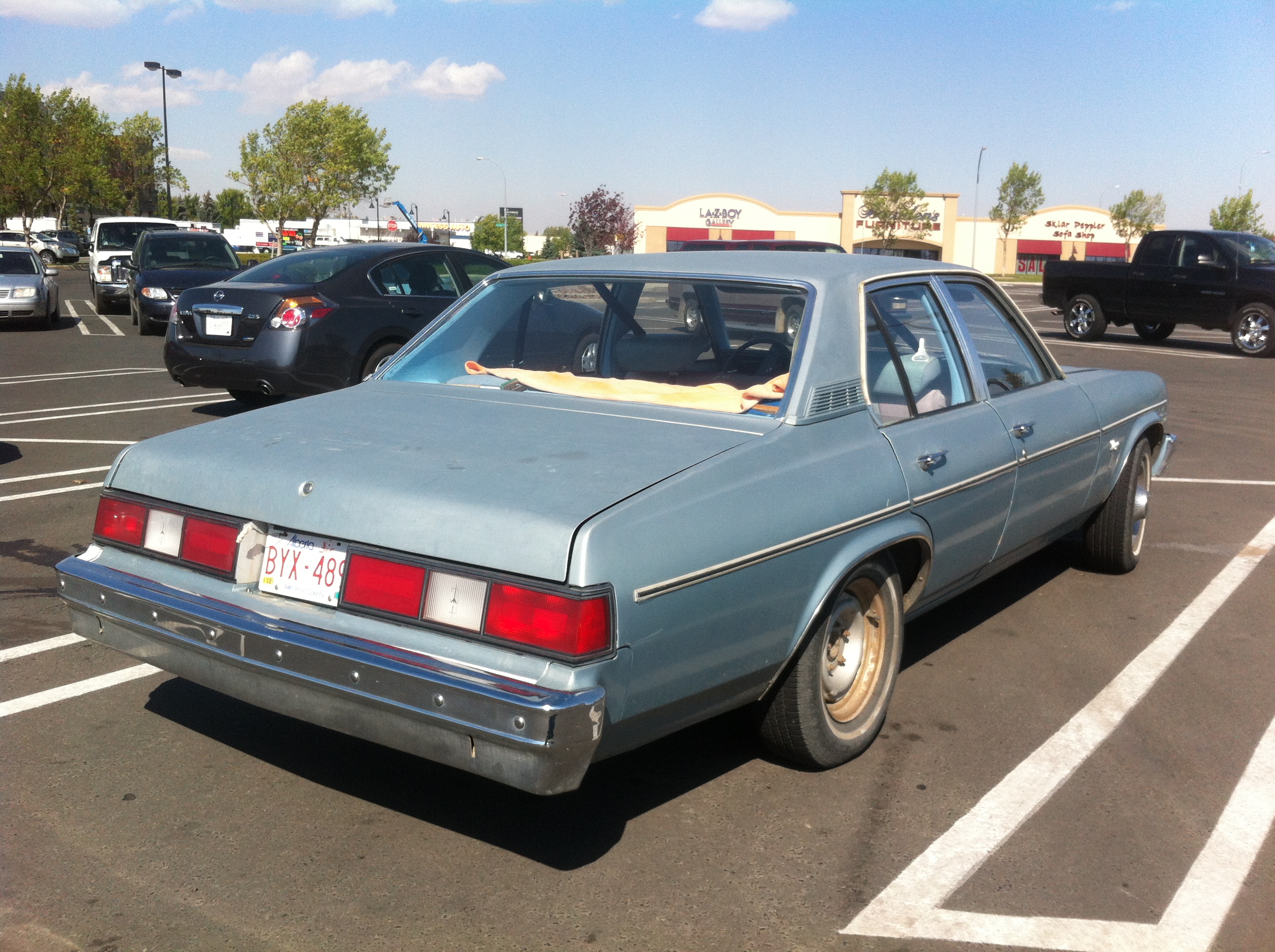
1984 Oldsmobile Omega
"I drive a 1984 Oldsmobile Omega and maybe that's the problem in and of itself, right?"
The Oldsmobile Omega is a car from the 1980s that was popular for its roomy cabin and smooth ride. It’s a classic American sedan.
The Oldsmobile Omega was a mid-size car produced by General Motors in the 1980s. It featured a front‑engine, front‑wheel‑drive layout and was known for its spacious interior.
emergency brake
"So anyway, the emergency break about a month ago, I go to push it down and it flops to the floor, okay? It won't go click, click, click, click, click."
The emergency brake is a backup way to stop your car if the regular brakes don’t work. It’s usually a lever or button you pull to keep the car from rolling.
An emergency brake, also called a parking brake or handbrake, is a secondary braking system that can be engaged manually to stop the vehicle if the main brakes fail.
brake cables
"So what our guy did and he's really good with breaks, he heated the break cables and he tightened them and it's going to cost you $10."
Brake cables help you stop your car by connecting the brake pedal to the brakes. If they’re weak or loose, the brakes may not work well.
Brake cables are the mechanical linkages that transfer force from the brake pedal to the braking system, allowing the driver to slow or stop the vehicle.
automatic transmission
"Is this an automatic transmission?"
It’s the type of gearbox that changes gears by itself, so you don’t have to shift manually. You just press the gas and brake.
An automatic transmission automatically changes gear ratios as the vehicle moves, eliminating the need for a clutch and manual gear shifts.
parking brake
"It's called the parking brake. And it's there in the event that the thing should not be fully engaged in park, that is the shifter..."
A parking brake is like a backup handbrake that stops the car from rolling when it's parked, so you don't have to rely only on the regular brakes.
The parking brake is a secondary braking system that locks the wheels to keep a vehicle stationary when parked, especially if the main brake or transmission fails.
frozen
"[357.3s] Frozen is the term that mechanics use to mean rust."
When mechanics say a part is "frozen," they mean it’s stuck because of rust that has hardened and glued the parts together.
In automotive repair, "frozen" is a slang term mechanics use to describe the presence of rust that has hardened and stuck components together.
braided steel cables
"[362.8s] And those cables are braided steel cables that run through a sheathing."
These cables are made of many thin steel strands woven together, which makes them strong and able to bend without breaking.
Braided steel cables are flexible, multi-stranded wires used in vehicles to transmit power or signals while maintaining strength and durability.
sheathing
"[366.5s] And the sheathing is often metal."
Think of sheathing as the jacket around a cable that keeps it safe from heat, moisture, and wear.
Sheathing is the outer protective covering around cables or wires, often made of metal or plastic, that shields them from damage and environmental factors.
penetrating oil
"they heated them up, they soaked them in penetrating oil, and they freed them up..."
Penetrating oil is a special grease that gets into stuck parts to make them move easier, like when you try to open a rusty door.
Penetrating oil is a lubricant designed to seep into tight or rusted metal parts, helping loosen them without damaging the material.
dealership
"and also getting them from the dealership. I mean, we're not talking about a thousand dollars here..."
A dealership is a place where you can buy cars and get parts or repairs from the company that made the car.
A dealership is a retail outlet that sells new and used vehicles, often providing parts and service directly from the manufacturer.
out-of-production parts
"Well, the left rear evidently is no longer being manufactured. And that's probably the one that doesn't work anymore."
When a part is out of production, it means the car company stopped making it, so you have to look for used or aftermarket versions.
Out-of-production parts are components no longer manufactured by the original maker, making them harder to find and sometimes more expensive.
rear ends
"They make rear ends in Dearborn, don't they?"
The rear end is the part of a car at the back that helps move the wheels and includes things like gears and axles.
The rear end refers to the assembly at the back of a vehicle that includes components like the differential, driveshaft, and rear axle. It is crucial for transmitting power from the engine to the wheels.

Ford Country
"Well, they make fords. This is Ford country. Oh, yeah."
The Ford Country Squire is a big, boxy car from the 1970s that could seat a whole family and carry lots of stuff. It’s famous for its shiny vinyl roof and roomy back seat, making it great for road trips or moving things around.
The Ford Country Squire is a classic American station wagon that debuted in the early 1970s, known for its distinctive vinyl roof and spacious interior. It became a symbol of family practicality and ruggedness, often used for long road trips and hauling large cargo.

96 Intrepid
"Well, I'm here in Ford country, but I happen to drive a 96 Intrepid."
The 1996 Ford Intrepid is a big, comfortable car that was sold in the late 1990s. It has a front engine and drives the front wheels.
The 1996 Ford Intrepid was a mid-size executive sedan produced by Ford from 1994 to 2000. It featured a front‑engine, front‑wheel‑drive layout and was known for its spacious interior and smooth ride.

85 Chevy Cavalier
"[1020.7s] Wow. [1021.2s] Because the heat wasn't working on his 85 Chevy Cavalier. [1025.4s] And oh, he must have one frozen, took us by now."
The Chevy Cavalier is a small, budget-friendly car that many people used in the 1980s. It’s not very fancy but it was popular because it was cheap and easy to keep running.
The 1985 Chevrolet Cavalier was a compact car produced by General Motors as part of the first generation of Cavaliers. It featured a front‑engine, front‑wheel‑drive layout and was known for its affordability and basic reliability during the 1980s.
thermostat
"Here's what I've replaced so far. The thermostat."
It’s a small device that opens and closes to keep the engine from getting too hot or too cold.
The thermostat is a valve that regulates engine coolant flow to maintain optimal operating temperature.
heater core
"[1060.8s] I had to cover off of the heater core."
Think of it as a tiny radiator inside the car that warms the air you breathe when you turn on the heater.
The heater core is a small radiator that transfers heat from the engine coolant to the cabin air.
baffle
"[1065.2s] I checked to make sure that the baffle was moving."
A baffle is a small piece inside the heater core that helps spread the hot liquid evenly so you get consistent warmth.
A baffle is a component that directs coolant flow within the heater core, ensuring even heat distribution.
cooling system
"he likely trapped a considerable amount of air in his cooling system. So we instructed him to tip the car up on its front end and burp it."
Your car’s cooling system is like a big radiator that keeps the engine from getting too hot. It moves liquid around to carry heat away.
The cooling system circulates coolant through the engine to absorb heat and keep it from overheating. It includes components like the radiator, water pump, thermostat, and hoses.
radiator cap
"top off the cooler and run it with the radiator cap off and all that stuff so that any remaining air in the system would be allowed to escape."
The radiator cap is a screw-on cover that keeps the coolant inside and helps it stay at the right pressure. If it’s bad, the engine can overheat.
The radiator cap seals the cooling system and maintains pressure, which raises the boiling point of coolant. A faulty cap can cause overheating or coolant loss.
intake manifold
"[1155.4s] The one that goes to the intake manifold is higher. [1159.0s] Yeah, yeah, yeah."
Think of it as a pipe that sends the air and fuel mixture from the engine’s throttle to each cylinder. It helps the engine run smoothly by making sure every part gets enough mixture.
The intake manifold is a component of an internal combustion engine that distributes the air-fuel mixture to each cylinder. It sits between the throttle body and the cylinders, ensuring even airflow for efficient combustion.
T-fitting
"[1160.0s] I put a T-fitting in it. [1161.5s] Oh, yeah."
It’s like a T-shaped pipe that lets one hose split into two, so you can connect more parts from the same source. It’s common in car maintenance when routing fluids or air.
A T-fitting is a plumbing or piping component shaped like the letter 'T', allowing one pipe to split into two branches. In automotive contexts, it’s often used to connect hoses or lines where a single source needs to feed two destinations.
General Motors
"[1203.2s] but it was one of these GM little junk boxes."
General Motors is a big car company in the U.S. They make cars like Chevy and Buick. The speaker says they had a small GM car that wasn’t in great shape.
General Motors (GM) is an American automotive manufacturer known for brands like Chevrolet, Buick, GMC, and Cadillac. The speaker refers to a small GM vehicle as a “little junk box.”
head gasket
"[1213.7s] And when we fixed the head gasket, [1216.2s] i.e. when we put a new head gasket on,"
The head gasket is a rubber or metal seal that sits between the top of the engine and the block. If it breaks, the engine can overheat or lose power.
A head gasket is a seal between the engine block and cylinder head that keeps coolant, oil, and combustion gases from leaking. A blown head gasket can cause overheating, loss of compression, and coolant leaks.
Saturns
"Well, my husband and I own two Saturns."
Saturn was a car brand made by GM. It had cars that were easy to buy and come with good service plans.
Saturn was a brand of automobiles produced by General Motors from 1985 to 2010, known for its focus on customer service and innovative features.
Envirollution Engine Lifeguard System
"The Envirollution Engine Lifeguard System, which is a power flush for the engine."
It’s a special liquid you put in your car’s engine to try to clean out dirt and old oil buildup. Some people use it when they think their engine is dirty or not running well.
The Envirollution Engine Lifeguard System is a commercial engine cleaning product marketed as a power flush. It claims to remove sludge, deposits, and contaminants from the engine’s internal components by circulating a cleaning solution through the oil passages.
wallet vac
"And the wallet vac is the other one."
It’s a tool that cleans inside the car’s fuel tank to keep it running better.
A device used to clean the interior of a vehicle’s fuel system, often marketed as removing deposits from the fuel tank.
Snap-on Tools
"We have two machines, which are sold by Snap-on Tools."
Snap‑on makes tools that mechanics use to fix cars.
A well-known manufacturer of professional automotive tools and equipment.
fuel injection system
"which cleans the fuel injection system, which actually works pretty well."
It’s the part of a car that sprays fuel into the engine so it can run.
The set of components that deliver fuel into an engine’s combustion chambers.
transmission oil
"And what it does is it actually takes all the transmission oil out, runs it through a filter, takes all the crud, and puts in new fluid."
It’s the fluid that keeps your car’s gearbox running smoothly, just like engine oil does for the engine.
Transmission oil is a specialized lubricant that reduces friction, dissipates heat, and protects the moving parts inside a vehicle’s transmission.
Request an Explanation
Heard something you'd like explained? We'll add it to this episode.
Sign in to request explanations for terms you heard.
Want to learn more?
Browse our glossary for plain-English explanations of automotive terms, jargon, and concepts.
Help improve this episode
See something that's not quite right? Our annotations are AI-generated and can sometimes miss the mark. Click the flag icon on any annotation to suggest a correction.