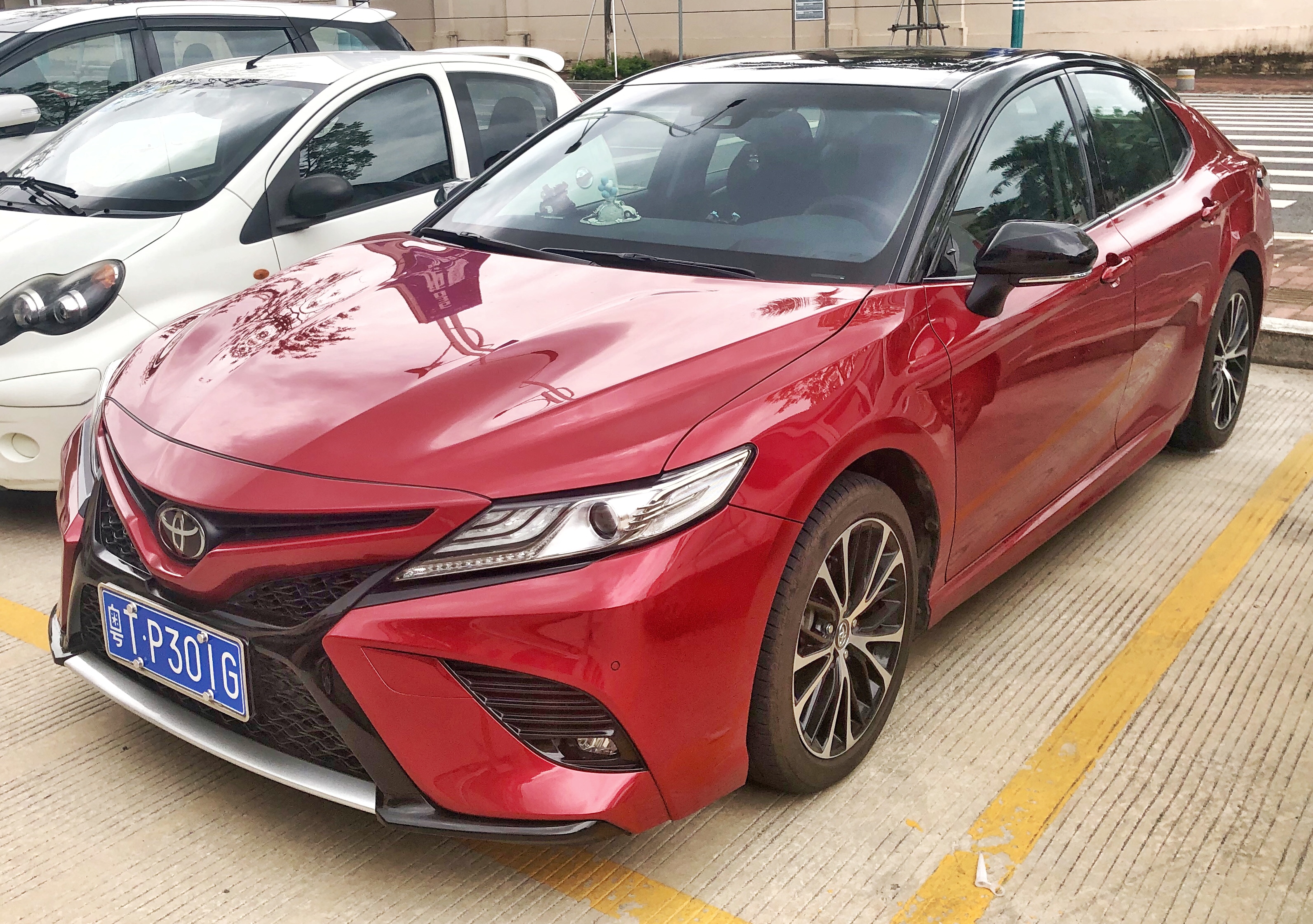
The Toyota Camry is a regular passenger car (a sedan) meant for everyday driving. A 1991 Camry is an older version, but it’s still the same basic idea: comfortable transportation for commuting and errands. It often gets mentioned because many people find them straightforward to own.
The Volkswagen Passat is a sedan, meaning it’s a car designed mainly for carrying people comfortably on everyday trips. It’s meant to be practical, like a commuter car, rather than a special-purpose vehicle. The discussion in the podcast is about whether it’s a good choice despite how some people label it.
Car
94 Mazda B3000 pickup
This is a Mazda pickup truck from the early 1990s. The caller says their clutch system was replaced, but it still wouldn’t let them shift correctly.
The throw out bearing is a clutch part that helps the clutch engage and disengage when you press the pedal. If it fails, the car can be hard or impossible to shift.
This is the clutch’s hydraulic part that uses fluid pressure to move the clutch. If it’s low on fluid because of a leak, the clutch won’t work right and you may not be able to shift.
Brake fluid is the hydraulic fluid that helps pressure move through the system. Some cars use the same type of fluid for the clutch, so using the right one is important.
Term
pumped it up
When someone “pumps it up” after adding fluid, they’re trying to get the clutch system working again by restoring pressure. If it still leaks or feels wrong, the system may need bleeding.
A master cylinder is the main hydraulic part that creates pressure when you press the clutch pedal. If it leaks, the clutch may not work properly because there isn’t enough pressure in the system.
A slave cylinder is a small hydraulic part that helps move the clutch. If it leaks, the clutch hydraulics can run low, and the clutch may start acting weird or stop working right.
When a clutch hydraulic part is leaking, it means fluid is getting out of the system. As fluid level drops, the clutch can start working poorly and eventually may stop working.
If your engine oil level suddenly keeps going up, it can mean something got mixed into the oil. In this case, it sounds like transmission fluid may have ended up in the engine oil.
It’s a line that moves the transmission fluid to a cooler so the fluid doesn’t get too hot. If that line cracks or leaks, the fluid can spill into the engine’s cooling system.
The radiator is part of the car’s cooling system that helps get heat out of the engine. If something leaks into it, it can mess up how well the engine stays cool.
Rust is corrosion—metal breaking down over time. If you see rust-colored coolant or fluid, it can mean the system is corroding inside and needs attention.
Ethylene glycol is the antifreeze inside the engine’s cooling system. It keeps the coolant from freezing or boiling over, and if it looks weird, it can mean the coolant isn’t in good shape.
They’re talking about parts in the ignition system that help deliver the spark to the engine. If those contacts turn black, the car may run badly or fail to start, especially when conditions change.
Black buildup on ignition contacts usually means the spark is arcing in a dirty or inefficient way. That can make the ignition less reliable, so the engine may stall and then refuse to restart.
Brand
Weber Cabaret
Weber is a company that makes carburetors. In this story, they think the problem is inside the Weber carburetor setup—specifically a part that’s supposed to help the engine run well at different temperatures.
A temperature compensator is a part that helps the car adjust how much fuel it uses depending on temperature. If it’s not working right, the engine can start fine at one temperature but struggle at others.
The BMW 2002 Ti is an older BMW from the 1970s that car fans love. It’s a small, fun-to-drive coupe, and the “Ti” version was the more performance-oriented trim.
Carburettors are parts that mix fuel with air so the engine can burn it. If the carburettors are fixed, the engine should run better and respond more normally when you press the gas.
After you install new brake parts, they don’t always work perfectly right away. They need a little time to rub in and match the rotor, so braking gets better as you use them.
Seating means the new brake material is rubbing in to match the metal rotor surface. When that happens, braking becomes more predictable and effective.
Braking effectiveness is basically how well the brakes stop the car. With brand-new pads, it can start off weaker or inconsistent until everything rubs in properly.
They’re talking about the early “break-in” time right after new brakes go on. The point is that brakes should bed in quickly, not after a huge mileage number.
LIVE
Hello and welcome to Car Talk from National Public Radio with us, Click and Clack the
Tablet Brothers, and we're broadcasting this week from the Murky Gender Research Department.
Oh, I thought it was the Murky Gender.
Murky Gender.
The Murky Gender Research Department here at Car Talk Plaza, and a very interesting
issue was raised this week in a letter that we received from someone named Amy Doyle.
And you know that I'm very interested in gender.
It's one of my favorite subjects.
But here's the deal.
Dear Tom and Ray, I recently helped my son buy his first car, a beautiful 1991 Toyota Camry.
Lately it seems I can't go anywhere without seeing these cars, so I thought that was a
pretty good selling point.
Anyway, when I told a guy I work with, what car my son bought, he nodded knowingly and
said, great car, but it's a girl car.
I know men are much more hung up on these things than women are, not just with their
cars, but in everything they do, say, wear, you name it.
It's these ill-defined yet well-understood principles that keep my husband from ever
wearing pink clothes or pleated dockers.
From ever going to the mall alone with another guy.
They can go to a bar alone, but not a restaurant.
And God forbid a guy should drive a girl car.
So I ask you, since my son has obviously flubbed that one, what are the criteria by
which one can distinguish a girl car?
And while we're on the subject, what other things should my son know about this stuff?
Okay, now we have discussed this at Great Lent here at Car Talk Plaza.
With Paul Murkey.
We have.
Oh, we have.
I think we sent you an email about it.
You haven't gotten to that email yet.
Have you learned how to delete the emails?
Oh, I'm good at deleting.
Because you must have five or 6000
Oh, no, I'm good at deleting.
Here's the deal.
I mean, we had a similar situation with a friend of ours.
Our friend Tony has a son named Jonathan, and they were going to buy, what was it?
A golf.
A golf.
With a four-cylinder turbo.
Yeah.
Very nice car.
And he's all set to go, and he is ready to buy it.
And someone mentions to him at school, wherever he goes to school, that two-bit school out
west there.
You see LAS.
I don't know.
I don't know where it is.
Oh, his cousin says.
Oh, his cousin.
He says, you can't buy that car.
That's a chick car.
And my son recently was looking at cars, and I recommended to him a Passat.
But he said, oh, chick car.
So our question is, I mean, Amy wants to know, and we want to know too, what cars are chick
cars and what cars are guy cars?
We just need nominations.
I think that a Toyota Camry is a chick car, and we just need you to write to us, either
buy, how do they write to us?
We have an address.
Right.
You can write to Car Talk Plaza, Box 3500, Harvard Square, Cambridge.
Yeah.
Our fair city.
Matt, 02238, and indicate on the envelope that it's not a puzzler submission.
You can say this is a chick car, guy car survey.
Or email us from the CarTalk section of cars.com.
This is a very, very interesting issue.
How come some people know, and some people don't?
I mean, is this something that, some divine intervention, you get a voice saying, that's
a chick car.
Well, I don't, well, I mean, I feel free to include that in any information you send
us.
Yeah.
I mean, I always hear voices saying, hey, jerk, that's your wife, the person walking
next to me on the sidewalk.
If you want to call us about the gender of your car, or how you arrived, how anyone would
arrive at the gender of your car, or about its immigrant workings, you can call us at
888-CAR-TALK, that's 888-227-8255, a lawyer on Car Talk.
Hi, this is Sharon from Fort Worth, Texas.
Hi, Sharon.
We haven't had a call from Texas for a long time.
Oh, well, I used to live up there.
Well, we won't tell anyone.
Okay.
So what's going on?
Well, I have a 94 Mazda B3000 pickup.
Yeah.
That we just replaced all the clutch mechanism, too.
The clutch, the throw out bearing, and the pressure plate, because I couldn't shift.
Okay.
So I drove it for a couple of weeks, and all of a sudden I couldn't shift again.
Oh, my gosh, I burned this thing up in two weeks, and my husband said, no, don't worry
about it.
It's the hydraulic clutch fluid cylinder, the reservoir, okay?
Yes.
And it was dry.
So I put the brake fluid in, that's what you used, that three, and pumped it up, and
now it's driving okay, but it still is leaking out.
So I called a Mazda dealer, the service department at Mazda, and he said, actually, you have
two of those.
There's an upper one and a lower one.
No, there's a slave cylinder and a master cylinder.
We don't like that terminology, but that's what it is.
It's politically incorrect.
There's a predominant and a subservient.
Okay.
So one of those is leaking.
I think the bottom one is leaking.
So my question is, can I just go ahead and keep driving and just keep filling it up,
and it won't hurt it if it just keeps leaking out as long as I keep...
No, but eventually it'll start leaking out so fast that you'll have to have your arm
out the window with the can.
Okay.
You know, I mean, that's a drag, you know?
And I guess the other question that comes to mind is, is it doing now what it did before
you spent the 500 bucks for the clutch?
Well, it was 200 because they put it in, yes it is.
And I've been thinking that, going, well, but it was worn.
He looked at the parts when they took them out and it was my husband and my brother-in-law
that did it.
Oh.
And they were worn.
Those knuckleheads.
Oh.
So they did this in the driveway.
So you couldn't shift and they said, well, she needs a clutch.
Well, he drove it.
He drove it too.
And what was happening when you say you couldn't shift if you put your foot, the engine's running.
The engine's running.
You put your foot on the clutch.
And it would grind.
And it wouldn't go out of neutral in any direction.
Yeah.
Just grind.
You needed a clutch master cylinder.
That's what, yeah.
And you still need one.
I still need one.
But let's not, wait, let's not, let's not.
I mean, those guys spent a good weekend, like Saturday afternoon.
Oh, and they probably smashed their fingers.
They got all kinds of injuries, exactly.
They probably ruined $300 worth of clothes.
A small fire.
They probably had a small fire.
They had to go out and buy at least $1,000 worth of equipment.
And tools.
And tools.
They did have the tools.
Yeah.
So we're not, we're not even going to suggest that what they did was unnecessary.
We're just going to say that you do need a slave cylinder, just like you did last week.
And a master cylinder too, perhaps.
Probably both of them.
Yeah.
Oh yeah.
I would, I would do both.
Do both.
Why not?
And they should have never mind.
Never mind.
See ya, Sharon.
Okay.
Bye.
Bye, bye.
Thank you.
1888 car talk.
That's 888227
Hey, you want a new way to give the number?
Yeah.
8255
D, click a clock.
I noticed Tommy's been playing with various ways to state your phone number.
Not me.
It's Ramey has been playing with various ways of stating the phone.
Perhaps you've already thought of this one.
Roman numerals.
I can only find Roman numerals up through a thousand.
So I had to segment your number the way the phone company does it.
Rather than write 111 digit number.
Okay.
And here it is.
I.
I'm writing this down.
That's one.
Yeah.
DCC.
C.
C, right.
LXXX.
VIII.
CCXX.
VIII.
MMM.
Yeah, I know.
That's just the area code.
Okay.
Well, that's why that civilization crumbled.
The numbering system.
I.
I.
Yeah.
Hello.
You're on cart talk.
Hi there.
This is Peter from Boston.
Boston.
Boston Mass.
Actually Dorchester.
Dorch.
What part of Dorch?
Do you know Dorchester?
Fields Corner.
You're classic then.
I'm a lower mills.
Lower mills.
Not far away.
No.
Not far away.
Very good.
Yeah.
So what's up?
Well, I'm calling because I have a 1994 Explorer, Ford Explorer that is doing some pretty crazy
stuff.
It isn't doing any back flips or anything.
No.
All right.
Blue smoke is kind of puffing out of my car when I started.
I've been putting transmission fluid in it because it seemed like it was slipping a little
bit.
And I couldn't see any leaks or anything.
But the strange thing is that I noticed that my oil was getting higher and higher and higher.
And I know it sounds totally crazy, but when I changed my oil, it completely overflowed.
You know, like there was 10 quarts in there.
Yeah, because you were adding the transmission fluid to the oil, to the engine oil.
It seems like it, but somebody told me that was totally impossible.
No.
Oh, you kidding me?
We do it all the time.
Well, wait, how did you, where did you add the transmission fluid?
Well, I didn't put it in the crankcase.
I don't, but maybe you did.
Maybe you did.
You wouldn't be the first one that's done it.
No, I put the tranny where the tranny fluid goes, you know, in the oil in the crankcase.
You pulled out the dipstick for the tranny.
Yep.
Okay.
And you put a funnel in there.
Yeah.
Okay.
This is good.
This could be good.
I put a lot of the transmission fluid in this car to disappear.
Well, see, I mean, if you put a lot of transmission fluid in, you don't have a leak, and there's
no way really for the transmission to burn it.
So if it ain't leaking out and you're adding more, but the level isn't going up, but the
oil level is going up.
I have a solution.
I have an answer to it.
Yeah.
Yeah.
You ready for this?
Yeah.
You got two problems, man.
The transmission cooler line is leaking into the...
Oh, God, you...
That stick with me on this.
No, no, don't even go there.
Don't even go there.
It's leaking into the radiator.
Yeah.
And he's got a cracked block.
Oh, he might as well.
He might as well...
Head gas.
Peter, fall in your sword, man.
Life as you know it is over.
Actually, I can tell you that I did just notice something.
So you might...
I think you might be close here, although somebody told me this wasn't the case.
I looked in the radiator overflow.
And it's red.
And it was all brown.
And I said, that's it.
It's coming in my radio and some mechanic said, no, no, that's rust.
Well it could be rust.
But it could be that the orange ethylene glycol and the red transmission fluid have turned,
the leaves have turned to brown.
Oh, I don't like it.
I mean, I don't like it.
I don't like it.
See, let me go back and ask you another question.
You say you add transmission fluid to this thing all the time.
Do you ever add engine oil?
Oh, yeah.
Well, I changed the oil.
But no.
Between changes.
No.
But you say it's blowing smoke out the back.
Blue smoke up the tailpipe?
Well, it does it two times.
One, when you start it, you get a puff of smoke.
And when you accelerate it?
If you happen to accelerate it rapidly.
Right.
I have stopped traffic with this car.
You have like 128,000 miles on this thing?
About.
Yeah, 130.
Yeah.
Well, I think you need a ring job.
Number one.
And I think a couple of times when you weren't thinking right, Peter, you put that funnel
in the...
He didn't.
Come on.
Peter has been putting automatic transmission fluid in vehicles for 20 years.
He knows where to put it.
No.
Pete.
Pete.
Pete.
We'll be...
We'll give us your address after we go.
Are you in low mills right now?
I am.
Can you drive over here?
Can you be here in half an hour?
Can you be here in half an hour?
In a minute.
Yeah, we want to see this...
We want to see this hole that you put the transmission oil in.
And you're going to say, oh, what a dope I am.
Well, so...
So, is this a new radiator or is this a ripping engine apart?
Well, if my brother has a remote chance of being right, you need to have someone do a
head gasket test.
When that test comes out negative, then you got to go back to square one.
But my feeling is occasionally you put it in the wrong thing, and especially if you're
not adding oil to it, the oil level goes up and up and up.
If you called Exxon, they may want to talk to you.
Or call OPEC.
They might want to talk to you too.
I don't know, Peter.
Peter.
Drive over here.
I want to look.
All right.
We'll talk.
See you.
Thank you.
I mean, it isn't often that we can say drive over here.
It's only fair that we should have them come over here because...
The offer's open to anyone.
It's open to anyone.
You want it from Cincinnati?
Drive over.
Okay.
It seems you need a little time out right now.
I don't think...
Is this so I can think about all the wrong answers that I've come up with today?
Well, not really.
We only have a minute.
We'll be right back.
Hi.
We're back.
You're listening to Car Talk with us.
Click and Clack.
We're here with the Tapper Brothers and we're here to talk about cars, car repair and the
answer to last week's puzzler.
This one was from the Baseball Algebraic series.
There aren't many of those.
No.
No.
This is the only one.
Stay the long.
A series of one.
Here it is.
There are two rookie players and we call them Bluto and Popeye.
On opening day, they made a wager on who would have the best batting average at the end
of the season.
So, here it is.
It's the last game of the season and nothing's going to change because neither of these guys
is in the starting lineup.
So, Bluto says, hey, Popeye, what did you bat for the first half of the season?
Popeye says, I am what I am and that's all that I am and I bat at 250.
Bluto says, I got you there.
I batted 300.
Then Bluto asks, how about after the all-star break?
And Popeye proudly pipes up, I batted 375.
Bluto says, pretty good.
You know what I batted?
400.
Falk over that 20 bucks that we batted.
And I believe you also said that they had the same number of at-bats.
I did.
It was then that Dougie the Bat Boy saw it over and says, don't pay the 20 bucks.
I think you won.
How could that be?
And how many times did they hit him with the bat?
Well here it is.
Go ahead, man.
I can hardly wait.
Let's assume that they both had 600 at-bats.
Is that a lot?
No, it's about average for a guy who plays the whole season except for the last game.
Okay, that's 600 at-bats.
If Bluto batted 300 for the first half of the season and he had 500 at-bats during that
first half of the season, he had got 150 hits.
150 over 500 is 300 average, right?
I would have got 150.
Yeah, okay.
If Popeye batted 250, it had 100 at-bats, he would have had 25 for 100.
Uh-huh.
Okay.
You with me so far?
I'm with you.
Second half of the season.
Bluto bats 400.
How does he do that?
Well, we know he had 500 at-bats in the first half.
So he's only been up 100 times in the second half of the season.
And he got 40 hits.
And he got 40 hits.
Got it.
Popeye bats 375.
But he's up 500 times.
And he gets 187 and a half hits.
One of them was a cheque swing single over the infield, they don't count that as half
a hit.
Yeah.
So now let's figure it all out.
So we got Bluto batted 600 times, how many total hits did he get?
190 I have.
Right.
How about Popeye?
How many hits did he get?
Uh, 212.
212.5.
And a half.
And a half.
And when you figure that out, Bluto batted 316 for the season, right, even though he
batted 300 and 400 in each half.
Yeah.
And Popeye bats 353.
And when's the batting title?
No kidding.
Pretty good, huh?
Pretty darn good.
A good little example of the arithmetic mean.
And what it means to me.
And how statistics can lie, more importantly, wow.
That's good.
Now you know that every fifth grade teacher in the country will be using this problem
next week.
I hope so.
I hope so.
Because it's a good one.
And what they should do is take bets, teach the kids about betting.
Right.
And they should give odds, teach the kid about odds.
They can cover all the bases so to speak.
So who's our winner?
The winner is Mike Bennett from Dallas, Texas.
And for having his answer selected at random from among all the correct answers, Mike
is going to get a $25 gift certificate to the store at the cartalk section of cars.com.
And with that $25 gift certificate, he can get a car talk disappearing hairline coverup
kit, also known as the embroidered car talk baseball cap.
And by the way, if you'd like information on any of the taste optional items we occasionally
mentioned on the show, you can always visit the store at the cartalk section of cars.com
yourself.
Or you can call 888-CAR-JUNK.
Yeah.
Wow.
Well, anyway, we'll have a new, I want to describe this puzzle from the home appliance
realm.
Oh, the home appliance algebraic series.
Yeah.
That puzzle will be coming up in the third half of today's show.
So keep listening because it's a long ways off.
Hey, do you know what time it is?
Time to set up a quick wedding chapel in the oil change bay.
No, no, no, but I do like the idea.
It's time to play Stump the Chumps.
This is the part of the show where we bring back a caller from a previous show to see
if our advice was, as we say, all stock quality.
I thought you were going to call him back from the dead.
Or if our performance was double A Trenton.
So who's our lucky player this week?
The lucky player is Bill Lee, the one and only Spaceman.
Excellent.
Bill Lee was a star pitcher for the Red Sox in the 1970s.
Yeah, he's still a big star.
He told us he was recently named best ball player over 50 on the planet.
But he didn't say which planet did he know?
Well, our buddy Bill is living in northern Vermont somewhere.
He's still driving an old beat up 74 BMW, which was part of the trade that brought him
to Montreal, I think, and something like that.
I forget who we got, but they got Bill Lee a 74 2002 and a couple of snow tires to be
named later.
Anyway, Bill Lee called us to say the car ran fine when it was freezing, a hot out,
but it wouldn't start in between.
We interrogated him with our usual penetrating line, deep of questions.
And then it'll run really rough and then it'll come, it'll die and then it won't start
again.
And I'm wondering if it's the rotor because I'm going through rotor caps real quick.
You are?
What happens to them?
The contacts get all black?
Yes.
And that happens within like 5,000 miles?
Yes.
Why did I ask him those questions?
Never ask a question if you don't know the answer to it.
My lawyer tells me.
So what do we finally decide was wrong?
I thought it was the Weber's.
I thought it was the Cabaret's.
And for once you agreed with me, you suggested the temperature compensator in the Weber
Cabaret is, and we hammed it hard and we told him the problem is in the Weber Cabaret.
You led me astray.
So let's find out how we did.
Bill Lee, are you there?
Yes, I am.
And I'm at my lawyer's office right now.
Look, before we find out if we threw one over the backstop here, we need to make sure that
the answer you're about to give has not been influenced by, of course, our staff, the
staff of National Public Radio, or any of the multitude of attorneys for George Steinbrenner.
Well, it definitely isn't.
And boys, I want to tell you, I've listened to your show a lot, and maybe with a win here,
you can guys can hit over 200 over the Mendoza line.
Well, was it the Cabaret's or not?
It was the Cabaret's.
Oh, my God!
So what did you do, man?
They were totally out of sync.
I went to one garage.
They said I had no compression.
They were terrible, and they had no compression because there's so much gasoline floating around
in there.
Washing down the cylinders.
Exactly.
I ended up taking it to the Greensboro garage, and they had worked on it back in the early
80s.
No.
Which is the last time it was worked on.
That's the last time it was worked on.
Because I go to Canada, you know, when I got traded for Stan Papi, I actually did gig
to BMW, and I went across the border with it.
Stan Papi?
I know.
Who the hell is?
Well, that's what they're saying in Montreal.
Who the hell is Bill Lee?
But at least when you were in Montreal, you could get all the Cuban cigars that you wanted.
And I just gave a couple to my lawyer.
It's actually working very good, but right now, the poor baby's in the middle of a custody
battle.
We'll stay away from that.
We have our own trouble.
What?
Neither one of you wants it?
No.
No, no.
It's actually, it's a fine vehicle, and it still runs, but the irony of the whole situation
is that her lawyer drives a 73 BMW 2002 Ti.
Oh.
That is a twist of fate, isn't it?
I'm telling you, this life is a twist of fate, and the funny thing is, I said, well,
I'll race you for it.
Now that you have the carburettors fixed, you may be able to win.
I will definitely win.
Well, if we come up to Vermont, I'll hit some fungos to you, Bill.
Hey, you guys come up and go to the Greensboro garage, and I guarantee they would love to
see you.
Guarantee that we'll find your car there.
Hey, thanks for playing Stump the Chumps.
You bet, boy.
Bill Lee, one of the greatest baseball players ever.
Indeed.
Or was it football?
Okay, Tommy, it's time for us to take a break.
Another break?
I don't need no stinking break.
No, for you, it's for the listeners.
Have a little mercy, will you?
Hi, we're back.
You're listening to Car Talk with us.
You may be back.
I ain't back.
Well, now let's click and collect the Tabbot Brothers, and we here to discuss cars, car
repair, and the new puzzler from the wonderful world of home appliances.
The home appliance slash algebraic.
Well, this isn't really a home appliance thing.
This is a real life thing that happened to me.
And it took me a while to figure it out, and I hope it takes our listeners even longer.
Some weeks ago, I was convinced by my younger son that we needed a new CD player for our
sound system, the one we had, according to him, wasn't good enough.
So we go out to the local store that sells these things, and we buy a replacement for
the perfectly good one we had.
Can I have the old one?
I'm getting to that.
So, we buy this thing, which takes three CDs instead of the one that, you know, so you
could load three in and it has a remote control and all that.
So we install the thing, and of course it works beautifully, and I'm about to call my
brother and offer for sale to him, for sale, the old one for a mere three or 400
I don't know what they are.
I should mention that all the electronics that I have are hand-me-downs from my brother.
Well, I decided to break the mold and sell them to you.
And then I had a brainstorm.
I said, wait a minute.
In my kitchen, I have one of these fancy radios, a Bose wave radio, but I was too cheap to
get the CD player, but now I have a CD player and a Bose radio, and I had the patch cords,
so I figured I'll just take the thing from the living room and put it in the kitchen.
And then your wife say, patches, we don't need no stinking patches.
So I do that, and I plug the thing in, and I put my favorite CD in the thing, and I...
Go to life.
No, my current favorite CD.
Don Williams.
No, I don't remember the name of the artist, but the song is I Go, I Go.
I Go, I Go, yes, yes.
And I put the thing in and I crank the volume up, and much of my disappointment, the thing
is skipping all over the place.
Oh.
And of course, it took 25 minutes to play the song as it kept skipping back to the beginning.
So I said, oh, bummer, there must be something wrong with that CD.
Well, your son told you it was no good.
So I throw another CD in the thing, and it plays perfectly.
Now I'm convinced that there's something wrong with my I Go, I Go CD.
So I go ahead and I put it into the new CD player.
It's perfect.
Mm-hmm.
I say, hmm, nothing wrong with that.
And then I did, I performed a couple of adjustments on the old CD player.
I dropped it a couple of times.
The time-ordered method.
You bang it, you drop it, you kick it.
You take the plugs out, you put them back in.
And I do that.
And I, again, I put my I Go, I Go CD in, and it skips all over the place, and then I put
my Tish Inahosa in, and it's perfect.
And I said, there's got to be something wrong with this CD, but there isn't anything wrong
with it.
There's got to be something wrong with my CD player, but there isn't anything wrong
with it.
And I said, how could moving the thing 50 feet from the living room to the kitchen possibly
have disturbed this thing and made it malfunction?
And the answer is, it did.
But not in the way you think.
Oh, that's a hint, isn't it?
Yeah.
Not in the way that you think.
And all the information is there.
And then some.
And that you need, and then a lot more that you really need to know at all.
We knew that.
Yeah.
Wow.
Now, if you think you know the answer, write it on a postcard or program it into a special
edition poundpilot, 78 megabyte memory, anodized aluminum body, and a 200
megahertz processor, and send it to Puzzler Tower, Car Talk Plaza, Box 3500, Harvard Square,
Cambridge.
Our facility.
MAT 02238.
Or, of course, you can email your answer from the Car Talk section of cars.com, 1-888-CAR-TALK.
That's the number to call.
That's 888-227-8255, a lawyer on Car Talk.
Hi, this is Colleen.
I'm calling from Lombard, Illinois.
Colleen.
Lombard, Illinois.
Lilac, capital of the world.
Oh, really?
No kidding.
Well, maybe not of the world.
For two weeks of the year.
Exactly.
Yeah.
I mean, Lilacs are great, but.
They're kind of short-lived.
I mean, two weeks.
Come on.
Unfortunately, almost every year we have a Lilac festival, and we have a parade and
everything.
And the last few years have died before the end of the time.
Right?
Well, I know that we have them in our yard, and usually you have to dig them out of the
snow to see them, because it's the snow on the ground.
That's a bad thing.
Yeah, well.
Anyway, Colleen, what can we do?
Well, here's, I don't know what you can do.
I'm not really sure if this question is about my dad's car or about my dad.
Oh.
So here's the deal.
I called the other day and I said, listen, you guys want to go to the show, and I was
going to take him to Seaspace Cowboys.
He's 80.
My mom's 75.
He loves space.
He's bigger.
He'll have a good time.
He said, yeah, that's fine.
But I have to drive.
And I said, well, why is that?
And he says, well, because I just got a new pair of brakes.
And I said, well, what does that have to do with anything?
And he said, well, for the first 500 miles, I'm the only person that can drive the car.
Number one.
He tells me that.
I said, well, who told you that?
Well, my mechanic told me that.
I said, well, what's the other reason?
He said, well, you have to vary your speed for the first 500 miles from between 35 miles
an hour, 50, 45, whatever.
And I said, well, who?
He says, my mechanic.
And I said, dad, where are you driving like this?
He says, I'm 59.
He's right outside of his house.
50 miles an hour there.
And so he's going 35, 50, 40, 30.
I'm like, dad, one of two things is going to happen.
Hey, you're going to get killed or you're going to kill somebody else.
Oh, someone's going to kill you.
There was option B at the very least.
You're going to really honk off a lot of people.
Plus, I don't believe that that's true.
Who's his mechanic?
Yeah, I think maybe he was just trying to get him to leave the shop.
So he said, you know, my dad's trying to talk him into it.
So basically, I should drive the car only, right?
The guy's going, yeah, yeah.
Exactly.
I don't know.
We frequently do that with my brother.
Okay.
So the issues are A, if you get new brakes, should one person only drive the car?
Yeah.
And it's a 98 Chevy Lumina in case you care.
We knew that.
B, do you have to vary the speed that you drive at if you get new brakes?
And C, how are we going to break this to dad?
Well, to be fair to dad and his mechanic, modern brakes do require a break-in period.
Okay.
But that's usually accomplished by the guy who put the brakes in.
And frequently, we will put new brakes on a car and we'll take it out.
And the first few stops are not very good.
And the brakes do require a wearing-in period because these new fangled metallic brakes
do require that they seat into the disc rotors, especially if the rotors have been machined.
They have to kind of find a home.
And the braking effectiveness is improved as the brakes wear in.
But this happens very fast.
And first of all, to describe it in terms of miles doesn't make any sense because what
if he got into his car and drove 500 miles without stopping?
Yeah.
And usually this breaking period is accomplished.
Well, we take a car out by the time we've test driven it for 10 or 15 minutes.
The brakes have sufficiently broken in.
And if they haven't, then there's something wrong.
So the idea that 500 miles and one driver has to do it is insane.
I think, Colleen, he doesn't like the way you drive.
No, actually, he told me it would be fine after the 500 miles.
I don't think so.
There'll be another excuse.
I mean, don't forget, you could have driven over there and taken them in your car.
No, I have a pickup.
Oh, they can't get into it.
But it will only fit two people comfortably.
Are they the ones who suggested the pickup?
No.
Because that would preclude your driving, wouldn't it?
It would.
Yeah, I think that it goes, I don't think, I think Dad made the whole thing up.
You think it goes deeper than that?
I think it goes real deep.
And you drive stinko.
And they want to keep you away from the car when they're in it, at least.
In any event, if you went to the movies that night, then the brakes are already broken in.
Yeah, well, we didn't.
So I'm waiting for the break-in period so I can drive.
Oh, what are you going to see?
Space Cowboys?
It'll be in video by the time you guys get to see it.
All right, well, thank you guys.
All right.
Colleen, thanks for calling.
1-888.
It's going to be her driving.
Yeah, oh yeah, she's going to be a wacko.
Yeah.
Like Lucille, our sister Lucille.
Whenever someone has to go someplace, Lucille will say, oh, I'll drive.
Oh, no.
No, that's all right.
Even though she's got the only car that carries a lot of people.
Yeah.
We went out and bought a little bus.
Just so she wouldn't say, well, everyone will fit in my car.
I don't know.
We'll be much more comfortable in the school bus.
Right.
Well, it's happened again.
You've misallocated another perfectly good hour listening to car talk.
I like that.
I like it.
Our esteemed producer has dug the subway fusion of not a slave to fashion.
Punk and Lips Berman.
Our associate producer is our Louis Cronin, the barbarian.
And David, all offers considered green.
He doesn't sell the social.
Our engineer is Tad Shrimp Curry.
Our senior web lackey is Doug, the old gray mayor and our technical,
spiritual and menu advisor.
Just back from his record-breaking walk for hunger.
W-O-K.
At the greater Raynam stir fry is John Bugsy Lawler.
Our public opinion pollster is Paul Murky of Murky Research,
assisted by statistician Marge and O'Vara.
Our customer care representative is Haywood Jabuzoff.
Our director of new product repair is Warren T. Myfoot.
Our shop foreman is Luke Busy.
Our new truck reviewer is Zabignu Rigg.
And our director of Firestone Tirey calls is Ivana Michelin.
Our student consultant is Noam Diploum.
Our divorce attorney is Carmine Notyours.
Our bungee jumping instructor is Hugo First.
The Car Talk travel agent is Lois Fair available.
Our Russian chauffeur is Peacoff and Dropoff.
The bank of our Car Talk Plaza poker games is Nikolai Putin.
And our C-Pushing tester, of course, is Mike Easter.
Our chief counsel from the law firm of Dewey Cheetahman.
How is you, Lois Dewey?
Known to the out-of-work physicists in Harvard Square.
As you and Lois Dewey, thanks so much for listening.
We're clicking clack for Tapper Brothers and whatever you do.
Don't drive like my brother.
And I have some advice. Don't drive like my brother.
We'll be back next week. Bye-bye.
Car Talk is a production of Dewey Cheetahman How and WBUR in Boston.
And even though the Dalai Lama says you see, life is suffering.
Whenever he hears us say it, this isn't PR.
National Public Radio.
About this episode
A listener’s “girl car” question kicks things off, then the show dives into real brake know-how. The hosts explain that “modern brakes do require a break-in period,” and that new pads need time to seat into machined rotors so braking effectiveness improves quickly. They also discuss a mechanic’s advice for the first 500 miles—varying speed and limiting who can drive—using a 1998 Chevy Lumina example. The segment stays practical, with quick, test-drive timing rather than long mileage rules.
Colleen’s 85-yr-old dad was told by his mechanic that to properly ‘break-in his brakes’ he should be varying his speed between 30-50mph and applying the brakes periodically for several days of driving. So dad has been dutifully out on the local freeway causing mayhem by applying the brakes willy nilly and going well under the speed limit. Is dad’s mechanic correct -and is it time to plan dear old dad’s final services? Find out on this episode of the Best of Car Talk.
See pcm.adswizz.com for information about our collection and use of personal data for sponsorship and to manage your podcast sponsorship preferences.