They’re talking about reducing or transforming what comes out of the car’s exhaust. The device is meant to make the exhaust less polluting by changing what’s in it.
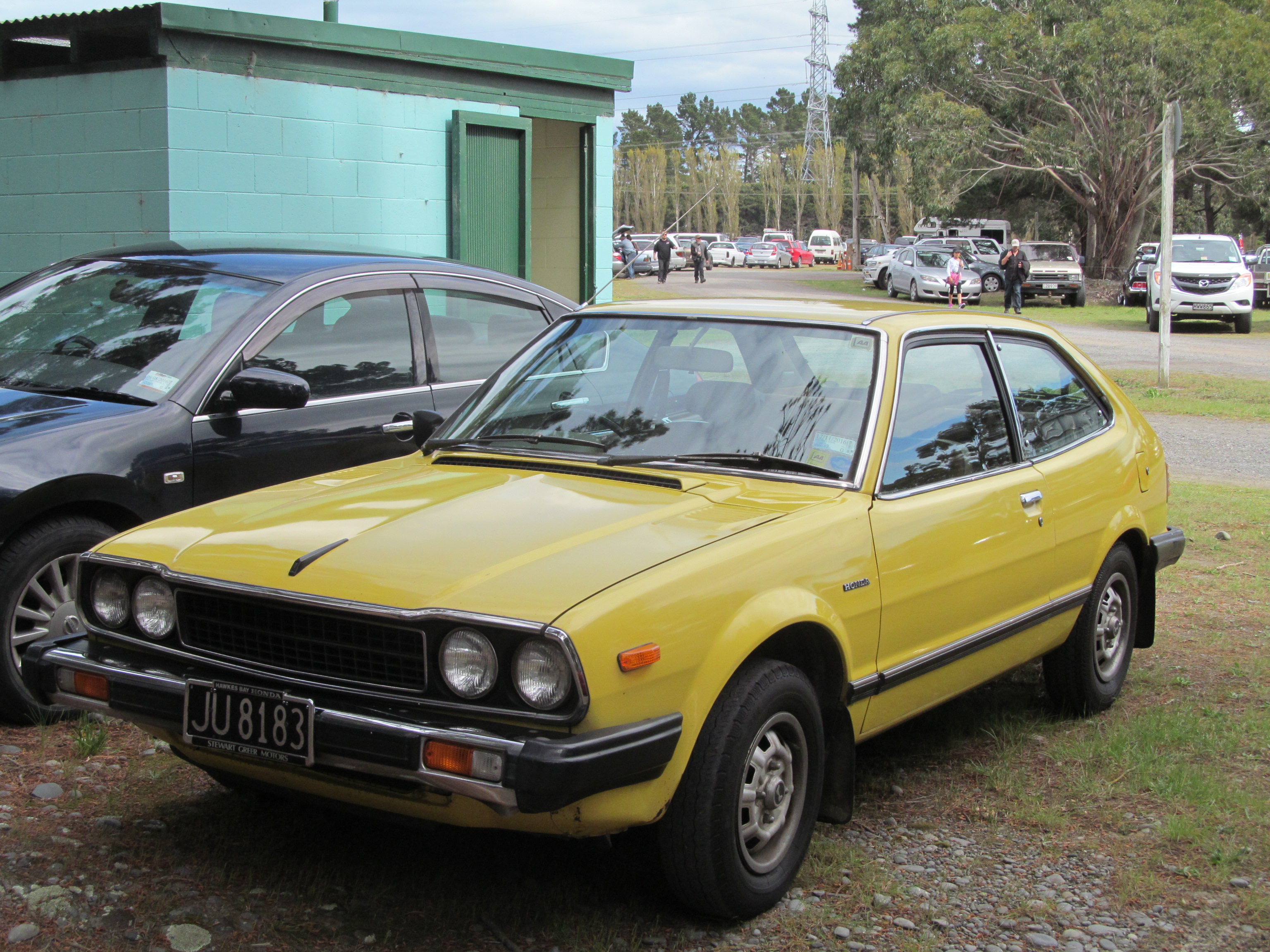
The Honda Accord is a regular passenger car meant for everyday driving. The podcast mentions a 1996 Accord LX with over 100,000 miles, which is a lot of use for a car. Stories like this usually focus on what happens as the car gets older and how it holds up.
An engine misfire means the engine doesn’t ignite the fuel in a cylinder the way it should. When that happens, the engine can shake and the car may feel like it’s jerking. If it keeps happening, it can also cause loud noises or strong vibrations.
A spark plug is what makes the gasoline engine “light off” the fuel at the right moment. If it’s not sparking properly, the engine can run unevenly and feel like it’s shaking or jerking. That uneven running can also make the car feel like it’s getting nudged or lurching.
Misfiring is the condition where a cylinder fails to ignite during its power cycle. Because the engine’s torque output drops during the misfire and returns when it fires correctly again, the car can feel like it’s being nudged or surging. In the segment, the host ties misfiring to repeated “boom, boom” bumps and a jerking sensation.
The exhaust system is the set of parts that carries the engine’s fumes out of the car. If the engine is shaking a lot, those vibrations can travel to the exhaust parts under the car. That can make loud bangs or booming noises.
The crankshaft is the main rotating part inside the engine that turns the pistons’ motion into the motion that drives the car. When the engine misfires, the power delivery changes from one crankshaft cycle to the next. That’s why the car can feel like it’s jerking or surging repeatedly.
The clutch is the pedal/part you use to smoothly start moving in a manual car. If it makes clacking noises when you let it out, something in the clutch or drivetrain may be worn or not adjusted right.
RPMs tell you how fast the engine is spinning. They’re saying they have to rev the engine higher than normal to get the car moving without the clunking noise.
A stall is when the engine dies and the car stops running. Here, if you don’t give the engine enough revs before letting out the clutch, it can’t keep turning and it shuts off.
An engine misfire means the engine doesn’t burn fuel correctly in one or more cylinders. The result can be rough running or hesitation, like the car feels like it’s not pulling smoothly.
Running rich means the engine is getting too much fuel compared to the air. That can make the engine run rough and burn dirty, and it can be triggered by certain driving situations.
It means the engine is burning too much fuel compared to how much air it’s taking in. When that happens, the spark plugs can get dirty (fouled), and the car may run rough. The car tries to fix it automatically, but sometimes the sensors can make it worse.
Spark plugs can get dirty from combustion byproducts. When they’re dirty, they don’t ignite the fuel-air mixture as well, so the engine can run poorly. Excess fuel can cause this.
The oxygen sensor checks what’s coming out of the exhaust and helps the car decide how much fuel to add. If it’s reading incorrectly, the car may add too much fuel (or too little), which can make the engine run badly. That’s why a bad sensor can cause mixture problems.
Leaning out means the car is trying to use less fuel for the same amount of air. The computer does this to keep the engine running cleanly. If the sensor is wrong, it can lean the mixture too much and cause problems.
A tune-up is a service meant to get the engine running right again. It often includes things like checking or replacing spark plugs and making sure key sensors and settings are correct. Mechanics suggest it when the car starts running rough or acting up.
Term
38,000 miles
They’re using the car’s mileage to say it’s about time for routine maintenance. Some parts wear out gradually, and around this kind of mileage a tune-up may be due. It’s more of a “when to check” clue than a diagnosis by itself.
A Ford Explorer is a popular SUV. Here, the story is about the transmission fluid vanishing and the car acting like it’s slipping, which usually means something is wrong in the transmission system—either a leak or an internal problem.
Transmission fluid is the liquid that helps the transmission work smoothly. If it keeps running out, the car may shift poorly or slip, and it can also mean the fluid is going somewhere it shouldn’t be.
Oil is what keeps the engine parts from grinding against each other. If the oil level keeps rising by itself, it can mean something is mixing into the oil—like another fluid leaking into the engine.
Automatic transmissions use fluid to work. Some cars route that fluid through a small cooler to keep it from overheating, using lines/hoses. If a line leaks, the fluid can end up where it shouldn’t.
The crankcase is the lower part of the engine that houses the crankshaft and collects oil. If something like transmission fluid gets into the crankcase, it can dilute the engine oil and cause lubrication problems.
A cooler tube is a line that helps move transmission fluid through a cooler so it doesn’t get too hot. If it corrodes or leaks, you can get smoke and transmission problems.
Corroded means the metal is rusting or breaking down from chemicals and moisture. If a transmission line corrodes, it can start leaking and cause smoke.
The head gasket is a seal that keeps different engine fluids and gases from mixing. If it fails, you can get smoke and other serious engine problems that usually need a mechanic to fix.
On some older automatic cars, a vacuum modulator helps the transmission shift smoothly using engine vacuum. If the inside diaphragm breaks, transmission fluid can leak where it shouldn’t, which can cause smoke and missing transmission fluid.
Tranny fluid is the special fluid an automatic transmission uses to do its shifting. If it leaks out, you can get smoke and you’ll notice the transmission fluid level dropping.
A dipstick is a simple tool you pull out to check how much fluid is in the engine. If it’s overfilled, there can be too much oil, which may cause smoke and other problems.
LIVE
The World Cup is back in the U.S., and the NPR network is covering the fans,
the tensions.
When two teams take the field, their nation's histories take the field alongside them.
The local transformations.
Just world-class soccer, right here.
And of course, the games.
Follow along on and off the pitch with the NPR app.
Hello and welcome to Choir Talk from National Public Radio with us,
Click and Clack the Tapet Brothers, and we're broadcasting this week from the Department
of Research, Development, and Precious Gems here at Choir Talk Plaza.
You know, this...
It's the National Department, you know.
I mean, I mean...
Oh, of course.
We have departments for everything.
Indeed.
And do we have someone staffing all these departments?
How many people do we have here?
Louis Cronin takes care of all of them.
Well, I have news here that could be on a par, it seems to me, with Pawns and Fleishman.
I mean, basically...
Oh, that's too bad.
I mean Pawns and Fleishman came out of nowhere and they said, well, forget about all that
stuff that you're doing.
We're going to make all the electricity you need in a tomato can, right?
Yeah, well...
Get this for news.
Dr. Elias Sioris and Dr. Carlos de Stifani of the Swinburne Institute of Technology
in Melbourne, Australia.
You said it was in Swinburne, Swindle?
Swindle, the Swindle Institute of Technology in Melbourne, Australia have invented a device
as big as a wine bottle.
You're with it already, don't you love it already?
I know the genesis of this device.
They drank the wine first.
It fits under your car and changes the emissions of your car.
Are you ready for this?
Yeah.
Into carbon and water.
Well, that sounds okay.
It's harmless.
It is a microwave emissions converter and heats up the exhaust to 5,000 degrees Kelvin.
The carbon particles are put into the exhaust pipe where the carbon is changed to industrial
grade diamonds.
Sonja, he's total.
Get out.
We're killing ourselves trying to solve the emissions problem.
These guys not only solve that problem, but as a little byproduct, they make industrial
grade diamonds.
So is the thing available at Kmart?
No, but Sears will be selling them in their auto repair centers any day.
Well, Dr. Elias Cioris and Dr. Carlos Testifani, my hat is off to you, gentlemen, you have
solved the world's problems.
Yes, indeed.
Man alive.
Well, if you've got any wacko theories you'd like to run by us.
Or some theory about your car, you can give us a call at 1-888-CARNTOCK.
That's 8-888-227-8255.
Hello, you're on Car Talk.
Hi, this is David White calling from False Church, Virginia.
Hi, David.
False Church.
Yes, sir.
What's happening, man?
Not much.
I think I'm cursed.
Oh, yeah, could be.
And I'll tell you why.
I have a 1996 Honda Accord LX with 116,000 miles on it.
A month ago, I went in for routine maintenance.
Let's see, I had breakwork done.
One tire and an oil change.
That was 250.
That's normal.
A week later, an oil seal blew.
That was $700.
A week after that, the clutch, the flywheel, and the master cylinder went.
Let's see, that was $1,000.
And that was on the way to my niece's christening.
Oh, this is getting exponential here.
Okay, last week, the starter motor bit the dust.
385.
I'm now at 2335.
And now, there's a bizarre noise coming from the left rear door panel.
Whenever I turn the ignition switch on or off for about 10 seconds, I hear this.
Just like that.
Dave.
Yeah.
Give up, man.
275.
Oh, more money.
Really?
Oh, yeah.
Yeah.
What's wrong now, I believe, is that your fuel pump is giving out.
Oh, no.
Okay.
Now, why would that be?
Why not?
How many miles you have in this car?
116,000.
116,000.
Yeah.
Well, it's, you know, I mean, it is a bad stroke of luck that all these things should
happen together.
Are they related in any way?
Only that you own the car.
Yeah, they're all related to you, but they aren't related in any way.
And none of them is really unexpected.
No, it's the right time for all these things to go.
With 116,000, the clutch went.
Expected the starter motor.
Sure, that's expected.
The seal that blew.
Sure, that can happen.
The fuel pump.
I mean, how long you think a fuel pump can last?
Yeah.
Okay.
And it's going to get worse, but it doesn't go on forever.
It doesn't.
Because eventually it will just die.
No, eventually you will have replaced everything that can be replaced.
Well, okay, then I'll go ahead and prepare to have the fuel pump replaced.
Oh, absolutely.
You have to do it.
What's the difference?
Yeah.
And think of how many new parts you have in the car now.
Sure.
It's exciting.
It's like getting new hips, new knees, new ankles or whatever.
Yeah, you could get another 10 years out of this car.
Wow.
Yeah, $2,500 a year.
Which is, by the way, a lot cheaper than making payments to the bank of $500 a month.
Well, it isn't $500 a month.
You could buy a newer cord probably for $350 a month.
Yeah.
So $350 a month.
Let's round it off.
Let's say $4,000.
$4,000.
So for eight cents more a day, you could be driving a new car.
Think about that, Dave.
Think about that.
See you later.
Well, thank you very much.
All right.
Bye.
So eight cents more a day, huh?
Yeah, something like that.
That's what falls out of your pocket when you sit on the sofa.
Exactly.
Stop watching TV.
You can buy two new cars.
One 888 car talk.
That's 888-227-8255.
Hello, you're on car talk.
Hi, this is Nicoletta from Portland, Oregon.
Nicoletta.
Nicoletta.
That's a nice name, isn't it?
Oh, thank you.
If you should, do people call you Nikki?
No, they call, well, they call me both.
Nicoletta's a very pretty name.
If I changed my name to Nicoletta, would people stop calling me what they currently call me?
No.
I would take Nikki.
So what's up?
I have an 89 Mazda minivan.
Yeah.
I have an intermittent jolt that runs underneath my seat.
And what this feels like is a strong heart palpitation kind of coming just like underneath
my seat.
And how many times does it palpitate at a time?
Like boom, boom.
It's different.
Yeah.
And my kids are in the car and the kids don't feel it.
And it's a series of bumps, like boom, boom, boom.
Well, it's kind of almost like a little jerking.
Like if you had gotten hit from behind.
Also, the vehicle feels like it wants to move forward?
Well, yeah, like a little jerk, maybe.
I haven't called that.
I think it's likely to be an engine miss where you have for a period of time you have
a spark plug that's misfiring.
And when that happens, the engine will shake.
And if you have the same plug that misfires five times in a row, it can shake enough to
cause even the exhaust system to hit the floor of the car or just enough to cause a boom,
boom, boom, boom, boom, boom.
And also, make it feel like you're being nudged from the back because every time the
engine misfires, it slows down.
And then when it fires correctly on the next rotation of the crankshaft, it picks up speed.
So if I had it tuned up like two months ago, which I did.
But I'm just now feeling it.
Well, did we do the tune up?
Because if we did it, it couldn't possibly be that.
You had this going on before and after?
No.
Not before.
So I can take it back to the guy and say, now I'm feeling this and you guys did a tune
up.
You should take care.
Well, it's not going to be easy for him to find because it does it so infrequently.
No, but I mean, it does it every day.
Well, then have him drive it for a day.
Leave it there and tell him to drive it.
She can't leave it there.
She's got three kids.
She's going to leave it there.
They have soccer games.
She's got soccer games to go to.
Well, next time it's class, hockey.
Come on.
All right.
Sorry.
I lost my head.
Well, take him for.
I can't leave this car.
No way.
You have to go for a ride.
And do you think that if you sat in the passenger seat that you would feel it?
Well, you know, I've got, I've got different age ranges of kids.
Yeah, that was my question.
The big kid even says she doesn't feel it.
How big is the big kid?
Yeah, 16.
Oh, so she doesn't feel it.
She's seven and a little kid seven and he thinks I'm nuts.
Well, all seven year old kids.
The 16 year old probably thinks she's nuts too, but she hasn't told you yet.
No, she just feels sorry for you.
She thinks she's so nuts that you'd be on hold.
Well, I would say.
She's just embarrassed to be in the minivan.
First of all, I don't think I'd be worried about it.
Oh, okay.
But I would try to get this fellow to drive it, the fellow who works on it, to drive
it and with you and the passengers.
And just see, even if you don't feel the thumping, he may, you may say, oh, yeah,
yeah, yeah, okay.
At least I know what it is now.
And I'm going to, I'm going to suggest to you that you tell them that it's,
it's an engine misfire.
Okay.
Good luck.
Well, I appreciate it.
Thanks.
Thanks for your call.
Bye bye.
Good luck to you.
All right, Tommy.
Do you remember last week's puzzler?
Wait a minute.
I don't know if I remember or not.
Did it have to do with Ricardo Montalban and the case of the missing shoe?
It did.
We'll be back in a minute.
Hi, we're back.
You're listening to Car Talk with us, Click and Clack, the Tappet Brothers.
And we're here to talk about cars, car repair and the answer to last week's puzzler.
Which was?
This was one of my series of coin toss puzzlers.
This is the first in the series.
With Bill Gates thrown into kind of obfuscate matters, but Bill Gates has a place here.
Of course.
Right.
Because he recognizes the power of two.
Exactly.
Anyway, here's the puzzler.
A fellow finds himself at a party at Bill Gates's house, standing next to the great
man himself.
And Gates says to him, hey, how many people do you think are here?
A fellow looks around and says, jeez, I don't know, 1,100?
And Gates says, that's right, you know, you're very good with numbers.
Are you into games of chance?
By any chance?
All in all, the fellow says the chances thing I get involved in is tossing a coin.
Gates says, well, do you think you could toss a coin 10 times in a row and call it correctly
every time?
The guy says, I don't think so.
I don't think so.
Gates says, well, do you want to make a bet?
Because I can do it.
After all, I'm Bill Gates and you're not.
The fellow declines and I don't want to make a bet.
I don't think I can call it 10 times in a row.
I don't think you can either, but I need the cab for you to get home so I don't want to bet.
Gates says, do you think there's anyone in this room who could call it correctly 10 times?
The fellow says, I suppose there's a chance, but it's a pretty small chance.
Gates says, I'll tell you what, I'll bet there is someone who can call it correctly.
And here's what calling it correctly consists of.
If I toss the coin, I can call it and if I'm right, that's a win for me.
Or if I toss the coin and you call it incorrectly, that's also a win for me.
Got it?
So Gates says, tell you what, I'll make you a bet.
I'll bet you my $10 million to your $10,000 that it can happen in this room,
that there's one person who can win 10 in a row.
The guy says, you're on.
Was he right to take the bet?
He's right, but he's going to lose.
Because it sounded very good.
Maybe he just wanted Bill Gates to feel good.
I mean, the guy's probably got an ego as big as Cleveland.
Cleveland, as big as Australia maybe.
And if the guy didn't fall for his little trick here,
then Bill Gates might have lost a little of his self-esteem.
Well, anyway, Gates is going to win his money, unfortunately,
because it is going to happen and it must happen.
Let's say out of those 1,100 people we take for the sake of convenience,
1,024 of them.
Just the number I picked out of the year.
Just the number you picked out of the hat by doubling 512.
And let's take that 1,024 people and make 512 pairs of people.
Yeah, OK.
And each one of those pairs will do a coin toss.
Well, obviously, one of them is going to win.
So we're going to have 512 winners.
And conveniently, we take those 512 and we divide them into 256 pairs.
That's a nice number, too.
Isn't it amazing?
Yeah.
And of course, we're going to have 256 people flipping coins.
We're going to have...
...1,028 winners.
Son of a gun!
Isn't that something?
And you do that nine times and you're down to two people.
And inevitably, one of them is going to win.
So of those people that played, you had two people that wound up doing it
correct nine times and one person who had to do it correct ten times in a row.
And Gates wins his money.
And that's what...
That was his bet.
Wins all the time, man!
Getting sick of it.
Getting sick of it, too.
Who's our winner?
The winner is Mark Keim from Valparaiso, Indiana.
And for having his answer selected at random from among the thousands of correct answers that we got.
Mark is going to get a $25 gift certificate to the store at the CartTalk section of Cars.com.
And with that $25 gift certificate, he can buy one and nine sixteenths copies of a haircut in Hustown, the CartTalk puzzler book.
That book is still in print?
That book is in print.
Haircut in Hustown?
Oh, sure.
That's a million dollar.
By the way, if you find yourself coveting some of the totally inessential items mentioned on the show,
don't call our 888 number.
You can find this stuff at the store at the CartTalk section of Cars.com.
Anyway, we'll have a new puzzler coming up in the third half of today's show.
That was some kind of blatant commercialism you just threw in there.
If you find yourself coveting...
We'll have a new puzzler coming up in the third half of today's show?
No, no, no.
You can find this stuff at the store.
Who's our winner?
What?
What?
I don't recall seeing anything.
Forget it!
Forget it!
It was blatant commercialism.
I'm embarrassed for you.
Did it work?
Yeah.
Anyway, stay tuned for the new puzzler.
In the meantime, you can call us and ask us a question about your car.
The number is 888 CartTalk.
That's 888-227-8255.
Hello, you're on CartTalk.
Hi, my name's Reagan and I'm from Fort Collins, Colorado.
Like R-E-G-A-N?
R-A-E-G-A-N.
Kind of similar to the girl in the Exorcist.
Do you know that little girl?
Didn't see that morning.
R-A-E-G-A-N.
Reagan, yes.
Wow.
Is that an Irish name?
Well, actually I was named after a vacuum cleaner.
Vacuum cleaner.
So, if the vacuum cleaner was Irish at the time, maybe.
That's good.
I mean, I think that's nice.
Yeah, I don't know really what to think about.
It should be the first thing you see when you come out of whatever stoop you're in.
It could have been worse.
It could have been named Oric.
Exactly.
Or Hoover.
Oh, Hoover.
Anyway, Reagan, where are you from?
Fort Collins, Colorado.
Yeah, I knew that.
So, what's going on?
Well, I was calling because I want you guys to settle a domestic debate for us.
My brother is the expert at both initiating and settling domestic squabbles.
Initiating, yes.
Let's settle.
Go ahead.
My boyfriend actually lives out in Redlands, California.
And I was going out there to visit him.
He's a football coach and is in the middle of the season and is super busy.
And I decided that I was going to take his car and get it oil changed and get the tires
rotated and get all the things done that he has been putting off because he's in the
middle of the season.
Aren't you sweet?
I am.
I can see that your sweetness got you into trouble.
Exactly.
And now you're trying to get out of it.
And I want you to know in advance that no matter what happened, I am 100% on your side
and I will defend you if I have to lie through my teeth.
Whatever it takes, Reagan.
We're with you.
We're with me.
Okay.
So I take it to just a typical Jiffy Lube.
Oh, you jerk.
What are you doing a thing like that?
That's probably where I went wrong.
I'm just kidding.
I'm just kidding.
So I walk in and the man behind the counter was a tall man as well.
I'm six foot three myself.
Ooh.
I knew that.
You knew that.
She sounded tall to you?
Yeah.
And he was immediately very friendly to me.
Not unexpectedly.
I told him that I just needed the oil change and if he would rotate the tires.
And there was also something going on with the air conditioner.
And he said, sure, we'll look at it.
And he told me it would only probably take about 45 minutes that I can wait if I wanted
to.
So I figured, sure.
Or we could go down the street for coffee.
How about you?
Yeah.
One of those deals.
So I sat there and he took the keys back to one of his other mechanics and he stayed
out into the front lobby area and continued to talk with me and he was very friendly.
And there would be other customers that came in and he was very friendly with them too,
just a nice guy.
Were they tall also?
No, they were short people.
Were they female?
Some of them were female.
Most of them were.
Most of them were.
You're getting to my point though.
Yeah.
Not up ahead.
So 45 minutes passed and he's talking to me about, I played basketball in college and
a little bit professionally and we were talking about that.
And he brings me the keys and he says, here you go.
And I said, okay, well, what do I owe you?
And he says, oh, it's on the house.
Consider we won over a customer.
You're come back again and he was just very nice.
I'd say smitten.
Smitten would be a word I would get.
That would come to mind.
You can't say anything like that yet because you're going to back me up.
You can't say anything like that.
We'll remain neutral.
Okay.
So I get into the car and the air conditioner is fixed.
He topped all the fluids like I had asked him, changed the oil, rotated the tires and
he took the car or had one of his mechanics, take the car across the street to this big
car wash plate.
And wash it.
I knew it.
They washed it.
They vacuumed it.
It smelled like vanilla.
It was incredible.
So I take the truck back home and the boyfriend comes home and I surprise him with, I got
all this done and it was free.
And he doesn't accept it that it really wasn't free.
That I had to have been flirting.
That I had to have been using my womanly ways in order to get this for free.
And I explained that he was just a very nice guy.
Can mechanics actually be that nice?
How old are you?
I'm 25.
You haven't learned much.
I mean, where you been?
I'm worried you guys aren't going to back me up.
We're leading in that direction.
You're on your own here, Reagan.
I mean, this is hopeless.
I mean, we were willing to go out on a limb here, but come on.
He had the hots for it.
The reason he was so nice to the other customers in your presence was pretty obvious to me.
He wanted you to think he was a nice guy.
How come we couldn't just be a nice guy?
You guys seem like nice guys.
Reagan, you have been...
You've had a terribly sheltered life.
You have been very, very naive about this whole thing.
I'm trying to protect myself here.
Oh man.
Now, we can't, we don't know whether you were flirting or not, but if you say you were
just talking to the guy, sometimes it doesn't...
Women don't really understand.
I guess some of them just don't know.
Men...
Don't have to tell you about men.
I've always had the impression that men just don't know.
Oh no.
Men know, but we are rotten evil creatures.
And generally have only one thing on our minds.
We have a single mind.
Customers are back, right?
That's what you have on your mind.
Yeah, right.
Yeah, so your boyfriend, let's get to him for a minute.
Is he a nice guy?
He's a great guy.
What Jiffy Lube was he working at?
He was a mechanic.
He was a mechanic.
Did he do a valve job for free?
Well, all I had to do was rebuild the engine and hotly cost me anything.
And what are you doing for dinner?
And he knows, that's why he suspects me.
He knows this guy's a dirty dog.
Yeah, and he does know.
But I would throw myself in the mercy of the court and you just have to say,
and he'll understand this, you have to say,
so help me, hon.
I didn't do anything to provoke this guy.
I didn't do anything to attempt to flirt with him.
And whatever he did was on his own and he'll say,
I can understand that.
And the good news is, if your boyfriend dumps you,
this guy Jiffy Lube will be waiting for you with open arms.
And you know the way to Redlands now.
Yeah, you know the way to Redlands now.
You're right.
Good luck Reagan, but there may be no way out of this for you.
No, I think you just told your boyfriend what you told him.
You were just being you.
You were just being you and if you are...
The same charm that trapped him, right?
Exactly, whatever charm you had, it worked on this guy as well.
And you were completely innocent.
Well, thank you.
See you later, good luck.
You too.
Bye-bye.
I can't believe she's that naive.
No woman is that naive, are they?
We hope so.
We'll be right back with more calls and the new puzzler after these messages.
Let's see topics that are filling your feed.
Well, it's true.
But I believe you.
I know you would never lie, nor would you obfuscate.
Not so sure, I believe it either.
But I don't think I've had an automotive puzzle this year.
Oh.
So the first automotive puzzle of the season.
Of the automotive season.
This was submitted by Jeff Matthews of...
He's in the army.
Oh, .gov.
No, .mil.
.mil.
Yeah, I can't read all the other stuff because then they'd be able to triangulate on it.
Some years ago, he says, my significant other complained that her Honda Accord would occasionally commence bucking, snorting and choking after a stop.
It would keep that up for a couple of minutes, then the problem would go away for a few weeks.
I looked at the usual things, but since I was never there when it happened, then I didn't really care because it wasn't my car.
I added that.
Sorry, Jeff.
Hope it didn't get you in trouble.
I couldn't figure it out.
Then one fall, he says, I was getting the old jalopy ready for the state safety inspection.
So I jacked it up and jiggled the wheels and did all the kinds of things that you usually do.
And when I let it down off the jack stands, a nearly empty can of brake fluid rolled out from under the front seat.
I said, hmm, that's interesting.
I went into the house and asked my wife one question.
When she gave me the answer, I knew what was wrong with her car.
The question is, what was the question?
Now, if you think the question is, what was the question?
I like that part of it alone.
Right.
That's good enough in the case.
The statement of the puzzler is more important than anything is much better than the answer.
If you think you know the answer, write it on a postcard or tape it to the handlebars of an elliptical rotary walker with articulating footbed pivots,
bi-directional resistance and German-engineered electromagnetic brakes and send it to Puzzler Tower,
Car Talk Plaza, Box 3500, Harvard Square, Cambridge, Matt 02238,
or of course you can email your answer from the Car Talk section of cars.com.
If you'd like to call us, the number is 1-888-CAR-TALK, that's 888-227-8255, a lawyer on Car Talk.
Hi, I'm Andrea from Southern California.
Hi, Andrea.
Southern.
How's Southern?
San Diego?
Not quite that south.
Huntington Beach.
Huntington Beach.
We've been there.
Yeah.
Nice place.
It's a nice place.
Thanks.
Do you live right on the water?
Yes.
Really?
0.5 miles away.
0.5.
Oh, yeah.
When the tsunami comes, that'll be close enough to be wiped out.
So, yeah, that's considered on the water.
That's the water, yeah.
So, what's up?
Well, since I've listened for so long and I hear the things you talk about,
I feel compelled to preface my story with a confession.
Yeah.
I'm an attorney, but in my humble opinion, this is mitigated by the fact that I went
to law school in Boston and I'm visiting in Boston right now.
Neither of those is going to help.
I hope that helps.
Not much, but we'll talk to you anyway.
Okay.
So, after I graduated law school, I moved to California because I got this great job,
so I decided I would treat myself to a shiny red BMW 95.
It had 30,000 miles on it when I purchased it about seven months ago.
Three series?
Five or seven?
Three, 18.
Okay.
So, now I'm having this shit about a Honda Blues.
Yeah.
Because when I am driving on the busiest highway in America, I am in the stop and go traffic.
Someone first gear stop, first gear crawl stop.
Yeah.
An hour after I've been sitting in this kind of traffic, when I let out the clutch to
move forward, it goes clack, clack as I'm letting it out.
I have to give it a lot of gas and really get the RPMs up there and let the clutch out
really slowly, almost like I feel like I'm hurting it and burning out the clutch or something
to get it to move forward.
But it does go into gear easily.
Yes.
It's only as you're letting the clutch out.
And as you're letting it out, you hear the noise, but is it accompanied by any change
in the way the car feels as it does?
Yes.
Is the clutch chatter?
It sounds, it's a very faint kind of sound like the clack, clack, clack is definitely
exaggerated.
It's more of a chatter and I definitely feel as though it's not engaging and it's like
the car's then bucking a little bit as it's trying to get into gear.
And you have to give it a lot more gas or just a little more gas.
I have to get it up about around 2500 RPM as I'm letting the clutch out and then really
give it more to get the car moving.
And if you, if you didn't rev it up to 2500 RPM, what would happen?
It would stall.
Yeah, I believe so.
Right.
I think you have maybe like an engine misfire.
Yeah, it's not the clutch.
Oh, okay.
I think the stop and go driving is causing the engine to load up, you know, and it's running
very rich.
This is a technical term though, I brother just made up.
Well, it's loading it up.
Yeah.
Well, it's, it's, it's running too rich and it's fouling the, it's probably fouling the
plugs.
You know, you're letting the gas out, putting the clutch in your lurching ahead five or
10 feet at a time.
And what's probably happening is the, the oxygen sensor is correcting and leaning out the
mixture too much because it's, it's getting too rich a signal.
And, and there may be nothing you can do about it.
Oh boy.
But maybe a tune up would help.
Right.
And it's 38,000 miles now, so it's about time for a tune up anyway.
Yeah.
I mean that may, that may solve the problem.
I don't think you have a huge problem, but it may be that they should look at the oxygen
sensor too to make sure that that's working correctly.
Okay.
All right.
Have you sued anyone lately?
What kind of cases do you take, Andrea?
I do tax work, but not for the IRS.
I work for the people.
Great.
Yeah.
Anything we can do to screw the IRS is fine by me.
It's a fun job.
Good luck.
See you Andrea.
Thank you very much.
Bye bye.
Hey, do you know what time it is?
Time to get snow chains for your scooter?
No.
It's time to play Stump the Chumps.
This is that part of the show where we check in on the advice that we gave to a previous
caller to see if our advice was on the money or on the court dock.
No.
So who's our lucky contestant this week?
Yeah, I have here on the little scrap of paper, Peter from Dorchester Mask.
You remember Peter?
Neither do I.
Not even a little bit.
Peter had a magic Ford Explorer.
It shrouded itself in blue smoke and made transmission fluid disappear.
I've been putting transmission fluid in it because it seemed like it was slipping a little
bit.
And I couldn't see any leaks or anything.
But the strange thing is that I noticed that my oil was getting higher and higher and higher.
And I know it sounds totally crazy, but when I changed my oil, it completely overflowed.
You know, like there was 10 quarts in there.
Yeah, because you were adding the transmission fluid to the oil, to the engine oil.
It seems like it, but somebody told me that was totally impossible.
No.
Oh, you kidding me?
We do it all the time.
So what advice did we actually give Peter?
Well, we disagreed actually.
Oh, that's good.
So we actually doubled our chances of getting it right.
The idea.
I took the mechanical approach.
I thought Peter had two problems.
Get this, a leak in the transmission cool line.
And a cracked block.
And that's how the stuff was getting into the crank case.
You got a cracked block already.
And I believe I took the dipstick approach.
I told him he was being a dipstick and putting the stuff in the wrong hole.
Well, well, let's find out.
Hey, Peter, are you there?
I'm here.
I was waiting for the drum roll.
All right.
Listen, before we find out how the tranny fluid was getting into the crank case, we need to
verify that the answer you're about to give today has not been influenced by our staff,
the staff of National Public Radio, or the good folks at OPEC who are very interested
in your rising oil level.
So what's going on here?
What's up with the car?
Well, I was not pouring transmission fluid in the oil in the crank case.
And so my brother, right away, is wrong.
But I still have a shot at being right.
I could have been that stupid.
I mean, really?
Yeah, well, you sounded like you could have been.
All right.
But I gave you more credit, Peter.
I knew you wouldn't.
You weren't doing anything that stupid.
So there's another one, pals.
Thank you.
Well, I'll tell you, actually, when I called the mechanic, they guessed exactly what you
had guessed, which was, which they said the cooler tube coming, you know, coming out of
the tranny.
Yeah.
And they said it sounded like it corroded.
And then when I brought it in and told them about the smoke, the guy said, oh, head gasket,
which was what your final suggestion was to me to get a head gasket test.
Yeah.
That's right.
And?
But then, alas, the tranny guy said, it's not a blown head gasket at all.
It's the modulator.
Vacuum modulator.
Vacuum modulator.
How could we have done that?
Cars don't have vacuum modulators anymore.
No, I forget the modulator, but that would never account for the oil level going up.
No, that's right.
Well, he said that the oil was, the tranny fluid was getting sucked into this thing.
And there was a hole in the diaphragm or something.
Yes, that's right.
That would account for the smoke.
That would account for the smoke and the loss, the unexplained loss of transmission fluid,
but it would never make the oil level in the engine go up.
Peter, you still have a mystery on your hands.
Yes.
One of these days, you're going to pull that dipstick out for your motor oil, and it's
going to be five quarts overfilled.
You know, I checked the oil yesterday.
Yeah.
Okay, it's been a couple of weeks now.
Yeah.
And it's perfect.
Yeah.
Well, give it a few more weeks.
There's something nefarious going on here.
I demand a recap, too.
Here's one other theory.
I'm going to give you one other theory.
Go ahead.
Go ahead.
That, in fact, your engine is running too cold, and what you're getting in the crankcase
is not extra oil, but gasoline.
Oh, really?
There's something wrong, and the oil is getting diluted with gas, and thus, its level is rising
because of dilution with gasoline that isn't being burned by the engine.
Either you have a bad injector or an engine that's running too cold, or over a period of
weeks and weeks and weeks, the oil level will go up.
You'll see.
So, this is going to have to be another stuff.
Peter, you may be on every week.
Anyway, thanks for playing Stuff the Chugs, Peter.
Thank you.
Bye-bye.
See ya.
Well, that was not conclusive at all.
Well, there was one conclusion.
We were wrong.
Well, it's happened again.
You have squandered another perfectly good hour listening to car talk.
Our steam producer is Doug the Subway Fugitive, not a slave to fashion Bungo Boy Berman.
Our associate producers are Louie Cronin the Barbarian and David.
Those are flying ants, not termites.
Our engineer is Tad Massamon Curry.
Our senior web lackey is Doug the Old Gray Mayor, a.k.a. Sheep Boy.
And our technical, spiritual, and menu advisor, currently on a one-man crusade to put the
power back into power lunch, is John Bugsy Lawler.
Our public opinion pollster is Paul Murky of Murky Research, assisted by statistician
Marge Inovera.
Our customer care representative is Haywood Jabuzoff.
Our director of new product repair is Warren T. Myfoot.
Our shop foreman is Luke Busy.
Our new truck reviewer is Zabignu Rigg.
And our director of Firestone Tyre Recalls is Ivana Michelin.
Our divorce attorney is Carmine Notyours.
Our director of genealogical research is Mandy Cousins.
I like him.
I like him.
Our Russian chauffeur is Peacoff and Dropoff.
The banker at Car Talk Plaza Poker Games is Nikolai Putin.
And our C-Cushion tester is Mike Easter.
Our chief counselor from the law firm of Dewey Cheetahman Howe as you, Louis Dewey.
Known to the emeritus pigeons in Harvard Square, as you and Louis Dewey.
Thanks so much for listening.
We're clicking, clack, the Tapper Brothers.
And don't drive like my brother.
Don't drive like my brother.
We'll be back next week.
Bye-bye.
Car Talk is the production of Dewey Cheetahman Howe and WBUR in Boston.
And even though Charlton Heston empties a round or two into his radio,
every time he hears us say it, this is NPR, National Public Radio.
And to follow the facts, follow up first wherever you get your podcasts
and start your day knowing what matters and why.
About this episode
A Swinburne Institute device that “fits under your car” uses microwaves to heat exhaust and claims to turn carbon into industrial diamonds, then the show pivots to real-world service stories. One caller’s 1996 Honda Accord LX seems “cursed” after routine work, followed by an oil seal, clutch/flywheel/master cylinder, starter motor, and a suspected failing fuel pump. The hosts also explain how intermittent “boom-boom” jolts can come from repeated engine misfires, and they compare the cost of repairs versus payments. Later, a Cars.com puzzler contest and a “Stump the Chumps” mystery about a Ford Explorer’s smoke and rising oil.
Raegan was doing a nice thing and brought her boyfriend’s Jeep to a local mechanic for a tune up. The mechanic not only tuned-up the vehicle but he also had it detailed and he refused to accept payment for any of the work, saying that he was simply glad to have Raegan as a new customer. Has Raegan found that unicorn, “the altruistic mechanic” or did this grease monkey have the hots for her? Find out on this episode of the Best of Car Talk.
See pcm.adswizz.com for information about our collection and use of personal data for sponsorship and to manage your podcast sponsorship preferences.