
#2653: Mechanic with Benefits
About this episode
Click and Clack tackle two very different, very specific repair mysteries. First, a 1991 Lincoln Continental’s rear end rises dramatically after sitting in hot sun, traced to a malfunctioning air-suspension/level-ride system with sensors that think the car is heavily loaded—likely confused during lift service. Next, a restored 1965 VW microbus squeaks after bumps; the sound changes with steering and is isolated to the torsion-bar front axle area, suggesting a lubrication/grease path issue at the bearing/control-arm setup. The show also teases an automotive puzzler involving an airtight trunk scenario.
See pcm.adswizz.com for information about our collection and use of personal data for sponsorship and to manage your podcast sponsorship preferences.
NPR Privacy Policy
level ride system
"And what's wrong with it is the level ride system."
A level ride system is meant to keep the car sitting level. If it breaks or acts up, the car can end up higher or lower on one end—sometimes a lot.
A “level ride system” is a suspension setup designed to keep the car’s ride height consistent, even as load changes or components heat up. When it malfunctions, the car can sit unevenly or the rear can “buckle” or rise/fall dramatically, which matches the caller’s description of the back end moving 8–10 inches.
air suspension
"Your car has the ability to change the ride height in the back by means of inflating bladders... There's a little compressor and it pumps air into it and raises up the back of the car."
Air suspension is a system that uses air pressure to raise or lower the car. It can automatically keep the car level when you have extra weight in the back.
Air suspension uses an air compressor and air-filled components to adjust ride height. In this setup, air is pumped into bladders (often located near/inside the springs) to raise or level the car’s rear when the car is loaded.
ride height
"Your car has the ability to change the ride height in the back... this system would compensate and a little pump would come on and it would raise the back end up so that the car was level."
Ride height is how high the car sits from the ground. When it changes, the car can look/handle different—especially when you load up the trunk or back seat.
Ride height is the distance between the vehicle’s body and the road. Changing ride height affects how the suspension sits under load and can help keep the car level so headlights, handling balance, and tire wear don’t get thrown off.
bladders
"Your car has the ability to change the ride height in the back by means of inflating bladders... inside the springs on this car."
Bladders are the air-filled parts of the suspension. When they get filled with air, they expand and help lift the car.
In air suspension, bladders are flexible air chambers that expand when filled with pressurized air. They act like the spring’s “springing” element, supporting the car and changing ride height.
air compressor
"There's a little compressor and it pumps air into it and raises up the back of the car."
The air compressor is the pump that makes the air pressure for the suspension system. When the car needs to sit higher, it runs and fills the air parts.
An air compressor is the pump that pressurizes the air suspension system. It supplies air to the bladders so the suspension can raise the rear when the car is loaded.
tire wear
"It'll go up and never come down. If it does, it'll come down and eat your tires. I had new tires."
Tire wear is how fast your tires get worn down. If the suspension height is wrong, the tires can be forced to scrub or wear unevenly.
Tire wear is how quickly tires degrade due to friction and forces from driving. If an air suspension system doesn’t return to the correct ride height, alignment and suspension geometry can be off, which can accelerate uneven tire wear.
sensors
"there's something wrong with the sensors that making the car think that there's a lot of weight in it and it turns this thing on and it keeps raising it up and up"
Here, “sensors” are the car’s measuring devices. They tell the suspension system things like how heavy the car thinks it is, and if they’re wrong, the car can adjust itself at the wrong time.
In this context, sensors are the inputs that tell the suspension/ride-height system how much load the car thinks it has. If the sensors are wrong or mis-calibrated, the system can make incorrect height adjustments.
Lincoln Mercury dealer
"So I think if your local guy can't figure this out, I would take this thing to your Lincoln Mercury dealer and tell them what it's doing and they're going to be able to fix this."
A Lincoln Mercury dealer is an official car service shop for those brands. If a problem is confusing, the dealer may have the right computer diagnostics and repair instructions.
A Lincoln Mercury dealer is a factory dealership for the Lincoln and Mercury brands (Ford’s luxury and mid-market brands of that era). Dealer service departments often have the specific diagnostic tools and procedures for that brand’s suspension/ride-height systems.
fully restored classic Volkswagen 1965 21-window deluxe micro bus
"What I drive my passengers in is a... Is it a bluebird? It's a fully restored classic Volkswagen 1965 21-window deluxe micro bus. And it holds nine passengers."
They’re talking about a classic 1965 Volkswagen van with lots of windows—specifically the 21-window “deluxe” version. It’s been restored so it looks and feels like a well-kept vintage vehicle, not a worn-out one.
This is a 1965 Volkswagen micro bus (often called a “deluxe” model) in the 21-window configuration, which is a classic layout enthusiasts seek for its distinctive side glass and vintage look. A fully restored example is significant because it’s meant to preserve the original styling and condition rather than being a rough survivor.
heavy-duty shocks
"We put it on the rack. I needed to put heavy-duty shocks on it anyway because I carry a lot of passengers."
Shocks are parts that help your vehicle settle after hitting bumps. Heavy-duty shocks are stronger versions meant for heavier use, like carrying lots of passengers.
Shocks (more precisely, shock absorbers) control how quickly the suspension moves after bumps. “Heavy-duty” shocks are built to handle higher loads—like frequent passenger use—so the ride stays controlled and the suspension doesn’t feel overly bouncy.
axle
"he put on a stethoscope and he went all along the axle. Great. And he isolated the noise inside this, you know, simple little micro bus axle."
An axle is the shaft and assembly that transmits power and/or supports the wheels, depending on the vehicle layout. In this context, the host is talking about diagnosing a noise by checking along the axle and then identifying it as coming from the front axle.
stethoscope
"Before bringing it down, he put on a stethoscope and he went all along the axle. Great."
A mechanic can use a stethoscope to listen for where a weird noise is coming from. It helps them narrow down the problem area without guessing.
A mechanic’s stethoscope is used as a diagnostic tool to listen for abnormal sounds from specific drivetrain or suspension components. By moving it along a component, they can “localize” where the noise is coming from before disassembly.
bearing
"Well, there's a bearing in there. Oh, God. Yeah. But the bearing wouldn't make that kind of noise."
A bearing is a small part that helps moving parts rotate smoothly. If a bearing wears out, it can make loud squeaks or grinding noises.
A bearing is a precision component that allows rotating parts to spin with low friction. Wheel/axle bearings can wear and create grinding, squeaking, or rumbling noises, and mechanics often suspect bearings when noises seem to originate from the axle area.
torsion bars
"There's a bearing there because this thing doesn't have springs. This thing has torsion bars. Exactly."
Torsion bars are like a spring made from a thick metal bar. When the wheel goes up and down, the bar twists to help support the car.
Torsion bars are a suspension spring system that stores energy by twisting a metal bar. Instead of using coil springs, the bar twists as the suspension moves, helping support the vehicle and control ride height.
upper control arm
"And the torsion bar is attached to the upper control arm. Okay. And I believe the lower control arm too."
A control arm is a metal link that holds the wheel in the right position. The upper one is the link higher up that helps the wheel move smoothly.
The upper control arm is part of a vehicle’s suspension that locates and guides wheel movement. It connects to other suspension components (like the torsion bar and ball joint) so the wheel can move while maintaining alignment.
lower control arm
"And I believe the lower control arm too. Right. I thought it was the control arm."
The lower control arm is another metal link that supports the wheel from below. Together with the upper arm, it helps the wheel move without losing alignment.
The lower control arm is the suspension link below the wheel that helps control the wheel’s travel and alignment. In many designs, it also connects to the ball joint and may be involved in how the torsion bar’s motion translates into wheel movement.
ball joint
"And well, it could be the ball joint. But if he hears it coming from inside there, there's a grease fitting on that thing. Well, we've lubed it until I've got grease oozing out everywhere."
A ball joint is a joint that lets the suspension move while still holding the wheel in place. Some ball joints have a grease fitting so they stay lubricated.
A ball joint is a pivot that allows the suspension to move through bumps while keeping the wheel pointed in the right direction. Many ball joints are serviceable and may have a grease fitting (zerk) for lubrication.
grease fitting
"But if he hears it coming from inside there, there's a grease fitting on that thing. Well, we've lubed it until I've got grease oozing out everywhere. But is it making it all the way to the bearing?"
A grease fitting is a small nipple where you pump grease into a moving part. It’s there so the part can be lubricated during maintenance.
A grease fitting is a service port (often called a zerk fitting) that lets you inject lubricant into a joint or bearing. Mechanics use it to keep wear surfaces from running dry, especially on components designed for periodic greasing.
control arms
"But if you pull those control arms out, you can grease them manually. Put them back in and the noise will be gone."
Control arms are parts in the suspension that help hold the wheel in the right position. If the joints get dry, they can make annoying noises. Greasing them can quiet the sound if that’s where the noise is coming from.
Control arms are suspension links that connect the wheel hub to the vehicle’s chassis. They help control wheel position and movement, so worn or dry components can create noises. Manually greasing them can reduce squeaks or creaks if the noise is coming from the joints.
36 horsepower
"No, it's got the 36 horsepower, 16. Yeah. Good thing there are no hills on Coronado."
Horsepower is how much power the engine makes. “36 horsepower” is pretty low, so the vehicle won’t feel strong on hills or at higher speeds. That’s why they say it only works well on flat ground and slow driving.
Horsepower is a measure of an engine’s power output, and “36 horsepower” indicates a very low-power vehicle. With that kind of power, the vehicle is best suited to gentle driving conditions rather than hills or fast speeds. The hosts immediately connect it to the “flat land” and low-speed requirement.
Coronado
"Good thing there are no hills on Coronado. It's got to be only on flat land..."
Coronado is a place they’re talking about, and they’re pointing out that it has hills. Since this bus has low power, hills would make it struggle. So it only makes sense if you’re driving on flatter routes.
Coronado is referenced as a real-world location with hills, which matters here because the vehicle being discussed has very low power. The hosts use the local terrain to explain why the bus would be a poor fit if it needs to climb. It’s a practical “where you’ll drive it” consideration.

1997 Honda Civic EX
"Yeah. I have a 1997 Honda Civic EX, and I bought it new, and as I was thinking about the car, [1034.5s] I was remembering an issue which I've had since I bought it, and that is whenever I'm driving,"
This is a 1997 Honda Civic in the EX trim. It’s a common, everyday compact car from the late 1990s, and people often pick it because it’s generally simple to maintain and parts are easy to find.
The 1997 Honda Civic EX is a late-90s compact from Honda, known for being practical and easy to live with. In this era, the Civic is typically powered by a naturally aspirated four-cylinder and is valued for straightforward ownership and strong parts availability.

Ferrari 328 Gts
"Okay. I have a 1989 Ferrari 328 GTS. And I bought this car because the guy that sold ..."
reverse gear
"The problem comes when I try and put it into reverse. About 25% of the time, if you try and engage reverse with the car at a complete stop, the gear goes in with this horrible crunch."
Reverse gear is the part of the car’s gearbox that lets you drive backward. When you shift into reverse, the transmission has to line up the right gears so the car can move back.
Reverse gear is the transmission gear used to move the car backward. It’s engaged by selecting the reverse gear in the gearbox, usually via a shift mechanism and internal gears.
gear crunch
"About 25% of the time, if you try and engage reverse with the car at a complete stop, the gear goes in with this horrible crunch. It's as if you were trying to engage reverse with the car moving."
A gear crunch is the harsh grinding/cracking sound (and feel) that happens when gears try to engage without proper speed matching. It often points to worn synchronizer parts or incorrect shift timing/speed when selecting a gear.
synchronizer
"What it means is that you have no more teeth on that synchronizer to grind off. You've ground every one of them off. ... So what's wrong is that you no longer have a synchronizer left for reverse."
A synchronizer is like a timing helper inside the gearbox. It makes sure the gears spin at the right speed before they click together—so you don’t get grinding or a harsh crunch when shifting.
A synchronizer is a transmission component that helps match the speed of two gears before they fully lock together. If the synchronizer is worn down, shifting can cause a crunch because the gears aren’t being slowed or sped up to mesh smoothly.
transmission rebuilt
"I would recommend you could have the transmission rebuilt, which would cost you about 400 million lira. Or is that 400 billion lira?"
A transmission rebuild is when a shop takes the gearbox apart and fixes or replaces the worn parts inside. It’s a bigger job than just adjusting something.
A transmission rebuild means the gearbox is disassembled and its worn or damaged internal parts are repaired or replaced. It’s often recommended when shifting problems point to internal wear rather than an external adjustment.
clutch disengaging
"Now, the other possibility is that the clutch is not sufficiently disengaging. When you drive the car, does the clutch engage very close to the floor?"
When you press the clutch pedal, it should fully separate the engine from the gearbox. If it doesn’t, shifting can feel rough or grind because the gears aren’t fully released.
Clutch disengaging is how completely the clutch separates the engine from the transmission when you press the pedal. If it doesn’t disengage fully, you can get hard shifting or grinding because the gears aren’t fully “free.”
friction point
"I guess the friction point is maybe two thirds of the way down, roundabout where it should be. I mean, the Ferrari mechanic guys, I mean, if you own one of these cars, you enter into a deep and meaningful relationship with a whole bunch of different mechanics."
The friction point is the spot on the clutch pedal where the car starts to “grab” and move power to the transmission. If that spot is wrong, the clutch may be worn or misadjusted.
The friction point is the pedal position where the clutch starts to bite—where torque transfer begins between the engine and transmission. If the friction point is too high or too low, it can indicate clutch wear, adjustment issues, or hydraulic problems.
clutch free play
"And they claim that pretty much all of the time when they look at the clutch, the friction point is okay. Do you have any idea how much free play there is in the clutch when you push it down with your fingers? How far down does it go before?"
Clutch free play is the little “slack” you feel at the top of the pedal before it starts doing anything. If there’s essentially none, it can mean the clutch isn’t set up correctly.
Clutch free play is the small amount of pedal movement before the clutch actually starts to engage. Too little or too much free play can point to adjustment problems or a worn clutch/hydraulic system, and it can affect how smoothly the car shifts.
clutch master cylinder
"If bleeding doesn't help, I would then go ahead and replace the clutch master cylinder."
The clutch master cylinder is a hydraulic part that helps move the clutch mechanism. If it’s not working right, the clutch won’t release or engage correctly.
The clutch master cylinder is the hydraulic component that pressurizes brake-fluid-like fluid to operate the clutch. If it’s failing, the clutch may not disengage properly, causing hard shifting, incomplete release, or other drivability issues.
slave cylinder
"And maybe even the slave cylinder, but you can do them separately."
The slave cylinder is the part that actually pushes the clutch to release it. It can sometimes be fixed by replacing just that part instead of the whole system.
The slave cylinder is the hydraulic actuator that converts the master cylinder’s pressure into physical movement to disengage the clutch. It can be replaced separately from the master cylinder, which is why the host notes you can do them in either order.
clutch itself
"You can go ahead and replace the clutch itself."
If the clutch parts themselves are worn out or damaged, you may need to replace the clutch. The host is saying this is usually the next step if the hydraulic parts don’t solve it.
Replacing the clutch itself means the friction disc, pressure plate, and related components are worn or damaged enough that the hydraulic system isn’t the real cause. This is typically a later step after bleeding and replacing the master/slave cylinders fail to fix the issue.
rebuild the transmission
"then you'd have to go ahead and rebuild the transmission, but that's last on the list."
Rebuilding the transmission is a big repair where they take the gearbox apart and fix internal parts. The host is saying you only get to this step if the simpler clutch-hydraulics and clutch replacement don’t work.
Rebuilding the transmission means disassembling it and repairing or replacing internal components (like gears, bearings, seals, and shift mechanisms) rather than just servicing the outside. The host frames it as the last resort because many clutch problems are caused by the hydraulic clutch system first.
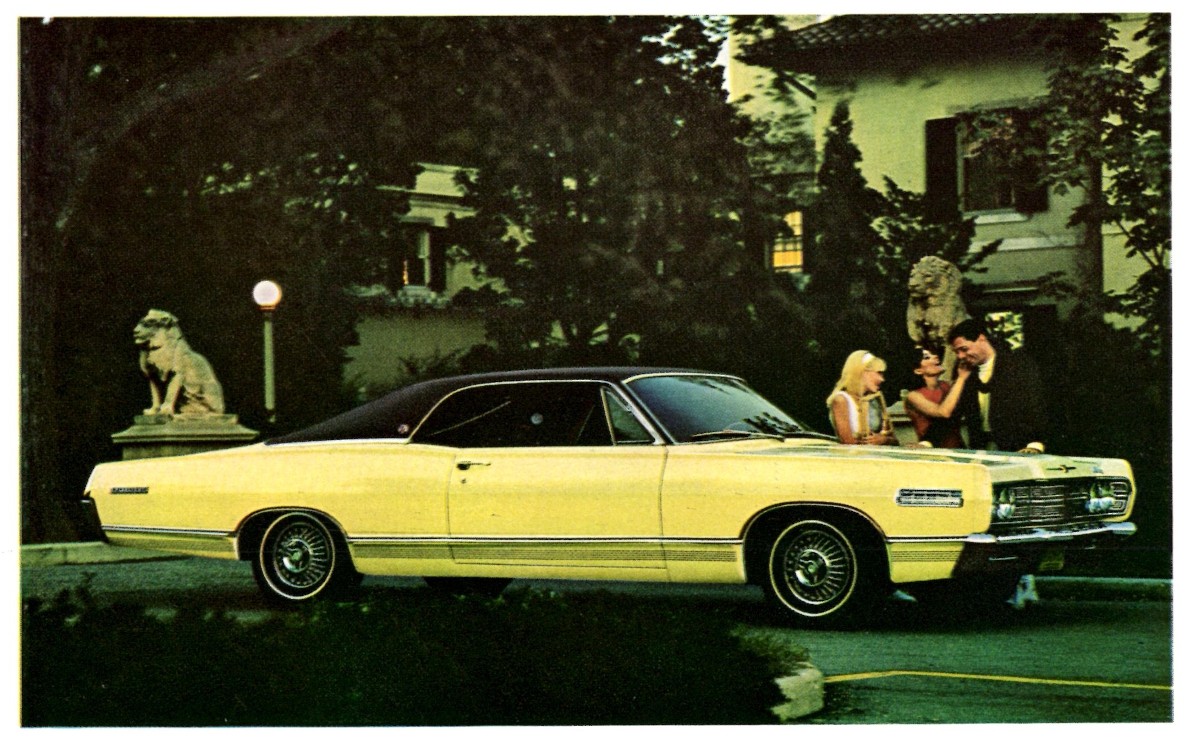
Marquis Mercury Marquee
"So anyway, Katie, what's shaking? Well, an 88 Mercury marquee and the shake is only in the front. Oh, there is ..."

Subaru wagon
"I had an 89 Subaru wagon that did the exact same thing."
They’re saying their 1989 Subaru wagon did the same turn-signal blinking behavior. That helps show it’s likely a common electrical problem that can show up on different cars.
The speaker compares the Mercury’s turn-signal behavior to an older Subaru wagon from 1989. The key point is that the same “left vs right” blinking pattern happens on multiple brands, suggesting a shared electrical/lighting fault pattern rather than a one-off mechanical issue.
Request an Explanation
Heard something you'd like explained? We'll add it to this episode.
Sign in to request explanations for terms you heard.
Want to learn more?
Browse our glossary for plain-English explanations of automotive terms, jargon, and concepts.
Help improve this episode
See something that's not quite right? Our annotations are AI-generated and can sometimes miss the mark. Click the flag icon on any annotation to suggest a correction.