
#2654: Clean Underwear in a Can
About this episode
GM’s decision to retire Oldsmobile sparks playful “target marketing” jokes, with the hosts riffing on how the name “Oldsmobile” sounds outdated and proposing absurd brand alternatives. The show then pivots to two listener car problems: a 1993 two-door with a high, opera-like squeal that fades around 30–40 mph, likely traced to a stuck caliper dragging the brake; and a 1993 Geo Tracker moaning sound that’s tied to engine operation, leading to a strong guess of a failing water pump.
See pcm.adswizz.com for information about our collection and use of personal data for sponsorship and to manage your podcast sponsorship preferences.
NPR Privacy Policy
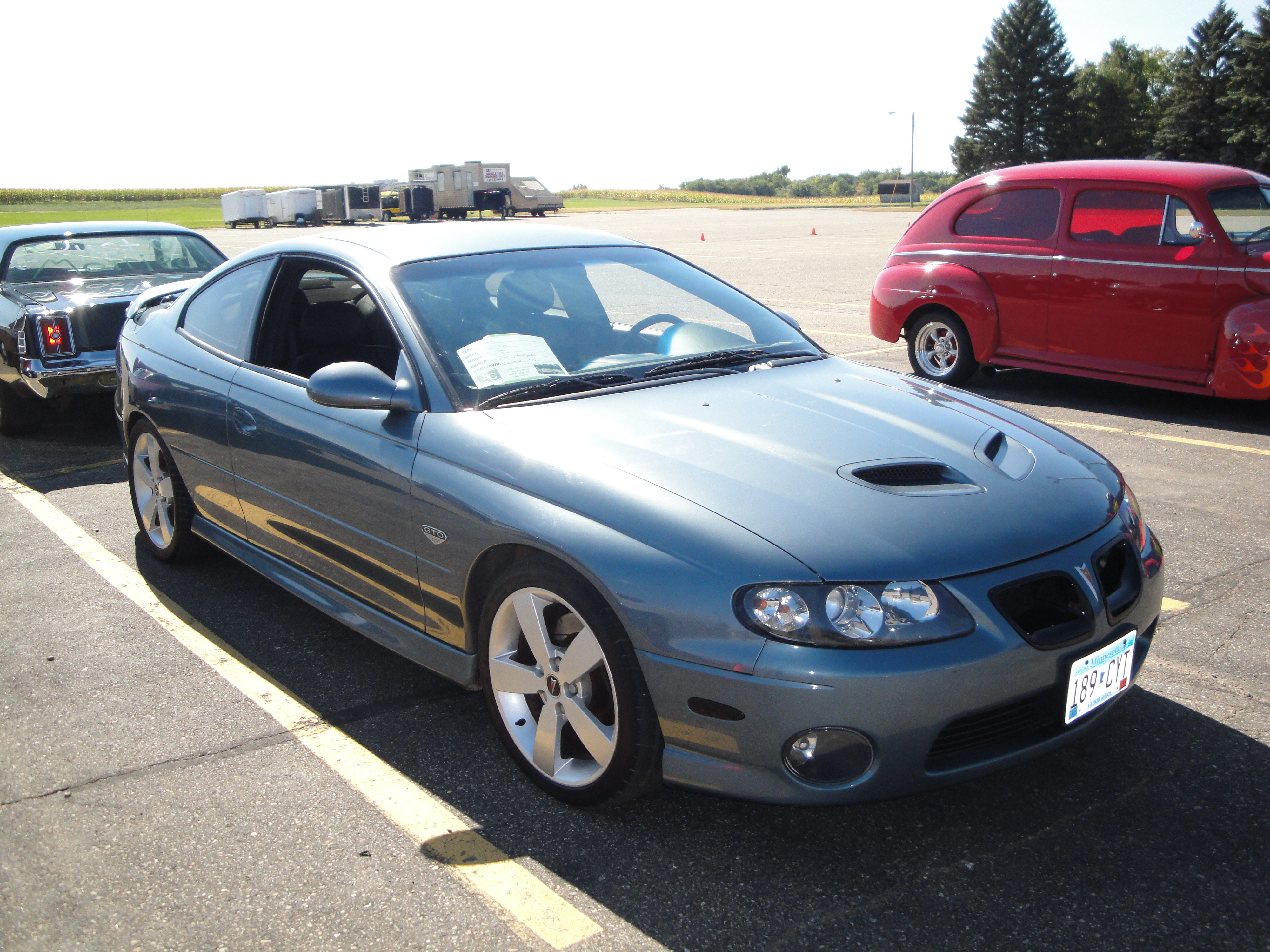
Pontiac Got Pontiac
"...any names. They got GM, they got Oldsmobile, they got Pontiac, they got Cadillac. Chevrolet."

Chevrolet Suburban
"So what's going on, Heather? What kind of a suburban do you have, GMC or Chevy? Oh, close."
The Chevrolet Suburban is a large SUV that’s meant to fit more passengers and luggage than a smaller car. People sometimes mix up similar GM models, so the discussion is about which exact SUV someone owns. It’s the kind of vehicle you’d choose for family trips or hauling a lot of stuff.
The Chevrolet Suburban is a full-size SUV built for carrying lots of people and cargo, typically with a strong emphasis on family and long-distance use. In a conversation like this, it comes up because people often compare “Suburban” across similar GM brands and trims, and the host is clarifying which one the caller has. It’s a common topic when discussing practical, everyday utility vehicles.

Honda Civic
"Oh, close. Honda Civic. Yeah, very close."
The Honda Civic is a smaller, everyday car that’s designed to be easy to live with. It’s popular because it’s generally efficient and practical for commuting and errands. The conversation is simply confirming that the car being discussed is a Civic.
The Honda Civic is a compact car known for being practical, efficient, and widely available in many model years and body styles. It often gets mentioned in podcasts because it’s a common “everyday” choice and people frequently compare it to other mainstream cars. In this context, it’s brought up as the caller’s near-match to another vehicle being discussed.
wheel bearing
"[408.2s] What do you think it is? [409.1s] Do you have any ideas? [409.6s] I'm working on a wheel bearing at the moment. [411.6s] You are?"
A wheel bearing is what helps your wheel spin smoothly. If it gets worn out, it can start making noise and can even get unsafe if it fails.
A wheel bearing is the component that lets a wheel spin smoothly while supporting the vehicle’s weight. It’s located at the hub and uses precision bearings to reduce friction; when it wears out, you can get noise (often a growl) and vibration, and eventually it can fail.
stuck caliper
"I'm working on a stuck caliper on the right front wheel. You are?"
Your brakes use a clamp (the caliper) to squeeze pads against a spinning disc. If that clamp gets stuck, the pads can keep rubbing even when you’re not pressing the brake pedal.
A caliper is the clamp that squeezes brake pads against the brake disc (rotor). When a caliper sticks, it can keep the pads dragging on the rotor even when you’re not braking, which can cause noise and extra heat.
brake disc
"you make the noise, or it makes the noise because the brake is touching the disc and it shouldn't be, at least with that kind of intensity."
The brake disc is the spinning metal surface the brake pads press against. If the pads keep rubbing it when you’re not braking, you can get noise and extra wear.
The brake disc (rotor) is the metal disc the pads clamp onto. If the pads are touching the disc when they shouldn’t be, it can create grinding/squeal noise and cause heat buildup.
brake material
"And then after you've worn away a little bit of the brake material, the noise in fact will go away. Or if you go fast enough, you just don't hear it."
Brake material is the pad’s friction surface—the part that actually rubs against the disc to slow the car down. If the brakes are rubbing too much, that surface can wear down and the problem may quiet down temporarily.
Brake material usually refers to the friction lining on the brake pads. If the pads are dragging due to a sticking caliper, that friction material can wear down, which may reduce the noise and contact over time.
1993 GEO tracker
"So my problem is, well, I have a 1993 GEO tracker, and it's a big piece of crap, pretty much. Well, it's a little piece."
A Geo Tracker is a small SUV that’s meant for everyday driving but can handle rougher roads. The 1993 version is an older model, and people often like it because it feels fun and outdoorsy.
The Geo Tracker (here, a 1993 example) is a small, off-road-capable SUV built for basic utility and open-air driving. It’s known for being simple and rugged compared with many larger SUVs, which is why people describe it as “adventuresome.”
noise comes back at slow speed
"[677.0s] And then you come down to, to a slow speed again. [680.0s] The noise comes back. [680.5s] And it comes back though."
Mechanics listen for when a noise shows up and when it goes away. If it changes with speed, it can help figure out whether the problem is related to the wheels or something the engine is doing.
This describes a classic diagnostic pattern: a noise that appears at certain speeds and disappears at others can indicate whether the source is tied to wheel rotation or engine operation. If it returns when the car slows, it suggests the sound is linked to rotational speed of some component.
stuck brake caliper
"[697.5s] I thought about a stuck brake caliper. [699.5s] You could have that too. [701.7s] No, we're going to eliminate the brakes and bearings and the like because you've told us."
A brake caliper is what squeezes the brake pads. If it gets stuck, the brakes can stay partially on even when you’re not pressing the pedal, which can make noise and cause extra heat.
A stuck brake caliper happens when the caliper doesn’t release properly after you stop braking, so the brake pads keep dragging on the rotor. That can cause heat, noise, and uneven wear, and it can feel like a problem that changes with speed.
brakes and bearings
"[701.7s] No, we're going to eliminate the brakes and bearings and the like because you've told us. [705.9s] Obviously not in the wheels, it's in the engine. [708.3s] Oh."
Bearings are parts that help rotating parts spin smoothly. If a bearing is worn out, it can make a noise that changes as the car speeds up or slows down.
Bearings are rotating components that reduce friction between moving parts, and they can fail with speed-dependent noise. In a diagnosis, mechanics often compare whether the sound changes with vehicle speed (wheels) versus engine running (engine-driven components).
water pump
"And I think you have a bad water pump. You're hearing the bearing. And it'll make a moaning kind of rattling kind of scraping sound. ... But I think you should get this looked at soon because if the water pump blows, you could ruin the engine."
The water pump moves the engine’s coolant around so the engine doesn’t get too hot. If it breaks, the engine can overheat and potentially get damaged.
A water pump is the part that circulates coolant through the engine to keep temperatures under control. If the water pump fails, the engine can overheat, and in some cases the damage can be severe enough to ruin the engine.

Renault Wind
"...nd here that smogs you thick, you know? Yeah, you wind up with a black forehead. And 114 degrees in the ..."
The Renault Wind is a small convertible, meaning the roof can open so you can drive with more air coming in. Because it’s a convertible, very hot weather can feel even hotter inside. The discussion is about how the car handles that kind of heat.
The Renault Wind is a small, compact convertible that’s designed to deliver open-top driving in a relatively light, city-friendly package. It’s the kind of car that can come up in weather- or comfort-related stories because convertibles change how heat and airflow feel inside. In the podcast context, it’s mentioned alongside talk about extreme heat and the effects of the top being down.
handbrake
"Yeah, then you realize... Then you realize how lousy the handbrake was at stopping."
The handbrake is the parking brake. If it doesn’t stop the car well, something may be wrong with the parts that hold the car when parked.
In many cars, the handbrake (also called the parking brake) is a separate braking system from the foot brake. It’s meant to hold the car when parked, and if it’s weak it can point to issues in the rear brake hardware or adjustment.
asbestos
"Then it would start, you know, smell that asbestos, or whatever the brakes are."
Asbestos is a dangerous material that used to be found in some brake parts. If you smell something weird when braking, it can be from brake dust or overheated brake material.
Asbestos is a hazardous material that historically was used in some brake pads and brake linings. When brakes overheat or wear heavily, dust can be released, which is why the host is connecting the smell to brake-related components.
power brake booster
"Yeah, we think it's the booster. The power brake booster. You want to do an experiment?"
The power brake booster helps your foot push the brakes harder. If it’s not working, the brakes can feel weak and it takes more effort to stop.
A power brake booster is the vacuum-assisted (or otherwise assisted) unit that multiplies the force you apply to the brake pedal. If the booster fails, the brakes can feel weak or require much more pedal effort, and stopping performance can suffer.
master cylinder
"but I'm guessing that it's either the booster or the master cylinder that's faulty, and here's how you're going to determine which it is. The next time it happens,"
The master cylinder is the main “pump” for the brakes. It turns your brake pedal press into pressure in the brake fluid so the brakes can clamp the wheels.
The master cylinder is the hydraulic pump for the brakes. When you press the brake pedal, it converts pedal force into hydraulic pressure that moves brake fluid through the lines to the calipers or wheel cylinders.
hydraulic line
"instead of loosening up the hydraulic line that comes off the master cylinder, what you're going to do is actually take off the two nuts that secure the master cylinder to the booster."
Hydraulic lines are the pipes that carry brake fluid to the brakes. They’re sealed so the brake fluid can build pressure when you press the pedal.
A hydraulic line is a sealed tube that carries brake fluid under pressure from the master cylinder to the rest of the braking system. If the master cylinder or booster isn’t working correctly, the pressure behavior in these lines is part of what you’re diagnosing.
vacuum booster
"So the vacuum booster, huh? Yeah. It's probably the booster, but if you do this little test, it's a surefire test."
A vacuum booster is the brake helper that uses engine vacuum to make braking easier. If it’s not working, you often have to press the brake pedal much harder.
A vacuum booster is the common type of brake booster that uses engine vacuum to assist braking. If vacuum assist is lost or the booster is failing, the pedal can feel unusually hard and braking performance can be affected.
surefire test
"So the vacuum booster, huh? Yeah. It's probably the booster, but if you do this little test, it's a surefire test."
It’s a “diagnose it by isolating the parts” approach. The idea is to separate the booster from the master cylinder and see what happens, so you can tell which one is causing the problem.
This refers to a diagnostic procedure designed to isolate which component is failing by changing only one part of the system. Here, the test distinguishes whether the fault is in the booster or the master cylinder based on whether the car can move when the booster is separated.

92 Toyota Corolla
"I have a 92 Toyota Corolla and I took it to my mechanic and I've been going to him about six months or so."
This is a 1992 Toyota Corolla. It’s a common, dependable car, and here it’s being used as an example of a problem in the front-wheel-drive drivetrain.
A 1992 Toyota Corolla is a front-engine, front-wheel-drive compact car that’s known for being simple and durable when maintained. In this segment, it’s the specific platform where the mechanic diagnosed a driveline issue involving the CV joints.
CV joints
"And anyway, he told me that my CV joints were dirty and that he needed to boot them. Otherwise, my axle would go bad."
CV joints are parts in a front-wheel-drive car that help power the wheels while the wheels steer left and right. If they get dirty or damaged, the car can start making noises and the drivetrain can wear out faster.
CV joints (constant-velocity joints) are the driveline joints that let the front wheels turn while still transferring engine torque smoothly. When they’re worn or contaminated, they can click on turns and eventually fail, which is why the mechanic warned about the axle going bad.
axle
"Otherwise, my axle would go bad. Well, reboot is more like it."
Here, “axle” means the drive shaft that sends power to the front wheels. If the CV joints or their protective covers fail, it can eventually damage the axle parts too.
In this context, the axle is the drive shaft that transmits power from the transmission to the front wheels. CV joint/boot issues can damage the axle assembly over time, which is why the mechanic linked dirty CV joints to the axle going bad.
boots
"They were dirty and did he determine that the boots in fact were torn? Yeah, evidently."
The CV boot is a protective rubber cover over the CV joint. If it tears, the grease can leak out and dirt can get in, which can cause the joint to wear out.
CV boot(s) are rubber covers over the CV joint that keep grease in and dirt/water out. If a boot is torn, grease can leak and contaminants can get in, which accelerates CV joint wear and can lead to axle problems.
clicking noise
"instead of going all the way down, I just make a U-turn. It's a really sharp turn and my car makes a clicking noise. Oh, how unfortunate."
Here, “clicking noise” is a warning sign that something in the drivetrain—often the CV joint—may be wearing out. It’s more noticeable when you turn sharply.
In this context, a clicking noise is a symptom pattern associated with a worn CV joint. It tends to show up more during sharp turns because the joint is working at higher angles and loads.
constant velocity or CV joint
"Yeah, because what you're hearing is the noise from the constant velocity or CV joint. When the joint wears out, it will make this clicking noise"
“Constant velocity” just means the joint is designed to keep power transfer smooth even while you’re turning and the suspension moves. That’s the job of the CV joint.
“Constant velocity” refers to the CV joint’s goal: maintaining smooth rotational speed transfer from the engine to the wheels even as the axle angle changes during steering and suspension travel. That’s why CV joints are common on cars that use front-wheel drive.
Request an Explanation
Heard something you'd like explained? We'll add it to this episode.
Sign in to request explanations for terms you heard.
Want to learn more?
Browse our glossary for plain-English explanations of automotive terms, jargon, and concepts.
Help improve this episode
See something that's not quite right? Our annotations are AI-generated and can sometimes miss the mark. Click the flag icon on any annotation to suggest a correction.