About this episode
Fuel prices and the “oil crisis” backdrop set the stage, but the show pivots to brighter EV momentum: Europe’s EV registrations jump 51% in March, with battery-electric uptake helped by shorter-distance driving and high fuel costs. The hosts then dig into big news and tech: Lucid gets major investment (Uber + Saudi PIF), Mercedes goes bold with a new C-Class EV featuring a large battery, dual motors, and rear-wheel steering, plus a two-speed gearbox strategy. Charging gets a rant and a reality check—BMW’s contract-free plug-and-charge, CATL’s ultra-fast LFP claims, and PG&E approving Cybertruck vehicle-to-grid incentives.
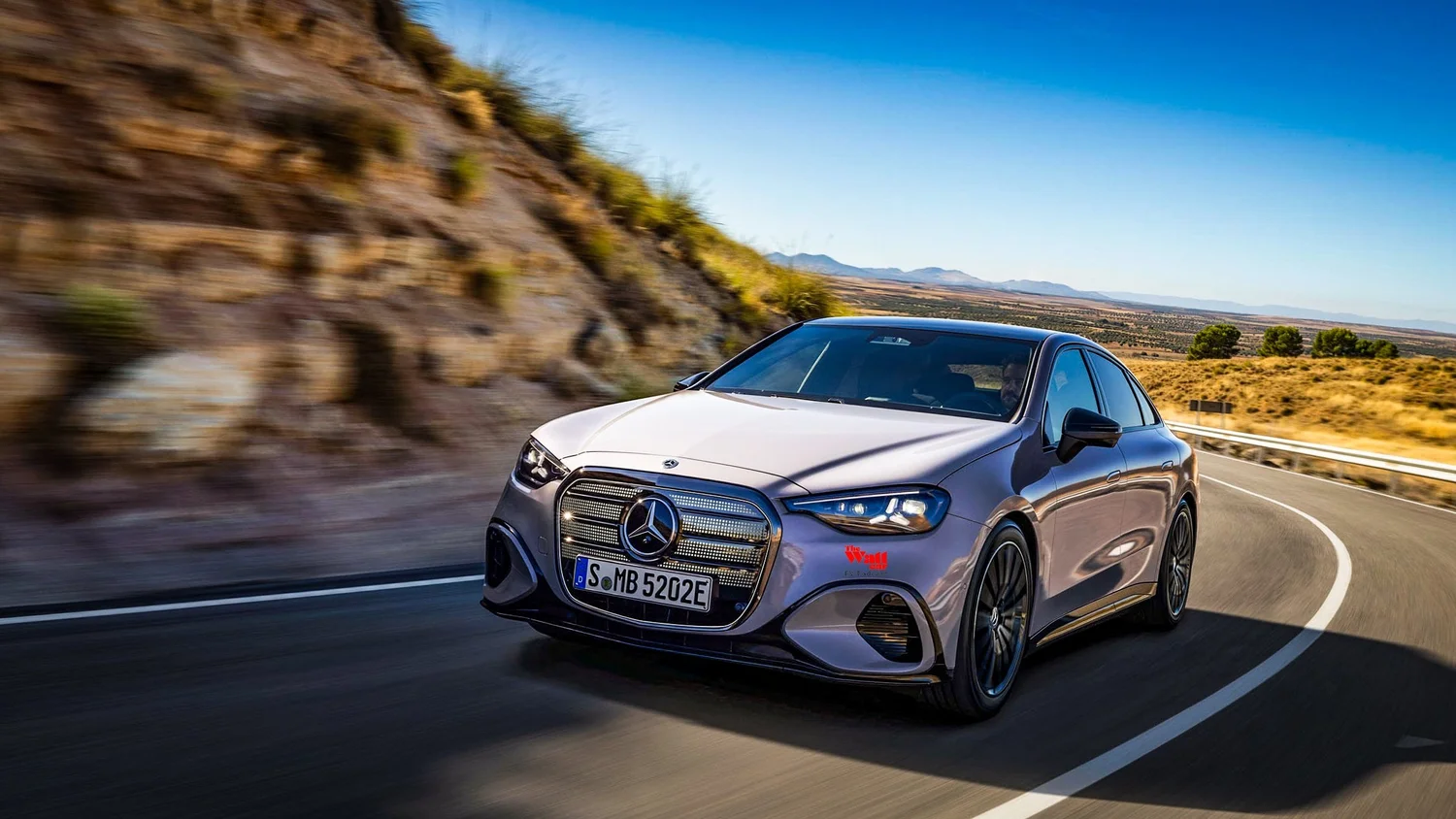
Mercedes-Benz has unveiled its new C-Class EV, boasting not only the company’s bold new grille, but also a nice and juicy 94.3 kWh battery. At the same time, EV sales have surged in the EU, Lucid receives funding from two sources (but will it be enough?), BMW follows Tesla in ease of charging, and more, all on this week’s podcast.
Subscribe to the podcast on Apple Podcasts, Amazon Music, Audible, Spotify, PocketCasts, iHeartRadio, Podbean, and more! Or heck, use your favorite podcast application.
Perhaps you prefer to watch as well as listen. If so, we’ve got you covered.
SHOW NOTES
EV sales surge in Europe in March: https://electrek.co/2026/04/20/europe-ev-sales-surge-51-percent-oil-is-the-reason-why/
Lucid gets additional investment from Uber, Saudi PIF: https://finance.yahoo.com/markets/stocks/articles/lucid-group-shares-jump-uber-154000044.html
New Mercedes C-Class EV shows off its big “grille”: https://insideevs.com/reviews/793375/mercedes-benz-c-class-ev/
BMW introduces “contract-free” plug & charge in Germany: https://electriccarsreport.com/2026/04/bmw-simplifies-ev-charging-with-contract-free-plug-charge/
CATL says its newest battery can charge from 10-98% in 7 minutes: https://carnewschina.com/2026/04/21/catl-unveils-3rd-gen-shenxing-lfp-battery-charging-10-80-in-3-min-44-seconds-10-98-in-6-min-27-seconds/
Sony & Honda say they’re going to continue to collaborate: https://carbuzz.com/sony-honda-partnership-still-on/
Tesla Cybertruck approved for V2G program with PG&E: https://www.electrive.com/2026/04/21/pge-and-tesla-integrate-cybertruck-into-v2g-programme/
This week’s hosts: Phil Royle and Edward A. Sanchez
Episode art courtesy Mercedes-Benz
Music courtesy Twisterium at Pixabay
Website: https://www.thewattcar.com
Buy merch: https://www.thewattcar.com/store
YouTube: https://www.youtube.com/@thewattcar
Toyota
"He recently bought a Toyota BZ and he's been enjoying that."
Toyota is the company making the electric car the host is talking about. They’re one of the big mainstream automakers that’s pushing into EVs.
Toyota is the automaker behind the bZ EV lineup mentioned in the segment. In the EV world, Toyota’s approach has often emphasized broad adoption and practical, mainstream usability rather than only niche performance.
EVAF shirt
"And he got a shirt. [162.1s] He got the EVAF shirt. [164.1s] One of the better ones."
The “EVAF” part sounds like the podcast or community’s name. The host is just saying they got a shirt with that logo.
“EVAF” appears to be a branded slogan or acronym tied to the podcast/community. Apparel like this is often used to build identity and recognition around an EV-focused media brand.
hydrogen cars
"If you like driving hydrogen cars, you can get our hydrogen is the future and always will be shirt and the rest."
Hydrogen cars make electricity using hydrogen, instead of using a big battery like most EVs. The big challenge is that you need places to refuel with hydrogen, which isn’t as common as charging.
Hydrogen cars typically refer to fuel-cell vehicles that generate electricity onboard by combining hydrogen with oxygen. They’re different from battery-electric vehicles (BEVs) in how energy is stored and refueled, and they depend heavily on hydrogen production and fueling infrastructure.
EV vs hydrogen debate (merch slogans)
"If you like driving hydrogen cars, you can get our hydrogen is the future and always will be shirt and the rest. We've got some other ones. Check it out. Controversial fun."
They’re joking around with EV and hydrogen shirt slogans, but it points to a real debate: which type of clean vehicle will become more popular. Battery-electric cars and hydrogen cars work differently, so people argue about which makes more sense.
The hosts use EV and hydrogen-themed shirt slogans to frame a broader discussion about competing clean-transport technologies. It’s a lighthearted way to reference the ongoing debate over whether battery-electric vehicles or hydrogen fuel-cell vehicles will win long-term.
leading indicator (search trends to sales)
"And I guess in some parts of the world, that's actually translating into real tangible sales increases, most notably Europe, which by the way, so I have a lot of my coworkers"
They’re basically saying that when more people search for EVs online, it can be an early sign that sales might rise later. It’s like a “heads up” before the buying numbers fully show up.
The segment implies a common marketing/market-research idea: online search interest can act as a leading indicator for future sales. It’s not a direct measurement of purchases, but it can help forecast demand before inventory and deliveries catch up.
EV searches
"So we noted, I guess, since the start of the war, EV searches on like admins, I've also seen on like cars.com and whatever been trending upward."
They’re referencing how much people are looking up EVs online. More searches usually means more interest, and that can eventually show up as more people buying EVs.
The hosts are talking about how online interest in EVs (often tracked as search volume) can be a leading indicator of consumer demand. When search trends rise, it often precedes increases in showroom traffic and eventual sales, though the relationship varies by region and time.
cars.com
"So we noted, I guess, since the start of the war, EV searches on like admins, I've also seen on like cars.com and whatever been trending upward."
Cars.com is a website where people browse car listings. They’re using it as an example of where EV interest seems to be increasing.
Cars.com is an online automotive marketplace where listings and user activity can reflect consumer interest. Mentioning it suggests the hosts are using third-party web traffic/listing engagement as a proxy for demand.
diesel is around 12 bucks a gallon
"And a lot of parts of the world, I guess diesel is around 12 bucks a gallon effectively, which is insane. Europe went big time into diesel."
They’re comparing diesel prices to gas prices. If diesel costs a lot, fewer people may want diesel cars, even if that type of car used to be popular.
The discussion contrasts diesel fuel pricing with gasoline, highlighting how fuel costs can influence consumer behavior and vehicle choice. When diesel is expensive, it can reduce the appeal of diesel-powered cars, even in markets that historically favored them.
Oldsmobile kind of ruined it for everybody
"America had never really took off as like a car. They tried to, but I think Oldsmobile kind of ruined it for everybody."
This is a historical reference to how earlier attempts at popularizing a certain kind of car (likely diesel or a fuel/engine strategy) didn’t go well in the U.S. The point is that past market failures can shape consumer trust and long-term adoption patterns.
Volkswagen
"And a lot of parts of the world... Europe went big time into diesel... America had never really took off... And Volkswagen, more modern era, but that's a whole other topic."
Volkswagen is referenced as part of the “more modern era” of diesel adoption and the broader European approach to diesel cars. The mention sets up a likely discussion about how major automakers influenced diesel popularity and later EV strategy.
EFTA
"So EV sales, you're up in March across the, there's something called the EFTA, which is I guess, broader than the EU. So it includes like kind of peripheral broadly European countries that are not technically in the EU, like Norway, Sweden, some other countries."
EFTA is a group of European countries that trade together. When people talk about EV sales in “EFTA,” they usually mean a wider set of countries than just the EU.
EFTA is the European Free Trade Association, which is broader than the EU. In EV reporting, it’s often used to describe a wider set of European countries beyond EU members, so the registration numbers reflect more than just the EU market.
EV sales
"So EV sales, you're up in March across the, there's something called the EFTA... So Europe at large, I guess, battery electric vehicle registrations jumped 51% in March, 2026."
They’re talking about how many electric cars are being added to the road. They’re using registration numbers as a way to measure that trend.
“EV sales” here is being used in the context of monthly registration data, which is a common way to track market momentum. It’s important because registrations can lag or differ from retail deliveries, but they still show how quickly EVs are entering the fleet.
battery electric vehicle registrations jumped 51%
"So Europe at large, I guess, battery electric vehicle registrations jumped 51% in March, 2026. That seems like a lot. ... accounting for 22% of all new car sales in those markets."
They’re saying more people are signing up new fully electric cars than before. The “51% jump” is about registrations, and the “22% of new car sales” part tells you EVs are taking a bigger slice of the market.
This is a growth rate in how many battery-electric vehicles (BEVs) were newly registered in a given month. Registration share matters because it indicates EV adoption relative to all new car sales in that region, not just raw EV volume.
EVs are hot in Europe (market adoption differences)
"[389.3s] quite a bit. [390.3s] But TLDR, EVs are hot in Europe. [395.8s] I think they've gotten the memo, Europe's been dealing with high fuel prices for quite [401.1s] a while. [402.2s] So I don't think it takes quite as much to convince them."
EVs are selling faster in some European countries than others. The hosts think it’s partly because people there have dealt with expensive fuel for a long time, so switching to an EV feels more worthwhile.
This segment highlights that EV adoption varies across European countries due to differences in infrastructure, policy, and consumer behavior. The hosts also connect adoption to long-term exposure to higher fuel prices, which can make EVs more appealing.
EV range needs (non-freeway vs freeway driving)
"[411.6s] The non-freeway type driving, the shorter distance, they're just kind of, you don't need as much [424.7s] of a range necessarily, like it just, like in America, we got big freeways because everything [431.7s] is so far away. [434.2s] And as soon as you get an EV on the freeway, that's where they struggle, got high speeds, [438.8s] high wind resistance, rev in the thing high, and it's not as friendly here toward that."
EVs don’t use energy the same way in every situation. City or shorter trips usually go farther on a charge, but on highways—especially at high speeds and in wind—an EV can use energy much faster.
The hosts are describing how EV efficiency changes with driving conditions. Shorter, slower trips typically require less energy, while freeway driving increases aerodynamic drag and power demand—so EVs can struggle more at high speeds.
High wind resistance (aerodynamic drag) at highway speeds
"[434.2s] And as soon as you get an EV on the freeway, that's where they struggle, got high speeds, [438.8s] high wind resistance, rev in the thing high, and it's not as friendly here toward that."
When you drive faster, the car has to push through more air. That extra air resistance makes the EV burn energy faster, so it may not go as far on the highway.
Wind resistance (aerodynamic drag) rises sharply as speed increases, which makes an EV consume more energy on the highway. That’s why range often drops noticeably during fast, steady driving compared with slower city driving.
charger
"So I'm assuming there's like a, probably a charger in town or something they go to? ... you just park and charge."
A charger is what plugs into your EV to add electricity to the battery. Public chargers are usually slower than the fastest ones, but they still work for everyday charging.
A “charger” is the equipment that supplies electricity to an EV’s battery. In practice, chargers can be home wall units or public stations, and their power level determines how fast the car charges.
charging in town / park and charge
"So I'm assuming there's like a, probably a charger in town or something they go to? ... you just park and charge."
If you can’t charge at home, you can still charge while you’re out. You park at a public charger, plug in, and let it charge while you do something else like shopping.
The hosts are describing a common EV lifestyle workaround: using public charging while you’re parked for errands like groceries. Instead of charging at home, drivers rely on chargers in town and build charging into their daily routines.

Dodge Charger
"...asked. So I'm assuming there's like a, probably a charger in town or something they go to? Yeah, I know the..."
The Dodge Charger is a car model made by Dodge. It’s usually known for being a bigger, more powerful sedan. People might mention it when talking about what kinds of cars are available locally or what people drive for performance-style needs.
The Dodge Charger is a full-size American sedan (and historically a performance-focused model) known for strong power and a sporty, aggressive look. It often comes up in conversations about everyday driving versus performance because it’s a familiar nameplate with a long history. In an EV-focused podcast, it may be mentioned as a reference point for what people expect from “muscle” style cars and how that compares to modern electrified options.
off-street parking
"But there's no chance of her ever having off-street parking her flat because it just doesn't... like it literally doesn't exist."
Off-street parking means you can park your car somewhere off the public road, like a driveway. Having that makes it much easier to charge at home; without it, you often have to use public chargers.
“Off-street parking” matters for EV ownership because it’s where many people install home charging. Without a driveway or parking spot, you may need to rely on public charging or request new infrastructure.
electric in Europe / in the UK / in England
"Yeah, she'd have to go and talk to like, it's electric in Europe. In the UK, what do you mean? ... Yeah, in England."
They’re talking about how EV charging works differently in the UK/England. In some places, people don’t have driveways, so they depend more on chargers in public areas.
The hosts are discussing EV charging realities in Europe, specifically the UK/England. In many European cities, dense housing and limited driveways can make public or street charging more important than home charging.
EV investment
"More investment in companies making EVs... Step one was fire the original CEO... Step three was profit. Get more money."
EV investment is money put into electric-car companies to help them build cars and grow. The hosts are basically saying more funding is happening, which can keep these companies moving forward.
“EV investment” refers to funding that supports electric-vehicle startups and automakers, including capital for manufacturing, supply chains, and technology development. The segment frames investment as a key factor in whether EV companies can survive early-stage challenges and scale.
Lucid
"Or more investments, which is happening with Lucid, I guess... Uber invested 200 million in Lucid... I do have a small amount of Lucid shares in my portfolio."
Lucid is a company that makes electric cars. Here, they’re talking about big investors putting money into Lucid, which helps the company keep building and growing.
Lucid is an EV automaker focused on premium electric vehicles and related technologies. In this segment, the hosts discuss Lucid’s funding and ownership changes driven by major investors, which can affect the company’s ability to scale production and develop new programs like robo-taxis.
Saudi PIF
"...they're already majority owned by basically the Saudi PIF, I think 62%... the Saudi Arabia public investment fund also gave them another 550 million on top of that."
Saudi PIF (Public Investment Fund) is a sovereign wealth fund that invests in major companies and strategic industries. The segment claims Saudi PIF already has a large ownership stake in the companies being discussed and adds more capital to support EV/robotaxi-related ambitions.
Uber
"...now they have a new investor with not in substantial stake, Uber, the ride hailing platform... Uber invested 200 million in Lucid... Uber now has an 11.52% stake in Lucid."
Uber is the app people use to request rides. Here, they’re saying Uber put money into Lucid, likely because Uber wants to be part of the future of self-driving ride services.
Uber is a ride-hailing platform that also invests in companies it believes will shape the future of mobility. In this segment, Uber’s investment is framed as strategic backing for Lucid and autonomous/robotaxi efforts.
Nuro
"...they’re going into a deal, I think with another company called Nuro that does like the software and sensor stack."
Nuro is a tech company working on self-driving systems. In this discussion, they’re teaming up with Uber and Lucid so the vehicles can operate as robo-taxis.
Nuro is a company known for developing autonomous driving technology, including software and sensor systems used for self-driving vehicles. The segment describes Nuro as part of a three-way collaboration with Uber and Lucid for robo-taxi operations.
robo taxis
"...they’re going to be doing Lucid gravity robo taxis effectively."
Robo taxis are self-driving cars used for ride-hailing. Instead of a person driving, the car’s technology handles the driving, and it’s meant to pick up and drop off passengers like a taxi.
“Robo taxis” are autonomous ride-hailing vehicles intended to provide transportation without a traditional human driver. They rely on a combination of vehicle platforms, perception sensors, and driving software, plus operational and regulatory readiness to run as a service.

Lucid Gravity
"...it’s a three way collab between Uber, Nuro and Lucid that they’re going to be doing Lucid gravity robo taxis effectively."
They’re talking about Lucid’s Gravity being used for self-driving ride-hail cars. A “robo taxi” is basically a car that can drive itself for passengers instead of a human driver.
The hosts reference Lucid’s “Gravity” as the basis for robo-taxi deployments. “Robo taxis” implies an autonomous-vehicle service where the car is used for ride-hailing with minimal human involvement, typically supported by specialized software and sensor systems.
mainstream brand
"they haven't really been able to get over the hump of being cut like kind of a niche premium automaker to be being more of a mainstream brand."
Mainstream brand means lots of regular people can buy the cars, not just a small group of early fans. The hosts are talking about what it takes for an EV company to grow beyond the niche stage.
Becoming a mainstream brand means moving from a limited, enthusiast-focused customer base to broader consumer adoption. For EV startups, this typically requires scaling production, improving unit economics, expanding charging/retail presence, and building brand awareness beyond early adopters.
Rivian
"I'd say Rivian is probably a little further down that road than Lucid is, even though I would still consider them kind of niche premium."
Rivian is a newer electric-vehicle company. They make EVs like trucks and SUVs, and the hosts are saying Rivian might be getting closer to being a widely sold brand, not just a niche one.
Rivian is an EV automaker known for trucks and SUVs built around electric drivetrains and software-first design. In the segment, it’s used as an example of an EV brand that may be closer to becoming mainstream than Lucid, even if it’s still considered niche-premium.
cash burn rate
"I looked up, what is the cash burn rate for Lucid? ... they have a quarterly cash burn rate of about one point two billion dollars per quarter... The company went through one point two four billion dollars."
Cash burn rate means how fast a company is running through its money. If it burns cash too quickly, it may need more funding before it can start making enough profit.
Cash burn rate is how quickly a company is spending cash over a period of time, usually to fund operations and growth before it becomes consistently profitable. For EV startups, high cash burn is common during scaling, but the key question is whether funding lasts long enough to reach production volume and cost targets.
ramp up
"But I wonder if that's a constant or if that's just like kind of a one time because they're they're trying to ramp up for the what is it?"
“Ramp up” refers to increasing production capacity and scaling manufacturing to build more vehicles over time. In EV contexts, ramping up is often the difference between staying niche and becoming mainstream, because it affects costs, delivery volumes, and cash burn.
software issues
"I know they've had some some software issues... he recently got a Lucid Air Pure and it's had some software issues."
EVs are run by computers. When people say “software issues,” they mean the car’s computer systems aren’t behaving correctly, which can cause annoying bugs or even affect how the car drives or charges.
“Software issues” in modern EVs usually means problems in the vehicle’s control systems—such as the infotainment, battery management, or powertrain software. Because EVs rely heavily on software for efficiency and drivability, bugs can show up as glitches, reduced performance, or charging/charging-session problems.

Lucid Air
"...he recently got a Lucid Air Pure and it's had some software issues."
Lucid Air is an all-electric car. “Pure” is one of the versions/trim levels. They’re saying the car has had software problems, even though the company’s electric-car efficiency is impressive.
The Lucid Air is Lucid’s flagship electric sedan, and the “Pure” is a lower-trim variant. In this segment, the hosts mention that a Lucid Air Pure has had software issues, which can affect drivability, charging behavior, and overall user experience.
efficiency
"...in terms of their powertrain, their efficiency, they're really, I think, kind of world class."
Efficiency is how far the EV can go on the electricity it has. Higher efficiency usually means better range and less energy used per mile.
Efficiency in EV context usually means how effectively the vehicle turns battery energy into usable driving energy, often reflected in real-world range and energy consumption. The hosts are praising Lucid’s efficiency as being “world class,” implying strong energy management and aerodynamic/thermal performance.
powertrain
"...in terms of their powertrain, their efficiency, they're really, I think, kind of world class."
The powertrain is the EV’s “go” system—everything that helps the car turn electricity into movement. It includes the motor and the electronics that control it.
In an EV, the powertrain refers to the system that generates and delivers motive power—typically electric motors, the inverter, and related control electronics. When the hosts discuss “powertrain” alongside efficiency, they’re pointing to how well the car converts electricity into motion.
cash flow
"...they've got all this money in, but it buys them two months in cash flow that they need."
Cash flow is basically whether a company has enough money coming in to cover what it needs to pay. If cash flow is tight, it can slow down production or force the company to raise more money.
Cash flow is the net movement of money in and out of a business over time. For automakers, tight cash flow can limit how long they can continue operations before needing additional funding, which affects production timelines and product development.

Mercedes-Benz GLC
"And we discussed this a few months ago when they came out with the new GLC"
The Mercedes-Benz GLC is a popular luxury SUV. When people talk about it in an EV context, they’re usually referring to Mercedes-Benz’s broader shift toward electrified models and updated styling.
The Mercedes-Benz GLC is a compact luxury SUV in Mercedes-Benz’s lineup. In EV discussions, it often comes up because Mercedes-Benz has been expanding electrified versions and design language across its SUV range.

Mercedes-Benz EQ
"with it, like for a while, they were like with the EQ, EQ as the EQ, it was kind of that kind of amorphous, kind of bubble. Yeah, Mercedes said, here's our EV and we're going to make it look like a jelly bean"
Mercedes-Benz EQ is the company’s name for its electric cars. The hosts are saying the early EQ designs didn’t always look clearly “premium” or “distinct,” so people weren’t convinced by the look.
Mercedes-Benz’s EQ is the brand family for its electric vehicles. The hosts describe it as having an “amorphous” or bubble-like design identity early on, before Mercedes-Benz moved toward more distinct styling cues.
hood ornament
"It kept the same basic shape, but they added the tri-star hood ornament and like different lighting on the grill."
A hood ornament is the emblem you see on the front of the hood. Here, they’re saying Mercedes added the familiar Mercedes symbol to help the EV look more “Mercedes,” but it still didn’t fully convince people.
A hood ornament is a decorative emblem mounted on the front of the hood. In this segment, the hosts mention Mercedes-Benz adding the tri-star hood ornament as a way to make the electric car look more like a Mercedes, even though the overall shape stayed similar.
grill
"So they released that release, that they released the release on the grill. [942.9s] I don't remember last year. [944.6s] And I liked it. [945.8s] I really liked the grill."
The grille is the front opening on a car. It’s partly functional for cooling, but it also strongly affects the car’s look, which is why they’re reacting to it.
A “grill” is the front grille opening on a car, usually where cooling air flows to components like the radiator and where styling cues are emphasized. In this segment, the hosts are using it as shorthand for a specific bold front-end design that Mercedes keeps reapplying across models.
concept car
"And then they did this concept car. [949.7s] It was like a Cruella de Vil. [951.6s] Yeah, I don't remember the order. [952.9s] I think they released the grill and I was like, I don't really like it."
A concept car is like a design preview. Automakers build them to show what future cars could look like, and sometimes those ideas later show up in real production vehicles.
A concept car is a show car built to preview new styling, technology, or design directions that may or may not reach production. The hosts mention a “concept car” as the origin point for a design theme that later appears on production Mercedes models.

C-Class
"Now they've put it on the C-Class, Evie. [975.0s] And? I like it. [978.4s] Yeah. Yeah."
The Mercedes-Benz C-Class is a popular Mercedes sedan. They’re talking about how a new, bold front design looks better or worse depending on which Mercedes model it’s used on.
The Mercedes-Benz C-Class is a compact executive sedan (and wagon in some markets). Here, the hosts are discussing how a bold front-end design (described as a “grill”) changes their opinion when it’s applied to the C-Class.
cars have to introduce lower levels again
"But yeah, all cars, they seem to grow and then they have to introduce lower levels again. Yeah. And then you end up with like 15 different models when you used to only have three."
When cars get bigger, they often cost more. To keep options for people who don’t want the biggest/most expensive version, brands add cheaper trims or smaller variants.
As car lines grow in size and pricing, manufacturers often add “lower levels” (smaller trims, entry variants, or new sub-models) to keep a broader range of price points. This helps maintain a model lineup that fits different budgets even as the main versions become more premium.

Honda Accord
"...ou used to only have three. Like the newest Honda Accord is massive. I don't know if you've seen them."
The Honda Accord is a midsize family car. It’s known for being comfortable and easy to live with. Different model years can feel bigger or more spacious than older ones, which is why people talk about how the newest versions look and size up.
The Honda Accord is a midsize sedan that’s widely known for practical everyday use and long-running popularity. It’s often discussed because each generation changes size and styling, so people may notice how the newest ones feel “massive” compared with older versions. In a podcast context, it can be used to talk about how mainstream cars evolve over time—especially when comparing comfort, packaging, and driving feel.
ninety four point three kilowatt hour battery pack
"But anyway, speaking of big, the new C-Class EV ninety four point three kilowatt hour battery pack. It's nice for nice and juicy car."
That 94.3 kWh number is how much energy the EV’s battery can store. More stored energy usually means you can drive farther, but it’s not the only factor.
A 94.3 kWh battery pack is the energy storage capacity of the EV’s traction battery. Larger kWh generally supports longer range, though actual results also depend on vehicle efficiency, weight, aerodynamics, and drivetrain losses.
WLTP range
"They're claiming a WLTP range of four hundred seventy three miles. So good, healthy, through EPA, probably closer around four hundred."
WLTP is a standardized way to test how far an EV can go on a charge. Different testing rules can make the reported range look better than what you might see under the U.S. EPA test.
WLTP (Worldwide Harmonized Light Vehicles Test Procedure) is a standardized testing method used in many regions to estimate EV range. Because test conditions differ from the U.S. EPA method, WLTP numbers often come out higher than EPA estimates for the same vehicle.
EPA
"So good, healthy, through EPA, probably closer around four hundred."
EPA is the U.S. testing standard used for official range numbers on EVs. The hosts are saying the EPA-style estimate is likely lower than the WLTP number.
EPA refers to the U.S. Environmental Protection Agency’s vehicle testing and labeling process for fuel economy and EV range. The hosts suggest the real-world expectation (or at least the U.S. label estimate) is lower than the WLTP figure.
482 horse dual motor
"But still, that's still pretty good. And 482 horse dual motor."
A dual-motor EV uses two electric motors to help move the car, often improving grip and acceleration. “482 horsepower” is a measure of how strong the power output is.
“Dual motor” means the EV uses two electric motors (commonly one per axle) to drive the wheels, which can improve traction and responsiveness. The “482 horse” refers to the vehicle’s combined horsepower output, indicating strong performance potential.
rear wheel steering
"they're doing rear wheel steering on this. And I could under kind of understand why they did it on the S-Class because that's a big car and maneuverability and this and that."
Rear wheel steering means the back wheels can steer too, not just the front wheels. That can make the car easier to turn in tight spaces and can help it feel more stable when driving faster.
Rear wheel steering is a chassis system that turns the rear wheels to improve handling behavior. Depending on the speed and calibration, it can reduce turning radius at low speeds and enhance stability or responsiveness at higher speeds.

Mercedes-Benz S-Class
"And I could under kind of understand why they did it on the S-Class because that's a big car and maneuverability and this and that."
The Mercedes-Benz S-Class is Mercedes-Benz’s big, luxury flagship. Because it’s a large car, adding rear-wheel steering can help it turn and maneuver more easily, especially at lower speeds.
The Mercedes-Benz S-Class is Mercedes-Benz’s flagship sedan, known for comfort and advanced driver-assistance and chassis tech. In the context of the episode, rear-wheel steering is discussed as a way to improve maneuverability and stability on a large vehicle.
Quadra Steer
"I'm thinking of the Honda Prelude. The Honda Prelude, they had it on some of the GM SUVs. Quadra Steer, that was more in the early 2000s, but yeah."
Quadra Steer is a rear-wheel-steering setup that GM used on some SUVs. The hosts mention it to show this idea has existed for a while, and it may come with reliability or performance quirks.
Quadra Steer is a rear-wheel-steering system associated with certain early-2000s General Motors SUVs. It’s brought up as an example that rear-wheel steering has been tried before, and the hosts imply it wasn’t always trouble-free.

Honda Prelude
"I'm thinking of the Honda Prelude. The Honda Prelude, they had it on some of the GM SUVs."
The Honda Prelude is mentioned as an example from the past where rear-wheel steering showed up. It’s used to argue that this tech has been around before, so expectations should be realistic.
The Honda Prelude is referenced as an example of a car that used rear-wheel steering in some configurations/eras. The point is historical context: rear-wheel steering isn’t brand-new, and earlier implementations can influence how people judge today’s systems.

Mazda Rx7
"My RX-7 that I've got had a passive rear wheel, rear steer thing. I'm not going to be able to say it, but it had a passive system on the FC where it was like bushings that when you turned the wheel would adjust."
They’re talking about a Mazda RX-7 (FC) they owned that had a simpler, passive rear-steering effect. Instead of a computer-controlled system, it used mechanical parts (like bushings) to change how the rear wheels behave when you steer.
The hosts mention a Mazda RX-7 (FC) that had a passive rear-wheel-steering-related setup. They describe it as a system using bushings that change rear alignment when the steering wheel is turned, which is different from fully active rear-wheel steering.
solid bushings
"[1184.0s] And it is remove that, get rid of it. [1187.0s] Solid bushings. [1188.8s] Yeah. So like I can go to spherical bushings."
Bushings are little rubber pieces that help the suspension move smoothly. Solid bushings are much stiffer, so the car feels more precise, but the ride can get bumpier. People often do this when they’re building a car for more aggressive driving.
Bushings are rubber (or sometimes polyurethane) components that isolate vibration and allow controlled movement between suspension parts. “Solid bushings” replace the compliant material with a stiffer setup, which typically sharpens steering feel and reduces suspension “slop,” but can increase harshness and transmit more noise/vibration.
spherical bushings
"[1187.0s] Solid bushings. [1188.8s] Yeah. So like I can go to spherical bushings. [1191.6s] I do all sorts of stuff."
Spherical bushings are a more rigid, joint-like version of suspension bushings. They help the suspension move in a more controlled way when you’re driving hard. The tradeoff is they can be noisier and may need more attention over time.
Spherical bushings (often called “spherical bearings”) use a ball-and-socket style joint instead of rubber. They reduce deflection under load, improving steering/suspension response—common in track-focused builds—but they can require more maintenance and may wear faster than OEM-style rubber.
rear steering
"[1191.6s] I do all sorts of stuff. [1192.9s] But none of that rear steering stuck around. [1197.3s] And now we're on the second or third coming of rear steer."
Rear steering means the back wheels can turn too, not just the front wheels. That can make parking and tight turns easier, and it can help the car feel more stable at speed. The downside is it adds complexity, which can mean more things that can go wrong.
Rear steering is a system that steers the rear wheels (in addition to the front) to improve low-speed maneuverability and high-speed stability. The speaker suggests it’s gone through multiple iterations (“second or third coming”), implying the concept is still evolving and can be complex to maintain.

Chevrolet Silverado EV
"[1197.3s] And now we're on the second or third coming of rear steer. [1202.2s] And I get it with some of these vehicles like this, the Silverado EV. [1206.6s] That's like, that's like turning an oil tanker."
The Chevrolet Silverado EV is a big electric truck. The point here is that when a vehicle is huge, it can feel like it takes a lot of effort to turn. Rear steering is one way manufacturers try to make that easier.
The Chevrolet Silverado EV is an electric pickup, and the speaker uses it as an example of a large vehicle where rear steering can be especially noticeable. The comparison to an “oil tanker” highlights how big EV trucks can feel slow to rotate, so steering aids are marketed to improve handling at low speeds.
additional complication
"[1220.0s] They needed it. [1220.7s] They put it in. [1223.4s] As a person who buys used vehicles, maybe Mercedes isn't. [1228.3s] Maybe I'm not Mercedes market. [1230.7s] Maybe this is not for me. [1232.5s] But I view that as an additional [1234.9s] complication, something that is not necessary on this size vehicle."
The speaker means that adding extra features can make the car more complicated to fix later. If something breaks, it can cost more and take longer to diagnose. That matters a lot when you’re buying a used vehicle.
In this context, “additional complication” refers to adding advanced systems (like rear steering) that increase mechanical/electronic complexity. More complexity can mean more failure points, harder diagnostics, and higher repair costs—especially on used vehicles where you’re not under warranty.
zero to sixty time
"did you say acceleration zero to sixty two and three point nine seconds? ... People might say, ah, it's not, you know, two and a half seconds. It doesn't need to be."
“Zero to sixty” means how fast a car can go from stopped to 60 mph. It’s a popular way to compare performance, especially for EVs because they can feel very quick off the line. But the hosts are saying the exact number isn’t the only thing that matters.
“Zero to sixty” is a common performance metric that measures how quickly a car accelerates from a standstill to 60 mph. For EVs, it’s often used to highlight torque-rich launches, but the hosts note that real-world usefulness doesn’t always require the absolute fastest published number.

Mach E
"I was in who's I was in a like a pretty base model Mach E over the weekend... Well, I remember a few years ago when you had the Mach E GT."
The Ford Mustang Mach-E is an all-electric Ford SUV. The big deal with EVs is how quickly they can speed up, and this conversation is about how the Mach-E feels when you merge onto the highway. They also mention that different versions can behave differently when power meets the road.
The Ford Mustang Mach-E is Ford’s electric crossover, and it’s often discussed in terms of how quickly it accelerates from a stop and how it feels during everyday merging. In this segment, the hosts compare a base Mach-E to a faster Mach-E GT and talk about how torque delivery affects traction and driver perception.
all wheel drive
"Well, I remember a few years ago when you had the Mach E GT. It was the all wheel drive and the front wheel spin was just like comical."
All-wheel drive means the car can send power to more than one set of wheels. That usually helps the car grip better, especially when accelerating. But even with AWD, if the road is slippery or the power comes on very suddenly, wheels can still spin.
All-wheel drive (AWD) uses power to more than one axle to improve traction and stability. In EVs like the Mach-E GT, AWD can help manage wheel slip, but the hosts describe a case where the front wheels still spun, suggesting traction control calibration and torque distribution matter.
traction control
"And I don't know if that was intentional or they just did a sloppy job kind of calibrating the action control."
Traction control is a safety system that helps prevent the wheels from spinning when you accelerate. If it’s set up aggressively or not quite right, the car can feel like it’s slipping or surging. The hosts are basically saying the car’s control behavior might not have been dialed in.
Traction control is the system that detects wheel slip and reduces or modulates power to regain grip. The hosts speculate that the car’s “calibrating the action control” may have been sloppy, which would affect how aggressively torque is limited when the front wheels start spinning.
surge of torque
"And it's just it was just the surge of torque that sells people on EVs."
EVs can send power to the wheels almost instantly. That’s why the car can feel like it “jumps” forward when you accelerate—especially when you’re merging onto a highway. This surge is part of what makes EVs feel fun and responsive.
EVs deliver torque very quickly, often creating a noticeable “surge” when you press the accelerator. That immediate torque is a major reason EVs feel exciting and can make merging and passing feel effortless, even if the car’s peak acceleration numbers aren’t the absolute best.
two motors
"This has. Two motors, you said. A door motor. One is at the front, providing like five percent power or something to the front wheels on normal."
Two-motor EVs have one electric motor for the front wheels and one for the rear wheels. That helps the car put power down better and can change how it drives depending on conditions.
Having “two motors” usually means a dual-motor EV setup, with one motor driving the front axle and the other driving the rear axle. This can improve traction and allow the car to bias torque front-to-rear depending on speed and grip.
majority rear wheel drive
"Like, I guess it can vary, but it is majority rear wheel drive. Like most of the time, this thing's a real drive car."
They’re saying the car mostly drives the rear wheels. The front wheels may get power only sometimes, like when you need extra traction or acceleration.
“Majority rear wheel drive” describes an EV that’s effectively rear-biased most of the time, even if it has a front motor. The car can run in a rear-drive mode for efficiency, then add front torque when more grip or acceleration is needed.
two-speed rear gearbox
"And it's a two speed rear gearbox. So I guess it's a four to one ratio that swaps to five to one at like 70 miles an hour, 75 miles an hour."
A two-speed gearbox lets the car use two different “gears” to drive the rear wheels. It helps the car accelerate well from a stop and still feel efficient at higher speeds.
A “two-speed rear gearbox” is a transmission with two gear ratios for the drive axle, used to keep the motor operating in its most efficient/powerful range. It can provide stronger launch performance at low speed and better efficiency at highway speed by shifting ratios.
downshift
"If you like gun it, it will downshift and go. Whereas I think the the Porsche."
In an EV with a multi-ratio gearbox, a “downshift” means the transmission selects a lower ratio to increase wheel torque for quicker acceleration. The speaker suggests that when you “gun it,” the car will shift to the more responsive ratio.
quicker ratio
"I think it was like if you floor it, it it it clicks down to the low like the quicker ratio... If you're really stomped on it, this struck me as the opposite way..."
A “quicker ratio” is like using a shorter gear. It helps the car get moving faster from a stop, but it may be less efficient at higher speeds.
A “quicker ratio” means a lower gear ratio that multiplies torque more, helping the car accelerate harder at low speeds. In EVs, the same idea can show up as different drive modes or multi-speed/ratio strategies that switch based on speed and throttle demand.
higher ratio
"If you're just kind of, I think the default is the higher ratio, the more efficient ratio, but if you're really stomped on it..."
A “higher ratio” is like using a taller gear. It tends to help the car use less energy once you’re already moving.
A “higher ratio” is a taller gearing strategy that reduces drivetrain speed for a given vehicle speed, typically improving efficiency. The tradeoff is usually less punch off the line compared with a quicker ratio.
big battery
"They've thrown in a big battery, which I don't remember what their others had, but this seems like a long range and a big battery."
A “big battery” means the car can store more electricity. More stored energy usually means you can drive farther before needing to charge.
A “big battery” generally means higher usable energy capacity, which can translate into longer driving range. In EV discussions, battery size is often tied to whether a car is positioned as a long-range model versus a smaller, more efficiency-focused pack.
multi-gear ratio
"And then they're doing this little bit of trickery in there with a multi-gear ratio and then rear drive."
Some EVs use a gearbox with multiple ratios. That lets the motor “work in the right range” so the car feels quick without wasting energy.
A multi-gear ratio system uses more than one gear ratio to keep the motor operating in its most efficient and effective speed range. In EVs, this can help with stronger acceleration and better efficiency across different driving speeds.
rear drive
"And then they're doing this little bit of trickery in there with a multi-gear ratio and then rear drive. So you get that kind of dynamic, but it also has a safety of the fronts can kick in."
Rear drive means the car’s power goes to the back wheels. That can change how it grips the road and how it handles compared with front-wheel or all-wheel drive.
Rear drive means the power is sent to the rear wheels, typically via an electric motor and drive unit at the back. This layout can affect traction, handling balance, and how the car feels during acceleration.
fronts can kick in
"So you get that kind of dynamic, but it also has a safety of the fronts can kick in. I think it's overall a winner."
It sounds like the car can add power to the front wheels when conditions demand it. That helps the car stay stable and grip better, especially in slippery situations.
“Fronts can kick in” suggests the car can engage front-wheel drive when needed, likely for traction or stability. This is common in EVs that start rear-biased but can add front torque for safety and control.

Mercedes CLA electric
"And you know, if you want something a little more attainable, they do. They just brought out the CLA electric, which is smaller. It's no longer the entry level vehicle."
Mercedes-Benz has an electric version of the CLA. In this conversation, they’re saying it’s a smaller EV that’s meant to be easier to buy than the bigger, more expensive options.
The Mercedes-Benz CLA electric refers to an electric version of the CLA compact sedan/coupe platform. The hosts frame it as a smaller, more attainable alternative within Mercedes-Benz’s EV lineup.
entry level vehicle
"They just brought out the CLA electric, which is smaller. It's no longer the entry level vehicle. Yeah, no, that stopped being that years ago."
“Entry level” just means the cheapest model in a lineup. They’re saying that, for Mercedes-Benz EVs, the cheapest option has moved up, so the CLA electric isn’t the lowest anymore.
“Entry level vehicle” refers to the lowest-priced model in a brand’s lineup that’s meant to be the easiest entry point for buyers. The hosts say the CLA electric is no longer the entry-level option, implying Mercedes-Benz has shifted pricing and positioning over time.

Nissan Leaf
"[1585.2s] But it reminds me of the Nissan Leaf. [1591.5s] Mm-hmm."
The Nissan Leaf is a popular electric car. They’re saying the rear styling reminds them of the Leaf, not that it’s the same car.
The Nissan Leaf is a long-running mass-market electric hatchback. In this segment, the hosts use it as a visual reference point for how the rear of the discussed EV looks.

Ford Mustang
"[1592.8s] It reminds me of Mustang with the way the taillights, the [1598.1s] loops are."
The Mustang is a well-known Ford sports car. They’re comparing the taillights’ shape to the Mustang’s look.
The Ford Mustang is a classic American sports coupe/convertible known for its distinctive lighting and styling cues. Here, it’s mentioned as a comparison for the shape of the taillights—specifically the loop-like design.
tri-star taillight
"[1610.0s] Even though they're trying it with the little, little, little [1613.3s] tri-star taillight. [1614.8s] I kind of wonder with that, if somebody said, this [1619.9s] doesn't look definitively Mercedes, and so they're like,"
A tri-star taillight is a rear light design that uses the Mercedes three-point star look. It’s mostly about making the car instantly recognizable.
A “tri-star taillight” refers to a taillight design that incorporates Mercedes’ three-point star motif (the brand’s tri-star emblem) into the lighting signature. Automakers use these lighting signatures so the car is recognizable at a glance, even from the rear.
taillights
"insignia in the, in the logo, and then it's got two on the left and two on the right in the, in the taillights. I quite like the rear."
Taillights are the lights on the back of the car. They help other drivers see you and know when you’re slowing down.
Taillights are the rear lights that signal braking, running, and visibility to other drivers. Their shape and layout often influence how a car’s rear design reads at a glance.
lift back
"the guy at Lincoln, the show notes to inside EVs article, the guy that did their review noted that the rear kind of looked like it could be a lift back. It's not, maybe it's not a lift back, but it looks like it would be."
A liftback is like a hatchback: the back opens upward for easier loading. It usually gives you a bigger opening than a normal trunk lid.
A liftback (often called a hatchback with a more sloped rear) combines a trunk opening with a larger rear door that lifts upward. It typically improves cargo access and can make the rear look more integrated than a traditional sedan trunk.
stubby little trunk lids
"I think basically all sedan should be lift backs in my opinion, even though I don't own one... I'm not a big fan of this, this trend toward stubby little trunk lids and like a mail slot sized opening."
If the trunk lid is short and the opening is small, it can be harder to put bigger stuff in the car. Liftback-style openings usually make loading easier.
“Stubby” trunk lids and small openings can limit how easily you load bulky items compared to liftbacks or hatchbacks. The design choice affects usability more than it seems, especially for everyday cargo.
mail slot trunk openings
"this new trend of just these little mail slot trunk openings, I'm like, to me, that's wasted space."
A “mail slot” trunk is basically a small, narrow opening at the back of the car. Even if the trunk has room inside, it can be hard to get big items in because the opening is too tight.
“Mail slot” trunk openings describe a narrow, limited-access trunk design that restricts how wide or tall items can be loaded. The hosts argue it wastes usable space because the opening doesn’t match the volume inside the trunk.

Kia Stinger
"No, when I drove the Stinger, when I was testing the Stinger, I had a entire like, it was kind of a coffee table that I put in... it was a lift back... popped the trunk lid... it fit."
The Kia Stinger is a sporty Kia with a rear opening that lifts up like a hatchback. That shape can make it much easier to load big, awkward items compared with cars that only have a narrow trunk opening.
The Kia Stinger is a fastback-style sedan/hatchback from Kia that’s known for having a practical liftback rear opening. In the segment, the hosts use it as an example of how a liftback design makes bulky items easier to load than small “mail slot” trunk openings.
drop the rear seat
"So I went and popped the, I dropped the rear seat down, popped the trunk lid, put the thing in."
Dropping the rear seat means you fold it down to make more room behind you. It helps when you’re trying to fit something long or bulky that wouldn’t fit with the seat upright.
Dropping the rear seat is a common practicality feature that expands cargo volume by allowing longer items to pass through or lie flat. In this segment, it’s used to demonstrate how the Stinger’s rear access and folding seat make loading a large, flat object possible.
sedan revival
"I did read some stories, a past couple of weeks, how they're saying there's like a sedan revival all of a sudden."
They’re talking about people starting to prefer sedans again instead of crossovers. The idea is that tastes and pricing can swing, and sedans can look like a better value or fit for some drivers.
A “sedan revival” refers to shifting consumer demand back toward traditional four-door cars after a period where crossovers and SUVs dominated. In EV and tech-forward markets, this can happen when buyers feel crossovers are overpriced, too large, or less appealing than expected.
crossover vs sedan preference shift
"Like, I don't know if it's like Gen Z, like preferences, but, you know, all of a sudden crossovers are kind of out and they're like, you know, people are like, meh."
The hosts describe a market preference shift: crossovers becoming “meh” and sedans regaining interest. They also connect it to pricing and affordability—when prices rise, buyers may move to models that feel more attainable or practical.
fuel crisis
"So I don't know with the 80s, if we the younger people had an option because you couldn't get the big engines because of fuel crisis and all of that."
The “fuel crisis” refers to historical periods when fuel supply and prices spiked, strongly influencing what cars people could afford and what automakers built. The speaker uses it to explain why younger buyers in the 1980s might not have had access to “big engines,” shaping preferences.
minivan era
"the family car was, I was, I think [1838.7s] I was maybe a little slightly before the [1841.0s] minivan era. [1842.1s] It was still station wagons when I was"
They’re talking about how, for families, minivans became popular for a while because they’re spacious and easy to get in and out of. The speaker is using it as a timeline of how car shapes changed.
The “minivan era” refers to the period when minivans became a dominant family vehicle choice due to their sliding doors, roomy interiors, and easy access for passengers and cargo. In the segment, it’s used to describe how family-car body styles have shifted over time.
station wagons
"[1842.1s] It was still station wagons when I was [1844.6s] growing up, and then that morphed into [1846.7s] minivans and then it became SUVs"
Station wagons are cars with extra space behind the back seats, usually with a long roof. They’re often seen as practical family cars, and the speaker is saying people are moving back toward that kind of practicality.
Station wagons are passenger cars with an extended roofline and cargo area behind the rear seats, often making them practical for families. The speaker contrasts wagons with later body styles (minivans, SUVs, crossovers) to explain how tastes cycle over time.
SUVs
"[1846.7s] minivans and then it became SUVs, then [1851.8s] crossovers and now, yeah, so it's kind of"
SUVs are bigger, taller vehicles that many people like for family use. The speaker is using SUVs as one step in the evolution of what people wanted in a “family car.”
SUVs (sport utility vehicles) became popular as family vehicles because they offer higher seating positions, perceived safety, and flexible cargo space. In this segment, SUVs are part of the historical shift from wagons/minivans to more crossover-like shapes.
crossovers
"then it became SUVs, then [1851.8s] crossovers and now, yeah, so it's kind of [1855.0s] coming full circle, I guess."
Crossovers are like a mix between an SUV and a regular car. They’re popular because they’re comfortable and practical, and the speaker is saying family-car preferences have moved through different styles over time.
Crossovers are typically built on car-based platforms (not traditional body-on-frame trucks) and blend SUV styling with passenger-car comfort and packaging. The speaker groups crossovers as the next step after SUVs in the family-vehicle evolution.
sedans
"[1856.3s] Yeah, I think sedans are on their way back [1858.1s] and it'll be glorious, glorious. [1860.1s] As long as they're lift backs"
Sedans are the classic 4-door cars with a trunk in the back. The speaker is saying people may be getting interested in them again, especially if they come with easier-to-load rear doors.
Sedans are passenger cars with a separate trunk, typically offering a more traditional driving feel and styling than hatchback-based designs. Here, the speaker claims sedans are “on their way back,” but with liftback practicality.
contact free plug and charge
"I read BMW introduces contact free plug and charge in Germany... You just pull up, park and walk away."
This is an EV charging idea where you don’t have to do as much with the cable. The car and charger communicate so charging can start with less effort and fewer steps.
“Contact-free plug and charge” refers to starting charging without physically handling the connector in the usual way—often using wireless communication between the car and charger. The goal is to make the process feel like “pull up and walk away,” while still authenticating and billing automatically.
BMW
"I read BMW introduces contact free plug and charge in Germany. I went, oh, this is amazing."
BMW is talking about making EV charging easier. Instead of doing lots of steps in an app or at a charger screen, the car and charger can handle it more automatically.
BMW is describing a charging experience that uses “plug and charge” rather than manual steps. In this context, BMW is positioning it as a contact-free or simplified way to start charging in Germany.
contract free plug and charge
"So what does it mean? Contract free plug and charge. What do they mean by that? They want you to sign."
They’re saying you might not need a special deal with one charging company. Your EV can recognize you and let you charge without signing up for a separate contract.
“Contract-free” in this context means you don’t need a special long-term charging contract with a specific network to use plug-and-charge. Instead, the car can authenticate you through credentials tied to your account or service agreement, making access feel more universal.
Electrify America
"traditionally, like a lot of the charging networks, you know, charge point, Electrify America, whatever, you either have to set up an account"
Electrify America is a company that runs fast-charging stations. The speaker is saying older charging networks often require you to sign up or use an account before you can charge.
Electrify America is a major U.S. fast-charging network. The transcript contrasts its traditional “set up an account / payment steps” approach with the newer plug-and-charge style authentication.
ChargePoint
"traditionally, like a lot of the charging networks, you know, charge point, Electrify America, whatever, you either have to set up an account"
ChargePoint is a charging network. The speaker is using it as an example of how you often had to create an account or do extra steps before charging.
ChargePoint is another charging network mentioned as an example of how many chargers historically required account setup or payment steps. It’s used to highlight the shift toward more automated “plug and charge” experiences.

Tesla Model
"[1954.6s] It's like, anyway, so I guess this is [1957.1s] literally just basically like the Tesla model. [1960.6s] It's plug and charge."
They’re comparing what they’re describing to how Tesla cars can start charging automatically. Instead of you tapping a card or logging in, the car and charger “talk” to confirm payment.
The hosts are referencing Tesla’s “plug and charge” behavior as an example of how EV charging can be started without manually entering payment details. In practice, the vehicle and the charger exchange authentication information so charging can begin automatically.
handshake communication process
"[1965.5s] the way this works is basically your [1968.2s] payment info is stored on the vehicle [1971.0s] and there's like kind of a handshake [1973.8s] communication process that happens [1976.3s] between the vehicle and the charge point."
A “handshake” is just the back-and-forth message exchange that confirms the car and charger are allowed to connect. It’s like a quick verification step before charging begins.
The “handshake” refers to the secure exchange of information between the EV and the charging point to confirm identity and authorization. This is what allows charging to start automatically without you manually selecting a payment method each time.
Request an Explanation
Heard something you'd like explained? We'll add it to this episode.
Sign in to request explanations for terms you heard.
Want to learn more?
Browse our glossary for plain-English explanations of automotive terms, jargon, and concepts.
Help improve this episode
See something that's not quite right? Our annotations are AI-generated and can sometimes miss the mark. Click the flag icon on any annotation to suggest a correction.