Dealers are being told to use AI bots to respond faster to leads, but the real risk is trust: salespeople may blame the bot (“you were talking to a bot”) and tank rapport. Maggie Pugesek argues AI should support staff—initial outreach, follow-ups, and simple rescheduling—while humans handle the phone, empathy, and complex collections/service. The conversation also stresses training via role play and scoring real calls, plus the importance of service writers communicating updates to prevent repos. AI in service is debated as too many scenarios require judgment.
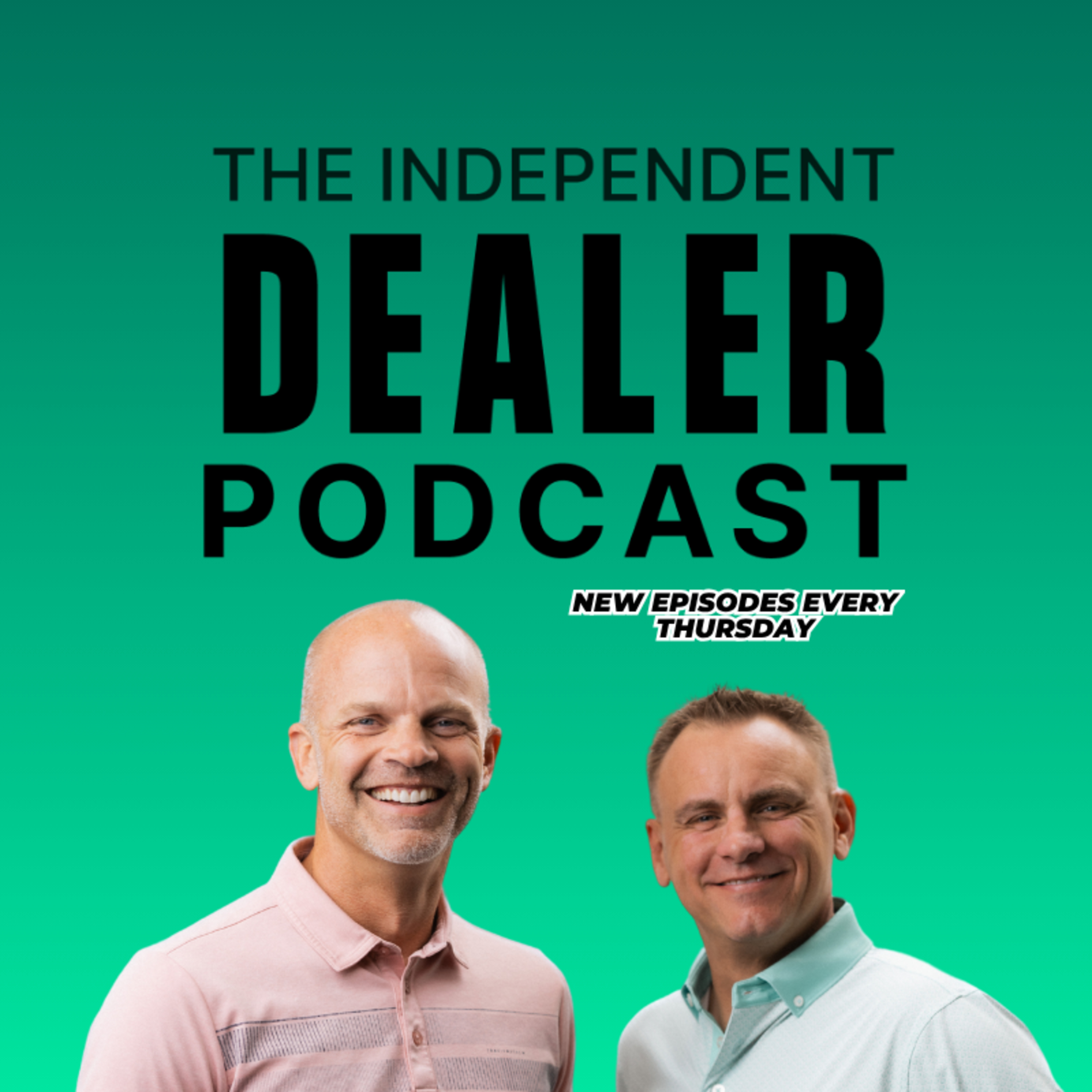
In this episode of the Independent Dealer Podcast, Jeff Watson and Luke Godwin sit down with Maggie Pugesek, Partner at C&M Coaching, to talk about one of the most misunderstood tools in the dealership right now — AI bots. From lead response and after-hours coverage to the ways salespeople are accidentally killing bot-set appointments, this conversation breaks down how to use AI as a sales asset without losing the human connection that closes deals.
What You'll Learn:
Why AI bots are a game-changer for after-hours lead response and appointment setting — and where they fall short
How salespeople are undermining bots by telling customers "that was just a bot" — and how to stop it
The right way to train your team to work with AI instead of against it
How to use bots to handle low-level follow-up so your best personalities can focus on building relationships
What the future of the dealership floor looks like when AI handles the process and people handle the rapport
If you're a buy here pay here or independent dealer trying to figure out how AI fits into your sales process without costing you deals, this episode is your starting point.
"And that's just flashing the report down to zero, because now the customer feels like they can't trust the dealer, right? So you gotta do that training..."
They’re saying customers may feel uneasy if they think the dealership isn’t being honest about how they were contacted. That loss of trust can make it harder to close the sale.
The speaker connects bot-related messaging to customer trust. If customers believe the dealership is hiding the fact that a bot was involved, it can hurt perceived transparency and reduce sales confidence.
"because we are only two weeks out from Buy Here, Pay Here. We're going to half by time to sling airs for you. Yeah, so if you aren't already signed up to be a Buy Here, Pay Here United in Las Vegas,"
Buy Here, Pay Here means the car lot sells you the car and also handles the financing. Instead of paying a bank, you make payments directly to the dealership.
Buy Here, Pay Here (often shortened to BHPH) is a dealership model where the dealer sells the car and also finances the purchase directly. Payments are made to the dealer rather than a bank or credit union, which changes how underwriting, collections, and customer communication work.
"you want us to be a little pushy of a customer, you want us to be in a bankruptcy,
you want us to see if they will approve a straw purchase,
[175.7s] which is one of our favorite things to do because people don't do enough training on that."
A straw purchase is when someone buys a vehicle (or other item) on behalf of someone else who is not the actual purchaser. The discussion frames it as a compliance and fraud-risk area that requires training to recognize and handle properly.
"I'm pretty good at renewing, like, reviewing my CRM conversations by text message, but I've been really bad at reviewing phone calls and playing the phone calls back for myself."
CRM is the dealership’s system for keeping track of customers and their messages. Looking back at those conversations can show you why someone didn’t buy or where you missed a step.
CRM (Customer Relationship Management) systems track customer interactions—often including texts, emails, and call notes. In a dealership, reviewing CRM conversations helps identify where leads are being lost or where follow-up is breaking down.
"Also your internet leads, people don't pay enough attention to those either. And like Jeff said, I look through my text messages"
Internet leads are people who reach out online. If you don’t respond quickly and correctly, they often go to another dealer.
Internet leads are customers who contact the dealership through online channels (forms, chat, ads, or websites). Dealerships often under-monitor these leads, and the conversion rate can hinge on response time and the quality of the first call/text.
"and that's what a lot of people do, but do you build rapport over text? I mean, do you guys genuinely as dealers feel like you can really establish a solid relationship with someone over text"
“Rapport over text” means trying to build trust through messages. The hosts are basically asking whether texting alone is enough to create a real connection.
“Rapport over text” refers to building a relationship and trust through written communication rather than in-person or by phone. The episode questions whether dealers can truly establish a strong relationship over messaging alone, especially with customers under financial stress.
"...there is a point where you need that customer on the phone, whether it be sales, collections, service or after the sales service, you have to have the confidence to get the customer on the phone."
This means switching from texting to a real phone call. A call helps you answer questions quickly and keep the deal from stalling.
“Get the customer on the phone” is a sales process tactic: moving from asynchronous texting to a live conversation to confirm details, handle objections, and keep momentum. The transcript emphasizes that if the call goes wrong, the customer may walk away or the deal may be lost.
"...if it does go wrong at that point, you lose the sale or you may lose the customer to a repo, to a service related issue or whatever, right?"
“Repo” means the bank or lender takes the car back. If a customer can’t keep up with payments, a dealership’s slow follow-up can make the situation worse.
“Repo” is short for repossession, when a lender takes back a vehicle because the buyer is behind on payments. In a dealership context, it’s a reminder that delays or missteps can push a struggling customer into financial trouble quickly.
"We finally did. We sent them the application. They did it. We didn't get it."
Here, “application” means the paperwork the customer fills out to get approved for financing. If the dealer doesn’t follow up after it’s submitted, the deal can fall apart.
In dealership sales, an “application” usually means the credit/financing application submitted to qualify the customer for a loan or lease. The transcript highlights a failure point: the customer completed the application, but the dealer didn’t follow up by phone, which cost the sale.
"She had a savings account, but she didn't want to spend it because she was trying to save that money in case she needed it for an emergency. She only had like $2,000 to put down, which I felt like was a pretty strong down payment."
A down payment is the money you pay at the start to help buy the car. Paying more upfront usually means you borrow less, which can lower your monthly payment.
A down payment is the upfront cash a buyer pays when financing a vehicle. It directly affects the amount financed, monthly payment size, and sometimes eligibility for certain loan terms.
"And there was also no customer service and acknowledgement. And I know we're going to talk about AI at some point, but they never said the person never even said like, congratulations on your baby."
Customer service is how the dealership treats you when you ask questions or have problems. If they respond poorly or ignore you, you’re more likely to walk away.
Customer service in a dealership context is how staff respond to questions, objections, and concerns during the buying process. In sales, it can strongly influence whether a shopper feels heard and stays engaged.
"...from the way CPI claims are handled, from the way after, you know, goodwill work is handled, even stuff is not even covered under warranty."
Goodwill work is when a repair gets helped or discounted even though it might not be covered by warranty. The point here is that how the dealership manages these situations affects how customers react.
“Goodwill work” is repair assistance provided outside strict warranty coverage—typically when the manufacturer or dealership agrees to help a customer due to circumstances. The speaker includes it as part of the service communication process that can prevent escalation.
"[573.8s] And even sometimes just preventative conversations [576.0s] can be beneficial, like, hey, we should change your spark plugs,"
Preventative conversations are when the shop talks to you about maintenance before something breaks. It’s basically trying to prevent a bigger problem and a bigger bill.
Preventative conversations are proactive maintenance discussions before a failure occurs. In a dealership context, they help customers understand upcoming service needs and avoid larger, more expensive repairs later.
"[576.0s] can be beneficial, like, hey, we should change your spark plugs, [579.3s] because if we don't, XYZ is going to happen,"
Spark plugs help your engine start and run smoothly by creating the spark that ignites fuel. If they get worn out, the car can run rough or start having problems.
Spark plugs are the ignition components that create the spark needed to ignite the air-fuel mixture in an engine. Worn or failing spark plugs can cause misfires, reduced fuel economy, and drivability issues, and they’re often part of scheduled maintenance.
"[581.9s] and it's going to be even more costly down the road. [583.9s] Or, hey, we should flush out your trans, whatever it might be."
This means changing the transmission fluid. The fluid helps the transmission shift correctly, and old fluid can lead to rough shifting or other problems.
“Flush out your trans” refers to servicing the transmission fluid, typically by draining and refilling or performing a fluid exchange/flush. Fresh fluid helps maintain proper lubrication and shifting performance; the exact service interval depends on the vehicle and fluid type.
"So with the automation of text messages, and there are softwares out there where you scan the vehicle in"
Automated texts are when the dealership sends status updates by phone message. It helps you stay in the loop without having to call and ask all the time.
Automated text messaging in service is a workflow where customers receive status updates via SMS. This reduces missed calls and helps keep the customer informed throughout inspection, parts sourcing, and repair.
"...good communication can really help you develop repeat customers or referrals."
Referrals are when existing customers recommend a dealership to friends or family. Dealerships often rely on referrals because they’re a high-trust source of new leads.
"Now I'm going to write this role play scenario down. Everyone's going to go through the room and role play it and then we're going to play the call. And you're going to hear exactly what happened"
Role play is when people practice a sales conversation like it’s happening for real. Instead of guessing what to say, they follow a planned script and then improve based on what went wrong.
The speaker is describing a sales-training method where teams practice a scripted “role play” version of a real customer interaction. The goal is to rehearse responses and improve how the salesperson handles objections and next steps.
"Yeah, I like the idea of replaying the phone call and the live phone call that you're doing at MyHerPay are United"
Replaying the call means listening back to a real phone conversation. It helps the team spot mistakes and learn what to do differently next time.
Replaying recorded calls is a coaching technique used to review what was said, how the customer reacted, and where the salesperson could have handled the conversation differently. In dealership sales, this often ties directly to improving lead follow-up and closing performance.
"Of course, a value statement,
[1125.7s] talking about your warranty,
[1126.7s] things like that should always be done
[1128.2s] at the beginning of a call"
A warranty is a promise that if something breaks, the company will help pay to fix it. The speaker says you should bring it up early in the call so the customer feels more confident.
A warranty is the coverage plan that protects the buyer against certain repair costs for a period of time or mileage. In sales calls, clearly stating warranty details early helps build trust and reduces uncertainty about ownership costs.
"But there's no like magic trick I wish there was ... because what we do is we listen to the calls and we actually score them. So they get points for everything that they've done in that conversation"
They’re talking about grading sales calls using a checklist. The idea is to show the salesperson exactly what they did right or wrong so they can improve.
The host is describing a call-scoring system where sales reps are evaluated on specific behaviors during customer conversations. This turns coaching into measurable accountability instead of vague feedback.
"You could 100% make your own scoresheet and email it to them when you've got some spare time and go, hey, look buddy, we failed this call."
A scoresheet is a simple checklist for how you’ll judge a sales conversation. It helps everyone use the same rules when giving feedback.
A “scoresheet” is a structured checklist used to evaluate sales calls against predetermined criteria. In practice, it standardizes coaching so different managers or reps are judging performance consistently.
Concept
in-person vs over the phone sales
"But for some reason there's a disconnect between doing that on the phone and it's no different... So you have to work a little bit harder to get them there but a process is a process and it works in person."
They’re comparing selling face-to-face versus selling by phone. Even though it feels different, the same basic steps can work—you just have to work a bit harder to keep the customer engaged.
This segment contrasts in-person selling with phone selling, arguing that the core sales process can be the same even though the delivery changes. It highlights the idea that remote sales requires extra effort to “get them there,” but doesn’t eliminate the need for structure.
"AI, once trained well, just does it, no? ... I have a whole conversation with your AI bot ... and then six weeks later I decide I want to do it again ... the exact same conversation with your AI bot."
An AI bot is software that talks to customers like a chat assistant. In car sales, it can answer questions and guide people, but if it always says the same things, customers may feel like they’re not dealing with a real person.
The episode is discussing using an AI bot to handle customer conversations in a dealership context. The key point is that AI can be trained to respond consistently, but that consistency can feel robotic to customers if it doesn’t adapt to their situation.
"[1655.0s] I'm super stoked to see the AI get integrated into the collections process
[1658.8s] and BlitzPay is on the cutting edge of it.
[1660.9s] So if you're taking credit cards at all,"
BlitzPay is a company that helps businesses take credit card payments. The hosts mention it because it can work alongside new AI tools so the dealership’s checkout and customer communication are smoother.
BlitzPay is referenced as a payments provider used by dealerships for credit card processing. In the context of the show, it’s positioned as part of the “AI integration” stack so dealers can streamline how they take payments and interact with customers.
"...brain dead work that either is an automated email, but if it could be more personable because the AI agent can say..."
An automated email is a message that gets sent automatically, usually as a reminder. The point here is that it can feel generic, while AI could make it more personal.
An automated email is a pre-written message sent automatically based on triggers like time since purchase or prior service. The discussion contrasts it with more personalized AI outreach that can feel less generic and potentially improve appointment conversion.
"...I know you have that issue, but it's time for an oil change. Sure."
An oil change is regular maintenance where the old engine oil is replaced. It helps keep the engine running smoothly, and dealerships use it as a common reason to schedule service.
An oil change is routine maintenance where the engine oil is replaced to keep the engine lubricated and protected. Dealerships often use oil-change reminders and service history to prompt customers to book the next visit.
"[1968.3s] Oh, Tesla, that's who I called.
[1970.1s] Tesla."
Tesla is a car company known for its electric cars and lots of software features. When someone brings up Tesla in an AI-bot discussion, they’re usually talking about how those AI tools can answer questions fast for a specific brand or customer need.
Tesla is an automaker that’s also heavily associated with AI features and connected-vehicle software. In dealership conversations, mentioning Tesla often signals that the speaker is talking about how AI agents handle customer questions and route them to the right information quickly.
"You may need to go and change that air filter when you're in there, and you may find something else wrong, and it gives a quote, well,"
An air filter is a service item that can require replacement during routine maintenance. The key point here is that a bot may quote an oil change without clearly explaining that additional items—like an air filter—might be needed after inspection.
"...make sure that your salespeople don't feel like they're being replaced, but rather assisted."
They want the AI to help the salesperson, not take over their job. If the salesperson feels the AI is replacing them, they won’t use it well.
The speaker emphasizes a “human-in-the-loop” approach: AI assists with messaging and lead handling, while the salesperson remains the decision-maker and closer. This framing is important for adoption because staff may resist tools that feel like job displacement.
"...don't jump in and say, oh, sorry, that was my bot. Like, you're right. It completely crushes it. So just roll with the awkward thing the bot said and move forward."
This is guidance on handling imperfect AI responses during customer conversations. Instead of interrupting or apologizing (“that was my bot”), the salesperson should acknowledge the moment, keep the tone smooth, and continue the sales process.
"But you still have a very important role here... build a relationship with this customer so that they want to buy a car from you. Because people, studies have shown too that if somebody really likes a salesperson, they'll pay more for a car..."
Even if a bot brings the customer in, the salesperson still has to build rapport. If the customer really likes the salesperson, they may be more willing to spend more.
The speaker emphasizes that even with AI-driven lead generation, the salesperson’s human relationship still matters for closing. They cite the idea that customer affinity for the salesperson can influence willingness to pay.
"I will also be speaking at NIADA. [2354.3s] They asked me to speak on sales service and collections."
NIADA is a group that represents independent car dealers. If someone says they’re speaking at NIADA, it usually means they’re doing a talk or workshop for independent dealers.
NIADA is the National Independent Automobile Dealers Association, a trade group for independent car dealers. Episodes often reference it because dealers attend NIADA events for training, networking, and industry updates.
"Also, you know, you can go to our website. [2379.8s] It's C and M Coaching. [2381.6s] You have to type out the and. [2382.7s] C-A-N-D-M-Coaching.com."
C and M Coaching is the speaker’s training/coaching business. They’re sharing their website so dealers can contact them.
C and M Coaching appears to be the speaker’s coaching/training service, likely focused on dealership sales and operations. The episode is promoting their contact page as a way for dealers to reach out for help implementing processes (including AI) without hurting sales.
Select text to request an explanation
You have to talk to your salespeople about these bots too.
They need to understand, hopefully it's not here to replace them,
but the biggest issue that we're seeing is salespeople hate it.
So the first chance they get,
they're telling the customer you were talking to a bot.
That wasn't good. Oh gosh.
And that's just flashing the report down to zero,
because now the customer feels like they can't trust the dealer, right?
So you gotta do that training and make sure that your salespeople
don't feel like they're being replaced, but rather assisted.
Hello and welcome to the Inde Pendant Dealer Podcast.
Luke, how are you feeling, buddy? You got a little under the weather?
Yeah, you know, we'll see how it goes.
I've been on spring break for a week and of course been out west,
come back sick.
But you know, luckily today we have one of our favorite guests.
Maggie, how many times have you been home?
This is number two, guys, but we see each other all the time,
so it probably feels like a lot.
Okay, okay. I thought it was three, but whatever.
Yeah, it definitely helps improve the overall appearance of the podcast.
Luke looks like he got hit by a train.
Maggie comes in looking like an angel, so it would be a YouTube episode.
If you're not listening on YouTube, this would be the one to do it.
Not just our ugly mugs on the episode.
So Maggie, it's great to have you because there's a lot of stuff going on in the industry
as far as it comes to what you are an expert on.
And so we really wanted to talk to you about some of the changes
and some of the new stuff that you guys are doing.
But first off, this is going to be a timely episode
because we are only two weeks out from Buy Here, Pay Here.
We're going to half by time to sling airs for you.
Yeah, so if you aren't already signed up to be a Buy Here, Pay Here United in Las Vegas,
you've got to do it before you listen to the rest of this episode
or you won't have time.
Right, Maggie?
Tell us about what your session is real quick
because I think it's one of the funniest and funnest sessions that we have this weekend.
Yeah, so I'm actually doing two different things.
I'm speaking at the compliance conference
and I'm going to be playing some compliance,
what do we want to say, related, issue-related phone calls
to kind of bring some light to that and talk about that.
And then we're doing a session in the garage
where we are going to be calling your dealership live for you while you sit there and listen.
Hopefully it's full.
I would squirm in my seat, Maggie.
That's going to be, um, man.
Yeah, so we'll do sales or service like we can do either.
Some people feel like their service department struggles a little bit with customer service.
So we'll do service calls too if you want,
you know, call and ask questions about oil changes, what have you.
We can customize anything really and kind of ask any questions you want or if you want
us to be a little pushy of a customer, you want us to be in a bankruptcy,
you want us to see if they will approve a straw purchase,
which is one of our favorite things to do because people don't do enough training on that.
We'll do anything you want and then of course we'll talk to you afterwards
and let you know kind of what happened.
We do try to kind of spread the room out so it's a little bit more private,
but I'm not going to lie.
Last year we had a lot of people grouping around other stores
because everybody wanted to hear what was happening.
Everybody wants to see a train wreck, right?
And what's bad is I think that so many of our phone calls are train wrecks
and dealers aren't doing anything about it.
Jeff, how many phone calls have you listened to at your store in the last 30 days?
You know, that's a really good point, Luke.
I have not, every so often I sit in my office and my office is located close enough
that I can hear my salesman speak and so I'll write on my little calendar,
like, oh, Tuesday, 10 a.m., you know, like there was a phone call
and from one side of this conversation I can tell
that things are not going the way they're supposed to.
So let me go back into my system and listen to that phone call and I forget.
I don't do it.
I don't get back to it.
I'm pretty good at renewing, like, reviewing my CRM conversations by text message,
but I've been really bad at reviewing phone calls and playing the phone calls back for myself.
Maggie, is there any benefit to doing what Jeff is talking about to eavesdrop?
Because every once in a while I'll just go sit in my showroom
and in my showroom I can hear a lot of conversations.
Is there any benefit to that instead of listening to the recorded call?
So Jeff said something really important.
He said, I can hear the one-sided part of the conversation
and that is not hearing any of the conversation.
So you do, I mean, he's right, like the fact that he notates,
all right, I heard something that might be a little sketch.
I want to go back and see what actually happened, but does he do it?
No, it's really easy to forget.
And one of the things that I like to tell dealers is you don't have to hire me.
I will help you even if you don't hire me.
You call me and you ask me, what should I be doing?
And I will tell you because I believe in helping the industry as a whole,
but you have got to listen to your phone calls.
If you don't have a lot of sales right now,
but you've got leads up the wazoo and you can't figure out why it's in your phone calls.
I would bet anyone a thousand dollars it is in their phone calls.
You can pick one random phone call and send it to me
and I can figure out what's going on just from hearing it.
Also your internet leads, people don't pay enough attention to those either.
And like Jeff said, I look through my text messages
and that's what a lot of people do, but do you build rapport over text?
I mean, do you guys genuinely as dealers feel like you can really establish
a solid relationship with someone over text
when they're bankrupt, they can barely afford to survive
and they desperately need a car?
Are we going to win them over over text?
Well, that's just a lot of emojis and that's the best solution.
Well, I tell you, smiley face car.
Yeah, you, text are super important.
Let's don't discount text, but there is a point where you need that customer on the phone,
whether it be sales, collections, service or after the sales service,
you have to have the confidence to get the customer on the phone.
And when you do, it better not go wrong because if you do,
if it does go wrong at that point, you lose the sale
or you may lose the customer to a repo, to a service related issue or whatever, right?
So I actually did a whole video on this like a year ago.
It was a series of text messages that went from really A to B with the customer.
Customer inquired about a car, took us a long time to get back to them.
We finally did.
We sent them the application.
They did it.
We didn't get it.
We never picked up the phone and called this customer.
We went from setting an appointment with this person to them backing out.
We talked them out of the sale via text.
And there were so many things that went wrong.
And I kind of recorded a video and put it on YouTube of walking through the series of text
and you could see right in front of your face that they were losing it.
It was a single mom.
She had a savings account, but she didn't want to spend it
because she was trying to save that money in case she needed it for an emergency.
She only had like $2,000 to put down,
which I felt like was a pretty strong down payment.
Like it might have been two years ago, right?
And you go back through and you see this and they were like,
we don't have any cars for that price.
And she's like, well, I just like, what am I supposed to do?
And she's like, just forget it.
I won't come in.
We should have called her and had a conversation with her.
And there was also no customer service and acknowledgement.
And I know we're going to talk about AI at some point,
but they never said the person never even said like,
congratulations on your baby.
That's great.
That little bit of empathy and humanization in a text message goes so far.
That's really interesting.
You said something too.
Sometimes we'll focus on sales and service or sales and collections,
but the service component, like I've never done phone call
or text message training with my service writer.
And we don't do retail service.
We just do in-house, you know, wanty work,
but I've never really sat down and said like,
hey, here's how you should talk to them.
And here's the things you should say to not escalate the problem
or diffuse it or not even have a problem to begin with.
That's really interesting.
I never really thought that my service writer needed sales.
You do.
You're a phone coach.
I tell you, you do because if you look at where so many repos happen,
they happen from the service department.
If you have a service department at your dealership,
from the way warranty claims are handled, from the way CPI claims are handled,
from the way after, you know, goodwill work is handled,
even stuff is not even covered under warranty.
If your service writer does anything that is,
and everybody at your dealership should have a customer service,
service writer, whether you have a shop or not,
because you need to handle the traffic.
But if they folly, that's a repo that's going to happen right then,
or it's going to happen a month from now.
So it's a big deal.
And it's not just what you say, too.
It's also the tone in your voice.
And that's something I think.
You know, in service writers, our service oriented,
like my husband is a mechanic.
Do I think he's got the best customer service skills
when it comes to explaining what's wrong with a vehicle?
Absolutely not.
Would I stick him on the phone with a customer?
No.
And I love him, but no.
Because he doesn't know how to explain things the right way.
And so it's not just what you say.
It's also the tone in your voice.
And when you're dealing with a situation with an unexpected repair,
and you don't have an empathetic tone,
and you're just coming at them matter of fact,
because you know the facts and the details, right?
You know why this car needs this repair.
They don't.
They don't understand it.
And even sometimes just preventative conversations
can be beneficial, like, hey, we should change your spark plugs,
because if we don't, XYZ is going to happen,
and it's going to be even more costly down the road.
Or, hey, we should flush out your trans, whatever it might be.
Those are all things that you want to have conversations
with your customer about.
And unfortunately, sometimes service writers
are a little rougher on the edges.
Yeah, yeah, that's true.
And just the, our thing is just the constant communication
and getting them the habit of like,
I know you have no update for him, but it's five o'clock.
You've got to text them or call them and tell them something,
anything, even if it's nothing.
It's like, just communicate.
Maggie, is this still a thing with service writers?
Always went by the, I think it's 11 and four or 10 and four.
Like, they need to update it in the morning by 11
and in the afternoon by four.
Is that still the deal?
I mean, so in this age of communication automation,
it's kind of unacceptable to not update them at some point.
Not only is that going to improve the customer's perception
of your service department and what they're paying for, right?
That they're getting what they're paying for,
but it also just keeps them informed on the situation.
So with the automation of text messages,
and there are softwares out there where you scan the vehicle in
and you can track that vehicle through everything
and it'll update the customer along the way.
I mean, there's apps.
There's so many different things that you can do,
but you do want them to feel valued.
And like, even though it might just be,
you know, your customers whose vehicles you're working on,
don't you want those people as repeat customers,
especially if they're good paying customers
and they're taking care of their car.
If you don't take care of them in service,
they're not going to buy from you when the time comes.
So you want to think about that snowball effect
and how good customer service and service
and good communication can really help you develop repeat customers or referrals.
Hey, sorry to break in real quick,
but make sure you guys know about Buckeye.
Long time, awesome sponsor of the podcast
and who I use for all my reinsurance products.
I can't thank them enough for teaching me so much about reinsurance
over the years and coming up with new products
and new ways to get my portfolio secured.
My customers have options of warranties and service contracts, gap.
I think it's just been great, Jeff.
It's absolutely been a great way for me to build wealth,
put away some money.
So if you are a buy here, pay here, lease here, pay here,
or retail dealer, it works for all dealers.
You can set up a reinsurance company.
You can ensure your own stop giving money
to those third party providers that aren't going to cover your stuff anyways.
Keep it in house, call the guys and girls over at Buckeye,
risk services and get set up ASAP.
Maggie, talk to us about the dreaded R word,
because I know a lot of dealers really, really push back
against role play in there, not push back.
I wouldn't say that's the word of voice.
It's scary, Jeff.
Yes, because it's scary for people.
But, and it's, I know it's scary for my salesman
and I know the other day we, so we, we become like ritual,
like every Tuesday morning and every Thursday morning of 10 o'clock,
we have sales training meeting and there is role play.
I don't want to talk about anything else.
We very quickly go over stats for the week and that's it.
This isn't a business meeting.
This isn't to talk about why the Ford ranger is not ready.
Like this is role play and we do the back and forth
and I know they're scared because I lead it and I like,
I hound on them and I say, okay,
I'm going to give you an example of how to do it right.
And we go through this scenario.
It's very defined.
I say, this is the situation this customer's called in.
They've got 3000 down your delivery and approval, whatever.
And I give it to them the right way and then I ask them to do it.
And then afterwards I say, okay, team,
what did they do good?
What could they do better?
And we go through it and everyone kind of chimes in and says,
well, I like how they did this, but they missed this, this and this.
Is that the way these things should be handled?
And what advice would you give us for making sure that,
A, we do our role play and B, we do it effectively?
So first off, everything you're doing is 100% right.
I love that you're doing it that way.
I genuinely enjoy having fun with it because it's good to laugh
and it's fine to say your name's Batman or Bruce Wayne.
I don't know, but silly things like that
help to kind of lighten the moon just a little bit
because it is embarrassing to role play.
Nobody likes doing it.
We do it as part of our onsites.
And the best way to do it is for everyone to listen.
And then at the end, even if you make a small checklist too
and have everybody kind of check it off and say,
all right, what did we forget?
Because sometimes it's something simple like,
we didn't get the phone number.
We didn't get their contact information.
But also for de-escalation, it's really good too
because everybody gets that customer service collections
more so than sales that is angry and they're hot about something.
And if you don't know what to do with those,
you can make it worse very, very fast.
So role playing those areas and taking real scenarios
that have actually happened in your store are also great.
I went to Luke's boot camp that he did,
his collections boot camp that he did,
and I was the designated customer
and I got to role play the room.
That was so much fun, Maggie.
And we're actually going to do that again on May 14th
in Atlanta during our boot camp.
But Maggie, the amount of people that engaged,
that when they showed up in the room that were shy,
but how you were able to kind of bring them out,
that's amazing.
Is that what you see when you normally go to somebody's store?
Well, so it depends on how comfortable they are with you too.
Like I was being a little over the top and ridiculous
because they knew that they were shy and they were stiff.
And it helped to kind of ease the room a little bit.
But I totally took real situations.
Like those were real phone calls I had heard
that I was using as examples.
Plus you had like some printed out and we use those too.
But as long as they feel comfortable with you,
yes, it may be weird for them with Jeff doing it
because he's their boss.
So we usually do it as part of our training
when we train people and they don't like it either.
I mean, there's just no way to make it comfortable
unless you throw some weird stuff in there.
Sometimes that can be fun,
but you never know what you're going to get.
But it is such an important part of it.
Even the other thing that you can do alternatively
is you can play the phone calls
as a team and stop and be like,
okay, we missed our first thing.
Does anyone know what it is?
And what should we have done differently
with an actual phone call?
And that can sometimes help.
The other thing that you could do too
is Jeff, for example, you see, okay,
May 3rd I wrote down at 10 a.m.
this phone call was bad.
I'm going to go back and I'm going to listen to it.
Now I'm going to write this role play scenario down.
Everyone's going to go through the room and role play it
and then we're going to play the call.
And you're going to hear exactly what happened
and then we can talk about what we should have done differently.
A lot of different ways you can take your actual data
and put it into the training for your teams.
And I'm actually going to be doing role playing
at MyHerPay are United in the garage session as well.
So come see me there.
Good luck.
Yeah, I like the idea of replaying the phone call
and the live phone call that you're doing at MyHerPay are United
because here's the problem I have Maggie
and helped me make that connection
is that when we do the role,
when we do the role playing one on one with each other,
they know what they, what I want to hear.
They know that they're supposed to go A, B, C, D, right?
In an introduction call or whatever it is.
And they'll do it.
And then when they're on the field on game day,
that's all out the window and they just decide to invent
their own sales process and their own word tracks.
And they just say whatever the freak they want on the phone call.
So that's why playing the phone call is great
is it's cause like, dude, you can't just say what you want
because you will be held accountable.
I'm going to play this phone call and training
and you're going to be called out.
So please just stick with the script.
It works.
I promise you, like you don't have to reinvent the wheel.
You don't have to try to short circuit sales process,
like stick with the steps.
It will work.
So Maggie, how do I help them make that connection of like?
That's a great question.
Yeah, why do people,
why do people go off the rails if they're trained?
Well, you know, you guys,
if I knew the answer to that, I probably wouldn't be here
because I would have some sort of magic key
to be able to fix all of these problems, right?
There is no real reason other than fear.
Hearing is really the biggest one.
I mean, over 40% of salespeople are afraid of the phone
and experiencing anxiety related to the phone.
And so I think a lot of times it's just a matter of
not necessarily believing in what it is
that you're asking them to say.
Sometimes when I'm working with a dealership,
like we're working with a very large dealership right now
and some of the staff is like gung-ho, some isn't.
And the ones that aren't,
I find it's easier to list off the things
that you're expecting them to do
and not so much provide them with a word by word, word track
because they seem to be able to associate better
with the things that we're wanting them to do
in the conversation,
as long as we're hitting some of these points.
Of course, a value statement,
talking about your warranty,
things like that should always be done
at the beginning of a call
and they should try to have that kind of memorized.
One of the best ways that you can do this though
is definitely listening to the phone calls.
If you hear a good call,
you got to pull that one and play that
because sometimes they need to hear examples
of it actually working from them in order to believe in it.
But there's no like magic trick I wish there was
because what we do is we listen to the calls
and we actually score them.
So they get points for everything that they've done
in that conversation
and then we will coach over it
and kind of give them some objection pointers.
And that's kind of where the accountability comes in
as they get a grade.
So that's something that you could do on your own.
You know, you could totally...
I did a podcast on it
talking about the things you want to score on.
You could 100% make your own scoresheet
and email it to them
when you've got some spare time
and go, hey, look buddy, we failed this call.
Like we missed all these things
and it's helpful for them to really see what they missed
and then for you to tell them why those things are important
because it's not just you miss this.
I want you to say this.
Here's why you should say it.
It's when you say things this way,
this is what's going to happen
or this is what your customers thinking
because there's so much psychology in sales.
And I would also say not to be long-winded
but think about how your sales person sells a car in person.
Everyone's got a process, right?
You walk up, you shake their hand, you introduce themselves.
The way you show a car,
the way you talk about the application in your programs
in person is a set process
that almost every sales person has.
But for some reason there's a disconnect
between doing that on the phone and it's no different.
It's just the process is different
because the customer's not in front of you.
So you have to work a little bit harder to get them there
but a process is a process
and it works in person.
So why do we tend to think
it's not going to work over the phone?
Yeah, I would think it'd be easier on the phone
because you're not a physical intimidation
of being in front of someone all that.
But it's weird that it works opposite, yeah.
It doesn't work either way for me in my place.
I do recall seeing a clip of the two of you
and I think I commented.
I think you guys need some phone training
because you were both like, do not call me.
Text me.
Yeah, I got a lot of flak from my mom on that one.
So even to this day, I don't think she's-
That was funny.
That was really funny.
Yeah, I wasn't good with that.
I stare by my statement.
So here's the thing, Maggie.
They don't do what I tell them to do
as many times as I tell them to do it.
They'll reinvent the wheel.
They'll come up with their own nonsense.
They'll hallucinate and create their own process
like their names on the building.
So why don't I just replace them with AI agents
and say, hey guys, I'm just going to train this AI.
They're going to say exactly what I want to say
every single time, exactly the way I want to say it.
They're going to follow my sales process to a T
and I don't have to worry about all this nonsense,
compliance, you going off the rails saying random stuff.
AI, once trained well, just does it, no?
That's like nails on a chalkboard to me, but so-
But why?
Because this is a people business.
People don't buy cars from places.
They buy cars from people
and they don't buy cars from people they don't like.
And we are in an independent challenge credit space
where nobody trusts anybody.
And sure, you can copy and paste everything
that you want a robot to say,
but you kind of set it like,
they're going to say the same thing every single time.
So imagine that I'm a customer
and I'm interested in buying a car from you
and I submit an inquiry today
and I have a whole conversation with your AI bot
and then six weeks later I decide I want to do it again
and I have the exact same conversation with your AI bot.
How does that feel to me?
Also, we love to play around with them
so we will ask them questions like,
I'm shopping dealership A and I'm comparing them against you
and almost every time the bot responds with,
well, we're here when you're ready.
Yeah, yeah, yeah.
Well, there's the magnitude.
There's got to be a spot for AI
because what happens in an independent space
is that we can't hire the amount of people
a lot of times that we need to answer
all of the leads in an appropriate time,
whether that be five minutes or 15 minutes.
Sometimes it's a day later, right?
So there's got to be a space for AI.
Where does it fit in your opinion for the independent dealer?
So I think that it is designed to be used as a support system for your staff.
If a lead is not handled in a specific amount of time,
you should absolutely have something chime in
in response to the customer, right?
Because you don't want to let that lead go.
I mean, studies show that we should get about 70%
of our customers on the phone if we call within five minutes.
Most dealers are over an hour,
which has a 10 to 30% contact rate.
That's not going to get you a customer, right?
If you have 100 leads coming in, you need to take over an hour
and you get 10% of them on the phone.
That's a bad ROI, right?
So you want something reaching out.
What you don't want is it to completely replace everyone.
And I do have clients that have tried it.
It has lasted about two weeks
and it has not worked.
And people are smart.
They pick up on it.
I don't like using it at all personally myself.
Like my local hospital has recently started using it
when you call to schedule an appointment.
And I'm just like, representative, representative,
because it's so awful.
And then the fake typing just kills me.
It's like, you know, like it's actually typing something.
Sure. Come on now.
So, you know, I think that support,
like using it for initial contact,
using it for follow-up.
If the lead starts ghosting the salesperson,
use it to chime in and do those things.
But you still want to have some of that personal connection
with the salesperson picking up the phone.
And honestly, Jeff, their name isn't on the building.
You could do that and replace them with those people.
And that is a conversation I would encourage
most salespeople to consider because it is real
and it is happening a lot of places.
And they're just using bots and AI voices
to contact customers and only really having people sign and drive.
I mean, in this day and age,
you can do most contracts online
and have the customer just sign and drive.
Well, how about AI when it comes to collections and service?
Where do you see that fitting?
Because there's a lot of accounts to get to sometimes
in collections and that hell, it goes a long way.
Yeah. And I love BlitzPay's tool, shout out to BlitzPay.
They have a great tool and I love the idea
of using it to collect simple payments.
When you get into more complex situations,
which is the primary function of my business
is listening to those tough collections calls,
there is a lot that happens in those calls
and it's just not my opinion that you want to use it for those things.
I think there does come a point in time
where somebody needs to pick up the phone and contact that customer.
That being said, your initial communication,
like before we started recording,
we were talking about the after the sale phone call,
your collector should be introducing themselves to that customer.
They should know you have an automated system
they can make payments with,
but you're here anytime they need you.
And studies show that when the customer trusts their collector
and feels comfortable and not judged,
they're 35% more likely to call you before they fall on hardship.
Not after, not when we're trying to catch up from behind,
but they'll actually call you ahead of time
and be like, this has happened, or I just lost my job,
how do I do this?
So you need that trust early on and I think it's a great support tool.
All right, Jeff, sorry to break in,
but we got to talk about putting money in the bank,
and how do we do that?
I do it through BlitzPay.
The guys and girls at BlitzPay are great, amazing, attentive on top of it.
I have had little to no issues since I switched over from that other company.
For sure, to me, they're probably the best services
when it comes to answering phone calls
and taking care of things that I've ever seen a vendor.
And the back in automation,
I've actually been working with that for a couple of dealers here lately
and going in and changing up these automated texts that go out.
Super simple, they work, the customers click and pay, it's fantastic.
And also they got this AI thing, Jeff, pretty cool.
Yeah, I'm stoked.
They got the audio AI, the phone caller,
and hopefully very soon the texting version of that.
So it'll help my collector be way more efficient in the future.
I'm super stoked to see the AI get integrated into the collections process
See something that's not quite right? Our annotations are AI-generated and can sometimes miss the mark.
Click the flag icon on any annotation to suggest a correction.