
51: Alpina becomes peak BMW, Australian EX60 pricing and Citroën goes back to basics
About this episode
Alpina gets framed as BMW’s peak performance-luxury alternative to BMW M, with a GT-focused approach and a design future hinted by the Alpina Vision Coupé. The discussion then pivots to Australia: Volvo EX60 pricing and touchscreen-heavy controls, alongside EV comparisons involving 800-volt tech and ADAS tuning. The hosts finish with Citroën’s return to basics—its 2CV reborn as an electric “spiritual successor,” aiming for around 15,000 euros and leaning on soft-suspension heritage for light off-road charm.
In this week's episode of The Hook Turn Podcast, we discuss BMW's relaunch of the Alpina brand with the stunning new Vision Alpina Coupe. We also cover Australian pricing for the gorgeous new EX60, and French stalwart Citroën going back to basics with an EV reinterpretation of its iconic 2CV.
Show notes:
-BMW Vision Alpina: https://www.carexpert.com.au/car-news/vision-bmw-alpina-concept-revealed-with-v8-engine-four-seats
-Volvo EX60: https://www.drive.com.au/news/2027-volvo-ex60-price-and-specs-swedish-built-electric-suv-arrives-with-google-gemini-ai-tech/
-Citroën 2CV: https://www.autocar.co.uk/car-news/electric-cars/official-citroen-confirms-2cv-name-and-styling-£15k-city-car
BMW Vision Alpina Coupe
"So we're talking about the all new BMW Vision Alpina Coupe. So just for context, Alpina has sort of been basically like a sports luxury..."
This is a BMW concept car that’s styled and tuned with Alpina’s philosophy. Alpina takes BMWs and aims for a mix of faster driving and more comfort, like a long-distance cruiser rather than a track-only machine.
The BMW Vision Alpina Coupe is a concept car that blends BMW engineering with Alpina’s “sports-luxury” approach. Alpina is known for tuning BMWs for stronger performance and a more comfortable grand-touring feel, rather than the track-focused character associated with BMW M.
BMW M
"So BMW has M, which is their out-and-out performance brand. But on a much smaller scale, they also had Alpina."
BMW M is BMW’s performance division. It tends to make cars feel more aggressive and track-ready, and in this episode they’re contrasted with Alpina’s more comfortable grand-touring style.
BMW M is BMW’s performance brand focused on the most track-capable versions of its cars. In the segment, the host contrasts BMW M’s “out-and-out performance” and firmer, track-oriented setup with Alpina’s more GT-focused tuning.
grand touring
"And not be so firm as to be a track-only car like BMW's full-fat M cars are, but be suitable for comfortable grand touring on your long road trip."
Grand touring is about making a car comfortable for long trips. It usually means a smoother ride and nicer interior, not a setup that’s only meant for the track.
Grand touring (GT) describes a style of car setup aimed at comfortable long-distance driving. The host uses it to explain Alpina’s intent: more luxury and less harshness than track-focused performance cars, making it better for road trips.

Alpina B3 GT
"So some of the previous Alpina models, they had the B3 GT, which was based on the BMW 3 series, like a top-end version of that."
The Alpina B3 GT is a special Alpina version of the BMW 3 Series. It’s meant to feel more like a comfortable long-distance car while still being quicker and more upscale than a standard model.
The Alpina B3 GT is an Alpina-tuned version of the BMW 3 Series built with a grand-touring focus. The host frames it as an example of Alpina taking a BMW and dialing in more luxury and performance without going as hard as track-only M models.

BMW 3 series
"So some of the previous Alpina models, they had the B3 GT, which was based on the BMW 3 series, like a top-end version of that."
The BMW 3 Series is a common BMW model line. Here, it’s mentioned because Alpina made a special GT-focused version of it (the B3 GT).
The BMW 3 Series is the base model line Alpina used for the B3 GT. In this context, it matters because the host is explaining how Alpina builds “top-end” versions of BMW platforms for a GT-oriented mix of luxury and performance.

Alpina version of BMW's iconic Z8 Roadster
"They had an Alpina version of BMW's iconic Z8 as well, or Z8 Roadster, which was an incredible car."
The BMW Z8 Roadster is a famous BMW convertible. Alpina made its own version of it, and the host is pointing to it as an example of Alpina upgrading a standout BMW into a more luxury-and-performance oriented package.
The BMW Z8 Roadster is an iconic BMW model, and Alpina produced a version of it. In this episode, it’s used as an example of Alpina taking a halo BMW and reworking it toward Alpina’s GT-style blend of luxury and performance.

Bmw 5
"...ncredible car. They've had Alpina versions of the BMW 5 series, the 7 series. And yeah, more recently, wh..."
The BMW 5 Series is a larger, more comfortable BMW than the 3 Series. The podcast mentions special Alpina versions, which are modified versions of the 5 Series. They’re brought up because they’re a notable way to make the same basic car feel different.
The BMW 5 Series is a mid-size luxury sedan (and wagon) that’s positioned above the 3 Series, with a focus on comfort, refinement, and performance. The podcast highlights Alpina versions of the 5 Series, which are tuned and upgraded by Alpina to deliver a more distinctive driving character. It’s discussed because it shows how BMW’s mainstream lineup can be elevated by specialist tuning.
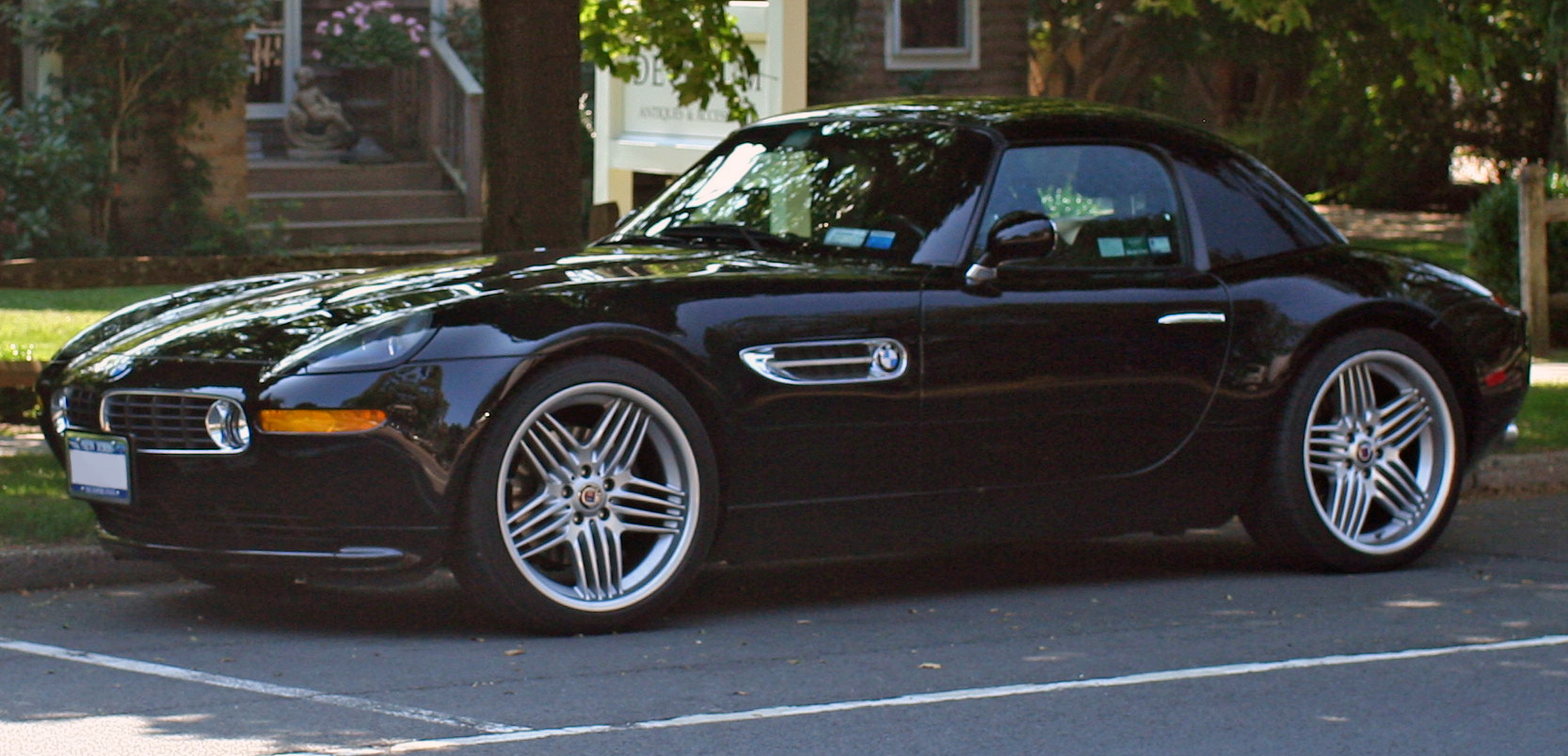
Alpina Z8
"... that. They had an Alpina version of BMW's iconic Z8 as well, or Z8 Roadster, which was an incredible ..."
The Alpina Z8 is a modified version of BMW’s Z8 roadster. Alpina takes the original car and tunes it to feel more refined and special. The podcast mentions it because it’s considered an impressive, high-end roadster.
The Alpina Z8 is a special Alpina-tuned version of BMW’s Z8 roadster. The podcast brings it up as an “Alpina version” of BMW’s iconic Z8, describing it as an incredible car. It’s discussed because Alpina is known for refining performance and feel, turning an already special roadster into something more bespoke.
fully in-house brand
"what has happened is that BMW has bought Alpina and made it as a fully in-house brand. So they've bought it under, they bought it from the Boven,"
“Fully in-house brand” means BMW is taking Alpina under its own management. Instead of Alpina acting like an outside modifier, BMW will treat it as an official part of its lineup and planning.
“Fully in-house brand” here means Alpina is being run directly under BMW’s control as an official brand, rather than operating like a more independent aftermarket-style tuner. That typically affects how design, engineering, and branding are coordinated with BMW’s model lineup.
Rolls-Royce
"And they've decided to position it sort of as above BMW, but below Rolls-Royce. So in the BMW stable of brands,"
Rolls-Royce is the most luxury-focused brand in the comparison. The hosts are saying Alpina will sit between BMW and Rolls-Royce in terms of how fancy and exclusive it’s meant to feel.
Rolls-Royce is referenced as the top tier in the luxury brand hierarchy the hosts are describing. They say Alpina will be positioned above BMW but below Rolls-Royce, meaning it’s intended to feel more premium than BMW while still not reaching the ultra-luxury level of Rolls-Royce.
BMW badging
"So it'll be based on BMW models, and it'll still have the BMW badging, but it will have a lot more personalization,"
“Badging” is the car’s branding—logos and model/trim labels on the outside. The hosts say the Alpina will still look like a BMW in terms of branding, but with more unique touches.
“Badging” refers to the badges and branding marks on a car—like model names, logos, and trim identifiers. The hosts say the future Alpina will still use BMW badging, but with more personalization and higher-quality materials.
Alpina vision coupé
"So the Alpina vision coupé is their first sort of signifier as to the design direction of where they're thinking the Alpina brand will go. So it's this luxurious two-door, grand touring coupé."
The Alpina vision coupé is a show-car concept that hints at what Alpina’s next design direction could be. The hosts say it’s meant to be a classy, long-distance grand touring-style two-door, and it may influence a future production car.
The Alpina vision coupé is a concept car used to preview how Alpina wants its future designs to look. In this segment, the hosts describe it as a luxurious two-door grand touring coupé and note it likely won’t be a direct production model, though a version could reach production.
V8
"The other thing is, as you said, it's interesting that they didn't make it an EV and they have just said it's going to be a V8."
A V8 is a type of engine with eight cylinders arranged in a V shape. The point here is that the car is expected to use a traditional engine (V8) instead of being fully electric.
A V8 is an engine with eight cylinders arranged in a “V” shape, typically producing strong smooth power. The hosts note that this car is planned as a V8 rather than an EV, likely aligning with the expected preferences of its target buyers.
EV
"it's interesting that they didn't make it an EV and they have just said it's going to be a V8."
EV means electric vehicle. It’s a car that runs on electricity from a battery instead of using a gas engine.
EV means “electric vehicle,” powered primarily by one or more electric motors and a battery rather than a gasoline engine. The hosts are contrasting an EV plan versus a V8 plan, implying the brand expects its customers may not want an EV.

BMW i3
"they have like from the front, they've kept the large grille. So with the some of the Neuer class models, especially the i3 and the ix3, they've turned down the kidney grills quite a bit."
The BMW i3 is BMW’s earlier electric car. In the episode, it’s mentioned because BMW has been changing how big the front grille looks on newer models.
The BMW i3 is an electric BMW hatchback known for its distinctive styling and early adoption of EV tech. Here it’s referenced as an example of newer BMW design language that “turned down” the kidney grille size compared to older, larger-grille looks.
kidney grills
"So with the some of the Neuer class models, especially the i3 and the ix3, they've turned down the kidney grills quite a bit."
“Kidney grilles” is what car people call BMW’s signature front grille shape. This episode is comparing how big or small that grille looks on different BMW models.
“Kidney grilles” is BMW’s nickname for its distinctive front grille shape, which resembles kidney beans. The hosts are discussing how BMW has varied the grille size across different models and design eras.
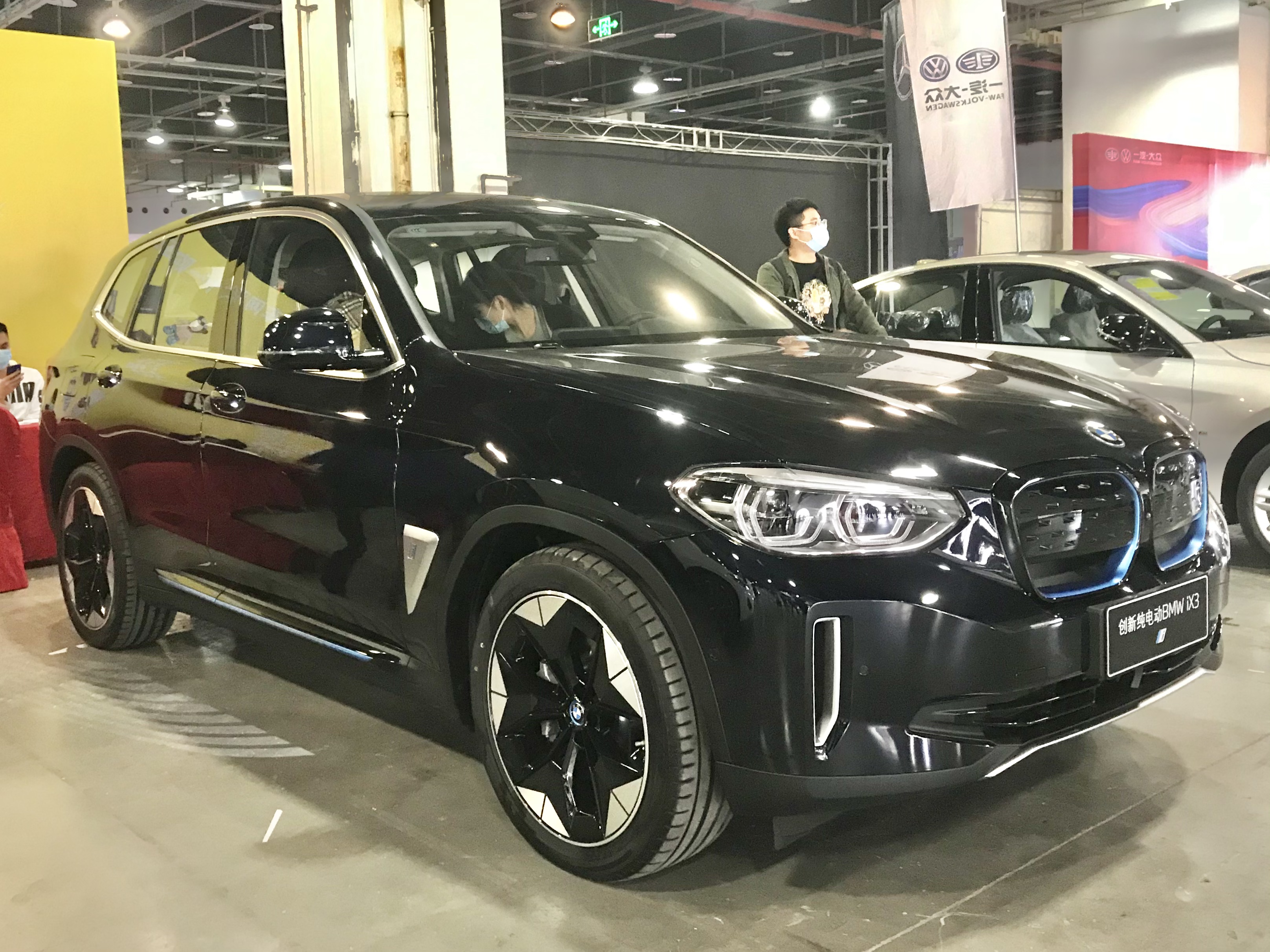
iX3 (G08)
"...the Neuer class models, especially the i3 and the ix3, they've turned down the kidney grills quite a bi..."
The iX3 (G08) is an electric SUV made by BMW. The podcast talks about it in the context of how BMW changed the look of the front grille on newer electric models. It’s included to show the design evolution from earlier EVs.
The iX3 (G08) is BMW’s electric SUV variant in the X3 size class. The podcast references it alongside the i3 when discussing BMW’s design direction, including how the front grille treatment has changed on newer EVs. It’s mentioned because it’s part of the evolution of BMW’s electric styling and branding.
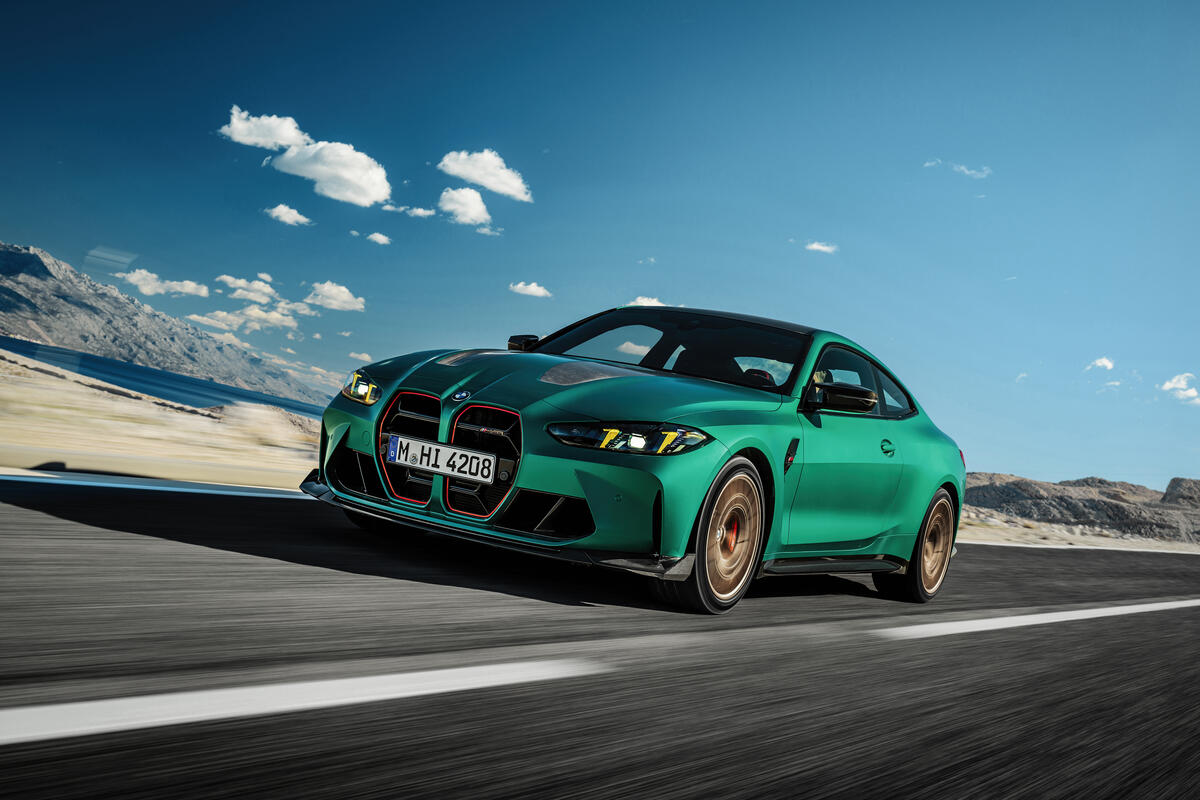
BMW M4
"like especially models like the BMW XM and the M3 and the M4, they had those huge oversized grills."
The BMW M4 is BMW’s sporty performance car. The hosts mention it because it’s part of the group of BMWs that have had very large front grilles.
The BMW M4 is BMW M’s performance coupe/convertible line, known for sporty handling and a strong enthusiast following. In this segment it’s used as another example of BMW models with oversized kidney grilles.
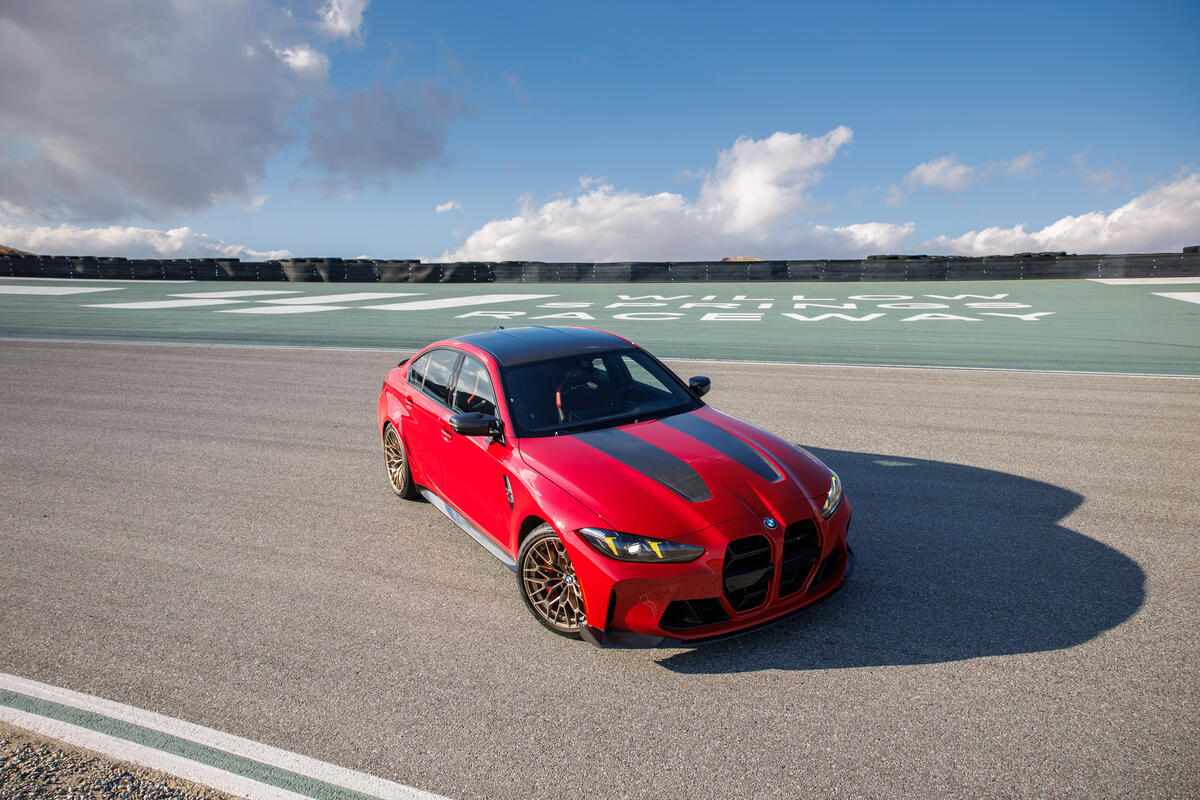
BMW M3
"like especially models like the BMW XM and the M3 and the M4, they had those huge oversized grills."
The BMW M3 is BMW’s famous performance car. In this discussion it’s referenced because some M cars have had very big front grilles.
The BMW M3 is BMW’s iconic performance sedan/coupe line, built by BMW M for track-capable driving. Here it’s mentioned mainly for styling context—specifically that some M models have had very large kidney grilles.

BMW XM
"However, it is in proportion. So I think with, like especially models like the BMW XM and the M3 and the M4, they had those huge oversized grills."
The BMW XM is BMW’s big, high-performance SUV. The hosts mention it because it has a very bold front grille that’s larger than what they’re describing for this other car.
The BMW XM is BMW’s high-performance, luxury SUV that’s known for aggressive styling, including very large “oversized” kidney grilles. In this segment, it’s used as a comparison point for how big the grille has been on some recent BMWs.
pre-facelift
"This still has and the pre-facelift seven series as well, they had these huge oversized grills."
“Pre-facelift” means the car before it got a mid-cycle update. After a facelift, the car often gets new styling details like the front grille.
“Pre-facelift” refers to the version of a car before a mid-cycle refresh (a facelift) where styling and sometimes tech are updated. The hosts use it to describe an older BMW 7 Series look with oversized grilles.
Hofmeister kink
"It has that Hofmeister kink or the kink, so to speak."
The Hofmeister kink is a BMW design detail in the side of the car. It’s a little bend/crease near the back window that makes BMWs look instantly recognizable.
The Hofmeister kink is a BMW signature crease in the side window area, where the C-pillar shape “kinks” as it flows into the rear. It’s a recognizable styling cue that helps identify BMW designs at a glance.
Neue Klasse architecture
"The interior looks to be very heavily borrowed from the new facelifted seven series. So it has a passenger display, has the Neue Klasse architecture there with the panoramic eye drive"
Neue Klasse architecture is BMW’s next “car design foundation.” It affects how the cabin and screens are laid out, so it’s a big clue about what the next generation of BMWs will feel like inside.
“Neue Klasse architecture” refers to BMW’s next-generation vehicle platform strategy, aimed at modernizing how the car is packaged and built. The host connects it to the interior layout and displays, implying this concept uses BMW’s upcoming design/tech direction.

BMW Neue Klasse
"...en series. So it has a passenger display, has the Neue Klasse architecture there with the panoramic eye drive a..."
BMW Neue Klasse is BMW’s plan for a new generation of car design and technology. The podcast mentions it includes things like a display for the passenger and a more modern, wide “eye” look. It’s brought up because it’s what BMW is building its next cars around.
BMW Neue Klasse refers to a new generation of BMW’s vehicle platform and architecture, aimed at future models. The podcast describes it as having features like a passenger display and a panoramic “eye” style drive/lighting concept. It’s discussed because it signals BMW’s design and technology direction for upcoming cars.
panoramic eye drive
"has the Neue Klasse architecture there with the panoramic eye drive and the 17.9 inch central infotainment display"
This refers to BMW’s new infotainment system—basically the big screen-and-controls setup. The idea is to put the interface in a more driver-friendly, modern layout.
“Panoramic iDrive” (spoken here as “panoramic eye drive”) is BMW’s next-gen infotainment setup that combines large screens and a driver-focused interface. The host uses it to describe the concept’s modern cockpit tech and display placement.
spiritual successor
"I personally think that maybe what might happen is this is like a spiritual successor to the BMW 8 series."
A “spiritual successor” means “the next one that feels like the same idea,” even if it’s not an official direct replacement. The host is guessing this new Alpina/BMW concept might take over the 8 Series’ role.
A “spiritual successor” is a model that isn’t a direct replacement on paper, but is intended to carry on the same role or vibe as an older car. Here, the host suggests the concept could replace the BMW 8 Series coupé in spirit, even if the lineup strategy isn’t confirmed.

BMW 8 series
"I personally think that maybe what might happen is this is like a spiritual successor to the BMW 8 series."
The BMW 8 Series is BMW’s luxury grand-touring coupe line. The host is basically saying this new concept might be the “next version” of that idea.
The BMW 8 Series is BMW’s grand-touring-style 2+2 coupe/grand tourer line, known for a more luxurious, long-distance focus than typical sports coupes. In this segment, the host speculates the new Alpina concept could effectively replace the 8 Series coupé in the lineup.
concept
"because it is a concept. It is like a vision Alpina, but it does look like semi production ready with a bit of tweaking."
A concept car is like a preview of what a future production car could look like. The host is saying this one seems close to something you might actually buy.
A concept car is a near-future design study that may preview styling and tech, but isn’t always built exactly as shown. The host argues this one looks “semi production ready,” using details like mirror sizing to judge how close it is to a real production model.
wing mirrors
"my gauge of how production ready a car is, is to look at how they've designed the wing mirrors."
Wing mirrors are the side mirrors on the doors. The host is using their size as a hint that the car might be close to a real production design.
“Wing mirrors” are the side mirrors mounted on the doors (not the interior mirror). The host uses their size and shape as a quick visual clue for production readiness—production mirrors are typically larger and more standardized than concept-only styling.

Mercedes-Maybach SL
"I can see this car going head to head with like the Mercedes-Maybach SL or something like that."
This is a top-tier luxury version of Mercedes’ SL roadster. “Maybach” generally means it’s aimed at maximum comfort and upscale features compared with a regular SL.
The Mercedes-Maybach SL is a luxury, grand-touring version of the Mercedes SL roadster, positioned as an ultra-premium alternative in the same “halo” space. The Maybach name typically indicates higher-end materials and comfort tuning than a standard SL.

Volvo EX60
"which is Australian pricing and specifications for the Volvo EX60... I'm a bit annoyed that they that they've still decided to put almost everything on the touchscreen. That's quite frustrating. That's the main negative point and there's no physical air vent controls."
They’re talking about the Volvo EX60, an upcoming Volvo electric vehicle. The big complaint is that so many functions are controlled through the touchscreen, and there aren’t normal physical buttons for things like the air vents.
The Volvo EX60 is discussed as a key upcoming Volvo EV, and the hosts focus on how its cabin is laid out. They specifically criticize the heavy reliance on touchscreen controls and the lack of physical air-vent controls, which affects day-to-day usability.
Bmw Ix3
"...over this car to the extent that we have over the BMW iX3 and the i3, but we have discussed the EX60 in a p..."
The BMW iX3 is an electric SUV from BMW. It’s meant to give you the space and driving position of an X3, but with an electric powertrain. The podcast mentions it when comparing different BMW electric models.
The BMW iX3 (G08) is an electric version of the X3-sized SUV, built to deliver the practicality of an SUV with battery-electric power. In the podcast, it’s referenced as part of a comparison with other BMW EVs and newer concepts, including discussion around grille and design choices. It comes up because it represents BMW’s mid-size EV approach in the current lineup.
touchscreen
"I am a bit annoyed that they that they've still decided to put almost everything on the touchscreen... there's no physical air vent controls"
A touchscreen is the main screen you use to control the car instead of buttons. Some people like it, but it can be annoying if you have to tap around for basic things like air vents.
A touchscreen interface replaces traditional physical buttons and knobs for functions like climate and driving settings. In EVs and modern luxury cars, this can streamline the dashboard but also makes quick adjustments harder without looking away from the road.
physical air vent controls
"That's quite frustrating. That's the main negative point and there's no physical air vent controls, which is very disappointing."
Physical air vent controls are the real knobs or buttons for the heater/AC airflow. If they’re missing, you usually have to use the screen instead, which can be slower and more distracting.
Physical air vent controls are dedicated knobs or sliders for directing airflow and adjusting climate settings. Their absence means climate changes may require touchscreen navigation, which can reduce usability while driving.
WLTP cycle
"which will have 620 kilometers of range [..] on the WLTP cycle"
WLTP is a standardized test used to estimate how far an EV can go. Real driving can be different, but it’s a common way to compare cars.
WLTP (Worldwide Harmonized Light Vehicles Test Procedure) is a standardized testing method used to estimate electric vehicle range. Because it’s run under controlled conditions, WLTP range numbers can differ from real-world driving.
net battery pack
"And I believe that's from an 84 kilowatt hour net battery pack"
The “net” battery capacity is the usable part of the battery you can actually draw power from. It’s the number that matters for range estimates.
“Net battery pack” refers to the usable energy capacity of the battery after accounting for buffer/overhead used for protection and system operation. It’s why “net kWh” can be slightly lower than the battery’s gross physical capacity.
0 to 100 kilometers
"0 to 100 kilometers in 5.9 seconds. [..] 0 to 100 kilometers an hour and 4.6 seconds."
This is a simple performance test: how fast the car can accelerate from 0 up to 100 km/h. Lower time usually means quicker acceleration.
“0 to 100 km/h” is a common acceleration metric that measures how quickly a car reaches 100 km/h from a standstill. It’s useful for comparing performance between EVs because it reflects power delivery and traction.
AWD
"P10 AWD, which is significantly more powerful"
AWD means the car drives all four wheels. That can help it grip the road better and accelerate more confidently.
AWD (all-wheel drive) means power is sent to both the front and rear axles. On EVs, AWD can improve traction and help achieve faster acceleration, especially on low-grip surfaces.

Zeekr Zika 7X
"...gest competition is within, because honestly, the Zika 7X, yes, it might not have the same to the absolute ..."
The Zeekr 7X is an electric car. The podcast mentions it as a serious option that could compete with other EVs. The main idea is that it’s meant to be a strong choice in its category.
The Zeekr 7X is an electric vehicle positioned as a competitive option in its segment, with the podcast framing it as a strong contender. It’s referenced in a discussion about what buyers might consider when comparing EVs, including how it stacks up on overall appeal. It comes up because it’s part of the current wave of EVs aiming to win attention through features and value.
800 volts architecture
"but Zika's for 800 volts architecture as well."
This is about the EV’s electrical system voltage. Higher-voltage EVs can often charge faster because they can handle more power more efficiently.
An “800 volts architecture” refers to an EV’s high-voltage electrical system, which can enable faster charging and more efficient power transfer than lower-voltage designs. It’s often discussed because it affects charging speed and how the car manages high power.
Google integration
"It runs on obviously very sophisticated software, Google integration, apparently some brand new digital ecosystem"
This means the car’s screen and software can use Google services. It can make navigation and voice/app features feel more like your phone.
“Google integration” means the vehicle’s infotainment system is designed to work with Google services and apps. This typically affects navigation, voice control, and app-based features inside the car.
Gemini
"will come with Gemini. Yes, that's far with Gemini built in"
Gemini here sounds like the car’s built-in AI assistant. The idea is that it can help with things like questions, commands, and other in-car features.
Gemini is referenced as part of the car’s built-in digital ecosystem, implying an AI assistant or AI-driven features integrated into the vehicle. In this context, it’s about how the car’s software can respond to requests and support in-car tasks.

Polestar four
"Yeah, it's interesting. I think the Zika is definitely a consideration, like there's a little bit of risk of cannibalization, but I think Volvo, I feel like Volvo has a very loyal and Polestar as well has options. Yeah, I think the Polestar four is a bit of a different beast."
Polestar four is an electric car the hosts are comparing to another EV. They say it’s built on a different “platform,” and even though both use advanced high-voltage tech, they think Polestar’s driver-assist features are better tuned.
Polestar four is discussed as a different kind of EV compared with the “Zika seven X,” mainly because it rides on a different platform. The hosts also mention both using 800-volt electrical architectures, but they argue Volvo/Polestar offers better range and that its ADAS (driver assistance) tuning is likely more refined.
800 volt architectures
"So it's on spa three, which is a different platform than the Zika seven X or even though both are like 800 volt architectures. And I believe Volvo definitely has more range..."
“800-volt” refers to how the car’s battery and charging system is wired electrically. In general, higher-voltage EVs can charge faster and deliver power more efficiently than lower-voltage designs.
An 800-volt architecture is an EV electrical system design that uses a higher voltage than older 400-volt setups. Higher voltage can enable faster charging and more efficient power delivery, which matters when comparing range and charging convenience between EVs.
ADAS systems
"I think the other thing that's probably better in this car than the Zika is maybe the tuning of the ADAS systems, because this is still this Volvo, despite have potentially having some similarities with the Zika..."
ADAS stands for driver-assist tech. It’s the stuff that can help with things like staying in the lane or keeping distance from the car ahead, and the hosts say the software calibration can feel noticeably better in one car than another.
ADAS systems are “Advanced Driver-Assistance Systems”—the suite of technologies like lane centering, adaptive cruise control, and collision warning that help the driver. The hosts argue that even within similar corporate relationships, the ADAS can be “tuned” differently, affecting how smooth or frustrating it feels in real use.
tuning
"I think the other thing that's probably better in this car than the Zika is maybe the tuning of the ADAS systems, because this is still this Volvo..."
Here, “tuning” means setting up the driver-assist software so it behaves a certain way. Even if two cars have similar features, the one with better tuning can feel smoother and less annoying.
In this context, “tuning” means calibrating how the ADAS functions—how aggressively it intervenes, how smoothly it follows lanes, and how it behaves in edge cases. Two cars can use similar hardware or platforms but still feel very different because the software calibration is different.
adaptive cruise control
"So to the extent that you use those systems and you rely on, you know, adaptive cruise control and those things, this is probably superior in those those aspects."
Adaptive cruise control is cruise control that “keeps distance.” It automatically slows your car down if the vehicle in front gets closer, and then speeds back up when the road opens.
Adaptive cruise control is a driver-assistance feature that automatically adjusts your speed to help maintain a set following distance from the car ahead. Instead of holding a constant speed like traditional cruise control, it can slow down and speed back up as traffic changes.
test drive both of them
"it's, as with every car buying advice I give, like it's not just sitting inside, I think you'd have to test drive both of them. And then maybe because they're on different platforms technically..."
They’re saying you can’t always tell the difference from specs alone. You should drive both cars yourself because the driving feel and cabin layout can be noticeably different.
The host is emphasizing that even when two cars are similar on paper, real differences can show up in how they feel to drive and how the interior ergonomics work. That’s why they recommend physically trying both cars, especially if they’re built on different platforms.
different platforms
"...you'd have to test drive both of them. And then maybe because they're on different platforms technically, you might have to test drive them..."
A “platform” is the car’s basic build and layout. If two cars use different platforms, they can drive and fit differently, so it’s worth comparing them by driving them.
A car “platform” is the underlying engineering architecture—things like the chassis design, mounting points, and major layout decisions. Two cars on different platforms can feel different in steering, ride quality, and interior packaging even if they’re in the same general class.
air suspension
"So the cross country, the main difference there is that it has air suspension. So that's probably the price and it has a slightly higher ride height."
Air suspension is a suspension system that uses air bags instead of metal springs. It can raise or lower the car and usually makes the ride feel smoother over rough roads.
Air suspension uses air-filled springs (instead of steel coils) to automatically adjust ride height and how the car absorbs bumps. In this segment, the hosts say the “cross country” variant would use air suspension to deliver a more comfortable, softer ride.
ride height
"So that's probably the price and it has a slightly higher ride height."
Ride height is the distance between the vehicle’s body and the ground. The hosts say the cross country variant would have a slightly higher ride height, which typically helps with rough roads and clearance.
adaptive suspension
"So the main reason to be honest, why you'd buy the cross countries, if you wanted something that's even more comfortable, like the P10 comes with the adaptive suspension, but the cross country will have air suspension"
Adaptive suspension is a suspension system that can adjust how stiff or soft the ride feels. The idea is to make the car comfortable when you want it, but still controlled when you drive more aggressively.
Adaptive suspension automatically changes damping/firmness based on driving conditions to balance comfort and control. Here, the hosts contrast it with air suspension, suggesting the cross country’s air setup would be even more comfortable.
range anxiety
"So at some point you're like, okay, yes, it's got a lot of range, but you're always reassuring yourself by, for no real reason."
Range anxiety is the stress of wondering if your electric car has enough battery to finish your trip. The hosts are basically saying that after a certain point, more range doesn’t really change real-world life much.
Range anxiety is the worry that an electric vehicle won’t have enough battery to reach the next charging stop. The hosts argue that once range is “enough,” buyers may still reassure themselves unnecessarily, implying diminishing returns from chasing extra kilometers.
fast charges
"there's a million different fast charges in between that. Exactly. I think it would be more like, I want to have that comfort, and I only want to like literally charge, stop once for charging."
“Fast charging” is when an EV battery is charged quickly at a charger station. The host is basically saying that if you have to stop to charge a lot, the trip becomes less convenient.
“Fast charges” refers to high-power EV charging sessions that replenish the battery quickly compared with slower home charging. The host is discussing how frequent charging stops affect trip planning and why someone might prefer an EV with enough range to stop less often.
0 to 100s
"And the Chinese SUVs have told us the 0 to 100s for electric cars is meaningless. Like you can get a Chinese SUV that does those, and no one's going to be like, yes, my Chinese SUV does that. Therefore, it's super cool."
“0 to 100” is a simple test of how fast a car can speed up from a standstill to 100 km/h. The point here is that a fast number on paper doesn’t automatically mean the car is better in everyday life.
“0 to 100s” refers to how quickly a car accelerates from 0 to 100 km/h. The host argues that for electric cars, this metric can be misleading because it doesn’t necessarily reflect real-world usefulness or overall value.
real world
"real world P10 range might be, you know, 550, 560 on the motorway. And the P12 might be more towards the 700, you know, 750 kilometer mark."
“Real world range” means how far the EV is likely to go in normal driving, not just in ideal testing. The host is saying the longer-range version matters most for frequent long trips.
“Real world” range is the estimated distance an EV can travel in everyday driving conditions, rather than a lab-tested figure. The host uses it to compare the P10 and P12, suggesting the P10 might do about 550–560 km on the motorway while the P12 could be closer to 700–750 km.
ultra trim
"I think the, I mean, I believe the features are pretty much the same between the two, apart from the performance. So they're both ultra trim as well."
“Ultra trim” means the car’s higher equipment version—what features it includes. Here, the host is saying both versions have basically the same features, so the choice comes down to range and speed.
“Ultra trim” refers to a vehicle’s equipment level or feature package. The host is saying the P10 and P12 share essentially the same standard features, with the main difference being performance and range.

Volvo XC60
"I could see them upgrading to one of these. It's basically almost like... I would just be targeting existing XC60 owners... I think the XC60 is of always biggest seller by quite a big margin."
The Volvo XC60 is one of Volvo’s most popular SUVs. The hosts are saying the EX60 would likely attract people who already own an XC60 as their next upgrade.
The Volvo XC60 is Volvo’s best-selling SUV in many markets, and the hosts use it as the baseline for where the EX60 would fit. They frame the EX60 as a natural next step for existing XC60 owners, implying a sales-overlap strategy between models.

Volvo XC90
"literally, I would just be targeting existing XC60 owners, or even XC90 owners really, and be like, Hey, you know, this, you've got your next car here."
The Volvo XC90 is a bigger Volvo SUV. The hosts are saying some XC90 owners might also consider the EX60 as their next car.
The Volvo XC90 is Volvo’s larger, more premium SUV, and the hosts mention it as another likely source of buyers for the EX60. The point is that the EX60 could pull upgrades from both the mid-size XC60 and the larger XC90 customer base.

Volvo XC40
"I think... that would be the XC40 or maybe no, no, I think XC60, like lifetime has had way more, more sales than XC40."
The Volvo XC40 is Volvo’s smaller SUV. They mention it to compare which Volvo model has more buyers—then say the XC60 is the bigger seller.
The Volvo XC40 is Volvo’s smaller SUV, and it’s brought up as a comparison point for where the EX60 might land in the lineup. The hosts ultimately argue the XC60 has higher sales volume than the XC40, making XC60 owners the more likely target.

Volvo EX30
"I mean, globally, I don't know, Australia Volvo is like a bit of a minnow. I've heard that the EX30 has had major software issues, at least, hopefully."
The Volvo EX30 is another Volvo EV. The hosts are saying it has had big software problems, which is something people will worry about when considering newer EVs.
The Volvo EX30 is a smaller electric Volvo mentioned here specifically for its reputation for software problems. The hosts note “major software issues,” which is relevant because it sets expectations for how buyers may view the brand’s EV platform maturity.
NVH
"very quiet car, very harsh, incredible NVH, the noise vibration harshness, like a quieter than the BMW iX3..."
NVH is a car term for how quiet and smooth the ride feels. It’s about unwanted noise, shaking/vibration, and how rough or harsh the experience feels.
NVH stands for noise, vibration, and harshness—how much unwanted sound and vibration you feel/hear, and how “harsh” the ride feels. In this segment, the hosts use NVH to explain why the Volvo EX60 is perceived as very quiet and refined compared with other EVs.
wing grip door handle
"and the other point of controversy, of course, has been the wing grip door handle. So yes, there's a manual override on the inside..."
The “wing grip door handle” is a special-looking door handle design. They’re saying some people like it, but others don’t, and there’s also a manual backup inside if the normal operation isn’t working.
The “wing grip door handle” refers to a distinctive door-handle design that’s meant to be easier to grasp and use. The hosts call it a point of controversy, noting there’s a manual override inside, which suggests the handle design is tied to how the door is normally operated (likely electronically).
EV SUVs
"it will have a market absolutely. We're already seeing the market for EV SUVs, even luxury ones rising."
EV SUVs are electric versions of family-style, higher-riding cars. The hosts are saying people are already buying them, including more expensive “luxury” ones.
EV SUVs are sport-utility vehicles powered by electric motors instead of gasoline or diesel. In the segment, the hosts use the term to talk about where demand is already forming—especially for luxury versions of these electric SUVs.
Citroen
"Okay, look, let's move on... So Citroen, which is a French brand that actually pulled out of Australia... They were probably selling cars in 2024... they probably pulled out of the Australian market"
Citroën is a French car brand. The hosts say it stopped selling cars in Australia around 2023–2024, and that’s why the later EV comeback news is notable.
Citroën is a French automaker, and the hosts note it pulled out of the Australian market around 2023–2024. That context matters because the episode later discusses Citroën reviving one of its most iconic nameplates as an EV.

Citroen 2CV
"They've announced an icon that is being reborn as an electric car, which is the Citroen 2CV... the Citroen 2CV was to France, what the Ford Model T was to the US... it had to carry eggs across the field without breaking them"
The Citroën 2CV is a famous old French car that became a symbol of affordable, everyday motoring. The hosts say Citroën is bringing it back as an electric car, using the original’s reputation for being tough enough for rough countryside roads.
The Citroën 2CV is a legendary French “people’s car” that the hosts compare to the Ford Model T’s role in the US. In this segment, Citroën is described as rebirthing the 2CV as an electric car, leveraging its post-war, mass-market heritage and its reputation for handling rough rural roads.
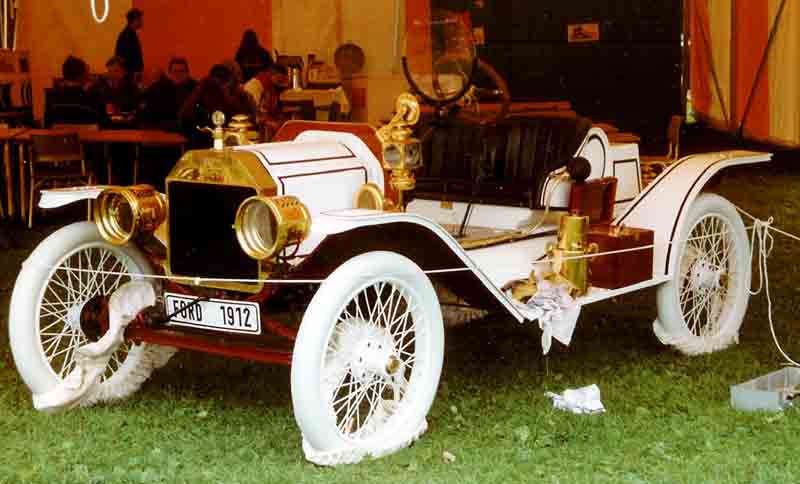
Ford Model T
"So just for context... the Citroen 2CV was to France, what the Ford Model T was to the US. So it was really the car that sort of got France moving"
The Ford Model T is mentioned as a famous early car that helped make cars affordable and common in the US. The hosts use it to explain why the Citroën 2CV was similarly important in France.
The Ford Model T is used as a historical comparison point for the Citroën 2CV’s impact. The hosts frame the 2CV as France’s mass-market breakthrough in the same way the Model T helped make cars common in the US.
teaser image
"Apart from the only factor, the only, what we do know is they've released a shadowy sort of teaser image. And then a lot of these media publications... come out with some renderings, CGI sort of renderings based on that teaser image."
A teaser image is a sneak preview that shows just enough to hint at what’s coming. It’s often vague on purpose, and then journalists use it to guess the final look.
A teaser image is an intentionally limited preview released before a full reveal, often showing only partial styling cues. The hosts say Citroën has released a “shadowy” teaser, which then leads media outlets to create CGI renderings based on what’s visible.
CGI
"AutoCar and AutoExpressive come out with some renderings, CGI sort of renderings based on that teaser image."
CGI means computer-made pictures. In car news, it’s often used to create a “best guess” image of what a new vehicle could look like before official photos are released.
CGI (computer-generated imagery) refers to digital, computer-made visuals used to depict how a car might look before it’s fully revealed. Here, the hosts describe media outlets producing CGI renderings from Citroën’s teaser image.

5 Renault 5
"...sign. So similar in a similar vein to how the new Renault 5. And the Renault Twingo as well. Yes, the Renault..."
The 5 E-Tech Electric is Renault’s electric car based on the “5” name. The podcast mentions it alongside other small Renault models to show how Renault is building compact EVs. It’s basically a modern electric car carrying a known badge.
The 5 E-Tech Electric is an electric version of Renault’s “5” model name, aimed at bringing a modern EV interpretation to a familiar design identity. The podcast groups it with other small Renault models, suggesting it’s part of a broader strategy for compact EVs. It’s discussed because it represents how Renault is translating classic model cues into electric form.

Ford Capri
"... old nameplates on the EVs, Ford's doing with the Capri in the UK. Obviously Renault's doing with the Twi..."
The Ford Capri is a car name that Ford is reusing for a new electric vehicle in the UK. The podcast mentions it to illustrate that older, well-known model names are being applied to EVs. It’s basically a new electric car carrying a familiar badge.
The Ford Capri is a nameplate that Ford is bringing back for the UK as an electric vehicle. In the podcast, it’s used as an example of how classic car model names are being reused on new EV products. It’s discussed because it connects brand history with modern electrification.
EV pricing and market fit (Australia vs Europe)
"It almost feels like a way for it because EVs in the European Union, they're not as big of a... like they're not as tough to sell compared to in Australia. Naturally speaking, EVs are very suited to the kind of driving that most Europeans would do, which is a significantly shorter distances."
They’re talking about why electric cars might sell better in Europe than in Australia. Their main point is that Europeans often drive shorter distances, which suits EVs better.
The hosts discuss why EVs may be easier to sell in Europe than in Australia, tying it to typical driving distances and local market conditions. They argue that shorter commutes and trips make EVs a better match for many European drivers.
charging infrastructure
"critically than just shorter distances, they've just got much better charging infrastructure than we do here in Australia, which basically means that it's just as easy driving an EV around as it is driving a petrol car around"
Charging infrastructure just means the places you can charge an EV. If there are lots of chargers and they’re easy to use, it becomes almost as convenient to drive an EV as a regular petrol car.
Charging infrastructure refers to the network of EV charging stations and how reliably they’re available. The speaker argues that better infrastructure makes EVs easier to live with, because you can plan charging stops similarly to how you’d plan fuel stops for a petrol car.
EV uptake
"which basically means that it's just as easy driving an EV around as it is driving a petrol car around, which is really always the main thing when you're trying to get a, you know, higher EV uptake."
EV uptake means how quickly EVs are being adopted by regular drivers. The host is saying people are more likely to switch to EVs when charging is easy and the day-to-day experience is simple.
EV uptake means how many people adopt or start buying electric vehicles. The host links higher EV uptake to the practical ease of using EVs—especially when charging is convenient enough that it feels similar to driving a petrol car.

Renault Twingo
"Famously with the Renault Twingo, the electric one, they were actually thinking of putting in, because we never talked about the Twingo, I think. But I was reading that the people, like the management Renault, just wanted them, even if the exterior was unique, they wanted to stick in a very standard Renault interior."
The Renault Twingo is a little city car. In this segment, the host is talking about the electric version and how its interior design was debated—whether it should be generic or have a unique look inspired by the original car.
The Renault Twingo is a small city car, and the speaker is specifically talking about the electric Twingo’s interior design choices. They mention Renault management wanted a standard interior, while designers pushed for a unique cabin that references the original Twingo’s character.
EV skeptics
"So I don't think it'll hit the same, like, wow, like the Renault 5 EV, where it's apparently converted people who didn't even like EVs to an EV, one of those sorts of cars."
“EV skeptics” just means people who are doubtful about electric cars. The host is saying the Renault 5 EV was so appealing that it convinced even those doubtful people.
“EV skeptics” refers to people who doubt electric vehicles—often due to concerns about charging, range, cost, or practicality. In the segment, it’s used to describe how the Renault 5 EV supposedly won over people who weren’t interested in EVs at all.
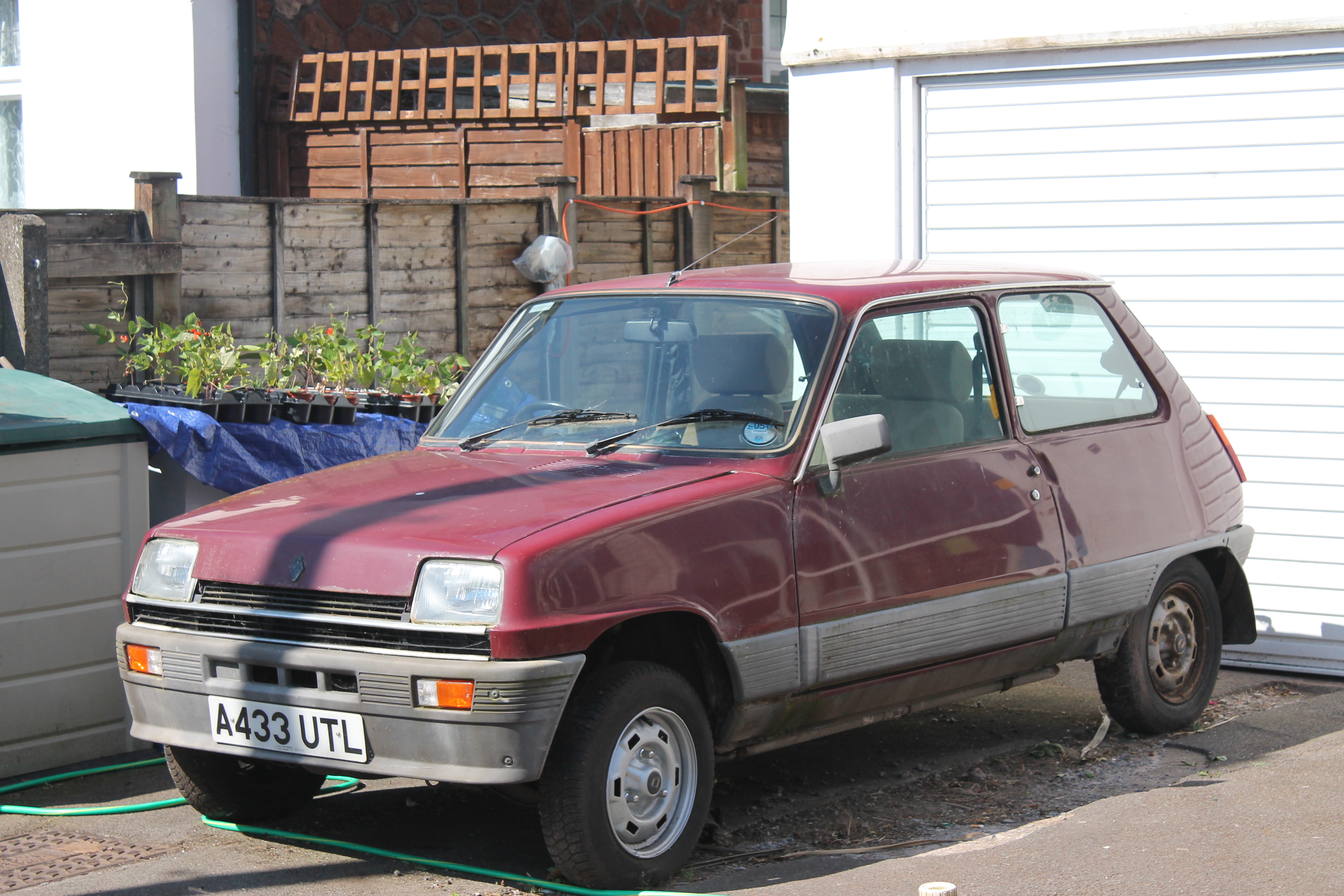
Renault 5
"... of the European market compared to like a direct Renault 5 rival. But let's, let's see, let's see how they g..."
The Renault 5 is a small car model name that’s been around for a long time. In the podcast, it’s mentioned as a comparison point for newer small cars and EVs. The key idea is that the “5” name is being used to connect old and new models.
The Renault 5 is a compact car name that’s strongly associated with European small-car history. In the podcast, it’s referenced as a point of comparison for newer small EVs, including the “5 E-Tech Electric,” and as part of the conversation about what kind of rival it has in the market. It’s discussed because the name carries recognition that manufacturers can leverage when launching new models.
off-road capabilities
"And, and, you know, I want to see how off-road capabilities as well, because famously, the original two CV could, could have had a little bit of off-road capability just along those rough"
This is about how well the car can deal with rough roads—like dirt tracks or bumpy surfaces. The host is curious whether the new Citroën 2CV will still be good on that kind of terrain, like the old one was.
“Off-road capabilities” means how well a car can handle rough, uneven surfaces rather than just paved roads. The host specifically connects it to the original Citroën 2CV’s reputation for being able to cope with rough ground, and wants to see if the modern version keeps that trait.
Request an Explanation
Heard something you'd like explained? We'll add it to this episode.
Sign in to request explanations for terms you heard.
Want to learn more?
Browse our glossary for plain-English explanations of automotive terms, jargon, and concepts.
Help improve this episode
See something that's not quite right? Our annotations are AI-generated and can sometimes miss the mark. Click the flag icon on any annotation to suggest a correction.