
About this episode
Ferrari Luce takes center stage as Ferrari’s first five-seat electric car, with a 122 kWh quad-motor setup and 990 Nm torque—plus a design that sparks debate and even pop-culture attention. The hosts then zoom out to EV reality: WLTP range claims, staggered wheel efficiency, and how charging infrastructure shapes success. From OLED instrument clusters and e-ink keys to BYD’s online buying, wallbox charging, and partial one-pedal driving, the conversation connects luxury design choices to everyday EV usability.
In this week's episode of The Hook Turn Podcast, we discuss two cars that have captured our attention.
Firstly, the Ferrari Luce, the storied brand's first EV, whose controversial design has captured the world's attention. And secondly, on the other end of the spectrum, the BYD Sealion 7, which has captured our co-host Sanbib's affections.
Show notes:
- Ferrari Luce: https://www.carexpert.com.au/car-news/ferrari-luce-revealed-first-electric-ferrari-takes-bold-design-approach
- BYD Sealion 7: https://www.chasingcars.com.au/reviews/midsize-suvs/byd-sealion-7-premium-rwd-2026-review/
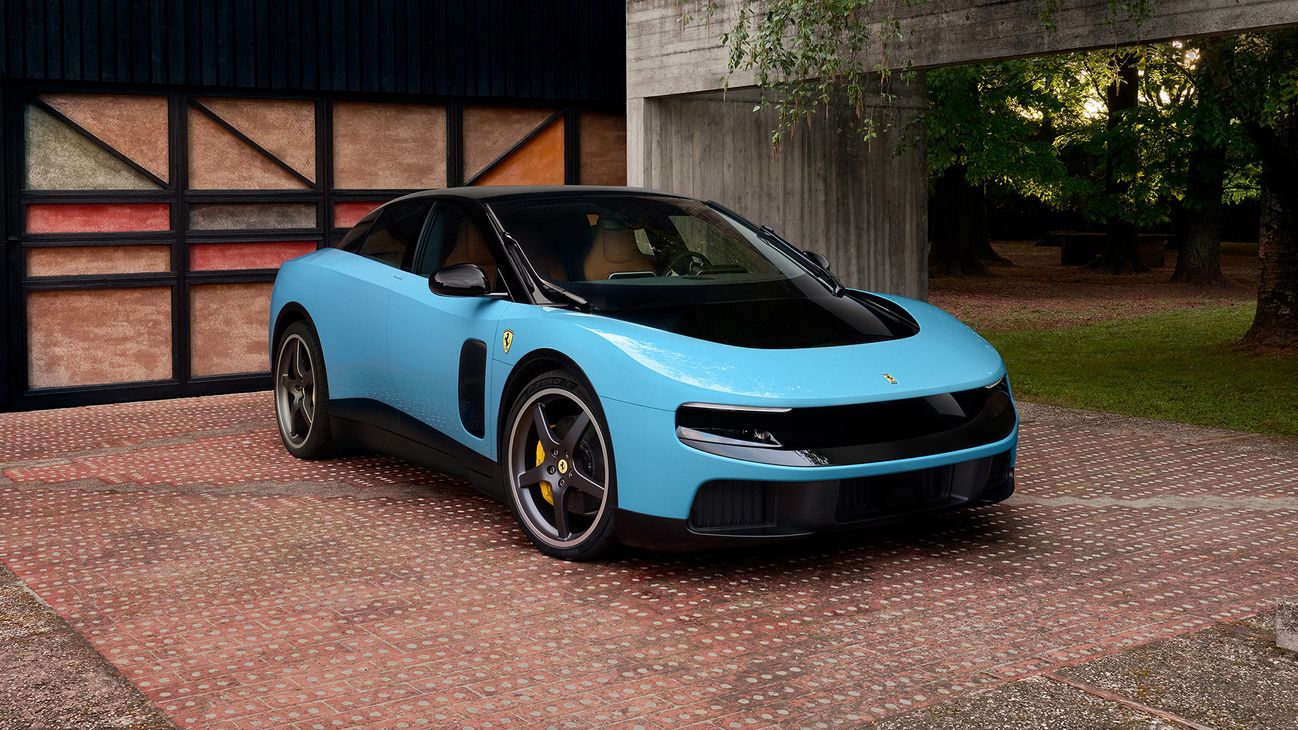
Ferrari Luce
"so the first our first topic is going to be the Ferrari [65.1s] Luce so this is Ferrari's first electric car and also actually Ferrari's first car with five seats [75.0s] so that's quite interesting"
Ferrari Luce is Ferrari’s first fully electric car, and it’s also meant to be a five-seater. The episode highlights that it uses a big battery and multiple electric motors to make very strong acceleration.
Ferrari Luce is Ferrari’s first electric car, and it’s also positioned as the brand’s first five-seat model. The big talking point here is that it’s designed with a multi-motor EV layout (four motors) and a very large battery, aiming to deliver supercar-level performance in an EV package.
Johnny Ive
"Ferrari has contracted out to [83.1s] Johnny Ive to design so just for background Johnny Ive used to be the chief design officer at Apple"
Johnny Ive is a famous designer who previously worked at Apple. The episode says he’s now helping design the Ferrari Luce, which is why people are arguing about how it looks.
Johnny Ive is a high-profile industrial designer best known for his role as Apple’s chief design officer. In this episode, he’s credited with designing the Ferrari Luce alongside Mark Newson, which is presented as a major reason the car’s styling has drawn intense debate.
Apple
"he was responsible for so many different iconic Apple products the the original iMac the iPhone [98.4s] iPad"
Apple is mentioned because the designer behind Ferrari Luce previously worked at Apple. The hosts are using that background to explain why the car’s design is getting so much attention.
Apple is referenced because Johnny Ive previously led design at the company. The point in the episode is that Ferrari Luce’s design is being associated with a designer known for iconic Apple products.
Mark Newsen
"he is now together with his very close colleague Mark [107.3s] Newsen who's actually an Australian has decided to take their hands at designing a Ferrari"
Mark Newsen is mentioned as Johnny Ive’s design colleague working on the Ferrari Luce. The hosts are basically saying the car’s look comes from a very design-focused team.
Mark Newsen (as transcribed) is described as a close colleague of Johnny Ive and the co-designer involved with Ferrari Luce. The episode uses this to frame the car’s design as coming from a top-tier industrial design background rather than traditional automotive styling teams.
kilowatt hour battery
"there's a very big 122 [152.9s] kilowatt hour battery which is a huge battery powering four motors"
A kilowatt-hour (kWh) battery is how much electricity the car can store. More kWh usually means the car can go farther, but how you drive and how efficiently the car uses energy also matters.
A kilowatt-hour (kWh) battery is the measure of how much electrical energy the EV can store. A larger kWh number generally means the car can provide more energy for driving (though real-world range also depends on efficiency, weight, and power use).
quad motor setup
"there's a very big 122 [152.9s] kilowatt hour battery which is a huge battery powering four motors so there's a it's a quad [160.7s] motor setup"
A quad motor setup means the car has four electric motors working together. That can help the car launch harder and keep traction better because power can be sent where it’s most effective.
A quad motor setup means the EV uses four separate electric motors to drive the car. With multiple motors, manufacturers can distribute torque more precisely to improve acceleration and traction, especially under hard launches or changing grip.
torque
"and it produces a total of I think 722 kilowatts of power in the most powerful [168.2s] driving mode and at 990 newton meters of torque"
Torque is the “twisting force” that helps the car get moving. Higher torque usually means stronger acceleration, especially when you press the pedal from a stop.
Torque is the twisting force an engine or motor produces, and it strongly influences how quickly a car accelerates. In EVs, torque is available very quickly from the motors, which is why torque figures are often used alongside power to describe performance.
driving mode
"and it produces a total of I think 722 kilowatts of power in the most powerful [168.2s] driving mode"
A driving mode is a setting that changes how the car feels and responds. Here, the hosts say the biggest power and torque numbers are for the car’s strongest/most aggressive mode.
A driving mode is a selectable setting that changes how an EV behaves—often including throttle response, power limits, and sometimes traction or stability behavior. The episode implies the quoted peak power and torque are for the car’s most aggressive mode.
AMG GT
"you know powering torque [175.6s] figures you know it's eclipsed by you know other models like I think the new AMG GT"
AMG GT is mentioned as a well-known performance car to compare against. The hosts are saying Luce’s numbers are extremely high compared to other cars people know.
AMG GT is referenced as a comparison point for performance, specifically as another high-output performance model. The episode uses it to suggest that Luce’s power/torque figures are in the same conversation as established performance cars.
zero to 100 kilometers an hour
"basically the acceleration zero to 100 kilometers an hour in two and a half seconds I think the 200 kilometer an hour acceleration figure is 6.8 seconds"
This is a test of how fast a car can speed up from a stop to 100 km/h. The quicker the time, the faster the car feels in normal driving and merging.
“Zero to 100 kilometers an hour” is a common acceleration test that measures how quickly a car can go from a standstill to 100 km/h. It’s a straightforward way to compare straight-line punch between cars, especially for EVs where torque is instantly available.
WLTP cycle
"so 530 kilometers on the WLTP cycle which given how huge the battery is is not amazing like it's okay but not not incredible"
WLTP is a standardized test used to estimate how far a car can go on its energy. Your real range can be higher or lower depending on how you drive and conditions like weather.
WLTP (Worldwide Harmonized Light Vehicles Test Procedure) is a standardized testing method used to estimate a vehicle’s fuel/energy consumption and driving range. Because it’s a lab-based procedure, real-world range can differ depending on speed, temperature, and driving style.
wheel size
"I think that's partly down to the wheel size as well so there are 23 inch wheels at the front and 24 inch wheels at the back"
Wheel size affects the tires and how the car moves through the air and over the road. That can change both how the car feels and how much energy it uses.
Wheel size is a key design variable that influences tire profile, rolling resistance, and aerodynamic behavior. Those factors can affect both acceleration feel and energy consumption—especially relevant when the discussion is about EV range.
24 inch wheels
"I think that's partly down to the wheel size as well so there are 23 inch wheels at the front and 24 inch wheels at the back"
Bigger wheels can change how the car rides and how efficiently it uses energy. With EVs, that can affect how far you can drive before recharging.
Wheel size matters because larger wheels typically allow lower-profile tires, which can change ride comfort and—more importantly for range—affect aerodynamic drag and rolling resistance. In EVs, even small efficiency losses can show up as reduced WLTP-estimated range.
23 inch wheels
"I think that's partly down to the wheel size as well so there are 23 inch wheels at the front and 24 inch wheels at the back"
Bigger wheels can change how the car rides and how efficiently it uses energy. With EVs, that can affect how far you can drive before recharging.
Wheel size matters because larger wheels typically allow lower-profile tires, which can change ride comfort and—more importantly for range—affect aerodynamic drag and rolling resistance. In EVs, even small efficiency losses can show up as reduced WLTP-estimated range.
three light design
"rear kind of gives I guess if you associate that three light design three sorry two like red light circle red light design with Ferrari"
This is talking about the car’s rear light pattern—how many light elements it uses and what shape they make. Designers use these patterns so the car is easy to recognize, especially at night.
A “three light” (or multi-element) lighting signature is a styling feature used to create brand recognition and a distinct visual identity. In EVs and supercars, the rear light pattern is often designed to be recognizable at a glance, even when the car is moving at night.
EV
"because it's an EV I don't know the specifics of what electric charging infrastructure is like in places like Dubai"
EV means electric vehicle. Instead of using gasoline, it runs on electricity stored in a battery, and it needs places to charge it to be practical.
EV stands for electric vehicle, meaning the car is powered by one or more electric motors rather than a gasoline or diesel engine. EVs depend on charging infrastructure—public chargers and charging reliability—so where charging is easy often affects how successful EVs are.
electric charging infrastructure
"because it's an EV I don't know the specifics of what electric charging infrastructure is like in places like Dubai but I have to imagine it's not that great in America"
Electric charging infrastructure refers to the network of charging stations (and their availability/reliability) that lets EV owners recharge at home, work, or on the road. If infrastructure is limited or inconsistent, EV adoption tends to lag because drivers can’t easily “refuel” when needed.

Yang Wang U9
"actually I would say the Yang Wang U9 while the terrible name looks way better than this car right a lot more traditional super car like probably just as quick too"
The Yang Wang U9 is a Chinese electric supercar. The host is saying it competes with high-end brands in China and may offer a more familiar “supercar” look while still being very fast.
Yang Wang U9 is a Chinese electric supercar positioned as a high-end rival to Western performance brands in China. The host notes that, despite the “terrible name,” it looks more traditional and may be similarly quick, framing it as direct competition for an EV Ferrari.
balance
"recognizing there's that balance to be like okay just simply sticking a whole bunch of touch screens everywhere"
They’re talking about finding a good balance in the car’s interior design. The idea is not to go overboard with screens everywhere—because that doesn’t necessarily feel luxurious.
The host is describing a design “balance” between modern digital interfaces and usability/comfort—specifically, avoiding the trend of filling the cabin with touchscreens everywhere. In EV interiors, this is often framed as choosing a clean, intentional layout rather than maximizing screen count.
performance is meaningless at this point with EVs
"otherwise I mean there isn't that much to say in terms of like it you know as you mentioned already performance is meaningless at this point with EVs"
They’re saying that with electric cars, the speed differences between many models aren’t as important as they used to be. Their argument is that other things—like how the cabin feels—matter more now.
This is a viewpoint that, as EV technology matures—especially from fast-moving Chinese brands—performance differences between many models are becoming smaller. The host argues that buyers may need to focus more on interior design and overall experience than raw speed.
yang wang u9 ultra
"I wouldn't be surprised with yang wang u9 ultra yeah it's quicker than this car right"
They mention the Yangwang U9 Ultra as an example of a Chinese electric car that’s likely quicker than the one being discussed. The takeaway is that EV performance is getting competitive across brands.
Yangwang U9 Ultra is referenced as a faster Chinese EV alternative, implying the performance gap between EVs is shrinking. The host’s point is that you can get similar (or better) performance from other Chinese EVs, even if technology costs less.

Xiaomi SU7
"even like the you know whatever xiaomi su7 but whatever the top of the range version is now so yeah"
They mention the Xiaomi SU7 as another Chinese electric car example. Their point is that the best versions are already very quick, so performance isn’t the only deciding factor anymore.
The host brings up the Xiaomi SU7 as another Chinese EV example, specifically noting that the top-of-the-range version is now very fast. It’s used to argue that performance differences between EVs are becoming less meaningful.
OLED screens
"for the instrument cluster there's like three OLED screens and the tittle is real yeah like I can't imagine how much"
OLED screens are a type of display where each pixel lights up on its own. The host is talking about how the instrument cluster uses multiple OLED screens, but they’re arguing that too many screens don’t automatically make a car feel premium.
OLED screens are display panels that use organic light-emitting materials, allowing each pixel to produce its own light. In car interiors, multiple OLED displays can create a high-contrast, “tech-forward” look, but the host is contrasting that with the idea that screens alone don’t equal luxury.

Hyundai Ioniq 5N
"the artificial noise that the luce will make is quite different it will basically try and be like I mean the while the onik 5n also and the onik 6n now I guess also reacts to how you drive"
The Hyundai Ioniq 5N is a high-performance electric Hyundai. Here it’s mentioned because it uses an artificial sound feature to make the driving experience feel more exciting. The host also suggests it responds to how you drive.
The Hyundai Ioniq 5N is a performance-oriented EV from Hyundai’s N division, known for tuning that aims to make electric driving feel more engaging. In this segment, it’s used as a comparison point for how the car handles “artificial noise” and reacts to driving inputs. That’s part of the broader effort to add a more visceral feel than many EVs provide.
artificial noise
"from what I understand the artificial noise that the luce will make is quite different it will basically try and be like I mean the while the onik 5n also"
Because EVs are quiet, some cars add fake engine-like sounds. That’s what “artificial noise” means here. The host says the Luce tries to make that sound feel more realistic and responsive, so it’s more fun to drive.
“Artificial noise” in EVs is intentionally generated sound (often through speakers) to provide feedback that drivers associate with combustion engines. The host connects it to the “visceral experience” people miss in EVs and says the Luce’s approach is more sophisticated than what the Ioniq 5N/6N do. The idea is to make the car’s behavior feel more engaging through sound design.
800 volts architecture
"and yeah and obviously it's uh extremely quick charging 800 volts architecture so"
This means the car uses a high-voltage electrical system. Higher voltage can let the charger deliver power more efficiently, which usually makes fast charging faster. The host is saying the Luce benefits from that setup.
“800 volts architecture” refers to an EV’s high-voltage electrical system, which can reduce charging time by allowing higher power transfer from fast chargers. With higher voltage, the car can draw the needed power with lower current, which can help reduce heat and enable faster charging. The host links it directly to “extremely quick charging.”

BMW i3
"for a context owner this is a completely different segment but the BMW the new BMW i3 that has like a you know 108.7 kilowatt hour I think net battery and that produces 900 kilometers of range"
The BMW i3 is mentioned as a reference point for battery size and how that affects range. The host says the i3 has a smaller battery than the Luce, so it’s expected to go fewer kilometers on a charge. It’s basically a comparison to help you understand the Luce’s numbers.
The BMW i3 is brought up as a comparison for battery size and range, with the host citing a smaller net battery capacity than the Luce. The point is that a larger battery doesn’t automatically mean “best efficiency,” but it can support a longer range—especially in a bigger, more performance-focused EV. It’s used to contextualize the Luce’s stated 530 km WLTP range.
LFP
"do we know whether it uses the LFP or an NCM battery? We don't believe we do but I would strongly wager it's an NMC battery like I would"
LFP is one type of lithium battery chemistry. Different battery types can behave differently—like how they charge and how stable they are. The host is wondering which type the Luce uses.
LFP (lithium iron phosphate) is a lithium-ion battery chemistry known for good thermal stability and often lower cost. The host asks whether the Luce uses LFP or NCM, implying battery chemistry affects characteristics like efficiency, charging behavior, and cost. They say they don’t believe it’s LFP and would “strongly wager” it’s NMC instead.
NCM battery
"do we know whether it uses the LFP or an NCM battery? We don't believe we do but I would strongly wager it's an NMC battery like I would"
NCM (nickel-cobalt-manganese) is another type of lithium battery. It’s often chosen when you want more energy packed into the battery. The host is guessing the Luce uses this kind instead of LFP.
NCM (often written NMC/NCM in conversation) refers to lithium-ion battery chemistries that use nickel, cobalt, and manganese. These chemistries are commonly associated with higher energy density than LFP, which can support more range for a given battery size. The host is speculating the Luce likely uses an NMC/NCM-type battery rather than LFP.

Porsche Taycan
"...from a mainstream brand and that's in the Porsche Taycan which is a very objectively an amazing looking ca..."
The Porsche Taycan is an electric car from Porsche. It’s a sporty sedan, and the podcast is mainly pointing out how impressive it looks and how well it fits into the mainstream electric market.
The Porsche Taycan is Porsche’s electric sports sedan, built to deliver quick performance with an electric drivetrain. It’s discussed because it’s described as having standout looks and being an “objectively amazing” mainstream electric option.
fastback sedan
"it's like a I mean it's essentially I think the best way to describe it in terms of its body style it's like a fastback sedan so it has like a hatchback sort of lift or a lift back tail"
A fastback is a car shape where the roof slopes down toward the back in one smooth line. It usually looks sleeker than a normal “three-box” sedan.
A fastback sedan is a body style where the roofline slopes smoothly down toward the rear, without a traditional step between trunk and roof. It often looks more like a coupe silhouette, even if it has rear passenger space.
lift back tail
"so it has like a hatchback sort of lift or a lift back tail so it's not a traditional three box sedan by any means"
A liftback tail means the back opens like a hatch. Instead of a separate trunk lid, the rear window and door lift up together.
A liftback tail is a hatch-style rear where the rear glass and panel lift upward, instead of a separate trunk lid. It’s commonly associated with hatchbacks and fastback-like designs.
three box sedan
"so it has like a hatchback sort of lift or a lift back tail so it's not a traditional three box sedan by any means with a separate you know boot or anything like that"
A “three-box” sedan is the traditional shape with a separate hood, a separate passenger area, and a separate trunk. This car doesn’t follow that classic layout because the rear opens like a hatch.
A three-box sedan is the classic sedan layout with three distinct sections: the engine bay (front), passenger cabin (middle), and trunk (rear). The speaker contrasts this with the car’s hatchback-style rear, which doesn’t have a separate trunk.
aerodynamic
"you have this black inner component which is very sort of aerodynamic and you have like a it's very sort of downward sloping"
Aerodynamic means the car is shaped to work with air flowing over it. Better aerodynamics can help the car feel more stable and efficient, especially at higher speeds.
Aerodynamic describes how the car’s shape interacts with air to reduce drag and manage airflow. In performance design, aerodynamic surfaces are used to help the car generate downforce and stay stable.
front air wing
"you have this huge front air wing or front spoiler that allows air to go through like right from the front and then flow over the over the bonnet and over the windscreen"
A front air wing is a piece on the front of the car that helps control airflow. The goal is usually to keep the car planted and stable when you’re driving fast.
A front air wing (or front spoiler/wing) is an aerodynamic element at the front of the car designed to manage airflow. By shaping how air enters and flows around the body, it can improve downforce and stability at speed.
exoskeleton
"you have what what Ferrari are almost calling an exoskeleton and that's where the that's essentially the the colored painted part"
Here, “exoskeleton” is a styling idea: the car has an outer shell that looks like it wraps around the body. It’s meant to create a distinct two-layer look rather than a single smooth body panel.
In this context, “exoskeleton” is a design concept where an outer structural-looking shell visually frames the car, separate from an inner body component. The speaker describes a two-piece exterior look: an inner painted black section and an outer colored shell.
digital instrument cluster
"you have all of the benefits of like a digital instrument cluster like you can change what each smaller screen displays that you can if you wanted to display maps"
A digital instrument cluster is the dashboard display that uses screens instead of fixed needles and dials. It can show different info depending on your settings or driving mode.
A digital instrument cluster replaces traditional analog gauges with screens that can show different information and layouts. The advantage is flexibility—drivers can change what’s displayed (like maps, speed, or power) without changing physical gauge hardware.
analog and digital world
"the benefit of that is that it's like the seamless merging between the analog and digital world"
They’re talking about mixing two styles: classic, physical-looking gauges and modern screen-based displays. The idea is to get the best of both—easy to read like analog, but flexible like digital.
This refers to combining traditional analog-style presentation (like physical needles and tactile feel) with digital screen flexibility. The goal is to keep the intuitive, mechanical “read” of analog while gaining the customization and reconfigurable graphics of digital displays.
three spoke design
"Ferrari steering wheels like it has that classic three spoke design it has physical switches like"
A three-spoke steering wheel means the wheel has three main support arms/spokes. It’s a common performance-car design style and helps make the controls feel more driver-focused.
A three-spoke steering wheel design is a specific steering-wheel layout where the wheel has three structural spokes connecting the rim to the center hub. It’s often used as a recognizable styling cue in performance cars and can also affect how controls are packaged around the wheel.
Manettino switch
"it has physical switches like that physical manatino switch so going back to that"
A Manettino switch is a driver control (often a knob or switch) used to change how the car behaves. It’s meant to be quick and easy to use while you’re driving.
A Manettino switch is a Ferrari-style rotary or switch control used to select driving settings (often including driving modes). It’s designed to be operated quickly by the driver, emphasizing tactile, “mechanical” interaction rather than only touchscreen menus.
infotainment display
"lot of those iconic designs the infotainment display you can it can sort of swivel from the driver to the passenger so that's really cool because you know it can be driver focused"
That’s the car’s main screen for things like music, maps, and settings. Here, they’re saying the screen can turn so it’s easier to see from the driver’s seat or the passenger’s seat.
An infotainment display is the screen in a car that handles media, navigation, phone integration, and vehicle settings. In this segment, it’s described as being able to swivel toward the driver or passenger, which changes how the information is presented and who it’s primarily aimed at.
e ink technology
"even things like the key for example that's the world's uh the innovation there is the first um use of e ink technology in a key so you know e ink technology is typically something that's only used in like your amazon kindle or your cobo e reader and this is actually using it in the key"
E ink is a special screen technology that looks clear in sunlight and doesn’t use much power. In this case, they’re using it in the car key so the key can show a color change or message.
E ink technology is a display method that uses microcapsules of pigment that move to form text or images. It’s known for being readable in bright light and for low power usage, which is why it’s common in e-readers—here it’s being used in a car key.
Bentley
"it's really like a benchmark like you think that more like Bentley Rolls Royce um you know they're sort of have have been setting the benchmark for luxury car interiors"
Bentley is a luxury car brand. The host is using it as an example of companies that are known for especially premium-looking and premium-feeling interiors.
Bentley is a luxury car brand known for high-end materials and a very polished interior experience. In this segment, it’s used as a reference point for who has traditionally set the bar for luxury cabin design.
Rolls Royce
"it's really like a benchmark like you think that more like Bentley Rolls Royce um you know they're sort of have have been setting the benchmark for luxury car interiors"
Rolls-Royce is a very high-end luxury car brand. The host is saying that the interior design they’re discussing feels like the kind of benchmark Rolls-Royce is known for.
Rolls-Royce is a luxury car brand famous for extremely refined interiors and an emphasis on comfort and craftsmanship. Here, it’s mentioned alongside Bentley as a benchmark for luxury cabin design.
physical controls and digital controls
"I do hope that that same like essential philosophy of having genuine materials having like a right balance of physical controls and digital controls and not just sticking everything into like what is a glorified iPad"
This is about designing a car so some functions use real buttons or knobs, and others use the screen. The goal is to make everyday controls easier to use without forcing you to rely on touch menus for everything.
This refers to a design philosophy that mixes tactile, physical buttons/knobs with digital interfaces like screens. The idea is to keep the most-used functions quick and intuitive with real controls, while using digital tech where it adds value—rather than replacing everything with touchscreens.
glorified iPad
"I do hope that that same like essential philosophy of having genuine materials having like a right balance of physical controls and digital controls and not just sticking everything into like what is a glorified iPad"
They’re using “glorified iPad” to mean a car that feels like it’s just a big touchscreen tablet. The point is that relying on touchscreens for everything can be less practical than having real buttons.
“Glorified iPad” is a critique of car UI design that relies heavily on tablet-style touchscreens. The host is arguing against turning the cabin into a mostly touch-driven interface when physical controls would be clearer or faster to use.
touchscreen technology
"it doesn't mean they translate um to uh the automotive space like like it needs to be a much more considered use of of touch touchscreen technology and having that right balance with physical controls as well"
Touchscreen technology in a car means using the screen to control things like temperature and settings. The concern is that it can be harder to use quickly while driving compared to real buttons. So designers try to balance screen controls with physical knobs/buttons.
In cars, touchscreen technology refers to using a display for controls like climate, driving modes, and media instead of dedicated buttons and knobs. The tradeoff is that touchscreens can be efficient and customizable, but they can also distract drivers if controls aren’t laid out and prioritized well. That’s why the speaker emphasizes balancing touchscreens with physical controls.
zeitgeist
"it has put Ferrari back into the sort of zeitgeist so to speak and and back into pop culture just"
“Zeitgeist” means the dominant mood or prevailing cultural interests at a particular time. Here it’s used to say Ferrari has become culturally talked about again, not just among car fans.
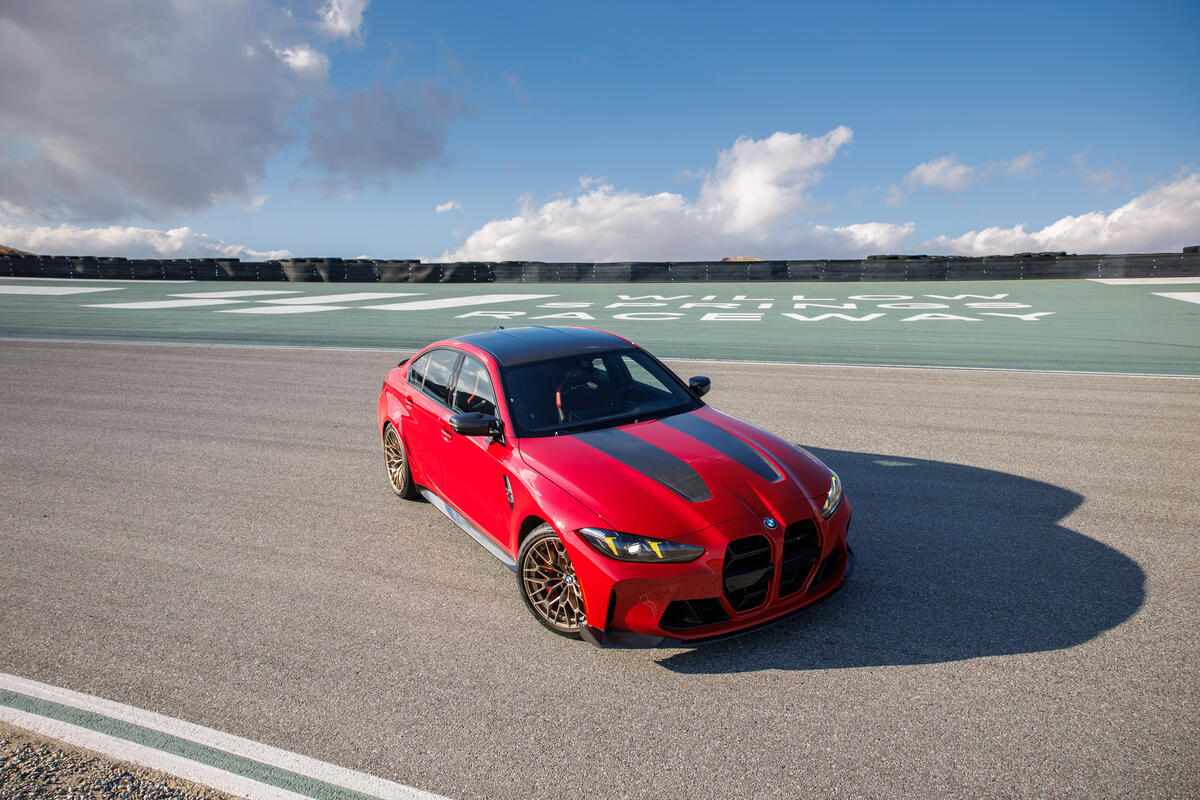
BMW M3
"...been to just let's just make an electric you know f80 or an electric 296 and which I mean technically i..."
The BMW M3 is a sporty BMW that’s built to be fast and fun to drive. The podcast brings it up because people are talking about what an electric version of an M3 could be like.
The BMW M3 is a high-performance version of the 3 Series, known for strong acceleration and a driver-focused setup. In the podcast context, it’s mentioned alongside the idea of an electric “M3-style” concept, which is why it comes up in a discussion about electrifying performance cars.

Sealion Cline 7
"I think when we had Mike Castello on we touched on this but Sandvib actually bought a new car which was the what is it the BYD C-Line 7 right or is it? Is that what it's called? C-Line 7 yeah C-Line 7 yeah so this is an electric SUV it's essentially the BYD's sort of direct"
The Sealion 7 is a BYD car that someone in the podcast group recently bought. The conversation is about what it’s like to own it, not just how it looks on paper.
The Sealion 7 is a BYD model referenced in the podcast as a newly purchased car (the host mentions “BYD C-Line 7” in the same breath). It comes up as part of a real-world ownership discussion rather than just specs.

Tesla Model Y
"C-Line 7 yeah so this is an electric SUV it's essentially the BYD's sort of direct rival to the Tesla Model Y although it's more of a coupe SUV so to speak as well"
The Tesla Model Y is an electric SUV that a lot of people compare other EVs to. Here, it’s mentioned as the main rival to the BYD model.
The Tesla Model Y is a mainstream electric crossover/SUV that’s often used as the benchmark for value and charging convenience in the EV market. In this segment, it’s the comparison point for the BYD C-Line 7’s target buyer and pricing positioning.
on-road costs
"BYD were running in promotion where basically for the C-Line 7 and two other cars which I can't remember they were basically covering all on-road costs and so that meant that I would save about 4000 dollars"
“On-road costs” are the extra fees required to get a car registered and legally usable on public roads. They commonly include items like stamp duty, dealer delivery charges, and compulsory third-party (CTP) insurance—so covering them can significantly reduce the total amount you pay at purchase.
CTP
"you wouldn't have to pay any of like on-road costs like stamp duty, dealer delivery, CTP etc"
CTP is required insurance that helps cover injuries to other people if there’s an accident. It’s usually part of the mandatory fees you pay when registering a car.
CTP stands for compulsory third-party insurance, which covers injuries to other people in an accident. It’s typically required by law in many regions, so it’s often included in the “on-road costs” total.
stamp duty
"you wouldn't have to pay any of like on-road costs like stamp duty, dealer delivery, CTP etc"
Stamp duty is a government fee you pay when buying/registering a vehicle. Some deals say they’ll cover it, which reduces what you pay overall.
Stamp duty is a government tax/fee charged when you purchase or register certain vehicles. It’s often bundled into “on-road costs,” so promotions that cover stamp duty can lower the out-the-door price.
dealer delivery
"you wouldn't have to pay any of like on-road costs like stamp duty, dealer delivery, CTP etc"
Dealer delivery is the fee for getting the car from where it’s stored/shipped to where you’ll pick it up. Some promotions cover that fee so you pay less.
Dealer delivery is the charge a dealership applies to transport the vehicle to the buyer or to the dealer’s location. It’s one of the common “on-road cost” line items that can be waived or covered in promotions.
fully online
"so yep I purchased it it was fully online it was weird how simple it was you just literally put your name your email address and pay a thousand dollars a deposit and that's it that's all I had to do"
“Fully online” means the purchase is handled through the internet instead of mostly in person at a dealership. Here, you put down a deposit and sign the paperwork on your phone.
“Fully online” refers to completing the purchase process digitally rather than doing most steps at a dealership. In this segment, the buyer places a deposit and signs a contract electronically, which changes the traditional in-person sales flow.
deposit
"you just literally put your name your email address and pay a thousand dollars a deposit and that's it that's all I had to do"
A deposit is an upfront payment you make to secure a purchase while the contract is being finalized. In car buying, it’s often used to reserve the vehicle or lock in the deal terms.
contract
"about three weeks exactly three weeks after I got an email with a contract where I think the contract took me about 10 seconds to sign you tap you don't even need to sign anything you tap"
A contract is the official agreement that locks in the deal. In this case, the buyer checks that the final price includes the extra fees covered by the promotion.
A contract is the legally binding agreement that spells out the final purchase price and key terms. Here, the buyer focuses on whether the contract confirms the promotional price includes the on-road costs.
reduce barriers to purchasing
"because when you reduce barriers to purchasing things it makes it much easier to purchase it like people are going to be more hesitant if they have to sign a thousand things or click through a thousand steps before they can purchase their product"
It means making it easier to buy something by removing extra steps. The host thinks fewer steps makes people less hesitant and more likely to buy.
This is a sales/UX concept: lowering the steps and paperwork required to buy a car makes it easier for customers to commit. In the transcript, the host argues that fewer steps (less friction) leads to more confident purchasing decisions.
warbox
"because obviously I have the warbox I didn't have a warbox installed for the first few days or first week or so so I did have to use a rapid charger to keep it charged"
A wallbox is a charger you install at home for your electric car. After you have one, you usually don’t need to use fast public chargers as often.
“Warbox” here is almost certainly the speaker’s shorthand for a home EV wallbox (a dedicated home charger installed at the property). Once installed, it reduces reliance on public rapid charging and changes how often the car needs to be charged.
rapid charger
"because obviously I have the warbox I didn't have a warbox installed for the first few days or first week or so so I did have to use a rapid charger to keep it charged"
A rapid charger is a fast way to charge an electric car at a public station. It’s useful when you can’t charge at home yet.
A rapid charger is a high-power EV charging station (or charger) designed to add significant battery energy in a short time. It’s typically used when you don’t have convenient home charging available.
one-pedal driving
"feel too different so it doesn't have one pedal driving obviously that's the main thing it has got region braking but no actual one-pedal driving it has got partial one-pedal driving"
One-pedal driving means you can slow down mostly by lifting off the accelerator. Instead of using the brake pedal all the time, the car uses the electric motor to slow down and recharge the battery.
One-pedal driving is an EV driving mode where lifting off the accelerator provides enough deceleration (via regenerative braking) to slow the car substantially, often to a near-stop. The idea is that you can manage most speed changes with just the accelerator pedal, using the brake pedal only for emergencies or very low-speed situations.
region braking
"it has got region braking but no actual one-pedal driving it has got partial one-pedal driving in the sense that if you put it on high region braking it does slow down"
Regenerative braking is when the car slows down and also recharges the battery. It uses the electric motor to create resistance, so you waste less energy.
“Region braking” is almost certainly a mis-transcription of “regenerative braking,” which is how EVs slow down while turning the drivetrain into a generator. Instead of wasting energy as heat in the brakes, regenerative braking recovers some energy back into the battery.
MG
"BYD and other brands it's probably the most assumption or probably the most I would say MG is also pretty well established oh yeah I guess I yeah"
MG is a car brand. The speaker is saying they still think of MG as having started with regular gas cars, even though MG now has electric models too.
MG is a Chinese automotive brand that the speaker associates with earlier petrol models, even though it now also sells electric cars. In this segment, MG is mentioned as part of a comparison of Chinese brands’ EV presence and how the speaker personally perceives them.

Audi S6
"...rs in fact actually we'll probably talk about the S6 another time yes but uh you're um they do have el..."
The Audi S6 is a sportier, more powerful version of the Audi A6. The podcast mentions it as something they plan to cover later.
The Audi S6 is a higher-performance version of the Audi A6, typically positioned above the standard model for stronger driving dynamics. The podcast notes they’ll “talk about the S6 another time,” indicating it’s part of a broader lineup discussion.
Geely
"MG MG obviously and I mean like Geely, Zika, they Cherry yes they've all got quite similar things now"
Geely is a Chinese car company. The speaker is mentioning it as one of several brands that now offer similar EV features.
Geely is a Chinese automaker mentioned as one of the brands whose EV software and user experience are becoming more similar to each other. In this segment, it’s part of the speaker’s broader point that Chinese brands have converged on comparable features and approaches.
Android Auto
"really I just use Android Auto the whole time so for me it doesn't really matter what the like the regular infotainment is like"
Android Auto lets you connect your phone to the car and use apps like maps and music on the car’s screen. The speaker is saying they use Android Auto so they don’t care as much what the car’s own screen software looks like.
Android Auto is a smartphone-to-car integration system that mirrors compatible apps and navigation onto the car’s infotainment screen. The speaker says they rely on Android Auto instead of the car’s built-in infotainment, so the native interface matters less to them.
hard buttons
"unlike a Tesla it's actually got hard buttons for functions such as automatic climate control and the demister"
Hard buttons are real physical buttons you can press. The speaker is saying this car has physical controls for climate functions, instead of making you use the touchscreen for everything.
Hard buttons are physical, tactile controls on the dashboard (as opposed to touchscreen-only controls). The speaker notes that, unlike Tesla, this car uses hard buttons for functions like automatic climate control and the demister, which can be easier to operate without looking.
demister
"unlike a Tesla it's actually got hard buttons for functions such as automatic climate control and the demister"
A demister clears fog off the windshield. It blows warm air (or uses heat) to help you see better through the glass.
A demister is the climate-control function that clears fog or condensation from the windshield using heated airflow (often via dedicated vents and/or heating elements). The speaker mentions a dedicated control for it, implying quick access when visibility is reduced.
heated steering wheel
"only comes with two actual extra features only one of which is relevant to the driver which it comes with a heated steering wheel"
A heated steering wheel warms the steering wheel so your hands feel comfortable in cold weather. It’s a comfort feature that can make winter driving much nicer.
A heated steering wheel uses built-in heating elements to warm the wheel for cold-weather comfort. The host notes it as one of the extra features that comes with a more powerful/trim level.
heated rear seats
"it also comes with heated rear seats um it's funny heated rear seats are such an exclusive feature yet my uh two cars ago my master six 2017 master six GT had rear heated seats"
Heated rear seats warm the back seats. It’s a nice feature for passengers, and the host is saying it’s often treated like a luxury add-on.
Heated rear seats add warming elements to the back seats, typically controlled by the front infotainment or rear controls. The host calls them “exclusive” because they’re less common than front-seat heating, even though some older/less-expensive trims had them.

Mazda 6 GT
"yet my uh two cars ago my master six 2017 master six GT had rear heated seats so and now it's like locked to like super expensive cars yet that car had front heated seats"
The Mazda 6 GT is a Mazda sedan. The host is saying their 2017 Mazda 6 GT had heated rear seats, which they think is unusual compared to how people talk about heated rear seats today.
The Mazda 6 GT is a mid-size sedan from Mazda’s lineup that, in this host’s experience, offered rear heated seats. The point here is that the host remembers this feature on a 2017 Mazda 6 GT, contradicting the idea that heated rear seats are only found on very expensive cars.
digital gear
"most new cars you've got the digital gear on your phone so now just unlock and lock it with my phone"
“Digital gear” here refers to an electronic gear selector/gear indication rather than a purely mechanical shifter. The host describes using a phone to unlock/lock and implying the car’s gear selection and related controls are integrated with modern electronics.
ambient lighting
"it's got some cool tricks like ambient lighting which I'm really liking I first experienced ambient lighting on a Mercedes Benz"
Ambient lighting is the soft, decorative lighting inside the car. It’s meant to make the cabin feel nicer and more atmospheric.
Ambient lighting is interior lighting (often LED) that creates a mood or highlights cabin areas rather than providing task lighting. The host links the feature to a previous rental experience and says they’re enjoying it in their current car.

Mercedes-Benz GLB
"I first experienced ambient lighting on a Mercedes Benz uh we rented when I went to the UK and the Mercedes Benz GLB that had ambient lighting as well"
The Mercedes-Benz GLB is a luxury SUV. The host is saying they first noticed and liked the car’s ambient lighting in a GLB rental.
The Mercedes-Benz GLB is a compact luxury SUV known for offering modern comfort features like ambient lighting. In this segment, the host uses the GLB rental as a reference point for how much they liked ambient lighting.
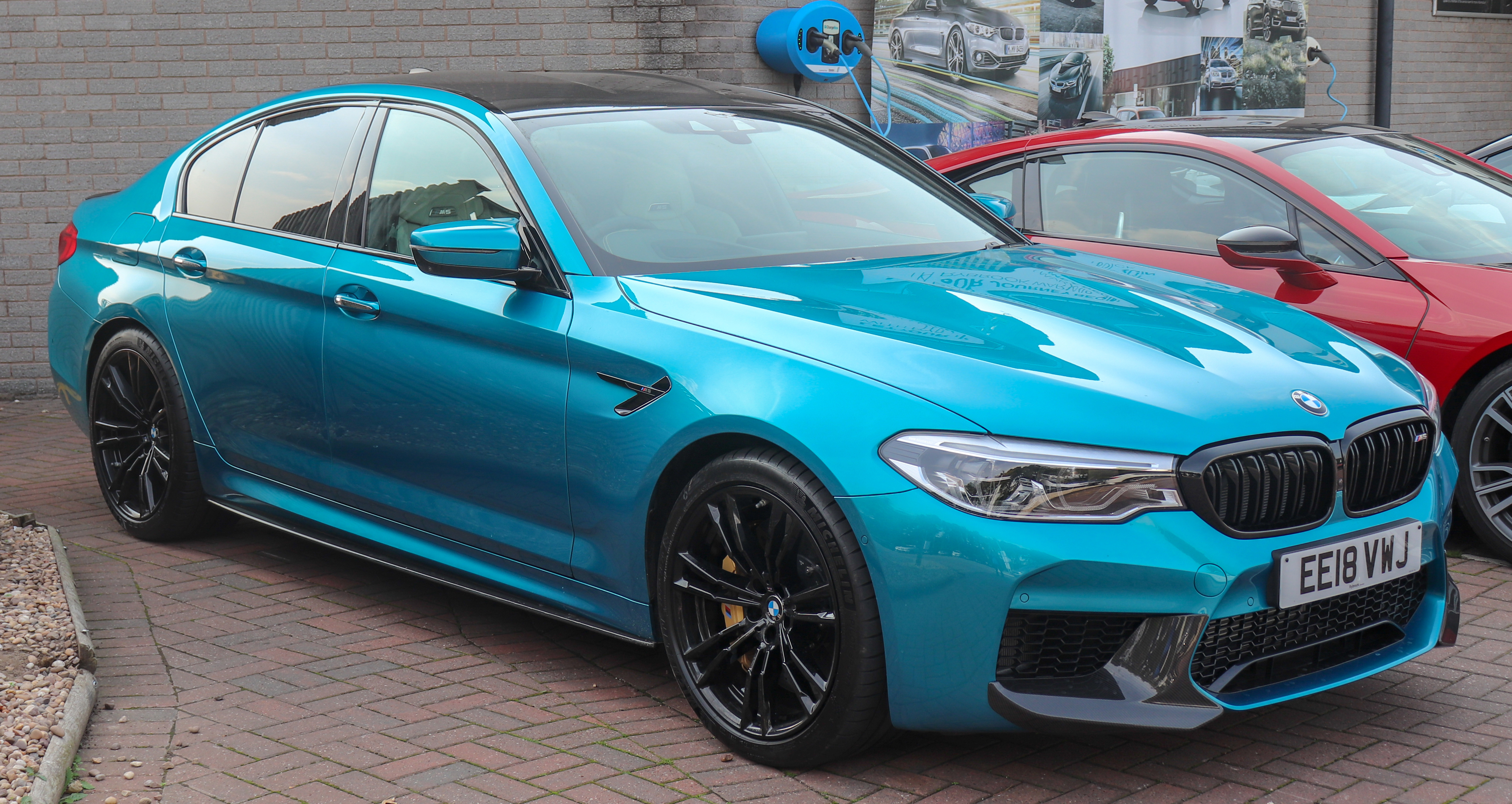
BMW
"I'm sure you remember when you had the BMW as well when you own a nice car or a new car driving doesn't feel like a chore"
They bring up BMW as an example of a nicer car that makes driving feel easier and less stressful. The idea is that the car’s feel and features can change how traffic driving feels.
“BMW” is used as an example of a nice/new car where driving doesn’t feel like a chore. In enthusiast terms, BMWs are often associated with driver-focused ergonomics and controls that can make commuting feel more engaging.

Volvo
"so yeah that's um and I mean I guess the same with your Volvo for now but yeah and and also I guess now it's cool that I've got an EV"
They mention Volvo as another car they’ve had, and they’re saying it also makes driving feel less stressful. Volvo is often associated with safety and a relaxed driving experience.
“Volvo” is referenced as the host’s current car brand, with the idea that driving feels similarly non-stressful. Volvo is known for comfort-focused design and safety tech, which can make traffic driving feel calmer.
solid state batteries
"but really over the next five years I don't think I think solid state batteries are the next big evolution"
Solid state batteries are a newer type of EV battery that uses a solid material instead of a liquid inside. The host thinks those newer batteries won’t be common in Australia for a long time.
“Solid state batteries” are a next-generation EV battery design that replaces the liquid electrolyte with a solid material. The host argues they’re unlikely to arrive in Australia soon, so the current EV is expected to remain relevant for a while.
adaptive cruise control
"how well some of those uh advanced driver assistance systems work like you know adaptive cruise control and sometimes there's some worries about all you know this is things like the driver alert"
Adaptive cruise control is like regular cruise control, but it can slow down and speed up to keep a safe distance from the car in front. It helps a lot in traffic.
“Adaptive cruise control” is a driver-assistance system that automatically adjusts your speed to maintain a set distance from the car ahead. It uses sensors to detect traffic, so it can reduce workload in stop-and-go driving.
driver alert
"and sometimes there's some worries about all you know this is things like the driver alert or driver attention warning is too irritating"
A driver alert system watches for signs you’re not paying attention and can warn you. Sometimes it can feel annoying if it triggers too easily.
“Driver alert” here refers to a driver-monitoring warning system that detects signs of inattentiveness or drowsiness and alerts the driver. The concern raised is that these warnings can be irritating or overly intrusive.
driver attention warning
"or driver attention warning is too irritating or the lane keeping assistance or the lane departure warning is too intrusive"
This is a warning that tells you the car thinks you might not be paying attention. The debate is whether it’s accurate and useful or just distracting.
“Driver attention warning” is a safety feature that warns the driver when the system believes attention has dropped (often using steering behavior, eye tracking, or other sensors). The host is discussing whether these alerts are helpful or too intrusive.
lane keeping assistance
"or the lane keeping assistance or the lane departure warning is too intrusive is that something that you've experienced"
Lane keeping assistance helps you stay in your lane by gently steering if you start to drift. Some people find it helpful, others find it annoying if it overcorrects.
“Lane keeping assistance” helps keep the vehicle centered in its lane by applying steering corrections when lane markings are detected. The host is asking whether it feels intrusive—i.e., whether the steering intervention is too aggressive.
lane departure warning
"the lane keeping assistance or the lane departure warning is too intrusive is that something that you've experienced"
Lane departure warning alerts you if the car thinks you’re leaving your lane. It’s meant to prevent lane changes you didn’t intend, but it can sometimes feel too sensitive.
“Lane departure warning” alerts the driver when the car detects it’s drifting out of its lane without signaling. It’s typically a warning (visual/audible) rather than active steering, and the discussion is about how intrusive it can feel.

BYD
"is that something that you've experienced with the with your BYD or are you sort of like more comfortable with it now? Funnily enough there's only one feature"
They ask whether the host has experienced driver-assist features in their BYD EV. BYD is a Chinese EV brand, and the question is whether the safety/automation features are helpful or annoying.
“BYD” is mentioned in the context of the host’s EV and the behavior of advanced driver assistance systems. BYD is a major Chinese EV manufacturer, and the discussion is about how well its driver-assist features work in real life.
child detection
"Funnily enough there's only one feature that I find really annoying and it doesn't turn off permanently which is the child detection"
Child detection is a reminder system that tries to make sure you don’t accidentally leave a child in the back seat. It can be annoying if it keeps prompting you and won’t stay off.
“Child detection” is an in-car safety feature designed to remind drivers to check the back seat for a child after exiting the vehicle. The host says it’s the one feature they find annoying, and that it doesn’t permanently turn off.
intelligent speed warning
"the other thing is uh so the intelligent speed warning uh thankfully uh once you turn [2534.9s] it off it's permanently off so turn that off and that doesn't bother me anymore"
This is a system that watches how fast you’re going and warns you if you’re going over the speed limit. You can usually turn the warning off in the car’s settings.
An “intelligent speed warning” is a driver-assistance feature that monitors your speed and alerts you when you’re exceeding the limit or driving in a way the system considers too fast. The host says it can be turned off and then stays off, suggesting it’s a configurable warning.
drive or attention monitor
"finally enough to [2539.2s] drive or attention monitor yeah I've actually found it's okay okay it it it genuinely actually does [2546.2s] do its job like when I'm looking at the touchscreen too long it actually does warn me"
This feature tries to tell if you’re not paying attention or might be getting sleepy. It can watch for things like long glances at the screen or yawning and then warn you to take a break.
A “driver or attention monitor” is a driver-assistance system that uses sensors (often cameras) to detect signs of drowsiness or distraction. The host describes it warning when they look at the touchscreen too long or when they yawn, and claims it’s fairly accurate rather than constantly false-alarming.
tire take a break
"it's perfectly fine if it sees me yawning yeah it tells me your tire take a break but like the [2557.0s] times it warns me about driving the thing it's actually like it's not a false alarm"
That’s the car telling you to pull over and rest. It usually shows up when the system thinks you’re getting tired or distracted.
The host is describing the system’s “take a break” alert, which is typically triggered by detected fatigue or reduced attention. It’s essentially a reminder to stop and rest rather than a mechanical warning.

T-Roc
"this life yeah um yeah your um otherwise and uh the lane departure is exactly the same as my [2575.7s] T-Roc no difference yeah so I haven't had a problem with that okay that's good yeah safety systems"
The Volkswagen T-Roc is a small SUV. Here, the host is talking about how its cruise-control and lane-keeping features work—especially how well it stays centered in the lane and how much you have to watch it.
The Volkswagen T-Roc is a compact SUV known for being a practical daily driver with available driver-assistance tech. In this segment, the host compares how the T-Roc’s adaptive cruise control behaves versus another car, focusing on lane-centering and driver workload.
lane trace
"well like all of the um past different names for it but you know um basically adaptive cruise [2594.6s] control with lane trace yes so BYD call it intelligent cruise control voxwagen call it travel assist but all of them basically do the same thing yes that is definitely not as good as"
Lane trace is the part of driver-assistance that tries to keep the car in the middle of the lane. The host says one car handled the spacing fine, but couldn’t reliably stay centered, so you had to watch it more.
Lane trace (often described as lane-centering or lane-keeping) refers to how an assistance system uses cameras and/or sensors to keep the car positioned within the lane markings. The host’s key point is that one system could manage distance but struggled to stay centered, requiring more driver attention.
intelligent cruise control
"adaptive cruise [2594.6s] control with lane trace yes so BYD call it intelligent cruise control voxwagen call it travel assist but all of them basically do the same thing yes that is definitely not as good as"
“Intelligent cruise control” is a brand’s name for cruise control that can also help keep you in your lane. The host is saying different car brands name it differently, but the idea is similar.
“Intelligent cruise control” is a marketing name for a driver-assistance feature that typically combines adaptive cruise control with lane-centering behavior. In this segment, the host says BYD uses this label, while other brands use different names for essentially similar functions.
travel assist
"control with lane trace yes so BYD call it intelligent cruise control voxwagen call it [2600.9s] travel assist but all of them basically do the same thing yes that is definitely not as good as"
Travel Assist is Volkswagen’s name for driver-assistance that helps with both cruise control and staying in the lane. The host is comparing how well it works compared with another car.
Travel Assist is Volkswagen’s branding for a suite of driver-assistance functions that commonly includes adaptive cruise control and lane-centering. Here, the host uses the name to compare how Volkswagen’s system performs versus another brand’s equivalent setup.
monitor it a bit
"so yeah on a flat road it's mostly fine yeah but yes it's but even then I have to monitor it a bit [2649.6s] like with the voxwagen and Toyota thing you can basically almost close your eyes right it's so [2656.2s] accurate and so reliable you can basically close your eyes but yeah you can trust it a little bit"
They’re talking about how much you still have to watch the road even when cruise control and lane help are on. One system feels more trustworthy than the other.
This segment discusses how much attention the driver still needs to give to driver-assistance systems. The host contrasts “almost close your eyes” confidence on one setup with needing more monitoring on another.
indicator noise
"this bloody indicator noise which sounded like it sounded like this sound like the warning chime you [2732.4s] get in every other car when you when somebody has forgotten to put their seatbelt on so the same [2737.7s] irritating noise and it really like it was really pissing me off but yes Sandvib you found a solution"
Indicator noise is the sound your car makes when you use the turn signals. Some cars also make extra warning sounds for reminders, and you may be able to change how they behave.
Indicator noise refers to the audible sound a car makes when the turn signals are active (often a “click” or beeping). Some cars also add extra warning chimes for driver-assist or reminder functions, and those sounds can be configurable.
heads up display
"yet your um BYD wasn't like okay we've got the same screen size as the Tesla therefore everything [2807.6s] should be on the screen right uh it's got like and the heads up display especially has been so handy and [2814.4s] the brilliant thing of this apparently doesn't happen with a lot of heads up displays that um [2818.8s] it gives you nav directions with smartphone mirroring"
A heads up display shows important info in your line of sight, usually on the windshield. That way you can see things like directions or warnings without looking down at the screen.
A heads up display (HUD) projects key driving information—like speed, warnings, or navigation prompts—onto the windshield or a transparent display. The goal is to keep your eyes closer to the road while still seeing important data.

Zeekr Zika 7X
"...ven more space I would maybe picked up like got a zika 7x because yesterday's objectively a much better car..."
The Zeekr 7X is an electric car. The podcast talks about it as a more practical choice because it offers more space than the car being discussed.
The Zeekr 7X is an electric vehicle that’s discussed as a space-focused option, with the podcast comparing it to another car and saying it would have been a better pick. The mention centers on practicality—especially room and overall suitability.
360 camera
"360 camera didn't help there or was I just 360 camera can't help but sometimes you don't necessarily want to be looking at the 360 camera doing slow drives all the time"
A 360 camera shows a stitched, overhead view of your car. It can help you park, but you still need to drive slowly and pay attention—especially to where your wheels are.
A 360 camera system uses multiple cameras around the car to create a top-down “bird’s-eye” view. It helps with low-speed maneuvering like parking, but it can’t fully replace careful driving and awareness of wheel position.
combined range
"the premium model has I think 482 kilometers combined range so I thought I'd ask like you know do you have any idea"
Combined range is an EV estimate that blends different driving conditions (typically city and highway) into one number. It’s meant to approximate real-world use, but your actual range can vary a lot with speed, weather, and traffic.
EV charging app
"with oh so that's another thing obviously when you get an EV you have to install probably a couple of apps if you're regularly are driving far you have to install basically every single EV charging app"
To use many public EV chargers, you often need a phone app. Different charging companies use different apps, so you may have to install more than one.
EV charging apps are smartphone apps used to find chargers, start sessions, and pay for electricity at many networks. The speaker notes that you may need multiple apps depending on which charging providers you use.
Tesla super
"BP pulse amp charge Tesla super"
This is Tesla’s fast-charging network. If you use those chargers, you typically use Tesla’s system to start and pay for charging.
“Tesla Super” refers to Tesla’s Supercharger network, a set of fast-charging stations designed for quicker EV top-ups. Charging availability and app/payment flow can differ from other networks.
Request an Explanation
Heard something you'd like explained? We'll add it to this episode.
Sign in to request explanations for terms you heard.
Want to learn more?
Browse our glossary for plain-English explanations of automotive terms, jargon, and concepts.
Help improve this episode
See something that's not quite right? Our annotations are AI-generated and can sometimes miss the mark. Click the flag icon on any annotation to suggest a correction.
1 community members have helped improve this episode.