
ADAS and Electric Vehicles Are Changing Auto Repair | Marco Palumbo
About this episode
Marco Palumbo traces how a Winnipeg shop has to adapt to rust, seasonal damage, and increasingly complex vehicles. He talks through undercoating, ADAS calibration, and the realities of unibody repair, while also describing a new five-bay facility built to handle modern work in-house. The conversation keeps returning to the economics of diagnostics, technician training, and customer trust, with EV costs, parts delays, and shop culture all shaping what independent repair looks like now.
Like the show? Show your support by using our sponsors.
Promotive can help you find your dream job. Touch HERE to see open jobs.
Need to update your shop systems and software? Try Tekmetric HERE
Launch your tool game to the next level with Launch Tech USA! HERE
In this episode, Marco Palumbo shares his journey from technician to owner of Maxim Tire and Muffler in Winnipeg. He discusses the challenges of adapting to new automotive technologies, such as ADAS and electric vehicles, and the investments required in equipment, training, and staff. Marco also emphasizes the value of transparent customer service and community reputation, demonstrating how taking care of customers builds long-term loyalty and success.
Timestamps:
00:00 Meeting Mark and first impressions
05:28 Importance of mentoring in shops
12:13 Success with TikTok marketing
17:38 Discussing car calibration and trust
21:54 Unexpected car repair costs
29:15 Dealerships vs. aftermarket dynamics
34:45 Engaging waiting customers in showroom
42:20 Oxygen sensor issues and specialization
45:49 Tesla service challenges in smaller cities
52:46 Celebrating Mark's impact
56:16 Challenges with tech skills and training
58:56 Managing training logistics
01:04:09 Troubleshooting car electrical issues
01:10:47 Managing customer service expectations
01:16:04 Challenges with car part repairs
01:24:28 Facing time management challenges
01:28:24 Advocating for customer transparency
01:34:09 Unresolved car maintenance issues
01:37:26 Customer requests and shop policy
01:42:08 Charging for technical auto repairs
01:47:39 Recognizing Marco's passion and impact
Follow/Subscribe to the show on social media!
TikTok - https://www.tiktok.com/@jeffcompton7
YouTube - https://www.youtube.com/@TheJadedMechanic
Facebook - https://www.facebook.com/profile.php?id=100091347564232

BYD cars
"I've been in the BYD cars, and they are spectacular. Yeah. Absolutely spectacular. I'm a fan. I never thought I'd say that."
BYD is a car brand that makes electric cars. The hosts are saying they’re really impressed with how far the car can go and how quickly it can charge.
BYD is a Chinese automaker known for mass-producing battery-electric vehicles and pushing fast-charging and long-range claims. In this segment, the hosts highlight BYD’s electric-car range and charging capability as a reason they’re impressed.
1400 kilometer range
"1400 kilometer range. It's a game changer. The batteries are these plates, and they're saying they can charge from 20% to 80% and minus 40 Celsius."
“Range” is how far an electric vehicle can drive on a full charge (or under a stated test cycle). The “1400 kilometer range” claim is presented as a major advantage because it implies fewer charging stops on long trips.
20% to 80% charging
"The batteries are these plates, and they're saying they can charge from 20% to 80% and minus 40 Celsius."
Charging from 20% to 80% is a common way to describe fast-charging performance because it avoids the slower charging behavior near very low and very high battery states. It’s essentially a “real-world trip” metric: how quickly you can add enough energy to keep moving.
minus 40 Celsius
"The batteries are these plates, and they're saying they can charge from 20% to 80% and minus 40 Celsius."
Very cold weather can make electric cars harder to charge and can reduce how well the battery works. The speaker is saying this system is designed to handle extreme cold like -40°C.
Battery performance in extreme cold is a key EV concern because low temperatures can reduce usable power and slow charging. Mentioning “minus 40 Celsius” frames the vehicle’s ability to charge and operate in very harsh winter conditions.
Maxim Tire and Muffler
"But Marco from Maxim Tire and Muffler in Winnipeg, Manitoba, hired Mark and reached out to me to kind of share what it was like..."
Maxim Tire and Muffler is the Winnipeg-area shop where Marco Palumbo works and where Mark was hired. It’s relevant to the episode’s “how the repair industry works” story, not to a specific vehicle technology.
Midas
"So that's, that's how it started back in 1988. I worked at Midas for a bunch of years and that's where I met Mark and at the St. Anne's location."
Midas is an automotive service chain where the speaker worked early in their career. In the context of the episode, it’s part of the shop-owner/technician career path story rather than a technical automotive topic.
rust
"Well, there's that little bit of time where it's minus four and, say minus four to plus four in that area where there's a lot of sand and salt... [486.0s] The rust is actually incredibly advanced."
In this context, rust refers to corrosion of the vehicle’s metal caused by road salt and moisture. The hosts discuss how freeze-thaw conditions and salt exposure can accelerate corrosion, even on relatively new vehicles.
undercoating
"And I always tell anyone who buys a car get the underneath undercoated. [508.0s] Yeah, it's such a benefit. [511.0s] Yeah. I finally got my first car worth owning..."
Undercoating is a protective layer sprayed on the bottom of a car. It’s meant to help stop rust from road salt and wet road grime.
Undercoating is a protective coating applied to the underside of a vehicle to slow corrosion from road salt, moisture, and debris. It helps protect vulnerable areas like nooks and crannies where water and salt can sit.

Jeep Wrangler
"... that was actually worth undercoating. Was my. My wrangler. And I tell people all the time, and everybody's ..."
The Jeep Wrangler is a type of SUV built for off-road driving. People often talk about protecting it from rust because it can be used in bad weather and on rough roads. Undercoating is one way owners try to keep the underside from corroding.
The Jeep Wrangler is a rugged, off-road-focused SUV known for its body-on-frame design and its ability to handle rough terrain. It often comes up in conversations about undercoating and rust protection because many Wranglers are used year-round in harsh weather. That makes it a common topic for mechanics and owners who care about long-term durability.

Chevrolet Equinox
"...t all the rest? No. My mom's little. She's got an equinox of 14 that you wouldn't even know was that old. I..."
The Chevrolet Equinox is a small SUV meant for regular driving, like errands and commuting. The podcast is pointing out that an older Equinox can still look and run well with proper care. That’s why people bring it up when discussing how long cars last.
The Chevrolet Equinox is a compact crossover SUV designed for everyday commuting with family-friendly practicality. In the podcast context, it’s mentioned as an older vehicle that still looks and feels surprisingly good, which is why it comes up in discussions about maintenance and longevity. The Equinox is a common “real-world” car people keep for years, so it’s often referenced when talking about durability.

Hyundai Santa
"... was underneath a brand new. I Say brand new 2024 Hyundai Santa Cruz yesterday. That's complete unibody. Like wou..."
The Hyundai Santa Fe is a larger SUV meant for everyday family driving. The podcast is talking about the underside of a newer model and how it’s built. That matters because the bottom of the car can rust or wear depending on how it’s protected.
The Hyundai Santa Fe is a midsize SUV built for family use, balancing comfort with practical space. The podcast mentions it in the context of a newer vehicle’s underside and construction, highlighting how modern unibody designs can affect what owners and mechanics look for. It’s discussed because underbody condition and corrosion protection matter over time.
unibody
"I Say brand new 2024 Hyundai Santa Cruz yesterday. That's complete unibody. Like would. If you decided that that was your truck and it had some rust underneath, you're not fixing it. It's not designed to be structurally repaired."
A unibody is a car design where the body is the main structure, not a separate frame. If it rusts or gets damaged underneath, it’s often not meant to be repaired like older, frame-based trucks.
A unibody is a vehicle construction where the body and frame are integrated into one structure. Because it’s designed as a single unit, significant rust or damage underneath can be difficult or unsafe to repair structurally compared with body-on-frame designs.

Hyundai Santa Cruz
"...erneath a brand new. I Say brand new 2024 Hyundai Santa Cruz yesterday. That's complete unibody. Like would. I..."
The Hyundai Santa Cruz is a small SUV that also has a bed like a pickup truck. The podcast notes that the 2024 model is built as a unibody, meaning the body and frame are integrated. That matters because it changes how the bottom of the vehicle is constructed and protected from rust.
The Hyundai Santa Cruz is a compact crossover with a truck-like bed, designed to blend everyday driving comfort with occasional hauling capability. In the podcast, it’s specifically referenced as a 2024 model with a complete unibody construction, which affects how the vehicle is built and how the underside is protected. That’s why it comes up in a discussion about what’s worth undercoating and long-term durability.
customer retainment management
"We have a really good database for clients... [704.0s] We attract new customers by means of proper customer retainment management. [712.0s] Yeah."
Customer retention management is how a shop tries to keep customers returning for future repairs. It usually involves things like reminders and follow-ups so people don’t forget to come back.
Customer retention management refers to strategies and processes used to keep existing customers coming back for service. In a repair-shop context, it often includes reminders, follow-ups, and service plans to reduce customer churn.
ADAS calibration
"...we’re going to attract some. Some local Shops that need adas calibration and everything to do with adas. ...because there are some shady people that are just like... I just wheel it up and start pushing some buttons... and the thing is calibrated."
ADAS calibration is when a shop sets up the car’s safety cameras/sensors so they “see” correctly. If it’s not done right, the car’s safety features can warn at the wrong time or react strangely.
ADAS calibration is the process of aligning and verifying the sensors and cameras used by driver-assistance systems (like forward collision warning and lane-keeping). If calibration is off, the system can misread the road and behave incorrectly, so shops often need specialized targets and procedures.
two-post hoist
"...When you’re a mobile, you still need floor space and unfortunately, I don’t know how they do it. I guess they do it on the parking lot somewhere because a lot of shops, once they have their two post hoist or four poised toys in the way, it’s difficult to put their mats somewhere."
A two-post hoist is a car lift with two main posts. It can make it harder to set up the open space and equipment needed to calibrate the car’s safety cameras and sensors.
A two-post hoist is a vehicle lift with two vertical posts that raise the car from the sides. It’s common in repair shops, but it can take up floor space that’s needed for ADAS calibration targets and sensor alignment setups.
calibration targets
"...he’s been coming in and, and drawing out lines in the concrete, then we cut the concrete... ...The dealer guys are like, oh, yeah, I just wheel it up and start pushing some buttons and I pull down on the target a little bit and the thing is calibrated."
Calibration targets are special boards/patterns placed in front of the car so the safety cameras can be set up accurately. They help the shop do the calibration the right way.
Calibration targets are the physical reference patterns used during ADAS calibration so the car’s cameras/sensors can be aligned to known positions. Shops use them to ensure the system’s measurements match the real world, not just “quick button presses.”
forward collision warning / lane-keeping behavior concerns
"...it’s not like I’m ever gonna go... and still trust it that I’m gonna go right up on somebody’s butt with the cruise on and wait for it to slam the brakes on for me... ...no issues and we’ve never had a customer come back and say... the car is changing lanes for me or you, erratic."
They’re talking about what can go wrong if the car’s safety features aren’t set up correctly—like braking at the wrong time or steering/lane behavior acting weird. That’s why the shop wants the process done carefully.
The host describes concerns about ADAS acting incorrectly—like braking unexpectedly or changing lanes erratically—if calibration or trust in the system is off. This highlights why calibration quality and verification procedures matter after repairs.
satellite shop
"So the. Another issue I have that this other shop is going to help with. First of all, it's a satellite shop. There aren't going to be customers going there."
A satellite shop is like a second location for repairs. The main shop handles the inspection, and then the car gets moved to the smaller shop for certain jobs.
A satellite shop is a smaller, secondary repair location that supports a main shop. In this context, cars are inspected at the main location and then moved to the satellite bay for specific work, which helps manage scheduling and capacity.
water pump
"We are currently working on an Audi that was supposed to be just a water pump. As you remove the top plenum there, we found all kinds of leaks."
The water pump moves coolant around the engine to keep it from overheating. If it’s leaking, fixing it can sometimes uncover other leaks too.
A water pump is the component that circulates coolant through the engine to control temperature. When a shop expects a “simple” water-pump job but finds additional leaks, it can expand the repair scope and parts list.
top plenum
"As you remove the top plenum there, we found all kinds of leaks."
A plenum is a chamber in the engine area that helps route air or coolant. Taking off the top part can expose what’s really leaking.
The plenum is an air/cooling chamber in an engine bay, and the “top plenum” is the upper section of that housing. Removing it can provide access to internal components and can reveal hidden leaks that change the repair plan.
down bay
"Now I have a down bay. So, and these parts are not next door. They're two, three, five days away."
A “down bay” means one of the shop’s repair spots can’t be used. If it’s down during busy times, it slows down how many cars they can handle.
A “down bay” is a repair bay that’s unavailable because it’s out of service or occupied by a long-running job. When one bay is down, shops can’t process as many cars during peak periods like tire season, which increases scheduling pressure.
tire season
"it takes, you know, one down bay and you have. Especially tire season. Yes. You have, you know, 20, 25 cars booked that day."
“Tire season” is the busy time of year when people swap to winter tires (or back to summer tires). Repair shops get slammed with appointments during that window.
“Tire season” refers to the recurring period when many drivers switch between winter and summer tires, creating a surge in demand for tire storage and installation. Shops plan capacity around this because it can overwhelm scheduling if bays or parts availability are constrained.
Saturn
"Unfortunately, it was on a Saturn where parts are incredibly hard to find... Saturn's been a, you know, an extinct brand now for a decade."
Saturn was a car brand that’s no longer sold. The big issue is that when a brand is discontinued, replacement parts can be hard to find, which makes repairs slower and more expensive.
Saturn is a former General Motors brand known for customer-focused marketing and a loyal owner base. The episode highlights a practical downside of discontinued brands: parts availability can become difficult, turning repairs into time-consuming searches.
airbag
"We tried to find. Oh, it was an airbag for one. It was a situation. The horn didn't work."
An airbag is the safety system that deploys in a crash to help protect you. If the replacement part can’t be found quickly, it can delay repairs and make people consider replacing the car.
An airbag is a supplemental restraint system designed to deploy during a crash to help protect occupants. If an airbag is unavailable for repair (due to parts sourcing delays), it can force difficult decisions about whether to keep the vehicle or replace it.
coil springs
"So to just say, oh, I can't, you know, sorry, you got to scrap your car because we can't get coil springs for it. That's a tough conversation to have."
Coil springs are the suspension parts that help the car ride smoothly and stay at the right height. If the right spring can’t be found, the car can’t be properly repaired and may have to wait.
Coil springs are the metal springs that support a vehicle’s weight and help control ride height and suspension movement. If a shop can’t source coil springs for a specific car, the vehicle may be sidelined until the correct parts are found.
Napa Auto Pro
"Yeah. Now you're with Napa Auto Pro, right? Yeah. How does that work for you? Pretty good."
Napa Auto Pro is a group/network of independent auto repair shops. The shops share ideas and sometimes help each other out with tools or parts that are hard to get.
Napa Auto Pro is a network of independent repair shops operating under the NAPA Auto Pro badge. In the episode, it’s described as coordinating strategies and sharing hard-to-find tools/parts among member owners.
warranty labor
"So, you know, warranty labor through them, which at a decent labor rate before it was pretty bad. So they increase labor. So warranty is not so terrible."
Warranty labor is the paid work a shop does when a repair is covered by a warranty. If the pay rate is low, warranty jobs can be harder for a shop to handle.
Warranty labor is the approved labor time and pay rate a shop receives when doing repairs covered by a manufacturer or supplier warranty. The episode notes that the warranty labor rate used to be “pretty bad,” and that changes to labor rates can make warranty work more workable for shops.
roadside assistance
"Another thing that Napa has that, that I don't know who else has it is the roadside. Roadside assistance, which is good across Canada actually, North America actually."
Roadside assistance is help you can call if your car breaks down or won’t start. It’s basically a safety net so you’re not stuck waiting for a tow or repairs.
Roadside assistance is a service that helps drivers when the car can’t be driven—commonly for towing, battery help, or other emergency support. The episode frames it as an included backup when doing maintenance packages, reducing downtime risk.
brake estimate
"They literally, okay, bring in, you're all going to break a brake estimate together. You know, they give you the same car. Here's your brake estimate and a battery. Let's see your price breakdown and everything else."
A brake estimate is the price quote for fixing or diagnosing your brakes. It usually shows what parts and labor cost, so customers know what they’re paying for.
A brake estimate is a written quote for brake-related diagnosis and repair, typically broken down by parts and labor. The episode describes shops comparing brake estimates together to understand pricing differences and what parts/labor assumptions are driving them.
price breakdown
"Here's your brake estimate and a battery. Let's see your price breakdown and everything else."
A price breakdown is the detailed list of what you’re paying for, like parts and labor. It helps explain why two shops might quote different totals for the same repair.
A price breakdown is the itemized breakdown of a repair quote—usually separating parts, labor, and any other fees. In the segment, it’s used to compare how different shops structure pricing for the same job.
aftermarket
"It became really obvious to me that it's like, it seemed like it was the dealer and then it was the aftermarket, it was us versus them."
The aftermarket is the world of repair shops and parts that aren’t the car brand’s own dealer network. It’s where many independent shops buy parts and do repairs.
The aftermarket is the ecosystem of non-OEM parts and services—parts and repair work not directly tied to the vehicle manufacturer’s dealer network. The episode contrasts dealer channels with the aftermarket’s tendency (as described by the host) to compete without sharing information.
dealer
"It became really obvious to me that it's like, it seemed like it was the dealer and then it was the aftermarket, it was us versus them."
A dealer is the official store/service center for a car brand. They usually use the brand’s own parts and systems for repairs.
A dealer is a franchised retail and service outlet for a specific vehicle brand, typically selling OEM parts and performing manufacturer-backed warranty work. The episode uses “dealer” as the contrast point to independent shops and the aftermarket.
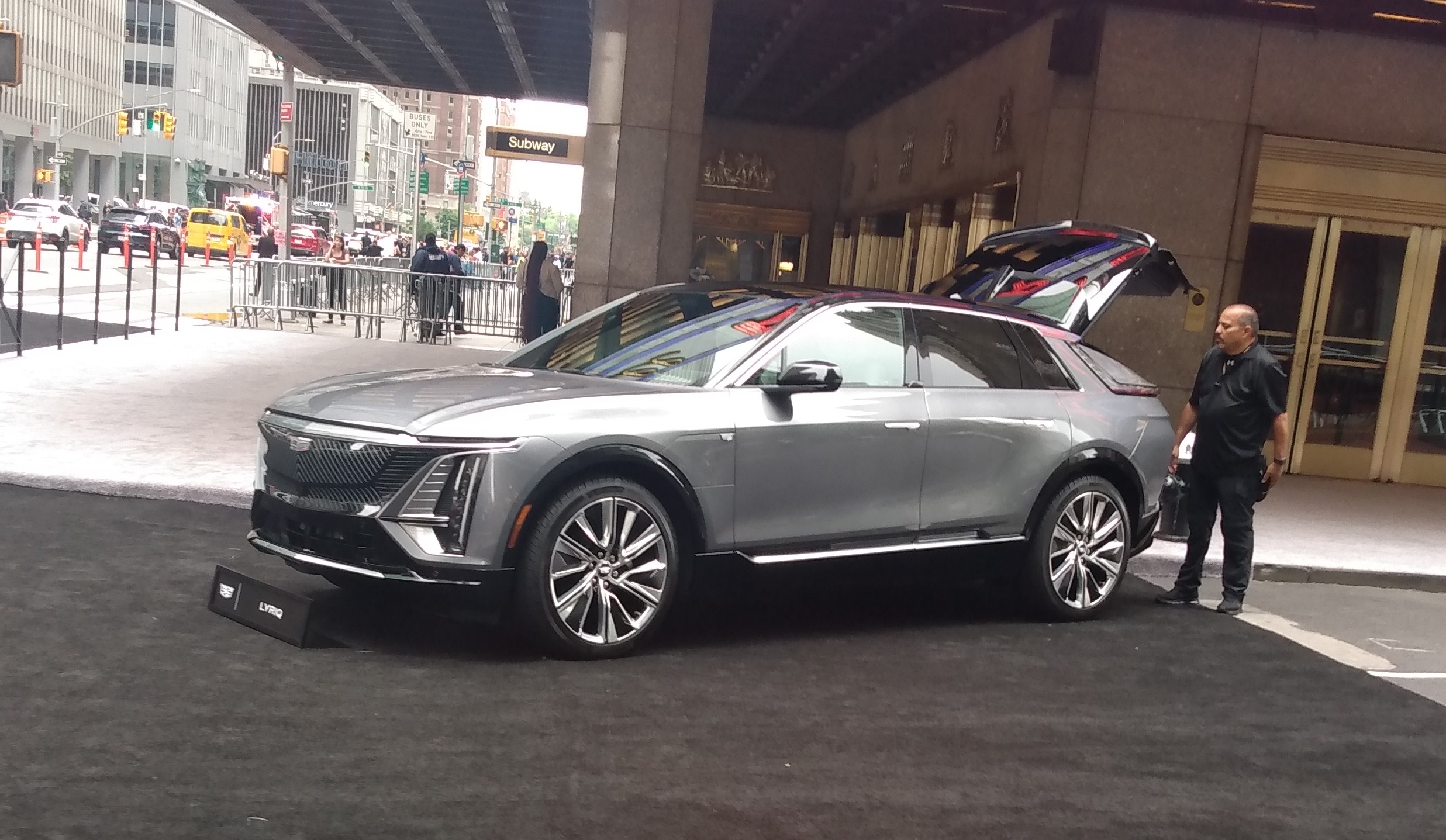
Cadillac Lyric
"... Is that a, like a guess who song or something? A lyric for my thing and it's Portage in Maine or somethi..."
The Cadillac Lyriq is a luxury SUV that runs on electricity. Instead of using gas, it uses a battery to power the motor. The podcast mentions it as a specific model people recognize and talk about.
The Cadillac Lyriq is an electric luxury SUV, meaning it’s powered by a battery instead of a gasoline engine. It’s brought up in the podcast as part of a discussion that includes naming and brand references, which often happens when people talk about what they’re seeing in the shop. Electric vehicles like this are also frequently discussed because their systems and service needs differ from traditional cars.

Nissan Maxima
"...l my people, if you can say thank you for calling Maxima for an auto with a smile, it resonates through th..."
The Nissan Maxima is a regular passenger car (a sedan). The podcast is talking about the name and how people react when it’s mentioned. It’s included because it’s a recognizable model people associate with Nissan.
The Nissan Maxima is a sedan known for combining everyday usability with a more performance-oriented feel than many typical family cars. In the podcast, it’s referenced in a customer-service or branding context—calling out how the name “Maxima” is recognized and responded to. That kind of mention often comes up when discussing owner experiences and how people identify the car.
alignment
"...this is what it actually looks like when they're doing alignment, like so many things. So it's almost part of your marketing again..."
Alignment means adjusting the angles of your wheels so they’re pointed the right way. When it’s wrong, tires wear out faster and the car can feel like it’s pulling or drifting.
Wheel alignment is the process of setting a car’s suspension angles so the tires point in the correct direction. If alignment is off, the car can pull, wear tires unevenly, and feel unstable.
power steering flush
"...it also has some of your own stuff in there... Typically it has some sort of informational shows... the benefits of a power steering flush..."
A power steering flush is when the old power-steering fluid is removed and replaced with fresh fluid. It helps keep the steering system working smoothly.
A power steering flush replaces the fluid in the power steering system. Over time, the fluid can degrade and pick up contaminants, which can contribute to noisy operation or poor steering feel.
fuel injection service
"...it shows you the benefits of a power steering flush, the benefits of fuel injection service. All these things are on there..."
Fuel injection service refers to maintenance intended to keep the fuel injectors and related fuel system components delivering fuel correctly. Depending on the vehicle, it can include cleaning, inspection, and replacing worn parts to maintain proper fuel delivery.
EV
"Are you stepping at all putting your toe into the EV and HV or EV in hpv? ...Once it becomes a viable or a workable space then I'll move forward into something EV into either the hybrid version or something plug in..."
An EV is a car that runs on electricity stored in a battery. Fixing them usually takes different training and tools because they have high-voltage parts.
EV means electric vehicle—cars powered primarily by an electric motor and a high-voltage battery instead of a gasoline engine. Repair shops need different diagnostic tools, safety procedures, and training because the high-voltage systems behave differently than traditional drivetrains.
HV
"Are you stepping at all putting your toe into the EV and HV or EV in hpv? Yeah hybrid kind of mode yet or..."
HV here refers to high-voltage systems used in hybrid and electric vehicles. High-voltage components require specialized safety practices and diagnostic procedures, which is why independent shops often need training and equipment before taking on EV/HV work.
Next Drive
"...Napa is, is focusing on Next Drive... And the support behind Napa is huge. So when it comes to next drive, the reality is... tremendous amount of training..."
Next Drive is an EV training/support program. The point is that learning EV repair takes time, money, and equipment before a shop can do it confidently.
Next Drive is an EV-focused training and support initiative mentioned as part of NAPA’s strategy. The host frames it as requiring significant education and equipment investment to reach the level needed to service EVs.
front control arms
"...we needed a set of front control arms for the Model X and Napa was the only place we could go through..."
Front control arms are parts in the front suspension that help hold the wheels in the right position. If they’re worn or damaged, they may need replacement and the car often needs alignment afterward.
Front control arms are suspension links that connect the steering/suspension components to the chassis and help control wheel movement. On EVs like the Tesla Model X, replacing them still requires correct alignment afterward, but parts availability can be a major bottleneck.

Chevrolet Volt
"So, you know, the cars that come in, I saw one quote on a, on a Volt, a GM Volt. [2443.0s] Oh, yeah, yeah. [2444.0s] And I saw a battery quote for $20,000."
The Chevrolet Volt is a plug-in hybrid that runs on a battery and electric motor. The point here is that if the battery is expensive to replace, repair quotes can get so high that some owners choose not to fix it.
The Chevrolet Volt is a plug-in hybrid from GM that uses a battery pack to power an electric motor, with an engine for extended range. In this segment, the hosts focus on the high cost of EV-related components—especially the battery—making repairs financially difficult when customers decide not to proceed.
refrigerant 1234
"...we talk about the refrigerant thing. Like, we're still talking about 1234. Like, it's new, but it's not. It's been out for 10 years, you know."
“1234” is the name of a newer refrigerant used in car air conditioning. When shops switch to a new refrigerant, they often need new tools and parts, which can make repairs more expensive.
“1234” refers to a newer generation of refrigerants used in automotive air conditioning systems, replacing older refrigerants due to environmental rules. The segment highlights how changing refrigerant types forces shops to update equipment and procedures, which can create added costs and downtime.
AC machine
"People just got the damn AC machine paid for. [2540.0s] They've gone through two oxygen sensors in their 1234 machine..."
An AC machine is the special equipment technicians use to handle the refrigerant in a car’s air conditioner. If the refrigerant type changes, the machine may need expensive parts or updates to keep working.
An AC machine is the specialized service tool used to recover, recycle, and recharge refrigerant in an air-conditioning system. The hosts argue that if refrigerant standards change, these machines can become less useful without costly updates or replacement parts.
oxygen sensors
"...they've gone through two oxygen sensors in their 1234 machine and now we're going to phase that out..."
The oxygen sensors mentioned are parts inside the air-conditioning service machine that help it work properly. The hosts are saying that when the equipment needs updates, you may also end up replacing sensors that cost a lot.
In AC service equipment, oxygen sensors are used to monitor conditions during refrigerant recovery/recycling so the machine can operate correctly and safely. The segment uses them as an example of how refrigerant-equipment changes can lead to additional replacement costs.
specialization in auto repair
"...Specialization, whether people like it or not is gonna become a very real thing because you're just not gonna be able to afford to say I can do it all anymore... [2584.0s] Like you know, we're just. It's going to take so much skill and equipment..."
They’re saying car repair is getting more specialized. Instead of one shop doing everything, more shops will focus on specific systems because the tools and training are too expensive for everyone to cover everything.
The hosts argue that modern vehicles are becoming too complex to service everything in-house, so shops will increasingly specialize by system (for example, ADAS vs. engine/transmission work). They also tie this to economics: specialized training and equipment raise costs, which can affect labor rates and shop business models.
AC recovery
"...Napa has a course called auto Tech and we just came back from a AC course on Tuesday. [2625.0s] And talking about a lot of those things just now where recovering or testing..."
AC recovery means pulling the refrigerant out of the car’s air conditioner and handling it correctly. The hosts are saying some people don’t do the full process because contamination can make it risky or expensive.
AC recovery is the process of removing refrigerant from a vehicle’s air-conditioning system and collecting it for recycling or proper disposal. The segment mentions it alongside testing, emphasizing that contamination and safety risks can make technicians skip or struggle with proper procedures.
contaminated with red tech
"...a lot of people don't test the AC because of there's. They've. It's been contaminated with red tech or some sort of chemical..."
They mention “red tech” as something that can contaminate the air-conditioning system. If it gets in there, it can make the job harder and may even require extra work to clean the technician’s equipment.
“Red tech” is referenced as a contaminant that can get into an AC system, making service more complicated and potentially damaging to equipment. The hosts’ point is that contamination can force deeper cleaning/repair of the service machine before the next job.
incentives
"...And it'll have like a five year warranty on it and you know, Incentives. Yeah, incentives. And our government of course, like is going to come in and make everything like seem like it's the greatest thing in the world."
Incentives are discounts or money-saving programs that can lower the price of a car. The host’s point is that these can make EVs seem cheaper at first, but they don’t solve service and repair issues.
Incentives are financial programs (often government or utility-backed) that reduce the effective cost of buying a vehicle. The host argues that incentives can make EVs look like a great deal—until real-world repair and service needs arise.
plate-style batteries
"...there was a kiosk there where these three BYD cars were. One was a, a half ton and it wasn't all electric by the way... And they're plate style batteries... They're not the typical alkaline batteries or, or lithium batteries, I should say."
Plate-style batteries refer to a battery construction approach where the cell design uses plate-like electrodes rather than the more common cylindrical or pouch formats. The host contrasts them with typical battery chemistry references and claims they enable fast charging and cold-weather performance.
fast charging
"...the batteries are these plates and they're saying they can charge from 20% to 80% and minus 40 Celsius. ... In eight minutes."
Fast charging is the ability to recharge a battery quickly, typically measured by how long it takes to move between state-of-charge levels (like 20% to 80%). The host relays BYD’s claim that charging from 20% to 80% can take about eight minutes, and notes it’s a marketing claim that needs verification.
VinFast
"So we're also in another brand called VinFast. In Vietnam. A company has only been around since 2017 and they've been, they're building cars that are mid, like compact. Mid and larger."
VinFast is a newer car company. The host is saying they’re selling a lot of different cars, including electric ones, and they’re growing quickly.
VinFast is an automaker that entered the market in the late 2010s and sells cars in multiple countries. In this segment, the host highlights VinFast’s rapid growth and broad lineup spanning hybrid and electric models.
Cherry
"Unfortunately, that' it's going to be like, for example, there's another company called Cherry is another Chinese manufacturer is coming."
Chery is a Chinese car brand. The host is listing it as one of the companies trying to sell more cars in Canada.
Cherry (likely referring to Chery) is a Chinese automaker expanding into new markets. Here it’s mentioned as one of several Chinese brands aiming to sell in Canada, which could pressure local repair shops and parts supply.
corrosion
"So it all depends on how they stand up to our winters. Right. And corrosion. What that gonna do. The connections and all the grounds and"
Corrosion is rust and other damage that happens when metal is exposed to moisture and chemicals. In snowy places, road salt can make it happen faster, so it matters a lot for cars.
Corrosion is the gradual deterioration of metal due to chemical reactions, commonly accelerated by road salt and moisture in winter climates. The host connects corrosion to how well electric vehicles (and their electrical connections/grounds) will survive in Canada.
grounds
"And corrosion. What that gonna do. The connections and all the grounds and"
“Grounds” are the electrical return connections that help the car’s computers and sensors work correctly. If those connections get corroded, the car can start acting up.
In automotive electrical systems, “grounds” are the return paths that complete circuits and stabilize sensor/ECU voltages. The host’s concern is that corrosion or damage to grounding points can cause electrical faults—especially important on EVs with lots of electronics.
heating and cooling for these batteries
"It's got heating and cooling for these batteries. So it's going to be something to keep an eye open for. And you know, even our potholes."
Electric-car batteries have to be kept at the right temperature. The car uses a system to heat or cool the battery, and that can affect how hard the car is to service.
EV battery packs need thermal management—heating and cooling—to keep cells in a safe operating temperature range. The host implies that this system adds complexity for repair shops, and that it will be a key area to watch in harsh climates.
undercarriage
"And you know, even our potholes. I saw one, one vehicle that got the, the pothole dented the undercarriage."
The undercarriage is the bottom of the car—where a lot of parts sit close to the road. Potholes can hit it and cause damage.
The undercarriage is the underside structure of a vehicle, including components like shields, suspension parts, and other exposed hardware. The host notes a vehicle that was damaged when it hit a pothole, illustrating how EVs (and their underbody systems) can be vulnerable to road impacts.
MPI
"And MPI wouldn't cover it. [3111.0s] Yeah. [3112.0s] I think when I say mpi, it's Manitoba Public Insurance. So they wouldn't cover it."
Here, MPI stands for Manitoba Public Insurance. The point is that their insurance wouldn’t pay for that particular problem.
In this context, MPI means Manitoba Public Insurance, the provincial auto insurer. The speaker is saying that MPI wouldn’t cover the repair/issue they’re discussing, so the claim would be denied or limited.
working interview
"It's tough. 8. And you know, Marco, you've probably seen it in some of the conversations how shops are trying even working interviews and bringing them in for a week..."
A working interview is when someone is brought in to do real work for a short time. Shops use it to see if they can actually handle the job, not just what’s on their resume.
A working interview is a hiring approach where a candidate performs real tasks (or shadows) for a short period. In auto repair, it’s used to evaluate diagnostic skills, work habits, and how they handle real customer problems.
ADAS problems
"...those are the kind of shops that are like tearing a bumper off and, and causing adas problems because they don't even know what adas is."
ADAS is the car’s safety tech—like cameras and sensors that help the driver. If a repair shop doesn’t know how to handle those sensors, the car can get confused and the safety warnings may not work right.
ADAS (Advanced Driver-Assistance Systems) are the camera- and sensor-based features that help with things like lane keeping, adaptive cruise, and collision warnings. When a shop doesn’t understand ADAS, body work or repairs can misalign sensors, leading to incorrect readings and safety-related faults.
under warranty
"...when I was at the dealer and it was under warranty, I just had to find it."
Under warranty means the car’s repairs may be covered by the manufacturer. That can make it easier to get problems diagnosed and fixed without worrying as much about the bill.
Being under warranty means the vehicle is covered by the manufacturer’s or dealer’s warranty terms, so repairs may be paid for by the warranty rather than the customer. Warranty coverage can change how quickly a shop can diagnose and fix issues because the cost risk is reduced.
transmission fault
"...you also have a transmission fault. They're not. One's not causing the other."
A transmission fault is when the car’s computer detects a problem with how the transmission is working. It can cause shifting or driving issues, and it may not be connected to other warning lights.
A transmission fault means the car’s transmission control system has detected a problem, which can affect shifting behavior or drivability. In modern cars, transmission issues are often diagnosed via diagnostic trouble codes and may be unrelated to other warning lights.
evap problem
"...yeah, you've got a rotten out, you know, evap problem, but you also have a transmission fault."
EVAP is the system that keeps fuel vapors from escaping into the air. If something in that system is leaking or broken, the car can turn on a warning light.
An EVAP problem refers to a fault in the evaporative emissions system, which captures fuel vapors from the tank and routes them for combustion instead of venting them to the atmosphere. EVAP issues often trigger check-engine-related warning lights and can be caused by leaks or failed components in the system.
diagnostic trouble codes
"...you got a light on. But there's nine codes in that car."
Diagnostic trouble codes are numbers the car stores when it finds a problem. Sometimes the same warning light can mean several different issues, so the mechanic has to read the codes to figure out what’s actually wrong.
Diagnostic trouble codes (DTCs) are numeric identifiers stored by a vehicle’s onboard computer when it detects a fault. A single warning light can correspond to multiple unrelated codes, so a proper scan and diagnosis is needed to avoid chasing the wrong problem.
warning light
"...yeah, you've got a light on. But there's nine codes in that car."
A warning light is the dashboard message that something needs attention. It can be caused by more than one problem, so it’s important to check what the car’s computer is actually reporting.
A warning light is the dashboard indicator that alerts the driver to a detected fault or system status issue. In modern vehicles, the light may be triggered by one or more underlying diagnostic trouble codes, so it doesn’t always point to a single root cause.
cut bait
"So you know the term cut bait, that's trained. ... Unfortunately, sometimes you got to cut bait."
It means “stop wasting time on something that isn’t working.” In car repair, it can mean admitting the problem may be too expensive or too hard to solve without better info.
“Cut bait” is a fishing idiom used here to mean stopping a job that isn’t going to pay off. In the shop context, it’s about deciding to stop chasing a diagnosis when the likely fix won’t be cost-effective or feasible.
scanner
"So the dealer, some of it that they have access to their particular scanner or data that we don't have access to. And so they have to go there."
A scanner plugs into the car to read computer error codes and data so the mechanic can pinpoint the issue.
A scanner is a diagnostic tool that reads a vehicle’s electronic fault codes and live data from the car’s computer. The episode highlights that some functions (like dealer-only access) may require specific scanner software or credentials.

Jeep Compass
"...about an 09 compass that he inherited... when you hit the buttons for the windshield washer and you hit the button for the horn, neither work."
The Jeep Compass is a common compact SUV. Here it’s used to show that electrical problems (like horn/washer not working) can be caused by wiring or computer-controlled modules, not just a single broken part.
The Jeep Compass is a mainstream compact SUV whose electrical systems rely heavily on the vehicle’s body electronics and instrument cluster controls. In this episode, it’s used as an example of how washer and horn functions can fail due to circuit/cluster-related issues that may only be revealed with proper diagnostics.
Identifix diagrams
"...goes, well, there's your problem. You're using identifix diagrams, which are the OE diagram."
These are wiring diagrams used to help mechanics follow electrical circuits. They’re like a map for where wires should go and what should connect to what.
Identifix diagrams refer to aftermarket diagnostic wiring diagrams used to trace circuits and components. The hosts mention them as “OE diagram” style references, then explain how Chrysler’s wiring documentation had errors that were corrected in updates.
OE diagram
"You're using identifix diagrams, which are the OE diagram. ... But Chrysler way back in the day was famous for having misprints in their wiring diagrams."
OE diagrams are the official wiring diagrams from the vehicle manufacturer. They’re often more accurate for diagnosing electrical faults than generic or third-party diagrams.
An OE diagram means an “original equipment” (manufacturer) wiring diagram. The episode uses it to explain that the dealer’s updated OE documentation can reveal missing wiring/power paths that other diagram sources may not show correctly.
wiring diagrams
"...updated wiring diagrams showed them that there's a power wire missing to the cluster... ... wiring diagrams is. And it's such a hard thing to follow..."
Wiring diagrams are schematics that show how electrical components are connected, including power/ground paths and wire routing. The hosts emphasize that incorrect or outdated diagrams can lead to wasted time (“chasing your tail”) and missed faults.

Master Tech
"...t you were saying there, one of my. I also have a master tech. His name is Jason. He's my. One of my Korean. He..."
In this podcast, “Master” seems to mean a top-level mechanic, not a car. The host is talking about a master tech named Jason who does repairs. It’s included because it relates to who works on the vehicles.
“Master” in the podcast context appears to refer to a person’s role or title—specifically a “master tech” named Jason—rather than a specific vehicle model. In a shop setting, a master technician is typically an experienced mechanic who handles more complex repairs and diagnoses. That’s why it’s mentioned alongside other service-related details.
wire harness
"...it was spaghetti. It was this wire harness that was unraveled and this disgusting mess."
A wire harness is the car’s main bundle of wires. If part of that bundle corrodes or breaks, multiple things can stop working.
A wire harness is the bundled set of wires that routes signals and power throughout the vehicle. The segment describes a harness that had corroded/broken wiring, showing why electrical issues can persist even after replacing individual modules like the cluster.

Honda Crv
"You can't but 250 in auto repair now. I put four tires on a CRV the other day. It's over a thousand bucks easy. Four tires over a thousand bucks."
A Honda CR-V is a common SUV. They’re using it as an example to show that even routine stuff like replacing four tires can cost over $1,000 now.
The Honda CR-V is a popular compact SUV, and it’s used here as an example of how common repair costs have risen. Putting four tires on a CR-V is used to illustrate that even “everyday” maintenance can quickly exceed $1,000.
warranty claim
"if we look after a customer, we have a part failure and we have to do a warranty claim, it doesn't kill us."
A warranty claim is when you ask to have a repair or part replaced because it’s covered by a warranty. The speaker is saying shops need enough financial cushion so a warranty situation doesn’t hurt them.
A warranty claim is the process of getting a repair or part replacement covered under a manufacturer or parts warranty. The speaker’s point is that if a shop can’t handle warranty-related costs without financial strain, it becomes unsustainable—especially when parts are expensive or hard to source.
apprenticeship program
"We always recommend going through the apprenticeship program. We always encourage to, you know, there's some techs that... are just happy just doing the basics, oil changes and tires and so on."
An apprenticeship program is a training program where new techs learn by working with experienced people. Here, they’re saying it helps technicians grow beyond just basic maintenance.
An apprenticeship program is a structured training path where newer technicians learn under experienced mentors while building real-world skills. In the segment, it’s presented as the best way to develop stronger diagnostic and repair capability rather than staying limited to basic service.

Chevrolet Corvette
"We just did a 2000 Corvette. Brian was working on a charging system issue and he spent a good Amount of time."
The Chevrolet Corvette is a well-known performance car. They’re using it as an example of a problem that took real diagnostic time—especially with electrical systems.
The Chevrolet Corvette is a performance sports car, and it’s mentioned here to highlight how modern diagnostics can take significant time. The speaker describes a charging-system issue that required careful diagnostic work, which ties into the broader ADAS/electronics theme of the episode.
charging system
"Brian was working on a charging system issue and he spent a good Amount of time."
The charging system is what powers the car’s electrical stuff and keeps the battery charged. If it’s not working right, the car can act weird electrically, and it may take time to figure out exactly why.
A charging system is the set of components that keeps the battery charged while the engine is running. When it has a fault, the car may show electrical symptoms and can require diagnostic time to pinpoint whether the issue is the alternator, battery, wiring, or related sensors.
diagnostic time
"when it comes to getting the proper diagnostic time. We just did a 2000 Corvette... Brian was working on a charging system issue and he spent a good Amount of time."
Diagnostic time is the time a mechanic spends figuring out what’s actually causing the problem. The point here is that modern cars can take longer to diagnose, so that time shouldn’t be treated like it’s “free.”
Diagnostic time is the billable labor spent identifying the root cause of a problem before parts are replaced. The segment argues that with modern vehicles—especially with more electronics—proper diagnosis can take longer, and shops need to be able to bill that time.
alternator
"So what was the, what was the failure in that car? The alternator itself or. It was an alternator. It was the headlight dimmer switch..."
The alternator is what keeps the car’s battery charged and runs the car’s electrical systems. They’re saying the alternator was the problem in this case.
The alternator is the car’s generator that powers the electrical system and recharges the battery while the engine is running. In this segment, an alternator failure is tied to a broader electrical problem, and it’s part of the diagnostic path alongside battery testing.
parasitic draw
"...it created a parasitic draw. So it carried. Yeah. So we, we replaced the alternator and the battery was also... And here's the thing... the battery's dead... Then you might see that car come back next week and they had to boost it. What becomes the reality now though? If it takes some, some of these cars an hour and a half to go to sleep before we can accurately test a drainage..."
A parasitic draw is when the car keeps using power even when it’s supposed to be off. If that power draw is too much, the battery can go dead and you may need extra testing to find the real cause.
Parasitic draw is the small amount of electrical current a vehicle consumes while it’s parked and the key is off. If it’s too high, it can drain the battery and cause repeated “dead battery” complaints, which may require time-consuming diagnosis before replacing parts.
headlight dimmer switch
"It was an alternator. It was the headlight dimmer switch that was cranked a little bit too far and it created a parasitic draw."
The headlight dimmer switch is the control that changes your headlights between low and high beams. They’re saying a damaged/mispositioned switch can accidentally keep electricity running and drain the battery.
The headlight dimmer switch controls switching between headlight beam settings (typically low/high beam). Here, it’s described as being cranked too far and causing a parasitic draw, which can drain the battery even when the car is off.
digital battery test
"...we replaced the alternator and the battery was also. It passed the digital battery test. But it didn't pass the carbon pile test."
A digital battery test is a machine check that tells whether the battery looks healthy. They’re saying the battery could pass one kind of test but still be bad under real conditions.
A digital battery test measures battery condition using electronic diagnostics (often checking voltage and internal resistance). In the segment, the battery passed this test but still failed a more specific load/behavior test, showing why multiple tests may be needed.
carbon pile test
"But it didn't pass the carbon pile test. Yeah. That's right."
A carbon pile test puts the battery under a heavy electrical load to see if it can handle real-world demand. They’re saying the battery failed this stress test even though it looked okay on the first check.
A carbon pile test applies a controlled electrical load to the battery to see how it performs under stress. The segment highlights that a battery can pass a basic digital check but fail under load, which is important for accurate diagnosis.
battery warranty
"So he had warranty on the battery somewhere else. So he got the battery replaced under warranty. It was under a year old."
A battery warranty is the guarantee that if the battery fails within the covered time, it can be replaced. They’re saying the battery got replaced under warranty, but the shop still had to figure out what caused the problem.
A battery warranty is the coverage period where the manufacturer will replace or reimburse a defective battery. In the segment, the battery was replaced under warranty because it was under a year old, even though the underlying electrical issue still needed diagnosis.
boost
"...you see that car that comes in and you know the battery's dead in it... Then you might see that car come back next week and they had to boost it."
Here, “boost” means jump-starting the car when the battery is dead. They’re warning that jump-starting can hide the real problem if the battery keeps dying again.
In this context, “boost” means jump-starting a dead battery using another vehicle or a jump pack. The discussion uses it to describe how a parasitic drain can be missed if the initial symptom is treated as “just a dead battery.”
ADAS and Electric Vehicles Are Changing Auto Repair
"So it becomes a challenge for the service advisor, the manager, system manager, to deal with this person in a professional. Hey, look, we got you. We understand you're ticked off. We're going to take care of it..."
This part of the show is talking about how auto repair is changing, especially with newer car technology and how customers act. It also highlights how shop staff have to communicate well and manage the repair process.
The episode segment is about how modern vehicle tech and customer expectations are changing the day-to-day work of auto repair shops. It focuses on the human side of repair—how service advisors and management handle frustrated customers while keeping operations on schedule.
service advisor
"So it becomes a challenge for the service advisor, the manager, system manager, to deal with this person in a professional. Hey, look, we got you."
A service advisor is the person at the repair shop who talks to you about your car, explains what needs to be done, and keeps you updated. They’re also the go-between between you and the mechanics.
A service advisor is the customer-facing role at an auto repair shop who interviews the customer, writes up the service order, communicates timelines and updates, and coordinates with technicians. They’re often the main point of contact when a job runs late or something goes wrong.
courtesy vehicle
"Hey, look, we got you. We understand you're ticked off. We're going to take care of it. Here's the courtesy vehicle that we have."
A courtesy vehicle is a temporary car the shop gives you while your car is in the shop. It’s meant to help you keep going with your day even if the repair takes time.
A courtesy vehicle is a temporary rental or loaner car the shop provides while your car is being repaired. It helps reduce disruption when the repair takes longer than expected or when the shop needs time to complete the work.
Maxim's reviews
"I don't know if you even checked Maxim's reviews. We've just surpassed 900 at 4.8 stars."
“Reviews” here refers to customer ratings and written feedback posted online, which can influence how many new customers choose a shop. The speaker cites a high rating as evidence of strong customer experience and communication.
customer base
"Because you want to maintain that solid customer base. Because if you think it's solid and it's not, you don't have the feedback you think you should be getting."
A customer base is the group of repeat customers a shop relies on for ongoing business. The speaker argues that maintaining it requires consistent feedback, otherwise the shop may assume everything is fine when it isn’t.
Auto Ops
"I've also just subscribed to. I don't know if you know where Auto Ops is or steer. It's a, It's a new company, not new, but it's been, it's been around for a while..."
Auto Ops is a company the speaker says they’re using to get feedback from customers. The idea is to learn what customers think so the shop can improve.
Auto Ops is mentioned as a company the speaker uses to gather customer feedback. In the context of a repair shop, tools like this can help track satisfaction and identify issues that lead to complaints.
coaching
"Now what do you feel about some of the talk in this industry? Like that we all need a coach... Coaching is important. It's expensive."
Coaching in this context means structured guidance for shop management or advisors to improve processes, communication, and performance. The speaker frames it as important but costly, and notes it can require time and follow-through (like homework) to be effective.
DVI (digital vehicle inspection)
"And I'm not sure how much DVI digital vehicle inspections you guys do. [5233.0s] Well, so where I currently work, I don't have to do a DVI now because I work at a car lot where essentially we're reconditioning all these cars to be sold."
A digital vehicle inspection is a checklist and photo report of what’s wrong (or needs attention) on a car. It helps the customer see the findings instead of just being told about them.
DVI (digital vehicle inspection) is a shop process where technicians document a car’s condition using digital checklists and photos, often shared with the customer. The goal is transparency—showing what was found and what’s recommended—rather than relying on verbal descriptions alone.
ABS light
"There's other things that they say the ABS light can be on because it's on. I don't do that. [5274.0s] I refuse to."
The ABS light warns you there may be a problem with the anti-lock braking system. ABS helps prevent wheel lockup during hard braking, so ignoring it can be risky.
ABS light is the dashboard indicator for the Anti-lock Braking System. In the segment, the host notes that some inspections may allow the ABS light to be on, while they personally refuse to sign off on a car that way—because it can indicate braking safety-related faults.
300% rule
"The, the dvi from a standpoint of a lot of shops, I keep coming back to this man, it takes time to do a quality DBI. It really does. [5304.0s] And if we follow the 300% rule, it takes a lot of time to do a very good estimate now, right, right, right."
The “300% rule” is a way some shops estimate repairs that can lead to recommending much more work (or charging much more) than the problem really requires. The host argues it can push customers into unnecessary spending.
The “300% rule” is a shop estimating/repair-markup mindset where labor and/or recommended work is scaled up aggressively to increase profitability. In the context of the episode, it’s criticized as turning small findings into large, expensive repair tickets rather than focusing on what’s truly needed for safety and value.
oil leak
"But every little thing that doesn't drip on the ground as an oil leak is not a immediately halt, do not operate situation for this car. [5456.0s] If it means pouring in a little bit of transmission fluid every six months because it weeps around..."
An oil leak is when oil is escaping from the engine area. Small leaks can be monitored, but bigger leaks can lead to low oil levels and damage if ignored.
An oil leak is when engine oil escapes from seals, gaskets, or other components and can drip onto the ground or collect in engine areas. The host differentiates between minor seepage (not immediately catastrophic) and situations that should be addressed for safety and long-term reliability.
transmission fluid
"If it means pouring in a little bit of transmission fluid every six months because it weeps around, you know, a seal, we do that. [5456.0s] We don't try to always take every ticket..."
Transmission fluid is the lubricant and hydraulic fluid used by an automatic transmission (and some other driveline systems) to manage gear changes and reduce wear. The host mentions topping up transmission fluid for minor seepage, framing it as a reasonable maintenance action rather than an expensive overhaul.
road test
"“...there may a road test may be required... But for a diagnostic for example, or a brake inspection, a road test is a requirement.”"
A road test is when the shop drives the car to see if the problem happens while moving. Some issues only show up when you’re driving.
A road test is a controlled drive performed by the technician or service advisor to reproduce symptoms that may not show up at rest. The segment explains that certain diagnostics—like bearing noises or brake inspections—often require a road test to confirm the problem.
Request an Explanation
Heard something you'd like explained? We'll add it to this episode.
Sign in to request explanations for terms you heard.
Want to learn more?
Browse our glossary for plain-English explanations of automotive terms, jargon, and concepts.
Help improve this episode
See something that's not quite right? Our annotations are AI-generated and can sometimes miss the mark. Click the flag icon on any annotation to suggest a correction.