
'All The Quirks and Features' with Doug DeMuro
About this episode
Doug DeMuro talks origins, risks, and what makes cars (and car media) work. He explains how his Cars and Bids podcast crew formed, why structured news beats rambling, and how his career began with Porsche HQ internships and early writing/video stardom. The conversation gets personal with big purchases like a Ferrari 360 and his obsession with the Countach and Carrera GT—plus why he trusts modern tires/suspension to tame “danger” reputations. They also debate electric collectibility, auction-market dynamics, and influencer transparency.
Matt and Hannah finally interview Doug DeMuro, the man behind auction platform Cars and Bids and This Car Pod! Doug is famous for “all the quirks and features” on YouTube and has built arguably the greatest four-car-dream-garage of all time, with a Ford GT, Carrera GT, Lamborghini Countach and an Arena Red 993 Turbo!
See omnystudio.com/listener for privacy information.
Dream garage
"Right, And we'll. [81.6s] Talk to him about that, and also what a fantastic garage. [84.9s] He's built. Like you know, everybody says, uh, everybody thinks [88.8s] about his or her dream garage with like three or four cars, and he has built that."
A “dream garage” just means the cars you’d most want to own. The hosts are talking about what it’s really like to take those dreams and turn them into real ownership.
A “dream garage” is the enthusiast idea of building a personal collection of cars that match your tastes and goals. In the context of the episode, they’re discussing the risks and tradeoffs of actually owning those cars rather than just imagining them.
Cars and Bids
"Now Filipo and Kennon work [150.5s] with us at Cars and Bids. I may have made the mistake or maybe it was a great decision of hiring most of my personal friends to come and work for me or with me at this point."
Cars and Bids is a website where people list cars to sell, kind of like an auction. Doug says some of his friends who help run it also show up on the podcast.
Cars and Bids is an online marketplace for buying and selling cars, known for auction-style listings and an enthusiast-focused audience. In the segment, Doug mentions that Filipo and Kennon work with him there, tying the podcast’s guest circle to the platform.
Bloomberg terminal
"Sure, you're very good at the news on top for me is the most valuable because even though I'm in the news business, Hannah and I are sitting in front of a Bloomberg terminal all day long day, I don't get the stories that you guys broadcast."
A Bloomberg Terminal is a tool journalists and finance people use to pull up news and market data. Doug is saying he uses it for work, but he still doesn’t see the same car stories the hosts find.
A Bloomberg Terminal is a professional financial data and news system used by banks, media, and industry professionals. Doug references it to explain that, even though he’s in the news business, he still doesn’t get the same car-industry stories that the podcast hosts cover.
car events
"Yeah, I mean, you guys probably are getting more like legitimate industry news, and I think sometimes we cover more like cheeky, ridiculous car but but the news is definitely the biggest. When I go to car events, I am [252.3s] shocked at the number of car industry people who are like, yo, I listen to your podcast every single week, and some of them admit to turning it off after the news."
They talk about going to car shows and events and noticing what people are interested in. It’s used to explain why the podcast’s news recap gets attention.
The hosts discuss attending car events and how they learn what industry people are paying attention to. This is a structural part of the conversation about why listeners care about the podcast’s news wrap-up.
Porsche
"...hear your origin story and did you work for Porsche at one time? To tell us about the arc of your career... I went to Emory University... and Porscha's corporate headquarters is also in Atlanta..."
Porsche is a German automaker. Doug mentions that Porsche has its corporate headquarters in Atlanta, which is why he was able to get an internship there.
The host asks whether Doug DeMuro ever worked for Porsche, and Doug explains that Porsche’s corporate headquarters is in Atlanta. That context matters because it explains how he got an internship and later a full-time role in the company’s operations side.
fixed operations
"...A lot of people think it was in PR and marketing because that's what I do now, but it was actually in fixed operations, like I was part of allocating the vehicles to the dealerships..."
Doug says his job at Porsche wasn’t PR or marketing—it was in “fixed operations,” which is dealership/after-sales focused work. In practice, this usually means managing service-related processes like allocating vehicles, coordinating with dealers, and planning operations to support sales and service throughput.
used car
"...even car enthusiasts who are deep in it, lacked the courage to do, which is, you bought a used car that could have absolute money pit disasters..."
A used car can be a great deal, but it can also be risky if the previous owner didn’t maintain it. If something big breaks, the repair costs can add up fast.
The conversation highlights the risk of buying used cars that can turn into “money pit” disasters. That’s a common enthusiast topic because used-car reliability, deferred maintenance, and repair costs can vary wildly depending on prior ownership and service history.

Land Rover Range Rover
"One of them I remember was a range Rover. And you bought some kind of long term guarantee..."
Doug mentions a Range Rover he bought. These SUVs can be expensive to own if repairs pile up, so it’s a good example of why used-car shopping matters.
Doug recalls buying a Range Rover that could have been a major financial headache. Range Rover models are often discussed in enthusiast circles because their ownership costs can be high when maintenance or repairs aren’t kept up.
long term guarantee
"...And you bought some kind of long term guarantee, which the company that sold to you like totally regretted because you kept like calculating how much they had to spend on your on your guarantee..."
A “long term guarantee” is basically extra coverage you buy to help pay for repairs after the normal warranty ends. It can save money if the car breaks, but the details and exclusions matter a lot.
Doug describes buying a “long term guarantee” (likely an extended warranty/vehicle service contract) that the seller regretted because it covered his repair costs. This illustrates how warranty coverage can materially change the risk profile of buying an expensive used car.

Ferrari 360
"...and then you bought like a Ferrari three sixty right, if I recall, it was like eighty grand, which you know, it's a lot of money for a kid in his twenties..."
The guest mentions buying a Ferrari 360, describing it as an expensive purchase for a young person and emphasizing fear of maintenance costs. The Ferrari 360 is a well-known modern classic, and its ownership conversation often centers on how repair/maintenance expenses can be significant.

Rolls Royce Silver Shadow
"I still Hannah, I still remember the first day I learned that you had a Rolls Royce, because you also went out and bought like what a nineteen seventy one Rolls Royce? [550.7s] Is that the first silver Shadow?"
They’re talking about a specific Rolls-Royce model called the Silver Shadow. It’s an older luxury car, and owning one usually means you need to be ready for maintenance.
The “Silver Shadow” is a specific Rolls-Royce model line known for its classic, understated luxury. It’s a popular choice among enthusiasts who like older British grand touring cars, but it can require careful maintenance and knowledgeable ownership.

Mercedes SL
"I had, Actually I that was a swap I got it an sl An eighty eight at Mercedes sl which was a bit of a lemon. So I took it back."
They’re talking about a Mercedes-Benz SL, and they say it was a problem car. The takeaway is that the car they bought didn’t work out, so they swapped it for something else.
The speaker mentions an “SL” from Mercedes-Benz, specifically an “1988” in the context of a car they bought and then returned due to problems. Mercedes SL models are performance-oriented luxury roadsters/coupes, and older examples can be a mixed bag depending on maintenance history.
lemon
"I had, Actually I that was a swap I got it an sl An eighty eight at Mercedes sl which was a bit of a lemon. So I took it back."
A “lemon” is a car that keeps having serious issues and never really gets fixed. It’s basically the opposite of a reliable purchase.
“Lemon” is a term for a vehicle that repeatedly has major problems and doesn’t get fixed properly after attempts. In practice, it often leads to returns, buybacks, or legal/consumer-protection processes depending on the situation and jurisdiction.
trade on a car that broke down on the test drive
"We took it back to the guy that we bought it from, and we kind of said, can we swap this out for that thing in the corner plus a plus a little more cash, And so it was a trade on a car that actually broke down when we got it out of the garage and druk when we on our test drive it broke down."
They’re saying the car they traded in was already having problems right away, even during the test drive. It’s a reminder that you should verify the car actually works before you commit.
The speaker describes a “trade” where the car they were swapping out had already broken down during the test drive. This highlights how pre-purchase condition and real-world reliability can matter more than the seller’s story or the initial presentation.

Lamborghini Kuntash
"I have a cootash and I try to explain that to people... Same for rolls Royces... I think it takes a certain type of person to roll that dice..."
The Lamborghini Countach is a famous, old-school supercar. It’s the kind of car people love because it feels special and a little unpredictable, not because it’s the most sensible choice.
The Lamborghini Countach is a legendary 1970s–1980s supercar known for its wedge shape, dramatic styling, and extreme driving experience. In this segment, Doug DeMuro is arguing that enthusiasts often buy cars like the Countach for the fascination and unpredictability, not purely rational reliability or practicality.

Porsche Career Gets
"...ave kids coming up to me and telling me about the career gets clutch and the kuntash is really ability, and it'..."
The Porsche Carrera GT is a very rare, very fast sports car made by Porsche. People talk about it because it’s built for performance and is considered a collector’s car. It may be mentioned as an example of a “classic dream” supercar.
The Porsche Carrera GT is a rare, high-performance supercar known for its lightweight design and serious track-bred engineering. It’s often discussed because it represents a peak era of naturally aspirated performance and is remembered as a driver-focused, collectible machine. In a podcast, it may come up when talking about iconic “dream cars” and what makes them special to enthusiasts.
"Roll that dice" enthusiast ownership
"...I think it takes a certain type of person to roll that dice. But I think it also takes a certain type of person to just buy a PDK nine to eleven..."
They’re talking about buying a car knowing it might be a little unpredictable or require extra care. The idea is that the fun and personality are the point, not just having everything work perfectly.
The hosts are describing a mindset where enthusiasts accept uncertainty—whether about quirks, maintenance, or how a car will behave—because the emotional payoff is worth it. It’s a contrast to “sanitized” ownership, where you optimize for predictability instead of character.
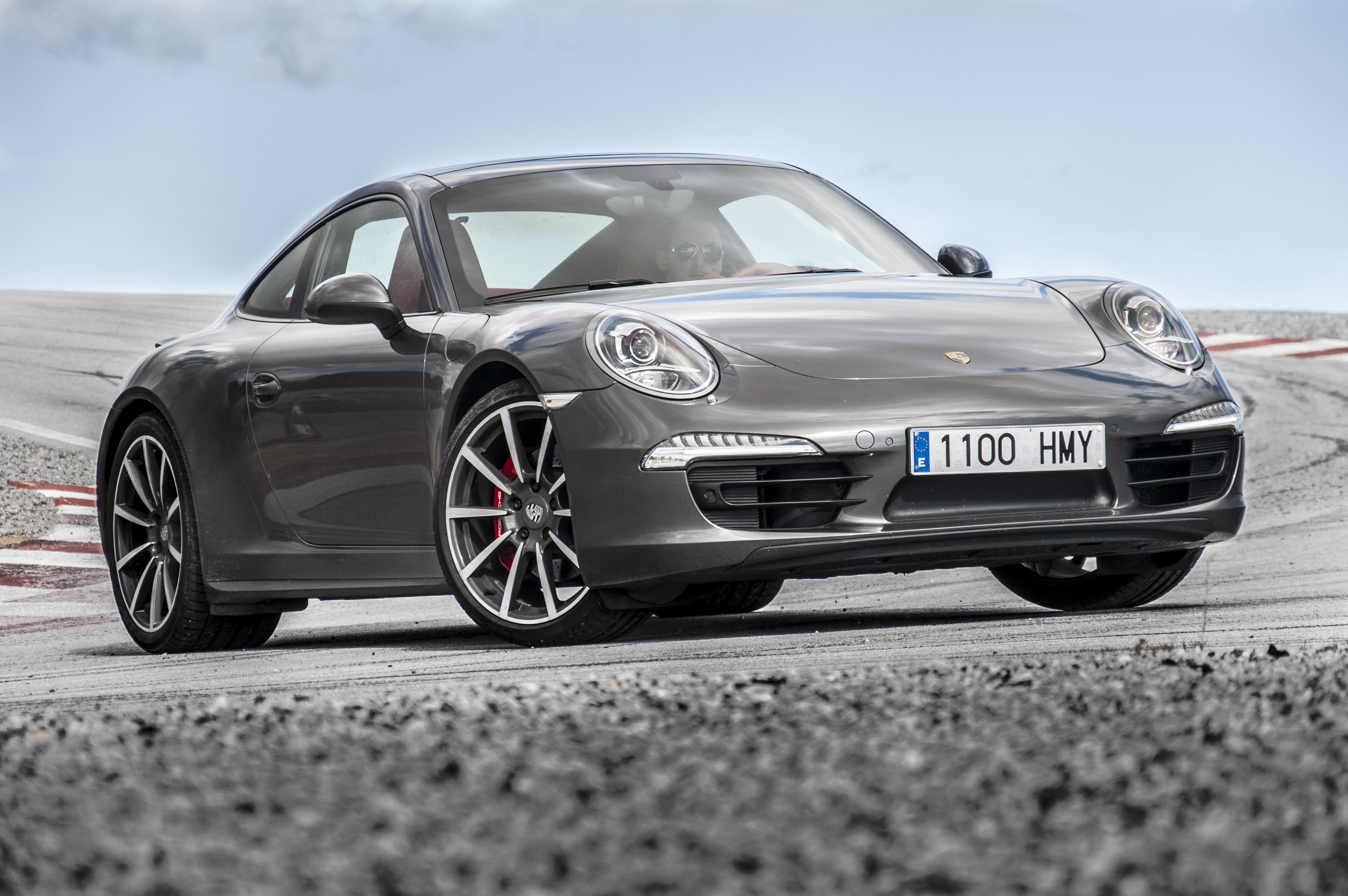
Porsche 911
"...it also takes a certain type of person to just buy a PDK nine to eleven. That's your enthusiast car..."
The Porsche 911 is one of the most iconic sports cars ever made. In this conversation, they’re saying that even if it’s more refined than something like a Countach, a 911 can still feel exciting and special.
The Porsche 911 is the long-running sports-car platform from Porsche, famous for its rear-engine layout and evolution across many generations. Here, the hosts mention buying a “PDK” 911 as an enthusiast car—highlighting that even a more refined, modern 911 can still deliver “soul” when it’s well maintained.
PDK
"...it also takes a certain type of person to just buy a PDK nine to eleven. That's your enthusiast car..."
PDK is Porsche’s “two-clutch” automatic transmission. It shifts gears quickly so the car feels lively and doesn’t have the lag you can get with older automatics.
PDK stands for Porsche Doppelkupplung, Porsche’s dual-clutch automatic transmission. It’s known for fast, smooth gear changes and is a big part of why many modern Porsche 911s feel so responsive compared with traditional automatics.
suspension upgrade
"...And we put new suspension on my curerge Et like two years ago, and with that suspension upgrade, it honestly may just be number one."
Suspension controls how the tires stay planted and how the car handles bumps and turns. The speaker is saying that after upgrading it, the car felt much more accurate and confidence-inspiring.
A suspension upgrade typically means replacing or revalving components to improve ride control, grip, and stability. In this segment, the speaker says adding new suspension made the car feel more precise and may have elevated it to their top choice.
learning curve
"...I think maybe that takes that there's some learning curve that people need to get into, but I feel on there and I just think it's one of the most..."
A “learning curve” refers to the period where a driver adapts to a car’s behavior—especially in high-performance supercars with sensitive traction, steering, and braking. The speaker argues that the scary reputation comes partly from drivers not yet understanding how the car responds, and that experience makes it feel more controllable.
Formula one derived motor
"Plus it's a Formula one derived motor right, all of Doug's big cars are Formula one drived."
They’re saying the engine is inspired by Formula 1 racing tech. That usually means it’s built to rev hard and feel very responsive, like a race car engine.
A “Formula one derived motor” means the engine design philosophy is influenced by Formula 1 technology—often emphasizing high-revving performance, advanced materials, and racing-oriented engineering. The speaker connects this to why the car feels special and why they associate their big cars with F1-derived engineering.
Portie and Mercedes emblem
"...Fortunately, it helped me buy a really nice house in uh And, by the way, the same trait... I just have like a little Portie and Mercedes emblem on the chimney at my house."
The speaker mentions displaying a Porsche and Mercedes emblem at their house, which is a small but telling detail about how enthusiasts curate their identity and memorabilia. It also reinforces that multiple German brands are central to their garage and ownership history.

Dodge Challenger
"I have actually a Dodge Challenger, which I love the scat pack. But I want to ask about a couple more of your cars."
The Dodge Challenger Scat Pack is a stronger, sportier version of the Challenger. It’s meant for people who want a fast V8 feel without stepping up to the very top supercharged models.
The Dodge Challenger Scat Pack is a performance trim of the Dodge Challenger muscle car, known for a more powerful V8 than the base models. In enthusiast circles, “Scat Pack” is shorthand for a specific horsepower/handling package aimed at street performance without going full Hellcat/Redeye territory.

Ford GT
"One of them is the four GT. I think, although it could just be a legend... He actually bought the four GT you O five brand new from Santa Monica Ford... he owned it for thirteen years... when those cars came out, they initially lost money pretty quickly... the market really started to come around... I bought it from him in eighteen at a market correct number which was two hundred and twenty five thousand."
The Ford GT is a rare, high-performance supercar from Ford. The story here is about how the car’s value changed a lot—going from expensive at launch to even more expensive later as it became a collector favorite.
The Ford GT is a limited-production supercar that became a modern collector car, with pricing that can swing dramatically over time. In this segment, the host discusses buying one new, later buying it again at a much higher price, and how mileage and market demand affected its value.
market correct number
"Yeah, I mean he sold it to me for like a market correct number. I didn't like get a deal on it... I bought it from him in eighteen at a market correct number which was two hundred and twenty five thousand."
“Market correct” just means the price was fair for what people were paying at the time. It’s the opposite of a bargain deal or an inflated price.
“Market correct” is shorthand for pricing that matches what the market is willing to pay at that time, rather than a bargain or a dealer markup. The speaker uses it to contrast paying a fair price versus getting a “deal,” and to show how the Ford GT’s value rose between buying new and buying later.
Edmunds
"He worked for Carl Brauer... He worked for Kelly Blue, but Key worked for Edmunds."
Edmunds is an automotive media and pricing company that publishes vehicle reviews and pricing guidance. The speaker notes Carl Brauer worked for Edmunds, reinforcing the theme that he had deep knowledge of car pricing and long-term market trends.
Kelly Blue Book
"But his name is Carl Brauer, and he was and still is a car journalist, Kelly book guy, right, yeah, Blue, He worked for Kelly Blue, but Key worked for Edmunds."
Kelly Blue Book (KBB) is a major automotive pricing and valuation brand used to estimate vehicle values. Mentioning that the seller worked for KBB ties into why he understood pricing and market behavior for cars like the Ford GT.
Santa Monica Ford
"He actually bought the four GT you O five brand new from Santa Monica Ford and he he it was Edmund's long term test car for a year."
Santa Monica Ford is the dealership mentioned as the place where the car was bought new. For rare cars, where it was purchased can be part of the car’s story and history.
Santa Monica Ford is referenced as the dealership where the Ford GT was purchased new. Dealership sourcing can matter for limited cars because allocation, pricing, and paperwork history can affect a car’s provenance and how it was sold.
limited-production collector car market
"You know, when those cars came out, they initially lost money pretty quickly, and they were overproduced. They made too many of them... But the market really started to come around."
This segment describes how limited-production cars can start out losing money, then later appreciate as supply stays fixed and demand grows. The speaker attributes the Ford GT’s early losses to overproduction and then notes the market “coming around,” which is a common pattern for modern collector cars.
sticker
"I remember when I bought that. He bought the four GT you O five brand new at sticker which was one fifty five."
“Sticker” refers to the manufacturer’s suggested retail price (MSRP) shown on the window label. Paying “at sticker” means buying at the list price rather than negotiating below it, which matters a lot for limited or high-demand cars like the Ford GT.
ultra high mileage
"At the time, the car had thirty one thousand miles on it, which was was and still is an ultra high mileage for GT."
“Ultra high mileage” just means the car has a lot of miles on it for its type. For rare cars, even moderate mileage can change how valuable or desirable it feels.
“Ultra high mileage” is a relative term used for cars that have accumulated far more miles than typical for their class—especially important for collector exotics where low-mileage examples command premiums. Here, the speaker calls 31,000 miles “ultra high mileage” for a Ford GT, highlighting how mileage affects perceived value.
insurance premiums
"And I've had to increase my insurance premiums a couple of times on it, but it's worth it."
Insurance premiums are what you pay to insure the car, and they can rise as a vehicle’s value and repair costs increase. The speaker notes having to increase insurance premiums on the Ford GT, which is consistent with collector-car appreciation and higher replacement/repair costs.

Mercedes-Benz G Wagon
"In the early days, there were some cars that I wish I was a little bit smarter about. I bought a you know, two G five hundred G Wagon before I knew about rust and it was a horribly rusty."
They’re talking about a Mercedes-Benz G-Wagon (the G-Class). They bought it without realizing rust could be a big problem, which is why they call it a bad decision at the time. It highlights why you should research common issues before buying.
The speaker references a “G Wagon,” which is the Mercedes-Benz G-Class (often called the G-Wagon). They’re describing buying one before understanding rust issues, implying a key ownership consideration for certain years/conditions.
pre-purchase research (before widespread internet/YouTube)
"A lot of this stuff was before the days of widespread internet YouTube, and so you didn't necessarily know that a range Rover was a horrible decision. You know, that was all kind of word of mouth and I even though I lost a lot of money on some of those cars early on, I also learned a ton, a ton of ton and that's really important."
They’re talking about how, in the past, people often bought cars based on word-of-mouth instead of detailed research. Now it’s much easier to look up common problems online, which can help you avoid buying something that turns out to be a headache.
The speaker contrasts earlier car-buying research—mostly word-of-mouth—with today’s ability to find reliability information online via forums and YouTube. This is a practical concept for enthusiasts: modern research can prevent expensive mistakes by surfacing common failure points and maintenance costs.
Hemmings
"I know you guys often don't name, Hagardy has gotten into it, right, Hemmings has kind of a weird old version of it. How is that? How is that business going?"
Hemmings is a long-running classic-car marketplace brand best known for its listings and collector-car classifieds. The host’s comparison suggests Hemmings has a different, more traditional approach to the auction/bidding concept.
Hagerty
"I know you guys often don't name, Hagardy has gotten into it, right, Hemmings has kind of a weird old version of it. How is that? How is that business going?"
Hagerty is a big automotive company that focuses on enthusiast cars. They’ve also gotten involved in selling or auctioning collector vehicles.
Hagerty is a well-known automotive media and insurance brand that has also expanded into collector-car marketplace and auction-style offerings. Mentioning Hagerty here frames it as a competitor or adjacent player in the “cars and bids” ecosystem.
Churning Group
"Yeah? Yes. We sold the majority to a private equity firm in LA called the Churning Group, which has been a wonderful partner. Honestly, it's been everything I could have possibly imagined from a private equity firm."
They say a private equity firm called the Churning Group bought most of the business. Private equity firms invest money and often help with growth and management decisions.
The Churning Group is identified as the private equity firm that bought the majority stake. In the context of a media/marketplace business, private equity ownership can change strategy, hiring, and investment in growth while still allowing content operations to continue.
private equity
"Yeah? Yes. We sold the majority to a private equity firm in LA called the Churning Group, which has been a wonderful partner. Honestly, it's been everything I could have possibly imagined from a private equity firm."
Private equity refers to investment firms that buy companies (often taking a controlling stake) with the goal of improving performance and eventually realizing returns. The host addresses a common concern—that private equity “ruins” businesses—arguing their experience has been different.
COVID-19 delaying launch
"when we launched that in the spring of twenty, we were planning to launch that on like March one or May one of twenty, and of course covid was going on, so we pushed it a little bit, thinking that covid would just end, and it didn't. But we"
They explain that COVID made them delay a planned launch. They had already spent money, so they felt pressure to get it live and start earning.
The hosts discuss how COVID-19 disrupted their planned launch timeline for a new business initiative, pushing it back and forcing them to spend money before revenue started. This is relevant as a “how the business grew” story rather than a technical automotive topic.
Facebook Marketplace
"I recently tried to buy a car on Facebook Marketplace... every bs, Facebook, marketplace story... This is why I prefer to buy all the auction sites."
Facebook Marketplace is a peer-to-peer classifieds platform where listings can be inconsistent and communication can be unreliable. The speaker’s experience highlights common issues like delayed responses, vague promises, and sellers backing out. In contrast, auction platforms often provide more structured processes and buyer protections.
Briga Trailer
"...Cars and Bids and the other auction sites plural but especially Briga Trailer are actually doing a massive service..."
The host mentions another car auction site (the name is a bit garbled in the transcript) that they like. They’re basically saying auction websites are better than random classifieds because the process is more reliable. The exact site name may need confirmation from the full episode.
“Briga Trailer” appears to be a mis-transcription of an auction site name, mentioned alongside Cars and Bids as a place the host prefers for buying cars. Because the exact company name is unclear in the transcript, this annotation flags it as an auction-platform reference rather than a specific, confidently identified brand. The key point is that the host contrasts auction sites with Facebook Marketplace.

Mercedes station wagon
"To buy a Mercedes station Wagon. All of my children have come home from the hospital in a European station Wagon..."
They mention a Mercedes station wagon they used for family life. A station wagon is chosen because it has more room than a typical sedan, which helps with kids and gear. They’re using this as the reason they want another wagon.
The speaker references a Mercedes-Benz station wagon as the family vehicle used to bring children home from the hospital. While the exact model year and variant aren’t specified, the “station wagon” body style is being used to emphasize practicality—space for passengers and cargo. This sets up why they want another wagon for their growing family.
auction sites vs classifieds
"And I'm sitting here thinking, this is why I hate this process. This is why I prefer to buy all the auction sites."
The speaker contrasts auction sites with classifieds, arguing that auctions tend to be more efficient and less chaotic. This is largely about process: auctions usually have defined listing details, set timelines, and a more standardized way to transact. For enthusiast buyers, that can reduce wasted time and improve the odds of finding a car that matches the listing.
wagon practicality for families
"Because... it's like the most reliable and also the most practical. And my life is is gonna is all about car seats and carrying strollers..."
They’re saying they want a wagon because it’s practical for family life. With kids, you need room for car seats and strollers, and a wagon usually has more space than a sedan. So the car choice is about everyday usefulness, not just looks.
The host explicitly ties the wagon choice to real-world family needs: car seats, strollers, and general cargo space. Wagons are often favored because they combine passenger comfort with a large, usable rear area. This is a practical “why” that helps listeners understand why someone would hunt for a specific wagon variant.
modern classic
"I've heard you say you think the nine to nine to one is the modern classic, and I wonder what you think about the nine nine to seven and the nine to nine to one."
A “modern classic” is a car that’s not super old, but people already think it’s special and worth keeping. It’s usually something you can still drive comfortably, not just a museum piece. They’re arguing which Porsche 911 generation will be remembered that way.
“Modern classic” is a collector/enthusiast term for a vehicle that’s new enough to be usable and reliable, but old enough (or culturally significant enough) to become desirable and hold value. In this segment, the hosts debate which Porsche 911 generation fits that label—997 vs 992—and whether practicality (like hatchback usability) matters for that “classic” status.
Collectible cars
"I want to take it back to cars and bits just for a second, because I want to ask about electric vehicles... But do you think electric vehicles could ever be collectible in the same way that a nine nine three or nine nine one or any of the other cars we've spoken about."
They’re asking whether electric cars could become “collector” cars the way classic sports cars do. Collector value often comes from things like rarity, reputation, and how special the car feels or looks. The discussion is about whether EVs can earn that same kind of status.
The segment asks whether electric vehicles could become collectible in the same way certain classic enthusiast cars (like Porsche 911 generations mentioned earlier) are. Collectibility usually depends on factors like cultural impact, scarcity, driving character, and how well a car’s identity survives changing technology. The host is essentially comparing how EVs might build that kind of legacy.
EV hypercars failing to meet reserve
"We are repeatedly watching these rimat Navaras and Peninferna Bautistas, which are two million dollars three million dollars. EV hyper cars come up and fail to meet reserve at has there original No one wants them, No one wants them."
The speaker claims that EV hypercars have been appearing at auctions and failing to meet reserve prices, implying weak demand at those valuation levels. “Reserve” is the minimum price the seller is willing to accept; if bidding doesn’t reach it, the car doesn’t sell. This is used to argue that EVs—especially expensive ones—may struggle to build collector demand.

Tesla Roadster
"I think the Tesla Roadster could find its way and do it collectible setus one days. The first it was the first."
The Tesla Roadster is one of Tesla’s early electric sports cars. Some enthusiasts think it could become a collectible car because it’s from the early days and has a lot of attention and history around it.
The Tesla Roadster is an early Tesla electric sports car that helped define the brand’s performance image. When people talk about it becoming collectible, they’re usually referring to its limited availability, early “era” status, and cultural impact rather than just its speed.
EV collectible secondary market
"But enthusiasts have not yet embraced EV's and I think you need enthusiasts to have any sort of collectible secondary market, don't you. Isn't that how you feel?"
Collectible car markets usually need a strong enthusiast base to create demand and liquidity. The host is arguing that EVs haven’t yet gained enough enthusiast adoption to support a meaningful “secondary market” for collectibles.
emotional quotient vs pure speed
"They don't. You don't need it like that, you don't it just it goes back to the thing where pure speed isn't necessarily actually that exciting. The car looks exciting... But the emotional quotient of the car..."
The host is basically saying that going fast isn’t the only thing that makes a car special. A lot of what people love is the emotional experience—how it feels and how it makes you react.
The host is contrasting “pure speed” with the emotional experience a car provides—sound, feel, drama, and character. This is a common debate in enthusiast circles: whether performance alone is enough to create lasting desire and collectibility.

Rolls-Royce
"Let's not forget Rolls Royces are supposed to be silent and utterly smooth, like a magic carpet and that's exactly what what electric drivetrain represents."
Rolls-Royce makes very expensive luxury cars that are famous for being super quiet and smooth. The point here is that electric cars can feel similarly effortless because they don’t have the same noise and vibration as a gas engine.
Rolls-Royce is known for ultra-luxury cars engineered to feel extremely quiet and smooth. In this segment, the host uses Rolls-Royce as a benchmark for what electric drivetrains can deliver—near-silent, effortless motion that feels like “a magic carpet.”

Rolls-Royce Spectre
"I was talking with Michael Fuchs for the story about the Nightingale, the big collector. He has a specter and he loves it. He and so he gets it. He understands Rolls Royce, he gets the use case. Obviously, he's got a home charger so he doesn't have to worry about that."
The Rolls-Royce Spectre is Rolls-Royce’s electric car. It’s meant to keep the brand’s famous quiet, smooth ride—plus the owner can charge at home.
The Rolls-Royce Spectre is the brand’s all-electric grand tourer. The host connects it to the idea of an electric drivetrain matching Rolls-Royce’s signature “silent and smooth” character, and mentions the owner having a home charger.
home charger
"Obviously, he's got a home charger so he doesn't have to worry about that. A home charger and his own custom color checks us."
A home charger is a way to charge your electric car at home. It usually means you can plug in overnight and wake up with a full battery, without relying on public chargers.
A home charger is an electric vehicle charging setup installed at a residence, typically allowing faster and more convenient charging than public stations. The host uses it to explain why an EV can be an easy “use case” for a luxury buyer—charging is handled privately and reliably.
rarity defined by production numbers
"And one of the things that's hit me is back in the day, a car, an entire car, would have a one hundred and fifty unit production run. In Enzo's era, there were a lot of cars that were built that three hundred units was the total production run for the whole car... And it actually kind of makes sense when you think about how rarity is defined in today's world relative to how it was defined before."
The host is saying that what counts as “rare” depends on how many were made. In the past, fewer cars existed, so rarity was more extreme; now, rarity can be based on smaller details like specific colors.
The segment argues that “rarity” is relative: historically, limited production runs (e.g., a few hundred units) made cars genuinely scarce, while today even higher-volume supercars can be marketed as rare. It also hints that modern collectors may chase even narrower specs (like color) within already-limited models.

Ferrari 275 GTB
"In Enzo's era, there were a lot of cars that were built that three hundred units was the total production run for the whole car, you know, three thirties and two seventy five gtbs and the two fifty GT others there's under forty of them."
The Ferrari 275 GTB is a well-known vintage Ferrari. The host mentions it to show that older Ferraris were made in very small numbers, which made them truly rare.
The Ferrari 275 GTB is a classic Ferrari that’s frequently cited in collector circles due to its limited production. In this segment, it’s used to support the argument that earlier supercars were produced in far smaller quantities than many modern “rare” cars.

Ferrari 250 GTB
"In Enzo's era, there were a lot of cars that were built that three hundred units was the total production run for the whole car, you know, three thirties and two seventy five gtbs and the two fifty GT others there's under forty of them."
The Ferrari 250 GTB is a famous older Ferrari that collectors value partly because relatively few were built. The host brings it up to illustrate how “rare” used to mean something different.
The Ferrari 250 GTB is a classic Ferrari model often discussed in the context of limited production and collector rarity. Here, it’s mentioned as part of a historical comparison showing how many units were made in earlier supercar eras.

Ferrari 250 GTO
"In Enzo's era, there were a lot of cars that were built that three hundred units was the total production run for the whole car, you know, three thirties and two seventy five gtbs and the two fifty GT others there's under forty of them. You know that that was a production truly rare, truly rare."
The Ferrari 250 GTO is a legendary classic Ferrari that’s rare because only a small number were made. The host is using it to explain how rarity has shifted in today’s market.
The Ferrari 250 GTO is one of the most famous and valuable classic Ferraris, known for extremely limited production. The host uses it as an example of how truly rare cars were defined historically—then contrasts that with modern production numbers.
G-Class G Wagon
"... of all, I think Hannah and I both agree that the g Wagon is a great electric hor train. And you know that ..."
The G-Class is a luxury SUV that’s built to handle rough roads and off-road driving. It’s known for its strong, boxy shape and for being comfortable inside. People talk about it because it’s both practical for tough conditions and still feels like a high-end vehicle.
The G-Class (often called the G-Wagon) is a rugged, boxy luxury SUV known for its off-road capability and distinctive design. It’s a frequent topic because it blends everyday comfort with serious terrain performance, making it popular with buyers who want both. In a podcast, it may be referenced when discussing what makes certain SUVs appealing—especially if the conversation touches on electric versions or future powertrains.
lease deals and incentives
"And you know that car is that is a steel like they are not selling well and they have lease deals on those ... like they're not selling for anywhere near their sticker price."
A lease deal is when the monthly payment is reduced by the manufacturer or dealer. The hosts are basically saying that incentives can change what people actually pay versus what the car costs on paper.
Lease deals can lower the effective monthly cost even when the sticker price is high. The segment ties this to why some EVs may not sell at full MSRP—buyers respond to incentives, and resale value can be influenced by how often discounts are needed.

Lucid Air
"this week I'm test driving a Lucid Air, but like the one of the lower tier versions, just the Touring, not the Grand Touring."
The Lucid Air is an electric car (a sedan) known for comfort and tech. In this segment they’re talking about different versions (Touring vs Grand Touring vs Sapphire) and how the prices and resale values differ.
The Lucid Air is Lucid’s electric sedan, positioned as a high-tech alternative to other EVs. The hosts discuss trim strategy and pricing—how the Touring version is cheaper than the Grand Touring, and how the top Sapphire variant is rarer and holds value better.

Kia EV9
"this so last week I had a Kia EV nine, which I kept thinking like, wow, this is such a great appliance, Like it's so perfect as an appliance"
The Kia EV9 is an all-electric SUV from Kia. It’s designed to be practical and comfortable for everyday life, like a big, modern appliance on wheels.
The Kia EV9 is Kia’s large, electric, three-row SUV. In the segment, it’s framed as an “appliance-like” vehicle—easy, predictable, and well-suited for daily use rather than enthusiast driving.
door-to-door commute time
"I made it in twenty three minutes. And you know, Scarsdale is like twenty five miles away from Bloomberg, and that beats by four minutes my previous record"
Door-to-door time is how long a trip takes from leaving your house to arriving at work. It’s a real-world way to compare cars because it includes everyday driving conditions.
“Door-to-door” time is a practical measure of real-world efficiency and drivability, including traffic, stops, and route conditions—not just acceleration or track performance. The speaker uses it to compare commute results across different EVs.

Porsche Taikon
"and that beats by four minutes my previous record in a Porsche Taikon."
The Porsche Taycan is Porsche’s all-electric performance sedan. Here it’s used as a benchmark for the speaker’s previous door-to-door commute time, showing how the Lucid Air’s route performance compared.
car influencers
"...I'm really curious about your perception of how YouTube has changed you started, and also the world of car influencers. Now it's just so massive..."
Car influencers are people who make videos online about cars. They can affect what other people think about different models, kind of like car reviewers, but with a more creator-style approach. The hosts are discussing how this world has changed over time.
“Car influencers” refers to creators who review, discuss, and promote vehicles online—often shaping what audiences buy and how brands are perceived. The segment contrasts traditional automotive journalism with influencer-driven media, especially as platforms like YouTube and TikTok have grown. This is a useful concept because it explains why coverage can feel more opinionated and personality-driven than classic press coverage.
YouTube vs traditional automotive press events
"...I'm really curious about your perception of how YouTube has changed you started... Are you as astonished as I am that there's like TikTok people there who are getting paid..."
They’re talking about how car content on YouTube and TikTok has changed how people get car news. Instead of only journalists at press events, now influencers are showing up and getting paid too. That changes the vibe and sometimes what gets emphasized.
The hosts discuss how YouTube and social platforms have changed the automotive media landscape compared with traditional press events and news organizations. They mention that influencer presence and platform dynamics have shifted what coverage looks like. This is a structural topic because it frames the episode’s conversation about modern car media.
TikTok people getting paid at launch events
"...Are you as astonished as I am that there's like TikTok people there who are getting paid and yes..."
They’re pointing out that TikTok creators are showing up at car launch events and getting paid for it. That means some of what you see online may be influenced by sponsorships or partnerships. It’s a reminder to think about incentives when watching reviews.
The speaker notes that TikTok creators are now present at automotive launches and are being compensated. This highlights how marketing budgets and creator partnerships have become part of the modern auto-coverage ecosystem. It’s worth explaining as a media-industry shift rather than a vehicle-specific detail.
press events (airfare, hotel)
"I've always paid my own way to fly to press events, like I've always it's rare. [2170.6s] And that's like how we are not allowed to accept any form of compensation airfare, hotel."
They’re talking about the rules around getting travel and lodging paid for when you cover a car event. The idea is that if you’re being sponsored, people worry your coverage might be less objective.
The hosts discuss how journalists and creators attend automaker press events and what kinds of compensation are (or aren’t) allowed, like airfare and hotel. This matters because it affects perceived independence and potential bias in reviews or coverage.
adversarial relationship with automakers
"the relationship should almost start adversarially, Like you should go into the thing thinking that, like you're there to try to find flaws... Now, the cars have become so good that [2207.4s] like it's almost silly to have this relate to like feel this way anymore."
They’re talking about how journalists should ideally act like a skeptic when reviewing cars. Instead of assuming the company is telling the truth, you look for problems so readers get a more honest picture.
The hosts describe an “adversarial” mindset for automotive journalism—going in expecting to find flaws rather than assuming the automaker will provide a flattering narrative. This is about editorial approach and how it influences what consumers learn from reviews.
paid influencer/press coverage and disclosure
"real magazines will do that now... [2266.5s] Don't so, I mean, don't you feel... [2279.1s] is this that often the reader or the consumer doesn't understand... [2315.8s] put hashtag ad and the description that nobody even reads."
They’re discussing how car brands pay for coverage and how clearly that’s explained to viewers. The question is whether people can tell what’s sponsored versus independent.
This segment focuses on how car companies and media outlets compensate creators, and how disclosure is handled for sponsored content. It’s essentially a debate about transparency and whether “#ad” is enough for consumers to judge credibility.
paid content vs undisclosed sponsorship ("hashtag ad")
"My only problem with it is this that often the reader or the consumer doesn't understand or register the difference between content that has been paid for and content that is not paid for. ... [2315.8s] put hashtag ad and the description that nobody even reads."
They’re saying that sometimes car posts are paid for or sponsored, but readers don’t realize it. Even when creators add something like “#ad,” many people don’t pay attention, so it can feel like normal unbiased review content.
A key point is that consumers often can’t tell the difference between editorial content and content influenced by sponsorship or kickbacks. The hosts mention disclosure practices like “#ad,” arguing that many readers don’t notice or understand what it means.
journalistic integrity / objectivity
"the moment you start really doing that, the moment the audience kind of starts to question whether you're objective. And [2396.1s] you know, my views vastly went beyond all the other car review channels. I think in part because the audience [2402.8s] never had to never had to ask that question about me, They like always kind of knew, and I think giving away some of that integrity for some short term cash probably would have long run been a bad idea. [2414.5s] Well, well, it keeps everything simpler if you just know across the board, I can't do anything even if I wanted to, I'm not allowed or whatever. Just keeps it"
They’re talking about trust in car reviews. If a reviewer is paid by brands, viewers may wonder whether the opinions are still honest. The idea is that keeping independence helps people believe what they’re seeing.
The hosts discuss how taking paid promotions can affect perceived objectivity and trust with an audience. In car media, “integrity” is about separating editorial opinions from sponsorship incentives, so viewers don’t feel the reviews are biased. The segment frames this as a long-term credibility decision rather than a short-term money grab.
Michelin
"I've always felt that I probably [2381.7s] could have made more money throughout my YouTube career taking promos, even not from automakers but like Michelin or whatever. But [2390.2s] the moment you start really doing that, the moment the audience kind of starts to question whether you're objective."
Michelin is referenced as an example of an automaker-adjacent sponsor that could pay for promotions. In the context of car media, tire brands like Michelin often sponsor content because they’re directly tied to vehicle performance, safety, and ownership costs. The mention supports the broader point about how sponsorships can influence perceived objectivity.
electric car phase
"...Because I talked about the I'm in an electric car phase right now, right and I've only driven this Lucid Air..."
“Electric car phase” just means the person is currently really into EVs. It’s a reminder that driving an EV day-to-day can feel different from a gas car, mainly because of charging and how the power comes on.
An “electric car phase” is a casual way to describe a period where someone is actively interested in and trying EVs. For listeners, it’s a useful framing because EV ownership experience can differ a lot from gas cars—especially around charging habits, instant torque feel, and range planning.
price point
"Oh yeah, like you may don't even you don't even notice it, but then once you get inside the gates, you're like, wow, this is really good, really cool. [2610.2s] Yes, And what's the price point on that one that you do? [2612.8s] The one I'm driving is eighty grand."
They’re talking about how much different versions of cars cost. Even if the starting price sounds reasonable, the higher versions and options can get expensive quickly.
The hosts discuss “price point” as a way to frame how expensive different trims and models are, and how quickly costs rise as you move up the lineup. This is especially relevant in modern pricing where base models can be affordable but options and higher trims push totals up fast.

Subaru BRZ
"I was in a suberu Brz a couple of days ago, you know, which is like thirty five thirty eight, and it has a stick and it has a really great boxer motor. Reminded me of an old BMW airhead and it like handles like a dream."
They’re referencing the Subaru BRZ, a small sports car that’s meant to feel fun and nimble. It uses a special Subaru engine design (a boxer engine) that helps it handle well.
The Subaru BRZ is a lightweight, rear-wheel-drive sports coupe known for its driver-focused handling and balance. The host also mentions its “boxer motor,” which is Subaru’s horizontally opposed engine layout that helps keep the center of gravity low.
boxer motor
"I was in a suberu Brz a couple of days ago, you know, which is like thirty five thirty eight, and it has a stick and it has a really great boxer motor. Reminded me of an old BMW airhead and it like handles like a dream."
A boxer engine is a type of engine where the cylinders sit flat on opposite sides. That can help the car feel more balanced because the engine sits lower.
A “boxer motor” is a horizontally opposed engine where the pistons move in opposite directions, lying flat rather than stacked vertically. In many Subarus, this layout helps lower the engine’s center of gravity and can improve handling balance.
Grand Touring
"But yeah, the eighty grand is this the touring level? [2657.0s] Then there's the Grand Touring for one hundred and twenty and like Doug said, I'm not sure if that's what people actually pay."
“Grand Touring” usually means a nicer, more comfortable version of a car. It’s meant to be better for everyday comfort and longer drives, not just raw performance.
“Grand Touring” (often abbreviated GT) is a trim/packaging label used by automakers to indicate a more comfort-and-feature-focused version of a model. It typically balances performance with a higher level of luxury, convenience, and refinement.
Sapphire
"Then there's the Grand Touring for one hundred and twenty and like Doug said, I'm not sure if that's what people actually pay. But then there's the Sapphire that's like [2664.4s] two point fifty two hundred and fifty grand for an electric car."
“Sapphire” sounds like the name of the most expensive version of that electric car. Usually when a car has a special name like this, it means you’re getting extra features or a higher-end package.
“Sapphire” here is being used as a top-tier trim/variant name for an electric car, with a very high price mentioned. Trim names like this often bundle specific styling, interior materials, and performance/tech packages, so the name signals a step up from standard versions.
starting prizes
"I actually just interviewed on my TV show the CEO Chris brown Chris Brownridge, and they he was a little kg on the price, but it's about it's about three and a half to five million. [2696.9s] I have it on good authority. It's starting prizes between"
They’re talking about the starting price—what you’d pay at minimum. In expensive car categories, the price can jump a lot depending on options.
“Starting prizes” is almost certainly “starting prices,” and it’s used to describe entry-level cost ranges for a very expensive vehicle or product. This matters because luxury and exotic segments often have wide gaps between base and fully-optioned pricing.
torpedo
"[2729.2s] Incredible shape, like a torpedo. I know, I kind of [2732.9s] want one of."
A “torpedo” is an old-school car shape that’s long and rounded, like a streamlined capsule. People like it because it looks sleek and classic.
“Torpedo” is a vintage body style term describing a long, rounded, streamlined coachwork shape. It was popular in the early 20th century because it reduced visual bulk and often improved aerodynamic efficiency compared to boxier designs.
Goodwood Revival
"[2737.2s] I instantly went online to look. Yes, I would love [2739.8s] to take one to Goodwood, like to the Revival'd be so cool."
Goodwood Revival is an event where people bring classic cars and race them in a historic setting. It’s a great place for rare old cars because the whole weekend is themed around the past.
The Goodwood Revival is a historic motorsport event known for featuring vintage cars and period-correct racing. It’s a common destination for owners of classic and coachbuilt cars because the setting matches the cars’ era and style.

droptail
"[2753.4s] Royce was making the boat twelve tail and the swept tail and the other one that I'm forgetting, the droptail, and those are like closer to twenty to thirty million. [2763.0s] So this project Night in Gale, which is Coach built, which means they're doing a limited amount of them."
“Droptail” is a special Rolls-Royce model with a very distinctive rear design. It’s built as an exclusive, high-end collector car, so it’s priced extremely high.
“Droptail” is a Rolls-Royce coachbuilt model name associated with a dramatic, flowing rear-end design. Like other coachbuilt Rolls-Royces, it’s positioned as an ultra-exclusive, high-price collector car.
coachbuilt
"[2763.0s] So this project Night in Gale, which is Coach built, which means they're doing a limited amount of them. They're [2768.6s] going to do one hundred is actually like mid level compared to the more expensive ones, where they truly are one off."
Coachbuilt means a car is made with a lot of custom bodywork and finishing, usually by a specialist. That’s why these cars are rarer and more expensive than normal production cars.
“Coachbuilt” refers to cars built by a coachbuilder/body specialist, often with bespoke styling and interior work on top of a manufacturer’s platform. In the Rolls-Royce world, coachbuilt projects are usually limited in quantity and priced far above standard models.
limited amount of them
"[2763.0s] So this project Night in Gale, which is Coach built, which means they're doing a limited amount of them. They're [2768.6s] going to do one hundred is actually like mid level compared to the more expensive ones, where they truly are one off."
If only a small number of cars are made, it’s more exclusive. That exclusivity often pushes prices up because collectors want something rare.
The discussion highlights how low-volume production affects exclusivity and pricing. When a car is capped at a small run (like “one hundred” units), demand from collectors can stay high, making the market value and purchase price climb.
TFT
"if I'm paying five million. Can I get real gauges because I don't want screens. I don't want like a TFT, you know."
TFT is a type of screen technology used in many modern car dashboards. The speaker prefers traditional gauges instead of relying on screens.
TFT stands for Thin-Film Transistor, a common type of LCD screen used for digital instrument clusters and infotainment displays. The host is contrasting screens with traditional analog “real gauges,” which affects both feel and perceived “purity” of the driving experience.
true luxury
"I've decided true luxury, like working a little bit further from your definition of it, has to be like genuine, like real materials, wood and leather."
They’re defining “true luxury” as something that feels real—like natural materials—rather than being mostly about gadgets. It’s more of a values argument than a technical one.
“True luxury” here is framed as a philosophy: using traditional physical materials (like wood and leather) and avoiding heavy reliance on digital/semiconductor content. The host is essentially arguing that luxury should feel tangible rather than being dominated by electronics.
no microchips
"so far as not to involve any microchips, Like the ultimate luxury vehicle will have no microchips in it."
They’re joking/arguing that the “best” luxury would be a car without electronics. But real cars today almost always need chips for safety and control systems, so it’s hard to do.
The “ultimate luxury vehicle will have no microchips” comment is a provocative way to criticize how modern cars are increasingly dependent on electronics. In practice, most modern safety, emissions, and infotainment systems require semiconductor control, so the idea highlights the tension between analog feel and regulatory/electronic reality.
Singer
"this is what I love about singer. ... So you can only get stuff like that from a singer."
Singer is a company known for building very special, customized Porsche-based cars. The point they’re making is that smaller builders can sometimes make cars feel more old-school than big brands can.
Singer is referenced as a specialist builder associated with highly customized, low-volume Porsche-based restomods. The host’s argument is that companies like Singer can offer a more “pure” experience (fewer screens, more traditional controls) because they operate differently than mass-market manufacturers constrained by scale and certification economics.
traction control
"It doesn't have all the kind of traction control stuff. I think it does actually have traction control and abs, but doesn't have anything beyond that right that they need to for today's regulations."
Traction control helps prevent the wheels from spinning when you accelerate on slippery roads. It uses sensors and computers to reduce power or apply brakes so the car can keep moving forward.
Traction control is an electronic system that reduces wheel spin by modulating engine power and/or braking when it detects loss of grip. The host is contrasting cars that have only basic safety systems versus cars that include more advanced electronic interventions.
ABS
"I think it does actually have traction control and abs, but doesn't have anything beyond that right that they need to for today's regulations."
ABS helps you brake without the wheels locking up. That keeps steering control available during emergency stops.
ABS (Anti-lock Braking System) prevents wheel lockup during hard braking by rapidly modulating brake pressure. In the transcript, ABS is mentioned as a baseline safety feature that many modern cars include, even if they lack more complex electronic “extras.”
homologate
"it ends up costing so much it's not worth it. So you can only get stuff like that from a singer."
Homologate means getting a car officially approved to be sold under local rules. Those rules can force manufacturers to include certain safety and electronics features, which makes it harder to build a very stripped-down car.
“Homologate” refers to the legal approval process required to certify a vehicle configuration for sale in a given market. The host argues that to meet modern regulations, manufacturers must include certain electronic/safety features, which drives up cost and limits how “analog” a car can be.
manual transmission
"That's why they don't have a handbreak. That's why they don't have a manual transmission, because they have to homologate these things and it ends up costing so much"
A manual transmission is the kind where you use a clutch and shift gears yourself. The speaker is saying it can be hard to offer manuals on modern cars because the approval process is expensive.
A manual transmission is a gearbox controlled by a clutch pedal and gear lever, offering direct driver involvement. The host claims that modern homologation and regulatory requirements make it expensive to certify certain manual configurations, so some cars end up being screen- and electronics-heavy instead.
handbreak
"So that's why they have screens. That's why they don't have a handbreak. That's why they don't have a manual transmission"
A handbrake is the lever you pull to hold the car in place when parked. They’re saying modern cars often use electronic versions instead, which can remove some traditional physical controls.
“Handbreak” refers to a traditional hand-operated parking brake lever. The host implies that modern cars often replace or integrate this with electronic parking brakes, which can change the cabin layout and the “analog” feel.
buy something secondhand
"Uh, the only other way to get it is to just buy something secondhand, But then again, it's not to your specification."
If you buy a rare car used, it usually already has its “options” picked by the previous owner. If you want your own exact preferences, it’s harder to get that with a used car.
Buying a secondhand boutique car usually means you’re stuck with someone else’s build choices, since the car is already configured. That’s why customization-focused brands like Singer are appealing to enthusiasts who want specific options and setup.
track day out at Willow Springs
"Point they are, you know, they are doing some sort of track diet day out at Willow Spring soon that they were kind enough to invite me too."
Willow Springs is a race track in California. People go there for track days—basically organized opportunities to drive cars hard on a real course.
Willow Springs is a well-known California motorsports venue where track days and driving events are held. The hosts are referencing an upcoming event where Singer owners (and possibly the guest) may attend, highlighting how niche brands show up in real driving contexts.
reliability, like craftsmanship, build quality issues
"But I think I'm gonna be in Miami with you, and I haven't driven one, so I can't. I can't. I will say this singer has had obviously reliability, like craftsmanship, build quality issues."
They’re talking about whether the car is dependable and whether it’s built carefully. For rare, custom cars, early production can sometimes have more problems, but those can get fixed as the company improves.
The hosts are discussing reliability and build-quality concerns, which matter a lot for low-volume, highly bespoke cars where manufacturing processes may be less standardized than mass-market vehicles. They also suggest that issues may have improved over time, implying iterative refinement.
blue tape
"I mean I've physically seen them with like the hoods taped down with blue tape on the road."
They’re describing a situation where the car’s hood was taped down, which suggests something wasn’t fitting or closing correctly. It’s an example of a quality-control problem rather than normal “track prep.”
The “blue tape” comment is a vivid example of fit-and-finish or panel alignment issues—something that can happen when bodywork isn’t properly secured or when components don’t close/align as expected. It’s being used to illustrate perceived craftsmanship/build quality problems on some Singer cars.

Aston Martin dB12
"I will I will tease that I did drive the dB twelve s yesterday. Wow, that's it for this week. I will I will tease that I did drive the dB twelve s yesterday. Wow, [3046.2s] that twenty twenty six Aston Martin dB twelve s. Now. [3049.3s] It's not a V it's not twelve cylinders, but it's a pretty good V eight Matt."
Aston Martin’s dB12 is a new sports car. Even though the name sounds like it would have 12 cylinders, the version the host drove is actually an eight-cylinder V8. It’s a good example of how car names don’t always match the engine specs.
The Aston Martin dB12 is a modern Aston Martin sports car introduced for the 2026 model year. Despite the “dB12” name, the speaker notes it does not have a 12-cylinder engine—it's an eight-cylinder V8. The name is more about branding/heritage than a literal cylinder count.

DB4 Aston Martin Db
"...B twelve s yesterday. Wow, that twenty twenty six Aston Martin dB twelve s. Now. It's not a V it's not twelve cylin..."
The Aston Martin DB4 is an older sports car made by Aston Martin, famous for its classic looks and driving feel. It’s from the early 1960s and is considered an important model in the brand’s history. People mention it when they’re talking about classic Aston Martin cars.
The Aston Martin DB4 is a classic sports car from the early 1960s, known for its elegant styling and performance heritage. It’s often discussed because it represents a foundational era for Aston Martin’s modern identity in grand touring and racing history. In a podcast, it may come up when comparing iconic models across different decades and talking about what makes each one special.
Request an Explanation
Heard something you'd like explained? We'll add it to this episode.
Sign in to request explanations for terms you heard.
Want to learn more?
Browse our glossary for plain-English explanations of automotive terms, jargon, and concepts.
Help improve this episode
See something that's not quite right? Our annotations are AI-generated and can sometimes miss the mark. Click the flag icon on any annotation to suggest a correction.