
April 18, 2026 | Weekend Drive: Ford's tech shakeup; Nissan's new vision
About this episode
Dealership culture and AI enablement take center stage as Automotive News opens applications for its 2026 “best dealerships to work for” program. The main auto news rundown digs into Ford’s leadership shakeup: Doug Field is leaving, and his EV/software teams are being merged into the industrial system under COO Kumar Gautra. Volkswagen faces a major financial hit after shutting down ID.4 production in Chattanooga, while the UAW scores job-security wins there. Nissan unveils a simplified lineup strategy with more hybrids and less complexity. Toyota’s GR push gets a spotlight via a new GR Experience Center aimed at Lexus dealers and enthusiasts.
Automotive News journalists Larry P. Vellequette and Michael Martinez discuss organizational changes at Ford, Volkswagen’s financial hit from ending ID4 production in Tennessee, Nissan CEO Ivan Espinosa’s new strategic vision, and Toyota’s push to recruit Lexus dealers for its GR performance brand.
Ford
"This week, we're talking about some major leadership changes at Ford, Volkswagen taking a big financial hit for canceling its ID for in Tennessee, Nissan's new strategic vision and Toyota's ambitious plan to recruit Lexus dealers for its new GR performance brand."
They’re talking about Ford making big changes in who runs the company. When leadership changes, it usually means the company may change priorities—like what cars to build and how fast new tech gets introduced.
The segment says there are major leadership changes at Ford. Leadership shifts at a manufacturer often signal changes in product strategy, budgeting, and how quickly new technology rolls out to dealers and customers.
Volkswagen
"I'm Kellan Walker in Las Vegas. This week, we're talking about some major leadership changes at Ford, Volkswagen taking a big financial hit for canceling its ID for in Tennessee, Nissan's new strategic vision and Toyota's ambitious plan to recruit Lexus dealers for its new GR performance brand."
They mention Volkswagen taking a financial hit tied to canceling something in Tennessee. That’s a reminder that big car plans can get expensive to change when schedules or projects don’t go forward.
Volkswagen is mentioned as taking a big financial hit related to canceling its ID program in Tennessee. For listeners, this highlights how large automakers can incur costs when plans for new models, facilities, or programs change or get canceled.
Nissan
"Volkswagen taking a big financial hit for canceling its ID for in Tennessee, Nissan's new strategic vision and Toyota's ambitious plan to recruit Lexus dealers for its new GR performance brand."
They’re talking about Nissan’s new plan for the future. That usually means Nissan is changing what it wants to focus on—like new cars, new technology, and how it wants to compete.
The segment highlights Nissan’s “new strategic vision.” Strategic vision updates typically cover product direction (which vehicles to prioritize), technology investment, and how the brand positions itself in the market.
Toyota
"Nissan's new strategic vision and Toyota's ambitious plan to recruit Lexus dealers for its new GR performance brand."
Toyota is described as trying to bring Lexus dealers into a new performance brand called GR. It’s basically Toyota using its dealer network to help sell and support sportier cars.
Toyota is mentioned in connection with a plan to recruit Lexus dealers for a new GR performance brand. That’s a notable distribution and branding move—using an existing dealer network to support a performance sub-brand.
Lexus
"Toyota's ambitious plan to recruit Lexus dealers for its new GR performance brand."
They mention Lexus dealers being recruited. That means the sportier GR cars would likely be sold and serviced through Lexus locations, not just separate performance dealers.
Lexus is referenced as the dealer base Toyota wants to recruit for its new GR performance brand. This matters because Lexus dealers may need different training, inventory, and service capability to handle performance-focused products.
GR performance brand
"Toyota's ambitious plan to recruit Lexus dealers for its new GR performance brand."
They’re talking about Toyota’s new GR performance brand. “GR” usually means Toyota’s sportier, higher-performance lineup, and the brand often comes with special support so dealers can sell and service those cars properly.
The “GR performance brand” refers to Toyota’s performance sub-brand strategy. Performance sub-brands typically bundle higher-performance models, motorsport-derived engineering, and a distinct customer experience—often supported by specialized dealer training and parts.
UAW
"And Michael Martinez, who covers Ford and the UAW. Mike, how's it going?"
UAW is a union that represents many auto workers in the U.S. If the show mentions Ford and the UAW together, it usually means they’re talking about jobs, contracts, and how changes at the company affect workers.
The UAW (United Auto Workers) is a major labor union in the U.S. automotive industry. When a reporter “covers Ford and the UAW,” it typically signals discussion around labor negotiations, contracts, and workplace impacts of new vehicle strategies.
Doug Field
"Mike, Doug is leaving the company next month. He came from Apple and Tesla back in 2021 to help transform Ford into a software-driven automaker."
Doug Field is an important executive who’s been involved in big tech and car projects. Here, the hosts are saying Ford brought him in to help change how the company builds cars.
Doug Field is a high-profile automotive and technology executive known for leading major engineering efforts. In this segment, he’s framed as a key hire Ford made to shift toward software-heavy vehicle development.
software-driven automaker
"He came from Apple and Tesla back in 2021 to help transform Ford into a software-driven automaker. What's behind this departure?"
It means the car’s features are controlled a lot by computers and software, not just hardware. Think of it like your phone getting updates—except it’s your car’s systems and features.
A “software-driven automaker” is a manufacturer that treats software as a core part of the vehicle—like the main platform for features, user experience, and even driving functions. Instead of relying only on mechanical engineering, they build and update capabilities through software teams and platforms.
Tesla
"He came from Apple and Tesla back in 2021 to help transform Ford into a software-driven automaker."
Tesla is an automaker known for lots of technology in its cars, especially software. The hosts mention it because Doug Field worked there, and that experience is tied to Ford’s tech shift.
Tesla is referenced as part of Doug Field’s background, highlighting the influence of a company known for software-centric vehicle development. The implication is that Ford is importing talent and practices from Tesla’s approach to technology and product iteration.
Apple
"He came from Apple and Tesla back in 2021 to help transform Ford into a software-driven automaker."
Apple is a major tech company. The hosts bring it up because Doug Field worked there before joining Ford, and that background is part of the push toward more software-focused cars.
Apple is mentioned as part of Doug Field’s prior experience, signaling a talent pipeline from consumer tech into automotive. In context, it supports the idea that Ford’s transformation is about software, product thinking, and systems integration.
watershed moment
"Jim Farley described it as a watershed moment back in 2021 when they were able to get Doug Field into their ranks."
A “watershed moment” just means a big turning point—when things start going in a new direction. The hosts are saying Ford’s hire was a major milestone for its future plans.
A “watershed moment” is a turning point that changes the direction of an organization or industry. Here, it’s used to describe Ford’s ability to hire Doug Field in 2021 as a major step in its software transformation.
BlueCruise driver system
"The platform that underpins the BlueCruise driver system, for example, he didn't really launch the Lightning and the Mach-E, but he helped sort of improve them once they were launched and prepare Ford's next generation of EVs."
BlueCruise is Ford’s driver-assist tech. It can help with steering in certain situations, but it’s not “set it and forget it”—the driver still has to pay attention.
BlueCruise is Ford’s hands-free driver-assistance system that can automate certain driving tasks on compatible roads. It relies on a combination of cameras, sensors, and software to manage steering and lane keeping while the driver monitors the system.
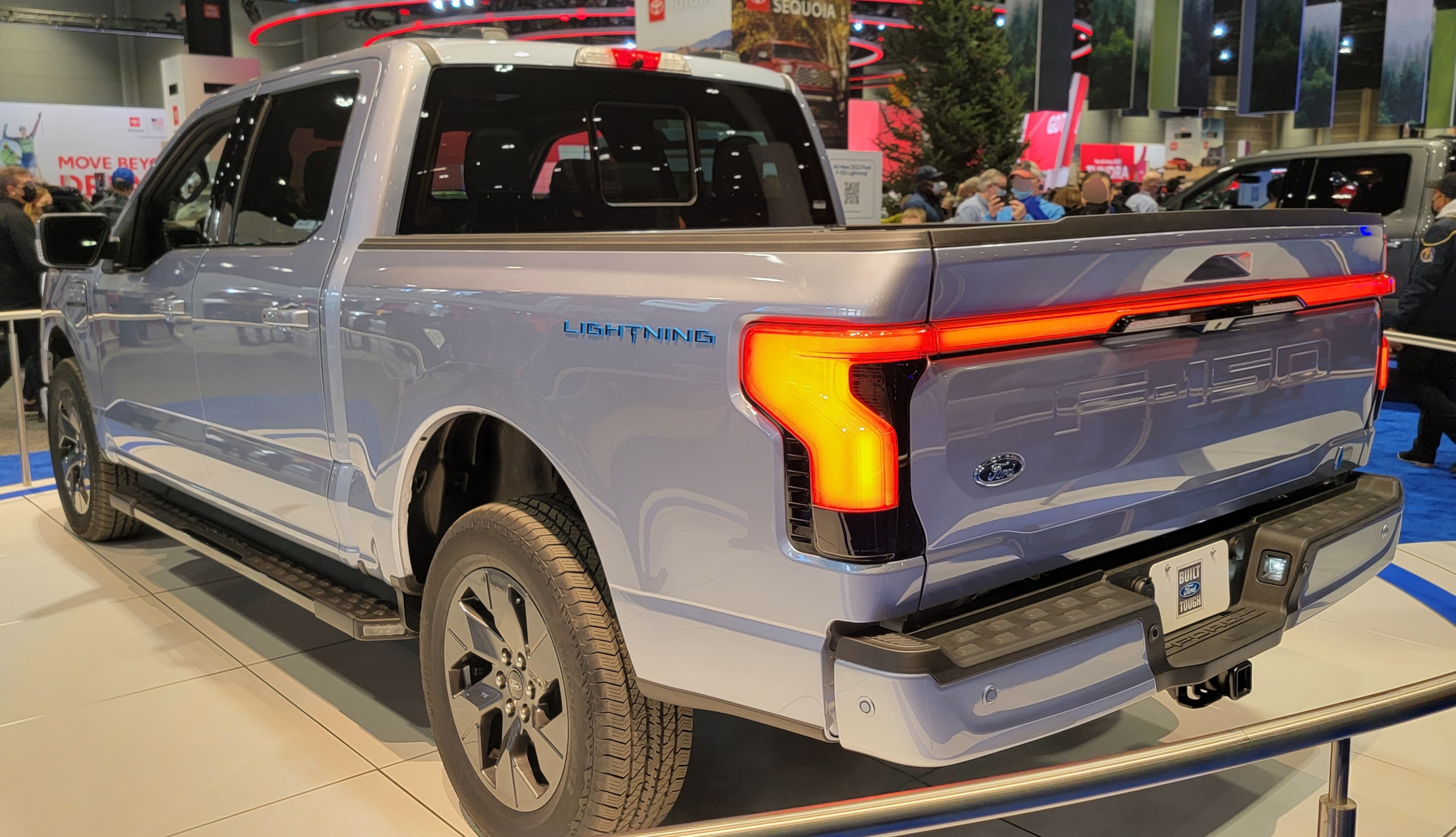
Ford Lightning
"The platform that underpins the BlueCruise driver system, for example, he didn't really launch the Lightning and the Mach-E, but he helped sort of improve them once they were launched and prepare Ford's next generation of EVs."
The Ford Lightning is Ford’s electric truck. They’re saying this person wasn’t the original launch leader, but helped refine the truck after it came out.
The Ford Lightning is Ford’s electric pickup truck. In the segment, the host notes that the executive didn’t “launch” it, but helped improve it after launch and set up the next generation of EVs.

Mach-E
"The platform that underpins the BlueCruise driver system, for example, he didn't really launch the Lightning and the Mach-E, but he helped sort of improve them once they were launched and prepare Ford's next generation of EVs."
The Mach-E is Ford’s electric crossover. The point here is that it wasn’t originally launched by this executive, but it later got better as Ford worked on software and the next EV generation.
The Mustang Mach-E (often shortened to “Mach-E”) is Ford’s electric crossover. The discussion groups it with the Lightning as an EV product that benefited from ongoing software and platform improvements after launch.
UEV platform
"So the timing of his departure is a little suspect because his baby is this upcoming UEV platform that tears up Henry Ford's assembly line and uses giga castings for the first time and will underpin a bunch of models."
An “EV platform” is the shared foundation a company uses to build multiple electric cars. Here, they’re saying Ford’s next platform is a big change in how the cars will be designed and built.
“UEV platform” refers to Ford’s upcoming electric-vehicle architecture intended to support multiple future models. The segment frames it as a major manufacturing and engineering shift—moving away from older assembly-line approaches and enabling new production techniques.
giga castings
"...because his baby is this upcoming UEV platform that tears up Henry Ford's assembly line and uses giga castings for the first time and will underpin a bunch of models."
Giga castings are when a car is built with very large metal pieces made in one shot, instead of lots of smaller parts. That can make production simpler, but it can also affect how the car is repaired after damage.
Giga castings are large, structural castings used in EV manufacturing to reduce the number of separate parts in the vehicle body. By using bigger cast components, manufacturers can simplify assembly and potentially reduce cost and weight, but it also changes repair and manufacturing considerations.
industrial system (manufacturing and quality)
"It's gonna merge his teams with what it calls [228.4s] the industrial system. [229.6s] That's the manufacturing, the quality, that sort of stuff."
They’re referring to the company’s manufacturing and quality setup—basically how the cars get built and checked. Combining teams with that system is meant to make production smoother and more efficient.
The “industrial system” appears to refer to Ford’s internal organization for manufacturing and quality—processes that improve how cars are built and how consistently they meet standards. Merging EV-related teams with this industrial system is typically aimed at improving efficiency and execution across the whole production pipeline.
EV teams combined with traditional engineering
"Now, as you said, Mike, there are combining their EV teams [252.3s] with traditional engineering under COO Kumar Gautra. [256.0s] What's the thinking behind that move?"
They’re talking about merging the people who build electric-vehicle projects with the regular engineering teams. That can help the company work faster and avoid duplicated work.
The hosts are describing a reorganization where Ford combines its EV-focused teams with more traditional engineering groups. The goal is usually to reduce silos so EV development can benefit from established engineering processes while still moving quickly on battery/electrification work.
COO Kumar Gautra
"Now, as you said, Mike, there are combining their EV teams [252.3s] with traditional engineering under COO Kumar Gautra. [256.0s] What's the thinking behind that move?"
Kumar Gautra is Ford’s top operations executive. The COO role is about how the company runs day to day, and here he’s connected to a staffing/structure decision.
Kumar Gautra is Ford’s Chief Operating Officer (COO), meaning he oversees day-to-day operations across the company. In this segment, he’s tied to the decision to combine EV teams with traditional engineering, which is an operational/organizational change rather than a product change.
startup speed
"Doug's teams really shaking things up, moving at that startup speed that they like to phrase it as, in terms of developing software..."
“Startup speed” means working faster and making changes quickly instead of waiting for long approval chains. In car development, it usually shows up as quicker software updates and faster problem-solving.
“Startup speed” is a management approach borrowed from tech companies: move quickly, iterate, and reduce bureaucracy to shorten the time from idea to working product. In automotive, it often means faster software releases and more cross-functional collaboration during EV development.
software development
"moving at that startup speed that they like to phrase it as, in terms of developing software, changing how they develop EVs to be more competitive with the Teslas and the Rivians..."
Cars today are heavily controlled by computers, and that software needs constant updates. The idea is to build and improve it faster so the car can get better over time and compete better.
The segment emphasizes “developing software” as a core part of modern vehicle competition, especially for EVs. Automakers increasingly treat vehicle software like a continuously updated product, using faster development cycles and tighter integration between teams.
EVs
"changing how they develop EVs to be more competitive with the Teslas and the Rivians and the Chinese automakers of the world."
EVs are cars powered by electricity stored in a battery. Automakers compete on things like how quickly they can improve the software, how efficiently they can build them, and how low they can get the cost.
EVs (electric vehicles) rely on electric motors and high-voltage batteries instead of a traditional internal-combustion engine. When automakers talk about “developing EVs” more competitively, they’re usually referring to faster software iteration, manufacturing efficiency, and cost reduction.
Rivians
"changing how they develop EVs to be more competitive with the Teslas and the Rivians and the Chinese automakers of the world."
Rivian is another EV company, and it’s being used here as part of the competitive set. The takeaway is that Ford wants to keep up with how these EV makers develop and refine their vehicles.
Rivian is mentioned alongside Tesla as another EV competitor. The comparison suggests Ford’s internal process changes are aimed at improving EV competitiveness in both product and software execution.
gas and hybrid powertrains
"apply a lot of those learnings and a lot of those efficiencies across their system for gas and hybrid powertrains as well."
A powertrain is what makes the car move—engine and/or electric parts. The hosts are saying Ford wants to use what it learned building EVs to also improve regular gas cars and hybrid cars.
A “powertrain” is the set of components that produce and deliver propulsion, and “hybrid” typically means the car combines an internal-combustion engine with an electric motor. The segment says Ford wants to transfer EV development learnings and efficiencies to both gas and hybrid systems.
split the company into gas, into EV, into fleet and business unit
"So, Jim Farley split the company a few years back into gas, into EV, into fleet and business unit. And now they're not bringing them back together, but you're starting to see more of an interplay between the sides..."
This is about how Ford organized its teams—separating EV work from gas work and also splitting out fleet/business. The discussion suggests they’re now trying to share ideas between those groups instead of keeping them totally separate.
Ford’s organizational split into separate business units (gas, EV, and fleet/business) is meant to focus teams and resources on different product strategies. The segment then notes a growing “interplay” between them, implying shared learnings and coordination across powertrain types.
fake it till you make it strategy
"And we can't take the, you know, fake it till you make it strategy that works in Silicon Valley. The stakes are too high."
It means trying something before you’re fully ready, hoping it works out later. In cars, that’s harder because safety rules and testing have to be done first.
“Fake it till you make it” is a Silicon Valley-style approach where teams move fast and validate later. In automotive, that mindset can be risky because vehicles must meet strict safety and regulatory requirements before they can be sold or deployed.
automakers are slow to turn
"that are not as huge and, you know, slow to turn as automakers are and people come in and they want to be agents of change."
The segment is pointing out that automakers typically have longer development cycles than software companies. That’s due to engineering complexity, supplier coordination, homologation/testing, and the need to manage safety-critical systems.
agents of change
"as automakers are and people come in and they want to be agents of change. And, you know, we wish them well, but it's very difficult to change this industry."
“Agents of change” refers to new leaders or hires brought in to accelerate transformation inside a large organization. In the auto industry, even high-profile hires can struggle to move quickly because of entrenched processes, safety culture, and multi-year product planning.
big splash hirings
"Each time that we've seen people come in and, you know, with these big splash hirings, we're going to make changes, we're going to speed up."
This is when companies hire well-known leaders and make a big announcement. The point here is that even big hires don’t instantly make cars change faster.
“Big splash hirings” describes high-visibility executive or leadership moves intended to signal rapid change. The transcript suggests that, despite the publicity, meaningful change in automaking is hard to deliver quickly.

Volkswagen ID
"Now let's shift the Volkswagen. Larry VW is taking a massive financial hit this quarter after shutting down ID for production at its Chattanooga plant."
Volkswagen’s “ID” is the name for its electric-car lineup. The discussion here is about how VW planned to build these cars in the U.S., but production problems meant they didn’t ramp up quickly enough, which cost the company a lot of money.
“Volkswagen ID” refers to Volkswagen’s ID. family of electric vehicles (the ID.3/ID.4/ID. Buzz, etc.). The hosts are discussing how VW’s EV strategy and production ramp for the ID line ran into trouble, leading to financial losses when production was shut down.
Chattanooga plant
"Larry VW is taking a massive financial hit this quarter after shutting down ID for production at its Chattanooga plant."
The Chattanooga plant is Volkswagen’s manufacturing site in Chattanooga, Tennessee, used for producing vehicles for the U.S. market. In this segment, the shutdown is the trigger for the company’s reported financial hit, highlighting how production timing and ramp-up affect costs.
EV revolution
"If there was going to be a, an EV revolution, they're thought, okay, this is the segment to start in. The problem that they had is that, it took them a very long time to get this product going."
An “EV revolution” means the big change from gas cars to electric cars. The point being made is that Volkswagen bet a lot on EVs, and if the cars don’t get built and sold fast enough, that bet can turn into a big financial loss.
“EV revolution” is shorthand for the industry-wide shift from gasoline cars to battery-electric vehicles. When the hosts say VW “put all their eggs in this basket,” they’re describing how a company can bet heavily on one EV segment or platform and then get hit financially if adoption or production timing doesn’t match expectations.
tech forward
"When they delivered it, it was very tech forward. I'll just say that, right?"
“Tech forward” just means the car is designed with a lot of tech and modern features in mind. Even the door controls are set up differently, not just the big stuff like screens or engines.
“Tech forward” here refers to a vehicle design that leans heavily on technology and user interfaces, even in small details. In this segment, the hosts point to how the driver’s door controls were engineered differently to match the vehicle’s packaging and design constraints.
toggle switch
"It had two and it had a little toggle switch to go to where you had to decide if you were opening the front windows or the back windows. It was a two step process."
A toggle switch is a small switch you flip to choose what you want the system to do. In this case, you pick front vs. rear windows first, then roll the windows.
A “toggle switch” is a simple control that lets you choose between two modes or functions. Here, it’s used to select whether the front or rear windows respond, turning window operation into a two-step process.
two-step window control process
"It was a two step process. Time out, time out."
They’re saying the windows don’t work with one simple button set. You have to choose front or rear first, and then control the windows.
The hosts describe a “two-step” workflow: first selecting which window set (front or rear) you want to control, then operating the window switches. This is a usability tradeoff—often done when packaging constraints prevent a full multi-switch layout.
packaging constraints (doors designed too skinny)
"Because the doors were designed too skinny to accommodate a four switch panel. I mean, it's just, it's a tiny example, right?"
They’re basically saying the door shape didn’t have enough room for the usual window switch layout. So the designers had to use a different setup that fits in the available space.
The segment attributes the unusual control layout to packaging constraints—specifically, the door being “too skinny” to fit a standard four-switch panel. This is a common engineering reality: interior control layouts often change to fit physical space, wiring, and structural requirements.
diesel gate
"from the fallout from their diesel gate issues, right? [564.6s] They were going to lead the EV revolution"
“Diesel gate” refers to Volkswagen’s diesel-emissions cheating scandal, where software was used to manipulate emissions readings. The segment uses it as context for why Volkswagen’s EV rollout and competitiveness were affected.

Tesla Model 3
"Tesla was there with the Model 3 [580.4s] and so they were launching into the face [582.2s] of some stiff competition."
The Tesla Model 3 is a high-volume electric sedan that became a benchmark for EV pricing and availability. Here it’s used as an example of a competitor that was already on the market when Volkswagen’s EV product finally launched.
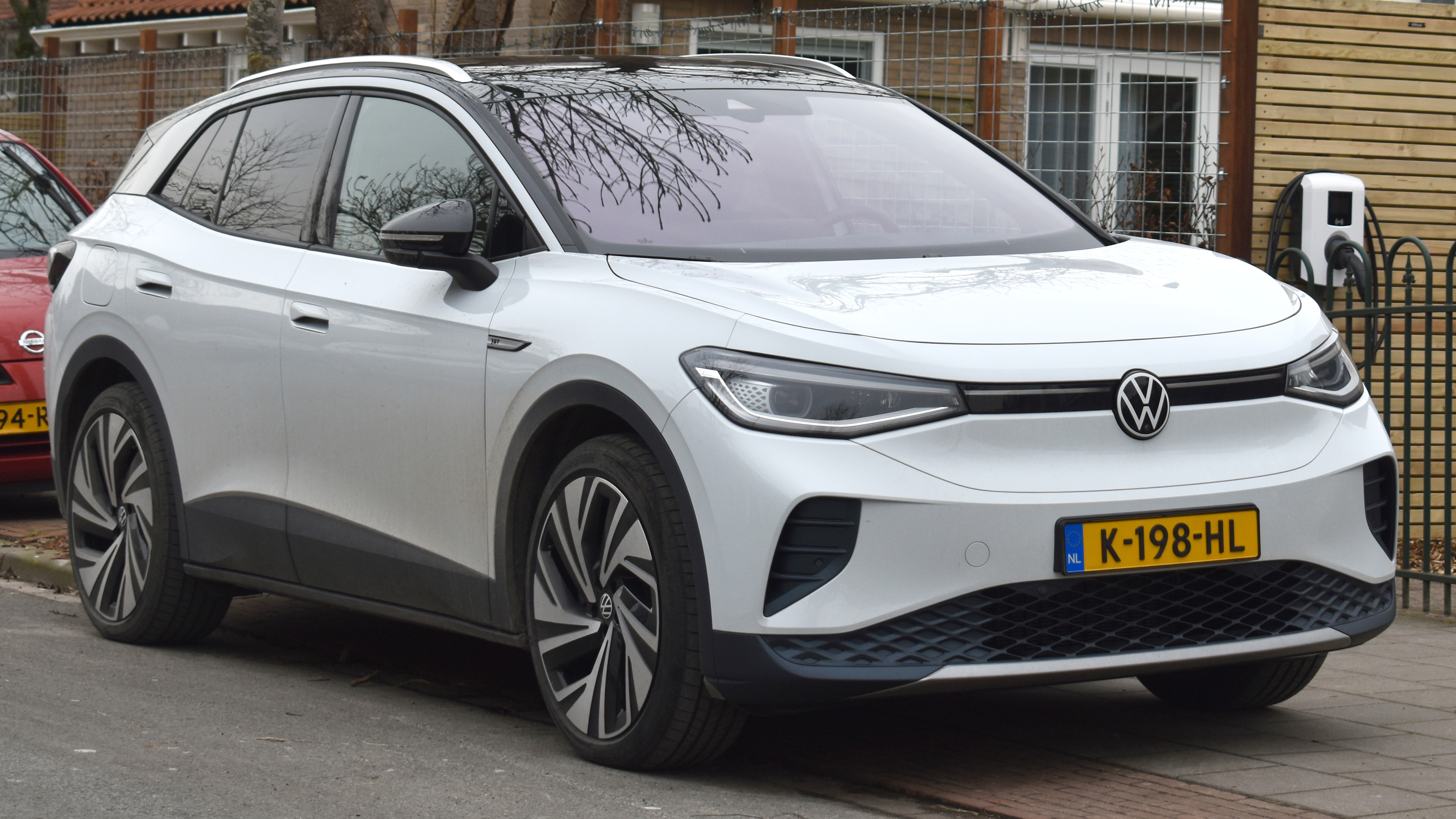
Volkswagen Id4
"What went wrong with the ID4 in Tennessee? [614.4s] Well, we just talked a little bit about this. [616.9s] What Bernstein said, I just want to say,"
Volkswagen’s ID.4 is an electric SUV. The hosts are saying it didn’t sell as well as expected, partly because it arrived later than competitors and the market was already getting crowded.
The Volkswagen ID.4 is an all-electric SUV from Volkswagen’s ID family. In this segment, the hosts discuss why it struggled to sell and how timing and competition affected its market performance.
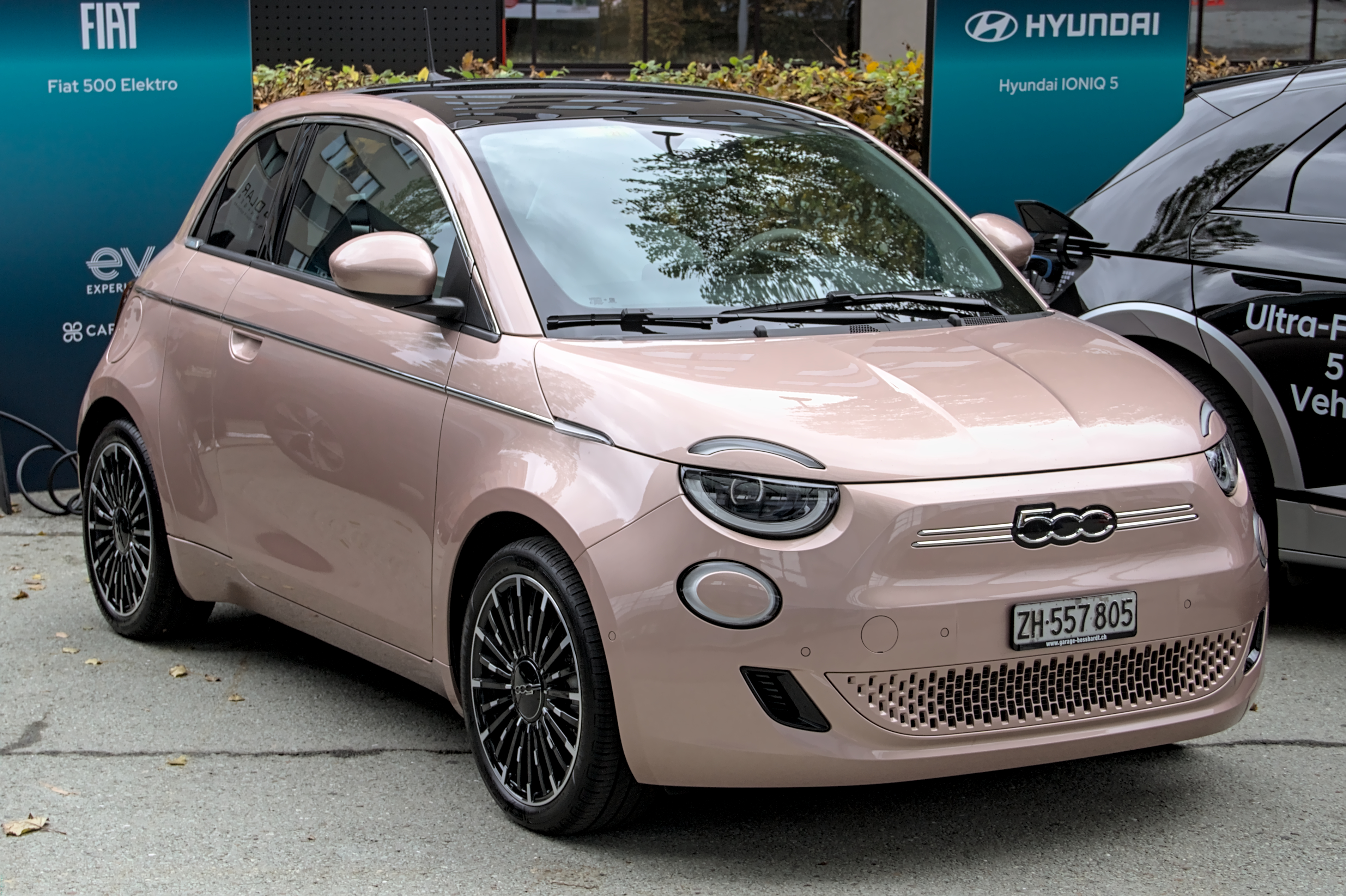
Fiat 500e
"when Sergio Marchione used to beg people [619.5s] not to buy the Fiat 500E, right? [623.0s] not to buy the Fiat 500E, right? [627.5s] This is about a decade ago, it was a brand new vehicle."
The Fiat 500e is an electric version of the Fiat 500 city car. The hosts reference Sergio Marchionne’s earlier comments discouraging purchases, using it as a parallel to the current EV sales situation.
compliance vehicle
"He's like, look, this is a compliance vehicle. And I lose $14,000 or $19,000 on everyone that I sell, please don't buy it. This is what automakers have to do in order to be able to sell in different markets."
Sometimes car companies have to build certain cars to follow government rules. Those cars might not sell well or might even lose money, but they’re made so the company can still sell other vehicles. It’s more about meeting requirements than making a big profit.
A “compliance vehicle” is produced mainly to satisfy regulations in a specific market rather than to be a highly profitable product. Automakers may sell them at a loss or with limited demand to meet rules like emissions/zero-emissions requirements. The goal is regulatory compliance, not necessarily customer enthusiasm.
sell down
"They have enough in stock that will probably last them well into next year, even during a sell down. So because of the issues that we have here, they're gonna retool Chattanooga to do something else..."
A “sell down” just means selling off leftover cars after the factory stops making them. Instead of disappearing overnight, the remaining inventory gets sold over months. It helps the company clear stock without flooding the market all at once.
A “sell down” is the process of reducing inventory after production ends—selling remaining vehicles over time. Automakers often do this to avoid carrying excess stock and to manage cash flow. The segment implies there’s enough inventory to last into the next year even while sales slow.
retool Chattanooga
"So because of the issues that we have here, they're gonna retool Chattanooga to do something else, to do other vehicles. Chattanooga is a nice plant, it was built in 2011."
Retooling a factory means updating the machines and assembly process to build something new. Here, the idea is that the Chattanooga plant will stop making one model and switch to other vehicles. It’s basically a factory “upgrade” to match the company’s next product plan.
“Retooling” a factory means changing the production line so it can build different vehicles or components. Chattanooga refers to Volkswagen’s manufacturing presence in Tennessee, and the segment suggests the plant will shift away from the ID.4 after production ends. This is a common automaker response when product plans change.
rental car center
"ID4, coming to a rental car center near you. Now, Mike, you can't- No, the rental car agencies, they know all about- Oh, they don't even want it. EVs, no, they don't."
A rental car center is where rental companies keep and manage their cars. The hosts are saying EVs may end up there if regular customers aren’t buying them fast enough. Rental companies may be hesitant because EVs can be harder to use day-to-day.
The segment suggests EVs like the ID.4 may be routed to rental fleets, which can be a way to move inventory when retail demand is weaker. Rental agencies often have different buying criteria than consumers, including total cost of ownership, charging logistics, and customer acceptance. That’s why the hosts note rental agencies “don’t even want it.”
job security
"because not only did they get historic wage gains and a new bonus structure and things like that with this contract, they also got some job security. They got VW2 Promise to explore other production models in Chattanooga."
“Job security” in union contract discussions usually refers to protections against layoffs, plant closures, or major reductions in hours/shift schedules. Contract language can also limit how easily work can be moved to other locations (outsourcing) or reduced through staffing changes.
outsourcing
"They got some language on outsourcing and cutting shifts and things of that nature. So this is score one for unionization."
Outsourcing is when a company sends work to someone else instead of doing it in-house. In a union contract, there may be limits on how easily that can happen to protect local jobs.
Outsourcing is when a company moves work to another company or location rather than having it done by the current workforce. In union negotiations, outsourcing language can determine whether jobs can be transferred away from the local plant.
cutting shifts
"They got some language on outsourcing and cutting shifts and things of that nature. So this is score one for unionization."
Cutting shifts means fewer work schedules, so people may work fewer hours. In a union setting, contract rules can sometimes limit how easily the company can reduce shifts.
“Cutting shifts” means reducing the number of work hours by running fewer shifts (e.g., going from three shifts to two). Union contract terms can restrict how quickly or how often shifts can be reduced, which directly affects workers’ income and stability.
solid state battery
"they'll build whatever, gas, electric, solid state battery, those Flintstone cars that you're empowered with your feet,"
A solid-state battery is a newer type of battery that uses a solid material instead of a liquid inside. The goal is to make batteries safer and possibly more efficient. It’s not fully “standard” yet, so different companies are still working out the best designs.
A solid-state battery replaces the liquid or gel electrolyte found in many current lithium-ion packs with a solid material. The big promise is improved safety and potentially higher energy density, which could mean longer range or faster charging. It’s still an evolving technology, so timelines and real-world performance vary by manufacturer.
global supply chains
"The Iran War is squeezing global supply chains, and one of the biggest pressure points right now is helium."
Global supply chains are the worldwide system that brings parts and materials to factories. If something disrupts that system, car production can slow down because key materials or components don’t arrive on time. That can lead to fewer cars being built.
Global supply chains are the worldwide network of companies and shipping routes that deliver parts and materials to build vehicles. When geopolitical events disrupt shipping or production, automakers can face shortages that slow or stop vehicle manufacturing. This is why “supply chain pressure” often shows up as production delays and inventory gaps.
helium
"and one of the biggest pressure points right now is helium. Experts say shortages could start causing problems soon."
Helium is a gas used in some industrial manufacturing steps. If there isn’t enough of it, factories can’t run certain processes as efficiently, which can slow down production. So shortages can indirectly affect how many vehicles get built.
Helium shortages can affect manufacturing because helium is used in industrial processes that require inert gas or precise control, such as welding and certain semiconductor or electronics-related steps. If helium supply tightens, factories may have to reduce output or delay production runs. Even though it’s not a “car part,” it can become a bottleneck for vehicle production.
semiconductor production
"We'll get into why that matters for semiconductor production and ultimately critical vehicle technologies like high-end driver assistance features, memory chips, and power electronics."
Semiconductor production is the manufacturing of the tiny computer chips used throughout modern vehicles. The episode links helium supply constraints to semiconductor output, which can ripple into vehicle availability and feature content. When chip production is constrained, automakers often face delays, substitutions, or reduced options.
high-end driver assistance features
"He explains why the conflict is constricting helium supply. We'll get into why that matters for semiconductor production and ultimately critical vehicle technologies like high-end driver assistance features, memory chips, and power electronics."
These are advanced safety and convenience features that help the car drive more “on its own,” like staying in the lane or braking to avoid crashes. They need computer chips to work reliably. If chip supply is tight, it can slow down how many cars with these features get built.
“High-end driver assistance features” refers to advanced systems that help with steering, braking, lane keeping, and sometimes highway driving. They rely on sensors, cameras, and computing power to interpret the road and surrounding traffic. The episode ties these features to the semiconductor supply chain because the chips are essential for the control units that run the software.
power electronics
"We'll get into why that matters for semiconductor production and ultimately critical vehicle technologies like high-end driver assistance features, memory chips, and power electronics."
Power electronics are the car’s electrical “power managers.” They help control how electricity moves to things like the motor and charging system. If chip supply is limited, it can slow down the availability of cars with these systems.
Power electronics are the components and control systems that manage electrical power flow—especially important in hybrids and electric vehicles. They convert and regulate electricity for motors, charging, and other high-voltage systems. The episode groups them with chips and driver-assistance tech to emphasize how semiconductor shortages can affect electrification progress.
memory chips
"We'll get into why that matters for semiconductor production and ultimately critical vehicle technologies like high-end driver assistance features, memory chips, and power electronics."
Memory chips are the car’s storage for software and temporary data. They help the car’s computers run features like navigation, safety systems, and other electronics. If these chips are scarce, some cars may be delayed or shipped with fewer features.
Memory chips store data and program instructions used by vehicle computers, including infotainment and driver-assistance controllers. They’re part of the broader semiconductor ecosystem, so shortages can affect both functionality and production schedules. The episode’s point is that constraints in chip supply can limit “critical vehicle technologies” beyond just one subsystem.
addition by subtraction
"Well, the thing that sort of intrigues me the most is that at least part of it appears to be addition by subtraction, right?"
“Addition by subtraction” is a strategy where a company improves outcomes by removing or simplifying parts of its plan—rather than only adding new initiatives. In an automaker context, it can mean cutting unprofitable models, trimming complexity, or focusing resources on fewer priorities to improve execution. The episode frames Nissan’s vision as potentially involving this kind of restructuring.
global portfolio 20%
"They want to grow, but they're cutting their global portfolio 20%. I think the report was down to 45 models from 56 today."
A company’s “portfolio” is basically the lineup of different cars it offers. Cutting it down means they’re selling fewer different models so they can spend less money and build things more efficiently. It often leads to using the same core parts across multiple vehicles.
This refers to reducing the number of vehicle models a brand sells worldwide. Cutting a “global portfolio” is often used to lower development and production complexity. It can also signal a shift toward fewer, higher-volume platforms and powertrains.
pickup trucks
"They said they're gonna focus on pickup trucks and body on frame SUVs for the US market, which seems like a no-brainer."
Pickup trucks are the vehicles with a separate bed for hauling things. They’re popular with people who need to tow or carry cargo. If a company focuses on pickups, it means they’re betting more on that type of buyer.
Pickup trucks are typically designed around a separate cargo bed and are often built on truck-style platforms. They’re usually targeted at buyers who prioritize towing, payload, and rugged utility. When a brand “focuses” on pickups, it usually means allocating more engineering and marketing resources to that segment.
body on frame SUVs
"They said they're gonna focus on pickup trucks and body on frame SUVs for the US market, which seems like a no-brainer."
“Body-on-frame” means the car has a sturdy base frame, like a truck, and the body sits on top of it. It’s often chosen for vehicles meant to tow or handle rough roads. It can feel different from cars that use a unibody design, which is more integrated.
A body-on-frame SUV uses a separate ladder-like frame for structural strength, with the body mounted on top. This architecture is common in trucks and can make towing and off-road durability a selling point. It also affects ride/handling characteristics and how easily the vehicle can be engineered for different powertrains.
complexity can kill you
"But I think Nissan's learning what a lot of automakers have learned that complexity can kill you."
In car-making, “complexity” means having too many different versions and parts. That can make the factory harder to run and more expensive. The idea is that simplifying the lineup helps the company build cars more reliably and profitably.
This is a business/engineering idea: too many unique configurations and options can raise costs, slow production, and increase the chance of mistakes. In automotive, complexity often shows up as too many variants, suppliers, and parts that don’t share across models. Reducing complexity usually means fewer trims, fewer unique components, and more platform/powertrain sharing.
10 different configurations
"they realize why do we have 10 different configurations in terms of side mirrors or back row seating?"
The speaker is talking about having too many different “versions” of the same car. If you offer lots of small differences (like mirror setups or seat layouts), the factory has to manage more parts and steps. Cutting those down can make building cars easier and cheaper.
This highlights how option/configuration sprawl can create manufacturing and supply-chain headaches. Multiple unique configurations—like different mirror setups or rear-seat variations—mean more parts, more SKUs, and more complexity in assembly and logistics. Simplifying configurations can reduce cost and improve throughput.
E-Power
"Now, Larry, one pillar of this plan is rolling out more hybrids, including E-Power and a new parallel hybrid setup with V6 engines."
Nissan e-POWER is a system where the car mainly drives like an electric vehicle. The gas engine doesn’t usually power the wheels directly—it helps generate electricity so you don’t have to plug it in as often.
Nissan e-POWER is Nissan’s hybrid-like system where the wheels are driven by an electric motor, while a gasoline engine acts mainly as a generator to supply electricity. It’s often described as “range-extender” behavior rather than a traditional hybrid that mechanically links the engine to the wheels most of the time.
parallel hybrid setup
"...including E-Power and a new parallel hybrid setup with V6 engines. The fourth generation Rogue launches this year as hybrid only at first."
In a parallel hybrid, both the gas engine and the electric motor can help move the car. The car can choose the best mix depending on speed and driving conditions.
A parallel hybrid setup is a hybrid architecture where the internal combustion engine and electric motor can both work to drive the wheels. Depending on conditions, the car can run on the engine, the motor, or a combination, which can improve efficiency and responsiveness.

Nissan Rogue
"The fourth generation Rogue launches this year as hybrid only at first. How critical are hybrids to this?"
The Nissan Rogue is a popular family-sized crossover. Here they’re saying the next big redesign will start out as a hybrid, meaning it will use both gas and electricity to improve efficiency.
The Nissan Rogue is one of Nissan’s best-selling compact crossovers, and the “fourth generation” refers to the next major redesign cycle. In this segment, it’s described as launching as a hybrid only at first, which signals how central electrification is becoming for mainstream volume models.
hybrid strategies
"How critical are hybrids to this? Well, I think hybrids as every automaker is finding out, sure Toyota, have become really important all of a sudden. They were the natural middle step between an all gas lineup or gas and diesel and moving to something that was electrified..."
A hybrid is a car that uses both gas and electricity. Automakers use hybrids as a stepping stone because they can save fuel while still being easier to live with than a fully electric car for many people.
A hybrid strategy means using a powertrain that combines an internal-combustion engine with an electric motor/battery to improve efficiency. Automakers have treated hybrids as a “bridge” technology—especially when moving from traditional gas to full EVs—because they can reduce fuel use without requiring the same charging infrastructure as battery-electric vehicles.
greenhouse gases
"...we're willing to contribute to reducing greenhouse gases... protecting nature..."
Greenhouse gases are emissions that help trap heat in the atmosphere. Reducing them is a big goal behind cleaner cars and other climate-related efforts.
Greenhouse gases (like CO₂) trap heat in Earth’s atmosphere, contributing to climate change. The transcript frames consumer willingness to “contribute” as part of the push to reduce these emissions through cleaner vehicle technologies and policies.
fleet sales
"...which is that they've reduced their dependence on fleet sales. The best way to describe where Nissan was and is going... it had an addiction... whenever automakers chase volume... fleet is a quick hit..."
Fleet sales are when companies buy lots of cars at once for their own use (like rentals, delivery fleets, or government agencies). It’s a fast way for a carmaker to sell many vehicles quickly, but it can sometimes distract from selling to regular customers.
“Fleet sales” means selling vehicles in bulk to businesses, governments, or rental companies instead of individual retail customers. It can quickly boost volume and market-share numbers, but it may not align with long-term brand positioning or profitability.
market share
"...whenever automakers chase volume and chase market share and are willing to pay to chase that..."
Market share is how much of the car-buying pie a brand gets. If a company chases market share hard, it may sell more cars quickly, but it can also mean discounts or strategies that aren’t always best for long-term profit.
Market share is the percentage of total vehicle sales in a market that a brand captures. Chasing market share can drive automakers to offer incentives or focus on high-volume channels, which may trade off against margins or long-term brand health.
relief valve for the industry
"That's always been the relief valve for the industry, but it can be an addiction."
A “relief valve” here means fleet sales help soak up extra cars so the system doesn’t get clogged. But if a brand relies on it too much, it can signal deeper problems with demand.
The phrase “relief valve” describes how fleet sales can temporarily absorb excess production and prevent inventory from piling up at dealers. The host also frames it as potentially harmful when a company becomes overly dependent on fleet to move cars.
fleet addiction
"but it can be an addiction. And if you're addicted to fleet, and Nissan, it had cut its fleet addiction to 25% of what it produced... It is not the sign of a strong automaker."
“Fleet addiction” means a company keeps selling cars mainly to fleets instead of regular customers. The point is that if you need fleets too often, it may mean the cars aren’t moving well at retail.
“Fleet addiction” is the idea that an automaker becomes too reliant on fleet buyers to sell vehicles, rather than selling primarily to retail customers. The segment uses Nissan’s reduced fleet share (down to 25% of production) as evidence that high fleet reliance isn’t a sign of healthy, broad consumer demand.
GR brand
"let's talk about Toyota's push with the GR brand. They built this massive 36,000 square foot GR Experience Center in Frisco, Texas..."
“GR” is Toyota’s performance brand. Toyota is building a special experience center to promote the GR lineup and get people excited about those cars.
“GR” refers to Toyota’s performance and motorsport-inspired brand umbrella (Toyota GR). In this segment, Toyota is investing in a dedicated “GR Experience Center” to build brand awareness and educate customers and dealers about GR products.
GR Experience Center
"They built this massive 36,000 square foot GR Experience Center in Frisco, Texas, which you were allowed to see eight months ago, even before it was shown to dealers."
This is a Toyota-built location where people can experience the GR brand. The hosts also mention that access was restricted, which is common when a company is preparing a big launch.
The GR Experience Center is a Toyota facility meant to showcase the GR brand to visitors and dealers. The hosts highlight its size and the timing of access (reporters seeing it under an NDA before dealer reveal), which shows how automakers stage marketing rollouts.
NDA
"I was under a pretty strict NDA, which sucks for a reporter, right?"
An NDA is a promise you make legally not to share certain information. Reporters often sign NDAs so companies can control details until the official reveal.
An NDA (non-disclosure agreement) is a legal contract that prevents someone from sharing information publicly. In automotive media, NDAs are often used to control what reporters can reveal before a product or facility is officially announced.

Toyota GR GT
"So what this is, is in December, they showed the GR GT, which is a 641 horsepower, two seat street legal racer, basically, that is super well balanced."
They’re talking about a Toyota concept called the GR GT. It’s meant to feel like a track car but still be street legal, and it’s part of Toyota’s push to build a new performance brand in the U.S.
The speaker is describing Toyota’s GR GT as a street-legal, two-seat “racer” concept with high output (they mention 641 horsepower). The key point is that it’s positioned as a flagship product for Toyota’s new GR brand identity in the U.S., tied to motorsport credibility.
GR franchises
"The idea was first to convince Lexus dealers to want to buy one of these GR franchises, and they have now over 100 that have done so around the nation."
A “franchise” in this context means dealers agreeing to sell the GR performance cars. Toyota is trying to get Lexus-area dealerships to carry the new GR lineup, and they say over 100 already have.
A “franchise” here means dealer participation in selling and supporting GR-branded vehicles, effectively creating a dedicated performance channel within the broader dealership network. The host says Toyota is using the experience center and racing story to convince Lexus dealers, and that more than 100 have signed on.
Eagles Canyon Raceway
"They've also done an ancillary program [1283.1s] at Eagles Canyon Raceway, which is about 50 miles away. [1290.7s] There they are going to have a fleet of 42 GR vehicles."
Eagles Canyon Raceway is a race track. In this story, Toyota uses it for a driving program where people learn on track using GR cars.
Eagles Canyon Raceway is a racing venue used here as the location for a GR driving/learning program. The segment frames it as a place where customers can get track instruction using a fleet of GR vehicles.

Toyota GR Corolla
"There they are going to have a fleet of 42 GR vehicles. [1294.4s] These are GR Corollas, [1297.0s] which is a 300 horsepower, tiny little pocket rocket,"
“GR” is Toyota’s performance brand (Gazoo Racing). So “GR Corollas” are Corolla models that Toyota tunes and builds to feel more like a sporty, enthusiast car.
“GR Corollas” refers to Toyota’s GR (Gazoo Racing) performance versions of the Corolla. They’re positioned as enthusiast-focused cars, often with track-oriented tuning and a more motorsport-derived identity than a standard Corolla.
track driving experience
"and a number of other GR vehicles [1306.1s] for people to learn how to do, how to drive, [1308.6s] and then they will have GR GTs [1311.4s] for people to learn how to drive on the track"
This is Toyota setting up a structured track day for customers. Instead of just selling cars, they teach people how to drive them on a real race track.
The hosts describe a customer “experience” built around learning to drive, first in GR Corollas and then in more expensive GR GTs on track. This is an example of automakers using structured driving events to sell performance identity and build brand loyalty.
GR
"Question, Larry, why didn't they do this [1317.7s] under the TRD program? ... [1350.7s] Because when I think of GR, I think of GTR, [1354.5s] which is Nissan, like immediately that like confusion,"
GR is Toyota’s performance/motorsport branding (Gazoo Racing). The hosts are saying that “GR” can be confusing because people might think of Nissan’s “GTR” instead.
GR stands for Gazoo Racing, Toyota’s in-house motorsport and performance brand. The hosts also discuss brand confusion with Nissan’s “GTR,” highlighting how naming can affect how enthusiasts interpret what “GR” means at a glance.
TRD program
"Question, Larry, why didn't they do this [1317.7s] under the TRD program? [1322.7s] Well, the TRD program is kind of an add-on for, [1327.6s] and it wasn't the brainchild of Accio Toyota like GR was."
TRD is Toyota Racing Development—Toyota’s performance brand. The hosts are basically saying TRD is more like an established performance add-on, while GR is being used as a bigger, more branded “experience.”
TRD refers to Toyota Racing Development, Toyota’s long-running performance and motorsport-related parts/program brand. In the segment, the hosts contrast TRD’s role as an “add-on” with Toyota’s newer GR-branded experience, implying a shift in how Toyota packages performance identity and customer engagement.
Gazoo Racing
"Yep. Yeah, that's a great question. All I will say is that GR is an acronym for Gazoo Racing, which is the in-house racing program, not TRD... Gazoo Racing is going to be, this is the Lexus side of it."
Gazoo Racing is Toyota’s own racing effort. The idea is that racing success and performance credibility can help Toyota (and its luxury brands) feel more “serious” in the high-performance world.
Gazoo Racing (GR) is Toyota’s in-house racing program, used to build credibility in high-performance and motorsport. The hosts discuss it as a strategy to compete in the high-performance space and to improve brand recognition.
halo
"But at the end of the day, I think this is probably a smart move, right? If you have that sort of, you know, multiple $100,000 vehicle, it serves as a halo for the rest of your brand. It can draw some buzz and some attention..."
A “halo” move means using a flashy, high-end product to make the whole brand look better. It’s like borrowing the spotlight from a top model to help sell the rest of the cars.
A “halo” strategy is when a brand uses a high-end, expensive product (often a performance car or flagship) to boost overall brand perception. Even if most customers don’t buy the halo vehicle, it can attract attention and make the rest of the lineup seem more desirable.
walking billboard for the brand
"but you would imagine there's enough people who would be intrigued by a Toyota supercar to buy it to sort of be that walking billboard for the brand that could help it further down the road."
This phrase means the car is basically advertising the brand just by being seen in public. A supercar can make people notice the company and think of it as exciting and high-quality.
A “walking billboard” is marketing language for a product that advertises itself wherever it goes. In automotive terms, halo cars are often designed to generate attention and brand prestige, so buyers and enthusiasts associate the brand with performance and desirability.
natural successor
"They think that the GRGT is the natural successor to the Lexus LFA. And the LFA was a very short-lived supercar, was an extraordinary car."
This means the newer car is meant to be the next “big deal” in the same category. The hosts are saying Toyota wants its supercar to replace the Lexus LFA’s role as a special, attention-grabbing performance car.
“Natural successor” is a positioning concept: it suggests the newer car is intended to take over the role and audience of an earlier flagship. Here, the hosts connect that idea directly to the Lexus LFA, implying Toyota/GR is aiming for a similar kind of limited, high-performance halo appeal.

Lexus Lfa
"...nk that the GRGT is the natural successor to the Lexus LFA. And the LFA was a very short-lived supercar,"
The Lexus LFA is a very fast, special-purpose sports car made in small numbers. It was produced for a short time, so it’s not common today. That’s why people bring it up when talking about what a future “next” supercar might be like.
The Lexus LFA is a limited-production, high-performance supercar built by Lexus, known for its advanced engineering and dramatic performance. It’s often discussed because it had a very short production run, making it a rare benchmark for what Lexus could do at the supercar level. In the podcast context, it’s being referenced as a prior “high-water mark” that a newer concept or successor is compared against.
Request an Explanation
Heard something you'd like explained? We'll add it to this episode.
Sign in to request explanations for terms you heard.
Want to learn more?
Browse our glossary for plain-English explanations of automotive terms, jargon, and concepts.
Help improve this episode
See something that's not quite right? Our annotations are AI-generated and can sometimes miss the mark. Click the flag icon on any annotation to suggest a correction.