
April 20, 2026 | F-150 inventory crisis deepens; Iran war threatens helium supply for chips
About this episode
Ford’s F-150 inventory crunch is worsening months after a supplier fire, with F-Series sales down 16% in Q1 and full-size pickup share slipping from 37% to 32%. Dealers say supply has fallen to about 57 days, forcing longer waits, wider searches, and higher prices (entry XL up roughly $5,000). Ford plans to boost output by skipping shutdowns and adding shifts, with dealers expecting the trough in April and improvement by May–summer. Meanwhile, German brands pause level 3 “eyes-off” systems due to cost and low demand. A supply-chain expert warns the Iran war could trigger a helium shortage for semiconductor manufacturing, potentially delaying high-end ADAS and EV-related components within weeks.
Ford F-150 supplies remain constrained seven months after the Novelis plant fire, with inventory down 43 percent and market share slipping. Pessimism is on the rise among auto executives. Plus, the Iran war is constricting helium supplies critical for semiconductor manufacturing.
RET1
"Consider RET1 Fusion for your dealership's digital retailing. Customers can build vehicle financing options online with estimated payments, trade-ins, and you can even showcase optional protection products."
RET1 is software dealerships use to sell cars online. It helps customers pick options and see financing estimates without waiting for a salesperson.
RET1 is a digital retailing platform used by dealerships to help customers shop and configure vehicles online. It can also support online financing estimates, trade-in inputs, and add-on or protection product presentation.

Ford Fusion
"..., more satisfied customers, visit RET1.com slash Fusion to connect for a demo today. Welcome to Daily Dr..."
The Ford Fusion is a regular passenger car (a sedan) meant for everyday driving. It’s built to be comfortable and practical for things like commuting and family errands. It may be mentioned because people often compare how well it meets their needs.
The Ford Fusion is a mid-size sedan built by Ford, designed for everyday commuting with a focus on comfort and practicality. It’s often discussed in automotive news because it represents Ford’s approach to mainstream, family-oriented cars and is a common reference point for customer satisfaction and ownership experiences. In a daily-drive style segment, it may come up as part of broader talk about what drivers value in their vehicles.
inventory crisis
"Today on the show, Ford's F-150 inventory crisis deepens months after a supplier fire. ... This is not going to shut down the auto industry as a whole, but it may shift certain mix."
An inventory crisis means car dealers don’t have enough cars to sell. When that happens, customers may wait longer, and dealers may only get certain versions first.
An inventory crisis in auto retail means dealers have fewer vehicles available than customers want, often due to production disruptions or supply shortages. When inventory drops sharply, it can shift incentives, delivery timing, and even the mix of trims or models that arrive first.
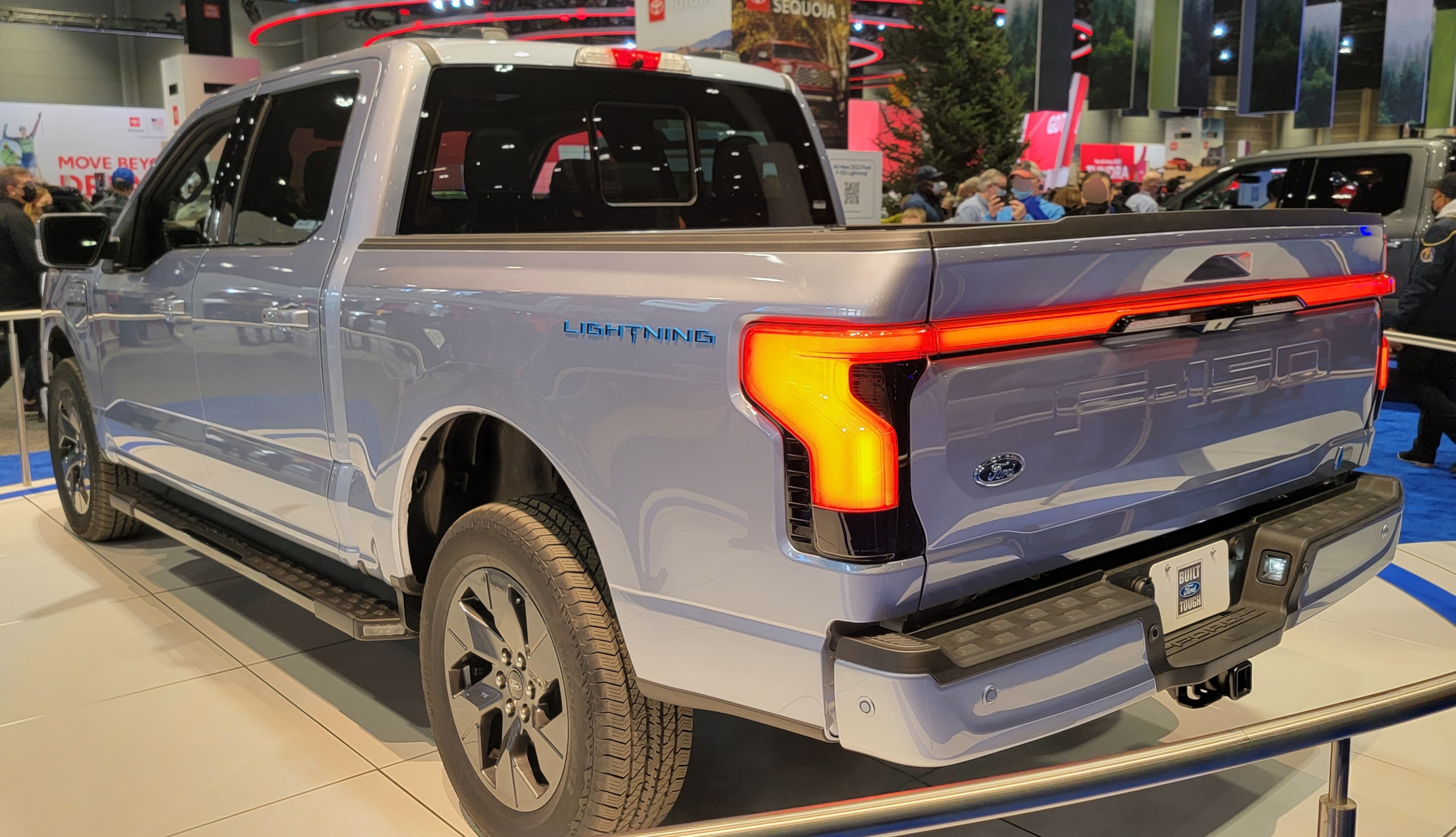
Ford F150
"Today on the show, Ford's F-150 inventory crisis deepens months after a supplier fire. ... The fire disrupted production of the F-150 and things have not bounced back."
The Ford F-150 is a very popular truck, so if parts or production get delayed, there are fewer trucks on dealer lots. That can make it harder to find the exact truck you want and can affect how quickly dealers can sell.
The Ford F-150 is the best-selling full-size pickup, so supply disruptions can quickly ripple through dealer lots and pricing. In this segment, the hosts connect the F-150 inventory problem to upstream production interruptions and slower recovery after a supplier fire.
level three self-driving systems
"and German luxury brands hit pause on their level three self-driving systems."
Level 3 means the car can drive in some situations, but you still have to be ready to take control. If companies pause these systems, it usually means they’re not fully comfortable with safety or reliability yet.
Level 3 is a self-driving autonomy tier where the car can handle driving tasks under certain conditions, but the driver must be ready to take over when prompted. Pausing deployments often reflects regulatory, safety, and technical readiness concerns rather than a simple “on/off” capability.
helium supplies
"Plus, we'll hear from a supply chain expert who says the Iran war is threatening helium supplies and that could be a big problem for automakers."
Helium isn’t just for balloons—it’s used in making computer chips. If helium becomes scarce, chip production can slow down, and that can delay the electronics inside cars.
Helium is used in semiconductor manufacturing and other high-tech processes, so shortages can affect chip production. If the Iran war threatens helium supply, it can indirectly constrain automaker electronics and “high-end data systems” that rely on those chips.
high-end data systems
"It may delay the delivery of high-end data systems. Let's run through all the news you need to know to keep up in the auto industry."
High-end data systems are the car’s advanced tech—like navigation, connectivity, and other smart features. If chips are delayed, those features may arrive later or be limited to certain versions.
“High-end data systems” refers to advanced in-car electronics that depend on modern computing and connectivity—often including infotainment, navigation, telematics, and driver-assistance-related processing. Supply constraints for chips can delay these features or change which trims get them first.
supplier fire
"Ford and its retailers are still dealing with the fallout from a fire at an aluminum plant in New York more than seven months ago. The fire disrupted production of the F-150 and things have not bounced back."
A supplier fire is when a company that makes parts for cars has an accident and can’t produce. Even after it’s fixed, it can take a long time before production fully returns to normal.
A supplier fire is a disruption at a key upstream manufacturing site that can halt or reduce production of critical components. Even if the fire is months ago, recovery can be slow because equipment, staffing, and supply chains take time to rebuild.
aluminum plant
"Ford and its retailers are still dealing with the fallout from a fire at an aluminum plant in New York more than seven months ago."
Aluminum is a lightweight material used in cars. If an aluminum plant can’t make material, carmakers may not be able to build certain parts on schedule.
An aluminum plant is relevant to automakers because aluminum is used in many vehicle components to reduce weight. If an aluminum supplier is down, it can constrain production of parts and therefore limit vehicle output.
full-size pickup segment
"F-Series sales fell 16% in the first quarter and its market share in the full-size pickup segment dropped from 37% to 32% year-over-year."
A market segment is a group of similar vehicles. If Ford’s share in the full-size pickup segment drops, it means fewer people are buying Ford trucks compared with competitors.
A “segment” is a market category—here, full-size pickups—used to compare sales performance across brands. Market share changes can indicate how inventory and production constraints are affecting which automaker customers can buy from.
Automotive News Confidence Index
"well, not great. The Automotive News Confidence Index dropped to 55.6 this quarter. That's its lowest since we started tracking it last summer."
This is basically a “how worried or hopeful the auto industry feels” score. When it drops, it means leaders are less confident about what’s coming next, which can affect how many cars they build and how they stock dealer lots.
The Automotive News Confidence Index is a sentiment gauge that tracks how optimistic or pessimistic auto-industry executives feel about the near future. A drop to 55.6 signals worsening expectations compared with prior quarters, which can correlate with slower sales, tighter planning, and more cautious inventory decisions.
Mercedes
"And remember those eyes-off self-driving systems Mercedes and BMW were so proud of? Turns out not too many people really wanted them."
Mercedes is brought up because it had driver-assist features that were marketed as letting you take your eyes off the road. The takeaway is that people didn’t really want to use them as advertised.
Mercedes is mentioned in connection with “eyes-off” self-driving features that were previously marketed as allowing the driver to disengage. The transcript claims that consumer demand wasn’t strong enough to justify continuing those Level 3-style approaches.
BMW
"And remember those eyes-off self-driving systems Mercedes and BMW were so proud of? Turns out not too many people really wanted them."
BMW is mentioned because it also had driver-assist tech that suggested you could disengage more than with typical systems. The episode says customers weren’t buying it, so the companies are backing off.
BMW is mentioned alongside Mercedes regarding “eyes-off” self-driving systems that were expected to appeal to customers. The transcript says German automakers are pausing their Level 3 efforts because the technology is too expensive and adoption hasn’t matched expectations.
level 3 systems
"The German automakers are hitting pause on their level 3 systems, the ones that let you check your email in traffic jams."
Level 3 is a type of driver-assist where the car can do a lot of the driving for you in specific situations. But you still have to be alert, because the car can ask you to take over.
“Level 3” refers to SAE driving automation, where the car can handle certain driving tasks, but the driver must be ready to take over when the system requests. The transcript suggests automakers are pausing these systems because customers aren’t adopting them and the cost/benefit isn’t working out.
Tesla-style driver assist tech
"They're pivoting instead to a Tesla-style driver assist tech that still keeps you watching the road."
This is driver-assist that helps you drive, but it still expects you to keep your eyes on the road. It’s less about letting you fully step away and more about making driving easier while you stay responsible.
“Tesla-style” driver assist generally describes systems that provide active help (like lane centering and adaptive cruise) while requiring continuous driver attention. The key difference versus Level 3 is that the driver isn’t allowed to disengage; the car expects you to stay engaged so takeover requests are less ambiguous.
Automotive News Europe
"A BMW spokesperson told our sibling publication, Automotive News Europe, the problem is simple."
This is another part of the same news organization that covers Europe. They’re the ones who quoted BMW’s spokesperson about why the tech isn’t selling.
Automotive News Europe is referenced as the outlet that received a BMW spokesperson’s comments. This matters because it signals the information is coming from industry reporting across regions, not just a single local source.
UAW
"Joining us now to talk more about it is Michael Martinez, who covers Ford in the UAW for us at Automotive News, and is one of my co-hosts on Weekend Drive."
The UAW (United Auto Workers) is the major U.S. labor union representing workers in the auto industry. The transcript says the guest covers Ford in the UAW, implying labor negotiations and workforce concerns are part of the broader picture behind inventory and production uncertainty.
Novellis
"...this fire at this plant for Novellis back in September is still an issue for them..."
Novelis is the supplier mentioned in the story. If a supplier has a major problem, it can slow down car and truck production because manufacturers can’t get the materials they need.
Novelis is referenced as the company behind a plant fire that’s still affecting supply. In automotive terms, disruptions at upstream suppliers can reduce production output for vehicles like the Ford F-150, even if the vehicle assembly plants are operating.
inventory has dropped to around 57 days supply
"...Catalyst IQ did some digging and found... F-150 inventory has dropped to around 57 days supply up from well over 100 before this Novellis fire in September."
“Days supply” is basically a countdown of how long the dealer’s stock will last. If it drops a lot, it means trucks are selling faster than they’re arriving, so customers wait longer.
“Days supply” is a common retail inventory metric that estimates how long current inventory will last at the current sales pace. Dropping from well over 100 days to about 57 days signals a major tightening of supply, which typically leads to longer waits and fewer choices for buyers.
order one and it could take months to arrive
"First of all, they probably won't be able to find exactly what they want, so they'll have to order one and it could take months to arrive."
When inventory is constrained, dealers can’t always match customer demand with ready-to-sell trucks. That pushes buyers toward factory orders, which adds lead time because production and shipping must catch up.
swap inventory and do trades
"But what's happening for dealers is that they're trying to swap inventory and do trades, but they're having to go further and further out."
“Swapping inventory” and “doing trades” refers to dealers exchanging vehicles with each other to better match local demand. In a shortage, that strategy can fail because there may not be enough inventory anywhere to redistribute effectively.
a particular market will be really low on trucks and it will affect the surrounding other metro regions
"...a particular market will be really low on trucks and it will affect the surrounding other metro regions because dealers will be pouring inventory into that one."
If one city runs out of trucks, dealers may grab inventory from nearby cities. That can make the shortage show up in more than one place.
This describes how localized shortages can ripple outward. If one metro area has very low supply, dealers may pull inventory from nearby regions, causing shortages to spread and reducing availability across multiple markets.
Inventory is down 63%
"So they used Omaha, Nebraska as an example. Inventory is down 63%. And in all the metro regions around it, it's down significantly too."
A “63%” inventory drop is an example of how severe the shortage can be in specific markets. While the exact number is local, the takeaway is that availability can collapse quickly even if the broader supply chain isn’t fully shut down.
entry level XL model
"For example, the entry level XL model is up about $5,000 since the fire. So customers are having to pay more and look farther out and that's not a great recipe."
“XL” is a basic trim level on Ford’s pickup lineup. When there aren’t many trucks available, even the cheaper versions can get more expensive because there’s less supply to buy from.
“XL” is a common Ford F-series trim level that typically represents a lower-cost configuration compared with higher trims. In inventory crunches, even these entry trims can jump in price because the supply of all available trucks shrinks.
summer shutdowns
"Now Ford says they're ramping up production to make up for this, skipping summer shutdowns, adding shifts."
Some factories temporarily stop production in the summer for maintenance and scheduling. If a company skips those shutdowns, it’s basically trying to build more cars sooner to make up for lost production.
“Summer shutdowns” are planned production pauses that many automakers use for maintenance, upgrades, or scheduling efficiency. The segment says Ford is skipping those shutdowns and adding shifts to catch up after disruptions, which is a common strategy to rebuild inventory.
multiple suppliers for the same component
"...outside of having multiple suppliers for the same component, which doesn't typically happen because of cost concerns, they don't really see any way that Ford could have gotten around it."
Companies sometimes use more than one company to make the same part, so if one supplier has trouble, production can continue. The point here is that doing that costs more, so it’s not always set up—making disruptions worse.
Using multiple suppliers for the same component is a supply-chain resilience tactic: if one supplier is disrupted, another can keep production going. The hosts note that this “doesn’t typically happen” due to cost concerns, which is why the disruption had such a big impact.
black swan event
"...they don't really see any way that Ford could have gotten around this. It's just the sort of black swan event that happened again back in September."
A “black swan” is something very unusual that you couldn’t really plan for. Here, it’s being used to explain how unexpected fires can suddenly break parts supply and make it harder to build and stock vehicles.
A “black swan event” is an extremely rare, highly disruptive occurrence that’s hard to predict and plan for. In this context, the hosts are describing unexpected fires that derailed parts or component supply, which then cascaded into vehicle production and inventory shortages.
Iran War threatens helium supply for chips
"Thanks, Phil. Coming up, Roland Burgers, Stefan Kies, discusses how the Iran War is threatening helium supplies critical for semiconductor manufacturing. That's next on daily drive."
They’re about to talk about how the Iran conflict could affect helium supplies. Helium matters for making computer chips, and chip shortages can slow down car production.
This is a topic preview: the show is moving from vehicle inventory issues to how geopolitical conflict can affect helium availability. Helium is used in semiconductor manufacturing, so shortages can ripple into chip supply and, ultimately, vehicle production.
digital retailing
"So ask yourself, are your current digital retailing tools helping shoppers understand their trade and value and helping your team move deals forward faster? With a subscription to Fusion..."
Digital retailing is how car shopping is done online. Instead of waiting until you get to a dealership, you can often get pricing, trade-in estimates, and payment estimates ahead of time.
Digital retailing refers to the online tools and workflows that let shoppers research, configure, and price vehicles—often including trade-in estimates and financing pre-qualification—before visiting a dealership. The goal is to reduce friction and speed up the path from online interest to an in-store conversation.
Route One Fusion
"With a subscription to Fusion, you can benefit from its trade and valuation feature that empowers customers to estimate the value of their current vehicle early in the process. This helps customers arrive in store better prepared... Visit routeone.com slash fusion to connect with Route One today."
Route One Fusion is software dealerships use to help shoppers do more online. It can estimate your trade-in value, help you pick a time to come in, and generally make it easier to go from browsing to buying.
Route One Fusion is a digital retailing platform used by dealerships to streamline the online-to-in-store shopping process. It includes trade and valuation tools, appointment scheduling, and other features that help customers understand their options and move faster toward a deal.
trade and valuation
"you can benefit from its trade and valuation feature that empowers customers to estimate the value of their current vehicle early in the process. This helps customers arrive in store better prepared..."
Trade and valuation is the estimate of what your current car might be worth. If you know that number up front, it’s easier to understand what you can afford and what to expect when you talk to the dealer.
Trade and valuation tools estimate the value of a shopper’s current vehicle early in the buying process. By giving a realistic expectation for trade-in equity and payments, these tools can reduce back-and-forth and improve lead quality for dealerships.
appointment scheduling
"Fusion also supports other features that include appointment scheduling so customers can view your availability and book a time."
Appointment scheduling means the dealership lets you pick a time to come in. It helps both you and the dealer plan ahead so the visit is smoother.
Appointment scheduling in a digital retailing context lets customers choose a time to visit the dealership based on the dealership’s availability. This reduces no-shows and helps sales teams prepare the right vehicle and paperwork ahead of time.
pre-qualification tools
"Pre-qualification tools with subscription provide quick credit-based payment options and production product presentations allow you to present products earlier..."
Pre-qualification is an early check that estimates what kind of loan or payment you might qualify for. It can make the buying process faster once you’re ready to finalize financing.
Pre-qualification tools assess a customer’s likely credit-based payment options before they formally apply for financing. This can speed up the deal process by narrowing down payment scenarios earlier in the customer journey.
helium shortage
"The Iran war has disrupted oil supplies, but there's another critical shortage the auto industry is facing, helium. It's essential for manufacturing semiconductors and supply is getting tight..."
Helium is used in making computer chips. If there isn’t enough helium, chip factories can’t make chips as easily, and that can lead to fewer cars being built.
A helium shortage is a supply-chain risk because helium is used in manufacturing semiconductors. If helium availability tightens, it can slow chip production, which then contributes to broader automotive production constraints.
semiconductors
"It's essential for manufacturing semiconductors and supply is getting tight... Helium is one of the most important byproducts that's impacting the automotive industry at the moment specifically because of the importance of helium for the semiconductor industry."
Semiconductors are the chips inside cars that run lots of electronic features. If chip supply is limited, automakers may not be able to build as many cars.
Semiconductors are electronic components that power modern vehicles’ control systems, infotainment, and many other functions. When semiconductor supply is constrained—often due to upstream material shortages like helium—it can ripple into reduced vehicle production and delayed deliveries.
Roland Berger
"Stefan Kies is senior partner at Roland Burger, North America. He spoke with our own Molly Boygon... about how this helium shortage could impact the industry."
Roland Berger is referenced as an industry advisory firm through Stefan Kies, who discusses how helium supply constraints could affect the automotive sector. This is a credibility marker for the supply-chain analysis being presented.
byproduct of oil refinery
"So there are a number of commodities which are directly impacted by the Iran crisis and by the oil shortage because they are a byproduct of oil refinery. Helium is one of the most important byproducts..."
Some industrial materials are made as part of the oil refining process. If refining is disrupted, it can also disrupt supplies of other materials that manufacturers rely on.
The transcript explains that some commodities are affected by the Iran crisis and oil shortages because they are byproducts of oil refining. This matters because disruptions in refining can reduce availability of downstream industrial inputs like helium.
helium can't be stockpiled for long (two to three months)
"Because one of the key properties of helium is that it's a light gas and you can store it... So the longest you can typically store helium is somewhere between two and three months. After two months you already get a significant deterioration of the quality... stockpiled is basically running out."
Helium is hard to store because it escapes from containers over time. That means if supply is interrupted, there’s only a short buffer before it affects production.
Helium’s key property for this discussion is that it’s a light gas that leaks out of even tight containers, so it naturally “airs out.” The hosts quantify that practical storage is typically only about two to three months, and quality deteriorates after roughly two months.
semiconductor facilities
"And we are now basically two months into the conflict and therefore semiconductor facilities are really struggling at the moment to keep sufficient helium supply available."
Chip factories are called semiconductor facilities. They rely on specific gases like helium to make the tiny electronics inside modern vehicles.
“Semiconductor facilities” refers to chip manufacturing plants (chip fabs) that use specialized gases and process steps to fabricate integrated circuits. In this segment, the point is that these facilities are struggling because helium is needed and can’t be stockpiled long.
ADAS and autonomy
"In other words, those are intensely relying on semiconductors, ADAS and autonomy, EVs."
ADAS and autonomy are the systems that help a car drive—like lane keeping, adaptive cruise, and other driver-assist features. They need computer chips, so chip shortages can delay those features getting to market.
ADAS (Advanced Driver-Assistance Systems) and autonomy rely on semiconductor chips for sensing, processing, and control. The segment ties helium shortages to potential delays in downstream products because these technologies are “intensely relying on semiconductors.”
helium used in semiconductor process steps (wafer production, load lock, edging)
"So you need helium primarily for a couple of different applications. You need it for cooling in the waiver production process. You need it for cooling during the load lock process. And then you also need it as a carrier for the edging process."
Helium isn’t just a general ingredient—it’s used at multiple steps in chip manufacturing, including cooling and as a gas that helps move materials through certain processes.
The hosts list specific stages where helium is used: cooling during wafer production, cooling during the load lock process, and helium as a carrier gas for the edging process. The key takeaway is that helium’s role is process-critical, not easily swapped.
helium's inertness makes it hard to substitute
"There isn't an easily available substitute for any of those because helium is an inert gas. It doesn't mean it doesn't react to anything."
Helium is chemically “non-reactive,” so it helps keep the chip-making environment clean. If you replace it with something else, you can increase the risk of unwanted reactions or contamination.
The segment explains that helium is an inert gas, meaning it doesn’t readily react with other materials during semiconductor processing. Because of that, there isn’t an easily available substitute for the listed uses without risking contamination or process changes.
avoiding contamination during semiconductor manufacturing
"And that is absolutely critical to avoid contaminations during the semiconductor"
Making chips is extremely sensitive to dirt and unwanted reactions. Helium helps keep the process clean enough to avoid contamination that could ruin the chips.
The hosts emphasize that helium is “absolutely critical” to avoid contamination during semiconductor fabrication. In chip manufacturing, even small contamination can ruin yields or device performance, so the gas choice and purity matter.
ADAS logic chips
"You're predominantly looking at three major components. You're looking at high-end ADAS logic chips..."
ADAS chips are the computer parts that help a car “think” about what it sees—like lane markings, vehicles, and obstacles. If those chips aren’t available, some advanced safety features may be delayed or not included. That’s why chip shortages can affect which cars can be delivered with the newest driver-assist tech.
ADAS logic chips are the processors that run driver-assistance functions like perception, sensor fusion, and decision-making. When these chips are delayed due to upstream supply constraints, automakers may have to limit which ADAS features are available or postpone deliveries of higher-trim vehicles. The “logic” part matters because it’s the brain that coordinates inputs from cameras/radar/ultrasonic sensors.
DRAM chips
"You're looking at complex memory chips, so predominantly DRAM chips, which already have been short because of the AI demand in those chips."
DRAM is the car’s short-term “work space” memory—where data is stored briefly while the computer is running. If DRAM is in short supply, advanced electronics can’t process as much data as needed. That can contribute to delays in features that rely on heavy computing.
DRAM (Dynamic Random-Access Memory) is a type of fast, volatile memory used by computing systems to temporarily store data while they run. In vehicles, DRAM can be important for buffering sensor data and supporting AI/compute workloads in advanced systems. The transcript notes DRAM was already constrained due to AI demand, making the helium-driven manufacturing disruption more impactful.
power electronics
"And you're looking at power electronics. Those are the most critical ones... have the most complex manufacturing processes."
Power electronics are the components that convert and manage electrical power—critical in EVs and also in many hybrid systems. They often require more complex semiconductor manufacturing steps and can be especially sensitive to shortages of specialty materials and gases like helium. The transcript suggests these parts are among the most helium-intensive, so they’re likely to see supply pressure first.
mix shift toward ICE and hybrids during component shortages
"This is not going to shut down the auto industry as a whole, but it may shift certain mix... shift the OEMs a little bit back towards ice and hybrids..."
If some key electronic parts are missing, carmakers may change which types of cars they build first. The idea here is that ICE and some hybrids may be easier to produce during shortages than fully electric cars. So customers might see delays for the most advanced or EV-heavy configurations.
When certain semiconductor categories are constrained, automakers may adjust their production “mix” to prioritize vehicles that need fewer of the affected components. The transcript specifically suggests shifting back toward ICE (internal combustion engine) and hybrids because they can have lower power-electronics requirements than full EVs. This is a common supply-chain response: build what you can, even if it means delaying the most electronics-dependent trims.
Request an Explanation
Heard something you'd like explained? We'll add it to this episode.
Sign in to request explanations for terms you heard.
Want to learn more?
Browse our glossary for plain-English explanations of automotive terms, jargon, and concepts.
Help improve this episode
See something that's not quite right? Our annotations are AI-generated and can sometimes miss the mark. Click the flag icon on any annotation to suggest a correction.