Auto Trader’s marketplace is unpacked through its AI buying-intent insights and Deal Builder rollout, alongside hard numbers like “operating profit margin of 63%” and a “net drop from 2024 into the end of March” of 71 dealers. The chat then swings to used-car strategy: EV values, seasonal demand, and how Chinese supply could pressure residuals. Ford’s European offensive raises the question of a Fiesta return, while ChatGPT-style search is pitched as the next used-car discovery shift.
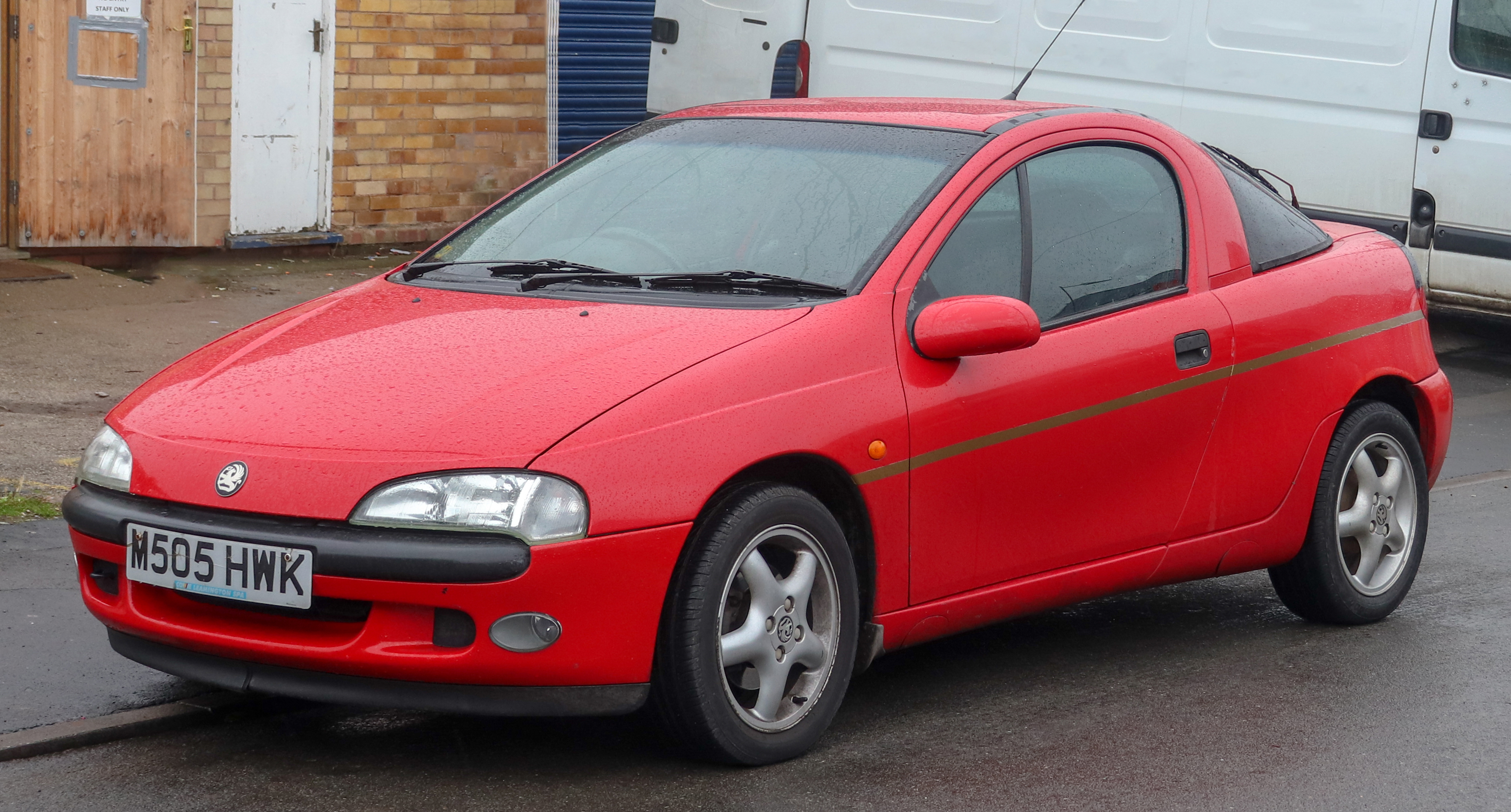
"No change. Surprise, surprise. Yes. I bought the worst car, not the cheapest car in the Kawao auctions this week, which was a £165, 2006, 134,000-mile Vauxhall Tigra. I could see you in one of those."
The Vauxhall Tigra is a small sporty car that can be had with a folding roof. That “open-air” feature is part of what makes this particular used one memorable to the host.
The Vauxhall Tigra is a small, sporty coupe/convertible-style car known for its compact size and “open-top” driving feel. In this segment, the host specifically calls out the Tigra’s folding roof, which is a key part of why it stands out among used buys.
"...ek, which was a £165, 2006, 134,000-mile Vauxhall Tigra. I could see you."
The Opel Tigra is a small sporty car. In the podcast, it’s mentioned using an example of an older, high-mileage Tigra to illustrate what you might find for a certain amount of money. It’s a reminder that older cars can still be an option, but mileage and condition matter a lot.
The Opel Tigra is a small, sporty car that’s typically associated with compact dimensions and a fun, city-friendly driving character. In the episode, it’s referenced through a specific example—an older, high-mileage Vauxhall Tigra—suggesting the conversation is about what you can realistically buy for a budget and what condition matters. That makes it relevant for buyers weighing older cars versus newer options.
"Oh, yeah, I mean, the folding roof and the coarser underpinnings are, you know, that definitely gets the blood pumping, doesn't it?"
A folding roof is the part of a convertible that can be opened up and closed again. It’s a big feature because it changes the car from a normal roof to an open-air one.
A folding roof refers to a convertible-style top that can be lowered or raised, typically using a mechanism rather than a fixed roof. On small cars like the Vauxhall Tigra, it’s a major usability and ownership consideration because it adds moving parts and affects how the car feels day-to-day.
"Oh, yeah, I mean, the folding roof and the coarser underpinnings are, you know, that definitely gets the blood pumping, doesn't it?"
In car talk, “underpinnings” means the main parts that everything else is built on—like the chassis and suspension. Saying they’re “coarser” is basically saying it feels a bit rougher or less refined.
“Underpinnings” is car-speak for the vehicle’s core structure and mechanical foundation—things like the chassis, suspension layout, and other base components. When the host says the Tigra has “coarser underpinnings,” they mean it feels less refined in how the car is built and how it rides or handles.
"...own and say you've got a Ford Focus or a Vauxhall Astra, but you say you've got a Tesla and people notice..."
The Opel Astra is a regular, everyday car that many people buy for practical reasons. The podcast mentions it to talk about how people recognize certain cars and brands. It’s basically an example of a common model people might notice compared with something else.
The Opel Astra is a mainstream compact car that’s commonly used as a benchmark for everyday practicality. In this episode, it’s mentioned in a discussion about brand recognition and what people “notice” when you drive a particular car. That makes it relevant to buyers thinking about how a car’s identity and visibility affect their choice.
"If unless they change the ZEV mandate dramatically, we're all going to be driving electric vehicles in however many years it is, whether that changes from 2030 to another point in time."
A ZEV mandate is a government requirement that pushes car sales toward zero-emission vehicles. The idea is to make more electric cars available and reduce pollution from exhaust.
A ZEV mandate is a government rule that requires automakers and/or sellers to sell a certain share of zero-emission vehicles (like battery-electric cars). It’s designed to force the market to shift away from tailpipe-emitting cars over time.
"... cars as I could. And the best two I drove with a Tesla Model 3 and the Seal U. It was it was really good."
The Tesla Model Y is an electric SUV, which means it runs on electricity instead of gasoline. It’s designed for everyday driving with space for passengers and cargo. People talk about it a lot because it’s a common EV that’s easy to compare with other electric cars you might consider.
The Tesla Model Y is a compact electric SUV known for combining everyday practicality with an all-electric powertrain. It often comes up in discussions because it’s one of the most popular EVs and is frequently compared against other electric models people drive for range, comfort, and tech. In this episode, it’s mentioned alongside other cars the host drove as part of evaluating what feels “really good.”
"And the best two I drove with a Tesla Model 3 and the Seal U.
[936.2s] It was it was really good."
The Tesla Model 3 is an electric car that many people consider a “go-to” option. Here, the host says it was one of the best electric cars they drove.
The Tesla Model 3 is an electric sedan known for its mainstream appeal and strong real-world usability. In this segment, it’s mentioned as one of the best electric cars the speaker has driven, alongside the Polestar 4.
"It's got 300 mile range and it accurately says how much range you're going to have.
[955.5s] It doesn't give you any of this nonsense that a lot of electric cars do."
Range is how far an electric car can go before the battery runs low. The host says this car’s claimed range (about 300 miles) and the estimate it shows were trustworthy.
“Range” is how far an electric car can drive on a full battery before it needs charging. Here, the speaker specifically cites a 300-mile range and says the car’s estimate matches what they expect to get.
"It's got 300 mile range and it accurately says how much range you're going to have.
[955.5s] It doesn't give you any of this nonsense that a lot of electric cars do."
Electric cars show an estimate of how far you can go. The host likes that this car’s estimate seems accurate instead of being confusing or wrong.
Electric cars use a “range estimate” based on current conditions, battery state, and driving behavior. The speaker contrasts this with other cars that they feel give misleading or overly optimistic range numbers.
"And the Tesla charging network is second to none.
[962.1s] It is absolutely brilliant."
This is Tesla’s network of charging stations. The host says it’s easy to use—arrive, plug in, and the system handles the rest without much effort.
The Tesla charging network refers to Tesla’s network of public fast chargers. The speaker describes a smooth “plug-and-charge” style experience where the car and charger communicate automatically to start charging and manage the user account.
"...ing out, plug it into your car. The car knows the charger. The charger knows the car."
The Dodge Charger is a car that’s built for performance, with a sporty driving feel. The mention about charging is about how the charging equipment and the car talk to each other so charging works correctly. It’s basically making sure you use the right charger and that it’s compatible with the car.
The Dodge Charger is a performance-focused sedan (and in some markets, a muscle-car style icon) that’s known for strong acceleration and a driver-oriented feel. It’s discussed here in the context of charging, specifically how a charger communicates with the car—highlighting the practical side of owning an electrified vehicle. That makes it relevant for buyers who want to understand charging compatibility and setup.
"I turned up at a charging hub from one of the big suppliers.
And all of them were off.
12 chargers were off."
A charging hub is a public place with several EV chargers. You go there when you can’t (or don’t want to) charge at home.
A charging hub is a location with multiple EV chargers, often run by a specific charging network. Instead of charging at home, drivers rely on these hubs for public charging during trips.
"And then I went and found somewhere else.
And ironically, there was an HGV being charged, which was zapping all of the power.
So I had to wait there for ages and ages..."
HGV means a heavy goods vehicle, basically a big freight truck. If a truck is charging, it can use a lot of electricity and make charging harder for other drivers.
HGV stands for heavy goods vehicle—typically large trucks used for freight. Mentioning an HGV being charged highlights that big vehicles can draw significant power and affect charger availability or performance for other EVs.
"but being charged through the nose,
like 96p per kilowatt hour or whatever it was.
And then on the way back..."
A kilowatt-hour (kWh) is the unit for how much electricity you’re getting. If charging is priced per kWh, you pay based on how much energy your car took.
A kilowatt-hour (kWh) is the unit of energy used to measure how much electricity you buy for charging an EV. When the price is quoted per kWh, it tells you the cost based on how much energy the car pulled from the charger.
"...nd up back in the market. Because you look at the JQ7, best-selling car in March, incredible. I mean, d..."
The podcast mentions a car called “7” in the context of which cars sold the most in a month. That usually means it’s a popular model people are buying. The exact make/model isn’t fully clear from the snippet, but it’s being discussed because of strong sales.
The “7” referenced in the podcast appears to be a shorthand for a specific model name, likely part of a numbered lineup discussed in the context of market performance. It’s mentioned alongside a “best-selling car in March,” which suggests the conversation is about sales rankings and what’s doing well. Without the full model name, the key takeaway is that it’s being highlighted as a top seller.
"because the finance on them is a lower rate.
The monthly payments, it makes no sense to buy a used one."
In auto finance, monthly payments are the recurring amount you pay under a loan or lease, driven by the vehicle price, interest rate, term length, and—especially for leases—the residual value. When monthly payments for new cars are lower than for used cars, it can shift buyers toward new inventory and away from the used market.
"The monthly payments, it makes no sense to buy a used one.
That has to change because otherwise those residual values aren't going to work.
So obviously, residual values have been set on them."
Residual value is what a car is expected to be worth later—usually at the end of a lease or loan. If that estimate is wrong, the monthly payment math changes, and used cars can end up seeming like a bad deal.
Residual value is the estimated value a vehicle will have at the end of a lease or financing term. Dealers and lenders use it to calculate monthly payments; if residual values are too high or too low, it can make used-car financing look unattractive or distort pricing across the market.
"and also retailer feedback regarding their deal builder product rollout.
[2190.1s] So they're actually naming that deal builder as an issue for why their growth slowed in the second half."
A product rollout is the staged introduction of a new product feature or service to customers. In this context, the “deal builder” rollout is described as affecting growth, implying it may have reduced dealer satisfaction or adoption during the rollout period.
"Still, that is an amazing business, making an operating profit margin of 63%
[2212.3s] on the 624 million pounds that they brought in."
It’s a way to measure how much money the business keeps as profit from its main activities. The percentage tells you how profitable they are compared to what they bring in.
Operating profit margin is a profitability metric that shows how much profit a business makes from its core operations, expressed as a percentage of revenue. It helps compare performance across companies or time periods even when revenue levels differ.
"You know, this is a marketplace.
[2218.6s] So it's the middleman, isn't it, putting the dealers in front of the consumers
[2222.2s] and the consumers can find those cars from those dealers."
A marketplace is a website or service that brings buyers and sellers together. The platform usually makes money by charging dealers or taking a fee when deals happen.
A marketplace business model connects two groups—here, dealers and consumers—so they can find and transact with each other. The platform typically earns revenue by taking a cut or charging fees for enabling those matches.
"Average spend per dealer has actually gone up too,
[2232.9s] which is always quite an interesting thing.
[2235.3s] Cardinals are now spending just shy of 295, it sounds like a voxel tigra,
[2241.0s] 295 each with Auto Trader, up 5% on the previous year."
This is how much each car dealer, on average, pays the platform. If it goes up, it usually means dealers are spending more than before.
Average spend per dealer is a revenue-per-customer metric that estimates how much money each dealer, on average, spends with the platform over a given period. Tracking it helps gauge whether the platform is extracting more value from existing dealers, not just adding new ones.
"Autorama, that leasing business it bought continues to lose money,
[2256.3s] but those losses have now halved.
[2259.0s] They lost 2 million pounds in the Autorama division last year."
Autorama is mentioned as a leasing-related part of the business that has been losing money. They say the losses are getting smaller and they may stop reporting it separately.
Autorama is referenced here as a leasing business division that the company bought and that has been losing money. The discussion focuses on narrowing losses and eventually folding the results into the wider business, which affects how future performance will be reported.
"But interestingly, employee engagement, something that they mark up in their annual results,
[2280.3s] fell drastically from 91% to 72%."
Employee engagement is basically how motivated and involved workers feel. If it drops a lot, it can be a sign that people aren’t as happy or connected to the company as before.
Employee engagement is a measure of how committed and motivated employees feel toward their work and employer. In annual results, it’s often tracked via internal surveys, and a sharp drop can signal morale or organizational issues even if financial performance remains strong.
"So, they've tweaked the product pages for the cars.
[2466.9s] So, they've tweaked the product pages for the cars.
[2471.1s] And as a result, the leads have sort of increased,"
“Product pages” are the individual pages you see for a specific car listing on a website. The hosts are saying changing those pages changed how many people ended up contacting dealers.
“Product pages” are the individual listing pages on a car marketplace where shoppers view details and interact with tools. The host says AutoTrader tweaked these pages for cars, which affected how many leads dealers received.
"So, they've tweaked the product pages for the cars.
[2471.1s] And as a result, the leads have sort of increased,
[2474.0s] certainly for us and others out there."
In automotive retail, “leads” are potential customer inquiries generated by listings or marketing tools that can be followed up by dealers. Here, the host says tweaking AutoTrader’s car pages increased leads for dealers and others.
"keeping dealers on side.
[2484.9s] These customer advisory groups work,
[2488.0s] but they need to listen to those dealers"
“Customer advisory groups” are dealer (or customer) panels that share feedback with a company. The host’s view is that feedback alone isn’t enough—you have to make changes based on it.
“Customer advisory groups” are structured groups of customers (in this case, dealers) that provide feedback to a platform. The segment suggests these groups can work, but the platform must actually act on the advice to keep dealers on side.
"which could actually see the return of the Fiesta name. [2686.8s] Perhaps Ford are finally realising
[2688.5s] that perhaps getting rid of the Fiesta
[2690.2s] wasn't perhaps a good idea."
The Ford Fiesta is a popular small car (a hatchback) that’s been sold in Europe for many years. The discussion here is about whether Ford might bring the Fiesta name back.
The Ford Fiesta is a long-running Ford compact hatchback that’s especially known in Europe for being affordable, efficient, and easy to live with. In this segment, the hosts discuss a possible return of the Fiesta name as part of Ford’s new model push.
Term
multi-energy crossovers
"So, these new models are going to be a small electric SUV
[2716.3s] to multi-energy crossovers."
“Multi-energy” means the cars could use different kinds of power, like electric or hybrid systems. Here, it’s describing Ford’s crossover lineup as using more than one kind of drivetrain.
“Multi-energy” is an industry term for using more than one type of powertrain energy—commonly a mix of battery-electric, hybrid, or other electrified setups depending on the model. In this context, it suggests Ford’s crossover lineup won’t be purely one powertrain type.
"A European version of the Bronco, [2721.6s] which of course is a bit of an American icon, really."
The Ford Bronco is a tough, off-road SUV that’s especially famous in the U.S. The segment uses it as a comparison for what Ford might build for Europe.
The Ford Bronco is a rugged, off-road-focused SUV nameplate best known in the U.S. for its heritage and capability. The hosts mention a “European version of the Bronco,” using it as a reference point for the type of vehicle Ford is planning.
"And an electric B-segment hatchback, [2730.5s] which is going to be based, surprise, surprise,
[2733.2s] on the Renault 5."
In Europe, cars are often grouped by size. A “B-segment hatchback” means a small hatchback—typically the kind of car people use for city driving.
“B-segment” is a European car-size class used by the industry to group small cars (typically smaller than a C-segment compact). Calling it a “B-segment hatchback” tells you the body style (hatchback) and that it targets the small-city-car market.
"... is going to be based, surprise, surprise, on the Renault 5. And it could likely see the return of the Fiesta..."
The 5 E-Tech Electric is a small electric car based on the Renault 5 name. It runs on electricity and is meant to be a practical, everyday EV. The podcast also connects it to what might happen in the market with other small cars returning.
The 5 E-Tech Electric is an electric version of the Renault 5 nameplate, designed to bring a classic-style small car into the EV market. In this episode, it’s discussed as being based on the same platform as related small cars, and it’s tied to expectations about how it could influence the return of other popular models. That makes it relevant for buyers tracking upcoming EVs and platform-sharing strategies.
"[2955.6s] And I suppose something else about it as well,
[2957.2s] so the same platform as the Renault 5,
[2959.5s] which is also the Nissan Micra,"
A “platform” is the shared basic under-structure a car is built on. If two cars share a platform, they’re using similar hard points underneath, which can make them cheaper and quicker to develop.
In car engineering, a “platform” is the shared underlying architecture—things like the chassis structure and mounting points—that multiple models can use. Sharing a platform can reduce development cost and speed up bringing new models to market, but it can also influence how different cars feel and package space.
"...atform as the Renault 5, which is also the Nissan Micra, the Fiesta has done really well."
The Nissan Micra is a small car made for city driving. The podcast mentions it because it uses the same basic design platform as another small car, which can affect how the cars are built. It’s brought up in the context of how well small cars are selling.
The Nissan Micra is a small city car known for being compact and easy to live with. In this episode, it’s mentioned because it shares a platform with the Renault 5, and the host notes that the Fiesta has done really well—highlighting how platform and model relationships can affect what’s available in the market. That makes it relevant when discussing upcoming small-car EVs and how manufacturers build related vehicles.
"I think a lot of people have sort of suggested they might go van only at some point as well, because of the pressure they're under."
“Go van only” means a company might stop selling most cars and focus mainly on vans. The host is saying it could be a reaction to pressure, and it’s worth watching what Ford decides to do.
“Go van only” refers to a strategy of focusing a brand’s lineup on vans rather than a broader mix of passenger cars. The host frames it as a possible response to competitive and financial pressure, which is why it’s discussed alongside how quickly other markets are moving.
"Stellantis are partnering with Chinese brands and bringing in like Leap Motor and things like that."
Leap Motor is a Chinese car brand, and the host mentions it as an example of a company Stellantis is working with. The takeaway is that some big automakers are partnering with Chinese EV brands to catch up quickly.
Leapmotor (often written as Leap Motor) is an automaker known for selling electric vehicles, and it’s referenced here as an example of a Chinese brand that Stellantis is partnering with. The mention matters because it highlights how Western groups are using Chinese EV brands to move faster in the market.
"Stellantis are partnering with Chinese brands and bringing in like Leap Motor and things like that."
Stellantis is a big car company. Here, it’s mentioned because they’re partnering with Chinese brands, which is one way they’re trying to move faster in the EV market.
Stellantis is a major global automaker formed from the merger of FCA and PSA. In this segment, it’s mentioned in the context of partnering with Chinese brands, which is a strategic move to accelerate EV and product development.
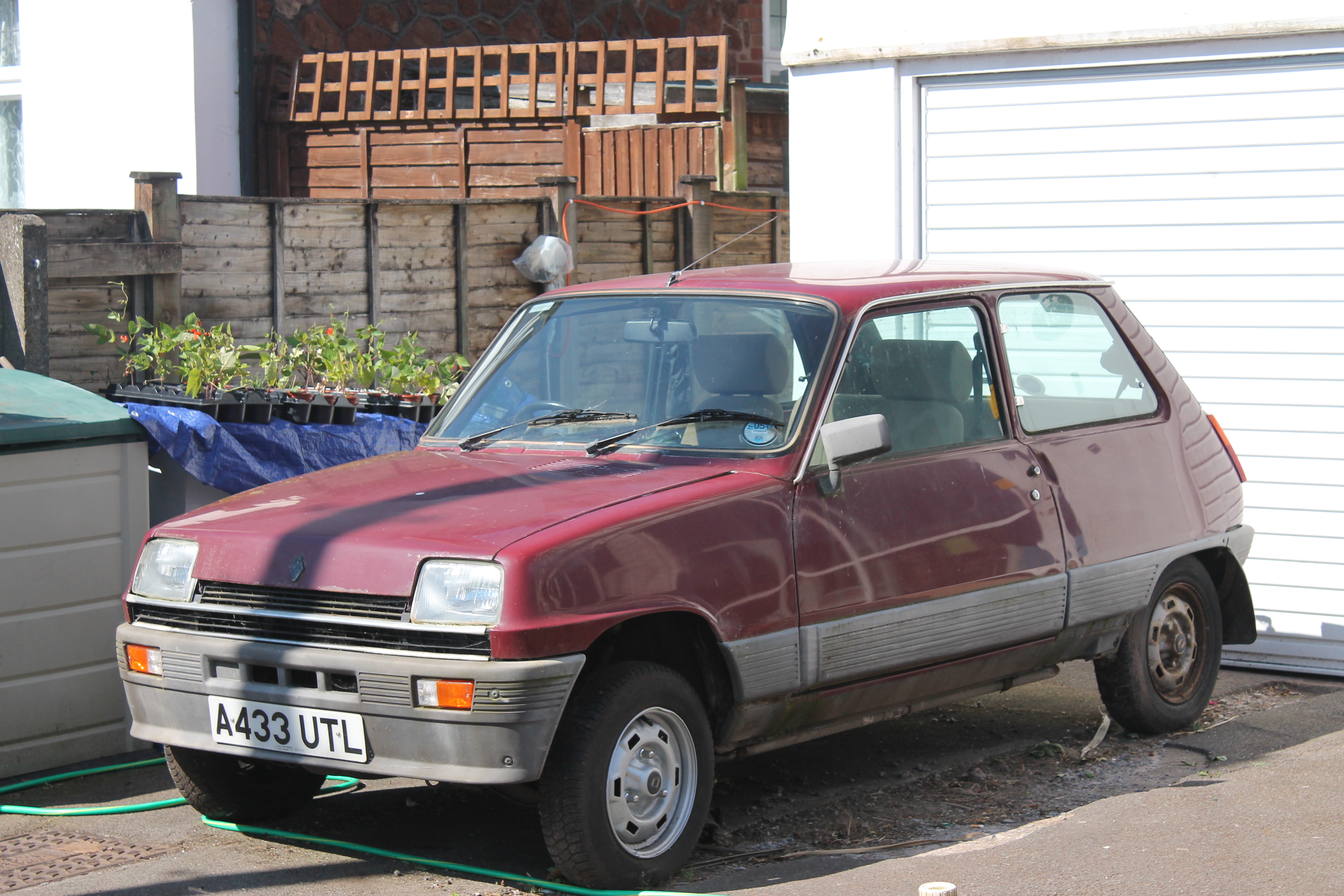
"But at the moment, I think bringing out another Renault 5 in three years' time under a different badge is not going to help them particularly."
The Renault 5 is a small, classic hatchback from Renault. Here, the point is about whether re-releasing something like that—just branded differently—would actually help Ford compete.
The Renault 5 is a classic small hatchback from Renault, best known for its compact size and long-running popularity in Europe. In this discussion, the host is referring to the idea of bringing back a Renault 5-style model under a different brand badge, which is relevant to how automakers reposition products.
Brand
Stalantis brand
"And the Stalantis brand, as I say, they've got Peugeot, Citroën, Fiat, Vauxhall, Jeep. They all kind of compete with each other in certain areas."
Stellantis is a big car company that owns several different car brands. The point here is that those brands can end up competing with each other and with newer rivals.
The speaker is referring to Stellantis, a major automaker group that owns multiple car brands. In this segment, they list brands under the group—Peugeot, Citroën, Fiat, Vauxhall, and Jeep—showing how one parent company competes across several markets.
"And the Stalantis brand, as I say, they've got Peugeot, Citroën, Fiat, Vauxhall, Jeep. They all kind of compete with each other in certain areas."
Peugeot is a car brand. In this discussion, it’s listed as one of the brands that sit under the same parent company.
Peugeot is one of the brands owned by Stellantis. The mention is used to illustrate how Stellantis controls multiple competing brands within the same broader market.
"And the Stalantis brand, as I say, they've got Peugeot, Citroën, Fiat, Vauxhall, Jeep. They all kind of compete with each other in certain areas."
Citroën is a car brand. Here it’s mentioned because it’s part of the same big company that also owns other brands.
Citroën is another Stellantis-owned brand mentioned to show the group’s multi-brand footprint. The speaker uses it as an example of how brands under the same umbrella can still compete in overlapping areas.
"And the Stalantis brand, as I say, they've got Peugeot, Citroën, Fiat, Vauxhall, Jeep. They all kind of compete with each other in certain areas."
Fiat is a car brand. The speaker lists it to explain that Stellantis owns multiple brands at once.
Fiat is a Stellantis brand cited in the segment. The context is about how Stellantis has several brands that can overlap and compete across different parts of the market.
"And the Stalantis brand, as I say, they've got Peugeot, Citroën, Fiat, Vauxhall, Jeep. They all kind of compete with each other in certain areas."
Jeep is a car brand. It’s listed here as part of Stellantis’ portfolio of brands.
Jeep is included in the list of Stellantis-owned brands. The segment uses it to highlight how a single automaker group can hold multiple brands that compete in different areas.
Company
Autostrade
"And I'm not going to talk about Autostrade again, but I just want to use this as an example of what's rapidly changing in this market. It's the way people search for their next used car. Autostrade has launched its own app within ChatGPT, allowing consumers to search dealers' stock using conversational queries directly through ChatGPT."
Autostrade is a used-car marketplace mentioned as adding a tool inside ChatGPT. The idea is that you can ask for cars in plain language and it helps find dealer listings.
Autostrade is described as launching an app inside ChatGPT to help consumers search dealer stock. In this context, it’s an example of how used-car marketplaces are integrating directly with AI chat interfaces.
"Autostrade has launched its own app within ChatGPT, allowing consumers to search dealers' stock using conversational queries directly through ChatGPT."
This just means you can type or say what you want in normal language. Instead of clicking lots of filters, you ask in a chat-style way and the system searches for matching cars.
“Conversational queries” means asking for information in natural language, like you would in a chat. Here, it’s used to describe how consumers can search dealer inventory by speaking their preferences to ChatGPT rather than using traditional filters.
"Now, they're not the first to do it. Kazoo had launched one a few weeks ago. And I don't know if you've ever used it, perhaps, but when you go on to ChatGPT, there's an app section."
Kazoo is another used-car business mentioned as doing something similar with ChatGPT. The point is that multiple companies are trying this AI search approach.
Kazoo is mentioned as having launched a similar ChatGPT-based search experience before Autostrade. The comparison is used to show that AI-assisted used-car search is becoming a competitive feature among marketplaces.
Term
app section
"And I don't know if you've ever used it, perhaps, but when you go on to ChatGPT, there's an app section. You have to sort."
The “app section” refers to where ChatGPT users access third-party integrations (apps) rather than using ChatGPT’s core chat box alone. In this segment, it’s part of the workflow for searching used-car inventory through the marketplace’s ChatGPT app.
"...going to buy a Fiesta or they were going to buy a Nova or a Corsa. Now there's so much choice out there,..."
The Chevrolet Nova is an older-style car model that people used to choose when there were fewer options. The podcast mentions it to show that car buyers had different, more limited choices in the past. Today, there are many more models available, so comparisons like this come up in discussions about the market.
The Chevrolet Nova is a compact car that’s often brought up as an example of how model choices and lineups have changed over time. In this episode, it’s mentioned in a broader point about how buyers used to have fewer options and now face much more variety. That makes it a useful reference when discussing market trends and what people choose today.
Select text to request an explanation
The Cardila podcast is sponsored by AutoTrader.
John, have I mentioned that we sell more cars from adverts on AutoTrader than anywhere else?
Yes, I think I read that somewhere.
Well, with over 84 million consumer visits per month,
they connect retailers like us with more potential buyers than any other platform.
But it's not just about the numbers, is it?
Is that what you say to your accountant?
Because the support and the value we get from AutoTrader is, well, invaluable.
We now get AI-powered insight on every online inquiry about the level of buying intent from
each customer, incredible amounts of data about the cars that we'll sell in our local area,
and around-the-clock service support from our account manager.
It sounds like AutoTrader is basically doing all the work for you, James.
No, John, I still do some things like take out the bins.
Anyway, to find out more about how AutoTrader can help you, visit autotrader.co.uk slash partners slash retailer.
Welcome back to the Cardila podcast, where we pick our favorite stories of the week
and ask an industry guest to choose which were the best.
No, this isn't John Ray who's had Elocution lessons.
It's me, James Bachelor.
Yes, I was a guest last week, and now I am hosting.
I'm not sure if this is promotion or not.
Perhaps James Baggett can tell me.
Hello, James.
No, it's not.
John Ray is going to be so angry when he hears this, isn't he?
Is he?
Yeah, you've just said he needs Elocution lessons.
If anybody needs those in this company, it's me.
Yes, I don't want to be too rude about the boss, but yeah.
It's John's fault for failing to turn up this week.
I mean, it's quite rude, actually, but there we are.
He normally manages to make the podcast where every is in the world.
I think when he was in Japan on holiday, he still made the podcast.
Yes, he was in Newcastle last week, and he still made it.
But today?
No, not today.
Anyway, what have you been up to?
What have I been up to?
I've been buying terrible cars.
No change.
Surprise, surprise.
Yes.
I bought the worst car, not
the cheapest car in the Kawao auctions this week,
which was a £165, 2006, 134,000-mile Vauxhall Tigra.
I could see you.
I could see you in one of those.
Oh, yeah, I mean, the folding roof and the coarser underpinnings are,
you know, that definitely gets the blood pumping, doesn't it?
Nobody has been that excited, as I was, about picking up a Vauxhall Tigra,
probably including those people who bought the new.
Yeah, I bought it for the purposes of a video,
and I thought, well, let's do a little video,
see what this thing's like.
So we went to pick it up this week.
And without wanting to ruin the video that's coming out tonight
on the YouTube channel, I bought it back to the dealership.
Our mechanic had a look at it and promptly wrote it off.
He said, this is probably the worst thing you've ever bought.
So I paid £165 for this car.
I spoke to the scrap man, and he said,
oh, I'll give you £150 for it.
Thinking, oh, I don't want a £15 loss.
I mean, that's not good.
Advertise getting spares or repairs is an absolute...
You know, I was completely honest and said what the condition was.
Spares or repairs, it's just been sold this morning
to somebody else who've previously bought a terrible car from us.
Another absolute junk car.
So, and guess what, sold it for 500 quid backs.
Profit.
I mean, that's...
I don't know much about the world of selling cars,
but that is definitely a profit, isn't it?
Well, I mean, Tom Hartley Jr.
is probably shaking his boots when he hears that.
That's major money.
Just clear something up for me.
I mean, what was the roof operating on the Tigra?
Roof was operating back.
Wow.
Roof was fine.
I mean, the mechanism alone,
not wanting to bore the listeners any more than normal,
but the mechanism alone was worth £200.
Oh, I think you're being a bit generous there.
I think it's...
Anyway, enough of my toils and tails.
What have you been up to?
I've been out of the office a little bit.
I've been driving various things, actually, this week,
which is a rare occurrence.
I actually had my first ever drive of an HGV yesterday,
which will scare many, many people who know me.
I can't think of anything worse.
I was a trucker for the morning,
and it was an electric truck, a massive Mercedes E-Actross,
a proper 44-ton thing with a trailer on the back.
Why not if they let you behind the wheel of that?
Well, because I'm a very influential journalist, that's why.
This is why I've got sunburned, because I've been...
I've got a sunburned arm, of course, trucker arm.
Perfect.
But it was an amazing experience, very, very easy.
I loved it, although it's one thing driving a big Arctic,
or the test track.
I mean, it's quite different driving it through the centre of a town.
But I did get an insight into how difficult it is to drive.
Truck drivers get a bad rep, don't they?
But when you're driving something so massive,
I realised it is quite a difficult job these truckers have.
So do they teach you how to overtake people on dual carriageways really slowly,
as part of the test?
No, but I did learn how to overtake a broken-down Vauxhall Tigger at the side of the road.
Anyway, shall we move on?
Shall we stop driving on?
Yeah, OK, so, well, this week's guest, I'm pleased to say it is none other
than Automated Consultant, Darren Martin.
Hello, Darren.
Hi, James, how are you?
I'm very good.
I'm very good.
Sorry about listening to all of that complete rubbish there.
But...
You're really not asleep.
Yeah.
Darren, any views on the Vauxhall Tigger?
I mean, do you think James has made a great purchase there?
Well, as you may know, I used to work for Vauxhall.
I spent 17 years there, and I was there in 2006.
And I think there was a dodgy batch of Tiggers that were there.
Yeah, I shouldn't be saying that.
No, there wasn't, but I'm not sure many people wanted them back in 2006.
So it was a great purchase, but yeah.
They only sold 90,000 of them, apparently.
Is there that many hairdressers around there?
And me, yeah.
Now and out there, and let's not trot out the cliches.
Come on.
Well, Darren, look, I don't think this is too much of an exaggeration to say.
You are the Godfather of card values.
Oh, we definitely think that.
Definitely think that.
And...
You can put that on your little chin.
Yeah, it looks very far, yeah.
Brilliant.
When I say Godfather, I don't mean you're old.
I just mean that you've got a lot of knowledge,
and everybody looks up to you.
That's why I say Godfather.
Godfather and Marvin, yeah.
Yes, yes.
And people don't have to kiss your hand
when they ask for some values from you.
But look, you have done some work for Casana.
You continue to do some work for Casana,
which is a name that recently returned to the industry.
Look, we talk to you every month about card values.
The last time we spoke was about April.
Can you just give us a little sneak peek of May?
I mean, like we've spoken about before,
May can be a bit of a tricky month, can't it?
Because of bank holidays and etc.
But how's it been looking?
Yeah, it can be a tricky month.
But I was having a look at the latest data today,
and there's a wealth of data that Casana get
by harvesting on the internet.
And there are up to almost a million records a day,
a million different VRMs now.
And it's looking pretty stable, to be honest,
so which is good for May.
So I was looking particularly at electric vehicles,
because there's obviously lots in the press,
and probably everyone was predicting.
You don't have to be any godfather of any sort of valuations
to predict that when petrol and diesel prices go up,
that people will start to look for EVs and hybrids
and that type of thing.
And EVs did go up in value during April.
In May, they're pretty stable.
So there's still demand out there for them.
Demand is increasing, but obviously,
as we've been saying for a long time,
supply is steadily increasing as well.
So it feels like at the moment, they're fairly well matched.
But overall, May seems to have been pretty good.
Obviously, we're now in for a spell of decent weather
and then half term next week.
So that can slow things down.
But at the moment, it's been a pretty good month.
So yeah, with the bank holiday coming,
it can tend to drive people away from going to look for cars.
But at the moment, it's all pretty steady as she goes.
Cars are, EVs are still selling well.
They're still the fastest selling fuel type.
And their values are more or less in line with petrol
and with diesel are all pretty level at the moment,
actually, so far this month compared to last month.
Some of the people I've been chatting to this week,
Darren, I've had a catch up with car gurus.
I spoke to motors as well,
because they're now known, just about how it's going in the market.
Because I was just interested,
because our leads have been down, actually,
this month.
May has been quite quiet for us.
And then chatting to like our finance broker, Octane Finance,
they were telling us that last May was really bad for them.
And this May is tracking very similarly.
It's just, I wondered,
so listening to you there saying,
you think it's kind of like,
it's quite steady from what you're seeing.
It's just I've wondered,
some of the people I'm chatting to are not saying the same thing.
We're certainly not seeing it as well.
I just wonder whether May is usually a bit rubbish
because of the bank holidays.
Do you think people have lots of time off
because of the bank holiday at the start of the month?
And then we've got half term next week as well,
and that's always rubbish as well.
What do you think?
Yeah, you tend to go,
so depending on when Easter falls,
we always say Easter is a watershed for valuations, really.
Because before that,
you've got the strongest section of the year, really.
Obviously, you come out of Christmas into January.
January is generally strong.
February, it strengthens.
Then Easter falls in March or April.
And that's when it can drop off
because people will start looking at holidays.
People go away at Easter.
People go away at the early May Bank holiday.
You get sort of exam time for the schools
and people going to visit garden centres.
And if the weather's nice,
it's almost like the start of the summer, isn't it, really, May?
So that can stop people looking at cars.
But it does tend to be one of the week a month.
So April and May are probably the two week a month.
And then, generally, you get June and July stable.
And quite interestingly, August,
where you would expect it to drop off,
that doesn't seem to happen.
There's probably less part exchanges coming in during August anyway
because there's a build-up waiting for September.
And then you start to get towards the end of the year
and it can drop away again.
So start of the summer, May, two bank holidays, a half term.
It can tend to be the week.
And so when I've looked at the data and it's fairly steady,
I would definitely see that as a positive
because in general, values will drop.
And I would expect that trade values will be dropping this month.
Obviously, because I'm a deal more on the retail side.
We do get trade data as well.
But on the retail side, the dealers aren't dropping the prices too much at the moment.
They're holding steady.
Days to sell is relatively steady as well.
So being steady in May, I would see as a positive.
Definitely is a good thing.
You also mentioned about electric cars.
We've tried a few of them.
We've got a couple in stock.
They always seem to sell very, very quickly.
We've really tried to dip our toe in the water with them
and actually trying to buy some more.
Are you seeing more used car dealers,
more smaller used car dealers like us trying them?
And that's what's pushing these values up a little bit, do you think?
Yeah, well, there's definitely more consumer interest in them.
And I think the dealers that have been reluctant to stock them in the past
and with good reason really in the past,
because of what happened a couple of years ago with values,
when the values like completely almost probably three years ago,
now when values dropped dramatically on EVs,
it was that people left holding the stock at that time
carried a lot of pain from then and once a bit and twice shy.
So people just seeing that happen who weren't stocking them at the time
have shied away from it, not going to get caught like that.
Ones that did stock them were obviously scared by it.
But we've been saying for ages that they should certainly be dipping their toe in
and buying them.
And I was really interested in your article,
which might one of your stories about the guys just stocking Tesla
and doing really well out of them now.
I mean, I always say everyone goes down to pub and says they've got a Tesla, don't they?
You don't necessarily go down and say you've got a Ford Focus or a Vauxhall Astra,
but you say you've got a Tesla and people notice Tesla's
and whether they're people have a good opinion of them or a bad opinion of them,
people still like them and will buy them.
So there's a lot of them out there,
but that definitely helps if people are stocking dealers or stocking them.
So consumer interest has peaked.
If the dealers are savvy, which a lot of them are,
when they saw what was happening with fuel prices due to the unfortunate war in the Middle East,
they would have been very sensible to have started to stock some
and probably a bit like you've done once you start one and sell one quickly
and like your story.
Once that happens, you just go and buy another one and then build it up from there.
And at the end of the day, everyone's got to have them at some point.
If unless they change the ZEV mandate dramatically,
we're all going to be driving electric vehicles in however many years it is,
whether that changes from 2030 to another point in time.
But everyone has to have them at some point.
So why don't the dealers start to dip in now?
And yeah, they're definitely stocking more of them.
Yeah. I mean, I'm driving a Tesla at the moment.
I bought one to sell and I keep talking customers out of it.
I like it too much. It's absolutely brilliant.
I think the weird the weird thing,
but I just wanted to mention to you,
because the weird thing I find with Teslas,
if they are, I think if they had a press office,
people would be shouting about them so much more.
They haven't had a press office for years, have they?
So many journalists don't get behind the wheel of them.
And now I've actually had to spend some time in it.
It looks like effectively like a little long term.
I absolutely love it.
I couldn't recommend any other electric car over it, really.
I mean, that's, you know, what I'm like when it comes to electric cars.
I'm not the biggest.
But this one, it really has company car in action.
I go every year, but I went a couple of years ago,
pretty three years ago down.
I drove the Seal U.
I only drove electric cars because I just wanted to try as many electric cars as I could.
And the best two I drove with a Tesla Model 3 and the Seal U.
It was it was really good.
They were both the best.
I drove it to Birmingham last week for the for the Motorway Conference.
And it's the longest journey I've done an electric car for a long time.
I had no problems whatsoever.
It's got 300 mile range and it accurately says how much range you're going to have.
It doesn't give you any of this nonsense that a lot of electric cars do.
And the Tesla charging network is second to none.
It is absolutely brilliant.
It works perfectly.
You turn up, you pull the thing out, plug it into your car.
The car knows the charger.
The charger knows the car.
It builds your account.
You don't even have to think about it.
It was how electric cars should be.
And I think all all these frustrating stories we've had over the years on this
podcast and when you were driving electric cars that are not
a water outside of that Tesla ecosystem, they're nowhere near as good.
I was that batch of you experienced the same thing.
You drive loads of electric cars, do you?
Yeah.
And funny enough, I've been driving an EV for the past kind of four or five months.
And up until about two weeks ago, I was of the view.
I think the moment has come now where you can accurately rely upon running an EV
until I had an absolutely shocker of a day where I was doing a long journey.
I turned up at a charging hub from one of the big suppliers.
And all of them were off.
12 chargers were off.
And then I went and found somewhere else.
And ironically, there was an HGV being charged, which was zapping all of the power.
So I had to wait there for ages and ages but being charged through the nose,
like 96p per kilowatt hour or whatever it was.
And then on the way back from where I had exactly the same thing at a completely
different charging point, most of the chargers were switched off.
So I think but it's one of those situations where if you have a bad charging experience,
it goes horribly wrong.
But I think for the most part, I think we are getting to the stage now
where it is a viable alternative for lots and lots of people.
On your point, James, about Tesla, I totally agree with you.
I mean, I think if Tesla acted in a traditional way, which was doing a lot of PR,
a lot of traditional marketing, having perhaps dealerships and going down
that more traditional route when they launched 10 or so years ago,
I think they would be in a much better place than they actually are now.
But they've always wanted to disrupt, haven't they?
And going back to what you were saying earlier on, Darren, that was ironically,
it was Tesla who caused this massive drop in EV values, wasn't it?
Three years ago when they cut the new car prices.
So they do like to stir things up, don't they?
They really do.
Yeah, I think a lot of people will say that and look back in time and almost
rewrite history. But at the time, there were Tesla's disrupting, but there were also a lot of
electric vehicles in total coming back into the market around a time when
they were too expensive and there wasn't the demand for them.
It's very, very simple economics, really.
Too many coming back, not enough demand.
And prices were sky high, and that's why they dropped.
And they were way higher than petrol as well.
So yeah, Tesla get the blame for what happened.
But it was really just the volume of cars coming back in and it was in quarter four as well.
It was the weakest quarter of the year.
It was the perfect storm, really.
Tesla weren't blameless, but I certainly wouldn't say they were completely to blame for it.
But history will look back on it and say that they were,
but there was a lot of cars coming back at that point in time.
Just looking at the data now, what I just said about cars generally staying level in May,
Tesla's have actually gone up by a couple of percent.
So they are outperforming the market at the moment.
So obviously with people considering EVs,
they're maybe considering Teslas more than others.
Although what I'm talking about is advertised prices.
So it's the dealers pushing the prices up, but they're doing that because they probably sold one
and they're buying another one and pushing them up.
So probably doing what I'm doing is put a really high price on it so nobody wants to buy it
because they want to keep it for themselves.
I mean, that's probably what it is.
Talking of disruptors, and it's something that we've talked about a few times when
Bax and I have had catch-ups with you for our monthly chats about valuations.
We always sort of touch on the Chinese cars, but today we've got a little bit more time.
I'm really interested to get your take on what you think is going to happen
when these cars end up back in the market.
Because you look at the JQ7, best-selling car in March, incredible.
I mean, did 10,000 units in three years time.
That means 10,000 of these things are going to come back into the market.
Plus all these other ones, they're taking huge shares of the new car market.
What's it going to mean to use car values?
What do you think is going to happen?
It's a really interesting area.
And I've worked with the guys at Cherry for a year.
And during that time, they developed a used car program.
They built up their dealer network.
The biggest issue for me is that, yeah, these cars.
So we looked at when they're going to start coming back.
Obviously, BYDs are coming back in numbers now.
And JQs and Amodas will start coming back more in volume from next year.
The biggest threat for me is that the new car offers are so good.
And with the Zev mandate, the new car offers are going to continue to be good.
Although, I have to say, the Chinese aren't just fully on electric.
They're all over petrol and hybrids as well.
But unless there's used car demand from consumers,
and I tell this story a lot, I went into an Amoda dealer
and we talked about how great the Amodas were doing.
And it was a dealership with six or seven different brands.
It's a big place in Aylesbury, Paris.
And they've got Ford, they've got Vauxhall, they've got Amoda and JQ.
And people go in there potentially for a used Ford
and they walk out of there with a brand new Amoda.
And when I said to the sales guy how a used sales guy,
and this was a few months ago, he said,
oh, we don't sell any used Amodas, we only sell new ones
because the finance on them is a lower rate.
The monthly payments, it makes no sense to buy a used one.
That has to change because otherwise those residual values aren't going to work.
So obviously, residual values have been set on them.
I would expect with a little bit of prudency on there.
And I know that the cap have been fairly prudent with it.
And I would imagine the fleet and leasing companies will have done as well.
But when those cars start to come back next year,
will Amoda and JQ BYD be looking to support that used car network
and push those used cars?
Because they can't just push new cars
because every new car becomes a used car
and that's what affects the residual values and the finance rates.
What's happening now, Darren, with them?
Because I do see them occasionally pop up in the auctions, the OBBYD.
And a couple of them, actually, is obviously some people
who just sell them pretty quickly after getting hold of them.
They don't seem to go.
They don't seem to attract much interest.
So are people buying them?
By that, I mean dealers at the moment.
Yeah, well, they will buy them in low numbers.
But the franchise dealers are focusing on new.
So yeah, they will sell.
But it's the bowel waiver volume that is the biggest concern.
So what you said about the JQ7, yeah, they're going to come back.
The ones that have come back early,
I was at an auction when we first launched the JQ7 when I was there
and they did all sell.
They sold for more or less, we expect them to go.
They were pristine, really good looking cars,
really, really good, Nick, with a low mileage.
If you start to get some that aren't quite as good,
then that's going to be a lot more of a challenge for them,
especially if they had nearly new
because they will be competing with new ones and the new car offers.
And the Chinese brands, well, certainly BYD and Cherry,
Moda JQ, they're all about market share.
They're all about getting their volumes up
and it's working brilliantly for them.
But they do have to have at least one eye on the used car market
because otherwise that is a problem that's coming further down the line.
Do you think it's going to impact the values of other cars,
just like it's impacted and disrupted the new car market now?
I mean, in three years' time when they come back,
to be attractive, they're going to have to come in at a price
that looks attractive, aren't they?
Otherwise, like you say, people are going to go buy a new one instead.
Those Chinese brands are still going to want to be pushing
their new car sales and those offers are still going to be there.
So the used car prices need to come right down
and then what happens to all of the other cars in the market?
I mean, it surely is going to push those down too.
I've been saying this for a number of years, really,
that it has to have an impact on everything else.
And when you look at, I don't know, a used cashkai being 24 grand
and a newer motor being 25 grand, what happens there?
Where does that used motor then become?
Does that become 15 grand or 12 grand or something like that?
It has to push the prices down because a consumer now
isn't as loyal as they were back in the day.
So they will look at everything and when you look at a motor
on a four-court that's cheaper than a cashkai,
they're not going to be loyal to that cashkai.
Some of these brands have done as well.
They've chipped away at their dealer network
because they thought they had too many dealers
and they've been snapped up by the Chinese.
Like let's have a franchise dealer that used to be a Nissan potentially
or a Ford or a Vauxhall and go in there.
So you've got and those dealerships have a loyal brand of customers.
They'll go in with their cashkai or Duke or whatever
and they'll come away with a motor or a JQ
because that's what that dealership is now selling.
So it has to have an impact for me on those other brands
if it carries on like it is
because the used cars just have to be cheaper.
They're not ridiculously cheap,
but you've got the TIG04 which is a 1995 brand new.
Where's the three-year-old one of those
and what does that compete with at that point in time as well?
So it is very disruptive, very disrupting,
but it's what they want to do.
And I know that the Chinese want to just sell new cars
and get that new car market up
and then talk of them getting,
they want to get up to 3000000 or that type of thing.
I mean, it sounds pie in the sky,
but who knows, we're in a different world now.
Do you think it's...
Sorry about that.
Do you think it's going to come gradually?
Do you think or do you think this is going to be a big shock?
Bit like we've seen the new car market.
I mean, they've come in very, very quickly
and disrupted the market and caused...
Some manufacturers to question what they're doing.
Do you think in the use car market
we're going to see the same thing?
At one point in time, all of a sudden,
values are just going to plummet.
Bit like they did with those EVs.
I don't think so because those cars will come back
in different times.
So even if they're all registered in March,
they don't necessarily all come back in March.
So they will come back at different times.
So, yeah, it will be more tailored or stepped, I think,
as it goes.
I don't think there'll be a big crash,
but I think there will be concerns
and some of those residual values will have to start
coming down because of it.
That would be my view.
I don't want to cause panic in the market,
but unless the Chinese brands get those used car,
the used car demand up and to do that,
they might have to not be quite so keen on the new car
and are they going to do that?
That is no signs of it at the moment,
but maybe they get themselves established
and then when the volume starts to come back,
as I say, for a motor in JQ, it was mid-2027
and then obviously ramping up and from there.
If they start to then put more focus on the used car
offering at that point, then maybe.
Yeah, it's okay.
It's fine.
I do wonder, though, whether these Chinese cars are going to be...
And I'm generalising here,
but whether some of these Chinese cars
are actually going to be desirable in three to five years' time,
you only have to look at the Facebook groups,
the owners groups who are the biggest,
particularly the JQ owners group,
they're the biggest advocates for their cars.
They absolutely love them.
And yet, on a weekly basis,
you see photographs of rust on three-month-old cars
and problems getting parts and supplies.
And also, there's been some negative headlines
recently around the warranty.
Some of the warranty items aren't actually covered
compared to the legacy brands such as Kia and etc.
So, I do wonder whether it's all well and good
being able to sell these cars at the moment on cheap leases
and piling them high and selling them cheap.
But in three years' time,
are these cars actually going to be desirable
if they're falling apart?
I think one thing you will say about them
is that if they do have issues,
they will sort them out and they will improve the car.
I've not seen anything about rust on them or anything like that.
I know there have been some issues about getting parts,
but again, they'll sort that out.
There were some issues around insurance
and they were sorting that out.
These are huge businesses that are very agile
and as soon as there is an issue.
And that's why they may well have plans
in the used car area as well.
And this is their time to build the volume up
and get the name out there
and every other car is a JQ7 on the road at the moment, isn't it?
And everyone really likes them.
So, I think this is their time
and maybe then they'll sort of pivot a little bit
next year to focusing more on used.
But yeah, I've not seen any sort of quality issues with them.
So, I've not seen what you're saying there.
So, I can't sort of comment on that type of thing,
but potentially the issues they're having,
as I say with parts will get sorted out.
Insurance got sorted out.
If they have got other issues,
they might not be any more than other cars are having as well,
but because it's a new brand, people might be mentioning it.
I don't know yet, but I've not seen that.
Do you think this is the biggest disruption
we've ever seen in this industry?
I think so.
I think it's bigger than the switched,
almost the fuel type switch, these cars coming in.
And we've all sort of lived through the Korean brands coming in
and the scrappage scheme,
which helped Hyundai and Kia back in 2008 and 2009,
which was really good for them.
And now, before that, people weren't necessarily
considering a Hyundai or a Kia,
but now they're obviously well on the shopping list
up there with Vauxhall and Ford.
When I left Vauxhall in 2012,
and I would never have imagined
that Vauxhall wouldn't be number two in the market,
because they were always number two.
Ford were always number one.
The established brands were all there.
Kia and Hyundai kind of came in and slotted in,
and I went to a Kia conference when I was at Cap,
and they were talking about doing 100,000 a year,
and that felt quite optimistic,
and now they're doing 100,000 a year.
So they've all grown,
but now these Chinese brands have come in.
What was that?
We've mentioned BYD in a motor, JQ, Cherry,
but there's obviously Chang'an,
there's Aon with a great offer out there now,
with sort of servicing offers and that type of thing.
And there'll be more coming,
then they're building more brands up,
and I do believe that some of the legacy brands
will have to go,
because I just don't think they can cope
with the drop in their market share.
A lot of the companies,
maybe the Japanese ones,
are very profitable elsewhere in the world.
Do they need to be in the UK?
So yeah, I think it's a huge disruptor.
They're not going away these Chinese.
Not all of them will make it,
but most of them will,
and they're gonna be here for a long time now,
and they're doing a lot of volume,
and they're only gonna continue doing that.
And it's how the used car market copes with that.
And as I say, that difference between new and used,
there has to be a gap there,
but they have to sell those used ones as well,
because otherwise the residual values just come down,
and the monthly payments go up,
and then it all becomes a little bit messy.
So yeah, there will be some big changes then,
I think over the next few years,
it's gonna be fascinating.
And this has only been going on for two or three years,
isn't it?
And it feels like it's just been an absolute bow wave,
and we're all talking about it.
It's happened so quickly.
Where are we gonna be in another two or three years, so...
Yeah, well, we'll see, won't we?
Well, Darren, thank you very, very much for joining us.
Nice to see you, as always,
but perhaps we should probably try and do some stories.
John, have you ever wondered why I, along with 14,000 other dealers,
choose to partner with Auto Trader?
Well, actually, I didn't think so.
I'll tell you anyway,
with more than 84 million consumer visits every month,
it connects us with more engaged car buyers
and delivers more deals than anyone else in the UK.
And now, with the launch of buying signals,
we'll have brand new insights on every deal,
showing how likely a customer is to buy the car they're interested in.
Plus, as someone who set out to use AI and data
as much as possible in my business,
I've found their technology, data and tools genuinely invaluable.
But when I do get stuck...
Which is, let's face it, most of the time...
Auto Trader is always on hand
and committed to supporting us to get the very best from our package.
To find out how they can help you,
visit trade.autotrader.co.uk.
Now, back to the podcast.
James and I are going to run through our favourite series of the week
and then at the end, DARREN gets to decide, lucky him,
which of us have chosen the best stories.
And of course, who is the winner?
John won last week,
which would naturally mean that I would be taking over from that.
But as he isn't here and you are in charge, James,
I mean, would you like to start?
Oh, no, I'll let you go first.
Oh!
Or have you not got one ready?
Is that the problem?
No, I have got one ready.
I just thought I'd give you the opportunity to go first.
Oh, I'll go first.
Right, I would like to talk about Auto Trader.
They're a shock.
Their results came out this week for the last financial year,
revealing another very impressive profit.
But there were some things behind the headlines
that are probably just worth talking about.
So Auto Trader has had a, I mean, let's say, I would say a troubled year, actually.
I mean, they introduced Deal Builder at the end of November last year.
Controversially, it was met with quite some resistance from the Motor Trade.
There were those protest groups that set up off the back of it.
And as you'll probably remember, we've had Nathan Coe, CEO of this podcast,
CEO of Auto Trader on this podcast, talking about that and how they changed things as a result.
But now we're seeing how it's impacted their financial year.
And actually, it did have an impact.
So when you go back to those protests back, there were a number of dealers
that said they were going to cancel their Auto Trader package altogether.
There were some dealers who said they were going to downgrade their packages.
These results show that 71 dealers is the net drop from 2024 into the end of March this year.
So 71 dealers are down now on Auto Trader.
There's obviously going to be some churn there.
I've seen quite a bit of noise in some of the other WhatsApp groups,
et cetera, that I'm in about dealers saying they don't believe that figure.
But these are the facts that have come out in their annual results.
But what they have said, Auto Trader, is that revenue growth has slowed to 3%
in the second half of its financial year.
And they said that that reflected two things, the difficult trading conditions
and also retailer feedback regarding their deal builder product rollout.
So they're actually naming that deal builder as an issue for why their growth slowed in the second half.
Now, let's look at the numbers.
They operate in profit for the year just shy of 393 million pounds.
Still, that is an amazing business, making an operating profit margin of 63%
on the 624 million pounds that they brought in.
Incredible numbers.
You know, this is a marketplace.
So it's the middleman, isn't it, putting the dealers in front of the consumers
and the consumers can find those cars from those dealers.
And they're obviously taking a cut in the middle.
Average spend per dealer has actually gone up too,
which is always quite an interesting thing.
Cardinals are now spending just shy of 295, it sounds like a voxel tigra,
295 each with Auto Trader, up 5% on the previous year.
So they're managing to push the amount of money they're getting out of those dealers that are on the platform.
Autorama, that leasing business it bought continues to lose money,
but those losses have now halved.
They lost 2 million pounds in the Autorama division last year.
They're going to start wrapping up those results in the wider business,
so we won't actually see what the leasing division is doing in the future.
But they say that they expect it to make a profit this year.
But interestingly, employee engagement, something that they mark up in their annual results,
fell drastically from 91% to 72%.
They say that reflected a challenging year for the company,
both due to internal and external factors.
So I mean, they've had a difficult time, haven't they?
Auto Trader, I mean, I think they've tried to change the narrative.
They've got these customer advisory groups in place now,
where they say they're listening to the Motor Trade.
They put in place a smaller rise this year,
but they did do a rise in the package prices again.
But they're trying hard to win back the Motor Trade and win back favours.
I mean, at the end of the day, most car dealers out there
can't operate their business without Auto Trader.
It is the biggest driver of sales for the clever car collection,
and we certainly can operate without it.
And I think both they know that, and both the Motor Trade knows that.
So it's a very difficult position.
I thought the interesting thing, Batch, was the share price.
I mean, it hasn't gone down well with investors.
Share price dropped.
I think it was about 8% yesterday.
These results came out on Thursday, today's Friday.
So, yeah, dropped 8% yesterday.
So, and already that share price is half,
pretty much half from last year.
So, under pressure, Auto Trader.
But still, you look at those numbers, they're massive,
massive profit, aren't they?
No, it is massive.
But I know you've already mentioned it,
but I was surprised by the Autorama bit because,
and the fact that it still isn't turning a profit.
I know these things do take a long time in the making,
but and the losses have been halved.
But I'm still surprised it's taking time for Auto Trader
to actually turn a profit from it.
I mean, there is so much competition these days
in the leasing market, but it really does show, doesn't it,
that even a big company like Auto Trader Group
is struggling to make a profit from this type of operation.
I know they say they are going to make a profit next year.
I think that's what you said.
But I just thought we would have started to start seeing
some of that by now.
I think it's been three or four years, isn't it?
They've owned that.
So, yeah, that was the big surprise for me from those results.
I mean, it was a deal-builder stuff for me.
The fact that it was woven through these results.
They mentioned it.
I mean, in a separate statement that they issued alongside
those results, Nathan Coe said that they've been focused
on working closely with their retail partners to ensure
deal-builder and how they roll it out works for retailers.
But they have doubled down on it.
It's still, they said the deal-builder product
is going to be continued to be scaled
and has strong conviction of the benefit.
This is the company has strong conviction of the benefits
to retailers and car buyers for that product.
They have tweaked it quite a lot.
You know, it's nowhere near as impactful as it was at the start.
And by that, I mean, when consumers went on,
it was either build a deal and message the dealer
was sort of hidden away.
So, they've tweaked the product pages for the cars.
And as a result, the leads have sort of increased,
certainly for us and others out there.
But it's still controversial and it would be interesting
to see how this one plays out over the next year.
I do think AutoTrader has still got some work to do
keeping dealers on side.
These customer advisory groups work,
but they need to listen to those dealers
and actually act on the advice they give them.
Darren, what did you think of these?
I mean, they're incredible numbers, aren't they?
Yeah, they are.
I mean, we're talking about them having a difficult year
and they're still making massive profits
and probably bigger than any car dealer
could ever dream of making.
So, they are still doing well.
I'll say about AutoTrader, this is a great business
and the people there are obviously really good.
They offer really good insight.
I do think, if I'm honest, they've become,
about being too controversial,
a little bit of a necessary evil.
And that's a little bit like my old employer, Cap,
became a little bit of a necessary evil as well.
And it's interesting when you say that the amount they're charging
is going up per dealership as well
because that is obviously a business model.
How long that is sustainable for?
I don't know, you obviously need to look after your customers
as well as just putting the price up.
But yeah, I'm not saying they don't look after their customers
but that obviously has a bit of pressure coming on AutoTrader,
isn't there?
Because Kizoo now, Motors, that's a very well-known consumer brand.
One of the things that Kizoo did do well was marketing.
Too much of it, but everyone's heard of Kizoo.
So, that will help the Motors Kizoo brand.
We hear that Amazon are coming into the market, Google.
There is going to be more pressure.
AutoTrader kind of had the marketplace for a long time
and there will be, I mean, everyone buys off Amazon,
don't they?
If Amazon is serious about selling cars,
then that will make an impact on them.
That there are, as I said, I do work with Kazana.
We're looking at doing sort of valuations
that carry more data than AutoTrader
and will be cheaper than AutoTrader as well.
So, there are valuation businesses
that will kind of eat into that area as well.
So, there are alternatives.
But yeah, I suppose the thing for me is just how
that they still made a lot of money,
but everyone's talking about it as a little bit of a mini crisis,
but still incredible figures.
And they do do a really good job.
And like you say, you rely on them as well.
You need them to sell your cars.
So, it's almost like, I don't know,
there's different parts to that story
and there's so much to read into it really.
They're doing really well as a business.
We shouldn't ever knock anyone for doing really well
as a business either for making profit
in what could be difficult times.
So, they are doing really, really well with that.
But yeah, they have to keep their customers happy as well
because you can get a bit of a ground swell against it.
71 dealers dropped.
I would be interested to know how many dropped off
the year before or whether any dropped off the year before
or whether that was all due to deal builder
or because perhaps some went bust
and or just chose something else.
They must have a little bit of a change in their figures
every year anyway.
So, I don't know what it normally is.
I think a lot of dealers will say
that they downgraded their packages
as part of that protest.
And I think, well, we've seen that in the results.
The second half of their numbers were down
on what they normally are.
But, right, should we move on back?
I mean, that's probably enough autodrader.
Yes, yes.
So, I'd like to talk about Ford
who came out with a big announcement this week.
They've said that they are going to launch five new models
as part of a major offensive,
which could actually see the return of the Fiesta name.
Perhaps Ford are finally realising
that perhaps getting rid of the Fiesta
wasn't perhaps a good idea.
But anyway, back to the actual story.
So, they've outlined their plans to renew its commitment
and I'm quoting here,
renew its commitment to European drivers and businesses.
It's going to be another quote,
a comprehensive product and services roll out.
So, these new models are going to be a small electric SUV
to multi-energy crossovers.
A European version of the Bronco,
which of course is a bit of an American icon, really.
And an electric B-segment hatchback,
which is going to be based, surprise, surprise,
on the Renault 5.
And it could likely see the return of the Fiesta name.
Interesting story on a number of levels,
but my kind of overwhelming feeling about it is,
is it all just a little bit,
is it just a little too, too little, too late,
I'm trying to say.
And I say that because Ford plans to introduce
all of these models by the end of 2029.
You know, that's quite a bold thing for a Colossus,
like Ford to say.
And I think it's fair to say, up until the past few years,
we'd all agree that churning out five new cars,
five major new cars in the space of three years,
is a very bold thing to do.
But, you know, as we spoke about earlier on,
in the past three years or so,
we've seen the Chinese arrive.
And for the Chinese, you know,
three years is like three weeks to the Chinese, isn't it?
And, you know, what is going to happen in three years' time
when Ford returned to the B segment with a Fiesta?
They've got some more SUVs.
Where is the market going to be in three years' time?
I don't think it's too much of a bold thing to say,
but, you know, Ford's market share is going to be
even more diminished in three years' time.
And are they just going to become,
you know, a bit of a side player?
To things.
I don't know, but on the one hand,
I admire Ford coming out and saying,
look, we're aware of the fact that we've lost
market share in Europe.
You know, we've taken our eye off the ball
and we plan to fix it.
But, you know, is it a little, you know, too little, too late?
I don't know. What do you think, James?
I think you're probably right about it.
I do think it's a little bit too little, too late,
unfortunately.
They've been absolutely decimated by the Chinese,
haven't they?
I think if you look at those big brands,
they used to be number one,
number one and two, Ford and Vauxhall,
they've lost huge, huge amounts of market share
to these new entrants.
And I think, did you say four years
until this Fiesta arrived?
Well, no.
So all of these models are going to arrive
by the end of 2029.
Right, OK.
So they might have been 2029.
Yeah. But still, I mean, you know,
it's five cars, which, you know, the likes of BYD,
they've already, you know, launched five new cars
so far this year already.
So, you know, it is a bit of a slow burn, this, really.
And it's not just the new models.
It's the price, isn't it?
What we've seen is that people, consumers,
are really reacting to the price of cars.
And if Ford come in,
it doesn't matter whether they've got new models or not,
they've got to come in with the right monthly payments
to attract those customers in.
Ford has got an incredibly strong following in the UK.
I mean, it's been an amazing brand.
But I do think it's really lost its way
over the last few years.
And they need to get their mojo back.
And I sort of hope this will help them.
But, yeah, the price has got to be right, isn't it?
I mean, Darren, what do you think?
I'll just use one phrase here.
China speed.
I mean, 2029 is not China speed.
No.
And that felt, when I saw that in the story,
I thought, wow, is that what they're saying?
Because when I was consulting with Cherry Group,
they told me that the Cherry brand was coming in about a year's time.
And it turned up in six months time, less than that,
maybe three or four months time.
It was crazy.
And that's what they do.
They bring things forward.
My memory of working at Vauxhall was,
if they said it was going to be at some point,
it would generally be a little bit later than that.
And I think Ford were like that as well.
So it just shows the massive pressure they're under.
And I suppose something else about it as well,
so the same platform as the Renault 5,
which is also the Nissan Micra,
the Fiesta has done really well.
Because it was out there on its own.
It was a good little car.
And back in the day, people would say, yeah, buy a Ford or a Vauxhall
because you can't go wrong.
There's a dealership around the corner.
That doesn't kind of mustard anymore,
because that's not the case.
So yeah, Ford to me, yeah, they feel like they're always
going to do OK.
But there's been lots of time.
I think a lot of people have sort of suggested
they might go van only at some point as well,
because of the pressure they're under.
So it'll be interesting what they do.
But that three and a half years till they do all of these five models
is nowhere near what the Chinese are doing.
And I know it's very difficult for them.
It's not deliberate.
It's the speed they kind of go at,
because that's what they have to do.
But there are other, obviously,
Stellantis are partnering with Chinese brands
and bringing in like Leap Motor and things like that.
Perhaps Ford will pivot and do something like that as well.
But at the moment, I think bringing out another Renault 5
in three years' time under a different badge
is not going to help them particularly.
No, I don't think so.
I think just one last point on that.
I think you make a very good point, Darren,
about this was Ford, which were very independent.
You look at the Ford business now.
They've got a massive partnership with VW.
Most of their EVs are based on VWs.
They've, along with their commercial vehicles,
VW are taking Ford commercial vehicles.
And now they've got this partnership with Renault
to take the Renault 5.
It doesn't look particularly good
at such an enormous engineering company like Ford.
And they've got all these different partnerships
with rival brands.
But perhaps that is the future.
These once-in-great independent firms
are all having to get into bed with each other
to try and stave off the attack from China.
I don't know.
Interesting.
It feels like there's too many of them, doesn't it?
See something that's not quite right? Our annotations are AI-generated and can sometimes miss the mark.
Click the flag icon on any annotation to suggest a correction.