
About this episode
Braking upgrades get treated like a system, not a single part: match master cylinder, calipers, rotor size, and front/rear balance so the car stops proportionally and repeats safely under heat. The hosts connect brake fade and fluid boil to real track and towing scenarios, then explain how modern engineering, wheel design, and pad compounds make performance more visible and consistent. They also cover pad bedding/break-in, and why choosing the right compound and temperature range matters.

Dodge Charger
"...they've the only couple you know on the wide-body charger my my Cima car. What's on there? Wheelwood breaks..."
The Dodge Charger is a performance car that comes from the factory as a sedan, but many people modify it for faster driving. A “wide-body” version has wider fenders so the car can fit wider tires for better traction. The podcast also mentions upgraded brakes, which helps the car slow down more safely when driving hard.
The Dodge Charger is a full-size American muscle sedan that’s commonly built for performance and track use. In the podcast context, the mention of a “wide-body” Charger and Wheelwood brakes points to a heavily modified setup focused on better grip and stronger braking for aggressive driving. It’s discussed because brake and suspension upgrades are a big part of making these cars handle and stop reliably under hard use.
Willwood brakes
"Wheelwood breaks man. I go to willwood for everything. It's just you know why it's cuz it's the first Like when I was a kid growing up my dad ... But my dad the one thing he did teach me was I gotta have willwood brakes on it"
Willwood is a company that makes performance brake parts. The idea is that better brakes help you slow down more confidently when you drive harder.
Willwood is a performance brake brand known for upgrading calipers and brake kits beyond stock equipment. In this segment, the hosts use it as a go-to choice for hot-rodding and track-style braking upgrades.
brake compounds
"It's weird because brakes You think about brakes and how long we've been trying to stop ourselves and go fast ... They're coming out new compounds. You came goes better breaking components"
Brake compounds are the material inside brake pads that actually creates the stopping power. Newer compounds can stop better and hold up longer when you drive hard.
Brake compounds are the specific friction-material formulas used in pads and sometimes rotors. Different compounds are designed to balance bite, fade resistance, and noise across street vs. track use.
upgrade your car is the brakes first
"Probably the first thing you want to do upgrade your car is the brakes first and then go to the horsepower [161.0s] Some of us are junkies. That's a little bit hard to swallow, but it's the bang truth"
They’re saying you should improve your brakes before you add more power. More power is useless if you can’t stop safely and repeatedly.
This is the episode’s advice segment: the hosts argue that upgrading brakes should come before chasing horsepower. The point is that stopping capability and heat handling are what keep you safe and consistent when you drive harder.
time attack
"Squeak out every tenth of a second. We can in any, you know time attack or quarter mile eighth mile stuff [181.6s] You know oftentimes we never really put too much thought into brakes or how we're gonna stop that thing"
Time attack is racing where the goal is the fastest lap time. Because you’re pushing hard lap after lap, your brakes have to work consistently and not overheat.
Time attack is a motorsport format where drivers try to set the fastest lap time, usually on a closed course. It heavily stresses brakes because repeated high-speed laps demand consistent stopping power and heat management.
drum brakes
"We've all bought hot rods that were on drum brakes and made a mistake of leaving them [191.6s] For a moment you find out real fast when you're under [196.0s] Breaking when your car can't stop when your car can't handle the power you you learn real quick"
Drum brakes are a brake design where pads press against the inside of a drum. They can struggle when you brake hard over and over because they don’t cool as well as disc brakes.
Drum brakes use brake shoes that press outward against a rotating drum to slow the car. They can fade sooner under repeated hard braking because they’re less effective at shedding heat than many disc brake setups used on performance cars.
fluid boil
"[207.3s] I mean even to the point where right? You're not sized for the heat that you're generating, right? [212.8s] And you get some fluid boil and then [215.1s] Another one of those white knuckle. Oh my gosh, am I gonna make it right? Yeah"
Brake fluid boil means the brake fluid gets so hot it starts turning into gas. Since gas is compressible, your brakes can feel weak or inconsistent right when you need them most.
Brake fluid boil happens when brake fluid overheats and turns into gas. Gas compresses more than liquid, so the brake pedal can feel spongy or fail to deliver strong hydraulic pressure to the calipers.
calipers
"How do you match, you know your master cylinder to your calipers and you know a few little nuances, right?"
Calipers are the parts that squeeze the brake pads against the spinning brake rotor. More squeeze usually means more stopping power, but the system has to be balanced so it works correctly front to rear.
Brake calipers are the clamp-like parts that squeeze brake pads against the rotor when hydraulic pressure reaches them. Caliper design (piston area, number of pistons, and pad size) affects how much clamping force you get, which is why it has to be matched to the master cylinder and the rest of the system.
balance of the car
"You got to get the balance of the car right so your fronts and rears are stopping proportionally correct"
Brake balance is how much the front brakes and rear brakes share the stopping job. If it’s not set up right, the car can stop unevenly or feel sketchy when you brake hard.
In braking, “balance” means the front and rear brakes contribute stopping force in the right proportion. If the balance is off, the car can feel inconsistent, have poor pedal feel, or even become unstable under hard braking because one axle is doing too much work.
fronts and rears
"You got to get the balance of the car right so your fronts and rears are stopping proportionally correct"
This is just talking about the front brakes versus the rear brakes. The car shifts weight forward when you brake, so the brakes need to be set up so both axles work together instead of fighting each other.
“Fronts and rears” refers to the braking contribution from the front axle versus the rear axle. Proper proportioning is crucial because vehicle weight transfer during braking changes how much grip each axle has, so the brake system must be set up to match that behavior.
Wilwood
"Some of the latest and greatest that's going on at Wilwood. There's cool stuff, man"
Wilwood is a company that makes performance brake parts. People use their kits when they want better stopping power and more consistent braking than stock brakes.
Wilwood is an aftermarket brake brand known for performance brake kits and components. In this segment, they’re referenced as a go-to option for upgrading braking hardware and dialing in front/rear brake setups.
drums
"You had the you know my car came with drums or it came with some small discs"
Drum brakes are an older brake design where pads press against the inside of a metal drum. They can get hotter and fade more than disc brakes when you brake hard repeatedly.
Drum brakes use brake shoes that press outward against the inside of a drum to create friction. Compared with disc brakes, drums can be more sensitive to heat and fade during repeated hard stops, which is why many enthusiasts upgrade to discs.
discs
"You had the you know my car came with drums or it came with some small discs"
Discs are the brake rotors that spin with the wheel. The calipers squeeze pads against the rotor to slow the car down, and discs usually handle heat better than drum brakes.
Discs (rotors) are the spinning brake surfaces used in disc brake systems. When the calipers clamp pads onto the rotor, the friction slows the wheel, and disc brakes generally manage heat better than drums—one reason disc upgrades are popular.
disc conversion
"I'm gonna get you know from the salvage yard or something, you know I'm gonna I'm gonna put the larger version on I'm gonna do a disc conversion"
A disc conversion means changing the brakes from drum style to disc style. Discs usually handle repeated hard braking better, but the parts have to be matched so the car stops correctly.
A disc conversion is upgrading a car from drum brakes to disc brakes, typically to improve heat resistance and braking consistency. Conversions often require matching components like rotors, calipers, and sometimes the master cylinder and proportioning setup so the new system works correctly.
big breaks
"I mean, I don't know when did and Mike you probably know the best man. It seems like in my mind a lot of people knew big breaks"
“Big brakes” means putting larger brake parts on a car. The main reason is they can handle heat better and keep braking strong when you stop a lot, like on a spirited drive or track day.
“Big brakes” is shorthand for upgrading to larger brake components (typically bigger rotors and calipers) to improve stopping power and heat handling. On hot rods and track-focused builds, the goal is usually better fade resistance and more consistent pedal feel under repeated hard braking.
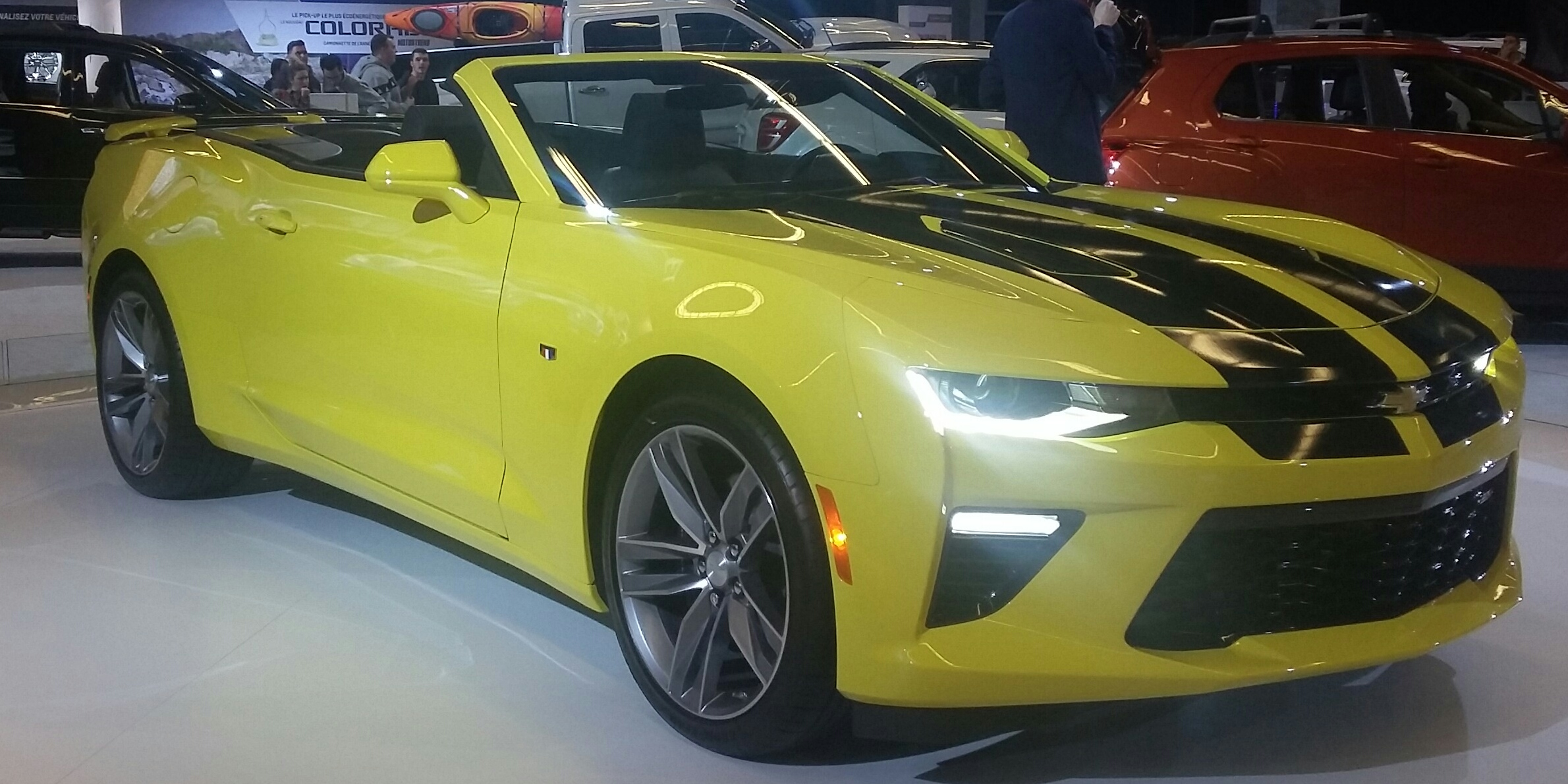
Chevrolet Camaro
"I mean really like chassis manufacturers. How many people make a chassis for say a 69 Camaro now, right?"
The 1969 Camaro is a classic car that a lot of people modify. The point here is that today’s aftermarket can supply more complete, modern-style chassis setups for cars like this.
The 1969 Chevrolet Camaro is a popular classic platform for hot-rodding and chassis swaps. The hosts mention it to illustrate how modern aftermarket support can now provide full chassis solutions for specific older models.
front clip
"There was yeah, you know breaks for Camaro's the thing used to be where you'd buy a front clip and it"
A “front clip” is basically the front section of a car—parts of the body and the mounting structure. Hot-rodders used it as a shortcut to change the front suspension/steering setup.
A “front clip” is a swap of the front-end structure (often including suspension mounting points and steering components) from another vehicle. In older hot-rod practice, people used front clips to quickly adapt steering and suspension geometry to a different car.
Mustang 2 spindle
"maybe it had like a Mustang 2 spindle on it for your Camaro"
A spindle is the part that the wheel mounts to and that helps connect the suspension to steering. People used Mustang 2 spindles as a common donor part when swapping front ends on older cars.
A “spindle” is the steering knuckle component that the wheel hub mounts to and that connects the suspension to the steering system. The hosts reference using a “Mustang 2 spindle” as a common parts-source for adapting front-end geometry in older Camaro hot-rodding.

Ford Mustang
"...a front clip and it You know, maybe it had like a Mustang 2 spindle on it for your Camaro And it made it a ..."
The Ford Mustang is a popular American sports car known for its strong aftermarket support and wide range of builds. The podcast’s reference to a “Mustang 2 spindle” suggests using Mustang 2-era front suspension components as part of a custom or swap-style project. It comes up because these older parts are often used to create a simpler, more serviceable front-end setup for modified cars.
rack and pinion
"And it made it a a front-steer car with a rack and pinion and you thought that that was like wow"
Rack-and-pinion is a steering mechanism that turns the wheels using a gear and a bar. It’s common on modern cars because it gives a more direct steering feel.
Rack-and-pinion is a steering system where a toothed “rack” moves left/right and meshes with a “pinion” gear to turn the wheels. It’s popular because it can provide direct steering feel and efficient packaging compared with older steering designs.
front-steer car
"And it made it a a front-steer car with a rack and pinion and you thought that that was like wow"
“Front-steer” just means the front wheels are what turn the car. It’s the normal steering setup most people expect.
A “front-steer car” means the steering is controlled by the front wheels (as opposed to rear steering or other layouts). In the context of hot-rodding, it highlights the move toward more conventional, predictable steering behavior.
repeatable
"Really in like 2010 and up they put so much more effort into making the brakes safe. Making them repeatable"
“Repeatable” here means the brakes keep working the same way again and again. Instead of getting weaker after repeated hard stops, the car is designed to stay consistent.
In brake talk, “repeatable” means the braking performance stays consistent from one hard stop to the next. Modern brake systems are engineered to reduce fade and maintain predictable pedal feel as heat builds during repeated braking.
rest of mod
"I was into. You know, the rest of mod the the super performance attract a type set ups long long long time ago"
A “restomod” is an older car that’s been restored, but also upgraded with newer technology. The goal is to keep the classic vibe while making it drive and brake more like a modern car.
“Restomod” (restoration + modification) is the idea of keeping a classic car’s look while updating key systems with modern engineering. The hosts bring it up to explain why people still care about older cars even as modern upgrades become more common.
numbers matching
"like why these numbers matching or just restored cars still so popular and pulling the bigger numbers at the auctions"
“Numbers matching” means the car still has its original major parts from the factory. Collectors like it because it’s more original, which can make the car more desirable.
“Numbers matching” means the car’s major components (often engine and transmission) are the original factory parts with matching identification numbers. Collectors value it because it can preserve originality and typically supports higher resale appeal versus heavily swapped builds.
resto modded
"At the auctions the big auctions are, you know, resto modded. They got the performance in the modern, you know"
A “resto mod” is an older car that’s been fixed up and upgraded with newer parts. It keeps the classic style, but it drives and stops more like a modern car.
“Resto modded” refers to a restomod: a classic car that’s been restored cosmetically but modified with modern mechanicals. The goal is to keep the old-car look while improving drivability, braking, suspension, and sometimes powertrain performance.
rim
"But think about the difference when we were growing up the difference in your rim. Most of us growing up either had that, you know, you had craggers."
A rim is the metal part of the wheel that the tire is mounted on. Different rim designs can make it easier to fit bigger brakes and can change how much you can see behind the wheel.
In this context, “rim” means the wheel’s outer metal structure that the tire mounts to. The speaker is contrasting older wheel styles with newer designs that can better clear brakes and show more of what’s behind the wheel.
aluminum slot
"You had craggers. You had the aluminum slot, you know"
This sounds like a description of an older wheel look—an aluminum wheel with visible openings/slots. They’re comparing older wheel styles to newer ones that show more of the brakes.
“Aluminum slot” appears to refer to a wheel design/finish where the wheel has visible slots or cutouts in an aluminum wheel. The speaker is using it as an example of older wheel aesthetics compared to newer, more brake-revealing designs.
craggers
"Most of us growing up either had that, you know, you had craggers. You had the aluminum slot, you know"
“Craggers” are a type of aftermarket wheel style you often see on older muscle cars. They’re mentioned here because wheel design affects the look and how much brake hardware you can see.
“Craggers” are a style of aftermarket wheel associated with classic American muscle-era looks—typically a chunky, multi-spoke design. The mention is about how wheel styles changed over time and affected what you could see (and fit) behind the wheel.
solid aluminum wheel
"Variations of the solid aluminum wheel was out, you know, it's actually making a little bit of a comeback. I've seen the cars of late, but remember that full-on solid rim"
A solid aluminum wheel has fewer gaps, so it can cover up the brakes behind it. The point here is that newer wheel designs show more of the brake hardware.
A “solid aluminum wheel” is a wheel design with fewer openings, which tends to hide brake components from view. The speaker contrasts that with newer multi-spoke wheels that make the brake hardware more visible.
brake caliper
"The brake caliper the brakes the disc the rotary if you will none of that was exposed. None of that was visible or if it was visible it wasn't that visible, right?"
The brake caliper is the part that grabs the brake pads and squeezes them against the spinning brake disc. It’s what slows the car down when you press the brake pedal.
A brake caliper is the clamp that squeezes brake pads against the brake rotor (disc) to slow the car. The speaker is noting that older wheel designs often hid the caliper, while newer wheels can reveal it.
rotary
"The brake caliper the brakes the disc the rotary if you will none of that was exposed. None of that was visible or if it was visible it wasn't that visible, right?"
Here “rotary” just means “rotating.” They’re talking about the spinning brake parts you can see (or can’t see) behind the wheel.
In this sentence, “rotary” is being used loosely to refer to the rotating brake disc/rotor. It’s not describing a rotary engine; it’s just a way of saying “the rotating brake hardware.”
four spoke or five spoke wheels
"They start coming, you know a little better design. You got the four spoke or five spoke wheels and all of a sudden you could see what was behind the wheel"
Four- or five-spoke wheels have gaps that let you see more of what’s behind them. That can make the brakes look more impressive and helps people notice the performance parts.
Four- and five-spoke wheel designs have more open areas than solid wheels, so they can expose brake calipers and rotors. The speaker links this visibility to a “wow” factor and to how people start paying attention to performance hardware.
bigger brakes
"That's pretty. Yeah, but once you had the the bigger diamond wheels, right? Then you can get bigger brakes in there, of course"
“Bigger brakes” means the braking parts are larger than stock. That can help the car stop better and handle repeated braking without overheating.
“Bigger brakes” usually means larger rotors and/or calipers, which can provide stronger braking and better heat handling. The speaker ties it to wheel fitment: once you have wheel designs that clear and reveal the hardware, upgrading to larger brakes becomes more feasible and more visible.
big disc
"And all of a sudden somebody shows up with a big disc [589.9s] big pop and color, you know"
A “disc” is the brake rotor—what your brake pads squeeze to slow the car down. Bigger rotors can help the brakes stay cooler during hard use.
A “disc” here means a disc brake rotor, which is the round metal part that the brake pads clamp onto. Upgrading to larger disc rotors is a common way to improve braking performance because it increases heat capacity and can reduce fade.
full kit
"How to do it right especially if you're not doing a system approach right a full kit [610.6s] Well, here's here's something that I like to explain to people is when you come to willwood"
A “full kit” means you upgrade the whole braking setup at once instead of piecing it together. That helps everything fit right and work correctly together.
A “full kit” means buying a complete brake upgrade package (typically rotor, calipers, pads, brackets, and sometimes lines) rather than mixing unrelated parts. The reason is that braking systems are designed to work together for proper fitment, pad/rotor compatibility, and consistent pedal feel.
Mustang Fox Body
"Well, here's here's something that I like to explain to people is when you come to willwood [615.9s] Um, we're not going to give you one part number for your 62 Impala or your 85 Fox body Mustang"
An “85 Fox body Mustang” is a 1985 Ford Mustang from the Fox-body generation. The takeaway is that brake parts have to be chosen to fit that specific Mustang and your wheel/suspension setup.
The “Fox body Mustang” is Ford’s 1979–1993 Mustang platform, and “85 Fox body Mustang” points to the 1985 model year. In brake-upgrade discussions, that matters because wheel size, suspension geometry, and brake fitment differ across years and setups.

Chevrolet Impala
"Well, here's here's something that I like to explain to people is when you come to willwood [615.9s] Um, we're not going to give you one part number for your 62 Impala or your 85 Fox body Mustang"
A “62 Impala” means a 1962 Chevrolet Impala. The point here is that brake kits aren’t one-size-fits-all—you need the right parts for that exact car.
The Chevrolet Impala is a classic American full-size car, and this “62 Impala” refers to the 1962 model. In the context of Willwood brake upgrades, it’s an example of how brake parts need to be matched to the specific car and its wheel/brake fitment.
pro touring
"So that's kind of like where that whole pro touring [666.9s] market came from [668.5s] and"
Pro touring is the idea of upgrading an older car so it drives and stops like a modern performance car, not just looks cool. It often uses race-inspired parts, especially for brakes and suspension.
Pro touring is a car-building philosophy focused on making classic cars handle and brake like modern performance vehicles while still looking good. The segment ties it to race-derived brake tech and the rise of aftermarket “full kit” solutions for older platforms.
Detroit speed
"So that's kind of like where that whole pro touring [666.9s] market came from [668.5s] and [673.0s] So we're working with manufacturers like Detroit speed that are coming out with stuff that was just revolutionary like"
Detroit Speed is a company that makes aftermarket parts for classic cars. Here they’re mentioned as another brand bringing new, improved tech to the pro-touring scene.
Detroit Speed is an aftermarket brand known for suspension and chassis components for classic cars, and they’re referenced here as a source of “revolutionary” brake-related tech. In this context, it highlights how multiple manufacturers contributed to the pro-touring ecosystem.
track day
"It was the track day that they realized they messed up because yeah, it's one thing [721.2s] You know to look good and we talked about aesthetics"
A track day is when people drive their cars on a real race track that’s closed to normal traffic. It’s a chance to push the car harder—especially braking—without street traffic risks.
A track day is an organized event where drivers take their own cars (or rented cars) onto a closed race circuit. It’s where braking, tires, and driving technique get tested in a way normal street driving usually doesn’t.
aesthetics
"it's one thing [724.2s] It's another thing to be out of the track and continually get you know"
They’re using “aesthetics” to mean looks. The point is that looking good isn’t the same as being fast and consistent on a track, where braking matters a lot.
In this context, “aesthetics” means how the car looks rather than how it performs. The hosts contrast appearance with real track capability—especially braking performance when you’re being challenged in corners.
breaking
"When somebody's out breaking you when somebody go harder into the you know into the turn [733.2s] And and out break you it is such an easy way for people to get around you for you to you know get past"
They’re talking about braking into corners—slowing down late and controlled. Good braking helps you enter the turn at the right speed and can let you pass other drivers.
In performance driving, “breaking” here means braking—how late and how hard you slow the car into a corner. Braking strongly affects lap time because it determines your entry speed and how easily you can get past other cars.
optimum streetcar challenge
"Yeah, I think the optimum streetcar challenge was huge because it really put [752.4s] A lot of these type of cars"
The Optimum Streetcar Challenge is a track competition for street cars. The point is to see which cars and upgrades can perform well when you’re really driving them hard on a circuit.
The “Optimum Streetcar Challenge” is a motorsport-style event/series that focuses on street-legal cars and how well they can perform on track. It’s notable because it encourages real-world competition and highlights which upgrades (like braking) actually matter.

Chevrolet C5
"You know there's been a lot of upgrades on you know [756.8s] C5 Corvettes and c4s and stuff over the years, but like it put a lot of people on the track"
A C5 Corvette is a specific generation of the Chevrolet Corvette. It’s a common car to modify for track days, including upgrades that help it brake harder and stay consistent.
The Chevrolet Corvette C5 is a generation of Corvette known for being a popular platform for track and performance upgrades. When people mention “C5 Corvettes” in the context of braking, they’re usually talking about how owners improve stopping power and fade resistance as they push the car harder.
200 treadwear tire
"And this is how much we can get out of a 200 treadwear tire and like I said earlier"
Treadwear is a number that hints how long a tire’s tread should last. A “200 treadwear” tire usually means a stickier, softer tire that can wear out faster, but it tends to grip better for driving hard.
“Treadwear” is a tire rating (from the Uniform Tire Quality Grading system) that’s meant to correlate with tread life. A “200 treadwear” tire is typically a relatively soft, performance-oriented compound compared with higher numbers, so it can wear faster but offer better grip—especially on track.
slick
"You can get a 200 treadwear tire to do almost as good as a slick"
A slick tire has no tread grooves. That lets it make maximum rubber contact for grip on dry pavement, which is why it’s mainly used for track driving.
A “slick” is a tire with no tread pattern, designed to maximize contact and grip on dry track surfaces. Because slicks can’t evacuate water like treaded tires, they’re typically track-only and offer very high traction when conditions are right.
down for us
"but it's like you said it's also tire It's also now a lot of down for us."
They’re basically saying that as cars get faster, you end up braking harder and more often. That creates more stress on the brakes, so brake technology has to improve too.
In this context, “down” is being used as shorthand for brake demand/usage—how much braking work the tires and brakes have to handle as power increases. More speed and acceleration generally means more energy to manage when slowing, which pushes brake development.
arrow
"So you're seeing arrow come into play. So all these things, right continually pushing on those brakes so"
“Arrow” sounds like a specific product or brand they’re talking about for track braking. This clip doesn’t give enough detail to say exactly which part it is.
“Arrow” here appears to be a brand or product line related to braking/track equipment, mentioned alongside “tire” and “brakes.” Without additional context in the snippet, it’s not possible to confidently identify which specific arrow-branded component they mean.
Austin Barns
"austin barns the the reigning 2025 champ of o u s c i or the optima challenge"
Austin Barns is mentioned as the current champion of the Optima Challenge in 2025. The discussion uses his car to talk about brake testing and development.
Austin Barns is referenced as the reigning 2025 champion of the Optima Challenge (OUSCI). The hosts connect his car’s history to long-term brake development and testing.
Optima Challenge
"austin barns the the reigning 2025 champ of o u s c i or the optima challenge"
The Optima Challenge is a competition where cars are pushed hard to prove durability and performance. In this segment, it’s used as a reason to talk about brake and tire development.
The Optima Challenge (also referenced as OUSCI) is a competition that’s used in the conversation as a benchmark for real-world performance and durability. The hosts imply that brake and tire development is validated through repeated track-style use in this kind of event.
r and d
"and that car Was used for so much r and d with brakes going back 89 years ago so"
“R and D” means research and development—basically testing and improving a product. They’re saying the car was used to help develop better brakes.
“R and D” stands for research and development—using testing and iteration to improve products. Here, the car is described as being used for brake R&D, meaning it served as a platform to evaluate and refine braking performance over time.
downforce
"Coming all full circle now that car has got more horsepower more downforce And if you asked austin and you asked jake, they're both really really good drivers, but austin is"
Downforce is the “suction” effect that presses the car down onto the track. When it’s higher, the tires can grip harder, so the car can corner faster and feel more stable.
Downforce is the downward aerodynamic force that pushes a car’s tires harder onto the road or track. More downforce generally improves grip, especially in corners, because the tires can generate more lateral force without slipping.
evolving and elevating what we're doing
"But when you start realizing that these guys are going as fast as most race cars now You know, you you you got to keep Evolving and elevating what we're doing I'd almost argue that"
They mean that when cars get faster, you can’t just keep using the same setup and methods. You have to keep improving the whole package—car setup and how you drive it.
This is a performance-development concept: as cars get faster (more power and downforce), the supporting systems—setup, driving coaching, and engineering—must also improve. It’s essentially the idea that technology and technique have to advance together to keep up with higher speeds.
aftermarket and street kind of stuff
"I'd almost argue that In the sort of aftermarket and street kind of stuff Non-sanction racing. We're probably going faster"
This phrase is contrasting factory/track-focused racing with cars built using aftermarket parts and driven in street contexts. The key idea is that modern street builds can be developed and tuned to achieve track-level performance, blurring the line between “street” and “race” cars.
non-sanction racing
"In the sort of aftermarket and street kind of stuff Non-sanction racing. We're probably going faster Right, there's no limit on displacement and horsepower and some of these right categories and right thousand is the new 400 horsepower"
Non-sanction racing means the event isn’t run under an official rulebook from a major racing organization. That can lead to fewer restrictions on what cars can do and how fast they can go.
Non-sanction racing refers to events that aren’t governed by a specific official sanctioning body with standardized rules. Because the rules can be looser, competitors may run setups and performance levels that wouldn’t be allowed in sanctioned series.
displacement
"Non-sanction racing. We're probably going faster Right, there's no limit on displacement and horsepower and some of these right categories and right thousand is the new 400 horsepower Absolutely agree with you, right? So I think"
Displacement is basically how big the engine is, based on the size and number of cylinders. Racing rules often use it to group cars, because bigger engines tend to have more potential to make power.
Displacement is the total volume of all the engine’s cylinders, usually measured in liters or cubic centimeters. It’s one of the key specs used in racing rules because it correlates (imperfectly) with how much air/fuel an engine can potentially burn and how much power it can make.
autocrossing
"But now guys are going to those events and they're autocrossing and They're going out of their way not to put it on a trailer."
Autocrossing is a timed driving event on a course made with cones. You drive through tight turns and quick changes, so the brakes and tires get worked hard.
Autocrossing is a motorsport where drivers compete one car at a time on a temporary course marked out with cones. The goal is to complete the course as quickly as possible, which heavily stresses tires, brakes, and suspension control.
air conditioning
"So they want air conditioning and they want all these Necessities that they're used to having come creeper creature comforts."
Air conditioning is the system that cools the cabin. The hosts are saying modern car enthusiasts expect it even for performance events.
Air conditioning is a comfort system that can affect vehicle packaging and weight, and in some cases it can influence how drivers experience long events. In this context, it’s mentioned as a “necessity” modern enthusiasts expect even when they’re driving hard to events.
test mule
"Hey, can you imagine kevin the test environment? Imagine being a quote air quotes here test mule For a performance slash racing side of the of the braking company Like your job is to beat the brakes off the car."
A test mule is basically a “practice” or “prototype” car used to try out new tech. Engineers drive it to see how the brakes (or other parts) behave under tough conditions.
A test mule is a prototype vehicle used to evaluate new parts or systems before the final production design is ready. In this segment, it’s specifically framed as a “test mule” for brake development—meaning the car is driven hard to find failure modes and performance limits.
alloys
"Yeah, no doubt compounds got to be in the equation Alloys, um, man all about it. The management is gonna be huge."
Alloys are mixed metals chosen to get better properties. Brake parts get very hot, so the metal mix helps them stay strong and resist damage.
Alloys are metal mixtures engineered for specific properties like strength, heat resistance, and weight. For braking hardware, alloy selection matters because brake components see extreme temperatures and must resist warping and wear.
brakes off these rides
"You actually see these things getting tested and people actually out beating on them beating the brakes off these rides"
They’re describing testing brakes by pushing them very hard repeatedly. That helps show whether the brakes keep working well and don’t wear out too fast under stress.
The phrase describes testing brake performance by repeatedly hard-braking (“beating on them”). This kind of abuse testing is used to evaluate durability, heat resistance, and fade behavior rather than just everyday stopping.
Indianapolis 500
"been a Crew chief for the indianapolis 500"
The Indianapolis 500 is a major American open-wheel racing event. Mentioning it signals that the person Willwood hired has experience at the highest level of motorsport, which can translate into better engineering and race-focused brake development.
brake pads
"Um, how can we make brake pads last longer? What compounds?"
Brake pads are the replaceable parts that squeeze against the brake rotor to make the car slow down. Better brake pads can last longer and keep braking strongly even when you brake hard repeatedly.
Brake pads are the friction material that clamps against a brake rotor to slow the car down. Their design—especially the friction material formulation—directly affects how long they last and how consistently they perform under repeated hard braking.

Ford F350
"So if we come up with brakes for like a uh, which is a huge business for us like A truck that you would tow your race car to the track with a late model f 250 or f 350 that you've got a 28 foot trailer in the race car inside"
The Ford F-350 is a heavy-duty truck built to tow trailers and carry heavy loads. If you’re taking a race car to a track, you might use a truck like this to pull the trailer. Because it tows so much weight, the brakes have to work hard, so brake upgrades and testing matter.
The Ford F-350 is a heavy-duty pickup truck designed for towing and carrying loads. In the podcast context, it’s mentioned as the kind of truck someone might use to tow a race car to the track, which makes it relevant to brake product development for heavy, high-stress use. The discussion highlights that towing vehicles need strong braking performance because they’re often hauling large weight.

late model f 250 or f 350
"A truck that you would tow your race car to the track with a late model f 250 or f 350 that you've got a"
They’re talking about Ford F-250 and F-350 trucks—the big pickups people use to tow race cars. Since you’re hauling a heavy trailer, you need brakes that can handle long downhill driving without overheating.
This refers to Ford F-250 and F-350 trucks used as tow vehicles for race cars. These heavy-duty pickups are common for hauling because they can pull large trailers, but they also need braking systems that can handle long descents and repeated stops.
hot rod show
"Well, you're also probably going to go to a hot rod show and take your hot rod in it, right?"
A hot rod show is a car event where people bring their modified cars to show them off. The point here is that the same truck might be used for towing to the track and also to car shows.
A hot rod show is an event where enthusiasts display modified cars, often with an emphasis on styling and performance. In this context, it explains why towing trucks get used for both track days and car-show trips—so brake performance needs to work in both scenarios.
repeatability
"The repeatability especially coming down hill is what we're trying to build into all of the systems"
Repeatability means your brakes keep working the same way every time you use them hard. It’s about not getting weaker or inconsistent after repeated stops or long downhill driving.
In braking systems, repeatability means the brakes perform consistently lap after lap or run after run without fading or changing feel. The goal is predictable stopping power even after repeated heavy use, like long descents.
brakes are overheated
"how many people we've had had to wait and hold up all the brakes are overheated or the brakes too hot"
Overheated brakes means the brakes got too hot from heavy use. When that happens, they can stop working as well, so you may have to slow down and let them cool.
Brake overheating happens when friction material and brake hardware get too hot, often during repeated hard braking. Heat can cause brake fade (reduced stopping power) and can force drivers to wait for cooling before continuing.
rotational mass
"especially the overlanding guys. They're adding all of this weight. Yeah and 35 and plus Plus size tire So now you've got all this rotational mass all this extra weight"
It means the weight of parts that are spinning, like wheels and tires. Spinning weight is harder to slow down, so it can make braking feel less effective.
Rotational mass is the amount of weight that’s not just sitting still, but is also spinning—like wheels and tires. Because it takes extra energy to speed up or slow down rotating parts, it can make braking and acceleration feel worse, especially when you add heavier tires and wheels.
plus size tire
"They're adding all of this weight. Yeah and 35 and plus Plus size tire So now you've got all this rotational mass all this extra weight"
A plus-size tire is a bigger tire than what the vehicle came with. Bigger tires can be heavier and can make braking work harder, especially on long descents.
A plus-size tire is a larger tire size than stock, usually paired with wheel/tire upgrades. Bigger tires add weight and can change how the brakes, suspension, and drivetrain work together—often increasing the heat and workload on the braking system.
stock break
"So now you've got all this rotational mass all this extra weight and they're still on a stock break And then they go down the i70 and they go man, I had all kinds of problems."
“Stock brakes” are the original brakes the truck came with. If you add weight and bigger tires, those original brakes can overheat and stop working as well.
“Stock brake” means the factory braking system, without upgrades like larger rotors, better pads, or improved cooling. When you add weight and larger tires, the factory brakes may struggle to shed heat, leading to brake fade or reduced stopping power.
dissipating that heat
"And then they go down the i70 and they go man, I had all kinds of problems. Well, yeah We're not dissipating that heat."
When you brake a lot, the brakes get hot. Dissipating heat means getting that heat out; if they can’t, braking can feel weaker because the brake surfaces overheat.
Dissipating heat is how effectively the brakes can shed the heat generated during repeated or sustained braking. If the system can’t get rid of that heat fast enough, brake performance can drop due to brake fade and reduced friction.
managing the system
"We're not dissipating that heat. Well, you know, we're not managing the system. So Man, the evolution of that is just tremendous"
It means you have to control how hard the brakes are working and how hot they get. If you don’t—especially with extra weight—brakes can overheat and fade on long downhill stretches.
In this context, “managing the system” means controlling brake heat and load—through driving technique (like engine braking) and/or brake upgrades that improve cooling and friction stability. Without that management, heavier vehicles on larger tires can overwork the factory brakes on long grades.
i70
"And then they go down the i70 and they go man, I had all kinds of problems. Well, yeah We're not dissipating that heat."
I-70 is a big highway in the U.S. In some areas it goes through mountains with long downhill stretches, which can overheat brakes if the vehicle isn’t set up for it.
I-70 is a major U.S. interstate that includes long mountain grades in places like Colorado. Those sustained descents are a classic scenario where brake heat buildup becomes obvious, especially with heavier vehicles and larger tires.
horsepower
"It's it's really like the last 10 to 15 years that it's really changed. Well, and you know, I'm gonna throw one more in there besides Tire besides horsepower and arrow is and you just hit it."
Horsepower is how strong the engine is. More power usually means the vehicle can accelerate harder, which can lead to more demanding braking in real driving.
Horsepower is a measure of engine power—how much work the engine can do over time. In braking discussions, it’s often mentioned because higher-power vehicles tend to be driven harder, which can increase overall load on the braking system.
weight
"It's weight whether it's your Overlanding guy or hey now"
Heavier vehicles have more “energy” when moving, so you have to use the brakes harder to slow them down. That can make brakes overheat faster on long descents.
Vehicle weight directly affects braking because stopping requires converting kinetic energy into heat at the brakes. More weight means more energy to remove, which increases brake heat buildup and can worsen fade if the brakes aren’t upgraded.
brake systems
"So we have to kind of sell a lot of these brake systems all a car [1516.0s] Because you might be building a pro street car"
When someone says “brake systems,” they mean everything working together to stop the car. It’s more than just the pedal—there are parts like the pads and rotors that do the actual stopping.
“Brake systems” is the full set of parts that slow and stop a car, not just the brake pedal. It typically includes components like calipers, rotors, pads, brake lines, and sometimes upgrades for heat and fade resistance.
pro street car
"Because you might be building a pro street car [1520.6s] And now the big thing with a pro street car is like 17 or larger wheel in the front and a 15 in the rear, right?"
A “pro street car” is a heavily modified car meant to look cool and go fast, but still be driven on the street. People often build them for drag racing-style performance while keeping them usable outside the track.
A “pro street car” is a modified street car built to look aggressive and run strong, often with drag-racing-focused hardware. It’s usually a compromise: it’s streetable enough to drive around, but set up to perform well at drag strips or events.
17 or larger wheel in the front and a 15 in the rear
"And now the big thing with a pro street car is like 17 or larger wheel in the front and a 15 in the rear, right? [1527.1s] So now and oh man, and I'm also going to do drag week and you're like, wow, okay"
That’s talking about using different wheel sizes front vs rear. Changing wheel and tire sizes can affect grip and how the car behaves when you accelerate or brake hard.
This describes staggered wheel sizing—larger wheels/tires up front and smaller ones in the rear (or vice versa). Staggering changes how the car grips and how it fits the suspension and braking setup, which matters for traction and stability during hard driving.
Drag Week
"So now and oh man, and I'm also going to do drag week and you're like, wow, okay [1532.0s] So we've now it needs to be beautiful."
“Drag Week” is like a multi-day drag racing event where you also have to drive the car between race locations. That means the brakes have to keep working reliably, not just for one run.
“Drag Week” is an event where cars run repeated drag races over multiple days while also driving between tracks. Because it combines street driving and track passes, brake durability and heat management become critical.
aesthetically look good
"So we've now it needs to be beautiful. It needs to aesthetically look good [1537.2s] But you also need to drive this thing however miles it is between tracks, right?"
Here they’re talking about how the car looks, not just how it drives. On modified cars, the same choices that help performance can also change the appearance.
In this context, “aesthetically look good” refers to visible fitment and styling choices that often come with performance builds. For example, wheel/tire sizing and brake hardware selection can affect how the car looks in addition to how it stops.
master cylinder
"And it used to be so different because it was just we have this we have that and here's the master cylinder for it and that's it But now we have all of these other options for them."
The master cylinder is the part you push with the brake pedal. It turns your pedal force into hydraulic pressure that makes the brakes clamp.
The master cylinder is the hydraulic pump in a brake system that converts pedal force into pressurized brake fluid. Its bore size affects how much pressure you get and how the rest of the system (calipers/lines) responds.
match all the parts
"Well, I think on that note to me a brake system is kind of like, you know, when we build an engine You have to match all the parts. You can't just put a you know 8000 rpm cam and then you put the long runner intake and this and that like it's all got a match"
The idea is that brakes are a system, not a pile of parts. If you upgrade one piece (like the “big” part) without setting up the rest to work with it, the brakes won’t behave the way you expect.
The hosts describe brake-system “matching,” meaning the rotor size, caliper piston area, and master cylinder sizing must work together as a balanced hydraulic/mechanical system. If you change one part for aesthetics or a single performance goal without matching the rest, the system can feel wrong and underperform.
rotor diameter
"There's a big matching on right, uh rotor diameter caliper Uh piston area your master, you know, all those things are everything's going to be out of balance"
Rotor diameter is how big the brake disc is. Bigger discs can help the brakes stop harder, but the rest of the brake system has to be set up to work with it.
Rotor diameter is the size of the brake disc, and it strongly influences braking leverage and torque. A larger rotor can provide more stopping force potential, but it must be matched with caliper piston area and the master cylinder so the pedal feel and pressure are correct.
caliper piston area
"rotor diameter caliper Uh piston area your master, you know, all those things are everything's going to be out of balance"
Inside the brake caliper are pistons that squeeze the pads against the rotor. The piston area affects how hard they squeeze for the same brake-fluid pressure.
Caliper piston area is the effective hydraulic surface area inside the brake caliper that clamps the pads. It determines how much clamping force you get for a given hydraulic pressure, so it must be matched to rotor size and the master cylinder bore.
power brakes
"Yeah, it's got a huge cam in it and I want to run power brakes and you go, right? You can't do that"
Power brakes use an assist system to make the brakes easier to press. The takeaway is that you still have to match the brake parts so the system works correctly together.
Power brakes are a brake system that uses a booster (often vacuum or hydraulic assist) to multiply pedal force. The segment argues you can’t assume power-brake hardware will work with every build—especially when the rest of the hydraulic sizing and leverage isn’t matched.
manual brake
"It's stopping 4000 horsepower It's manual brake. We got to make sure we have the right leverage and the right bore size master"
Manual brakes don’t have power assist. Because of that, the pedal and hydraulic parts have to be chosen so you can still stop effectively without an overly heavy pedal.
A manual brake setup relies on the driver’s leg force rather than a booster to generate hydraulic pressure. That makes correct leverage and master cylinder bore sizing critical so the pedal effort and braking response are usable.
bore size master
"It's manual brake. We got to make sure we have the right leverage and the right bore size master Feeding everything and if we if you work with us, we will get all that to work"
The master cylinder bore size is the size of the cylinder inside the brake master. It changes how much brake pressure you get when you press the pedal, which is crucial for getting the pedal feel right.
Master cylinder bore size is the diameter of the master cylinder’s internal piston. It affects the hydraulic pressure and fluid volume delivered per pedal stroke, which changes brake leverage and pedal feel—especially when converting to or using manual brake setups.
leverage
"It's manual brake. We got to make sure we have the right leverage and the right bore size master Feeding everything and if we if you work with us, we will get all that to work"
Leverage here means how easily the brake pedal turns your foot force into braking pressure. With manual brakes, getting this right helps you avoid a pedal that’s too hard or too touchy.
In this context, leverage refers to the mechanical advantage between the brake pedal and the hydraulic system. With manual brakes especially, leverage affects how much pedal travel and force are needed to achieve the required hydraulic pressure.
disc brakes
"Jeff Gordon won three of his four championships on willwood disc brakes. His car is all stopped really well. ...it had disc brakes on it and I had brake fade like crazy"
Disc brakes are brakes that use a spinning metal disc. When you press the brake, pads clamp the disc to slow the car down.
Disc brakes use a rotor (disc) clamped by brake pads with a caliper to slow the car. Compared with older drum setups, they generally manage heat better, which matters a lot in racing where braking is repeated hard.
brake fade
"I remember times where I entered roundy round events. And it got really sketchy at the end because initially I didn't do a breakup grade... it had disc brakes on it and I had brake fade like crazy"
Brake fade is when your brakes stop working as well because they get too hot. In racing, that can happen after repeated hard stops, so the car takes longer to slow down.
Brake fade is the loss of braking effectiveness when brake components overheat. As the pads and rotor get too hot, friction can drop and the driver may feel a weak, inconsistent pedal or reduced stopping power.
drag racing
"Uh size of rotor. Is there a difference between drag racing? Say road course racing or autocross?"
Drag racing is mostly about accelerating in a straight line. Brakes still matter, but the way heat builds and how you use the brakes differs from road racing or autocross.
Drag racing is a straight-line motorsport where braking demands are different from cornering-focused events. Brake setups are often chosen based on how quickly heat builds and how often you need repeated hard stops.
road course racing
"Is there a difference between drag racing? Say road course racing or autocross?"
Road course racing is racing on a track with lots of turns. You brake hard over and over, so brakes can overheat and lose effectiveness if they’re not set up right.
Road course racing involves repeated braking into corners, which can quickly overheat brakes. That’s why pad compound, rotor size, and caliper piston area all need to be matched to the event’s heat and braking frequency.
pistons
"But then I show them that the square area of the pistons is really small. And they go what see we're on a small little rotor like an 11 inch rotor"
The pistons inside the caliper push the brake pads. How big the piston area is affects how hard the pads squeeze the rotor.
In a disc brake, pistons sit inside the caliper and move the pads when hydraulic pressure is applied. Because clamping force scales with piston area, smaller piston area can mean less force even if the caliper body looks “bigger.”
torque
"But then if you've got an 18 inch wheel or a 19 inch wheel and a 14 inch rotor now we have all that torque So if we put that little caliper way out here, it'd be too much brake"
Here, torque means the turning force the brakes apply to slow the wheels down. Bigger effective leverage (like rotor size and caliper placement) can increase that stopping force.
In braking, torque is the twisting force at the wheel that resists rotation and slows the car. It depends on factors like pad friction, clamping force, and the effective lever arm created by rotor size and caliper position.
drift
"What I learned from say the guys that professionally drift What I learned from them may cross over to like an asphalt circle track car I'll say hey"
They’re talking about using what professional drifters do as a guide for brake pad setup. Drifting puts brakes through repeated hard use, including when they’re cold and when they heat up.
The hosts reference professional drifting as a source of brake-pad knowledge. Drifting involves repeated hard braking and rapid temperature changes, so pad choice and consistency matter.
ambient temperature
"So we have to find a brake pad that's going to be balanced and work in both you know a cold or or What's the right word like ambient temperature all the way to 76 or 800 degrees?"
Ambient temperature is just the outside air temperature. Brakes behave differently when they’re cold, so pad choice has to work from cool weather up to normal hot braking.
Ambient temperature is the air temperature around the car, which strongly affects brake pad performance when the brakes are cold. Pad compounds are often chosen to maintain predictable friction as temperatures rise from ambient to operating range.
willwoods
"My daily driver's got willwoods on it and I run just our regular old street pad and I haven't changed pads in 30,000 miles on that car"
Willwood makes aftermarket brake parts. They’re often used when you want stronger braking than stock, especially if you drive hard or go to the track.
Willwood is a performance-brake brand known for upgrading brake calipers and related hardware for track use. In this segment, the host mentions running Willwood on a daily driver to improve braking capability while still using street pads.
coefficient of friction
"I got to run a little bit hotter pad like a pad that's got more coefficient of friction [1874.0s] And it'll take more temperature."
Coefficient of friction is a number that describes how effectively two surfaces resist slipping against each other. For brake pads, a higher coefficient of friction generally means more braking force, especially when the pad reaches the temperature range it was designed for.
heat treating
"So think of [1934.2s] betting your brake system like heat treating [1937.5s] And if you know anything about heat treating if I want to have an axle rock weld so that it's 53"
Heat treating is a controlled heating process used to change material behavior. The host is saying brakes are similar—you should gradually get new pads hot in the right way instead of shocking them all at once.
Heat treating is a manufacturing process where material properties are changed by controlled heating in steps. The host uses it as an analogy for brake bedding/break-in: you don’t go from “cold to fully hot” instantly; you build up heat gradually so the friction surfaces develop the right characteristics.
Request an Explanation
Heard something you'd like explained? We'll add it to this episode.
Sign in to request explanations for terms you heard.
Want to learn more?
Browse our glossary for plain-English explanations of automotive terms, jargon, and concepts.
Help improve this episode
See something that's not quite right? Our annotations are AI-generated and can sometimes miss the mark. Click the flag icon on any annotation to suggest a correction.