
Billions burned: The great EV reckoning
About this episode
The hosts dig into the EV market’s sharp reset, comparing huge automaker write-downs and canceled programs across the U.S., Europe, Japan, and China. They break down why expensive, high-end EV strategies stalled, how tariffs and the end of tax credits changed the math, and why some companies are pivoting to hybrids, partnerships, or cheaper models. The conversation also covers dedicated EV platforms, software struggles, and which brands still seem committed to an electric future.
EV sales dropped 27% in the first quarter of 2026
"EV sales dropped 27% in the first quarter of 2026 and the reasons are obvious..."
EV sales are often tracked by quarter (three-month periods). A big drop like 27% usually means fewer people are buying EVs right now, often because prices or incentives changed.
Quarterly EV sales changes are a key signal of how quickly consumer demand and policy shifts are affecting the market. A 27% drop suggests demand is being squeezed by pricing, incentives, and competitive pressure, not just product quality.
federal tax credit
"...when the Trump administration killed the federal tax credit. Then you throw in the impact of tariffs..."
A federal tax credit is like a discount from the government that lowers what you pay for an EV. If it gets removed, EVs usually cost more to buy, so fewer people purchase them.
A federal tax credit is a government incentive that reduces the amount of tax a buyer owes, making EVs cheaper at the point of purchase. When the Trump administration killed the federal tax credit, EV demand typically drops because the effective price advantage disappears.
tariffs
"Then you throw in the impact of tariffs which force companies to cancel some of these all together instead of eating the cost of importing them..."
Tariffs are extra taxes on imported products. If EVs or parts cost more to import, companies may stop selling certain models or change their plans.
Tariffs are taxes placed on imported goods. In the EV context, tariffs can raise the cost of bringing vehicles or components into a country, forcing automakers to cancel or redesign plans rather than absorbing the added expense.
EV sales rose over 26% in Q1
"Meanwhile, it's opposite day in Europe. EV sales rose over 26% in Q1 sounds great..."
They’re saying EV sales grew a lot in Europe during the first quarter. But they also warn that the growth may be coming from cheaper EVs, not necessarily from stronger demand for every brand.
The episode contrasts U.S. weakness with Europe’s growth, citing a 26%+ rise in EV sales in Q1. The hosts then qualify that much of the increase is driven by lower-priced imports, which changes how sustainable the growth is for traditional automakers.
cheaper Chinese EVs crowding out legacy automakers
"...a ton of that growth has come from cheaper Chinese EVs Which are spreading around the continent and crowding out legacy automakers..."
“Crowding out” means one kind of product is taking the sales that used to go to other companies. The episode claims cheaper Chinese EVs are stealing market share from older, established automakers.
“Crowding out” describes how one group’s market share expands at the expense of another. Here, the hosts argue that cheaper Chinese EVs are taking sales from established (“legacy”) automakers, increasing competitive pressure and forcing strategy changes.
wait-and-see position
"I don't know car companies spent most of 2025 in a wait-and-see position But now they've waited and seen enough and started to make big moves..."
“Wait-and-see” means companies held back on big decisions until they had clearer information. In EVs, that can mean delaying new models or changing plans after early sales don’t match expectations.
A “wait-and-see” approach means automakers delay major commitments until they’re more certain about demand, policy, and costs. In EVs, this often shows up as slowing launches, pausing programs, or revising investment plans after early results.
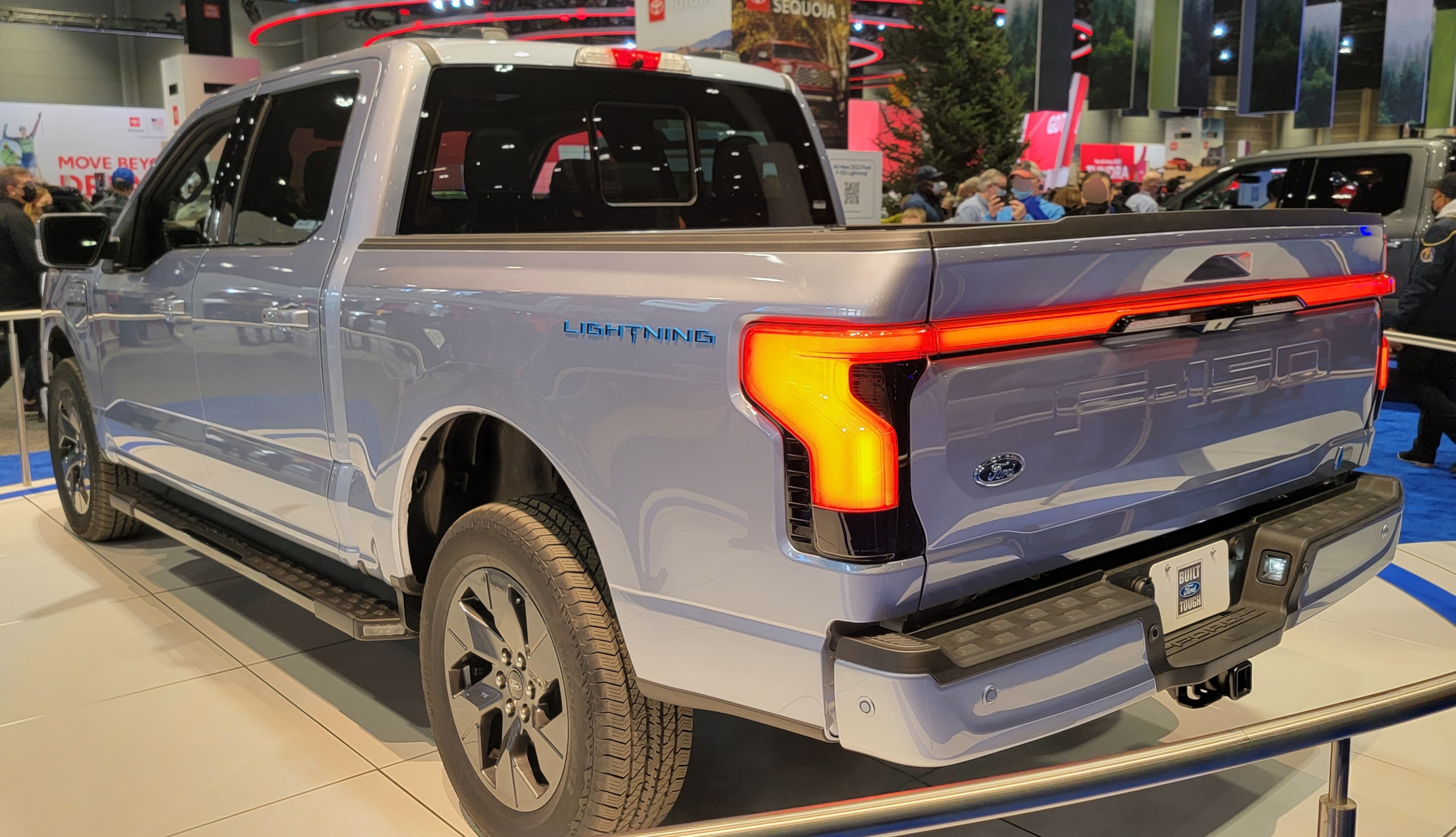
Ford F150
"I don't know car companies spent most of 2025 in a wait-and-see position But now they've waited and seen enough and started to make big moves Ford killed its once Revolutionary f-150 lightened pickup Honda killed its next gen EVs that were supposed to be built and sold in America and lost over 15 billion dollars in the process"
The Ford F-150 is a large pickup truck used for everyday driving and work. The podcast is talking about Ford making big updates to its electric version, the F-150 Lightning. That matters because it changes how the truck drives and what buyers can expect.
The Ford F-150 is a full-size pickup truck and one of the most widely known trucks in the U.S. The podcast references Ford making major changes to the F-150 Lightning, describing it as a more significant, “revolutionary” step than before. It comes up because electric pickup strategy and product updates can strongly affect what buyers expect from the model line.
Volvo
"[134.5s] Nissan's walked things back in shifted directions Volvo's killed an entire model line and more"
They mention Volvo as an example of a company changing its lineup because the EV transition is harder than planned. When sales or costs don’t line up, automakers may pause or cancel models.
Volvo is cited as another automaker reacting to EV uncertainty by cutting or ending parts of its lineup. That’s a common theme in the EV industry: companies revise product roadmaps when demand, costs, or regulations shift.
Nissan
"[134.5s] Nissan's walked things back in shifted directions Volvo's killed an entire model line and more"
They’re talking about Nissan making changes to its electric-vehicle plans. The idea is that automakers sometimes commit to EVs quickly, then adjust when the market and technology don’t go as expected.
The hosts mention Nissan as an example of an automaker changing course on EV strategy. In EV “reckoning” discussions, this usually refers to shifting timelines, product plans, or investment priorities after early expectations didn’t match reality.
EV Union
"[149.6s] So today it's the state of the EV Union how automakers are reacting to the uncertainty"
“EV Union” is the hosts’ way of talking about the whole electric-car transition—rules, companies, and consumer demand all affecting each other. It’s like the big system around EVs, not one specific group.
“EV Union” is a framing for how automakers, regulators, and markets are coordinating—or clashing—around electric-vehicle policy and adoption. It’s essentially shorthand for the broader EV transition environment, not a single organization.
over correcting
"[155.2s] Whether they're over correcting and what comes next by the way"
It means companies might react to problems by changing their plans too much. Rather than fixing things in a balanced way, they may swing to the other extreme.
“Over correcting” describes when automakers respond to EV setbacks by swinging too far in the opposite direction. Instead of making measured adjustments, companies may delay launches, reduce investment, or change product strategy more aggressively than necessary.
clean sheet EVs
"[257.5s] I mean look there's no question that some of the early EVs and we can get into this a little later [262.3s] We're half-hearted efforts, right? They were rushed out the door [264.6s] They weren't ground up clean sheet EVs and that makes them not the best EV, right?"
“Clean sheet EVs” are electric vehicles designed from the ground up around EV architecture, rather than adapting an existing gas-car platform. The hosts argue that early “half-hearted” EVs weren’t built this way, which can limit efficiency, packaging, and overall competitiveness.
ground up
"[262.3s] We're half-hearted efforts, right? They were rushed out the door [264.6s] They weren't ground up clean sheet EVs and that makes them not the best EV, right?"
“Ground up” means the car was designed from the beginning, not modified from something else. For EVs, that usually helps the car fit the battery and electric parts more efficiently.
“Ground up” here means building a vehicle from scratch instead of adapting an existing platform. In EV context, the hosts contrast rushed adaptations with purpose-built designs that can better integrate battery placement, cooling, and structural requirements.
EV
"They all still have one true core belief is that the future will be electric. We are just now going to take longer to get there..."
EV means an electric car that runs on batteries instead of gasoline. The point here is that car executives all seem to agree electricity is the future, even if it takes longer than they first expected.
EV stands for electric vehicle. The hosts are discussing how automakers’ leadership believes the industry’s long-term direction is electric, even if timelines and execution vary.
high gas prices
"...the overall uncertainty in the economy the high gas prices. Obviously there were different factors then but still like there are a lot of signs around us that point to this..."
When gasoline gets expensive, driving a gas car costs more. That can make people more interested in electric cars, especially during times when the economy feels shaky.
High gas prices can accelerate consumer interest in EVs and other alternatives because operating costs rise for gasoline vehicles. The hosts connect it to broader economic uncertainty and industry decision-making.
2008
"So is 2008 next I mean, it's a fair question... With all these write downs that we're seeing..."
They’re comparing today’s situation to 2008, when the economy and car industry went through major trouble. The idea is that big bets and uncertainty can lead to painful consequences.
The hosts reference 2008 as a historical parallel for economic stress and industry write-downs. It’s used to frame the current EV and investment cycle as potentially leading to another downturn.
frame-based vehicles
"...Next Nissan and their plans the XTERRA the frame-based vehicles at one point. He literally stopped the conversation said this feels like 2005..."
Frame-based vehicles are built on a heavy-duty frame underneath the car. That can make them tougher for rough use, and it also affects how expensive and flexible the vehicle is to build.
Frame-based vehicles use a separate ladder frame (a rigid chassis) to support the body, which can improve durability and off-road toughness. The hosts contrast this with other approaches (like unibody construction) to highlight how platform choices affect cost, flexibility, and product planning during uncertain times.

Nissan XTerra
"...Byron heard one of our editors mentioned last week when we were talking about Next Nissan and their plans the XTERRA the frame-based vehicles at one point..."
The Nissan Xterra is a rugged SUV that’s built on a sturdy frame, like many off-road vehicles. The discussion uses it to talk about whether automakers will stick with traditional vehicle architectures or pivot more aggressively.
The Nissan Xterra is a body-on-frame SUV known for rugged off-road capability. The hosts mention it in the context of Nissan’s plans and “frame-based vehicles,” using it as an example of a traditional platform strategy versus newer approaches.
write downs
"...which we all know what came after 2005 which was 2008 2009, right and With all these write downs that we're seeing..."
A write-down is basically a company admitting that something they invested in is worth less than they thought. In car business terms, it can happen when plans don’t work out and the company has to take a financial hit.
Write-downs are accounting losses where a company reduces the value of assets (or investments) because they’re not expected to perform as hoped. In an auto context, they often show up when forecasts for demand, technology, or product plans change—like overestimating EV adoption timing or underestimating costs.
Trump administration
"...let's call it Rounding here two years left of the Trump administration So who knows how that's gonna go..."
They’re using the Trump administration as a reference point for timing and uncertainty. The takeaway is that political changes can influence how car companies plan their investments.
The hosts mention the “Trump administration” as a political timeline marker while discussing how policy uncertainty can affect automaker planning. This is more about context than a technical automotive detail.
cascading effect
"But there is a cascading delayed But cascading effect that these massive moves can have and you just have to look at tariffs last year as one example"
Sometimes one big problem doesn’t stay in one place. In the auto world, money troubles or policy changes can cause other companies to change plans, which can affect what cars get built years later.
A cascading effect is when one big financial or policy shock triggers a chain reaction across the supply chain and product plans. In auto, losses or policy changes can lead to delayed launches, reduced investment, and knock-on effects years later.
Honda
"...Stalantis losing 27 billion dollars on their EB development taking that right down for 19.5 billion Honda 16 billion GM"
Honda is one of the automakers mentioned with big EV-related losses. The takeaway is that EV changes aren’t just technical—they’re expensive, and that affects future plans.
Honda is cited as having large EV-development losses, used as another data point for the episode’s theme: the financial strain behind the EV transition. The implication is that these losses can influence investment timing and future model decisions.
GM
"19.5 billion Honda 16 billion GM 7.6 billion VW group 11 billion"
GM (General Motors) is another company they’re using as an example of big EV-related losses. The point is that many automakers are feeling the same financial pressure.
GM refers to General Motors, which the hosts list as having substantial EV-development losses. Mentioning GM alongside other automakers emphasizes that the EV reckoning is industry-wide, not limited to one brand.
VW group
"16 billion GM 7.6 billion VW group 11 billion"
Volkswagen Group is one more automaker mentioned with big EV-related losses. The takeaway is that the EV transition is costing a lot of money across the whole industry.
VW group refers to the Volkswagen Group, which is included in the list of large EV-development losses. The episode uses these figures to show how quickly financial decisions can ripple into future product timelines.
multi energy approach
"...Stalantis for example, they were taking the multi. I think they call it multi energy approach... developing... Platforms that could then take a electric powertrain a hybrid powertrain and a gas powered powertrain"
This is when a car company tries to build one platform that can make different kinds of cars—gas, hybrid, and electric. The downside is that it may not fit electric cars as perfectly as a platform built only for EVs.
A “multi-energy” approach is a strategy where the same vehicle platform architecture is designed to support multiple powertrains—typically battery-electric, hybrid, and internal-combustion. The tradeoff is that a platform optimized for several energy types can be less efficient than one designed from the start for a single powertrain.
packaging compromises
"...when you make something that's not dedicated... It's gonna be compromised inherently because it's being packaged for multiple things... Which is why something like a Rivian or a Tesla or Lucid is packaged so well"
Packaging compromises are the tradeoffs when one car design has to fit different types of powertrains. If the platform wasn’t built for EVs first, you may end up with wasted space or features you don’t really need.
“Packaging compromises” refers to the compromises in space, structure, and layout that happen when a single platform must support multiple powertrains. The transcript argues that non-dedicated EV platforms can lead to inefficient use of space (like empty underbody cavities) and unnecessary structural features.
dedicated EV platform
"Now what's interesting about that is that when you make something that's not dedicated... So it's not dedicated Bev platform or dedicated gas platform... It's gonna be compromised inherently... which is why something like a Rivian or a Tesla or Lucid is packaged so well"
A dedicated EV platform means the car was designed for electric power from the beginning. Since there’s no gas engine to fit, the layout can be cleaner and more efficient for batteries and motors.
A dedicated EV platform is a vehicle architecture designed from the ground up for battery-electric power, rather than adapted from a gas or hybrid design. Because there’s no need to accommodate a gas engine, related components, or exhaust routing, EV-dedicated packaging can be more space-efficient and can reduce compromises like unnecessary underbody cavities.

Dodge Charger
"Right a great example of this is the Dodge Charger... That car is now the new one is being packaged so you can put a gas engine in it turbo six... Being packaged you can put a battery in it... empty cavities where the battery should be sitting"
They use the Dodge Charger to show what happens when a car platform has to work for both gas and electric. The electric version can end up with “leftover” space or different interior layout features because the car wasn’t originally built only for EVs.
The Dodge Charger is used as a concrete example of a multi-powertrain packaging compromise. The host describes how a gas-engine layout (including turbo inline-six) can coexist with EV hardware, but that EV versions end up with different internal packaging needs—like a transmission tunnel—because the platform wasn’t designed exclusively for electricity.
transmission tunnel
"...when you get in a battery powered one... There is now like a transmission tunnel and like things that you also don't need"
A transmission tunnel is a hump or channel in the floor that makes room for drivetrain parts. The host is saying that even in an EV version, some of that floor shape can remain because the platform wasn’t designed purely for electric.
A transmission tunnel is the raised channel in the floor that provides clearance for the drivetrain components—most commonly the transmission and driveshaft in traditional gas cars. In the transcript, it’s used to illustrate how an EV version can still inherit packaging features from a platform originally designed around a gas drivetrain.
infinite range
"So the Stella frame right was going to underpin Electric battery truck, which was going to be called the Ram Rev ... That was going to have a generator under the hood ... so that you could have infinite range because you'd have a gasoline tank"
They’re talking about an EV that can keep going because it can make electricity using gasoline. So even if the battery runs low, the car can still keep moving by using fuel. Real-world range still depends on how much gas you have and how efficient the system is.
“Infinite range” is a marketing idea that comes from using a gasoline tank to keep generating electricity even when the battery is depleted. In practice, the range is limited by how much fuel you can carry and how efficiently the generator produces electricity. It’s essentially a hybrid strategy applied to an EV platform.

Ram Rev
"Electric battery truck, which was going to be called the Ram Rev ... Then they killed the Ram Rev before ever launched. We never even got the electric truck"
Ram Rev is the name they were using for a planned Ram electric truck. The hosts are saying it got canceled before it ever came out, and the company reshuffled the plan and names. It shows how EV projects can change a lot before customers ever see them.
“Ram Rev” is referenced here as a planned Ram electric truck concept that was intended to use a battery-electric approach, with later changes to the naming and powertrain strategy. The discussion highlights how automakers can rework platform plans and branding when timelines slip or economics change. It’s a good example of how EV roadmaps evolve before launch.
generator under the hood
"Then it was going to have a generator under the hood of v6 Panistar v6 ... That was going to be called the Ram charger so that you could have infinite range because you'd have a gasoline tank"
This is basically a backup power system. Instead of relying only on the battery, the car can use a gasoline-powered generator to make electricity. That helps you keep driving longer without charging, but you still need fuel.
A generator in an EV context usually means a range-extender system: the car uses the generator to produce electricity when the battery needs help. This can reduce “range anxiety” compared with a pure battery-only EV. It also shifts some energy use from battery charging to fuel-based electricity generation.

Jeep Wagoneer
"That's gonna be based on the Wagoneer. It's confusing"
The Wagoneer is a Jeep SUV they were using as the starting point for another electrified SUV plan. The point is that companies often build new versions on top of existing designs. That helps them move faster, but it still depends on the economics of EV demand.
The Wagoneer is referenced as the base platform for a new SUV that would use the “Ram charger” name. In Stellantis/Jeep product planning, using an existing architecture as a foundation for electrification is common because it can reduce engineering risk and cost. The transcript uses it to explain how naming and platform strategies were being rearranged.

Maserati MC20
"The ones they did launch did not sell have not sold that very well They canceled the development of the MC 20 electric supercar that I think was in the works for like five years That's all that's all a lot of sunk cost. They just decided to write off. You've got you know"
The Maserati MC20 is a performance supercar. The podcast says Maserati stopped work on an electric version of it because the regular cars weren’t selling well. That’s why it comes up—plans can change when demand isn’t strong.
The Maserati MC20 is a high-performance supercar from Maserati, known for its modern design and track-capable intent. The podcast says Maserati canceled development of an MC20 electric supercar after the launched versions didn’t sell well. It’s discussed because it shows how sales performance can quickly change electrification plans for niche performance brands.
sunk cost
"That's all that's all a lot of sunk cost. They just decided to write off."
Sunk cost means the money you already spent is gone, no matter what you do next. So the company has to decide whether to keep spending more or stop. In EV projects, the earlier investments can be very expensive.
“Sunk cost” refers to money already spent that can’t be recovered, even if a project is canceled. Automakers use it when deciding whether to continue funding a program or cut losses. In EV strategy, sunk costs can be huge because development, tooling, and supplier commitments take years.

Jeep Recon
"But you know they had spent a lot of money on trying to make these electric versions that are never gonna see the live Day back to Jeep. They still haven't launched that recon"
The Jeep Recon is an electric Jeep that the hosts say still isn’t on the market. They’re pointing out that it’s taken a long time to develop, and the company hasn’t gotten the payoff yet. It’s an example of how EV projects can run late.
The Jeep Recon is referenced as an EV that still hasn’t launched despite years of development. This is a useful example of how long development cycles can collide with shifting EV demand and profitability. The transcript frames it as a case where costs haven’t yet been “paid off” in real sales.
Stalantis
"The point is is automaker like Stalantis used to have margin from all of its other Non-EV models to fund this development now the cost of developing those EVs has Surpassed what they're actually bringing in"
They’re talking about Stellantis as a company that used money from regular gas cars to pay for EV development. But if EV spending grows faster than EV sales, the company runs into financial pressure. That can lead to delays or cancellations.
Stellantis (spoken as “Stalantis”) is discussed as relying on profits from non-EV models to fund EV development. The transcript’s point is that EV costs grew faster than the returns from EV sales, squeezing margins. This is a business-structure concept that helps explain why some EV programs get delayed or canceled.
Bloomberg
"So one thing a company like Stalantis can do and according to Bloomberg"
Bloomberg is a news organization. The hosts are using it as a reference for the business side of EVs—like costs, margins, and what companies can afford. It’s more about the news context than car technology.
Bloomberg is cited as the source for the discussion’s framing about automaker strategy and EV economics. It’s not a technical automotive term, but it indicates the hosts are drawing on reported business/market analysis. This can help listeners understand the context behind the “EV reckoning” narrative.
tech transfer from China to global brands
"But to actually use that EV tech in cars that we branded under their main brands and sold elsewhere like fiat or opal or Pujo ... like those that that transference of tech from China and expertise from China to"
They’re talking about companies using EV know-how developed in China and applying it to cars sold in other countries under different brand names. The idea is that it can make building EVs cheaper and faster.
The segment describes automakers partnering with Chinese companies to use their EV technology and expertise in vehicles sold under other global brand names. This is often discussed as a way to reduce development costs and speed up EV launches.
Fiat
"...cars that we branded under their main brands and sold elsewhere like fiat or opal or Pujo"
Fiat is a car brand. In this discussion, it’s mentioned as an example of a brand that could sell EVs built using Chinese EV know-how.
Fiat is an Italian automaker brand owned by Stellantis. The transcript uses Fiat as an example of a brand that could sell EVs using technology developed by Chinese partners.
Pujo
"...like fiat or opal or Pujo like those that that transference of tech from China and expertise from China to"
“Pujo” likely means Peugeot, a car brand. They’re listing brands that might sell EVs using EV technology developed in China.
“Pujo” appears to be a transcription error for Peugeot, another Stellantis brand. The context is listing brands that could apply Chinese EV tech to vehicles sold outside China.
Opel
"...like fiat or opal or Pujo like those that that transference of tech from China and expertise from China to"
Opel is a European automaker brand associated with Stellantis. The segment mentions Opel as a potential brand that could sell EVs using transferred Chinese EV technology.
Chinese software
"The problem is insurmountable hurdles right now on that they're running Chinese software You can't do that in America, etc."
They’re saying there are hurdles to using software made in China in cars sold in the U.S. Because modern cars rely heavily on software, that can create legal or political problems.
The transcript suggests that using “Chinese software” in vehicles sold in America faces regulatory or political barriers. In EVs, software is tightly integrated with functions like battery management, driver assistance, and connectivity, so sourcing it can raise compliance and security questions.
EV development as a cost monster
"It's not impossible to build a cost to cost effectively build an electric car in today's world It just our trade policies Politics we have just made it so through this huge huge confluence of factors."
They’re debating whether EVs are too expensive to develop. The host argues it’s not impossible to build EVs for a reasonable cost, but government policy and politics can make it much harder.
The hosts discuss the common belief that EV development is an extremely expensive “cost monster” that strains automaker balance sheets. They counter that it’s not inherently impossible to build EVs cost-effectively, but trade policy and politics can make it harder.
trade policies and politics affecting EV pricing
"It just our trade policies Politics we have just made it so through this huge huge confluence of factors."
They’re saying government rules about trade can affect how expensive EVs are to build and sell. Changes in tariffs or import policies can raise costs or slow down production.
The segment ties EV affordability and feasibility to trade policies and political decisions. Tariffs, import rules, and industrial policy can change component costs, supply chains, and how quickly automakers can scale EV production.
Stellantis
"It's not impossible to build a cost to cost effectively build an electric car in today's world ... Anyway, let's move on from Stellantis"
Stellantis is a big car company that owns multiple brands. The hosts mention it while discussing EV plans and losses.
Stellantis is a major global automaker formed from the merger of Fiat Chrysler Automobiles and PSA Group. In the segment, it’s used as a reference point for how EV strategy and partnerships are evolving.
over-the-air updates
"So the realities of that are we have vehicles that aren't really truly capable of like software to find future over-the-air updates"
Over-the-air updates are like software updates on your phone, but for your car. Instead of going to a shop, the car can download improvements wirelessly.
Over-the-air (OTA) updates let a vehicle receive software improvements wirelessly, without visiting a dealer. For EVs, OTA support is important because it can improve performance, fix bugs, and add features over time.
Tesla
"That we might all think of in terms of Tesla and Rivian Ford"
Tesla is one of the best-known EV makers. The hosts mention it to set the baseline for what people think of when they hear “electric vehicles.”
Tesla is referenced as one of the companies people associate with EVs. The context is the broader EV market expectations and competition that influenced how quickly other automakers were supposed to launch new electric products.
Rivian
"That we might all think of in terms of Tesla and Rivian Ford"
Rivian is an EV company that makes electric vehicles. The hosts bring it up as part of the group of EV brands people compare against.
Rivian is mentioned alongside Tesla and Ford as a major EV player. The segment uses these brands to frame the competitive pressure that shaped expectations for next-generation electric trucks and SUVs.
Ford F-150 Lightning
"They had these come out and then we were supposed to have the next gen F 150 lightning originally was due in like 2025... I mean, it just kept delaying then delayed right and we never saw it"
The Ford F-150 Lightning is an all-electric pickup truck based on Ford’s F-150. The hosts are talking about a future version that was expected to arrive, but kept getting delayed and never really showed up as planned.
The Ford F-150 Lightning is Ford’s electric version of the popular F-150 pickup. In the segment, they’re discussing the planned “next gen” version and how its launch kept slipping from the original 2025 target to later years.
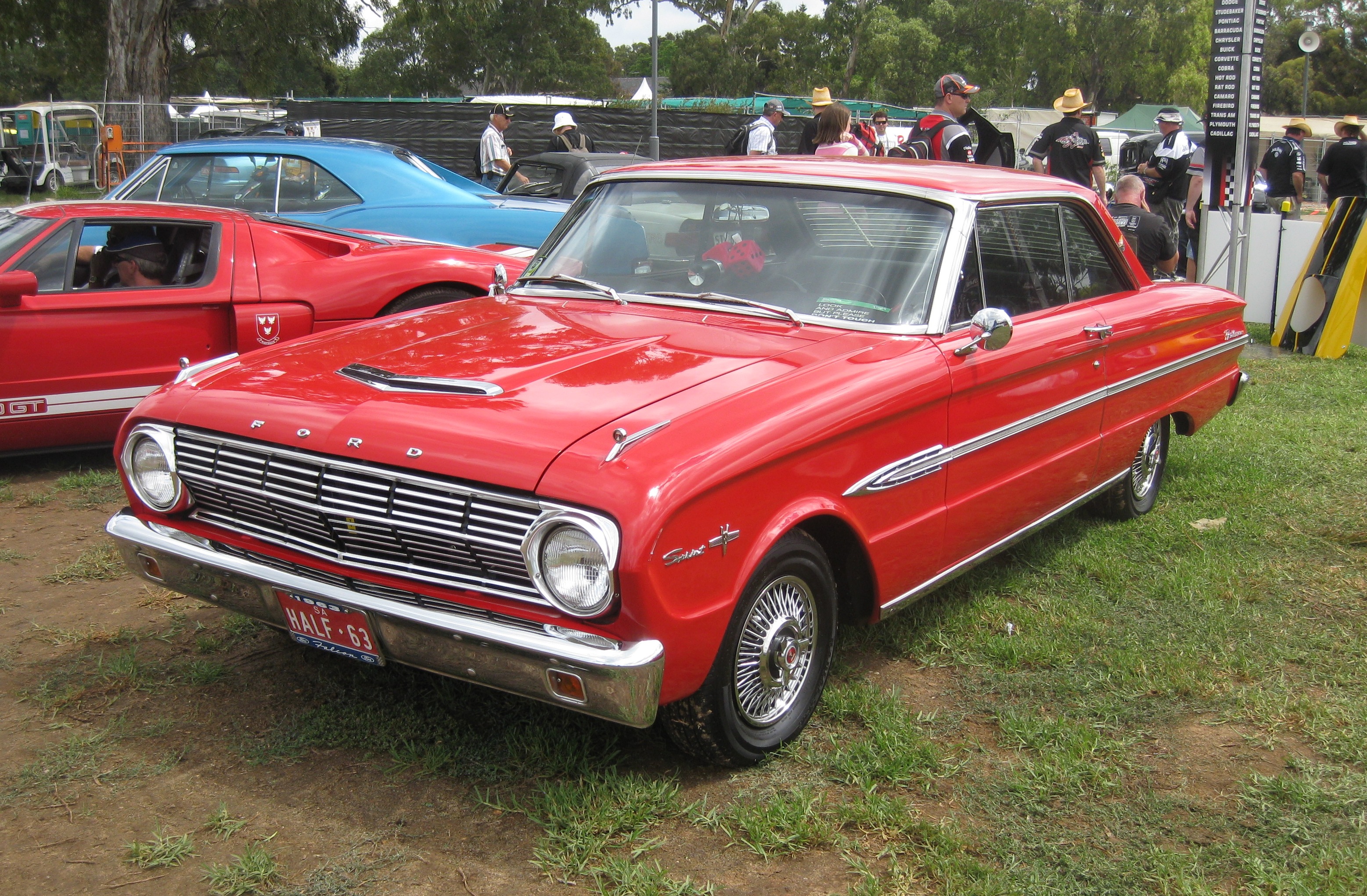
Ford Falcon
"...e CEO saying this is gonna be like the millennium Falcon of pickups Which is hilarious on multiple levels..."
The Ford Falcon is a Ford vehicle name. In the podcast, it’s being described in a funny way as if it’s a “futuristic” pickup. That’s mainly about how the car is being presented or marketed.
The Ford Falcon is a model name used for a line of vehicles, and in this context it’s being discussed as a pickup-like product with a futuristic nickname. The podcast compares it to the “Millennium Falcon,” suggesting a playful marketing or concept framing around the vehicle’s identity. It’s mentioned because naming and positioning can signal what Ford is trying to do with a new or updated model.
patent images
"We've seen a lot of patent images for a lot of different kinds of features that might have shown up in this truck but it never showed up"
Patent images are paperwork drawings that companies file to protect or describe new ideas. Sometimes those ideas never reach production, even if the drawings look promising.
Patent images are drawings filed with government agencies that can reveal design ideas before a product is officially launched. The hosts note that they saw many patent images for features that never made it into a real truck, highlighting how concept designs can change or get canceled.

Bristol Bullet
"... will it's supposed to be what was described as a bullet train Three-row SUV and the defining characteris..."
The Bristol Bullet is described as a three-row SUV concept. The podcast says it was meant to feel like a “bullet train,” which points to a fast or streamlined design idea. It’s being discussed because it’s a very unusual concept for a family-sized vehicle.
The Bristol Bullet is described in the podcast as a three-row SUV concept with a “bullet train” defining character, suggesting a focus on speed, efficiency, or aerodynamic styling. It’s mentioned as a standout idea because it combines a large family-vehicle layout with a performance-oriented concept. The podcast likely brings it up to illustrate ambitious design goals and how they’re communicated.
three-row SUV
"...it's supposed to be what was described as a bullet train... Three-row SUV and the defining characteristics of it were it's aerodynamic"
A three-row SUV is a bigger SUV with three rows of seats, usually meant for families or groups. The hosts are describing an EV concept that was supposed to be practical for more people.
A three-row SUV is a larger family vehicle layout with seating for more passengers. The segment uses this as part of the description of an EV that was expected to combine family practicality with EV efficiency goals like range and aerodynamics.
real-world range
"And it's gonna have well over 300 miles of real-world range on the highway from a less than 100 kilowatt hour battery pack"
Real-world range is how far an EV can go in normal driving, like highway speeds and real weather. It’s different from the best-case numbers you might see in brochures.
“Real-world range” refers to how far an EV can travel in everyday conditions, not just idealized lab testing. The hosts connect it to highway driving and emphasize that range targets can be achieved through efficiency rather than only by adding more battery capacity.
less than 100 kilowatt hour battery pack
"...from a less than 100 kilowatt hour battery pack"
kWh is how big the battery is—think of it like the battery’s “storage capacity.” The hosts are saying the car could still go far even with a battery that isn’t extremely large.
A kilowatt-hour (kWh) is a measure of battery capacity. The segment claims the vehicle would deliver highway range with a battery pack under 100 kWh, implying a strong focus on efficiency and energy management rather than simply increasing battery size.
aerodynamic efficiency
"Because it wasn't about having a huge battery pack or huge fuel source... it was up being aerodynamic inefficient to achieve that range"
Aerodynamic efficiency is about making the car “slip” through the air more easily. If the car is shaped well, it takes less energy to go fast, so you can drive farther without needing a huge battery.
Aerodynamic efficiency means reducing drag so the vehicle needs less energy to maintain speed. In EV design, better aerodynamics can extend range even with a smaller battery, which is exactly how the segment describes the (never-released) concept vehicle.
LinkedIn profile
"Doug Fields who is now the outgoing software chief of the company actually in plain sight hiding... had the design of that thing on his LinkedIn profile"
They’re saying they found clues about a car design from an executive’s LinkedIn page. It’s basically “leaks” coming from social media instead of the usual press releases.
The segment describes how the design of the canceled vehicle was discovered via an executive’s LinkedIn profile. This is a modern example of how product information can leak through social media rather than official announcements.
Doug Fields
"Doug Fields who is now the outgoing software chief of the company actually in plain sight hiding... had the design of that thing on his LinkedIn profile"
Doug Fields is mentioned as a top software leader at the company. The hosts say his LinkedIn page showed a design clue about the vehicle they were discussing.
Doug Fields is referenced as the outgoing software chief of the company, and the hosts say he posted the design of the canceled vehicle on his LinkedIn profile. The mention matters because it ties leadership roles to how product information can surface.
E rev
"So now we have a next-gen lightning that's being promised as an E rev with over 700 miles of range [970.1s] Freight train like power and whatever so it's gonna have a gas engine by the way"
They’re using “E rev” to describe a mostly-electric vehicle that still has a gas engine onboard. The gas engine can help generate electricity so you’re not limited to charging alone.
“E rev” is being used as a shorthand for an electrified powertrain concept that still includes a gas engine. In other words, it’s an EV-focused vehicle that uses a generator/engine to extend capability rather than relying purely on battery charging.

Mach E
"But they're gonna call a generator and we have the Mach E which is aging and now they're only EV mind you"
They mean the Ford Mustang Mach-E, Ford’s electric car. The host is saying it’s getting older compared to what Ford wants to launch next.
“Mach E” refers to the Ford Mustang Mach-E, an all-electric crossover that the speaker says is aging. The discussion contrasts it with newer EV plans, implying Ford is shifting focus to next-gen products.
EV sticker prices started to really spike
"You know at least it's one of the reasons why? [1011.6s] automakers and American automakers in particular are in this situation is because you could see the writing on the wall a [1018.2s] Few years ago as the sticker prices on these EVs started to really spike"
They’re saying EVs got more expensive than people expected. When that happens, fewer buyers can afford them, and automakers have to rethink their plans.
This describes the “pricing spike” problem in the EV market: as EVs moved upmarket, transaction prices rose faster than demand expectations. The speaker connects it to automakers’ strategy—focusing on higher-end trims—then needing to adjust course.
recoup some of that cost and pad the margin
"Obviously they're doing this because they want to make more money on selling these things and recoup some of that cost and pad the margin with [1046.9s] The you know fancy gizmos and doodads"
They’re saying companies try to make back money by charging more and selling higher-priced features. The goal is to earn a bigger profit per vehicle.
The speaker argues that automakers raise prices and add “fancy gizmos” to improve profitability. This is essentially about using higher-margin options and pricing to recover development and production costs from earlier EV investments.
Building a cheap electric car is harder to make money on
"Building a cheap electric car selling a cheap electric car is harder to make money on not harder technically physically [1055.2s] It's just harder to make money on so Ford is doing the right thing here"
They’re saying that making an affordable EV can be tough for companies to profit from. Even if it’s doable technically, the costs—especially batteries—can squeeze margins.
This highlights a key EV business reality: even if EVs are not technically difficult to build, low-price models can be financially tough due to battery and manufacturing costs. The speaker frames it as a margin problem rather than a pure engineering problem.
cheap EV
"And now we need to make these cheaper like straight up. They're too expensive... So it's another year of them spending money to try to figure out how to make this car or these cars"
A “cheap EV” is an electric car that’s priced low enough for more regular buyers. The big challenge is making the battery and the whole car cost less without sacrificing too much quality or range.
A “cheap EV” refers to an electric vehicle designed to hit a much lower price point than most current EVs. Achieving that typically requires cost reductions across batteries, manufacturing scale, supply chains, and vehicle design—often alongside aggressive production timelines.

Model T
"We have to figure out how to make a cheap EV and they do love to compare things to the Model T. And just how influential that car was."
The Model T was a Ford that helped make cars affordable for a lot of people. The hosts are using it as a comparison point for today’s goal: build an EV that costs far less so more people can buy it.
The Ford Model T is an early mass-market car that became a benchmark for affordability and manufacturing efficiency. In this segment, the hosts compare the push for a cheap EV to how the Model T helped popularize cars through scalable production.
natural resources for batteries
"...it has to do with the fact that Japan doesn't have any Natural resources for batteries. They have to rely... on Supply chain coming into the country"
Battery production depends on mined materials (like lithium, nickel, cobalt, and graphite), which are not evenly distributed around the world. The segment’s point is that Japan lacks some of these resources, so it must rely on imports and global supply chains to build EVs.
hydrogen
"They focused a lot more on hydrogen because they also don't have the charging infrastructure..."
Hydrogen is another way to power vehicles. Instead of plugging in a battery, some cars make electricity from hydrogen using a fuel cell.
Hydrogen is discussed here as an alternative energy pathway to EVs, typically via hydrogen fuel cells that generate electricity onboard. The hosts argue Japan leaned more toward hydrogen partly because it lacked EV charging infrastructure and faced constraints that made widespread EV adoption harder.
charging infrastructure
"...they also don't have the charging infrastructure Or the space for the charging infrastructure that we have in America"
Charging infrastructure means the places and equipment where you can charge an EV. If there aren’t enough chargers (especially where people park at home or work), it’s harder for EVs to become common.
Charging infrastructure is the network of charging stations and related grid upgrades that make EVs practical for everyday driving. The segment highlights that Japan’s constraints—like dense living and apartment culture—make it harder to deploy charging widely compared with the U.S. or parts of Europe.
dense population and apartment living
"It's very very densely populated country a lot of people living in apartments It just it doesn't lend itself to widespread EV adoption"
If many people live in apartments, they may not have a driveway or garage to install a charger. That makes EV ownership less convenient, so adoption can happen more slowly.
The hosts connect EV adoption rates to how people live—particularly whether they can reliably charge at home. In a densely populated country with many apartment dwellers, installing home charging is more difficult, which can slow EV uptake.

Cadillac Lyric
"...those two vehicles are GM. They're made by GM. They are a Cadillac Lyric They are Chevy Blazer EV."
They mention the Cadillac Lyriq as an example of an EV that’s tied to GM production. The takeaway is that some EVs get sold under different brand names even when they share the same basic design.
The Cadillac Lyriq is named as one of the EVs Honda/Acura are selling that the hosts claim is actually made by GM. The key point is the “re-skin” strategy: the same underlying GM EV platform is marketed under different brands.
re-skinned cars
"They are Chevy Blazer EV. They are re-skinned cars from GM They're coming out of GM plants and they're sold to Honda or Acura... So when you open the hood, it has a GM tag on it"
“Re-skinned” means the car is basically the same underneath, but it gets a different look and badge. It’s a shortcut that helps companies sell EVs faster.
“Re-skinned” refers to taking an existing vehicle platform and changing the exterior styling and branding while keeping much of the underlying engineering. In EV partnerships, this can speed up time-to-market but can also limit differentiation between brands.

Chevrolet Blazer EV
"They are Chevy Blazer EV. They are re-skinned cars from GM"
The hosts bring up the Chevrolet Blazer EV as another GM-made electric SUV. Their point is that some EVs are shared across brands with different badges.
The Chevrolet Blazer EV is cited alongside the Cadillac Lyriq as another GM-made EV being marketed through Honda/Acura channels. The discussion frames it as a re-skinned GM product rather than a Honda-designed vehicle.

Honda Prologue
"...n't sell well second time in history and then the prologue is still around I believe it'll be around for th..."
The Honda Prologue is an electric SUV made by Honda. The podcast says it’s still being offered, even though it didn’t sell as strongly as hoped at first. That’s why it comes up—people are watching whether it will last.
The Honda Prologue is an electric SUV that Honda introduced as part of its push into battery-electric vehicles. The podcast notes it “is still around,” implying it has continued despite earlier expectations or challenges. It’s discussed because ongoing production and sales performance help determine whether Honda’s EV strategy is sticking.
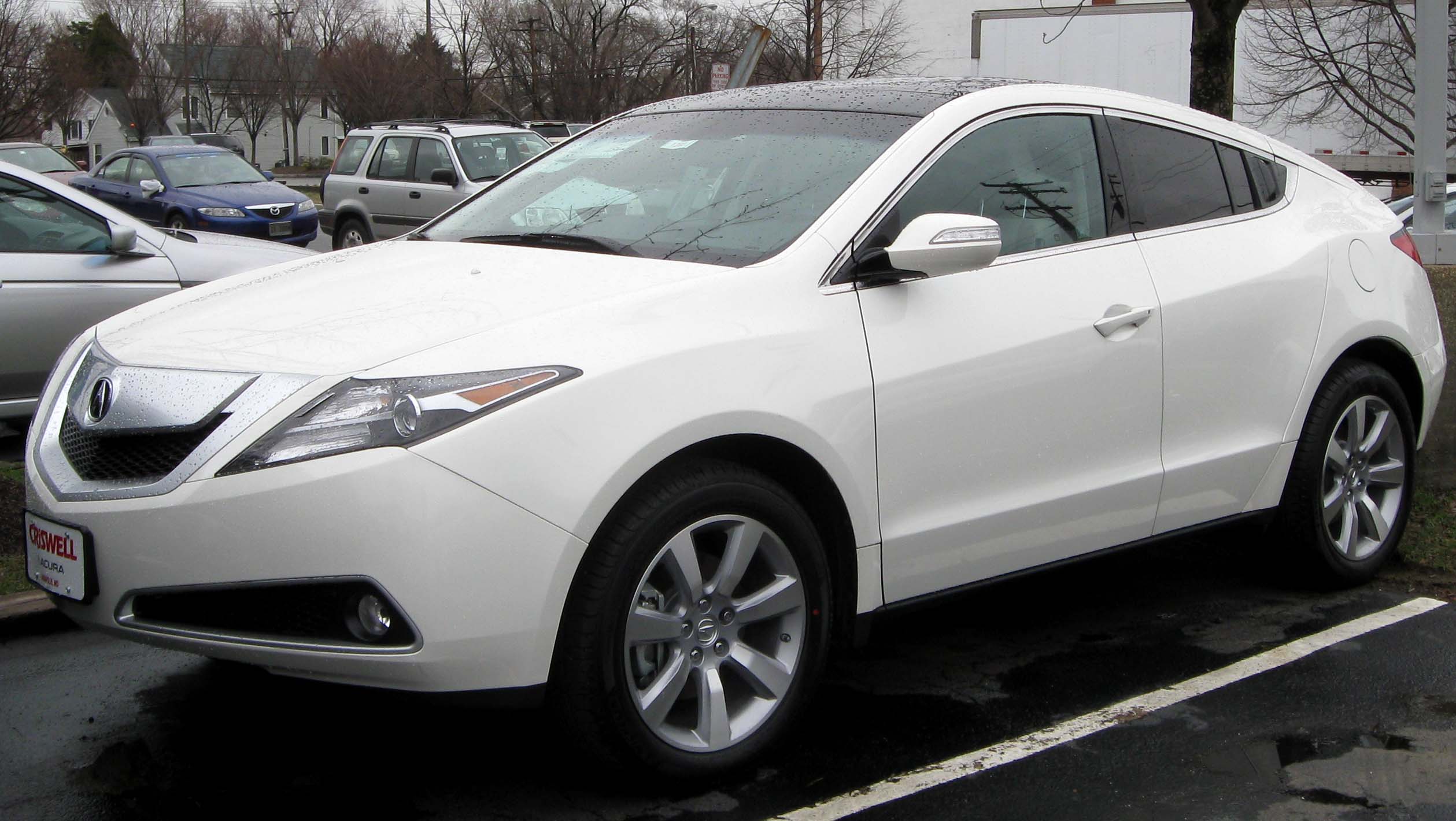
Acura ZDX
"ZDX died didn't sell well second time in history and then the prologue is still around"
They talk about the Acura ZDX as an EV that didn’t sell well. The episode uses it to illustrate how some electric-car plans got cut back when sales didn’t match hype.
Acura ZDX is mentioned as having “died” and not selling well the second time in history, implying weak market demand and/or program cancellation. In the EV context, this is part of the broader “reckoning” theme: some EV launches didn’t meet expectations.
Acura Prologue
"...and then the prologue is still around I believe it'll be around for the rest of this year"
They mention the Acura Prologue as the EV that’s still being sold for now. The discussion implies Acura’s lineup timing depends on when newer EVs were supposed to arrive.
The Acura Prologue is described as still being around, with the expectation it would last through the rest of the year. The hosts connect its continued presence to the timing of the “Zero series” EV arrivals, suggesting a staggered product plan.
Zero series
"The reason it's supposed to be around for the rest of this year is because that's when the zero series was arriving These were EVs that were built for America in America in Ohio"
“Zero series” is the name for a planned set of electric vehicles. The episode suggests the rollout didn’t happen as expected, so some earlier plans didn’t make it to production.
“Zero series” is used as a label for Honda/Acura’s planned EV lineup arriving on a future schedule. The hosts argue that delays and cancellations left earlier concepts and expectations behind, affecting how the market received Honda’s EV push.

Acura Rsx Acura
"Then we were supposed to have a RSX Acura which was a re-skinned Acura version of that zero series SUV for Honda"
They mention an “RSX” as a planned EV that would be a re-branded version of another SUV. The point is that Acura wanted to use an existing name to sell the EV.
The transcript mentions an “RSX” as a re-skinned Acura version of the Zero series SUV. This is discussed as a branding/positioning move—using a familiar Acura name to market a related EV product.

Lamborghini Kuntash
"...to be here Next year we were supposed to get the Kuntash looking car. That was a sedan saloon Hatchback l..."
The Lamborghini Countach is a famous supercar model. The podcast is talking about a new car that’s supposed to look like a Countach, including how it would be shaped. That matters because it’s about keeping the recognizable design feel.
The Lamborghini Countach is a classic, iconic supercar known for its distinctive design and big historical reputation. The podcast references a “Countach-looking” car and describes it in terms of body style, implying a new interpretation or continuation of the design language. It’s discussed because Countach identity is strongly tied to how Lamborghini signals what it wants to build next.
wedge design
"Dude that thing looked awesome. It was a wedge. It was it was a wedge. It was it was a cool ass wedge"
A “wedge” design means the car looks low and pointy, like it’s shaped to cut through the air. It’s usually chosen for both style and aerodynamics.
A “wedge” design describes a low, sharp, aerodynamic body shape that tapers toward the front or rear. In EV concept discussions, this often signals an emphasis on aero efficiency and futuristic styling rather than traditional proportions.
in-house powertrain
"It looked aerodynamic. It looked efficient and it had their in-house powertrain in-house"
“In-house powertrain” means the company made the electric drivetrain themselves instead of buying it from another supplier. That can help them tune the car’s performance and efficiency to match their design.
An “in-house” powertrain means the automaker developed the electric drivetrain components itself (motors, inverters, control software, and related hardware). This can help with integration, cost control, and tailoring performance and efficiency to the vehicle platform.
vertically stacked next gen infotainment system and operating system
"Vertically stacked next gen infotainment system and operating system and all that was done in-house"
They’re describing the car’s computer setup for the screens and the main software. A “stacked” design usually means the system is organized in layers so it can run smoothly and be updated more easily.
“Vertically stacked” here suggests a layered software/hardware architecture for the infotainment and vehicle operating system. This kind of design can improve performance, updateability, and separation between user-facing screens and core vehicle functions.
new chassis that was going to bend as you went around a corner
"It had a new chassis that was going to bend as you went around a corner in the front to push the outside wheel down"
They’re talking about a chassis that changes shape when you corner. The idea is to keep the tires planted better so the car grips more confidently through turns.
This describes an active or flexible chassis concept where the structure deforms under cornering loads to improve tire contact. The goal is to increase the effective grip by managing how the suspension and body load the tires during a turn.
contact patch
"Increase your contact patch for better handling"
The contact patch is the part of the tire that actually touches the road. If you can make that “footprint” work better during cornering, the car can grip more and feel more stable.
The contact patch is the portion of the tire that touches the road. Increasing or optimizing it can improve traction and handling because more of the tire’s rubber is working against the pavement.
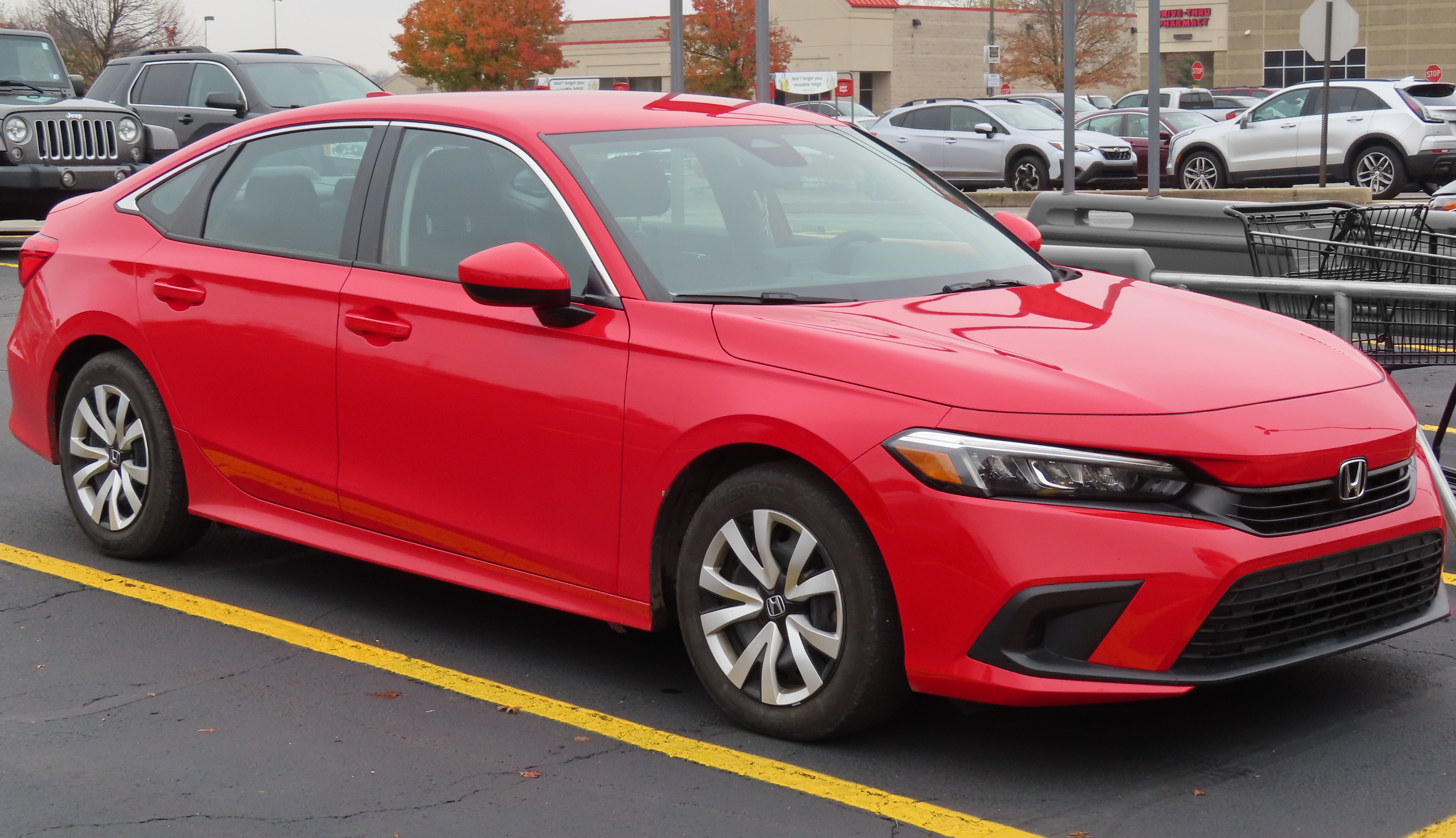
Honda Civic hybrid
"Thankfully that will actually transfer over into the gas models it'll launch with the next gen crv and civic hybrid"
They’re saying the same kind of technology could show up in the next Honda Civic hybrid. Hybrids use an electric system too, so EV research can help improve how the car drives and uses energy.
The speaker also mentions the next generation Honda Civic hybrid as a place where the technology would carry over. Hybrids often use electric components and control strategies that can benefit from EV development work.

Honda CR-V
"Thankfully that will actually transfer over into the gas models it'll launch with the next gen crv and civic hybrid"
They’re saying Honda would bring some of the EV engineering ideas into the next Honda CR-V. Even if it’s not fully electric, the handling/efficiency lessons could still show up in the design.
The speaker says the chassis/handling ideas would transfer into gas models that would launch with the next generation Honda CR-V. That implies Honda planned to carry over EV-style engineering learnings into its mainstream lineup.
EVs canceled before launch (months from cancellation)
"They were they were rolling off the line like in months From when they were canceled to be clear, which means, you know a month two months from now The money was sunk. It was gone"
The hosts discuss how these futuristic EVs were canceled and that production was only months away, meaning the development money was already spent. This is a classic example of sunk cost in product planning and how timing matters in the auto industry.
EV reckoning
"Solely here or had a majority of american components or had the battery supply chain running through america mostly ... Okay, moving on to gm 7.6 billion dollars down the drain ... None of these have been cancelled"
“EV reckoning” is basically the moment when the EV industry has to face the real results—did all the money and promises lead to cars people can buy? It’s about whether EV plans are working in practice, not just in announcements.
“EV reckoning” refers to the industry-wide reassessment of how quickly EVs can be scaled profitably, and whether early spending and hype match real-world demand, supply chains, and execution. This segment frames the discussion around large investments, cancellations/launch delays, and what’s actually available for sale.
battery supply chain
"Solely here or had a majority of american components or had the battery supply chain running through america mostly And like you said, it was going to be built in ohio"
A battery supply chain is everything that has to happen to make EV batteries—from materials to factories to final packs. Where that supply chain is located can change how expensive and how fast EVs can be built.
A battery supply chain is the network of companies and steps needed to source raw materials, manufacture cells, and assemble battery packs for EVs. The transcript ties this to where production happens (e.g., “running through america”), which matters because supply-chain localization can affect cost, speed, and political risk.
CES reveal
"And they you know went from a very splashy reveal at ces in 2024 saying like this is the future of haunt everybody Look look look at it go"
CES (Consumer Electronics Show) is a major tech trade show where automakers often unveil future products, software, and concepts. In the segment, the “splashy reveal at CES” contrasts with later delays or cancellations, highlighting the gap between show-floor hype and real production timelines.
down the drain (development spending)
"Okay, moving on to gm 7.6 billion dollars down the drain. I shouldn't say okay. I shouldn't say down the drain This money for them. It's actually not down the drain for them. They're still selling them for them."
They’re talking about whether big EV spending is actually paying off yet. Even if money is spent, it might not feel “worth it” until the cars are selling well or the results are obvious.
“Down the drain” is used here as a critique of large EV development expenditures that don’t yet translate into clear, tangible results. The hosts then soften it by arguing the money isn’t necessarily wasted if vehicles are still being sold, illustrating how investors and consumers evaluate EV spending.

Chevrolet Equinox
"They have a 35 thousand dollar equinox ev they have a 29 thousand dollar a 28 thousand dollar chevrolet bolt"
The Chevrolet Equinox EV is an electric SUV from Chevrolet. It’s meant to compete in the popular compact-SUV space, but as an EV it also represents GM’s push to offer more choices beyond just one or two models.
The Chevrolet Equinox EV is GM’s electric version of the Equinox nameplate, positioned as a mainstream compact SUV EV. In the context of this episode, it’s part of the argument that GM has many EVs in the pipeline and on sale, even if spending and outcomes are debated.

Hummer Ev
"...y got silver out ev they got seara ev They got a hummer ev by the way That's a lot of evs like we listen to..."
The Hummer EV SUV is an electric SUV with a rugged, off-road-focused design. The podcast is pointing out that there are multiple Hummer EV versions. That matters because it changes what kinds of buyers can choose from.
The Hummer EV SUV is the electric SUV version of the Hummer EV lineup, emphasizing a large, rugged design and off-road capability. The podcast groups it with other electric Hummer models, highlighting how many EV variants were planned or discussed. It’s mentioned because offering multiple body styles can broaden appeal but also complicate product planning.

Corvette Grand Sport
"...he teased the electrified which became the e-ray and now it's the grand sport x Corvette"
The e-Ray is a Corvette that uses both a gas engine and electric power. The host is saying it evolved from an earlier plan for a fully electric Corvette.
The e-Ray is an electrified Corvette variant that combines a combustion engine with electric drive. In the segment, it’s used as a stepping stone in the story from an earlier “electric Corvette” promise to what GM actually launched.

Lucid Air
"...i've driven a lucid air sapphire. It's insane. You can't breathe"
The host is citing the Lucid Air Sapphire as an example of how fast an electric car can be. They’re saying it’s not just a normal EV—it’s a serious performance machine.
The Lucid Air Sapphire is a high-performance electric sedan from Lucid Motors, positioned as a top-tier EV in terms of acceleration and overall performance. The host uses it as proof that EVs can be extremely fast, even if they may not feel as “emotional” as some traditional sports cars.
all-electric lineup by 2030
"...mapped out for the next 10 years... Electric lineup by 2030. They used to... all electric... back in 2020... But we don't know that's not happening"
They’re talking about a company promise to sell mostly or only electric cars by 2030. The host says the timeline didn’t work out the way they expected.
The discussion references GM’s earlier plan to move toward an all-electric lineup by 2030. The host argues that the reality of EV launches and changing plans means that goal is unlikely to happen as originally stated.
burned billions of dollars
"I think the decision to spend billions and billions of dollars... Relaunching the Hummer brand..."
They mean GM spent a huge amount of money, but the results aren’t matching the spending yet. Part of the issue is that plans changed and factories/production lines weren’t used as much as expected.
“Burned billions” refers to large spending that doesn’t immediately translate into delivered products or market results. Here, the host links it to EV development costs and manufacturing capacity that isn’t fully utilized due to shifting plans and volumes.
electric halo truck
"...Relaunching the Hummer brand under GMC as an electric halo truck as their spearhead of of EVs"
This means an electric truck meant to be the headline act for a company’s EV strategy. Even if it’s not the biggest seller, it’s supposed to get people talking and build excitement.
An electric halo truck is a high-visibility EV product intended to lead a company’s EV push and shape public perception. In this segment, the host frames GM’s Hummer relaunch as the “spearhead” meant to draw attention to the broader EV lineup.
halo car
"...you're going to end up. It's a halo car"
A “halo car” is a special, attention-grabbing car that’s meant to make people want the brand’s other vehicles too. The host thinks an electric Corvette would have been perfect for that role.
A “halo car” is a flagship vehicle designed to create excitement and credibility for a brand, often through performance, design, or technology. The host argues that an electric Corvette would have served as a halo EV, helping GM’s EV message land better with buyers.
Corvette
"I think they really could have used the shot in the arm that Corvette an electric Corvette would have given them... The Corvette would have been a standalone product... they just couldn't it would have been bespoke car"
The Corvette is a famous Chevy sports car. The hosts are talking about what would happen if Chevrolet made an electric version—basically, whether that would have helped more people get excited about EVs that still feel like sports cars.
The Corvette is Chevrolet’s performance sports-car line. In this segment, the hosts discuss the idea of an electric Corvette and how it could have helped bring EVs into the “sports car” enthusiast space in America.
Request an Explanation
Heard something you'd like explained? We'll add it to this episode.
Sign in to request explanations for terms you heard.
Want to learn more?
Browse our glossary for plain-English explanations of automotive terms, jargon, and concepts.
Help improve this episode
See something that's not quite right? Our annotations are AI-generated and can sometimes miss the mark. Click the flag icon on any annotation to suggest a correction.
1 community members have helped improve this episode.