
🏎️ BMW E46 inspires Building an AI-Powered Podcast Platform for Car Junkies
About this episode
Doug chats with Ryan Williams, a software engineer who came to car culture later in life and turned that curiosity into Car Curious, an AI-powered podcast player that helps listeners identify cars, terms, and model codes in real time. The conversation mixes tech and nostalgia, from Ryan’s Portland background and family life to his first car: a yellow 1978 Mazda GLC that barely made it through high school but created lasting memories with friends, baseball trips, and wrenching with his dad. They also touch on sim racing, manual transmissions, and how podcasts sparked his deeper dive into cars.
Click here to share your favorite car, car story or any automotive trivia!
How do you transition from a "utilitarian" view of driving to chasing the perfect analog feel of a 20-year-old BMW?
In this episode, Doug sits down with Ryan Williams, a software engineer who discovered his passion for cars later in life while searching for a hobby that would get him off his "daily ride"—his computer. Ryan shares the story of his "lemon" yellow 1978 Mazda GLC and the reliable Nissan Sentra that powered his college years, before diving into his recent obsession: a 2004 BMW 330i ZHP bought sight-unseen from an auction site.
Don't miss Ryan's favorite episode featuring rotary engines lover, John with Mazda USA: https://buzzsprout.com/2316026/episodes/16805989
We also get an exclusive look at Ryan’s new project, Car Curious, an AI-driven podcast player designed to deepen the listener's journey. Imagine listening to a car podcast and having the specs, chassis codes, and photos of the exact models being discussed pop up on your screen in real-time.
Buckle up as we discuss:
- The "Mini M": Why the E46 ZHP is the perfect "bridge" car for new enthusiasts looking for that classic BMW feel.
- Auction Anxiety: The thrills and perils of buying a car from Cincinnati and shipping it to Oregon in the middle of winter.
- The Future of Car Media: How AI tools are helping new fans decode the complex language of car culture and "scratch the itch" of curiosity.
- Generational Shifts: The struggle of passing the "car bug" down to children who see vehicles as strictly utilitarian.
🔗 Connect with Our Guest
- https://getcarcurious.com or https://instagram.com/getcarcurious
- Try the Player: Experience the AI-integrated podcast player Ryan is building to help enthusiasts learn as they listen.
*** Your Favorite Podcast Automotive Nostalgia Podcast ***
Connect with us:
📧 Email: [email protected]
🔗🌳 Visit our LinkTree for all 70+ episodes: https://linktr.ee/carsloved
Love the show? Please follow, rate, and review on Apple Podcasts! ⭐⭐⭐⭐⭐
sim racing
"Spent a little time this past weekend. One sim racing and driver development in Annapolis."
Sim racing means racing in a video game with real driving controls like a wheel and pedals. People do it to get better at driving techniques and learn how cars behave before trying it in real life.
Sim racing is using a racing simulator (steering wheel, pedals, and a game) to practice driving and build familiarity with racing lines and car behavior. Many people use it for driver development because it can help you learn consistency and decision-making without the cost and risk of real track time.
P1 Sim Racing
"Spent a little time this past weekend. One sim racing and driver development in Annapolis. This is your F1 lounge. I can't tell you enough great things about it... Of course, these are not unique just to Annapolis, they're all over. And for their site, it is uh drivep1.com. Again, P1 Sim Racing and Driver Development in Annapolis."
P1 Sim Racing is a facility in Annapolis, Maryland where you can race in high-quality driving simulators that feel close to a real sports car. They have leagues for people who want to compete regularly. Doug visited and drove a virtual Porsche Cayman GT4 there with a manual transmission. Web: drivep1.com — Instagram: @drivep1.
P1 Sim Racing & Driver Development is a sim-racing facility in Annapolis, Maryland, operating under the F1 Lounge brand — the brand Doug references at 0:57 when he says "this is your F1 lounge." The facility runs motion-capable GT-style rigs that simulate cars like the Porsche 718 Cayman GT4 — which is the car Doug drove there with a six-speed manual. Members can race in organized leagues against family, friends, and locals; Doug describes seeing father-son and sibling pairs racing each other there, which is part of what he liked about the place. These setups aren't unique to Annapolis — F1 Lounge-style sim facilities exist in many US cities — but the Annapolis location is the one Doug visits. Web: drivep1.com Instagram: @drivep1 Why this matters in this episode: Doug uses the P1 visit as the cold open before introducing Ryan, and the conversation about manual versus PDK in a sim rig becomes the natural bridge into Ryan's car-curiosity origin story. The fact that Doug chose to drive a virtual Cayman GT4 with three pedals — when PDK was right there as an option — is the small detail that sets up the whole episode's "feel of driving" thread.

Porsche 718 Cayman GT4
"I strapped into a GT rig and drove a Porsche Cayman GT4 with a six-speed manual and tons of fun."
The 718 Cayman GT4 is Porsche's most performance-focused Cayman. While other 718 models switched to a smaller turbocharged engine, the GT4 kept a six-cylinder engine that revs high and sounds great. You can still get it with a manual transmission, which is rare for a new performance car.
The 718 Cayman GT4 is the track-focused version of Porsche's mid-engine sports car. While most of the 718 range moved to a turbocharged flat-four in 2016 (a change enthusiasts pushed back against), the GT4 kept (and later returned to) a high-revving naturally-aspirated 4.0L flat-six. A 6-speed manual was offered alongside the PDK automatic, which is why Doug being able to "choose stick shift or PDK" in the sim mirrors the real car.
Car Curious
"He has started a podcast player, that's how we connected, called Car Curious."
Car Curious is the website and app that Ryan built. It plays car podcasts and shows you helpful explanations and pictures as the hosts talk — about cars, technical terms, brands, anything they mention. You can also follow specific cars (like the BMW 3 Series) and get a feed of every podcast episode that talks about them. Ryan walks through how it works later in the episode.
Car Curious (getcarcurious.com) is an AI-annotated car podcast platform built by Ryan Williams, the guest of this episode, based in Portland, Oregon. It launched on the web in early 2026, with a native iOS app in development. The platform annotates car podcasts at exact timestamps with cars, terms, concepts, brands, and parts that come up in the conversation; listeners can follow specific car models — for example, the BMW 3 Series — and get a personalized feed of every episode that mentions them. This very episode of "To All The Cars I've Loved Before" is itself an annotated episode on Car Curious, which produces a small meta-loop: you're reading a Car Curious annotation about Car Curious. Ryan walks through how the product works in detail starting at 23:47, so the deep dive is still ahead.
flat six
"Well, it was a virtual one, but yeah, it's a cool, cool car flat six versus the turbo four, amongst other things."
A six-cylinder engine where the cylinders lie flat on either side instead of standing up. Porsche has used this layout in the 911 for decades, and fans associate the sound and feel of a flat-six with the brand's most enthusiast cars.
A six-cylinder boxer engine — cylinders arranged horizontally on each side of the crankshaft. It's the signature Porsche layout, used in the 911 since 1963 and central to the brand's identity. Notably, the Cayman GT4 retained (or returned to) a 4.0L naturally-aspirated flat-six even after the rest of the 718 line moved to turbo flat-fours, which is why this comparison is meaningful to enthusiasts.
turbo four
"Well, it was a virtual one, but yeah, it's a cool, cool car flat six versus the turbo four, amongst other things."
A four-cylinder engine that uses a turbocharger to make more power. Porsche switched many of its 718 sports cars to this kind of engine, which made some fans miss the older six-cylinder version.
A turbocharged four-cylinder engine. The relevant context: starting in 2016, Porsche replaced the Cayman/Boxster's flat-six with turbocharged flat-fours across most of the 718 lineup. The change was controversial with enthusiasts who valued the original engine's character and sound, which is part of why Doug calls out "flat six versus turbo four" as a meaningful distinction. The GT4 trim eventually returned to a flat-six.
PDK
"Um in the case of the P1 sim racing, they let me choose if I wanted to do a stick shift or a PDK, as Porsche calls it, the manual transmission."
PDK is Porsche’s automatic transmission that shifts very quickly. Instead of waiting for one gear to finish before the next starts, it prepares the next gear in advance. That’s why it can feel faster and smoother than a traditional manual.
PDK is Porsche’s dual-clutch transmission (DCT). It uses two clutches to pre-select the next gear, enabling very fast shifts with minimal interruption to power delivery. In performance driving, PDK is often favored for its speed and consistency, which is why the guest notes many people choose it over manual.
Chassis codes & model codes
"like there were so many terms thrown out, like, you know, the transmission, different transmissions, the the on the Porsche's, the different model codes of the Porsche's, the different model codes and chassis codes of the BMWs, that I was just like, what did these all mean?"
When BMW fans say "E46," they mean a specific version of the 3 Series — the one sold from 1998 to 2006. Every generation gets its own internal code (E30, E36, E46, F30, G20), so enthusiasts can be precise about which car they're talking about. Porsche does the same thing with numbers like 996 or 991. This is exactly the kind of thing the app explains for you while you listen.
Chassis codes are manufacturer-internal generation identifiers — distinct from the model name a buyer sees on the trunklid. BMW marks each 3 Series generation with an E- or F/G-prefix code: E30 (1982–1994), E36 (1990–2000), E46 (1998–2006), E90 (2005–2012), F30 (2012–2018), G20 (2019+). Porsche uses three-digit codes for 911 generations — 996, 997, 991, 992 — and a parallel sequence for the Boxster/Cayman: 986, 987, 981, 982. Enthusiasts lean on these because cars sold under one nameplate vary enormously generation to generation: a "330i" could mean an E46 from 2002 or a G20 from 2024 — two very different cars. Saying "E46 330i" removes the ambiguity. This moment is the founding observation behind Car Curious: automotive podcasts assume listeners decode chassis codes, model codes, and transmission acronyms in real time, and most of the time they can't. The host moves on, the listener falls behind, and a conversation that was supposed to be fun starts to feel like an exam. Surfacing these references inline as they're spoken is the gap the app was built to close.

1981 DeLorean DMC-12
"But let's uh hop into my time machine, my 1981 DeLorean, without all the time machine stuff, unfortunately, or fortunately, depending on how you feel about it. And let's hop back to your first car."
The DeLorean is the stainless-steel sports car with doors that open upward. It only made about 9,000 cars before the company went bankrupt, but it became famous as the time machine in the Back to the Future movies — which is why hosts joke about "hopping in the time machine."
The DeLorean DMC-12 was John DeLorean's stainless-steel, gull-winged sports car, built in Northern Ireland from 1981 to 1983. Underwhelming on paper (a 130hp PRV V6 in a 2,800-lb car), it became a cultural icon almost entirely because of its role as the time machine in Back to the Future. Doug references "1981 DeLorean" specifically — that's the first model year, the only year a meaningful number were built before DMC collapsed.
1978 Mazda GLC
"It was the 1978 Mazda GLC yellow. And, you know, affectionately or not referred to as the lemon, kind of fit the bill, you know, in many ways, both in terms of the the way it looks and of course its actual performance and and reliability."
The GLC was a small, basic Mazda from the late 1970s and early 1980s. The letters stood for "Great Little Car" in Mazda's US ads. Ryan's was bright yellow, found through a newspaper ad in Oregon, and turned out to be unreliable — so he and his family called it "the lemon."
Mazda's compact economy sedan/hatchback sold in the US from 1977 to 1985 (known as the Familia elsewhere, and later replaced by the 323 and Protegé). "GLC" was Mazda's US marketing acronym for "Great Little Car" — a name that hasn't aged well, especially for Ryan's 1978 example. His dad found it through a newspaper classified in the Eugene, Oregon area and brought it home sight-unseen as a high-school car. It was lemon-yellow, mechanically simple, and unreliable — earning it the nickname "the lemon" on multiple counts.
"lemon" (car nickname)
"And, you know, affectionately or not referred to as the lemon, kind of fit the bill, you know, in many ways, both in terms of the the way it looks and of course its actual performance and and reliability."
A "lemon" is car-people slang for a vehicle that turns out to be a constant headache — breaking down often or having problems the seller didn't disclose. Most states even have laws called "lemon laws" to protect buyers. In Ryan's case, the GLC was both literally lemon-colored and a lemon by reputation.
"Lemon" is the standard term for a car that's plagued with defects — especially right after purchase. Most US states have "lemon laws" giving buyers recourse for new cars that can't be reliably repaired. In this episode the nickname works on three levels for Ryan's GLC: the car was lemon-yellow, mechanically unreliable (a textbook "lemon"), and small/cheap-feeling — three layers of pun that stuck.
sight unseen (buying a car)
"You know, I'm was driving my parents for a little bit, and then of course they they wanted to have their cars back, and they ended up helping out and and buying it. But sight unseen to me, I came home from practice one night and and there's this yellow car in the driveway."
Buying a car “sight unseen” means purchasing it without personally inspecting it first. That increases risk because you can’t verify condition, mechanical issues, or accuracy of the seller’s description—something the story highlights when the speaker arrives home to find the car already in the driveway.
newspaper classified ads (finding a car)
"And, you know, back then we had what newspaper classified. I think that's how he found it. And we lived a little bit out in the country, so in the Eugene area in Oregon, and he found it there, brought it home."
Before the internet, people sold used cars through small ads in the back of the local newspaper. You'd flip through pages of one-line listings, call the seller, drive over, and look at the car in person. Ryan's family found his first car this way — a very different experience from the online auctions he uses now.
Before online listings (Craigslist, Facebook Marketplace, Bring a Trailer, Cars & Bids), the standard way to find a used car was the classified-ads section in the local newspaper. That's how Ryan's dad found the 1978 Mazda GLC in Eugene, Oregon. The contrast with how Ryan later bought his BMW E46 — sight-unseen on a national auction site — is part of the arc of this episode.

Mazda RX7
"And I could think of my own Mazda, first Mazda, I had four Mazdas, but was there anything unique about that car? Like maybe it was something Mazda touted, or like in my case, I had a Mazda RX7 with my first stick shift car."
The RX-7 is a Mazda sports car best known for one thing: instead of a normal engine with pistons going up and down, it uses a "rotary" engine with spinning triangles. It revs very high and sounds different from any other car, which is why fans love it — and why a "redline alarm" was a relevant feature.
The Mazda RX-7 is Mazda's iconic two-seat sports coupe, built across three generations from 1978 to 2002. What makes it singular: it was powered by a Wankel rotary engine — a design with no pistons, just two triangular rotors spinning in epitrochoid housings. The rotary made very high horsepower per cubic inch and had an unmistakable high-revving sound, but it was also famously thirsty for oil and short on bottom-end torque. Doug describes his RX-7 having a redline alarm — a fitting feature for a car whose entire personality is "rev it."
red line
"It had an alarm that went off when you got close to the red line. And I'm like, that's so cool. And of course, my dad's like, you better not set that alarm off because that's not good for the engine."
The red line is basically the “don’t go past this” RPM on your dashboard. If you get close to it, the car may warn you because going too high can be risky for the engine.
The red line is the maximum safe engine speed range (RPM) marked on the tachometer. Many cars use warnings or alarms near the red line to help prevent over-revving, which can stress engine components.
emissions requirements
"This was the era of what like post late 70s, like cars were just kind of being stripped down to minimal like requirements. Yeah, it was all about emissions and yeah, yeah, and white, being white in that case."
In the 1970s, the US passed strict pollution and fuel-economy rules. Carmakers had to add catalytic converters and tune engines for cleaner exhaust, which often made the cars feel slower and more basic. Enthusiasts call this the "malaise era." Ryan's 1978 Mazda GLC was a typical car of that period.
Starting in the early 1970s, a wave of US emissions and fuel-economy regulations (1970 Clean Air Act, EPA fuel-economy testing in 1975, CAFE in 1978) forced automakers to add catalytic converters, run leaner fueling, drop compression ratios, and detune engines. The result is what enthusiasts call the "malaise era" — cars from roughly 1973 to the mid-1980s that often felt slower and simpler than their predecessors. Ryan's 1978 Mazda GLC sits squarely in this window, which is why "stripped down to minimal requirements" is an accurate read of what it was like to drive.
Cascade Range
"Yeah, I think we so in the northwest we kind of have a the Cascadean mountain range where people want to go to like to Central Oregon or going to skiing or the mountains or whatever."
The Cascade Range is the line of mountains in the Pacific Northwest that includes Mt. Hood and Mt. Rainier. Crossing them means long uphill drives, which is hard on small-engine cars. That's why a low-horsepower car like Ryan's Sentra struggled to make it over.
The Cascade Range is the chain of mountains running from northern California through Oregon and Washington into British Columbia, with peaks like Mt. Hood, Mt. Rainier, and Mt. Bachelor. For Oregon-based drivers like Ryan, "going over the Cascades" usually means crossing from the wet, populated Willamette Valley (Portland, Eugene) to drier Central Oregon (Bend, ski areas). The sustained climbs and elevation changes are exactly the conditions that expose underpowered cars — relevant context for the Sentra-with-69-horsepower story.
Datsun → Nissan rebrand
"How long do you have that Nissan Dotson? Dotson Nissan. Nissan, yeah, yeah."
For most of the 20th century in the US, Nissan sold cars under the brand name "Datsun." Around 1981 they decided to retire that name and use "Nissan" worldwide. The switchover happened gradually through 1986, so a 1985 car could be badged either way — which is why Doug stumbles between "Nissan Datsun" and "Datsun Nissan" when asking about Ryan's Sentra.
Nissan Motor Co. sold its cars in the US under the Datsun brand from 1958 until the early 1980s. In 1981 the company announced it would retire the Datsun name and unify worldwide under "Nissan," with the transition completing in 1986. During the overlap, cars often carried both badges — Nissan on the trunk, Datsun on the grille, or vice versa, depending on production date and trim. Ryan's 1985 Sentra was sold squarely in this transition window, which is exactly why the badging on a given car from that era is genuinely ambiguous. The same model and year could be a Datsun, a Nissan, or both depending on when it left the factory. The rebrand is estimated to have cost Nissan around $500 million, and is studied as a textbook case of a risky brand transition: early reports suggested it cost the company meaningful US market share for several years, as buyer recognition lagged the new badging. Doug's slip in real time — "Nissan Dotson... Dotson Nissan... Nissan, yeah" — is itself the period-fuzziness in action. Anyone who owned or grew up around a small Japanese car in the early-to-mid 1980s might genuinely not remember which name was on the trunk.

1996 Honda Accord
"So we ended up getting a 1996 Honda Accord. [857.9s] Yeah."
The 1996 Accord was Honda's mid-size sedan, in its 5th generation. It became famous for being reliable, comfortable, and easy to own — a common "step up" car for people coming from cheap commuter cars. Doug mentions being the first in his family to buy a Honda, which was a typical 1990s experience as Japanese sedans took market share from American brands.
The 1996 Accord is a 5th-generation Honda Accord (1994–97), the model that cemented Honda's reputation in the US for default-level reliability and resale value. The 5th gen was offered as a sedan, coupe, and wagon, with trim levels DX, LX, and EX (Ryan's was an EX, Doug's a base-trim used). Doug calls out that buying his Accord made him the first person in his family to own a Honda — a generational moment that mirrored a wider American shift away from Detroit toward Japanese sedans through the 1990s.
model-year refresh
"I think it was the same model, but it was a like a slight refresh, if you would... Mine was light blue. That was man, that was a great car."
A model-year refresh is when a carmaker updates the same model for the next year with small visual changes — different headlights, a different grille — without redesigning the whole car. The 1996 Accord is a refresh of the 1994–95 design.
A model-year refresh is a mid-cycle update to an existing generation — usually styling tweaks (headlights, taillights, grille, wheels) and minor equipment changes, with the underlying chassis and drivetrain unchanged. The 1996 Accord is the 5th-gen's mid-cycle refresh of the 1994–95 design, with revised lighting and trim that gave it the "cooler feel" Doug describes.
Accord trim levels (DX / LX / EX)
"ours was black and and being the EX, like going from but I think you know, engine-wise, I don't know... I couldn't even tell you the difference between what is it, the so the LX at EX and then the the base."
Honda sold the 1996 Accord in three "versions" or trims: DX (the basic one), LX (with power windows, AC, cruise control), and EX (the nicest — sunroof, alloy wheels, anti-lock brakes, more powerful engine). Both Ryan and Doug had the EX, which is why they were comparing notes.
The 5th-generation Accord (1994–97) was sold in three main trim levels in the US: DX (base — manual windows, no AC standard), LX (power windows/locks/AC, cruise, cassette stereo), and EX (sunroof, alloy wheels, anti-lock brakes, the higher-output 145hp VTEC 4-cylinder, optional V6 from 1995). Both Ryan and Doug had EX models — Doug's was light blue and base-trim used, Ryan's was black. The trim hierarchy is why the same model year felt very different car-to-car.

1985 Nissan Sentra
"...ortation. And so I let you know one guy drive the Sentra over the mountain while I drove the corn and it's..."
The Sentra is Nissan's small, basic, fuel-efficient sedan. Ryan's was a 1985 model he bought in college for $1,500 he saved up from a night-shift inventory job. It only made about 69 horsepower — barely enough to climb mountain passes — but it was reliable enough to get him through college and a long-distance relationship with his now-wife. He even found an envelope of cash the previous owner had left in the glove box, which he returned.
Ryan's third car was a 1985 Nissan Sentra — the second-generation B11, a small economy sedan with a 69hp 1.5L four-cylinder and a 5-speed manual. He bought it in college for $1,500 saved up from a late-night inventory job, after his girlfriend (now wife) ended up two hours away and he needed reliable transportation. He found an envelope of cash in the glove box left by the previous owner — about $100 — which he returned. The car was famously underpowered (10hp more than the Mazda GLC, but you could feel every one of them on a Cascade-pass climb) but reliable enough to carry him through college and the first years of marriage.
Bring a Trailer
"all of the auction sites, you know, bring a trailer and cars and bids and people talking about those"
Bring a Trailer (BaT) is the biggest online auction site for enthusiast used cars, founded in 2007. Each car is reviewed by the site's editors before being listed, and the auctions run for 7 days. Its commenter community is famously detailed — they often catch problems sellers don't disclose. BaT trends toward vintage and high-end cars, while a similar site, Cars & Bids, focuses on more modern enthusiast cars.
Bring a Trailer (BaT) started in 2007 as a curated blog of interesting used-car listings, founded by Randy Nonnenberg. It pivoted to running its own auctions in 2014 and was acquired by Hearst, the magazine publisher, in 2020. The format is a 7-day public auction with reserve. There's no buyer's premium — instead a flat fee capped at $7,500 (raised in 2024). Every listing is editorially reviewed before going live, which is why the catalog skews higher-quality than open marketplaces. The historical sweet spot is pre-1990 vintage and high-end collector cars, though modern listings have grown steadily. What truly sets BaT apart is the commenter community. "BaT comments" are widely considered the most knowledgeable peer review of any used-car listing on the internet — commenters routinely catch undisclosed issues, decode VINs, and correct seller claims. Among enthusiasts, "BaT comments said..." is shorthand for "this car has been independently scrutinized." Ryan watched listings here while shopping for an E46, but ultimately bought his 2004 330i ZHP on Cars & Bids.
Cars & Bids
"all of the auction sites, you know, bring a trailer and cars and bids and people talking about those"
Cars & Bids is an online car auction site started in 2020 by car YouTuber Doug DeMuro. It focuses on "modern enthusiast" cars from roughly 1980 to today — newer than the vintage stuff that dominates Bring a Trailer. Ryan bought his BMW 330i ZHP here, sight-unseen, for around $5,000. The format is a 7-day public auction with reserve.
Cars & Bids was founded in 2020 by Doug DeMuro, the YouTube car reviewer best known for his quirks-and-features format. It's explicitly positioned as "the modern enthusiast car auction" — roughly 1980 to today — deliberately filling the niche that Bring a Trailer historically underserved. The mechanics are similar to BaT: 7-day public auctions with reserve, comparable fee structure. The audience skews younger and more modern-car-focused, mirroring DeMuro's YouTube channel demographic. Chedraui Group acquired a majority stake in 2022, with DeMuro staying on as CEO. This is where Ryan bought his 2004 BMW 330i ZHP — sight-unseen, from a Cincinnati seller, for around $5–6k. The shipping saga he describes later in the episode (delays, the car arriving on a different truck than originally booked) was for that Cars & Bids purchase.
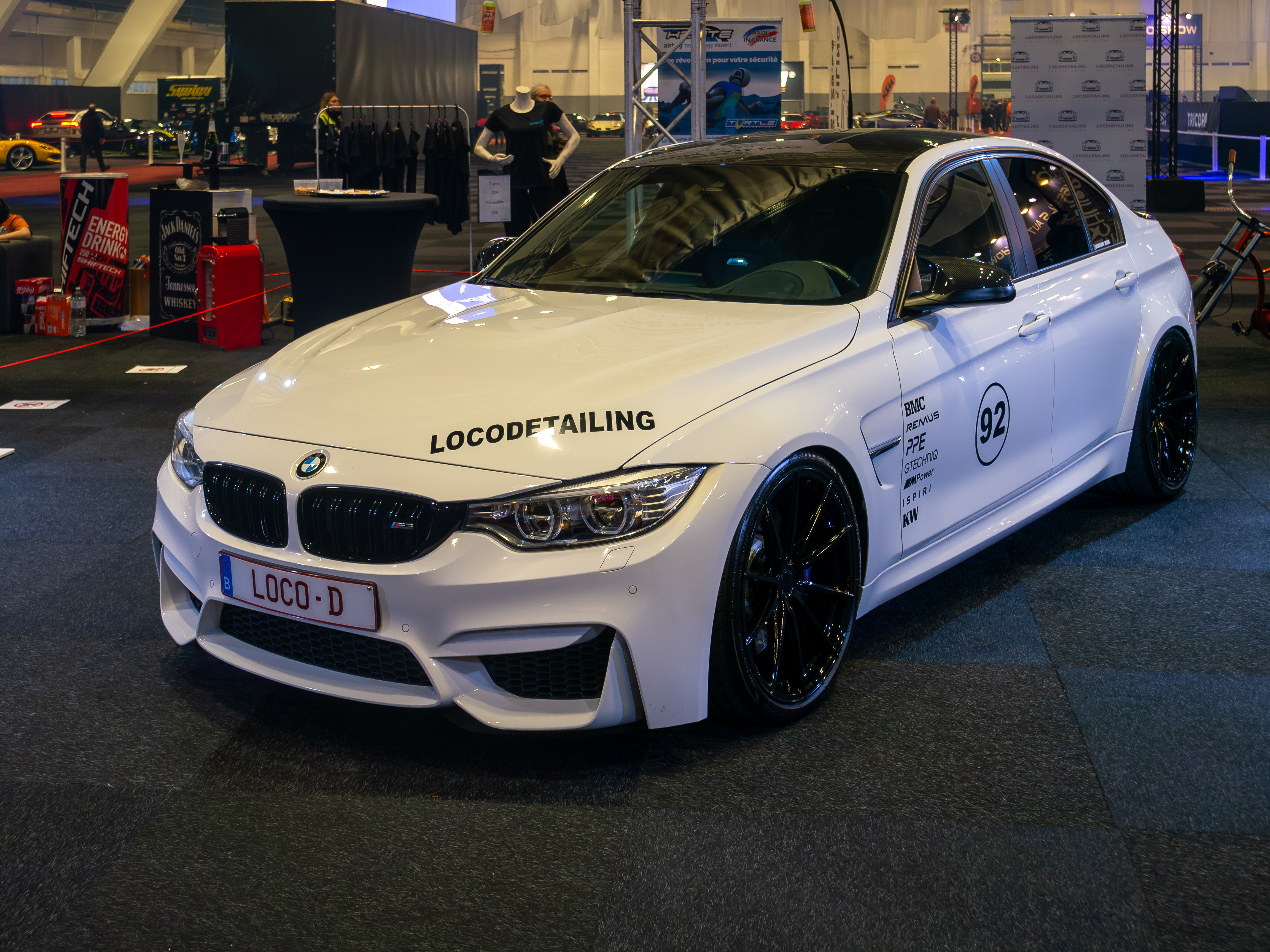
BMW E46 M3
"...ould see some pop up, starting with you know, the M3, because I think everybody thinks when they think..."
The E46 M3 is the high-performance version of the BMW 3 Series sold from 2001 to 2006. It has a special high-revving 6-cylinder engine, can be had with a manual transmission, and is widely considered one of the greatest BMW M cars ever — fans call it "the last analog M3." But it's expensive to buy and known to need pricey maintenance, which is why Ryan ultimately bought a 330i ZHP instead.
When Ryan says "you think M3, right?" he's referring specifically to the E46 M3 (2001–2006) — the M3 generation contemporary with the E46 chassis he was actually shopping for. It's powered by the S54, a 3.2L naturally-aspirated inline-six redlined at 8,000 rpm, making 333hp in US spec. Offered with a 6-speed manual or the controversial SMG-II automated manual. Often called "the last analog M3" because it kept hydraulic steering, no driver aids beyond traction control, and a high-revving NA engine — hallmarks the M3 lost in later generations. The combination of cult status + known maintenance demands ("the big three" + S54 rod bearings) is why even rough examples are expensive, and why Ryan eventually pivoted to the cheaper, simpler 330i ZHP.
the "big three" (E46 maintenance)
"...they're gonna be, you know, maintenance problem, you know, you got to take care of the big three, which can be expensive."
When E46 BMW owners talk about "the big three," they mean a specific list of three big repair jobs that almost every E46 eventually needs: (1) replacing the cooling system (water pump, thermostat, hoses), (2) rebuilding the VANOS (the part that controls when the valves open), and (3) reinforcing the rear subframe (a metal frame that can crack over time). Together these can add several thousand dollars on top of the car's purchase price.
Among E46 owners, "the big three" refers to a specific list of high-cost maintenance items that essentially every E46 needs at some point: (1) **cooling system overhaul** — the original plastic water pump impeller, thermostat, expansion tank, hoses and fan clutch all fail around 80–100k miles, often catastrophically; (2) **VANOS rebuild** — the variable valve timing solenoids and seals harden and leak, causing rough idle and lost power; (3) **rear subframe reinforcement** — the chassis can crack at the points where the rear subframe bolts to the body, especially on tracked or harder-driven cars. Budget for these items separately from the purchase price — that's the warning Ryan is processing here.
2004 BMW 330i ZHP
"It's a 2004 330i ZHP. And so the ZHP is a little bit higher. You know, it's got 10 additional horsepower and some additional like styling upgrades, steering wheel, lifter, that kind of bridge, it's like a mini M, right?"
The 330i was the top regular E46 3 Series, with a six-cylinder engine. The ZHP was an option package that added a little more power and a lot of sportier parts — suspension, seats, steering wheel, body kit, wheels. It's the specific car Ryan bought, and BMW only made a few thousand of them between 2003 and 2005, all for the US market.
The 2004 BMW 330i (E46 chassis) was the top regular-production E46 3 Series, powered by BMW's M54B30 3.0-liter naturally aspirated inline-six making 225 hp, paired with a 6-speed Getrag manual or 5-speed Steptronic automatic. The ZHP package — formal option code ZHP, marketed in the US as the "Performance Package" from 2003–2005 — was BMW's enthusiast-tier upgrade short of the M3. ZHP cars got 235 hp via a re-tuned ECU and reshaped intake, an M-Tech II body kit, M-sport steering wheel and short-throw shifter, sport seats with alcantara accents, shadow-line trim, sport-tuned suspension lowered roughly half an inch, a quicker steering rack (3.04 vs. 3.71 turns lock-to-lock), and unique 18" Style 135M ZHP wheels. Production was strictly limited and US-market only: roughly 6,500 sedans (2003–2005) plus about 1,200 coupes, convertibles and wagons (2004–2005). That's why Doug calls out that "they only made a certain number" — total ZHP production worldwide was under 8,000 cars. The enduring value proposition is roughly 80% of the M3 driving experience for about 50% of the cost, with a fraction of the upkeep — often summarized as "M3 without the M3 maintenance budget." Ryan's specific car: bought sight-unseen from Cars & Bids for around $5–6k, shipped from Cincinnati to Oregon in winter, 130k miles, three previous owners, with subframe reinforcement and recent VANOS and cooling work already done by the prior owner.
mini M
"...it's like a mini M, right? M Light, I like it."
"Mini M" is enthusiast slang for the BMW 330i ZHP — a standard 330i upgraded with sportier parts (suspension, seats, steering wheel, body kit) that make it feel almost like an M3, but cheaper to buy and own. It's the "M light" car for people who want most of the M experience without the full M cost.
"Mini M" or "M Light" is the affectionate enthusiast nickname for the 330i ZHP — a regular E46 330i with the optional Performance Package (option code ZHP) that brought it closer to the M3 without the M3's price or maintenance overhead. Compared to a base 330i it added 10 horsepower, sport-tuned suspension, the M-sport steering wheel and shift knob, M-tech II body kit, sport seats, shadow-line trim, and a quicker steering ratio. The phrase captures the entire ZHP value proposition: 80% of the M3 experience for ~50% of the cost and a fraction of the upkeep.
sorted one
"...I'd seen them usually go like around like anywhere between like 12 and 16. You see them on marketplace, and then you know, a good one, uh kind of a kind of a sorted one would be, you know, mid-teens."
A "sorted" car is one that's already had all its major repairs done — cooling system replaced, common problems fixed — so the next owner can just drive and enjoy it. Sorted cars cost more, but you save the money and hassle of doing the work yourself.
A "sorted" car, in enthusiast usage, is one whose known weak points and deferred maintenance have already been addressed by the previous owner — cooling system done, VANOS rebuilt, common wear items refreshed. The opposite is a "project" or "needs work" car. A sorted E46 ZHP commands a meaningful price premium over a rough one because the buyer isn't taking on thousands of dollars of upcoming "big three" work. Ryan's was on the lower end of asking prices but the inspection later confirmed prior owners had done much of the heavy lifting.
buying a car sight unseen
"I mean, you you definitely I am the the thing they warn you about with all those auction sites, buying a car sight unseen and not inspecting it, but you know, right, people are doing it, and and so far, so good, right?"
"Sight unseen" means buying a car without going to look at it in person first. Online auction sites make this common — the warning is that you can't catch problems like rust or hidden damage. Ryan's first car (a 1978 Mazda GLC) was also bought sight-unseen by his dad through a newspaper ad. Both cars came home without him meeting them first.
The second time in this episode Ryan buys a car sight-unseen — and the parallel with the first time is unmistakable. In the late 1990s, his dad bought him the 1978 Mazda GLC sight-unseen from a newspaper classified in Eugene; Ryan came home from baseball practice to find a yellow car in the driveway. Twenty-five years later, he does the same thing himself — buying a 2004 BMW E46 ZHP from Cars & Bids, sight-unseen, shipped from Cincinnati. The buying tools changed (newspaper → online auction), but the leap of faith is identical. It's a quiet structural rhyme that the episode doesn't call out explicitly.

BMW E46 (4th-gen 3 Series)
"So, you know, got it. It did get really dirty on the way out over the mountain, so had it detailed... took it to a local DMW mechanic... working on BMWs for 40 years..."
"E46" is BMW's internal code for the 3 Series sold from 1998 to 2006 — the generation right before the brand started using turbocharged engines and electric power steering. Enthusiasts call it "the last analog 3 Series" because it still has hydraulic steering and a naturally-aspirated inline-six, which they associate with the classic BMW driving feel. It's the specific chassis Ryan was hunting for.
The E46 is BMW's internal chassis code for the 4th-generation 3 Series, built from 1998 to 2006 (sedan/wagon/touring) and through 2006 for the coupe and convertible. It's widely considered "the last analog 3 Series" — it shipped with hydraulic power steering, naturally-aspirated inline-six engines (M52TU and M54), no electric steering assist, no run-flat tires, no iDrive, and an unbreakable Getrag manual transmission. Body styles included sedan, coupe, convertible, wagon (Touring), hatch (Compact), and AWD (xi). Successor F30 (2012+) moved to electric steering and turbocharged 4-cylinders, which is what made the E46 retroactively beloved as the last "pure" 3 Series. It's the chassis Ryan was specifically shopping for, and the reason this episode exists.
VANOS
"Gave it a clean bill at health, did did a couple of vanos line repair, brake flush, auto, power steering flush, and some other things."
VANOS is BMW's name for the system that controls the timing of the engine's valves so it can run smoothly at both low and high RPM. The seals and oil lines inside the VANOS wear out over time and cause rough running. Replacing or rebuilding them is one of the standard repairs on an aging BMW E46.
VANOS (from German "variable Nockenwellensteuerung," variable camshaft control) is BMW's variable valve timing system, introduced in 1992 and used across the M50/M52/M54/S54 inline-six engines that powered the E46 generation. It rotates the camshafts relative to the crankshaft to vary when the intake (single-VANOS) or both intake and exhaust (double-VANOS) valves open, broadening the powerband and improving low-end torque. The weak points are the rubber seals inside the VANOS unit and the oil supply lines, which harden and leak with age — causing rough idle, lost low-end torque, and a characteristic rattle. A "VANOS rebuild" is one leg of the E46 "big three" maintenance items. Ryan's car had its lines replaced as part of the inspection.
subframe reinforcement
"...the previous owner did a lot of work on it as well, like subframe reinforcement. But there was a little bit of rust, right?"
The E46's rear subframe (the metal frame that holds the rear suspension) is bolted to a section of the body that's thinner than it should be. Over years of driving, the metal can crack where the subframe attaches. The fix is to weld reinforcement plates around those attachment points. Ryan's previous owner already did this work, which is one less worry for him.
A documented E46 chassis weakness: the rear subframe mounts are spot-welded to relatively thin sheet metal of the trunk floor. Over time — especially with hard driving, track use, or heavier wheels/tires — the metal can crack at the mounting points, sometimes catastrophically. The fix is "subframe reinforcement": welding in steel plates (commercially available from shops like Vince Lupo, RogueTuning, or Condor Speed Shop) around the four mounting points to spread the load. Doing it preventively is much cheaper than waiting for cracks to form. Ryan's previous owner had already done the work, which removes one of the three big-three repair worries from his ownership.
AI-powered podcast annotations
"...like you've been talking about Porsche's and then we talked about like old Mazdas and Nissan... And those are all you know generated with prompts and context you know through the AI engine... So you'll see things on the screen popping up as as you're listening..."
As you listen to a car podcast, this app shows little cards on your screen at the right moments — pictures of the cars being discussed, quick explanations of jargon, links to learn more. The text is generated by AI from the show's transcript. Ryan got the idea from Apple Podcasts' feature that scrolls the words of a song or podcast as it plays, and decided to add visuals and explanations on top of that.
The product idea Ryan describes: as a car podcast plays, the screen surfaces synchronized cards explaining each car, term, brand, and concept the hosts mention — generated by passing the transcript through AI with podcast-specific context, then anchored to exact timestamps. Ryan cites Apple Podcasts' synced-transcript feature (the lyrics-style scrolling text Apple ships in Podcasts and Music) as a direct inspiration; Car Curious adds a visual annotation layer on top of that. The cards include images sourced from the web (with plans to support podcaster-uploaded photos), short editorial summaries, and links out to Wikipedia, BaT/C&B auctions, or other deeper context. The AI generates explanations in the voice of the show, using the surrounding transcript for context.
Car Curious
"...so I can subscribe and follow that that car model on Car Curious and any any podcast... so yeah I can really see this the sky's the limit on on get car curious."
Car Curious is the website and app that Ryan built. It plays car podcasts and shows you helpful explanations and pictures as the hosts talk — about cars, technical terms, brands, anything they mention. You can also follow specific cars (like the BMW 3 Series) and get a feed of every podcast episode that talks about them. This very episode is on the platform.
Car Curious (getcarcurious.com) is an AI-annotated car podcast platform built by Ryan Williams, the guest of this episode. Based in Portland, Oregon, the product launched on the web in early 2026 with a native iOS app in development. It ingests automotive podcasts, transcribes them, and uses fuzzy matching plus LLM enrichment to surface annotations for every car, term, concept, brand, and part the hosts mention — synced to exact timestamps. Listeners can follow specific car models (e.g., the BMW 3 Series) and get an automatic feed of every new podcast episode that mentions them. This very episode of "To All The Cars I've Loved Before" is itself an annotated episode on the platform.
Follow-a-car (Car Curious personalization)
"...three series BMWs are are the model that I'm interested in so I can subscribe and follow that that car model on Car Curious and any any podcast now that mentions the three series will show up in my feed..."
In a normal podcast app, you follow a show. On Car Curious, you can also follow a car — for example, the BMW 3 Series — and the app will automatically pull together every episode from every show that talks about that car. So instead of hunting through podcasts to find E46 BMW content, you just follow "BMW 3 Series" and the episodes come to you.
Car Curious's headline personalization feature: pick any car model in the catalog (Ryan's example: the BMW 3 Series, since he just bought a 330i ZHP), tap follow, and your feed becomes every episode across every show in the platform that mentions that model — past and future. The same works for makes, generations, and individual variants. It's the inverse of the traditional podcast model where you follow a show; here you follow a *car*, and the platform pulls relevant content from any show across its catalog. The mechanism is the annotation graph: every time the fuzzy matcher or LLM tags an episode with a car_model, that episode becomes eligible to surface for anyone following that model.
Bring a Trailer Podcast
"...one of the kind of most visual podcasts that I would saw from the audio standpoint... on the audio front like the Bring A trailer podcast they don't do video but their show note links lead to every single auction that they talk about..."
Bring a Trailer (BaT) is best known as a car auction website, but they also produce a podcast. What makes their podcast notable is that every car the hosts mention is linked in the show notes to its actual auction page — so you can immediately go look at photos and details of the car you just heard about. Ryan calls this out as one of the inspirations for Car Curious.
The official podcast from Bring a Trailer — distinct from the BaT auction site itself. Ryan singles it out as the audio show that pioneered using show notes as a deep-link layer: every car they discuss in an episode has a clickable link to the actual BaT auction listing in the show notes, so listeners can immediately see photos, comments, sale prices, and full vehicle history. That practice is one of the direct inspirations for Car Curious's auction/Wikipedia/show-notes link enrichment — the difference being Car Curious surfaces the links inline at the timestamp, not just in a static notes block.

Lamborghini Countach
"...what is that the the Lamber Lamborghini Kuntosh. I cannot pronounce it maybe you can pronounce..."
The Countach is the iconic 1980s Lamborghini supercar — sharp wedge shape, doors that swing up like scissors, a huge V12 engine in the middle of the car. It's the car most kids of the 1980s and 90s had a poster of on their bedroom wall. The pronunciation that throws people: it's roughly "KOON-tahsh." Ryan has a Countach Lego model in his video background.
Lamborghini's iconic flagship from 1974 to 1990 (Doug and Ryan struggle with the pronunciation — it's roughly "KOON-tahsh"). It's the car that defined what a supercar looks like for an entire generation: wedge profile, scissor doors, mid-mounted V12, side-strake intakes that became 1980s shorthand for excess. A clean Periscopio-era LP400 just sold on Bring a Trailer for nearly $1 million. It's also the Lamborghini Lego set in Ryan's video background — Ryan name-checks the Lego experience here, tying his "dream car as a kid → Lego on the desk → adult enthusiast" arc to the broader bedroom-poster generation Doug brings up.
JDM
"...Classic Car Restoration, JDM, and Automotive History..."
JDM means "Japanese Domestic Market" — Japanese cars built for sale in Japan. People also use it loosely to mean "Japanese performance and tuner culture" in general. The hosts mention it because the next cars they talk about (the Nissan 300ZX, the Mazda Miata) are JDM-era legends.
JDM stands for "Japanese Domestic Market" — strictly speaking, cars built and sold within Japan, often with right-hand drive and unique trim levels not exported. In casual enthusiast usage it has broadened to mean "Japanese performance car culture" generally, including export models like the Mazda RX-7, Nissan 300ZX, and Miata that Doug and Ryan discuss next. The host show's own subtitle ("Classic Car Restoration, JDM, and Automotive History") signals the JDM tilt of their audience.
cars and coffees
"...just when you see one still at cars and coffees or car shows or whatever. Yeah they are they are I as I understand not very easy to drive and not comfortable..."
"Cars and coffee" is a casual weekend car meetup — people drive in early Saturday morning, park their cars together, drink coffee, and hang out. The format started in California in 2005 and spread worldwide. It's where you can see exotic cars like a Countach in person, which is what the hosts are getting at.
"Cars and coffee" is the standard format for the modern Saturday-morning car meet — owners drive in early, park up, drink coffee, talk shop, leave by midday. The original Cars and Coffee was started in 2005 in Crystal Cove, California, and the format spread globally; today nearly every metro has at least one weekly or monthly event. They're free, low-stakes, and welcoming to anything from a base Civic to a Pagani — which is part of why the hosts use them as a contemporary equivalent of the 1980s "exotic in the parking lot" experience that drove their childhood obsession with cars like the Countach.

Nissan 300ZX (Z32)
"...when I bought my 300z X 1990 Nissan 300Z like man I would love to have some old magazines... here's a car and drive what's on the front a Miata and a 300Z well I owned a Miata... and now I own a 300 ZX..."
The 300ZX is Nissan's 1990s sports car — Doug owns a 1990 model. The high-end version had a twin-turbo V6 making 300 horsepower, which was huge for the time. It's part of a legendary group of early-1990s Japanese sports cars (alongside the Toyota Supra and Mazda RX-7) that fans still chase today.
Doug's "1990 Nissan 300Z" is the Z32-generation 300ZX (1990–1996 in the US), the fourth Z-car. The hero variant is the 300ZX Twin Turbo: a 3.0L twin-turbo V6 making 300hp — a remarkable number for the era and one of the cars that, alongside the Toyota Supra Mk4, Mitsubishi 3000GT VR-4, and Mazda RX-7 FD, defined the Japanese performance peak of the early 1990s. It was so capable Nissan stopped exporting it to the US in 1996 partly because it was too expensive to build to ever-tightening US safety regs. The era is exactly why Doug feels nostalgic flipping through period Car and Driver magazines featuring the 300ZX on the cover.

Mazda MX-5 / Miata
"...ideo here's a car and drive what's on the front a Miata and a 300Z well I owned a Miata I actually owned ..."
The Miata (also called the Mazda MX-5) is the small two-seat convertible that Mazda has been making since 1989 — over a million produced. It's lightweight, simple, and famously fun to drive, which is why it's the most-recommended "first sports car" or "first manual-transmission car." Doug had two of them.
The Mazda MX-5 (sold as the Miata in the US for its first three generations) is the world's best-selling two-seat roadster — over 1.2 million produced since 1989 across four generations (NA, NB, NC, ND). The original NA was a deliberate revival of the 1960s British roadster formula (Lotus Elan, MG, Triumph) but with Japanese reliability — front engine, rear-drive, lightweight, manual gearbox, soft top, no electronic aids. It's the canonical "first stick-shift sports car" and the answer to "answer is always Miata," a meme on r/cars for any car-buying question. Doug owned two Miatas in the past and now owns the 300ZX in his collection.
Car and Driver
"here's a car and drive what's on the front a Miata and a 300Z well I owned a Miata I actually owned two back in the day and now I own a 300 ZX and I remember reading this exact magazine"
Car and Driver is one of the oldest American car magazines, founded in 1955 and known for sharp writing and head-to-head comparison tests. Before the internet, monthly delivery of magazines like this was how car enthusiasts kept up with new releases and gear. Doug holds up a vintage issue with a Mazda Miata and Nissan 300ZX on the cover — a snapshot of the early-1990s Japanese sports car peak.
Car and Driver is an American automotive magazine, founded in 1955 as "Sports Cars Illustrated" and rebranded to "Car and Driver" in 1961. It's known for its irreverent voice and rigorous comparison-test format, shaped over decades by editors like David E. Davis Jr., Csaba Csere, and Aaron Robinson. Its long-running rivalries with Motor Trend and Road & Track defined a three-magazine landscape that ran enthusiast media through the 1990s — each had its own personality, and which one you subscribed to said something about how you thought about cars. Print circulation peaked in the early 2000s; like nearly all auto journalism, the publication has since migrated primarily online to caranddriver.com, though the print edition continues. The specific issue Doug holds up has a Mazda Miata and Nissan 300ZX on the cover — almost certainly an early-1990s issue, when both cars were buzzy new releases and Japanese sports cars were near their peak. Why this matters in this episode: in the pre-internet era, the monthly arrival of Car and Driver, Motor Trend, and Road & Track defined how enthusiasts learned about new cars. Doug pulls out a physical copy on camera as a kind of relic — exactly the kind of cross-era moment Car Curious's annotation layer is designed to surface for younger listeners who never had a magazine show up in the mailbox.
Request an Explanation
Heard something you'd like explained? We'll add it to this episode.
Sign in to request explanations for terms you heard.
Want to learn more?
Browse our glossary for plain-English explanations of automotive terms, jargon, and concepts.
Help improve this episode
See something that's not quite right? Our annotations are AI-generated and can sometimes miss the mark. Click the flag icon on any annotation to suggest a correction.