
BMW’s new Vision Alpina, £80k used sports cars and are chaotic roads better?
About this episode
BMW’s Vision Alpina gets the spotlight: the hosts call “Vision” marketing basically “the new word for a concept car,” then dig into what the concept is based on, what it might use for power (a standalone V8, likely twin-turbo), and how Alpina-style aero bits like the wheels and diffuser look in practice. They also pivot into a used-sports-car “budget” challenge—balancing warranty, depreciation, and chaotic-road realities—before circling back to why buyers still want combustion.
There are loads of new cars to get through on today's episode of The Gassing Station podcast. The first Alpina designed under BMW ownership, VW's new all-electric ID Polo GTI, complete with proper buttons and 226hp, plus the Lamborghini Fenomeno Roadster and what boss Stephan Winkelmann had to say about the company’s future.
Elsewhere: a £60k–£80k sports car buying challenge featuring the Mercedes-AMG GT S, Porsche Cayman GT4 and Aston Martin Vantage — plus a debate on whether Wales really has the UK’s best roads.
🏎️ Sell your car on PistonHeads auctions: https://www.pistonheads.com/sell/auctions🎟️ Get your Annual Service 2026 tickets: https://www.pistonheads.com/events/annual-service
Chapters:
0:00 Intro
0:44 Lamborghini Fenomeno Roadster
5:14 Stephan Winkelmann chat
17:05 VW ID Polo GTI
27:55 BMW Vision Alpina
35:35 £80k sports car challenge
52:45 Are chaotic roads actually better?
TOPICS:
Lamborghini Fenomeno Roadster: https://www.pistonheads.com/news/ph-italian-cars/lamborghini-debuts-epic-1-080hp-fenonmeno-roadster/51183
VW ID Polo GTI: https://www.pistonheads.com/news/ph-germancars/all-new-vw-id-polo-gti-revealed-with-226hp/51202
BMW Vision Alpina: https://www.pistonheads.com/news/ph-germancars/bmw-unveils-new-v8-powered-vision-of-alpina/51201
£80k sports car challenge: https://www.pistonheads.com/gassing/topic.asp?h=0&f=255&t=2140934
Chaotic roads: https://www.pistonheads.com/gassing/topic.asp?h=0&f=23&t=2142364
CARS:
Sam's AMG GT S: https://www.pistonheads.com/buy/listing/20326231
Cam's Cayman GT4: https://www.pistonheads.com/buy/listing/20084024
FOLLOW US: 🗣 Facebook: https://www.facebook.com/pistonheads 📸 Instagram: https://www.instagram.com/pistonheads 🐦 X: https://twitter.com/pistonheads
few-off
"I said, no, it's a few-off. And I was like, oh, okay, yes. Because with the Phenomenal Roadster, they're only building 15 of them."
A “few-off” just means they’re making only a very small number of cars. Here, the hosts say it’s 15 units.
“Few-off” is a niche enthusiast term for an extremely low-volume production run—think “a handful of cars” rather than a normal limited edition. In this segment, Lamborghini reportedly prefers the term to describe building only 15 units.

Chevrolet Corvette
"...ni. From this angle, it looks a little bit like a Corvette Stingray. Oh, so little bits of it. I know that's..."
The Chevrolet Corvette is a sports car made in the U.S. It’s known for being fast and having a recognizable look. The podcast mentions it because another car looks a bit like it from a certain angle.
The Chevrolet Corvette is a long-running American sports car known for its performance and distinctive styling. It often comes up in conversations because its design cues and driving character make it an easy reference point when people compare other sports cars. In the podcast, it’s mentioned as a visual comparison from a certain angle.

Revuelto
"...oes make me think though, looking at it, like the Revuelto is now so technologically advanced and so freakin..."
The Revuelto is a Lamborghini supercar. It’s the kind of car that’s built with very advanced technology to deliver extreme performance. The podcast mentions it because it’s described as especially cutting-edge.
The Revuelto is a Lamborghini supercar known for being highly advanced in its technology and performance focus. The podcast highlights it as “technologically advanced,” which is why it stands out in the conversation. It’s being referenced as a modern evolution in Lamborghini’s lineup.
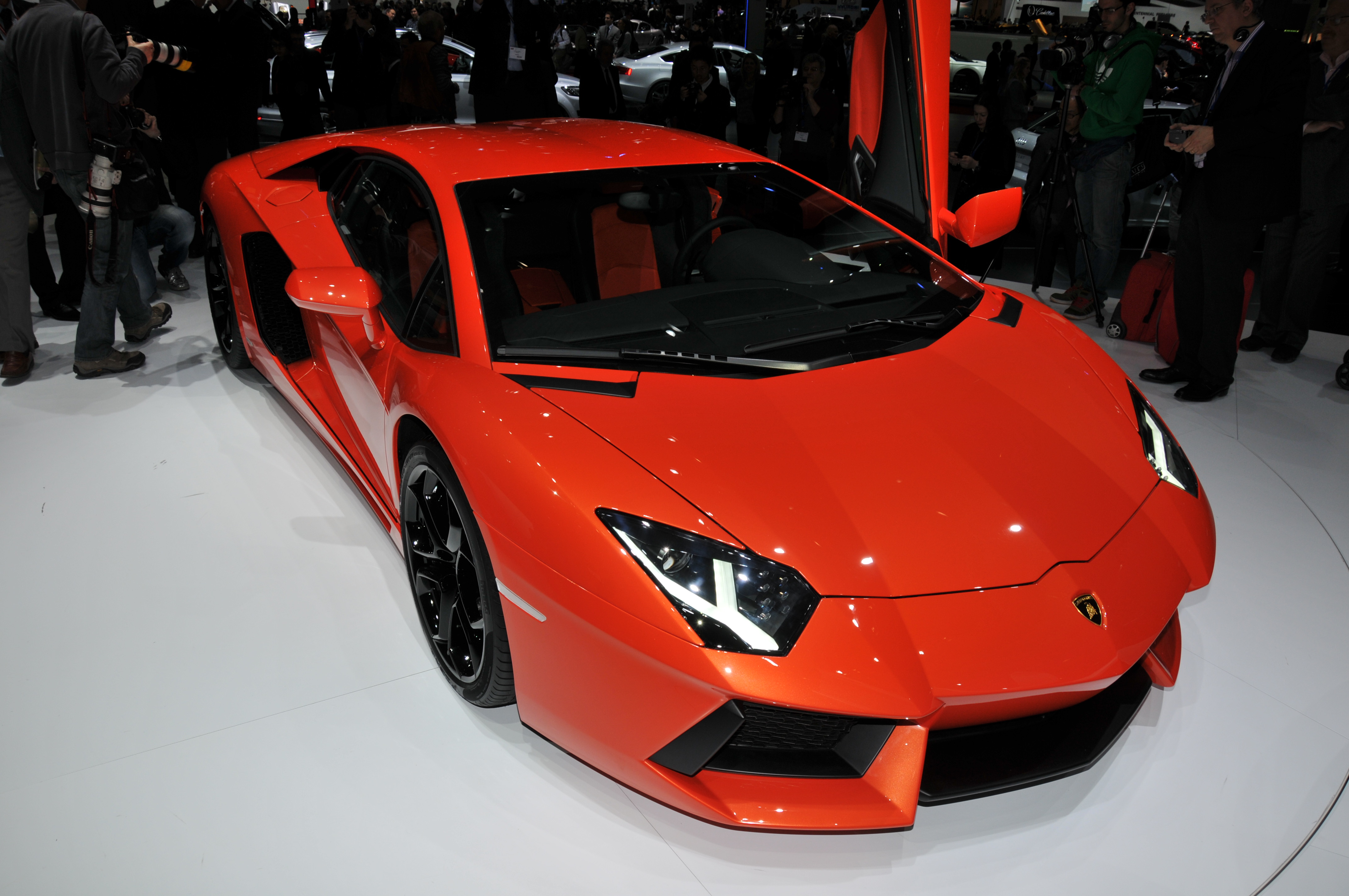
Lamborghini Aventador
"... jet fighter on wheels? And so that previewed the Aventador and then the Aventador comes out and you go, I th..."
The Lamborghini Aventador is a very high-performance supercar from Lamborghini. It’s known for its bold styling and fast driving feel. The podcast mentions it as a car that was teased and then came out, which got people talking.
The Lamborghini Aventador is a flagship-style Lamborghini supercar that became known for its dramatic design and high-performance character. In the podcast, it’s referenced as a model that was previewed and then released, prompting excitement. That makes it a natural topic when discussing Lamborghini’s evolution and impact.

Ferrari 488 GTB
"I always liked that Ferrari had you think of a 488 GTB and especially a 458 and they were aerodynamically styled, but still quite soft."
The Ferrari 488 GTB is a high-end Ferrari supercar. The host mentions it to compare older Ferrari styling—still sporty and aerodynamic, but not as extreme as newer designs.
The Ferrari 488 GTB is a mid-engine supercar from Ferrari, known for its turbocharged V8 and sharp, track-focused styling. In this segment, it’s used as an example of older Ferrari design that looked aggressive without going as far on aero styling as newer cars.

Ferrari 458
"I always liked that Ferrari had you think of a 488 GTB and especially a 458 and they were aerodynamically styled, but still quite soft."
The Ferrari 458 is a mid-engine supercar from Ferrari, famous for its naturally aspirated V8 and classic “driver’s supercar” feel. Here it’s referenced alongside the 488 GTB as an example of Ferrari’s earlier aero styling that still looked relatively restrained.
Stefan Winkelman
"However, I was able to meet with Lamborghini CEO, Stefan Winkelman at the new Lamborghini pool dealership."
Stefan Winkelmann is Lamborghini’s top executive. The host mentions meeting him during a dealership event, which is why Lamborghini is the focus of that part of the story.
Stefan Winkelmann is the CEO of Lamborghini, and his presence is used here to frame the host’s visit to a new Lamborghini dealership. This is a brand/leadership mention rather than a technical automotive detail.

Lamborghini Gallardo
"...l Lamborghini? Because you remember back when the Gallardo was around? Yeah. Yes. So, you know, take inflati..."
The Lamborghini Gallardo is a high-performance supercar made by Lamborghini. It’s known for its powerful engine and dramatic look. The podcast mentions it when talking about how the model was “around” in the past.
The Lamborghini Gallardo is a V10-powered supercar that was produced for many years and became one of the brand’s most recognizable models. It’s often discussed because it represents a key era of Lamborghini’s lineup and is a benchmark for how the brand’s cars feel and sound. In the podcast, it’s referenced as a historical point in the conversation.
hypercar
"it was definitely a supercar rather than than a hypercar, whereas everything now feels hypercar."
A “hypercar” is basically the next step up from a supercar—usually even faster and far more expensive. The hosts are saying Lamborghini’s lineup has shifted so that more models feel like they belong in that top tier.
“Hypercar” is a marketing and enthusiast category for extremely high-performance, very expensive cars that sit above typical supercars. In this segment, the hosts contrast earlier Lamborghini positioning (Gallardo as a supercar) with today’s market where even “entry” models feel hypercar-level.
1000 horsepower
"you've got Temurario is knocking on the door of 1000 horsepower."
Horsepower is a way to describe how much power an engine makes. Saying “1000 horsepower” is meant to show how extreme the performance target is.
“Horsepower” is an engineering measure of engine power, and “1000 horsepower” is used here as a benchmark for how extreme modern performance has become. The hosts use it to emphasize that the “baby Lamborghini” is approaching the numbers typically associated with top-tier cars.
2+2 Grand Tourer
"it would be a two plus two Grand Tourer, which is which is very interesting because you know, there hasn't been a two plus two Lamborghini since a Spada."
A 2+2 Grand Tourer is a fast, long-distance car with two front seats and two smaller back seats. The hosts are saying Lamborghini is considering bringing back that kind of layout.
A 2+2 Grand Tourer is a car designed for long-distance comfort and performance, with two seats up front and two smaller rear seats. The “2+2” part matters because it’s a specific packaging choice (rear seats that are usable, but not full-size), and the hosts note Lamborghini hasn’t done this layout for a long time.
mobility
"So he said they're interested in that and not mobility. And I was like, yeah, that's, because ultimately, that's what EV works so well in is mobility and mobility is such a dirty word, not just on this podcast, but in that, in that corner of the market."
Here, “mobility” means using cars mainly to get around efficiently. The host’s point is that some supercar buyers don’t want that— they want the excitement and personality of a traditional car.
In EV marketing and policy talk, “mobility” often means transportation as a service—getting people from A to B efficiently. The host argues that in this luxury/supercar corner of the market, “mobility” is a “dirty word” because buyers are chasing emotion and engine character, not just getting around.

Gordon T50
"...t would go, I would rather buy this than a GM GMA T50. I'm not one of those people. If someone gives me..."
The Gordon Murray Automotive T.50 is a supercar made by Gordon Murray Automotive. It’s designed to be lightweight and focused on how the driver feels behind the wheel. The podcast brings it up because the speaker prefers it over another similar supercar.
The Gordon Murray Automotive T.50 is a modern supercar designed around a lightweight, driver-focused philosophy. It’s mentioned in the context of personal preference—comparing it to another supercar and expressing a desire to buy the T.50 instead. That’s why it comes up: it’s seen as a special, purpose-built alternative.

Lamborghini Urus
"I'd much rather have the Tuareg-based Urus with a big old V8 up front. Subtle, subtle insult to everybody spent 200K on a Urus."
The Lamborghini Urus is a fast, luxury SUV. Here, it’s used as the benchmark for what people would rather have than the rumored 2+2.
The Lamborghini Urus is a high-performance SUV built around a large V8, which is why it gets compared to other “2+2” sports/GT-style concepts. In this segment, the hosts reference it as the more desirable alternative to a rumored plug-in hybrid V8 setup.
plug-in hybrid
"But I think from what I can see that's rumored is that it would be a plug-in hybrid V8. ... having a plug-in hybrid 2 plus 2 sounds like a smart idea. At least to come bring those emissions down."
A plug-in hybrid is a car that uses both a battery and a gas engine. You can charge the battery by plugging it in, which helps cut emissions compared with a normal gas-only car.
A plug-in hybrid (PHEV) is a hybrid car that can be charged from an external power source, not just by the engine or regenerative braking. In this segment, the hosts argue that a plug-in hybrid V8 “2+2” could reduce emissions while keeping the performance people expect from a V8.
Lamborghini Urus SE
"Which is what the Urus SE has. And that's putting out 800 horsepower."
The Lamborghini Urus SE is a hybrid version of the Urus. In this discussion, it’s the example of the kind of plug-in V8 setup they expect in the new rumored car.
The Lamborghini Urus SE is the Urus plug-in hybrid variant, and the key detail here is its V8-based hybrid system. The hosts mention it specifically because they think the rumored “2 plus 2” would use the same powertrain approach.

Porsche Cayenne Turbo SE
"Is that the same setup as the Cayenne Turbo SE as well? Probably, right? Yeah. Probably, because it's all Porsche."
The Porsche Cayenne Turbo SE is a hybrid version of the Cayenne that’s meant to stay fast while using electricity. They bring it up because they think the new car’s hybrid system could be related.
The Porsche Cayenne Turbo SE is a plug-in hybrid Cayenne variant that combines a performance-focused “Turbo” setup with an electrified system. The hosts connect it to the Urus SE idea, suggesting the rumored 2+2 could share a similar hybrid V8 architecture across the Porsche/VW group.
Euro 7
"The other thing he told me that I hadn't thought about is that, you know, so Euro 7 comes in in November this year. So that's what's terrifying for a lot of manufacturers is that they're going,"
Euro 7 is a new set of rules in Europe that makes car emissions harder to exceed. Automakers are worried because they’ll have to change their cars to meet the stricter limits.
Euro 7 is a forthcoming set of European vehicle emissions regulations that will tighten limits for cars sold in Europe. The hosts frame it as “terrifying” for manufacturers because it increases the pressure to reduce tailpipe emissions—often pushing automakers toward hybrids and other technologies.
noise cap
"So the noise cap for engines going forward is horrifically low. You know, they're practically going to be silent."
A noise cap is the legal maximum for how loud a car is allowed to be. Here, they’re saying future rules will make engine noise limits much stricter.
A noise cap is a regulatory maximum for how loud a vehicle can be under defined test conditions. In the context of Euro 7, the hosts say the allowable engine noise will be extremely low, pushing manufacturers toward quieter powertrains and exhaust strategies.
V12s
"how's Lamborghini coming about this? Because big engines, V12s, and famous for noise, what are you going to do about it?"
A V12 is a type of engine with 12 cylinders arranged in a V shape. It’s often associated with a strong, distinctive sound—exactly the kind of thing new noise rules could restrict.
A V12 is an engine with twelve cylinders arranged in a V shape, typically producing smooth power and a distinctive exhaust note. The hosts connect V12s to the challenge of meeting Euro 7’s very low noise limits.
small scale manufacturer
"Because they're a small, they're classed as a small scale manufacturer. And so Euro 7 doesn't come in for them for a few years, which seems amazing that Lamborghini is classified as a small manufacturer."
A “small scale manufacturer” is a car company that builds fewer cars than the big mass producers. The point here is that the rules (Euro 7) may not apply to them as quickly, giving them more time to adjust.
“Small scale manufacturer” refers to a regulatory category for automakers that produce relatively low volumes. The hosts say this classification can delay when Euro 7 applies, which would give certain brands more time to adapt their engines to new emissions and noise limits.
IMSA
"They raced in IMSA for a couple of years and they went, we're not, we're not doing this. We're putting the plug, pausing it."
IMSA is a big endurance racing series in North America. Teams race for long stretches and have to balance speed with strategy and keeping the car healthy.
IMSA refers to the WeatherTech SportsCar Championship, a major North American endurance racing series. Like WEC, it emphasizes long-race execution—stint planning, pit strategy, and keeping the car running reliably.
WEC
"you look at, there's so many manufacturers in the WEC now. McLaren's coming in next year, Ford's coming in next year, Genesis has come in this year, Porsche has left."
WEC is a big endurance racing championship. Cars race for hours, and teams compete across a season—so when more major brands join, the competition gets tougher.
WEC (World Endurance Championship) is a top-level endurance racing series where teams race for long durations and points across multiple events. The hosts mention it because manufacturer participation affects how competitive the top class is.
Le Mans
"They're all wanting this shot at Le Mans because it used to be the case of where it was two manufacturers battling it out for the win."
Le Mans is one of the most famous long-distance races in the world. It’s a big deal for racing teams because winning there is a major prestige marker.
Le Mans is the famous endurance race in France that’s part of the WEC calendar. The episode frames it as a high-prestige “manufacturer target,” which is why teams and brands care so much about getting into the right class and rules.
LMDH
"at the moment you've got split between LMDH and hypercars, LMH cars. And one is LMDH is you have four different chassis manufacturers and you can build your car around that and it's much cheaper..."
LMDH is a racing rule/platform that lets teams choose from different chassis options. The point the hosts make is that it can be cheaper because you’re not starting with a completely brand-new car design.
LMDH (Le Mans Daytona h) is an endurance prototype platform that allows teams to use multiple chassis options from different manufacturers. The hosts highlight that this approach is cheaper because teams can build around an existing chassis rather than designing everything from scratch.
LMH cars
"you've got split between LMDH and hypercars, LMH cars. ...and it's much cheaper than by building an LMH car, which is you build the whole thing yourself."
LMH cars are the other top endurance race-car category. The key idea is that teams build more of the car themselves, which tends to cost more than the more modular LMDH approach.
LMH (Le Mans Hypercar) is the other major endurance prototype category, where teams build the car more independently. The hosts contrast it with LMDH by saying LMH cars require building the whole car yourself, which is why it’s described as more expensive.
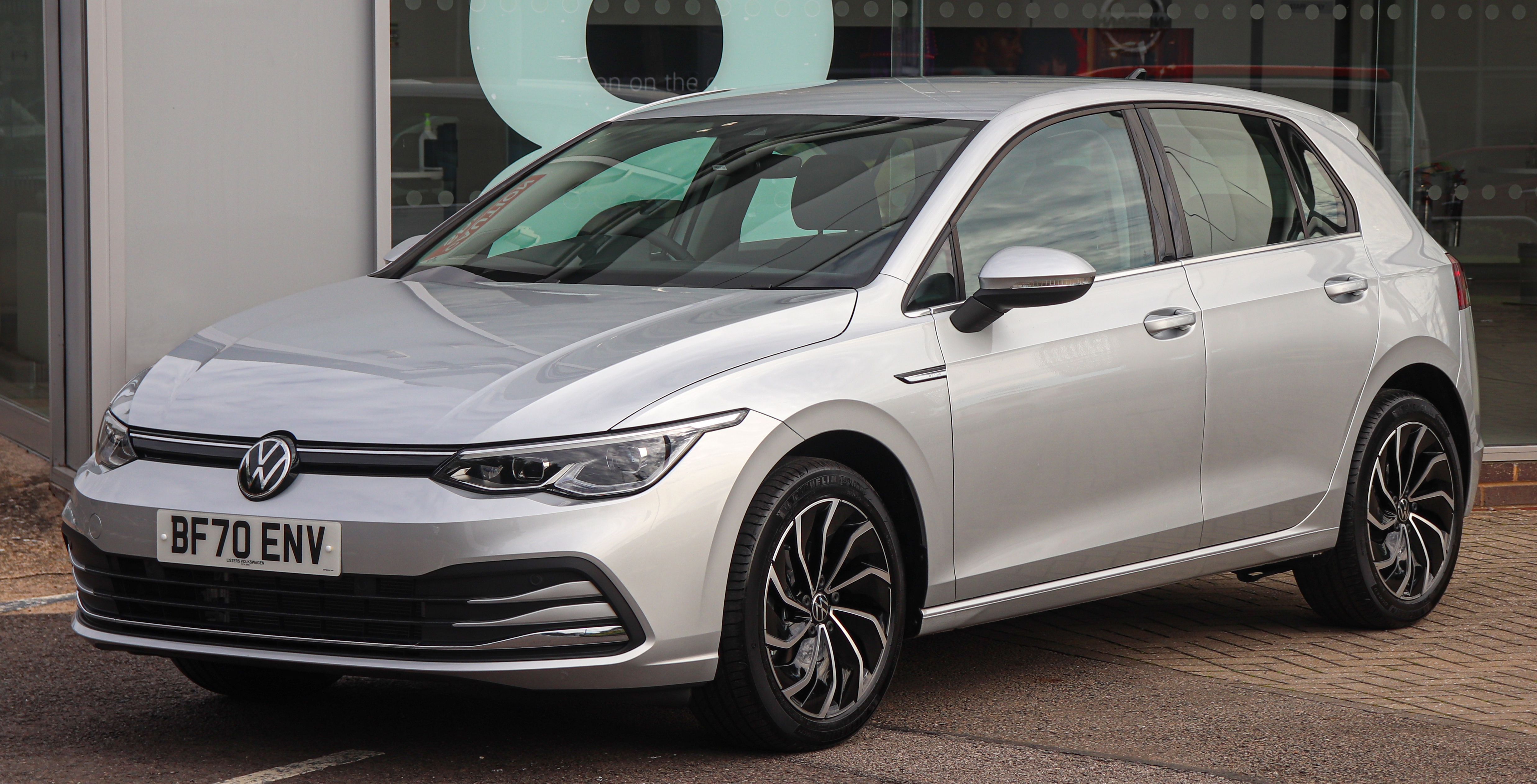
Volkswagen Gti
"...ght now. The news is, is that the Volkswagen Polo GTI is back. But does it have a peppy little four-pot..."
The Volkswagen Golf is a common small car that many people use for everyday driving. It can also come in sportier versions. The podcast mentions it while comparing other small cars and how lively they feel.
The Volkswagen Golf is a mainstream compact car that’s known for being practical while still offering performance variants. In the podcast, it’s referenced in a comparison involving the Polo GTI and the Renault 5, highlighting how different small cars can be compared on “peppiness” and appeal. It’s brought up as the baseline for that discussion.

Volkswagen Polo GTI
"The news is, is that the Volkswagen Polo GTI is back. But does it have a peppy little four-pot under the bonnet? No, what a surprise. It's electric. It's an ID Polo."
The Polo GTI is Volkswagen’s sporty version of the Polo. The big twist here is that this one is described as electric, not the usual gas-engine GTI approach.
Volkswagen Polo GTI is the hot-hatch version of the Polo, typically known for a sporty, driver-focused setup. In this segment, the host says the “Polo GTI” is back but is electric and based on the ID platform, which is a major shift from the usual petrol GTI formula.
four-pot
"But does it have a peppy little four-pot under the bonnet? No, what a surprise. It's electric."
“Four-pot” just means a four-cylinder engine. It’s a common shorthand car people use to talk about engine size and layout.
“Four-pot” is enthusiast shorthand for a four-cylinder engine. It’s a quick way to describe engine layout and cylinder count, which can influence how smooth the power delivery feels and how the car packages under the hood.

ID 3 GTX
"But I'm going to try and make a case for it because I've driven the ID 3 GTX, which has now been succeeded by the GTI version. That's a rear wheel drive car and they've done some tweaks to that and I'm sure it'll be more fun."
The ID 3 GTX is a sportier electric Volkswagen in the ID lineup. The host says it’s rear-wheel drive, and that matters because it changes how the car feels to drive.
Volkswagen ID 3 GTX is an electric performance trim in the ID family, positioned as a sportier take on the ID 3. The host notes it’s rear-wheel drive and that the newer GTI version is based on it, implying the platform and drivetrain choices drive the car’s “fun” factor.
limited slip diff
"But I'm going to try and make a case for it because I've driven the ID 3 GTX... It's front wheel drive and it's got Volkswagen's clutch, was it VAC, limited slip diff electric thing under the between the front wheels."
A limited-slip differential helps the car put power down more evenly to the driven wheels. That usually means better traction and less wheel spin when you accelerate hard or drive on low-grip roads.
A limited-slip differential (often shortened to “limited-slip diff”) is a drivetrain component that reduces wheel spin when power is sent to two driven wheels. By limiting how easily the wheels can rotate at different speeds, it improves traction and helps the car feel more stable and responsive, especially on slippery or cornering surfaces.
naught to 62 time
"So it's going to be a proper hot hatch with 226 horsepower, sub seven second, naught to 62 time and crucially and seriously different to Alpine A290, etc."
“Naught to 62 time” measures how fast a car goes from 0 to 62 mph. It’s a simple way to compare acceleration between cars.
“Naught to 62 time” is the elapsed time it takes a car to accelerate from 0 to 62 mph (100 km/h). It’s a common performance metric because it captures how quickly the car can build speed from a stop, reflecting traction, gearing, and power delivery.

Alpine A290
"...e and crucially and seriously different to Alpine A290, etc. In this regard, it has a range that suggest..."
The Alpine A290 is a small performance car made by Alpine. The podcast talks about it in terms of range, meaning how far it can go before needing to be charged or refueled. It’s mentioned as a different option compared to other cars in the same general size category.
The Alpine A290 is a compact performance car from Alpine, positioned as a serious but smaller alternative within the brand’s lineup. The podcast mentions it alongside other cars and focuses on its range, implying they’re discussing how far it can go or how practical it is. That makes it relevant in a conversation about everyday usability.
HVAC clutch system
"Well, I mean, before we get onto that, what on earth is an HVAC clutch system? [1106.4s] HVAC, I always thought was something to do with it. [1109.1s] It's HVAC is bloody air conditioning."
They’re confused by the name “HVAC,” because HVAC usually means the car’s heating and air-conditioning. In this case, the important part they’re really discussing is a drive-control system that helps the car put power down better.
“HVAC” is commonly shorthand for heating, ventilation, and air conditioning, but in this context the hosts are talking about a “clutch” system used to manage drive behavior. They then clarify that the press materials refer to an electronic limited-slip differential rather than a traditional HVAC-related component.
torque factoring
"It's not because they could obviously use torque factoring and just make it. [1129.0s] But it's a proper and this is good. [1130.7s] It's going to be a proper electronic limited slip diff, which is not just on their EVs, of course."
Torque factoring is a control strategy where the car adjusts how much torque is sent to the drive wheels based on conditions like traction and stability needs. The hosts suggest that, in theory, the system could have been implemented via torque-based control rather than a clutch-based eLSD approach.
Volkswagen Polo
"But in this case, I think the Polo looks really good because they kept it looking like the old"
They bring up the Volkswagen Polo as the alternative hatch they’re comparing against. The main point here is styling—keeping the car’s older look instead of going for something more radical.
The Volkswagen Polo is being used as the visual comparison point in a discussion about two closely related small EV/hatch options. The host’s takeaway is that the Polo looks better because it keeps a more traditional exterior look.
faux diffuser
"The thing I love the most about it, though, is if you look at the rear, it's got a gigantic faux diffuser. ...It basically does nothing. ...it's a bit of bumper with a bit of plastic in it."
A diffuser is a part under the car that’s supposed to help the airflow behave better. “Faux” here means it looks like the real thing, but it’s mostly for styling and doesn’t really function.
A diffuser is an aerodynamic underbody feature that helps manage airflow under the car to improve stability. Calling it a “faux diffuser” means it’s styled to look like a real diffuser, but it doesn’t actually do the aerodynamic work—here the hosts say it’s basically just bumper plastic.
flat floor
"And I did get under the car and look under it to see, you know, in case there was a flat floor leading up to it. No, it's a bit of bumper with a bit of plastic in it."
A flat floor is basically a smooth bottom under the car. The hosts checked for it because the aerodynamic parts under the car work better when the underside is shaped to control airflow.
A flat floor refers to a relatively smooth underbody panel that allows the car to guide airflow efficiently beneath it. The hosts mention checking for a flat floor because a real diffuser usually works best when paired with an underbody designed to control that airflow.
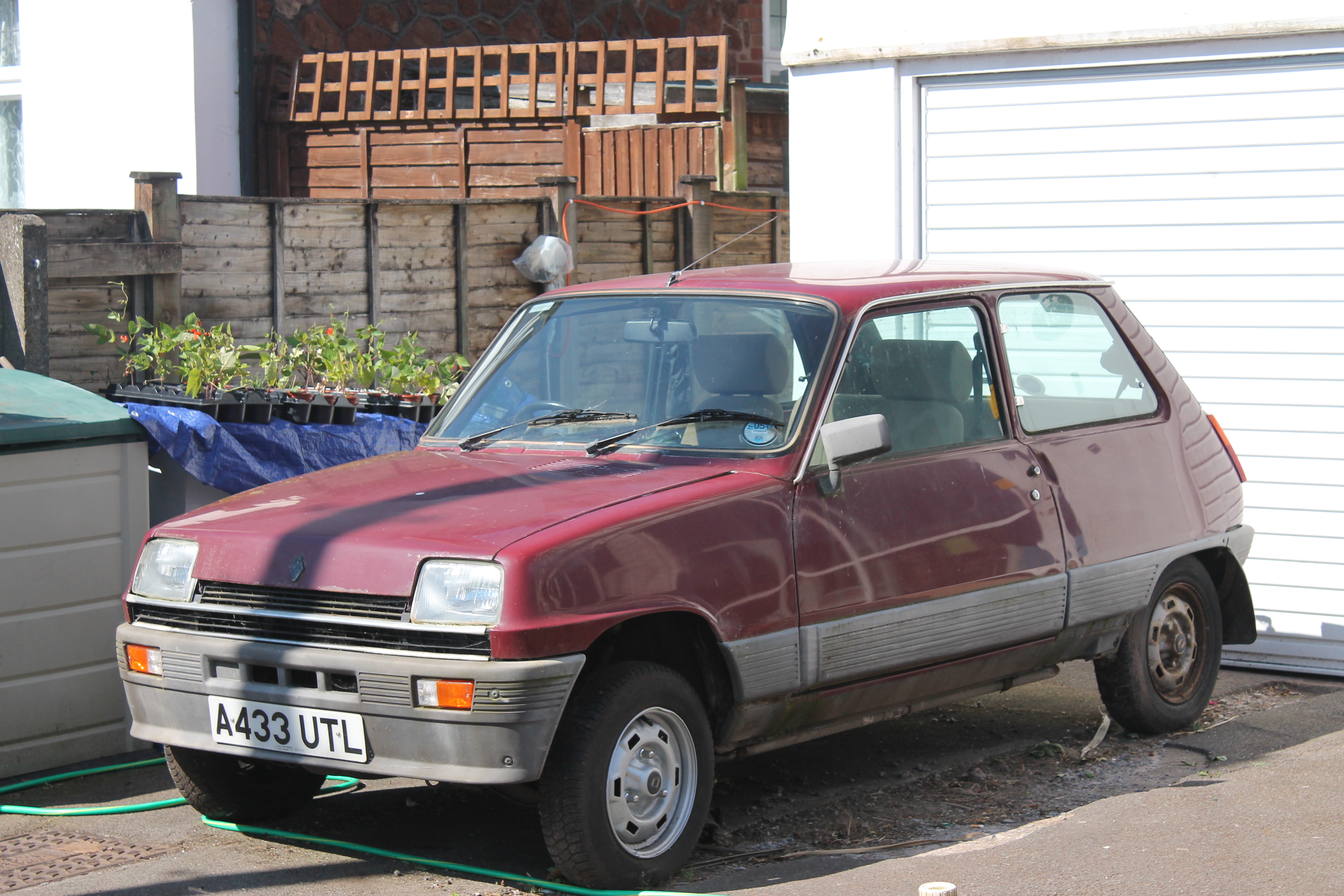
Renault 5
"...ll, right? The normal Polo is comparable with the Renault 5. Renault 5 selling really well, of course."
The Renault 5 is a small car from Renault. In the podcast, it’s mentioned because it’s selling well and people are choosing it. They compare it to other small cars to explain why it stands out.
The Renault 5 is a compact car that’s discussed here in terms of its sales success and popularity. The podcast compares it to the Polo GTI and the “normal Polo,” suggesting they’re talking about which small cars are most appealing right now. It’s included because it’s performing well in the market.
physical buttons
"if you go into a Volkswagen dealership and oh, yes, you've got you've spotted the physical buttons everywhere."
Physical buttons are real buttons you can press. The hosts like them because they’re easier to use without looking at the screen.
Physical buttons are physical, tactile controls on the dashboard or center console. The hosts treat them as a usability advantage—especially in an EV—because you can operate climate/drive-related functions without relying on touchscreens.
infotainment
"The point I was going to end up on was the interior, because the Cooper still got the slidey touch sensitive crap on the infotainment, not on the buttons on the steering wheel."
Infotainment is the car’s screen system for things like music, navigation, and phone settings. They’re discussing whether it’s controlled by touch/slider gestures or by physical buttons.
Infotainment is the car’s combined entertainment and information system—typically the touchscreen, menus, and media/phone controls. In this segment, the hosts contrast “slidey touch” infotainment controls with physical buttons, which affects how quickly and confidently you can operate the system while driving.
Audi
"That's kind of how Audi used to have their set up with you. It actually looks really quite smart."
Audi is a car brand. Here, the host is saying BMW’s button layout is similar to how Audi used to do things inside the car.
Audi is a German car brand known for its interior design and control layouts, including how it uses physical buttons and rotary controls. The host is comparing BMW’s setup to Audi’s earlier approach to infotainment and climate controls.
ambient lighting
"Yeah, I mean, predictably the ambience, the ambient lighting all goes red. I think it's white normally. And then it changes to sport mode."
Ambient lighting is the background lighting inside the car that sets the mood. Some cars change its color when you switch driving modes.
Ambient lighting refers to interior lights designed to set the cabin mood rather than provide direct illumination. In many modern cars, the lighting color and intensity can be linked to driving modes (like sport mode) to visually reinforce the selected setting.
sport mode
"I think it's white normally. And then it changes to sport mode. Or it can be used as a shortcut to access the sport mode button menu."
Sport mode is a button that changes the car’s behavior to feel more responsive. It often makes the throttle and driving feel quicker, so the car reacts faster when you press the pedal.
Sport mode is a driving setting that changes how the car behaves—typically by sharpening throttle response, adjusting shift behavior (if automatic), and altering steering or stability-control calibration. The goal is to make the car feel more responsive and more “agile” for spirited driving.
DCC dynamic chassis control
"Oh, and the key thing in that is it gets standard fit DCC dynamic chassis control. So it means you can soften it off or make it really firm."
DCC is a suspension feature that lets the car change its “ride feel.” Soft mode is more comfortable, while firm mode helps the car handle more tightly.
DCC (dynamic chassis control) is an electronically controlled suspension system that can change how stiff the car feels. By adjusting damping, it lets the car feel softer over bumps or firmer for sharper handling.

Hyundai I30N
"I remember when the Hyundai Hyundai i30N came out and a journalist who I won't name, but they weren't writing for a proper performance car website."
The Hyundai i30N is a sporty version of the i30 hatch. The point here is that some people found its settings menu too complicated, while the host likes having lots of adjustability.
The Hyundai i30N is a performance hot hatch focused on driver engagement and track-capable behavior. The speaker brings it up because reviewers criticized its many setup options, which contrasts with the host’s preference for fine-tuning.
powertrain
"And then with obviously the powertrain and everything else, [1469.9s] it's typical Volkswagen where you can just go from like normal comfort and sport."
Powertrain is the “go” system of the car—things like the engine and gearbox working together. They’re saying the car can adjust how that system responds depending on the mode you pick.
Powertrain is the set of components that make the car move—typically the engine, transmission, driveshafts, and final drive. In this context, they’re saying the GTI’s driving modes change not just the chassis feel, but also how the powertrain behaves.
rear beam
"we have changed the rear beam from the ID Polo to the T cross. [1582.2s] I think it's the ID cross rear beam, [1584.1s] which is bigger and stronger to stiffen up the rear."
A rear beam is part of the suspension structure that helps hold the rear wheels in the right relationship. If it’s stiffer, the car can react more consistently when you turn or change throttle. The host is saying that stiffness can make the rear feel more lively.
A rear beam is a structural suspension component used on some cars to locate the rear wheels and provide stiffness. When the rear beam is made “bigger and stronger,” it can reduce flex and help the suspension respond more consistently. In this segment, the host ties that increased stiffness to improved agility and a tendency toward lift-off oversteer behavior.
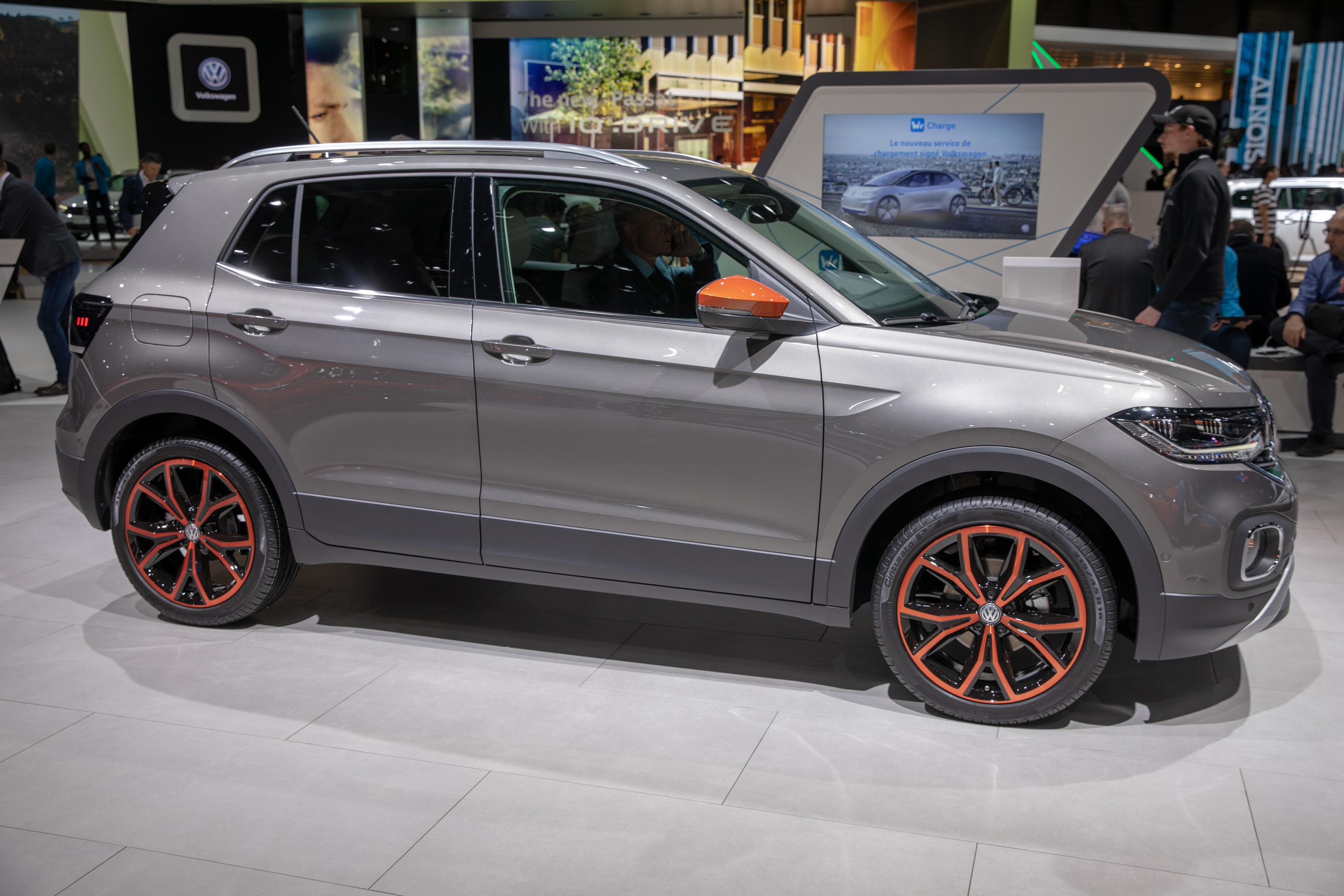
Volkswagen T-Cross
"we have changed the rear beam from the ID Polo to the T cross. [1582.2s] I think it's the ID cross rear beam, [1584.1s] which is bigger and stronger to stiffen up the rear."
The Volkswagen T-Cross is a small crossover. Here it’s mentioned as one of the cars being compared for a suspension change in the rear. The host’s point is that a stiffer rear setup can make the car feel more responsive and affect how the rear behaves.
The Volkswagen T-Cross is a compact crossover that uses a rear suspension setup designed for everyday comfort and packaging. In this segment, the host mentions it as the reference point for a change in the rear beam compared to an ID-branded model. The discussion is about how making the rear structure stiffer can influence agility and oversteer tendencies.
lift off oversteer
"And he said, that actually improves agility, [1589.6s] which I took to mean lift off oversteer. [1591.8s] Nice."
Lift-off oversteer is when you let off the gas and the back of the car starts to swing outward. It’s basically the car getting “loose” when you stop accelerating. Drivers often notice it in sporty front-wheel-drive cars.
Lift-off oversteer is when you reduce throttle (lift off the gas) and the car’s rear starts to rotate outward. It happens because weight shifts forward and the rear loses grip, so the car oversteers when you’re no longer powering it. It’s a common behavior discussion point for front-wheel-drive hot hatches.
rear anti-roll bar
"So, you know, anything with a stiffer rear anti-roll bar [1594.7s] or rear beam or whatever in a hot hatch that's front will drive"
A rear anti-roll bar helps control how much the car leans in corners. If it’s stiffer, the car can feel more “alive” at the back when you’re driving hard. That’s why it affects how the rear feels during turns.
A rear anti-roll bar (sway bar) connects the left and right suspension and resists body roll. By changing its stiffness, engineers can alter how quickly the car transfers load and how the rear behaves during cornering and throttle changes. In this discussion, a stiffer rear setup is linked to a livelier feel at the tail.
Volkswagen Golf GTI Edition 50
"Volkswagen do do that. [1604.6s] Edition 50 GTI is pretty rotating on lift off oversteer. [1608.9s] This won't be that."
The Volkswagen Golf GTI is a sporty front-wheel-drive hatch that’s famous for being fun to drive. Here, the host says the Edition 50 tends to rotate the car when you lift off the gas—so it can feel a bit loose at the rear in that moment.
The Volkswagen Golf GTI is a front-wheel-drive hot hatch known for its sharp steering and predictable-but-fun handling balance. In this segment, the host specifically calls out the Edition 50 as being “pretty rotating on lift off oversteer,” meaning it tends to rotate the rear when you lift off the throttle.
concept car
"Car manufacturers love a vision at the moment, which is revealing something that is basically the, just the new word for a concept car."
A concept car is like a “preview” car. Automakers build it to show an idea or design direction, not because it’s ready to be sold immediately.
A concept car is a showpiece vehicle built to preview styling, technology, or design themes. It may look production-ready, but it typically isn’t a car you can buy as-is.
spokes
"[1751.1s] 20 spoke and these. [1754.3s] That's going to be a nightmare to wash. [1764.4s] I mean, just spray some cleaner on it, it'll be fine."
Spokes are the parts that connect the center of the wheel to the outer rim. If there are lots of spokes, it’s usually more annoying to clean because dirt can get into all the little spaces.
“Spokes” are the wheel’s structural arms that connect the center hub to the rim. More spokes (like the “20 spoke” being discussed) can make cleaning harder because there are more surfaces and gaps for brake dust and road grime to collect.
deep dish
"Whereas these are quite deep dish. [1793.7s] Yeah, they've got that concat."
“Deep dish” means the wheel looks like it has a deeper, more scooped-in shape. It’s mostly about the look, but it can also matter for whether the wheel fits properly in the wheel well.
“Deep dish” describes a wheel design where the spokes and center sit farther inward, creating a deeper-looking rim profile. On the road, it can change how the wheel fills the fender visually and can affect clearance and fitment depending on tire width and offset.
V8
"However, it's going to have a V8. So how have they done... I guess it's a concept... But where is that V8 getting its intakes? ... It is going to be a proper standalone V8, likely twin-turbo."
A V8 is an engine with eight cylinders arranged in a “V” shape, which is commonly associated with smooth power delivery and strong torque. In this segment, the hosts are discussing what kind of V8 the BMW Alpina concept might use and whether it’s likely to be turbocharged.

BMW M5
"Matt Bird's done the article and he says, because he was actually there to talk to some Alpina people, that it won't have the plug-in hybrid lump from the M5."
The BMW M5 is BMW’s top-performance version of the 5 Series. Here, they’re saying the Alpina won’t use the same plug-in hybrid power unit that’s found in the M5.
The BMW M5 is BMW’s high-performance 5 Series, known for pairing a powerful engine with an M-tuned chassis. In this segment, the hosts mention the “plug-in hybrid lump from the M5,” meaning the M5’s electrified powertrain hardware that could have been used in the Alpina concept.
twin-turbo
"It is going to be a proper standalone V8, likely twin-turbo."
Twin-turbo means there are two turbochargers feeding the engine. They help the engine make more power by pushing extra air into the cylinders.
Twin-turbo means the engine uses two turbochargers to force more air into the cylinders, improving power and torque. Using twin turbos can also help reduce turbo lag compared with a single turbo, depending on the design.
electrification
"Oliver Wilechner, said that while electrification could... It might be on the horizon at some point for Alpina. Prospective buyers are pretty clear that they want combustion at this price point."
Electrification means moving toward electric power—like hybrids or fully electric cars. The point here is that Alpina customers still expect gas engines at this price level.
Electrification in automotive usually refers to shifting from purely gasoline or diesel power toward electric motors and battery systems (including hybrids and fully electric cars). Here, the speaker suggests electrification for Alpina could happen later, but buyers at this price point still want combustion for now.

Rolls-Royce Spectre
"But wait, no, Spectre, that's it, sorry. [2042.0s] Rolls-Royce Spectre, that's the actual car. [2044.1s] But it is, which is good."
The Rolls-Royce Spectre is a Rolls-Royce that runs on electricity instead of gasoline. In this segment, they’re using it as a style reference for what the Alpina might look like.
The Rolls-Royce Spectre is Rolls-Royce’s fully electric grand tourer. It’s notable here because the hosts are comparing its styling cues to BMW’s upcoming Alpina vision concept.

BMW 7 Series
"[2050.8s] this isn't what the new Alpina is going to look like. [2053.9s] The actual Alpina is going to be a four door based on the seven series. [2058.0s] So this is just a vision in the most open-minded sense?"
The BMW 7 Series is BMW’s big, top-of-the-line sedan. They’re saying the Alpina version would be a four-door built on that same foundation, which affects how it drives and feels.
The BMW 7 Series is BMW’s flagship large sedan, and the hosts say the “actual Alpina” would be a four-door based on it. That matters because Alpina’s tuning and branding typically build on a specific BMW platform, so the 7 Series base strongly shapes packaging, weight, and ride/handling character.
low volume manufacturer
"[2084.5s] I'd like to know if it's, because Alpina obviously being so closely joined to BMW, [2088.6s] it can't operate now as a low volume manufacturer. [2091.5s] It's part of BMW, surely, so that they might be getting dragged into,"
A “low volume manufacturer” is a company that sells relatively few vehicles compared with mainstream automakers. The hosts are implying that Alpina’s traditional scale constraints could be affected by being integrated with BMW, especially when regulations and corporate strategy (like EV requirements) are set at the larger group level.
CO2
"is this going to have to be really low volume to not upset the CO2 overall, or is it going to be?"
CO2 is a gas that contributes to climate change. In car talk, people use it to discuss how much pollution a vehicle (or a whole lineup) produces.
CO2 (carbon dioxide) is a greenhouse gas tied to climate impact, and it’s often used in automotive discussions to talk about emissions. The hosts are debating whether a low-volume product would still “upset” overall CO2 impact, implying regulatory or fleet-average concerns.

BMW Alpina XB7
"when the first proper BMW Alpina, not that special edition XB7 that was released a couple of months back, will come out."
Alpina makes special, higher-performance versions of certain BMWs. The XB7 is based on the BMW X7, but tuned by Alpina, and the hosts are saying a more “proper” Alpina model is coming later.
The BMW Alpina XB7 is Alpina’s performance-focused take on the BMW X7, tuned for a more powerful, luxury-oriented driving feel than a standard X7. It’s mentioned here as a “special edition,” contrasting with the “first proper BMW Alpina” expected in 2027.

Aston Martin Vantage
"views from people who've owned or seriously considered the Aston Martin Vantage, Jaguar F-Type V8, Porsche 911, or possibly an Aston Mars in DB11,"
The Aston Martin Vantage is one of Aston Martin’s smaller sports cars. The hosts mention it as an example of the kind of car someone might have considered in this budget range.
The Aston Martin Vantage is a compact, performance-oriented Aston Martin sports car known for its V8/V12 lineup and driver-focused feel. It’s brought up as one of the cars the listener has owned or seriously considered, framing the podcast’s “sports car budget” discussion.
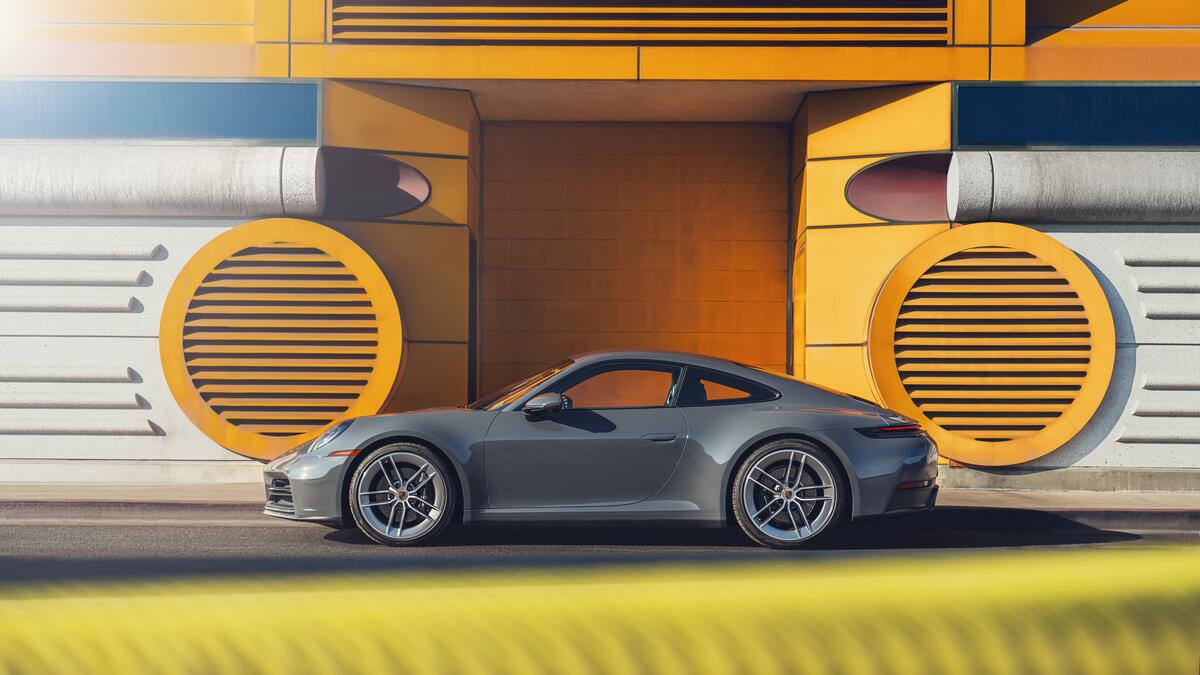
Porsche 911
"views from people who've owned or seriously considered the Aston Martin Vantage, Jaguar F-Type V8, Porsche 911, or possibly an Aston Mars in DB11,"
The Porsche 911 is one of the most famous sports cars ever made. The hosts mention it because it’s a common “dream car” people compare against when shopping used sports cars.
The Porsche 911 is the iconic rear-engine sports car line, famous for its handling balance and long-running evolution across generations. Here it’s used as a benchmark in the “what sports car budget should you target?” conversation.
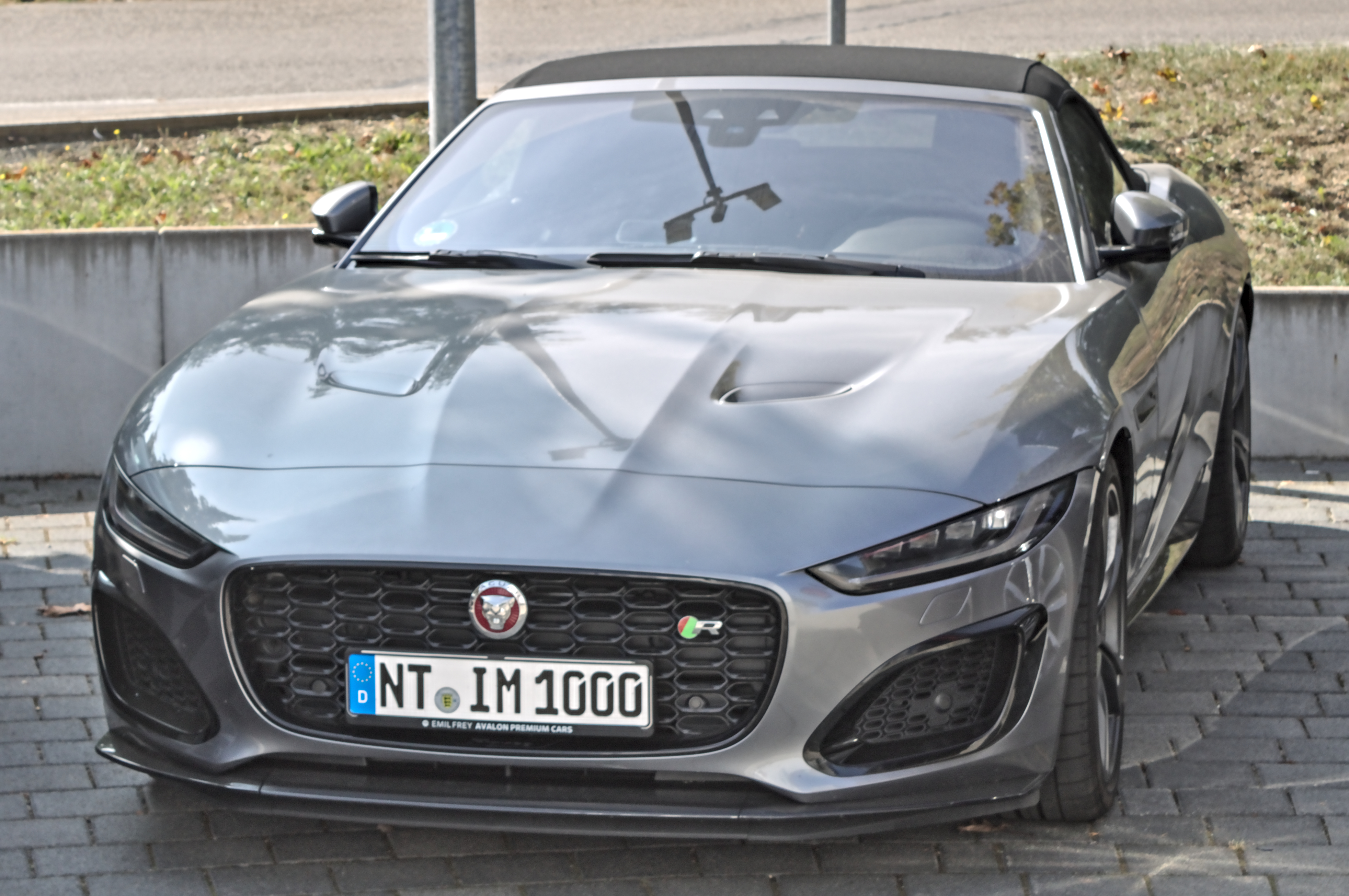
Jaguar Ftype
"views from people who've owned or seriously considered the Aston Martin Vantage, Jaguar F-Type V8, Porsche 911, or possibly an Aston Mars in DB11,"
The Jaguar F-Type is a sports car, and the “V8” version uses a bigger eight-cylinder engine. The hosts list it as one of the cars people might be shopping for in this budget.
The Jaguar F-Type V8 is the F-Type’s higher-performance variant, using a V8 engine for a more muscular sound and acceleration than the smaller-engine versions. It’s mentioned as part of the comparison set for used sports cars in the £60k–£80k range.

Aston Martin DB11
"Jaguar F-Type V8, Porsche 911, or possibly an Aston Mars in DB11, also interested in the Cayman GTS 4.0-litre as a slightly different option."
The Aston Martin DB11 is a more “grand touring” style Aston Martin—built for fast, comfortable long drives. The hosts bring it up as a possible option people consider alongside other sports cars.
The Aston Martin DB11 is a grand tourer from Aston Martin, typically paired with V8 or V12 engines depending on version. It’s mentioned as another alternative in the hosts’ used-sports-car budget discussion.
depreciation
"The main aim is getting the best value buying used, but still something new enough that it can stay under warranty for at least a few more years. I'm less interested in having the latest model, and more interested in buying at the point where most of the depreciation has already happened."
Depreciation is how quickly a car loses value over time. The idea here is to buy a used sports car after it’s already taken most of that value hit, but still early enough that you can keep warranty coverage for a while.
Depreciation is how much a car’s value drops after purchase, and it’s a major factor in used-car “value” shopping. The hosts are aiming to buy after most depreciation has already happened, while still keeping the car new enough to remain under warranty.
under warranty
"The main aim is getting the best value buying used, but still something new enough that it can stay under warranty for at least a few more years."
Being “under warranty” means the car is still covered for certain repairs. The hosts are saying they want a used car that’s new enough that warranty coverage lasts for a few more years.
“Under warranty” means the car is still covered by the manufacturer’s (or dealer’s) warranty terms, so certain repairs may be paid for if something fails. The hosts treat warranty coverage as a key constraint when choosing how “new” a used sports car needs to be.

Porsche Cayman GTS 4.0L
"That's where they like the idea of a Porsche 911, obviously. But it's not really got that kind of excitement for them at the minute, and that's the same goes for Cayman GTS 4.0L as a potential substitute... Cayman GTS 4.0L, a bit more so."
The Porsche Cayman GTS 4.0L is a mid-engine Porsche with a bigger 4.0-liter engine, meant to feel more exciting and more “driver” than the simpler versions. In this discussion, they’re comparing it as an alternative to the 911 and the Aston Martin.
The Porsche Cayman GTS 4.0L is a mid-engine Cayman variant built around a 4.0-liter flat-six, aiming for a sharper, more driver-focused feel than the base cars. The hosts mention it as a substitute option, implying it’s closer to what they want than the “Carrera” choice, even if it still isn’t a perfect fit for their excitement level.
facelift
"The current one is there were so many rough edges of that Vantage that the new one is it was considered a facelift, but it was pretty much a new car. They changed so much of it and updated so much of it."
A facelift is when a car gets refreshed during its production life—usually styling and feature updates. Here, they’re saying the update was so big it didn’t feel like a small refresh.
A facelift is an update to a car’s styling and equipment during its model run—often changes to lights, bumpers, interior tech, and sometimes tuning. In this segment, the hosts say the “facelift” Vantage was actually updated so extensively it felt like a near-new car.
steering
"The current one is there were so many rough edges of that Vantage that the new one is it was considered a facelift, but it was pretty much a new car... I mean, it sounded pretty decent, but I didn't think the steering was the greatest."
Steering feel is how the car responds when you turn the wheel—how smooth, direct, and communicative it feels. They’re saying the Vantage didn’t feel as good as it should.
Steering feel refers to how the steering system responds—how direct it is, how much feedback you get, and how predictable it feels in corners. The host says the Vantage’s steering wasn’t the greatest, suggesting it didn’t deliver the confidence they want from a sports car.
gearbox
"I didn't think the steering was the greatest. I didn't think the gearbox was the greatest. I didn't think the technology inside was horrific."
A gearbox is what changes the gears so the engine can work efficiently at different speeds. They’re saying the Vantage’s gearbox didn’t feel great to them.
A gearbox is the transmission system that selects gear ratios to match engine speed to road speed. In this segment, the host criticizes the Vantage’s gearbox feel, implying shifts or engagement didn’t meet their expectations.
previous gen Merc stuff
"I didn't think the technology inside was horrific. Yeah, it was previous gen Merc stuff. It was previous gen Merc stuff when it was new."
This is a reference to Mercedes-Benz’s earlier-generation interior design and control layout—especially how buttons, screens, and switchgear were packaged. The host is criticizing the Vantage’s cabin tech as feeling dated, like older Mercedes ergonomics.

Mercedes AMG GTS
"It's Mercedes AMG GTS. [2334.7s] This is a car with, you know, a bi-turbo, twin-turbo, four-liter, hot V with the eights,"
This Mercedes-AMG GTS is a fast Mercedes with a twin-turbo V8 engine. The host’s point is that it feels exciting and special, but still practical enough to live with day to day.
The Mercedes-AMG GTS is a high-performance Mercedes-Benz coupe built around a twin-turbo V8. In this segment, the host highlights the “special” feel from the engine character and the way it blends comfort and usability with strong driving dynamics.
hot V V eight
"the hot V with the eight, hot V V eight. [2343.2s] And it's just such a car."
A “hot V” setup puts the turbochargers in the V-shaped space of the engine. That can make the turbos spool up quicker, so the car responds faster when you press the gas.
“Hot V” refers to a turbocharger layout where the turbos sit inside the V-shaped valley of a V8 engine. This packaging can reduce exhaust travel time, which may improve throttle response and reduce turbo lag.
main dealer
"You know, you just drop it off a main dealer, get it serviced like any other Mercedes."
A “main dealer” is the official brand dealership. The point here is that servicing can be done through the normal dealer network, not only by rare specialists.
A “main dealer” is the brand’s official dealership network (for example, Mercedes-Benz dealers). The host is using it to say service and maintenance can be handled through normal factory channels rather than requiring a specialist-only setup.

AMG GT
"I've driven the latest version of the AMG GT and it was astonishingly good. I really enjoyed it. But it's also, there's quite a lot of race car preparation in there because it's a dry sump."
The AMG GT is a high-performance Mercedes-AMG sports car. They’re saying this one is set up like a race car in one important way: it uses a dry-sump oil system, which helps the engine stay properly lubricated when you drive it hard.
The Mercedes-AMG GT is a performance grand tourer built around a high-output AMG V8. In this segment, the key point is that the “latest version” uses a dry sump engine setup, which is typically associated with track use because it helps keep oil where it belongs under hard cornering and acceleration.
dry sump engine
"But it's also, there's quite a lot of race car preparation in there because it's a dry sump. It's a dry sump engine. So it is designed for being hammered, but it's also a really good daily car."
A dry-sump engine is a special oil system that keeps oil under control even when the car is being driven very hard. It’s common on race cars because it helps prevent the engine from getting oil-starved in hard turns and acceleration.
A dry sump engine uses an external oil reservoir and scavenge pumps to pull oil out of the crankcase. That reduces oil starvation during aggressive driving, and it also allows the engine to sit lower in the chassis for better handling.
AMG warranty
"So, you know, it's just a great, I think this is, if you could do, say that, it's a sensible buy. The next one isn't, but my God, I would have one of these. This ticks the theater and occasion box. Yeah. I've gone famously reliable. Yeah. And McLaren, but it's a 540C."
A warranty is like a repair safety net from the manufacturer for a limited time. They’re pointing out that even though the car is from 2019, it still has two years of coverage left.
A warranty is a manufacturer-backed promise to cover certain repairs for a set period or mileage. In this context, the host highlights that the car has a two-year AMG warranty even though it’s a 2019 model, which reduces the buyer’s risk of unexpected repair costs.

Mclaren 540C
"And McLaren, but it's a 540C. So hear me out on this one. At least it's detuned."
The McLaren 540C is a mid-engine supercar. In this segment, they mention it’s “detuned,” which basically means it’s been tuned to make less power than a more extreme version—often for smoother use or durability.
The McLaren 540C is a lightweight, mid-engine supercar known for its sharp driving feel and strong performance for its era. Here, the discussion focuses on it being “detuned,” meaning its output is tuned lower than a more aggressive variant to improve drivability or reduce stress.
detuned
"So hear me out on this one. At least it's detuned."
Detuned means the car’s tune has been adjusted to make less power than the most aggressive setup. The goal is usually to make it more manageable and less demanding to run.
Detuned means the engine or powertrain is calibrated to produce less power than its maximum potential. That can make the car easier to live with (smoother response, less heat and stress) while still delivering the core performance feel.

Mclaren 570S
"That's what I'm thinking. I'm thinking 570S detuned. Now, I know the engines actually are not..."
The McLaren 570S is a high-end supercar made by McLaren. It’s designed to be fast and sporty, with the engine placed in the middle of the car. The podcast talks about it as a version that might have been tuned for different performance levels.
The McLaren 570S is a supercar built around a lightweight, track-oriented design and a mid-engine layout. The podcast discusses it in terms of engine tuning—specifically the idea of a “detuned” 570S—suggesting they’re comparing performance characteristics. It’s mentioned because it’s a well-known entry point into McLaren’s lineup.
electronics
"I think it's the electronics that they have a few issues with. I've actually had a problem with electronics in the car once."
“Electronics” here means the computer systems and sensors in the car. If electronics are acting up, it’s often a software or sensor/module problem—not a broken engine part.
In modern cars, “electronics” covers the car’s control modules and sensors that manage things like engine behavior, transmission logic, stability systems, and infotainment. When people say electronics are the issue, they usually mean faults in sensors/modules or software glitches rather than purely mechanical wear.
carbon tub
"It's going to feel, you know, the tub of these things, the carbon tub, not only is it strong and very safe, but also you really feel like you're in a track car."
A “carbon tub” is the main safety structure of the car made from carbon fiber. It’s designed to be strong and rigid, which helps the car feel more connected and track-like.
A “carbon tub” is a carbon-fiber structural body/monocoque that forms the core passenger cell of the car. Because it’s very stiff and strong for its weight, it can improve safety and make the car feel more like a track machine.
track car
"but also you really feel like you're in a track car. And even though this is the baby McLaren, they still feel like a proper McLaren makes all the same noises."
A “track car” is a car set up to handle aggressive driving. It usually feels more responsive and controlled when you push it hard.
A “track car” is a vehicle tuned and built to behave well under hard driving—typically with stiffer chassis behavior, more responsive steering/braking, and a driving position that emphasizes control. It’s more about how the car feels and responds than just top speed.
lightweight supercar feel
"And it's, and it's light. And as you say, it's super light. And these are, I've driven a 570 but not a 540, but I, it still remains the baby McLaren."
The speaker is talking about how light weight makes a car feel more responsive. In simple terms, it tends to feel quicker to move and easier to drive hard.
The host repeatedly emphasizes that the “baby McLaren” is “super light,” which is a key concept in how these cars drive. Lower mass generally improves acceleration response, braking feel, and how quickly the car changes direction.

Mclaren 600LT
"...l the difference between this and probably even a 600LT because even, even I would have to double glance ..."
The McLaren 600LT is a sporty supercar from McLaren. It’s built to feel more performance-oriented than some other versions. The podcast brings it up while comparing it to another McLaren and pointing out the differences.
The McLaren 600LT is a performance-focused supercar variant within McLaren’s lineup, designed to be more track-oriented than a standard model. The podcast references it while discussing differences between cars, including the idea of needing a “double glance,” which suggests visual or spec-based comparison. It’s mentioned because it’s a recognizable step up in performance and character.
upwards exhaust
"does it have the upwards exhaust? So like that, if you're in a town that's, and that drove through it, you would go, Oh, 570s."
“Upwards exhaust” means the exhaust tips point upward instead of straight out the back. It’s mainly a visual detail that helps you tell certain McLarens apart.
An “upwards exhaust” refers to exhaust outlets that angle upward rather than pointing straight back. It’s a distinctive styling cue on some McLaren models and can also hint at packaging choices for airflow and heat management around the rear of the car.
four-door coupe
"I'm getting all, there's no such thing as a four-door coupe actually, is there? Well, I think you'll find our own one, Sam."
A “four-door coupe” is basically a confusing label—coupe usually means two doors, while four doors usually means sedan or hatchback. The discussion is about how car names don’t always match the traditional definitions.
A “four-door coupe” is a marketing/terminology contradiction: coupes are traditionally defined by having two doors, while four-door cars are typically sedans or hatchbacks. The hosts use it to point out how modern branding stretches classic body-style definitions.
Grand Coupe
"Yeah, but it's, it's a Grand Coupe. That's a bit of marketing name, isn't it? Grand, yeah, Grand Coupe. All right, we can call it."
“Grand Coupe” is a name brands use for a car that looks like a coupe but is meant to be more practical. The hosts are basically saying the name is marketing, and the shape is closer to a hatchback than a classic coupe.
“Grand Coupe” is a marketing label BMW uses for a body style that blends coupe-like styling with more practicality—typically a fastback roofline and rear-seat usability. In this segment, the hosts debate whether it’s essentially a hatchback, highlighting how these naming conventions can blur the line between traditional body types.
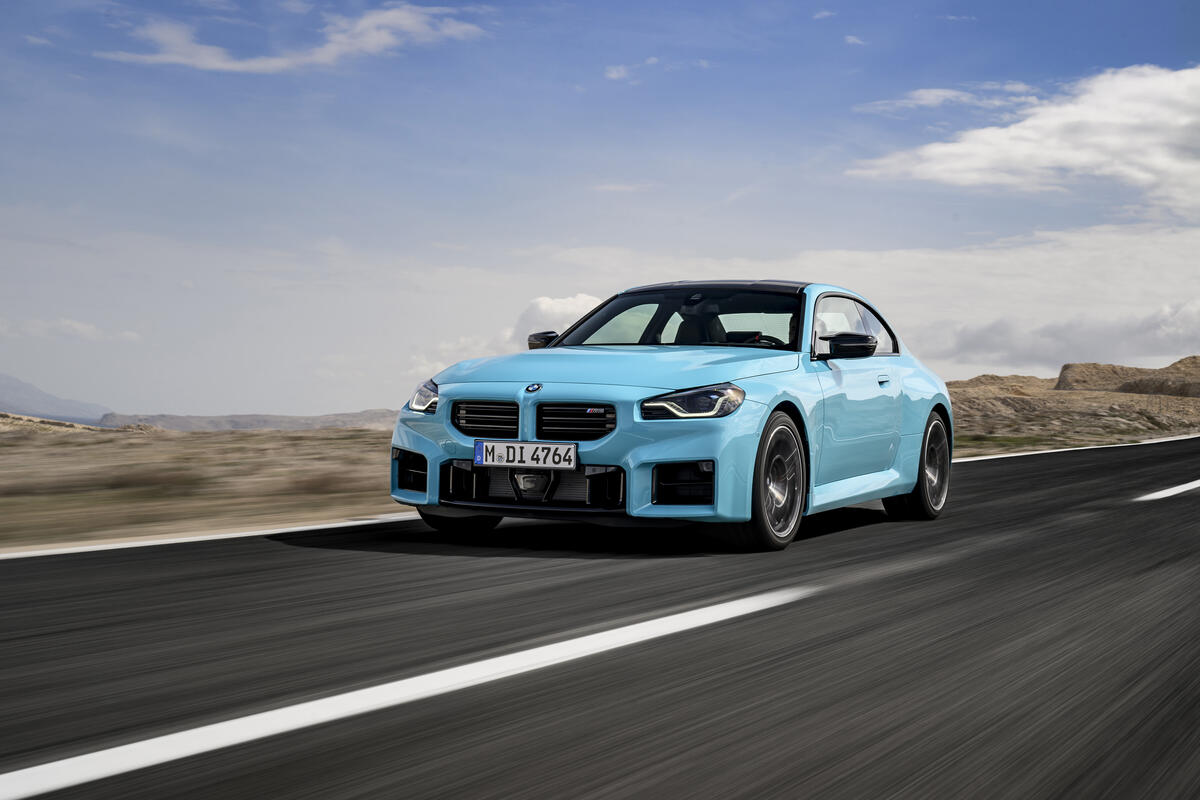
BMW M2 CS
"Anyway, go on. But BMW M2 CS with just 3,100 miles on the clock. So you've got, you know, a low mileage, full BMW service history."
The BMW M2 CS is a sportier, more driver-focused version of the BMW M2. Here, they’re talking about it as a used car that’s been kept properly (low miles and full service history).
The BMW M2 CS is a high-performance, track-focused version of the BMW M2, built around BMW’s M division tuning and a lighter, sharper feel than a standard M2. In this segment, it’s positioned as a low-mileage used sports car with full BMW service history—exactly the kind of “buy it right” example enthusiasts look for.

BMW E46
"...hen I was growing up, you know, kind of idolizing E46 M3s, E39 M5s, E60s, my view was always like, they..."
The BMW 3 Series is a popular mid-size car that many people buy as a daily driver. Some versions are built to be much faster and more sporty. In the podcast, it’s mentioned because the speaker grew up admiring BMW’s performance models.
The BMW 3 Series is a compact executive sedan that’s especially famous for its performance versions. The podcast references older “M” models like the E46 M3 and E39 M5 to explain why the 3 Series (and BMW in general) has such a strong following. It’s discussed as part of the speaker’s personal automotive background and inspiration.

BMW E39
"... growing up, you know, kind of idolizing E46 M3s, E39 M5s, E60s, my view was always like, they are the ..."
The BMW 5 Series is a larger, more comfortable car than the 3 Series. Some versions are built to be sporty and fast. The podcast mentions it because the speaker looked up to older BMW performance models while growing up.
The BMW 5 Series is a mid-size luxury sedan known for offering both comfort and performance, especially in its higher-output “M” versions. The podcast ties it to the speaker’s childhood admiration for cars like the E39 M5 and E60 models, showing how the 5 Series has influenced their taste. It’s discussed as part of the BMW performance legacy.
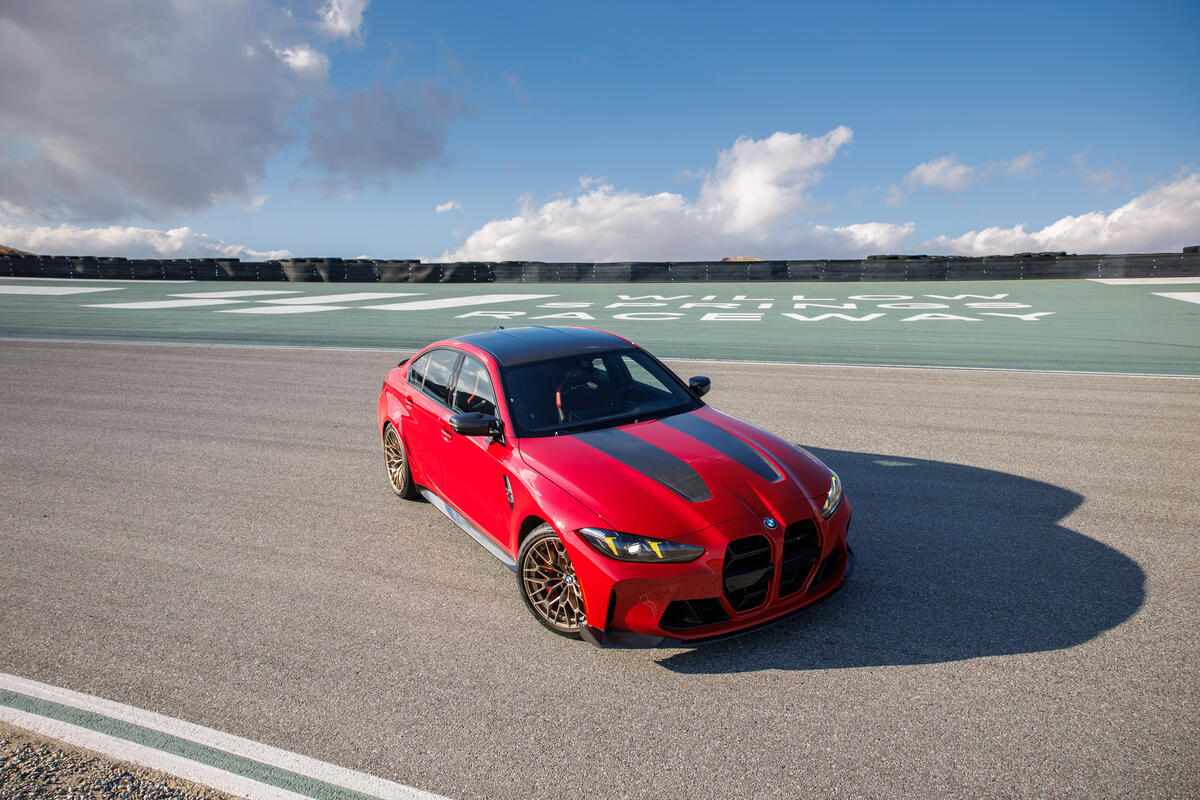
BMW E46 M3
"If when I was growing up, you know, kind of idolizing E46 M3s, E39 M5s, E60s, my view was always like, they are the greatest driver's cars ever of normal, of normal kind of body shapes."
The BMW E46 M3 is an older M3 generation that many enthusiasts love. The speaker is using it as an example of the kind of BMW “drivers’ car” they looked up to.
The BMW E46 M3 is the M3 generation from the late 1990s to early 2000s, known for its classic “driver’s car” feel and strong enthusiast following. In the segment, it’s referenced as a childhood idol—an example of the kind of normal-bodied M car people grew up admiring.
short wheelbase rear wheel drive
"It's a short wheelbase rear wheel drive. So, you know, you've got that. It feels a little bit more pure as well."
This means the car is compact in length between its wheels and it sends power to the back wheels. That combination usually makes the car feel quicker to turn and more fun to drive.
“Short wheelbase rear wheel drive” describes a car’s layout: the distance between the front and rear axles is shorter, and power goes to the rear wheels. A shorter wheelbase often makes a car feel more agile and responsive, while rear-wheel drive can feel more “pure” to drivers because it emphasizes steering and traction at the rear.
2022 Corvette Stingray
"Because I've gone for, I feel like I've bought a couple of these up recently, but it just seems like the obvious choice. And it's a 2022 Corvette Stingray. I had to go, I've had a recent drive on one of those."
The 2022 Corvette Stingray is a sports car with its engine mounted near the middle of the car, not up front. That layout affects how it drives and how it looks, and the discussion here is about the car’s roof style and overall proportions.
The 2022 Chevrolet Corvette Stingray is a mid-engine sports car, meaning the engine sits behind the front seats and helps balance the car. In this segment, the hosts also discuss the Targa roof style and how the C8’s proportions look from different angles.
Targa
"And that's, is that the drop top? It is the, it's the Targa. Yeah, absolutely."
A Targa is a type of convertible roof where part of the roof stays in place for structure and safety. The middle section can open up, so you get open-air driving without a full soft-top.
Targa refers to a roof design that typically keeps a fixed roll-bar structure over the cabin while allowing the center roof section to be removed or retracted. On the Corvette Stingray discussed here, it’s the “drop top” style the hosts are referring to.
mid-engine layout
"Because I think the, the Z06 is kind of from then on, it looked really quite good. I think the standard C8 can look a bit funny from some certain angles. It's, it's the proportions of that mid-engine layout."
A mid-engine layout means the engine is located closer to the middle of the car rather than at the front. That affects the car’s shape and how it feels to drive, and it’s part of why the proportions look different from certain angles.
A mid-engine layout places the engine near the center of the car, usually behind the front seats and ahead of the rear axle. That packaging changes the car’s proportions and can improve handling balance, which is why the hosts connect the look to the C8’s mid-engine design.
Request an Explanation
Heard something you'd like explained? We'll add it to this episode.
Sign in to request explanations for terms you heard.
Want to learn more?
Browse our glossary for plain-English explanations of automotive terms, jargon, and concepts.
Help improve this episode
See something that's not quite right? Our annotations are AI-generated and can sometimes miss the mark. Click the flag icon on any annotation to suggest a correction.
2 community members have helped improve this episode.