BMW’s STEP program takes center stage as Beyond the Wrench follows how BMW of North America builds a technician pipeline—starting with recruiting from technical and community colleges, then coaching students through hands-on training and real dealership workflows. Recruiters and instructors describe paid, full-time training, rapid skill ramp-up, and the program’s placement goals. The episode also connects STEP to collision/body-and-paint tracks, mentorship, and even race-week immersion with GT4 crews, while highlighting broader workforce efforts like ASC Connects.
Antonio Maldonado and Jake Martin are recruiters for the Service Technician Education Program (STEP) at BMW North America—and they go way beyond just recruiting. In this episode they break down how STEP works for automotive and collision students, what hands-on training from day one actually looks like, and how BMW is nurturing the next generation of technicians from first contact to career.
During this episode we experienced some technical difficulties — we apologize for any inconvenience this may cause while listening.
ASE Connects brings shops, dealerships, and schools together in one structured network to strengthen the technician pipeline. By making it easier to connect, collaborate, and support students through job shadows, internships, and classroom engagement, ASE Connects helps schools build stronger programs and helps shops develop a more consistent, local source of future technicians. Learn more:
"go to Greenville Tech. And then went to Greenville Tech, our local technical college for collision
work."
Greenville Tech is a local school where the speaker learned collision-related skills. It helped set up their later work at shops and dealerships.
Greenville Tech is the local technical college the speaker attended for collision work training. It’s mentioned as an early step in their path toward dealership and BMW collision roles.
"he came to the performance center in Spartanburg as a painter at the performance
center. And he said they're looking for collision technicians."
The Spartanburg performance center is a BMW facility where people work and get trained. The guest says STEP training was happening there at the same time.
BMW’s performance center in Spartanburg is referenced as a facility where training and roles like painting and collision instruction happen. The speaker connects it directly to where STEP students and instructors were located.
"And he said they're looking for collision technicians. And I just knew at that time,
you know, it was a really good opportunity if I could get in with BMW somehow, you know,"
Collision technicians are the workers who fix cars after accidents. They handle the body and repair work so the car can look and fit right again.
Collision technicians are the people trained to repair vehicles after crashes—typically involving bodywork, panel alignment, and refinishing. This segment focuses on how BMW’s STEP program recruits and trains these technicians.
"he had went to work for BMW at one of the
ports. And then he came to the performance center in Spartanburg as a painter at the performance
center."
BMW is a car company. In this story, BMW runs training and career opportunities for collision repair technicians at its facilities in South Carolina.
BMW is the automaker behind the STEP program discussed in this episode. Here, BMW is specifically tied to its performance center in Spartanburg and hiring/training pathways for collision technicians.
Company
Atlanta training center
"So kind of would bounce back and forth between South Carolina
and our Atlanta training center, doing different collision training programs,"
The Atlanta training center is another place where collision training programs are run. The speaker says they traveled between South Carolina and Atlanta to teach.
The Atlanta training center is mentioned as another BMW training location where the speaker delivered collision training programs. It supports the idea that STEP/dealer training involves multiple regional facilities.
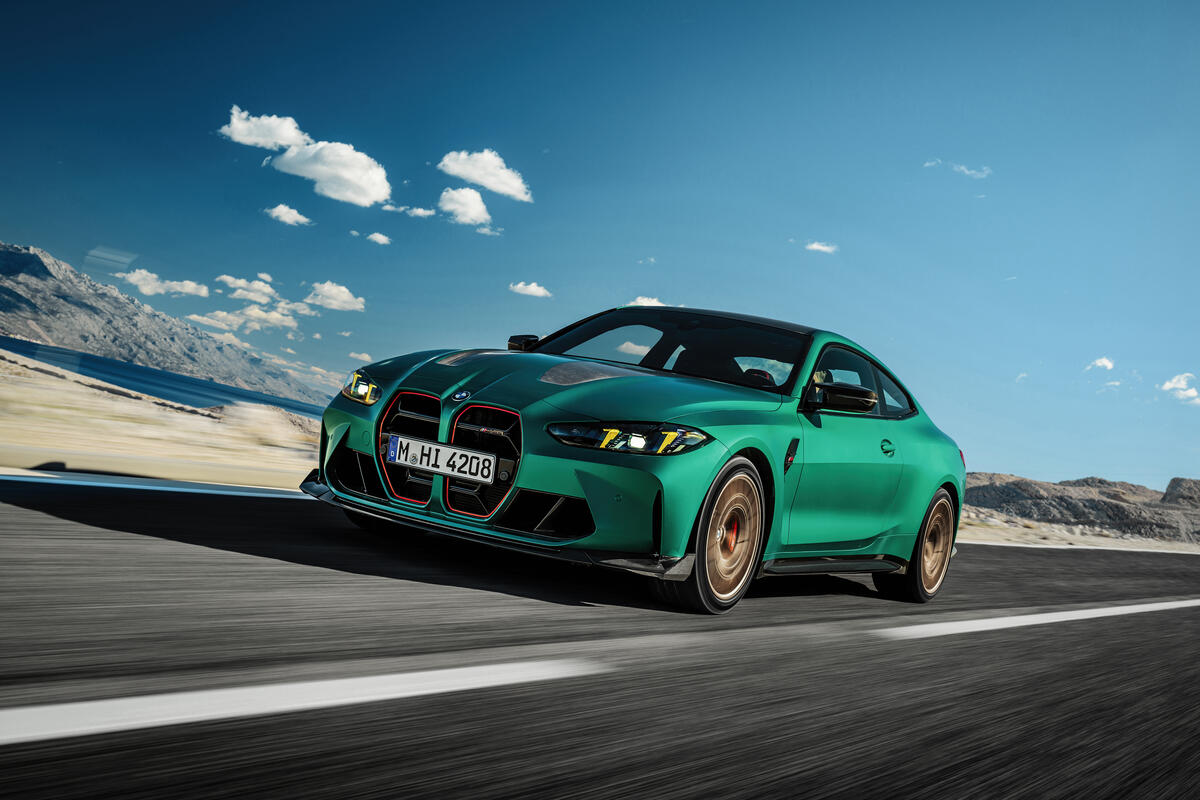
"So we work with, uh, Bimmerworld, Random Bandals Racing. Uh, they have, uh, GT4 M4s and
then they have, um, they have a Random Bandals, actually has a GT3 car."
The BMW M4 is BMW’s performance car. Here, it’s mentioned because racing teams use M4s as their track cars for the technician training program.
The BMW M4 is a performance-focused BMW model built for track use and racing programs. In this segment, it’s specifically referenced as the race car platform used by the teams working with BMW’s STEP Technician Race Crew Program.
"Uh, they have, uh, GT4 M4s and
then they have, um, they have a Random Bandals, actually has a GT3 car. We only work on the GT4
cars."
GT4 is a type of race category. It usually uses cars that are more similar to regular production cars, and here it tells you what kind of race car the technicians are working on.
GT4 is a class of race cars built to be closer to production vehicles than higher-tier GT categories. In this segment, the technicians are assigned specifically to GT4 M4 cars, meaning they’re working on that particular level of race-prep and support.
"then they have, um, they have a Random Bandals, actually has a GT3 car. We only work on the GT4
cars."
GT3 is another race category. It’s generally a step up from GT4 in how serious and specialized the race cars are, and the hosts are saying their technicians won’t be assigned to the GT3 cars.
GT3 is a higher-profile class of customer racing cars than GT4, with more emphasis on performance and track-focused engineering. The speaker contrasts it with GT4 by noting that one team has a GT3 car, but BMW’s program only works on the GT4 cars.
"with the Technician Race Crew Program. So what the program is, is we have our dealership network
will nominate certain technicians, uh, to go be a part of the race crew."
This is a program that places dealership technicians onto race crews. The idea is that they learn by working with the team during race week, not just by reading or doing classroom training.
This is the structured training pathway described in the segment, where dealership-nominated technicians are selected to join race crews. The program immerses technicians at the track, assigns them roles through the teams’ crew chiefs, and has them work on race-week tasks.
"Uh, as soon as they got there, we met with their
crew chiefs and they assigned, uh, they assigned the guys their jobs for the week."
A crew chief is the lead coordinator for a racing team’s operations on a given car. In this segment, crew chiefs assign the technicians their specific jobs for the week, which is a key part of how the program teaches real race-week responsibilities.
"Thursday, it's, uh, practice qualifying. And then we have our, our race on, uh, Saturday"
This is a track session where teams try things out and also aim to be fast enough to qualify well. It’s like practice, but with an eye toward race starting position.
Practice qualifying refers to on-track sessions where teams both practice and work on qualifying performance. These sessions help drivers and crews dial in setup and determine how the car performs before the race.
"it was actually a three hour race. So they had to do actual pit stops during these races... these guys are doing full on refuels, changing tires."
A pit stop is when the car pulls into the service area during the race. The crew can refuel the car and swap tires so it can keep going fast.
A pit stop is when a race car enters the pit lane to receive service during the race. In endurance events, pit stops are frequent and can include refueling, tire changes, and sometimes suspension tweaks.
"A lot of times they're about an hour, 55 minute races. They may come into the pits for some suspension adjustments, maybe change of tire here and there"
Suspension adjustments are changes to the car’s suspension settings to improve grip, ride behavior, and tire wear. Teams may tweak these between stints when track conditions or tire performance change.
"these guys are doing full on refuels, changing tires. Uh, you know, they were, uh, we had a guy working the lollipop"
Refueling is when the pit crew adds fuel to the race car while it’s stopped. Longer races require this so the car can keep running.
Refueling in racing means adding fuel to the car during a pit stop. Endurance formats often require scheduled refuels because the race duration exceeds what the fuel tank can cover.
Term
lollipop
"we had a guy working the lollipop, you know, the car has stopped in the exact spot."
The “lollipop” is a signal the pit crew uses to tell the driver when it’s safe to pull out. It helps keep pit stops organized and safe.
In pit lane operations, the “lollipop” is the pit signal board used by the crew to control when the car can leave the pit. It’s part of the safety and timing system that coordinates pit stops.
Topic
GT three days
"usually on the Sundays, uh, Sundays is usually the GT three days. So they don't, we don't really are involved."
“GT three days” means a three-day weekend focused on GT racing. The speaker says their crew isn’t as involved during those days.
“GT three days” refers to a multi-day event where GT racing takes place across a weekend. In the segment, it marks when the technicians shift from active pit involvement to more spectator-like participation.
Topic
SRO races
"it's open to any BMW dealership... So we do all the major, uh, the SRO races, uh, for the GT cup series"
SRO is a company that runs GT-style racing events. The speaker is saying the program supports those kinds of races.
SRO refers to the SRO Motorsports Group, which organizes and promotes GT racing events. In this segment, it’s used to describe the types of race series the program supports.
Topic
GT cup series
"we do all the major, uh, the SRO races, uh, for the GT cup series"
A GT cup series is a racing series for sports cars (GT cars). The speaker is pointing out which series their program covers.
The GT cup series is a GT (grand touring) racing category/series name referenced in the segment. It indicates the kind of sports cars and race format the technicians are exposed to.
"All right. Well, let's talk step. I think you guys both mentioned step... So our automotive program is a six month program... So what we did is we we developed a new step program that we have now, which is full on hands on training, six months, 40 hours a week..."
STEP is BMW’s program for training future car technicians. The hosts describe it as a longer, hands-on course where trainees work on real cars and get paid while learning.
The STEP program is BMW’s structured technician training pipeline designed to produce dealership-ready technicians. In this segment, it’s described as a six-month, full hands-on program with paid weekly wages, replacing an earlier 16-week, more textbook/student-car approach.
"So what we did is we we developed a new step program that we have now, which is full on hands on training, six months, 40 hours a week, Monday through Friday..."
Hands-on training means you learn by actually doing the work, not just reading or watching. They’re saying STEP trainees work on real cars as part of the program.
Hands-on training means learning by doing real tasks rather than only studying theory. Here, BMW’s STEP program is described as full hands-on, with trainees working on live cars in a dealership-style environment.
Concept
clock in / clock out
"But our technicians going on my on my coast, they go in at 6am, they clock in, they clock out at 3pm, [1699.5s] and we're actually paying them to be technicians."
Clock in and clock out are just how workplaces record your start and end times. They mention trainees follow a set schedule while getting paid during the program.
Clock in/clock out refers to timekeeping used to track when employees begin and end their shifts. In this segment, it’s used to describe the trainees’ schedule (arriving at 6am and leaving at 3pm) while they’re paid during training.
"So when they do is our technicians are brought in, it's a small class... [1753.6s] is a repossession and it has the rear brakes that need to be replaced, they order the parts right there."
Repossession means the car gets taken back due to missed payments. In this program, students work on these returned vehicles and fix what’s needed before they’re sold.
A repossession is when a vehicle is taken back by the lender or leasing company because the owner has defaulted on payments. The segment describes how technicians are trained on these cars, then repairs are ordered and performed before the vehicles are sold at auction.
"And they come in the morning and they're doing MPIs on cars. [1746.8s] So as the MPIs are done, the multi-point inspections for the MPIs, right? Once they figure out this is a repossession and it has the rear brakes that need to be replaced, they order the parts right there."
It’s a checklist-style car check. The tech looks at a bunch of common wear items and problems so they can figure out what needs fixing before work starts.
A multi-point inspection is a structured checklist a technician uses to evaluate many areas of a car (often brakes, tires, lights, fluids, and more). In the program described, technicians perform these inspections to identify needed repairs before ordering parts.
"And then those cars get sent off to auction. So you know, from then they get pushed down the line."
Here, “auction” means the cars are sold through a bidding process. After the repairs are done, the vehicles are sent to be sold that way.
In this context, auction refers to selling the repaired vehicles to buyers through a bidding process. The segment explains that after technicians complete repairs, the cars are sent off to auction and move along a sales pipeline.
"So electrical, we don't teach in step. They have to get to a dealership and go through that advanced training."
In this context, “advanced training” means extra, more specialized instruction. The host is saying some skills—especially electrical work—aren’t taught in STEP and require further training elsewhere.
“Advanced training” here refers to specialized instruction beyond the core STEP curriculum, aimed at topics like electrical systems. The speaker contrasts it with what STEP covers, saying some areas require additional training at a dealership.
"But what I mean is that if I've seen my technicians work on an M8 competition, that's something that you will not see they're paired up with the master technician"
The BMW M8 Competition is BMW’s high-performance luxury car. The hosts mention it to show that some cars are so valuable and complex that only the right trained technician should work on them.
The BMW M8 Competition is a high-performance version of the BMW 8 Series, built by BMW M to deliver track-capable power and braking. In this segment, it’s used as an example of an expensive, complex luxury performance car that should be handled by the most capable technicians.
"that's something that you will not see they're paired up with the master technician and they're being taught how to work on these cars."
A master technician is an expert mechanic with a lot of experience. The program pairs trainees with one so they learn the right way to fix difficult problems.
A master technician is a top-level, highly experienced shop technician who can diagnose and repair complex issues. In the segment, trainees are paired with a master technician so they learn correct repair procedures on high-end vehicles.
"that we have dealerships, and we have big organizations like Sewell out in Texas, they'll fly out to Ontario just to do a full on interview"
Sewell is a dealership group mentioned as hiring and recruiting technicians. They’re described as traveling to interview students and then helping bring the right candidates to their location.
Sewell is referenced as a large dealership organization that recruits STEP students. The speaker describes Sewell flying to Ontario to interview students and then bringing selected candidates to Dallas with travel and lodging support.
Term
A138
"I have a guy right now in class that's only 22 years old, and already has his A138 in three months in the program."
A138 sounds like a specific training level or certification the program awards. The speaker is using it to show how fast the student progressed.
A138 appears to be a specific certification or course identifier within BMW’s STEP training pathway. It’s mentioned as something the student earned quickly, implying it’s a measurable milestone tied to dealership-ready technician skills.
"Was I wanted to jump right to advanced diagnostics, and you're like, wait a minute, we've got to do these really, really core things really, really well, or you're never going to"
Advanced diagnostics means using tools and step-by-step tests to figure out what’s really causing a car problem. The point here is that you should learn the basics first so you don’t jump to complicated tests too early.
Advanced diagnostics refers to using deeper testing methods—often including scan tools, live data, and systematic fault isolation—to pinpoint the root cause of a problem. The speaker contrasts it with mastering core basics first, because skipping fundamentals can lead to misdiagnosis and wasted time.
"The MPI, focusing on the MPI, how important is that to our daily life in a dealership? And being proficient in doing MPIs, because a lot of our technicians are not getting paid while they're doing MPIs, right?"
MPI stands for a multi-step vehicle inspection. It’s a checklist that helps the shop find problems and decide what work to do next.
MPI usually means a Multi-Point Inspection: a structured checklist-based evaluation of a customer’s vehicle. In a dealership, it’s used to document condition, identify needed repairs, and create a clear work plan before technicians start deeper diagnostics.
"Since he did so many windshield replacements, I even asked him, how many have you done? He's like, I can't even count."
Windshield replacement is a specialized body/glass service that involves removing the old glass, preparing the mounting surfaces, and installing the new windshield with correct adhesives and curing time. It’s also safety-critical because windshield fitment and bonding affect crash protection and structural integrity.
"Jay can tell you himself, he's a body and pain technician... it was just with time repetition that he was able to now use those skills."
A body and paint technician is the person who fixes crash damage and then paints the car so it looks right again. The segment emphasizes that this skill is learned through hands-on practice.
A body and paint technician is a collision-repair specialist who repairs vehicle body damage and refinishes surfaces with paint. In this segment, the role is used to explain how a technician builds competence through hands-on repetition.
"me and Antonio, we both recruit for the collision program... strictly for body and paint... we do... the body and paint step."
A collision program is training for fixing cars after accidents. Here, it’s tied to body and paint work so technicians learn the repair steps used in collision shops.
A collision program is a training track focused on repairing vehicles after crashes, typically covering bodywork, paint, and related repair processes. In this segment, the host describes recruiting for a collision program and running it through a dedicated body-and-paint training center.
"And then one of the things we do there is the body and paint step... the body and paint step program is a nine month program... the first three months are going to be your... certification classes."
This is the STEP track focused on collision repair work like fixing body damage and repainting. The early part of the program is training that leads into real certification work.
The “body and paint step” is the specific STEP track for collision repair technicians, emphasizing hands-on training for refinishing and restoring vehicle surfaces. The segment highlights that it’s a longer program than general automotive training and includes certification classes in the first months.
"The instructors will start out with, you know, how to read the light, how to use a paintless dent repair light, really over analyzing the dent, you know, try to figure out the least aggressive method to repair the dent."
Paintless dent repair is a way to fix dents without repainting. The technician reshapes the metal so the original paint can stay in place.
Paintless dent repair (PDR) is a bodywork method that removes dents without repainting by reshaping the metal from behind the panel. Because it avoids sanding and filling, it’s often used when the paint surface is still intact.
"our emphasis on straightening the metal as much as you can before applying any kind of filler. So we actually, pretty much for a lot of these guys, it's just going back to their, what they learned in their tech school."
In collision repair, filler refers to body filler materials used to smooth damaged metal before painting. The speaker emphasizes straightening the metal first, because excessive filler can hide poor metal repair and may reduce long-term finish quality.
Term
sandpaper
"So, you know, you may have used a certain grid of sandpaper or, you know, the way that you've repaired a dent, we're going to look at how you're doing that, kind of let everybody do it on their own at first, then we're going to go from there."
Sandpaper is what technicians use to smooth the surface before painting. They’re saying BMW wants you to choose the approach based on the dent, not just a standard sanding routine.
Sandpaper is used in bodywork to shape and smooth surfaces prior to filler and paint. The speaker contrasts a “certain grid of sandpaper” approach with BMW’s process, implying they want technicians to evaluate the dent and metal condition rather than follow a one-size-fits-all sanding method.
Concept
refinishing technician
"that first three months, everybody is going to become a certified collision technician or either a certified refinished technician. So the ending of that three months ends with around a two to three week refinishing course that everybody goes through."
A refinishing technician is the person who handles the paint and surface finishing. They’re trained to make the repaired areas match the rest of the car’s look.
A refinishing technician focuses on restoring the vehicle’s exterior finish—typically involving sanding, priming, paint application, and clear-coat work. The segment describes a certification path that ends with a short refinishing course.
Concept
certified collision technician
"So we do, you know, that first three months, everybody is going to become a certified collision technician or either a certified refinished technician."
This means the trainee completes a training program and earns a credential for collision repair work. It’s essentially a verified skill level after the first part of the course.
“Certified collision technician” refers to a formal credential indicating the trainee has met training requirements for collision repair skills. In this program, certification is achieved after an initial three-month training period.
"honing in on the proper way to repair a dent, and you're not just maybe slapping mud on it and moving on, you're trying to maybe analyze the dent for what it is and trying to make the actual repair"
They’re talking about fixing dents the right way instead of just covering them up. The idea is to look at what’s actually wrong and repair it properly so the car looks and holds up correctly.
The speaker contrasts proper dent repair with quick cosmetic fixes. “Proper” here means assessing the dent’s condition and doing the correct repair procedure, rather than covering damage and hoping it passes inspection.
"you're not just maybe slapping mud on it and moving on, you're trying to maybe analyze the dent for what it is and trying to make the actual repair"
“Slapping mud on it” refers to using body filler (often called “mud”) to cover dents or imperfections. It’s a shortcut that can hide underlying damage instead of restoring the panel correctly.
"we always hear in the repair business, you know, throwing parts at it, well, that's kind of the same there, right?"
It means replacing parts without really figuring out what caused the problem. The speaker prefers diagnosing first, then fixing the real issue instead of just trying random replacements.
“Throwing parts at it” describes a guess-and-replace approach: swapping components without diagnosing the root cause. In technician training, the opposite is emphasizing diagnosis and repair procedures based on evidence.
"once you start reading those repair instructions and relying on your training, and again, you have the instructor there."
Repair instructions are the official step-by-step directions for fixing a car. Following them helps make sure the job is done correctly and consistently.
“Repair instructions” are manufacturer or procedure-based guidelines that specify how to perform a repair step-by-step. Relying on them helps ensure the repair meets quality and safety requirements rather than being based only on habit.
"So you're never going to be like, hey, you need to weld this quarter panel on, you need to have it done in three days and the car to be done."
A quarter panel is part of the car’s outer body near the rear. Welding it on is a serious body repair, and the point here is that students aren’t expected to just rush it—they learn how to plan and do it correctly.
A “quarter panel” is a body panel at the rear side of the car, and welding it on is a structural body repair step. The speaker uses it as an example of the kind of work students might worry about, but that training breaks into manageable planning and execution.
"This week's episode of Beyond the Wrenches brought to us by Jasper Engines and Transmissions. Okay, your customer's engine or transmission has failed, but now is not the time for them to trade their vehicle"
Jasper Engines and Transmissions is the company sponsoring this part of the episode. They’re offering engine/transmission replacement options when those major parts fail.
Jasper Engines and Transmissions is the sponsor mentioned for the episode’s ad segment. The ad frames their role around replacing a failed engine or transmission so the customer doesn’t need to trade the vehicle immediately.
"...as your first car? Man, the first car is a Datsun 280ZX. Nice. Yeah, not as nice as you would think, but ..."
The Datsun 280Z is an older sports car that was made to be fun to drive. In the podcast, it’s brought up as a possible first car, but the point is that it may not be as trouble-free as you’d expect. Older cars often need more upkeep because parts wear out over time.
The Datsun 280Z is a classic sports coupe from the late 1970s, built to deliver a fun driving experience with a relatively simple, enthusiast-friendly layout. The podcast references it in the context of choosing a first car, which is often where people discuss how “nice” a car is versus what it takes to keep it running. It’s mentioned because older Z-cars can be rewarding but may require attention to age-related wear.
"So, my first car, believe it or not, I was not a, it's not that I
[3910.9s] wasn't a fan of BMW. It's just I had no clue about BMW, right? ...
[3923.1s] It was a 1992 325i with manual transmission. So, I had no clue or idea how to drive a manual.
[3932.8s] Let's say that I burned that clutch within three weeks."
This is a 1992 BMW 325i, and in the story it has a manual transmission. The speaker says they didn’t know how to drive a stick yet and ended up damaging the clutch pretty quickly.
The 1992 BMW 325i is a compact executive sedan/coupe platform from BMW’s 3 Series lineup, and it’s specifically called out here as being equipped with a manual transmission. The speaker’s story highlights the learning curve of driving a stick shift—especially clutch control—since they “burned that clutch” shortly after buying it.
"[3923.1s] It was a 1992 325i with manual transmission. So, I had no clue or idea how to drive a manual.
[3932.8s] Let's say that I burned that clutch within three weeks."
A manual transmission is a car where you change gears yourself. You use the clutch pedal to smoothly connect the engine to the gearbox—if you slip it too much, you can wear it out.
A manual transmission requires the driver to shift gears using a clutch pedal and gear lever. It gives more direct control over engine speed and gear selection, but it also demands correct clutch use to avoid premature wear.
"... school that it really set eyes on. It was a 1992 325i with manual transmission. So, I had no clue or id..."
The BMW 3 Series is a smaller luxury car that’s meant to feel good to drive. The podcast mentions a 1992 325i with a manual transmission, meaning you shift gears yourself. That matters because manual cars have extra wear items like the clutch and require proper maintenance.
The BMW 3 Series is a compact luxury sedan line known for balancing everyday usability with a more driver-focused feel. In the podcast, it’s specifically tied to a 1992 325i with a manual transmission, which is the kind of setup enthusiasts often seek for engagement. It’s discussed because that era and configuration can shape what ownership is like—especially around maintenance and wear items.
"[3932.8s] Let's say that I burned that clutch within three weeks.
[3937.4s] And the repair was kind of pricey for my age. That was back in 2004."
The clutch is what helps you shift gears in a manual car. If you ride the clutch or slip it too long, it can overheat and wear out—what the speaker describes as “burning” it.
The clutch is the friction device that lets you smoothly engage and disengage the engine from the transmission when starting, stopping, or changing gears. “Burning” a clutch usually means excessive slipping that overheats and wears the friction material quickly.
"... go learn, go figure it out. And so, I had a Ford Ranger that I blew the clutch out almost immediately. An..."
The Ford Ranger is a pickup truck, usually used for hauling and general everyday driving. A clutch is the part that helps you smoothly start and shift gears on a manual transmission. The podcast mentions that the clutch on one Ranger wore out very quickly.
The Ford Ranger is a midsize pickup truck known for being practical and widely used for work and everyday driving. In the podcast, it comes up in a personal ownership story about a clutch failing very quickly, which is the kind of real-world issue that can matter to buyers. It’s discussed because it highlights how maintenance and driving habits can affect wear items like a clutch.
Select text to request an explanation
Now that dealership hired four of my step graduates,
they want to hire a fifth.
And that just goes to show you how great the program is
when the dealerships are bringing in our technicians
because they know the type of caliber
that they're graduating from that class.
Beyond the Wrench with Jay Gananan from Wrenchway.
Welcome back to Beyond the Wrench. My name is Jay Gananan and I am your host.
Today I'm joined by Antonio Maldonado and Jake Martin from BMW of North America.
Both are deeply involved in recruiting and developing technicians
and working to connect people to careers in the industry.
We talk about technician development, recruiting,
and what it takes to build a stronger pipeline moving forward.
Let's get right into it. Antonio, Jake, welcome to the show.
Awesome. Thank you.
Thank you for having us. It's an honor. It's great to be on the show.
Yeah, I'm pumped. We had a lot of fun conversations prior to this recording
and getting to know you guys a little bit better. I'm really, really excited about this one.
Antonio, let's start with you. Let's learn a little bit about your background.
What do you do at BMW of North America?
Awesome, Jay. Well, my name is Antonio Maldonado. I've been with the brand now going on nine years.
Originally, I graduated high school. I enlisted in the United States Marine Corps.
I did 12 years in the Marine Corps. One, it's a different career path.
And I applied within BMW. I found out that they were looking for a recruiter
that can recruit technicians from post-secondary colleges and technical schools.
So after a few interviews, I decided to part ways and change to a different chapter in my life,
departed from the Marine Corps and joined BMW. So what I do now with BMW is I help
with recruiting with technical colleges and community colleges across the United States
and do presentations. I also work closely with high schools as well. What we want to do is talk
to the high school students to show them a career path, a roadmap of what they can do
eventually in the future, which can lead them to community colleges, different technical schools,
depending on the choice, what fits best in their lifestyle. At that point, they can
early on plan and make a decision on what they want to do in the automotive industry.
So with that, I travel across the United States. Typically, I do anything west of the Mississippi,
but myself and Jake, we share territories, but there is times where Jake comes out west
or I'll go out east and we support each other when we have big career events. There's sometimes
that colleges have like a whole day of a career day and then a second day of interviews. So me
and Jake will pair up together and we combine our recruiting efforts across the United States.
How often would you say you're on the road? This month, I was on the road three weeks straight,
right? So maybe like a day or two of a break and then back on the road, but typically what myself
and Jake did is we plan our travel. We make that communication with the schools. We can't be in
every school every single day. So we pre-planned and that's something that the Marine Corps taught
me. Well, I was a recruiter for the Marine Corps for seven years out of the 12 years that I was in.
So what I do is I have like my year in sight, which I plan big events throughout my whole
calendar year. I'll create like a month where every month I plan what school I'm going to visit.
I'm going down to the week, going down to the day. So that way my time management is important
and specifically in this role because again, we have family. We have kids. Myself and Jake are
about the same age. Kids are about the same age. So we have to be able to balance that life between
home, work, and then travel. So it's very, it's one of those things that if your time management is
not something that is down to the point, then you start having that friction, whether it's traveling,
work. But I think me and Jake have a great team and we actually sometimes will text back and
forth of what can help. Can he help me on this event? Can I help him on this event? So that way
we can we can balance that work and lifestyle at home. We should talk a lot about that because
that's one thing that I struggle about as well. And Jake, we'll get right to your story here in
just a second. I do have to ask with your marine background of being a marine,
packing a suitcase. I'm guessing you're on point. Are you a carry on guy or are you
you are you're not checking bags? No, no, no checking bags for me. So how do you
pack your carry on? Because here is I travel a lot to and this is one of the struggles that
I've got is I'm always trying to fit it into a carry on. I feel like I'm folding clothes really
nice. And I just also when I look at it, I'm like, I bet if like you being a marine, your
suitcase probably looks perfect when you put it together. Mine does not and I get really frustrated
by that. And then I inevitably forget something. I need a checklist every time I go. So like that
I know that I'm getting everything that I need. Yeah, it's pretty funny. I mean, that was day one
in bootcamp was getting to put everything in a bag a certain way, your socks are folded a certain
way, you know, down to your pants, your shirts, you know, it's so it's a whole list that I already
have programmed in my head. It's kind of when you're leaving the house and you're like keys,
wallet, phone, boom, you know, it's one of those things that you're checking yourself. And it's
pretty funny that you mentioned that because me and Jake were just in Colorado in January,
went up to Wyoming in Colorado, and Jake shows up with this big huge suitcase, rolling like,
you know, like, yeah, rolling rolling here four days. Why do you need that big suitcase?
Yeah, just a little carry on and hygiene stuff in my backpack. And that's that's all I need.
Well, I think I always pack a little extra, knowing that most likely I'm going to spill
on myself at some point over the course of the week, and I'm gonna need an extra shirt at some
point. And I think I overthink it at times where I'm like, I'm trying to get all this stuff in.
So Jake, we're going to welcome you into the conversation so you can defend yourself a little
bit in this conversation. And how you doing today? I'm good, Jay. And thanks for having me. It's a
great honor to be on, you know, the wrenchway podcast of ever since I, you know, actually
saw you guys come across my LinkedIn years ago, a couple years ago, and I was like, oh,
this seems like a cool opportunity. And then, you know, as we spoke last week and kind of
talked to Antonio and Lisa about what you guys do, it's really cool to be on here. So, you know,
my background is different for Antonio. You know, during high school, I actually worked at a family
friend body shop. I was just, you know, my dad suggested it as just, you know, help clean up
around the shop. You know, maybe a cool experience. It was definitely kind of what got my gears
turning as far as wanting to do collision work. You know, that and it's a funny story. I, so I
went to my high school career center tour. And I was there, we went to go to like, we had a career
center that had, you know, culinary, firefighting, law enforcement, all these different careers that
you could do. And it was, you know, you go there half a day instead of going to regular school.
So that was already a plus for me. Cause I was like, Hey, if I can do something cool besides,
you know, sitting in a classroom, I'm down for it. So we get there, we get to the automotive section.
And originally I was like, I want to be a mechanic. And then I started speaking with the
mechanical instructor. And one of the first things he said is, you know, this class is going to be
mainly book work. You guys have been doing a lot of studying, you know, and just all the stuff.
And I was like, Oh, okay, that's, you know, all right, well, you know, I'll keep it on the
back burner. And we go to the collision side. And the first thing the instructor said is he's
seen Pimp My Ride. And at that time, that was huge. And I was like, Oh yeah, he's like,
let me show you our paint booth. This is just like what they have on there. So I was like,
all right, I want to do this. So I signed up, went to the career center for two years,
you know, as I was working in a, in a collision center part time and high school and really
fell in love with it, fell in love with the body side of it. And then went to actually
say the skills back in high school. And then after that, you know, earned a scholarship to
go to Greenville Tech. And then went to Greenville Tech, our local technical college for collision
work. And then after that, I worked out and worked at the independent shop. I was within high school
for a couple of years, and then branched off into some bigger dealerships. From there, I went to,
so I worked in a Ford dealer for a while, worked in a Toyota dealer for a while.
And then actually got the chance to teach high school at a career center. So for me, it was
kind of like, you know, going full circle and being able to teach kids again. I did that for
about two years. And then, you know, kind of a chance encounter, one of my old, old guys that
worked at a dealership with had moved to, you know, he had went to work for BMW at one of the
ports. And then he came to the performance center in Spartanburg as a painter at the performance
center. And he said they're looking for collision technicians. And I just knew at that time,
you know, it was a really good opportunity if I could get in with BMW somehow, you know,
because I'm from South Carolina, we have the major manufacturing plant here. And it's just,
you know, as a kid seeing family members and, you know, friends of family that work at the plant,
work for BMW, that was a really good opportunity. So I ended up doing that, started that BMW in
2014 as a collision technician. And then that's kind of where I got turned onto the STEP program,
because that's where the STEP program was in the performance center at the same time. So
I got to see the students, I got to see the instructors, and, you know, just kind of talk
to them about the program and like, you know, what the program was, the ins and outs of it.
Because at the time, you know, the collision program wasn't as heavily recruited as, you know,
as automotive was, and it was a lot different pre 2020. So, you know, I was thinking to myself,
man, if I would have heard about this opportunity in college, I would have jumped all over it.
So, you know, they had an opening for an instructor. I applied for it and ended up getting that job.
So 2018, I became an instructor, taught STEP for about seven years. I enjoyed every minute of it.
I did STEP, I did dealer training. So kind of would bounce back and forth between South Carolina
and our Atlanta training center, doing different collision training programs, you know, everything
from estimating training all the way up to, you know, more advanced high voltage BMW structural
training, things like that. And then, you know, we had a, we had an event at the training center.
We had some people come down to film like a promotional video. And then I kind of was approached
at that time about possibly doing some recruiting and how I feel about that in my, you know, my
thing I say about my manager at the, at, during my time as a trainer was always supportive,
always looking for me to advance in the next way that, you know, he could help.
So I ended up getting on as a recruiter last February. And, you know, it's been, it's been
great. I get to go and speak to colleges. I get to speak to students, you know, get to engage
with high school students, which for me is huge. I think if you can get in front of a high school
student, when they're at that time in their lives where, you know, you either have, you know,
people tell them they have to go a certain route, you know, they have to go, do a four
year college, they have to go here. You know, I like to just kind of get in there and say,
listen, this is my story. You know, you can, you can go really far. You can, you know, travel the
country, see a lot of cool places. And, you know, automotive doesn't mean that you're just in a
workshop all day, which there's nothing wrong with that. Those guys make a ton of money, but there's
also a lot of advancements. Now, looking to defend myself with Antonio's suitcase question,
I was actually thinking that when he said that. So for me, it's, I've been able to put everything
in a carry-on, but like always in the back of my mind, I'm like, did I bring enough stuff? Like,
am I going to get there? I'm going to, you know, I'm going to have to run to the store and get
something. So I was like, this is like a four day trip, you know, we're going to different places,
we may, I might go to the gym, I need some workout clothes, things like that. So it's funny,
I've pulled to the airport, I get out and like, plug in this. So I have, I have a regular size
carry-on and a massive suitcase. I have nothing in between. So I'll bring the massive suitcase,
and I'm walking up and like Antoma, he pops the trunk, and I'm looking in the trunk, I'm like,
like, I look in the back seat, I'm like, where's your, where's your big suitcase? Like, that's
my suitcase, where I'm like, there's no way. So I like throw this thing in the back and I'm like,
I want to see the inside. I want to see how he packs it because I'm with you on that. Then it was
like, all right, it's the same thing last week when I went to Coda for a week, I brought him a
big suitcase. I went with one of our, one of our other team members, he does, you know, he's on the
the marketing and analysts side. And so he pulls up, he opens the trunk, he has a big suitcase in
there. I was like, all right, man, you're cool, we're normal. You know, he was a, he was a civilian.
So I threw mine in there, I'm like, this guy gets it. That actually, oh man, that's funny.
Yeah, but you know, as far as the travel goes, it's one of those things that, that you have to
really, I learned this in my first year is you really have to adjust. You have to plan well in
advance, you know, and there's also things that will pop up kind of unannounced that, that maybe
fall outside the scope of recruiting. You know, one thing, one thing we do is we support our
technical service engineers, we support our technician recruiters. So sometimes they may
have an event that they want us to be at, or, you know, they may want to go, have us go to a
dealership visit with them to talk to the manager's ballot step and what that entails. So sometimes,
you know, I try to space my travel out to give myself, you know, some home time, but there may
be a time where it's like, hey, you need to be, you know, you need to be in Virginia for three days,
and, you know, we make that, we make that work. But again, I think planning is key.
You know, definitely having the family support is huge too, and it helps. And it does get,
it does get exhausting sometimes, especially I feel like me and Antonia are kind of on the same
page. This year alone has been, you know, I've traveled a lot from, we started in Colorado and
Wyoming in January, and then just, it seemed like it's been, it's been fast ever since. But,
you know, I'm coming kind of down to a slowdown. I've got some schools planned out for the summer.
We've really met our recruiting numbers, you know, pretty far in advance. That's going to
give us some time to kind of, you know, slow down a little bit, focus on a little bit.
Yeah. Focus on next year's candidates.
Antonio, it's the shoes that get me every time. I got to throw shoes and a carry on,
and that's the challenge for me, I think. You got to put them in the backpack.
You got to put them in the backpack. All right.
There we go. Okay.
Just put them in the backpack with the hygiene bag.
That is great life advice right there. See, we've just found out the secret to packing.
Antonio, thank you for that.
Everything else will fit in the carry on, but I do got to give a lot of kudos to my wife though.
She, she does, she, she kind of got the system down and she, she lays it out for me. So all
I technically got to do now is get up and walk out with the suitcase, uh, legacy. She doesn't,
so much battle nor the few years that she knows how to pack it and, and where to put the stuff.
So yeah.
Oh, so we're giving Antonio the credit here, but it's Antonio's wife.
It's actually my wife, my wife. My wife gives a credit. I'm not, I'm not going to take the full
credit because then you get pot tass and I'm going to be in big trouble.
Another thing too, Antonio doesn't have a large backpack. It's a standard size backpack. So he's
not rolling in with like a three day assault pack hits. It's a regular backpack. So
I, uh, a lot of envy out of me right here. And now Jake, you had mentioned just coming back
from Kota, uh, circuit of the Americas in Austin, Texas, awesome racetrack. That's one of the really
cool things about your job, right? Where you get to go out and interact with some technicians.
Tell me a little bit about that experience.
Yeah. So, you know, that's one of the ones where if I tell family and friends that I'm,
I'm going to go to work. I got to travel for work.
I have to go to work.
Yeah. And I really can't, you know, it is, we're blessed to be able to do that.
So what we do is, is between our entire team. So, uh, me and Antonio, we were the step recruiters.
We also have, um, you know, our management team and then we have a few other folks, um,
that have different roles within our team. So what we do is we take the, we look at,
we work for, uh, the SRO, uh, GT World Series. And what we do is we have two teams that we work
with. So we work with, uh, Bimmerworld, Random Bandals Racing. Uh, they have, uh, GT4 M4s and
then they have, um, they have a Random Bandals, actually has a GT3 car. We only work on the GT4
cars. So those two teams we've done, we've been involved with them for several years now, uh,
with the Technician Race Crew Program. So what the program is, is we have our dealership network
will nominate certain technicians, uh, to go be a part of the race crew. So they have to meet
certain criteria, you know, how long they've been at the dealership, um, you know, what kind of
numbers are they turning? You know, they pretty much have to be a standout technician. Um, and then
they can be nominated and then they go into a pool. And in the beginning of the year, we look
through those dealerships, uh, with our team, we look through the technicians, we, you know,
read what the managers have said about the technicians and things like that. And we,
we actually select them. So they get selected to work with us, uh, on a race. And you know,
genuinely it is, we, we show up the Tuesday before the race. Uh, we have a dinner with the guys,
kind of get to know each other. Uh, the next morning we, we take everybody to the track,
we get their credentials, and then we take them to their team. And it's literally,
they're immersed from day one. So, you know, we, this year at Coda, we sent three guys with
random bandals, three guys with Bimmerworld. Uh, as soon as they got there, we met with their
crew chiefs and they assigned, uh, they assigned the guys their jobs for the week. Um, you know,
they're, so for the random bandals, it was, they had three cars. So each technician was on a car
with a race, uh, race technician with Bimmerworld. They have two cars. So we had, uh, you know, one
guy kind of floating back and sweet, back and forth between fuel tires. And then the other guys
were, uh, working on the cars. And you know, they do everything from help set the trailer up,
get the paddock set up. And you know, they're there as long as, as the race team needs them there.
So Tuesday is the setup day. Wednesday is, uh, the first day of practice. Um, you know,
they get there with the team, they help work on the cars. Um, they're very involved. Uh,
they're in the pits. Uh, and then, you know, same thing with Wednesday, Thursday,
it's, uh, practice qualifying. And then we have our, our race on, uh, Saturday, you know,
testing again on Friday and Saturday is our race. What's cool about this, about Kota unique about
it, it was the endurance race. It was actually a three hour race. So they had to do actual pit
stops during these races. A lot of times they're about an hour, 55 minute races. They may come
into the pits for some suspension adjustments, maybe change of tire here and there, but these,
these guys are doing full on refuels, changing tires. Uh, you know, they were, uh, we had a guy
working the lollipop, you know, the car has stopped in the exact spot. Uh, they're all wearing
fire suits. I mean, it was really cool. I'm sitting back, you know, as a host, uh, but also as a,
as a hardcore car guy, I'm like, man, what a cool opportunity. You know, and so we're just,
you know, me and my partner, uh, at the time, Jason, we're just going back and forth between
the pits, you know, we're checking in on it. And it's like, Hey, I'm gonna stand out of the way
cause these guys are, you know, they're, they're, they're fully involved. Um, and then, uh, usually
on the Sundays, uh, you know, Sundays is usually the GT three days. So they don't,
we don't really are involved. So the guys at that time kind of, uh, you know, get to be spectators,
get to be in the pits. Um, but our crew chose to stick with their teams and actually help them
out with, uh, that, you know, they helped them out with their other car. And, um, you know,
they weren't, they were really involved. So that, that's one really cool thing and it's open to any
BMW dealership, uh, you know, in any race. So we do all the major, uh, the SRO races, uh,
for the GT cup series, uh, like my next one is going to be out in Indy, uh, with Antonio. So
we'll be hosting that. Uh, really looking forward to that. I've never been out to the track.
Coda was amazing. It was amazing time. Um, you know, and again, if it's cool to go out and,
and you know, talk and, and then just kind of get to know the race teams, kind of get to know what
they do on a daily basis. And you know, I can't stress enough, it's not a program where the
technicians are just kind of sitting back, like holding a flashlight, right? You know, they,
they know that these guys are technicians. So they're in there, you know, they're in there doing
the thing and, and helping everything, uh, helping everything go. So it was a super cool program,
really exciting, uh, part of the job. Antonio, really, really hard work week for me that week.
Yeah. Right. Right. And Antonio, you're heading out to the tracks too.
Yeah. So I've, I've been doing the race track with Lisa since like 2018 when I first joined
the brand. Uh, so it's been an amazing opportunity. I'm actually going, my next race will be,
I was supposed to go to Sebring with Lisa next week. Uh, but unfortunately I have, so like,
like Jake said, we, we have to do our job first. So it's recruiting, uh, placements,
uh, presentations. So we have a huge thing in San Diego next week. So soon my manager Novak will
be flying out next week. And we're going down to a Miramar college in San Diego to do something
out there. Um, so unfortunately I can't make Sebring, which I love Sebring. At least that
doesn't like seat day. Yes. Sebring is an amazing track. Uh, I don't know why nobody wants to
volunteer to do the Sebring race, but I like it. Um, but since I can't go to Sebring, I'll be going
out to road America with Jason, the counterpart that we had that Jake was just talking about.
And then I'll finish off my last race in, in, in, uh, Andy with, with, uh, Jake. Um, so we're only,
we only do about two races, maybe sometimes one, depending on our schedule. That, that goes back
to what we were talking about earlier, Jay, is, is we, we plan our year ahead. So we know what we
can do with, what are our major events for recruiting? Because that's, that's first, what
colleges are we going to visit? And then we'll find the cool stuff like the Technician Race
School program that we can squeeze in there and we'll race as we can and cannot do.
That is really cool. By the way, I don't live that far from road America. So when you're up
there, you should let me know. Maybe I'll, I'll meet up with you and, and come say hi. I love
that track too. Yeah. What, what would you say is, what, what is your, what has been your favorite
track over the years? Um, let's see. Road America is honestly, it's either,
so my favorite track actually was Laguna Seca, but we, we don't do Laguna Seca anymore. So Laguna
Seca is, it's an IMSA race and we stopped doing IMSA back in like 2018. That was like the only
opportunity I was able to go to Laguna Seca. But if we're going to go to the SRO tracks,
I'm a, I'm a huge Road America fan. I like going out to Chicago again. There's some cool stuff
out there and just, I mean, I'm not a Green Bay Packers fan. Come on now. I'm a huge
Cowboy fan, Jay. I'm sorry. Oh man. Oh, he has brought it hard back in 2000. Show ended.
I was, the Desbrain did catch. So that's easy. So we, we were in Dallas last year for the tie.
In that talk about the most anticlimatic thing you could ever attend, you go to this event and
we're having a blast with all the Cowboys fans down there and you ended a tie and everybody
just, it feels like everybody lost. Like, so you're leaving the stadium and it's just kind of,
it's just not, not what you would normally have for like bantering back and forth and all the
fun that goes along with that. It was just very like, we just sat through that and it ended in
a tie. Like that's not supposed to happen. Yeah. But it was a good game though. It was great game.
We had a blast and Jerry World's always fun to go to. Very, very good time.
Every shop, dealership and business in our industry depends on great technicians. Between the
technician shortage, disconnected school relationships and lack of trustworthy workforce
data, it makes it difficult for shops to plan higher and grow. That's where ASC Connects comes in.
Created in partnership with Wrenchway, ASC Connects is a membership design specifically for
shops like yours to help you build a stronger technician pipeline by connecting with schools,
empowering you with tools and data to improve your recruiting, retention and performance.
With ASC Connects, you can connect with local schools through school assist, start building
relationships and support the programs that educate our future technicians. You can also access
verified data on technician pay, benefits and labor rates through the industry data exchange
so you know how your shop compares locally and nationally. Lastly, you can get proven strategies
for leadership, employee development and shop management through members only guides, templates
and events. Join ASC Connects to strengthen your workforce and build a stronger, smarter shop.
Learn more at wrenchway.com slash solutions slash shops or follow the link in the show notes.
All right. Well, let's talk step. I think you guys both mentioned step.
Which one of you wants to volunteer to tell us a little bit about step?
I mean, I can talk about the automotive program and then that way we can transition over to
Jake so he can talk about the body and pain program and that's okay with that.
There we go. Yeah, let's do it.
Awesome. So our automotive program is a six month program that we have out here in the West Coast
in Riverside, California. And then we also have our second location in Woodcliffe Lake, New Jersey,
which is the home to our BMW North America headquarters. And so our training center is
there as well. So the six month program was actually changed back in 2021. Our former
program that we had was a 16 week, more of a student based program where you would learn
more of a textbook, student cars. So what our dealerships wanted were technicians that had
more experience. So where our management is, they went back, Gary Matsu, which you know very well,
they went back to and him and Tom Black went back to kind of thinking what we can do to help the
dealership support that effort and provide them the technician that they wanted some a technician
that not only has the knowledge base, but also has the experience and can adapt to a dealership
lifestyle. So what we did is we we developed a new step program that we have now, which is full on
hands on training, six months, 40 hours a week, Monday through Friday, weekends and holidays off
and our technicians actually get paid every week while they attend school. So they get the minimum
wage of California and then the technicians out in the East Coast get the minimum wage of New Jersey.
But our technicians going on my on my coast, they go in at 6am, they clock in, they clock out at 3pm,
and we're actually paying them to be technicians. So they're working on live cars, they're working
on buybacks, repossessions, employee leases, dealership leases. There's yeah, and did I already
say we was that repossessions, so repossessions are in there as well. So when they do is our
technicians are brought in, it's a small class, I have a class of four, Jake has a class of three
in the East Coast. The reason for that is is we have more bays out in the West Coast, we expand
in our location. So we have 30 bays, 30 lifts in Riverside and Jake, I think there are about
10 or 12 lifts. So on my side, our technicians get their individual stall, their own tools,
we provide them uniforms. And they come in the morning and they're doing MPIs on cars.
So as the MPIs are done, the multi-point inspections for the MPIs, right? Once they figure out this
is a repossession and it has the rear brakes that need to be replaced, they order the parts right
there. And then we have our parts department and each individual workshop, both East Coast and West
Coast, they receive the parts and they start working on that repair themselves. The instructor
will supervise them, make sure that they're doing it correctly. And then those cars get sent off to
auction. So you know, from then they get pushed down the line. So our technicians are pulling
another car. So that we're treating them like as technicians are being treated at a dealership.
I have students right now that are three months in and have already done 75 cars on their own.
Wow. And that's, and I'm talking about different types of jobs, not just oil changes,
not just tire changes. My guys by week two, they're already doing windshield replacements
on cars on their own. We have over like three to 400 windshield replacements a month in Riverside.
It's completely different on the East Coast. It's just California roads are a little bit
more different than out in the East. So compared, I think there's the last time we checked,
they only do about 10 windshield replacements a month, we do anywhere between 200 to 300.
So our technicians have to be able to adapt and learn these new repairs
at an early stage. I'm talking about week one, week two. So that's how much type of work that
they're receiving that they're working on. Not only oil changes, tire changes, they're doing
anything that a technician would be doing at a dealership. And the great thing about our program
is that all of our cars are the same color, except the electrical ones. So electrical,
we don't teach in step. They have to get to a dealership and go through that advanced training.
But what I mean is that they're all the same is if I've seen my technicians work on an M8
competition, that's something that you will not see they're paired up with the master technician
and they're being taught how to work on these cars. But that's something you will not see at a
dealership. Because at a dealership, your that customer is waiting for that car. And if there's
M8 competition, that car is going for more than over $140,000. So it has to be the right
technician that's touching that car. However, on our program, the benefit is and the value
that they can get behind it is that they're able to work on these luxury cars at such a young age
and such stage in their career that they can progress because there is no customer waiting
behind in the lobby waiting for that car, right? So our technicians could take the time and they
can take they can they can practice on how to do these repairs correctly, efficient and correct.
So that's that's a great thing about the program is that they're doing four days at the workshop
and then they do one day in our training center. So then one Friday, what they do is they get to
go back and they get to talk about what they did throughout the week. So what were their flaws?
What can they do better? And if everybody is on track and is doing the jobs correctly, then
the instructor who has student cars that they can work on, they can bug, they'll do competitions on
who can find the bug faster. Because in the training center, they can use those those tools
to their advantage, because those are cars that are there for them, that they can break a bolt and
nobody's gonna get upset about it. And it's it's a perfect world. It's a perfect program. And dealerships
are so impressed on the way that our program has changed over the last few years, that we have
dealerships, and we have big organizations like Sewell out in Texas, they'll fly out to Ontario
just to do a full on interview with all of our students in class and present them job opportunities
where they'll fly them out to Dallas, give them a rental, pay for the hotel, and give them a tour of
their facility, if that's the right candidate for them. So that's the type of quality that we're
producing from this program that dealerships are so amazed on the scales that they're bringing out.
I have a guy right now in class that's only 22 years old, and already has his A138
in three months in the program. So right now he has three dealerships that are competing and
giving them offers before he graduates in July. So that's the type of quality of students that
we're bringing in. But we're also pushing now at a higher caliber after they go through our training.
I, what I love about what you were talking about there is what focus you have on
making it as close to a true dealership setting as you can, and the focus on some of the basics,
right? Because I've gone to, I've been to a lot of advisory committee meetings where we've almost
had to level set with the school that we're talking to, right? Where a lot of times they're
trying to focus on some of the more advanced stuff, and we're like, wait a minute, just take a step
back a little bit and let's focus on the basics. Because a lot of times it feels like some of
the younger technicians especially are, and I was guilty of this when I was a young tech, right?
Was I wanted to jump right to advanced diagnostics, and you're like, wait a minute,
we've got to do these really, really core things really, really well, or you're never going to
you're not going to live up to the potential that you have as a technician until you get that
grounding, right? And so as you're talking through that, I'm like, man, that's awesome.
The MPI, focusing on the MPI, how important is that to our daily life in a dealership?
And being proficient in doing MPIs, because a lot of our technicians are not getting paid
while they're doing MPIs, right? So it's how do they use their time effectively, and that way
when they get to the dealership, they know how to do the film, the recording for working on
customer cars, they're doing the MPIs correctly, then multiple MPIs. One of my recent graduates
that just graduated, he got hired by one of our dealerships here locally in Southern California.
Since he did so many windshield replacements, I even asked him, how many have you done? He's like,
I can't even count. He was only two months into the dealership, and a car came in to do
a windshield replacement. Nobody in the dealership knew how to do it. So he had to teach a class to
his mentor and to the rest of the technicians on how to do a windshield replacement. And that's a
guy that's just graduating from the step program, coming into a dealership, and you think you would
have somebody there with those type of expertise, but that's kind of new. And it's a hard thing to
do. It's not something that's so simple. Jay can tell you himself, he's a body and pain technician.
It's not something that's just, it was just with time repetition that he was able to now
use those skills to his advantage to show how much value he's bringing to that dealership.
And now that dealership is up to, they hired four of my step graduates, they want to hire a fifth.
And that just goes to show you how great the program is when the dealerships are
bringing in our technicians because they know the type of caliber that they're graduating from that
class. Oh, I love that. Now, Jake, let's shift to your side. Can you tell us a little bit about
everything you've got going on? Yeah, absolutely. So, you know, me and Antonio, we both recruit for
the collision program. We only offer it in Spartanburg, South Carolina. So back in 2018,
they built a brand new training center, state of the art, strictly for body and paint. So,
at the training center, we do, we have dealership technicians, certified collision technicians
come in from the, from the South, come in from the East, you know, that they need to come and do
their, their BMW certifications, we run that training as well. And then one of the things we
do there is the body and paint step. So a couple differences is the body and paint step program
is a nine month program. So it's three months longer than automotive. And then we actually accept
up to 10 students because we have the capacity there. You know, if you walk into that facility,
it is, it's just body and paint. So if you go into our other training centers, it's a lot of
automotive with a little body and paint section kind of in the back. But we're kind of the opposite.
So the way the step works is, you know, body and paint step works is, you know, once everybody's
in the class, the first three months are going to be your, your certification classes. So
it's still very hands on, you know, you're not going to be sitting there taking notes,
you know, looking at a PowerPoint from, from day one after your student orientation is when
you start your first task, which we usually start them off with small damage repairs. So we, we take
brand new hoods that the previous classes have painted and refinishing. The instructors will
start out with, you know, how to read the light, how to use a paintless dent repair light,
really over analyzing the dent, you know, try to figure out the least aggressive method to repair
the dent. And then, you know, one thing I learned when I went from a traditional BMW or a traditional
collision tech at a dealership to a BMW technician is, you know, our emphasis on straightening the
metal as much as you can before applying any kind of filler. So we actually, pretty much for a lot
of these guys, it's just going back to their, what they learned in their tech school. And we're
tweaking what they already know, to push them kind of in that, that BMW direction. So, you know,
you may have used a certain grid of sandpaper or, you know, the way that you've repaired a dent,
we're going to look at how you're doing that, kind of let everybody do it on their own at first,
then we're going to go from there. Really fine tune your, your skills. So we do,
you know, that first three months, everybody is going to become a certified collision technician
or either a certified refinished technician. So the ending of that three months ends with
around a two to three week refinishing course that everybody goes through.
So day one, what we do is we ask the students, you know, do you want to be a body tech? Do you
want to be a painter? Or are you kind of undecided? Because then that way we take, we take the class,
we figure out who's looking to be a refinished technician, who's looking to be a collision
technician. And then everybody's going to do all the body classes and all the paint classes together.
That way everyone's getting each side of the industry. And then at the end of the three months,
when they've completed all of their certification training, that's where we start our live work
portion. So we take those students who have decided to become painters, they're going to be in the
paint shop, the students that are doing the body work, they're going to be in the body shop. And
then kind of from that point forward, it's ran like a traditional body shop. So in the morning,
the students come in, we get there at 7am, they meet with their instructors, kind of go through
a quick briefing. We'll pull up the whip and see what cars everybody has, how long they've
been there, what stages that they're in. Because again, these are all live vehicles. So for South
Carolina, 99% of our work is associate lease cars from the plant. We have around 11,000 BMW
employees. And out of that 11,000, that's probably 60 to 70% lease of vehicle. So one of the benefits
about STEP, and Antonia talked about this earlier, is the exposure to the industry. So we have
big dealerships come through. Sometimes we have smaller local BMW dealerships come through
that expose the students to their needs. So technicians are very sought after.
And kind of once the work got out about the STEP program is, these corporate recruiters
for these dealerships are coming to us. And oftentimes they'll call or text me, Antonia,
like, hey, I'm looking for a technician collision tech. Like, when's your next
class graduate? When can I come visit? And so, you know, with dealerships like Hendrick,
like Sewell, they come in, they present their opportunities to the students, and they do
interviews on the spot. So our instructors will actually, one of the first things they do is help
with the students interview skills. So this instructors will do basically a spot interview
with the students. They really don't know when it's coming, kind of put them on the spot. And we
actually record them through the interview process. And then we watch it back. And we say,
okay, this is what you're doing with your hands, you're a little fidgety, you seem nervous. And,
you know, we give them that interview training. So when those dealerships come in, they're prepared
for the interview, they know how to, they know the questions to ask the employer and they know
kind of what questions they're going to be asked. We've had several students, you know,
they might have moved in from California, and they decided to go work in Texas or Florida,
North Carolina, Atlanta. You know, we, it's just that they're very exposed to the dealerships. And
that's one of our goals with me and Antonio is not only getting the students in the program,
kind of we mentor the students as they're going through our programs. And then on the end is
helping them gain employment using our connections that we have to help them get into a certified
body shop or a dealership as a service technician. I think that's so cool. And kind of going back
to something you had talked about earlier, in changing their approach, if they're in the
similar situation to what you were in, right, where you came from more of a traditional body shop,
and even kind of honing in on the proper way to repair a dent, and you're not just maybe
slapping mud on it and moving on, you're trying to maybe analyze the dent for what it is and
trying to make the actual repair versus just, you know, we always hear in the repair business,
you know, throwing parts at it, well, that's kind of the same there, right? Where if it's
something where it's deemed unreparable, then you're throwing parts at it versus like, hey,
or like, you want to fix it the right way, you want a good quality repair when it goes out so
that the customer is happy. I like that approach. I like being able to kind of reset and take it
back to even though you may have been trained one way, like this is the way we do it here,
and this is the BMW standard. I think there's a lot of importance in that.
Yeah, and I think too is what the instructors do, and they do this on the automotive side
as well, is kind of help build the student's confidence. You know, because going through
college, you may not have seen some of the repairs you're going to see, and it can seem
intimidating, or it can see like it's a lot. But what we do is really try to break it down
to the very basics, and once you start reading those repair instructions and relying on your
training, and again, you have the instructor there. So you're never going to be like, hey,
you need to weld this quarter panel on, you need to have it done in three days and the car to be
done. It's not like that at all. It's like, let's make a plan. Let's think about this. Let's talk
about what we're going to do. This week's episode of Beyond the Wrenches brought to us by Jasper
Engines and Transmissions. Okay, your customer's engine or transmission has failed, but now is
not the time for them to trade their vehicle, not without a working engine or transmission.
Besides, would they have kept their vehicle another three to five years if their engine
or transmission had not let them down? If you answered yes, then Jasper Engines and Transmissions
is your choice to give your customers vehicle new life and many thousands of miles of enjoyable
driving performance. When considering the high cost of a new or newer used vehicle,
there's a pretty good case to be made for replacing a drivetrain component that has failed or is
delivering poor performance. Rather than trading their car, truck, van, or SUV, install a quality
remanufactured Jasper product for less than your customer would have to invest in a new vehicle
or a newer used vehicle. Check out their website at JasperEngines.com to learn more about the
money saving value of Jasper. All right, Antonio, so Jake was talking about those
important relationships with employers. Can you talk to me a little bit more about that?
Absolutely. So, Jay, one of the great things, and I think this goes back to the passion that
me and Jake have for what we do. Not only are we doing this, we do it because we love talking
to students, right? We love the interaction. Jake goes back. His background, my background,
two completely different backgrounds, but we always help students in some sort of way
and get to a career path that they're looking for. And this term is either the automotive industry
or in the collision industry. So, one thing that me and Jake do is, since we love what we do every
day, I was once told this, if you love what you do, you'll never have to work a day in your life,
right? So, and that's one great thing that me and Jake, we established a relationship from the
beginning with our students. From day one until we keep contact with them throughout the process
while they're waiting to get to a class. And in those points, me and Jake have monthly calls
with them to make sure that their housing is ready, that they have a plan to get to class,
just details about them. And that goes beyond what we do as recruiters is not only doing
presentations across the country, is we also have meetings that we have to take place with
our students to keep those relationships going. So, that way we know that they're going to get to
either South Carolina, New Jersey, or California safely, and that they have housing secured,
apartment secured, because that's priority. So, keeping contact with them. What we also do
is while they're in class, we also help them getting contact with different organizations.
We set up those plans with Hendricks, with Sewell, with any Collegiate Center or dealership that
wants to do a virtual call or actual in-person presentations. You know, if they want to come
out to the West, I'll schedule logistics where they can fly into Ontario, I'll meet them in
Ontario, we'll have dinner, I'll take them to Camp Pendleton to see our military step class that we
also have, put them on base, get them to tour the location, have them speak to the students,
then we'll bring them up to Riverside, have them do a presentation there. So,
there's a lot of logistics that go in our roles that me and Jake do, that go way above just only
going to colleges and technical schools and doing a presentation. There's a lot of moving parts,
which is why I always talk about time management, because things like that always pop up in our
calendar where we have a dealership out of nowhere, hey Antonio, how's it going? Can we pop in and
do a presentation for you guys? Absolutely, we're always welcome to it. Let me just look at my
calendar and if I have the time, I'll help that organization plan a trip out to you to California
or I'll call Jake and have him plan a trip out to the East Coast where we can host them,
be great ambassadors to them, so that gives our students an opportunity to get an employment
before they even graduate from class, and our overall goal is placement to dealerships and
for them to be either BMW technicians for BMW for a very long time or body tax at one of our
certified collision centers. How often is a student coming that this is the first time they've been
on a plane? I know that's a loaded question, but yeah, I look back. Our kids honestly drive,
so for them it's a lot easier to have a car and then I have a student and she just graduated from
the program, Jake knows her, she got hired down in Texas if I'm not mistaken, so she's originally
from Long Beach, went to a technical school out here in Long Beach, she graduated, she drove cross
country all the way up to South Carolina, so she did a flight to get there, but our students will
rather drive and fly and that's just because they want to be able to have that transportation
while they're in class, right? They want to be able to not have to rely on somebody else
because they're going to a completely different state. For some students it's their first time
leaving that state or that city, so it can be a culture shock, so we want to be able to have
them feel comfortable and if for majority, I see 90% of them will drive in. You'll have some that
will fly, but could get their car transported to that state within a month or two.
Yeah, I look back when I was younger and the need to travel cross country would be terrifying,
right? And I think now over several decades of traveling that has really become second nature to
me, but if you would have talked to me when I was in my, I still remember my first ever business
trip where my family didn't fly a lot growing up and actually I think my first ever flight,
true commercial flight, was for a job, right? And so I was probably 20 years old at that point,
the first time that I truly took a commercial flight and took it by myself. And so when you're
going through and you're kind of going through security and all of that, it's intimidating.
Driving across country would also be very intimidating, right? Like to get in your car
and drive all the way across. I also know like the reliability of vehicles, even though I grew
up in a shop, probably wouldn't have wanted to drive across country with what I grew up with.
I think young me, I think I would have been nervous too, you know, now older me,
Marine Corps. No problem. Two deployments traveled from here to there and then BMW,
I'm on a plane left and right. I can, I would plan a trip because it would be joy for me,
like I would make a pit stop, you know, across different lines to get, before I get there. But
going back younger me, I don't know, I think I would be pretty nervous. When I flew into,
when I left California for the first time after the Marine Corps, in
they flew me out. My first duty station was Camp Lejeune, North Carolina. And it was a complete
culture shock for me. You know, I'm born and raised in LA. So when I get to North Carolina,
there's nothing but like trees everywhere. It's so green. I'm like, what is this place?
Where did he hit me? And I'm like, why do I feel like this? It feels so, you know.
For a technician that's going through this program though, or potentially going to go
through this program, the one thing I would say is this is a wonderful thing for you to
force yourself to get out of your comfort zone a little bit and to do something a little different.
I think the more you can do that, for any person, right, not just a young person coming in to be a
technician, but for any person pushing boundaries and kind of forcing yourself out of what makes
you comfortable is really what creates that growth. And so like that's, that's another area or another
avenue that I think is really beneficial for a young person to kind of get out of their comfort
zone and and try something different. Yep. Yep. And then that goes to the
relationships that me and Jake have with our students is being able to have them trust us
when we're when we're talking to them, have that relationship. For some of them,
it's their first time ever leaving home. So they need to be able to help trust us so we can guide
them into into the right place, get them basically get them started in their career path. But once
we talk to them, we mentor them and stay in communication with them before they get to
class is where we we want to help them get out of that comfort zone, pop that bubble,
get them out of that bubble so that way they can see what's out there and they'll like it. And
all of our students have all of our students are successful. Me and Jake have students across the
industry right now that have been with the brand for a lot of years after some of my students
I recruited eight years ago. Jake was their instructor, you know, and it's like a revolving
circle and they're out in the industry now, but it's getting them to burst that bubble,
get them out of that comfort zone. But it all it all goes back to having that mentorship that
me and Jake established with them from day one. Jake, I think there'd be a great opportunity
for Antonio to teach them how to pack a pack a suitcase as they're getting there, right? Yeah.
Yeah. You know, the students we have, it's always funny when they come to South Carolina or
come to New Jersey, it's like, you know, they'll they'll show like a picture of their apartment,
you know, it's the fold up chair, the air mattress, you know, they don't bring a lot of
stuff. And when I was in a structure, I mean, even I was a recruiter, but Antonio's crew would,
they would all jump in a car together and or three or four cars and they'd come across country. I
mean, you know, three or four days, they'd show up, they'd have all their stuff with them.
And then they either drive back to California, they drive off to to wherever their jobs are
going to be. So I mean, again, we tell the students this in our presentations, in our
application process is that, you know, we're not, this isn't an easy process, you know,
that you're going to have to maybe move, you're going to have to make sacrifices,
but it's the end result that that pays off, you know, it's what you're getting out of the training.
You know, if, if maybe you don't want to come to California step for training, but you're so
interested in BMW, you know, we can get you in touch with one of our career recruiters,
one of our technician recruiters and try to go in that way. But you know, for step itself, it's,
you know, like I said, we have students come from all over the, you know, I've got several
students from Florida that are in New Jersey now, you know, they drove up to New Jersey,
they're doing their step. And then, you know, I've got students getting ready to graduate that are
already asking, you know, about certain shops and things that they're looking to go work for. So
we're always there for the guys. That's kind of our, our main goal is just, is providing that
mentorship communication, I think is key. You know, we talked to our students a lot. They have
our, our numbers. And you know, they'll, they'll text or call or hey, I got a question, you know,
where else, I don't know where to park. I see them call me the other day. I'm at the training
center, where do I park? And it's like, kind of like, you know, calm down, walk through the
process, you're fine, you know, you're, they're not going to fire you on your first day, like
day six, like those kind of things. So, you know, it's funny though, is that something I've told
a local dealership that actually is just a great, great dealership? I said, that was one of the
things that terrified me the most. I never applied with them. And the reason why I never
applied with them was because they had this big, beautiful dealership. And it was terrifying to
me to bring my little hoopty of a car into their parking lot and try to, try to figure out a spot
to park where I wasn't going to get yelled at for parking in the wrong spot. And, you know,
looking back, some of the stuff that is now perceived as somewhat silly, you, you kind of
understand where they're coming from, because that stuff that was terrifying to me back then,
right? Like that, that stuff that's maybe we take for granted, that is a little bit more of a challenge.
Yeah, absolutely. I think that's still kind of, that's still one of my things when I drive
somewhere, like I drive to a college. I'm always asking the instructor, where am I supposed to
park? You know, like, where do I go in? Like, I want to know exactly where I need to go, because
I don't want to see some guy with a backpack walking around campus. And I'm like, I'll just
looking for, you know, the automotive program. And so, you know, show me where I'm supposed to be.
I'll be there. I don't want to drive through an unauthorized area. So, but yeah, our instructors
do a really good job of getting with the students about 30 days before they start.
They help them with directions. They'll send a picture with training center. It looks like
where they're supposed to be. So, you know, try to get some of those last minute jitters out.
Yeah, very interesting. Now, Antonio, you mentioned kind of the military side of this. Can
you talk to talk to us a little bit about that side? Absolutely. Jay, so in 2018, BMW wanted to
do something before 2018. 2018 is when we launched the program. That's the same time I was
transitioning out of the military. So, it happened like at the same time. I was leaving, departing
the Marine Corps. The program had first launched. So, it was one of those things where I was able
to jump right into the program where BMW wanted to give something back to the service members
across, you know, all branches. So, they develop a program called Military Stat, which is a 16-week
program where students learn bumper to bumper Monday to Friday, weekends and holidays off.
So, we're pulling students from active duty. So, the military has programs on base that you can
attend with different organizations. You have to be a year out before you leave the military for
your service. So, you can apply to the program and you can take these types of programs like one of
ours that you can attend meeting the qualifications to help you start a career path in whichever
way you're looking for. So, if you want to be an automotive technician and that's the career path
you want to look for, then our program is available. There's different programs across
different organizations that they do on base. But what we do is we look for anybody that has
automotive experience or is working with their military occupation specialty that has any type
of mechanical background, such as aviation technicians. We have a helicopter mechanics.
We have off-spray technicians. The off-sprays are the planes that the Marine Corps, the Navy has
that go from helicopter to plane. I don't know if you've ever seen it before. Now, sounds awesome.
So, they launch up like a helicopter and then the rotors turn out and they become a plane.
So, they can take off like an airplane and then eventually when they land somewhere instead of
finding a landing strip, they'll turn back into a helicopter rotator and then land straight down.
It's really unique seeing it. I don't know how it happens midair, but it happens.
So, we look for that. We also have, you got to remember that the military has
automotive technicians. They have automotive mechanics that work on homebies, seven tons
vehicles, so heavy equipment mechanics. So, there's all different types of MOSs across the
military. So, what we do is we have our partnership with Universal Technical Institute where
they have recruiters for that specific program where they'll gather up different packages with
different active beauty members that they want to apply to the program. Then we go ahead and do
we vet them. So, we have to be able to go through the packages, make sure that they have qualifications.
You look for the overall, are they a good Marine? Where have they served? Like,
MOS background, personal vehicles that they've worked on. Then we have an interview panel. So,
if there's 20 submissions, we select the top nine students. So, we go through an interview portion
where I'll ask some questions. Our education supervisor on both the East Coast and West Coast
will sit on the panel as well and then we'll have one of UTI's management sit on the call as well
and or in person and we'll vet through and pick the top candidates that we think are best for the
program that it's going to benefit for them and benefit for us. And overall, once we select them,
they'll attend the course, graduate as a member technician. So, they'll do their BMW ASC test,
their associate test. Then they'll do their BMW members test. So, they're ready to go out into
the industry and as well having those partnerships with organizations like Seoul, Hendricks. We have
different BMW dealerships that will go on base with me as an escort. I'll escort them into the base
since I have credentials. I'll bring them into the base and they can do a presentation for our
students. Again, full interviews right then and there. Jake does the same thing on the
East Coast in Fort Bragg. So, Fort Bragg also has a program but that one we launched, I think,
maybe five years ago. So, it launched after Camp Pendleton. So, Camp Pendleton was our first location
but what happened is we had so much push for technicians that were coming out of this program.
I'm not only one to support the military, right, but you're getting a service member that is,
you know, is going to be on time. He has a discipline. structure. He's traveled before
and if he is from, let's say, New Jersey then and he wants to go back home, then we get that
technician to where he's going, where his home is, right, because being a happy technician is a
productive technician. So, the good thing is with our service members being from all over the country
is that we can get them to a specific dealership of their choice because they want to go back home.
And it gives us a better option to give them that career path with BMW.
Oh, we need to do another episode just on that, right, because there's so much that we could
talk about in that regard. We've done different types of content around hiring military veterans
and I think part of it has been, some of the content that's been really interesting to me
has been about how me, without a military background, can learn to lead veterans, right,
and I think even helping with the transition to civilian life, it's all helpful and I think the
more conversations we can have around that and around the great work that you're doing around
that, I think the better. So, we'll have to have you guys back on to talk through that side as well.
Yeah, definitely. And by that time, we'll have our training program that we just launched. So,
I took lead on a project with my manager, Bob, that just retired in April.
Yes. Shout out, Bob. We're going to miss him.
42 years. Great guy. I've been with him.
Bob Winnie.
Day one. Yep. We started developing or thinking, what can we develop to help our service members
and to help a manager that's never had a service member apply to his dealership? How can we,
you know, bridge that gap? And we did a last month, I started doing video shoots out in Camp
Pendleton and BMW of Alcohol and also assisted as well because they've taken a few of my graduates
from the military program that they have as technicians. So, we're creating this whole
training module specifically for managers in the industry for BMW to help them bridge that gap.
It's short, short minute video, one to two minute videos that we have that we developed.
So, hopefully by the time that gets out, we can do another segment so you can kind of see what
we're doing with them. I'll make time for that whenever you guys want to. That one sounds awesome
and the program as a whole sounds awesome. Definitely want to learn more about it. Now,
as we're getting close to the end of the show, we're going to shift to kind of some of our fun
questions and a little get to know you type of questions. First one, Jake, what was your first car?
Man, the first car is a Datsun 280ZX. Nice. Yeah, not as nice as you would think,
but it was my project at the career center, got it into Primer and it just started to kind of
break it down on me. I didn't have the means to fix it at the time. I had bought something else,
I sold it. I regret selling that car. Yeah. But yeah, first car is a Datsun 280ZX.
Underrated car. I love that body style. Super, super, super cool. Antonio, same question.
What was your first car? So, my first car, believe it or not, I was not a, it's not that I
wasn't a fan of BMW. It's just I had no clue about BMW, right? I grew up in an environment
where it was Chevy Ford. But there was a car right at high school that it really set eyes on.
It was a 1992 325i with manual transmission. So, I had no clue or idea how to drive a manual.
Let's say that I burned that clutch within three weeks.
And the repair was kind of pricey for my age. That was back in 2004. So,
I had just started working and blew the clutch and then just started,
a lot of little things started mis-happening. So, unfortunately, I didn't keep the car long.
Then I ended up joining the military right after that. So, I ended up selling the car.
I wasn't going to need it, but that was my first car.
I'm glad I'm not alone in burning out a clutch in a first vehicle. I was just having this
conversation with my dad where his driving lessons were not the best. It was go learn,
go figure it out. And so, I had a Ford Ranger that I blew the clutch out almost immediately.
And I don't think it was in great shape to start with. But yes, same thing. You learn how to change
a clutch pretty quick when you blow it out and you grow up in a shop. So, great information.
Next question. Antoni, I'll start with you on this one. Are you early bird gets the worm or
night owl? Which would you prefer? You know, I'm an early guy, military, right? So, my day starts,
I'm up at 4.30 in the morning. I'm at the gym by 5.30 doing stairs, a little bit of weightlifting.
Still trying to keep that military lifestyle and then get home, take the kids to school,
get back to the home office, start my emails. So, for this role, I have to be an early morning
person, but I like it because it gets my day going and gets my energy up. Once I'm at the gym,
for me, it gets my day rolling through the morning. So, it makes it easy for me to wake up and having
to do the dad things is dropping off all the kids at school. So, my wife works for BMW as well.
She works in the service department. So, she's off early in the morning. So, I become a full dad.
All the dad duties in the morning. Someday, I'm going to have that routine. I've said that for
about 15 years, but I'm hit or miss and I always get credit to you because I get thrown off with
travel. My routine, if I'm at home for several weeks straight, I get a routine down. Then,
I start traveling and everything falls apart. So, I give you a lot of credit for that. Jake,
how about you? Let's see. If I could be a not morning person, but then someone who goes to
bed early, that would probably describe me. No, I honestly, I'm not super early, but there was
a time in my life when I was at the, when I was an instructor, we had to be in the training center
by 7 a.m. I was up at the gym at 5 a.m. doing that stuff. And then, as the schedule got a little
more flexible, if I can get a couple of extra hours of sleep, I'm definitely going to take advantage
of it. Anything after coffee, it doesn't really matter what time. As long as I have some coffee,
I can keep moving. But I tend to do a lot of things after the kids go to bed.
After they go to sleep. That's kind of what I can catch up on the day. So,
there's that chaotic period from when school lets out to when everybody, dinner time on stuff.
After that, I would consider myself maybe someone that stays up a little bit later. But
when Antonio's in town, we're getting up early and we're going to be in and there's stuff.
I feel about how you, Jake, on my team, Jay, honestly, is we have the same mindset. When
we're in Woodcliff Lake together, anywhere we travel, we're up in the morning like,
hey, you up? Yep. We're making to the gym. Let's go. We make it a plan to get to the gym,
wake up, and shake it off because we know we have a long day. We have meetings to go to.
But just having him as a motivation instead of sleeping in is always great that somebody
that shares the same mindset as you because he just keeps us active. At our age, I'm turning 40
in June. So, I want to be able to still have that same drive going forward.
I think that also shows you the power of surrounding yourself with good people,
right? Because in that case, you've got one another to push each other and that is always
something that, even I have a nine-year-old son, I talk to him about that all the time,
about making sure you're surrounding yourself with the right people, people that are going to
push you to be better. I think that that is another underrated piece of really living a
quality life. Last thing, last question for you guys and kind of speaking of advice,
do you have a best piece of advice that you've received or a good piece of advice you've
received over the course of your life? And Jake, maybe I'll start with you on this one.
Okay, yeah. So, for me, this happened very early, early on in my career. I was going to
just got out of college and I was looking for jobs at different body shops. So,
back then, it was like, you just walked in with your application and you found the manager,
you gave me the application and you expected maybe an interview or something then. So,
there was a time it may be hard to believe by looking at it, but I actually had long hair.
And so, I decided to cut my hair and I wore a nice shirt and went into talk to the manager.
Although he didn't hire me, he told me, he said, having someone your age, clean cut,
you know, you're wearing something nice, even though it's a body shop, he's like,
that's going to take you really far. He said, always, and this was like cut for like a job
interview. He said, always go into an interview with that same mindset. And he just had the
capacity to hire me at the time, but even though he didn't give me the job, I went into every interview
after that fact with like, okay, so, you know, I didn't necessarily want to cut the hair off and,
you know, do that. But at that time in my life, I was like, maybe make myself look a little bit
more presentable and, you know, going into my interviews, even though it's at a body shop,
wearing a nice shirt, you know, shirt tucked in, pants, things like that. And I've kind of taken
that with what I lend to the step guys going to their interviews, like, guys, you may be going
to a body shop, you may be going to a service center, but you're also going to BMW, which is a
premium brand, you know, not saying you have to wear a suit and tie your interview, but don't
necessarily wear your shirt that's got the oil stains all over it and things like that, right?
You know, make yourself look presentable before you go into the, before you go into these things.
And I've always held on to that from what that guy told me, you know, years and years ago,
that, you know, just be presentable because you're selling yourself, right? And like I said,
he didn't hire me, but he, you know, gave me some great, ingrained something in the future.
Yeah, definitely did for sure. Yeah. Yeah. And I've talked to a lot of technicians over the years
where I give that advice as well, like, could you go in and get the job, you know, dressed,
maybe not to the top level that you could, absolutely. But there's some level of holding
yourself to a standard and being able to bring your best every time you're going into a conversation.
And I think that carries over into it so many things. So I love that piece of advice. Antonio,
how about you? Yeah, so for me, Jay, it's a little different. So I mean, my advice that
this is one thing that I think that was told to me, you know, many years ago, it's do something
that you want to do because you want to do it. Not because somebody else tells you to do it,
right? Because at that point, if you go into whatever that thing that you want to go to a job
or an industry, somebody told you to do it, and it doesn't work out, you're going to have somebody
to always blame. You're going to put the blame on somebody else instead of yourself, right?
So for me, nobody told me to join the military. I did the military because I wanted to.
I, for me, college wasn't it right off the bat. So even though, you know, my family,
not that many people went to college, so I was, you know, one of the first ones that my family
wanted me to go to college instead of the Marine Corps. But I went to the Marine Corps because I
wanted to do it. And I left the military while I was working with BMW and rolled back in college,
again, because I wanted to roll back in college, right? I saw the valley behind it and I graduated
from college after that. I actually fell in love with school and ended up getting three different
degrees. So that's how you want to go into something because you want to do it. If something
falls because, oh, I was told to do it, I'm going off somebody else's advice, I feel like at that
point, if it doesn't work out, if it does, it does. But some people, if it doesn't work out,
you're going to have somebody that you're going to want to blame. Well, I only did it because
I was following so-and-so's directions or so-and-so's advice, and that's your escape plan for somebody
that you see if it's failure, right? So if you're going to do something, do it because you want to
do it so that if it doesn't work out and if you fail at it, you have nobody to blame but yourself
and then you figure it out and work a different mindset or different avenues to get to that point.
But just out of your own mindset and of your own will, instead of following somebody else's advice,
you know, you can take advice but do it because you want to do it.
Oh, that is very solid advice as well and something that I wish I would have heard when I was a
teenager, late teenager, because you are easily influenced by so many others and especially
with family, right? I think you're hearing different avenues but you know in your heart of
heart what you like to do and I think that's the important piece. So great advice from both
of you. Great conversation. I really, really appreciate both of you coming on the show and
what a pleasure, what a fun conversation. I've still got a lot to learn on how to pack my suitcase
from Antonio that I'm going to be picking his brain on but thank you guys. We'll definitely
have you back on. We'll do it again. This was a blast. Awesome, Jay. Thank you, Jay. Appreciate
you having me on. Yeah, it was a blast. So thank you for having us. That wraps up another episode
of Beyond the Wrench. If you liked this episode, please show your support by rating and following
the podcast. You can also watch the video interviews on Wrenchway's YouTube channel.
Speaking of Wrenchway, Beyond the Wrench is managed and produced by the Wrenchway team.
Wrenchway is dedicated to promoting and improving careers in the automotive, diesel,
and collision industries. In partnership with ASC, we run the ASC Connects community which
empowers shops and dealerships with reliable data, school connections, and industry insights
while helping grow the future technician workforce. You can learn more by visiting
wrenchway.com. Thank you so much for listening. We'll see you next week.
Request an explanation for:
5 cars
5 cars featured
Request an Explanation
Heard something you'd like explained? We'll add it to this episode.
Sign in to request explanations for terms you heard.
Want to learn more?
Browse our glossary for plain-English explanations of automotive terms, jargon, and concepts.
See something that's not quite right? Our annotations are AI-generated and can sometimes miss the mark.
Click the flag icon on any annotation to suggest a correction.