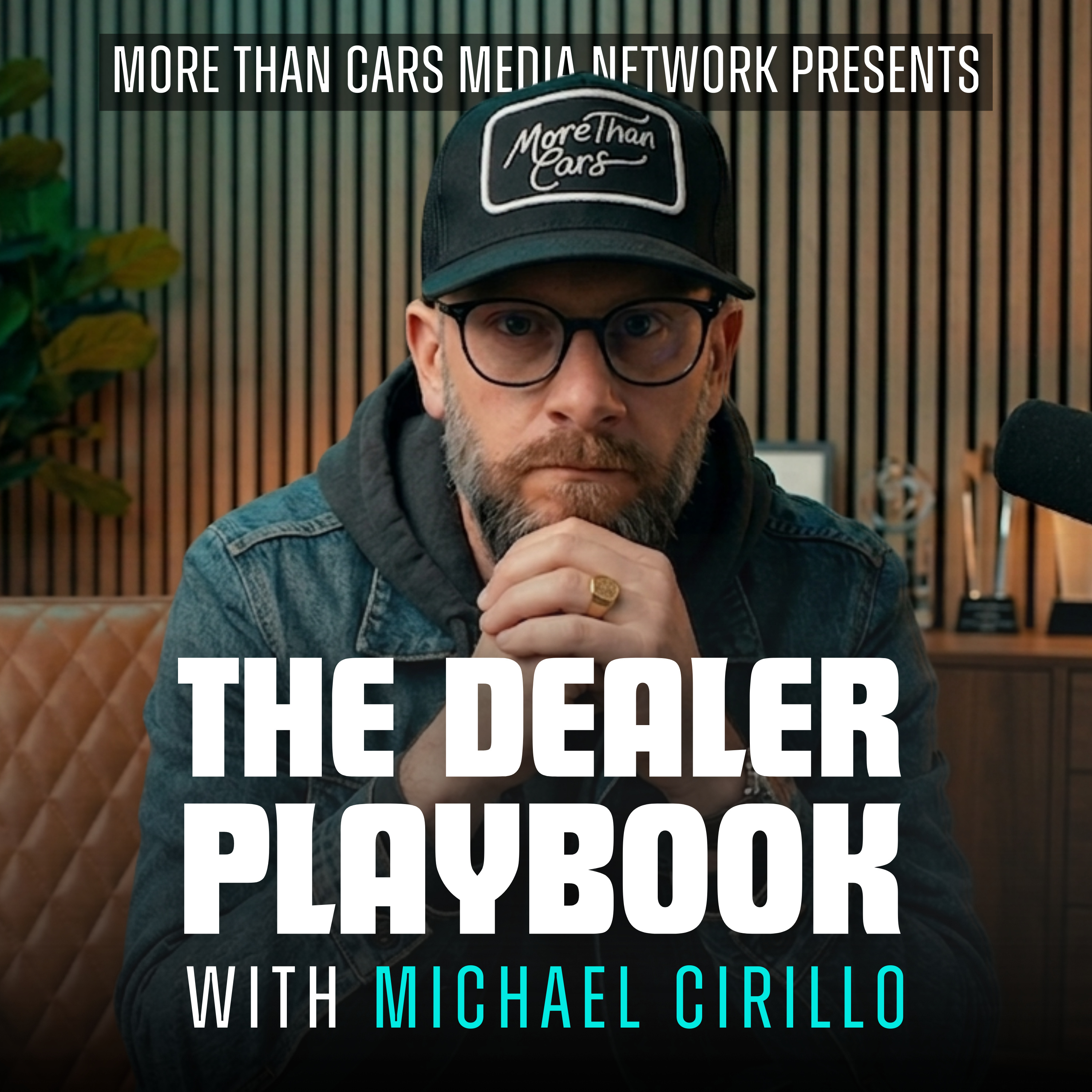
"Brand Safety" — Why Your TikTok Guy is Costing Your Dealership | Exec Dir. of Marketing, Murgado Automotive
About this episode
Murgado Auto Group’s exec director of marketing, Don Moss, breaks down “brand safety” in the age of TikTok and Instagram. The conversation focuses on how dealer teams chase clicks and vanity metrics while overlooking whether salesperson-created content aligns with the dealership’s values and community reputation. Moss argues you can’t just ban social video—you need clear guidelines, training, and shared standards so personal accounts don’t damage brand equity. He also warns about “celebrity/influencer” spend that can backfire when reputations change, and stresses building scalable processes as groups grow.
Is your dealership encouraging team members to "go viral?" You might be seeing the spike in clicks, but are you seeing the real cost? In an age where everyone's a content creator, maintaining brand integrity and a consistent message is harder than ever.
In this episode, you’ll discover:
- Why relying on individual salespeople to create "viral" content can undermine your dealership's long-term reputation.
- How to communicate brand guidelines to your team so they become brand ambassadors, not brand liabilities.
- The critical difference between short-term engagement and sustainable dealer growth through consistent brand messaging.
- How to evaluate marketing partnerships to ensure they align with your dealership's values and community standing.
Don Moss, Executive Director of Marketing at Murgado Automotive Group, shares his expertise on brand safety and the hidden implications of content strategy in "automotive retail".
Timestamps
00:00 Intro
00:44 Why Brand Safety Matters
01:39 Social Video Risks
04:19 Setting Content Guardrails
06:50 Personal Accounts vs Brand
08:27 Influencers and Scandal Risk
10:51 Who Owns the Standards
14:13 Simplify for Growth
15:30 Connect and Wrap Up
Follow The Dealer Playbook so you never miss an episode.
marketing mix
"The first one is this. I know that you have worked in media... But the first thing I want to know is what do you see from a media perspective that dealers should be considering as part of their marketing mix?"
Your marketing mix is the set of ways you market your business—like which platforms you use and what you say. The episode is saying dealerships should think about messaging and reputation, not just ads.
The marketing mix refers to the combination of channels and tactics a business uses to reach customers—here, specifically media and messaging strategy. The episode frames it as more than just running ads; it includes how the dealership communicates and protects its brand.
brand safety
"I'll tell you something that I think a lot of times people overlook. Maybe it's brand safety. We go quick to the ads and how to structure the right messaging."
Brand safety means you want your dealership’s marketing to look good and be associated with the right kind of content. It’s not enough that people click—you also want the message to match who you are and protect your reputation.
Brand safety is about making sure your marketing messages and ads don’t appear alongside content or messaging that could damage your dealership’s reputation. In a dealership context, it’s not just whether a video gets attention—it’s whether the content aligns with the brand’s values and how the public perceives the store.
vanity metrics
"When you're looking at it, which is interesting because that is often what people can see. They can see the click. They can see the traffic. They can see the impressions or what we typically call the vanity metrics."
Vanity metrics are “looks good” numbers like clicks or views. They can be helpful, but they don’t always mean the marketing is actually bringing in buyers.
Vanity metrics are performance numbers that look impressive but don’t necessarily translate into sales or long-term results. The transcript references clicks, traffic, impressions, and similar engagement indicators as examples of metrics that are visible but may not reflect true marketing effectiveness.
TikTok
"In fact, the industry is encouraging every salesperson at every store only where you're going to be successful is you get on TikTok. You get on Instagram, you do these videos."
They’re talking about TikTok as a place dealerships can reach customers with short videos. The point is that posting isn’t enough—you have to say the right things for the dealership’s image.
The hosts discuss TikTok as a key channel for dealership marketing, especially for salesperson-generated video content. The segment frames TikTok/Instagram as where attention is happening, but emphasizes that execution and messaging quality matter.
"only where you're going to be successful is you get on TikTok. You get on Instagram. You do these videos."
They mention Instagram as another social app dealerships use to post videos. Like TikTok, the key is making sure the content fits the dealership and doesn’t just chase views.
Instagram is mentioned alongside TikTok as part of the modern social-media marketing mix for dealerships. The discussion highlights that the channel choice is less important than ensuring the content aligns with brand values and is executed thoughtfully.
USP
"You drive past the billboards on the freeway that say, you know, Murgado auto group, family owned and operated for how many years, whatever it might be. [174.9s] And you go, well, why is that a USP?"
USP means “unique selling proposition.” It’s the one clear reason you should pick that dealership instead of others. The hosts are debating whether the “family owned” message really helps customers or is just background noise.
USP stands for “unique selling proposition,” meaning the specific reason a customer should choose a dealership over competitors. In the segment, the hosts question whether “family owned and operated” is actually a meaningful USP or just generic branding.
Murgado auto group
"You drive past the billboards on the freeway that say, you know, Murgado auto group, family owned and operated for how many years..."
Murgado auto group is referenced as the dealership brand whose billboard messaging and social media content are being discussed. The segment uses it as an example of how “family owned” branding and creator-produced TikTok content can either reinforce or undermine brand trust.
brand affinity
"...and what is the implication of that? What is the downstream effect on brand affinity or whatever?"
Brand affinity is basically how much people like and trust a brand. If the dealership’s social media content feels off, it can make people less interested or less trusting. That can hurt future sales and word-of-mouth.
Brand affinity is how strongly people feel connected to a brand—often reflected in trust, loyalty, and willingness to recommend it. The hosts connect misaligned or risky content to potential downstream effects on brand affinity.
standard operating procedures
"...Is it, hey, no, we don't want you creating stuff or do you just have to be more intentional in creating, I don't know, standard operating procedures or like how do you safeguard really?"
SOPs are step-by-step rules for how to do something the same way every time. The idea is to set clear guidelines for who posts what and how, so the dealership’s image stays consistent. It’s about reducing mistakes and reputational risk.
Standard operating procedures (SOPs) are written guidelines that define how people should perform tasks consistently. Here, the hosts suggest creating SOPs for social media creation so dealership-affiliated content stays aligned with brand safety expectations.
clicks
"So you might get a whole bunch of clicks and sell some cars. What you don't always see is how many people just turned away and walked off"
Clicks are how many people tap on a link or ad. But a click doesn’t always mean the person liked what they saw—some may leave or feel turned off.
Clicks are a basic digital marketing metric that measures how many times people interact with an ad or link. In dealership marketing, clicks alone can be misleading because they don’t capture negative reactions or lost customers.
measuring word of mouth impact
"Yes, which is the most powerful marketing, that word of mouth, like measuring that impact... impact... is the hardest thing to measure."
Word of mouth is when customers tell other people about what they saw or experienced. It’s usually more persuasive than ads, but it’s hard to track exactly how many sales it causes.
Word-of-mouth impact is the downstream effect of marketing that gets shared between friends and family. It’s powerful for dealerships because it builds trust, but it’s difficult to quantify compared with direct metrics like clicks or leads.
impact (hardest metric to measure)
"what is the most valuable metric you think people should be paying attention to? And I said impact... hardest thing to measure"
Impact means the real effect your marketing has on people, not just how many interacted with it. It’s harder to measure because the results show up later, through decisions and conversations.
“Impact” here refers to the real-world effect of content beyond immediate engagement—like whether people develop trust or decide to recommend the dealership. The episode frames impact as harder to measure than surface-level metrics, but more important for long-term results.
ripple effect
"I'm feeling good. You've affirmed my bias. But I think that is it, because how are you thinking about the ripple effect implication or impact of even yourself walking into church"
Ripple effect means one action can spread and affect other people. In this context, one video can change how many people feel about the dealership.
The ripple effect is the idea that one person’s actions influence others’ perceptions and behavior over time. In social marketing for dealerships, a salesperson’s content can affect not only viewers, but also friends/family who hear about it later.
AI
"it's almost become faux pas to not be on social... to not be using AI and getting lazy"
AI is referenced as part of modern social content creation, where it can speed up or automate parts of producing videos. The episode frames it as a potential risk area if it leads to “getting lazy,” which can hurt authenticity and brand perception.
personal accounts become shared brand activity (sticky)
"All that turns your personal accounts into our shared, our shared activity. It's sticky."
Even if a salesperson posts on their own page, the dealership can still get the credit—or the blame—because the video uses the dealership’s brand and location. That effect tends to stick around online.
The transcript describes how salesperson-led social content can effectively turn personal profiles into a shared dealership marketing channel. Because the content is tied to the dealership’s location, name, and branding, the reputational impact becomes “sticky” and hard to separate from the brand.
sells cars.com
"Often the content is not even being created on the social accounts that we own... Often it's being created on Donnie Moss, the car salesman sells cars.com."
Cars.com is a major automotive marketplace where dealers and salespeople can generate leads. The transcript highlights that content may be created on accounts not directly owned by the dealership, which complicates brand control and measurement.
ambassadors for your name
"...completely discouraging the fact that you have people that are willing to be ambassadors for your name? You know how anything goes. You can't get everything right, right? ... if you set them down and really take the time to teach them and show them the why..."
An ambassador is someone who represents your dealership online or in the community. The hosts argue you need to teach them what to say and why, so they don’t accidentally say the wrong thing.
Using “ambassadors” means recruiting customers or local personalities to represent the dealership publicly. The key challenge is setting boundaries and training so they understand the “why” behind brand messaging, rather than just following rigid scripts.

Honda Accord
"...ok, we're not just trying to sell one more Honda Accord. The owner's trying to buy three more Honda deale..."
The Honda Accord is a regular passenger car (a sedan) made for everyday driving. People often choose it for commuting, errands, and family trips because it’s comfortable and easy to live with. It may be mentioned in a dealership story because it’s a popular model that many customers buy more than once.
The Honda Accord is a mid-size sedan known for being a practical, everyday car with a strong reputation for comfort and usability. It often comes up in dealership discussions because it’s a high-volume model that many buyers consider for commuting and family use. In a sales-focused podcast, it may be referenced as an example of how dealers build repeat business with customers.
influencer marketing
"...how much money we actually spend or invest... how much money we spend on an agency, perhaps, that then goes out and finds local celebrities to pedal a message... So for example... the celebrity... is caught up in a scandal, but you've already spent all of that, that marketing money."
Influencer marketing is when a business uses a popular person on social media to promote them. For car dealers, it can be risky if the influencer isn’t actually knowledgeable about cars or if their content doesn’t match the dealership’s image.
Influencer marketing is paying or partnering with online personalities to promote a brand. In automotive, it’s tricky because many influencers aren’t truly car-focused, so the message can drift and the audience may not connect it to real vehicle value.
adjacent lane: spend vs invest
"...Most communication. Well, and now I'm thinking of an adjacent lane, which is how much money we actually spend or invest. If it doesn't work out, it's spend. If it works, it's invest..."
They’re basically saying marketing money can be wasted or can pay off, depending on whether the campaign works. They’re using that idea to talk about influencer/celebrity partnerships.
The hosts frame marketing spend as either “spend” (if it doesn’t work) or “invest” (if it does). It’s a budgeting mindset applied to agency/influencer campaigns and the risk of wasted dollars.
NADA
"I genuinely think, Don, this is the first time ever on this podcast in over a decade. I have ever had this conversation. Wow. And we're at NADA. Everybody's talking about AI."
NADA is a big industry event for car dealers. The hosts are saying everyone there is talking about AI, which is why this topic feels especially timely.
NADA refers to the National Automobile Dealers Association, which hosts major industry events where dealership leaders discuss current trends. In this segment, it’s used to frame the timing and relevance of the marketing/AI conversation.
leads so expensive
"caused to overspend. They can't figure out why, why are my leads so expensive? Why are my, and is it because they just have to fire hose, not understanding that maybe 10 years ago, something happened that wasn't addressed, that is causing a brand equity problem for them."
This means it costs more money to get potential customers to raise their hand. Even if you’re buying ads or running campaigns, you can still pay more if people don’t trust the dealership or don’t respond well.
“Leads so expensive” refers to rising customer acquisition costs—often driven by competition, targeting changes, or poor brand trust. In dealership marketing, it’s commonly tied to how well campaigns convert once shoppers reach the store.
brand equity problem
"They can't figure out why, why are my leads so expensive? Why are my, and is it because they just have to fire hose, not understanding that maybe 10 years ago, something happened that wasn't addressed, that is causing a brand equity problem for them."
Brand equity is basically how people feel about a business—good or bad. If something went wrong years ago and nobody fixed it, people may not trust you as much, so you end up spending more to get the same results.
Brand equity is the value a company’s reputation and customer perception add to its products. If past issues weren’t addressed, they can damage trust and make marketing less effective, which can show up as higher lead costs and lower conversion.
fire hose
"Why are my, and is it because they just have to fire hose, not understanding that maybe 10 years ago, something happened that wasn't addressed, that is causing a brand equity problem for them."
It means sending out a ton of marketing messages or leads all at once. If the dealership’s reputation or process isn’t strong, that flood of leads doesn’t turn into sales, so you just burn money.
“Fire hose” is a marketing metaphor for blasting out lots of leads or messages at high volume. It can temporarily increase activity, but if the underlying brand trust or follow-up process is weak, it wastes spend and doesn’t improve conversion.
level playing field
"For sure. Look, look, we sell cars and we know that there's some stigma to it. There just is, [788.8s] right? Yeah, absolutely. We're not starting at a level playing field. We're starting below that."
It means everyone starts on equal footing. They’re saying car sales often has a bad reputation, so dealerships have to work harder to win trust and get the same results as other businesses.
A “level playing field” means competing under equal conditions—same reputation, trust, and marketing effectiveness. The hosts argue dealerships start at a disadvantage due to stigma, so they must work harder to earn attention and credibility through content and community presence.
content at the speed of light
"And I think that has to be part of what we're thinking about as we're doing content. [803.3s] Content at the speed of light is what's happening."
It means posting and updating content really quickly so you stay in front of people. If you’re slow, customers may forget you or choose someone else who’s always showing up.
“Content at the speed of light” describes producing and distributing marketing content rapidly to keep up with fast-moving platforms and audience attention. For dealerships, it implies staying consistently visible so the brand doesn’t fall behind competitors in search and social feeds.
brand ambassadors, essentially 24 seven
"So we've talked about creating content for people [809.4s] in the stores, being brand ambassadors, essentially 24 seven, we've talked about having effective communication with them, which I love by the way, because I don't see many leaders really discussing this, um, this angle that you've brought up, which is like, Hey, let's talk about this."
They’re saying employees should act like ongoing representatives for the dealership. When people hear from real staff consistently, it can make the dealership feel more trustworthy.
This frames dealership employees as ongoing “brand ambassadors” who represent the store online and in community interactions. The idea is that consistent, authentic communication from staff can strengthen trust and counteract negative stigma around car sales.
acquire more stores and increase our footprint
"And as [866.2s] we're looking to acquire more stores and increase our footprint and increase our impact, what, what's on your mind? What, what's the thought? What, what do we need to be on a lookout for? [875.2s] Yeah, you know, you know, for us, and I think a lot of people kind of relate for, as you're [879.6s] adding more and more stores to a group, you got to think, make things a little more simple."
“Acquire more stores” and “increase our footprint” refer to dealership group expansion—buying additional locations and growing geographic presence. Expansion increases complexity, so marketing and operations often need standardization to avoid inconsistent brand messaging.
Request an Explanation
Heard something you'd like explained? We'll add it to this episode.
Sign in to request explanations for terms you heard.
Want to learn more?
Browse our glossary for plain-English explanations of automotive terms, jargon, and concepts.
Help improve this episode
See something that's not quite right? Our annotations are AI-generated and can sometimes miss the mark. Click the flag icon on any annotation to suggest a correction.