
About this episode
A chaotic mix of 80s music, scorpion stories, and car nerdery turns into a surprisingly thoughtful debate on ride comfort. The hosts rant about a kitchen music shuffle forcing “Send Me an Angel” by Scorpions, then trade real-life scorpion encounters (including a live one in laundry and one hit with a shoe in Italy). Car segments include an 80s-themed gift hunt for a rare Fiat Panda van, excitement for the new Renault Twingo (and its cost-cutting details), and a “bring back body roll” argument. They also cover dressing-gown drama, Voxhall/Eagle funeral-car lore, and listener letters.
After driving the new Jag, Richard has an idea for a campaign. Also in this episode, scorpions and The Scorpions, the new Renault Twingo, a lost dressing gown, using a hearse as an advert, this podcast taking over Wilcox and Eagle, the FBS Census, whether or not you’d own a Cadillac, and major new info about caravanners and the A1.
For early, ad-free episodes and extra content go to patreon.com/smithandsniff
To buy merch and tickets to live shows go to smithandsniff.com
This episode is sponsored by carandclassic.com
Hosted on Acast. See acast.com/privacy for more information.
Scorpions
"It's called send me an angel and it's by the band Scorpions. Oh, but I didn't know it was by Scorpions. I knew it was called send me an angel because they say it loads."
Scorpions is a band. The song they’re talking about is one of their famous tracks from the 1980s.
“Send Me an Angel” is by the German rock band Scorpions. They’re known for major late-’80s/early-’90s hits that many people associate with that era’s pop-rock and hard rock sound.
Waymo
"The second thing I wanted to do is just say hi to Charlie from Waymo. Sweet, sweet guy. We've been on their show a couple of times, haven't we?"
Waymo is a self-driving car company. They work on technology that helps cars drive themselves.
Waymo is a company focused on autonomous driving technology (self-driving cars). When hosts mention Waymo in a car podcast context, it’s typically about the broader future of mobility and driver-assistance systems rather than a specific vehicle model.
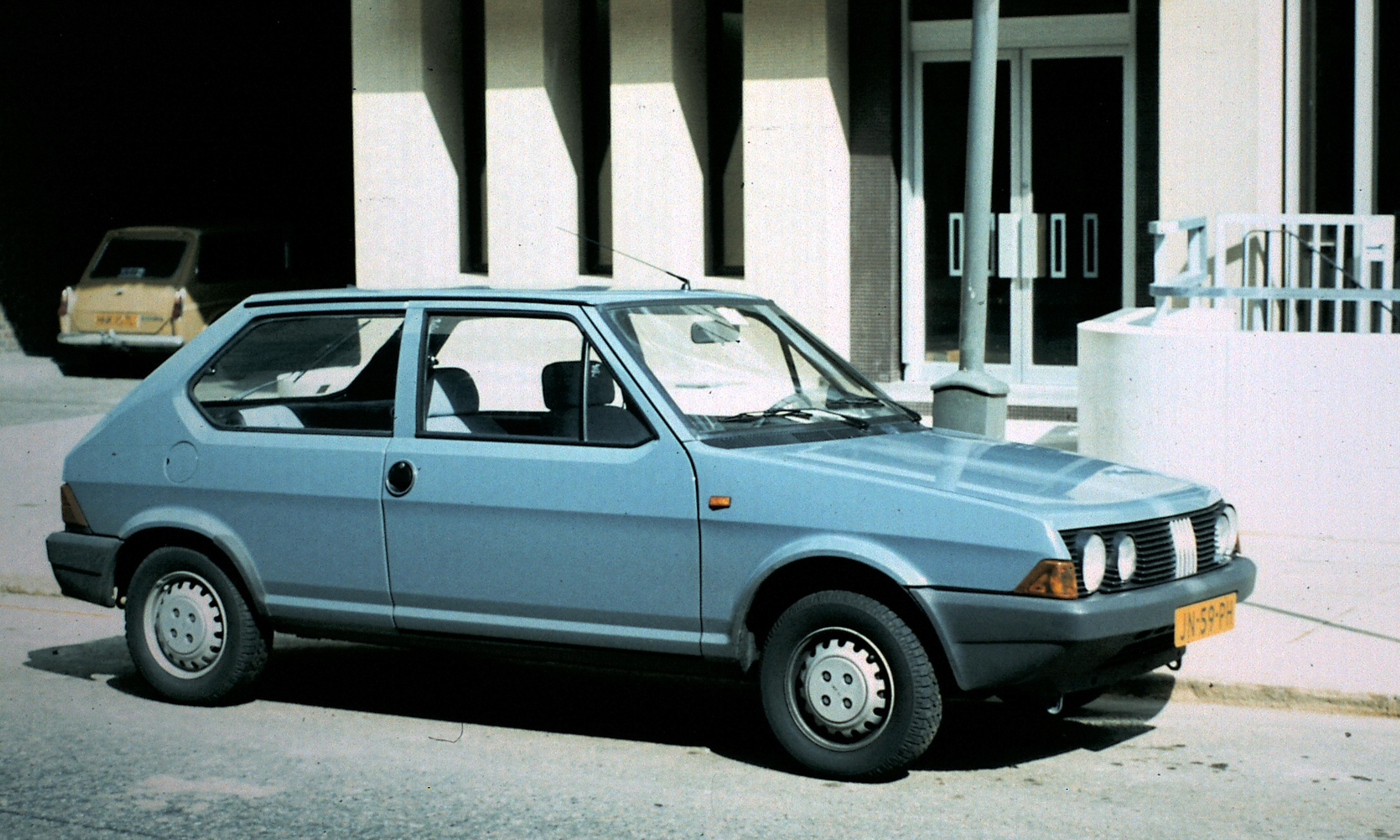
Fiat Ritmo
"Last week, I gifted you a Fiat Ritmo 130. Our bath, in fact. What are the chances of that?"
Fiat Ritmo 130 is a small Italian car from the late 70s/early 80s. It’s a more sporty version of the Ritmo, and it’s the kind of oddball classic people like to hunt for.
The Fiat Ritmo 130 is a hot-hatch-style trim of the Fiat Ritmo from the late 1970s/early 1980s. In enthusiast circles, it’s remembered as a quirky, characterful European compact with a sporty 130-spec engine.

BMW Z1
"So that's a BMW Z1. I would accept that. But you can't have it because the auction ends today."
The BMW Z1 is a quirky BMW roadster from around the late 80s/early 90s. It’s famous for its unusual doors and overall “oddball” style, so collectors like it.
The BMW Z1 is a distinctive late-1980s/early-1990s roadster known for its unusual design, including the signature sliding doors. It’s a relatively rare BMW, which is why it tends to show up as a “treat” in auctions and enthusiast lists.

Fiat Panda
"And it is a Fiat Panda with a difference. This is a lovely sweet, sweet little unusual little vehicle. It's a Fiat Panda van, commercial van."
The Fiat Panda is a tiny Italian car that’s known for being practical and easy to live with. Here, they’re talking about a Panda in a van/commercial setup from the 1980s.
The Fiat Panda is a small, practical Italian city car that became popular for its simplicity and versatility. In this segment, the host specifically describes an 80s-era Panda van/commercial variant, which is a different use-case than the passenger versions.
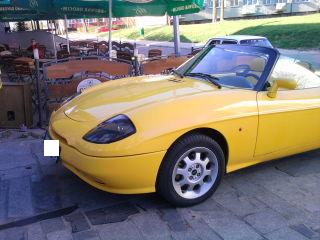
Fiat Barchetta
"...it was built by Carrozzeria Maggiore. Maggiore? Maggiore, that one. Yeah, people who built the Fiat Barchetta original as well."
The Fiat Barchetta is a sporty little Fiat roadster. They mention it because the same company that built this special vehicle also worked on the Barchetta.
The Fiat Barchetta is a small Italian roadster from Fiat’s lineup. In this segment, it’s mentioned to connect the coachbuilder Carrozzeria Maggiore to other Fiat-bodied projects, showing their experience beyond just this special vehicle.
tow bar
"It's got a tow bar and an electrical socket in the rear compartment for connecting compressors, lights and equipment."
A tow bar is the hitch on the back of the car. It lets the vehicle pull a trailer or tow equipment.
A tow bar is a hitch receiver used to tow trailers or equipment. On a service vehicle like this Pandavan, it signals the car could haul additional tools or gear, not just carry them internally.

Suzuki Jimny
"... a very light lime green. It looks like a Suzuki Jimny, the Jimny launch color. Oh, yes, it does. Yeah, ..."
The Suzuki Jimny is a small SUV that’s made to handle rough roads better than a typical car. It has a boxy shape and is often used for both everyday driving and light off-road trips. The podcast references it because the car looked like a Jimny in a specific color.
The Suzuki Jimny is a small, lightweight off-road-capable SUV known for its simple, rugged design. It’s frequently recognized by its boxy shape and is popular for city driving and light trail use. In the podcast, it’s mentioned because a car’s color and appearance reminded someone of the Jimny’s launch look.
Renault
"But also, what's interesting to me is that the base model currently in France, you can have one through Renault... Renault themselves in France will let you have one of those Twingos for 110 euros a month."
Renault is the company that makes the Twingo. The point here is that Renault itself is offering a deal in France, not just a third-party reseller.
Renault is the automaker behind the Twingo. In this segment, the speaker notes Renault’s own French pricing/lease-style offer, which helps explain why the car can be relatively affordable there.
Top Gear
"So yeah, I read I read people's reviews. Paul Horrell drove it for topgear.com. And Horrell"
Top Gear is a well-known car TV and website. They’re mentioning that someone drove the car for TopGear.com, which is used as a reference for how good it is.
Top Gear is a major automotive media brand that publishes reviews and driving impressions. The segment references a driver’s experience with the Twingo via TopGear.com, which signals the kind of coverage people are using to judge the car.
under 20 grand
"...I reckon it's going to be I'm waving my magic wand. I think it's going to be 18,000 quid. They keep saying under 20 grand, don't they? It will 100% be under 20 grand..."
They’re talking about keeping the price below about £20,000. That matters because it makes the car feel affordable compared with other electric options.
“Under 20 grand” refers to a target retail price threshold, used here to predict how affordable the new electric cars will be. In the UK market, staying below £20,000 is often a key psychological and competitive benchmark for mainstream buyers.
under embargo
"...It's under embargo. And I probably shouldn't have said that, but I don't know. Well, I don't know. Well, I'm not, I haven't put a video yet because it’s under embargo, isn't it?"
They’re saying the car review isn’t allowed to be posted yet. It’s being held back until a planned release date.
“Under embargo” means reviewers are not allowed to publish their impressions until a specific date/time set by the manufacturer or PR team. This is common around new car launches to coordinate marketing and reviews.
free color
"...judging by the French configurator, that is the free color, everything else you have to pay extra for..."
They’re saying one paint color comes included in the price. Other colors cost extra, so it’s a small but real way the final bill can change.
“Free color” means the base price includes that paint color, while other colors are priced as add-ons. This matters to buyers because paint can be one of the easiest ways manufacturers add cost without changing the car’s core specs.
massive fight over every single little detail
"...it meant they had a massive fight over every single little detail and whether it was necessary or whether they could, but the one he used as an example is the..."
They mean the team really argued about whether small features were worth keeping. The goal is to cut cost without making the car feel cheap.
This describes a design-and-costing philosophy where engineers and product teams debate whether each feature is truly needed. It’s a common approach in budget-focused vehicles: removing or simplifying items while preserving the user experience.
hazard warning button
"...but the one he used as an example is the, it's got a really big hazard warning button, which I saw my sometime Eva colleague Anthony Ingram pointing out on social media last week..."
The hazard button is the one you press to make the car’s emergency lights blink. They’re saying even that kind of small detail was part of the cost/feature decision-making.
The hazard warning button is the switch that activates the car’s emergency flashers. The speaker uses it as an example of how even small, seemingly minor components can be scrutinized when trying to reduce parts and cost.
Le Mans 24 hour
"I took my Audi Le Mans 24 hour dressing gown... It was my first Le Mans, so I remember it well."
The Le Mans 24 Hours is one of the world’s most famous endurance races, held at Circuit de la Sarthe in France. The episode uses it as a personal reference point for the speaker’s first experience and for Audi’s event-linked branding.
Audi
"Has it crossed your mind to contact Audi and go, look, most people must have left those dressing gowns behind. You must have a warehouse full of them somewhere in Ingolstadt."
Audi is a car brand from Germany. The speaker is joking about contacting the company because they think Audi might have extra items stored somewhere.
Audi is the German automaker based in Ingolstadt, and the speaker jokes about contacting the company for lost “dressing gowns.” While not a technical car topic here, it’s a real brand reference tied to the company’s location and customer-service idea.
scrap it
"[1771.6s] I cannot bring myself to scrap it. I can't do it. It's got too many memories. So I've [1777.1s] gradually filled it with scrap metal."
“Scrap it” means getting rid of the car for recycling. The speaker is saying the owner can’t do that because the car means a lot to him.
“Scrap it” means sending the vehicle to be dismantled and recycled. In enthusiast circles, choosing to scrap vs. preserve often comes down to condition, parts availability, and whether the car has sentimental or historical value.
two seater soft top
"It had a two and a half liter fold V six at the front rear wheel drive, two seater soft top And, but it was visually very challenging."
That phrase means it’s a convertible with room for two people, and the roof is fabric. It usually feels different from a hardtop because it’s lighter and can be a bit noisier.
A “two-seater soft top” describes a convertible with seating for two people and a fabric roof (as opposed to a hardtop). This affects weight, noise, and how the car feels structurally compared with fixed-roof cars.
word of mouth
"...get people to drive it, you know, in the press and then word of mouth, you know, we'll do it in a very what we would now call viral way..."
It means people talk about the car to other people instead of the company paying for ads. If enough drivers and reviewers share good (or bad) experiences, that spreads the reputation.
“Word of mouth” is when people hear about a product through personal recommendations rather than paid advertising. In car marketing, it often depends on owners, journalists, and events creating buzz after test drives.
product placement
"...they had quite cleverly figured out that a way to get word out there about their car was to do product placement. And so they'd lent two cars to some people making a movie in the UK..."
Product placement is when a company pays (or arranges) for its product to show up in a movie. If the movie comes out after the company is already gone, the promotion doesn’t help much.
Product placement is when a brand’s product (here, cars) is shown in a movie or TV production to build awareness. It’s often expensive and time-sensitive—if the company goes under before the release, the marketing benefit can disappear.
Chevrolet
"about me getting Chevrolet wrong. So we've had a few letters and I've got to take accountability for this. My hand is in the air. Say Louis or Louis Chevrolet was in fact Swiss, not France."
Chevrolet is a car brand from the U.S. The hosts are talking about who helped found it and whether one of the founders was Swiss or French.
Chevrolet is an American automaker founded by Louis Chevrolet and others. The hosts are correcting a historical detail about Louis Chevrolet’s nationality (Swiss, not French).
Corvette
"everyone's favorite kind of easy boomer joke. It's the Corvette. [2258.7s] Because it's, it's Vette, E-double-T-E. That's a French thing, isn't it?"
The Corvette is a sports car made by Chevrolet. They’re joking about how the name sounds and how it might be pronounced in French.
The Chevrolet Corvette is an American sports car line, famous for its performance and distinctive styling. The hosts are making a pronunciation/wordplay joke about how “Corvette” is said in French.
supercharged V8
"I think I want a 1960 or a 61. And I would like one of the supercharged V8 latter ones. Is that"
A supercharged V8 is a V8 engine that has a device (the supercharger) that forces extra air in. That usually makes it feel much stronger and more exciting to drive.
A supercharged V8 uses a mechanically driven forced-induction system (the supercharger) to cram more air into the engine, boosting power. When enthusiasts specify “supercharged V8,” they’re usually chasing stronger acceleration and a more dramatic engine character than naturally aspirated V8s.

CTS-V
"a CTS? CTS-V. They did a hot station wagon with the supercharged V8. Oh, no. Yes. I borrowed one of those in the US and it was a manual as well."
Cadillac’s CTS-V is the sporty, high-performance version of the CTS. It’s the kind of car people buy when they want a normal-looking Cadillac, but with real performance—here they’re talking about the supercharged V8.
The Cadillac CTS-V is the high-performance version of the CTS, known for strong power and a more aggressive chassis setup than the standard model. In this segment, the hosts specifically call out the CTS-V’s supercharged V8 and wagon-style “hot station wagon” concept.

Jaguar XJ
"And I was having lunch last week with a mate of mine, who has a like last shape XJ, so the in Callum shape XJ is his daily car."
The Jaguar XJ is Jaguar’s long-running luxury sedan line, known for comfort-focused driving and refinement. Here it’s referenced as a friend’s daily car, setting context for the speaker’s comparison and interest in ride/stance behavior.
body roll
"reminded me there's not necessarily anything wrong with a bit of body roll. No, if, if everything else when you know a car a bit and when you can trust a car, it's like, you know, obviously I gather someone at a car company told me years ago that customers sometimes in feedback don't like body roll"
Body roll is when a car leans to one side in a turn. Some people like it because it feels smooth, while others dislike it because it can feel like the car is getting out of control.
Body roll is the lateral tilting of a car’s body when cornering, caused by suspension compliance and weight transfer. The episode frames it as something that can be either comforting or unsettling, depending on how much the car rolls and how predictable it feels.
anti roll bars
"And so it's one of the reasons why cars sort of got a bit stiffer and anti roll bars became thicker and all the rest of it."
Anti-roll bars are parts that help stop the car from leaning too much in corners. Making them thicker usually reduces lean, but it can also make the ride feel a bit stiffer.
Anti-roll bars (sway bars) connect the left and right suspension to resist body roll. Thicker bars generally reduce roll but can also make the ride feel firmer or less compliant over uneven surfaces.
supple suspension
"the state of the road is so bad, we ought to have a little bit more supple suspension. The sort of ultra firm ride..."
Supple suspension means the car soaks up bumps more easily instead of feeling stiff. The hosts are arguing that this helps on rough roads.
A “supple” suspension is tuned to move more easily over bumps and irregular road surfaces. The idea here is that softer compliance can improve everyday control and comfort, especially on poor UK roads.
Request an Explanation
Heard something you'd like explained? We'll add it to this episode.
Sign in to request explanations for terms you heard.
Want to learn more?
Browse our glossary for plain-English explanations of automotive terms, jargon, and concepts.
Help improve this episode
See something that's not quite right? Our annotations are AI-generated and can sometimes miss the mark. Click the flag icon on any annotation to suggest a correction.