
Car Pro Radio Show April 25 26 Hour 3
About this episode
Luxury SUV shopping, long-term ownership costs, and feature subscriptions set the tone early, with Audi and German brands getting particular scrutiny. The conversation then shifts to Toyota and Lexus, where hybrids and resale strength are praised, alongside practical truck-buying advice about rebates and zero-percent financing. Later, Jerry weighs in on used-car values, EV market softness, and a few specific recommendations, including the Bronco’s stability and why he passed on a G-wagon.
Car Pro Radio Show April 25 26 Hour 3
Hosted by Simplecast, an AdsWizz company. See pcm.adswizz.com for information about our collection and use of personal data for advertising.
Tyraq
"Tread confidently with new tires from Tyraq. Whether you're looking for expert recommendations or know exactly what you want, Tyraq makes it easy. Fast, free shipping, free road hazard protection, and convenient installation options."
Tyraq is a website for buying tires. They claim to make it easier to pick the right tire by showing reviews and test info, and they also offer shipping and tire-related protection.
Tyraq is presented as a tire retailer that helps shoppers choose tires using test results, ratings, and consumer reviews. The ad also highlights services like free shipping, road hazard protection, and installation options.
road hazard protection
"...Fast, free shipping, free road hazard protection, and convenient installation options. Go to Tyraq.com to see tire test results, tire ratings, and consumer reviews..."
Road hazard protection is extra coverage for tire damage from everyday road problems. If you hit something and damage a tire, it can help lower what you have to pay.
Road hazard protection is coverage offered with tires to help pay for damage from things like punctures or impacts. It’s meant to reduce the cost risk of real-world tire damage after purchase.
tread
"Tread confidently with new tires from Tyraq. Whether you're looking for expert recommendations or know exactly what you want, Tyraq makes it easy. Fast, free shipping, free road hazard protection, and convenient installation options."
Tread is the pattern on the outside of your tire. It’s what helps your car grip the road and helps the tire handle rain and wet pavement.
Tread is the textured rubber on a tire that contacts the road and helps with grip, braking, and water evacuation. New tread generally improves traction and confidence, especially in wet or changing conditions.

Jeep Wrangler
"Yesterday's free newsletter had my review of the 2026 Jeep Wrangler Moab 392, and it was a beast of a Wrangler, and Amy had a very popular review on a dog gone good looking 2026 BW Golf R."
The Jeep Wrangler Moab 392 is a special Wrangler meant for serious off-roading. The “Moab” part is about rugged capability, and the “392” usually means it’s the stronger, more powerful version.
The Jeep Wrangler Moab 392 is a special edition of the Wrangler built for off-road capability and enthusiast appeal. The “392” typically signals a higher-output V8 configuration, and the Moab name references a rugged off-road theme associated with the Moab region.

Cadillac Escalade
"When you get up into big, large SUVs, you've got the Escalade, which is one of my favorites, the new QX80 from Infiniti."
The Escalade is a popular large luxury SUV from Cadillac. It’s mentioned as one of the common choices people consider in this category.
The Cadillac Escalade is a full-size luxury SUV known for comfort, big presence, and strong mainstream appeal. Here it’s used as a benchmark because the caller is shopping in the same “big luxury SUV” class.

Infiniti QX80
"the new QX80 from Infiniti. I reviewed recently, and boy, if they done a job with that, then you got the SA from Audi."
The QX80 is Infiniti’s big luxury SUV. It’s brought up because it’s another serious competitor to the Audi in the large-SUV market.
The Infiniti QX80 is Infiniti’s full-size luxury SUV, competing directly with vehicles like the Escalade and other large family haulers. The host references it as another strong option in the same class as the Audi Q8.

Lincoln Navigator
"then you got the SA from Audi. You got the Navigator in luxury, which I'm going to review in three weeks... I'll have the new Navigator."
The Navigator is Lincoln’s big luxury SUV. It’s mentioned because it’s another popular option in the same “large luxury SUV” category.
The Lincoln Navigator is a full-size luxury SUV that competes with other American and European large SUVs. The host mentions it as a vehicle he plans to review soon, and as part of the caller’s comparison set.
100,000 mile mark
"These German cars, and I got two of them sitting in my garage, but they're quirky once they get up close to that 100,000 mile mark. That's a good time to get rid of them."
Around 100,000 miles, cars often start needing more attention—things wear out and repairs can get pricier. The host is saying that’s when some German cars may start acting up more.
The “100,000 mile mark” is a common ownership milestone where wear items, maintenance needs, and out-of-warranty repair risk often become more noticeable. The host specifically frames it as the point where German cars can become more “quirky,” implying higher likelihood of issues and higher repair costs.
extended warranties
"that I personally own, I'd get extended warranties on them. I know I'm not going to because I don't do that. Typically, I'm a 30,000 mile trader."
An extended warranty is extra insurance for your car’s repairs after the original warranty runs out. If you keep the car for a long time, it can help pay for expensive fixes so you’re not stuck paying everything out of pocket.
Extended warranties are coverage plans that extend protection beyond the original factory warranty period. The host argues they can be financially worthwhile if you plan to keep the vehicle longer, because they help offset repair costs that occur after the standard warranty expires.
30,000 mile trader
"Typically, I'm a 30,000 mile trader. When it gets close to 30,000 miles, I'm going to trade it off just because I'm tired of it, not because I'm having trouble."
They’re describing a habit of trading the car before it racks up a lot of miles—around 30,000. If you sell early, you may not need an extended warranty because you’re less likely to be paying for repairs after the warranty period.
A “30,000 mile trader” describes a strategy of selling or trading the car around 30,000 miles rather than keeping it long-term. This approach can reduce the need for extended warranties because the vehicle is likely still within (or near) the period when major coverage is already in effect.
Sewell
"both owned by Sewell, who wrote the book literally on customer satisfaction. And if you don't have any luck locally at my website, you'll find both those dealerships."
They mention Sewell because it owns the dealerships they recommend. The idea is that a dealership with a strong reputation can make it easier to get help when your car needs service.
Sewell is referenced as the ownership group behind the Dallas and Houston dealerships the host recommends. The point is that dealership reputation and customer satisfaction can influence the quality of warranty and service experiences.
video of the week
"You haven't had your moment of glory in this hour. [483.0s] Well, thank you for letting me have that. I appreciate that. [485.9s] You haven't had much success getting your video of the week into the top five clicks"
They’re talking about a recurring show feature where one video is picked each week based on clicks. It’s about how the show measures what people watch, not about car tech.
The hosts discuss “video of the week” and how it’s ranked by click performance. This is a show segment about audience engagement rather than a technical automotive topic.
subscription based features in vehicles
"Kind of the same scenario going with some some makes or manufacturers of cars that are starting to look at subscription based features in vehicles. And this is something that you wrote about there in the news section... with BMW and their thing about subscription fees for heated seats..."
Some car features can be turned on only if you pay a monthly fee, even if the car already has the parts to make the feature work. That means you might buy the car, but still need to pay extra to use things like heated seats or extra performance. It feels unfair to some owners because the equipment is already in the vehicle.
The hosts are discussing a trend where automakers lock certain functions behind a recurring subscription, even when the car already has the hardware installed. Examples mentioned include heated seats and performance features that require paying to “unlock” them after purchase. This changes ownership from “buy once, use everything” to “pay to keep using what you already bought.”
heated seats
"...BMW and their thing about subscription fees for heated seats... If my seats will heat with a subscription, then the equipment's there when I bought that car."
Heated seats warm the seats for comfort, especially in cold weather. The hosts are saying some brands make you pay extra to turn that feature on, even if your car already has the heater parts installed. That’s why it feels frustrating to owners.
Heated seats are a comfort feature that the hosts say some automakers are turning into a paid subscription. The argument presented is that if the seat heaters and related hardware are already installed when you buy the car, charging extra to enable them is questionable. It’s used as the most relatable example for everyday drivers.

Toyota 4Runner
"Greg in Houston, you're next on the car pro show. Hello, Greg. Hello, Jerry. I've got a excuse me. I got a 2018 forerunner that I'm with like 66,000 miles on it and I'm looking"
A listener calls in with a 2018 Toyota 4Runner and mentions it has about 66,000 miles. This is likely the start of a question about ownership, reliability, or what to do next with that specific vehicle. The 4Runner is a popular body-on-frame SUV known for durability, so mileage and model year matter for maintenance planning.

Toyota Land Cruiser
"to upgrade into a little bigger vehicle. Yeah. And I was I was looking at the land cruiser ... But I think I personally like the looks of the Land Cruiser better ... if it's the Land Cruiser, I'd save the money."
The Toyota Land Cruiser is a rugged SUV built on a truck frame, so it’s meant for rough roads and towing. They’re comparing it to a Lexus version to see which feels nicer and costs less.
The Toyota Land Cruiser is a body-on-frame, truck-based SUV known for off-road capability and towing. In this segment, it’s compared directly with the Lexus GX 550 on ride quality, interior materials, and overall value.

GX 550
"and the GX 550. Is there a huge difference between those vehicles? ... they're both on truck chassis ... But I think with the Lexus, you get a little more sound insulation ... more wood grain."
The Lexus GX 550 is a more upscale version of a rugged SUV formula. The hosts say it tends to feel quieter and more premium inside, but it usually costs more.
The Lexus GX 550 is Lexus’s premium, truck-based SUV that shares the general idea of strong off-road hardware and towing capability. Here it’s discussed as having more refinement (like sound insulation and softer interior materials) but typically costing more than the Toyota Land Cruiser.
truck chassis
"No, not really. I mean, they're on they're on they're both on truck chassis, which is great. They're both they're both good on off road. They're both got good towing power for what they are."
A truck chassis is basically a strong frame underneath the vehicle. It usually makes the SUV better at towing and handling rough off-road conditions.
A truck chassis means the vehicle is built on a separate frame, like many traditional trucks, rather than relying on a unibody structure. This typically helps with durability, towing, and off-road use because the frame can better handle impacts and loads.
sound insulation
"But I think with the Lexus, you get a little more sound insulation in those. Typically, you get more wood grain."
Sound insulation is what helps keep road and wind noise from getting into the cabin. More insulation usually means the SUV feels quieter and more comfortable.
Sound insulation refers to how well a vehicle reduces noise entering the cabin from the engine, tires, and wind. In this comparison, the Lexus GX 550 is said to provide more sound insulation, which contributes to a quieter, more comfortable ride.
resale value
"to to because both of them are going to have great resale value. Both of them have done extremely well. The Lexus dealers can't get near enough GX 550s..."
Resale value is what you can sell the vehicle for in the future. If lots of people want the same SUV and it’s hard to get, it usually holds its value better.
Resale value is how much a vehicle is expected to be worth when you sell it later. The hosts argue both the Land Cruiser and GX 550 hold value well, citing strong demand and limited availability that can keep prices elevated.

BMW 550S
"... well. The Lexus dealers can't get near enough GX 550s and it's been that way since it came out. Land C..."
The BMW 5 Series is a luxury car that’s bigger than a compact sedan and is meant to feel more upscale. It’s built for comfortable everyday driving and a more engaging drive than basic cars. The podcast mentions it in the context of how hard it can be to find certain vehicles at dealers.
The BMW 5 Series is a mid-size luxury sedan known for a balance of comfort, driving feel, and technology. In the podcast context, it’s part of a discussion about dealer inventory and how quickly certain models can be obtained. That kind of availability talk often comes up because the 5 Series is a high-demand, mainstream entry point into BMW’s lineup.
waiting list / order delays
"Anytime a vehicle sells that hot right out of the gate, like this one has, it's going to have great resale value. ... I've heard stories more than that. A year and a half. ... one of the problems Greg with Toyota ... they don't do a good job with orders."
A waiting list means you can’t just buy the exact car you want right away because there aren’t enough built. The hosts say some buyers can wait a long time, even after placing an order.
Waiting lists and order delays happen when demand exceeds production capacity, especially for popular trims or configurations. The segment highlights that the GX 550 has been in short supply since launch, and that Toyota’s ordering process can lead to long lead times even when you specify what you want.

2022 GMC 1500
"Right. And, you know, paralleling off your question about budget or other cars, I've got a 2022 GMC 1500, 84X. Nice. Big engines. Yeah. It's been a great vehicle. But after 50,000 miles, it's just nickeling and diming me."
A GMC 1500 is a full-size pickup truck. The person is saying that after about 50,000 miles, it started costing them more in small repairs or maintenance.
The GMC Sierra 1500 (often shortened to “1500”) is a full-size pickup truck. In this segment, the caller mentions owning a 2022 model and experiencing frequent small expenses after 50,000 miles, which is a common way owners describe “nickel-and-diming” maintenance costs.

Toyota RAV4
"Hi, Jerry. Thank you for your taking my call. I have a question on it. I'm trying to get the Toyota RAF for 2026. Yeah. And but I changed my mind because I don't, for somehow, for some reason, I don't like hybrid and they don't have a regular RAF for anymore."
The Toyota RAV4 is a popular compact SUV. The caller is worried about choosing the hybrid version because they think it could be harder or more expensive to fix after the warranty ends.
The Toyota RAV4 is Toyota’s compact SUV, and it’s offered in hybrid and non-hybrid versions depending on model year and availability. Here, the caller is considering a 2026 RAV4 but doesn’t want a hybrid, partly due to concerns about post-warranty costs and whether independent mechanics can service hybrids.
hybrid
"And but I changed my mind because I don't, for somehow, for some reason, I don't like hybrid and they don't have a regular RAF for anymore. Right. And because, you know, I know that after the factory warranty is going to be expired, all the cars going to have some issues on it."
A hybrid uses a gas engine plus an electric motor. The caller is worried that if something goes wrong after the warranty, it could cost more and might need dealer service.
A hybrid vehicle uses both an internal-combustion engine and an electric motor/battery system to improve efficiency. In this segment, the caller’s concern is that hybrid-specific systems may be more expensive to repair after the factory warranty ends and may require dealer service.
factory warranty expired
"And because, you know, I know that after the factory warranty is going to be expired, all the cars going to have some issues on it. And not all the mechanic can fix those hybrids."
A factory warranty is the period where the car maker pays for certain repairs. After it ends, repairs usually cost more out of your own pocket.
The “factory warranty” is the coverage period provided by the automaker for defects and certain repairs. Once it expires, owners often face higher out-of-pocket costs, especially for complex systems like hybrid components that may be more expensive to diagnose and repair.

Toyota Corolla
"...l SUV on Toyota. It's got a small engine, like a Corolla engine. I just need to know what's your opinion a..."
The Toyota Corolla is a small, everyday car made for getting good fuel economy and being easy to live with. People often mention it when they’re talking about cars that use a similar “small engine” approach. It’s a reference point for practical, budget-friendly transportation.
The Toyota Corolla is a compact car known for being practical and efficient, and it’s often used as a benchmark for everyday reliability. In the podcast context, it’s referenced because some smaller-engine vehicles use similar engine sizing/characteristics to what people associate with the Corolla. That makes it a common comparison point when discussing “small engine” choices for daily driving.
crossover SUV (car-based)
"We've reviewed the Cross. It's nice. It's one of those in all the car companies are trying to do this. They're trying to capitalize on the fact that people are going to SUVs. So they take essentially a car and put bigger tires and wheels on it and hatch back and they call it a SUV. And that's kind of what Toyota did with the Cross."
Many modern “SUVs” are actually crossovers built on car platforms, which typically means they drive and handle more like cars than body-on-frame trucks. The host explains that companies take a car, add SUV-style styling and larger wheels/tires, and market it as an SUV—using the Toyota Corolla Cross as the example.

Toyota Corolla Cross
"...F 4 is the number one selling SUV in America. The Corolla Cross is going to cost you less money. But in my opini..."
The Toyota Corolla Cross is a small SUV that’s designed to be affordable and easy to drive. It’s meant for people who want more space than a regular car, but without paying for a bigger SUV. In the podcast, it’s brought up because it typically costs less than many other SUVs.
The Toyota Corolla Cross is a compact crossover SUV built around the Corolla’s reputation for efficiency and practicality, but with higher ride height and SUV-style packaging. In the podcast, it’s mentioned as a lower-cost alternative in the SUV market, especially for buyers who want something smaller and cheaper than larger crossovers. That’s why it’s discussed alongside sales rankings and pricing expectations.
quarter sales numbers
"One of the most clicked items would be the first quarter sales numbers. And of course, I found it pretty interesting the information about the vehicle that I have, which is the 2024 Kia Telluride."
They’re talking about how many cars were sold in the first part of the year. Those numbers help show which models are doing well and which brands are gaining ground.
The hosts discuss “first quarter sales numbers,” using them to evaluate which brands and models are winning in the market. Sales quarters are a common way to compare momentum, demand, and competitive positioning.
Hyundai
"it's outselling its sibling brand Hyundai for the first time since near the end of 2023, which I found very interesting. Yeah, it was. You know, they're close every month, but Hyundai usually outsells Kia."
They bring up Hyundai because it’s usually the sales winner compared to Kia. This time, Kia is selling more, at least based on the quarter they’re discussing.
Hyundai is mentioned as Kia’s “sibling brand” and as the usual sales leader that Kia is now surpassing. The comparison is about market share and which brand can sell more of its most in-demand models.

Telluride Hybrid
"it's Kia's time because of the 2027 Telluride hybrid that you haven't even had a chance to get your hands on yet."
The Kia Telluride is a family SUV with three rows of seats. They’re talking about a 2027 version that’s expected to be a hybrid, meaning it should use both a gas engine and an electric system.
The Kia Telluride is a midsize three-row SUV aimed at families who want space and comfort. In this segment, the hosts mention a 2027 Telluride hybrid, which implies a future powertrain option beyond the standard gasoline setup.

Hyundai Palisade
"I had the Hyundai Palisade and then I had the Palisade Hybrid, which was great."
The Hyundai Palisade is a big family SUV with room for passengers and cargo. The caller is saying they’ve had the regular Palisade and then the Palisade Hybrid, which is the version that adds hybrid fuel-saving tech.
The Hyundai Palisade is Hyundai’s three-row midsize SUV, positioned as a comfort-focused alternative to other family haulers. The caller says they owned both the Palisade and the Palisade Hybrid, suggesting Hyundai’s hybrid variant is a meaningful upgrade for them.
zero down zero interest
"So I qualify for the zero down zero interest, but they want to put me in a six or seven year note."
This is a car deal where you don’t put money down and the loan has 0% interest. If it’s really 0%, you usually don’t lose money by keeping your cash longer—so paying it off early may not be the best move.
“Zero down, zero interest” is a promotional auto-financing offer where you pay no upfront down payment and the loan carries 0% APR. The caller argues that if the rate is truly 0%, paying off early isn’t financially necessary because the money could be used elsewhere.
six or seven year note (72 months)
"they want to put me in a six or seven year note... you did six years, 72 months."
A “six or seven year note” means the loan is spread out over that many years. Longer loans can make the monthly payment smaller, but it’s important to check the total cost of the deal.
A “note” here means the auto loan term length—six or seven years, which is roughly 72 months for six years. Longer terms typically lower the monthly payment but can increase total cost if the deal isn’t truly 0% APR or if fees/add-ons are involved.
0% APR vs paying it off early
"But yeah, that's what I'm thinking... So at zero percent, why would you want to pay it off early?"
They’re debating whether it makes sense to pay a car off early when the loan is 0% interest. If there’s no interest, keeping the money longer can sometimes be better than rushing to pay it off.
The segment discusses the financial logic of 0% financing versus paying early. With 0% APR, there’s no interest cost to delaying payoff, so the caller suggests investing or earning interest on the cash instead of eliminating a “bill” sooner.
paying off early vs keeping the loan term (zero percent vs rebate)
"...if you take the zero percent, typically there is a corresponding rebate that you can take... at the end of the day, it's going to wash out financially about the same... But if you were going to try to go the length of the note... I wouldn't recommend paying anything extra..."
They’re talking about whether it’s smarter to pay extra to get rid of a loan early or keep paying on schedule. It depends on whether you’re getting a 0% deal or a rebate, and how long you plan to keep the loan.
The speaker compares two financing strategies: taking a 0% offer versus taking a rebate, and then deciding whether to pay extra or pay the loan off early. The key idea is that the “best” choice depends on the effective cost of financing and how long you plan to keep the loan.

Ford F150
"If you want a basic truck, I mean the F-150 XLT, which is the bread and butter truck. That's the one they sell the most of."
The Ford F-150 XLT is a popular version of Ford’s F-150 pickup. It’s usually a good middle ground—more comfort than the base model, but not as expensive as the top trims.
The Ford F-150 XLT is a mid-level trim of Ford’s F-150 pickup truck line. It’s often positioned as a “work-capable but comfortable” option, with common convenience features while avoiding the higher-cost luxury add-ons.
2.7 eco boost
"If you get one of those with a 2.7 eco boost and you know it doesn't have leather and it doesn't have moon roofs..."
The “2.7 EcoBoost” is a Ford engine that’s turbocharged. Turbocharging helps the engine make more power without needing a bigger engine.
“2.7 EcoBoost” refers to Ford’s 2.7-liter EcoBoost turbocharged engine. EcoBoost engines use turbocharging to improve power and efficiency compared with a naturally aspirated setup of similar size.
moon roofs
"...it doesn't have leather and it doesn't have moon roofs and you know it's got power windows and locks and tilt and cruise the basics."
A moonroof is a glass section in the roof that can let in more light (and sometimes open). It usually costs extra when you buy the truck.
A “moonroof” is a glass panel in the roof that can tilt or slide open for light and ventilation. It’s a common option on trucks and SUVs, but it can raise the purchase price and sometimes adds complexity versus a fixed roof.
carpro.com
"I've got some really good ones at carpro.com. Well, who do you? Okay, so just go to your website."
CarPro.com is referenced as a way to find Ford dealers the host considers “good” versus “bad.” This is relevant because dealer quality can affect pricing, service experience, and how smoothly financing and purchasing go.
Tom Ball Ford
"But I've got one in Umbul. I've got Tom Ball Ford, Jorge Lopez has been with me forever."
Tom Ball Ford is named as a specific Ford dealership the speaker recommends. When buying a truck, the dealership you choose can strongly influence negotiation, trade-in handling, and how issues are handled after purchase.
used car values and trade in values are up
"You talked about how used car values and trade in values are up. Yes. I am not seeing that on my end. My values, both instant cash offers and trade offers are at best the same..."
Used-car prices and what dealers offer on trade-ins don’t always rise together. Your local market and how many similar cars are for sale can change the price you get.
“Used car values” and “trade-in values” can move differently depending on local supply, demand, and auction pricing. The caller isn’t seeing the same increase, which highlights how pricing can vary by region and by how many comparable sales (“comps”) exist.
instant cash offers
"My values, both instant cash offers and trade offers are at best the same, at worst a little bit worse than last month."
An instant cash offer is a quick “we’ll buy your car for $X” price. They’re saying those offers haven’t gotten better lately.
Instant cash offers are dealer or marketplace buy offers that quote a price quickly, often based on auction/market data. The caller compares these offers to last month and says they’re not improving, which ties back to how market pricing is being calculated.

2025 Colorado Trail Boss
"What kind of vehicle are you trying to get rid of? I've got a 2025 Colorado Trail Boss. Okay. That's a good piece of merchandise."
This is a Chevrolet midsize truck. “Trail Boss” is the off-road version, and they’re talking about how much it’s worth when you try to sell or trade it in.
The Chevrolet Colorado is a midsize pickup, and the Trail Boss is an off-road–oriented trim. In this segment, the hosts discuss why its used value and trade-in offers may not be rising as expected.
Mannheim
"...dealers are going off Mannheim market and there's the way that works... I watch Mannheim every Wednesday for three hours just to see what the market's doing."
Mannheim is shorthand for the Mannheim auction/market system used to gauge vehicle pricing. The hosts say they watch Mannheim to understand market movement, and that if there aren’t many comparable vehicles, the pricing signals can be less reliable.
comps
"If there's not a whole lot of comps, then the value is not going to be very accurate."
“Comps” means comparable cars used to figure out what your car should sell for. If there aren’t many similar cars, it’s harder to price yours correctly.
“Comps” (comparables) are similar vehicles used to estimate value—typically based on trim, mileage, condition, and local sales/auction results. The hosts argue that when a vehicle is rare and there aren’t enough comps, valuation becomes less accurate.
payoff
"You know, that's probably... Do you have a payoff on it? Yeah. It's about 39."
A “payoff” is the amount needed to fully satisfy an existing loan on the vehicle. The caller mentions their payoff amount, which affects how much equity (or negative equity) they have when selling or trading the car.
sticker
"And what was sticker on that thing? 60? No, 44. Oh, I'll be darned. I thought there were more than that."
“Sticker” refers to the original MSRP (manufacturer’s suggested retail price) or the price the vehicle was sold for new. Comparing sticker to current payoff/value helps illustrate depreciation and why today’s trade-in numbers may feel surprising.
$7,500 rebates and incentives
"...the tariff situation, the government eventually cut off the $7,500 rebates and incentives, of course. And then you started to see... used EVs..."
The $7,500 figure refers to government incentives that can reduce the purchase price of qualifying EVs. When those incentives are cut off, demand can drop and used EV values can soften as the market resets.
used EVs out there where the value was kind of wonky
"...you started to see all of the used EVs out there where the value was kind of wonky, probably even on the downgrade."
The hosts describe used EV pricing as unstable (“wonky”), which can happen when incentives change, supply increases, or market expectations shift. This segment ties EV value weakness to policy changes and the resulting demand/price swings.
EV market that's maturing
"And, you know, it's an EV market that's maturing and changing with different stages, honestly."
“Maturing” means electric cars are becoming more common and less experimental. As that happens, the market changes—prices, choices, and what buyers worry about can all shift.
When hosts say the EV market is “maturing,” they mean it’s moving from early adoption into a more established phase. That typically brings more competition, shifting pricing, and more focus on real-world ownership factors like charging access, reliability, and total cost.
Lexus
"I love Toyota and Lexus hybrids just because they've been doing it the longest."
Lexus is Toyota’s luxury brand. They’ve also been making hybrid cars for a long time, so people trust them when they want a hybrid.
Lexus is Toyota’s luxury brand, and the segment groups Lexus hybrids with Toyota’s hybrid experience. The point is that Lexus has offered hybrid drivetrains for many years, which can influence buyer confidence.
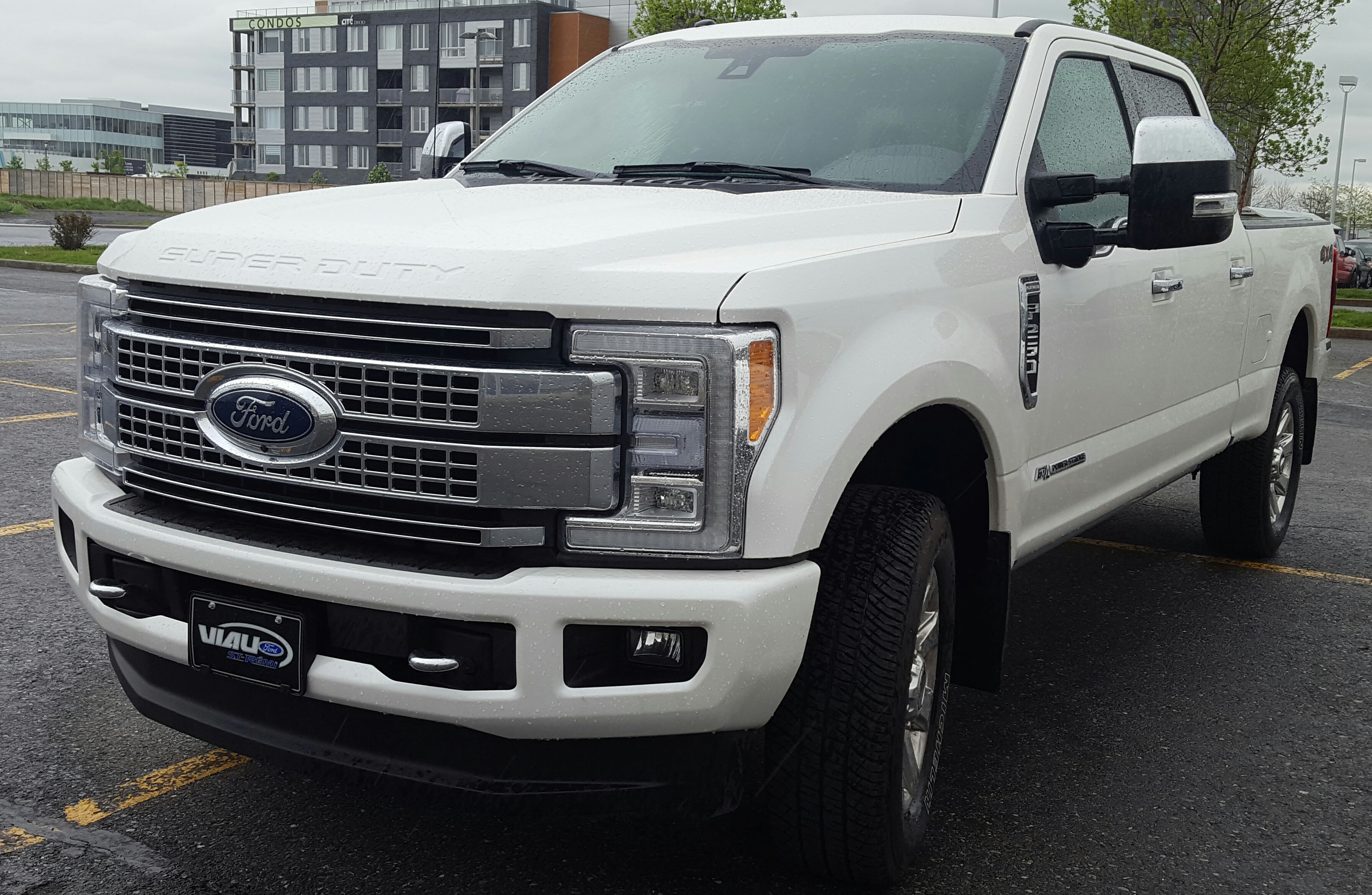
Ford F-250 King Ranch
"...they right over there hooked me up with a Ford F-250 King Ranch back last year. Oh, good. It was an easy process."
The Ford F-250 is a big, work-capable truck. “King Ranch” is a nicer version of that truck with more comfort and features.
The Ford F-250 is a heavy-duty pickup, and the “King Ranch” is a specific trim level known for upscale interior features and comfort. In this call, the host is referencing a prior transaction involving a Ford F-250 King Ranch, framing it as an example of a smooth buying process.

Toyota Sequoia
"...my wife's got a 2021 Sequoia. We love that vehicle. I got over a hundred thousand every time we take it into the dealer. They try to buy it from me..."
They’re talking about a 2021 Toyota Sequoia SUV. The main question is what it’s worth after it has over 100,000 miles, especially since the newer versions may be changing to hybrid.
The caller’s wife has a 2021 Toyota Sequoia, and they’re discussing its resale value after accumulating over 100,000 miles. The key takeaway is how mileage, condition, and whether the model is transitioning from gas to hybrid can affect what buyers will pay in the aftermarket.
aftermarket value / selling a used car
"...if it's got a little over a hundred thousand, what kind of, and it's in good condition, what kind of value do you think ballpark would that vehicle bring in the aftermarket?"
They’re trying to figure out what their used SUV is worth when they sell it. The host suggests getting bids so you can compare offers instead of relying only on what a dealer offers as a trade-in.
The caller asks what a used vehicle might bring “in the aftermarket,” meaning the resale market outside of the dealer’s trade-in process. The host recommends getting bids and using the dealer’s offer as a starting point, which helps separate trade-in pricing from true market value.
last gas one for that year model
"...it's a gas. So I know it's the last before we went to hybrid. I know it's the last gas one for that year model."
They’re saying this is the last version that’s gas-only before the model changes. Sometimes that makes the current gas version more desirable, so it can affect resale value.
The caller notes it’s “the last gas one for that year model,” implying a powertrain change is coming (likely toward hybrid). When a model is nearing a drivetrain transition, buyers may pay a premium for the outgoing configuration because it’s the last chance to get that specific setup.

Mazda Cx5
"that my daughter is getting ready to graduate and had bought her a Mazda CX-5, but she's going up to Arkansas."
The Mazda CX-5 is a small SUV. It’s popular because it’s not too big to drive, and it’s usually comfortable and easy to handle day to day.
The Mazda CX-5 is a compact crossover SUV. It’s a common choice for new drivers because it’s relatively easy to live with, with good visibility and straightforward controls compared with larger SUVs.

Ford Bronco
"She always wanted a Bronco, but I was a little bit leery of them. I'd heard some, you know, rumors about, you know, safety and stuff like that. And I want to get your thoughts on the, on the new Bronco."
The Ford Bronco is a rugged SUV meant for off-road driving. They’re talking about whether it feels safe and comfortable enough for a younger driver.
The Ford Bronco is a modern off-road SUV built for rugged use, with strong body construction and off-road capability. In this segment, the hosts discuss how it compares to other off-road SUVs in terms of safety and ride height.
high center of gravity
"I have no concerns about safety. It's extremely well built vehicle. It doesn't have the high center of gravity like the Wrangler does."
Your car’s center of gravity is basically where the weight “balances.” If it’s higher, the car can lean more in corners and feel less steady.
Center of gravity is the point where a vehicle’s weight effectively balances. A higher center of gravity can increase body roll and make a vehicle feel less stable during quick turns or on uneven roads.

G-Class Gwagon
"Go real quick, real quick. G-wagon. Yep. What's your thoughts on the G-wagon? I think they're beautiful. I, I, I hate the way they ride and drive."
The “G-wagon” is a Mercedes-Benz luxury SUV known for its tough, off-road look. The host is saying it looks great, but it doesn’t feel as comfortable or pleasant to drive as he expected.
“G-wagon” is the common nickname for the Mercedes-Benz G-Class, a luxury off-road SUV. The speaker says they find it beautiful but dislikes how it rides and drives, and compares it to a different Mercedes-Benz model to illustrate the tradeoff between luxury/off-road styling and everyday comfort.
dealer appointment and test drive
"got there for their 2pm appointment. Asked what they're looking for in a car, showed us several models when they figured out the one they wanted. He found a car, brought it to the front of the dealership. They test drove it, felt comfortable."
This segment describes the typical dealership flow: arriving for an appointment, discussing what the customer wants, viewing multiple models, and then test driving the chosen car. It’s a practical example of how shoppers narrow down options before committing.
Acura
"She highly recommends Jamal at John Eagle Acura. I do too then."
Acura is a luxury car brand made by Honda. When people talk about an “Acura dealership,” they’re usually talking about buying or servicing Acura cars.
Acura is Honda’s luxury brand, known for mainstream reliability with more upscale interiors and features. In dealership conversations like this, “Acura” usually refers to the specific models being shopped and the brand’s customer experience.
CarPro Listener Line
"Call the Chase.com CarPro Listener Line 1-800-926-7777."
They’re telling you how to call in with questions. Listeners can ask about cars and get advice from the show.
The hosts promote a phone line for listener questions. It’s a common format for automotive shows where advice is given based on real-world ownership scenarios.
Gatorade
"New to the fridge. All the Gatorade electrolytes you love. Gatorade low in sugar. Is it in you?"
Gatorade is a sports drink brand that’s being advertised during the episode. It’s not directly related to cars, but it’s a notable brand mention in the segment.
Request an Explanation
Heard something you'd like explained? We'll add it to this episode.
Sign in to request explanations for terms you heard.
Want to learn more?
Browse our glossary for plain-English explanations of automotive terms, jargon, and concepts.
Help improve this episode
See something that's not quite right? Our annotations are AI-generated and can sometimes miss the mark. Click the flag icon on any annotation to suggest a correction.