
CarCast+Edmunds - Porsche GT3 S/C and comparison test of Jeep Cherokee vs. Hyundai Tucson vs. Toyota RAV4.
About this episode
The conversation moves from Porsche culture and the Air|Water event into the new GT3 SC, framed as a pricey, full-production replacement for the Speedster. From there, the hosts pivot to Edmunds’ small hybrid SUV comparison, where the Cherokee struggles to stand out against the Tucson, RAV4, and other established hybrids. The back half widens into pricing and tariff talk, including a Ferrari window sticker with eye-popping charges, before ending with a tease of Ford’s EV facility coverage.
Follow @motorator
Follow @weaveroncars
Follow Bravago Beverages
Hosted by Simplecast, an AdsWizz company. See pcm.adswizz.com for information about our collection and use of personal data for advertising.
O'Reilly Auto Parts
"you can trust O'Reilly Auto Parts [65.2s] to keep you and your plans on the road. [69.6s] Our professional parts people can test your vehicle's battery"
O'Reilly Auto Parts is a store that sells car parts and can help with simple services. Here, they’re talking about checking your battery and even charging or installing a new one.
O'Reilly Auto Parts is an automotive retail and service chain that sells replacement parts and offers in-store vehicle services. In this segment, they mention battery testing and charging, plus free installation in many cases.
vehicle's battery
"[69.6s] Our professional parts people can test your vehicle's battery [72.2s] and even give it a charge if needed. [74.7s] In most cases, we can install your new battery for free."
Your car battery is what gives the car the electrical power it needs to start. If it’s going bad, the car might not start, so testing and charging can help figure out what’s wrong.
A car battery provides electrical power to start the engine and run electronics when the engine isn’t producing power. If it’s weak or failing, the car may not start, so battery testing and recharging can confirm whether replacement is needed.
air water event
"So coming off of the week and the weekend, we were at the air water event. I dug into a little bit of that event earlier this week with Goldberg."
They’re talking about an enthusiast car event they went to. It’s mostly background for the conversation, not a deep dive into a specific vehicle.
The hosts are discussing the “air water event,” an enthusiast gathering they attended. It’s mentioned as a context-setting segment before they shift back toward cars and their opinions.
Luftgekult
"I think we're going into Luftgekult 12 this year is in Atlanta. Maybe we should start at the beginning. And people have never heard of what we're talking about. So Luftgekult was this concept that was set up by Pat Long"
Luftgekult is a car-enthusiast event name connected to air-cooled Porsche culture. The hosts say it was originally set up by Pat Long and is growing to more places.
Luftgekult is an enthusiast concept/event name tied to the air-cooled Porsche scene, where “Luft” refers to air-cooled technology. The hosts describe it as something that started with Pat Long and is expanding to new locations.
air-cooled Porsche
"And it was basically just to celebrate air-cooled Porsches, which is very close to my heart, has been an owner of an air-cooled Porsche."
An air-cooled Porsche cools its engine using air flowing over it, not liquid coolant. People who love these cars often say they feel and sound different because of that older cooling approach.
An air-cooled Porsche uses engine cooling that relies on airflow over the engine rather than a liquid coolant system. That design choice affects how the engine manages heat and is a big part of why many enthusiasts consider classic “air-cooled” Porsches to have a distinct character.
air-water thing
"And then in recent years, I've extended it to the whole air-water thing. It's like, okay, how do we bring in the modern cars?"
They’re talking about the change from air-cooled Porsches to water-cooled Porsches. It’s basically comparing two generations of engine cooling styles.
The “air-water thing” is a shorthand for the shift from air-cooled Porsche engines to water-cooled Porsche engines. It’s often used in enthusiast discussions to compare the feel, sound, and heat-management philosophies of the two eras.
Singer
"There was Gambala was there. I think Singer had a little thing going on,"
Singer is a company that specializes in highly customized Porsche 911s. They often show up at car events because their cars are very distinctive.
Singer is a well-known Porsche restomod brand that builds highly curated, modernized 911s based on classic 911 platforms. When the hosts mention Singer having “a little thing going on,” they’re likely referring to Singer’s presence or display at the event.
SC
"[594.6s] SC, yeah. [599.8s] Sports convertible sports. [602.2s] What's the SC? [604.5s] What's the SC stand for?"
“SC” here is not just a random abbreviation—it’s part of the Porsche model name. The host is trying to recall what the letters stand for.
In this segment, “SC” is used as a model designation for the Porsche GT3 SC. The host is explicitly asking what “SC” stands for, implying it’s an acronym tied to Porsche’s naming for that specific variant.
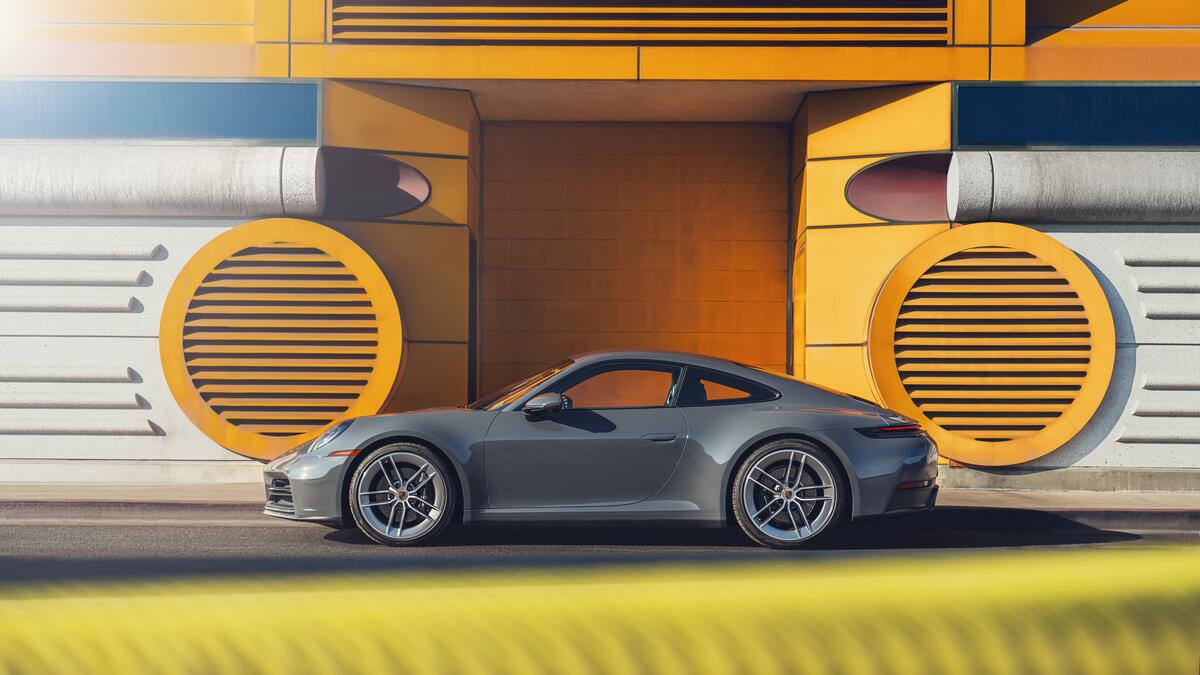
Porsche 911 Speedster
"And this is actually the replacement for the Speedster. [660.3s] Normally, at this point in the model cycle's life, [664.5s] they do a Speedster version."
The Speedster is a rare, open-top version of the Porsche 911. It’s usually a limited edition, and the host is saying this new GT3 S/C is taking the place of that kind of special Speedster release.
The Porsche 911 Speedster is a limited-run 911 variant known for its open-top, stripped-down, lightweight character. Here, the host says the GT3 S/C is effectively replacing the Speedster in Porsche’s usual model-cycle pattern, which helps explain why this new concept is generating excitement.

Porsche Speedster
"But they're not doing a Speedster this time. ... it makes it stand out visually with that Speedster tonneau on the back."
The Speedster is a Porsche convertible/roadster style. The hosts say people like it because it looks more distinctive than the other GT3 convertible option.
The Porsche Speedster is a topless/convertible-style GT3 derivative known for a distinctive rear deck/tonneau look. In this segment, they compare it to the GT3 SC and explain why enthusiasts may prefer the Speedster’s more unique styling.
batched GT3
"...this is the first time we've had something batched GT3 that's a convertible."
“Batched” here means producing the GT3 in a grouped, limited production run rather than as a continuously built model. The host is emphasizing that this is the first time Porsche has made a convertible GT3 in that kind of limited batch.
tonneau
"...it makes it stand out visually with that Speedster tonneau on the back."
A tonneau is a cover on a convertible—usually on the back area. In this case, it’s the Speedster’s signature look that people notice.
A tonneau is a cover (often for the rear deck area) used on some convertibles/roadsters. Here, the host refers to the Speedster’s distinctive tonneau shape, which is part of what makes the car stand out visually.
Porsche 911 GT3 S/C
"oh, I want the GT3 touring because it doesn't have the big wing. And then the other side of the coin is everyone goes, I want the big wing, so it doesn't look like every other 911. While you were trying to look at it, Sport Cabriolet, I was calling it Sport Convertible, ... but it's S slash C, ... association with 911 SCs. ... This thing is starting at 275,000 bucks."
This is a Porsche 911 GT3 variant called “S/C.” The “S/C” name is part of Porsche’s way of connecting the car to older 911 models, and the hosts are mainly talking about how the look/equipment choices affect the price.
Porsche 911 GT3 S/C is a special-edition-style variant of the 911 GT3 line that’s marketed around styling and equipment differences rather than a totally new performance platform. In this segment, the hosts focus on the “S/C” naming and how it ties into Porsche’s 911 history, plus how the pricing stacks up versus other GT3/911 options.
big wing
"oh, I want the GT3 touring because it doesn't have the big wing. And then the other side of the coin is everyone goes, I want the big wing, so it doesn't look like every other 911."
A “big wing” is a large rear spoiler on the back of the car. It helps the car stick to the road at speed, and it also changes the car’s look.
In Porsche/GT car talk, “big wing” usually means a large rear spoiler designed to add aerodynamic downforce. The hosts use it as a visual and aero distinction between different GT3-style configurations.

Lucid Air
"...75,000 bucks. Now, you and I were discussing off air how this plays out because they're saying it's a..."
The Lucid Air is an electric car, meaning it runs on electricity instead of gas. It’s a sedan, so it’s built for everyday driving with a more premium feel. The podcast mentions it because of its price and how people might respond to it.
The Lucid Air is an electric sedan known for its high-end performance and efficiency-focused design. The podcast references pricing around the mid-$70,000 range and discusses how that positioning could play out. It’s discussed because it represents a premium EV approach in a segment where pricing and range expectations matter a lot.
GTS
"because they're saying it's a bit like a GTS that you get more kit than you would on a standard GT3 coupe, and therefore it's better value. But the reality is it's 275,"
GTS is Porsche’s model designation for a trim/performance tier that typically sits between the base “S” and the more track-focused “GT3” in the lineup. Here, the hosts compare the GT3 S/C’s equipment/kit level to what you’d expect from a GTS, arguing it affects perceived value.
kit
"because they're saying it's a bit like a GTS that you get more kit than you would on a standard GT3 coupe, and therefore it's better value."
In this context, “kit” means bundled options and equipment—styling parts, interior/exterior upgrades, and other factory add-ons—rather than a single mechanical component. The hosts argue the GT3 S/C includes more of this “kit” than a standard GT3 coupe, which is part of the value discussion.
out-the-door price
"But the reality is it's 275, by the time then you get it tweaked and personalized, this is, you're going to be paying 300,000 plus for this car,"
“Out-the-door price” means the final total you pay at purchase time, after taxes and fees. The point here is that once you add options, the final price jumps a lot.
“Out-the-door price” (OTD) is the total amount you pay to buy the car, including taxes, fees, and dealer charges—not just the sticker price. The hosts use it to explain how customization and options push the GT3 S/C from an advertised starting point to a much higher final number.
manual gearbox
"I think the 911T is also a manual gearbox, also looks tremendous, goes plenty fast enough for, certainly unless you're going to take it the track all the time..."
A manual gearbox means you choose the gears yourself using a clutch and a shifter. The driver is more involved, which many enthusiasts prefer.
A manual gearbox is a transmission controlled by a clutch pedal and gear lever, where the driver selects each gear. In enthusiast discussions, it’s often associated with a more engaging driving feel than automatic transmissions.
track use
"goes plenty fast enough for, certainly unless you're going to take it the track all the time, and you're probably not going to take the cabriolet version to the track."
“Track use” means taking the car to a race course and driving it hard repeatedly. It’s tougher on the car than normal street driving, so the hosts are saying most people won’t do that all the time.
“Track use” means driving the car on a closed racing circuit, typically with repeated hard acceleration, braking, and sustained cornering. Cars that are great on the street may need additional performance, cooling, and durability considerations to handle frequent track sessions.
dealer markups
"we've seen the resale value of those cars, [940.2s] or even the dealer markups on those cars. [942.6s] What if we try to do something and say it's not limited edition,"
A dealer markup is when the dealer charges extra money on top of the normal price. The hosts are saying this can happen a lot when a car is hard to get, like some special Porsche models.
Dealer markups are added charges above the manufacturer’s suggested price that dealers request to profit from high demand. In limited-availability Porsche models, markups can become a major part of the final price, which the hosts contrast with ordering directly.
resale value
"we've done a handful of special edition cars, [938.0s] we've seen the resale value of those cars,"
Resale value is how much the car is likely to be worth when you sell it later. The hosts are saying Porsche looks at how special editions hold their value.
Resale value is what a car is expected to sell for later, after ownership. The hosts mention Porsche’s experience with resale value on special editions as part of why the brand may change how these cars are offered.
order it
"What if we try to do something and say it's not limited edition, [945.9s] you can come in, you can order it. [948.3s] That's not to say dealers won't try to get markups on it"
Ordering means you request the car you want and wait for it to be built or allocated to you. The hosts are saying this can help avoid extra dealer charges that happen when cars are scarce.
Ordering a car means the buyer places a request that the manufacturer/dealer fulfills, rather than hunting for a scarce allocation. In this discussion, the hosts frame ordering as a way to reduce the need to pay dealer markups or rush for limited production slots.
limited edition
"and you don't have to rush to get one of the 500 we make or 1500 that we make. [961.7s] Maybe it's an attempt to make it, this sounds crazy, [967.3s] but to make it more affordable"
Limited edition means only a certain number of cars are built. Because there aren’t many, people may pay more—sometimes even through dealer add-on markups.
A limited edition is a production run capped at a specific number of cars, which can create scarcity. Scarcity often drives higher resale values and can encourage dealers to charge markups, which the hosts say Porsche may be trying to reduce by offering an orderable configuration.
appreciating asset
"it's very nice to have like an appreciating asset, something that's worth money."
An appreciating asset is something that tends to increase in value over time. In car terms, certain models can become more valuable due to scarcity, demand, and condition, rather than depreciating like most vehicles.
insurance goes up
"But at the same time, you know, the insurance goes up, there's a whole associated thing with that..."
They’re noting that insuring a more expensive car usually costs more. Repairs and replacement parts are often pricier, so insurance can increase.
Insurance premiums can rise with factors like the car’s value, repair costs, and risk profile. With higher-end cars, insurers may charge more because replacement parts and labor are expensive.
out-of-pocket ownership costs
"I can barely afford to insure it. It's like, you know, I'm going to have to sell it and take the cash..."
These are the actual bills you have to pay to own the car, like insurance and registration. The host’s point is that in some places those costs can be so high that owning a pricey car becomes stressful.
Out-of-pocket ownership costs are the real, recurring expenses you pay to keep a car, like insurance and registration. The segment highlights how these costs—especially in California—can make an expensive car feel impractical even if it’s appreciating in value.
residual value
"You buy one for 50, you sell it years later for 250."
Residual value is what a car is worth in the future. The host is saying this Porsche can hold its value so well that you might sell it for far more than you paid.
Residual value is the amount a vehicle is expected to be worth later, after depreciation. The host is describing how the Porsche 964 Club Sport’s resale price can be so high that it effectively offsets (or even reverses) typical depreciation expectations.
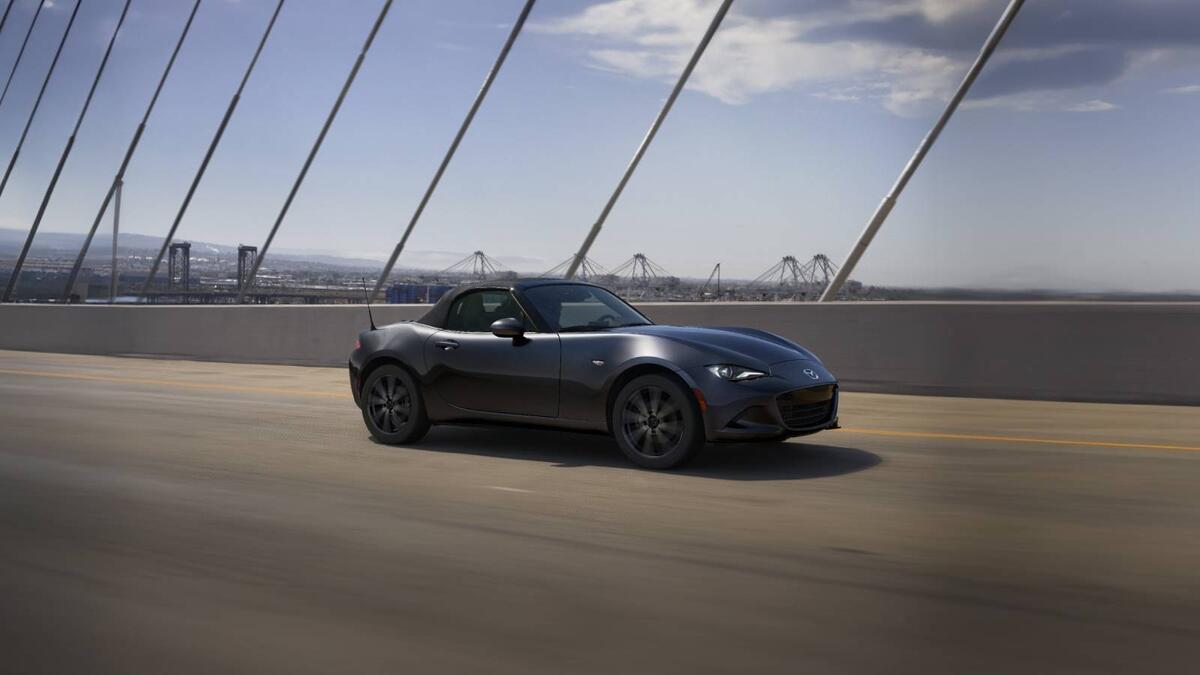
Mazda MX-5 / Miata
"...udiences and, you know, the subject of getting a Miata came up again and everybody's like, let's get th..."
The Miata is a small two-seat convertible made by Mazda. It’s designed to be easy to drive and fun on twisty roads. People bring it up because it’s a popular entry-level sports car.
The Mazda MX-5, commonly called the Miata, is a lightweight two-seat roadster built for fun, balanced handling, and driver-focused driving. It’s often discussed because it’s an accessible way to experience “real” sports-car feel without huge costs. The podcast mentions it again as a recurring topic among audiences.
soft top
"It's like 30 grand, you know, [1191.3s] get the little roadster version with a soft top stick shift. [1194.2s] Everybody in the office can then, you know,"
A soft top is the fabric roof on a convertible. It usually weighs less than a hard roof, but it can be less insulated and may not feel as solid.
A soft top is a fabric-and-frame convertible roof. Compared with a hardtop, it’s typically lighter and simpler, but it can be slower to operate and may offer different insulation and weather protection.
stick shift
"get the little roadster version with a soft top stick shift. [1194.2s] Everybody in the office can then, you know, [1195.6s] get to eat home there to stick shifting skills."
A stick shift means the car has a manual transmission. You use the clutch and gear lever to choose the gears yourself.
“Stick shift” refers to a manual transmission, where the driver selects gears using a clutch and gear lever. It’s often associated with more direct driver control and a more engaging feel than an automatic.
depreciate
"And I was like, makes a, you know, [1200.7s] makes a lot of sense. [1201.6s] It's not going to depreciate too much. [1203.3s] And every time you have this conversation,"
Depreciation is how much a car loses value as time goes on. They’re saying the Miata should keep its value better than other cars.
Depreciation is how much a vehicle’s value drops over time. They’re arguing a Miata “won’t depreciate too much,” meaning it should hold its resale value better than some other purchases.

Dodge Charger
"...ents that, that, that we've seen, like the Dodge Charger we talked about last week and,"
The Dodge Charger is a larger sedan made by Dodge. It’s often offered with powerful engines and is meant to feel sporty. The podcast mentions it because it’s a well-known model in Dodge’s lineup.
The Dodge Charger is a full-size, performance-oriented sedan that’s known for strong powertrain options and a muscular design. In the podcast context, it’s referenced as a model that was discussed previously, likely in relation to how Dodge’s lineup has evolved. It’s a frequent talking point because it sits at the intersection of everyday usability and performance branding.
Fisker
"and one we made fun of for a while on the Fisker, [1235.2s] that, that Fisker alone, you could have bought two Miatas. [1238.7s] Miata would just be, I was looking at that,"
Fisker is a car brand that makes vehicles, especially EVs. They’re bringing it up as an example of a purchase that didn’t work out well financially.
Fisker is an automaker brand associated with electric vehicles that have had high-profile financial and product challenges. In this segment, they mention it as another example of a poor “investment” compared with buying Miatas.

Chevrolet Silverado EV
"...iple engine options and impressive towing, while Silverado EV is the perfect combo of performance and capabili..."
The Silverado EV is a pickup truck that runs on electricity instead of gas. It’s built to do truck jobs like towing, while still using an electric motor for power. The podcast mentions it because it’s trying to be both capable and fast.
The Chevrolet Silverado EV is an electric version of the Silverado pickup, designed to combine EV power with truck capability. The podcast highlights it for offering multiple powertrain options and impressive towing, positioning it as a performance-and-work capable EV truck. It’s discussed because it’s part of the shift toward electrified pickups without giving up traditional truck functions.
four-cylinder turbo
"avoid the four-cylinder turbo version of a car because there's so much more complex and could break and I should just get like the naturally aspirated V6 version of a car."
A four-cylinder turbo is a smaller engine that uses a turbo to make more power. The idea mentioned is that turbos add extra parts, so there may be more things that could go wrong than on a simpler naturally aspirated engine.
A four-cylinder turbo engine uses a turbocharger to force more air into the engine, improving output compared with a naturally aspirated setup. The host’s point is that turbocharged engines add complexity, which can mean more potential failure points than a naturally aspirated V6.
naturally aspirated
"and I should just get like the naturally aspirated V6 version of a car."
Naturally aspirated means the engine doesn’t use a turbo or supercharger to push air in. The host is suggesting that this simpler approach can be less complicated than turbo engines.
Naturally aspirated engines draw air into the cylinders without a turbocharger or supercharger. In the segment, the host contrasts naturally aspirated V6s with turbocharged four-cylinders, arguing the simpler design may be less prone to issues.
hybrid cars
"They said maybe I should stay away from hybrid. I said, well, hybrid cars, in the case of something like Toyota, often have a better powertrain warranty compared to the non-hybrid gas only versions of it,"
Hybrid cars use a gas engine plus an electric motor. In this discussion, the main takeaway is that hybrids may come with better warranty coverage than the regular gas-only versions.
Hybrid cars use both an internal-combustion engine and an electric motor to move the vehicle. The segment specifically ties hybrids to warranty considerations, noting that Toyota hybrids may have better powertrain warranty coverage than non-hybrid gas-only versions.
powertrain warranty
"So we went for the longest warranty, [1544.3s] powertrain warranty on the battery. [1546.8s] And for her, that car,"
A powertrain warranty is the coverage that pays for repairs to the car’s main moving parts (the drivetrain). When it includes the battery, it can be especially important for hybrid or electric cars.
A powertrain warranty covers the car’s main drivetrain components—typically the engine, transmission, and related parts. For hybrids and EVs, it often extends to specific high-voltage components like the battery and electric drive units, depending on the manufacturer’s terms.
regular hybrid
"She doesn't have to plug it in. [1553.9s] It's just regular hybrid, [1555.0s] which is things that we're fans of."
A regular hybrid uses both gas and electricity. You usually don’t have to plug it in—the car charges the battery as you drive.
A “regular hybrid” is typically a full hybrid that can run using both the gasoline engine and an electric motor. Unlike a plug-in hybrid, it usually doesn’t need to be charged from an outlet because the battery is replenished through driving and regenerative braking.
full hybrid
"whether it be mild hybrid or a full hybrid. [1586.7s] I wouldn't even really think about it."
A full hybrid can use gas, electricity, or both. In some situations it can run on electricity alone, especially at lower speeds.
A full hybrid can run using the gasoline engine, the electric motor, or both, depending on conditions. Because it has a larger electric system than a mild hybrid, it can often operate in electric-only mode at low speeds or light loads.
mild hybrid
"whether it be mild hybrid or a full hybrid. [1586.7s] I wouldn't even really think about it."
A mild hybrid adds a small electric assist to the gas engine. It helps the car use less fuel, but it usually can’t run on electricity alone like a full electric car.
A mild hybrid uses a small electric motor and battery to assist the gasoline engine, but it generally can’t drive the car purely on electricity for long distances. It’s designed to improve efficiency and smoothness (for example, during acceleration and stop-start), without the complexity of a full EV-style system.
EV
"[1586.7s] I wouldn't even really think about it. [1589.6s] I think it's a very different proposition to an EV"
An EV is an electric car that runs mainly on electricity. Usually you have to charge it, while hybrids recharge their battery as you drive.
EV stands for electric vehicle, meaning the car is powered primarily by an electric motor and a battery pack. The key difference versus hybrids is that EVs typically require charging from an external power source, while hybrids usually recharge their batteries through driving.
Stellantis
"And interestingly in the Cherokee, you know, Stellantis is not necessarily known as, you know, a particularly cutting edge company at the moment. But, you know, the Cherokee is hybrid only."
Stellantis is the company that makes Jeep. In this segment, the hosts mention it when talking about how Jeep’s hybrid strategy has been received.
Stellantis is the automaker behind Jeep, and the hosts reference it as a corporate actor in the hybrid discussion. They suggest Stellantis hasn’t been “cutting edge” recently, and connect that to prior issues with plug-in hybrids.
plug-in hybrids
"They've had a lot of problems with the plug-in hybrids, but this is a different thing. So, you know, now new Cherokee, and this is a, this is pitched directly as we've put it here against RAV4, Hyundai Tucson, Honda CR-V,"
A plug-in hybrid is a car that uses both a gas engine and an electric motor, and you can charge it by plugging it in. The hosts are saying there were issues with earlier plug-in hybrid versions.
A plug-in hybrid (PHEV) is a hybrid vehicle that can be charged from an external power source (like a wall outlet) in addition to generating electricity while driving. The hosts say Stellantis has had “a lot of problems” with plug-in hybrids, implying reliability or system issues specific to that electrified category.
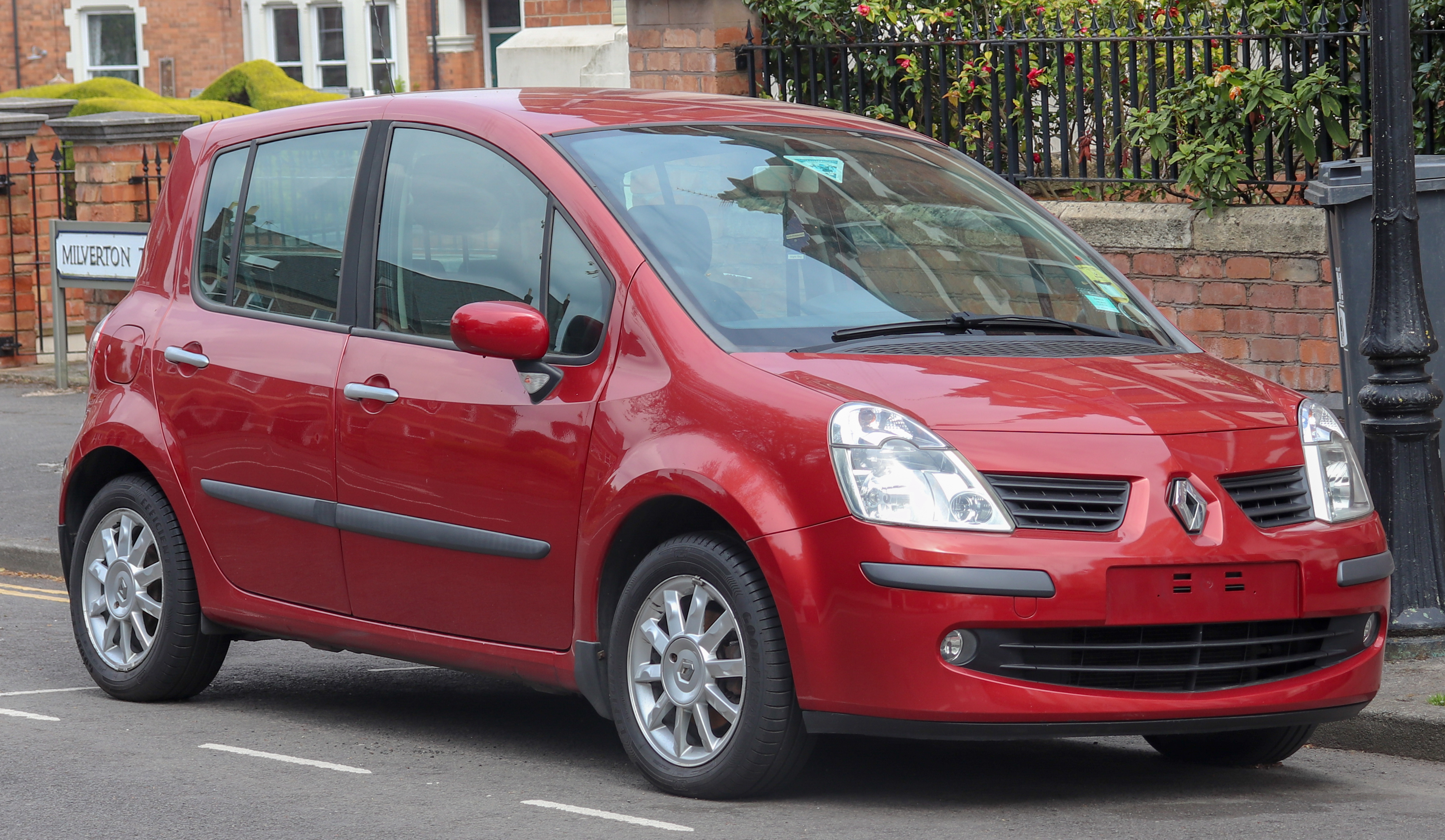
Renault Modus
"... So, that's not really the, it's not the kind of modus operandi. It's just, it's another product from t..."
The Renault Modus is a smaller car made by Renault. It’s meant to be practical rather than sporty or high-end. The podcast mentions it because it’s a different kind of product compared to what Renault usually does.
The Renault Modus is a small, practical vehicle that’s typically discussed as part of Renault’s lineup rather than as a performance or luxury standout. In the podcast, it’s referenced as not being the brand’s usual approach—suggesting the Modus is a different kind of product for the company. It comes up because it represents a specific model direction within Renault’s broader catalog.

Tucson Hybrid
"...nkings, but it's good. You know, and the Hyundai Tucson hybrid is, does top our rankings."

Kia Sportage
"We like that. We like the Sportage. We like the, you know, we do like the RAV4."
The Kia Sportage is a compact SUV made by Kia. It’s designed for normal daily driving and family use, with a comfortable interior and practical space. The podcast mentions it because it’s one of the vehicles people consider in the compact SUV class.
The Kia Sportage is a compact SUV that’s often compared against other popular compact crossovers for its mix of features and everyday practicality. In the podcast, it’s mentioned alongside the idea of liking the Sportage and comparing it to a well-known rival in the segment. It’s discussed because it’s a mainstream option for buyers shopping in the compact SUV category.
benchmarking
"So you're thinking a benchmarking world, you've already got all that. And, you know, it's, it's, it's a bit expensive."
Benchmarking means comparing a product to the best competitors to see how it stacks up. They’re saying the small-SUV market already has a lot of strong choices, so it’s tough to stand out.
Benchmarking is the practice of comparing products against leading competitors or best-in-class examples to judge where they stand. Here, the hosts are saying the market already has enough strong options that it’s hard for a new entry to feel truly special.

Toyota RAV4
"You know, the, the CRV, the RAV4, certainly the new Mazda CX-5, they're all kind of, they're all sort of a bit of a much of a muchness."
The Toyota RAV4 is a super popular compact SUV. The host’s point is that it’s not especially unique compared with other SUVs in the same category.
The Toyota RAV4 is one of the best-known compact SUVs and a frequent sales leader in its class. Here, it’s grouped with other mainstream options as something that can feel formulaic rather than distinctive.

Honda CR-V
"You know, the, the CRV, the RAV4, certainly the new Mazda CX-5, they're all kind of, they're all sort of a bit of a much of a muchness."
The Honda CR-V is a very common compact SUV. The host is basically saying it looks and feels pretty similar to other mainstream SUVs in the class.
The Honda CR-V is a compact SUV that’s often used as a benchmark for practicality and value in the small-SUV segment. In this segment, it’s mentioned as part of the “paint by numbers” lineup that doesn’t stand out much stylistically.

Mazda Cx5
"You know, the, the CRV, the RAV4, certainly the new Mazda CX-5, they're all kind of, they're all sort of a bit of a much of a muchness."
The Mazda CX-5 is a compact SUV from Mazda. The host is saying even the newer version still feels a bit like the same template as other SUVs.
The Mazda CX-5 is a compact SUV known for a more driver-focused feel than some competitors. In this segment, the host mentions the “new Mazda CX-5” as another example of the small-SUV market feeling too similar across brands.
Hyundai Tucson
"The opportunity to come into the market with something a bit different. The Tucson's a bit more distinctive."
The Hyundai Tucson is a compact SUV. The host is praising it as having a bit more personality than some of the more generic competitors.
The Hyundai Tucson is Hyundai’s compact SUV offering in the same mainstream segment as the RAV4 and CR-V. The host contrasts it with the “paint by numbers” crowd, saying the Tucson feels more distinctive.

Ford Bronco Sport
"...nctive. You know, seeing it with things like the Bronco Sport, although it's a bit smaller than these, you kno..."
The Bronco Sport is a smaller SUV made by Ford. It’s designed to handle rougher roads than a typical car, but it’s still easy to drive day to day. The podcast mentions it because it’s a smaller alternative in the same general “adventure SUV” idea.
The Ford Bronco Sport is a compact SUV positioned for off-road capability while staying smaller and more practical than larger Bronco models. The podcast compares it to other vehicles in the discussion, noting it’s smaller than the ones being referenced. It’s brought up because it offers a rugged look and capability in a more manageable size.

Ford Escape
"...ket and compete with the big sellers with a Ford Escape and nobody cared. And everyone was like."
The Ford Escape is a compact SUV made by Ford. It’s meant to compete with other popular small SUVs. The podcast mentions it because it’s been marketed as a contender, but not everyone paid attention.
The Ford Escape is a compact SUV that competes in one of the biggest segments in the market. The podcast notes that it was pitched to compete with top-selling models, but that attention didn’t always translate into strong interest. It’s discussed because it represents how competitive and crowded the compact SUV space can be.

Ford Maverick
"Let's just keep investing. And even the Maverick, for that matter, the Maverick is actually an es..."
The Ford Maverick is a small pickup truck. It’s made to carry things and handle light truck tasks, but in a size that’s easier to park and drive than bigger trucks. People talk about it because it’s meant to be a more budget-friendly pickup.
The Ford Maverick is a compact pickup truck designed to deliver truck utility in a smaller, more affordable package. The podcast’s context suggests it’s being discussed as part of Ford’s broader strategy and lineup relevance. It comes up because it targets buyers who want pickup capability without stepping into full-size truck costs.

Dodge Challenger
"...s successful as the previous charger was, and the Challenger, but especially the charger, that was just done"
The Dodge Challenger is a sporty car made by Dodge. It’s designed for strong acceleration and a classic muscle-car style. The podcast mentions it because it’s closely tied to Dodge’s performance lineup.
The Dodge Challenger is a performance-focused muscle car that’s known for powerful engine options and a long hood/short-deck layout. The podcast connects it to the success of the Charger and notes it as a continuation of that performance-car direction. It’s discussed because it’s a key part of Dodge’s identity in the modern muscle-car market.
brute force marketing
"...but especially the charger, that was just done with really good creative marketing and brute force. Like let's just throw a monster engine, which is a great engine, into a car that is okay."
They mean a marketing approach that leans on obvious, attention-grabbing power and attitude. Instead of subtle improvements, it’s basically “make it feel extreme” to sell the car.
“Brute force” here describes a strategy of relying on raw power and aggressive performance cues—rather than refinement or new engineering—to win attention and sales. The hosts contrast this approach with more nuanced product direction.
V8
"“And I think maybe we'll go down the same route, stick a big V8 in it, accept that it's not objectively the greatest thing ever…”"
A V8 is an engine with eight cylinders. People often associate it with strong power and a distinctive sound.
A V8 is an engine with eight cylinders arranged in a “V” shape. In car talk, it’s often associated with strong low-end torque and a distinctive sound, and here it’s used as a shorthand for adding big-engine character to a model.
aesthetic
"“it can be a bit of war paint and it doesn't have to be, it can be largely aesthetic, you know, and then do a, do a hero model at the top of the range.”"
“Aesthetic” here means the car’s look and style. They’re saying the marketing could be mostly about visuals, not just performance.
In automotive contexts, “aesthetic” refers to styling choices—how a vehicle looks—rather than mechanical changes. The hosts suggest the “war paint”/hero-model strategy could be largely about visual appeal.

Land Rover Discovery Sport
"..., so it reminds me a little bit of the Land Rover Discovery Sport, which aesthetically, it looks quite similar and..."
The Discovery Sport is a compact SUV made by Land Rover. It’s designed to be a comfortable family vehicle with a more upscale feel. The podcast mentions it because another car they’re discussing looks similar to it.
The Land Rover Discovery Sport is a compact luxury SUV that’s designed to look and feel similar to other Land Rover models while offering practical everyday space. In the podcast, it’s referenced as a visual comparison point, suggesting the vehicle being discussed has a similar aesthetic. It comes up because it’s a recognizable part of Land Rover’s SUV lineup.

Land Rover Defender
"...'ve done quite smartly about the Land Rover. The Defender is, it's still basically an SUV. It's not partic..."
The Defender is an SUV made by Land Rover. It’s built to handle rough roads and off-road trails, but it can still be driven like a normal SUV. The podcast mentions it because it’s a capable, real-world SUV—not just a special-purpose vehicle.
The Land Rover Defender is a rugged SUV built for off-road capability while still functioning as a modern daily driver. In the podcast, it’s described as “still basically an SUV,” emphasizing its practical utility rather than being purely a niche off-road vehicle. It’s discussed because it blends traditional Defender styling and capability with contemporary comfort and technology.

Ford Expedition
"...Whole Foods in it and you feel like you're off on expedition. And maybe that's where Jeep, for me, needs to, ..."
The Ford Expedition is a large SUV made by Ford. It’s designed to carry more people and handle everyday driving with lots of room. The podcast mentions it because it’s a big, comfortable SUV option.
The Ford Expedition is a full-size SUV aimed at families and large groups, offering roomy seating and strong capability. The podcast’s wording suggests it’s being associated with a comfortable, “big vehicle” experience—something you can feel when you’re driving it. It comes up because it’s a mainstream option for buyers who want space and utility in a large SUV.

Volvo V60
"... I've been driving a few of the EVs. I drove the V60, I drove the wagon, I drove one of the other SUVs..."
The Volvo V60 is a wagon, which is like a car but with extra cargo space behind the seats. It’s made for comfortable everyday driving and carrying things. The podcast mentions it because it’s one of the vehicles they drove.
The Volvo V60 is a wagon (estate) version of Volvo’s lineup, known for a practical cargo area and a comfortable, safety-focused design. The podcast mentions driving the V60 and other EVs, suggesting it’s part of a broader discussion about Volvo’s vehicles and driving feel. It comes up because wagons are a specific niche that many buyers still value for space and everyday usability.
plug-in CarPlay
"still had like plug-in carplay. It wasn't wireless carplay."
Plug-in CarPlay is when you connect your iPhone to the car using a cable so the car can show maps, music, and apps. It’s the opposite of wireless CarPlay, which doesn’t need the cable.
Plug-in CarPlay is Apple’s in-car interface that requires a physical USB connection between the phone and the vehicle. The speaker contrasts it with wireless CarPlay, implying the newer EV’s tech is more modern and convenient.
wireless CarPlay
"It wasn't wireless carplay. The infotainment system was a little slow."
Wireless CarPlay lets you use your iPhone in the car without a USB cable. The host is saying the newer system should feel faster and more responsive.
Wireless CarPlay lets an iPhone connect to the car without plugging in a cable, typically using Wi‑Fi/Bluetooth. In this segment, it’s part of the “new tech” pitch for faster, more responsive infotainment.
Nvidia
"they talked about new Nvidia chips and faster response on everything and wireless stuff"
Nvidia is a company that makes computer chips. The host is saying the new EV uses newer Nvidia chips to make the car’s screens and responses faster.
Nvidia is a semiconductor company whose chips are widely used in computing and AI workloads. Here, the speaker mentions “new Nvidia chips” as the reason the EV’s infotainment and vehicle response should be quicker.

Volvo EX30
"The trip to Barcelona, I think was probably nicer than the, than the EX30... the problem with the EX30 was it was going to be a, the reason I went... was this was going to be the first 35 grand EV... The one that we ended up buying was the dual motor... And now they're going to discontinue it... being killed as part of the, part of the tariffs."
The Volvo EX30 is a small electric car. They’re talking about different power versions (single motor vs dual motor) and whether the price and import costs make it a good deal.
The Volvo EX30 is a compact electric crossover positioned as an affordable EV. In this segment, the hosts discuss the EX30’s single-motor vs dual-motor versions and how pricing and production location affect whether it makes sense to buy.
single motor
"...I drove the 35 grand EV version, which was like a single motor. And I thought this is actually a really nice little car."
A single-motor EV has one electric motor doing the work. It usually focuses more on efficiency than maximum performance.
A single-motor EV uses one electric motor to drive the wheels. Compared with dual-motor setups, it typically prioritizes efficiency and simpler packaging, though performance can be lower.
dual motor
"The one that we ended up buying was the dual motor, which was kind of ridiculous. It was, it was fun in a slightly stupid way... but not really where the sweet spot of this vehicle was."
A dual-motor EV has two electric motors. That can make the car feel quicker and more responsive, especially when you accelerate.
A dual-motor EV uses two electric motors, often one per axle, to improve traction and acceleration. In this segment, the host notes it feels fun but not necessarily where the car’s best “value” sweet spot is.

Jeep Cherokee
"It was kind of what we're talking about the Cherokee, right? You've got really nice little interior, lots of clever thinking to maximize the space, quite cute looking."
The Jeep Cherokee is a compact-to-midsize SUV known for being practical and widely available in the US market. In this segment, it’s used as a comparison point to the EX30’s “second car in the city” idea and its focus on clever packaging.
tariffs
"But now, you know, they can't, they just can't make it work financially. So it's kind of, you know, being, being killed as part of the, part of the tariffs."
Tariffs are extra taxes on imported products. If an EV is made overseas, tariffs can make it more expensive to bring into the country, which can reduce sales.
Tariffs are taxes governments add to imported goods. Here, the hosts connect tariffs to higher costs for EVs built abroad, which can force pricing up and hurt sales.
General Motors (GM)
"[2322.3s] in the, oh, there's been a lot of financial reporting this week from Ford and food GM. [2330.4s] Well, actually Ford, I think GM came out and said, we're getting like a $500 million check back from the tariffs."
General Motors (GM) is referenced for its reported financial impact from tariffs, including expected refund amounts. The hosts use these figures to illustrate how tariffs can affect automakers’ balance sheets and potentially the cost of vehicles.
window sticker
"So they posted the window sticker. ... So the car was $700,000. So it starts at $460,000. It's got a bunch of options."
A window sticker is the paper (or label) on a car that shows the price and what options it has. It helps you see how the total cost is made up.
A window sticker is the official pricing and specification sheet a dealer posts on a car. It breaks down the base price, option costs, and often line items like taxes and fees so buyers can see how the final price is built.
MSRP
"“So it says, manufacture suggested port of entry retail price.”"
MSRP is the starting price the manufacturer says the car should cost. Dealers can still add extra fees or markups on top of it.
MSRP (Manufacturer’s Suggested Retail Price) is the baseline price the automaker publishes for a vehicle. The hosts are reading a sticker line that includes MSRP and then comparing it to delivery fees and other added charges.
delivery prep and handling fee
"“Delivery prep and handling fee, $5,000.”"
This is a dealer-added charge for getting the car ready and handling paperwork. It’s usually separate from the car’s base price.
A delivery prep and handling fee is a dealer charge meant to cover costs like getting the car ready for sale and processing it. The hosts compare it to what they consider typical fees on a “normal car,” implying this fee is part of the total out-the-door pricing.
Monroney
"“No, it wouldn't be on the Monroney, would it?”"
A Monroney is the sticker on a new car that shows the official pricing details. If a cost isn’t on the Monroney, it usually means it’s not part of the factory price.
The Monroney is the official window sticker (also called the MSRP label) that lists a car’s base price and itemized manufacturer pricing. When the hosts say something “wouldn’t be on the Monroney,” they mean it likely isn’t part of the factory-listed price and may be dealer or aftermarket add-ons.
Tariff contribution
"“And then Tariff contribution, that's fantastic, $60,000.”"
A tariff is a tax added when a product is imported from another country. They’re saying a big part of the price increase is due to those import taxes.
A tariff is a tax on imported goods, and “tariff contribution” here refers to the portion of the vehicle’s price attributable to import taxes. The hosts are highlighting how large that import-related cost is in the sticker math.
options
"“And then you've basically got all this list of options, air quality sensors, blah, blah, blah.”"
Options are extra features you can add to a car from the factory. Each option can add money to the final price.
In car pricing, “options” are factory-installed add-ons (like exterior or interior features) that change the vehicle’s final price. The hosts mention a long list of options and then call out specific ones as major cost drivers.
Airbrushed logo
"“Airbrushed logo is $14,800.”"
An airbrushed logo is a painted design added to the car using an airbrush. It’s a custom look, and it can cost a lot because it’s labor-intensive.
An airbrushed logo is a custom paint graphic applied using an airbrush, typically as a dealer or aftermarket add-on. The hosts treat it like a high-cost personalization item and compare the price to what you might see at car shows.
Request an Explanation
Heard something you'd like explained? We'll add it to this episode.
Sign in to request explanations for terms you heard.
Want to learn more?
Browse our glossary for plain-English explanations of automotive terms, jargon, and concepts.
Help improve this episode
See something that's not quite right? Our annotations are AI-generated and can sometimes miss the mark. Click the flag icon on any annotation to suggest a correction.