Chevy VS Ford VS Ram! The Future Of Trucks For 2027 And Beyond! | Ep. 329
About this episode
The hosts map out where full-size trucks are headed, starting with why pickups remain central profit engines for automakers and then moving into spy-shot speculation for 2027 and beyond. GM gets a lot of attention, from rumored new V8s and a possible hybrid gap to ideas for a body-on-frame off-road SUV. Ford and Ram are used as benchmarks for powertrain variety, performance trims, and pricing pressure, while the conversation keeps circling back to affordability and what buyers will actually pay.
( https://www.alltfl.com/ ) Check out our new spot to find ALL our content!
Live from the studio (and back from the sunny shores of LA), Nathan joins Andre to take a deep dive into the high-stakes world of the "Big Three." With truck revenue driving the entire industry, getting the 2027 models right isn't just about pride—it's about survival. From GM’s rumored V8 resurgence to Ford’s secret skunkworks projects, we’re looking at what’s coming to a dealer lot near you.
We also take a trip down memory lane to the "Rebel Rouser" days in Vegas, discuss why Nathan wants to drive a slow military rig through Beverly Hills to spite G-Wagen owners, and tackle the "User Error" debate regarding modern tech. Are we losing the simplicity that made trucks great, or is the 777-hp future worth the complexity?
( http://www.patreon.com/tflcar ) Visit our Patreon page to support the TFL team!
Advertising Inquiries: https://redcircle.com/brands
Privacy & Opt-Out: https://redcircle.com/privacy
Chevy VS Ford VS Ram! The Future Of Trucks For 2027 And Beyond!
"Thank you. ... Chevy VS Ford VS Ram! The Future Of Trucks For 2027 And Beyond! | Ep. 329"
This episode is basically a head-to-head debate about Chevy, Ford, and Ram trucks. They’re talking about what trucks will look like and how they’ll change in the next few years.
The episode is framed around a “Chevy vs Ford vs Ram” comparison, focusing on what truck makers are likely to do next. It’s also explicitly about the future of trucks heading into 2027 and beyond, so the discussion is forward-looking rather than just about current models.
Toyota
"We're talking about Ford, RAM, and of course Toyota and many others. That's great."
Toyota is a major automaker and is referenced here in the context of recent recalls. The hosts are using Toyota as an example of how recalls can affect public perception and business outcomes.
recalls
"Those recalls from Toyota a little too much for you called. Everybody, yeah, that's it. Hey, like, nothing personal. Everybody's gone through big recalls recently."
A recall is when a car company says, “We found a problem—bring it in so we can fix it.” It matters because it can affect safety and also how people feel about the brand.
A recall is when a manufacturer notifies owners that a vehicle has a safety-related (or sometimes compliance-related) problem and offers a fix. Recalls can be costly and can hurt brand trust, which is why the hosts connect them to business impact.
FEMA
"So the point is that we're gonna we're gonna talk about some of these things We went to Vegas though, which is very important. FEMA we went to FEMA and That was a great trip..."
FEMA is a U.S. government agency that handles emergencies and disasters. Here it’s just part of where they went on a trip.
FEMA is the U.S. Federal Emergency Management Agency. In the context of this episode, it’s mentioned as part of a trip they took, not as a truck-related technical topic.

G-Wagans
"[262.4s] [SPEAKER_02]: I so want to bring it to Los Angeles. [265.4s] [SPEAKER_02]: And just because people there are so obnoxious with their G-Wagans, and I'm not exaggerating."
“G-Wagans” is what people call the Mercedes-Benz G-Class SUV. It’s a luxury off-road vehicle, and the hosts are joking that you see them everywhere in parts of Los Angeles.
“G-Wagans” is a nickname for the Mercedes-Benz G-Class, a boxy luxury off-road SUV known for its rugged styling and off-road hardware. In this segment, it’s used as a cultural reference to how common these trucks/SUVs are in certain Los Angeles areas.
top speed
"[290.4s] [SPEAKER_01]: Yes. [295.4s] [SPEAKER_01]: It's going to take four days. [296.9s] [SPEAKER_01]: Well, top speed is we found out it's 55 miles per hour."
Top speed is the highest speed the vehicle can reach. It depends on things like power, gearing, and how the car is electronically limited.
Top speed is the maximum speed a vehicle can reach under specific conditions. It’s often limited by gearing, engine power, aerodynamics, and sometimes electronic speed governors.
carburetor
"[301.2s] [SPEAKER_01]: Yeah, that's [SPEAKER_02]: About the way, I said something stupid, but I was trying to be funny about talking about while I'm at the carburetor was primed or something like that."
A carburetor is a part that helps the engine get the right mix of fuel and air. Some older cars used it instead of modern fuel-injection systems.
A carburetor is a device that mixes fuel and air before it enters the engine. Older engines used carburetors widely, but many modern vehicles switched to fuel injection for more precise control.
fuel injected turbocharged
"[309.7s] [SPEAKER_02]: Yes, I know it's a feel injected turbocharged release."
This means the engine uses modern fuel injection and a turbocharger. The turbo helps the engine make more power by pushing extra air in, and the fuel injection helps it deliver the right amount of fuel.
“Fuel injected turbocharged” describes an engine that uses fuel injection to deliver fuel precisely and a turbocharger to force more air into the engine for extra power. Together, they typically improve efficiency and performance compared with older naturally aspirated setups.
field economy
"[312.6s] [SPEAKER_02]: We, we will never, I mean, people will correct anything, which I especially when I try to be humorous, but anyway, the point is that that track is very slow and it takes, it just gets really bad. [325.2s] [SPEAKER_02]: What, what have you done with the field economy on that?"
They’re asking about fuel economy—how many miles you can get per gallon (or how much fuel you burn). It changes depending on how you drive and what conditions you’re in.
“Field economy” appears to be a mis-transcription of “fuel economy,” meaning how efficiently a vehicle uses fuel. Fuel economy is usually measured as miles per gallon (MPG) or liters per 100 km, and it can vary a lot with speed, load, and driving conditions.
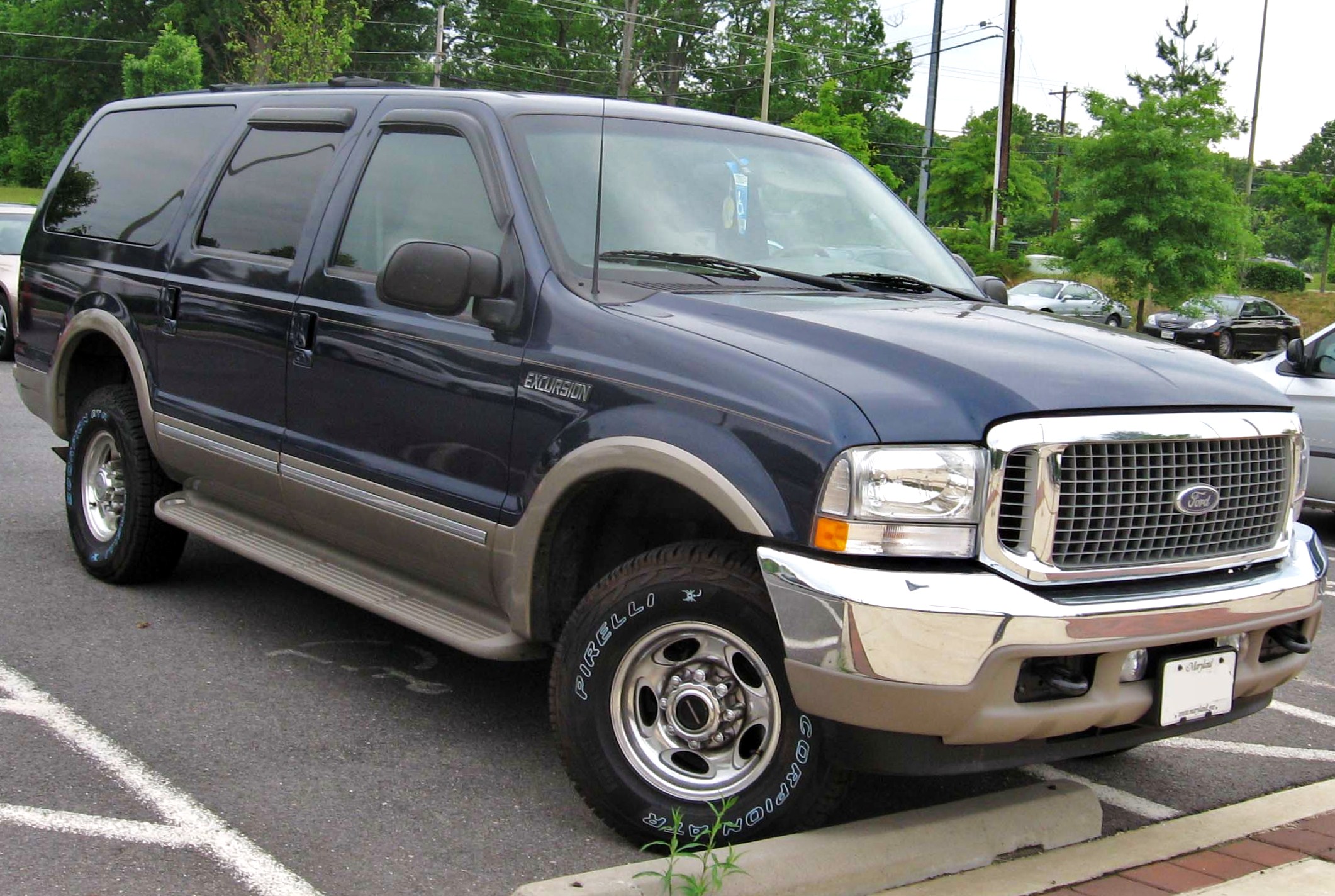
Ford Excursion
"...ing pretty big and awesome. [SPEAKER_02]: Like an excursion? [SPEAKER_02]: No."
The Ford Excursion is a very large SUV. In the podcast, someone mentions it to describe the kind of size or style they’re talking about. The question “Like an excursion?” is basically asking if that’s the vehicle they meant.
The Ford Excursion is a very large, full-size SUV known for its big size and truck-like underpinnings. In the podcast, it’s referenced as a comparison point, with someone asking “Like an excursion?” to clarify what vehicle they meant. That makes it a recognizable name when discussing large, old-school SUV proportions.

Chevrolet Trax
"[SPEAKER_02]: Oh, say it. [SPEAKER_02]: T-Rax. [SPEAKER_02]: No."
The Chevrolet Trax is a small SUV-style vehicle. The podcast is just joking about how to say its name. It’s the kind of car people talk about when discussing compact crossover options.
The Chevrolet Trax is a compact crossover, and the podcast briefly jokes about the pronunciation (“T-Rax”). It’s included because compact crossovers are a common topic when discussing what’s selling, what’s new, or what fits different buyer needs. Even a short mention like this can signal it’s part of the broader lineup conversation.

Dodge Power Wagon
"...eaking. [SPEAKER_01]: I'm not But we might have a power wagon in our long-term fleet. [SPEAKER_01]: Oh, boy, oh..."
The Dodge Power Wagon is a special off-road version of a pickup truck. It’s meant for rough use and tougher driving than a regular pickup. The podcast brings it up because they might keep one for a long time to use it regularly.
The Dodge Power Wagon is a heavy-duty, off-road-oriented version of a Ram pickup, built for tougher terrain and work-style use. The podcast mentions possibly having one in a long-term fleet, which suggests it’s being considered for ongoing, real-world use rather than just short drives. That’s why it comes up in a truck-focused show.
spy images
"[476.3s] [SPEAKER_01]: All right, let's go to our main topic, which is what's happening in 2027 and beyond, because Joe Motors has been teasing us with many spy images, I mean prototype driving around and everybody taking their pictures, test meals everywhere."
Spy images are pictures people take of new cars while they’re still being tested. They’re usually covered in camouflage, and they help fans figure out what might be coming next.
“Spy images” are photos taken of vehicles while they’re being tested in the real world—often with camouflage. Enthusiasts and journalists use them to guess what a future model will look like and what changes are coming.
prototype
"[476.3s] [SPEAKER_01]: All right, let's go to our main topic, which is what's happening in 2027 and beyond, because Joe Motors has been teasing us with many spy images, I mean prototype driving around and everybody taking their pictures, test meals everywhere."
A prototype is basically an early, test version of a vehicle. Automakers use it to check that the design and engineering work before they build the final version for sale.
A “prototype” is an early version of a vehicle used for testing before the final production model. Prototypes may look different from the finished truck and can be used to validate engineering, durability, and real-world performance.
current generation T1
"[502.2s] [SPEAKER_01]: And I've created kind of a rendering if you're watching us on TFL talk channel, you could also see that. [509.0s] [SPEAKER_01]: Basically, what is from my perspective, my eye when I look at these prototypes is that they're taking the current generation T1."
“T1” sounds like an internal code for the truck’s current platform—the underlying design that shapes how the truck is built. Future trucks may use the same base, even if the styling and features change.
“T1” here appears to be an internal platform or program name for the current-generation truck architecture. Automakers often use letter/number codes to refer to specific vehicle platforms, and those platforms can carry over to future model updates.
T1 trucks
"It's called the T1 trucks. And they're kind of iterating on top of that, right?"
They’re talking about a “platform” for future trucks—basically the underlying design that future models build on. The idea is the truck shape stays similar, but the important mechanical parts will change.
“T1 trucks” refers to a truck platform or program name being used as a foundation for future truck generations. The hosts are saying the next trucks will largely keep the same cab and wheelbase layout while evolving other major systems.
new power trains V8s
"The wheelbase looks about the same but the cab structure looks about the same but we're expecting new power trains V8s."
A V8 is a type of engine with eight cylinders. “Powertrain” is the whole set of parts that take engine power and send it to the wheels, not just the engine by itself.
A “V8” is an engine with eight cylinders arranged in a V shape, and “powertrain” refers to the full set of components that deliver power to the wheels (engine, transmission, drivetrain, and related systems). The hosts are indicating future trucks will keep V8-based powertrains even as designs evolve.
electrify everything, including all of our trucks
"for a while, they basically were saying, okay, we're going to electrify everything, including all of our trucks."
This means the company planned to switch its trucks to electric power instead of gas engines. They’re saying that plan didn’t go as expected, so they changed direction.
“Electrify everything” means shifting the lineup toward electric vehicles (EVs) rather than gasoline or diesel powertrains. In this context, the hosts are saying GM initially planned to make trucks electric, then reconsidered when market or business conditions changed.
V-Aids again
"And then when everything kind of went south, they had to really do a doubles take and go, oh, we need to start building V-Aids again, which fortunately they are doing, new ones."
This sounds like they meant “V8s.” They’re basically saying GM had to go back to building trucks with V8 engines after trying to move everything to electric.
“V-Aids” appears to be a mis-transcription of “V8s” (the surrounding context repeatedly contrasts electrification with returning to V8 technology). The hosts are implying GM needed to restart building V8-based trucks after the electric-only push.
four cylinder turbos
"They've done other stuff too. They've done four cylinder turbos and full-size trucks."
“Four-cylinder turbos” refers to engines with four cylinders that use a turbocharger to increase air intake and boost power. In truck applications, this is often used to improve efficiency while still providing usable torque.
straight-six
"True, and even straight-six, Dermacces."
A straight-six is an engine design where all six cylinders are lined up in a row. It’s known for smooth operation, and the hosts are saying they’re fans of it.
A “straight-six” is an engine with six cylinders in a single line (an inline configuration). The hosts are saying they like this type of engine, and they’re discussing how manufacturers have used different cylinder layouts in trucks.
new V8 engines
"Right. But we know for sure that they're going to have new V8 engines."
They’re saying the next generation of trucks will still use V8 engines, but updated versions. That usually means the engines get newer tech to meet modern rules and improve efficiency.
“New V8 engines” indicates upcoming development of updated V8 powerplants, likely with modern efficiency and emissions technologies. The hosts are framing it as a certainty that future trucks will still rely on V8s rather than going fully away from them.

Chevrolet Corvette
"But then the Corvette C8 Grand Sport came out with a 6.7 litre V8. Right, and everybody said wait a minute."
The Corvette C8 Grand Sport is a high-performance version of the Corvette. The hosts mention it because it shows GM using a newer, bigger V8 engine, which affects what they expect for future truck engines.
The Chevrolet Corvette C8 Grand Sport is a performance trim of the C8-generation Corvette. In this discussion, it’s used as evidence that GM is moving toward a larger-displacement V8 with a specific engine displacement (6.7L) rather than sticking to older numbers.

TRX
"...comparable or even better than the Raptor and the TRX. Am I correct?"
The Ram TRX is an extreme off-road version of the Ram pickup. The hosts are saying GM wants its next truck to be as capable—or more capable—than this.
The Ram TRX (often shortened to “TRX”) is Dodge/Ram’s extreme off-road performance pickup. In this segment it’s mentioned alongside the Raptor as the level GM is trying to surpass with a future truck.

F-150 Raptor
"So far, General Motors has done a really good job teasing that they would have a vehicle that would be comparable or even better than the Raptor and the TRX."
The Ford Raptor is a rugged, off-road-focused pickup. The hosts are using it as a “target” for how good the next GM truck needs to be.
The Ford Raptor is Ford’s high-performance off-road version of the F-150 pickup. It’s used here as a benchmark for what GM wants to match or beat with its next truck.
GMC homer
"Yeah, I mean, they've talked about kind of their GMC homer being their halo."
“GMC homer” is slang for someone who strongly favors GMC. They’re saying GMC is being positioned as the top “showcase” brand for the most impressive trucks.
“GMC homer” is a slang phrase meaning a brand loyalist—someone who roots for GMC. The hosts use it to describe GMC’s “halo” positioning, implying GM is treating GMC as the flagship brand for the most capable trucks.
zero to 1500
"Yes, but everybody expected when they did the zero to, [SPEAKER_02]: 1500 which is a really good truck. We had great."
They’re talking about how fast the truck can get up to speed from a stop. It’s basically a quick “how quick is it” comparison number.
“Zero to 1500” is shorthand for a 0–1500 performance test or benchmark—how quickly a truck accelerates from a stop and reaches a target speed/load. In truck talk, people often use these kinds of numbers to compare powertrains and gearing across models.
bigger tires
"Yeah, plenty of power really good, but but something was missing yeah more power You need to more power and the wide suspension stuff more suspension more power and also bigger tires, right?"
Bigger tires usually help the truck grip better and handle rough terrain. They can also affect how the truck accelerates and how it feels on the road.
“Bigger tires” improve off-road capability by increasing ground contact and allowing more sidewall for traction and impact absorption. They can also change gearing and acceleration feel, so power and gearing often need to match the tire size.
Corvette engine
"If throw a Corvette engine in there, you know, or something like that and all of a sudden you're, you're king of the hill."
They mean using a Corvette’s high-performance engine. The idea is that putting that kind of power into a truck would make it much stronger.
A “Corvette engine” implies using GM’s high-performance V8 powerplant associated with the Chevrolet Corvette. In this context, it’s a suggestion that dropping that kind of engine into a truck would make it more competitive at the top end.
clearance
"it fills the space fills the space but you're also getting a little bit more clearance which is always thank helpful"
Clearance is how much room the truck has between the ground and the bottom of the vehicle. More clearance helps when driving over bumps, ruts, or rocks.
In truck design, “clearance” usually means how much space there is between the ground and parts of the vehicle (like the underbody, suspension, or tires). More clearance helps with off-road obstacles and reduces the chance of scraping.
wide body vendors
"but none of the prototypes we have seen have those wide body vendors [SPEAKER_02]: Right, which is the first thing we would look at if we were looking for a TRX fighter."
A “wide body” kit adds flares and parts that let the truck sit wider and fit bigger tires. The “vendors” are the companies that sell those aftermarket kits.
“Wide body” setups use fender flares and bodywork to increase track width and fit wider tires. “Vendors” here likely means aftermarket companies that supply the kits to widen the truck’s stance for a more aggressive off-road or performance look.
DSSV Multimatic suspension
"But what was really interesting is that this had an actively adjustable DSSV Multimatic suspension."
This is a fancy suspension that can adjust how the shocks “push back” while you drive. Instead of being stuck in one setting, it can react to the road in real time to improve ride and control.
DSSV Multimatic is a suspension system that uses electronically controlled shock absorbers to change damping behavior. The goal is to keep the ride composed while still allowing the vehicle to react quickly to bumps and changing road conditions.
actively adjustable
"But what was really interesting is that this had an actively adjustable DSSV Multimatic suspension."
It means the suspension can change its behavior while driving. Sensors and a controller help it react to bumps and handling demands instead of staying the same all the time.
“Actively adjustable” describes a suspension that changes its damping characteristics using sensors and control logic, rather than relying only on a fixed mechanical setup. In practice, it typically means the shocks can alter resistance to motion as conditions change.
semi-active
"Yeah, but this was, say, to active. Active. Well, semi-active."
Semi-active means the system can change how stiff or soft the shocks feel, but it doesn’t actively push the car up and down with its own power. It mainly adjusts resistance to motion.
Semi-active suspension can adjust damping (how much the shocks resist movement) but usually doesn’t add power to actively move the suspension. It’s often described as “real-time damping control” using electronically controlled valves.
live shocks
"which is basically similar to what Fox is doing with their live shocks, and what TRX is doing with their built-in."
“Live shocks” means the shocks can change their settings while you drive. The car monitors what’s happening and updates the damping to keep the ride and handling steadier.
“Live shocks” refers to a suspension system that continuously updates damping settings based on sensor input. It’s a marketing term for real-time shock control rather than a one-time adjustment.
Fox
"which is basically similar to what Fox is doing with their live shocks, and what TRX is doing with their built-in."
Fox is a company that makes shock absorbers and suspension parts. Here they’re mentioned because they offer shocks that can adjust while driving.
Fox is a suspension and off-road components brand known for shock absorbers and damping systems. In this context, the hosts are comparing Fox’s real-time shock technology to the suspension system they just discussed.
electronically controlled valves
"Well, they're electronically controlled valves."
Inside the shock there are valves that control how fluid moves. When the computer changes those valves, the shock can feel firmer or softer depending on what the road is doing.
Electronically controlled valves inside the shock control the flow of fluid through the damper. By changing valve position in real time, the system can alter damping force to match driving conditions.
four wheel independent suspension
"Why can't you, we're looking at a four wheel independent suspension set up on a vehicle that's completely different in terms of its mass."
Instead of both wheels on an axle moving together, each wheel can react separately. That usually helps the truck keep better contact with the road and feel smoother over bumps.
A four-wheel independent suspension lets each wheel move somewhat independently instead of being tied together by a single axle. That typically improves ride comfort and traction because one wheel hitting a bump doesn’t force the whole axle to react the same way.
Z R2 plus
"How about this, okay? How about you build a ZR2 with the standard suspension, DSSV that we're talking about that exists now, but then you can build a ZR2 plus, you know, just a extra more expensive model, you know what I'm saying?"
They’re joking about a possible future name for a more expensive version of the ZR2. It’s basically “more stuff” on top of the current off-road trim.
“ZR2 plus” is being used as a hypothetical naming idea for a higher-content version of the ZR2 trim. The hosts are debating how manufacturers might extend naming conventions to differentiate suspension/feature packages.
general motors
"Don't get general motors any ideas. They're so bad that the naming convention is it is, give plus and have plus on everything."
They’re talking about General Motors and how it might use a naming scheme like “plus” to label different versions of the same model.
General Motors (GM) is referenced as the company that might adopt the “plus” naming strategy. The speaker is implying GM tends to expand model naming to create multiple tiers.
naming convention
"Don't get general motors any ideas. They're so bad that the naming convention is it is, give plus and have plus on everything."
A naming convention is just the brand’s system for naming different versions of a vehicle. Here, they’re talking about how GM might label higher or lower trim levels.
A naming convention is the structured way a brand labels trims and variants (like “plus” or “pro”). In automotive, these naming systems are used to quickly signal differences in equipment level, suspension, and intended use.
33-inch tires
"Now, General Motors, as you mentioned earlier, they almost everything they had at the most 33-inch tires, which is always a source spot with us at least, if you thought 35s would be the way to go."
That’s the tire size. Bigger tires can help the truck clear bumps and look more aggressive, but they may also affect ride and gas mileage.
“33-inch tires” refers to the tire diameter size, which affects how tall the truck sits and how it rolls over obstacles. Bigger tires can improve off-road clearance and stance, but they can also change gearing feel, ride quality, and fuel economy.
35s
"...if you thought 35s would be the way to go. And now they're starting to do that."
“35s” means very large tires (about 35 inches). They can make a truck more capable off-road, but they can also make the truck feel different and may cost more in fuel.
“35s” is shorthand for 35-inch tires. It’s a common truck/off-road sizing reference, and moving from 33-inch to 35-inch tires typically increases ground clearance and visual size, while potentially impacting fuel economy and steering/ride characteristics.
hybrids
"So and specifically, I'm talking about efficiency Ford and Toyota have hybrids. Yes, and where is General Motors hybrid?"
A hybrid uses a gas engine plus an electric motor. The electric part helps the truck use less fuel, especially in city driving.
A hybrid vehicle uses both an internal-combustion engine and an electric motor/battery system to improve efficiency. For trucks, hybrids can reduce fuel use—especially in stop-and-go driving—while still providing the towing/utility people expect.
hybrid pickup truck
"They did do a hybrid pick-up Chuck a while ago, but that was that was a very different thing. Nowadays... General Motors has been very quiet about making their trucks hybrids..."
This just means a pickup that runs on gas and electricity together. The goal is usually better gas mileage without giving up the truck’s usefulness.
A hybrid pickup truck is a truck that combines a gas engine with an electric motor and battery to improve efficiency. The segment frames GM as being “quiet” about hybrids, implying a strategic gap versus competitors.
power boost hybrid
"Well, I think Ford has shown the success it can have you know, they have the power boost hybrid, which is a Twinter will v6 matched with an electric motor and their hybrid system"
Ford’s “PowerBoost Hybrid” is a hybrid setup in some Ford trucks. It pairs a gas engine with an electric motor to help the truck use less fuel and feel more responsive.
“PowerBoost Hybrid” is Ford’s hybrid powertrain system used in some of its trucks. It combines a gasoline engine with an electric motor to improve efficiency and provide additional torque.
electric motor
"They probably are going to have to up the game and sandwich in a little electric motor between the engine and the transmission like everybody else"
An electric motor is a motor that runs on electricity. In a hybrid truck, it can help the gas engine and make the truck feel stronger, especially at low speeds.
An electric motor is an engine that uses electricity to create rotation. In hybrid trucks, it can add extra torque and help with low-speed driving and acceleration.
drive shaft issue
"not well we can we can talk about a little bit some some issues but I don't think the electrical components were an issue yeah I mean they used to have you know maybe like a drive shaft issue or some of some other issues"
A drive shaft is a part that sends power from the transmission to the wheels. If it has an issue, the truck can feel rough or make unusual noises.
A drive shaft is the rotating shaft that transfers power from the transmission to the differential/axles. In trucks, drive-shaft problems can cause vibration, noise, or drivetrain drivability issues.
power train wise
"yeah I mean they used to have you know maybe like a drive shaft issue or some of some other issues but I think power train wise it's been pretty solid."
“Powertrain” is the set of parts that actually move the truck. Here, they’re saying the mechanical drivetrain has been pretty solid, not the electrical parts.
“Powertrain” refers to the components that make the vehicle move—typically the engine, transmission, driveshaft, and drivetrain. Saying “powertrain wise” means the discussion is focused on mechanical drivetrain reliability rather than electronics.
hypercar
"It's just talking about the U.S. hypercar. Right, that's supercar."
A hypercar is an even more extreme version of a supercar—usually very fast and very expensive. Here, they’re just saying the call was about the highest level of performance cars.
A hypercar is an extremely high-performance, ultra-expensive car—typically beyond what most people would call a supercar. The speaker references a “U.S. hypercar” conversation, implying the topic is about the top tier of performance cars.
supercar
"Right, that's supercar. It was all kind of what was it."
A supercar is a very high-end sports car that’s built to be extremely fast. The hosts are discussing the wording—whether they should call it a supercar or hypercar.
A supercar is a very high-performance sports car, typically with advanced engineering and exotic styling. In the segment, the hosts briefly correct/clarify the terminology by saying “hypercar” is “supercar.”

DB 12S
"It was nice, really nice GT cars, the DB 12S. Yes. Very cool."
The DB 12S is a specific Aston Martin sports/GT car model. The point of the mention is that the speaker was driving this particular car when the story happened.
The Aston Martin DB 12S is a performance-focused variant of the DB 12 grand tourer. It’s mentioned here as the specific GT car the speaker was driving when the “Mr. Truck” call happened.
GT cars
"It was nice, really nice GT cars, the DB 12S. Yes. Very cool."
“GT” means grand touring. It’s a type of sports car meant for long drives—comfortable enough for trips, but still fun to drive.
“GT” stands for grand touring—cars designed for comfortable long-distance driving while still offering strong performance. They’re often aimed at highway cruising and road-trip usability rather than track-only driving.
405 freeway
"And I'm just like, Yeah, brother. I'm driving on the 405 freeway in a really slinky car and it's just really it was it was like the universe was about to tear itself to pieces above me and whatnot"
The 405 freeway is a big highway in Los Angeles. They mention it to describe where they were driving when the story happened.
The 405 freeway is a major highway in the Los Angeles area, known for heavy traffic and frequent congestion. Mentioning it sets the scene for the speaker’s drive and the “slinky car” moment.
efficient diesel
"[1363.9s] [SPEAKER_01]: I mean, they do have a efficient diesel, that's fine, they do have an entry level engine, which is the force cylinder. [1371.4s] [SPEAKER_01]: But the force cylinder is rumored to have more power in the upcoming year..."
They’re talking about a diesel engine that’s designed to use less fuel. Diesel engines often get better mileage than gas engines, especially when you’re driving at consistent speeds.
“Efficient diesel” refers to a diesel engine tuned for better fuel economy. Diesel engines typically use compression ignition and can be efficient, especially under steady loads like highway driving.
hybrid power train
"[1384.7s] [SPEAKER_02]: Wouldn't that be the ideal power train to make into a hybrid power train? [1388.9s] [SPEAKER_02]: It could be, yes, because that's what other people are doing."
A hybrid uses two ways to move the truck: a gas engine and an electric motor. The computer decides which one to use (or both) depending on speed and driving conditions.
A hybrid powertrain uses both an internal-combustion engine and an electric motor/battery to move the vehicle. The idea is to improve efficiency and smoothness, and sometimes reduce engine use at low speeds.
turbo lag
"[1397.5s] [SPEAKER_02]: That would take away some of that turbo lag. [1399.1s] [SPEAKER_01]: Yeah, exactly."
Turbo lag is that brief hesitation you can feel before a turbo really “kicks in.” An electric motor can help by pushing right away, so the truck feels more responsive.
Turbo lag is the delay between when you press the accelerator and when a turbocharged engine delivers boost. Hybrids can reduce it because the electric motor can provide immediate torque while the turbo spools up.
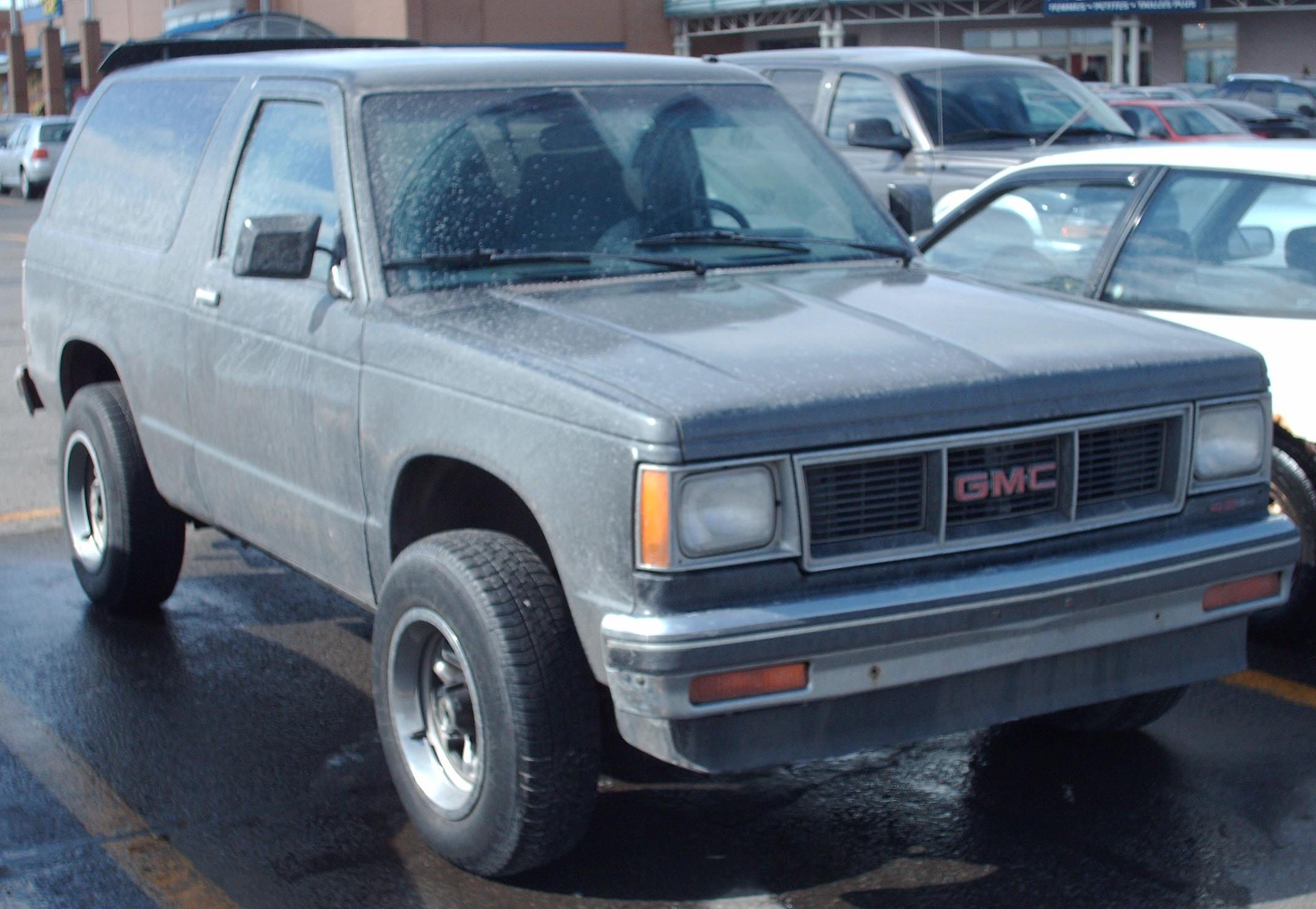
Gmc Jimmy
"[1419.5s] [SPEAKER_02]: Ah, yeah, so I don't know if you guys have noticed, but the GMC Jimmy has been rumored to make a comeback... [1450.2s] [SPEAKER_01]: The future GMC Jimmy."
They’re talking about a possible new GMC Jimmy coming back. The rumor is it would be built like a rugged off-road SUV, not just a small everyday crossover.
The speaker is discussing a rumored return of the GMC Jimmy nameplate. They suggest it would be positioned as a body-on-frame, off-road-capable SUV competing with models like the Jeep Wrangler and Toyota 4Runner.

Jeep Wrangler
"[1427.5s] [SPEAKER_02]: What they're rumoring is an actual Jeep Wrangler slash Toyota 4Runner competitor. [1431.7s] [SPEAKER_02]: It's not that."
The Jeep Wrangler is a classic off-road SUV. The hosts mention it as the kind of vehicle the rumored GMC Jimmy would be trying to rival.
The Jeep Wrangler is a rugged off-road SUV known for its removable doors and roof and its strong four-wheel-drive heritage. In the segment, it’s used as a benchmark for what a rumored GMC Jimmy could compete against.

Toyota 4Runner
"[1427.5s] [SPEAKER_02]: What they're rumoring is an actual Jeep Wrangler slash Toyota 4Runner competitor. [1431.7s] [SPEAKER_02]: It's not that."
The Toyota 4Runner is a rugged SUV that’s built for off-road driving. In this discussion, it’s mentioned as another model the rumored GMC Jimmy would be competing with.
The Toyota 4Runner is a body-on-frame SUV built for off-road capability and durability. The speaker uses it as another reference point for the kind of competitor the rumored GMC Jimmy might be.
body and frame
"[1441.2s] [SPEAKER_01]: Like a body and frame, property on frame proper. [1443.8s] [SPEAKER_01]: Cole, can you look up just, I mean, there's so many drawings out there now."
Body-on-frame means the vehicle has a strong “skeleton” frame underneath, and the body bolts to it. It’s often used for trucks and off-road SUVs because it’s tough and can take more abuse.
“Body-on-frame” describes a vehicle construction where the body is mounted on a separate ladder frame. This layout is common in traditional trucks and off-road SUVs because it can handle rough terrain and heavy-duty use well.
electric trucks
"I believe they stated that the production, once they're done with this production on their electric trucks, they're done. Yeah, so they're not cancelling their electric trucks right now."
They’re talking about trucks that run on electricity instead of gas. The discussion is about whether GM will keep making them and for how many years.
The hosts are discussing trucks powered by electric motors instead of a gasoline or diesel engine. The key point is whether General Motors plans to keep producing them and how long the current electric platform will last.
electric platform
"But I think they could use the current electric platform for their trucks for many years to go. I think for other projects."
An electric platform is the “base design” a company builds for electric vehicles. It determines where the battery and electric components go, and it can be reused across multiple models.
An electric platform is the shared vehicle architecture designed around electric powertrains, including packaging for the battery, motors, wiring, and related systems. The hosts suggest GM could keep using the current electric platform for trucks for years and for other projects.
battery chemistry
"where they talked about new updating the chemistry of the batteries to more affordable chemistries and better performance."
Battery chemistry is basically the “recipe” inside the battery. Updating it can make batteries cheaper and sometimes better at delivering power.
Battery chemistry refers to the specific materials used inside a battery cell (for example, different lithium-based formulations). Changing chemistry can improve cost and performance characteristics like energy density and how the battery behaves under load.
Bronco
"You know, the Bronco is back, Roman and Tommy talked about on the previous car podcast that the exteriors coming back,"
They mention the Ford Bronco, which is a well-known off-road SUV. The point is that it’s back, and that reflects renewed interest in this kind of vehicle.
The Ford Bronco is referenced as an example of a popular off-road SUV returning to the market. The hosts connect its comeback to broader trends in truck/SUV styling and segment resurgence.
Hyundai
"Hyundai is jumping in here with Kia, with Body Unframe."
Hyundai is one of the automakers mentioned as getting more involved in this truck/SUV segment. It’s part of the “who’s jumping in” conversation.
Hyundai is mentioned as a brand entering the segment being discussed, alongside Kia. The hosts use it to illustrate competitive momentum and more models chasing the same audience.
Kia
"Hyundai is jumping in here with Kia, with Body Unframe."
Kia is mentioned as another car brand competing in the same general space. The point is that more companies are joining the trend.
Kia is referenced alongside Hyundai as another brand participating in the segment shift. The hosts use it to show that multiple automakers are responding to consumer demand.

Ford Bronco
"...ence in this segment. [SPEAKER_01]: You know, the Bronco is back, Roman and Tommy talked about on the prev..."
The Ford Bronco is an SUV built for off-road driving. The podcast mentions it because it has returned to the market and has become a talking point again. People discuss it when they’re comparing off-road SUVs and what’s available now.
The Ford Bronco is a rugged SUV designed for off-road capability, and the podcast notes that it’s “back,” referring to its return to the lineup. It’s discussed in this context because the Bronco’s comeback has been a big deal for people who want a modern off-road alternative with a classic nameplate. That makes it a natural topic in truck/SUV segments.

Chevrolet Blazer
"...eral Motors is like oh no We're bringing back the blazer and a lot of people are like oh boy and they brou..."
The Chevrolet Blazer is an SUV model. The podcast mentions it because Chevrolet is bringing it back. That matters to shoppers because it changes what SUV options are available.
The Chevrolet Blazer is a nameplate for a crossover/SUV, and the podcast discusses it being brought back. It’s mentioned because the return of a familiar model name can change what buyers consider when shopping for an SUV. That makes it relevant in a segment about new products and lineup changes.
unibody crossover
"But it wasn't body on frame, it was a unibody crossover."
A unibody crossover is built with the body and structure combined into one piece, instead of using a separate truck frame. That usually makes it feel more like a car than a traditional truck.
A unibody crossover uses a single integrated body structure (no separate frame), which typically improves ride comfort and packaging efficiency. The hosts contrast this with body-on-frame to explain what kind of vehicle architecture is being discussed.
electric one
"So that way, I saw an electric one. And it just makes even less sense."
An electric version runs on an electric motor instead of a gas engine. The speaker is saying the way it’s being presented or named doesn’t add up.
An “electric” version means the vehicle uses electric motors instead of a traditional internal-combustion engine. The speaker says they saw an electric version and that it “makes even less sense,” implying the naming/positioning issue is even more confusing with an EV.
off-road systems
"The off-road systems are excellent. Take the cab and the bed off that..."
Off-road systems are the features that help a truck drive better on dirt, rocks, and uneven ground. The speaker is saying GM already has those features working well.
Off-road systems are the vehicle technologies and hardware that help it handle rough terrain—things like traction control strategies, differential behavior, underbody protection, and sometimes selectable 4x4 modes. The speaker says these systems are already excellent on current trucks, so adapting them could create a strong competitor.
Take the cab and the bed off
"Take the cab and the bed off that and then take something off a jamsy terrain or something like that and shove it on there and you're done kind of..."
The speaker is talking about using the same basic truck underneath, but changing the top parts (the cab and bed). The idea is that you can make a new off-road version faster by reusing what already works.
This describes a modular “swap” approach: using the same underlying chassis/drivetrain and changing the body components (cab and bed) to create a different configuration. The speaker argues that if you keep the proven mechanicals and just change the layout, you can bring a new off-road-focused truck to market quickly.
Ford F-150
"So I think Ford... because really the F, the F series is the best selling name... the F 150 recently... That are 2015 all aluminum truck remember... then in 2021... They are the new generation."
The Ford F-150 is Ford’s most popular pickup truck. The hosts are talking about how Ford updates it in new generations and what that means for what might be coming next.
The Ford F-150 is Ford’s best-selling full-size pickup, and the hosts are discussing its generation cycle and what it implies for upcoming prototypes. They specifically mention the 2015 “all aluminum” truck body and then the newer generation arriving around 2021.
all aluminum truck
"...the F 150 recently with the story that... That are 2015 all aluminum truck remember. Yep, you know... aluminum body trucks..."
“All aluminum” means the truck’s body is made mostly from aluminum instead of steel. Aluminum can help the truck be lighter, which can improve efficiency, but repairs can be different and sometimes more expensive.
“All aluminum” refers to using aluminum extensively in the truck’s body panels and structure to reduce weight. Less weight can improve fuel economy and handling, but it also changes repair costs and how the body is built and maintained.
generation of the F-150
"...because F-150 usually comes out like every six or seventh year there's a new generation of the F-150... then in 2021... They are the new generation..."
A “generation” is a big update to a car or truck—usually a redesign with new engineering and features. The hosts are using the usual timing of those updates to guess when Ford will show prototypes.
A “generation” is a major redesign cycle for a model—new platform, styling, powertrains, and engineering changes. The hosts use the typical timing of F-150 generations to predict when prototypes might appear.
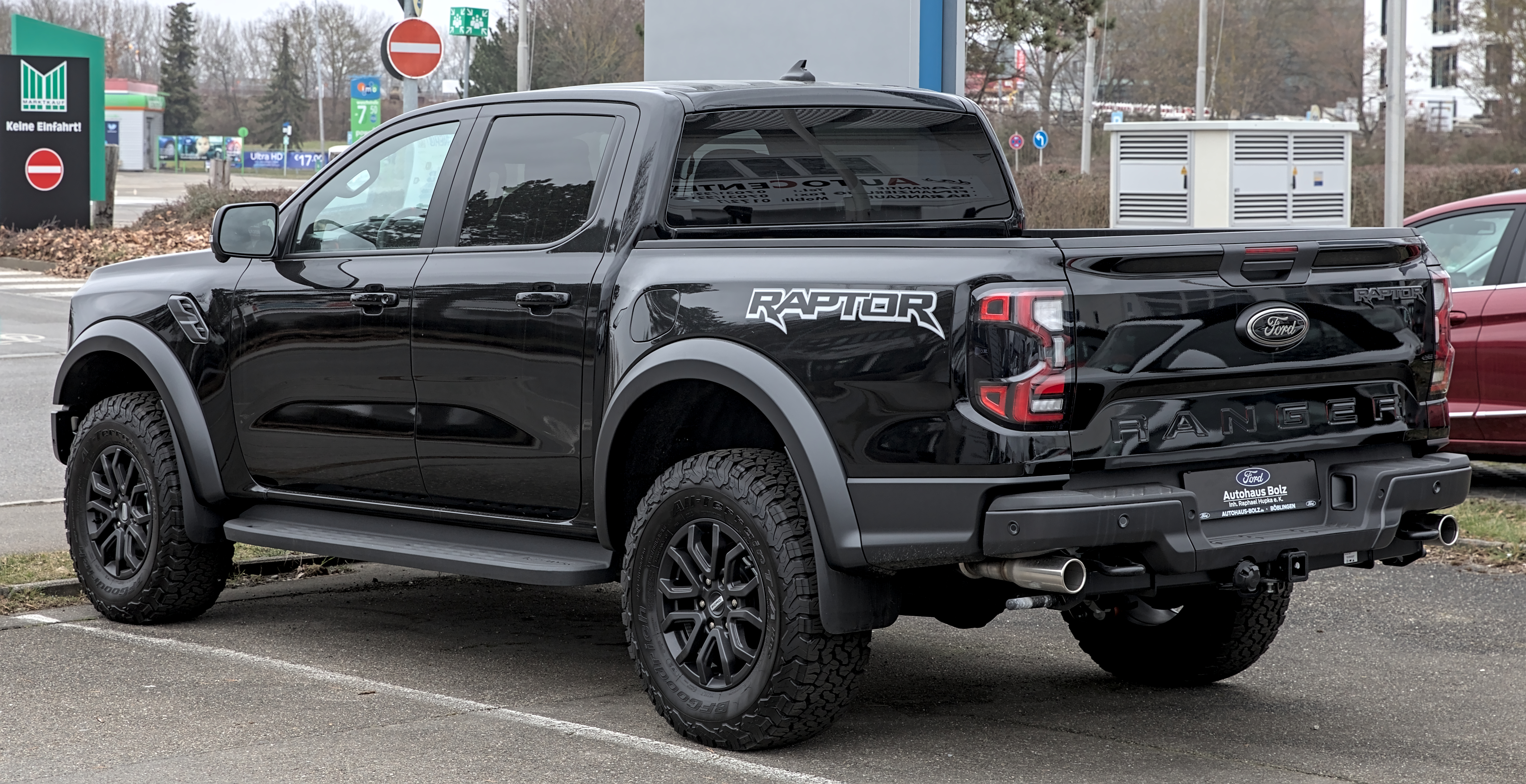
Ford Raptor
"...Jim Farley, the CEO of Ford... using what they do in motorsports and putting it back into the company. So the Raptor program, so if we look up like Ford Raptor, they're really going to double down..."
The Ford Raptor is Ford’s off-road-focused version of the F-150. It’s built to handle rough terrain better, and the hosts say Ford uses that kind of development to influence other trucks too.
The Ford Raptor is Ford’s high-performance off-road pickup line, known for upgraded suspension and off-road hardware compared with standard F-150 models. The hosts connect the Raptor program to Ford’s broader strategy of using motorsports-style development and then applying that tech to production vehicles.

Ford Ranger
"We know for a fact that the Ford Ranger has a hybrid version sold overseas and I know they're looking at it here."
The Ford Ranger is a smaller pickup than the F-150, sold in lots of countries. The hosts say there’s already a hybrid Ranger overseas and they think Ford may consider it for here too.
The Ford Ranger is a midsize pickup sold in many markets, and the hosts mention a hybrid version being sold overseas. They’re discussing whether Ford will bring that hybrid Ranger strategy to the U.S. market.
exhaust note
"The exhaust note, it takes them getting me as to honestly, it's a bit of a quiz and art. But it was a hoot to drive."
“Exhaust note” just means how the truck sounds from the exhaust. A performance exhaust can make it louder and deeper, especially when you accelerate.
“Exhaust note” is the sound character produced by the exhaust system—tone, volume, and how it changes with throttle. Performance trucks often have exhaust setups tuned to sound more aggressive and to be louder under acceleration.
power on reserve
"That thing had so much power on reserve. And I did light off roading with it."
“Power on reserve” means the truck still has more power left even after you’ve been driving it. It feels like there’s extra acceleration available when you need it.
“Power on reserve” describes how much additional acceleration is still available even after you’ve already used some throttle. It’s a feel-based way to say the engine/motor has headroom, so the truck doesn’t run out of punch quickly.
light off roading
"And I did light off roading with it. I really felt bad that I didn't get a chance to bash it, because I just know it could take it. But that's the suspension."
“Light off-roading” means driving off pavement on easier trails. Think dirt roads and mild bumps, not the hardest rocks or mud.
“Light off-roading” refers to casual trail use—things like dirt roads, mild ruts, and uneven terrain—without the extreme obstacles of rock crawling or deep mud. It’s a way to describe how capable the truck feels for everyday dirt use.
off-road and on-road suspension
"[1910.0s] [SPEAKER_02]: Might be the best. [1911.3s] [SPEAKER_02]: blend of off-road and on-road suspension. [1913.7s] [SPEAKER_02]: I have ever tested."
Suspension is what helps the truck ride over bumps and stay planted to the ground. A “blend” means it’s set up to work well both on rough trails and on regular roads.
Suspension is the system that connects a vehicle to its wheels and controls how it absorbs bumps and keeps the tires in contact with the road. When a truck has a “blend” of off-road and on-road suspension, it’s tuned to handle rough terrain without feeling overly harsh or unstable on pavement.
EcoBoost
"[1920.3s] [SPEAKER_01]: That's exactly my point. [1921.2s] [SPEAKER_01]: Yeah, exactly. [1921.8s] [SPEAKER_01]: I agree a hundred percent because if you look at the EcoBoost Raptor F-15 right now, it's listed at 450 horsepower."
EcoBoost is Ford’s name for turbocharged gas engines. A turbo helps the engine make more power without needing a bigger engine.
EcoBoost is Ford’s branding for turbocharged gasoline engines. In practice, it’s designed to make strong power while improving fuel economy compared with older naturally aspirated setups.
skunk work team
"[1948.0s] [SPEAKER_01]: So, like I said, we're not seeing any prototypes, which is a little bit bothersome. [1955.5s] [SPEAKER_01]: But for the recently made a statement that they're kind of restructure their interior and internal teams, they're bringing new type of thinking to the company because they had a skunk work team led by some engineers they hired from different companies including Tesla. [1977.1s] [SPEAKER_02]: They put a lot of time and money into electrification and then they had to back away from that but they also learned a lot of lessons while doing it So there's a lot of research out there."
A “skunk works” team is a company’s small group that works on experimental projects. They usually have more freedom to try new ideas quickly.
A “skunk works” team is a small, semi-independent group inside a company that works on experimental or high-risk projects. They’re often staffed with engineers brought in from other companies and can move faster than the main organization.
electrification
"[1977.1s] [SPEAKER_02]: They put a lot of time and money into electrification and then they had to back away from that but they also learned a lot of lessons while doing it So there's a lot of research out there. [1986.6s] [SPEAKER_02]: So I do think that that's going to lead into their next-gen hybrid pickup trucks Which may or may not be pluggin."
Electrification means moving toward electric power in vehicles. That can include hybrids or plug-in hybrids, and it often involves lots of engineering work.
Electrification is the shift toward using electric power in the vehicle—typically through hybrids, plug-in hybrids, or fully electric drivetrains. The speaker suggests the company invested heavily, then adjusted course, but still gained useful engineering lessons.
plug-in
"[1986.6s] [SPEAKER_02]: So I do think that that's going to lead into their next-gen hybrid pickup trucks Which may or may not be pluggin. [1993.4s] [SPEAKER_02]: It's interesting people aren't are taking some of the Onus off of the whole plug-in thing now."
“Plug-in” usually means the hybrid can be charged by plugging it in, like at home. The point here is that people may not require that feature as much as before.
A plug-in hybrid (PHEV) can be charged from an external power source, usually a home outlet or charging station. The speaker is saying buyers are becoming less focused on whether the truck must be plug-in, because hybrids can still be useful even without charging at home.
diesel was somewhere in your eight bucks
"[2045.0s] [SPEAKER_02]: Yeah, and I think diesel was somewhere in your eight bucks. [2048.8s] [SPEAKER_01]: That is unbelievable."
Diesel and gasoline are two different kinds of fuel. Diesel is common in many trucks, and its price can be higher or lower than regular gas.
The speaker is comparing diesel fuel prices to gasoline. Diesel is a different fuel type used in many trucks and some passenger cars, and its cost can move differently than regular gasoline.
36 gallon tanks
"I mean all all of 150s now have 36 gallon tanks Which is great..."
That’s how much gas the truck can hold. More gas usually means you can drive farther before needing to stop for fuel.
A 36-gallon fuel tank is the truck’s onboard gasoline capacity. Larger tanks increase potential range, especially when combined with efficient driving and/or hybrid assist.
e-cout
"So when you combine it with you know Let's say gentle driving maybe not very aggressive driving you could e-cout six hundred miles already from a lot of those trucks..."
It sounds like the speaker is talking about how you can stretch how far the truck goes by driving gently. The exact feature name is unclear from the transcript, but the point is better efficiency means fewer gas stops.
This appears to be a transcription error for an efficiency/range-related feature or estimate. In context, the speaker is describing how gentle driving can stretch the usable range of a truck with a large fuel tank.
twin turbo
"...you have the three five twin turbo right..."
Twin-turbo means there are two turbochargers working on the engine. The goal is usually to make power feel stronger and more responsive.
Twin-turbo means the engine uses two turbochargers instead of one. This can help reduce turbo lag and improve how power builds across different engine speeds.
V6 turbo
"And then, if you go into the Ranger, Ranger has a few different engine options too. They'll have a V6 turbo..."
This is a 6-cylinder engine (V6) that uses a turbocharger. The turbo helps the engine make more power without needing a bigger engine size.
A V6 turbo engine is a V6-cylinder gasoline engine that uses a turbocharger to increase air intake and improve power. “Turbo” changes how the engine makes power compared with a non-turbo version, often improving efficiency and responsiveness.
8.3 litre durmaxes
"because there's rumors about 8.3 litre durmaxes and 8 litre power strokes and 7.2 litre giant commons engines."
Duramax is a diesel engine line used by GM trucks. People are talking about a possible bigger “8.3-liter” version, which could mean more pulling power for towing.
“Duramax” is GM’s brand name for its Duramax diesel engines used in heavy-duty trucks. The “8.3 litre” rumor is referring to a possible future displacement for a Duramax diesel, which would matter for torque and towing capability.
8 litre power strokes
"because there's rumors about 8.3 litre durmaxes and 8 litre power strokes and 7.2 litre giant commons engines."
Power Stroke is Ford’s diesel engine line for their heavy-duty trucks. The “8-liter” talk is about a possible new, larger engine that could pull more effectively.
“Power Stroke” is Ford’s diesel engine family used in its heavy-duty trucks. The “8 litre” rumor suggests a potential future engine displacement, which would typically be tied to changes in torque output and how the engine is tuned for towing.
7.2 litre giant commons engines
"because there's rumors about 8.3 litre durmaxes and 8 litre power strokes and 7.2 litre giant commons engines."
Common rail is a diesel fuel system that helps the engine inject fuel more precisely. The “7.2-liter” part is just a rumor about a bigger diesel engine size.
“Common rail” (here transcribed as “commons”) refers to a diesel fuel-injection system that uses a shared high-pressure fuel rail to precisely control injection timing and pressure. The “7.2 litre” rumor is about a possible future displacement for a common-rail diesel used in heavy-duty applications.
Allison transmissions
"Right, and we're still back and forth with Allison transmissions and all that other stuff."
Allison makes heavy-duty automatic transmissions—basically the gearbox that helps a truck shift smoothly under load. They’re talking about whether Allison will still be used in future trucks.
Allison is a well-known manufacturer of heavy-duty automatic transmissions, commonly used in trucks for towing and hauling. In this context, the hosts are discussing whether Allison gearboxes will be used (or “coming back”) in future heavy-duty truck setups.
spec sheet
"Yeah, I just wish we could do like a show where we look at the spec sheet from the manufacturer right we could go line by line line by line and actually talk about all this stuff"
A “spec sheet” is the manufacturer’s published list of technical specifications (like engine output, gearing, towing ratings, and emissions details). The hosts want to compare specs line-by-line to understand what the numbers actually mean in real heavy-duty use.
heavy load exactly
"because it is really a factor on paper whether or not you're able to actually tell that heavy load exactly"
This refers to the gap between paper specifications (like towing ratings and torque curves) and real-world performance under sustained heavy use. Heavy-duty trucks can behave differently depending on cooling, gearing, driver inputs, and how the drivetrain is calibrated.
pre-order
"Have you convinced Roman to pre-order diesel powerwagon yet?"
A pre-order is when you reserve a vehicle before it’s on sale. The hosts are talking about whether someone is ready to do that for a future truck.
Pre-order refers to placing an order before the vehicle is officially available, often based on announced specs or expected availability. In the episode, it’s used to discuss interest in a future diesel Power Wagon.
Dodge Ram
"...an probably pull together some sort of event with Ram, and it convinced them, hey, we need to drive thi..."
Ram is the brand name used for Dodge’s pickup trucks. The podcast talks about it because someone wanted people to drive it and see it for themselves. That’s often how truck buyers decide if a vehicle fits their needs.
“Ram” refers to the Ram pickup truck lineup, which is known for being a major player in the full-size truck segment. In the podcast, it’s brought up in connection with an event or discussion that convinced people they should drive the truck. That kind of mention usually points to how the truck is being marketed and experienced directly.
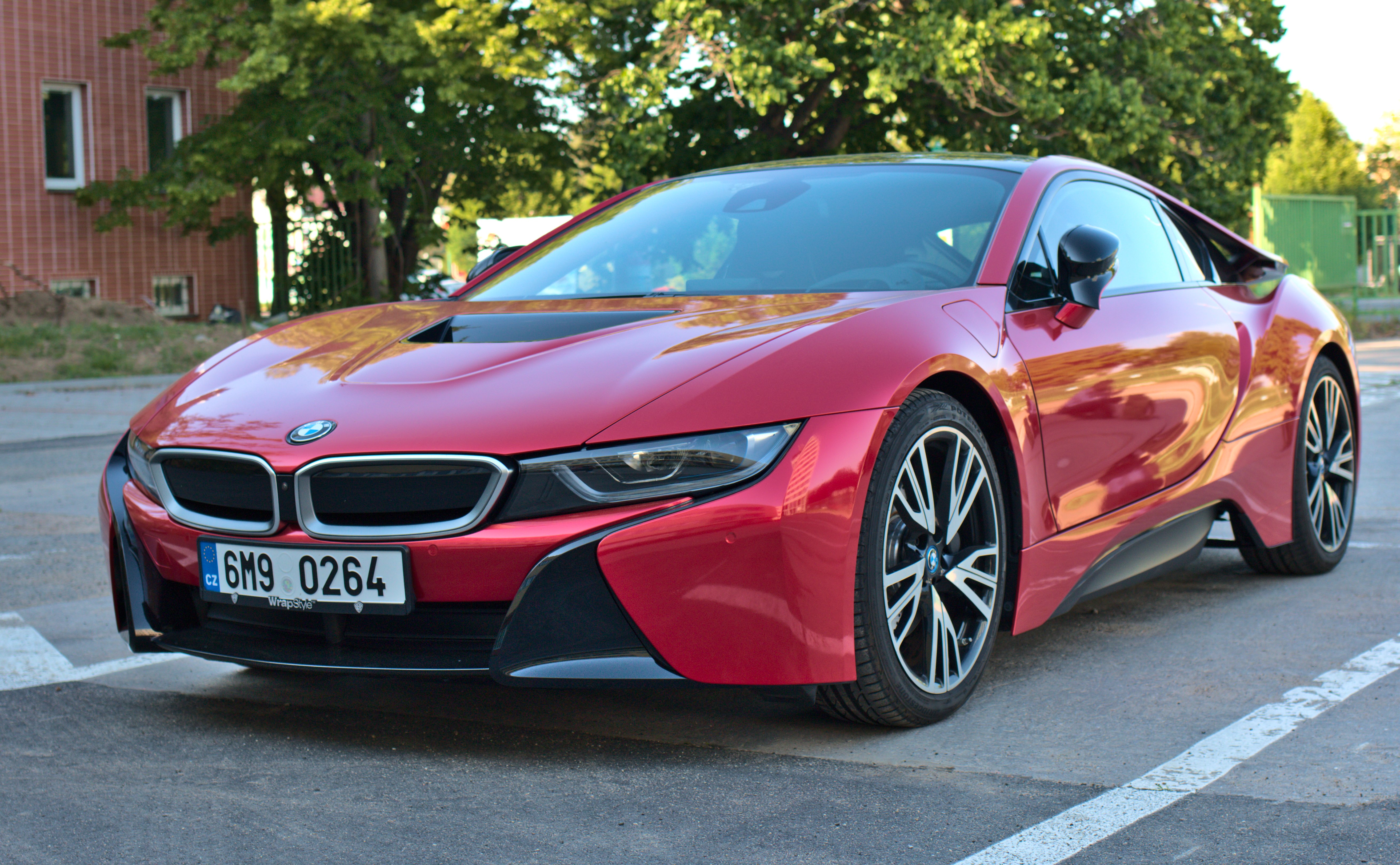
i8 (I12)
"... [SPEAKER_01]: Actually twice if you consider the I8 that you had to drive? [SPEAKER_02]: Well, the I8..."
The i8 is a sports car that uses a hybrid setup, meaning it can use electricity and gas. The podcast mentions it because someone had to drive one and is talking about that experience. It’s included because it’s a unique car to drive compared with typical vehicles.
The i8 (often referred to as the i8) is a plug-in hybrid sports car known for its distinctive design and advanced powertrain layout. The podcast mentions it in the context of having to drive it, which suggests it’s part of a discussion about experiences behind the wheel. That’s why it shows up even in a truck-focused show—driving impressions can be memorable regardless of vehicle type.
Request an Explanation
Heard something you'd like explained? We'll add it to this episode.
Sign in to request explanations for terms you heard.
Want to learn more?
Browse our glossary for plain-English explanations of automotive terms, jargon, and concepts.
Help improve this episode
See something that's not quite right? Our annotations are AI-generated and can sometimes miss the mark. Click the flag icon on any annotation to suggest a correction.
1 community members have helped improve this episode.