CMS Motorsports is Making AMG Dreams come True
About this episode
CMS Motorsportsā Shant dives deep into the world of pre-merger AMG restoration and recreation, explaining why demand is surging thanks to Radwood and the renewed appreciation for āpureā early cars. The shopās work ranges from sourcing impossible-to-find parts to building accurate widebody clones in steel, not fiberglass. A major highlight is Shantās ongoing build for the host: a 500E-based convertible with a 113/55-style powertrain swap, plus laser-scanned bodywork, suspension, and fresh Recaro-style seating. The conversation also covers AMG authenticity, Koenig/Lorenz demand, and the practical realities of keeping these cars on the road.
Love old Mercedes shapes but wish they had modern power? How bad was quality control in the 80s? What if you desire a one-off AMG that never existed? CMS Motorsports is who to call. Owner, Shant Meshefedjian, has been in love with wide-body Benzes since he was 8 years old. He grew up around fabricators and body-work experts. Now he builds and restores the coolest Mercedes cars from the '80s and '90s. Many of his cars have won awards all over the country. Odds are you've seen his work. His story is inspiring, his passion and knowledge run deep.
Patreon questions include:
- What's harder: finding original bodykits or doing engine swaps?
- Best improvement for an E55 AMG
- The new C-class' giant screen
- Thoughts on MB-Tex
- When cars companies started to care about seating position
- Dream Mercedes project
- How to improve the complexity of an aging Mercedes
- Can I make this old diesel cool?
Recorded APril 21, 2026
Mac tools
Go to https://mactools.org/tire to learn more and see if thereās an open route near you
Factor
Head to https://Factormeals.com/tire50off and use code tire50off to get 50 percent off and free daily greens per box, with new subscription only, while supplies last until 09/27/2026. (See website for more details).
Bluechew
Right now, when you buy two months of BlueChew Gold, you get the third for FREE with promo code TIRE. Visit https://BlueChew.com for more details and important safety information
Listen to Drive with Jim Farley Season 4 at
https://lnk.to/drivewithjimfarleyPS!thesmokingtire
Enter to WIN a 2025 Porsche 911 Turbo S!
Podcast Link: https://www.dreamgiveaway.com/tickets/porsche?promo=SMOKINGTIRE
Get 4X bonus tickets with any donation of $25 or more. With every donation you are helping benefit some wonderful veterans' and children's charities. Use Podcast Promo Code: SMOKINGTIRE
Promo Code Offer: Get 4X bonus tickets with any donation of $25 or more. With every donation you are helping benefit some wonderful veterans' and children's charities.
Want your question answered? To listen to the episode the day it's recorded? Want to watch the live stream, get ad-free podcasts, or exclusive podcasts? Join our Patreon: https://www.patreon.com/thesmokingtirepodcast
Use Off The Record! and ALWAYS fight your tickets! For a 10% discount on your first case go to https://www.offtherecord.com/TST
#cars #comedy #podcast
Instagram:
https://www.Instagram.com/thesmokingtire
https://www.Instagram.com/therealzackklapman
Click here for the most honest car reviews out there: https://www.youtube.com/thesmokingtire
Want your question answered? Want to watch the live stream, get ad-free podcasts, or exclusive podcasts? Join our Patreon: https://www.patreon.com/thesmokingtirepodcast
Use Off The Record! and ALWAYS fight your tickets! Enter code TST10 for a 10% discount on your first case on the Off The Record app, or go to http://www.offtherecord.com/TST.
Watch our car reviews: https://www.youtube.com/thesmokingtire
Tweet at us!
https://www.Twitter.com/thesmokingtire
https://www.Twitter.com/zackklapman
Instagram:
https://www.Instagram.com/thesmokingtire
https://www.Instagram.com/therealzackklapman
CMS Motorsports
"All right, folks. On this episode, I've got the homie Shant from CMS Motorsports in studio. We're talking about AMGs..."
CMS Motorsports is the shop featured in the episode, and the hosts discuss how the company restores and works on AMG cars. The conversation emphasizes their growth from a smaller operation to a larger downtown facility with a showroom and display-focused setup. This makes CMS Motorsports a key āwhoā in the story, not just a name-drop.
AMGs
"We're talking about AMGs. We're talking about what it's like restoring them. We're talking about the demand for them."
āAMGsā are Mercedes cars made by AMG, the performance division of Mercedes-Benz. Theyāre known for being quicker and more track-capable than regular Mercedes models. This episode is about restoring and working on those AMG cars.
āAMGsā refers to Mercedes-AMG vehiclesāMercedes-Benz cars tuned and engineered by AMG. AMG models are especially popular with enthusiasts because they combine performance-focused engines, transmissions, and chassis tuning with Mercedes-Benz build quality. The episode frames CMS Motorsportsā specialty around restoring and servicing these cars.
restoring them
"We're talking about AMGs. We're talking about what it's like restoring them. We're talking about the demand for them."
āRestoringā means taking an older or worn AMG and bringing it back to a really good condition. That can include fixing damage, replacing worn parts, and making it look right again. The episode is about what that process is like and why people want it.
In this context, ārestoringā AMG cars means returning them to a high standardāoften correcting prior damage, refreshing worn components, and bringing the car back to how it should look and drive. For enthusiast cars, restoration can range from cosmetic work to deeper mechanical refreshes, and the episode suggests CMS focuses on doing it well enough to meet strong demand. Itās a concept because it ties to why these cars are valuable and how shops differentiate themselves.
Vintage AMG Day
"It's Vintage AMG Day on the Smoking Tire Podcast. Let's go. Guys, the Smoking Tire is giving away a 992.1 Turbo S..."
āVintage AMG Dayā is the episodeās theme. Itās basically a spotlight on older AMG cars and the people who restore and care for them. It helps you know what the show is focusing on.
āVintage AMG Dayā is a themed segment framing the episode around classic or earlier AMG models and the culture around them. The āvintageā angle matters because it often implies cars that are older, more collectible, and more dependent on specialized restoration knowledge. Itās treated as a topic/segment marker for listeners to understand the episodeās focus.
pre-merger
"AMG, the pre-merger. I mean, back in the 80s, if you had anything pre-merger, AMG, or tuner, it was like you were the king of the road."
āPre-mergerā means before AMG became fully part of Mercedes-Benz. Back then, AMG had a more independent ātunerā vibe, which many people associate with the brandās early cool factor.
āPre-mergerā is shorthand for AMGās era before it was fully merged into Mercedes-Benz. That period is often remembered for AMGās more boutique, tuner-like identity, which helped build its reputation with enthusiasts.
Recaro
"I remember like, gray recaro's fully trimmed the whole nine. And that was was like, wow. Yeah. This is what I like."
Recaro makes performance car seats. Theyāre designed to hold you in place better during spirited driving. The host remembers the Recaro seats as a standout part of the carās ācoolā factor.
Recaro is a well-known performance seat manufacturer, often chosen for supportive bolstered designs in enthusiast and motorsport applications. The host remembers āgray recaroāsā as part of the carās interior, highlighting how aftermarket-style sport seats were a big part of the AMG/tuner appeal.
Miami Vice
"And then, you know, the whole, the whole thing with Miami Vice and all the, you know, drug dealers driving all these. And you dress like them guys now when you go to car shows too."
The host references āMiami Viceā as a cultural touchstone for the 1980s era they associate with certain car styles and driver fashion. Itās used here to explain why that periodās cars and aesthetics felt so iconic to them.
Radwood
"And you dress like them guys now when you go to car shows too. You know, Radwood and all that, you have to understand it was good on you though."
Radwood is a car show where the vibe is more about the style and culture of classic carsāespecially the 80s/90s look. The host is saying that the same kind of āMiami Viceā fashion shows up at events like this.
Radwood is a car show brand focused on pop-culture and enthusiast aesthetics, often centered around 1980s and 1990s style. The host connects it to the eraās āMiami Viceā look and how people dress for car shows today.
Testarossa Testarosa
"... like, but it's like Don Johnson getting out of a Testarosa. So all these clips that had these, you know, al..."
Formula One Imports
"And there was an importer called like a gray market dealer called Formula One Imports. You might remember these motherfuckers..."
They mention āFormula One Importsā as a local importer/dealer that had a reputation for bringing in fancy cars. The speaker says it was a place where he could sit in lots of cars as a kid.
Formula One Imports is named as an Atlanta-area importer/gray market dealer that let the speaker sit in cars. The discussion frames it as a well-known source for expensive cars during the 1980sā90s.
gray market dealer
"And there was a place in Atlanta... And there was an importer called like a gray market dealer called Formula One Imports."
A gray market dealer sells cars through unofficial import channels. That can change whatās available and how the car is handled compared to buying through the normal brand network.
A āgray market dealerā sells vehicles that are imported outside the manufacturerās official distribution channels. This can affect availability, pricing, and sometimes compliance/parts support depending on the country and model.
body shop guy
"So did it, did you like become a body guy, a body shop guy in because you wanted to build custom shit? Or did did you decide to build custom shit once you got into the body work industry?"
āBody shop guyā refers to someone working in collision repair and vehicle bodyworkāthings like panels, fabrication, and paint. The speaker is connecting that trade to building custom cars and getting into the custom fabrication side of the industry.
body shop fabricating and heating/hammering metal
"you had to fix everything. Every, every body shop was a fabricator, and they used to, you know, sit there and beat the metal, heat it. And that's the way you fixed cars because you just didn't have a parse department where you called."
The speaker describes an older collision-repair approach where body shops ābeat the metalā and use heat to reshape damaged panels. This is essentially metal fabrication and panel beatingābefore modern repair workflows and specialized departments became common. It highlights how restoration and repair used to rely more on hands-on metalwork.
solvent-based paint
"And I remember like back in the day, they used to heat up the paint and that's how they sprayed it. It was like, they were spraying glass right even back then, but it was just solvent based pungent. You could smell it like after you painted a car, you could smell the paint for like three weeks after it was serious stuff."
The speaker says they used to heat paint and that it was āsolvent based,ā with a strong smell lasting for weeks. Solvent-based coatings rely on solvents to carry pigments and binders, and they can off-gas for a long time compared with many modern waterborne systems. The āheat up the paintā part suggests older spray/curing practices.
spraying glass
"And I remember like back in the day, they used to heat up the paint and that's how they sprayed it. It was like, they were spraying glass right even back then, but it was just solvent based pungent."
āSpraying glassā appears to be the speakerās way of describing a clearcoat or a glass-like finish produced by the paint system used in older body shops. In many refinishing contexts, people describe certain coatings as giving a āglassā look due to gloss and smoothness. The exact product/chemistry isnāt specified, but itās clearly about the finish quality.
paint booth
"You could smell it like after you painted a car, you could smell the paint for like three weeks after it was serious stuff. So it seems bad. And he used to be in the booth with, you know, smoking a Marlboro just in the fucking pain."
A paint booth is a special room where cars are painted with controlled airflow. It helps keep dust out and makes the paint job come out cleaner.
A paint booth is the controlled enclosure where cars are sprayed and finished, typically with ventilation and airflow management to reduce dust contamination. The speaker references being in the booth while painting, which underscores how the process is done in a dedicated environment. Itās a key part of professional refinishing workflow.
Mercedes
"And then why Mercedes, you know, I was always passionate about Mercedes. My dad's first car was a 57 Mercedes 180 Pontoon Racktop. And ever since then, there's been a Mercedes in the family, whether it's a diesel or whatever it is."
Theyāre talking about Mercedes-Benz, the car brand theyāve loved for a long time. Itās also the reason the conversation is about building and tuning carsābecause Mercedes has a big enthusiast scene.
Mercedes-Benz is the brand the speaker says theyāve been passionate about since childhood, and it frames the episodeās theme of building and tuning Mercedes cars. The mention also connects to Mercedesā broader enthusiast culture, including tuning trends from the 1980s.
1986 300 e
"[602.0s] high school. I bought a 1986 300 e grandpa gold on Palomino interior bone stock. The guy worked [611.7s] for JPL."
Theyāre talking about a Mercedes-Benz 300 E from 1986. Itās a classic E-Class sedan (the W124 generation) that was built to be a reliable daily driver. āBone stockā means it was mostly unchanged from the factory.
The speaker bought a Mercedes-Benz 300 E (W124) in 1986. The ā300 Eā is a W124-era E-Class sedan known for a durable, straightforward ownership experience, especially in stock form.
bone stock
"[602.0s] I bought a 1986 300 e grandpa gold on Palomino interior bone stock. The guy worked [611.7s] for JPL."
āBone stockā means the car was basically as it came from the factory, with no meaningful modifications. Itās useful because it shows what they changed later.
āBone stockā means the car was essentially unmodified from the factory. That matters because it sets a baseline for later changesālike the AMG-style exterior conversion described afterward.
six liter hammer
"[649.7s] later, you know, after flipping through magazines, I'm like, hmm, let me make this thing look like a [654.5s] hammer, like the six liter hammer."
They wanted the car to look like a much more powerful AMG version, often nicknamed āHammer.ā Since they couldnāt afford the real AMG parts, they used other parts to make the car resemble that higher-end setup.
The āsix liter hammerā is a reference to building a W124 to look like a high-performance AMG āHammerā style car, specifically aiming for a 6.0-liter V8 vibe visually and in parts. Itās essentially a clone/restyle project: using aftermarket components to recreate the look of an AMG flagship.
Euro Euro imports
"[661.7s] they were super expensive. So there was a shop that used to sell. It was called Euro Euro imports. [669.5s] It was in the valley and they had replica AMG parts, which were amazing."
They found a shop that sold replica parts meant to look like AMG equipment. That let them build the style they wanted without spending the huge money that real AMG parts cost.
āEuro Euro importsā is mentioned as a shop that sold replica AMG parts. In projects like this, replica parts are often used to achieve the AMG look without paying OEM AMG pricing.
Performance Autosport
"[676.8s] was another company called Performance Autosport. So I bought European headlamps. I bought this [682.3s] AMG kit."
They also used another company to get parts for the build. The goal was to recreate the AMG look using aftermarket pieces.
āPerformance Autosportā is cited as another source for parts used to build the AMG-style clone. The key point is that the project relied on aftermarket suppliers to source specific exterior and lighting components.
European headlamps
"[676.8s] Performance Autosport. So I bought European headlamps. I bought this [682.3s] AMG kit."
They changed the headlights to a European-style set. People do this for the look and sometimes because the light pattern is different than what you get with other markets.
āEuropean headlampsā indicates the speaker swapped to headlight assemblies commonly associated with European-spec lighting. Enthusiasts do this for appearance, beam pattern, and sometimes compliance with local regulations.
monoblocks
"[682.3s] AMG kit. I found monoblocks for it. So I made this thing exactly like a six liter clone."
Theyāre talking about wheels. āMonoblocksā is a wheel design that helps the car look more like the AMG theyāre trying to imitate.
āMonoblocksā refers to a wheel styleātypically multi-piece or specific AMG-style wheel designsāused to complete the clone look. Wheel choice is a big part of how these builds visually match the target AMG cars.
AMG kit
"[682.3s] AMG kit. I found monoblocks for it. So I made this thing exactly like a six liter clone."
An āAMG kitā is a set of parts that makes a regular Mercedes look more like an AMG. Itās usually about stylingābumpers, trim, and similar piecesārather than turning it into the real AMG mechanically.
An āAMG kitā here refers to aftermarket bodywork and styling components meant to replicate AMGās appearance on the Mercedes-Benz. These kits are common in clone builds: they change the carās look to match a higher-performance AMG model even if the mechanicals arenāt identical.
six liter clone
"[689.0s] And that's what I drove, but it was grandpa gold. And everyone used to be like, [693.4s] why this color? That's all. Because you only wanted to paint the bumper, right?"
A ācloneā here means they modified the car to look like a more expensive AMG version. Itās like recreating the vibe and appearance of the real thing, often without doing every mechanical upgrade.
Calling it a āsix liter cloneā means the car was modified to resemble a specific AMG ā6.0-literā look, even if it wasnāt fully converted mechanically. Clone builds are popular because they let owners chase the aesthetic and parts identity of a rare car on a more achievable budget.
Mac tools
"[712.7s] Folks, taking a quick break for Mac tools. You know, Mac tools, you've seen the Mac tools truck [718.6s] at shops before."
Theyāre talking about Mac Tools, a company that sells tools to mechanics. The segment is about how someone can own a route and sell tools directly to repair shops.
Mac Tools is a tool brand and franchise business mentioned as a sponsor/segment. The speaker describes how owning a Mac Tools route is a mobile business selling tools to shops and technicians.
trial by inferno
"That is incredibly beneficial if you're trying to be your own small business owner and you're not ready to learn some of those lessons in what we call the trial by inferno like I did."
It just means learning through tough, costly mistakes. The host is saying itās easier if you have help and guidance instead of figuring everything out alone.
āTrial by infernoā is a metaphor for learning the hard wayāmaking expensive mistakes before you figure out how to run a business successfully. In the context of the episode, itās contrasted with having a long-established partner that provides training and resources.
Factor
"We also got support today from Factor and for me, eating healthy isn't a willpower problem. It's a setup problem, right? Until I found Factor because here's what happens to me."
Factor is a service that delivers prepared meals. The host uses it to make eating healthy easier because the meals are already planned and ready to go.
Factor is mentioned as a meal-delivery service that helps the host hit nutrition goals without planning. The episode ties it to āsetupā and consistencyāusing pre-built meals to avoid decision fatigue while working multiple jobs.
GLP-1 support
"It could be protein. It could be GLP-1 support for strength and recovery. They've got the Muscle Pro collection and every meal is crafted with those functional ingredients"
GLP-1 is a hormone that affects appetite and metabolism. The host is saying some meal plans are designed to support that kind of health goal.
āGLP-1 supportā refers to products or nutrition strategies associated with GLP-1 hormones, which are commonly discussed in the context of appetite regulation and metabolic health. Here itās used as a dietary goal category within Factorās meal offerings.
daily driver
"...now her daily driver is the 500 E, the six liter car I came with. She doesn't want a new car."
A ādaily driverā is the car someone uses every day. Itās the one that has to be dependable for normal life, not just for special occasions.
A ādaily driverā is the vehicle you use for everyday commuting and errands. In enthusiast circles, it often means balancing reliability and comfort with enough performance or character to still be fun.
Mercedes-Benz 500 E
"...now her daily driver is the 500 E, the six liter car I came with. She doesn't want a new car."
The Mercedes-Benz 500 E is a special older Mercedes sedan with a powerful engine. People like it because itās quick and feels sporty, but it doesnāt look like an extreme race car.
The Mercedes-Benz 500 E is a high-performance E-Class from the 1990s, known for its strong V8 power and fast, confident highway manners. Itās a popular āsleeperā classic because it looks like a normal sedan but drives like a much more serious machine.
AMG expanded to a full model lineup
"...partially because of... once Mercedes expanded AMG to a full model lineup, plus a sub lineup of the AMG..."
AMG is Mercedesā performance division. The point here is that AMG got offered on more models over time, and some people prefer the original, more special versions.
AMG started as a performance brand and then broadened into a wider range of Mercedes models and sub-models. The hosts argue that when AMG became more āeverywhereā in the lineup, some enthusiasts shifted back toward the purity of the earliest, more iconic AMG vehicles.
accurate recreations using original period parts
"...there's plenty of room in the market to create accurate recreations using original and period parts and whatnot and handmade stuff."
Sometimes the real original cars are too rare or too expensive, so people build cars that look and feel like the original using old, correct parts. The goal is to make it as authentic as possible.
The hosts discuss the idea of building high-quality ārecreationsā that aim to match the original carās look and details using period-correct parts. This is a common approach in the collector world because true originals can be extremely rare and expensive, so recreations can satisfy buyers who want authenticity without paying for a museum-grade example.
original body kit
"...even if you were to find like, let's say an original body kit, it's 35 years old. That's been repaired multiple times..."
A body kit is the set of outside parts that change the carās look. Theyāre saying that even if you find the original kit, itās old and usually been fixed up before, so it may not be perfect.
An āoriginal body kitā refers to the specific exterior components (bumpers, skirts, spoilers, etc.) that were originally offered for a particular model. The hosts note that even if you find one, itās typically decades old and likely has been repaired multiple times, which affects authenticity and restoration difficulty.
Lamborghini Kuntosh
"...t dump much money into them. Oh, dude. So I own a Kuntosh and a fucking, I had a 328. You're telling me. Y..."
The Lamborghini Countach is a very rare, high-performance sports car made by Lamborghini. Itās known for its bold, unusual design. The podcast mentions it because owning one can be expensive, especially for repairs and upkeep.
The Lamborghini Countach is a classic, iconic supercar from Lamborghini, famous for its sharp styling and dramatic presence. Itās mentioned in the context of owning and spending money on these cars, which is common with exotic classics. The podcast likely brings it up to discuss ownership realities and what it takes to keep one running.
Pickapart
"...the thing is I used to go collect parts from like Pickapart... and back then they didn't have online..."
Pickapart is referenced as a parts source where the speaker used to collect components in person. In the context of the episode, itās part of the story about how enthusiast parts used to be easy to find before online marketplaces and rising collector demand changed pricing.
junkyard
"...I used to go collect parts from like Pickapart... and I've bought AMG kits, wheels, AMG wheels, all kinds of stuff from the junkyard..."
A junkyard is a place where old cars get taken apart and you can buy parts. The speaker is saying they used to be able to find performance parts there cheaply.
A junkyard is where you can buy used parts from cars that are being dismantled, often at much lower cost than new or collector-market pricing. The hosts describe how, in earlier years, they could source AMG-related parts and wheels from junkyards because nobody cared about them yet.
Gooding
"...unless a car is a, you know, it's one of these cars you see at Gooding that's $700,000..."
Gooding is a well-known classic car auction house. The speaker uses it as a benchmark for ultra-high-end, auction-priced cars (the ā$700,000ā example) to contrast against the more typical market where recreations and period-correct builds can make sense.
body fitment fatigue
"And if you look at the body fitment of the body parts on it, you know, over the years, they fatigue."
Even if a car hasnāt been wrecked, older body panels can slowly shift or wear in a way that makes them not line up perfectly anymore. That affects how well new parts will match the existing body. So restoration isnāt just about having partsāitās about having parts that fit the way the originals did.
āFitment fatigueā here refers to how body panels and widebody components can change over time due to material aging, stress cycles, and manufacturing tolerances. Even if a car hasnāt been repaired, older panels can lose their original alignment and how they sit relative to the rest of the body. Thatās why restoration quality depends heavily on having the correct parts and correct manufacturing methods.
AMG has a classic program
"There's no one that's recreating these as far as on a factory level. There's, you know, AMG has a classic program... it's meant for record keeping preservation."
AMGās āclassic programā is referenced as a Mercedes-AMG initiative aimed at preserving heritage cars. The host says itās focused on record keeping and certification rather than producing new replacement parts at scale. This distinction matters because it explains why some classic AMG components remain unavailable even when the car can be officially documented.
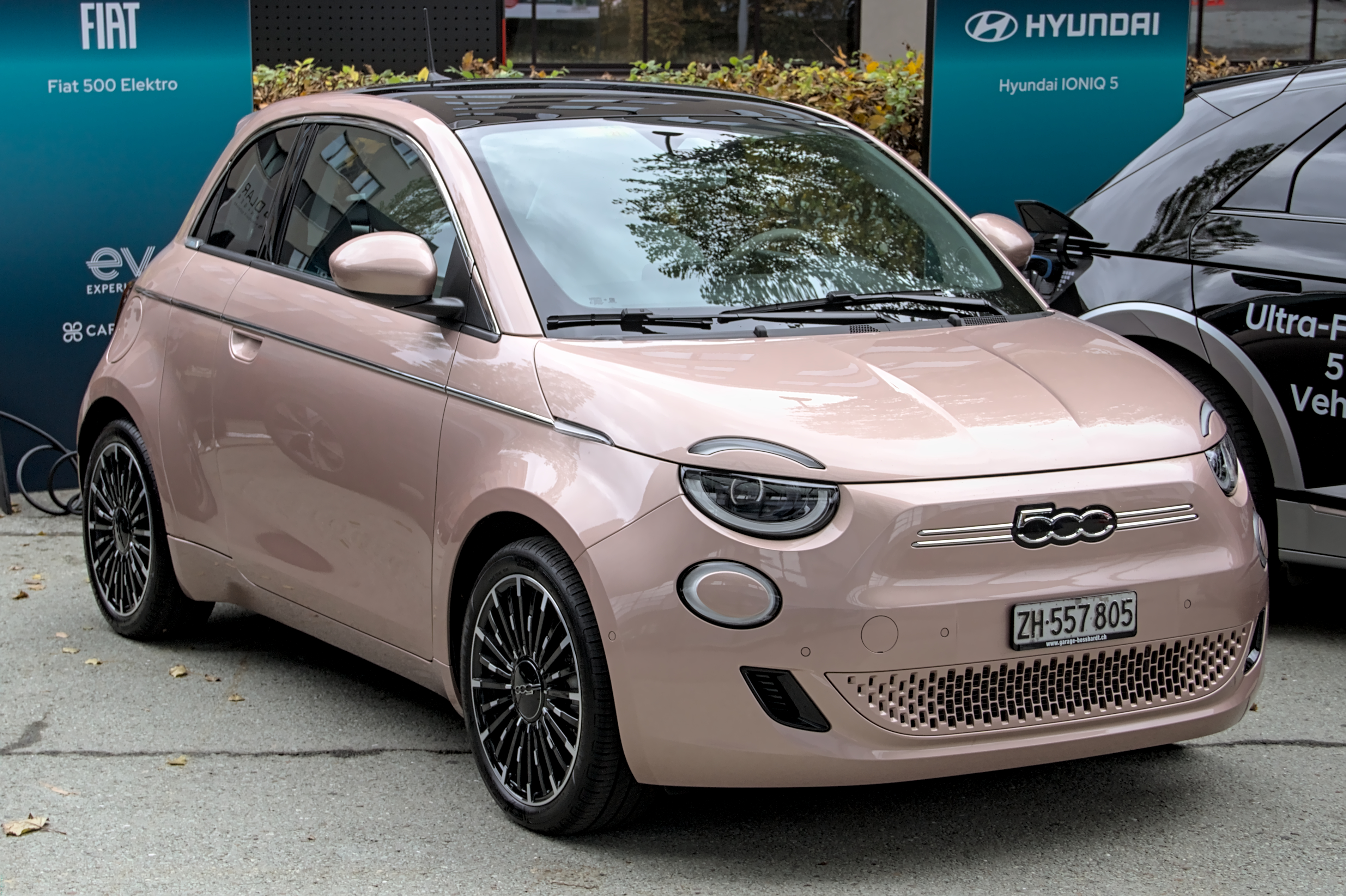
Fiat 500e
"...ed new body panels, new bumper kits, like for the 500E, I have brand new fenders, brand new bumpers, ev..."
The Fiat 500e is a small electric car version of the Fiat 500. The podcast is talking about replacing parts like bumpers and fenders, which is the kind of work you do after damage or for restoration. Even though itās electric, it still uses body panels that can be repaired or replaced.
The Fiat 500e is an electric version of the Fiat 500, built for compact, city-friendly driving. The podcast mentions new body panels, bumpers, and fenders, which suggests restoration or repair work to keep the car looking correct. Itās discussed because EVs still need normal collision/fitment and bodywork attention like any other car.
popping molds out of
"And that's what I'm popping molds out of because they're just not available."
āPopping molds out ofā refers to using existing manufacturing molds (or mold tooling) to reproduce parts that are no longer available. When molds are the only way to make accurate, repeatable shapes, they become a critical resource for niche restorations. In this episode, itās presented as a practical solution to the lack of current factory-level reproduction.
QC is just garbage
"But I see some of these parts that they bring and they're just not usable. Sure. The QC is just garbage. It's garbage."
QC means quality control, basically how well a company checks that parts are correct. The host is saying some replacement parts theyāve seen are low quality and donāt fit or match properly. Thatās why restoration can turn into a parts-availability and parts-quality problem.
āQCā means quality controlāhow a manufacturer checks that parts meet fitment and dimensional standards. The host is criticizing aftermarket or reproduction parts from certain regions for failing basic QC, leading to poor fitment and unusable results. For restorations, QC is crucial because widebody and panel replacement parts must match tight tolerances.
wide body SEC hammer
"...I would like you to recreate a wide body SEC hammer. [1407.0s] But but I don't have one..."
Theyāre talking about a custom-looking Mercedes-style coupe with wider fenders. The goal is a more aggressive āstance,ā usually by changing the body panels so the car sits and looks wider.
The speaker is describing a custom āwide bodyā version of an SEC, with āSEC hammerā sounding like a specific fictional or recreated styling package. āWide bodyā generally means widening the fenders/quarters for a more aggressive stance and tire fitment, often using custom bodywork or reproduction panels.
reproduction parts
"And are the reproduction parts that you're like, it'll look it looks better. [1430.8s] they're actually more perfected than the original."
Reproduction parts are new-made versions of older parts. Sometimes theyāre actually better than the originals because theyāre made to fit correctly and can be improved in the manufacturing process.
Reproduction parts are aftermarket or newly made versions of older OEM-style components. The speaker argues that some reproduction wide-body parts can be more āperfectedā than the original factory pieces, especially when theyāre engineered for better fitment and durability.
steel construction
"...We do everything out of steel construction. [1453.2s] It's welded to the car."
Theyāre saying they build the bodywork out of steel instead of lighter materials like fiberglass. Steel can be stronger and, when welded properly, it can make the panels feel more solid and better integrated.
āSteel constructionā here means the wide-body components and bodywork are made from steel rather than fiberglass. The speaker emphasizes welding the pieces to the car and achieving tight fitment, implying improved structural integration and durability versus some earlier material choices.
fiberglass bumpers and fiberglass quarters
"...everything is made out of steel construction, like the wide body SECs were doing, they came fiberglass bumpers and fiberglass quarters. [1442.0s] The later SECs..."
Fiberglass is a lightweight material used for some body panels. Theyāre saying earlier wide-body versions used fiberglass parts, but later people had problems like cracking, so the material choices changed.
Fiberglass bumpers and quarter panels are common on some wide-body conversions because fiberglass is lighter and can be shaped into complex forms. The speaker contrasts earlier wide-body SECs using fiberglass components with later cars that had different materials, and mentions cracking issues as part of the motivation for changes.
pillarless coupe
"...it's a pillarless coupe. We do everything out of steel construction. [1453.2s] It's welded to the car..."
A pillarless coupe is a car where the side windows donāt have a center support pillar. That can make the body flex more, which can stress body panels and lead to cracking.
A pillarless coupe refers to a design where the side window area lacks a traditional B-pillar, which can make the body more flexible and place different stresses on surrounding panels. The speaker ties this to why certain metal quarter panels were prone to cracking.
welded to the car
"We do everything out of steel construction. [1453.2s] It's welded to the car. The the body kits, the spoilers, the cladding fits perfect."
Instead of just attaching panels with brackets, they weld the new body pieces to the car. That helps the parts line up correctly and stay solid.
Welding wide-body panels to the underlying structure is a fabrication approach that improves alignment and structural bonding. The speaker uses it to support their claim that the cladding, spoilers, and body kit pieces āfit perfect,ā because the parts are integrated rather than just bolted on.
overly restored
"...if you look at it, it's kind of overly restored. [1464.7s] But that's just the way I like doing it..."
āOverly restoredā describes an aesthetic choice to make a car look extremely freshāsometimes beyond what a purist might consider āoriginal.ā In this context, itās tied to the goal of perfect fitment and finish on the wide-body conversion.
massaging... into one
"...he was at the halfway mark where he had them tacked on and was just starting to blend it into one. [1489.5s] Yes. And it's got a really it's just got a beautiful curve..."
Theyāre describing the careful metalwork step where rough panel pieces get shaped and smoothed so the carās body lines look continuous. Primer is used to reveal any imperfections before final finishing.
āMassagingā and āblendingā refer to shaping and smoothing metalwork so panel seams disappear and the body lines flow naturally. The speaker describes a stage where parts are tacked on, then blended and finished with primer to check the final curves.
Tennessee
"Yeah. I mean, once the car comes back from Tennessee, there's a lot of massaging we still have to do to the metal."
The car is said to be coming back from Tennessee, implying the fabrication or metalwork is being done off-site. For listeners, this is a clue that the build process may involve shipping the car to a specialist shop for bodywork and metal massaging.
Mercedes SL
"[1533.2s] it's just gorgeous. Any any red Mercedes is just same on the 129s on the SL. Absolutely. You know, [1540.7s] a silver 129 is like a $20,000 car and the same car in red is a $30,000 car."
Theyāre talking about the Mercedes-Benz SL, which is a classic luxury convertible/roadster. Theyāre basically saying red looks great on these cars and can make them more valuable.
The Mercedes-Benz SL is the brandās long-running luxury roadster line. The speaker compares how red paint on an SL (and other Mercedes models) affects desirability, implying similar color/value behavior across models.
500 e cabriolet
"[1550.6s] I only got it because I couldn't find a red that I liked. Yeah. So now we're doing a red. Yes. Okay, so I came to you with the concept, [1556.3s] which is 500 e cabriolet and we didn't have to say much more than that."
Theyāre talking about taking a Mercedes-Benz 500 E and turning it into a convertible. Thatās not just cosmeticāmaking a car open-top usually requires major changes to the body so it still feels solid and drives right.
The speaker is describing a Mercedes-Benz 500 E converted into a cabriolet (convertible). The 500 E is a high-performance, luxury-era Mercedes-Benz sedan, and turning it into a convertible is a major body and structural engineering project.
convertible look and feel and sound and drive
"[1589.5s] from when I came to you and I said, here's what I want to do. What are the challenges [1593.9s] and what do we do to overcome them in making the convertible look and feel and sound and drive [1602.1s] like Mercedes had done it."
Turning a car into a convertible changes how it flexes and how loud/solid it feels. The goal is to make it still drive and sound right, not like a loose, rattly open-top conversion.
This is about the engineering challenge of making a convertible conversion feel like the original manufacturer intended. When you remove the fixed roof, you lose structural stiffness and change noise/vibration/harshness (NVH), so builders must compensate to keep ride quality, sound, and handling āMercedes-like.ā
fender flares
"[1618.3s] as far as the exterior goes, there's really not much you can do. I mean, the 500 e looks pretty badass the way it [1625.0s] is. I mean, with the bumper and everything the way it's set up, the fender flares, they just make [1630.2s] the car."
Fender flares are the parts that extend outward over the wheel area. They change the look of the car a lot, and in this build theyāre a key part of making the conversion look right.
Fender flares are the extended body sections over the wheel/quarter area that change the carās stance and visual proportions. Here, the speaker credits the fender flares (and related exterior pieces) for making the 500 E cabriolet look ābadass,ā and notes differences between body styles.
dog leg molding
"[1637.6s] the flare in the back is is kind of different on the sedan [1644.1s] on the original car because you have the dog leg molding, which is a separate piece. Yeah. [1650.3s] That has the flare."
They mention a trim piece called ādog leg moldingā that helps define the shape of the rear body. For the conversion, theyāre changing how that area is built so the flare becomes one unified piece.
āDog leg moldingā refers to a specific exterior trim piece/section used on certain Mercedes-Benz body styles to shape the transition around the rear quarter area. In this conversion, the speaker is treating it as a separate piece on the original car and then integrating the flare into one continuous part.
3D that and made a mold out of it
"[1650.3s] That has the flare. So just taking that design and what we did was we 3D that that's that's what I [1656.4s] did originally I 3D that and I made a mold out of it as a separate piece without the dog without [1663.0s] the dog leg."
Theyāre explaining how they copied a tricky body shape using 3D modeling, then made a physical mold from it. That helps them build the part so it matches the original design.
The speaker describes a fabrication workflow: scanning/modeling a body part in 3D, then creating a mold from that model. This is commonly used to reproduce complex exterior shapes accurately when converting or reworking panels.
Tesla 3D Model
"... leg. And then we we created that same shape in a 3D model. And then we reconstructed it out of steel. That..."
The Tesla Model 3 is an electric car, meaning it runs on electricity instead of gasoline. The podcast is talking about how the carās shape is designed and built, including using models and manufacturing steps. Itās mentioned because itās a major example of todayās EV design.
The Tesla Model 3 is an electric sedan known for its mainstream appeal and technology-focused design. The podcast references creating a shape in 3D and reconstructing it out of steel, which points to how the carās body design and manufacturing process are discussed. Itās often brought up because it represents modern EV engineering and production methods.
side cladding
"[1670.6s] out of steel. That's what we did. So in essence, it does have the same flare, but it's one piece. [1675.7s] Yeah. The side cladding, obviously the quarter cladding is one piece as opposed to a separate"
Side cladding is the trim along the side of the car that can cover and protect bodywork. Theyāre saying their version is made in a different way (one piece) to match the look.
Side cladding is the trim/covering along the lower or mid-side of the body, often used to protect panels and shape the carās visual lines. The speaker contrasts how the quarter cladding is built as one piece versus separate pieces, which affects fitment and appearance.
door cladding
"dog leg molding and the door cladding. So that we basically scanned and we recreated a piece of cladding, which has that that taper which meets with that meets the body."
Door cladding is the outside trim around the doors that helps the car look smooth and properly shaped. Theyāre recreating it so the edges and contours match the original design.
Door cladding is the exterior trim that covers and finishes the door area, often including the transition shapes between panels. The speaker mentions scanning and recreating door cladding to match the taper where it meets the body.
rocker molding
"And then the rocker molding is the most challenging part to take the four door rocker molding and recreated into a size of a coupe that has the taper both in the front and the back."
Rocker molding is the trim strip along the bottom edge of the doors. Theyāre saying this is hard to replicate because the shape has to match the carās body lines so it doesnāt look āpatched together.ā
Rocker molding is trim that runs along the lower side of the body (near the rocker panel). In this segment, itās called out as the most challenging piece to recreate because it must match the coupeās taper front-to-back and look factory-installed.
Mercedes created a 500 CE
"The whole point is to make it look like as if Mercedes created a 500 CE. Yeah. That's what it would be. And that's the most challenging part is to make it look factory."
Theyāre trying to make a custom car look like a specific Mercedes-Benz coupeāthe 500 CE. That means matching the shape and trim details so it looks āfactory,ā not like an aftermarket conversion.
The speaker is referencing the Mercedes-Benz 500 CE, a classic coupe model. The goal of the bodywork theyāre describing is to make the modified carās proportions and trim look like it came from the factory as a 500 CE.
fuel door
"Only the fuel door was a little challenging because the sedan has the fuel door on the top and the wagon has it on the side. But we figured that out."
The fuel door is the little panel where you open the gas cap. Theyāre saying the fuel door is placed differently depending on the body style, so itās one of the tricky parts to make the conversion look correct.
The fuel door location differs between body styles, and the speaker is describing how that detail complicates the conversion. They note the sedanās fuel door is on the top, while the wagonās is on the side, requiring careful figuring to make the result look right.
bolt on the fenders, the bumpers
"And that's basically what it is. You know, it's just that back section of the coupe. Yeah. So that's what I pay attention to to perfect because the rest of everything else is bolt on the fenders, the bumpers."
āBolt-onā means those parts can be attached with bolts and brackets instead of being custom-built from scratch. Theyāre saying some body parts are easier to swap than the tricky trim pieces.
āBolt-onā means the fenders and bumpers can be installed using existing mounting points and hardware rather than requiring extensive fabrication or welding. The speaker contrasts this with the more difficult cladding/trim shaping work earlier in the segment.
SL 500
"I having owned the my SL 500, my 129 with the 113 that I had, I knew that for the kind of driving we were doing around, we weren't going on the Autobahn in this car."
Theyāre talking about the Mercedes-Benz SL 500 they owned before. Theyāre basically saying their past experience helps them judge what kind of engine setup makes sense for the way they drive now.
The Mercedes-Benz SL 500 is a luxury roadster/convertible model, and the speaker is referencing their ownership experience with it. Theyāre using that background to explain why certain engine characteristics (like the four-cam setup) may not be the best fit for their local driving around LA.
Autobahn
"I knew that for the kind of driving we were doing around, we weren't going on the Autobahn in this car. I'm rolling around LA."
The Autobahn is a famous German highway known for long-distance, high-speed driving. Theyāre basically saying their driving isnāt the kind where an engineās high-speed strengths would really show.
The Autobahn is Germanyās highway system, famous for long stretches where speed limits may not apply. The speaker uses it as a benchmark for high-speed driving, contrasting it with their mostly local driving around Los Angeles.
four cam engine
"The four cam engine was not going to be that beneficial to me in the first place. And then you said, by the way, it won't actually fit."
A āfour camā engine means the engine uses more camshafts to control the valves. More cam control can help performance, but the host is saying it wonāt matter much for how they actually drive.
A āfour camā engine uses two camshafts per cylinder bank (typically four total) to control valve timing more precisely than simpler setups. The speaker argues it wouldnāt be beneficial for their intended driving (mostly around LA, not high-speed Autobahn use).
Ford
"Guys, taking a break from the action because support is coming in fast, like Jim Farley, the CEO of Ford, who's now got a podcast."
Ford is a major car company. Here, the episode mentions Fordās CEO and his podcast about cars and success.
Ford is the automaker behind the CEO being discussed in this segment. The hosts mention Jim Farleyās podcast, tying the brand to motorsports and what executives drive.
Jim Farley
"Guys, taking a break from the action because support is coming in fast, like Jim Farley, the CEO of Ford, who's now got a podcast."
Jim Farley runs Ford. In this segment, theyāre saying heās also into racing, not just business.
Jim Farley is Fordās CEO, and the hosts frame him as a car enthusiast who drives race cars. That context is used to connect leadership at a mainstream automaker with motorsports culture.
Mercedes 400E
"So the 500E, the 400E and the 500E was manufactured by Mercedes. And they reconstructed the firewall for that engine to fit in there because essentially the four cam engine is a bigger engine."
The Mercedes-Benz 400E is the smaller-engine E-Class sibling mentioned alongside the 500E. The key point here is that the firewall and engine-bay packaging differ between the 400E and the larger-engine setup, requiring major fabrication to swap in the bigger motor.
firewall
"And they reconstructed the firewall for that engine to fit in there because essentially the four cam engine is a bigger engine. Yeah. And the way it sits in there, you need to basically cut away the firewall from a 400 or a 500E and re-weld it, which changes everything. Dash, everything comes up."
The firewall is the big wall that separates the engine area from the passenger area. If you put a bigger engine in, you might have to cut and rebuild that wall, which can also affect parts inside the car.
The firewall is the structural and sealing wall between the engine compartment and the cabin. When fitting a larger engine, the firewall may need to be cut, re-welded, and repositioned, which can force changes to the dashboard and other interior components.
engine bay packaging / fitment requiring major fabrication
"Yeah. And the way it sits in there, you need to basically cut away the firewall from a 400 or a 500E and re-weld it, which changes everything. Dash, everything comes up. We've done that before too. And it's a lot of work. It seems like diminishing returns."
This segment describes the real-world challenge of engine swaps and fitment: when the engine doesnāt physically fit, you may need structural changes like cutting and re-welding the firewall. They also note the ādiminishing returnsā problemābeyond a point, the cost and complexity stop making the swap financially sensible.
Rent Tech
"If you hear some of the funny company, if you hear some of the stories, um, I got a chance to meet, uh, Hart moot, uh, that owns rent tech that he's different."
Rent Tech is a company name mentioned by the host. They bring it up because the owner shares real stories about Mercedes-AMG engineering and builds.
Rent Tech is mentioned as the company owned by Hart moot in the context of sharing AMG-related stories. While the segment doesnāt explain what Rent Tech does, it frames the owner as someone with hands-on knowledge of Mercedes/AMG builds.
SCCs
"And he's actually in the process of building like a set of SCCs. Oh, yeah. Which is pretty wicked. Yes. You have to knock the firewall back"
They mention Hart moot building something called āSCCs,ā but the transcript doesnāt say what that stands for here. It sounds like a parts/project setup related to these kinds of performance builds.
The transcript mentions Hart moot ābuilding a set of SCCs,ā but the acronym isnāt expanded in the excerpt. Given the context of firewall work and performance builds, it likely refers to a specific set of components or a project name, but the exact meaning canāt be confirmed from this segment alone.
five speed gearbox
"Because we got a donor car that's a 2002. Yes. We get a five speed gearbox. Yes."
A five-speed gearbox is the transmission with five forward gears. Theyāre saying the donor carās transmission is part of what makes the swap work better.
A five-speed gearbox is the manual or automatic transmission with five forward gears (depending on the specific setup). The speaker highlights it as part of the donor-car swap, implying better drivability and gearing than the original configuration.
diff
"We get a five speed gearbox. Yes. We get a better diff. Yep."
āDiffā is short for differential, the gear unit that allows the left and right wheels to rotate at different speeds while also distributing torque. They mention getting a ābetter diffā as part of the donor package, which typically improves traction and how the car puts power down.
powertrain
"We get the E 50, we get all the entire powertrain from the E 55. Right. I mean, that's a 350 horsepower out of the box."
A powertrain is everything that transfers engine power to the wheels. Theyāre saying their build uses a whole matching set from another car, not just one part.
A powertrain is the full set of components that make the car move: engine, transmission, driveshaft, differential, and related hardware. The speaker says theyāre getting the entire powertrain from an E 55 donor, meaning the swap isnāt just an engineāitās a matched set of driveline parts.
Mercedes-Benz E55 AMG
"We get a five speed gearbox. Yes. We get a better diff. Yep. We get the E 50, we get all the entire powertrain from the E 55. Right. I mean, that's a 350 horsepower out of the box. Yeah. Small, legal, smooth as butter. And with, you know, ECU tune with the exhaust. I mean,"
The Mercedes-Benz E55 AMG is a faster, higher-performance version of the E-Class. The podcast is talking about its transmission and drivetrain upgrades that help it move more strongly. Itās mentioned because itās a well-known performance setup from the factory.
The Mercedes-Benz E55 AMG is a performance-focused version of the E-Class, built by AMG for stronger acceleration and more aggressive driving feel. The podcast mentions a five-speed gearbox, a better differential, and using the E55ās powertrain, describing it as about 350 horsepower āout of the box.ā Itās discussed because itās a specific enthusiast configuration with known performance hardware.
ECU tune
"And with, you know, ECU tune with the exhaust. I mean, you can easily pull close to 400 horsepower and still be a daily driver..."
An ECU tune is a software adjustment to the carās computer. It can help the engine make more power, especially when combined with exhaust changes.
An ECU tune modifies the engine control unitās software to change fueling, ignition timing, and other parameters. Here itās paired with an exhaust to increase output beyond the factory baseline while still aiming to keep the car usable as a daily driver.
four cam vs two cam engine
"...I just like that with a four cam engine compared to a two cam engine or a single, whatever..."
Theyāre comparing engines with different camshaft setupsāfour-cam versus two-cam. The claim is that the four-cam design can make the engine feel stronger at higher RPMs.
The speaker contrasts a four-cam (DOHC-style) valvetrain with a two-cam setup, arguing that more cam control can help deliver stronger performance in the higher RPM āup highā range. The underlying idea is that valvetrain design influences how the engine breathes and where it makes peak power.
power band
"...I just like that with a four cam engine compared to a two cam engine... The up high power band, where when you have a car with a fucking slush box, right? How am I going to just keep the power up here effectively?"
The power band is the RPM range where the engine feels strongest. Theyāre saying an automatic can sometimes make it harder to keep the engine in that sweet spot.
The āpower bandā is the engine speed range where it makes the most usable power and torque. The speaker argues that with a āslush boxā (automatic transmission), it can be harder to keep the engine in that ideal RPM range, which affects how effectively the car delivers performance.
slush box
"...The up high power band, where when you have a car with a fucking slush box, right? How am I going to just keep the power up here effectively?"
āSlush boxā is slang for an automatic transmission. Theyāre saying it can feel less connected because it may not keep the engine in the right RPM range for strong acceleration.
āSlush boxā is a slang term for an automatic transmission, often used to imply it feels less direct than a manual. In this context, itās used to criticize how an automatic may not hold the engine at the RPM where the driver wants maximum response.
six speed gearbox
"I was working on one last year and they took it to Monterey with a six speed gearbox. Dude, that car was zesty."
A six-speed gearbox is a manual transmission with six gears. More gears can help the engine stay in its best power range, but it also changes how the car feels day to day.
A āsix speed gearboxā means a manual transmission with six forward gears. Gear selection and shift feel can dramatically change how a car delivers power compared with automatic setups, especially in performance Mercedes-AMGs.
manual swaps
"He's kind of known for doing the manual swaps. We have one at our other store, a black series⦠And so we're not doing a manual swap."
A manual swap is when someone changes a car to use a manual transmission instead of an automatic. It can be fun, but itās not always the best fit for how the car is supposed to feel.
āManual swapsā are conversions that replace an automatic transmission with a manual gearbox (or vice versa), along with the required hardware and electronics. The hosts note that while Matt is known for manual conversions, theyāre choosing not to do one here because it doesnāt match the carās intended character.
Mercedes-Benz CLK
"...at our other store, a black series that he did a CLK series with a manual that is fucking spicy, reall..."
The Mercedes-Benz CLK is a luxury car line, usually a coupe or convertible. The podcast is talking about a special high-performance version called the āBlack Series,ā and it mentions that it can be paired with a manual transmission. That combination is unusual, which is why it stands out.
The Mercedes-Benz CLK is a luxury coupe/convertible line known for its sporty styling and comfort. The podcast specifically references a āBlack Seriesā CLK with a manual transmission, describing it as āspicy,ā which points to a rare, performance-oriented variant. Itās discussed because itās a standout configuration thatās more enthusiast-focused than typical CLK models.
Bilstein damper
"including HVAC, he's also going to do the suspension. He's going to do the, the, the, the Bilstein damper with the H&R spring, which is what the E 500 had."
Bilstein dampers are shocks/struts that control how the car moves over bumps. They help the car stay stable and predictable, especially after suspension changes.
Bilstein dampers are performance shock absorbers designed to control body motion and improve ride/handling consistency. Pairing Bilstein dampers with specific springs is a common way to tune how a car feels after an engine/transmission swap changes weight and driving dynamics.
H&R spring
"Bilstein damper with the H&R spring, which is what the E 500 had."
H&R springs are aftermarket springs that change how high the car sits and how stiff it feels. Combined with shocks, they help the car handle better and ride more evenly.
H&R springs are aftermarket coil springs used to set ride height and spring rates. In this build, the H&R springs are paired with Bilstein dampers to recreate a suspension feel associated with the Mercedes E 500 setup.
Mercedes-Benz E 500
"Bilstein damper with the H&R spring, which is what the E 500 had."
Theyāre using the Mercedes-Benz E 500 as a benchmark. The idea is that the suspension parts theyāre choosing were also used on the E 500, so it should feel right.
The Mercedes-Benz E 500 is used as a reference point for suspension setupāspecifically that it used the Bilstein/H&R combination being planned for this E 55 build. Itās a way to justify the chosen parts based on a known configuration.
HRE
"I saw my homies at HRE came up to laser scan. They did, they did too."
HRE makes premium wheels. In this segment, theyāre helping make sure the wheels fit properly by using scanning to get the measurements right.
HRE is a wheel manufacturer known for high-end, custom-fit wheels. Here, theyāre involved in a laser scan process to ensure the new wheel size/fitment works correctly on the car.
laser scan
"came up to laser scan⦠So what they are doing is⦠The HRE 544 wheel⦠HRE has had to restart production of the 17-inch version of this wheel."
A laser scan is like a high-precision measurement using a laser. It helps the shop and wheel maker confirm thereās enough clearance so the wheels fit without rubbing.
A laser scan is a measurement technique used to capture precise geometry for fitmentāoften for wheels, brake clearance, or bodywork. The hosts mention it because HRE needed accurate data to restart/produce a specific wheel size that will clear properly.
17-inch version
"So I had to, HRE has had to restart production of the 17-inch version of this wheel. Oh, so they are going to go 17."
Theyāre choosing a 17-inch wheel size for this car. Wheel diameter can change clearance and fitment, so the exact size matters for whether the wheels work properly.
The ā17-inch versionā refers to producing wheels in a specific diameter to meet clearance and fitment requirements. The hosts suggest that if they were doing an 18-inch, they might have been able to avoid the production restartāhighlighting how wheel size affects packaging.
two-piece FMR
"move. So it's the 544. It's the same, the two-piece FMR, which is, it looks like a three-piece, but the barrel is a forged barrel, which is actually a two-piece, stronger and lighter."
Theyāre talking about how the wheel is made in two main sections. The goal is usually to make it stronger and lighter than older wheel designs.
āFMRā here refers to a wheel construction style that uses two pieces. The key point is that this kind of build can be stronger and lighter than a traditional multi-piece approach, depending on the exact design.
forged barrel
"but the barrel is a forged barrel, which is actually a two-piece, stronger and lighter. And we're going to do the, I haven't chosen the finish yet, but you were right."
A forged barrel is the wheelās outer part made by squeezing metal into shape. That process usually makes the wheel tougher and sometimes lighter than cheaper casting methods.
A forged barrel means the wheelās outer section is made by forging metal under high pressure. Forging typically improves strength and can reduce weight compared with cast methods, which matters for wheel durability and feel.
liquidiest clear coat
"like the brightest silver with like the liquidiest clear coat on it to make it like, like with that red. Almost like a platinum silver. It needs to glow."
Clear coat is the shiny protective layer on top of the paint. Theyāre saying they want it extra glossy so the color looks deeper and more eye-catching.
āClear coatā is the transparent top layer that protects paint and controls gloss and depth. The host is emphasizing a very glossy, āliquidā look to make the color pop and reflect light strongly.
Frozen polished clear
"Frozen polished clear. Yes. Like something like that. Frozen polished clear. It does need to pop."
This is a particular type of clear coat finish. Itās chosen to make the paint look brighter and more āaliveā under real lighting.
āFrozen polished clearā sounds like a specific clear-coat finish that aims for a bright, polished look while controlling how the surface reflects light. In custom paint, finish choice can dramatically affect how āglowyā the silver appears in different lighting.
Lorenzo front bumper
"That's actually a 500. Yeah. With the Lorenzo front bumper on it. That's rare. I mean, I think that looks correct. Don't shoot."
This is a custom front bumper option (from Lorenzo) that changes how the carās front end looks. Theyāre saying itās a rare piece and it helps the car look right.
A āfront bumperā like the Lorenzo piece is an aftermarket or specialty body component that changes the carās front-end shape and stance. The host calls it rare and visually impactful, suggesting itās part of what makes the build look correct and aggressive.
keep the car within its era
"you know, you have to keep the car within its, within its era. Sure. That's why when I have clients that tell me, oh, I want to put a newer E 55 wheel on it, it just doesn't work."
This is a styling principle: choosing wheels and accessories that match the carās original design period. The host argues that mixing in newer-looking parts (like wheels from a newer Mercedes-Benz) can make the build look visually āoff,ā even if the parts are high quality.
18 inch wheel
"If I, I mean, if I can get it, like, but that's an 18 inch, you know that you think so? That's an 18. Shit. You see the distance between the floor and the rocker."
Bigger wheels (like 18 inches) can change how the car looks from the side. Theyāre saying 18s make the car look like itās sitting too tall compared to the look they want.
Wheel diameter affects ride height appearance and how much tire sidewall you have. The host argues that an 18-inch wheel makes the car sit visually too high relative to the rocker panel, changing the stance and balance of the build.
side skirt
"To me, that's too much because, and also what they did to this car, not to knock the car, but there's no, there's no side skirt. You see how the front bumper and rear bumper sits lower?"
A side skirt is the trim panel along the bottom of the car near the doors. Theyāre saying without it, the carās lower section looks incomplete.
A side skirt is a body panel along the lower edge of the doors that visually connects the front and rear bumpers. The speaker criticizes the build because thereās no side skirt, making the lower body look unfinished and leaving the center area visually empty.
squatted down
"So, but that's an 18. It's too big. I would go 17 and your car's going to be squatted down a little more. You want it to look great."
āSquatted downā means the car looks lower and more aggressive. Theyāre saying a different wheel size can help the car sit right visually.
āSquatted downā describes a lower, more aggressive stance where the carās body sits closer to the ground. Here itās tied to wheel sizing/fitment: using smaller wheels (17s) and the right overall setup can visually lower the car and improve the proportions.
bolster
"[2642.1s] with your car, the 500E has perforations on the bolster. Yeah. Yeah. Yeah. Like your car."
The bolster is the part of the seat that wraps around you on the sides. It helps keep you positioned, and the hosts want the reupholstered seat to match the original bolster shape.
The bolster is the padded side section of a seat that supports your hips and torso. In this segment, they mention perforations on the 500Eās bolster and want to match that shape and look when reupholstering.
perforations
"[2642.1s] with your car, the 500E has perforations on the bolster. Yeah. Yeah. Yeah. Like your car."
Perforations are small holes in upholstery, usually used for ventilation and a specific visual pattern. The hosts point out that the 500E has perforations on the bolster and want the new upholstery to replicate that detail.
Mercedes-Benz 500
"[2679.8s] the one like yours is perfect. So the one like mine is the 500. Yeah. And what I did with mine is this, it's not a spring yet, the original 500."
Theyāre talking about the Mercedes-Benz 500 seat as the ācorrectā look and feel they want to copy. The key point is making the seat firmer and more supportive, and choosing materials that help you stay in place.
The Mercedes-Benz 500 is referenced as the styling target for the seat upgrade, with the hosts comparing how the original 500 seat feels and how it differs from other versions. They discuss firmness/structure and how the cloth insert changes grip and comfort.
seat cushion collapse / deferred maintenance comfort issue
"[2713.5s] Every old Mercedes on earth, the front left of the seat is like completely collapsed and it's fucking destroys my spine. Well, the early models have the spring."
Old car seats can wear out inside, and the cushion can collapse. When that happens, you end up sitting in a bad position and your back can hurt, so fixing the seat structure matters.
The hosts describe a common aging problem: seat cushions and internal support degrade, leading to a collapsed seating area. They connect this to back pain and argue that restoring or replacing the seat structure (not just re-covering it) is important for comfort and posture.
foam
"[2724.8s] The late models like your 94, 95 model has the has the foam, which has a lot more support. But it's still, it's so old now."
Foam is the cushion material inside the seat. Over the years it can break down and collapse, so the hosts are explaining why some older seats feel much less supportive.
Seat foam is the cushioning material inside the seat. The hosts contrast early models that used springs with later models (like the 1994ā1995 Mercedes) that use foam, noting foam generally provides more support than collapsed cushioning over time.
500 suspension
"[2729.9s] It's all fucked. It fatigues. Yeah. So, uh, and then, all right. What else? So we've got the, [2734.8s] the 500 suspension. Who did you say is doing the, who did Matt say is doing the exhaust for this [2739.6s] car? Super sprint."
Theyāre talking about a suspension setup meant for a ā500ā Mercedes. Suspension parts affect how the car rides and handles, so this is a big part of how the build will feel.
ā500 suspensionā likely refers to a specific suspension setup or component package associated with a Mercedes ā500ā model (often used in swaps/restomods). In practice, it means the car will be using suspension geometry/parts intended for that platform, which can change ride quality and handling compared to the original setup.
Super sprint
"[2734.8s] the 500 suspension. Who did you say is doing the, who did Matt say is doing the exhaust for this [2739.6s] car? Super sprint. Yeah. Yeah. He said, he said all the age, age fact will work like factory,"
Super Sprint makes aftermarket exhaust systems. An exhaust upgrade can change the sound and sometimes the performance, and itās usually chosen for good fit and quality.
Super Sprint is an aftermarket exhaust manufacturer known for performance exhaust systems. When a build uses a Super Sprint exhaust, itās usually to improve exhaust flow and sound while keeping fitment quality relatively high.
hydraulics
"[2746.0s] which I, it was great. And my top is in okay shape. It is. Yeah. Yeah. The hydraulics, [2751.9s] probably would need to be rebuilt because those have a tendency to leak, which my guy can do. [2757.2s] I would do that because you're going to put the top up and down."
Hydraulics are what power the convertible top up and down. On older cars, they can start leaking, so rebuilding them can prevent the top from failing.
In a convertible, the hydraulics are the system that raises and lowers the top. Hydraulic systems can develop leaks over time, and rebuilding them is common maintenance on older convertibles.
convertible top
"[2746.0s] which I, it was great. And my top is in okay shape. It is. Yeah. Yeah. The hydraulics, [2751.9s] probably would need to be rebuilt because those have a tendency to leak, which my guy can do. [2757.2s] I would do that because you're going to put the top up and down. It has like things that [2762.0s] you need. It's old car shit."
Theyāre talking about the carās roof that goes up and down. Even if itās not leaking, older tops often need cleaning and sometimes service so everything works smoothly.
The convertible top (including its fabric/roof material and headliner) is a major wear item on older Mercedes convertibles. Even if the top ādoesnāt leak,ā age-related issues like cleaning, wear, and hydraulic service can still affect usability and appearance.
Mercedes-Benz S55
"[2821.4s] my first experience with a swap, I sent my SEC to Matt Quick and I sent him an SEC and a 2005 S55 [2831.8s] and he swapped that with a supercharged engine transmission. I mean, we were driving, we were [2837.6s] going to drive this thing to Monterey."
Theyāre talking about a 2005 Mercedes-Benz S55, which is a fast Mercedes with a supercharged V8. The builder used it as a donor to provide the engine and transmission for the swap.
The Mercedes-Benz S55 (specifically referenced as a 2005) is a supercharged V8-powered S-Class variant. In the transcript, itās used as the donor powertrain for an engine/transmission swap, which is a common approach when builders want strong factory-grade performance components.
engine swap
"[2821.4s] my first experience with a swap, I sent my SEC to Matt Quick and I sent him an SEC and a 2005 S55 [2831.8s] and he swapped that with a supercharged engine transmission. I mean, we were driving, we were [2837.6s] going to drive this thing to Monterey. I sent him both cars and literally three weeks later,"
An engine swap means putting a different engine into a car than it originally came with. Itās a big project, but when done right, the car can end up driving like a factory-built performance machine.
An engine swap is replacing a carās original engine (and often related drivetrain components) with a different powertrain. The transcript highlights the practical reality: it can be done quickly by a capable shop, but it requires careful integration so the car drives normally afterward.
supercharged engine transmission
"[2831.8s] and he swapped that with a supercharged engine transmission. I mean, we were driving, we were [2837.6s] going to drive this thing to Monterey."
Theyāre saying the swap used a supercharged engine and the transmission that goes with it. That matters because the engine and transmission need to work together for smooth shifting and correct power delivery.
āSupercharged engine transmissionā indicates the swap used a supercharged powertrain (engine) along with the matching transmission. Pairing the correct transmission with the engine is important because the gearing and control strategy are designed to work together.
horsepower
"[2850.0s] This thing [2850.0s] is an absolute beast. Yeah. 550 some horsepower. Yeah. And it's like the first time I drove this [2856.6s] thing, I'm like, I couldn't believe this car can go this fast."
Horsepower is a number that tells you how strong the engine is. More horsepower usually means the car feels quicker when you accelerate.
Horsepower is a measure of engine outputāhow much work the engine can do over time. The speaker uses it to describe why the swapped car feels dramatically faster, since higher horsepower typically improves acceleration and top-end pull.
lay rubber
"[2861.9s] With that V8 in it, you lay in that thing, it's just going to lay rubber. Like, yeah. I mean,"
āLay rubberā means the tires spin when you accelerate hard. It usually happens when the engine makes a lot of power and the tires canāt grip enough.
āLay rubberā is slang for tire spin under hard acceleration, where the tires lose traction and leave visible marks. Itās often used to describe a carās ability to put power downāespecially with torque-rich engines like supercharged V8s.
reinforce the structure of the car
"Which, you know, some people have asked, do we have to reinforce the structure of the car for this? You know, listen, if you're going to track it, I get it. If you're going to drive it on the street,"
Reinforcing the structure means adding extra strength to the carās body so it doesnāt flex as much under stress. Theyāre saying whether you need it depends on how you driveāstreet cruising usually needs less than track driving.
Reinforcing the structure refers to adding bracing or strengthening body/chassis areas to handle increased loads from modifications like wide-body kits, higher power, or track use. The hosts discuss whether reinforcement is necessary depending on street vs track driving, implying that use-case determines how much structural work is worth doing.
chassis
"The convertible already has the chassis, which is super strong. I mean, you lift this car from one end, the whole, the whole side of the car goes up. It's pretty beefy."
The chassis is the carās main structural foundation. Theyāre saying the convertible version already has a strong structure, so it should handle the added power/changes better.
āChassisā here refers to the carās underlying structure that carries loads and maintains rigidity. Theyāre arguing that the convertible already has a strong chassis, and they demonstrate rigidity by lifting one end and observing how the body behaves.
brakes are good
"You know, it depends on your use. I mean, if you're going to drive it on the street and cruising around and your wife is going to drive it around, you're not going to need to do any that. As long as your brakes are good, you have good brakes."
Theyāre basically saying: if youāre just driving on the street, you donāt necessarily need extreme upgradesājust make sure the brakes are healthy and working well.
This is a practical project-planning point: if youāre not tracking the car, you may not need extensive structural or brake upgrades beyond ensuring the existing brakes are in excellent condition. It ties into their earlier discussion about reinforcement being use-dependent.
OEM upgrade
"Well, Matt Quick said we're going to use the R129 SL600 brake, which is the OEM upgrade. And it's plenty. That'll be fine. Yeah."
āOEM upgradeā means using parts that come from the original car maker. Theyāre designed to fit and work correctly, so theyāre often safer than cobbling together random aftermarket pieces.
An OEM upgrade means using parts designed and built by the original manufacturer (or sourced directly from OEM applications). The benefit is usually better fitment, predictable performance, and fewer surprises than mixing unrelated aftermarket components.
dry ice underneath
"So, yeah, it's, it's a pretty straightforward, but he did say he, we talked about maybe doing dry ice underneath. Maybe we talked about, and he was going to, you know, when he takes the motor"
Dry ice is very cold. Here, theyāre talking about using it during the project while the car is being worked on, likely to help remove or handle parts without causing damage.
āDry ice underneathā typically refers to using dry ice for cooling/thermal management during workāmost commonly for removing trim, sound deadening, or certain components without damaging surrounding materials. In this context, itās mentioned as part of the broader disassembly/refresh plan when the motor is out.
seals
"...when he takes the motor and everything out, he was going to do all the seals and service the motor, service the gearbox and stuff."
āSealsā are the leak-prevention parts around the engine and transmission. If theyāre old or worn, replacing them during the swap helps stop oil or fluid leaks after the car is put back together.
In an engine-out refresh, āsealsā usually refers to gaskets and seals that prevent oil and fluid leaks (for example around the engine, transmission interface, and other mating surfaces). Replacing them during the swap helps avoid leaks after reassembly and can be cheaper than fixing them later.
service the gearbox
"...when he takes the motor and everything out, he was going to do all the seals and service the motor, service the gearbox and stuff."
Servicing the gearbox means taking care of the transmission while everything is already apart. Itās a smart time to do it because you donāt want to put the car back together and then have transmission problems later.
āService the gearboxā means performing maintenance on the transmission, such as fluid changes and inspecting internal components depending on the gearbox type. During a swap, servicing the gearbox proactively can prevent future failures and reduce the chance of having to tear everything back apart.
wiring harnesses
"It seems, well, there's also like the merging of two cars wiring harnesses in order to like make the from two areas, really. Like, yeah, to make the gauge cluster work. The key, the gauge cluster all."
A wiring harness is basically the carās electrical āwire bundle.ā During a swap, you may have to combine or modify harnesses so the dashboard and other electronics behave correctly.
A wiring harness is the bundle of wires and connectors that carries power and signals throughout the car. When doing a swap, merging wiring harnesses is often required so the donor carās systems (like ignition and cluster signals) can communicate correctly with the recipient carās body electronics.
gauge cluster
"...to make the gauge cluster work. The key, the gauge cluster all. He said we're going to use the key from the E 55."
The gauge cluster is the instrument panel that displays speed, RPM, fuel, temperature, and warning lights. In swaps, the cluster often needs the correct signals and sometimes matching key/ignition logic so the car can start and the gauges read properly.
ignition over
"He said we're going to use the key from the E 55. Yeah. He said he's going to change the ignition over and it's going to be the key from the E 55, not the old."
āIgnition overā here means changing over the ignition/key setup to use the donor carās key and ignition components. This is commonly done in swaps to satisfy immobilizer/key authorization and to ensure the dashboard and engine management systems behave as expected.
E 55 swap
"Did I send you the picture of, of, oh, I sent it to Matt of our buddy Marcus Smith's 280 SE with an E 55 swap. I don't think I posted it on a local dude, but it looked, Matt did the powertrain. Oh, he did. Quick did the power."
An āE 55 swapā means installing the drivetrain (and usually the associated electronics) from a Mercedes-Benz E55 AMG into a different Mercedes platform. The hard part is making the older carās systemsālike the gauge cluster and ignition/key logicātalk correctly to the newer components.
E 55
"It was a 280 SE with an E 55 and it had the E 55 shifter in it... the difference between the E 55 shifter and yours... the E 55 changing the gears, it's like a blip."
The E 55 is a Mercedes-Benz AMG performance model. In this conversation, theyāre focusing on how its shifter and paddle shifters work compared to the other carās setup.
āE 55ā refers to the Mercedes-Benz E 55 AMG, a performance version of the E-Class known for its strong power and AMG-era driving feel. The hosts are specifically comparing the E 55ās shifter and paddle-shifter behavior to the shifter setup in the other car.
280 SE
"It was a 280 SE with an E 55 and it had the E 55 shifter in it, but it surrounded in a burl. The rest of it looked pretty factory..."
The 280 SE is an older Mercedes-Benz luxury car. Here, theyāre talking about one that was modified so it could use parts from a newer Mercedes performance setup.
The Mercedes-Benz 280 SE is a W111-era āSEā sedan from the late 1960s, known for its classic styling and smooth, luxury-focused engineering. In this segment, itās being discussed as a base car that someone modified to include parts from a later Mercedes performance model.
tastefully done
"As long as it's tastefully done, you know, that's, that's the important thing."
Theyāre saying the modification looks good and doesnāt feel tacky. The goal is for it to blend in so it still looks like it belongs in the car.
āTastefully doneā is a judging criterion for restomods and swaps: the modification should look factory-like and not draw attention in a bad way. Here, theyāre praising the way the E 55 shifter integration blends into the 280 SE interior.
blip
"...the difference between the E 55 shifter and yours, the E 55 changing the gears, it's like a blip."
They mean the shift feels quick and smooth, like a short āmomentā rather than a long, noticeable change. Itās basically describing how responsive the car feels when you change gears.
In this context, āblipā describes the quick, momentary change in engine/transmission behavior when shiftingāoften associated with how the car manages throttle and gear engagement. Itās a shorthand for a crisp, responsive shift feel rather than a slow or clunky transition.
paddle shifters
"...if he paddle shifter called twist machine paddle shifters, the E 55 does have paddle shifters too. Oh, so you're going to incorporate that... start downshifting."
Paddle shifters are steering-wheel-mounted controls that let you change gears without using the main shifter. The hosts note that the E 55 has paddle shifters too, and theyāre excited about incorporating that into the modified car for faster, more direct downshifts.
signal red
"It's actually a signal red signal red is the color for the car. There's other reds that there's imperial red..."
Signal Red is the official name of a paint color. Theyāre comparing different red shadesāso you can tell which exact red your car is painted.
Signal Red is a specific Mercedes-Benz paint color name used for certain models/years. The hosts compare it to other reds like Imperial Red and note how their cars differ in shade (Signal Red vs a darker burgundy-like red).
Imperial red
"There's other reds that there's imperial red, which is from what? It's the same year, but it's more of like a ready red."
Imperial Red is another official red paint option. Theyāre saying it looks like a different shade than Signal Red, even if it came around the same time.
Imperial Red is another named Mercedes-Benz paint color referenced as being from the same year but with a different toneādescribed here as more āready redā compared to Signal Redās darker character. This matters for collectors because paint codes/shades affect originality and resale appeal.
Chrysler Imperial
"...lor for the car. There's other reds that there's imperial red, which is from what? It's the same year, but ..."
The Chrysler Imperial is a large luxury car made by Chrysler. The podcast is talking about different red paint colors and how āImperial Redā relates to other shades from the same year. Itās basically about what the car looked like when it was new.
The Chrysler Imperial is a full-size luxury car from Chrysler, known for its big, comfortable feel and classic styling. In the podcast, it comes up in the context of paint colorsāspecifically comparing āImperial Redā to other reds from the same era. That makes it relevant to discussions about originality and how these cars were finished from the factory.
Fiat 126
"...in production. Whoa. It's a combination of 124s, 126s. I have a 123, 116. And after the pandemic, it's ..."
The Fiat 126 is a small older car designed mainly for city driving. In the podcast, itās mentioned as part of a group of similar Fiat models the person owns or is working on. Itās basically a classic compact car that enthusiasts collect and restore.
The Fiat 126 is a small, classic city car thatās closely related to other Fiat microcar designs mentioned in the podcast. The speaker talks about having a combination of 124s, 126s, and other related models, suggesting a collection or restoration project. Itās relevant because the 126 is a popular platform for enthusiasts who keep these small classics running and original.
BMW
"...because everyone's after the Porsche and the BMWs. And Mercedes was always kind of one step behind when it came to the 80s and 90s tuner game."
BMW is part of the comparison. The hosts are saying BMW was more prominent in racing and performance culture in the 80s and 90s than Mercedes was.
BMW is mentioned as another major player in the 1980s/1990s performance and racing scene. The episode frames BMW as being more active/visible in racing during that period compared to Mercedes.
Porsche
"...they've been forgotten about, because everyone's after the Porsche and the BMWs. And Mercedes was always kind of one step behind..."
Porsche is being used as a comparison point. The hosts are basically saying Porsche was more in the spotlight for performance and racing than Mercedes during parts of the 80s and 90s.
Porsche is referenced as a benchmark in the 1980s/1990s performance and tuner landscape. The hosts contrast Porscheās racing/enthusiast focus with Mercedesā position at the time, implying Porsche was ahead in that era.
DTM cars
"...prior to the merger in 94, AMG was the one that was racing the DTM cars. They develop all the black series cars..."
DTM is a big German racing series for production-based cars. When AMG was racing DTM cars, it was basically proving their performance parts and engineering on track.
DTM (Deutsche Tourenwagen Masters) is a German touring-car racing series. In the 1990s, AMG was heavily involved in developing and racing Mercedesā DTM cars, which helped build the brandās performance reputation.
AMG merger in 94
"...But prior to the merger in 94, AMG was the one that was racing the DTM cars."
In 1994, AMGās relationship with Mercedes changed in a major way. The hosts are saying that before that shift, AMG was doing a lot of the racing work that built its reputation.
The āmerger in 94ā refers to AMG becoming integrated with Mercedes-Benz (the corporate relationship that changed how AMG operated). The episode frames this as a turning point: before that, AMG was more independently associated with racing and performance development.
AMG Black Series cars
"...AMG was the one that was racing the DTM cars. They develop all the black series cars, you know, they put all that together."
AMGās āBlack Seriesā is their more extreme, track-oriented version of certain Mercedes-AMG models. It usually means more power and more performance-focused parts than the regular version.
āBlack Seriesā is AMGās high-performance, track-focused sub-brand/trim line. The idea is more aggressive tuning and hardware than standard AMG models, often with a motorsport-derived approach to performance.
Audi
"...BMW, Porsche, even Audi had their in-house performance sector that was doing these."
Audi is mentioned as another German brand with its own performance efforts. The point is that several brands were building performance cars and racing programs at the time.
Audi is referenced as having an in-house performance division that participated in the same era of motorsport and performance development. The episode uses Audi to show that multiple German brands had internal performance programs, not just AMG.
wide body cracked 500k
"...even the prices of these cars started to increase slowly. Yeah. The first time a wide body cracked 500k, it was like, I'm sorry, what?"
Theyāre talking about certain wide-body performance Mercedes-AMGs becoming extremely expensiveāover $500,000. That jump is tied to more people treating these cars like investments after the pandemic.
The āwide bodyā reference is about certain Mercedes-AMG models gaining big collector value, with prices crossing the $500k mark. The episode connects this to the post-pandemic surge in interest and investment demand for older performance cars.
heads
"...I know for a fact, they built a lot more engines because the heads were just leaky. They weren't that dependable. People that were buying these six liter hammers were eventually pulling the heads"
They mean the engineās cylinder heads. If the heads are āleaky,ā it can cause problems that eventually require taking the heads off for repairs.
The āheadsā are the cylinder heads on the engineācritical components that seal combustion and manage cooling. The hosts say these heads were āleakyā and not dependable, and that owners ended up removing them later.
adjust valves every 3000 miles
"Every 3000 miles, you had to adjust valves. And so it was a race motor. Technically, it was a race motor that they wanted to introduce for the street."
Some race-style engines need their valve settings checked and adjusted a lot. If you donāt, the engine can run poorly or even get damaged over time.
The speaker is describing a maintenance-heavy race-engine setup where valve clearances need frequent adjustment. On some high-performance engines, tight tolerances and aggressive cam profiles can make valve adjustment a regular requirement to keep performance and prevent damage.
race motor introduced for the street
"Technically, it was a race motor that they wanted to introduce for the street. So there weren't many people that knew about it here, you know, and it was becoming to a point where that's where the cars lost value, you know,"
Sometimes an engine is built for racing, then adapted for normal driving. Those engines can be awesome, but they often need more care than regular cars.
This refers to taking an engine design intended for racing and adapting it for street use. The tradeoff is often higher maintenance demands, because race components and tuning may not tolerate everyday neglect as well as a typical production engine.
cars lost value because they're annoying to maintain
"So there weren't many people that knew about it here, you know, and it was becoming to a point where that's where the cars lost value, you know, where once they're, if they're just too annoying to maintain, too expensive, people don't know how to work on them."
If a car is hard to maintain or expensive to fix, fewer people want it. That usually means the carās resale value goes down.
The speaker is tying maintenance complexity and parts/service knowledge to depreciation. When a car is expensive or difficult to keep running, fewer buyers are willing to pay top dollar, so values can drop.
75 to 80 of them that were built
"just kind of like researching them worldwide, I would say probably 75 to 80 of them that were built. True actual six liter, some of them were non wide body."
The speaker is saying only a few of these cars exist. When something is rare, it can be worth more, but it also makes it harder to confirm whatās real.
This is a discussion of production rarityāonly a small number of these cars were built. Low-volume builds can affect pricing, documentation, and how easy it is to verify authenticity.
certification program for authentic special cars
"Like if you, if you, that's that six liter car, is it, is it possible to document an AMG as being authentic or not authentic? Yes. So they have a certification program now that they only have record of the special cars that they built."
The speaker describes an AMG certification program that maintains records of the special cars they built. This is important for buyers because some cars have body kits/wheels/seats with no documentation, making authenticity harder to prove.
documentation of authenticity vs body kits with no record
"But there's a handful of like cars that came with body kits, wheels and seats, there's really no record behind it. But the six liter cars, most of them are documented."
This is a discussion of how authenticity is verified: some high-spec six-liter cars are documented, while others appear to have been modified with body kits, wheels, and seats without supporting records. For collectors, documentation can be as valuable as the parts themselves.
Penta wheels
"AMG gauges, AMG steering wheel, AMG body kit, Penta wheels. But the cars just, just torn apart. Like it's just poor, poor quality interiors all intact."
Theyāre calling out the wheels as āPenta wheels.ā In car collecting, the exact wheels can help tell whether a car matches a known original setup.
āPenta wheelsā are being used as a specific wheel brand/model detail in the authenticity discussion. Wheel choice can be a strong clue for whether a car was built to a known spec or assembled later with whatever parts were available.
parts car
"...He's like, what are you going to do with that? I said, it's a parts car. He goes, don't tear this car apart."
A parts car is a car you buy mainly to take parts off it. In this story, they thought thatās all it was good for, but it turned out to be something special.
A āparts carā is a vehicle bought primarily to harvest usable components for another project. In this segment, the host initially thought the car was only worth breaking down, but later it turned out to be a highly documented, valuable high-spec Mercedes-Benz.
Rikaro seats
"When he ran out of options, he didn't want Rikaro seats because it wasn't good for his back. He put SEC seats in it..."
The speaker mentions āRikaro seats,ā which appears to be a misspelling of Recaro seatsāan aftermarket/performance seat brand known for supportive bolsters. The context is option selection based on comfort and back issues, which affects how the car was specced.
MKB
"...I sent all the documentation to Germany a few years ago. MKB is a company in Germany... And they have a certification program through AMG Classic."
MKB is a German company mentioned as part of the process that helps verify the carās authenticity. The key idea is that they keep records and help issue certification based on the carās details.
MKB is described as a Germany-based company involved in the certification process for AMG Classic. The speaker explains its leadership lineage and how it connects to AMG-related documentation and databases used to certify the car.
AMG Classic
"...they have a certification program through AMG Classic. So I got the certificate. I sent everything in the VIN number and photos..."
AMG Classic is referenced as the certification pathway for the carās authenticity and historical documentation. In this context, itās used to verify the carās build details using VIN, photos, and records stored in their database.
full-blown restoration
"So is it worth restoring? I'm doing a full road, I mean full blown restoration on the car. It's an incredible car..."
āFull-blown restorationā implies a comprehensive rebuild rather than cosmetic refreshātypically addressing mechanical condition, interior, and bodywork to return the car to a high standard. The host frames it as worthwhile because the carās provenance is now proven via certification and documentation.
Pebble
"...Well, and as we've seen with so many of the classes at Pebble, like you can restore it from being on fire. And if it's restored well, the VIN's there, then it's got a story."
Pebble Beach Concours dāElegance is referenced as an example of how restorations can be judged and valued when the car has a verified history. The host uses it to argue that even a badly damaged car can earn credibility if itās restored properly and retains traceable identity.
long wheelbase
"it's got, well, it's an SEL, so it's a sedan, right? It's a sedan. It's a four door sedan. Long wheelbase. Long wheelbase. Just badass."
A long wheelbase means the distance between the front and rear axles is extended, which typically improves ride comfort and rear-seat space. In luxury sedans, itās often associated with a more āstretchedā stance and a smoother feel at speed.
Pentastar wheels
"The wheels are Pentastar. They're Pentas, Staggart Pentas, Nines and Eighths, which were Aurora."
Pentastar is a wheel style/design. On older performance or luxury cars, the exact wheel look helps the car match its original era and spec.
āPentastarā refers to a specific wheel design/brand associated with certain Mercedes-AMG-era styling. Wheel design can be a big part of how period-correct a build looks, especially on collectible cars.
built in Germany vs built in the US
"he goes, we built that car in Germany. Most of the six liter cars... And there was some built in the US as well... mainly did body kits, wheels, suspension. Germany is where they did all the heavy duty stuff."
The segment contrasts where AMG-related cars and work were performedāGermany for āheavy duty stuffā versus U.S. involvement for other activities. For collectors, build location can affect authenticity, documentation, and how āoriginalā a car is.
Beverly Hills Motor Accessories
"And then, you know, Andy Cohen, which owned Beverly Hills Motor Accessories, was an official AMG. But they mainly did body kits, wheels, suspension."
Beverly Hills Motor Accessories is mentioned as an official AMG-related business that primarily handled body kits, wheels, and suspension rather than the core āheavy dutyā work. This is an example of how regional distributors/shops shaped the look and parts of AMG cars.
Schnitzer
"Do people want Lorenz or stuff? Do people want Schnitzer stuff? Is there really a demand for that kind of stuff today?"
Schnitzer is a tuning brand name mentioned in the discussion. The hosts are basically asking if people still want parts from famous tuners, not just original factory-style builds.
Schnitzer is brought up as another tuning source people might want, reflecting how collectors chase recognizable aftermarket brands. In this segment, itās framed as part of the broader question of whether demand exists for non-AMG Mercedes tuning.
one-off body kit
"people are wanting anything that has to do with Mercedes tuning. Like I bought a Koenig, one of one Koenig... they designed a one off body kit for him... he shipped the body molds with the car."
A one-off body kit means it was made just for one personās car, not something you could buy off a shelf. Itās a custom look, and the fact that molds were shipped shows how truly special it was.
A one-off body kit is a custom, non-production set of exterior parts made for a specific car owner. In the segment, they describe Koenig designing a unique kit and even shipping the molds with the car, which is a strong indicator of bespoke provenance.
Koenig
"I mean, people are wanting anything that has to do with Mercedes tuning. Like I bought a Koenig, one of one Koenig... they designed a one off body kit for him."
Koenig is a company that makes custom Mercedes tuning parts, like body kits and styling upgrades. Here theyāre talking about a Koenig build that was made specifically for one customer.
Koenig is an aftermarket tuner/body kit company known for Mercedes-based custom builds, including widebody and styling packages. The segment highlights Koenigās ability to create truly bespoke āone-offā kits tied to specific owners and cars.
body kit molds / one-of-one recreation runs
"people wanting me to pop a body kit for a Koenig, which I won't do... It's the one of one... you could issue... a run of 10 recreation body kits. I'm just saying with yours would still be the one of one."
The discussion is about using original molds to reproduce bodywork. A āone-of-oneā body kit is unique to a specific car, while producing a small run (like ā10 recreation body kitsā) turns a bespoke piece into a limited-production part, changing both exclusivity and value.
Koenig Testerosa
"Zach and I had a go in the Koenig Testerosa, which was supposedly a thousand horsepower. And I think it probably actually was. And I think it probably actually was. It was psychotic. The brakes were terrible."
This is a Koenig-modified Ferrari Testarossa. The hosts are saying the car was extremely powerful, but the custom bodywork was so heavy (mostly fiberglass) that it made the car feel sluggish and hard to live with.
Koenig is known for building radical, body-modified versions of the Ferrari Testarossa. In this segment, the Koenig Testerosa is described as having extreme power claims (around a thousand horsepower) and major added weight from fiberglass bodywork, which affects drivability and braking.
black smoke out of the exhaust
"The power was insane. I mean, really insane. And when it, when you got on it, the amount of black smoke that came out of the exhaust, when you, when you, it was, it was a."
Black smoke usually means the engine is burning fuel inefficientlyāoften too much fuel for the amount of air. When you floor it and see a lot of smoke, it can be a sign the tune is very rich or not burning cleanly.
Visible black smoke from the exhaust typically indicates unburned fuel or an overly rich air-fuel mixture, often tied to tuning, engine load, or boost control on high-output cars. In the segment, the smoke is described as dramatic when the driver āgot on it,ā suggesting the car was running very aggressively.
carbon
"Oh yeah. They were very performance driven. Yeah. And if you had this body kit made out of like carbon or something, like it would probably be okay, but like it was just so heavy."
Carbon fiber is a strong, lightweight material. Theyāre saying that if the custom body parts were made from carbon instead of heavy fiberglass, the car would probably feel less heavy.
Carbon fiber is a lightweight composite material often used for performance bodywork because it can reduce mass compared with fiberglass. The hosts suggest that if the body kit were made from carbon instead of fiberglass, the car would likely be more manageable.
Bondo
"have literally an inch and a half of Bondo. It's that because the fiberglass was just wavy and shitty... And in the joints... it literally like the corner has an inch of Bondo... eventually this is going to crack."
Bondo is a putty/body filler used to make car body panels look smooth. If itās used too thickly, it can crack laterāespecially if the metal or fiberglass underneath moves.
Bondo is a brand name for fiberglass-reinforced body filler used to smooth dents and uneven panels before paint. In restoration, thick Bondo layers can hide poor metalwork, and if the underlying fiberglass or joints flex, the filler can crack over time.
barn find restoration
"Is there a side from, you know, something like you just talked about a barn find restoration of an original car... And it turns out it's a thing worth saving."
A barn find is a car thatās been sitting for a long time, like in a barn or garage. Restoring it means fixing whateverās wrong underneath the surface, not just making it look good.
A barn find restoration is when an old, often neglected car is discovered after years (sometimes decades) in storage and then restored. The key challenge is sorting out hidden corrosion, prior repairs, and deferred maintenance while deciding what to keep versus replace.
coach work
"He did all the mechanical. He did most of the assembly. I did, you know, we did the coach work."
Coachwork just means the carās body panels and exterior shaping. In this conversation, itās basically the custom bodywork part of the project.
āCoachworkā is an older term for the bodywork/outer panels of a vehicle, especially in the context of custom fabrication and restoration. Here, itās used to describe the speakerās role in the exterior body shaping and finishing work.
real glass (not plexi)
"That's real glass. It's not plexi. So it's not tinted blue... But it does look everyone thinks it's... blue tinted glass, which it isn't."
Real glass is actual window glass, not plastic. It usually looks clearer and holds up better over time than cheaper clear plastics.
Real glass is actual automotive window glass, while āplexiā refers to clear acrylic/polycarbonate. Using real glass typically improves clarity, scratch resistance, and long-term durability compared with many plastics, and it also affects how the carās lighting and reflections look.
hand fabricated
"everything else is hand fabricated. The pillars, the door, the reinforcements, everything is handmade."
Hand fabricated means the parts were built by hand instead of bought as a standard kit. Itās usually how custom bodywork gets its unique shape and proper fit.
Hand fabricated means the carās body components were made or reshaped manually rather than using off-the-shelf stamped parts. In custom builds, this is often done to achieve unique proportions, fitment, and panel linesāespecially for one-off body styles like a shooting brake.
drip rails
"The drip rails are all handmade. And these are all intricate aluminum pieces that we had to weld and shave and bend."
Drip rails are the little roof-edge pieces that help keep rainwater from running into the car. Here, they made them by hand to fit the custom roof shape.
Drip rails are the trim pieces along the edge of the roof that help channel water away from the body and windows. In this build, theyāre described as handmade, which implies custom fabrication to match the new roofline and maintain weather sealing.
built like a cage within the roof
"and shave and bend. You know, all of the roof from the inside, getting it reinforced. So when the car's twisting, you're not cracking glass. We literally built like a cage within the roof to give it reinforcement."
Theyāre basically adding a strong internal frame inside the roof. The goal is to stop the car from twisting so much that it cracks windows, and to make the whole body feel more solid.
Theyāre describing adding a reinforced structure inside the roofāessentially a roll-cage-style frameworkāto prevent the body from flexing and cracking glass. This kind of reinforcement increases chassis stiffness, which can improve how the car feels under load and reduces unwanted movement.
Mercedes-Benz 124 wagon
"The hinges and the struts are off of a 124. So if you break a hinge, you can buy another one off of a 124 wagon. But everyone thinks it's a donor roof, which it isn't."
Theyāre reusing hinge and strut parts from a Mercedes-Benz 124 wagon. Thatās helpful because those parts are replaceable if anything gets damaged.
Theyāre using parts from a Mercedes-Benz 124 wagonāspecifically the hinges and struts for the rear hatch. This is a practical donor-parts strategy: if a hinge breaks, you can source replacements from the donor wagon.
speed tail second version build
"Wow. I'm making the second version of it, which is called a speed tail, which has a bit more of a slope to it. And that one's going to get a 6.3 in it... And yeah, the roof line is badass. It's badass. Yeah, it's going to look wicked once it's done."
Theyāre talking about the next version of their custom car, called the āspeed tail.ā Itās meant to look more aggressive and itās getting a stronger engine and a darker theme.
This segment focuses on the second iteration of the project, called a āspeed tail,ā and how it changes the roofline and overall aggression. They also discuss the planned powertrain (6.3L) and the intended look (all black) as part of the next build phase.
Mercedes-AMG Black Series
"It's a 6.3 from like a 20. S63 ML 63. It's the naturally aspirated 500 horsepower. It's what comes in the Black Series. Yeah, yeah. And they do have a Black Series tune, which with the cams and everything, which will make it pretty beefy."
The āBlack Seriesā is Mercedes-AMGās more extreme performance version of certain models. The hosts are saying the build will use a similar kind of performance setup, not just the stock engine.
āBlack Seriesā is Mercedes-AMGās high-performance sub-brand, typically meaning a more track-focused engine tune and hardware. In this segment, theyāre connecting the donor engineās potential to Black Series-style calibration (cams and tune) to make it āpretty beefy.ā
Black hides body lines
"Yeah, that one's going to be all black, which is going to be kind of like the sinister version of this, you know, that's tough. So if you're trying to build a car, black hides body lines, you know, something about a black, white body just looks it does look tough."
Theyāre saying black paint changes how the carās shape shows up. In certain lighting, black can make the lines look sharper and more aggressive.
Theyāre describing a visual design principle: black paint tends to reduce contrast and can make body contours look smoother or more aggressive depending on lighting. This is why they call the all-black version āsinisterāāit emphasizes a darker, more menacing silhouette.
custom shade of leather
"[4310.8s] like it just looks happy, like the interior color, the whole the whole thing, which is great, you [4317.3s] know, and that's where people really are astonished about the color of the interior, like my brother [4321.5s] blew it out of the park choosing that color. It's a custom shade of leather that we he had tinted, [4327.5s] and that's the color he wanted."
Theyāre talking about a one-off interior leather color that was dyed to a specific blue. The idea is that when the color is used consistently throughout the cabin, it looks amazing instead of random.
This refers to a bespoke interior color choiceāspecifically leather dyed/tinted to a unique shade. The hosts are highlighting how interior color matching and consistent coverage across surfaces can make the overall look feel cohesive and premium.
cerulean blue
"[4327.5s] and that's the color he wanted. It's like a cerulean blue sky blue. It's there's really no name for [4335.4s] it. He chose that color and he had it dyed in that color."
Cerulean blue is a bright, sky-blue color. Theyāre using it to explain what the interior color looks like and why it stands out.
āCerulean blueā is a specific shade of blue often described as sky-like. Here, itās used to communicate the exact vibe of the interior color the owner chose, and why it reads as dramatic rather than dull.
contrast with an all-white car
"[4384.2s] And it looked like the windows were blue tinted because every single surface I know you said [4389.3s] it's like is covered in this, I don't know, BVI Tahitian Ocean blue and from from floor to ceiling. [4396.4s] And but the contrast of that with the all white car and having the huge window,"
Theyāre describing how the blue-tinted surfaces look even more dramatic when the car is white. Itās basically the design trick of using strong contrast so the color theme really pops.
The hosts describe a design effect: using a vivid, tinted interior/exterior color theme against an all-white car to create strong visual contrast. This is a common styling principle in automotive designāhigh contrast makes the āthemeā feel intentional and dramatic.
showstopper
"Yeah, I mean, this is just the showstopper wherever you take it, just people gravitate to it. I mean, when we first took it to Monterey last year, it it might my phone was blowing up like people worldwide were noticing this car."
A āshowstopperā is a car that grabs everyoneās attention right away. Itās the kind of build people canāt ignore because it looks unique.
āShowstopperā is a car-show term for a vehicle that draws immediate attention and becomes the center of the event. In enthusiast circles, it often comes from a combination of rare styling, distinctive color, and a build that feels unlike anything else on the road.
AMG
"I'm redesigning a wide body now. Like I want to make my own design that mimics the AMG but something a bit different, something a bit more CMS like a custom build."
AMG is Mercedes-Benzās performance brand. When someone says āmimics the AMG,ā they usually mean the aggressive look and sporty vibe associated with AMG cars.
AMG is Mercedes-Benzās performance division, known for tuning engines, transmissions, and chassis for higher output and sharper handling. The speaker says they want their wide-body design to mimic AMG styling, but with a more CMS-specific custom identity.
body swap
"I'm in the process of building an SEC for myself, which is a body swap. It's going to be based on E 63 s 2022, where you have the donor."
A body swap means using one carās mechanical parts but putting a different carās body on it. People do it to get a certain look while keeping the newer carās driving feel.
A body swap is when you take the mechanical āskeletonā (chassis/drivetrain/electronics) from one car and fit a different carās body onto it. Itās popular for restomods and custom builds because it can combine modern performance and comfort with a different exterior design.
BMW E63
"I'm in the process of building an SEC for myself, which is a body swap. It's going to be based on E 63 s 2022, where you have the donor. And I want it to be more performance driven with the newer interior, just something, something different. You know what"
The BMW 6 Series is a luxury car meant for comfortable, faster driving. The podcast is talking about a custom project where someone is swapping parts into an older body to make it perform better. Itās essentially a build that mixes old styling with newer mechanical components.
The BMW 6 Series is a luxury grand tourer line known for combining comfort with performance. The podcast mentions building an āSECā through a body swap based on newer E63s hardware, aiming to make it more performance-driven. Itās discussed because it highlights how enthusiasts use modern powertrains in classic BMW bodies.
custom wide body
"I have an xjs. And we're putting a custom wide body on it that we've already created."
A custom widebody is a body modification that adds wider fenders and sometimes new panels to increase track width and improve tire fitment. Itās often done for both aesthetics and function, letting the car run wider wheels/tires and look more ārace-inspired.ā
Jaguar XJS
"of building the Jag. I have an xjs. And we're putting a custom wide body on it that we've already created."
The Jaguar XJS is an older Jaguar coupe/GT. Here theyāre talking about taking one and turning it into a wider, more aggressive-looking car with a custom body kit.
The Jaguar XJS is a late-1970s through 1990s-era grand tourer known for its long hood and V12 or inline-six options. In this segment, itās being used as a base for a custom widebody build, which is a common way to change stance and fitment for a more aggressive look.
Lister Jags
"We saw really one of those Lister Jags at Radwood in Charlotte. That was fun."
Lister made special Jaguar race cars. The hosts are saying they saw some of these rare, high-performance Jaguars at a car show.
āLister Jagsā refers to Jaguars prepared by Lister, a British racing and tuning company known for building high-performance versions of Jaguar cars. The segment references seeing them at Radwood, highlighting their collector appeal and motorsport heritage.
turbo diesel
"All right. So turbo diesel? I'm assuming it's a sedan. All right, gotcha."
A turbo diesel is a diesel engine with a turbo that helps it make more power. People often modify these cars by upgrading parts so the engine can handle the extra boost.
A turbo diesel is a diesel engine that uses a turbocharger to increase air intake, which allows more fuel to be burned for higher power. Diesel tuning often focuses on boosting safely (fueling, turbo control) and strengthening supporting systems.
blue tech
"The blue tech, was that the first year of the blue tech? No, there's, I don't know the engine code for it"
āBlue techā sounds like a Mercedes name for their diesel emissions system. The host is mentioning it while trying to figure out which diesel version people like to modify.
āBlue techā likely refers to Mercedes-Benz BlueTEC, a branding used for diesel emissions technology (commonly involving exhaust aftertreatment). In the context of this segment, itās brought up while discussing which diesel is most desirable for performance builds.
beef up brakes and suspension
"Yeah, but definitely beef up brakes and suspension on that."
If you make a car faster, you also need to make it stop and handle better. Upgrading brakes and suspension helps the car feel stable and safe when you drive it harder.
When increasing power on a heavy diesel or turbo build, upgrading brakes and suspension is essential to keep the car controllable. More power increases speed and weight transfer, so stopping and handling components need to match the new performance level.
300 SLs
"But the purist guys, with Mercedes, the guys that are the purists are mainly the people that are driving the Gullwings and the 300 SLs."
The Mercedes-Benz 300 SL is a famous old Mercedes that collectors love. Because itās so special, finding the right replacement parts can be hard and expensive.
The Mercedes-Benz 300 SL is a legendary classic Mercedes, best known for its gullwing doors and its performance heritage. The episode frames it as a āpuristā car where sourcing correct parts is a major challenge.
automatic transmission is horrible
"I've always wondered why Mercedes didn't manufacture something to compete with the M5, because that automatic transmission is horrible. Yeah. I mean, it's just a slush."
Theyāre saying the automatic gearbox doesnāt feel sharp or responsive. Instead of reacting quickly, it can feel like thereās a delay between what you do with the pedal and what the car does.
The hosts criticize the Mercedes automatic transmission as feeling slow and āslushy,ā implying lazy shift response and less direct throttle-to-wheel connection. In performance driving, that can make the car feel less engaging than a manual or a better-sorted gearbox.
BMW M5
"I've always wondered why Mercedes didn't manufacture something to compete with the M5, because that automatic transmission is horrible."
The BMW M5 is BMWās performance version of a fast sedan. Theyāre using it as a reference point for what a Mercedes would need to feel like to be truly competitive.
The BMW M5 is used as the benchmark for a high-performance German sedan. The hosts compare Mercedesā approach to the M5, arguing that Mercedesā automatic transmission behavior makes it less satisfying than what an M5-style driving experience would deliver.
CLK430
"Every early 2000s and Mercedes that I've driven that came with an automatic that I drove that had a manual swap was much better. 100%. I drove a CLK430 with a manual swap that was like lovely."
They mention a Mercedes-Benz CLK 430 as a case where changing it to a manual made it much better to drive. The idea is that the stock automatic didnāt match the carās potential.
The Mercedes-Benz CLK 430 is referenced as an example where a manual swap ātotally changed the whole driving experience.ā The point is that, for some Mercedes automatics, converting to a manual can make the car feel more connected and enjoyable.
Crossfire gearbox
"And it totally changed the whole driving experience. It was nice. Yeah. And then we drove a SL55 that had a manual swap that a guy in Vegas did. That's right. I saw that. Yeah. I saw that episode too. Also good."
They mention a āCrossfire gearbox,ā meaning they used a transmission from another Mercedes model to make the manual swap work. Itās a common swap strategy: use parts that fit and function well together.
āCrossfire gearboxā likely refers to using a gearbox from the Mercedes-Benz Crossfire as part of the manual swap. The key idea is that swaps sometimes use compatible donor components to make the conversion work, rather than sourcing everything from the exact same model.
SL55
"And then we drove a SL55 that had a manual swap that a guy in Vegas did. That's right. I saw that."
Theyāre talking about a Mercedes-Benz SL 55 that someone converted to a manual. Theyāre using it as proof that swapping to a stick can make the car more fun and less frustrating.
The Mercedes-Benz SL 55 is brought up as another example of a manual swap done by a third party (a āguy in Vegasā). The hosts use it to reinforce their claim that manual conversions can significantly improve how these Mercedes cars drive.
C-class
"Okay. Actually, I like Duffel Shuffle Retirement Clubs is what is Mercedes up to with the door-to-door screen in the C-class."
The Mercedes-Benz C-Class is mentioned in connection with a ādoor-to-door screenā interior design. This matters because it shows how Mercedes is bringing large, modern infotainment displays into mainstream models, not just flagship cars.
door-to-door screen
"Okay. Actually, I like Duffel Shuffle Retirement Clubs is what is Mercedes up to with the door-to-door screen in the C-class. The most aggressive use of screen I've seen in interior so far."
Theyāre talking about a big screen setup inside the car that stretches across the cabin. Itās basically a very prominent infotainment display, and theyāre saying itās one of the most intense examples theyāve seen.
A ādoor-to-door screenā describes an interior display that spans across much of the cabin, often replacing multiple smaller screens. The hosts treat it as an aggressive/noticeable infotainment design choice, implying a big shift in how modern Mercedes interiors present controls and information.
grievous screen
"[4867.7s] I can think of one. There's so many. One is that front grille. Two is that is a grievous screen. [4901.2s] two vents. Like I'm shocked."
Theyāre talking about a huge screen on the dashboard. The point is that it can distract from the normal feel of driving and make the carās interior seem less ācar-like.ā
This refers to an oversized dashboard display screen that spans much of the driverās view. The hosts argue that when the screen dominates the dash, it can make the cabin feel more like a digital interface than a traditional driving cockpit.
front grille
"[4867.7s] I can think of one. There's so many. One is that front grille. Two is that is a grievous screen. [4916.9s] The grille, I see what they were trying to do, but it doesn't work."
The front grille is the front āfaceā of the car, usually where air goes in to cool the engine. In this episode, theyāre saying the grille design looks awkward and doesnāt match the rest of the carās styling.
The front grille is the visible opening at the front of a car, typically housing cooling components and acting as a major styling element. Here, the hosts dislike the grilleās design because it doesnāt integrate well with the rest of the face and requires specific visual elements (like a center divider and hood ornament) to āwork.ā
Lincoln Navigator
"[4901.2s] two vents. Like I'm shocked. Lincoln has a curved, dude, pull up the Lincoln Navigator [4907.7s] This just doesn't make it seem like you're driving a car anymore."
The Lincoln Navigator is a big luxury SUV. They bring it up to compare interiors and say the Mercedes-Benz setup feels less like youāre driving a car.
The Lincoln Navigator is a full-size luxury SUV from Lincoln. The hosts mention it as a comparison point for interior designāspecifically to argue that the Navigatorās layout feels more like a real driving environment than the Mercedes-Benz C-Classās screen-heavy dash.
MB text
"[4978.6s] Tim A says, what's your opinion on MB text and its reputation for being indestructible? [4984.3s] It's fantastic material."
Theyāre talking about the Mercedes-Benz logo lettering on the car. The claim is that it lasts a long time without cracking or fading.
āMB textā here refers to Mercedes-Benz badging/lettering (the visible logo text) and how it holds up over time. The host is responding to a question about whether itās āindestructible,ā claiming it stays durable and doesnāt crack or fade easily.
Mercedes-Benz 300E
"...esn't color. You know, it doesn't fade. I have my 300e. 86 is original MB text, and it looks like it's ..."
The Mercedes-Benz 300 SEL 6.3 (W109) is an older luxury sedan from Mercedes-Benz. The podcast is talking about the carās color and how the paint has stayed looking good over time. Itās mentioned because classic cars are often judged by how well theyāve been preserved.
The Mercedes-Benz 300 SEL 6.3 (W109) is a classic, high-performance luxury sedan known for its strong engine and period-correct presence. The podcast mentions paint color and that it ādoesnāt fade,ā which points to originality and how well the carās finish has held up. Itās discussed because these cars are often valued for both performance and preserved condition.
driver seating position
"Can you notice these nuts? Why do automakers not prioritize driver seating position when designing a cabin for non-specialized cars? I would disagree with the sentiment."
Driver seating position is about how the seat height, fore-aft position, and steering/wheel reach let you comfortably operate the pedals and controls while maintaining good visibility. The hosts debate whether automakers prioritize it versus packaging constraints like fitting the engine and transmission.
Ferrari 512
"...position. I mean, now they do. I mean, sure. The Ferrari 512 boxer did not. 348, my 348, my feet, my hips are..."
The Ferrari 512 M is an older Ferrari race car. The podcast is talking about how its engine and design relate to other Ferrari models, including the idea of a āboxerā layout. Itās mentioned because itās a well-known performance car from Ferrariās racing history.
The Ferrari 512 M is a race-bred Ferrari from the era of Group 5/Group C-style competition, known for its powerful V12 and motorsport heritage. The podcast references the ā512 boxerā and compares it to other Ferrari models, which suggests a discussion about engine layout and how different cars handle power delivery. Itās brought up because itās a notable, historically significant Ferrari for enthusiasts.
Ferrari 512 boxer
"I mean, now they do. They do. Yeah. I'd like to hear why this commenter thinks that, because the vast majority of cars I sit in have a pretty decent seat. That used to be, I think they used to put packaging first... The Ferrari 512 boxer did not."
The Ferrari 512 Boxer is a classic Ferrari supercar with a very unusual engine. The point here is that, despite being an amazing car, it wasnāt designed to make the driverās seating position feel easy or natural.
The Ferrari 512 Boxer is a mid-engine V12 supercar from the 1970s known for its distinctive flat boxer-style engine layout. In this episode, itās mentioned as an example of a car that didnāt prioritize driver comfort/ergonomics.
Ferrari 348
"The Ferrari 512 boxer did not. 348, my 348, my feet, my hips are enough to drive it."
The Ferrari 348 is an older Ferrari sports car. The host is saying that, even if the seating isnāt perfect by modern standards, it can still fit the driver well enough to drive.
The Ferrari 348 is a 1980s/early-1990s V8 mid-engine sports car. The host brings it up to argue that some Italian cars can still be drivable/comfortable enough even if they donāt cater to ānormalā ergonomics.
packaging-first cabin design
"I mean, sure. The Italians weren't, were like famous for that. Oh yeah, they don't give a fuck. 80s and 90s Italian cars, they didn't give a shit about your seating position... I mean, the Italians weren't, were like famous for that. Oh yeah, they don't give a fuck. 80s and 90s Italian cars, they didn't give a shit about your seating position, whether you could see out the back window or it's just. Same with the Germans when they were forced to build right hand drive cars. They built them shits out of spite."
āPackaging-firstā design means engineers prioritize fitting the engine, transmission, and other hard points within the body, and only then tune the cabin layout. The tradeoff is that driver ergonomicsālike seat position and visibilityācan suffer if the mechanical layout dominates the design.
Toyota Corolla
"But like, I mean, look, if you, if you, I drove like my friend had like an 88 Corolla or something in high school that he like inherited from his grandma."
The Toyota Corolla is a long-running compact car line known for being practical and easy to live with. In the segment, itās referenced as a personal example of a car the host found āokayā to drive, supporting the argument that many cars have decent seating ergonomics.
Mitsubishi Delica
"Hannah, we've got the Delica, the Mitsubishi Delica 91. Very comfortable. I mean, it only goes up and down and back and forward, but the seats aren't that bad."
The Mitsubishi Delica is a van. The host is saying itās surprisingly comfortable to sit in, even if itās not a sports car.
The Mitsubishi Delica is a Japanese van known for comfort and practicality, and in many markets itās also associated with off-road capability depending on the generation and drivetrain. Here, itās used as a counterexample to the idea that most cars have poor seating ergonomics.
SLK 55
"what could I expect could be the cost of a manual swap for an SLK 55? That would be a Matt quick question."
An SLK 55 is a sporty Mercedes roadster. A āmanual swapā means changing the car so it drives with a manual transmission instead of the factory setup, and that usually costs a lot because you need the right gearbox and related parts.
The Mercedes-Benz SLK 55 is a performance variant of the SLK roadster, known for its strong engine and enthusiast appeal. A āmanual swapā for an SLK 55 means converting the car from its original transmission to a manual gearbox, which can be expensive because it requires sourcing the correct parts and integrating them with the carās electronics and driveline.
parts prices have gone up
"Yeah, I think it sounds about right. It was around 20 prices of parts have gone up because everyone's like kind of woken up to what's going on."
The discussion notes that parts prices rise when more people realize whatās available and start buying/salvaging the same components. In markets for swap partsālike manual gearboxesāscarcity and increased demand can quickly push prices higher.
manual gearbox
"So I can tell you like now to try to find the manual gearbox for a Mercedes or out of a crossfire..."
A manual gearbox is the transmission that you shift yourself with a clutch. For a conversion, you usually need more than just the gearbox so the car can drive properly.
A manual gearbox is the transmission that provides gear selection via a clutch and shift lever. For swaps, the āmanual gearboxā isnāt the only requirementāmatching clutch, driveshaft, pedal assembly, and sometimes control modules/wiring are typically needed to make it work correctly.
Chrysler Crossfire
"to try to find the manual gearbox for a Mercedes or out of a crossfire... Just pull everything out of it, pedals and all, but that would be a Matt quick question for sure."
Theyāre saying the Chrysler Crossfire can be used as a āparts donor.ā If you find one for cheap, you can take the manual parts out and use them for a manual conversion on a different car.
The Chrysler Crossfire is referenced as a donor car for manual-transmission parts. The idea is that if you can buy the whole Crossfire cheaply, you can pull the manual gearbox and related components (pedals, etc.) to support a swap into another platform.
stroked V12
"I would love to build like a v12 stroked v12 powered just badass. Build your own Zonda motor kind of basically, you know, in a six speed..."
āStrokedā means the engineās crankshaft is changed so the pistons travel farther. That usually makes the engine bigger and can add torque, but itās a serious build that needs the right parts and tuning.
A āstrokedā engine is modified by increasing crankshaft stroke, which increases engine displacement without necessarily changing the cylinder count. For a V12, stroking is often used to boost torque and overall character, but it requires careful internal component selection and tuning to stay reliable.
engine donor car / strip them from motors
"...every time an SL60 or an SL73 came up for auction, it was fucking Horatio buying them back to strip them from motors. Really? That's interesting. They were paying a lot of money for them too..."
A ādonor carā is a whole vehicle you buy mainly for parts. If the engine is rare, people sometimes buy the car just to take the engine and key components out for another build.
The segment describes a ādonor carā strategy: buying complete cars at auction and stripping them for engine parts. This is often done when the engine family (here, Mercedes V12/M120) is scarce, making complete cars a cheaper source of hard-to-find components than developing or sourcing everything separately.
Mercedes-Benz SL60
"There was a fairly decently substantiated rumor that every time an SL60 or an SL73 came up for auction, it was fucking Horatio buying them back to strip them from motors. Really? That's interesting."
This is a Mercedes SL-class model thatās associated with a powerful V12 AMG setup. The hosts are saying someone was buying these cars mainly to take the valuable engine parts out for other builds.
The Mercedes-Benz SL60 refers to an SL-class model from Mercedes-AMG era where the ā60ā typically indicates a V12-powered AMG variant. In the segment, itās mentioned in the context of buying cars at auction to strip parts for engine projects, implying the V12 components are valuable.
Mercedes-Benz SL73
"There was a fairly decently substantiated rumor that every time an SL60 or an SL73 came up for auction, it was fucking Horatio buying them back to strip them from motors. Really? That's interesting."
This is another Mercedes SL-class with a big V12 engine. The point here is that people were buying these cars at auctions to take the engine parts out for other projects.
The Mercedes-Benz SL73 is another V12-powered SL-class variant referenced alongside the SL60. The discussion frames these as donor cars for extracting engines/parts, suggesting the V12 hardware is desirable even if the rest of the car is less practical to keep.
M120
"The M120 I think is what is based off of the v12. You can't find them anymore. You know, so it is a fantastic motor, by the way. It's just everything else around that the wiring harness and the support is horrible."
M120 is the name Mercedes uses for a specific V12 engine. The point is that the engine is great, but the āstuff around itā (wiring and supporting parts) can be a headache to source or integrate.
The M120 is Mercedes-Benzās V12 engine family referenced here as the basis for the V12 used in these SL models. The host notes that the engine itself is strong, but the surrounding systemsāespecially wiring harnesses and support componentsāmake swaps and ownership more difficult.
twin turbocharging
"...he's actually like turbocharging these things, twin turbocharging them, putting them with the manual, and he did an SL600. Dude, it's wicked."
Twin turbocharging means using two turbochargers to make the engine breathe harder and make more power. Itās a big modification, and combining it with a manual transmission means the whole setup has to be engineered to work together.
Twin turbocharging uses two turbochargers to force more air into the engine, improving power potential. The host specifically ties it to a Mercedes V12 build and mentions pairing it with a manual transmission, which typically requires careful tuning and drivetrain matching.
Mercedes-Benz SL600
"So at the time when these were new, my buddy bought one in 96, 95 or 96. It was a purple special colored SL600, which he took to CEC and he had it supercharged and he drove this car"
The Mercedes-Benz SL600 is a luxury Mercedes roadster. In the story, this one was modified with a supercharger, so itās not just a fancy cruiserāitās been turned into a much faster car.
The Mercedes-Benz SL600 is a high-end SL-class roadster from Mercedes-Benz, known for its powerful V12-era performance and grand-touring comfort. In this segment, the SL600 is described as a special purple car that was taken to CEC and fitted with a supercharger, turning it into a much more extreme, fast street build.
VIN number
"So he has no trace of the VIN number. He has no trace of anything on the car. So I told him, listen, what month did you sell it? ... sometimes they put the VIN numbers in there"
The VIN number is like a carās fingerprint. Itās how you can confirm exactly which vehicle it is, not just the model or color.
A VIN (Vehicle Identification Number) is the unique identifier for a specific car. The segment emphasizes that the owner has no VIN trace, and theyāre trying to find it via listings/registries where VINs may be included.
DuPont registry
"And he kind of remembered the month and year and he remembers putting it in the DuPont registry. And you found this? So we went on eBay and we bought the month to see because sometimes they put the VIN numbers in there"
The DuPont Registry is a website where people list and document collectible cars. Here, itās being used like a breadcrumb trail to help identify the exact car.
The DuPont Registry is a collector-car listing and marketing platform where owners sometimes record details about their vehicles. In this story, the owner remembers entering the car there, and the hosts use it as a clue to track down the specific example.
Lorenzo marti kit
"Back then, I mean, it was kitted. Lorenzo marti kit, the RSK wheels, supercharged."
Theyāre talking about a specific aftermarket kit called the Lorenzo Marti kit. Itās the parts package that helps turn the Mercedes into a supercharged, higher-performance version.
The Lorenzo Marti kit is mentioned as the specific supercharger kit used on the purple Mercedes-Benz SL600. Enthusiasts often identify these kits because the hardware (and supporting tuning) can be the difference between a reliable street build and a fragile one.
RSK wheels
"Back then, I mean, it was kitted. Lorenzo marti kit, the RSK wheels, supercharged."
RSK wheels are aftermarket wheels added to the car. They can change how the car looks and how the tires contact the road.
RSK wheels are referenced as part of the carās kit, alongside the supercharger setup. Wheels matter because they affect grip, ride feel, and the overall stanceāoften a big part of how these modified cars look and drive.
bull run
"I did the bull run with Klaus Ettingsberger a few times ... He had a bull run in 2009 ... It was long distance endurance street racing effectively. It was deeply irresponsible."
A ābull runā is an event where people drive really hard over long distances on public roads. The hosts are basically saying itās reckless and dangerous.
āBull runā refers to informal, long-distance street-racing/endurance-style events where participants drive aggressively over public roads. The hosts describe it as effectively long-distance endurance street racing and call it deeply irresponsible, emphasizing the real-world danger.
smoke screen
"He had a smoke screen in it. Like he put a legit. Yeah, he installed a smoke screen and I've never seen anything like that used in real life. Crazy. And he and he hit the smoke screen on the highway and it was just instafog."
A smoke screen is a device that releases dense smoke to obscure visibility. In this segment, Klaus Ettingsberger is said to have installed a smoke screen in a Mercedes-Benz C63 and used it on a highway, creating āinstafogā across multiple lanesāan action that would be extremely hazardous and potentially illegal.
instafog
"And he and he hit the smoke screen on the highway and it was just instafog. Wow. Instafog. I couldn't across how many lanes. The whole highway."
āInstafogā is just how fast the smoke showed up. The point is that it happened almost immediately and spread across the road.
āInstafogā is used here as a descriptive term for how quickly the smoke screen filled the highway area. Itās not a standard automotive component name, but it conveys the effect: rapid, wide-area visibility disruption.
dumping baby oil into catalytic converters
"was a very simple system that just dumped baby oil into the catalytic converters. Jesus. Are you serious? Yeah."
Theyāre describing a trick where someone adds a flammable substance to the exhaust system to make it smoke. Thatās risky because it can overheat or catch fire, and it can also damage the carās emissions hardware.
The ābaby oil into catalytic convertersā idea describes a crude, high-risk way people try to create smoke or alter exhaust behavior. Itās dangerous because it can overheat components, damage the exhaust system, and create fire risk, while also being illegal emissions tampering.
injection
"He puffed daddy injection. Yeah. And he fucking hit the smoke and I was just like,"
āInjectionā usually means adding something into the engineāoften fuel or a special fluidāon purpose. Depending on what it is and how itās set up, it can change how the car runs, but doing it wrong can cause trouble.
āInjectionā here is being used in a performance/vehicle-mod context, likely referring to a fuel or fluid injection system used to change engine behavior. In car culture, injection setups can be used for power gains, but they can also be misused in ways that create smoke or damage components.
SGS
"So I got a chance to meet Chris Hahn, the owner of SGS. When I went to Retro Automobile,"
SGS is the company the host is talking aboutārun by Chris Hahn. Theyāre describing it as a place that worked with very expensive cars and a wealthy clientele.
SGS is referenced as a company/operation run by Chris Hahn, and the host describes meeting him and hearing stories about their clientele. For listeners, this is a clue that the episode is about a specific shop or service business tied to high-end builds and sales.
Retro Automobile
"When I went to Retro Automobile, he was there because there was a going SEC for some."
Retro Automobile is where the host says he met Chris Hahn. It sounds like a shop connected to the kind of car work and customer base being discussed.
Retro Automobile is mentioned as the location where the host met Chris Hahn. It likely represents a classic/high-end automotive shop environment, relevant to the episodeās theme of specialized builds and sales.
convertible conversions
"he was selling like 200,000 plus cars back then goings, which I own a couple of and convertible conversions and all that."
A convertible conversion means turning a hardtop into a car with a removable roof. Itās not just cosmeticāthereās a lot of structural work involved so the car stays safe and solid.
Convertible conversions are projects where a non-convertible car is modified to become a drop-top, typically involving significant bodywork and structural changes. These builds can be complex and expensive because the chassis and safety systems must be adapted to support the car without a fixed roof.
configurators
"Yeah. Like they were on some shit. Dude, the drugs and the configurators."
A configurator is basically a ābuild your carā tool where you pick options. The host is implying these customers were spending a lot of time and money customizing their cars.
āConfiguratorsā refers to tools that let buyers specify options and build details for a vehicle. In the context of the episode, it suggests these wealthy clients were customizing cars extensivelyālikely through official or shop-assisted option packages.
47 way seats
"Yeah. And you look at some of these bills and you think you had to be a different individual to 47 way seats. Even think about this. It's like panels that go up, up, up and then onto the ceiling and like behind you."
It means the seat can be adjusted in a lot of different ways using motors. More adjustments usually means you can get a more comfortable driving position.
ā47 way seatsā refers to power-adjustable seating with a very large number of adjustment directions (position, tilt, lumbar, etc.). Itās a luxury feature meant to dial in comfort for long drives and different body types.
Clarion decks
"And, you know, Clarion decks on the dad. I don't even know all this shit does. So I have a limo, like a little executive stretch."
Clarion is a company that makes car stereos. A ādeckā is basically the main stereo unit you control.
Clarion is an aftermarket and OEM-era audio brand known for car head units (ādecksā). In older luxury builds, multiple audio components and brands were common, which can make troubleshooting and upgrades more complex.
Mercury Monterey
"...ently they're introducing this new Gumbala car in Monterey this year. Sure. All right. Good times. Good tim..."
The Mercury Monterey is an older, large luxury car model. The podcast mentions it because the name āMontereyā is being used in connection with something happening this year. Itās basically a classic car reference rather than a detailed tech discussion.
The Mercury Monterey is a classic full-size car from the Mercury brand, associated with mid-century American luxury styling. The podcast mentions āintroducing this new⦠car in Monterey this year,ā which sounds like a reference to the Monterey name in a show or event context. Itās brought up because itās a recognizable classic model tied to that nameplate.
Cold air intake
"Sure. All right. Good times. Good times. Cold air intake on my soccer mom SUV says people often complain about the complexity of repairs on Mercs."
A cold air intake is an intake upgrade that tries to get cooler air into the engine. Cooler air can help the engine run more efficiently, but it doesnāt automatically fix bigger issues like wiring or fuel-system problems.
A cold air intake is an aftermarket (or modified) intake system designed to draw cooler air into the engine. The speaker uses it as an example in the context of common build/repair complaints, though they donāt go deep on performance here.
Complexity of repairs on Mercs and simplifying builds
"Cold air intake on my soccer mom SUV says people often complain about the complexity of repairs on Mercs. When doing builds, do you take steps to simplify or improve some of the common frustrations? Definitely. I mean, wiring being one of them."
They talk about why older Mercedes cars can be annoying to work on and what steps a shop takes to make builds easier. The big theme is fixing the stuff that tends to cause problems first.
This segment focuses on why some Mercedes-Benz cars can be difficult to repair (especially wiring and older fuel/engine-control systems) and what a builder does to simplify or modernize those pain points. Itās essentially a ābuild strategyā discussion: address wiring, consider EFI conversions, and plan around aging components.
EFI
"The drive cranes in them are bulletproof. It's just the support, you know, with especially the 80s and 90s with the Bosch fuel injection systems and the CIS units are becoming our, you know, archaic. If there's any way to EFI, I know that they do have kits"
EFI is a modern way of feeding fuel to the engine using sensors and a computer. The idea is that newer fuel injection systems can be easier to tune and troubleshoot than older setups.
EFI stands for Electronic Fuel Injection, where a computer controls fuel delivery using sensors. The speaker contrasts older fuel systems (Bosch fuel injection and CIS units) with EFI conversion kits, implying that modernizing to EFI can reduce āarchaicā complexity and improve drivability.
CIS units
"with especially the 80s and 90s with the Bosch fuel injection systems and the CIS units are becoming our, you know, archaic. If there's any way to EFI, I know that they do have kits"
CIS is an older fuel-injection system design. It can work fine, but as the car ages it may be harder to keep running compared to newer computer-controlled EFI systems.
CIS typically refers to Bosch Continuous Injection System, a mechanical/electro-mechanical fuel injection approach used on some older German cars. The speaker calls CIS āarchaicā and implies that converting to EFI kits can modernize fuel control and reduce maintenance headaches.
non-ethanol
"you know, horrible compared to back in the day, you know. Got to run that non-ethanol. Yeah. That good shit."
Non-ethanol fuel is gas without alcohol mixed in. Some older cars run better on it because their fuel systems werenāt designed for ethanol.
Non-ethanol fuel is gasoline without ethanol content, which can matter for older engines and fuel systems that were designed around different fuel chemistry. The hosts suggest it helps drivability compared to modern fuel.
registering in another state/county to avoid emissions rules
"It says people in California who run Montana tags due to not being able to smog their old car... Why don't they just register in a county that only smogs a title transfer?... registering Montana saves the taxes..."
Some people try to register their car in a different place so it doesnāt have to follow the same emissions testing rules. The tradeoff is that taxes and the law can still get complicated depending on where you actually live and park the car.
The hosts discuss a common workaround where owners register a vehicle in a different jurisdiction (e.g., using Montana plates) to potentially avoid California smog requirements. They also mention county-level differences in smog enforcement, and how that can affect taxes and legal compliance.
smog
"Z R1X, go and give it to you. It says people in California who run Montana tags due to not being able to smog their old car."
Smog is the emissions test (and rules) that checks how dirty a carās exhaust is. Some places require older cars to pass it, others donāt.
Smog refers to emissions testing/regulation that can require older vehicles to meet current standards. The segment discusses how registration choices can affect whether an older car must be smogged.
collector grade vehicle
"[6104.4s] I mean, I genuinely think that if you have a car that cannot pass smog and it's a collector [6112.4s] grade vehicle or it's an old work vehicle or whatever, there should be some kind of a path."
A ācollectorā car is one that people keep because itās special or rare. Sometimes those cars get different rules for emissions testing or registration.
A ācollectorā vehicle is typically older and valued for its rarity or historical interest, and it may be treated differently under emissions and registration rules. Some states offer special pathways, exemptions, or limited-use allowances depending on the vehicle and local regulations.
retrofits old cars with better emissions
"[6176.9s] which wants some sort of a package [6183.0s] or a program where they can at least drive this car. Take the money that you give me the pass for [6183.0s] under 2,000 miles a year and then take my money and have a program that retrofits old cars [6190.8s] with better emissions."
Theyāre talking about helping older cars pollute less by adding upgrades. The goal is to make an older car cleaner enough to pass emissions rules.
The hosts are discussing emissions-retrofit programsāupgrading older vehicles with parts or calibration changes that reduce pollutants. In practice, this can involve exhaust/emissions hardware updates and tuning so the car can meet smog requirements.
CarPlay screen
"[6203.4s] Silver 129, I would drive around and play Picture Me Rollin by Tupac. And I'm excited to get to do [6209.1s] it again. What are we doing with the sound system on that car? I will leave it up to you. What is [6214.8s] important to me is that it has a car play screen so if my wife needs the GPS and shit that it"
CarPlay is Appleās in-car interface that mirrors compatible iPhone apps onto the vehicleās infotainment display. A āCarPlay screenā implies the carās head unit supports this feature for navigation and media.
bazooka tube
"I wouldn't be opposed to a bazooka tube. I would fuck with a bazooka tube. Remember those, they came with straps. So they don't slosh around in the back."
A bazooka tube is a small subwoofer in a tube-shaped box. Itās made to fit in the trunk, and securing it helps stop it from rattling around while you drive.
A ābazooka tubeā is a compact, tube-shaped subwoofer enclosure designed to fit in tight spaces (often in the trunk). The hosts mention using straps to secure it so it doesnāt move and āslosh,ā which helps reduce rattles and keeps the sound consistent.
Restomod Fox body
"someone had asked us on a previous show, like if we were to do like a Restomod Fox body, what would it include? And I said it would have to be, you know, we'd have to have less rattles and a coyote motor and this and that."
A restomod is an old car that gets updated so it drives better and feels more reliable, but still looks like the original. āFox bodyā is a Mustang from the late 70s to early 90s, and the plan is to keep the classic style while upgrading the important stuff so it doesnāt rattle and feels modern.
A āRestomodā is a classic car rebuilt with modern reliability and drivability while keeping the original look and vibe. A āFox bodyā refers to the 1979ā1993 Ford Mustang platform, and the idea here is combining that chassis with a modern engine (like a Coyote) and improved NVH (less rattling).
Mustang Fox Body
"I have like the soft spot for Fox bodies. I have five of them. I love them. I love Fox bodies, man."
āFox bodyā is what people call a certain generation of Ford Mustang (late 70s through early 90s). The discussion is about making that Mustang feel more modern and less annoying to live with.
āFox bodyā is the nickname for the 1979ā1993 Ford Mustang platform. In this segment, the hosts talk about building and owning Fox bodies and mention upgrading them with modern performance parts like a Coyote engine.
Ford Edge
"...nderstand. Anything like cars, they're really on edge. Yeah. We'd like to bring a bunch of cars to indu..."
The Ford Edge is a mid-size SUV/crossover made for daily driving. Itās meant to be practical and comfortable, not a track-focused vehicle. The podcast mentions it in passing while talking about cars theyāre bringing or discussing.
The Ford Edge is a mid-size crossover SUV designed for everyday driving with a comfortable ride and practical space. The podcast references ācars⦠on edge,ā which fits the Edgeās name and may be part of a broader conversation about bringing cars to an event or show. Itās a relevant mention because it represents a mainstream, modern SUV segment.
cars and coffees
"But there, I think he does his cars and coffees there. Oh, he does? Yeah. Maybe we can."
Cars and coffees are friendly car meetups where people bring their cars and hang out. Itās a good way to meet other enthusiasts and see different builds in person.
āCars and coffeesā is a casual, community car meetup format where enthusiasts gatherāoften early in the morningāto talk cars and show what they drive. In this segment, itās referenced as a place to connect with the local car scene in Tennessee.
paint and interior
"two months and then the car comes back to you for paint and interior. You finish it all out. Just like that."
Paint and interior are the last steps in a car build. Paint makes it look right, and the interior makes it feel finished and comfortable.
āPaint and interiorā refers to the final stages of a custom restoration or build, after the major mechanical/body work is done. Finishing both areas is what typically turns a project car into a cohesive, presentable vehicle.
racing wrap up
"And Zach and I are going racing. So when you hear from us next, you will have the racing wrap up for you. And that's all I got. Goodbye. Thank you guys."
Theyāre saying theyāre going to race, and next time theyāll recap how it went. Think of it like a post-race summary.
The hosts mention theyāll be going racing and that the next episode will include a āracing wrap up.ā This is a structural segment marker for what listeners should expect later: results, impressions, and takeaways from the track event.
Request an Explanation
Heard something you'd like explained? We'll add it to this episode.
Sign in to request explanations for terms you heard.
Want to learn more?
Browse our glossary for plain-English explanations of automotive terms, jargon, and concepts.
Help improve this episode
See something that's not quite right? Our annotations are AI-generated and can sometimes miss the mark. Click the flag icon on any annotation to suggest a correction.