
Consumers Are REFUSING To Buy Cars | Episode 1095
About this episode
CarEdge Live digs into why “consumers are refusing to buy cars,” weighing affordability against outright reluctance. Hosts tie the slowdown to rising new-car prices, falling inventory, and manufacturers “withholding inventory,” while also pointing to recall fatigue and frustration with “government mandated technologies.” The conversation then shifts to the used market: “Used vehicle inventory, we know it's low,” pushing prices up and making sub-$15,000 choices hard to justify. CarEdge tools and negotiation strategies are offered as a way to shop smarter.
government mandated technologies
"So you're saying some customers are refusing to buy cars because of government mandated technologies put into vehicles."
This means rules from the government that force car makers to put certain features in new cars. If buyers don’t like those features or worry they’ll cause problems, they may choose not to purchase the car.
“Government mandated technologies” refers to safety and emissions systems that regulators require automakers to include in new vehicles. When consumers dislike these features—whether due to cost, complexity, or perceived reliability—they may refuse to buy cars even if the vehicles otherwise meet their needs.
quality of new vehicles
"I think there's actually a lot of people, Dad, that are very frustrated with the quality of new vehicles that are on the road."
They’re talking about whether brand-new cars are actually working well and being built well. If people feel like new cars have problems, they may not want to buy another one.
“Quality of new vehicles” here is about how well today’s cars are built and how reliably they work after purchase, not just how they feel to drive. The hosts connect this frustration to consumer reluctance to buy new cars, especially when technology and compliance requirements are involved.
Carfax
"I mean, one of the things I'm looking at right now... it is worth mentioning. Carfax just put out a new report."
Carfax is a service that tracks information about used cars. Here, they’re talking about a report showing how many cars currently have recalls that haven’t been fixed yet.
Carfax is a vehicle history reporting service that compiles records from various sources to help buyers understand a car’s past. In this segment, it’s referenced as the source of a new report about how many vehicles have open recalls.
price of vehicles
"The other story obviously is price of vehicles and we're seeing that show up."
They’re saying car prices are a big reason people aren’t buying. If cars cost more than buyers expect, fewer people will make the purchase.
The segment frames “price of vehicles” as a major driver of reduced demand, alongside technology and quality concerns. When prices rise faster than buyers’ willingness to pay, sales can drop even if consumers still want new cars.
Carvana
"Well, we looked at what CarMax and Carvana were asking for some used cars last week when we were comparing the two."
Carvana is a company that sells used cars, mostly through an online buying process. In this discussion, they compare its prices to CarMax’s.
Carvana is an online-first used-car retailer that sells vehicles directly to consumers. The hosts use it here to compare pricing against CarMax for similar used cars.
CarMax
"Well, we looked at what CarMax and Carvana were asking for some used cars last week when we were comparing the two."
CarMax is a big company that sells used cars. Here, they’re talking about whether CarMax prices are higher or lower than another used-car seller.
CarMax is a used-car retailer that buys vehicles and sells them directly to consumers. In this segment, it’s used as a benchmark for how much it charges for used cars compared with another major online retailer.

2020 Sienna Vans
"You were talking, I mean, when we were looking at Sienna Vans last week, 2020 Sienna Vans,"
The Toyota Sienna is a minivan, usually bought by families. They’re using the 2020 Sienna as an example of how, even for a popular vehicle, the used-car prices (and what you get for that money) can be rough.
The Toyota Sienna is a minivan known for family-focused practicality and typically being one of the more in-demand used minivans. In this segment, the hosts use the 2020 Sienna as an example of how prices and “quality for the money” in the sub-$15,000 used market can feel disappointing.

2013 Chevrolet Volt Base
"2013 Chevrolet Volt Base with 85,936 miles on it. They've been sitting on it for 37 days."
The Chevrolet Volt is a hybrid you can plug in. It drives on electricity first, and then a gas engine helps when the battery is low. The “Base” part just means the lower trim level, which can affect what features it has and how it’s priced.
The Chevrolet Volt is a plug-in hybrid that uses an electric motor for most driving, with a gasoline engine that can generate electricity when the battery runs low. In the used-car context, the “Base” trim matters because equipment and pricing can differ from higher trims even when the drivetrain is similar.
miles
"2013 Chevrolet Volt Base with 85,936 miles on it. They've been sitting on it for 37 days. What do you think?"
“Miles” means how many miles are on the car’s odometer. More miles usually means more use and wear, which often makes a used car worth less than one with fewer miles.
“Miles” here refers to odometer mileage, a measure of how far the car has been driven. In used-car pricing discussions, higher mileage generally correlates with more wear and can reduce the car’s value relative to a similar car with fewer miles.
sitting on it for 37 days
"They've been sitting on it for 37 days. What do you think? Seems like a lot of money for a 13 year old car,"
“Sitting on it” means the car has been on the dealer’s lot for a while without selling. If it takes a long time to sell, it can be a sign the price is too high or buyers aren’t interested.
“Sitting on it” means the car has been listed for sale for an extended time without selling. Longer time-on-lot can indicate pricing is too high, demand is weak, or the vehicle has issues that buyers are noticing.
overpriced
"That feels to me that it's probably about three to $4,000 over priced. Maybe more. You know, you're talking about a 12 year old car."
“Overpriced” means the asking price seems higher than the car is really worth. The host is comparing the price to what you’d expect for a car’s age and mileage.
“Overpriced” is a valuation judgment: the seller’s asking price is higher than what the host believes the car is worth given factors like age, mileage, and typical market pricing. In used-car segments, this often comes down to how much depreciation has already happened and whether the listing price reflects it.
decoding the VIN
"So let's see, decoding the VIN, looking up the market value."
VIN decoding means looking at the car’s VIN (its unique code) and figuring out what the code tells you about the exact car. It helps you confirm the model and specs so you’re not guessing.
VIN decoding is the process of reading a vehicle’s 17-character VIN to extract details like the manufacturer, model, engine/trim information, and sometimes the production plant. It’s commonly used to verify what a specific car actually is before estimating value or checking history.
comps
"It's searching inventory to find comps and everything like that."
“Comps” are similar cars used to figure out a fair price. If your car is like other ones for sale, those listings help estimate what yours should cost.
“Comps” (comparables) are similar vehicles used as a reference point for pricing. In practice, they’re pulled from listings or sales data so the analysis can adjust for differences like mileage, trim, condition, and location.
inventory
"It's searching inventory to find comps and everything like that."
Here, “inventory” just means the cars that are currently for sale. The tool looks at those listings to compare prices.
In car pricing tools, “inventory” refers to the pool of vehicles currently listed for sale (or available to dealers) that the system can search. Using inventory data helps generate comps and a market-value estimate that reflects what’s actually on the market.
market value
"The asking price is significantly above market value for this vehicle."
Market value is what a car is worth based on what people are actually paying for similar cars. If the seller’s price is higher than that, buyers often walk away.
Market value is the going price for a vehicle based on what buyers are paying in the real market. When the asking price is above market value, it can reduce buyer interest and increase the chance the car sits unsold or gets discounted later.
asking price
"The asking price is significantly above market value for this vehicle."
Asking price is the price the seller says they want for the car. It’s important because buyers compare it to what similar cars are actually selling for.
Asking price is the price a seller lists and wants to get for a vehicle. In used-car shopping, it matters because it can be compared against what the market is actually paying (market value) and because some sellers allow negotiation while others don’t.
they don't negotiate there
"they have to buy it at the price that's being asked for because they don't negotiate there."
Some car stores don’t haggle. If that’s the case, the price you see is basically the price you pay, so buyers can’t bargain it down.
Some used-car retailers price vehicles as take-it-or-leave-it, meaning there’s little or no room to negotiate. That changes how buyers shop because the listed price becomes the effective purchase price, even if it’s above what the buyer considers market value.
sub $15,000 price points
"Part of the reason we ended up looking at these very inexpensive Carvana and CarMax vehicles is because where consumers are fleeing to to find options are the sub $15,000 price points."
This means the used-car budget range under $15,000. The idea is that cars in this price range get bought and sold faster than more expensive ones.
“Sub-$15,000 price points” refers to the used-car market segment where shoppers are only willing (or able) to spend under $15,000. The host ties this to faster “turnover,” meaning these cheaper cars tend to sell more quickly.
turn over most quickly
"And we see that in the data because those are the cars that turn over most quickly."
“Turn over” here means how fast cars get sold. If they “turn over” quickly, that budget category is moving faster.
“Turn over” in retail/used-car context means how quickly inventory sells and gets replaced. When the host says these cars “turn over most quickly,” they’re describing demand and sales velocity in that budget segment.
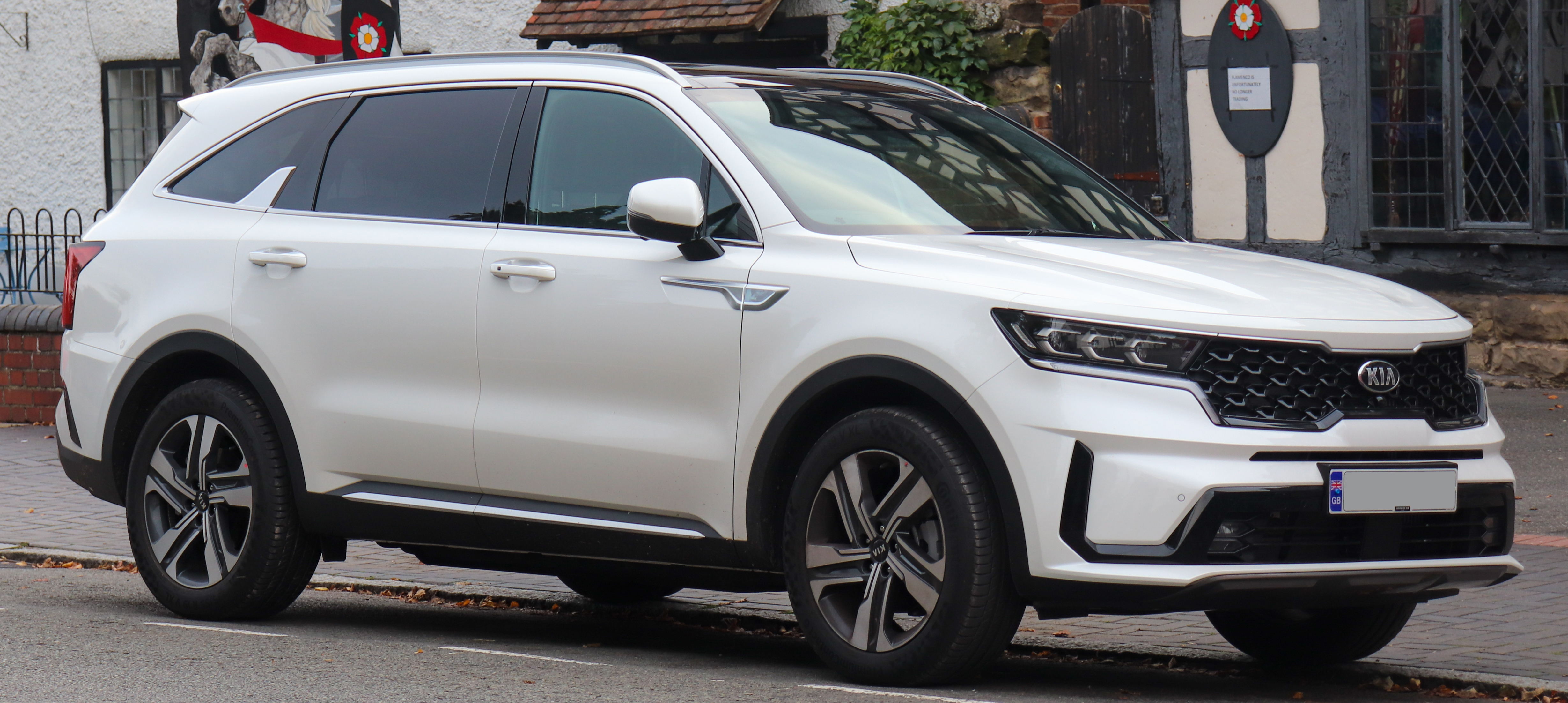
2014 Kia Sorento
"[1333.3s] 2014 Kia Sorento, [1334.7s] I'll have to run to 12 grand."
They mention a 2014 Kia Sorento as an example in a used-car price discussion. It’s a midsize SUV, and what it’s worth depends on things like mileage and overall condition.
The host calls out a 2014 Kia Sorento while discussing used-car pricing and whether the numbers “feel like values.” The Sorento is a midsize SUV, and its resale price is influenced by factors like mileage, condition, and how desirable that specific model year/trim is.

2014 Volkswagen Passat
"[1340.5s] Right at that 15,000, I mean, [1341.9s] we're still looking at like a 2014 Volkswagen Passat [1344.9s] with 91,000 miles is 12 grand."
They’re using a 2014 Volkswagen Passat with about 91,000 miles as a pricing example. Even with similar mileage, different cars can be priced very differently based on what buyers want and what it costs to own.
The host compares pricing to a 2014 Volkswagen Passat with 91,000 miles, saying it lands around $12,000. The Passat’s used value can be affected by its engine choices and known ownership costs, so mileage alone doesn’t always predict price the way people expect.

Dodge Journey
"[1352.0s] But you know, it's interesting. [1352.0s] What's interesting, let's click into, [1353.8s] sure, this Dodge Journey. [1355.8s] What's interesting is I bet you [1356.8s] if I go to my payment calculator down here. [1364.4s] You know, 60 months, $300 a month."
They switch to a Dodge Journey and start figuring out what the monthly payment would be. Payment depends on the loan length (like 60 months) and the car’s price, not just the car’s mileage.
The host focuses on a Dodge Journey and then uses a payment calculator to estimate affordability. The Journey is a crossover/SUV, and monthly payment depends heavily on loan term (like 60 months) and the interest rate/price—so two cars with similar sticker prices can feel very different financially.
payment calculator
"[1355.8s] What's interesting is I bet you [1356.8s] if I go to my payment calculator down here. [1359.0s] Yeah. [1360.1s] There you go. [1361.4s] Let's do it."
A payment calculator is a tool that estimates what your monthly car payment would be. It uses the car price and loan details to show what you’d pay each month.
A payment calculator estimates a car loan’s monthly payment based on price, down payment, interest rate, and loan term. In this segment, the host uses it to connect used-car pricing to what buyers can realistically afford.
60 months
"[1360.1s] There you go. [1361.4s] Let's do it. [1362.2s] I'm rebuilding my credit. [1364.4s] You know, 60 months, $300 a month."
“60 months” means the loan is set up to be paid off over 5 years. A longer loan can make the monthly payment smaller, but you may pay more overall.
“60 months” refers to a 5-year auto loan term. Longer terms can lower the monthly payment, but they usually increase total interest paid over the life of the loan.
vehicle service contracts
"well, what if they have extended warranties or vehicle service contracts for these older vehicles?"
A vehicle service contract is an extra plan you buy to help pay for repairs. The host is saying that on older cars, these plans may not actually cover the problems that are most likely to happen.
A vehicle service contract is a paid plan that’s meant to cover certain repair costs after purchase, similar in purpose to a warranty. The host’s argument is that for older, high-risk vehicles, these contracts often don’t cover the specific failures owners expect.
extended warranties
"well, what if they have extended warranties or vehicle service contracts for these older vehicles?"
An extended warranty is extra coverage you buy so repairs are paid for longer than the original warranty. The host is basically saying it may not help much if the car is old and the likely repairs aren’t covered.
An extended warranty is coverage that lasts beyond the original factory warranty period. In this segment, the host questions whether extended warranties or contracts will meaningfully cover the kinds of repairs that tend to show up on older cars.
recalls
"and like last year, they had 153 recalls, [1583.7s] that might not affect your Ford vehicle, [1587.0s] at least all 153 of them might not, [1589.7s] but there might have been five or 10 recalls in there [1592.8s] that could have impacted your vehicle."
A recall is when a car company admits there’s a problem and asks owners to bring the car in for a fix. Even if your exact car isn’t affected by every recall, lots of recalls can make people feel less confident about buying that brand.
A recall is when a manufacturer (or regulator) identifies a safety or compliance problem and notifies owners to have the vehicle repaired or inspected. Even if a specific car wasn’t affected by every recall, a high recall count can still make shoppers worry about how well the vehicle will work and whether issues will be fixed quickly.
Ford
"and it happened to have been a Ford vehicle, [1577.7s] and like last year, they had 153 recalls, [1583.7s] that might not affect your Ford vehicle,"
Ford is a car brand. In this segment, they’re talking about how a brand’s recall record can make people hesitant to buy, even if your exact car might not be affected by every recall.
Ford is a major U.S. automaker, and the host is using it as an example of how a brand’s recall history can influence consumer confidence. The point is that even if not every recall applies to your specific Ford, a large number of recalls can still affect how people perceive the brand’s vehicles.
General Motors
"The president of the United States [1612.8s] has a private meeting with General Motors in Ford [1616.0s] on June 4th."
General Motors (GM) is a major automaker and is referenced here in the context of a political meeting. The segment uses GM alongside Ford to set up a discussion about consumer repair access and how policy can affect who can service vehicles.
right to repair
"I wanted to get your take on this now [1621.7s] that the right to repair is gaining traction. [1623.4s] Yeah, I think there's a huge amount of interest [1625.7s] in right to repair, and quite frankly, [1627.5s] it's something we should cover more frequently on this show. [1630.7s] We are pro, I am pro right for repair."
“Right to repair” means car owners should be able to get their cars fixed by independent shops, not just the dealership. It also means those shops should have access to the information and parts needed to do the repair properly.
Right to repair is the idea that vehicle owners and independent repair shops should be able to access the same diagnostic tools, parts, and repair information that dealerships use. The goal is to make repairs easier and often cheaper, and to reduce situations where manufacturers restrict who can service the car.
OTD price quotes
"Identify what you want, contact multiple dealers, [1744.0s] get multiple OTD price quotes, [1746.1s] shop them against one another."
“OTD” means the total price you’ll actually pay at the end of the deal. It includes the extra charges like taxes and fees, so it’s the fairest way to compare offers.
“OTD” stands for “out-the-door,” meaning the total price you’d pay to complete the purchase, including taxes, fees, and other charges. Comparing OTD quotes is more apples-to-apples than comparing just the sticker price.

2014 Ford Fusion SE
"So we were looking before, what was it? [1756.3s] It was this 2014 Ford Fusion SE [1759.1s] that Carvana was selling or CarMax, who was it?"
This is a 2014 Ford Fusion, and “SE” is a specific trim level (a particular version with certain features). It’s the kind of everyday car people shop around for when comparing prices.
The 2014 Ford Fusion SE is a mid-size sedan from Ford, and the “SE” trim typically indicates a mid-level equipment package. It’s a common example of the kind of mainstream used car shoppers compare across dealers and online marketplaces.

Mazda Cx5S
"And I am gonna demonstrate it right here. I said, search for Mazda CX-5s. It finds Mazda CX-5s."
The Mazda CX-5 is a small SUV made for everyday driving. People like it because it’s practical and easy to live with. It may be mentioned simply because it’s a popular model that shows up often when searching for cars.
The Mazda CX-5 is a compact crossover SUV known for a comfortable ride and a driver-focused feel. It’s a common model people search for, which is why it can come up in discussions about inventory and availability. It’s often discussed because it sits in a high-volume segment where buyers compare features, pricing, and reliability.

Hyundai Kona SEL EV
"Follow up here from Notorious LX Update, brand new 2024. [2038.8s] Yes, you read that right. [2040.1s] Brand new 2024, Hyundai Kona SEL EV for $29,995."
The Hyundai Kona SEL EV is an all-electric version of the Hyundai Kona SUV. “SEL” is the trim level (a specific package of features), and the host is talking about a deal price for it.
The Hyundai Kona SEL EV is an electric compact SUV from Hyundai, with the “EV” indicating it’s battery-electric rather than gas. The “SEL” trim is a specific equipment level, and the episode’s focus on its price makes it relevant to how consumers evaluate EV deals.

Toyota RAV4
"... about Toyota's, dammit. And not all Toyotas, the RAV4, which to be clear here has a 40% decline in sale..."
The Toyota RAV4 is a compact SUV, meaning it’s a smaller family-friendly vehicle with higher ground clearance than a sedan. The podcast mentions it because its sales have dropped by a large percentage. That’s why it’s relevant to the discussion about what people are buying.
The Toyota RAV4 is a compact SUV that’s widely popular and frequently discussed in sales and market trends. In the podcast, it’s specifically mentioned alongside a “40% decline in sale,” which makes it relevant to conversations about demand, pricing, and inventory. It’s also a common benchmark model when people talk about what buyers are choosing in the SUV segment.
car market is so volatile and nuanced
"So the car market is so volatile and nuanced. That's why I mean privilege, but we get to wake up every day and do this because there's always stuff going on."
They’re saying the car market doesn’t move in a straight line. Even cars from the same brand can have different availability and different sales trends, so the situation can change quickly.
This is a reference to how the car market can change rapidly due to shifting demand, inventory levels, and model-by-model availability. “Nuanced” here implies that different nameplates (even within the same brand) can have very different sales and wait-time realities at the same time.

GMC Acadia
"What did we talk about today? We were talking about that GMC at some point in time, GMC Acadia. Let's say it's just bought a brand new one."
The GMC Acadia is a family-sized SUV. Here, they’re using it as an example to show how the car’s worth changes as the years go by.
The GMC Acadia is a mid-size SUV from GMC, known for being a practical family hauler with a focus on comfort and everyday usability. In this segment, the hosts use a GMC Acadia example to talk about how a specific car’s value changes over time after purchase.
depreciation curve
"Look at this, y'all. We give you the value that it's gonna be, the depreciation curve, what you should expect."
A depreciation curve is basically a chart of how a car’s resale value goes down over time. It helps you guess what the car might be worth later if you sell it.
A depreciation curve is a model of how a car’s value drops over time, usually showing the steepest losses early on and then a slower decline later. It’s useful for estimating what you’ll likely get if you sell or trade the car in a few years.
dealer reviews
"I mean, there's all sorts of good information back at caredge.com, including dealer reviews, so much more, so I encourage everyone"
Dealer reviews are customer ratings and written feedback about a specific dealership’s sales and service experience. They can help shoppers anticipate how the dealership handles things like communication, pricing, and after-sale support.
Request an Explanation
Heard something you'd like explained? We'll add it to this episode.
Sign in to request explanations for terms you heard.
Want to learn more?
Browse our glossary for plain-English explanations of automotive terms, jargon, and concepts.
Help improve this episode
See something that's not quite right? Our annotations are AI-generated and can sometimes miss the mark. Click the flag icon on any annotation to suggest a correction.