Progressive is an insurance company. They mention a tool that lets you pick what you want to pay, and then it shows insurance options that fit that budget.
Dirtfish Rally School is a company that offers rally driving training and experiences. They’re sponsoring the show and inviting listeners to sign up for a course.
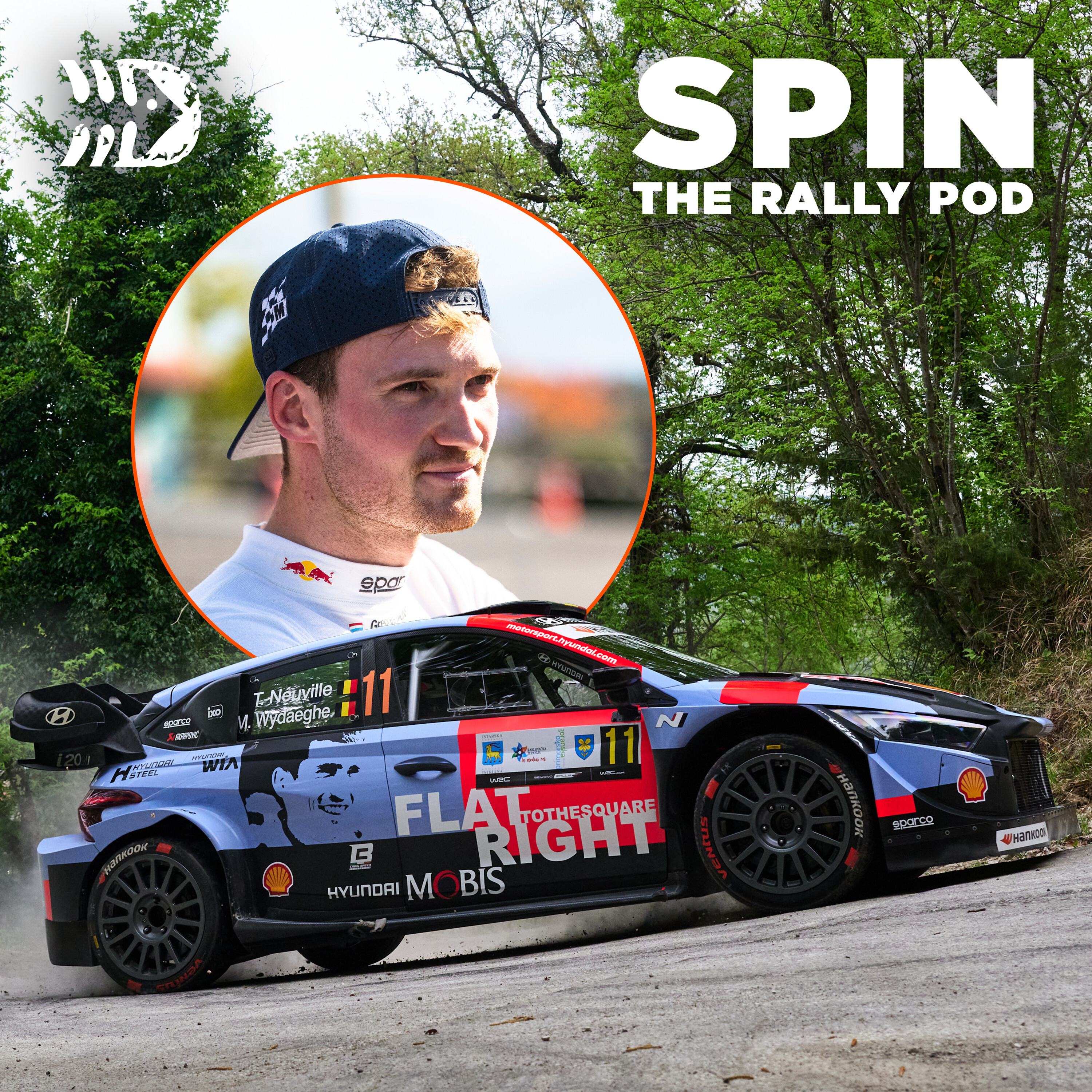
They’re talking about the Croatia Rally and reviewing what made it special. The guest rally driver is there to share his take on what happened and why it mattered.
Concept
world rally challenge events
They’re talking about rally events that are especially intense and difficult. The host is saying they’ve seen some very extreme challenges in Croatia, and this one stood out.
Rijeka is where the Croatia Rally stages were based. Rally roads can change a lot as cars run them, so the exact location and stage layout affect grip and pace.
Road notes are the guide drivers use to know what’s coming. A road note crew watches how the road changes and helps update those notes so the driver isn’t surprised mid-stage.
“Cuts” are shortcuts or alternate lines on a rally stage. They can change what the surface is like, so the notes may need to reflect how slippery or loose it gets there.
Gravel can get kicked up and moved around as cars drive. If a section sheds a lot of loose stones, it usually means less grip and more sliding for the next drivers.
“On boards” usually means onboard camera footage from the car. People use it to review what happened on the stage and sometimes for broadcast or analysis.
Rally stages don’t stay the same. As more cars drive over the road, the surface can get grippier or more slippery, so the next car often has to adapt its pace and line.
Rally cars are very sensitive to weather. If the road is wet or damp, the tires don’t grip as well, so braking and cornering feel less predictable.
Concept
base note
A base note is part of a rally crew’s pace notes system, where the driver and co-driver record information about upcoming sections of the stage. It’s used to communicate how the road looks and behaves (surface, grip, hazards) so the driver can prepare for each corner.
WRC is the highest level of rally racing in the world. Drivers compete on timed sections of road (stages) over several days, so it’s a bigger and more demanding version of local rally events.
Onboard footage is video filmed from inside the rally car. It helps you watch exactly what the driver is doing on the road, which is great for learning new stages.
Pace notes are like a detailed “road script” for the rally stage. The co-driver tells the driver what’s coming—turns, bumps, and dangers—so the driver can go fast with confidence. If the notes are wrong, the driver can’t react in time.
The power stage is the final (or one of the last) televised/featured stages of a WRC rally, where drivers can earn extra championship points based on their stage time. Because it’s often high-profile and heavily watched, it can feel especially intense even if the overall rally result is already decided. Strategy matters: teams balance risk versus the value of those bonus points.
Company
Cobb-Dirtford platform
They’re talking about a platform they use to analyze the rally live while it’s happening. It’s part of how they’re making the show and commentary, not something related to the cars themselves.
“Engine blew up” means the engine had a major failure and the car can’t keep going. In rally, that usually costs you the stage (or the whole rally) right away.
Concept
no Sunday points
“No Sunday points” means they weren’t trying to chase bonus points later. The focus was just getting the car to the finish safely instead of pushing too hard.
Concept
route notes
Route notes are like a detailed warning list for the next turns. Even with notes, you still have to decide the right speed because conditions can change.
On gravel, the road isn’t the same everywhere. If the inside is looser, the tires can lose grip there, so you have to be more careful with how you turn and how fast you enter.
Concept
corner on the outside
When the “outside” of a corner is described as tricky, it usually means the outer edge has different grip or obstacles—like loose gravel, a camber change, or a concrete/curb-like boundary. That can force the driver to manage the car’s trajectory more carefully to avoid getting caught out.
Being in the lead means you’re driving first compared to the rest of the cars. That can change how the road looks and how grippy it is, so the driver’s decisions can be different.
Understeer is when the car turns less than the driver intends—typically because the front tires lose grip first. In rally conditions, it often shows up suddenly when the surface is dusty, uneven, or has reduced traction.
An escape road is a designated runoff area near a corner intended to give drivers a place to slow down or regain control if they go off-line. Rally stages often rely on these safety features, but hitting them can still cause significant damage depending on speed and surface.
Recce is when the crew checks the course before the race. They write down what the road is like so the driver knows what’s coming during the timed stage.
The discussion about aiming for the corner and going slightly wide is about racing line and how drivers manage clearance to avoid obstacles. In rally, line choice is tightly linked to speed, grip, and how accurately the car can be placed relative to hazards.
Rally drivers prepare for the route so they can concentrate on driving. If you try to memorize too many extra details, it can distract you from following the planned line and instructions.
“On the limit” means the car is being pushed right to the edge of grip. Even a tiny mistake at that point can lead to a big problem, but the hosts also note that backing off can sometimes make people lose focus.
Rally drivers try to keep their speed and effort steady instead of swinging between super-fast and slower. When you’re consistent, it’s easier to stay focused and less likely you’ll make a costly mistake.
A “split” is like a checkpoint time during the stage. By comparing split times, you can figure out when the driver started losing time or when something went wrong.
Rally stages are timed in sections. “Splits” are checkpoints along the route, and the timing screen shows how each driver is doing at each checkpoint so you can spot where they lost time.
They’re basically saying the problem likely happened between two timing checkpoints. If the time suddenly drops a lot, it usually means the driver hit trouble in that part of the stage.
In rallying, cars are grouped into classes. “Rally One” is the top class, so when they say he’s the slowest Rally One car, they mean he was behind the other top-level cars in that event.
Hyundai is a car brand that races in rally competitions like the WRC. If they’re “more competitive,” it means their rally cars were running closer to the front than usual in this event.
The World Rally Championship is the biggest rally racing series in the world. Drivers race many events across the year, and they earn points based on how they finish each rally.
Tarmac means the rally stages are on paved asphalt. Cars usually feel different on tarmac than on dirt or gravel, so drivers may drive and set up the car differently.
A rival team is just another group racing for the same wins. In rally, teams compete hard, but people can still be friendly and respectful.
Term
crush out
It sounds like they mean someone made a mistake and crashed out. In rally, when you’re under pressure, it’s easier to misjudge a corner or lose control.
They’re basically saying that when you’re under pressure, you might drive more aggressively than you should. That can make mistakes more likely, especially on tricky rally roads.
“Get the car home” is rally shorthand for prioritizing completion over outright speed—finishing the event even if you’re not in a winning position. After teammates retire, a driver may shift to a conservative strategy to secure points and avoid another crash.
In rally, the World Championship is decided by points you earn at each event. So even if someone isn’t leading right now, they can still catch up later.
In rally, where you start can matter because the road gets used up and changes grip. On some surfaces it’s a big deal; on others it’s not as important.
“First on the road” means you go before most other cars. The track can be different then—sometimes worse, sometimes better—because other cars have not changed it yet.
Gap management is how a driver controls their time relative to rivals—deciding when to push, when to be smooth, and how much risk to take. In rallying, managing the gap can be as important as outright speed because it helps avoid mistakes while still protecting (or gaining) position.
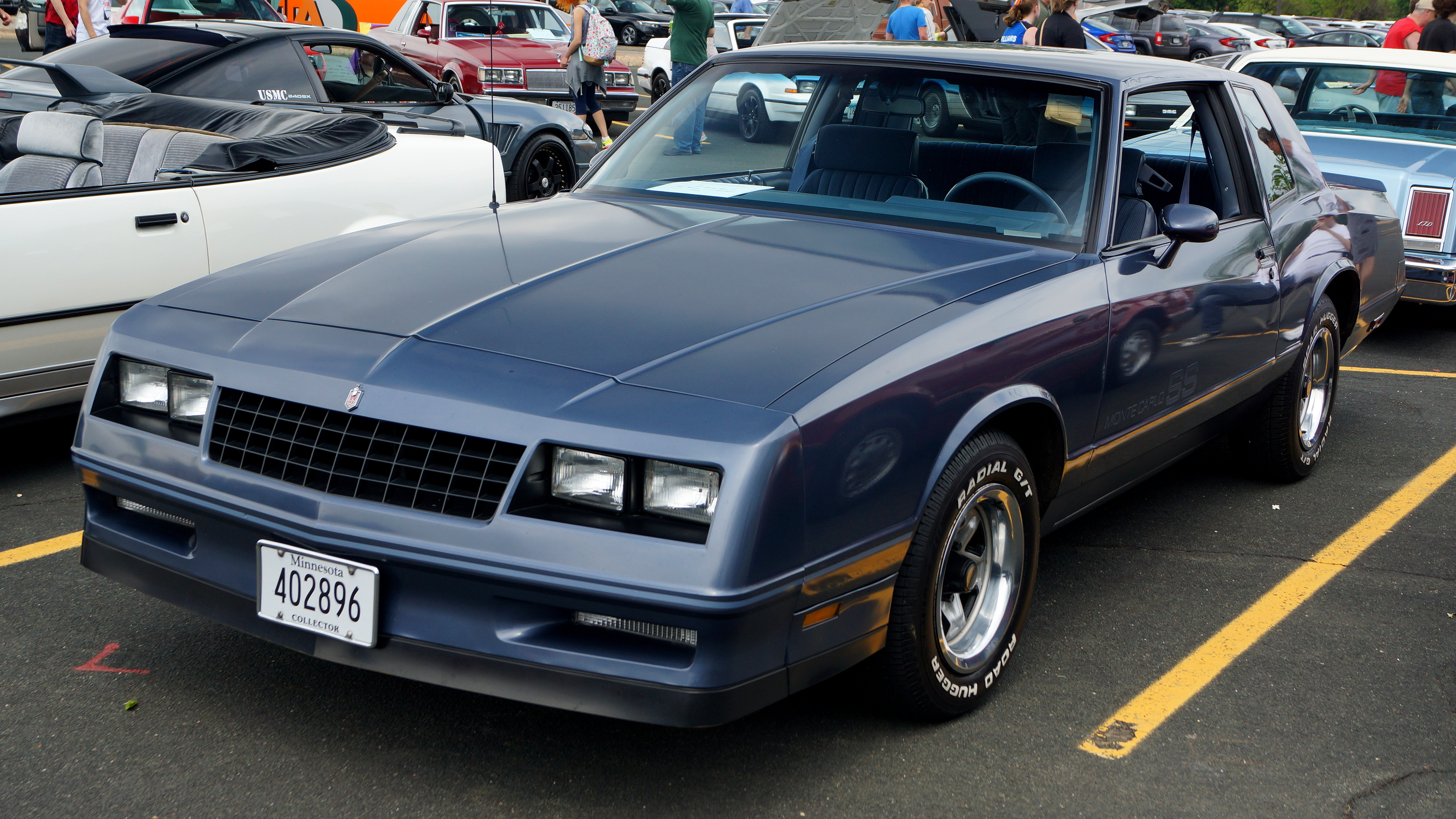
The Chevrolet Monte Carlo is a two-door car made by Chevrolet, known for having a powerful engine and a sporty look. People bring it up because it’s a well-known model from earlier decades and it has been used in different kinds of racing and events. If it’s mentioned in the context of visibility or impact at events, that’s usually about how noticeable it was compared with other cars.
Gravel changes traction dramatically compared to tarmac, because loose stones reduce tire grip and can cause the car to slide more easily. It also increases the chance of punctures from sharp debris, especially when the road is worn or has lots of loose material.
Rally races are divided into timed sections called stages. If something like a puncture happens on stage 11 and 14, it can hurt the driver’s results on those specific parts of the rally.
The rim is the wheel part the tire sits on. If a rock hits hard, it can damage the rim, which can make the tire unusable even if it doesn’t fully blow out.
A puncture is when something sharp damages the tire and it starts losing air. In a rally, that can ruin your grip right away and can even damage the wheel.
Concept
gravel crew
On gravel rallies, the surface can change a lot from stage to stage. A “gravel crew” is basically the people preparing or managing the road/gravel, which can influence how slippery it is and how risky it is for tires.
M-Sport is a major rally team and constructor best known for its long-running involvement in the World Rally Championship (WRC). When a driver is described as being teammates at M Sport, it usually means they were driving the same rally program/manufacturer-backed effort.
A “concentration zone” describes the mental state where a driver stays fully focused and consistent—crucial in rally because decisions happen quickly and repeatedly. Falling out of that zone can lead to late braking, poor line choice, or missed cues.
Locked up means the wheels stop turning while you’re braking. When that happens, the tires can’t grip as well, so the car may slide or go wide.
Term
anti cut device
They mention an “anti cut” device, which sounds like something meant to prevent damage from cutting or snagging. The exact part isn’t clear here, but it’s about avoiding a problem getting worse.
In rallying, getting just one corner wrong can ruin your whole weekend. If you misjudge what the corner does, the car can slide or crash, and you may not be able to continue.
Cutting a corner means you take a tighter path through the turn to save distance and time. In rally stages, that can be dangerous if you can’t see what’s inside the corner.
Oversteer is when the back of the car starts to slide outward in a turn. It usually means the tires don’t have enough grip, so the car rotates more than you intended.
A ditch is where the road drops off or has a trench beside it. In rallying, if you end up in one, it usually means you’ve lost control and the car can get damaged.
They mean the Monte Carlo Rally. It’s known for cold, slippery conditions like snow and ice, so drivers have to be extra careful and choose the right tires.
“Attritional” here means the rally is tough on cars and drivers. Lots of competitors struggle to finish well, so being careful and keeping the car healthy is a big part of scoring.
Rally1 cars are the highest-level rally cars in this competition. When the hosts say only a few Rally1 cars did well, it means even the top cars couldn’t easily handle the conditions.
“Pollution” in rally context usually means debris and rubber transfer on the road surface that alters grip. As more cars pass, the stage can become dirtier or more unpredictable, affecting braking distances and traction.
Rally cars use different tire types. A “hard” tire lasts longer, but it can feel less grippy, so the car may slide more if you drive like you have a softer, stickier tire.
“Grip” means how well the tires can hold the road. If grip is high, the car feels more stable and you can go faster through corners.
Concept
tiny miscalculations
The hosts are describing how rally failures often come from small errors in braking points, corner entry speed, or line choice that compound over a stage. On slippery or inconsistent grip surfaces, even slight misjudgments can lead to understeer, off-line running, or contact.
A “new stage” means the route is new to the teams, so they can’t rely on past knowledge. That makes it harder to judge corners and hazards, so pace notes and practice become even more important. If the notes aren’t right, drivers can go off.
Rally stages are often driven more than once. The second time can feel different because the road surface changes and the crew learns from what went wrong the first run. That’s why drivers may be more cautious—or sometimes overconfident—on the second pass.
“Went off” means the car left the road and ended up off the course. In rally, this usually happens when the driver misjudges a corner or the surface isn’t as grippy as expected. It can be caused by wrong notes or simply arriving too fast.
A “steep drop” is a big drop-off near the road. From a camera it can look flatter than it really is, but in real life it changes how risky the corner is and how hard it is to recover the car if it goes off.
Concept
on site seeing the thing happen in real life
Watching a rally in person can make everything feel more real. You can see how the car moves and how obstacles slow it down, which is hard to fully understand from a distance.
In rallying, roadside vegetation and obstacles can affect speed and safety by forcing drivers to adjust their line, braking points, and steering angle. Even “minor” contact or proximity can cost momentum and increase the chance of a crash or off-line excursion.
Every rally feels a little different. Even if the exact conditions change from year to year, having experience with the event’s overall style can help a driver go faster.
Concept
lack of experience at this level
The hosts discuss how a driver’s results can be influenced by experience at the top tier. “This level” usually means the intensity of competition, stage difficulty, and the pressure of managing pace notes and car setup over multiple rounds.
The Barum rally is a well-known European rally event (often associated with the Czech Republic) where stage conditions can demand strong car control and confidence on tarmac or mixed surfaces. Onboard footage from events like this is especially useful for understanding how drivers manage grip and corner entry.
It means driving fast, but not so aggressively that you crash or break the car. Rally is tough on the car, so you have to find a pace where you’re quick but still safe.
If you go into a corner too fast, the tires can’t grip enough and the car can slide or hit something. In rally stages, the road can be unpredictable, so controlling speed matters a lot.
In rallying, you don’t always go all-out on every single stage. This approach means you push hardest when you feel the conditions are right, and drive more carefully when they’re not.
“Go flat out” means pushing the car as hard as possible. It can be fast, but if you’re too aggressive for the conditions, you can make mistakes and lose time.
A “smart approach” means you drive in a way that keeps you safe and avoids big errors. In rallying, that often matters as much as outright speed because finishing is how you score.
Sweden is a rally where the conditions are usually very slippery. That means the car and driving technique have to be tuned for snow/ice, not normal road grip.
Kenya is portrayed as a tough rally where you’re not just racing—you’re trying to make it to the end. Rough conditions like mud and heat can cause problems, including overheating.
Overheating means the car is getting too hot. In rally conditions—especially in heat, mud, or when airflow is blocked—the cooling system can struggle, and that can force the team to slow down or stop.
They call it a mechanical sport because the car matters as much as the driver. If something breaks or a tire gets damaged, you can’t just drive through it.
A bump start means getting the car moving and then using the motion to help the engine start. It’s a workaround if the normal starting method isn’t working.
Finishing “top five” means you were among the best five cars in the rally. It’s a strong result because it usually means you didn’t lose too much time to problems.
LIVE
Insurance isn't one-size-fits-all.
That's why customers have enjoyed Progressive's Name Your Price tool for years now.
With the Name Your Price tool, you tell them what you want to pay, and they'll show you
options that fit your budget.
So whether you're picking out your first policy or just looking for something that
works better for you and your family, they make it easy to see your options.
Visit Progressive.com, find a rate that works for you with the Name Your Price
tool.
Progressive Casualty Insurance Company and Affiliates, price and coverage match
limited by state law.
Thank you for listening to Spin, the rally pod, brought to you by Dirtfish Rally School.
For your chance to experience life behind the wheel of a rally car, head to
drive.dirtfish.com to find the course that's right for you.
What are you waiting for?
We're right here waiting for you.
Croatia rally has always had a habit of delivering some extreme world rally
challenge events, but if I'm honest, I genuinely do not think I've seen one
more astonishing than what we saw last weekend.
Here to join me on Spin the Rally Pod to discuss it all is Gregor Munster.
What an honour, Greg.
I think this is genuinely Spin the Rally Pod history.
I don't remember the last time we had a rally one driver join us to
debate the events of an event.
So welcome along.
Is it?
Thank you for welcoming me.
I think you've had John who is now a rally one driver.
No, this is true, but I more mean to actually discuss a rally itself.
We've had drivers on before, but actually to debate and review an event.
I think this is new.
So no disrespect to David Evans and Colin Clark and the rest of the
gang, but I think we might have up the levels a little bit here.
I said it, not you.
Greg, you were obviously in Croatia, not driving sadly, but you and I had a
very, very quick catch up.
Just to explain to everybody listening, what it is you were doing
at their last weekend in Rijeka.
So on Monday, I was coaching Bernhardt and Brink, car number 38.
And then later on in the week, I was doing a root note crew.
So helping, you know, change the condition in the base note with the
cuts and so on and the amount of gravel that came out of them.
And then in between, also during Ricky, helping out with, you know,
the on boards and Ricky support, bringing some stuff they need.
So everything goes well.
I was going to say it's a big job doing root note crew anyway,
but in Croatia, it changes to the road.
I imagine that was quite eyeopening to see just how much the road
was changing from pass to pass.
Yeah, for sure.
I would say normally root note crew is super like important when you have
tricky weather condition and, you know, water or dampness and so on,
just to describe them in the base note.
But here with the amount of gravel that there was on the road,
it was, yeah, almost one correction per corner.
Was this your first time doing that job?
Have you done it before?
I've done it before, but more on national events, not in the WRC.
But yeah, it's basically the same, just just longer stage and more days.
So how did you find it?
And because I guess for you, you want to be driving in the in the car
competitive, we don't you.
So I imagine is that element of frustration and you're up even earlier
than if you're driving as well.
So that's maybe not a plus point, but I guess for you,
it's obviously helpful that you're helping someone else.
And I imagine that comes to compensation for you as well.
But also it's it's still experienced to be looking at the stage,
isn't it, which is important.
Yeah, exactly.
So for me, it's it's good to see the evolution
from from one path to the other.
And then, like you said, just to go through the stage this year,
especially Croatia was like 70 percent new stages.
So yeah, it's super, super good for me to go over them.
Also that way, I have some onboard footage at slow speed,
which I can use to redo pace notes in case I need them for next year.
What I found really interesting is obviously your co-driver,
Louis Luca, was doing the same job, obviously in the co-driver seat.
But for Terry Neville, wasn't it?
So you're both out there, maybe not in the car together,
but still a WRC event working.
Yeah, it was a bit strange to see each other doing the same job,
but in two different cars.
So shall we talk about the event?
I've kind of mentioned the man of the moment, really, Terry Neville.
Greg, I know you're obviously a driver,
so you maybe don't look at things at the same sort of angle
as the rest of us do.
But can you remember a final stage as crazy as that?
I just I, we were watching and we were recording a thing
on our Cobb-Dirtford platform called the power era,
where we're basically doing an as live analysis of the event
as the power stage is going on.
I've still to listen back to that,
but I don't want to hear the shrieks and the surprise
everything when we saw what happened to Terry.
It's just the most incredible end to an event, I think.
Yeah, it's it's crazy to see.
I think we've had a lot of power stage where a lot goes on.
Like, typically, I remember in Sardinia,
once with Oji and Terry, where it's like fighting till the end.
And so you have a lot of excitement.
But here it was almost like everything was just going to be
every everyone thought it was going to be the result
like how it started the stage and nothing could happen.
So it was like a big surprise, big shock
and and yeah, difficult to to understand as well.
So yeah, the only moment I can think of is
when Carlos Sainz had had like his engine that blew up
and and with Luis Moira throwing his helmet in the in the
that's the only thing I can think of.
A bit similar like of a shock.
But that's what's crazy about it, isn't it?
As you say, we have had power stage drama in the past,
but more often than not, it's been some kind of close fight.
Terry had a lead of over a minute and all day, all he said,
no Sunday points, no,
Paris, it doesn't matter, just get the car through.
But it's the thing with this sport
that you just can never predict what's going to happen.
What I'm interested in, though, first is obviously you have
been through this stage, won't you?
And you're your route, no crew role.
Do you do you know the corner?
Do you remember it? Was it quite difficult?
Yeah, yeah, for me,
that's for me, that was the only corner that was really tricky
out of this stage.
And I saw some lines as well from car that went off
on the first pass.
So basically to my to my my gravel, I was to my my crew.
I I told them to
to be aware of that specific corner
and that that was the one where they should be careful.
Now, you know, it's it's easier than said,
because you never you never know what speed exactly
you need to to take into that corner.
And I don't know exactly what was the what was the warning
they got in the from their route to not crew.
And probably killed even more speed than what
he thought was needed and still got caught up.
So, yeah, it's it's part of rallying, I guess.
But there's two aspects here, there wasn't there.
There's obviously the gravel on the inside,
but there's the trickiness of the corner on the outside.
You can understand what Thierry's tried to do,
particularly in his position with such a lead
as he's seen essentially an escape road,
the junction to try and go down.
But what he hasn't maybe fact in is that bit of concrete
that's ultimately done the damage.
So, yeah, actually, it's so it's right under the titans.
The surface was already quite dusty from the start
because you have some some roadwork and so on nearby.
And then obviously, they take the cuts,
which throw some dirt on the road as well.
And yeah, I think he carries a tiny bit too much speed.
And then as soon as he had understeer,
he tried to go in the escape road, as you said.
And basically that concrete is actually from a triangle sign
that was there before and someone hit it.
So you only had the concrete like support or base layer left.
And I think in that aspect,
he's a bit unlucky to hit it exactly at that spot.
But yeah, it caused enough damage to to make it game over for them.
So when you did recce in the first pass, the route, not true.
There was that warning sign there,
but on the first pass, someone's taken out and then he's hit the.
Yeah, exactly. Wow.
OK, that makes sense.
Because obviously from the onwards, I've seen it.
It looks a really random sort of block of concrete.
So if it was supporting a sign, but again, could you argue that again?
Maybe I will actually I'll ask you this question.
If you were doing this yourself as a driver through that corner,
would you have noted the sign on the outside?
Or do you just not think about the fact
you're going to go to the top there so there's no need?
Yeah, it's not like it's within the line.
Like, you know, if you have a line and then very close by is the sign.
Like I will say, approximately within 20, 30 centimeters.
Then it makes sense to note it here.
It's it's not really in the line.
So if you aim for the corner
and even if you go a tiny bit wide, you won't hit it.
So I me personally, it wouldn't be in my in my case, no.
Yeah, see, that's interesting.
Somebody like me, I've done one rally before
and it was all about getting to the finish,
not about the speed.
So I'm noting everything that literally exists by the side of the road.
But as you say, when you're doing it properly,
you don't need to know what's there because you don't plan for.
For this to happen.
If you start like this, then you you put all the trees around.
All the all the obstacles that that that you might hit.
But they've already so many information in their pace.
Not if you start adding all these things, it's it's a bit much.
But yeah, maybe maybe for that time, it should have been, I don't know.
Do you think that it's maybe unfair to ask,
because I don't know if he's spoken to Thierry or Martin since.
And I don't know how much he's looked on board or anything.
But can you imagine a scenario where potentially
if they're in the position they were on Sunday,
where they weren't fighting for anything, you're actually you're backing off.
People say this is harder to do, don't they?
When you're not 100 percent on the limit,
it can be easier to have a very small lapse in concentration.
And as you said, I think they've paid a very high price for the mistake.
I do. And it's still a mistake, but it's a big penalty to pay.
But in their scenario, can you imagine it was maybe harder
to stay concentrated because of, I guess, how easy it looked from the outside?
Yeah, it might be.
Like you said, often we just try to keep
consistent pace throughout with some commitments,
because otherwise you can, like you say, get out of focus and so on.
But I don't know. We also maybe have to look at the split.
I think for sure they were just driving through on some of the stage before.
I don't know here if it's poor stage or not, if they were going after some points.
I heard from the whole life that he was still going to try and take one or two points.
I don't know if that was the case. The split needs to be analysed.
But for sure it might play a role, you know, just
when you want to get through your you're still focused
and you're going at least 99 percent.
But maybe that one percent is lacking and then you can get caught out
or maybe just not listening enough to the patient.
I don't know. This is this is one for Terry.
You know what's interesting is while you're saying that,
I've actually pulled up the official timing screen on the splits
and that that first one is at 1.82 kilometres.
The next is 4.7 and he's dropped a minute 20.
So that's when in between that gap, the incident has happened through that first split.
And I'm just making sure I've not misunderstood this.
He is the slowest of the rally one cars, not by a lot.
He's 2.4 seconds off Solberg.
But next slowest is let me see Josh McElhane is two seconds.
So they're all quite similar, but he is at the back of that field.
So it would maybe suggest from that that, as you say, he wasn't pushing.
But yeah, we need to speak to Terry next week in Canaries.
But you know, the one thing I think was quite commendable
was the fact he made the finish.
We heard the team on the radio telling him to retire the car.
That surely would have been the easy thing to do.
I guess just do that hide from the world.
But it's almost like he wanted to get to the cameras
and apologize to the team, which I think was commendable.
Yeah, I think, you know, like he said, a lot of people are putting hard work into it.
And they were so close to getting the result for it.
And so, yeah, I think he knows he was the one to blame on that one.
And yeah, I think we often say that, like,
Terry never gives up as well.
So I think it's it shows to go till the finish.
And yeah, saying that to the to all the people involved and so on.
Because I think from from Hyundai, generally,
we've seen that they were more competitive this weekend.
And it was good to see as well.
And it's encouraging for for Canaria and so on.
It almost looked like Toyota's domination was going to be broken, didn't it?
So, of course, they ended up with a with a one, two.
Let's talk about Takamoto Katsuta.
Then obviously made and winner last time in Kenya.
He got asked about that a lot at the beginning of Croatia, as you can imagine,
us included. And I think it got to a point where you got to let the guy
focus on the event. I think everybody expected he could do quite well.
Did anybody think he would win again?
I don't think so. I don't even think Taka did.
But yeah, he waited for one and a second has come immediately after.
A little bit of a stat for you.
The last time that happened that I'm made in WRC winner one again, back to back
was, do you know, actually, if you how much of a story are you?
Greg, I'm not that good.
I would say Cali, but I'm not sure.
Wasn't Cali. It was Jill Penitze, believe it or not.
In the year 2000, it was Corsica and then San Remo.
They were obviously two special healthy services events for for Jill.
But yeah, Taka now leads the World Rally Championship for the first time.
What have you made, Greg, of of Taka's progress, I think, this year?
Because it's fair to say he's he's in the best form of anybody at the moment.
Yeah, yeah, it's unbelievable to see.
I would say Taka has always been quite competitive on different type of events.
Like it's not like it's a specific surface that suit him.
Like if you see in Japan on tarmac, he's always been really competitive as
well in many events on gravel, especially in Kenya.
He's always fighting for for podiums and so on, but in Sweden as well.
So but often it's been like a bit up and down, depending where we are in the season.
And here he's having like a super start of the of the season.
So it's great to see.
And then, like you say, to to see him finally get that that first win
and then straight on go to that that second one.
It's a bit like Adrian last two years ago.
Sorry, when he got his his first podium in Sweden
and then straight on had a back to back podium in Kenya.
Yeah, it's true, actually. That is very true.
I guess in fairness, Adrian might be getting more frustrated now.
He's not got that first win, but we'll get to his weekend a bit later on.
But they watched Mark, a boy at Taka, about Taka, sorry.
And people always talk about it, but it's his it's his character.
And we saw how he almost felt awkward accepting the victory.
The end, didn't he? He felt so bad.
And this is not if it's his teammate that makes a bit more sense.
But it's it's a rival team and he's still feeling so.
And I think that's it's a really nice thing to see that there are some
genuinely, genuinely really nice people in in the championship.
Yeah, for sure.
Ataka is always being is always been so so nice with anyone.
And I think, like you say, it's a rival team.
But on another hand, you know, sometimes you will have someone that crush out.
But because you're putting him under a lot of pressure,
fighting for maybe only like 15 seconds.
And then because of the pressure you're putting on him, then then he will
crush out and for sure, it's not nice to see.
But then you kind of provoke that or something.
But here, like you said, it was like one minute gap.
So it's coming out of nowhere.
And but yeah, it's again, so so nice from him to to see him struggle
to to take that win, but I guess he said it himself.
He tackles.
Sadly, he's been there, hasn't he?
Not necessarily in a winning position, but I think Kenya last year always
comes to mind where he's had that crash and the parachutes had to retire.
So he knows what it's like to to give something like that up.
But Greg, I'm interested in your thoughts on Taka's sort of mission
for the rest of the year, because he talked so much this weekend
about how he had to get the car home after his two teammates had their
instance on Friday, which we'll get to very soon.
But he almost didn't talk like someone who believes he can fight for
the World Championship at the minute.
He is the guy he's leading the World Championship by seven points
over Elvin Evans.
So my question to you is, do you think Taka can not?
I don't want to ask, be well champion, because there's too many events still.
But do you think he will be a factor in this fight?
Or do we expect Elvin to Solberg to jump back ahead?
I mean, for sure, I think we can count on Evans and Solberg
to to come back in the fight.
I think from the start, we've seen that they they are the one
that are going to fight for the championship at the end.
But yeah, Taka showed great things in the start of the season.
And for sure, there's no reason why he couldn't be fighting for for the same thing.
Obviously, he's also going to have the the bad starting position now.
Potentially, let's put that he might he might not be first in gravel.
Yeah, canaries actually, I'll just quickly jump to it.
I've interrupted you.
But should starting position make a massive difference there or not really?
Because it's hardly anything at all, is there?
No, not for not for Canaria, obviously.
But we've seen last year in Canaria that the Toyota were super strong.
If it's the same result and they do like one, two, three, four.
I guess the points different will be not that massive.
And then let's see going on to gravel what's what's going to happen.
But then with the different calendar now this year, Japan is also there.
So so, yeah, let's see.
It's a bit it's a bit different this year than than the previous one
with the starting position.
It's a good point.
And I think it's come to light more actually now.
But at the time when the calendar was announced, they sort of said,
oh, we're going to do this to not have this big run at the
but guess penalize the championship leader.
But the entire second half of the season is gravel.
So it could be quite interesting to see how that pans out.
And I guess in that scenario, you would favour Evans
because he's got the experience of it.
Solberg has got minimal.
I don't think tack has got any of being first on the road on the first day.
So, yeah, that'll be interesting.
But we are jumping ahead a little bit in the year.
Who knows what we're going on in the future months.
We can't predict too much.
But the other driver, I think that really was in that
we was in the victory conversation wasn't he led for most of the rally
was Sammy Pirey.
And I don't like talking about drivers that deserve certain results
because things always pan out a way they do for a reason.
But this I felt sorry for Sammy.
I did, particularly in the way that it panned out with Thierry's accident.
He had gone a bit harder against Tacker.
You might have snuck a win for a second time.
What would you make of Sam's performance?
To me, he was probably the best performing driver of the weekend.
Is that fair? Yeah, it's fair to say.
I think he showed great pace and also management.
Like he was on it and not a single mistake.
Like, you know, going a bit straight or having a small spin, everything.
He was always managing his gap and so on and being on it.
So impressive, impressive stuff from him.
Surely on Tarmac and I think he's been good like on Tarmac,
especially in Canaria last year, but on other events like Japan,
Monte Carlo and so on, it was less noticeable, I will say.
And here it's a tricky event with a lot of cuts, a lot of gravel on the road.
And yeah, he was he was just showing incredible space.
So very unfair to see him get that puncture.
But like you say, it's it's part of the event.
And there's probably a reason why he he got one and and others didn't.
Yeah, like I said, it's part of rallying.
Sometimes they come up, you have no idea from where and you just have to
yeah, carry on and on to the next one.
How bad was that stage?
Actually, the one that you puncture on it was stage 11 and 14.
And that's in the only new one on on Saturday.
A lot of the drivers suggested that maybe they should have put
some some more anti cuts in there because of how bad it got.
It was almost like a gravel rally on Tarmac, which for a tire
is very, very hard to deal with.
It's designed for a very different surface.
Yeah, exactly.
I think that stage at a bit of everything.
But I went through as I would not crew on the second pass.
And yeah, I think it's the the Tarmac stage where I've seen
the most gravel in my life.
So really impressive to see.
Also for the organizer to clean that mess up.
But yeah, it was you had the middle section where there was so many cuts
mostly with like gravel coming out.
But then later on, you had some cuts where they weren't so polluted.
But actually, you had some big rocks like embedded rocks
into the grass or into the ground.
And yeah, they were getting sharp as well with the pass of the car
because you're you're like digging through a bit.
And then these embedded rocks start to come out in the beginning.
It's only one or two centimeters.
And then it ended up by being four or five.
And then that's enough to puncture or do a big impact in the rim.
And and yeah, I think we've seen a lot of puncture in WRC, too, as well
in that stage.
So yeah, but some other drivers went through and didn't have puncture.
So again, how is it?
Is it from the gravel crew related?
Is it from just taking maybe a tiny bit less risk in some sections?
I don't know.
Yeah, it's interesting.
I think the three obviously that didn't in rally one
anyway, were Solberg Evans, who were the first two cars in.
And then you feel and that's what gave him that minute advantage.
And I'm just thinking about it now.
He kept calling it a gift, his victory.
And it's just it's such that I just still can't believe it.
We're like two or three days on when it happened.
It's honestly, I just don't remember a time or an event flipped like that.
It's it's crazy.
But let's talk about your bills.
Team mate, I drown for someone you've worked with very closely throughout
your career, especially in 2024.
And actually 2023 in rally two as well, you were teammates at M Sport.
Not really the weekend that the Adram was after.
Was it a puncture very early on kind of put him on the back foot
and then a mistake on Saturday?
Yeah, I was expecting a lot from Adrian
because it's this kind of rally, typically, where he can perform very well.
But I think, like you said, that puncture early on.
You know, then you're not really fighting in the front anymore.
And it's you get a bit in that zone.
Like like you say, with Terry managing his gap in the last stage,
when you get a puncture early on and you see the guys in front fighting
and you can gain back sometimes,
but you will probably like gain five second per stage.
And hopefully you end up with fourth or fifth or something.
It's also tricky to to stay within that focus zone, concentration zone.
And then maybe that's what happened as well on Saturday at some point.
I don't know, he he had a breaking
within a within a cut before right under with an anti cut device.
And yeah, he just locked up,
go go into understeer and then pull the handbrake to try and
get out of that understeer.
But obviously there was a wooden pole, I think, on the outside.
And that was enough to, yeah, do proper damage to the rear left suspension.
How does that feel, though?
So I guess you're a man who is learned the hard way sometimes
that the small margins make a big difference is one tiny, tiny thing.
And your whole weekend is is ruined, isn't it?
How difficult is that as a driver?
Because I think maybe a lot of us from the outside
don't actually appreciate how millimetrically perfect
you have to be all the time and one little tiny thing.
And it's like it's all just it's all gone.
Yeah, it's it's really difficult to understand
because, you know, we're driving approximately 300 K over a weekend.
Over one K, you probably do what, six to ten corners.
So that's a lot of corners to tackle through the weekend.
And you do a mistake in one.
That's enough to, yeah, to finish your your weekend
just just with one corner misinterpretation.
So, yeah, it's actually it's like cherry same.
Just one mistake over the weekend and game over, no, no result.
So yeah, it's I don't know exactly what happened with Adrian.
Like the way he tackled the corner.
It's again, something you need to tell him, but to ask him.
But yeah, I feel I've had that in the past as well.
Typically, it was in in Greece.
Twenty four.
I took a cut, but probably 10 centimetre not enough.
It was like under under a bush or something.
So on Ricky, I didn't see they were going to cut that much under the bush.
Got carried into oversteer, hit a wooden pole just like him
and then ended up in the ditch while I was a fourth in the Acropolis rally.
So same situation.
And when I talk talk with Adrian afterwards, he told me,
ah, yeah, but from from last year, I know we took that cut under the bush.
But it's a tricky one to see.
And then you're like, damn, it's one corner out of the
probably thousand we're tackling over the weekend.
And that's enough to to retire you.
So yeah.
And then I think they carried on and on Sunday,
they had something happened with with the co-driver as well.
Reading the pace, not like mine in Chile.
So yeah, not not the perfect weekend for them.
Have you ever, though, in your career
been offered hospitality and lunch by spectators
after you've had to stop on a stage?
That was cool, wasn't it, to see those pictures?
Yeah, it was really cool to see.
But I mean, that's that's like rally spirit, you know,
that's one of the story of many that you can find.
The hospitality you can't I didn't go for lunch.
After the retirement, but you always have spectators coming
and ask if you need any help, if you want some some water,
things like that, if they will give you a hat.
If it's super hot or if you're going to burn
with the sun in the acropolis.
So yeah, that's that's the WRC hospitality.
How does it feel then if you compare spectators
coming around you to when Dirtford's arrive on the scene
and want to interview you? Which which do you prefer?
It depends a bit where you are in the stage.
And then sometimes it takes you a bit more time to reach us.
But no, I mean, obviously, we know it's
it's not the best of the moment.
But at the end, yeah, for me.
Oh, how I process with it is just it happened anyway.
So you cannot rewind.
You're not you're not driving on a simulator at home.
So yeah, there's no reset menu to go back and do again.
Is there? Yeah, you just deal with it
and try to analyze why it happened.
And and yeah, you have some sometimes some silly question.
But at the end, we're still happy to see you guys.
Very good. Do you expect it actually?
I don't know why I'm going down this route.
But as a driver, do you sort of think all this might happen?
Do you like have to mentally prepare for that to face the media
and to work at what you're going to say?
No, not not really.
I mean, you're just thinking about why it happened for for the five
or ten first minutes.
Then maybe you think about the championship
at what consequences it will have.
And then you just you just carry on, like I said,
happens and onto onto the next one.
Let's talk then about the final
of the Hyundai's Hayden Padden, who obviously did Monty
car will skip the last two events and came back for Croatia.
Monty was a difficult event for him.
I think we all know that there was some mental challenges there as well
with what had happened in the past.
This time he had to show a bit more pace and he did.
And in the end, that being reliable managed to get him a podium.
Again, there was only three rally one cars that finished in the top 10,
which shows just how attritional this event was.
But what did you make of of Hayden's performance in Croatia as well?
Yeah, I think, like you said, Monty Carlo was a bit tricky,
but there were a lot of of challenging things with the fact
that also it was like a bit of a last minute
plan to put him there with not much testing and so on,
getting back into the rally one on probably one of the most
tricky event of the calendar.
But then, yeah, in Croatia, obviously,
it's less tricky than Monty because you don't have the snow
and so on or the ice.
But it's still a very tricky event with a lot of cuts,
pollution, massive road position and so on effect.
And I think he dealt with it really well.
Also, like respecting his, how do you say,
his role within the team.
I think Terry and Adrian really fighting for
for the win for the podiums.
And then you you have Hayden that's that's there just to to get
some manufacturing point and eventually go on the podium
when the when the opportunity arise.
And that's exactly exactly what he'd done.
Yeah, you're right.
As you're just thinking about it, it was fourth.
And I can't remember how much further ahead of formerly was,
but we all kind of knew that was probably going to be reversed.
So you could have been fifth.
And in the end, he ended up third.
See, it's funny how it all works out.
And let's talk, though, about two drivers who we probably did
expect a much higher result from over Solberg and Elvin Evans.
We'll start with Oliver because he was bizarrely the first.
And I say bizarrely,
we were still doing our start interviews that we do in the morning.
We hadn't even seen the message that's all gone.
We're still talking to the drivers who hadn't started the stage
and it was over for the day.
It was quite bizarre.
But it seems that he just didn't have enough knowledge, maybe,
or experience on the hard tire, picked up some understeer,
hit the bank and and that was it.
Yeah, yeah, it's it's tricky, you know, with the with that hard tire.
I remember us last year struggling quite a bit, even like on rallies
like an area where you have an incredible amount of grip.
So I can imagine, you know, with low temperature from the morning
on the event like Roche where the grip is is a bit inconsistent.
Yeah, you can carry like understeer over the whole stage.
And I think he was complaining of that before.
And or he was at least mentioning that he had quite a bit of understeer
in early in the stage.
And then, you know, first stage, when you start to have understeer
and so on, you also want to keep pushing because you have a feeling
you're losing time and you're thinking, oh, if the others have gone
with some soft, we'll probably gain some time.
And then you want to compensate or at least do some damage limitation.
And then it only needs one corner to to take you out.
A bit maybe too optimistic in one corner.
He couldn't take a cut either because it was like the edge of the road.
You had like a ravine or I don't know how you how you say it.
And so there was no escape for him.
He had to commit to the corner with the speed he had.
And yeah, probably five KPH too much.
And then hit the mountain and came over.
Do you think this is a symptom of them being brand new stages?
Because we maybe don't expect this much attrition on tarmac rallies.
And the more we're talking about, the more I'm realizing
that all these errors have been just tiny, tiny miscalculations.
But nobody had the knowledge of any of that.
If I'm not mistaken, maybe Formals was a familiar stage.
I can't remember. But other than that, they were brand new stages, weren't they?
So does that does that kind of lead to potential these kind of mistakes?
Do you think? Yeah, yeah, for sure.
Like you said, Adrian's stage was was new.
But for for Thierry, for Elfin and for Oliver, it was all new stages.
So it can can explain like for Thierry, you don't have the knowledge
of how bad it will become on the second pass for Oliver.
Yeah, just maybe a bit too optimistic over that corner.
And then for for Elfin, I don't know exactly what happened in the end.
If it was just a mistake in the the calling of the pace note
or from making the pace note earlier on on Ricky,
or maybe rewriting or have no clue.
But for sure, the fact that these are new stages
will contribute to the fact that they went off.
Yeah, he touched on Elvin Evans there as well.
And in fairness, I don't think there's too much more to add.
But it was very clear of whatever whatever caused it.
He was too fast for the corner he went in.
And this is what I think is interesting is TV never does this justice.
So we ended up there when they're pulling the car out.
And what I tell you, that was a steep drop was properly down.
And you can't really see that with a camera.
I've got photos of it and again, it doesn't look the same.
Yeah, it's quite interesting that I always think.
Yeah, technology is still not as good as a human eye.
So I think we'll get there maybe one day.
You get the perspective of how how stupid it is.
It's tricky.
Like you say, often when you're on site
seeing the thing happen in real life, then then it gets quite amazing
of how the car can end up there.
And sometimes also, like with bushes or trees, it slows you down.
And then you you're actually happy that they are a bit a couple to slow down
the yeah, the crash, not to get further down.
Let's talk then about I was going to say your former team,
but you've driven for them this year as well in Monte Carlo,
didn't you? M Sport Ford, two cars here this weekend
for John Armstrong and Josh Macalane.
I think it was nine top three times in the end for for John.
And he said this to us after the rally.
If it was any event, he was going to do well and it was probably here
because he had the good experience of he won it obviously last year in the ERC.
Admittedly, none of the states carried over,
but it's enough to have a feel of the of the style of the event, isn't it?
But I guess what how impressed have you been with what John has
managed to do, given his lack of experience at this level?
Yeah, I think John has showed a very good speed in the beginning of the season.
And then especially here in Croatia,
like you said, he won last year in the ERC.
And I think John is just really good on tricky tarmac.
Even in Monte Carlo, he showed some good pace.
I remember seeing him going flat out
with a Ciesta Rally 3 in the Barum rally as well.
You have some incredible onboard footage of him there.
So yeah, I think he this kind of rally just suits him really well.
And yeah, I think like I said,
over the the start of the season generally showed good pace
and it's really encouraging just need to to find that sweet spot
between between pushing and bringing the car home.
Because obviously that's that's what just needs to to be.
How do you say it's probably just one percent difference.
But then he will be able to go for for top five finishes
and then eventually a podium in the end.
Yeah, you're right, because he was another that had, I guess,
a small mistake that led to consequence on Friday.
And I think again, I don't know,
I actually didn't speak to either John or Shane Byrne about it.
So I don't know what caused it.
But again, too much speed hits a curve.
And that was too much damage to the right hand tires.
But out of interest, Greg, and I remember you and I actually
talked about this last year when you were doing the full season
with them sport, which do you think for a driver in John's
position is more important?
Is it showing that speed or is it getting the result?
I guess I do you want both, don't you?
But if you had to prioritize one, I think it depends on the event.
Again, I think on tricky events like Monte Carlo, Greece,
Kenya, you can actually attack in a couple of stages
where you feel really comfortable and then try and be the smarter,
smartest in the room in some other stage.
And then eventually you will end up with a really good result.
And then you have some other rallies where you
you can just really go flat out and try and show as well your speed
because obviously it didn't have the result this event.
But I think everyone will remind or remember that
yeah, he had the pace to fight for a podium.
With what he was showing.
So yeah, it's it's tricky to say, I think.
Obviously, you can also just go flat out
every weekend and hope that at some point
you will finish the rally and get a good result out of it.
And then you can also always take the smart approach.
And in the end, never never have anything.
So I think you just have to do your thing.
Yeah, yeah, that's probably fairly said.
Let's talk then about Josh Macalane as well.
Some of the you work with last year as your teammate.
And if luck was on the shelf,
it's certainly not available for him in Ireland, is it?
It's just been the most.
I guess it has been a terrible start, hasn't it?
It's not really a better word for it.
Sometimes he's made small errors.
Other times he's just been, I think, unfortunate.
I don't like saying lucky because I think that can often be used
as an excuse to sort of for a performance like going well.
But it just hasn't come together for him.
Has that surprised you?
Because obviously, having seen what he did last year against as your teammate,
were you expecting more maybe from the start of the year?
It's a bit tricky to say, because I think
Josh has always said himself as well, that he's
he's better on gravel than on tarmac.
You start with an unbelievably tricky Monte Carlo
for everyone with a lot of drivers that got caught out and so on.
So, yeah, and then you go on to rallies like
Sweden, which is a really particular one.
Then on to Kenya, where you just have to survive.
They had so many every card, so many issues with overheating.
Yeah, the mud and so on, just getting into the bush.
So many things happen in Kenya.
And then again, you go on to a tarmac event.
And then, like you say, he got unlucky with puncture,
then some fire onto the car and then the car not wanting to start.
So I think it's sometimes it's just how it goes.
It's rolling in the end.
It's it's a mechanical sport, so these things can happen.
And I think he he just need to get on to the next one.
And I'm I'm sure at some point there will be light at the end of the tunnel.
And he will show some great things, typically, I think in Portugal
and rallies like this, where he has a lot of experience from the past
in rally two, and then he done it with the rally one last year.
So so, yeah, I'm looking forward to to see him on these kind of events.
How will he be feeling, though, mentally as a driver in that position
when you're putting so much effort in as much effort as anyone else?
And it's just not coming together.
It's very easy just to feel defeated, isn't it?
And not want to come back almost.
But you've got to keep trying.
You've got to keep pushing and believing that, as you say,
there'll be light at the end of the tunnel.
Yeah, exactly.
And I think what was really important
is even when facing all these issues here in Croatia,
him and Owen didn't give up.
And like like we saw, like we saw it,
they they were pushing the car, trying to bump start it and so on.
But mentally, it's important because you're facing adversity
and you just managed to to get it going, reach the finish
and then turn the page and let's see on the on the next event.
I might be about to be asking you an unfair question
so we can edit this out if it is.
But looking all of that and everything that played out,
where do you think you would have finished if you were doing the rally?
If if if you can do
you can redo the world with a lot of ifs.
But for sure, it's a rally I would have like to compete in.
And these are typically conditions that suits me well.
And when I see how it turned out,
I think I could at least have
do a better result than what we we've managed to do.
So our best result is a top five.
And I'm sure top four and maybe a podium was was in reach.
But again, everything needs to to align and not get any puncture,
not have any issue with the car and and so on.
But I would have liked to to compete for sure and fight with the others.
How have you found this season?
And because we obviously saw you driving in Monte Carlo and things
that I didn't quite work out, but tell you on that last day
with the mechanical that kind of stopped you from really getting anything
you wanted to to prove that in Sweden, we saw you there.
You did a bit of commentary, did a bit of stage and reporting as well.
I don't know if you're in in Kenya, obviously in Croatia,
we've talked to what you were doing, but you've managed to stay involved
even if you haven't been driving behind the wheel.
But how has it been?
And I guess what can we expect me for the rest of the year?
Yes. So like we said earlier, I did in Sweden some coaching
and then some commenting, same same goes in Croatia
and then root note crew getting the experience of going through the stage.
So I'm trying to just keep busy and especially in the WRC.
Till the end of the season and try to to be, how do you say?
A potential driver for a team for the twenty twenty seven
with the new wrecks coming in and probably some some change
with with driver lineup and manufacturer involvement and so on.
So I think a lot of things can change into a twenty seven.
And so I'm going to do everything I can.
If I cannot be driving, then I'm going to be there
or as a spectator or as an analyst or as a car or crew or something.
But yeah, just keep going.
And then anyway, at some point, you will see me in a car
in a car in the sea, in the second half of the season.
Well, did I see somewhere as well
that you might be doing a role next week in Canaries as well?
Yeah, in a rally car, but not against the clock.
Is that correct? Yeah.
So I will I will be driving the zero car with the rally to step two.
So yeah, it's good, good mileage going back into into that car
with with which I drove in twenty two
last time.
So yeah, they've got a lot of upgrades since then.
And so it would be good to to see how how the car behave
in a week time.
So whose car is it?
Is it a high end?
I'm old sport car.
Is it a customer racing?
What's the relationship, I guess, with with high and I think,
you know, I'm asking.
Yeah, it's so it's with the team sports and you can area.
And yeah, it's an initiative from from the motorsport as well.
So yeah, just getting some some mileage and
filling in for for the zero car role.
That's only thing I can say. OK.
Would that be with Louis as co-driver as well or someone else?
Someone else. OK.
And you mentioned there, potentially in a car for the second half of the year,
there's no way you're going to tell me what is there.
So I'm not even going to bother asking.
But what kind of thing can fans expect to see?
Gregor Munster, is it going to be WRC?
Or is it going to be elsewhere?
Or can you not even reveal that?
No, I cannot really see.
But the point is you do you're working on something and you would do
your confident you will have something for the back end of the year.
Yeah, I will probably do do some national events.
I think like like we've seen
with Sordo, with Aiden Padden,
they were not specifically like driving WRC and still they are
getting called to to fill in the role of third driver at Hyundai this year.
Sordo was driving the Portuguese championship
and Aiden was driving the ERC.
So yeah, my goal will be just to to drive a driver car in rally two.
And yeah, fight
fight for for for the winner at each event I will compete in.
It's a good point, actually.
I hadn't really thought about it from that angle, but you're absolutely right.
Lappie was the same, obviously one in Finland, didn't he?
And all three got a chance.
So it seems a bit weird to think that actually, but yeah, you almost are
just as well, because it's a lot cheaper, obviously, to do that.
And you if you win and you find if you win WRC to you still get a bit of orders,
but you're not you're not the headline act.
So actually, it's quite not that you need me to tell you this,
but I think that's quite a smart approach to it potentially.
I think ideally it's even better if you can do it in WRC, too.
Fighting with the best driver in that class
and then also taking the experience of of driving
in the World Rally Championship event.
But yeah, I guess for guys like Lappie, Aiden, Sardo or myself,
we we've done now all rounds of the WRC.
So it's not like we we don't have experience of the
the World Rally Championship at all.
And with such car, if you will be a young driver,
then it will be a different situation because then you cannot convince
a manufacturer to give you a shot, to give you that chance.
If you don't have the experience of the WRC,
but if you've been driving in the World Rally Championship for more than two years,
then you start to have that experience of such events.
Yeah, that does make sense.
Final thing I want to really ask you, Greg,
is obviously we know if you could in an ideal world
and you've been very clear about this, that you can't change the past
and everything else, but you would want to be driving full time this year
in WRC, wouldn't you? But with this, I don't meet.
I was going to say it's an opportunity.
I should ask you, do you see this as an opportunity, having, I guess,
the chance to look at things from various different angles,
doing various different roles in the service part?
Do you think you can actually use that to your advantage
when you do get back in the car?
For me,
I think you do say because obviously when you're driving,
you're also getting that experience, gathering info and so on.
So not being in the car but still being present
is also a way to see different things from the outside,
like how the engineers will operate when the driver are not there,
what it is like to be a root node crew
and how crucial and important that role is.
Many, many different aspects, but in the end,
I think what makes you go faster is to be in the car.
So I want to compete and
I will do everything that's possible to be at the start of events.
But like I said, you need to keep busy
and stay in the game if you want that opportunity to come.
So that's the goal.
Greg, thank you very much for joining us
and spending the Rallypod today.
It's been really insightful to get your thoughts on what happened
in one of the craziest events, as I said,
I think I've ever seen in the World Rally Championship.
Let us know in the comments what you have thought
of all the performers in Croatia.
And if you want to listen to this podcast, add free,
as well as listen to the parerra that I mentioned
and gain plenty of behind the scenes and exclusive content,
consider joining Club Dirtfish as well.
Greg, any final thoughts before we turn the mics down
and take a breather?
Not specifically, just looking forward
to to see the dirtfish team in Canaria.
You will be there.
We will actually we're doing some things differently
in Canaries and so we will be there,
but there'll be a smaller number of us there.
So we will be there.
So we'll probably, we'll make sure we catch up with you
in your zero car roll and see how you find that.
But you know, actually, I've done the outro
and I'm going to ask one more question,
which is really bad, but for people that don't know,
what do you actually do when you're driving
the course car?
Because in your case, you're in a proper rally car,
aren't you?
So you still drive at decent speed,
but you're not driving to try and maximize every corner,
are you?
It's a different kind of role.
Yeah, exactly.
Typically, you have to look out a bit
for spectator safety and so on as well.
So you have different cars ahead of you from the FIA
that is checking that, but obviously,
sometimes some spectator are hiding from this car.
And then when the proper rally cars are coming,
then suddenly you see guys
that appear from bushes and so on.
So that's my role as well, to make sure everyone is safe
and that they are not a couple of smart ones
that are trying to trick us.
But obviously there are also some stages
where we can carry speed and have a proper go at it.
So it depends.
Some stage we have to be slow,
some others we can go, but yeah.
Obviously, the first role is safety
and warn the people that the rally one,
the first car you want cars are coming behind.
Greg, I'm sure you will enjoy it.
Again, it's another different experience, isn't it for you?
And we'll make sure we catch up with you very soon
when you've got something that you can say more concrete
about what's happening,
but I'm looking forward to hearing about it
and thank you very much for your time.
Yeah, with pleasure, see you next time.
About this episode
Croatia Rally 2026 gets a deep, behind-the-scenes breakdown with WRC Rally1 driver Gregor Munster, who explains what it’s like to work as a route note crew and recce in a gravel-heavy, constantly evolving event. The conversation centers on Terry Neuville’s dramatic Power Stage crash—how dust, gravel, and an easily missed concrete obstacle combined with speed and concentration. They also cover Takamoto Katsuta’s back-to-back wins and championship momentum, Sammy Solberg’s strong pace despite a puncture, and Adrian Fourmaux and Elfyn Evans’ early exits on new stages. Munster shares how he’s staying involved this season and what’s next in Canary Islands as a zero car role.
Luke Barry is joined by experienced Rally1 driver Grégoire Munster to analyze one of the most astonishing rounds of the World Rally Championship history: Croatia Rally 2026