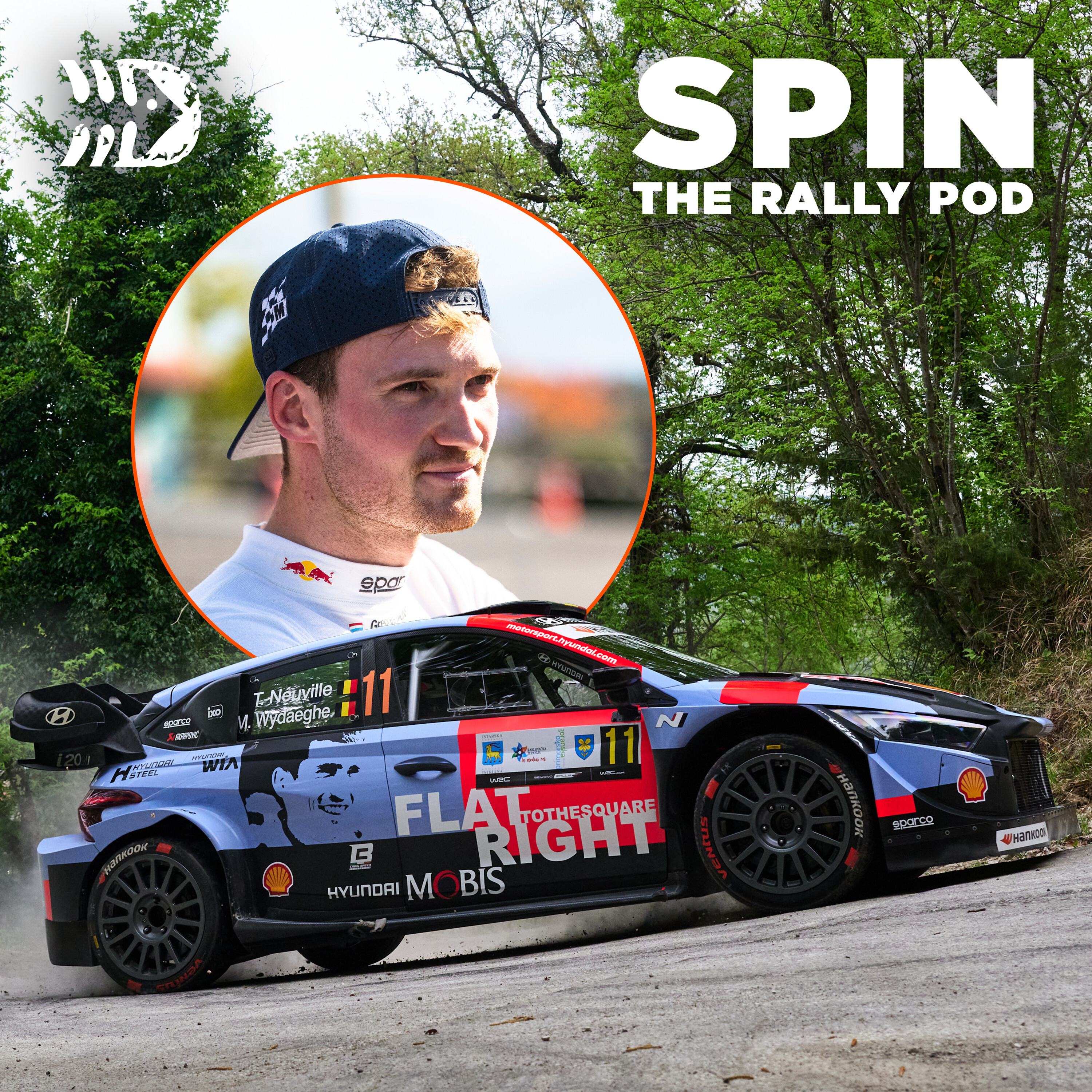
Croatia Rally 2026 review ft Grégoire Munster
About this episode
Croatia Rally 2026 gets a deep, behind-the-scenes breakdown with WRC Rally1 driver Gregor Munster, who explains what it’s like to work as a route note crew and recce in a gravel-heavy, constantly evolving event. The conversation centers on Terry Neuville’s dramatic Power Stage crash—how dust, gravel, and an easily missed concrete obstacle combined with speed and concentration. They also cover Takamoto Katsuta’s back-to-back wins and championship momentum, Sammy Solberg’s strong pace despite a puncture, and Adrian Fourmaux and Elfyn Evans’ early exits on new stages. Munster shares how he’s staying involved this season and what’s next in Canary Islands as a zero car role.
Luke Barry is joined by experienced Rally1 driver Grégoire Munster to analyze one of the most astonishing rounds of the World Rally Championship history: Croatia Rally 2026
See Privacy Policy at https://art19.com/privacy and California Privacy Notice at https://art19.com/privacy#do-not-sell-my-info.
Progressive
"That's why customers have enjoyed Progressive's Name Your Price tool for years now... Visit Progressive.com, find a rate that works for you with the Name Your Price tool."
Progressive is an insurance company. They mention a tool that lets you pick what you want to pay, and then it shows insurance options that fit that budget.
Progressive is an insurance company mentioned in the ad segment. The “Name Your Price” tool is a budgeting feature that helps customers choose a target price and see matching coverage options.
Name Your Price tool
"With the Name Your Price tool, you tell them what you want to pay, and they'll show you options that fit your budget."
This is an insurance pricing tool. You tell it the price you want to pay, and it shows you insurance options that can work at that level.
The “Name Your Price” tool is a way to set a target amount you want to pay for insurance. It then returns options that match your budget and coverage needs, rather than only showing a single fixed quote.
Dirtfish Rally School
"Thank you for listening to Spin, the rally pod, brought to you by Dirtfish Rally School. For your chance to experience life behind the wheel of a rally car, head to drive.dirtfish.com..."
Dirtfish Rally School is a company that offers rally driving training and experiences. They’re sponsoring the show and inviting listeners to sign up for a course.
Dirtfish Rally School is referenced as the sponsor and as the provider of rally driving experiences. The segment points listeners to Dirtfish’s website to find a course for learning or experiencing rally driving “behind the wheel.”
Croatia Rally 2026 review ft Grégoire Munster
"Croatia rally has always had a habit of delivering some extreme world rally challenge events, but if I'm honest, I genuinely do not think I've seen one more astonishing than what we saw last weekend."
They’re talking about the Croatia Rally and reviewing what made it special. The guest rally driver is there to share his take on what happened and why it mattered.
The hosts are discussing the Croatia Rally and specifically reviewing what happened in the 2026 event. This is framed as a standout set of “challenge events,” with a guest rally driver joining to debate and break down the action.
world rally challenge events
"Croatia rally has always had a habit of delivering some extreme world rally challenge events, but if I'm honest, I genuinely do not think I've seen one more astonishing than what we saw last weekend."
They’re talking about rally events that are especially intense and difficult. The host is saying they’ve seen some very extreme challenges in Croatia, and this one stood out.
“World Rally Challenge” is used here to describe high-intensity rally events that push drivers and cars to the limit. The host’s wording suggests these are particularly extreme stages or competitions within the broader rally weekend.
Rijeka
"Just to explain to everybody listening, what it is you were doing at their last weekend in Rijeka."
Rijeka is where the Croatia Rally stages were based. Rally roads can change a lot as cars run them, so the exact location and stage layout affect grip and pace.
Rijeka is a port city in Croatia that hosts rally events and stages in the surrounding area. In rallying, the location matters because road surfaces, grip levels, and how the route evolves can vary a lot from pass to pass.
road note crew
"So on Monday, I was coaching Bernhardt and Brink, car number 38. And then later on in the week, I was doing a root note crew. So helping, you know, change the condition in the base note with the cuts and so on and the amount of gravel that came out of them."
Road notes are the guide drivers use to know what’s coming. A road note crew watches how the road changes and helps update those notes so the driver isn’t surprised mid-stage.
A road note crew helps prepare and update the pace notes used by rally drivers. They assess how the stage surface and conditions change—like how much gravel comes off in cuts—so the notes stay accurate for later runs.
cuts
"So helping, you know, change the condition in the base note with the cuts and so on and the amount of gravel that came out of them."
“Cuts” are shortcuts or alternate lines on a rally stage. They can change what the surface is like, so the notes may need to reflect how slippery or loose it gets there.
In rallying, “cuts” refer to sections where the route is shortened or where cars take a different line than the main racing line. They can expose different surface conditions, so the road note crew may record how much loose gravel or debris comes out of those areas.
gravel coming out of them
"So helping, you know, change the condition in the base note with the cuts and so on and the amount of gravel that came out of them. So everything goes well."
Gravel can get kicked up and moved around as cars drive. If a section sheds a lot of loose stones, it usually means less grip and more sliding for the next drivers.
Loose gravel movement is a major factor in rally grip and braking/turn-in behavior. When road notes mention how much gravel comes out of certain lines (like cuts), it signals how slippery the surface may be for later cars.
on boards
"And then in between, also during Ricky, helping out with, you know, the on boards and Ricky support, bringing some stuff they need."
“On boards” usually means onboard camera footage from the car. People use it to review what happened on the stage and sometimes for broadcast or analysis.
“On boards” typically refers to onboard camera setups or onboard footage used for analysis and media. Rally teams and support crews often coordinate what’s needed so the onboard recording captures the right segments and angles.
road changes from pass to pass
"I was going to say it's a big job doing root note crew anyway, but in Croatia, it changes to the road. I imagine that was quite eyeopening to see just how much the road was changing from pass to pass."
Rally stages don’t stay the same. As more cars drive over the road, the surface can get grippier or more slippery, so the next car often has to adapt its pace and line.
In rallying, the “road” evolves as multiple cars run the stage. Each pass can change traction because rubber gets laid down, loose gravel gets pushed around, and the surface can become more or less slippery depending on weather and tire wear.
tricky weather condition
"tricky weather condition and, you know, water or dampness and so on, just to describe them in the base note."
Rally cars are very sensitive to weather. If the road is wet or damp, the tires don’t grip as well, so braking and cornering feel less predictable.
In rally, weather like water, dampness, or mixed conditions can dramatically affect tire grip and braking distances. Damp gravel can also create a more slippery, unpredictable surface, increasing the need for driver corrections.
base note
"just to describe them in the base note. But here with the amount of gravel that there was on the road,"
A base note is part of a rally crew’s pace notes system, where the driver and co-driver record information about upcoming sections of the stage. It’s used to communicate how the road looks and behaves (surface, grip, hazards) so the driver can prepare for each corner.
WRC
"I've done it before, but more on national events, not in the WRC. But yeah, it's basically the same, just just longer stage and more days."
WRC is the highest level of rally racing in the world. Drivers compete on timed sections of road (stages) over several days, so it’s a bigger and more demanding version of local rally events.
WRC stands for the World Rally Championship, the top level of rally racing run by the FIA. It typically involves longer, multi-day events with multiple timed stages, so experience in WRC conditions can be different from national rally events.
onboard footage
"Also that way, I have some onboard footage at slow speed,"
Onboard footage is video filmed from inside the rally car. It helps you watch exactly what the driver is doing on the road, which is great for learning new stages.
Onboard footage is video captured from inside the car (often from a camera mounted near the driver or dashboard). In rally, it’s useful for reviewing how the car is driven—lines, braking points, and how the surface changes—especially when stages are new.
pace notes
"which I can use to redo pace notes in case I need them for next year. [257.3s] What I found really interesting is obviously your co-driver,"
Pace notes are like a detailed “road script” for the rally stage. The co-driver tells the driver what’s coming—turns, bumps, and dangers—so the driver can go fast with confidence. If the notes are wrong, the driver can’t react in time.
Pace notes are the co-driver’s written or spoken instructions that describe upcoming road conditions and turns. They’re used to help the driver hit the right speed and line by giving timing and hazard cues before each section. In rallying, having accurate pace notes is crucial because you’re driving at speed on roads you often haven’t seen in detail before.
power stage
"on our Cobb-Dirtford platform called the power era, [301.1s] where we're basically doing an as live analysis of the event [304.0s] as the power stage is going on. [305.6s] I've still to listen back to that,"
The power stage is the final (or one of the last) televised/featured stages of a WRC rally, where drivers can earn extra championship points based on their stage time. Because it’s often high-profile and heavily watched, it can feel especially intense even if the overall rally result is already decided. Strategy matters: teams balance risk versus the value of those bonus points.
Cobb-Dirtford platform
"on our Cobb-Dirtford platform called the power era, [301.1s] where we're basically doing an as live analysis of the event [304.0s] as the power stage is going on."
They’re talking about a platform they use to analyze the rally live while it’s happening. It’s part of how they’re making the show and commentary, not something related to the cars themselves.
The hosts mention a “Cobb-Dirtford platform” used to do live analysis of the rally as the power stage unfolds. This appears to be a media/analytics setup tied to rally coverage rather than a car component. For listeners, it’s useful context for how the show is producing real-time commentary.
engine that blew up
"So yeah, the only moment I can think of is [356.7s] when Carlos Sainz had had like his engine that blew up [363.6s] and and with Luis Moira throwing his helmet in the in the that's the only thing I can think of."
“Engine blew up” means the engine had a major failure and the car can’t keep going. In rally, that usually costs you the stage (or the whole rally) right away.
“Engine that blew up” describes a catastrophic engine failure where internal components are damaged and the engine can’t continue running. In rallying, this can happen from oil starvation, overheating, or severe mechanical damage, and it typically ends a driver’s day quickly.
no Sunday points
"[380.7s] Terry had a lead of over a minute and all day, all he said, [384.6s] no Sunday points, no, [385.6s] Paris, it doesn't matter, just get the car through."
“No Sunday points” means they weren’t trying to chase bonus points later. The focus was just getting the car to the finish safely instead of pushing too hard.
“No Sunday points” reflects rally strategy where the priority is finishing and securing the result rather than chasing bonus points. In rally terms, crews may decide that reliability and time management matter more than taking risks for extra scoring.
route notes
"And I don't know exactly what was the what was the warning they got in the from their route to not crew."
Route notes are like a detailed warning list for the next turns. Even with notes, you still have to decide the right speed because conditions can change.
Route notes (often called pace notes) are written instructions that describe upcoming corners, hazards, and surface changes. The crew uses them to warn the driver about tricky sections, but the driver still has to translate the notes into a real speed and line on the day.
gravel on the inside
"There's obviously the gravel on the inside, but there's the trickiness of the corner on the outside."
On gravel, the road isn’t the same everywhere. If the inside is looser, the tires can lose grip there, so you have to be more careful with how you turn and how fast you enter.
On gravel rallies, the surface condition can vary across the road width. “Gravel on the inside” implies the inside edge may be looser or less groomed, which can change traction and cause the car to slide or run wide if the driver doesn’t adjust the line and speed.
corner on the outside
"But there's the trickiness of the corner on the outside. You can understand what Thierry's tried to do..."
When the “outside” of a corner is described as tricky, it usually means the outer edge has different grip or obstacles—like loose gravel, a camber change, or a concrete/curb-like boundary. That can force the driver to manage the car’s trajectory more carefully to avoid getting caught out.
lead
"You can understand what Thierry's tried to do, particularly in his position with such a lead as he's seen essentially an escape road..."
Being in the lead means you’re driving first compared to the rest of the cars. That can change how the road looks and how grippy it is, so the driver’s decisions can be different.
In rally, “lead” refers to a driver’s position at the front of the field, which affects how the road is cleared and how much information the driver has about the stage. Leading drivers can sometimes see more clearly where the car can safely go, but they also face changing conditions as others follow.
dusty surface
"The surface was already quite dusty from the start because you have some some roadwork and so on nearby. And then obviously, they take the cuts, which throw some dirt on the road as well."
Dust on the road makes the tires grip less. As more dust gets kicked up, the car can feel slippery and harder to control.
A dusty surface reduces tire grip because loose dirt and dust act like a sliding layer between the tires and the road. In rally stages, dust can build up quickly—especially near roadwork or where vehicles throw dirt—making traction progressively worse.
roadwork
"The surface was already quite dusty from the start because you have some some roadwork and so on nearby. And then obviously, they take the cuts, which throw some dirt on the road as well."
Roadwork means the road has been changed or disturbed. That can make the surface rougher or dirtier, which makes the car harder to drive fast.
Roadwork can change a rally stage’s surface by adding loose gravel, dust, or uneven patches. That affects braking distances and cornering grip, and it can also create unexpected hazards if the stage has been altered between recce and the race.
understeer
"And yeah, I think he carries a tiny bit too much speed. And then as soon as he had understeer, he tried to go in the escape road, as you said."
Understeer is when the car turns less than the driver intends—typically because the front tires lose grip first. In rally conditions, it often shows up suddenly when the surface is dusty, uneven, or has reduced traction.
escape road
"And then as soon as he had understeer, he tried to go in the escape road, as you said. And basically that concrete is actually from a triangle sign that was there before and someone hit it."
An escape road is a designated runoff area near a corner intended to give drivers a place to slow down or regain control if they go off-line. Rally stages often rely on these safety features, but hitting them can still cause significant damage depending on speed and surface.
recce
"So when you did recce in the first pass, the route, not true. There was that warning sign there, but on the first pass, someone's taken out and then he's hit the."
Recce is when the crew checks the course before the race. They write down what the road is like so the driver knows what’s coming during the timed stage.
In rallying, recce (short for reconnaissance) is the process where drivers and co-drivers drive the stages beforehand to memorize the route. They use that information to create pace notes so the driver can attack the stage confidently at speed.
aiming for the corner / line choice
"So if you aim for the corner and even if you go a tiny bit wide, you won't hit it. So I me personally, it wouldn't be in my in my case, no."
The discussion about aiming for the corner and going slightly wide is about racing line and how drivers manage clearance to avoid obstacles. In rally, line choice is tightly linked to speed, grip, and how accurately the car can be placed relative to hazards.
rally stage planning
"you don't need to know what's there because you don't plan for. For this to happen. If you start like this, then you you put all the trees around."
Rally drivers prepare for the route so they can concentrate on driving. If you try to memorize too many extra details, it can distract you from following the planned line and instructions.
This segment contrasts “planning for everything” versus relying on proper stage preparation. In rally, the goal is to drive the line and execute the notes; adding extra roadside details can overwhelm the driver and reduce focus.
on the limit
"[654.6s] People say this is harder to do, don't they? [656.5s] When you're not 100 percent on the limit, [658.7s] it can be easier to have a very small lapse in concentration."
“On the limit” means the car is being pushed right to the edge of grip. Even a tiny mistake at that point can lead to a big problem, but the hosts also note that backing off can sometimes make people lose focus.
“On the limit” describes driving at the edge of traction and control—where small errors can cause big consequences. The hosts are discussing how being slightly less than 100% can sometimes make concentration slip, even if the driver isn’t fully attacking.
consistent pace
"[681.9s] Like you said, often we just try to keep [687.4s] consistent pace throughout with some commitments, [690.2s] because otherwise you can, like you say, get out of focus and so on."
Rally drivers try to keep their speed and effort steady instead of swinging between super-fast and slower. When you’re consistent, it’s easier to stay focused and less likely you’ll make a costly mistake.
In rallying, “consistent pace” means keeping a steady performance level across a stage rather than pushing hard only in certain sections. Consistency helps drivers avoid lapses in concentration and reduces the chance of mistakes when the car is being driven near the limit.
split needs to be analysed
"[695.5s] But I don't know. We also maybe have to look at the split. [700.2s] I think for sure they were just driving through on some of the stage before. [705.7s] I don't know here if it's poor stage or not, if they were going after some points. [711.6s] I heard from the whole life that he was still going to try and take one or two points. [718.7s] I don't know if that was the case. The split needs to be analysed."
A “split” is like a checkpoint time during the stage. By comparing split times, you can figure out when the driver started losing time or when something went wrong.
In rally timing, a “split” is an intermediate time check within a stage (or between key points). Analyzing the split helps determine where performance dropped—whether due to pace management, navigation, or a mistake that later shows up as a penalty.
timing screen on the splits
"I've actually pulled up the official timing screen on the splits. and that that first one is at 1.82 kilometres. The next is 4.7 and he's dropped a minute 20."
Rally stages are timed in sections. “Splits” are checkpoints along the route, and the timing screen shows how each driver is doing at each checkpoint so you can spot where they lost time.
A “timing screen” showing “splits” breaks a stage into checkpoints so you can see how fast a driver is at each section. Comparing split times helps identify where time was lost—often due to an incident, navigation error, or mechanical issue.
incident has happened through that first split
"So that's when in between that gap, the incident has happened through that first split. And I'm just making sure I've not misunderstood this."
They’re basically saying the problem likely happened between two timing checkpoints. If the time suddenly drops a lot, it usually means the driver hit trouble in that part of the stage.
When the hosts say the incident happened “through that first split,” they’re inferring the timing window where something went wrong. A big time drop between two split points often indicates an off, mechanical failure, or other disruption occurring in that segment.
rally one cars
"He is the slowest of the rally one cars, not by a lot. He's 2.4 seconds off Solberg."
In rallying, cars are grouped into classes. “Rally One” is the top class, so when they say he’s the slowest Rally One car, they mean he was behind the other top-level cars in that event.
“Rally One” is the top-tier class of modern rally cars used in the World Rally Championship (WRC). When the hosts say someone is the slowest of the rally one cars, they’re comparing performance within that highest-spec category rather than against lower classes.
retire the car
"We heard the team on the radio telling him to retire the car. That surely would have been the easy thing to do."
“Retire the car” means the team wants the driver to stop and pull out of the rally. It’s usually because the car is damaged or unsafe to keep going.
“Retire the car” is the call from the team to stop the car and withdraw from the stage/event, usually due to safety concerns, damage, or a mechanical problem. In rally, continuing can make repairs impossible or risk further damage, so retirement is sometimes the only sensible option.
Hyundai
"Because I think from from Hyundai, generally, we've seen that they were more competitive this weekend. And it was good to see as well."
Hyundai is a car brand that races in rally competitions like the WRC. If they’re “more competitive,” it means their rally cars were running closer to the front than usual in this event.
Hyundai is one of the major manufacturers competing in the World Rally Championship (WRC). When the hosts say Hyundai looked more competitive, they’re referring to Hyundai’s rally team and cars performing strongly relative to rivals during the Croatia Rally.
Toyota
"It almost looked like Toyota's domination was going to be broken, didn't it? So, of course, they ended up with a with a one, two."
Toyota is also a big rally team in the WRC. Saying they got a “one, two” means two Toyota cars finished first and second overall.
Toyota is another WRC manufacturer, and the hosts are discussing whether Toyota’s usual dominance was challenged in Croatia. The “one, two” finish indicates Toyota cars took the top two positions in the rally results.
World Rally Championship
"But yeah, Taka now leads the World Rally Championship for the first time. What have you made, Greg, of of Taka's progress, I think, this year?"
The World Rally Championship is the biggest rally racing series in the world. Drivers race many events across the year, and they earn points based on how they finish each rally.
The World Rally Championship (WRC) is the top level of international rally racing, run by the FIA. Drivers earn points across multiple rounds on different surfaces like tarmac, gravel, and snow, and the championship is decided over the whole season rather than a single event.
tarmac
"Like it's not like it's a specific surface that suit him. Like if you see in Japan on tarmac, he's always been really competitive as well in many events on gravel, especially in Kenya."
Tarmac means the rally stages are on paved asphalt. Cars usually feel different on tarmac than on dirt or gravel, so drivers may drive and set up the car differently.
Tarmac refers to paved asphalt stages in rallying. It changes grip and tire behavior compared with loose surfaces, so car setup and driving style often shift—especially braking, turn-in, and throttle application.
podium
"He's always fighting for for podiums and so on, but in Sweden as well. So but often it's been like a bit up and down, depending where we are in the season. And here he's having like a super start of the of the season."
A podium finish means finishing in the top three. It matters because it usually gives a lot of points toward winning the overall championship.
A podium finish means placing in the top three of a rally event. In WRC, podiums are especially important because they strongly boost championship points and signal consistent performance across different stages and conditions.
first win
"And then, like you say, to to see him finally get that that first win and then straight on go to that that second one. It's a bit like Adrian last two years ago."
A first win means the driver finally won a rally event. It’s a big deal because rallying is hard and you have to be fast and consistent all weekend.
In rallying, a driver’s first win is often a major milestone because it reflects not just speed, but also reliability and decision-making across an entire event. Getting a first win early in the season can also change how rivals and teams approach the remaining rounds.
rival team
"And I think, like you say, it's a rival team. But on another hand, you know, sometimes you will have someone that crush out."
A rival team is just another group racing for the same wins. In rally, teams compete hard, but people can still be friendly and respectful.
In rallying, a “rival team” is a competing manufacturer or squad that’s targeting the same event results and championship points. Even when teams are competitors, drivers can still show respect and sportsmanship, which the hosts are highlighting.
crush out
"But on another hand, you know, sometimes you will have someone that crush out. But because you're putting him under a lot of pressure, fighting for maybe only like 15 seconds."
It sounds like they mean someone made a mistake and crashed out. In rally, when you’re under pressure, it’s easier to misjudge a corner or lose control.
“Crush out” here is describing a driver forcing the pace and then making a mistake that leads to a crash or retirement. In rally, pushing too hard under pressure can overwhelm grip or traction, especially when conditions change.
pressure affecting driving
"But because you're putting him under a lot of pressure, fighting for maybe only like 15 seconds. And then because of the pressure you're putting on him, then then he will then then he will crush out and for sure, it's not nice to see."
They’re basically saying that when you’re under pressure, you might drive more aggressively than you should. That can make mistakes more likely, especially on tricky rally roads.
The hosts are describing how competitive pressure can change a driver’s decision-making—leading to overdriving, late braking, or taking risks that increase the chance of a crash. Rally is especially sensitive because small errors can compound quickly on loose or uneven surfaces.
get the car home
"But Greg, I'm interested in your thoughts on Taka's sort of mission for the rest of the year, because he talked so much this weekend about how he had to get the car home after his two teammates had their instance on Friday."
“Get the car home” is rally shorthand for prioritizing completion over outright speed—finishing the event even if you’re not in a winning position. After teammates retire, a driver may shift to a conservative strategy to secure points and avoid another crash.
World Championship fight (points battle)
"But he almost didn't talk like someone who believes he can fight for the World Championship at the minute. He is the guy he's leading the World Championship by seven points over Elvin Evans."
In rally, the World Championship is decided by points you earn at each event. So even if someone isn’t leading right now, they can still catch up later.
They’re discussing the rally World Championship as a season-long points battle, where a driver can still win even if they’re not leading every event. The key idea is that results across many rounds determine who stays in contention.
starting position
"Obviously, he's also going to have the the bad starting position now... Potentially, let's put that he might he might not be first in gravel... But should starting position make a massive difference there or not really?"
In rally, where you start can matter because the road gets used up and changes grip. On some surfaces it’s a big deal; on others it’s not as important.
Starting position affects rally performance because road conditions can change as cars go through the stages. Depending on the surface, earlier starters may face cleaner or more consistent grip, while later starters may benefit from ruts or rubber-in.
Canaria
"Yeah, canaries actually, I'll just quickly jump to it... Because it's hardly anything at all, is there? No, not for not for Canaria, obviously. But we've seen last year in Canaria that the Toyota were super strong."
They’re talking about a specific rally event in the Canary Islands. They’re using what happened there last year to guess what might happen this year.
“Canaria” refers to the Canary Islands rally event (often called Rally Islas Canarias), which is known for its specific surface and conditions. The hosts use last year’s results there to predict how the championship points might shake out again.
first on the road
"Solberg has got minimal. I don't think tack has got any of being first on the road on the first day. So, yeah, that'll be interesting."
“First on the road” means you go before most other cars. The track can be different then—sometimes worse, sometimes better—because other cars have not changed it yet.
“First on the road” refers to the driver who starts earliest in the rally, often meaning they encounter the road in its least-used condition. In loose-surface events, that can be a disadvantage or advantage depending on how quickly the surface degrades or improves as cars pass.
gap management
"He was always managing his gap and so on and being on it. So impressive, impressive stuff from him."
Gap management is how a driver controls their time relative to rivals—deciding when to push, when to be smooth, and how much risk to take. In rallying, managing the gap can be as important as outright speed because it helps avoid mistakes while still protecting (or gaining) position.
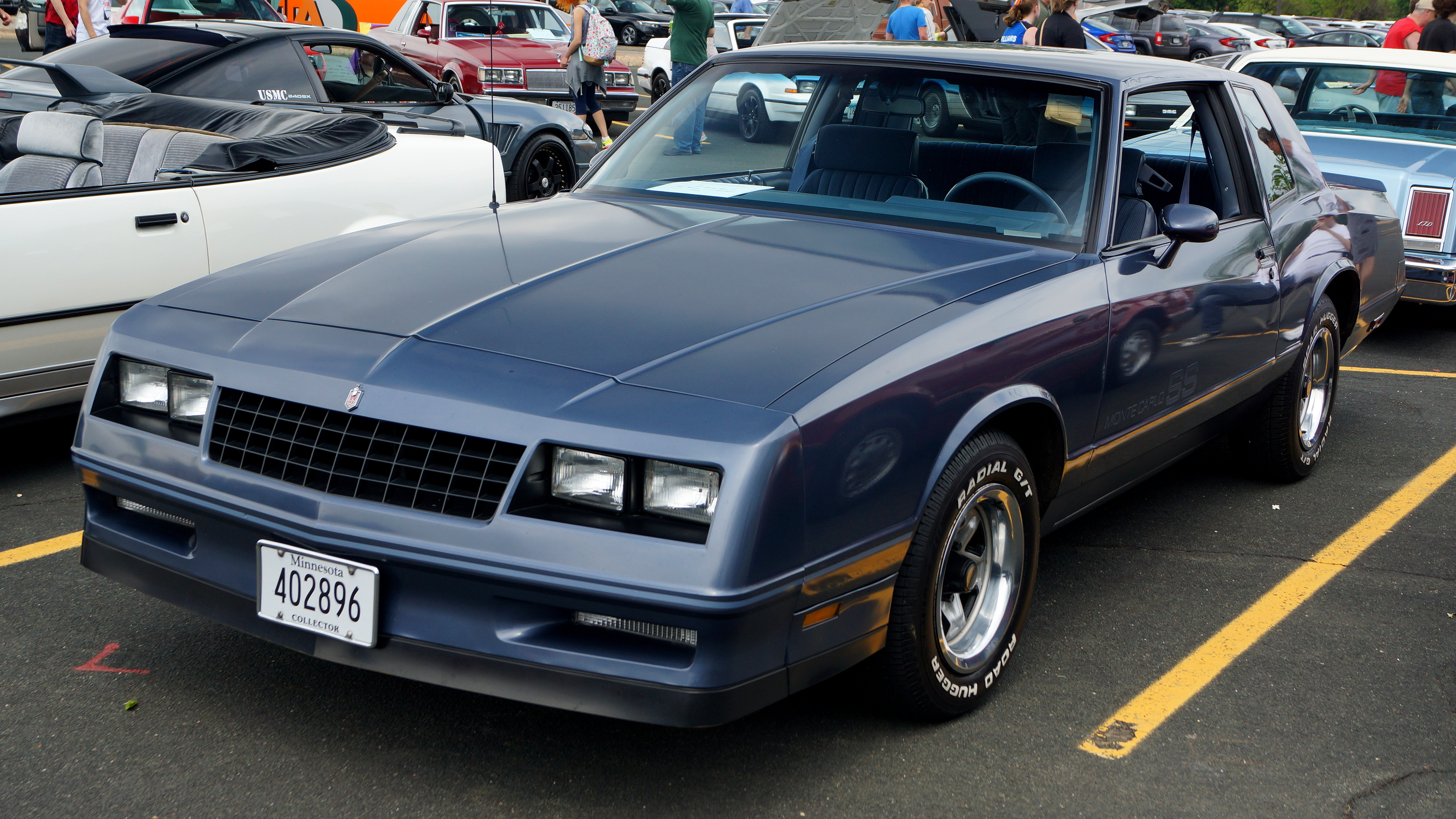
Chevrolet Monte Carlo
"...anaria last year, but on other events like Japan, Monte Carlo and so on, it was less noticeable, I will say. An..."
The Chevrolet Monte Carlo is a two-door car made by Chevrolet, known for having a powerful engine and a sporty look. People bring it up because it’s a well-known model from earlier decades and it has been used in different kinds of racing and events. If it’s mentioned in the context of visibility or impact at events, that’s usually about how noticeable it was compared with other cars.
The Chevrolet Monte Carlo is a classic American personal luxury/“muscle” style coupe that became well known for its strong V8 performance and long-running popularity. It often shows up in motorsport and rally-related discussions because its size, power, and era-appropriate design made it a recognizable platform for competition and event appearances. In a podcast, it may be mentioned as part of how certain cars behaved or stood out across different events.
gravel on the road
"And here it's a tricky event with a lot of cuts, a lot of gravel on the road. And yeah, he was he was just showing incredible space."
Gravel changes traction dramatically compared to tarmac, because loose stones reduce tire grip and can cause the car to slide more easily. It also increases the chance of punctures from sharp debris, especially when the road is worn or has lots of loose material.
stage 11 and 14
"Actually, the one that you puncture on it was stage 11 and 14. And that's in the only new one on on Saturday."
Rally races are divided into timed sections called stages. If something like a puncture happens on stage 11 and 14, it can hurt the driver’s results on those specific parts of the rally.
A rally is split into timed sections called stages, and each stage has its own route and conditions. Saying the puncture happened on stage 11 and 14 helps explain how the damage affected the timing across multiple parts of the event.
rim
"And then it ended up by being four or five. And then that's enough to puncture or do a big impact in the rim."
The rim is the wheel part the tire sits on. If a rock hits hard, it can damage the rim, which can make the tire unusable even if it doesn’t fully blow out.
The rim is the wheel’s metal edge that the tire bead seals to. If rocks hit hard enough—especially after a puncture—they can bend or damage the rim, which can require a wheel change and can cause further tire sealing issues.
puncture
"And then that's enough to puncture or do a big impact in the rim. And and yeah, I think we've seen a lot of puncture in WRC, too, as well in that stage."
A puncture is when something sharp damages the tire and it starts losing air. In a rally, that can ruin your grip right away and can even damage the wheel.
A puncture is when debris creates a hole in the tire, often leading to immediate loss of pressure and control. In rallying, punctures are especially dangerous because the car can hit a rim or suffer a sudden handling change at speed.
gravel crew
"Is it from the gravel crew related? Is it from just taking maybe a tiny bit less risk in some sections?"
On gravel rallies, the surface can change a lot from stage to stage. A “gravel crew” is basically the people preparing or managing the road/gravel, which can influence how slippery it is and how risky it is for tires.
A “gravel crew” refers to the course-prep or track-management personnel who influence how the surface behaves—especially on gravel events where loose stones and traction can vary. Their work can affect how likely punctures are and how much grip drivers have in different sections.
M Sport
"And actually 2023 in rally two as well, you were teammates at M Sport. Not really the weekend that the Adram was after."
M-Sport is a major rally team and constructor best known for its long-running involvement in the World Rally Championship (WRC). When a driver is described as being teammates at M Sport, it usually means they were driving the same rally program/manufacturer-backed effort.
concentration zone
"It's also tricky to to stay within that focus zone, concentration zone. [1540.6s] And then maybe that's what happened as well on Saturday at some point."
A “concentration zone” describes the mental state where a driver stays fully focused and consistent—crucial in rally because decisions happen quickly and repeatedly. Falling out of that zone can lead to late braking, poor line choice, or missed cues.
locked up
"I don't know, he he had a breaking [1550.8s] within a within a cut before right under with an anti cut device. [1556.1s] And yeah, he just locked up, [1558.7s] go go into understeer"
Locked up means the wheels stop turning while you’re braking. When that happens, the tires can’t grip as well, so the car may slide or go wide.
“Locked up” refers to wheels stopping rotation during braking (a brake lock-up), which reduces traction and can trigger loss of steering control. On loose rally surfaces, lock-ups can quickly lead to understeer or slide behavior.
anti cut device
"I don't know, he he had a breaking [1550.8s] within a within a cut before right under with an anti cut device. [1556.1s] And yeah, he just locked up,"
They mention an “anti cut” device, which sounds like something meant to prevent damage from cutting or snagging. The exact part isn’t clear here, but it’s about avoiding a problem getting worse.
An “anti cut device” likely refers to a system intended to prevent or mitigate cutting/entanglement damage during braking or contact with obstacles, but the exact component isn’t clearly specified in the transcript. In rally context, it may be related to protecting lines or preventing a mechanical issue from escalating.
handbrake
"go go into understeer and then pull the handbrake to try and [1562.4s] get out of that understeer."
The handbrake is a lever you can pull to make the car rotate more. Rally drivers use it to “help the car turn” when the normal grip isn’t working.
In rally driving, the handbrake is used as a control tool to rotate the car and help it pivot back toward the apex when grip is lost. Pulling it can induce a controlled slide, which can counter understeer and regain the car’s angle.
rear left suspension
"But obviously there was a wooden pole, I think, on the outside. [1567.2s] And that was enough to, yeah, do proper damage to the rear left suspension. [1573.8s] How does that feel, though?"
This is the suspension on the back-left wheel. If it gets damaged, that wheel may not handle correctly anymore, and the car can feel unstable or slow.
The rear left suspension is the set of components that controls wheel movement and alignment on the left rear corner. Hitting an obstacle can damage it, which can severely affect ride height, camber/toe, and traction—often ending a competitive run.
small margins make a big difference
"So I guess you're a man who is learned the hard way sometimes [1577.4s] that the small margins make a big difference is one tiny, tiny thing. [1581.7s] And your whole weekend is is ruined, isn't it?"
Rally is won and lost by very small mistakes. If you’re off by just a little bit, it can cost you a lot of time by the end of the stage.
Rally performance is extremely sensitive to tiny errors because stages are timed and traction is limited. A millimeter-level mistake in braking, turn-in, or line choice can compound into seconds lost, especially when the driver is already managing gaps and traffic.
one corner misinterpretation
"[1606.0s] Over one K, you probably do what, six to ten corners. [1610.4s] So that's a lot of corners to tackle through the weekend. [1613.7s] And you do a mistake in one. [1615.8s] That's enough to, yeah, to finish your your weekend [1620.1s] just just with one corner misinterpretation."
In rallying, getting just one corner wrong can ruin your whole weekend. If you misjudge what the corner does, the car can slide or crash, and you may not be able to continue.
In rallying, a “misinterpretation” of a single corner can be enough to end a weekend because stages are unforgiving and time/position are tightly managed. One wrong call can lead to a loss of control, impact damage, or a ditch/retirement that can’t be recovered from.
cutting a corner
"[1651.5s] Typically, it was in in Greece. [1655.0s] Twenty four. [1658.9s] I took a cut, but probably 10 centimetre not enough. [1663.6s] It was like under under a bush or something."
Cutting a corner means you take a tighter path through the turn to save distance and time. In rally stages, that can be dangerous if you can’t see what’s inside the corner.
“Cutting a corner” in rallying means taking a tighter line than the road’s natural arc, often by clipping inside edges or using a shortcut. It can be faster, but it’s risky because you may hit unseen obstacles, lose traction, or misjudge how much space you have.
oversteer
"[1668.0s] So on Ricky, I didn't see they were going to cut that much under the bush. [1673.4s] Got carried into oversteer, hit a wooden pole just like him [1677.1s] and then ended up in the ditch while I was a fourth in the Acropolis rally."
Oversteer is when the back of the car starts to slide outward in a turn. It usually means the tires don’t have enough grip, so the car rotates more than you intended.
Oversteer is when the car’s rear end loses grip and swings outward relative to the direction you’re turning. It often happens when you enter a corner too fast or make an abrupt steering/throttle change, especially on loose or uneven surfaces.
Acropolis rally
"[1673.4s] Got carried into oversteer, hit a wooden pole just like him [1677.1s] and then ended up in the ditch while I was a fourth in the Acropolis rally. [1681.5s] So same situation."
The Acropolis Rally is a well-known rally in Greece. The roads are tough and slippery, so it doesn’t take much of a mistake to end your run.
The Acropolis Rally is a famous rally in Greece known for rough, slippery roads and unpredictable surface conditions. Because of that, small errors—like misjudging a cut or braking point—can quickly lead to loss of control and retirements.
ditch
"[1673.4s] Got carried into oversteer, hit a wooden pole just like him [1677.1s] and then ended up in the ditch while I was a fourth in the Acropolis rally. [1681.5s] So same situation."
A ditch is where the road drops off or has a trench beside it. In rallying, if you end up in one, it usually means you’ve lost control and the car can get damaged.
A ditch is a common off-road hazard in rally stages where a car can end up after losing control. Hitting a ditch often causes suspension damage, underbody impact, or creates a situation where the car can’t be driven safely back to the stage.
Monty Carlo
"Yeah, I think, like you said, Monty Carlo was a bit tricky, but there were a lot of of challenging things with the fact that also it was like a bit of a last minute plan to put him there with not much testing and so on,"
They mean the Monte Carlo Rally. It’s known for cold, slippery conditions like snow and ice, so drivers have to be extra careful and choose the right tires.
“Monty Carlo” refers to the Monte Carlo Rally, which the hosts describe as especially difficult due to snow and ice. That kind of surface changes grip dramatically, making pace management and tire choice critical.
attritional event
"Again, there was only three rally one cars that finished in the top 10, which shows just how attritional this event was. But what did you make of of Hayden's performance in Croatia as well?"
“Attritional” here means the rally is tough on cars and drivers. Lots of competitors struggle to finish well, so being careful and keeping the car healthy is a big part of scoring.
An “attritional event” is one where many cars fail to finish due to damage, mechanical issues, or driver mistakes. The hosts connect this to only three Rally1 cars finishing in the top 10, implying the stages are punishing and reliability matters.
Rally1 cars
"Again, there was only three rally one cars that finished in the top 10, which shows just how attritional this event was. But what did you make of of Hayden's performance in Croatia as well?"
Rally1 cars are the highest-level rally cars in this competition. When the hosts say only a few Rally1 cars did well, it means even the top cars couldn’t easily handle the conditions.
Rally1 is the top-spec category in the FIA World Rally Championship era discussed here, representing the most advanced factory rally cars. Mentioning “Rally1 cars” highlights that even the best teams struggled to finish near the front, reinforcing how hard the event was.
road position effect
"But it's still a very tricky event with a lot of cuts, pollution, massive road position and so on effect. And I think he dealt with it really well."
Road position means your starting order on the stage. The road can change as cars pass, so the grip and difficulty can be different for each driver.
The “road position effect” refers to how the condition of the stage changes depending on when you run. Earlier cars can clear loose material or create ruts, while later cars may benefit from a cleaner line or suffer from degraded grip.
pollution
"But it's still a very tricky event with a lot of cuts, pollution, massive road position and so on effect. And I think he dealt with it really well."
“Pollution” in rally context usually means debris and rubber transfer on the road surface that alters grip. As more cars pass, the stage can become dirtier or more unpredictable, affecting braking distances and traction.
hard tire
"But it seems that he just didn't have enough knowledge, maybe, or experience on the hard tire, picked up some understeer, hit the bank and and that was it. Yeah, yeah, it's it's tricky, you know, with the with that hard tire."
Rally cars use different tire types. A “hard” tire lasts longer, but it can feel less grippy, so the car may slide more if you drive like you have a softer, stickier tire.
In rallying, “hard tire” refers to a harder compound designed to last longer and resist wear. The tradeoff is that it often provides less grip than softer compounds, especially as conditions change or the driver pushes the car aggressively.
grip
"like an area where you have an incredible amount of grip. So I can imagine, you know, with low temperature from the morning"
“Grip” means how well the tires can hold the road. If grip is high, the car feels more stable and you can go faster through corners.
In rallying, “grip” is how much traction the tires have on the road surface. More grip lets the driver brake later, turn in harder, and carry more speed through corners.
tiny miscalculations
"And the more we're talking about, the more I'm realizing that all these errors have been just tiny, tiny miscalculations."
The hosts are describing how rally failures often come from small errors in braking points, corner entry speed, or line choice that compound over a stage. On slippery or inconsistent grip surfaces, even slight misjudgments can lead to understeer, off-line running, or contact.
new stages
"But other than that, they were brand new stages, weren't they? ... But for sure, the fact that these are new stages will contribute to the fact that they went off."
A “new stage” means the route is new to the teams, so they can’t rely on past knowledge. That makes it harder to judge corners and hazards, so pace notes and practice become even more important. If the notes aren’t right, drivers can go off.
When a rally uses “new stages,” crews don’t have prior experience with the exact layout, surface, and hazards. That increases the importance of accurate reconnaissance and pace-note preparation, because unknown features can catch drivers out—especially on the first run.
second pass
"So it can can explain like for Thierry, you don't have the knowledge of how bad it will become on the second pass for Oliver."
Rally stages are often driven more than once. The second time can feel different because the road surface changes and the crew learns from what went wrong the first run. That’s why drivers may be more cautious—or sometimes overconfident—on the second pass.
A “second pass” refers to running the same rally stage again after the initial run. In rally, conditions can change (grip level, debris, and line choice), and drivers/co-drivers may adjust their pace notes or expectations based on what happened the first time.
went off
"But for sure, the fact that these are new stages will contribute to the fact that they went off."
“Went off” means the car left the road and ended up off the course. In rally, this usually happens when the driver misjudges a corner or the surface isn’t as grippy as expected. It can be caused by wrong notes or simply arriving too fast.
“Went off” is rally shorthand for leaving the road/stage surface—often into grass, gravel, or a ditch—due to a loss of control. It commonly results from being too fast for the corner, incorrect pace-note information, or unexpected grip changes.
steep drop
"And what I tell you, that was a steep drop was properly down. And you can't really see that with a camera."
A “steep drop” is a big drop-off near the road. From a camera it can look flatter than it really is, but in real life it changes how risky the corner is and how hard it is to recover the car if it goes off.
A “steep drop” describes a sudden change in elevation near the edge of the stage, which can be hard to judge from TV footage. In rally, these features can affect braking points, corner entry confidence, and how safely a car can be recovered if it leaves the road.
on site seeing the thing happen in real life
"...often when you're on site seeing the thing happen in real life, then then it gets quite amazing of how the car can end up there."
Watching a rally in person can make everything feel more real. You can see how the car moves and how obstacles slow it down, which is hard to fully understand from a distance.
In motorsport, watching from the ground (“on site”) can change how you understand speed, trajectory, and risk compared with TV or data. Seeing the car’s exact line and how obstacles affect momentum helps explain why certain outcomes happen.
bushes or trees slowing you down
"And sometimes also, like with bushes or trees, it slows you down... the crash, not to get further down."
In rallying, roadside vegetation and obstacles can affect speed and safety by forcing drivers to adjust their line, braking points, and steering angle. Even “minor” contact or proximity can cost momentum and increase the chance of a crash or off-line excursion.
pace/style of the event
"Admittedly, none of the states carried over, but it's enough to have a feel of the of the style of the event, isn't it?"
Every rally feels a little different. Even if the exact conditions change from year to year, having experience with the event’s overall style can help a driver go faster.
Rally events have distinct “styles” based on stage layout, surface, and how the stages flow. Even if championship “states” (round-to-round conditions) don’t carry over, prior results can still indicate how well a driver understands that event’s rhythm and demands.
lack of experience at this level
"...given his lack of experience at this level? Yeah, I think John has showed a very good speed in the beginning of the season."
The hosts discuss how a driver’s results can be influenced by experience at the top tier. “This level” usually means the intensity of competition, stage difficulty, and the pressure of managing pace notes and car setup over multiple rounds.
Barum rally
"I remember seeing him going flat out with a Ciesta Rally 3 in the Barum rally as well. You have some incredible onboard footage of him there."
The Barum rally is a well-known European rally event (often associated with the Czech Republic) where stage conditions can demand strong car control and confidence on tarmac or mixed surfaces. Onboard footage from events like this is especially useful for understanding how drivers manage grip and corner entry.
sweet spot between pushing and bringing the car home
"and it's really encouraging just need to to find that sweet spot between between pushing and bringing the car home. Because obviously that's that's what just needs to to be."
It means driving fast, but not so aggressively that you crash or break the car. Rally is tough on the car, so you have to find a pace where you’re quick but still safe.
In rallying, the “sweet spot” is the balance between driving fast enough to stay competitive and managing risk so you don’t damage the car or lose time. Even small errors can snowball into bigger consequences, so consistency and car preservation are as important as outright pace.
too much speed hits a curve
"But again, I don't know what caused it. But again, too much speed hits a curve. And that was too much damage to the right hand tires."
If you go into a corner too fast, the tires can’t grip enough and the car can slide or hit something. In rally stages, the road can be unpredictable, so controlling speed matters a lot.
This describes a common rally failure mode: entering a corner too fast overwhelms grip and available traction, causing the car to run wide or impact the barrier/curb. In rally, where surfaces vary and grip can change suddenly, speed management is crucial to avoid contact.
right hand tires
"But again, too much speed hits a curve. And that was too much damage to the right hand tires. But out of interest, Greg..."
They’re saying the right-side tires got damaged. If a tire is hurt, it won’t grip as well, so the car becomes harder to control and slower.
“Right hand tires” implies tire damage on the passenger-side (right) wheels, which can drastically reduce grip and stability. In rally, a damaged tire can force immediate changes in driving style and can also lead to further mechanical issues if the car continues to be driven hard.
attack in a couple of stages
"...you can actually attack in a couple of stages where you feel really comfortable and then try and be the smarter, smartest in the room in some other stage."
In rallying, you don’t always go all-out on every single stage. This approach means you push hardest when you feel the conditions are right, and drive more carefully when they’re not.
The hosts describe a rally strategy where a driver “attacks” (pushes hard) only on certain stages where they feel confident in grip and pace. The idea is to manage risk across the rally rather than driving the same way every stage.
go flat out
"you can just really go flat out and try and show as well your speed because obviously it didn't have the result this event... he had the pace to fight for a podium."
“Go flat out” means pushing the car as hard as possible. It can be fast, but if you’re too aggressive for the conditions, you can make mistakes and lose time.
“Go flat out” means driving at maximum effort—full throttle and maximum commitment—on stages where the driver believes the car and conditions can support it. In rally terms, it’s a high-risk/high-reward approach that can improve results if you avoid mistakes.
smart approach
"And then you can also always take the smart approach. And in the end, never never have anything. So I think you just have to do your thing."
A “smart approach” means you drive in a way that keeps you safe and avoids big errors. In rallying, that often matters as much as outright speed because finishing is how you score.
The “smart approach” is a rally mindset focused on minimizing mistakes and managing risk to secure a solid finish. Instead of chasing every moment of speed, it prioritizes consistency, control, and stage planning to convert pace into results.
Sweden
"So, yeah, and then you go on to rallies like Sweden, which is a really particular one."
Sweden is a rally where the conditions are usually very slippery. That means the car and driving technique have to be tuned for snow/ice, not normal road grip.
The Sweden Rally is known for its fast, flowing stages on snow or ice, which demands a very specific setup and driving style. It’s considered “particular” because traction and braking behavior differ dramatically from dry tarmac.
Kenya
"Then on to Kenya, where you just have to survive. They had so many every card, so many issues with overheating."
Kenya is portrayed as a tough rally where you’re not just racing—you’re trying to make it to the end. Rough conditions like mud and heat can cause problems, including overheating.
The Kenya rally is described as a “survival” event, implying high attrition from rough terrain and mechanical stress. The segment specifically calls out overheating issues and the difficulty of getting through deep mud and off-road conditions.
overheating
"They had so many every card, so many issues with overheating. Yeah, the mud and so on, just getting into the bush."
Overheating means the car is getting too hot. In rally conditions—especially in heat, mud, or when airflow is blocked—the cooling system can struggle, and that can force the team to slow down or stop.
Overheating in rallying usually means the engine (or sometimes other cooling systems) is running hotter than intended due to sustained load, airflow limitations, or cooling system issues. In events like Kenya, heat plus mud and dust can reduce cooling efficiency and increase the risk of damage or retirement.
mechanical sport
"It's rolling in the end. It's it's a mechanical sport, so these things can happen."
They call it a mechanical sport because the car matters as much as the driver. If something breaks or a tire gets damaged, you can’t just drive through it.
Rally is a mechanical sport because the outcome depends heavily on car reliability and how well the team manages mechanical issues during the event. Even strong drivers can lose time or retire due to punctures, overheating, electrical faults, or starting problems.
bump start
"And like like we saw, like we saw it, they they were pushing the car, trying to bump start it and so on."
A bump start means getting the car moving and then using the motion to help the engine start. It’s a workaround if the normal starting method isn’t working.
A bump start (also called a push start) is starting the car by rolling it and engaging the drivetrain, rather than using the starter motor. In rally contexts, it’s sometimes attempted when the car won’t start after an incident, but it depends on the car’s drivetrain and safety conditions.
top five
"So our best result is a top five. And I'm sure top four and maybe a podium was was in reach."
Finishing “top five” means you were among the best five cars in the rally. It’s a strong result because it usually means you didn’t lose too much time to problems.
A “top five” finish is a key performance benchmark in rallying because it reflects consistent pace across multiple stages and avoids major time losses. It also affects championship momentum and team strategy for future events.
Request an Explanation
Heard something you'd like explained? We'll add it to this episode.
Sign in to request explanations for terms you heard.
Want to learn more?
Browse our glossary for plain-English explanations of automotive terms, jargon, and concepts.
Help improve this episode
See something that's not quite right? Our annotations are AI-generated and can sometimes miss the mark. Click the flag icon on any annotation to suggest a correction.