
DAILY: Kia Cuts Prices, BYD Makes A Tesla Roadster and Oil Shocks Speed Up EV Adoption | 27 Apr 2026
About this episode
Kia is leaning into price cuts in Europe to stay competitive against Chinese brands, while BYD stole headlines by unveiling the production-ready Denza Z, a 1,000-hp electric supercar aimed squarely at Tesla Roadster territory. The episode also digs into how oil shocks and higher petrol prices are nudging more drivers toward EVs, especially as charging and range improve. Other highlights include plug-in hybrids becoming pricier than comparable BEVs, GWM pulling the Aura03 from the UK, Leapmotor’s value-packed B05, and fresh data showing EV batteries hold range far better than many buyers expect.
You can read all the latest news on the blog here: https://EVne.ws/blog
Subscribe for free and listen to the podcast on audio platforms:
➤ Apple: https://EVne.ws/apple
➤ YouTube Music: https://EVne.ws/youtubemusic
➤ Spotify: https://EVne.ws/spotify
➤ TuneIn: https://EVne.ws/tunein
➤ iHeart: https://EVne.ws/iheart
KIA CUTS EUROPE PRICES TO F BYD https://evne.ws/3OOvDiy
BYD DENZA Z TAKES AIM AT TESLA https://evne.ws/4cz4ZDo
OIL SHOCK COULD SPEED UK EV UPTAKE https://evne.ws/3OFRZ5R
PHEVS COST MORE TO BUY AND RUN https://evne.ws/420eEwJ
OMODA & JAECOO HITS ONE MILLION SALES https://evne.ws/4ubNXB4
GWM PULLS ORA 03 FROM UK https://evne.ws/4vVgBYZ
LEAPMOTOR B05 TARGETS EUROPE WITH LOW PRICES https://evne.ws/4cJTZSp
US EV MAKERS PRESS DIRECT SALES FIGHT https://evne.ws/4tvTzGx
MG WEIGHS SPAIN FOR EUROPEAN EV PLANT https://evne.ws/4cQL6qm
multi-agentic AI
"Capital One's tech team isn't just talking about multi-agentic AI. [5.2s] They are already deployed one."
This is AI that uses multiple little “helpers” working together instead of one single chatbot. The goal is to make the car-shopping process smarter and more accurate.
“Multi-agentic AI” refers to systems where multiple AI “agents” work together to complete tasks, often coordinating roles like research, planning, and verification. In this segment, it’s positioned as already deployed inside Capital One’s car-shopping workflow.
Capital One
"It's called Chat Concierge, and it's simplifying car shopping. [17.3s] It helps schedule a test drive, get pre-approved for financing, and estimate trading value."
Capital One is a financial company that’s using AI to help people shop for cars and get financing more easily. Instead of doing everything manually, the AI can guide you through steps.
Capital One is using AI to streamline car shopping, including helping customers find vehicles, schedule test drives, and handle financing steps. The segment frames this as a deployed product rather than a concept.
Chat Concierge
"It's called Chat Concierge, and it's simplifying car shopping. [10.5s] Using self-reflection and layered reasoning with live API checks, it doesn't just help buyers find a car they love."
Chat Concierge is an AI chat tool that helps you shop for a car. It can also help with practical steps like booking a test drive and getting pre-approved for financing.
Chat Concierge is Capital One’s AI assistant for car shopping. The segment describes it as using self-reflection and layered reasoning plus live API checks to support tasks like test-drive scheduling, financing pre-approval, and estimating trade-in value.
live API checks
"Using self-reflection and layered reasoning with live API checks, it doesn't just help [15.5s] buyers find a car they love."
This means the AI can look up current information from other computer systems while you’re chatting. That helps it avoid using outdated details.
“Live API checks” means the system queries up-to-date information from other services in real time via application programming interfaces (APIs). In a car-shopping context, that can help verify availability, pricing, or eligibility details as the user interacts with the assistant.
pre-approved for financing
"It helps schedule a test drive, get pre-approved for financing, and estimate trading value. [23.3s] Advanced, intuitive, and deployed, that's how they stack."
Pre-approval means a lender checks your finances and says, “You’re likely approved for a car loan.” It can make buying the car faster because you’re not starting from scratch at the dealership.
“Pre-approved for financing” is when a lender evaluates your credit and offers a conditional loan approval before you pick the exact car. It can speed up the buying process and helps you understand your budget and likely loan terms.
estimate trading value
"It helps schedule a test drive, get pre-approved for financing, and estimate trading value. [23.3s] Advanced, intuitive, and deployed, that's how they stack."
Trading value is what a dealer might offer for your current car. The estimate is usually based on things like mileage and condition, plus what similar cars are selling for.
Estimating trading value is an appraisal-style process to predict what your current vehicle might be worth if you trade it in. It typically uses factors like make/model, mileage, condition, and market pricing to produce a range or estimate.
Kia cuts prices
"Welcome back to EV News Daily. [61.8s] Today, Kia cuts prices, BYD makes a Tesla Roadster, and oil shocks speed up EV adoption."
They’re talking about Kia lowering prices. That can make EVs or electrified cars easier to buy and can change how fast people switch to EVs.
This is a news segment topic about Kia reducing prices. Price cuts can affect demand, inventory strategy, and how quickly EVs move from “early adopter” pricing into broader mainstream adoption.
oil shocks speed up EV adoption
"Today, Kia cuts prices, BYD makes a Tesla Roadster, and oil shocks speed up EV adoption."
This segment frames “oil shocks” as a driver of EV adoption. When fuel prices spike, the cost of driving an ICE vehicle rises, which can make EVs comparatively cheaper to own and operate.

Tesla Roadster
"...Daily. Today, Kia cuts prices, BYD makes a Tesla Roadster, and oil shocks speed up EV adoption. Plus, they..."
The Tesla Roadster is an all-electric sports car. It’s designed to be fast and exciting while running on batteries instead of gasoline. It gets mentioned a lot because it helps set expectations for what EVs can do.
The Tesla Roadster is an electric sports car built to showcase high performance and long-range capability. It’s often discussed in EV news because it represents the “halo” product that can influence how quickly the public and investors take EV performance seriously. In a business-and-technology podcast, it also comes up when competitors or supply chains reference Tesla’s platform and market impact.

Tang Great Tang
"The Porsche Cayenne gets its own China spec, and BYD's top-of-the-shop Great Tang has started strong. [97.1s] Let's get into it."
BYD is a major Chinese EV maker, and the Great Tang is one of its bigger, more premium SUVs. The hosts are saying it’s doing well early on, which can be a sign of momentum for BYD.
BYD’s Great Tang is a BYD-branded flagship SUV, and the segment says it has started strong in China. “Top-of-the-shop” implies it’s positioned as a high-end model, which matters because flagship launches can signal brand confidence and influence EV adoption.

Porsche Cayenne
"[88.3s] Wow. [89.4s] The Porsche Cayenne gets its own China spec, and BYD's top-of-the-shop Great Tang has started strong."
The Porsche Cayenne is Porsche’s SUV. The hosts say it’s being updated for China, which usually means changes to fit local rules and what buyers want there.
The Porsche Cayenne is a luxury SUV from Porsche, and the segment says it’s getting a China-specific spec. China-market tuning often reflects local regulations, emissions/charging requirements, and customer preferences.
price-cutting plan
"Kia's CEO signaled a deliberate price-cutting plan in Europe as the company tries to narrow the gap with Chinese rivals..."
A price-cutting plan means the company lowers prices to sell more cars. It can help you compete, but it may also reduce profit.
A price-cutting plan is when an automaker intentionally reduces prices to win market share, even if it pressures margins. Here, Kia is doing it in Europe to narrow the price gap with Chinese EVs, which the hosts note can reduce profit even while growing revenue.
BYD
"All right, BYD has done what Tesla still can't do, and that's unveil their new Roadster in production form, the Denzer Z at the Beijing Auto Show..."
BYD is a Chinese company that makes EVs and batteries. In this segment, they’re presented as moving faster than Tesla on getting a Roadster to production and rolling out EV tech.
BYD is a Chinese EV and battery manufacturer that’s ramping up global competition. The hosts discuss BYD’s Roadster plans and the company’s technology stack (platform, suspension, charging) tied to the new model.
Europe battleground between automakers and Chinese brands
"Europe has become a central battleground between the established car makers and the incoming Chinese brands. Chinese manufacturers are pushing harder overseas as demand has softened at home..."
They’re saying Europe is where the fight is happening. Chinese EV makers are pushing harder there because sales are slower at home and the US is harder to enter.
The hosts frame Europe as the key competitive arena where established automakers face pressure from incoming Chinese EV brands. This is discussed alongside demand softness in China and reduced access to the US market for Chinese manufacturers.

Dodge Challenger
"... to sustain this competition, though, against the challengers. All right, BYD has done what Tesla still can't ..."
The Dodge Challenger is a gasoline-powered performance car. It’s known for strong acceleration and a classic muscle-car style. It may be mentioned in EV news because it represents a major performance segment that EVs are starting to challenge.
The Dodge Challenger is a performance-focused muscle car known for its powerful engines and wide appeal in the American market. It’s brought up in EV business discussions when the conversation turns to competition—how legacy performance brands respond as EVs gain market share. That makes it relevant even in an EV-focused episode because it highlights the shift in what buyers want and how automakers plan their next moves.

D9 Denzer
"...nveil their new Roadster in production form, the Denzer Z at the Beijing Auto Show, which has been going ..."
The D9 is an electric vehicle that was shown as a production version at a major auto show in Beijing. It’s being talked about because it’s a new EV model entering the market. The episode mentions it to highlight how quickly new EVs are being introduced.
The D9 is referenced as a production-form “Roadster” unveiled at the Beijing Auto Show, tied to the Denzer name in the podcast context. It’s discussed as part of the broader EV rollout and product pipeline coming out of China. The key point is that it signals continued investment in new electric performance/halo-style vehicles.
0-60 kph time
"It's an all-electric supercar Roadster with over 1,000 horsepower and 0-60 kph in less than two seconds."
0–60 kph is how fast a car goes from standing still to 60 kilometers per hour. Lower time usually means quicker acceleration.
“0–60 kph” is a common performance metric measuring how quickly a car accelerates from 0 to 60 kilometers per hour. It’s often used to compare EVs and performance cars because it reflects launch and traction capability.
E3 platform
"BYD say they use the E3 platform, which underpins the Denzer Z9 GT."
A platform is the car’s “base design” that other models can reuse. Sharing a platform can make it easier and cheaper to build related EVs.
An EV platform is the underlying vehicle architecture (battery layout, chassis structure, and key systems) that multiple models can share. The segment says BYD’s “E3 platform” underpins the Denzer Z9 GT, implying shared engineering and cost/production efficiencies.

Z9 Denzer Z9
"...say they use the E3 platform, which underpins the Denzer Z9 GT. That's an electric wagon, by the way."
The Z9 GT is an electric wagon, meaning it’s a battery-powered car with extra cargo space. It’s built on a shared vehicle platform called E3, which can help manufacturers make related models more efficiently. It’s mentioned because it shows how EV lineups are expanding into practical styles.
The Z9 GT is described as an electric wagon using the E3 platform, and it’s linked to the Denzer Z9 GT naming in the podcast. It’s relevant because wagons are a practical body style, and platform sharing can affect cost and how quickly new EV variants reach customers. In the episode, it’s part of the discussion about new EVs and their underlying architectures.
electromagnetic suspension
"It has their electromagnetic suspension that we already see. It's called the DSUS or Dysus M system."
Electromagnetic suspension is a suspension system that uses electronics (and magnets) to control how the car rides. The goal is to keep the car more stable and comfortable at the same time.
Electromagnetic suspension uses electronically controlled magnetic forces to manage wheel movement and ride/handling. Compared with conventional springs and dampers, it can react quickly to road conditions, improving stability and control—especially in performance driving.
DSUS or Dysus M system
"It's called the DSUS or Dysus M system."
DSUS (or Dysus M) is BYD’s name for its advanced suspension tech. It’s basically their branded way of saying the car uses electromagnetic suspension.
DSUS (also referred to as Dysus M) is BYD’s named electromagnetic suspension system. The segment treats it as a recognizable technology feature, implying it’s part of BYD’s broader EV platform strategy.
God's Eye as they call it, drive resistance
"They're a self-driving system, or God's Eye as they call it, drive resistance. It's got the drift mode..."
“God’s Eye” sounds like BYD’s name for a driver-assist or self-driving feature. The point is that the car is trying to “understand” the road and control how it drives.
“God’s Eye” is presented as BYD’s self-driving/driver-assist-related system name, paired with “drive resistance” in the transcript. The key idea is that the car is using sensors and control logic to manage how it moves and responds, supporting higher levels of autonomy.
drift mode
"It's got the drift mode, tank turn capability, and the full autonomy that the Chinese buyers also insist on."
Drift mode is a special driving setting for sliding the car around corners. It changes the car’s traction and stability behavior to make drifting easier to control.
Drift mode is a driving setting that helps the car maintain a controlled oversteer/slide by adjusting throttle, stability control, and traction behavior. On EVs, it can also coordinate torque delivery to make initiating and holding a drift more repeatable.
tank turn capability
"It's got the drift mode, tank turn capability, and the full autonomy that the Chinese buyers also insist on."
Tank turn means the car can spin around in place, like a tank, instead of needing a big turning radius. It’s useful for tight parking or maneuvering.
Tank turn capability refers to a maneuver where the vehicle can rotate in place by driving left and right sides in opposite directions. This is commonly associated with multi-motor EV setups and can improve low-speed maneuverability in tight spaces.
flash charging 2.0
"Denzer's Z, of course, as it's part of BYD, has their flash charging 2.0 system."
“Flash charging 2.0” is BYD’s name for their fast-charging tech. The idea is to charge the battery quicker than older setups.
“Flash charging 2.0” is BYD’s branded fast-charging system name, implying an updated generation of charging hardware/software. The practical takeaway is that BYD is emphasizing quicker charging as part of making high-performance EVs usable day-to-day.
1,500 kilowatts
"They're 1,500 kilowatts. They're 1.5 megawatt charging."
That number is how much electrical power the charger can deliver. Even if a charger is capable of 1,500 kW, your EV may only take part of that power depending on how full the battery is and how it’s behaving at that moment.
The speaker is talking about extremely high charging power—1,500 kW (1.5 MW). In practice, EVs only accept that peak power for a short window, and it depends on battery state of charge, temperature, and the car’s charging curve.
fast charging
"...people turning up at the new BYD flash charging stations and plugging in their brand new EVs, saying, well, I didn't quite hit 1,500. I didn't have a low state of charge, so it only got to 800 kilowatts, for instance."
Fast charging is the quick way to recharge an EV at a high-power station. Your car might not charge at the absolute maximum the charger can provide, especially if the battery is too full or too cold.
“Fast charging” refers to high-power DC charging that can add significant range quickly compared with slower charging. The transcript highlights that real-world results vary—people may see lower peak power (like 800 kW) if the battery isn’t at the right state of charge or conditions.
low state of charge
"...saying, well, I didn't quite hit 1,500. I didn't have a low state of charge, so it only got to 800 kilowatts, for instance."
“State of charge” just means how full the battery is. If the battery is already pretty full, the car usually slows down charging to keep the battery healthy.
State of charge (SoC) is how full the battery is, usually expressed as a percentage. EVs often charge fastest when the battery is at a lower SoC because the battery management system limits power as the pack fills up to protect longevity and manage heat.
Goodwood Festival of Speed
"...for the Denzer Z. They're going to show it off in the UK at the Goodwood Festival of Speed."
Goodwood Festival of Speed is a famous car event in the UK. Companies use it to show off new cars and tech to the public and press.
The Goodwood Festival of Speed is a high-profile UK motorsport and automotive event where manufacturers often debut new vehicles and technologies. The transcript uses it as the venue for BYD to showcase the upcoming EV.
tariffs and taxes
"...they are between two to three times the China equivalent price by the time you've added tariffs and taxes and shipping and all those extra things."
Tariffs and taxes are extra costs added when a car is brought into a country. That’s why a car that’s cheaper in China can cost much more after it reaches the UK.
Tariffs and taxes are government charges applied when importing vehicles into another country. The host argues that Chinese EVs can end up priced far higher in the UK than their China “equivalent” price once these import costs and shipping are added.
Strait of Hamouz
"The closure of the Strait of Hamouz, a crucial decision... Iran said that they will never again allow free transport of fossil fuels through that Strait."
The Strait of Hamouz is described as an important route for moving oil and other fuels. If ships can’t pass freely, fuel becomes harder to get and prices can rise.
The transcript mentions the “Strait of Hamouz” as a crucial shipping chokepoint for fossil fuels. If access is restricted, it can tighten global supply and raise energy prices, which then influences consumer decisions toward EVs.
grid storage
"Surplus wind power often goes to waste because we haven't got enough grid storage."
Grid storage is like a big battery for the electric system. If you can store extra wind or solar, you don’t have to waste it—and you don’t have to turn on expensive backup power later.
Grid storage is the ability to store excess electricity when generation is high and then release it later. Without enough storage, renewable power (like wind) can be wasted, and the grid must rely on slower, more expensive fossil generation when supply drops.
intermittency
"Either way, the main problem is intermittency. Surplus wind power often goes to waste because we haven't got enough grid storage."
Intermittency means renewables aren’t always producing power at the same level. When the wind drops or people use more electricity, the grid has to switch to other power sources.
Intermittency is the problem that renewable sources like wind and solar don’t produce electricity steadily. When output falls or demand rises, the grid needs other generation sources to fill the gap, which can increase costs.
time-of-use electricity pricing
"And that keeps our bills high because we pay for electricity what the highest cost per unit was to generate... if at that moment a very expensive gas turbine is running, all of the electricity goes up to that price."
Electricity can get more expensive at certain times, especially when the grid has to use costly backup power. If expensive power is needed, the price tends to jump.
The transcript describes how electricity bills can track the highest marginal cost of generation at a given moment. If a very expensive generator (like a gas turbine) is running, the price for electricity can rise for everyone.
vehicle-to-grid systems
"If they are connected to the grid, they are distributed batteries with vehicle-to-grid systems to sell stored energy back to the grid when prices are high or renewables aren't available"
This is when your EV plugs into the grid and can send electricity back out. It helps the power company when the grid needs extra power, and it can also help reduce your electricity costs.
Vehicle-to-grid (V2G) uses EVs as grid-connected batteries. When electricity is expensive or renewables aren’t available, the EV can discharge stored energy back to the grid to help balance supply and demand.
distributed batteries
"If they are connected to the grid, they are distributed batteries with vehicle-to-grid systems"
Instead of one giant battery, you use lots of smaller batteries in different places. EVs can become part of that system when they’re plugged in.
Distributed batteries refers to many smaller energy storage units spread across locations rather than one central battery system. EVs can act as these distributed storage assets when they’re connected to the grid via V2G.
renewables aren't available
"...vehicle-to-grid systems to sell stored energy back to the grid when prices are high or renewables aren't available"
Sometimes wind or solar doesn’t produce enough electricity. When that happens, the grid has to use other power sources to keep the lights on.
This refers to periods when wind or solar output is insufficient to meet demand. When renewables drop, the grid must use other generation sources, which can raise prices and increase reliance on fossil fuels.
flexible capacity
"Could provide 16 gigawatts of flexible capacity. Why is it flexible? It's because the generators, the grid operators, only call on our car energy when it's needed"
Flexible capacity is the ability of a system to respond quickly to changing grid needs. In this context, EVs provide flexibility because operators can request energy only when it’s needed, rather than relying on weather-dependent generation.
plug-in hybrids
"...plug-in hybrids are costing a lot more to buy now than the equivalent BEVs... Plug-in hybrids are also connected cars in many cases..."
A plug-in hybrid is part gas car and part electric car. It has a battery you can charge at home or at a charger, but it can also run on gasoline.
A plug-in hybrid electric vehicle (PHEV) combines an internal-combustion engine with an electric motor and a battery that can be charged from the grid. The key buying question is whether you can regularly plug in—because real-world savings depend heavily on charging behavior.
BEVs
"...plug-in hybrids are costing a lot more to buy now than the equivalent BEVs. New data from the Energy and Climate Intelligence Unit..."
BEV just means “battery-electric vehicle.” These cars run on electricity from a battery, not gasoline.
BEV stands for battery-electric vehicle. It means the car is powered only by an electric motor using energy stored in a battery, with no gasoline engine for propulsion.
sticker price
"...shows eight of the 10 best-selling plug-in hybrids cost more at sticker price than an equivalent BEV..."
Sticker price is the price printed on the car’s listing before you add taxes and fees. What you actually pay can be lower or higher after incentives and discounts.
Sticker price is the manufacturer’s advertised retail price before taxes, fees, and any incentives or discounts. It’s often used in headlines, but the real “out-the-door” cost can differ depending on local taxes, dealer pricing, and government incentives.
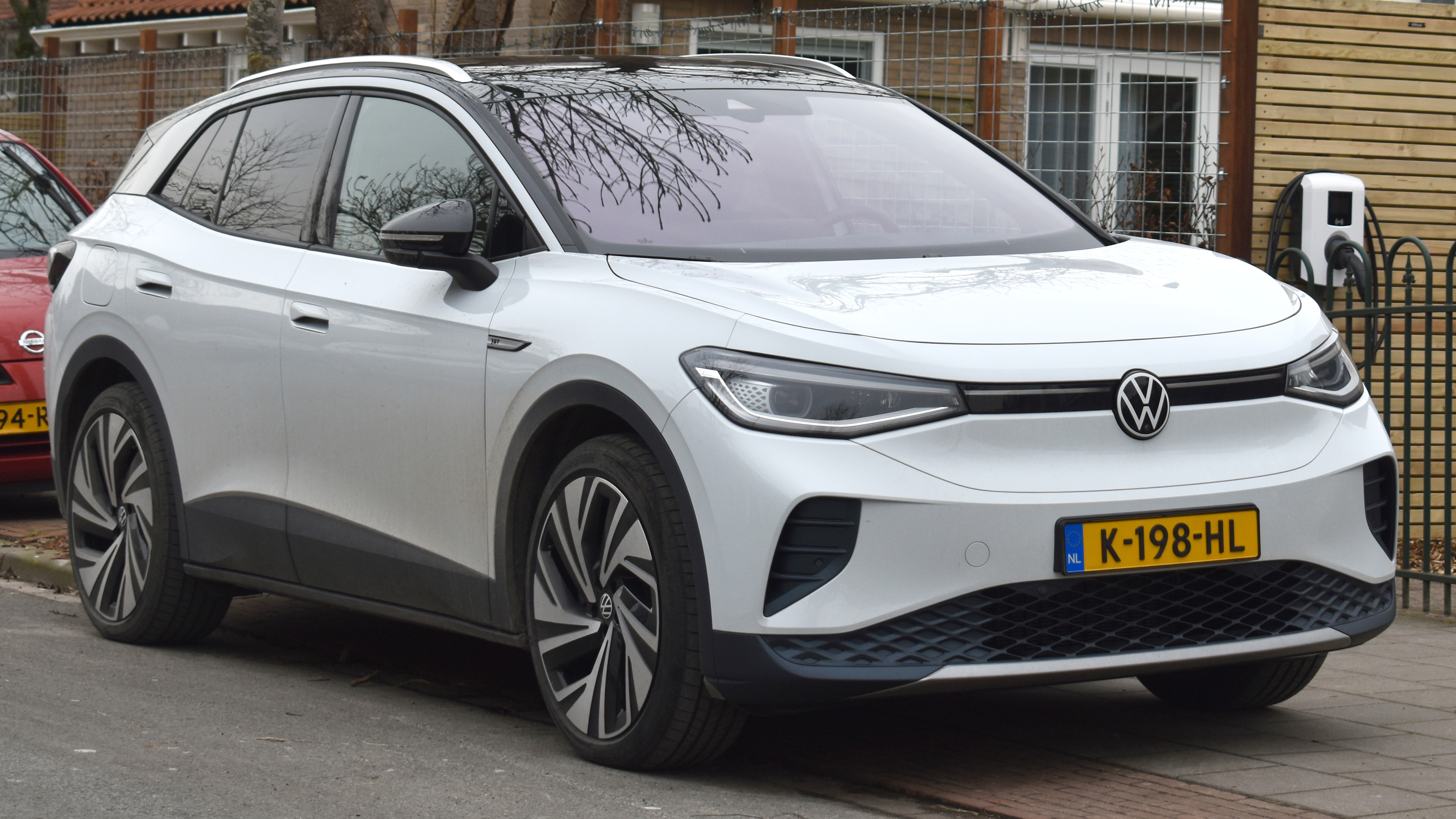
Volkswagen ID4
"The Volkswagen Tiguan has an E hybrid, and it's $7,000 more than the ID4."
The Volkswagen ID4 is an all-electric SUV. The hosts are using it as a benchmark to compare pricing versus plug-in hybrid versions of other cars.
The Volkswagen ID4 is an all-electric compact SUV in the ID family. In this segment it’s used as the “equivalent BEV” comparison point against plug-in hybrid models that allegedly cost more at purchase time.

Volkswagen Tiguan
"The Volkswagen Tiguan has an E hybrid, and it's $7,000 more than the ID4."
The Volkswagen Tiguan is a popular SUV. Here it’s mentioned because there’s a plug-in hybrid version, and the discussion compares its price to an all-electric alternative.
The Volkswagen Tiguan is a compact SUV, and in this segment it’s referenced specifically for having an “E hybrid” plug-in hybrid variant. The point being made is that the PHEV Tiguan costs more than an equivalent BEV option like the ID4.
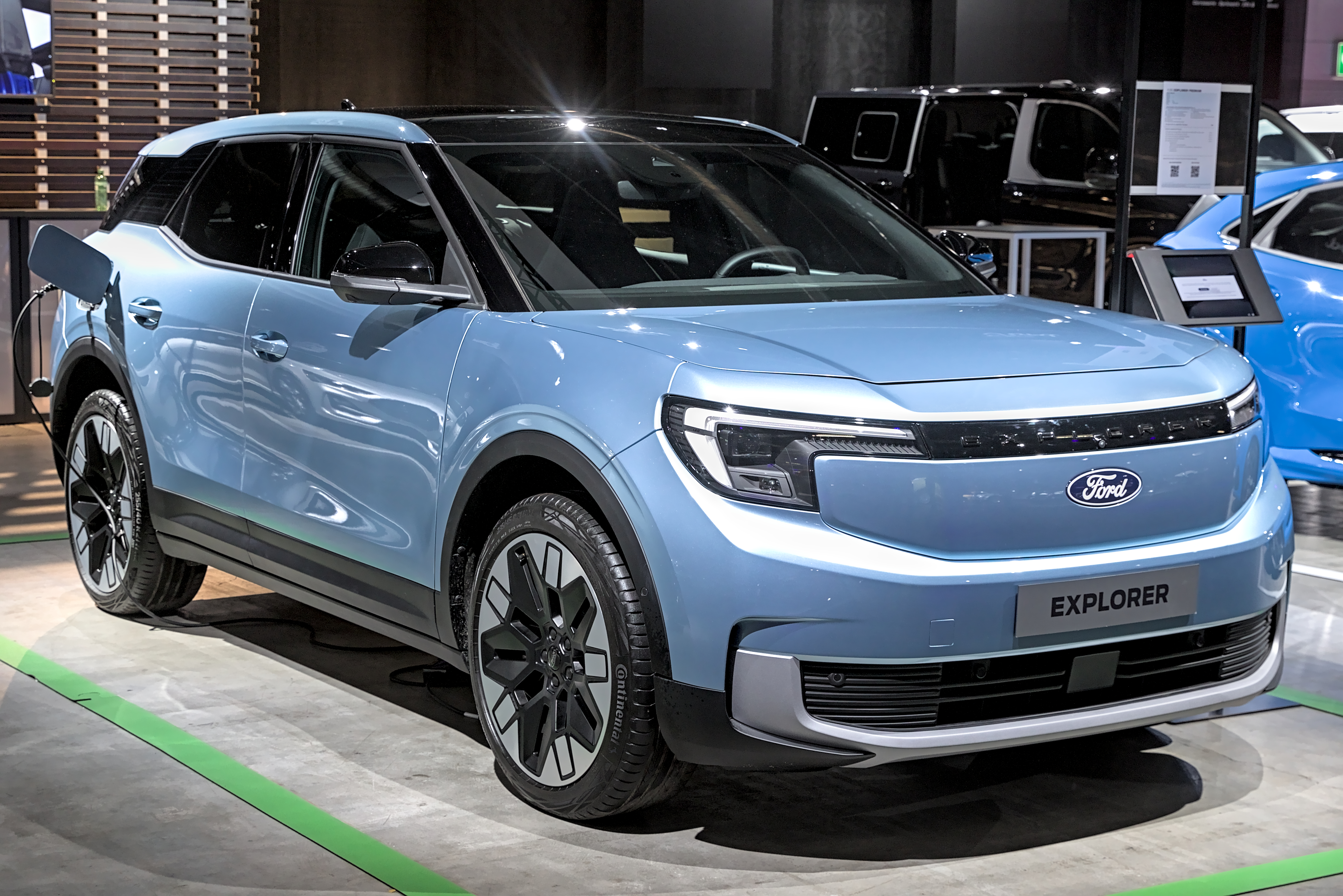
Ford Explorer
"...The Ford Cougar plug-in hybrid is $5,120 more than the Ford Explorer EV in the UK."
The Ford Explorer is a well-known SUV nameplate. In this part of the show, it’s being used as the all-electric comparison against a plug-in hybrid.
The Ford Explorer is referenced here as an EV in the UK comparison set. The segment uses it to argue that certain plug-in hybrids cost more than comparable all-electric models.

Ford Cougar
"The Ford Cougar plug-in hybrid is $5,120 more than the Ford Explorer EV in the UK."
The show mentions a Ford Cougar plug-in hybrid. They’re comparing its price to an all-electric Ford model to make the point that plug-in hybrids aren’t always the cheaper option.
The segment mentions a Ford “Cougar” plug-in hybrid as the higher-priced alternative to an EV like the Ford Explorer. This is part of a broader argument that PHEVs can be more expensive than BEVs at purchase time.

7 Jq7
"...00 less expensive in BEV form. The same goes for JQ7, Omodori 5 and more. For the first time, the ave..."
“7” is mentioned as an EV model in a list where the all-electric version is priced lower. The point is that cheaper EV options can make it easier for more people to switch. The podcast is using it to support the broader pricing-and-adoption story.
In the podcast snippet, “7” appears as one of several EV models being discussed in relation to pricing and BEV availability. Without the full model name in the transcript, the important takeaway is that it’s part of a lineup where the all-electric version is positioned as more affordable. That makes it relevant to the episode’s theme of how pricing changes can speed EV adoption.
real-world fuel consumption
"Plug-in manufacturers claim their vehicles cost only $686 or £540 a year to run in combined petrol and electricity, but we know their lies because they're based on way outdated, ideal lab tests, real-world fuel consumption..."
Real-world fuel consumption is how much energy or fuel people use in everyday driving. The show says official numbers are often based on perfect test conditions, so they may not match what you’ll see in real life.
Real-world fuel consumption (or energy use) is what drivers actually experience, as opposed to official test-cycle numbers. The hosts argue that official figures are based on idealized lab conditions, so they can understate costs and overstate efficiency.
connected cars
"Plug-in hybrids are also connected cars in many cases, like EVs, and so we now have the data, and we know how often they're plugged in..."
A connected car can share data over the internet. Here, the idea is that plug-in hybrids can report how people actually use them—like whether they plug in to charge.
Connected cars use an internet connection and onboard telematics to send data back to manufacturers or service providers. In this segment, the hosts say connected plug-in hybrids can reveal how often they’re plugged in and how much energy is used from the grid versus gasoline.
plugged in
"...we know how often they're plugged in and how much they're charging from the grid or being run on petrol..."
“Plugged in” means charging the car at home or a public charger. How often you do that determines whether you mostly drive on electricity or mostly on gas.
“Plugged in” refers to charging a plug-in hybrid or EV from the electrical grid rather than relying on its engine. Charging frequency is crucial because it determines how much of the car’s energy comes from electricity (cheaper and lower-emissions) versus gasoline.
Omoda
"A couple of brands I have mentioned already, Omoda and JQ, just past one million total global sales this month..."
Omoda is a newer car brand coming from China. The hosts are pointing out that it’s selling a lot of cars and growing quickly in Europe.
Omoda is a Chinese automotive brand expanding internationally, and the hosts cite its rapid sales growth and dealer footprint. The segment uses Omoda as an example of how some new entrants are gaining traction in Europe.
JQ
"A couple of brands I have mentioned already, Omoda and JQ, just past one million total global sales this month..."
JQ is another Chinese car brand mentioned in the same growth story. They’re using it to show how quickly some new brands are expanding and selling cars.
JQ is referenced alongside Omoda as another Chinese brand hitting major sales milestones. The hosts discuss its delivery volumes, country presence, and dealer network as evidence of fast market penetration.
Chinese EV incomeors in Europe
"We'll take a break, we'll come back, and we'll talk about why it's not all plain sailing, for all of the Chinese EEV incomeors in Europe, with one big notable case pulling out."
They’re talking about Chinese companies bringing EVs to Europe. Even though sales can start strong, there are problems that can make it harder to keep going.
This appears to refer to Chinese EV entrants/investors (likely “incumbents” or “incomers”) trying to sell EVs in Europe. The hosts tease that it’s “not all plain sailing,” implying challenges like pricing pressure, regulation, or demand shifts despite early momentum.
GWM Aura03
"Great wall motor. [875.1s] GWM has pulled out with their Aura03, a.k.a. the Funky Cat, as it used to be known as, [882.1s] from the UK. Ends a four-year experiment. [885.1s] The Aura03, or Funky Cat, launched in 2022."
The GWM Aura03 is a small electric car from GWM that was sold in the UK for a few years. The discussion highlights that it looked distinctive, but it was priced pretty high compared with what many buyers expect.
The GWM Aura03 (also referred to as the Funky Cat) is a compact EV that GWM sold in the UK as part of a four-year experiment. The hosts note it launched in 2022 and had a distinctive design, but also a premium price point that affected its appeal.
four-year experiment
"from the UK. Ends a four-year experiment. [885.1s] The Aura03, or Funky Cat, launched in 2022."
This “four-year experiment” means GWM tried selling these cars in the UK for four years to see if it would work. After that period, they decided to stop.
A “four-year experiment” here refers to GWM’s limited-duration market push in the UK. It implies the company tested demand, pricing, distribution, and compliance costs before deciding whether to continue.
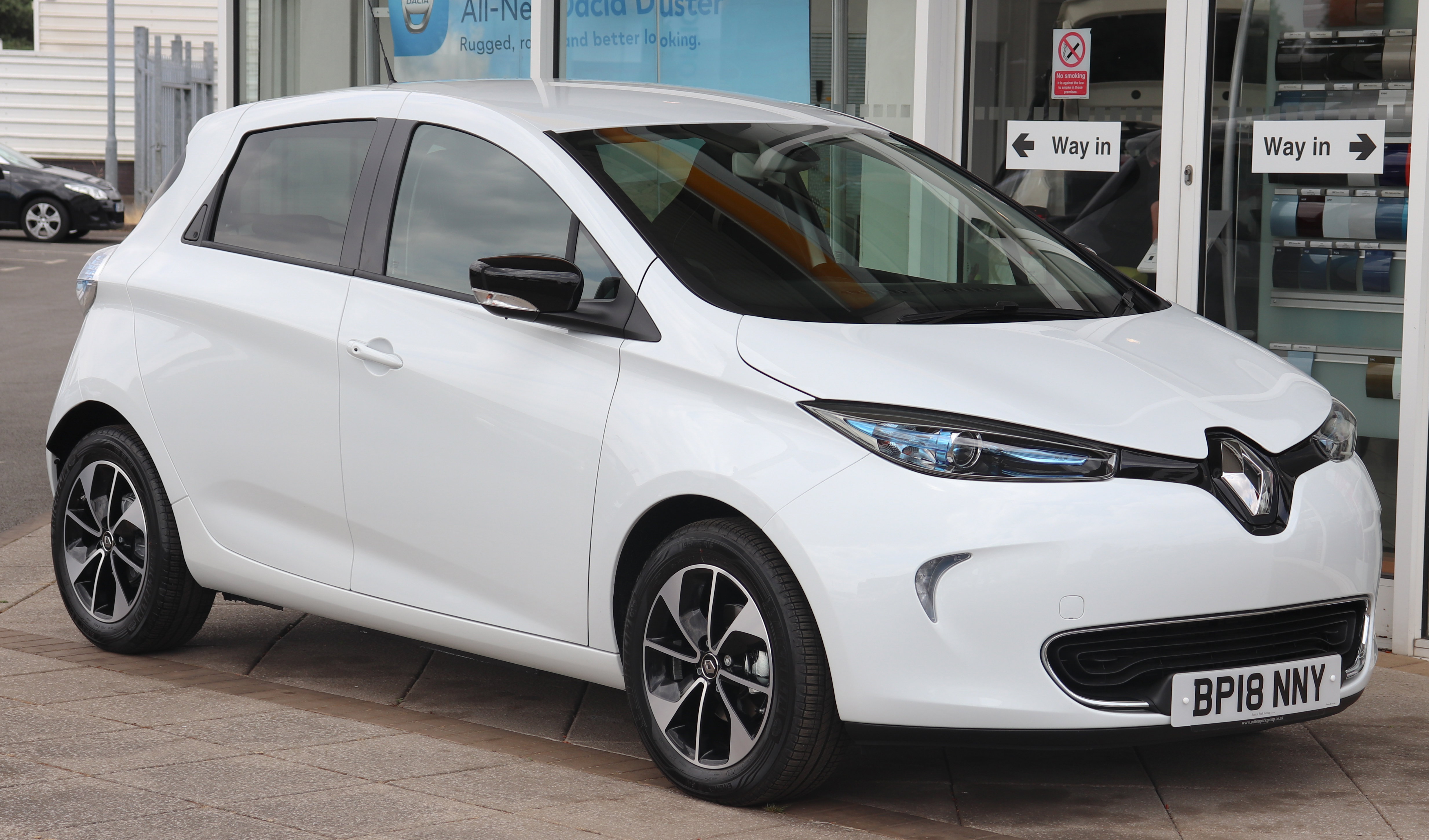
Renault Zoe
"...t like the Volkswagen ID3, top end of MG4. Maybe Renault Zoe buyers trading up. Vauxhall Corsa buyer trading ..."
The Renault ZOE is a small all-electric car. It’s designed for city and everyday driving using a battery instead of gasoline. It comes up when people talk about upgrading from a smaller EV to a bigger one.
The Renault ZOE is a long-running European all-electric hatchback that helped popularize EVs in the compact segment. It’s commonly mentioned when buyers consider moving up to larger or more expensive EVs, because it’s a familiar entry point. In the episode context, it’s part of a “trading up” storyline among small EVs.

Vauxhall Corsa
"Maybe Renault Zoe buyers trading up. Vauxhall Corsa buyer trading up. In early 2024, they rebranded ..."
The Vauxhall Corsa 5 doors is a small car with four passenger doors plus a hatch for cargo. It’s designed for everyday driving and easy access. The podcast mentions it because some people who drive this type of car may switch to an EV instead.
The Vauxhall Corsa 5-door is a compact hatchback variant focused on everyday usability and family-friendly practicality. In the podcast context, it’s mentioned as a buyer base that could be “trading up” to EVs like the Renault ZOE, reflecting how customers move from traditional small cars to electric ones. That makes it relevant to the business side of EV adoption—who is switching and why.
battery options
"They added larger battery options and new trim levels. Pricing was £33,000, which is $41,910 for a weird badge on the front."
“Battery options” means the car is sold with different battery sizes. Bigger batteries often give more driving range, but they can also make the car cost more.
“Battery options” refers to offering different battery capacities (and sometimes different power outputs) across trims. In EV pricing and positioning, larger batteries usually mean higher range but also higher cost, so it’s a key lever for attracting buyers.
trim levels
"They added larger battery options and new trim levels. Pricing was £33,000, which is $41,910 for a weird badge on the front."
Trim levels are different versions of the same car with different feature packages. The hosts are saying they tried to make the Aura03 more attractive by offering new versions.
Trim levels are different versions of the same model that bundle features, equipment, and sometimes powertrain/battery choices. The segment suggests the Aura03 was updated with new trims to improve its appeal in a crowded compact-EV segment.
International Motors
"The Importer International Motors registered 542 last year, and have sold 26 so far this year."
International Motors is the company handling the UK import and sales numbers mentioned in the segment. If they sell only a small number, it can mean fewer cars for parts and service to support.
International Motors is named as the importer registering and selling the vehicles in the UK. Importer performance and distribution scale can strongly affect how many cars are on the road—and therefore how easy servicing and parts support may be.
dealer inventory
"The new Aura03 will not come to the UK. No new stock comes here. There is probably some dealer inventory kicking around."
Dealer inventory is the cars that are already sitting at dealerships. Even if a model stops coming to the UK, you might still be able to buy one that’s already in stock.
Dealer inventory is the stock of vehicles a dealer has on hand. When the hosts say there may be “some dealer inventory kicking around,” they mean cars already in the UK might still be available even if new supply stops.
servicing and parts availability
"because that calls into question how easy servicing and parts are going to be as supply in the future. On the other hand, I had a look this morning... then there's obviously some questions around, like I say, ongoing service and dealer."
This is about whether you can get the car fixed easily in the future. If a brand doesn’t bring many cars in, it may also mean fewer parts and fewer service options.
This refers to whether an EV will be easy to maintain over time—specifically whether authorized service, replacement parts, and trained technicians are available. The segment links a brand’s supply decisions to buyer risk: if the car isn’t supported long-term, repairs can become harder and more expensive.

MG ZS
"Because I had a couple of problems with my MG, the mighty, mighty MG ZS, back in the day, with its seven-year warranty."
The MG ZS is a small SUV. The point here is that even if the warranty is good, you can still be stuck waiting if replacement parts take a long time to arrive.
The MG ZS is a compact SUV from MG (a brand owned by SAIC). In this segment, it’s used as an example of how warranty coverage doesn’t always solve real-world issues like slow parts availability.
seven-year warranty
"Because I had a couple of problems with my MG, the mighty, mighty MG ZS, back in the day, with its seven-year warranty."
A seven-year warranty means the company promises to cover certain repairs for a long time. But if parts are hard to get, your car can still be in the shop for weeks.
A seven-year warranty is a long coverage period that can reduce the cost of repairs for covered failures. However, warranty doesn’t guarantee fast turnaround if parts must be sourced from overseas.
Stellantis Investment
"And again, it's because of Stellantis Investment. They sell these alongside Stellantis cars in the big, shiny Stellantis dealerships."
Stellantis Investment is money and support from Stellantis. Here, it’s being linked to better distribution—so a newer EV brand can be sold through big dealer showrooms.
Stellantis Investment refers to investment activity tied to Stellantis, the large automaker behind brands like Peugeot, Fiat, Chrysler, and others. In this context, it’s presented as helping Leap Motor sell cars through Stellantis dealer networks.
Leap Motor
"And that's Leap Motor. They're doing really well here. And they're going to launch the fully electric B05 in all of Europe"
Leap Motor is an EV company (not a traditional legacy brand). The hosts are saying it’s gaining traction and is preparing to bring a new electric car to Europe.
Leap Motor is a Chinese EV brand that’s expanding into other markets. The segment claims it’s doing well locally and plans to launch a new sporty electric model across Europe.
fully electric B05
"And they're going to launch the fully electric B05 in all of Europe as the brand's first sporty electric model."
The Leap Motor B05 is an all-electric car. In this segment, they’re saying it’s meant to be the brand’s first more sporty EV for Europe.
The Leap Motor B05 is described here as a fully electric model and the brand’s first sporty EV offering. The key takeaway is that Leap Motor is positioning it as a performance-leaning alternative as it expands across Europe.
warm version or a hot version
"There's a warm version or a hot version."
“Warm” and “hot” versions are marketing terms for different performance trims—typically a step up in power, tuning, and/or handling for the “hot” variant. On EVs, this often maps to different motor output, software tuning, and sometimes battery/thermal calibration.

Kia EV4
"One of the larger cars in the compact segment, matching the Kia EV4 in length"
They’re comparing the new EV’s size to the Kia EV4 so you can picture how big it is. It’s basically a “how it stacks up” reference, not a deep dive into the Kia itself.
The Kia EV4 is being used as a reference point for size in the compact EV segment. In this segment, the hosts compare the new car’s dimensions to the Kia EV4 to help listeners understand where it fits in the market.

Volkswagen ID.3
"bigger than an ID.3 and a Renault Megane E-Tech."
They mention the Volkswagen ID.3 because it’s a well-known compact EV. The point is to show the new car’s size relative to a familiar model.
The Volkswagen ID.3 is a compact electric hatchback used here as a benchmark for the new car’s length. Comparing against the ID.3 helps listeners gauge whether the new model is closer to a small hatch or a larger compact.

Renault Megane E-Tech
"bigger than an ID.3 and a Renault Megane E-Tech."
They’re using the Renault Megane E-Tech as another reference point for size. It helps you understand how the new EV compares to other popular compact electric cars.
The Renault Megane E-Tech is another compact EV used as a sizing comparison. Here, it’s part of a quick “bigger than” list to place the new model within the compact segment.
active grille
"They say for low drag using a new active grille, front air curtains, new side deflectors"
An active grille is a front opening that can adjust to let in more or less air. Closing it can reduce wind resistance, which helps the EV go farther on a charge.
An active grille is a grille area that can open or close to manage airflow. On EVs, it’s used to reduce aerodynamic drag at speed, which helps improve efficiency and range.
front air curtains
"They say for low drag using a new active grille, front air curtains, new side deflectors"
Front air curtains are channels or vanes near the front of the car that direct airflow along the sides. The goal is to reduce turbulence and aerodynamic drag, improving efficiency—especially important for EV range.
low drag coefficient
"for a low drag coefficient in Italy."
A low drag coefficient means the car is more aerodynamic, so it wastes less energy pushing through the air. For EVs, lower aerodynamic drag usually translates into better highway efficiency and longer real-world range.
kilowatt hour pack
"That's 29,500 US dollars equivalent for a 56.2 kilowatt hour pack and 250 miles of range on WLTP."
A “kilowatt hour pack” refers to the battery capacity measured in kWh. In general, a larger kWh battery can provide more range, though efficiency and aerodynamics also play major roles.
WLTP
"250 miles of range on WLTP. There's a bigger battery for 29,000 euros or 32,000 dollars."
WLTP is a standardized test used to estimate how far an EV can go. It’s a consistent way to compare cars, but your actual range may be different in everyday driving.
WLTP (Worldwide Harmonized Light Vehicles Test Procedure) is a standardized method used in Europe to estimate EV range and fuel/energy consumption. It’s useful for comparing cars, but real-world range can differ due to speed, temperature, and driving style.

Alpina B10
"...on WLTP. It shares both battery options with the B10. That's the compact SUV."
The Alpina B10 is a compact SUV that’s available with different battery options. It’s mentioned along with official range testing (WLTP) so people can compare how far it can go. The podcast brings it up to explain EV choices and specifications.
The Alpina B10 is a performance-oriented compact SUV referenced in the podcast as sharing battery options with the B10 and being rated on WLTP. It’s discussed because it represents how performance brands are entering the EV space with specific range and equipment choices. In the episode context, it’s also used to talk about how different EV models compare on battery configurations and official testing figures.
single motor on the rear wheels
"Single motor on the rear wheels, 160 kilowatts, 218 horsepower."
This means the EV has one electric motor powering the back wheels. It’s usually simpler than having motors on both axles, which can change how it feels to drive.
A single motor driving the rear wheels describes a rear-wheel-drive EV layout. This typically simplifies the drivetrain compared to dual-motor all-wheel-drive setups, which can affect traction and handling characteristics.
peak at 174 kilowatts
"and DC fast charging, peaking at 174 kilowatts. That's very, very good, by the way, for that price segment vehicle."
That 174 kW number is how fast the car can charge at its fastest point. In practice, it may slow down as the battery gets fuller.
“Peak at 174 kilowatts” refers to the maximum charging power the EV can accept under ideal conditions. Higher peak kW can shorten charging time, though real charging curves often taper as the battery fills up.
direct to consumers
"US EV makers continue to step up their efforts to sell direct to consumers,"
Selling direct to consumers (DTC) means the manufacturer handles sales rather than relying on traditional dealer networks. For EVs, DTC can reduce markups and standardize pricing, but it also changes how customers negotiate, trade in, and get service support.
ballot initiatives to challenge the dealers
"some now pair, new legal strategies, with the threat of ballot initiatives to challenge the dealers."
A ballot initiative is a way to change state law by getting voters to approve it. EV companies sometimes use this threat to try to loosen rules that protect traditional car dealers.
Ballot initiatives are proposed laws that voters can approve or reject directly. In this context, EV startups threaten or use ballot measures to change state rules that favor dealer franchises and restrict direct-to-consumer sales.
dealer franchise system controlling most deliveries
"They face a system that controls 96% of new vehicle deliveries in the US."
Most new cars in the US are sold through dealer franchises. That system is so dominant that new EV brands often have to fight to sell without dealers.
The US dealer franchise system is a regulatory structure where franchised dealers control a large share of new-vehicle sales. The episode cites that it controls 96% of new vehicle deliveries, illustrating how hard it is for new EV brands to bypass dealers.
Rivian
"Rivian is showing a possible route through the barricade. It secured a dealer license in Washington State last month before that Rivian had threatened to fund a ballot initiative there."
Rivian is discussed as an EV startup navigating dealer restrictions by securing a dealer license through a legislative compromise. The episode frames this as a potential route around direct-sales barriers in certain states.
Lucid
"Tesla, Rivian and Lucid combined, held less than 4% of US light vehicle market sales last year in 2025."
Lucid is one of the EV brands mentioned in the market-share comparison. The point is that, despite attention, these newer EV makers still sell relatively few cars in the US.
Lucid is included in the comparison of EV startups’ combined market share. The episode uses Lucid’s name to show that even multiple direct-sales-focused EV brands together still represent a small slice of US light-vehicle sales.
S&P Global Data
"That's according to S&P Global Data. The legal map is patchy."
S&P Global Data is cited as the source for the market-share figures mentioned in the segment. This matters because it anchors the discussion in a specific data provider rather than anecdotal claims.
direct sales bans or restrictions
"EV startups face direct sales bans or restrictions in 28 states still, according to the electrification coalition."
In many states, car companies aren’t allowed to sell cars straight to you. They have to sell through local dealer businesses, which can make buying an EV harder or more expensive.
Some US states restrict or ban automakers from selling directly to consumers, requiring sales through franchised dealers. These rules are often enforced through state franchise laws and can vary widely by state.
direct sales exemptions
"Some states created direct sales exemptions for Tesla, but Tesla only."
An exemption is a special rule that lets a company do something that others can’t. Here, some states allow direct sales only under certain conditions, and sometimes only for Tesla.
Some states create limited exemptions that allow direct-to-consumer sales under specific conditions. The episode notes exemptions exist for Tesla in certain places, illustrating how regulation can be tailored to individual companies rather than applied uniformly.
dealer license via legislative compromise
"It secured a dealer license in Washington State last month... The license followed a legislative compromise with the dealers."
A legislative compromise can result in a startup obtaining a dealer license, effectively blending into the franchised-dealer system rather than bypassing it. The episode presents this as a practical workaround for selling in restricted markets.
site selection for first European manufacturing plant
"MG Motor... is favouring Spain for their first European manufacturing plant. Bloomberg citing sources saying Spain has moved ahead of Hungary..."
They’re deciding where to build their first factory in Europe. That choice can affect costs, shipping, and how easy it is to sell cars across the region.
The segment discusses choosing a manufacturing location (Spain vs Hungary) for MG Motor’s first European plant. Site selection is a key EV business factor because it influences production economics, logistics, and how local policy and trade conditions affect pricing.
MG Motor
"Now, MG Motor, the European arm of SAIC, is favouring Spain for their first European manufacturing plant."
MG Motor is planning its first European factory, and the episode says it’s leaning toward Spain. Where a factory is built can change costs and how easily vehicles can be sold in Europe.
MG Motor is mentioned as choosing Spain for its first European manufacturing plant. This is relevant to EV business strategy because factory location affects supply chain costs, tariffs, and market access.
SAIC
"Now, MG Motor, the European arm of SAIC, is favouring Spain for their first European manufacturing plant."
SAIC is the company behind MG Motor. The episode mentions it to explain who’s making the decision about where to build a factory in Europe.
SAIC is identified as the parent company behind MG Motor’s European operations. The episode uses this to connect corporate structure to manufacturing and market-entry decisions.
Bloomberg
"Bloomberg citing sources saying Spain has moved ahead of Hungary, which had looked like the main option because of a Chinese friendly climate."
Bloomberg is cited as the source for the latest update on manufacturing location momentum (Spain ahead of Hungary). This indicates the information is coming from a specific newswire/reporting outlet.
tariffs on Chinese imported cars
"SAIC faces a 35.3% tariff on top of the 10% already in place, duty on Chinese imported cars. So it makes sense to make the cars here... China reportedly warned domestic car makers against investing in any EU member states that voted in favour of those very high tariffs, and Spain was one of them."
Tariffs are extra taxes on cars when they’re shipped into a country. If the taxes get high, it can be cheaper for companies to build the cars locally instead of importing them.
Tariffs are taxes added to imported goods, which can significantly raise the final price of vehicles sold in the importing country. This segment describes how layered tariffs (a new 35.3% on top of an existing 10%) push automakers toward local production in Europe to protect margins and remain competitive.
local production to avoid import taxes
"So it makes sense to make the cars here. The company signaled a couple of years ago they want to make the MG4 somewhere in Europe... China reportedly warned domestic car makers against investing in any EU member states that voted in favour of those very high tariffs, and Spain was one of them."
Instead of shipping cars from China, companies can build them in Europe. That can help them avoid expensive import taxes, but politics and trade warnings can complicate the decision.
Local production means building vehicles inside the target market (or nearby) rather than importing them. The segment frames this as a strategy to reduce tariff exposure and improve logistics, but also notes political risk if the investing country supports higher tariff policies.
CATL
"BYD's there, CATL, eVenergy and more. But Spain's emerged as the preferred location strong, shipping links to the rest of Europe and the European Union,"
CATL is a company that makes the batteries EVs rely on. The point is that battery supply and related EV industry are already present in the region being discussed.
CATL (Contemporary Amperex Technology) is one of the world’s largest lithium-ion battery manufacturers. The segment mentions it alongside other EV players to highlight that certain European-bound supply chains and battery capacity are already being built out.
EV used sales up 54%
"Cox Automotives, EV Market Monitor says EV used sales up 54% in February and March. Recurrent, a former sponsor of this podcast even, then-new EV Market & Trends report has landed at a critical moment."
This is about how many electric cars are being sold second-hand. If used EV sales jump a lot, it usually means more people are willing to buy EVs without paying new-car prices.
“Used sales” refers to transactions in the pre-owned vehicle market, not new-car deliveries. A large jump like “up 54%” suggests EVs are becoming more mainstream and/or that buyers are finding better value in the secondhand market as prices and availability shift.
range retention
"Recurrent found the average EV retains 97% of its range after three years, and 95% of its marketed range after five years."
Range retention tells you how much driving distance an EV can still do after a few years. Higher retention usually means the battery is holding up better over time.
Range retention describes how much of an EV’s usable range remains after a set period (like three or five years). It’s a practical way to compare battery longevity across brands and models, because it reflects both battery degradation and how the vehicle’s efficiency evolves.
marketed range
"Recurrent found the average EV retains 97% of its range after three years, and 95% of its marketed range after five years... the 2020 model years had an average of 261 miles of marketed range."
Marketed range is the official range number you see in ads and on the spec sheet. It’s not exactly what you’ll get every day, especially as the battery ages.
Marketed range is the range number a manufacturer publishes for a specific model year, typically tied to a test standard. It’s useful for comparisons, but it can be misleading if you don’t account for real-world conditions and battery aging.
Cadillac
"It found five brands with no range loss over the marketed range number after five years. Cadillac, Ford, Hyundai, Mercedes and Riviam."
Cadillac is mentioned as one of the brands that, in this report, didn’t lose range over five years (based on the advertised range metric).
Cadillac is one of the brands Recurrent lists as having no range loss over the marketed range number after five years. That’s notable because it suggests strong long-term battery/range performance in their dataset.
Mercedes
"It found five brands with no range loss over the marketed range number after five years. Cadillac, Ford, Hyundai, Mercedes and Riviam."
Mercedes is included in Recurrent’s “no range loss” list after five years, using the marketed range metric. For listeners, it’s a reminder that different brands can show different long-term range retention patterns.
Hyundai
"It found five brands with no range loss over the marketed range number after five years. Cadillac, Ford, Hyundai, Mercedes and Riviam."
Hyundai is one of the brands that this report says didn’t lose range after five years. It’s a useful signal for long-term battery performance, though real-world results can vary.
Hyundai is named among the brands that Recurrent says show no range loss over the marketed range number after five years. That implies strong battery longevity and/or consistent efficiency in the report’s sample.
Request an Explanation
Heard something you'd like explained? We'll add it to this episode.
Sign in to request explanations for terms you heard.
Want to learn more?
Browse our glossary for plain-English explanations of automotive terms, jargon, and concepts.
Help improve this episode
See something that's not quite right? Our annotations are AI-generated and can sometimes miss the mark. Click the flag icon on any annotation to suggest a correction.