
David From New Zealand Breaks Down the Leapmotor C10
About this episode
David from New Zealand walks through choosing the Leapmotor C10, comparing it to the BYD 803 and preferring its rear-wheel-drive feel. He and the hosts share real-world range versus “420Ks WLTP,” plus practical charging experiences and New Zealand electricity pricing. Cabin highlights include a panoramic roof, heated/ventilated comfort, and ambient lighting tied to reverse sensors. They also cover software updates, ADAS intrusiveness (and a steering-wheel shortcut), infotainment tradeoffs, and charging network options.
In this episode, host Bodie sits down with David from New Zealand to get an owner's perspective on the Leapmotor C10 electric SUV. David shares his transition from a gas-powered Suzuki Vitara to the C10, highlighting why its exceptional value, rear-wheel-drive dynamics, and spacious layout won him over against competitors like the BYD Atto 3. They dive into real-world range, the local support infrastructure provided by Stellantis’s investment, and how over-the-air updates have tamed early frustrations with the vehicle's driver assistance systems. David also details the unique conveniences of owning a modern software-defined car, from integrated ambient lighting alerts to using vehicle-to-load power capabilities for everyday tasks. Finally, the conversation hits on the realities of road-tripping and public charging infrastructure across New Zealand's scenic highways.
Support the Show https://www.supportkilowatt.com/
Other Podcasts:
Beyond the Post YouTube (https://www.youtube.com/@beyondthepostfm) Beyond the Post Podcast (https://www.beyondthepost.fm/) Shuffle Playlist (https://shows.acast.com/shuffle-playlist) 918Digital Website (https://www.918digital.com/)
News Links:
*Show Art Created By Gemini
Hosted by Simplecast, an AdsWizz company. See pcm.adswizz.com for information about our collection and use of personal data for advertising.

Chevrolet C10
"...k to David from New Zealand about his Leap Motors C10. We have talked quite a bit about Leap Motors rec..."
The Chevrolet C10 is an older pickup truck with a classic look. In the episode, it’s mentioned because someone has a modernized version of that idea using Leap Motors. The point is how people keep the classic style but change the power system.
The Chevrolet C10 is a classic American pickup from the 1960s–1970s era, known for its simple, iconic styling and popularity with restorations. In the podcast, it’s brought up in a conversation about David from New Zealand and his Leap Motors C10, which suggests a modernized or electrified take on the C10 concept. That’s why it fits an EV-focused podcast: it highlights how classic truck designs are being adapted for today’s powertrains.

Leap Motors C10
"on today's episode we are going to sit down and talk to David from New Zealand about his Leap Motors C10. ... You purchased recently a Leap Motors C10. Were there other EVs that you were looking at before you made the choice to go with the C10?"
The Leapmotor C10 is an electric car. In this chat, the big point is that it drives with power to the rear wheels, and David thinks that makes it feel better than some front-wheel-drive alternatives—plus it’s priced to feel like a good deal.
The Leapmotor C10 is an electric vehicle (EV) that’s notable for its driving layout and value-focused positioning. In this segment, David compares it directly against other EVs and highlights that the C10 is rear-wheel drive, which changes how it feels compared with front-wheel drive cars.
Stellantis
"We have talked quite a bit about Leap Motors recently. It's almost every time we mention Stellantis actually we have to mention that Leap Motors is kicking their behinds in terms of electrification which Stellantis is a big investor in Leap Motors."
Stellantis is a big car company group. The host is saying that, in EV progress, Leapmotor is moving faster than Stellantis.
Stellantis is a major automaker group that invests in EV development and partnerships. In this segment, the hosts connect Stellantis to Leapmotor’s electrification momentum, saying Leapmotor is “kicking their behinds” in EV progress.
rear-wheel drive
"We also much preferred how the C10 drove a rear-wheel drive versus front-wheel drive. The 803 is a bit softer and it's sort of bouncy and it's ride but we drove a"
Rear-wheel drive means the power goes to the back wheels. That can make the car feel different when you accelerate and turn compared with cars where the front wheels get the power.
Rear-wheel drive (RWD) means the electric motors send torque to the rear axle, which can change traction and steering feel versus front-wheel drive. In EVs, that often affects how the car balances grip during acceleration and how it feels in everyday driving.
front-wheel drive
"We also much preferred how the C10 drove a rear-wheel drive versus front-wheel drive. The 803 is a bit softer and it's sort of bouncy and it's ride but we drove a"
Front-wheel drive means the power goes to the front wheels. It can make a car feel different than rear-wheel drive, especially when you’re accelerating or turning.
Front-wheel drive (FWD) means the driven wheels are at the front axle, so the car’s traction and steering response are influenced by how the front tires handle both turning and acceleration. David brings it up as the contrast to the C10’s rear-wheel-drive feel.
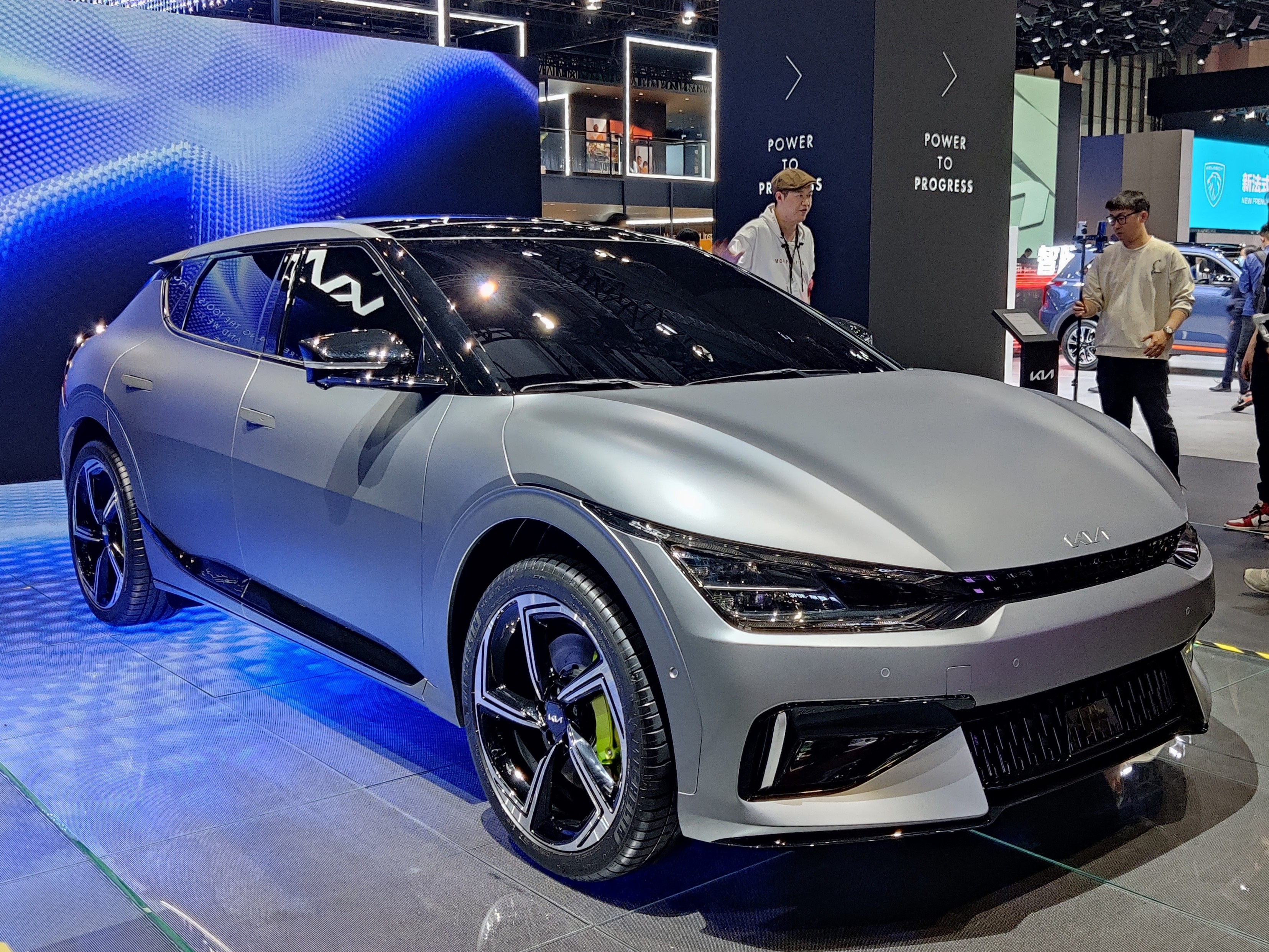
Kia EV6
"...the original VZ4X and things like either the CARE EV6 quite like the EV6 to drive but it's nearly half ..."
The Kia EV6 is an electric car, meaning it runs on electricity instead of gasoline. The episode mentions it because people like how it drives. It’s the kind of EV that’s meant to be comfortable and easy to use day to day.
The Kia EV6 is an electric crossover designed to be practical for daily driving while still feeling quick and responsive. The podcast compares it to the “VZ4X” and notes that the EV6 is liked “to drive,” suggesting it has a satisfying driving feel. It’s discussed in an EV context because it’s a mainstream EV option and often comes up when people talk about real-world usability and performance.
GT line spec
"and you had to get the GT line spec to get close to the same features that Chinese were offering. The value proposition was really why we went with the C10 above all else."
“GT line spec” means a more equipped version of a car, with extra features. David’s point is that to match what the Chinese cars include, you’d often have to pay for a higher trim level.
A “GT line spec” refers to a higher trim level (a specific equipment package) that typically adds features and styling compared with the base version. David says he had to choose that kind of higher trim to get close to the features Chinese EVs were offering at the C10’s price.
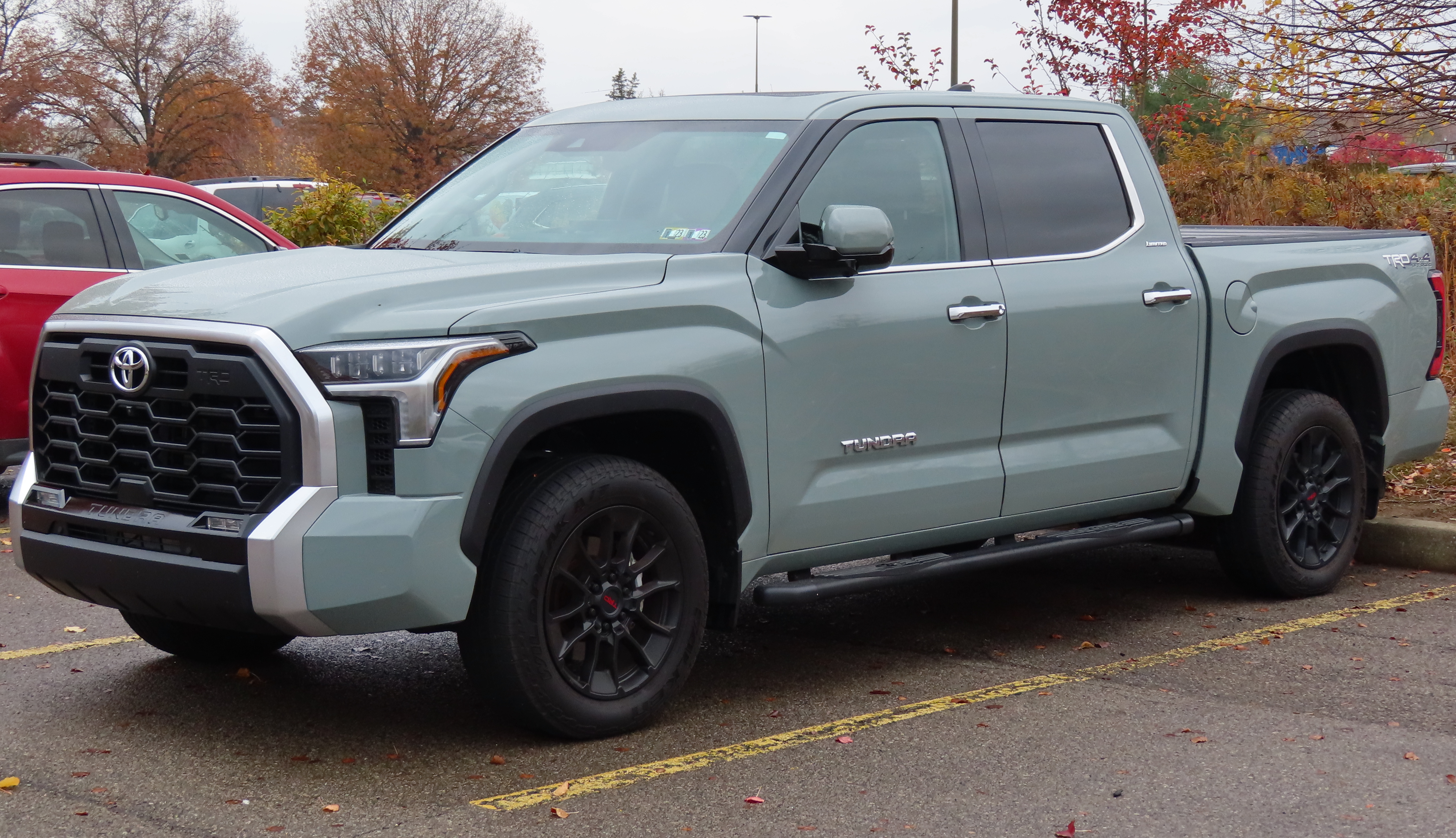
Toyota Tundra
"... look of the C10. We've gone with a colour called tundra grey which is a sort of beige-y colour which is q..."
The Toyota Tundra is a large pickup truck. It’s the kind of vehicle people use for hauling or everyday driving with a lot of space. In this episode, it’s also referenced because of a color called “Tundra Grey.”
The Toyota Tundra is a full-size pickup truck known for being used as a work vehicle and a family hauler. In the podcast context, it’s mentioned in relation to a color choice (“Tundra Grey”), showing how the name carries over into styling and branding. Pickup trucks like this often come up in EV discussions because people compare what they need from a truck day-to-day.
WLTP
"So yeah 420Ks WLTP. What are you getting in real world though with your range?"
WLTP is a standardized test number car companies use to estimate how far an EV can go on a full charge. Your real range can be higher or lower depending on how and where you drive.
WLTP (Worldwide Harmonized Light Vehicle Test Procedure) is a standardized lab test used to estimate an EV’s range. Real-world range often differs because driving speed, temperature, and route conditions can make the battery use energy faster than the test assumes.
real world range
"420Ks WLTP. What are you getting in real world though with your range? Around town we would exceed that."
Real-world range is how far the EV really goes in normal driving. It can be different from the official test estimate, especially in cold weather.
“Real world range” is the EV distance you actually get in everyday driving, as opposed to the standardized test range. This episode contrasts WLTP numbers with observed results in different temperatures and driving conditions.
Topo
"Are you around Auckland or yet? We're in Topo which is roughly halfway between Auckland and Wellington so half way between the two largest cities."
Topo is where the owner is located. They mention it relative to Auckland and Wellington so you can picture the kind of driving they’re doing.
Topo is the local area the speaker says they’re in, used to frame driving conditions and trip planning. It’s mentioned relative to Auckland and Wellington, helping listeners understand the geography of their range test.
recharge
"Car took about an hour to recharge while we were shopping and doing things around Auckland so pretty easy."
For an EV, “recharge” means charging the battery using a charger. It’s like refueling, but you plug it in.
In EV talk, “recharge” refers to charging the battery from an external power source rather than refueling a gas tank. The episode uses it in the context of planning a trip and topping up during errands.

Suzuki Vitara
"What did you drive before you got a C10? We had a Suzuki Vitara so it was a 2017 turbo. Front wheel drive, 1.4L turbo petrol in SUV sort of that but really just a hatchback."
The Suzuki Vitara is a small SUV model the owner had before the Leapmotor C10. They mention theirs was a 2017 turbo petrol version with front-wheel drive.
The Suzuki Vitara is a compact SUV that the speaker previously owned before switching to the Leapmotor C10. Here it’s specifically described as a 2017 turbo with a 1.4L turbo petrol setup and front-wheel drive, used as a baseline for what they were coming from.

Suzuki Swift Sport
"Same powertrain as what they put in the Swift Sport. I don't know if you're familiar with the Suzuki Swift Sport though."
The Suzuki Swift Sport is a sportier version of the Swift. The speaker is saying the same kind of engine/power setup is used across these Suzuki models.
The Suzuki Swift Sport is a performance-oriented variant of the Swift line, and the speaker says the same powertrain concept is used in the Vitara they owned. This is mentioned to connect the Vitara’s engine characteristics to a known Suzuki model.

Suzuki Swift
"...t Sport. I don't know if you're familiar with the Suzuki Swift Sport though. I don't even know if Suzuki cars ar..."
The Suzuki Swift 5-door is a small hatchback with four side doors, designed for practical everyday driving. In the episode, it’s mentioned alongside the Swift Sport, which helps explain the guest’s car background. The main idea is that it’s a compact, easy-to-use car.
The Suzuki Swift 5-door is a compact hatchback focused on being easy to drive and efficient for city and everyday use. The podcast references the “Swift Sport” and then talks about the Swift in general, implying the 5-door model is part of the same Swift family and related powertrain discussion. It’s brought up to set context for how the guest’s driving experience evolved.

Mitsubishi Outlander
"I know we have some Mitsubishi's like one brand or one trim. Right. Mitsubishi definitely going out. It wasn't for the Outlander and the Ute or Pickup."
The Mitsubishi Outlander is a Mitsubishi SUV model. The speaker brings it up as an example of what Mitsubishi vehicles are available in their area.
The Mitsubishi Outlander is referenced as an example of a Mitsubishi model that exists in the speaker’s market. It’s used to explain how limited the Mitsubishi lineup is there compared with other regions.
entry level price
"And going to the C10 is much the same. So it's sort of the entry level price, but you get a lot of vehicle, features for the money."
“Entry level price” means it’s meant to be one of the cheaper options. The speaker says the C10 tries to keep costs down but still includes a lot of features.
“Entry level price” here means the car is positioned at the low end of the lineup or market segment. The speaker’s point is that the C10 targets affordability while still offering many features for the money.
panoramic roof
"I think the features, it's glass, panoramic roof, it's artificial leather, but it's a really soft, supple feeling, heating and ventilating, front seats,"
A panoramic roof is a big glass section on top of the car. It lets in more light and can make the cabin feel roomier and nicer.
A panoramic roof is a large glass roof section that lets more light into the cabin and can make the interior feel more open. On EVs like the Leapmotor C10, it’s often paired with other comfort features to enhance the “premium” feel.
artificial leather
"I think the features, it's glass, panoramic roof, it's artificial leather, but it's a really soft, supple feeling, heating and ventilating, front seats,"
Artificial leather is a fake leather material used for seats and trim. It’s meant to look like leather but is made from synthetic materials.
Artificial leather (often called synthetic leather or vegan leather) is a man-made upholstery material designed to mimic leather’s look and feel. In this context, it’s mentioned as part of the C10’s “premium” cabin materials.
heating and ventilating
"but it's a really soft, supple feeling, heating and ventilating, front seats, and heated steering wheel, heated mirrors."
Heating and ventilation are seat climate features. Heating warms the seats, and ventilation helps keep you cooler by blowing air through the seat area.
Seat heating and ventilation are climate-control functions built into the seats. Heating warms you in cold weather, while ventilation uses fans to move air and reduce heat buildup—useful for year-round comfort in an EV like the Leapmotor C10.
driver profiles
"Everything's electric, of course, electric seats, driver profiles. So why can't I get in, tap out, use a profile and adjust the seat and mirrors to your seating?"
Driver profiles are saved settings for the car. If more than one person drives, each person can save their preferred seat and mirror positions and recall them quickly.
Driver profiles are saved settings that let different drivers automatically recall preferences like seat position and mirror angles. The host is specifically asking about using a profile via a tap-to-select workflow to adjust seating and mirrors.
rear light bar
"20-inch wheels, got so cool things like a rear light bar, does sort of animations on our power down."
A rear light bar is a long strip of lights across the back of the car. Some cars can animate it with different effects when you turn the car on or off.
A rear light bar is a continuous or spanning taillight strip across the back of the vehicle. It’s often used for styling and can also be programmed for animated lighting sequences, like the “power down” effect described here.
20-inch wheels
"Sure, it's a big car. Proportions are pretty good. 20-inch wheels, got so cool things like a rear light bar, does sort of animations on our power down."
20-inch wheels means the rims are fairly large. Bigger wheels can make the car feel more responsive, but they can also affect ride comfort depending on the tire setup.
Wheel size (here, 20-inch) affects ride feel, steering response, and how the car visually “fills out” its stance. Larger wheels often pair with lower-profile tires, which can change comfort and road noise characteristics.
privacy glass
"they're quite attractive looking, adds a point of difference. Privacy glass on the back, so yeah,"
Privacy glass is tinted glass that makes it harder to see into the car from the outside. It can also help reduce glare and improve privacy.
Privacy glass is darker-tinted glass (typically on rear side windows and/or the rear window) to reduce visibility into the cabin. It’s commonly used for both styling and passenger privacy.
ambient lights
"And things like ambient lights to contribute to that, you can change the colors, they do different things, they integrate with the reverse sensors, so you get"
Ambient lights are the mood lighting inside the car. In this case, they can change colors and even react to what’s happening when you reverse or play music.
Ambient lights are interior lighting elements designed to create atmosphere rather than to illuminate specific tasks. In this segment, the ambient lighting is described as customizable and integrated with reverse-sensor warnings and even audio-reactive pulsing.
reverse sensors
"they integrate with the reverse sensors, so you get close to the object, the lights go from basic color to orange, to red or yellow, orange, red, as you get closer to objects and things like that."
Reverse sensors help you avoid obstacles when backing up. They detect how close you are to something, and in this case the car’s lights change color to warn you.
Reverse sensors (parking sensors) detect nearby objects when you’re backing up and provide feedback to the driver. Here, the ambient lighting is described as changing color as the car gets closer to an object, using those sensor readings.
audio
"If you so choose, you can match them to your audio as well, and they can pulse to the music. Oh, nice."
Audio-reactive lighting means the car’s lights can move or pulse along with the music you’re playing. It’s a fun effect that makes the cabin feel more interactive.
Audio-reactive lighting means the interior lights respond to the soundtrack—such as pulsing in time with music. The host mentions this as an optional feature that adds to the “cool feature” experience over time.
karaoke mode
"We can have karaoke mode in the car, whatever, to make it just a little bit more fun."
Karaoke mode is an infotainment feature that turns the car’s screen/audio system into a karaoke-style experience. It’s an example of “fun” software features that don’t necessarily improve driving performance but can make the car feel more entertaining to live with.
software-defined cars
"Yeah, absolutely. And again, with anything sort of software based, software defined cars, whatever you want to call them, and that is so much easier to implement."
A “software-defined” car is one where a lot of the car’s features are controlled by software. That means the car can support more apps and features, and sometimes those can be improved over time.
“Software-defined cars” describes vehicles where key functions and features are primarily controlled by software rather than fixed hardware. That makes it easier to add or change experiences—like infotainment features—because updates and new behaviors can be delivered through the car’s systems.
Neo
"Do you have any experience with the Neo, Rand? No, I mean, I'm only following them on YouTube and things."
Neo is an EV brand the host says they’ve been watching online. They bring it up as an example of a car maker adding playful features to stand out.
Neo is referenced as a Chinese EV brand the speaker follows on YouTube, and it’s used as a comparison point for how other EV makers differentiate with features. In this segment, Neo’s assistant-style behavior is mentioned as an example of “gimmicks” that can still make owners happy.
assistant
"Yeah, I love their little assistant. I don't, I can't remember what it's called, but it's, yeah, noomi."
Here, “assistant” means a built-in digital helper in the car. It can show messages on the screen—like warning you it’s going to rain—and make the car feel more interactive.
In this context, an “assistant” is an in-car digital helper that interacts with the driver through the infotainment screen. The example given is a weather-related display that reacts when it’s about to rain and greets you when you get in.
white pad style screen
"Initially, good. It's a white pad style screen on the dash like so many of the Chinese are. It's easy to navigate around."
They’re describing a big, tablet-like screen on the dashboard. It’s part of how the car’s software and menus are presented to the driver.
A “white pad style screen” refers to a large, tablet-like infotainment display mounted on the dashboard. The hosts use it to describe the car’s software-first layout and how the interface is navigated.
Apple CarPlay
"It's fast and responsive. I knew go into it that there was no Apple CarPay or Android Auto."
Apple CarPlay is a system that connects your iPhone to the car so you can use certain apps on the car’s screen. If a car doesn’t have it, you may have to use the car’s built-in apps instead.
Apple CarPlay is Apple’s in-car interface that mirrors compatible iPhone apps onto the vehicle’s infotainment screen. The hosts note the car lacks Apple CarPlay, which affects how easily drivers can use familiar phone-based navigation and media.
Android Auto
"I knew go into it that there was no Apple CarPay or Android Auto. And again, it was a consideration, but not not deal breaker for us."
Android Auto is a system that connects your Android phone to the car so you can use certain apps on the car’s screen. Without it, you typically rely more on the car’s built-in software.
Android Auto is Google’s in-car interface for Android phones, bringing supported apps to the car’s infotainment display. The segment highlights that the car doesn’t include Android Auto, which can be a deal-breaker for some buyers who want phone integration.
Spotify
"But it's got Spotify built in. It's got the"
Spotify is a music app that streams songs. If it’s built into the car, you can play music without plugging your phone into CarPlay or Android Auto.
Spotify is a music streaming service integrated into the car’s infotainment system. Built-in streaming can partially offset the lack of Apple CarPlay/Android Auto by letting you play music directly without relying on phone mirroring.
Bluetooth
"Bluetooth good quality and the nav maps work well. Yeah, it all just works."
Bluetooth is the wireless link between your phone and the car. It lets you play music and use phone features through the car.
Bluetooth is the wireless connection used to stream audio and connect devices like phones to the car’s infotainment system. In this segment, the host is praising the connection quality and how well the navigation and media integrate.
ADAS
"And one of the biggest criticisms of the CTN particular was its ADAS system or systems being particularly intrusive, loud beeps and bongs. If you go over what a thought was to spend it by a kilometer an hour, it would start alerting you."
ADAS stands for driver-assist tech. It’s the stuff in modern cars that watches the road and can warn you or help steer to keep you safer.
ADAS (Advanced Driver-Assistance Systems) are electronic safety and convenience features that monitor driving and can intervene or alert the driver. In this segment, the host discusses ADAS behavior like lane-keeping alerts and how updates can make it less intrusive.
driver's section monitor
"The driver's section monitor was overly zealous if it didn't think you were paying attention. But yeah, we received an update within a couple of months of owning it and it made those better"
This is a system that checks if the driver seems attentive. If it thinks you’re not paying attention, it will warn you.
A driver monitoring system (described here as a “driver's section monitor”) uses sensors—commonly a camera—to judge whether the driver is paying attention. If it thinks you’re distracted or not looking forward, it can trigger warnings or escalate alerts.
shortcut button
"They've now added a shortcut button on the steering wheel that you can customize in the latest update. That means you can add ADAS features to that button."
A customizable shortcut button on the steering wheel is a user-control feature that lets the driver quickly toggle or access functions. Here, it’s used to disable most ADAS features with a single tap, reducing unwanted interventions.
lane keep
"And the lane keep particularly, if you drive what it thinks is too close to either side of the lane, it bings first and then tries to steer you back into the lane, which it's definitely a lot better"
Lane keep (often part of lane-keeping assist) uses cameras and/or sensors to detect lane markings and help keep the car centered. When the system thinks you’re too close to a lane edge, it can issue alerts and even apply steering input to bring you back.
reviews get out of date so quickly
"reviews get out of date so quickly that the changes that are noted over there update can make to a vehicle."
Car reviews can become outdated because the car can change after the review is posted. Updates can improve or change how the car works, so a newer version may feel different.
This points to how software updates and ongoing changes can alter an EV after a review is published. With connected cars and frequent firmware updates, the “same” model can behave differently over time, so older reviews may not match the current car.
time of day or type of use based charges
"every retailer, if it sets their sale price of electricity, most don't do a time of day or type of use based charges, though there are a couple now doing that."
It means your electricity price can be different at different times of day. If your plan is cheaper overnight, you can charge your EV then and pay less.
This refers to electricity pricing that changes depending on when you use power (time of day) and sometimes how you use it (type of use). For EV owners, it can mean charging overnight when electricity is cheaper, which lowers the cost per mile.
overnight rate
"So you get substantially cheaper rates of peak things. But our plan is our overnight rate from 11pm to 7am is half our day rate that we currently pay."
An overnight rate is a cheaper electricity price during the night. Charging your EV during those hours can cut your charging cost a lot.
An overnight rate is a discounted electricity price for charging during specific nighttime hours. In this episode, the host says the overnight window (11pm to 7am) is half the day rate, making EV charging significantly cheaper.
peak things
"So you get substantially cheaper rates of peak things. But our plan is our overnight rate from 11pm to 7am is half our day rate that we currently pay."
Peak times are the hours when lots of people use electricity, so it costs more. Charging your EV outside those hours can save money.
“Peak things” refers to peak electricity demand periods, when power is more expensive. EV owners can reduce charging costs by shifting charging away from peak times and toward cheaper off-peak windows.
road user charge
"with it. In fact, we pay a road user charge as an excise, if it's beyond every kilometer we drive."
It’s a government fee based on how much you drive. The hosts are saying that even if electricity is cheap, you may still pay this extra road fee.
A road user charge is a government fee tied to how much you drive, designed to recover road costs from vehicles. In this discussion it’s described as an excise that applies on top of energy costs for EVs.
kilowatt hour
"If you're relying on public charging, [1357.5s] we pay between sort of 80 and a dollar per kilowatt hour for public charging."
A kilowatt hour (kWh) is the unit for how much electricity you use. If a charger charges, say, $1 per kWh, that’s what you’re paying for the energy you put into the battery.
A kilowatt hour (kWh) is a unit of electrical energy—how much energy you buy when charging an EV. Public charging prices are often quoted as dollars per kWh, which directly affects your total charging cost.
public charging
"If you're relying on public charging, [1357.5s] we pay between sort of 80 and a dollar per kilowatt hour for public charging. [1422.4s] Well, you talked a little bit about the public charging."
Public charging means charging your EV at stations you don’t own—like chargers in parking lots or along roads. The episode notes that it can be more expensive and may require more planning than home charging.
Public charging refers to EV charging stations available outside your home, typically in places like highways, shopping areas, and cities. The hosts compare public charging costs and planning needs versus charging at home.
off peak
"Yeah, same here, same here. Unless you're charging in very off peak or off busy times [1383.6s] at the charger, sometimes you can get better deals,"
Off-peak means charging when fewer people are using electricity, so the price is often lower. They’re saying timing your charging can sometimes make a big difference.
Off-peak charging is when electricity (or charging rates) are cheaper because demand is lower. The hosts suggest that charging at off-peak times can reduce the cost per kWh compared with busier periods.

Dodge Charger
"...harging in very off peak or off busy times at the charger, sometimes you can get better deals, but sometime..."
The Dodge Charger is a car that’s built for performance and sporty driving. The episode talks about charging during cheaper hours, which is about lowering the cost of electricity. That matters for anyone who plugs in to charge their vehicle.
The Dodge Charger is a performance-focused sedan that’s often discussed for its power and driving feel. The podcast mentions charging it during “off peak” or “off busy” times, which points to how owners can manage electricity costs when charging. That kind of detail is common when comparing real-world ownership expenses for electrified vehicles or EV conversions.
50 kilowatt units
"there will be a charger. I don't think they went so far as to finding what that charger would be [1468.9s] and we'll see to begin with, they were 50 kilowatt units. So look at that sort of plan,"
That means the chargers can put out around 50 kilowatts of power. More power usually means you can charge faster, which matters when you’re traveling and need to top up quickly.
“50 kilowatt units” refers to EV chargers capable of delivering up to about 50 kW of power. Higher charger power generally means faster charging, so the episode’s infrastructure plan is tied to how quickly drivers can recharge along major routes.
CharterNet
"We've got a network operator called CharterNet, [1506.5s] which was sort of the first one other than Tesla to roll out a nationwide network. [1513.7s] They're all over basically."
CharterNet is a company that runs EV charging stations. In this episode, it’s mentioned as one of the networks that helped build charging coverage across the country.
CharterNet is described as a network operator that rolled out a nationwide EV charging network. The discussion frames it as one of the early alternatives to Tesla, with coverage and consistent reliability.
Tesla network
"Are you able to charge on a Tesla network with your C10? [1538.6s] We can, yes, and I have done. We choose not to because they're sort of the dearest [1545.5s] operators for non-Teslas."
The Tesla network is Tesla’s system of charging stations. This part says the C10 can use them, but the owner prefers other chargers because Tesla’s are pricier.
The “Tesla network” refers to Tesla’s charging-station ecosystem, which many non-Tesla EVs can access depending on region and connector compatibility. This segment highlights that the C10 can charge there, but the speaker avoids it because Tesla’s operators are described as the most expensive for non-Teslas.
subscription
"their subscription and get a discount rate, but because there's so many alternatives, we don't [1555.8s] need to."
A charging subscription is a membership that can make charging cheaper. The speaker is saying it might help if you drive often, but they don’t need it because there are other options.
A charging subscription is a paid plan that can reduce the per-session or per-kilowatt-hour cost of charging. Here, the speaker says they could sign up for CharterNet’s subscription to get a discount rate if they travel a lot.
cracked windscreen
"Not warranty. We have had a first service and within the first three months of [1605.3s] ownership, we had a cracked windscreen, which were a replacement. [1610.5s] So we had to go back to a deal for that."
A cracked windscreen means the front windshield glass got damaged. They had to replace it, and insurance helped cover the replacement.
A cracked windscreen is windshield glass damage that typically requires replacement rather than repair. The segment notes it happened within the first three months of ownership and was handled through insurance and the distributor’s sourcing process.
excess-free windscreen repair replacement
"You first read our insurance company, [1617.0s] we have an excess-free windscreen repair replacement as part of our insurance policy. [1623.1s] Of course, talking to them, yeah, we can do that."
“Excess-free” means you don’t have to pay the usual deductible amount to use your insurance. They’re saying their policy covered windscreen replacement without that extra cost.
“Excess-free” means the policyholder doesn’t pay the usual insurance deductible (the “excess”) for that covered claim. In this case, the speaker says their insurance policy included an excess-free windscreen repair/replacement benefit.
distributor
"Oh, what's this car? We've never heard of this [1628.6s] before. They had to go away and find out what the story was. They talked to the distributor and [1634.6s] I know we can source a windscreen."
A distributor is the local company that helps support the brand in that area. In this story, they helped figure out the right windscreen part to replace the damaged glass.
In auto sales, a distributor is the regional business that handles parts sourcing and support for a brand. Here, the insurance company and the distributor coordinated to confirm the car’s background and to source the correct windscreen.
ADES calibration
"oh, no, we can't actually do the job because we can't do the ADES calibration. Oh. So yeah, and then had to get back to the dealer."
When a car has safety cameras or sensors, they sometimes need to be re-aimed after the windshield is replaced. ADES calibration is that re-check so the safety features work correctly again.
ADES calibration refers to recalibrating an advanced driver-assistance system after work that affects sensors—often after windshield replacement. The goal is to make sure cameras/radar tied to the ADAS can measure distances and lane position accurately again.
windscreen replacement
"so yes, go ahead and book the windscreen replacement. We've just sold the last screen in the country today. So we then had to wait for a new windscreen to come in, which I think took four weeks in total"
Windscreen replacement just means replacing the front glass. On newer cars, it can be a bit more complicated because safety sensors may need to be set up again afterward.
Windscreen replacement is the process of removing and installing a new windshield, which can be more involved than it sounds when the car has sensor-dependent features. In modern cars, the windshield can include camera-related hardware or affect sensor alignment, which is why calibration may be required.
cabin filter
"The first service, unknowingly, the actual service was $80 and the rest was made up of a cabin filter, which had a known ahead of time, you'd say, well, just some of the cabin filter, I'll fit that myself."
A cabin filter cleans the air that comes into the car’s interior through the heating and air conditioning. Changing it can help keep the air fresher and reduce dust.
A cabin filter is a filter in the HVAC system that cleans air entering the passenger compartment. Replacing it helps reduce dust and odors, and it can be part of scheduled service intervals.
HEPA filters
"I just replaced the HEPA filters and the cabin filters in my car yesterday. I'm glad I did it because I wouldn't want to pay somebody."
HEPA filters are very effective at trapping tiny particles in the air. In a car, that means cleaner air coming through the ventilation system.
HEPA filters are high-efficiency particulate air filters designed to trap very small particles. In a car, HEPA cabin filters are often marketed for improved cabin air quality, especially for fine dust and allergens.
Charging speed
"They won't try and see what the system is. They'll look for another option that does have those features. Charging speed would probably be another area that others might look at."
Charging speed is how fast the car can recharge its battery. If it charges quickly, you spend less time waiting at charging stations.
Charging speed is how quickly an EV can add energy to its battery, typically influenced by the car’s onboard charging hardware and the charger’s power level. Faster charging can reduce time spent at public charging stations, which is why some buyers prioritize it.
peak charge rate
"We're guaranteed to have [1832.9s] charge to get home. The peak charge rate is only 84 kW, which is not great on paper, [1839.7s] but it has a really flat curve, so it'll hold 84 kW from zero to 85%."
“Peak charge rate” means the fastest speed the car can charge at its best moment. It’s the top number you see, but it doesn’t tell the whole story about how quickly you’ll add charge overall.
“Peak charge rate” is the highest power level the car can accept from a fast charger, measured in kilowatts (kW). It’s a headline number, but the segment also explains that the C10’s charging curve stays strong after the peak.
charging curve
"The peak charge rate is only 84 kW, which is not great on paper, [1839.7s] but it has a really flat curve, so it'll hold 84 kW from zero to 85%. ... [1851.7s] And it sort of tapes off to about 25 kW for the rest."
A charging curve is how the charging speed changes as the battery fills up. Some cars charge fast at first and slow down quickly; here they’re saying this one stays fast for a long stretch before slowing later.
A charging curve describes how the car’s charging power changes as the battery state of charge increases. In this segment, the host says the car has a “flat” curve—holding 84 kW from 0% to 85%—then tapering down to around 25 kW for the remainder.
pet mode
"It has, they call it guard mode, but it's officially a pet mode, [1886.5s] so you can leave your animals in the car for an hour of time with the air con going and [1892.4s] the message on the screen, camp modes."
“Pet mode” is a setting that keeps the car’s climate running while you’re parked. It’s meant to help keep pets comfortable for a limited time, with the car showing a message on the screen.
“Pet mode” is a cabin climate feature that allows the car to run air conditioning while the vehicle is parked, with a screen message and a time limit. The host says it can keep animals in the car for about an hour while the system maintains comfort.
guard mode
"It has, they call it guard mode, but it's officially a pet mode, [1886.5s] so you can leave your animals in the car for an hour of time with the air con going and [1892.4s] the message on the screen, camp modes."
“Guard mode” here is basically a pet-safety cabin feature. It lets you run the car’s climate system so the cabin stays comfortable for a while while you’re away.
“Guard mode” is the name the hosts say the car uses for a pet-related cabin climate feature. They clarify it’s officially called “pet mode,” letting you keep animals in the car for a limited time while the air conditioning runs.
air con
"so you can leave your animals in the car for an hour of time with the air con going and [1892.4s] the message on the screen, camp modes."
“Air con” means the car’s air conditioning. In this context, it matters because pet/camp modes keep the cabin comfortable by using electricity from the battery.
“Air con” is shorthand for the vehicle’s air conditioning system, which is especially important in EV “pet mode” or “camp mode” discussions. Running climate systems draws electrical power from the battery, so it’s a key part of how long these modes can operate.
camp modes
"the message on the screen, camp modes. You can basically put it in a camp mode and sit in it, [1898.5s] be equal to load."
“Camp modes” are settings that make it easier to hang out in the car while it’s parked. The idea is that the car can run comfort features without you needing extra gear.
“Camp modes” refers to vehicle settings intended for staying in the car while parked, typically to manage cabin climate and power use. In this segment, it’s described as being able to sit in the car and run comfort features without needing external power.
three kW
"You can basically put it in a camp mode and sit in it, [1898.5s] be equal to load. Oh, nice. You run three kW off of it to priori appliances. [1908.2s] I've used it because it's there, just running vacuum or whatever to clean the car, and you're not having to run [1912.1s] extension leads."
They say the car can provide about “three kW” of power for small appliances. That means you can run things like a vacuum without needing to plug into a wall outlet with long extension cords.
The segment mentions running “three kW” off the car to power appliances, which implies the vehicle can supply a meaningful amount of electricity while parked. That’s relevant because it can reduce the need for extension cords or external generators for small loads.
outage
"Our car has been pretty stable, but it's nice to know that if there was an outage, [1923.4s] we could run essentials off the car."
An “outage” means the power goes out at home. They’re saying the car can still power important things for a while, like a backup generator for small essentials.
An “outage” here refers to a loss of grid power at home, and the host says the car can run essentials during that time. This is tied to the idea that the EV can act as a backup power source for limited loads.

Toyota RAV4
"but I think just as an all-round vehicle, we weren't going to buy one, but we looked at a RAV4 [1946.1s] hybrid before looking at this, and on paper there, same sort of market space, similar overall size, ... [1964.0s] those sorts of things. You need to get the top end RAV4, which is so much [1968.4s] dearer than what we paid for LCCN, and not electric."
They compare the Leapmotor C10 to a Toyota RAV4 hybrid. The point is that to get similar comfort features like heated or ventilated seats, you often have to buy a more expensive RAV4 version.
The Toyota RAV4 hybrid is brought up as a comparison point to the Leapmotor C10. The key comparison is that certain comfort features (heated and ventilated seats) are only available on higher trims of the RAV4, which can cost more than the EV they chose.
Request an Explanation
Heard something you'd like explained? We'll add it to this episode.
Sign in to request explanations for terms you heard.
Want to learn more?
Browse our glossary for plain-English explanations of automotive terms, jargon, and concepts.
Help improve this episode
See something that's not quite right? Our annotations are AI-generated and can sometimes miss the mark. Click the flag icon on any annotation to suggest a correction.