Debating Reliability, Since Age 13, Trains + Airplanes + Cars | Episode 1,044
About this episode
The hosts bounce from Stellantis brand strategy and an AI-imagined off-road minivan into a long, nuanced reliability debate, arguing that reputation, model year, and ownership habits matter as much as badges. They compare Toyota, Honda, Subaru, and GM, then help listeners shop everything from rugged family SUVs to rear-wheel-drive sedans and performance wildcards. The back half widens into track advice, dream circuits, and a playful discussion of how they’d spend a huge creative budget.
Ram
"Stellantis recently announced they are shifting their focus to core brands. Jeep, Ram, Pujo, and Fiat."
Ram is a brand that mainly makes pickup trucks. The hosts are listing it as one of the brands Stellantis plans to keep prioritizing.
Ram is Stellantis’ truck-focused brand, best known for full-size pickups. Mentioning Ram as a “core brand” implies it’s expected to remain a major part of the company’s lineup.
Pujo
"Stellantis recently announced they are shifting their focus to core brands. Jeep, Ram, Pujo, and Fiat."
“Pujo” sounds like it’s meant to be Peugeot, which is a car brand. The point is that Stellantis is naming certain brands as priorities.
“Pujo” appears to be a transcription error for Peugeot, another Stellantis brand. Peugeot is known for passenger cars and crossovers, and being listed as a core brand suggests continued emphasis.
Fiat
"Stellantis recently announced they are shifting their focus to core brands. Jeep, Ram, Pujo, and Fiat."
Fiat is an auto brand that makes smaller cars. In this segment, it’s being listed as a brand Stellantis wants to focus on.
Fiat is an Italian car brand within Stellantis, historically known for small cars and city-friendly vehicles. The hosts’ discussion treats Fiat as one of the company’s “core brands” that should remain central to its strategy.
Dodge
"You'll notice that does not include Dodge or Chrysler. Not that those brands are going away, but I thought, what if they did?"
Dodge is a car brand known for more performance-oriented models. The hosts are saying it’s not on the list of brands Stellantis is prioritizing.
Dodge is a Stellantis brand associated with performance and muscle-car style models. The hosts note that Dodge isn’t included in the “core brands” list, which frames the debate about what might be lost if it were de-emphasized.
Chrysler
"You'll notice that does not include Dodge or Chrysler. Not that those brands are going away, but I thought, what if they did?"
Chrysler is a car brand, and in the U.S. it’s especially known for minivans. The hosts are debating whether losing it would matter.
Chrysler is a Stellantis brand best known in the U.S. for minivans. The hosts argue that if Chrysler disappeared, it wouldn’t be as big of a loss as losing performance-focused brands.
Hellcat
"I mean, we'd miss the Hellcat everything, but we kind of had that era. All those Hellcats, all the cars with all the Dodges, all the Charger, Challenger, we had that era."
Hellcat is a name Dodge uses for its high-performance cars. The hosts mean there was a time when a lot of Dodge models were built around that kind of power.
Hellcat is Dodge’s performance sub-brand/trim name associated with high-output engines, especially in the Charger and Challenger. When the hosts say “Hellcat everything,” they’re referring to that era of widely marketed high-power Dodge models.
Dodge Challenger
"All those Hellcats, all the cars with all the Dodges, all the Charger, Challenger, we had that era. And I don't think they got better for the next generation."
The Dodge Challenger is a muscle-car model from Dodge. The hosts are grouping it with the Charger as part of the same “performance era.”
The Dodge Challenger is a classic American muscle-car that has been offered in many performance trims over the years. Here it’s mentioned alongside the Charger as part of the lineup the hosts feel peaked during a particular high-performance era.
Dodge Charger
"All those Hellcats, all the cars with all the Dodges, all the Charger, Challenger, we had that era. And I don't think they got better for the next generation."
The Dodge Charger is a well-known Dodge model. The hosts are talking about the period when Chargers were especially tied to high-performance versions.
The Dodge Charger is a long-running American muscle-car/sedan platform that became especially associated with modern performance packages like the Hellcat era. In this segment, it’s referenced as part of the “Dodge era” the hosts think didn’t improve over time.
Stellantis
"And Stellantis needs a brand under which to make a minivan. Do they not?"
Stellantis is a big car company that makes lots of different brands. Here, they’re talking about how the company might create a new brand for a minivan.
Stellantis is a major automaker formed from the merger of Fiat Chrysler Automobiles (FCA) and PSA Group. In this segment, they’re discussed as a company looking for a brand identity to sell a minivan.
Grizzly Peak concept
"I noticed when you and I went to SEMA November 2025, because there at the Mopar booth was the Grizzly Peak concept. And here it is, the Grizzly Bear."
A “concept” car is basically a show car. It’s built to show off ideas—like styling and features—so the company can gauge interest.
The “Grizzly Peak concept” is a concept vehicle shown at SEMA, presented as a themed minivan build. Concept cars like this are often used to preview styling ideas and potential future production directions rather than being a finished, production-ready off-road product.
suspension lift
"Grizzly Peak concept, you can see it's got the suspension lift. It's actually a matte finish paint color, but mostly it's the awning, the racks, the lighting, the wheels."
A suspension lift raises the car up. That usually helps it handle rough ground better because there’s more space between the road and the bottom of the car.
A suspension lift raises the vehicle’s ride height by changing suspension components or geometry. More ground clearance can improve approach/departure angles and reduce the chance of scraping the underbody.
molly panels
"They put in the first aid kit, the quarter window molly panels. They did the molly panels on the lift gate and they did the onboard air suspension."
Molly panels are like a standardized set of mounting points. They let you attach gear (like bags or tools) in a flexible, organized way.
“Molly panels” refers to MOLLE-style mounting systems—grid-like attachment points used to secure gear with compatible straps or hardware. On a vehicle, it’s a modular way to carry and organize accessories.
onboard air suspension
"They did the molly panels on the lift gate and they did the onboard air suspension. It's not really like we made this really off-road worthy."
This means the vehicle has an air system built in to run the suspension. Instead of only fixed suspension settings, it can use compressed air to change how the suspension sits.
“Onboard air” refers to an air compressor system that can supply pressurized air for accessories. “Onboard air suspension” implies the suspension can be adjusted or controlled using that air system, typically for ride-height changes or leveling.
31 inch tires
"Two and a half inches of more clearance and 31 inch tires. Those are the big off-roading look."
Bigger tires usually help a vehicle handle rough ground better. They can also make the car look more rugged, which is what the speaker is pointing out.
Tire size is a major part of the “off-road look” and capability. Larger tires can increase ground clearance and improve how the vehicle rolls over obstacles, though real off-road performance depends on more than just diameter.
clearance
"Two and a half inches of more clearance and 31 inch tires. Those are the big off-roading look."
Clearance is how much space there is between the ground and the bottom of the vehicle. More clearance helps you avoid hitting the ground when the terrain gets bumpy.
In off-road context, “clearance” usually means how much space the vehicle has between the ground and the lowest parts of the underbody. More clearance helps reduce scraping when driving over rocks, ruts, or steep driveways.
sliding doors
"So here it is, sliding doors, minivans, sliding doors, both sides. A little bit lifted and it kind of attracted me."
Sliding doors move sideways instead of swinging open. They’re handy in crowded areas because you don’t need as much space to open the door.
Sliding doors are a minivan feature that makes it easier to enter and exit in tight parking spaces. The speaker highlights them as part of the minivan practicality even while discussing an off-road-themed concept.
Jeep
"What if Jeep built a minivan? And friends, I have turned to AI once again."
Jeep is a brand that’s famous for rugged, off-road cars. The host is basically asking, “What if Jeep made a minivan?”
Jeep is a brand known for off-road-focused vehicles, and its styling cues often include a distinctive grille and rugged suspension setups. The host is imagining Jeep building a minivan, then later references Jeep-like front-end and suspension characteristics.
Jeep Cherokee
"It's not terrible. It's like a Cherokee front. Yeah, yeah."
The Jeep Cherokee is another Jeep SUV. The host is saying the front of this concept looks similar to a Cherokee.
The Jeep Cherokee is another Jeep model, and the host is using it as a visual reference point for the front-end styling. The comparison suggests the AI concept’s grille/face resembles a Cherokee more than a typical minivan.
solid axles front and rear
"[247.6s] But sliding doors on both sides, but it's got solid axles front and rear. [251.8s] It's body on frame, and it's shown here at Sunset in Moab, okay?"
A solid axle is a heavy-duty axle design where the wheels are connected together. That can help the tires stay in contact with bumpy ground when you go off-road.
“Solid axles” means the front and/or rear axle is built as a single rigid assembly, so the wheels are mechanically linked. Having solid axles front and rear is common on off-road vehicles because it can maintain wheel contact over uneven terrain.
Chrysler Pacificas
"[263.0s] Chrysler has survived by essentially selling Pacificas to every possible rental car fleet at every airport in the world. [268.6s] That's true."
They’re talking about the Chrysler Pacifica minivan and how Chrysler gets lots of sales by supplying rental companies. Rental fleets buy cars in big numbers, so that can strongly affect a brand’s success.
The speaker claims Chrysler’s survival strategy has been selling Pacificas broadly—especially into rental fleets at airports. The point is that the Pacifica is positioned as a mass-market minivan that fleets buy in volume.
Wrangler Rubicon
"[271.5s] But they could do, you know, how Wranglers have the Rubicon at the top end for the most off-road. [277.4s] And then you also have the base version of the Jeep, which is still..."
The Rubicon is the Wrangler’s “go off-road” version. The idea is that if you want to tackle harder trails, you’d pick the Rubicon rather than a more road-oriented Wrangler.
The Rubicon is the off-road-focused version of the Jeep Wrangler. It’s typically aimed at tougher trails, with hardware and tuning intended for serious off-road use compared with more basic Wrangler trims.
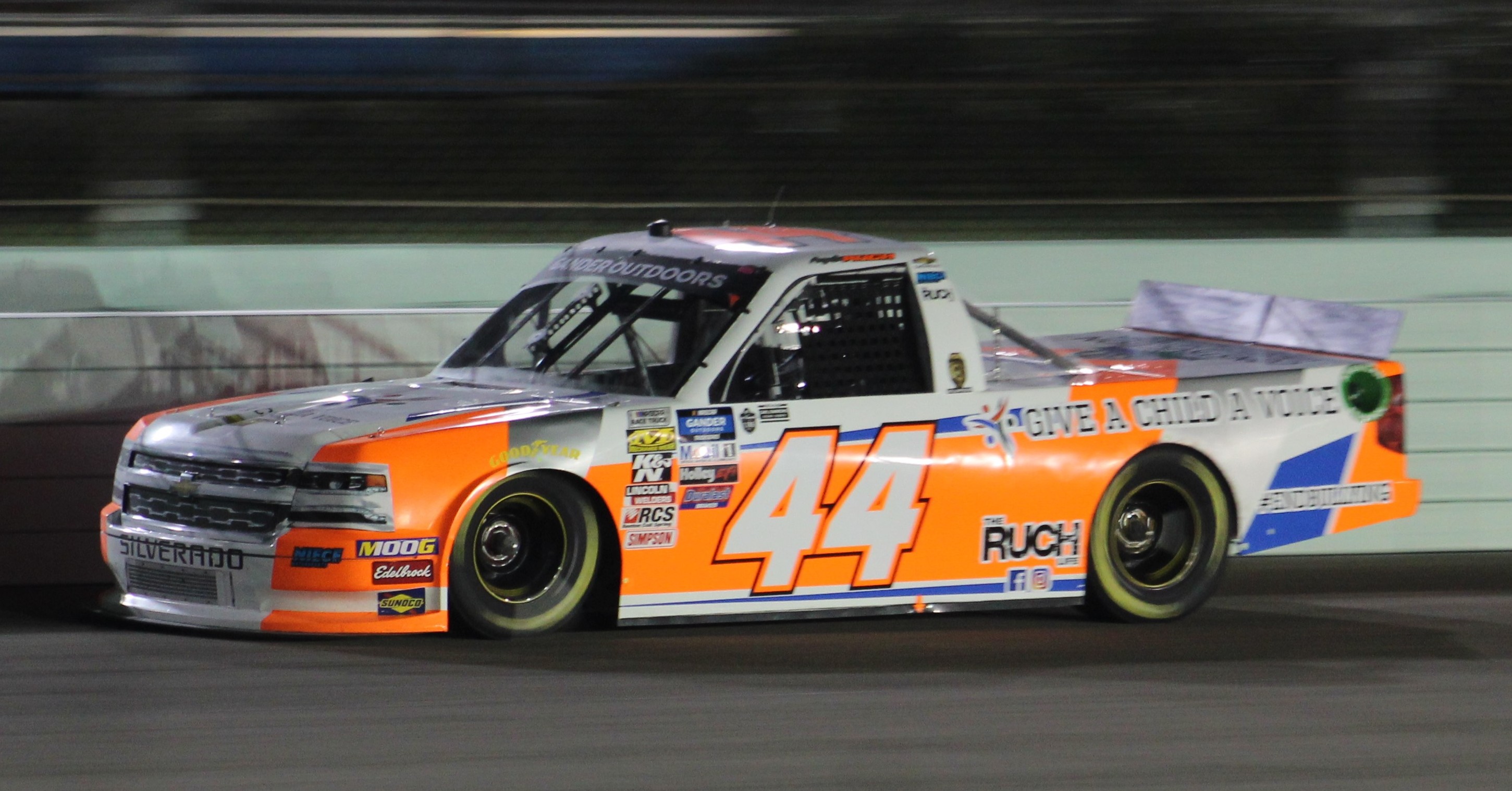
Chevrolet Silverado
"[301.2s] Kind of like those old Chevy Silverados that were an Astro where it kind of intrudes in the cabin a little bit. [308.0s] For sure, yeah."
They’re using the Chevrolet Silverado as an example of how some trucks’ engine placement can take up space inside the cabin. It’s a “this feels similar” analogy about interior room.
The speaker compares the imagined vehicle’s layout to “old Chevy Silverados,” specifically noting how the engine placement can intrude into the cabin. The Silverado is a Chevrolet pickup line, and the comparison is about packaging/space.
off-road side of things
"And this for Jeep, the minivan version would just be more on the off-road side of things."
“Off-road” means driving on rough or unpaved terrain. The speaker is saying the van idea should be more trail-capable, not just a normal road vehicle.
“Off-road” refers to driving on unpaved or rough terrain where traction and vehicle ground clearance matter more than on-road comfort. The phrase “off-road side of things” indicates the speaker is imagining a van with trail-focused capability rather than just highway practicality.
Moab
"Somewhere there is a designer throwing his photo across the room... Showing those sliding doors perched on a rock slab at Moab at Sunset."
Moab is a well-known off-roading area in Utah. People go there to drive on tough trails, so it’s a natural place to imagine a vehicle built for trails.
Moab is a famous off-road destination in Utah, known for rocky trails and desert scenery. In the segment, it’s used as a visual stand-in for where a “Jeep-like” van would actually be tested and used.
back seat and back door
"The back seat and back door is really difficult to navigate. It's tiny. It's almost unusable."
This is a practical usability point: rear-seat access and rear-door opening shape how easy it is to get people in and out and to load gear. The speaker argues that the Wrangler’s rear area is hard to navigate, making a minivan-style layout more convenient.
structurally rigid
"I mean, I don't know what you're going to have to do structurally to make this really rigid. A lot."
It means the car’s body doesn’t twist or bend much when you drive. A stiffer structure can make the ride and handling feel more controlled.
“Structurally rigid” refers to how well a vehicle’s body and frame resist twisting and flexing. More rigidity helps keep suspension geometry consistent, which can improve handling feel and reduce unwanted vibrations.
Jeep Pacifica
"I can't believe I'm saying this, but you were selling me on the idea of the Jeep Pacifica. Because you're right, it's got a land somewhere. Moab Pacifica, I like that a lot."
The Jeep Pacifica is a minivan. Here, they’re talking about it as the “normal” version they’re comparing to a more rugged concept.
The Jeep Pacifica is a minivan from Jeep, known for family practicality with available off-road-oriented styling and trims. In this segment, it’s used as the baseline for a more rugged “Moab” themed idea.
Dodge Ram
"... like that a lot. But if we've got that chassis, Ram also needs a product too. That maybe isn't quite..."
The Dodge Ram is a full-size pickup truck. The podcast is talking about whether Ram would offer a vehicle that matches a certain chassis or platform idea. In short, it’s being mentioned as the pickup counterpart in that discussion.
The Dodge Ram (Ram pickup) is a full-size pickup truck line known for work-focused capability and strong customization options. The podcast context suggests a discussion about chassis/platform use and whether Ram should have a matching product to go along with it. That makes it relevant as part of a lineup strategy conversation for pickups.
RHO version
"Like you wouldn't believe it's the RHO version of the Ram minivan sliding doors here. You can see IAI because I put double handles on it."
“RHO version” sounds like a special trim or themed version name. In this clip, they don’t explain what it means, but they’re describing a more rugged take on the minivan.
“RHO version” appears to be a trim or concept label the speaker is using for a ruggedized minivan variant. The excerpt doesn’t define what RHO stands for, so listeners would need context from earlier in the episode.
Desert Runner
"This is more like Desert Runner. It's not the rock crawler, but this product."
A “Desert Runner” is an off-road setup meant for driving across desert terrain. It’s more about handling sand and rough roads than climbing over rocks.
“Desert Runner” describes an off-road style focused on faster desert driving (sand, dunes, washboard roads) rather than ultra-technical rock crawling. It usually implies a balance of ground clearance, durability, and stability at speed.
rock crawler
"This is more like Desert Runner. It's not the rock crawler, but this product."
A rock crawler is an off-road vehicle meant for crawling over rocks slowly. It’s built for tricky terrain where you need lots of grip and control.
A “rock crawler” is a vehicle setup aimed at very slow, technical off-road driving over rocks. It typically emphasizes low-speed control, traction, and suspension articulation rather than highway comfort.
off-roading
"And you could use it for your gear and the off-roading. You can take the whole family Desert Runner and it's a Ram..."
Off-roading means driving on rough or unpaved paths, not just normal roads. The speaker wants a minivan that could fit that kind of lifestyle.
Off-roading refers to driving on unpaved or rough terrain where traction and ground clearance matter more than on-road comfort. The speaker is imagining a minivan variant designed to handle that “off-road” lifestyle look and use.
SUV-ification of the minivan
"And that is the SUV-ification of the minivan. Where you take the minivan and you make the off-roading version. I'm wondering if this catches the public's interest?"
This is the idea of making a minivan feel more like an SUV. Instead of just being a family hauler, it would look tougher and sit higher, so it feels more rugged.
“SUV-ification of the minivan” describes the trend of taking a minivan’s practicality (space and family usability) and styling/engineering it to feel more like an SUV. In this segment, the speaker specifically ties it to adding SUV-like “ride height” and a rugged attitude.
ride height
"But you don't like the feel. And people are buying SUVs because they want ride height and rugged feel attitude. If you gave a minivan ride height and rugged feel attitude..."
Ride height is how high the car sits off the ground. The speaker is saying people like that SUV “taller” feeling.
Ride height is how high a vehicle sits relative to the ground. The speaker connects higher ride height to the SUV feel—more visibility, a more commanding driving position, and a more rugged look.
Overlanding
"Instead of the Sprinter Van life, I think couples on Instagram could do this kind of minivan life. Overlanding, but it's ram truck more aggressive."
Overlanding means taking a trip far away and being able to camp or handle rough roads along the way. It’s more about carrying gear and traveling independently than about racing.
Overlanding is long-distance, self-reliant travel—often with camping gear—using a vehicle that can handle rough roads. It typically emphasizes durability and storage rather than pure off-road racing performance.
captain's chairs
"I mean, it's not for me, but I'm kind of all about it because seven people in this or maybe six captain's chairs or just the four people, but just tons of interior space in the back for your gear, luggage."
Captain’s chairs are separate seats instead of one big bench seat. They’re common in family vans because they feel more comfortable and make it easier for passengers to get in and out.
Captain’s chairs are individual, separate seats (usually in the middle row) rather than a single bench. They’re often used in minivans and some SUVs to make second-row seating more comfortable and easier to access.
Chevrolet Tahoe
"And instead of SUV doors like a Tahoe, it's got the sliders."
A Tahoe is a large SUV from Chevrolet. They’re using it as an example of what “normal” SUV doors look like, then saying this vehicle uses sliding doors instead.
The Chevrolet Tahoe is a full-size SUV used here as a comparison point for door style. The speaker contrasts Tahoe-style SUV doors with sliding doors on the minivan-like vehicle.
sliders
"And instead of SUV doors like a Tahoe, it's got the sliders."
“Sliders” means sliding doors. Instead of opening like a normal door, they slide sideways, which is handy for getting in and out—especially in crowded parking spots.
“Sliders” here refers to sliding doors, which move along a track instead of swinging open on hinges. Sliding doors are common on minivans because they’re easier to use in tight parking spaces and help with passenger access.
utility
"...it would probably sell because it is the merging of the utility that everybody feels like they need and the ruggedness that they can't get from a van. [691.0s] You got me."
“Utility” here means the practical stuff—like room for passengers and cargo and being easy to live with day to day.
In car talk, “utility” means practical everyday usefulness—things like space, easy access, and carrying people or cargo. The hosts are contrasting that practicality with the “ruggedness” you’d expect from more off-road-oriented vehicles.
ruggedness
"...it would probably sell because it is the merging of the utility that everybody feels like they need and the ruggedness that they can't get from a van. [691.0s] You got me."
“Ruggedness” means the car seems built for tougher conditions, like rough roads or bad weather. They’re saying you’d get some of that tough character without giving up the usefulness of a van.
“Ruggedness” refers to a vehicle’s ability to handle rougher conditions—often associated with higher ground clearance, tougher suspension tuning, and off-road-oriented design cues. The hosts are saying a vehicle could combine van-like practicality with a more rugged feel.
Pandora's box
"[703.4s] Okay. [703.9s] You've got a Pandora's box. [705.1s] Am I selling?"
“Pandora’s box” is a saying that means “once you open this, things can get messy or unpredictable.” They’re using it as a metaphor for taking on a new idea.
“Pandora’s box” is an idiom meaning opening something that leads to unpredictable consequences. In the conversation, it’s used as a metaphor for starting a change or idea that could create a lot of new complications or opportunities.
Griot's garage
"But anyway, the reason cars look great on our show is down to one thing and that's Griot's garage. Whether you're a meticulous cleaner like Paul or a quick fumbler like me, Griot's garage products make it easy."
Griot’s Garage is a brand/company that sells products to clean and restore cars. They’re sponsoring the show and saying their products help keep cars looking good.
Griot's Garage is a family-owned company that makes car-care products like foam cannons, headlight restoration/cleaners, and leather care. In this segment it’s mentioned as the reason the cars “look great” on the show and as a sponsor with a discount code.
foam cannons
"From foam cannons for touchless shine to headlight fixes, leather care and even tough track day smudges, Griot's garage has the right product to keep your car looking concourse clean."
A foam cannon is a tool you hook up to a pressure washer that sprays soapy foam onto your car. The foam helps lift dirt so you can wash more gently.
A foam cannon is an attachment for a pressure washer that mixes soap with water and sprays it as thick foam. It helps loosen dirt and grime before you physically wash the car, which can reduce the chance of scratching the paint.
touchless shine
"From foam cannons for touchless shine to headlight fixes, leather care and even tough track day smudges, Griot's garage has the right product to keep your car looking concourse clean."
“Touchless” car cleaning refers to washing methods that rely on chemical cleaners and water pressure rather than heavy hand scrubbing. The goal is to reduce contact with the paint to lower scratch risk.
Honda CR-V
"It's like even like let's have a conversation about RAV4 versus CRV. Well RAV4 wins because it's Toyota."
The Honda CR-V is another compact SUV that comes up in the reliability comparison. The discussion is less about technical differences and more about how brand loyalty affects the argument.
The Honda CR-V is a compact SUV used in the same reliability debate as the Toyota RAV4. The segment frames it as a challenge for someone who believes Toyota is automatically ahead of other brands.
reliability conversations
"So he's coming to us and going, how do you have reliability conversations in general?"
A “reliability conversation” is basically a discussion about which cars are less likely to break down. In this episode, they’re saying it’s hard to judge because different people drive and maintain cars differently.
“Reliability conversations” refers to how people discuss whether a vehicle will keep working well over time—often using owner experiences, maintenance history, and brand reputation. The segment calls it an “unsolvable dilemma,” implying there’s no single perfect way to judge reliability for every driver and car.
Toyota 4Runner
"Mike, I really appreciate your writing because I am now a forerunner owner and I didn't buy the forerunner with any thought of reliability in my mind... But I didn't walk in to the Toyota dealer and I didn't think I want to get a new forerunner because reliability above all else."
The Toyota 4Runner is a rugged SUV that’s built to handle rough roads. Here, the discussion is basically: is the newer version of its engine as dependable as the older, proven Toyota engines?
The Toyota 4Runner is a body-on-frame SUV known for rugged off-road capability and a long track record of durability. In this segment, the hosts discuss whether the 4Runner’s newer powertrain is “reliability-first” or still unproven compared with older Toyota engines.
four cylinder engine
"many of the YouTube comments on the films that I've released so far have been about the four cylinder engine... Everybody's wondering, well, how's a turbo four going to last?"
A four-cylinder engine has four cylinders that burn fuel to make power. Some people worry that a smaller engine won’t last as long, but the hosts argue four-cylinders can still be very reliable.
A “four-cylinder” engine has four combustion cylinders, which often means less mechanical complexity than larger engines. In this debate, it’s brought up because some people doubt a smaller engine—especially a turbocharged one—will last as long as Toyota’s historically proven larger engines.
turbo four
"Everybody's wondering, well, how's a turbo four going to last? This is probably just going to crumble into dust."
A “turbo four” is a small four-cylinder engine that uses a turbo to make more power. Because it’s working harder than a non-turbo engine, some people wonder if it will last as long.
“Turbo four” refers to a four-cylinder engine that uses a turbocharger to increase air intake and boost power. Turbocharging can raise stress and heat, so some people question long-term durability until the setup has enough real-world mileage.
fourth gen Tacoma
"Toyota's massive experience and so far the engines have been out for quite a while in the Tacoma, in the fourth gen Tacoma."
“Fourth gen” just means the Tacoma generation that came after the previous redesign. They’re using it to argue the engine has already been in real trucks for a while.
“Fourth gen” means the Tacoma’s fourth generation model, which typically corresponds to a specific redesign period with updated engines and systems. The segment uses this as evidence that the newer engine has already been tested in production for years.
V6
"It's a brand new engine, not really tested... but not the V6 that will run for a million miles."
A V6 is a six-cylinder engine. In this conversation, it’s mentioned as the more proven engine type compared with the newer setup in the 4Runner.
A V6 is an engine with six cylinders arranged in a “V” shape. The hosts contrast the new engine’s uncertainty with a V6 they describe as having a proven reputation for very long service life.
naturally aspirated eight
"The naturally aspirated eight that was in the Tundra prior."
“Naturally aspirated” means the engine doesn’t use a turbo to force air in—it just breathes normally. They’re talking about an eight-cylinder engine that they believe has a strong reputation for lasting a long time.
A “naturally aspirated” engine makes power without a turbocharger or supercharger, relying on atmospheric pressure and engine design. The “eight” refers to an eight-cylinder engine, which the speaker says was previously used in the Tundra and is known for long-term durability.
2JZ
"And that B58 has now over time been proven to be, I hate to say it this way, but I've said it before, the 2JZ of our time. Everything you put in is brilliant."
The 2JZ is a Toyota engine that became famous with car enthusiasts. People say “2JZ of our time” when they mean a newer engine that’s also great for making big power and upgrades.
The 2JZ is a legendary Toyota inline-six engine (most famously in the Supra) that became famous for its ability to handle high power with aftermarket upgrades. Saying the B58 is the “2JZ of our time” is shorthand for “modern engine with a similar tuning/durability reputation.”
B58 engine
"And that B58 has now over time been proven to be, I hate to say it this way, but I've said it before, the 2JZ of our time. Everything you put in is brilliant. Oh, look at all the power in the tuning that it does."
The B58 is a BMW engine design. People like it because it’s powerful for its size and there’s a lot of aftermarket tuning available, and it’s often considered tough enough to handle upgrades.
The BMW B58 is a modern inline-six turbocharged engine known for strong power potential and broad tuning support. When people compare it to the 2JZ, they’re usually talking about its reputation for durability and how much boost/power it can handle with the right setup.
mini Cooper
"But what's hysterical is both of these friends look at my son's 160,000 mile, half as much mileage, mini Cooper and look at it like a ticking time bomb. So perception exists."
The MINI Cooper is a small car. In this story, it’s used as the example of a car that people assume will be less reliable than a Toyota, even when the mileage isn’t that different.
The MINI Cooper is a compact car that, in this discussion, is contrasted with the Toyota 4Runner to illustrate how brand perception affects reliability expectations. The speaker’s point is that a high-mileage MINI can be viewed as a “ticking time bomb” even when it may be fine.
perception exists
"So perception exists. It does exist. And these parents are just like at one of them, especially these parents are just convinced that Toyota above all else."
They’re talking about how people’s opinions about car brands affect how they judge reliability. Even if two cars have similar mileage, the brand reputation can make one feel safer than the other.
This is about “brand perception” in reliability—how people’s beliefs about certain makes influence what they expect to happen to a car over time. The segment suggests that even when mileage is similar, the Toyota vs. non-Toyota reputation can drive anxiety or confidence.
Lexus
"But look at how well they run and on the back of all everything that we learned about Lexus."
Lexus is Toyota’s luxury brand. They’re saying Toyota’s reputation for doing things well wasn’t random—it was influenced by what people learned from Lexus.
Lexus is Toyota’s luxury brand, and the hosts reference “everything that we learned about Lexus” as part of how Toyota built its reputation. The implication is that Toyota’s reliability and refinement reputation carried over into the broader Toyota lineup.
hybrid
"She moved on to the RAV4 and was totally against hybrid and electrification because of her dad's opinions... So she's grown to accept hybrids, no EVs at this point."
A hybrid uses a gas engine and an electric motor together. The point here is that she didn’t want that at first, but later she became willing to consider it.
A hybrid vehicle uses both an internal-combustion engine and an electric motor/battery to improve efficiency. In this discussion, “hybrid” is central because the girlfriend initially rejected it, then became more open after experiencing how the cars drive and fit her needs.
RAV4
"She moved on to the RAV4 and was totally against hybrid and electrification... But she's now considering a Corolla instead of the RAV4 because the RAV4 would still be a bit of a too big of a car for her needs."
They’re talking about the Toyota RAV4, a compact SUV. The girlfriend thought it was bigger than she wanted, and her views on hybrids/EVs changed after trying other cars.
The Toyota RAV4 is the compact SUV the girlfriend initially considered. The hosts discuss how she was against hybrids and EVs at first, and later how she’s open to hybrids—plus how the RAV4 may be “too big” for her needs.
electrification
"She moved on to the RAV4 and was totally against hybrid and electrification because of her dad's opinions."
Electrification just means cars using more electricity in how they move—like hybrids or EVs. In this story, she was skeptical of that idea at first.
“Electrification” is an umbrella term for moving a vehicle’s powertrain toward electricity—typically hybrids, plug-in hybrids, and fully electric vehicles. Here it’s used as part of the girlfriend’s initial resistance to Toyota’s hybrid direction.
Ford Maverick
"Mike says he's got a Ford Maverick for all the road trips and outsidey things, but that's a battle he's not yet ready for."
The Ford Maverick is mentioned as Mike’s road-trip vehicle. It’s used to contrast with the girlfriend’s decision-making process and to show that different people prioritize different needs (space, practicality, and comfort for trips).
Toyota Corolla
"But she's now considering a Corolla instead of the RAV4 because the RAV4 would still be a bit of a too big of a car for her needs... If you're looking at Corolla, you should look at Civic..."
The Toyota Corolla is presented as the girlfriend’s likely next choice instead of the larger RAV4. The hosts frame it as a better fit for her needs as a commuter car, and they connect the decision to Toyota’s reliability reputation.
commuter car
"So Mike's girlfriend's kind of narrowed down the kind of car she wants, she's landed on Corolla because she thinks an SUV probably is too big and she wants a commuter car."
A “commuter car” is a vehicle chosen mainly for daily driving—typically short trips, errands, and regular work travel. In this segment, it explains why the girlfriend is moving away from a larger SUV toward a smaller, easier-to-live-with option like the Corolla.
Honda Civic
"If you're looking at Corolla, you should look at Civic, but we're right back to the battle again where, hang on, I can't look at Civic because that's a Honda, not a Toyota."
The Honda Civic is brought up as the natural alternative to the Toyota Corolla. The hosts use it to highlight a recurring theme: brand loyalty and perception can block cross-shopping even when the cars are in the same “commuter” category.
chassis
"...I will pick the Civic because I think it has a better chassis."
The chassis is the car’s main structure. If someone says one car has a better chassis, they mean the body is built in a way that helps the car feel more stable and handle more confidently.
The chassis is the car’s structural foundation—frame/body structure and mounting points that determine how forces travel through the vehicle. A “better chassis” claim usually means improved rigidity and geometry, which can translate into more predictable handling and ride.
twin turbo
"...the twin turbo 3.4 liter Toyota V6 that has been recalled massively... when a recall for 100,000 trucks expands to include another 127,000 units for that V35A i-Force V6, the twin turbo V6..."
“Twin turbo” means the engine uses two turbochargers to help it make more power. They’re mentioning it because that specific turbocharged engine is part of a recall.
A twin-turbo setup uses two turbochargers to force more air into the engine, improving power and responsiveness. The segment ties the twin-turbo V6 to a recall, making the engine’s forced-induction design part of the reliability conversation.
recall
"...a little bit of research about the twin turbo 3.4 liter Toyota V6 that has been recalled massively... But the point is, Mike and Mike's girlfriend welcome to the conversation... even somebody as vaunted as Toyota has recall issues and problems."
A recall is when a manufacturer asks owners to bring vehicles in for a fix because of a safety or defect issue. In this segment, recalls are used as evidence that even major brands like Toyota can have significant reliability problems.
Toyota V35A i-Force V6
"...when a recall for 100,000 trucks expands to include another 127,000 units for that V35A i-Force V6, the twin turbo V6, he says the problem is no longer contained."
This is a specific Toyota engine used in certain trucks. The episode says there’s been a recall affecting a lot of vehicles, and the problem may be broader than originally thought.
The V35A i-Force V6 is Toyota’s twin-turbo V6 engine referenced in the segment. The hosts discuss a recall that expanded to include additional units, arguing the underlying issue is no longer contained—important context for reliability-minded buyers.
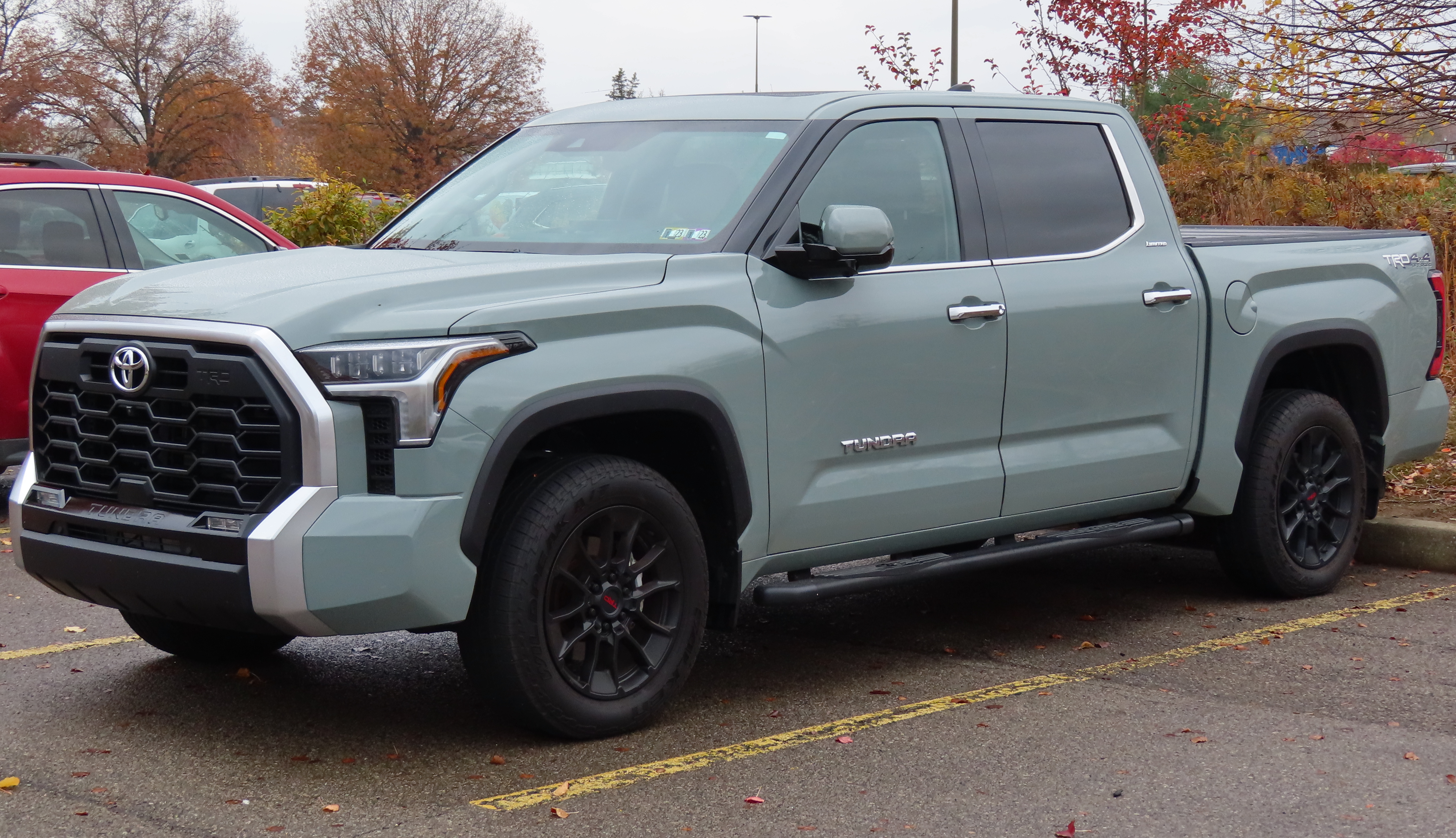
Toyota Tundra
"So if you're looking at a used 2023 to 2025 Tundra, you're looking at a vehicle that might be part of the most significant reliability crisis in Toyota's modern history."
The Toyota Tundra is Toyota’s big pickup truck. They’re warning that some recent model years (2023–2025) may be affected by serious reliability issues connected to an engine recall.
The Toyota Tundra is Toyota’s full-size pickup truck. The hosts mention used 2023–2025 Tundras as potentially affected by a major reliability crisis tied to an engine recall, framing it as a significant concern for buyers.
naturally aspirated V6
"The 2JZ engine is no longer built. The naturally aspirated V6 is no longer built. So they went to the turbocharged inline 4..."
Naturally aspirated means the engine doesn’t use a turbo or supercharger to force air in. They’re saying older naturally aspirated V6s are being replaced by turbocharged engines.
A naturally aspirated engine makes power without forced induction (no turbocharger or supercharger). The segment contrasts the discontinued naturally aspirated V6 with newer turbocharged designs, implying regulations and modern tech are driving the shift.
turbocharged inline 4
"So they went to the turbocharged inline 4 and so modern technologies, better manufacturing processes, hopefully."
This is a smaller four-cylinder engine that uses a turbo to make more power. They’re saying automakers are moving toward this kind of setup because of modern rules and technology.
A turbocharged inline 4 is a four-cylinder engine in a straight line, using a turbocharger to increase airflow and power. The hosts frame this as part of the industry shift toward smaller, forced-induction engines to meet emissions and efficiency requirements.
emissions
"They're chasing all of the regulations as well... There's regulations on emissions and that kind of stuff that they're chasing, which means the tech is changing."
Emissions are the exhaust pollutants cars create. The hosts are saying new emissions rules push carmakers to redesign engines to comply.
Emissions are pollutants produced by a vehicle’s engine and exhaust. The segment ties emissions regulations to why engine technology changes over time, including why certain older engines (like the 2JZ) don’t return.
Mercedes brand
"And when we first started doing this job, we were all like Mercedes and we watched over the next decade. The whole Mercedes brand changed and became much more interesting."
They’re talking about Mercedes as a car brand and how it changed over time. The point is that even big companies can reinvent themselves and become more appealing to enthusiasts.
The Mercedes brand is referenced as an example of how a major automaker can change its image and product direction over time. The hosts say they watched Mercedes become “much more interesting” over a decade, implying a shift in appeal and/or engineering focus.
models that just run
"Because every models, I mean, pardon me, every brand seems to have their models that just run and their models that just can't get right."
The speaker contrasts models that are consistently trouble-free (“just run”) with models that don’t. This reinforces their core point: brand-level guidance is limited, and model-level history matters for reliability.
problem child car
"Every brand seems to have like their problem child car where they're just like, it doesn't matter what we do, this one doesn't run."
They mean a particular car model that seems to have more trouble than the rest. Even if a brand has good cars overall, one model can still be the “troublemaker.”
“Problem child car” is the speaker’s way of describing a specific model that tends to have recurring issues despite the brand’s overall reputation. It highlights that reliability can vary dramatically between models within the same automaker.
GM
"My dad with GM, this is exactly how I grew up. There was no considering anything else. I mean, we're just buying a GM because his dad had had great experience with GMs"
GM is General Motors, the big automaker behind brands like Chevrolet and GMC. The speaker is saying their family stuck with GM because an earlier GM experience went well.
GM refers to General Motors, which the speaker mentions in the context of family buying habits. The idea is that past experiences with a brand can strongly shape what a family chooses next, even when other options exist.
Jaguar Etype
"And the one time my dad did it, it was a Jaguar E-type, which of course was constantly not running."
The Jaguar E-type is a famous classic Jaguar sports car. Here it’s mentioned as an example of a car that was always having problems and wouldn’t run reliably.
The Jaguar E-type is a classic sports car from Jaguar, famous for its looks and performance. In this segment it’s used as an example of a car that was “constantly not running,” highlighting how some older, complex cars can be unreliable or require frequent repairs.
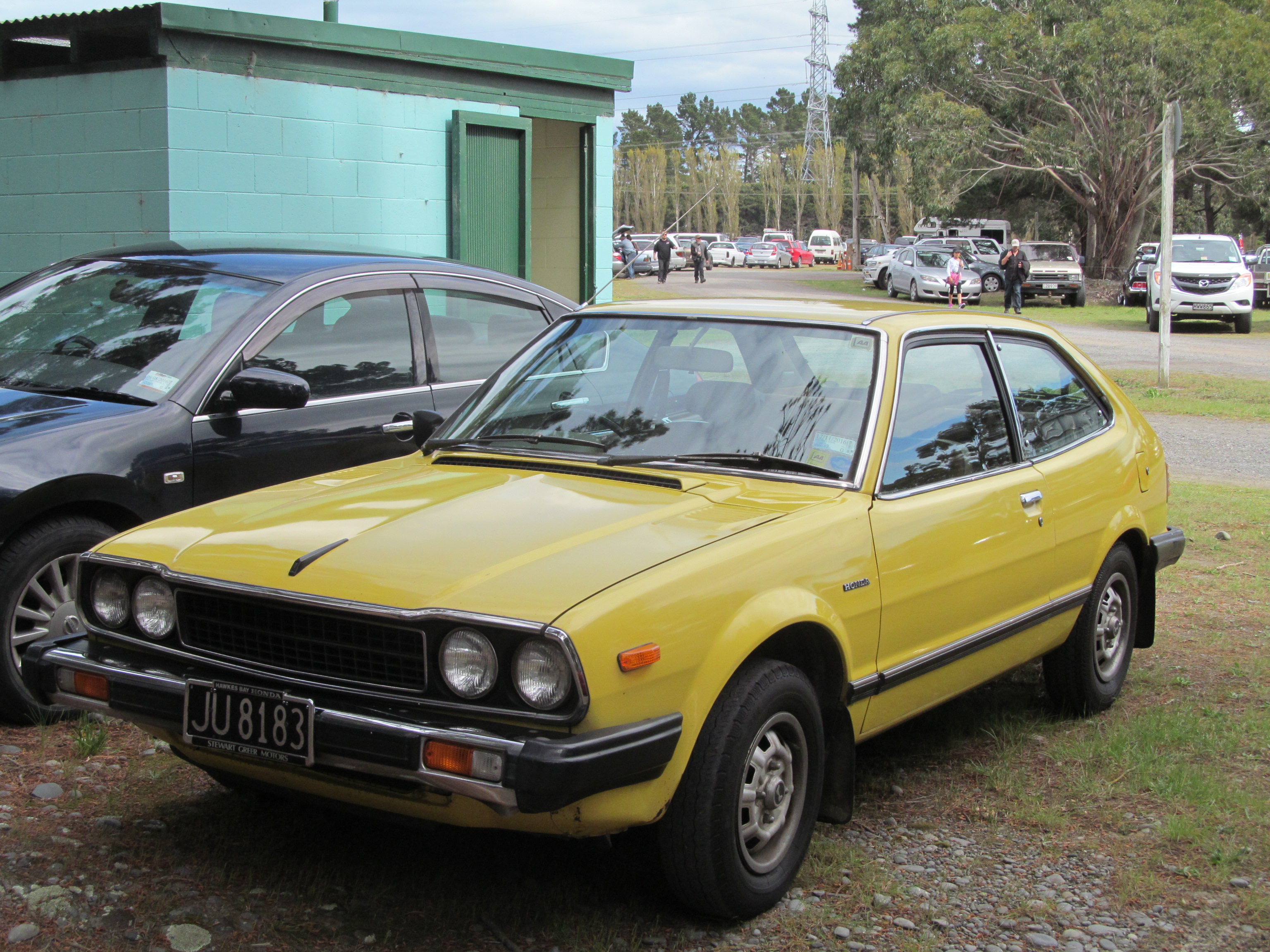
Accords
"Accords are built in Ohio."
The Accord is a Honda car model. They mention it’s built in Ohio, as an example of how where a car is made can vary by model.
The Honda Accord is a mainstream midsize sedan, and the hosts mention it as being built in Ohio. This is part of their broader point about how a brand’s manufacturing footprint can differ by model and region.
Volkswagen's
"Volkswagen's are built in Tennessee."
Volkswagen is a car brand. They’re saying Volkswagen cars are built in Tennessee, as part of their discussion about where brands make their cars.
Volkswagen is the German automaker behind the Volkswagen brand. Here it’s used to point out that Volkswagen vehicles are built in Tennessee, reinforcing the episode’s theme about manufacturing location and brand identity.
Mercedes-Benz
"Mercedes-Benz is built in Alabama."
Mercedes-Benz is a luxury car brand. They mention it’s built in Alabama to show that car companies make cars in different places.
Mercedes-Benz is the luxury automaker brand. The hosts mention it being built in Alabama, using it as another example of how different brands (and sometimes different models) have different production locations.
Toyota Indiana Technology Factory
"Here's the Toyota Indiana Technology Factory. If you want to set up a tour, just email these guys. They'd be happy to take you through this facility to show them advanced materials, what they're thinking about an additive manufacturing, how that trickles down to the factory floor."
This is a Toyota factory in Indiana that’s more about manufacturing know-how and new materials than flashy cars. The point is that tours can show how modern cars are made behind the scenes.
The Toyota Indiana Technology Factory is a Toyota facility focused on advanced manufacturing and materials development. In the segment, it’s used to illustrate that you can tour more than just “glamorous” sports-car factories—there are tech-focused plants too.
additive manufacturing
"They'd be happy to take you through this facility to show them advanced materials, what they're thinking about an additive manufacturing, how that trickles down to the factory floor."
Additive manufacturing is basically 3D printing. Instead of cutting or molding a part from a block, you build it up layer by layer, which can help factories make new designs faster.
Additive manufacturing is the umbrella term for 3D-printing-style processes, where material is built up layer by layer. In automotive factories, it’s often used for prototypes, tooling, and sometimes production parts, letting engineers iterate faster.
factory floor
"They'd be happy to take you through this facility to show them advanced materials, what they're thinking about an additive manufacturing, how that trickles down to the factory floor."
The “factory floor” is the part of a factory where the work actually happens—where cars and parts are built. They’re saying new tech ideas eventually make their way into that real production process.
“Factory floor” refers to the actual production area where cars (and parts) are assembled and manufactured. The hosts are describing how new ideas like additive manufacturing move from engineering into day-to-day production.
automated processes
"I'll bet you almost, if you requested almost any one of the factories in the US, in North America probably, you could probably set up a tour just to see that cars are built largely for the most part by humans. There's a lot of automated processes."
Automated processes are the parts of making cars that are done by machines. The hosts are pointing out that even with automation, people still do a lot of the work.
Automated processes are production steps controlled by machines or software rather than directly by people. The hosts contrast automation with the fact that car building still relies heavily on human labor for many tasks.
warranty
"[1580.2s] Because every car manufacturer doesn't want to build crap. [1585.2s] That actually exists. [1586.9s] They have to warranty that crap. [1588.2s] That's part of the problem."
A warranty is the guarantee that if something breaks for a certain period, the company will pay to fix it. If a lot of things need warranty repairs, it usually means the car isn’t as reliable as it should be.
A warranty is the manufacturer’s promise to cover certain repairs or failures for a set time or mileage. When a company “warrants” problems, it’s effectively paying for defects, which can reflect how reliable (or not) the design and production are.
factory tour
"[1596.6s] and how those are built. [1598.0s] It's something all the enthusiasts want to go do is a factory tour. [1601.6s] Yeah, I want to go see machines and robots and humans and put all this cool stuff together."
A factory tour is when you visit a plant where cars are built. The hosts think seeing the process in person helps you understand why some cars are more dependable than others.
A factory tour is a visit to a vehicle manufacturing plant to observe the production process firsthand. The hosts frame it as a way to connect reliability to real-world build quality—machines, robots, and human work all play roles.
production process
"[1628.0s] How can they make it more efficient, leaner, less expensive, more profit? [1632.9s] So they're always taking profit out of the production process. [1635.8s] So how does a car company do that?"
The production process is the way a car gets built—from making parts to putting everything together. If a company changes how it builds cars to save money, it can change how reliable the final product is.
The production process is the full sequence of steps used to build a car, from parts fabrication to assembly and quality checks. The hosts argue that companies constantly adjust this process to reduce cost and improve efficiency, which can indirectly affect reliability.
endurance racing
"My second idea here is to discuss endurance racing because racing improves the breed, right? [1649.6s] And endurance racing is the ultimate test of man and machine."
Endurance racing is like a long-distance race for cars. The key is not just speed—it’s whether the car can keep going for hours without breaking.
Endurance racing is motorsport where cars run for a long time (often hours) and must keep working reliably. Because the cars are stressed for extended periods, it’s often used as a real-world test of durability.
ADEC 24 Hours of Nurburgring
"And I offer up the BMW that won last year's ADEC 24 Hours of Nurburgring. [1660.5s] Now, it's a race car, so you can argue that most of these parts are designed for the track"
This is a super long race—24 hours—at the Nürburgring track in Germany. Cars have to keep running and stay fast for the whole day to win.
The “24 Hours of Nürburgring” is a famous endurance race held at the Nürburgring circuit in Germany, where cars compete to complete the most distance over a full day. Winning it is a strong signal of durability and consistent performance over time.
endurance winner
"But here they are as the endurance winner. [1684.0s] That means the car lasted the longest. [1686.2s] It was the fastest and lasted."
In a long race, the winner is the car that makes it through the whole event and finishes first. That usually means it was both quick and didn’t break.
In endurance racing, the “endurance winner” is the car that completes the most distance (or finishes first under the event’s rules) after running for the entire race duration. The hosts connect this to the idea that the car “lasted the longest” and “was the fastest and lasted,” emphasizing durability plus pace.
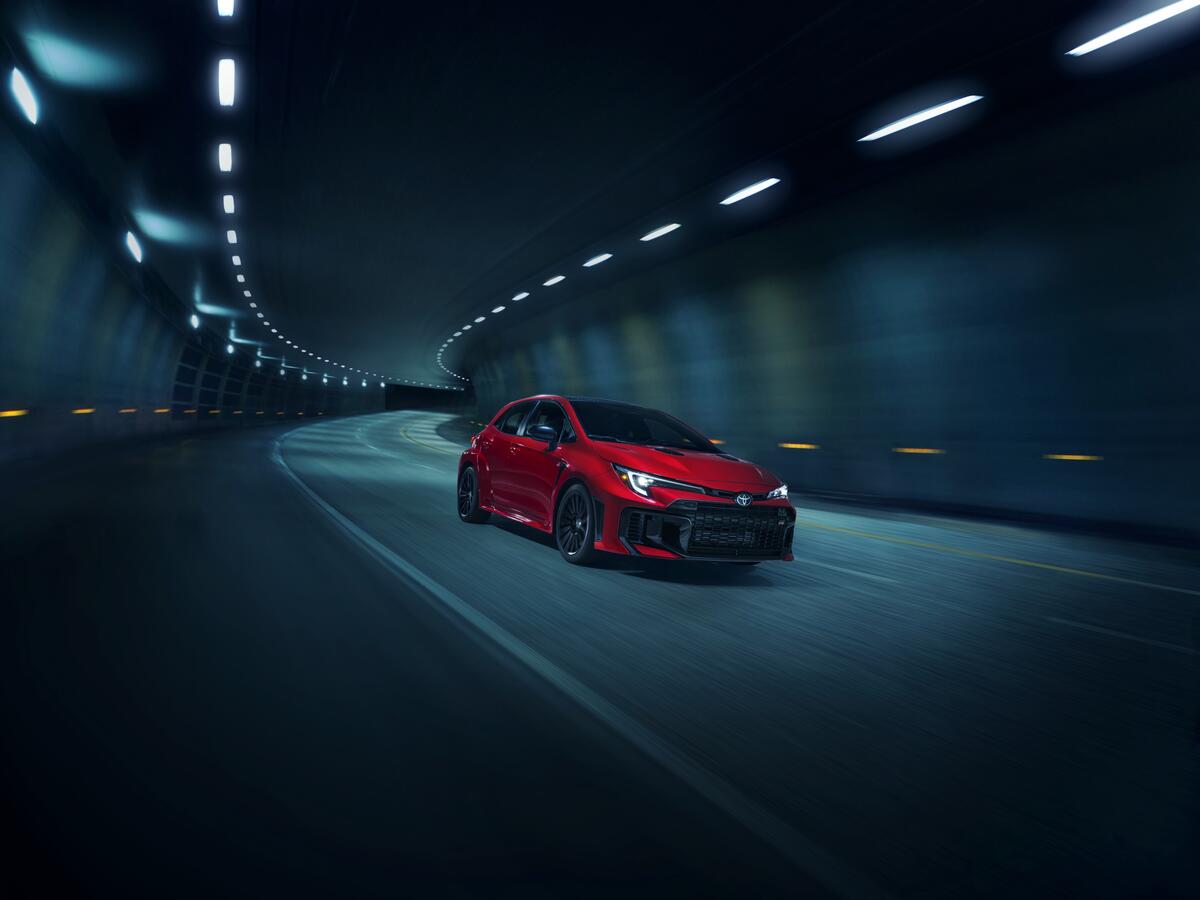
Toyota GR Corolla
"... afford them and not, you know, you don't want a GR Corolla or a Civic Type R. Not everybody buys those mode..."
The Toyota GR Corolla is a sporty version of the Corolla, made for drivers who want more excitement. The podcast is saying not everyone chooses cars like this because they’re more specialized. It’s mentioned as an option for people who specifically want a performance hatchback.
The Toyota GR Corolla is a performance-focused compact hatchback built for enthusiasts who want rally-inspired driving traits. The podcast mentions it alongside other performance cars and notes that not everyone buys those models, implying it’s a more specialized choice. That’s why it comes up—people are discussing who these cars are for and how they fit into a broader shopping list.
Civic Type R
"Not everybody can afford them and not, you know, you don't want a GR Corolla or a Civic Type R. Not everybody buys those models."
The Civic Type R is the sporty version of the Honda Civic. It’s built to feel more exciting and responsive than a normal Civic.
Honda Civic Type R is the high-performance, track-focused trim of the Civic. It’s known for a strong engine and sharp steering/braking feel, which is why it’s often mentioned alongside other “affordable fun” cars.
V12
"Compare that against a howling V12. By the way, the Ferrari 12 Cylinder has really grown on me. I like it more and more."
A V12 is an engine with 12 cylinders arranged in two rows. It usually sounds great and feels smooth, but it can be more expensive to maintain than simpler engines.
A V12 is an engine with 12 cylinders arranged in a “V” shape (two banks of six). In cars, it’s often associated with smooth power delivery and a distinctive high-revving sound, but it can also mean more complexity and higher maintenance costs.
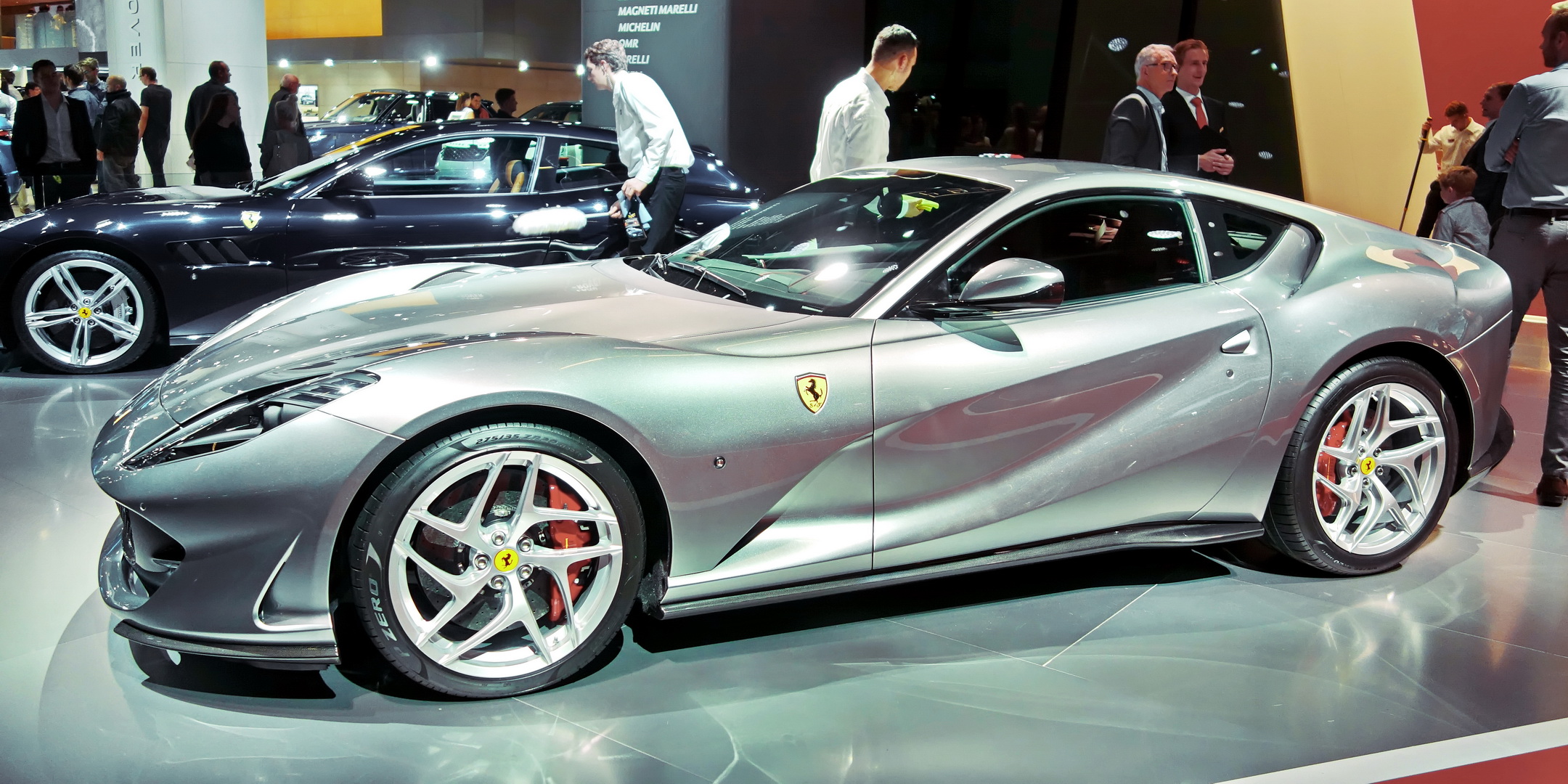
Ferrari 12
"...pare that against a howling V12. By the way, the Ferrari 12 Cylinder has really grown on me. I like it more ..."
The Ferrari 812 Superfast is a very high-end sports car. It’s known for having a V12 engine, and the podcast is talking about how much they like that V12 sound and feel. It comes up because it’s one of the most extreme versions of a V12 Ferrari.
The Ferrari 812 Superfast is a high-performance grand tourer built around a naturally aspirated V12 engine. The podcast compares it to “a howling V12” and says the Ferrari 12-cylinder has “grown on” them, emphasizing the engine sound and character. It’s discussed because the 812 is a standout example of extreme performance and a distinctive V12 experience.
7000 RPM
"Move the slider back and forth from Ferrari 12 Cylinder, the 12 Cylinder howling one of these at almost 7000 RPM. Like, ooh, that sounds pretty great."
RPM tells you how fast the engine is spinning. 7000 RPM is pretty high, and that’s usually where a performance engine feels and sounds most exciting.
RPM (revolutions per minute) is how fast the engine’s crankshaft spins. “7000 RPM” is a high engine speed where many performance engines make strong power and produce a more aggressive sound.
Mazda 3
"Move that all the way over to a 2009 Mazda 3. Where's the slider from? I'm willing to pay for that all the way back over to here to like, I know this is going"
They’re comparing the Ferrari to a 2009 Mazda 3, which is a normal, everyday kind of car. The idea is that not everyone can afford a super-expensive performance car.
The speaker contrasts the Ferrari V12 experience with a “2009 Mazda 3,” using it as an example of a more affordable, everyday car. The point is that most people can’t (or don’t) buy exotic performance cars, so they end up with more practical options.
on track
"And it's not that fast and it's not going to be great on track, but it's going to get me around and it's kind of boring, but it works."
“On track” means driving the car on a race course instead of normal streets. Some cars are fine for commuting but struggle when you push them hard for longer.
“On track” refers to driving a car in a controlled racing environment like a road course. When someone says a car won’t be great on track, they’re usually talking about handling limits, braking endurance, and overall performance under sustained stress.
underpowered
"I spent nothing lasts a long time. It's pretty underpowered and pretty boring. Well, or it just, it doesn't have any excitement or soul, but I never have to think about it."
Underpowered means the car doesn’t have much “go” compared to what you want. It can feel slow to accelerate or not very strong when you need it.
Underpowered describes a car that doesn’t produce enough engine output (power and/or torque) to accelerate strongly or keep up when pushed. It often shows up as slow response, difficulty merging, or feeling weak at higher speeds.
consumer reports
"But, but I'm going to, I'm going to talk about consumer reports specifically because, you know, they're a friend of the show, but they do the kind of research that Paul and I don't want to do, but is incredibly valuable."
Consumer Reports is a car review organization that looks at how cars do in real life, not just in tests. They also ask people who actually own the cars about problems they’ve had.
Consumer Reports is a well-known automotive publication that evaluates cars using both testing and owner survey data. In this segment, it’s referenced as a source of structured research on how cars perform in real ownership.
surveys from people that have bought brand new cars
"they actually do compile a lot of surveys from people that have bought brand new cars."
These are questionnaires where people who bought new cars share what happened after owning them. The hosts are saying this kind of data is more useful than random opinions online.
Owner surveys gather feedback from drivers who purchased new vehicles, which can then be used to estimate reliability and ownership experiences. In this segment, the hosts argue that these survey-based results are more informative than anecdotal claims.
reliability ratings
"pay the money if you need to and actually look up the cars you guys are comparing and see how close the ratings are."
Reliability ratings are a way to estimate how dependable a car is. The hosts are saying you can’t just compare two car models—you should compare the specific years too.
Reliability ratings estimate how likely a vehicle is to have problems over time, often based on owner surveys and/or reported repairs. The point here is that ratings can differ by model year, so comparing the right year matters.
100,000 miles
"Whatever you landed on will go 100,000 miles. Doesn't mean it won't take maintenance."
100,000 miles is a typical “long-term” benchmark people use when talking about how long a car lasts. The hosts are saying that reaching that mileage doesn’t mean the car needs no upkeep.
“100,000 miles” is a common ownership milestone used when discussing long-term reliability. The hosts’ point is that even if a car can go that far, it still may require maintenance.
maintain your cars
"Okay? Some of the brands you're like, I would never buy one of those. I promise you 100,000 miles on that car. Whatever it is. And again, I'm not saying nothing will go wrong and I'm not saying you won't put money into it because you need to maintain your cars."
They mean regular care—things like keeping up with scheduled service so the car doesn’t fall apart. Good maintenance helps a car last much longer.
“Maintain your cars” refers to routine upkeep that prevents small issues from becoming expensive failures. In reliability discussions, maintenance is often the difference between a car that lasts and one that becomes unreliable.
Toyota Hilux
"And the best car you can think of, take a Toyota Hilux, okay? And treat it terribly from day one."
They’re using the Toyota Hilux as an example of a very durable truck. Even if it keeps running, bad treatment can still make it look and feel worn out by 100,000 miles.
The Toyota Hilux is used as a reliability example: the speaker says if you treat it terribly from day one, it may still run but will look rough by 100,000 miles. It’s a common “tough truck” reference in reliability debates.
oil change
"How did you maintain it? Are you nice to it? Did you ever wash it? Has it had an oil change? Ever?"
An oil change is when the old engine oil is drained and replaced with fresh oil. It helps the engine stay lubricated, and it’s one of the most important routine services.
An “oil change” is scheduled replacement of the engine oil, which lubricates internal parts and helps carry away heat and contaminants. Skipping oil changes is a common way cars become unreliable earlier than expected.
warranties are falling off
"And 50,000 is the place where most of the warranties are falling off. Any car you can think of, 50,000, 60,000 miles, that warranty is gone now."
A warranty is the period where the manufacturer pays for certain repairs. “Falling off” means that after a set time or mileage, you’re no longer covered.
The hosts are talking about the point where a car’s warranty coverage ends. Many warranties are time- or mileage-limited, so after a certain threshold you’re more exposed to repair costs.
brand reliability
"I've got two different years of consumer reports here. This is 2015 models, and I have 2026 models. This is brand reliability."
Brand reliability is a way to judge how dependable a car brand tends to be. It’s not about one specific car—it’s more of an overall trend for that manufacturer.
“Brand reliability” is an overall score or ranking that reflects how dependable vehicles from a specific manufacturer tend to be. It’s usually based on reported problems and/or survey results rather than one single car model.
number of problems per hundred cars
"And the difference between Toyota and Honda here in this is number of problems per hundred cars, essentially is how they do it. I could be getting that slightly wrong. It's minuscule."
This is a way to measure reliability by counting how many cars have problems, then scaling it to a group of 100 cars. Lower is generally better because it means fewer cars are having issues.
“Number of problems per hundred cars” is a reliability-style metric that counts how many issues occur across a sample, normalized to 100 vehicles. It’s meant to make different brands or models comparable even if the sample sizes differ.
Honda Odyssey
"For Honda, their worst model in 2015 was the Odyssey for reliability, and their best one was the Civic."
The Honda Odyssey is Honda’s minivan. They’re saying that, in 2015, it was Honda’s least reliable model according to their reliability ranking.
The Honda Odyssey is a minivan. In this segment, it’s cited as Honda’s worst model for reliability in 2015, based on the “problems per hundred cars” style metric the hosts are discussing.
Porsche 911
"Porsche happened to be on the list in 2015. They were at number nine. Their worst model for reliability was the 911, and their best was the Cayman."
The Porsche 911 is Porsche’s famous sports car. They’re saying that, in 2015, it ranked as Porsche’s least reliable model.
The Porsche 911 is Porsche’s flagship sports car. In this segment, it’s called out as Porsche’s worst model for reliability in 2015, according to the same reliability ranking framework.
Porsche Cayman
"Their worst model for reliability was the 911, and their best was the Cayman. And I just sold the 2015 Cayman."
The Porsche Cayman is a mid-engine Porsche sports car. They’re saying it was Porsche’s most reliable model in 2015, and the speaker mentions they recently sold a 2015 one.
The Porsche Cayman is a mid-engine sports car from Porsche. The hosts say it was Porsche’s best model for reliability in 2015, and the speaker adds that they just sold a 2015 Cayman.
Subaru
"[2116.3s] Also, in 2015, Subaru was at number seven. [2119.6s] In 2026, they're number two. [2122.8s] Okay?"
Subaru is a car brand. The hosts are saying Subaru’s reliability/ownership reputation moved up in rankings over the years.
Subaru is a car brand known for making practical vehicles with a focus on long-term ownership. The hosts are referencing how Subaru’s rankings changed from 2015 to 2026, using that as evidence that reliability and ownership experience can shift over time.
Jeep Wrangler
"So what that means is you can't buy a forerunner and a Wrangler and expect them to have the same reliability trajectory. [2177.8s] The Jeep's probably going to be more problematic."
The Jeep Wrangler is a popular Jeep SUV that’s built for off-road driving. Here, the hosts are using it as an example to talk about how reliable different Jeep models can be over time.
The Jeep Wrangler is a long-running off-road SUV model known for its rugged design. In this segment, the hosts use it as an example of a brand/model that may have a different reliability trajectory than another Jeep model.
reliability trajectory
"So what that means is you can't buy a forerunner and a Wrangler and expect them to have the same reliability trajectory. [2179.5s] The Jeep's probably going to be more problematic."
“Reliability trajectory” just means how a car’s problems change over time. The point is that one model might get better (or stay worse) at a different pace than another.
A reliability trajectory is the trend of how often a vehicle experiences problems over time, often comparing model years or generations. Here, the hosts argue that different models can improve or worsen in reliability at different rates.
consideration things
"But the point I'm making here is you can find how close some of these brands are. [2236.0s] Honda, Mazda, I think they're consideration things."
A “consideration set” is just the short list of cars/brands you’re actually thinking about buying. Here, they’re saying some brands are close enough in reliability that they belong on that shortlist.
A consideration set is the shortlist of brands/models a buyer seriously thinks about before choosing. The hosts use “consideration things” to describe which brands are close enough in reliability that shoppers might compare them directly.
empirical evidence from actual owners
"But the point I'm making here is you can find how close some of these brands are. [2236.0s] Honda, Mazda, I think they're consideration things. [2239.1s] And clearly based on 2026 number, Subaru as well. [2242.2s] And this is a great point because this is empirical evidence from actual owners."
“Empirical evidence” means it’s based on real observations. Here, they’re saying the reliability claims come from what actual car owners report, not just guesswork.
Empirical evidence means conclusions based on observed data rather than opinions. In this context, the hosts are emphasizing that reliability comparisons are supported by reports from real owners, not just marketing or anecdotes.
real world testing
"This is real world testing. Exactly right."
Real world testing means looking at how cars actually behave when people drive and own them day to day. It’s different from tests done in a lab or based only on marketing.
“Real world testing” means evaluating cars using everyday ownership experiences and conditions, not just controlled lab tests or showroom impressions. The hosts contrast this with perception and survey-based owner feedback.
survey data
"This is all the survey data that they've collected from everybody who's owned this. So I think that's a great, great thing to lean on."
Survey data is information gathered by asking people questions. In cars, it usually means asking owners what problems they’ve had and how often repairs were needed.
Survey data refers to information collected by asking owners about their experiences—often including reliability, repairs, and day-to-day issues. Here, it’s used to support the argument that owner-reported patterns matter for reliability debates.
financing costs
"But it's because the financing costs. Oh yeah."
Financing costs are what you pay for borrowing money to buy the car. If those costs are high, it can affect how long people feel comfortable keeping the car.
Financing costs are the total price of borrowing money to buy a car, including interest and fees. The segment links financing costs to how long people keep cars, since higher monthly costs can push shorter ownership periods.
cars and coffee
"And there will be a cars and coffee and we're inviting absolutely everyone to come on out. Please do. It's gonna be great."
“Cars and coffee” is a casual car meet where enthusiasts gather early in the morning to show their cars, talk to other owners, and sometimes discuss builds and maintenance. It’s typically informal and open to the public.
paddock
"May 16th to Laguna and sign the waiver and get into the paddock. Come find us. We will be floating around."
The paddock is a special area near the track where teams keep and work on cars between races. If you’re allowed into the paddock, you can get closer to the action than the general spectator areas.
The paddock is the area at a race track where teams and cars are staged between sessions—often including garages, service areas, and places where people can access team activity. Getting “into the paddock” usually means you’re allowed into a restricted track-side zone.
Shenandoah circuit
"The Shenandoah circuit out at Summit Point racetrack in West Virginia. We have been there. That's where the Toyota Supra GR Supra was launched."
The Shenandoah circuit is a particular configuration of the Summit Point race track. It’s the version of the track the hosts are talking about for their event.
The “Shenandoah circuit” is a specific track layout used at Summit Point Raceway in West Virginia. The hosts mention it as the venue for an upcoming weekend event and connect it to the Supra’s launch there.
Toyota Supra GR Supra
"We have been there. That's where the Toyota Supra GR Supra was launched. Where the launch was. It was great."
The Toyota Supra GR Supra is a newer version of the Supra sports car from Toyota. The hosts are saying that this newer Supra was officially revealed at a specific race track event at Summit Point.
The Toyota Supra GR Supra is the modern Supra built with BMW for the sports-car revival. When the hosts say it was “launched” at Summit Point’s Shenandoah circuit, they’re referring to the event where the car was introduced to the public and media.
Oregon Raceway Park
"Oregon Raceway Park is Saturday, May 23rd, Sunday, May 24th. That is Memorial Day weekend in the U.S. The weekend after and ORP is in Grass Valley, Oregon."
Oregon Raceway Park is a race track in Oregon. The hosts are saying they’re excited to go because the track runs in different directions on different days.
Oregon Raceway Park (ORP) is a motorsports venue in Grass Valley, Oregon. The hosts are talking about an upcoming event there and how the track layout/direction changes between Saturday and Sunday.
Circuit of the Americas
"And we are almost done talking about Circuit of the Americas because we've almost reached that event. It's going to be huge. It's going to be huge. Yeah. That is going to be May 30th and 31st."
Circuit of the Americas (COTA) is a major racing circuit in Austin, Texas. In this segment, the hosts are discussing an upcoming COTA event and noting that it’s nearly sold out.
Kota
"Also, by the way, if you've ever been to Kota and you've never been into the tower. We've heard a lot of people that said they've never been in the tower."
“Kota” is just a nickname people use for the Circuit of the Americas race track. They’re saying some visitors haven’t gone up to the tower to see the track.
“Kota” is a common shorthand nickname for Circuit of the Americas (COTA). The hosts mention it in the context of people visiting the venue but not going up into the tower.
tower
"We are going to have the tower open for drivers and for people that are spectators. You need to see the track from the tower. It is very, very cool."
The “tower” is a high viewing area at the track. They’re saying you’ll be able to go up there so you can see the whole course from above.
The “tower” refers to an elevated viewing/control structure at the track. The hosts say it will be open so drivers and spectators can see the circuit from above for a better perspective.
2012 Toyota Tacoma
"She and her fiance are looking for a new vehicle to replace their 2012 Toyota Tacoma that pairs nicely with Maya's 2009 RAV4 V6."
A Toyota Tacoma is a popular midsize pickup truck. They’re talking about replacing their current Tacoma with something new.
The Toyota Tacoma is a midsize pickup truck known for durability and strong resale. In this segment, it’s the vehicle Maya’s fiance currently drives and they’re considering replacing it.
extended bed
"[2534.9s] They've used the Tacoma for rooftop camping, road trips across the Northeast, kayaking with friends, moving into their first home together. [2542.0s] Nala's been good to them, but now they don't have as many valid uses for a truck. [2546.9s] Adventures in kayak trips will still happen, but they know the use of an extended bed."
On a pickup truck, the “bed” is the part you load things into. An extended bed is longer, so it can fit bigger items more easily.
An extended bed (often referring to a longer pickup bed) increases cargo space for bulky items like kayaks, camping gear, or tools. The hosts mention using the Tacoma for activities that benefit from that extra length.
higher off the ground
"Okay. Make this truck. Maya loves being higher off the ground to have more visibility. She says she's shorter, but she also got into an accident late high school due to low visibility in a Toyota matrix, and she shall avoid low cars for the time being."
Being “higher off the ground” means you sit up more and the car is taller. The benefit is usually better visibility over other cars.
“Higher off the ground” describes a taller ride height and typically a higher seating position, which can improve outward visibility. In this segment, Maya prefers this because she feels it helps her see better while driving.
low cars
"She says she's shorter, but she also got into an accident late high school due to low visibility in a Toyota matrix, and she shall avoid low cars for the time being. Okay. On the other hand, her fiance is six foot one."
“Low cars” are cars where you sit closer to the ground. The concern here is that it can be harder to see the road and other cars.
“Low cars” refers to vehicles with a lower seating position and ground clearance, which can reduce driver visibility and make it harder to see traffic and obstacles. The speaker links this to Maya’s accident experience and her preference for higher seating.
three rows
"He needs the leg room wants extra space in the back. Three rows is not completely out of the question. And they've heard from every young parent, you'll want the extra row because a family might be around the corner."
“Three rows” means the vehicle has three rows of seats, like many larger SUVs or minivans. They’re talking about it as a way to have room for more people.
“Three rows” refers to seating layouts in larger vehicles (typically SUVs or minivans) that can accommodate more passengers. The hosts discuss it as a practical option for a growing family or future need for extra seats.
seven-seater
"We bought a seven-seater. We did realize we were only going to have one kid and went, why do we have this big car? But a grandparents is how it worked."
A “seven-seater” is a car/SUV that can hold seven people. They’re saying they bought one thinking they’d need it for more kids, but plans changed.
A “seven-seater” is a vehicle configured to carry seven passengers, usually with three rows of seats. The segment uses it to illustrate how family plans can change—going from expecting multiple kids to only having one.
miles to the gallon
"One with over 30 miles to the gallon is a huge win. Might be able to sell them here. Yep."
“Miles to the gallon” tells you how efficiently a car uses gas. Higher MPG usually means you spend less on fuel.
“Miles to the gallon” (MPG) is a fuel-economy measure that estimates how far a vehicle can travel on one gallon of fuel. The hosts treat “over 30 miles to the gallon” as a major win for cost savings and efficiency.
Bmw X7
"They've test driven a variety of used vehicles, including a Mercedes GLE, BMW X7 and X5, Cayenne's"
The BMW X7 is a big luxury SUV from BMW. It’s often compared with other luxury SUVs when people talk about whether they’re expensive to own long-term.
The BMW X7 is BMW’s large luxury SUV, typically bought for its spacious cabin and strong engine options. It’s frequently part of “used luxury SUV” comparisons when people weigh reliability and long-term ownership costs.
BMW X5
"They've test driven a variety of used vehicles, including a Mercedes GLE, BMW X7 and X5, Cayenne's"
The BMW X5 is a luxury SUV that many people consider when shopping used. It comes up a lot in reliability discussions because it’s a common model to own and compare.
The BMW X5 is a popular midsize luxury SUV that’s often chosen as a “safe bet” in the used market. In reliability debates, it’s commonly compared to other German SUVs and to Japanese alternatives like Lexus.
Mercedes GLE
"They've test driven a variety of used vehicles, including a Mercedes GLE, BMW X7 and X5, Cayenne's"
The Mercedes-Benz GLE is a luxury SUV. People bring it up in reliability discussions because it’s a common competitor to other upscale SUVs.
The Mercedes-Benz GLE is a midsize luxury SUV known for comfort and a wide range of powertrains. In reliability debates, it’s often compared against other German luxury SUVs like the BMW X5 and Porsche Cayenne.
Genesis GV70
"Cayenne's GV70 Genesis, and most recently a Lexus NX350H, which made it to the top of Maya's list"
The Genesis GV70 is a luxury SUV. It’s being compared alongside other SUVs to see which ones feel best and fit reliability expectations.
The Genesis GV70 is a compact luxury SUV from the Genesis brand. It’s mentioned here as part of a “used vehicle variety” test-drive list, likely to compare ownership experience and reliability.
Lexus NX350H
"and most recently a Lexus NX350H, which made it to the top of Maya's list with its hybrid capability, so 38 miles gallon."
The Lexus NX350h is a luxury SUV that uses a hybrid system. The big selling point mentioned here is that it can be very efficient compared with non-hybrid SUVs.
The Lexus NX350h is a compact luxury SUV with a hybrid powertrain. The hosts are highlighting its efficiency and how it landed at the top of Maya’s list due to its hybrid capability and strong real-world fuel economy.
Lexus RX450H
"She is also interested in driving a 2022 Lexus RX450H since it's the last year they made one with the V6. But it's still a hybrid."
The 2022 Lexus RX450h is a hybrid luxury SUV. The key point here is that it’s still a hybrid, but it was offered with a V6 for that year.
The 2022 Lexus RX450h is a hybrid version of the RX luxury SUV. The discussion notes it’s the last year they made it with a V6, and it’s still a hybrid—so it’s being considered for a balance of smooth power and efficiency.
two liter engine
"She didn't get the feels from the two liter engine in the 350H."
A “two liter” engine is a smaller gas engine size. In this case, Maya felt it didn’t give her the quick acceleration she was hoping for.
A “two liter” engine refers to an engine displacement of about 2.0 liters, which typically means a smaller, lighter powerplant than larger engines. The hosts are saying Maya didn’t feel the “acceleration” she wanted from the NX350h’s smaller-displacement setup.
moon roof
"Their budget cap is $45,000 and they would like to at least have a moon roof if they come near that price."
A moon roof is a glass section in the roof that can let in more light (and sometimes open for fresh air). It’s a popular feature people look for when buying a car.
A “moon roof” is a glass panel in the roof that can tilt or slide open, letting in light and sometimes air. It’s a common convenience/comfort option people use as a must-have when shopping.
Toyota Gr86
"...ht now about Ron on Discord who went in to buy a GR86 and came out with an M4. GR86 M4."
The Toyota GR 86 is a small sports car meant to be fun to drive. The podcast is describing a situation where someone planned to buy a GR86 but ended up choosing a much more powerful car instead. That shows how the GR86 is often considered a first step into sports cars.
The Toyota GR 86 is a sports coupe built for affordable, engaging driving, typically with a focus on handling and driver feel. The podcast references someone going to buy a GR86 and leaving with an M4, which highlights how shopping for “fun” cars can quickly escalate to higher-performance options. It’s relevant because the GR86 is often seen as an entry point into the sports-car world.
XRT Pro
"I am showing Hyundai's brand new Palisade in the XRT Pro trim level... And the XRT Pro edition, just enough off-roading."
XRT Pro is a version of the Hyundai Palisade with extra features meant for a more outdoorsy, lightly rugged lifestyle. It’s basically the “equipment level” of that SUV.
XRT Pro is a specific trim level/package on the Hyundai Palisade that’s aimed at buyers wanting more rugged styling and light off-road capability. Trim levels typically bundle exterior and convenience features, and sometimes suspension/tire choices, to match a use case.
Hyundai Palisade
"I am showing Hyundai's brand new Palisade in the XRT Pro trim level... This is for the lightest of light off-roading... it has the third row, but for now, leave it down and use this for the off-road adventure thing..."
The Hyundai Palisade is a family SUV with three rows of seats. In this discussion, they’re talking about using it for road trips and carrying bikes or other gear.
The Hyundai Palisade is a three-row midsize SUV aimed at families who want space for passengers and gear. Here it’s discussed in the context of road trips and light off-roading, with the third row kept down for flexibility.
third row
"And yes, it has the third row, but for now, leave it down and use this for the off-road adventure thing..."
The third row is the extra back seats in a larger SUV. If you fold them down, you get more room for luggage and bikes.
A third row is the additional set of seats behind the second row, common on larger SUVs and minivans. Keeping the third row folded down increases cargo space for road trips and gear like bicycles.
hitch rack
"...otherwise get a roof rack or a hitch rack for one of these."
A hitch rack attaches to the back of the car where a trailer hitch goes. It’s another way to carry bikes without using the roof.
A hitch rack mounts to a vehicle’s trailer hitch receiver and carries bikes or other cargo at the rear. It can be convenient because it keeps the load off the roof, but you still need to ensure it’s rated for the weight and bike count.
roof rack
"...otherwise get a roof rack or a hitch rack for one of these."
A roof rack is a set of bars on the top of the car. You can strap gear to it—like bikes or luggage—so it doesn’t take up space inside.
A roof rack is an accessory mounted to the roof that lets you carry items on top of the vehicle. It’s commonly used for bikes (with the right attachments), luggage, or other bulky gear when you don’t want to use interior space.
Palisade
"This is just a step above that. And for the new Palisade, we really like how it drives. You can get it as a hybrid. And the hybrid setup has 329 horsepower, 339 pound feet of torque and gets between 30 and 31 MPG. Plus you get three rows."
The Kia Palisade is a big family SUV with three rows of seats. They’re talking about how it drives and that you can get a hybrid version.
The Kia Palisade is a three-row midsize SUV aimed at family use and comfort. In this segment, they specifically discuss the newer Palisade’s driving feel and its hybrid option, including fuel economy and power/torque figures.
Range-E
"This is shown in a gorgeous green color. And I bet you you mistook it for a Range-E. When it first popped up, did you think Range Rover?"
They’re joking that the Kia looks so much like a Range Rover that you might think it’s one. It’s about the styling resemblance, not the actual brand.
“Range-E” is a casual way of referring to the Range Rover brand (and its design language). The hosts are saying the Telluride’s styling looks similar enough that it could be mistaken for a Range Rover.
Range Rover
"When it first popped up, did you think Range Rover? There's a lot of Range Rover elements in it for sure. This and the Palisade both have got a lot of that in it."
Range Rover is a luxury SUV brand. The hosts are saying Kia’s new SUVs borrow some of the same visual cues.
Range Rover is a luxury SUV brand known for distinctive styling and upscale positioning. In this segment, the hosts compare the Kia Telluride and Palisade’s design elements to Range Rover’s look.
Land Rover Range Rover
"... Range-E. When it first popped up, did you think Range Rover? There's a lot of Range Rover elements in it for..."
The Land Rover Range Rover is a luxury SUV. The podcast is saying a vehicle they saw has many Range Rover-like elements, meaning it looks and feels related to that style. They’re basically trying to figure out if it’s really a Range Rover or just inspired by it.
The Land Rover Range Rover is a luxury SUV known for its premium features and off-road capability. The podcast mentions “Range-E” and suggests it has “a lot of Range Rover elements,” implying a new or different model is being compared to the Range Rover’s design and identity. That’s why it comes up—people are trying to understand how closely it matches the Range Rover formula.
Kia Telluride
"...my first recommendation... is also the brand new Kia Telluride, the Turbo Hybrid. I'm actually showing it right here off of the Kia website..."
The Kia Telluride is a family SUV with three rows of seats. Here, they’re talking about a new version that uses both a gas engine and an electric system to help it use less fuel.
The Kia Telluride is a three-row midsize SUV known for family-friendly space and comfort. In this segment, the hosts are specifically discussing a new Telluride variant described as a turbo hybrid, which combines a turbocharged engine with an electric system to improve efficiency.
starting MSRP
"Now, downsides, you can see it here in the corner. It says starting MSRP, 46.5. That is already above your budget..."
MSRP is the price listed on the car’s official sticker. “Starting MSRP” means the cheapest version’s price, and the one you want can cost more.
MSRP (Manufacturer’s Suggested Retail Price) is the sticker price a manufacturer recommends before taxes and dealer fees. “Starting MSRP” means the base version’s price, which is important for budgeting because higher trims can cost significantly more.
first five years of ownership
"I think because this is hybrid in the miles per gallon, and it's just now come out... So that means, think about this, the first five years of ownership, you have the latest one."
They’re talking about the early part of owning the car—roughly the first five years. The idea is to see if paying more up front is worth it because you might save money later (like on fuel).
“First five years of ownership” is a planning horizon used to judge whether a higher upfront purchase price makes sense over time. For hybrids, owners often consider how fuel savings and depreciation (value loss) play out during those early years.
Toyota RAV4 Prime
"My first thought is you have a 2009 RAV4... The 2024... RAV4 Prime was the best version of the prior RAV4... It also has plug-in capability... When we drove the Prime, we were sort of, you're pretty amazed."
The Toyota RAV4 Prime is a special RAV4 that you can charge like an electric car. It also has a gas engine, so it can still go farther when the battery runs low, and it usually feels quicker than a regular hybrid.
The Toyota RAV4 Prime is a plug-in hybrid version of the RAV4. It combines an internal-combustion engine with an electric drive system and can be charged from an outlet, which helps it deliver stronger acceleration than a standard hybrid while also enabling electric-only driving for short trips.
plug-in capability
"It also has plug-in capability, so you're a little bit future-proofed... These drive well, this was by far, we drove every version of the prior RAV4."
Plug-in capability means you can charge the car’s battery from a wall outlet or a charger. That lets you drive on electricity for part of your trip instead of using gas the whole time.
Plug-in capability means the vehicle’s battery can be charged externally using a power outlet (or charging station). For a plug-in hybrid like the RAV4 Prime, this lets you use electricity for some driving, which can reduce fuel use and improve day-to-day efficiency.
autotempus.com
"I've gotten you a barely two-year-old 26,000-mile Toyota RAV4 Prime, and this was not the only one I found on autotempus.com."
The speaker mentions autotempus.com as a website they used to search for the exact kind of car they wanted. It’s basically a tool for finding listings.
Autotempus.com is referenced as a place the speaker used to find listings for the Toyota RAV4 Prime. It’s being used like a shopping/search site to locate specific vehicles and compare availability.
miles per gallon
"But my favorite for you is my wild card... Now, I will admit, it fails in miles per gallon. It's only going to get you in the 20s."
Miles per gallon (MPG) tells you how efficiently the car uses gas. The speaker is saying this model won’t be as efficient on gas alone, even if it can save fuel by using electricity.
Miles per gallon (MPG) is a measure of how far a vehicle can travel using one gallon of fuel. In the segment, the speaker notes the RAV4 Prime’s MPG is lower than expected, which is common when a vehicle prioritizes electric power and performance.
seven seats
"It's not common, it's seven seats, it's luxurious... It's a seven-seater if you need it."
“Seven seats” means the vehicle has three rows and can carry up to seven people. The hosts are pointing out that this is a big deal if you need a family SUV.
“Seven seats” refers to a three-row SUV layout that can accommodate up to seven passengers. The hosts highlight it as a practical requirement that affects which SUVs make sense for family use.
Porsche Cayenne
"This is fun to drive levels like the Porsche Cayenne... But yet it is Acura, it's seven seats... But we talked about this as being almost Cayenne quality in driving fun."
The Porsche Cayenne is a luxury SUV from Porsche that’s designed to feel sporty to drive. The hosts are saying the Acura is more affordable while still being fun.
The Porsche Cayenne is Porsche’s luxury performance SUV, known for strong driving dynamics. The hosts argue the Acura MDX Type-S delivers similar “driving fun” but without the Cayenne’s higher price and (implied) higher ownership costs.
2026 MDX Type-S
"Maya, we just recently had a brand new 2026 MDX Type-S. And the MSRP was $78,000."
Acura’s MDX is a family-sized SUV. The “Type-S” version is the nicer, more performance-focused trim, so it’s usually the one people choose if they want something a bit sportier than the base model.
The Acura MDX is a three-row luxury SUV, and the Type-S is the sportier, higher-performance trim. In this segment, the hosts discuss a brand-new 2026 MDX Type-S and how it stacks up on cost and appeal.
used car perspective
"They're not on people's radar. That's the thing. From a used car perspective, these are not on people's radar."
They’re talking about how the car makes sense when you buy it secondhand. The idea is that because fewer people are shopping for it, you may be able to get a better deal.
“Used car perspective” means evaluating a vehicle based on what it costs and how it fits your needs after depreciation, rather than focusing only on the new-car price. In this segment, they’re arguing that the MDX Type-S offers good value because it’s not widely shopped for.
AutoTempest.com
"We do it too and we only use AutoTempest.com. Because AutoTempest pulls listings from all the top sites as fast as in a single site and shows them all so you don't miss a listing for your perfect car."
AutoTempest is a website that pulls car listings from lots of different places. Instead of searching one site at a time, it shows many listings in one place so it’s easier to compare.
AutoTempest.com is a car-shopping search engine that aggregates listings from multiple online marketplaces. It’s designed to help you compare options quickly without checking each site individually.
LifeLock
"That's why LifeLock monitors hundreds of millions of data points a second for threats to your identity, which is way more than anyone can do on their own."
LifeLock is a service that tries to spot identity theft early. It monitors activity and warns you if something looks suspicious, like changes to your accounts.
LifeLock is an identity-theft protection service that monitors data activity for signs of fraud. In the segment, it’s described as watching for suspicious changes like new loans or account changes and sending alerts quickly.
Alfa Romeo Giulia
"Yenna's wife are looking for a new car. They're having a tough time finding something within their budget of $25,000. They're in Virginia Beach and are currently driving a 2018 Alfa Romeo Giulia Ti that we might have recommended once or twice."
Alfa Romeo’s Giulia is a luxury sedan. “Ti” is a version/trim level that usually means it comes with more features and a sportier setup than the simplest version. Here, they’re saying the family is currently driving a 2018 Giulia Ti.
The Alfa Romeo Giulia is a compact luxury sedan from Alfa Romeo, and the “Ti” is a trim level that typically adds sportier styling and equipment compared with base versions. In this segment, the hosts mention a 2018 Giulia Ti as the current car the listener’s family is driving.
GMC truck
"[3632.6s] a 1963 GMC truck, [3634.8s] 1993 Lexus EX300, [3636.9s] 97 Camry, 2010 Chrysler 200,"
They mention a 1963 GMC truck as an example of a vehicle in the conversation. With older trucks, what matters a lot is how well it was maintained over the years.
A 1963 GMC truck is being name-dropped as part of a list of vehicles someone has owned or considered. Older trucks like this are often discussed in reliability debates because maintenance history and rust can matter as much as the original design.
Camry
"[3634.8s] 1993 Lexus EX300, [3636.9s] 97 Camry, 2010 Chrysler 200, [3639.6s] 2019 Hyundai Elantra,"
They mention a 1997 Toyota Camry. The Camry is often considered a dependable car, especially if it’s been cared for.
The transcript mentions a “97 Camry,” which is a 1997 Toyota Camry. The Camry is frequently brought up in reliability discussions because it’s a common, long-running model with a reputation for durability when maintained.
Chrysler 200
"[3636.9s] 97 Camry, 2010 Chrysler 200, [3639.6s] 2019 Hyundai Elantra, [3641.3s] and now the Giulia."
They mention a 2010 Chrysler 200 as one of the cars in the conversation. It’s part of the broader discussion about which cars have been more trouble-free.
The segment lists a 2010 Chrysler 200 as part of the owners’ car history. This is included in a reliability debate context, where the hosts compare how different brands and eras of cars have treated their owners.
Hyundai Elantra
"[3636.9s] 97 Camry, 2010 Chrysler 200, [3639.6s] 2019 Hyundai Elantra, [3641.3s] and now the Giulia."
They mention a 2019 Hyundai Elantra as another car in the list. It’s included because they’re comparing different cars and how reliable they’ve been for the people involved.
The transcript mentions a 2019 Hyundai Elantra in the same list of cars. In a reliability debate, the Elantra is often brought up because it’s a high-volume model, so owners’ experiences can vary widely based on maintenance and driving conditions.
rear-wheel-drive
"[3641.3s] and now the Giulia. [3643.0s] It's his first rear-wheel-drive car. [3645.4s] And his wife's first car [3647.6s] ever."
Rear-wheel-drive means the back wheels get the power. That can affect how the car feels when you accelerate and how it behaves on slippery roads.
Rear-wheel-drive (RWD) means the engine sends power to the rear wheels. This layout often changes how the car accelerates and handles compared with front-wheel-drive, especially in low-traction situations.
dynamic mode
"She likes the zoom in dynamic mode and would like for their next car to not be sleepy."
Dynamic mode is a button or setting that makes the car respond more sharply. It usually changes things like how quickly the car reacts when you press the gas and how it feels to drive.
“Dynamic mode” is a selectable driving setting that changes how the car responds—typically throttle mapping, steering feel, and transmission behavior. It’s meant to make the car feel more responsive and less relaxed than comfort-oriented modes.
Genesis G70
"[3719.1s] Breher naturally thought of G70s, A3s, [3721.9s] three-series BMWs."
The Genesis G70 is a luxury sedan that’s meant to feel sporty. They’re listing it as a possible replacement option.
The Genesis G70 is a compact luxury sports sedan. In the conversation, it’s mentioned as one of the alternatives being considered for their next car.
three-series BMWs
"[3719.1s] Breher naturally thought of G70s, A3s, [3721.9s] three-series BMWs."
The BMW 3 Series is a popular luxury sedan. They’re listing it as another car that might fit what they want.
BMW’s 3 Series is a long-running compact executive sedan known for handling and driver-focused tuning. In this segment, it’s mentioned as part of the shortlist of cars to consider instead of the Giulia.
Beaver Teeth
"He's not a fan of the Beaver Teeth or the Tom Selleck Mustaches."
“Beaver Teeth” sounds like a nickname for a grille design they don’t like. They’re complaining about the front styling.
“Beaver Teeth” appears to be a nickname for a grille design. The speaker is using it to criticize the look of a particular front-end styling element on one of the cars being discussed.
Tom Selleck Mustaches
"[3723.1s] He's not a fan of the Beaver Teeth or the Tom Selleck Mustaches."
“Tom Selleck Mustaches” is a joke nickname for a styling feature on the front of a car. They’re saying they don’t like how it looks.
“Tom Selleck Mustaches” is a humorous nickname for a car’s grille or headlight/trim shape. The speaker is using it as a visual critique of the styling on one of the cars in their comparison set.
2021 BMW 330i
"I guess it's all in black on the grille, so a 2021 BMW 330i for $25,500. Only 33,000 miles, but it does look a little bit Mustache-ish."
The BMW 330i is a BMW 3 Series model. In 2021, it’s the newer generation of the 3 Series and it’s meant to drive like a “driver’s car,” not just get you from A to B.
The BMW 330i is the entry-level trim in BMW’s 3 Series lineup, and the 2021 model year is from the G20 generation. It’s typically powered by a turbocharged inline-4 and is known for a balanced, driver-focused feel.
sedan
"Why does it have to be a four-door? Why does it have to just be the sedan? Could it be a two-door?"
A sedan is the classic “car” shape with a separate trunk in the back and usually four doors. Here, they’re saying they don’t just want that specific body style.
A sedan is a passenger car body style with a separate trunk and typically four doors. In this discussion, the host is contrasting sedan body style with two-door options while keeping the drivetrain preference.
two-door
"Why does it have to just be the sedan? Could it be a two-door? And I want you to stay in rear-wheel drive."
A two-door car has fewer doors than most family cars. It can look sportier, but it’s usually less convenient for getting in and out of the back seat.
A two-door car has two doors total (one on each side) instead of four. Body style can affect practicality and how the car feels to enter/exit, and it’s part of the preference being debated here.
all-wheel drives
"Got a few all-wheel drives in here. Moving on to the 2020 BMW 230X drive."
All-wheel drive means power goes to both the front and back wheels. It can help the car stay planted when the road isn’t grippy.
All-wheel drive (AWD) sends power to more than one axle—typically both front and rear wheels. It’s often chosen for better traction and stability in rain, snow, or uneven grip.
X drive
"You could get this rear-wheel drive or X drive shown, but for $25,676, this only has 9,000 miles on it."
“X drive” is BMW’s all-wheel-drive setup. It helps the car grip better, especially on wet or slippery roads.
“X drive” is BMW’s branding for its all-wheel-drive system. It varies how torque is sent to the front and rear wheels to improve traction and stability compared with rear-wheel drive alone.
2022 BMW 530i X drive
"Continuing on with BMW themed here, a 2022 BMW 530i X drive. You can get the X drive. You can get just rear-wheel drive."
They’re talking about a 2022 BMW 530i with all-wheel drive (“X drive”). The point is whether it’s a good deal for the mileage and how nice it is to be in day to day.
This is a 2022 BMW 530i equipped with BMW’s X drive all-wheel-drive system. The discussion compares it to rear-wheel-drive versions and focuses on pricing versus mileage and how the car feels to live with.
BMW 530I
".... Continuing on with BMW themed here, a 2022 BMW 530i X drive. You can get the X drive."
The BMW 5 Series is a larger luxury sedan than the 3 Series. The podcast is mentioning a 2022 530i with xDrive, which means it has all-wheel drive. They bring it up because drivetrain and comfort are key factors in choosing a used BMW.
The BMW 5 Series is a mid-size luxury sedan, typically positioned as a more comfortable and capable step up from smaller BMWs. The podcast references a 2022 BMW 530i xDrive, highlighting the availability of all-wheel drive (“X drive”). It comes up because buyers often compare comfort, size, and drivetrain options when shopping used luxury sedans.
2016 Lexus IS350 base
"OK. I decided to move on to Lexus. Did you know a 2016 Lexus IS350 base is also $25,000? Fairly low miles with 85,000 miles on this, and it looks to be in great shape."
This is a Lexus sedan called the IS 350. “Base” just means it’s the simpler, lower-trim version. They’re pointing out that even this cheaper Lexus can be a good long-term car if it’s in good shape.
The Lexus IS 350 is a compact luxury sedan, and the “base” trim is the entry-level version of that model year. In this segment, they’re using the 2016 IS 350 as an example of a relatively affordable Lexus that can still look and feel like a solid long-term buy.
2018 Lexus RC 300 F Sport
"How about an RC? A 2018 Lexus RC 300 F Sport, only 65,000 miles. I searched for a good color."
This is a Lexus sports coupe called the RC 300. “F Sport” is a trim level that usually makes it feel more performance-focused than the basic version. They’re saying it could be a smart long-term choice at around $25,000.
The Lexus RC 300 F Sport is a sporty luxury coupe (the RC line) with the “F Sport” package, which typically adds sportier styling and suspension/brake tuning compared with non–F Sport trims. Here it’s being discussed as a specific alternative in the same price range, with mileage and condition used to judge long-term value.
RCs
"And you know what? [3902.5s] You don't see RCs around very much. [3905.1s] Striking, cool looking car."
They mention “RCs” as something you don’t see often, but the clip doesn’t make clear what exact car model they mean. It sounds like they’re talking about a specific Cadillac lineup being uncommon.
In this context, “RCs” appears to refer to the Cadillac ATS-V’s rarity compared with other Cadillac models—most likely “CTS/ATS/CT” style abbreviations or a shorthand for a specific Cadillac line. Because the transcript doesn’t clearly define what “RCs” stands for, it’s ambiguous.
Cars and Bids
"Now, this was on Cars and Bids as of this podcast episode, [3918.8s] just a couple of hours before we started recording."
Cars and Bids is a website where cars are sold by auction. They’re saying this specific Cadillac listing showed up there shortly before they started recording.
Cars and Bids is an online marketplace where vehicles are listed and sold through auctions. The hosts reference it to explain where they found the specific ATS-V and how recently the listing appeared.
Cadillac Atsv
"But what about a 2016 Cadillac ATS-V Coupe, [3929.3s] 464 horsepower, twin turbo V6, the Riccaros in the front."
This is a sportier, higher-performance Cadillac. The “V” version is meant to be quicker and more aggressive than the regular model, and the hosts are saying it’s a cool but not very common car to shop for.
The Cadillac ATS-V Coupe is a performance-focused version of the ATS line, with the “V” badge indicating a higher-output, sport-tuned model. In this segment, the hosts highlight it as a stylish, higher-power option that’s relatively uncommon to find.
four seats
"It's not a four door, but it's still got four seats. [3939.0s] The high bid was at $20,550, two hours before the bid ended."
“Four seats” is a quick way to describe passenger capacity—this ATS-V Coupe is a two-door with seating for four people. It’s being contrasted with the idea that it’s not a four-door sedan, even though it still carries a full rear seat.
bid car
"This was a bid car, so not sure what it ended up at. [3976.6s] I think it's right in the sweet spot of $25,000."
A “bid car” is a car that gets sold at an auction. People keep bidding until the auction ends, and the highest bid usually wins.
A “bid car” refers to a vehicle sold through an auction where buyers place bids, and the final price is determined by the highest bid. In this context, the hosts are unsure what the car ultimately sold for.
Hyundai Genesis
"...ctually already brought up rare. And that is the Genesis G 70 sedan, specifically the one with the 3.3 lit..."
The Hyundai Genesis G70 is a luxury sedan. The podcast is specifically talking about the version with a 3.3-liter engine. They bring it up because that particular setup is the one they’re focusing on.
The Hyundai Genesis G70 is a luxury sedan, and the podcast calls out the 3.3-liter version. That detail matters because engine size and configuration often define how the car drives and how it’s positioned against other luxury sedans. It’s mentioned as a specific, “rare” or standout option in the discussion.
Genesis G 70 sedan
"And that is the Genesis G 70 sedan, specifically the one with the 3.3 liter turbo engine. You can get these in all wheel drive as well. But these are these are good looking."
They’re discussing the Genesis G70, a luxury sedan. In this case, it’s the version with a turbocharged 3.3-liter engine, and it can also come with all-wheel drive.
The speaker is talking about the Genesis G70, a compact luxury sedan from Genesis. They specifically mention a 3.3-liter turbo engine and note it can be had with all-wheel drive, positioning it as a strong alternative to more commonly considered luxury options.
3.3 liter turbo engine
"And that is the Genesis G 70 sedan, specifically the one with the 3.3 liter turbo engine. You can get these in all wheel drive as well."
This is a 3.3-liter engine that uses a turbocharger. The turbo helps the engine feel stronger by pushing extra air into it.
A “3.3 liter turbo engine” means the engine displacement is 3.3 liters, and it uses a turbocharger to force more air into the engine. That typically allows the car to make more power than a non-turbo engine of the same size.
300 horsepower
"They also now offer a 300 horsepower 25, which is excellent. So that's good as well."
“300 horsepower” is how much power the engine can make. More horsepower usually means quicker acceleration, but how the car drives also depends on other factors.
“300 horsepower” is a measure of an engine’s peak power output. It’s commonly used in car marketing, but real-world feel also depends on torque, gearing, and how the power is delivered.
3.3 liter v6
"But if you can get this 3.3 liter v6, this is the place to be. I do really like these."
A “3.3 liter V6” is an engine with six cylinders, shaped like a V, and about 3.3 liters total size. It typically offers more smooth power than a smaller engine.
A “3.3 liter V6” is an engine with six cylinders arranged in a V shape, with total displacement around 3.3 liters. V6 engines are often chosen as a balance between smoothness and power compared with smaller four-cylinders.
2018 M2
"I've got a 2018 in a crazy green. I can't tell if this is painted or wrapped, but this is like the green you see on Lamborghinis. All right. This one has 59,000 miles. It's a 2018 M2 base for 429."
This is a 2018 BMW M2, which is BMW’s sporty model in the 2 Series family. The person is saying it’s a good example because it has relatively low miles and a standout color, which makes it more expensive.
This refers to a 2018 BMW M2, a high-performance version of BMW’s smaller 2 Series platform. The speaker mentions it as a “base” car and highlights the low mileage and distinctive color as factors that keep prices high.
painted or wrapped
"I've got a 2018 in a crazy green. I can't tell if this is painted or wrapped, but this is like the green you see on Lamborghinis. All right."
“Wrapped” is when a vinyl sheet is put over the car to change its color or protect the paint. “Painted” means the color is sprayed directly onto the car’s body.
“Wrapped” means applying a vinyl film over the car’s paint, usually to change color or protect the original finish. “Painted” means the color is applied directly to the bodywork, which can affect long-term appearance and resale perception.
59,000 miles
"All right. This one has 59,000 miles. It's a 2018 M2 base for 429."
“59,000 miles” is how far the car has been driven. Lower mileage often suggests less wear, but service records are still very important.
“Miles” is the odometer reading, a common way to estimate how much a car has been driven. In used-car shopping, mileage is often used as a proxy for wear, though maintenance history matters just as much.
mileage
"So what's your comfort level for mileage is M2 better than the M235?... It's got 145,000 miles on it, which is why it's cheaper."
Here “mileage” means how many miles the car has been driven. More miles usually means the car costs less, but you may need more maintenance as things wear out.
In this segment, “mileage” is used in the automotive sense of how many miles a car has been driven. Higher mileage typically lowers resale price and can increase the chance of wear items needing maintenance, which is why the hosts keep bringing it up when comparing M2 options.
convertible
"...like with 911s, the M cars in convertible plummet. If you want to find an M car in your budget, it's just the M2 convertible."
A “convertible” is a car with a roof that can open up. The hosts are saying convertibles are less common for these BMW performance models, so deals can be harder to find.
A “convertible” is a car with a roof that can be lowered, typically via a power soft-top or retractable hard-top. The hosts point out that BMW M cars in convertible form are rarer, which affects how easily you can find one in a given budget.
Infiniti Q50
"Okay. How about an Infinity Q50 Redsport 400 rear wheel drive? A lot of horsepow..."
The Infiniti Q50 is a luxury sedan. The podcast is talking about the Q50 Red Sport 400, which is a higher-performance version. They mention it because it has a lot of power compared with other trims.
The Infiniti Q50 is a luxury sedan, and the podcast specifically references a “Red Sport 400” rear-wheel-drive version. That trim name points to a higher-performance setup within the Q50 lineup, which is why it’s being discussed in a horsepower-focused way. It’s relevant because buyers often compare trims based on power and driving character.
Infiniti Q60
"Oh, yeah. Great engine. You can also find these in the Q60, which is the two door coupe, which tend to be a little cheaper on resale. "
They’re saying you can also find the same kind of engine in the Infiniti Q60, which is the two-door coupe. They claim Q60s usually cost less when you sell them later and are easier to find.
The speaker compares the Infiniti Q50 to the Infiniti Q60, which is the two-door coupe version of the same general family. They note that Q60s tend to be cheaper on resale and may be available more often than Q50s.
Q50 Red Sport
"[4323.2s] I prefer the Giulia to this, but these are overlooked. [4326.6s] So there you go. [4327.5s] Infinity Q50 Red Sport. [4329.0s] I don't know the last time I recommended that car, but I think it's perfect right here."
The Infiniti Q50 is a luxury sedan. “Red Sport” is a higher-performance version of the Q50, usually with more power and sportier setup than the base model.
The Infiniti Q50 is a compact luxury sedan. “Red Sport” is Infiniti’s performance trim, typically meaning a more powerful engine tune and sport-oriented equipment compared with regular Q50 models.
stall speeds
"The reason being is to land an airplane on top of a moving train at stall speeds. He had to account for wind buffeting."
Stall speed is the slowest speed an airplane can fly while still staying “up” in the air. If it goes slower than that, the wings can’t lift the plane as well, so it can start to drop.
A stall speed is the minimum airspeed where an airplane’s wings can still generate enough lift. Below that speed, the airflow over the wing can’t produce lift effectively, and the plane can start to lose altitude or control.
wind buffeting
"He had to account for wind buffeting. The wake turbulence generated by the train."
Wind buffeting is when the wind is rough and changes quickly, making the plane shake around. It’s especially tricky when you’re trying to land carefully.
Wind buffeting is irregular, turbulent airflow that shakes or jolts an aircraft. For precision maneuvers—like landing on a moving target—it can make airspeed and attitude harder to control.
wake turbulence
"The wake turbulence generated by the train. Oh, interesting."
Wake turbulence is the messy air a moving train leaves behind. If the plane flies through it, the air can push and pull on the wings in unpredictable ways.
Wake turbulence is the disturbed, swirling air left behind by a moving object—in this case, the train. An aircraft flying into that airflow can experience sudden changes in lift and control, which affects approach and landing.
operational window
"Yeah. A disappearing target on approach. OK. And a 50 second long operational window in which to land and take off again."
An operational window is a short “time window” where everything lines up for the maneuver. In this case, it’s how long they have to land and then get going again before conditions change.
An operational window is a limited time period when conditions are suitable to perform a maneuver. Here, it refers to the short time available to land and then take off again while the train is moving and the aircraft is on approach.
Navara R
"But to do the testing, Rematch was involved because they drove a Navara R backwards at 140 kilometers an hour to simulate the train's wake turbulence."
They used a Nissan Navara R to help simulate what the air would be like around the moving train. Driving it backward at speed helps create similar turbulent airflow so the pilot can practice the idea first.
The Nissan Navara R is being used as a test vehicle to recreate the train’s wake turbulence on the ground. By driving it backward at high speed, the team could generate similar airflow conditions for the pilot to understand before the real landing attempt.
driving backwards
"in reverse at 275 kilometers an hour in one of those cars. The next time I need to go backwards quickly, I don't want to buy. What? Yeah. So 140 kph backwards was was barely trying."
They’re describing a stunt where the car goes backward really fast. The point is to show how well the driver can control the car while also affecting the air around it.
The hosts are talking about a stunt where a car drives in reverse at very high speed. It’s used to create a specific airflow effect and to demonstrate control under extreme conditions.
body scan
"the factory created one of those seats. They did the foam, the body scan and created the seats around him."
A body scan is a way to measure someone’s body shape accurately. For a specialized seat, those measurements help make the seat fit the person so they’re supported properly.
A body scan is a measurement process that captures a person’s exact shape and dimensions. In performance-seat design, it helps create a custom-fit seat so the pilot is supported correctly and can feel motion without excessive slack.
aerobatic airplane
"So it's not just a park bench that he's sitting in the airplane, even though it's an aerobatic airplane, the seat was not up to the task."
An aerobatic airplane is built for doing extreme maneuvers in the air. Those moves can shake and load the pilot heavily, so the seat and cockpit setup have to handle it.
An aerobatic airplane is designed for high-stress maneuvers like loops, rolls, and rapid changes in attitude. That kind of flying creates strong forces on both the aircraft and the pilot, so the cockpit setup (including the seat) matters a lot.
F1 style seat
"And so they did like an F1 style seat around him so he could feel every tiny motion of the plane to set it down and the wake turbulence."
An “F1 style seat” is a racing seat designed to hold the driver firmly during big forces. Here, they’re using that concept so the pilot can stay supported and feel what the plane is doing.
“F1 style seat” refers to the highly engineered racing seat used in Formula 1, built to support the driver during hard cornering and acceleration forces. In this context, they’re using that idea to keep the pilot stable and allow precise control feel during the stunt.
track driving
"I'm going to start one right here that is about track driving. DJ Big Teets just started driving on track recently and his brain can't really keep up with everything that's going on."
Track driving means driving on a race track instead of normal roads. Because the track is closed and designed for driving fast, you can practice cornering and braking more aggressively and learn how the car handles.
Track driving is driving on a closed course (a racetrack) where you can brake later, accelerate harder, and push the car’s handling limits more safely than on public roads. It usually involves learning lines, braking points, and how the car behaves under repeated cornering.
fumbling his shifts
"He said he was fumbling his shifts. You have a manual transmission car fumbling his shifts so badly that his inputs were suffering."
“Fumbling his shifts” means the driver isn’t shifting smoothly or correctly—like getting the timing wrong. On a track, that can throw off how the car accelerates and makes it harder to drive precisely.
“Fumbling his shifts” describes poor or delayed gear changes in a manual car—like missing the gear, shifting too slowly, or not coordinating the clutch and throttle. On track, that can upset the car’s balance and make it harder to focus on steering and braking.
gears
"And finally it got better when his instructor said, okay, stop it. I'm taking your gears away. We're going into fourth."
Gears are the different settings in a manual transmission that change how the engine connects to the wheels. If an instructor takes away gear changes, the driver can focus on steering and using the gas smoothly.
In a manual transmission, “gears” are the fixed ratios that determine how engine speed (RPM) relates to wheel speed. Changing gears changes the car’s acceleration and how much engine braking you get, so removing gear changes forces the driver to focus on driving inputs like steering and throttle.
NJMP
"He was at NJMP. We're going into fourth."
NJMP is a race track in New Jersey (New Jersey Motorsports Park). People go there for track days and driving instruction, so it gives context for the kind of corners and speed the driver is learning.
NJMP is shorthand for New Jersey Motorsports Park, a road course in Millville, New Jersey. Track layouts there are commonly used for driver education and track days, so it’s a relevant reference for what kind of driving challenges the instructor and student might be dealing with.
manual shifting
"How should he go about getting better at manual shifting on track? First off, I don't know if you were at one of our hooked on driving events."
Manual shifting is when you choose the gears yourself instead of letting the car do it. On a track, you want to shift smoothly so you can focus on driving the car.
Manual shifting means driving a car with a clutch-and-gearbox setup where you choose each gear yourself. On a track, the goal is to shift smoothly and predictably without distracting from steering and braking.
manual transmissions
"This is sound because we all love manual transmissions and I like a manual on track, but I am perfectly happy to have a really great auto on track because the one"
A manual transmission is a car where you change gears yourself using the clutch and a shifter. It can be more engaging, but it also takes more attention than an automatic.
A manual transmission is a gearbox that requires the driver to use a clutch pedal and shift lever to change gears. Enthusiasts often prefer it for direct control, but it adds workload—especially in traffic and at the limit on track.
shifter
"And now you've gotten distracted by the shifter. So I want you to just play on track, shifting as little as possible."
The shifter is the lever you use to choose gears in a manual car. On a track, using it too much can make the car slow down or feel jerky, so you try to shift less.
In a manual car, the shifter is the lever you move to select gears. On track, how you use it affects how often you interrupt acceleration and how smoothly the car stays in its power band.
track day
"My son just had his first track day. He was in a manual transmission and I told him going out."
A track day is when people bring their cars to a race track to drive them in a controlled environment. It’s usually for practice and learning, not competition.
A track day is an event where drivers take their cars to a closed circuit for practice and driving experience. It’s typically less about racing and more about learning the car, improving driving technique, and getting seat time safely.
gearing
"I have many complaints about the gearing and the Cayman because that's where it's developed. Is it third and fourth track?"
Gearing is how the car’s gears are “matched” to the speed you’re going. On a track, the right gearing can help you shift less and keep the engine in the right range.
Gearing refers to how the transmission ratios are set up—how each gear translates engine RPM into vehicle speed. On track, gearing determines whether you can stay in fewer gears and whether the engine stays in its useful RPM range through corners and straights.
Suzuka
"[4964.3s] Which three tracks around the world? [4966.1s] Are you taking your personal cars to who that's fun? [4970.3s] The one that instantly popped to mind, Bruce, is Suzuka. [4974.1s] OK, I want to drive that track a lot."
Suzuka is a well-known race track in Japan. It’s the kind of place racing fans dream about driving on because it’s famous and challenging.
Suzuka is a famous motorsport circuit in Japan, best known for hosting Formula 1. The hosts mention it because it’s a track they’d want to “drive a lot,” reflecting how iconic layouts attract enthusiasts.
Barcelona
"[4974.1s] OK, I want to drive that track a lot. [4976.1s] All right, I would also like to drive Barcelona or Monza. [4981.7s] One of those two tracks."
Barcelona here means a famous race track near Barcelona, Spain. The hosts are listing it as a dream track to drive.
Barcelona refers to the Circuit de Barcelona-Catalunya, a major European racing venue often used for Formula 1 and other series. It’s mentioned as one of the tracks the hosts would like to drive.
Monza
"[4976.1s] All right, I would also like to drive Barcelona or Monza. [4981.7s] One of those two tracks. [4984.0s] And you know what?"
Monza is a legendary race track in Italy. It’s known for being fast and historic, so it makes sense it’s on their dream list.
Monza is Italy’s Autodromo Nazionale Monza, one of the most iconic circuits in the world and strongly associated with Formula 1. The hosts bring it up as another track they’d want to drive.
Monaco
"[4984.9s] I really want to drive Monaco. [4987.0s] I don't know how to make that happen, but I want to drive my personal car. [4990.5s] All the fences are closed off."
Monaco is a famous race track in Monaco that runs through city streets. It’s extremely tight and surrounded by barriers, which is why it’s hard to drive there in real life.
Monaco refers to the Circuit de Monaco, a street circuit famous for tight corners and barriers. The hosts discuss it as a place they want to drive their personal car, noting the practical issue that the fences are closed off.
Audi A4 Avant
"Because years ago, you and I were battling each other on the streets. [5002.0s] The Monaco circuit in our modded wagon, me and the A4 Avant. [5006.4s] Yeah, yeah, long ago."
The Audi A4 Avant is Audi’s wagon version of the A4. They’re talking about it like a car they modified for racing in a Monaco-style setting.
The Audi A4 Avant is the wagon (Avant) version of Audi’s A4 line. In this segment, it’s referenced as a “modded” car they used for street-style racing in Monaco.
modded wagon
"[4997.3s] Because years ago, you and I were battling each other on the streets. [5002.0s] The Monaco circuit in our modded wagon, me and the A4 Avant. [5006.4s] Yeah, yeah, long ago."
“Modded” just means the car was changed from stock, usually with upgrades. A “wagon” is a station wagon, and they’re talking about a modified version they used for racing in a game.
“Modded” means modified—typically with aftermarket parts or tuning changes. A “wagon” is a station wagon body style, and in this context they’re describing their game/imagined setup of a modified car for racing on the Monaco circuit.
Grand Treismo
"[5008.1s] And we totally had modded them in the game. [5010.2s] Yeah, for sure. [5011.0s] Ski tires and the Grand Treismo from forever ago."
This sounds like they mean the racing video game series Gran Turismo. They’re recalling that they used modified cars and setups in the game.
“Grand Treismo” appears to be a misspoken reference to the PlayStation racing game series Gran Turismo. The hosts are saying they used “modded” cars and setups in that game long ago.
ghost car laps
"Like we trade off and watch each other's ghost car laps through Monaco. And I've just I've been there, you've been there."
A “ghost car” is like a replay of another lap that shows you where they were faster or slower. It helps you learn the track by comparing your driving to theirs.
A “ghost car” is a recorded lap (or simulated run) that replays alongside you so you can compare your driving line and timing. “Ghost car laps” implies they’re watching lap-by-lap performance differences rather than just raw speed.
Oldsmobile Intrigue
"...re because I'm trying to think about tracks that intrigue me. But I do have to say, you're not going to be..."
The Oldsmobile Intrigue is a mid-size sedan. The podcast is mentioning it as a car that might interest them. It’s not a common pick, so it’s brought up more as a curiosity than a mainstream option.
The Oldsmobile Intrigue is a mid-size sedan from the earlier era of Oldsmobile’s lineup. The podcast mentions it in the context of trying to think about “tracks that intrigue” them, which suggests it’s being considered as a model that stands out or has a certain appeal. It’s relevant because it represents a less common, more niche choice compared with mainstream sedans.
the ring
"The top of the list for me would be the ring. OK, I would love to have a personal car experience on the ring."
“The Ring” is a legendary race track in Germany. It’s known for being long and challenging, so driving there in your own car feels like a big deal.
“The ring” is shorthand for the Nürburgring in Germany, one of the world’s most iconic road-racing circuits. It’s especially famous for its long lap, elevation changes, and mix of fast and technical sections, which is why drivers often dream of experiencing it in their own car.
Baku
"But you know, the one that intrigues me is Baku with the really tight corner by the castle. Oh, yeah, because it's a street circuit."
Baku is a famous Formula 1-style race location in Azerbaijan. The track mixes tight corners with long straight sections, so drivers have to balance slow and fast parts well.
Baku refers to the Baku City Circuit in Azerbaijan, known for tight sections and long straights. It’s a street circuit where braking zones and cornering precision matter a lot.
street circuit
"Oh, yeah, because it's a street circuit. That's got that corner."
A street circuit is a race course made from regular city streets. It usually has tight turns and less “wiggle room” than a track built just for racing.
A street circuit is a race track built on public roads, usually in a city. Because the track uses existing streets, it often has tight corners, narrow run-off areas, and less room for error than purpose-built tracks.
Sao Paulo
"The circuit in Brazil that they do always strikes me as really cool looking. Sao Paulo, you're talking. I think it's the Sao Paulo one that's got all the it's got the surprising elevation change over the course of the track."
They’re talking about a race track in Sao Paulo, Brazil. It’s known for big changes in elevation and corners that can feel confusing because the car is going up and down.
Sao Paulo is referenced in connection with a circuit in Brazil that features notable elevation changes and corner sequences. Tracks like this can be especially challenging because grip and braking feel different uphill vs downhill.
Magari Gawa track
"There is that guy that built the private track in the mountains of Japan. Oh, Magari Gawa track. Let's go there. Let's go there."
They mention a private track in Japan built in the mountains. Because it’s private and custom, the layout is likely unusual compared with normal public race circuits.
“Magari Gawa track” appears to refer to a private track in Japan that the speaker says was built in the mountains. Private tracks are often one-off facilities with unique layouts, which can make them especially interesting to enthusiasts.
Zuzuka's already there
"If we're seven forty sevening, I think those are my three. Zuzuka's already there. It's not too far away."
They’re likely talking about Suzuka, a well-known race track in Japan. People mention it a lot because it’s challenging and has a mix of fast and technical sections.
“Zuzuka” is almost certainly a reference to Suzuka, the famous Japanese circuit known for its complex layout and elevation changes. It’s a common benchmark track in motorsport discussions.
Faustian discussion
"[5175.2s] That's a whole other level with all the interviews and press that comes with it. [5178.4s] Or this is like the the Faustian discussion here. [5182.3s] Have a chance to make our own fully budgeted"
“Faustian” means a deal where you get what you want, but it comes with a catch. They’re using it as a metaphor for a tempting opportunity that might have downsides.
A “Faustian” setup refers to making a deal that brings big benefits but implies a moral or long-term cost. In this context, they’re framing the choice as trading something for success or recognition.
ten million dollar car film
"[5182.3s] Have a chance to make our own fully budgeted [5185.7s] ten million dollar car film alongside each other. [5189.9s] Ten million dollars worth of car budget we get to make a film."
They’re imagining making a very expensive car movie, and then debating which option they’d choose. It’s a “what would you do” scenario rather than a real-world car topic.
This is a hypothetical scenario about producing a high-budget car movie. It’s not a specific car or technical detail, but it’s central to the discussion they’re debating.
Tesla
"[5450.0s] Say how many GR 86s we've sold up to now. [5451.8s] The weird Tesla wraps. [5452.8s] We got a lot of stuff going into that."
Tesla is the company that makes electric cars. In this segment, they’re talking about changing how a Tesla looks using a vinyl covering (a wrap).
Tesla is the electric-vehicle brand being referenced here in the context of “wraps,” meaning the cars’ exterior appearance was modified with vinyl film. That kind of branding/visual customization is common for marketing or fleet presentation.
Request an Explanation
Heard something you'd like explained? We'll add it to this episode.
Sign in to request explanations for terms you heard.
Want to learn more?
Browse our glossary for plain-English explanations of automotive terms, jargon, and concepts.
Help improve this episode
See something that's not quite right? Our annotations are AI-generated and can sometimes miss the mark. Click the flag icon on any annotation to suggest a correction.