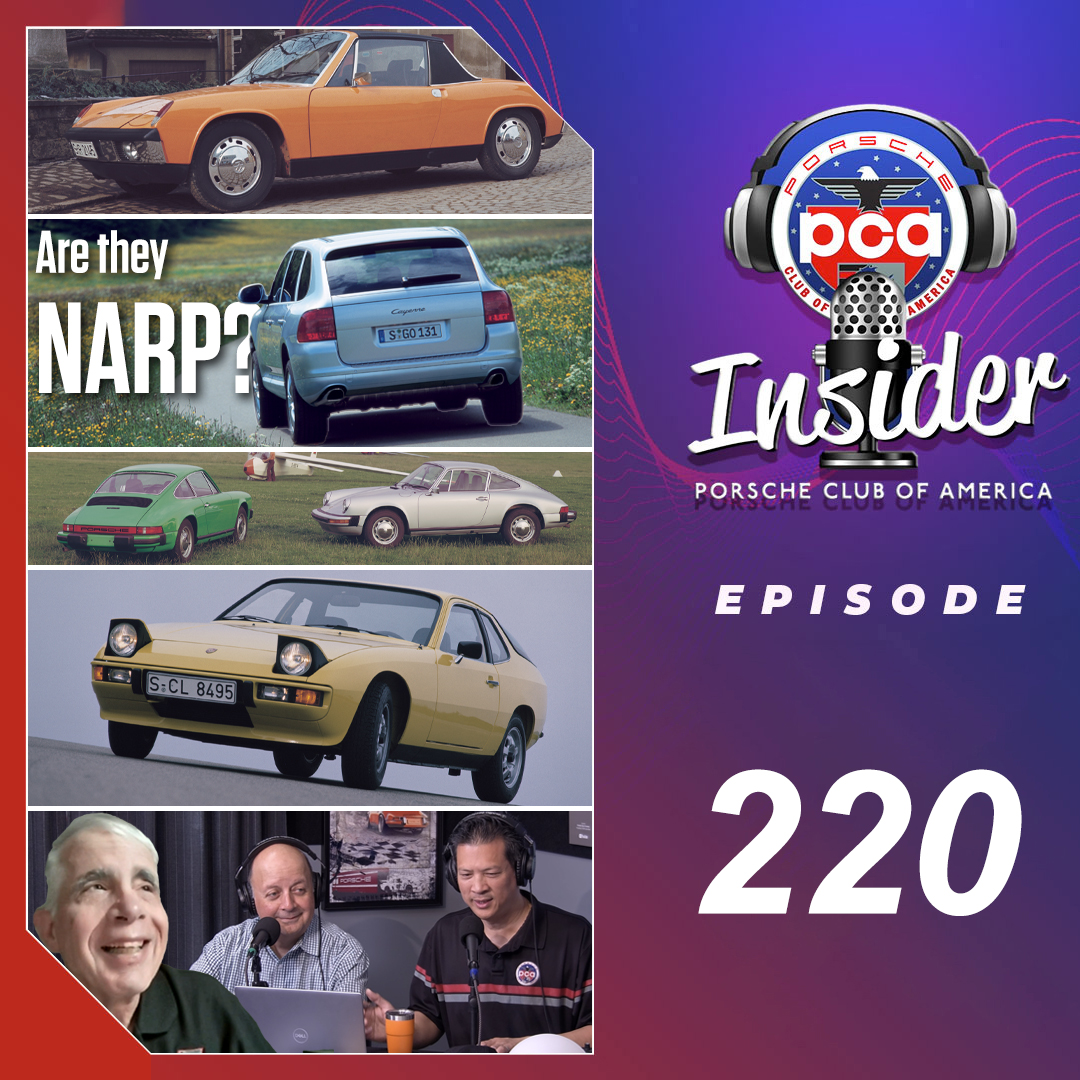
Decoding the 'NARP' (Not A Real Porsche) label
About this episode
“NARP” (“not a real Porsche”) sparks a wide-ranging debate on Porsche Club Insider, starting with model gatekeeping and the models people argue about—like the 996, 914, 924, 912E, and Boxster. Hosts connect the label to historical purism (air-cooled heritage, 356-to-911 change, and even 718 four-cylinder backlash) and to Porsche’s Volkswagen-family ties. They push back with driving feel, handling, and real-world ownership stories, then wrap with Porsche Club event talk and rally formats.
Ever owned a Porsche accused of being a "NARP" (Not A Real Porsche)? In this episode, Boardwalk Reunion co-founder Bob Gutjahr joins us to sort through the targeted models and debate if the title is justified. Bob shares firsthand stories of how he was treated at events when driving his own "NARPs." Tune in for a light-hearted discussion you will easily relate to.
Pirelli
"Before we get into it, I want to thank our presenting sponsor, Pirelli. Pirelli tires have to [35.4s] achieve the highest levels of performance, safety, noiselessness, and grip on the road surface."
Pirelli is a tire company. Tires matter a lot for how a car grips the road and how safe it feels, especially when driving hard or in bad conditions.
Pirelli is a tire brand and the episode’s presenting sponsor. The hosts mention Pirelli’s focus on grip and safety, which ties into how tires are a core part of a car’s real-world performance.
NARP
"All right. So, Narp, I've never, is this, how did I, did you know about this, Damon? [104.7s] I did not. I've never heard the term. I've heard, I've heard not a real Porsche."
“NARP” is a nickname fans use online for a Porsche that some people argue “doesn’t really count.” It’s basically internet slang for “not a real Porsche,” and the argument is usually about which models are “true” Porsche.
“NARP” is an enthusiast slang label for a car that people consider “not a real Porsche,” usually because it’s seen as too far from the brand’s traditional sports-car formula. In this episode, the hosts use it as a playful (and sometimes contentious) way to debate which Porsche models “count.”

Porsche 356
"Now, do you think, I think if we rewind the original 356 Porsche and when the 911 came along, there's probably a period of time where they thought the 911 was a NARP."
The Porsche 356 was one of the first Porsches and it’s a big deal in Porsche history. The hosts are saying some 356 fans didn’t immediately like the newer 911 when it arrived because it felt very different.
The Porsche 356 is the early, air-cooled Porsche that helped define the brand’s lightweight, rear-engine identity. In this segment, it’s used as the baseline for why some long-time Porsche fans resisted the later 911’s more radical design and engineering changes.
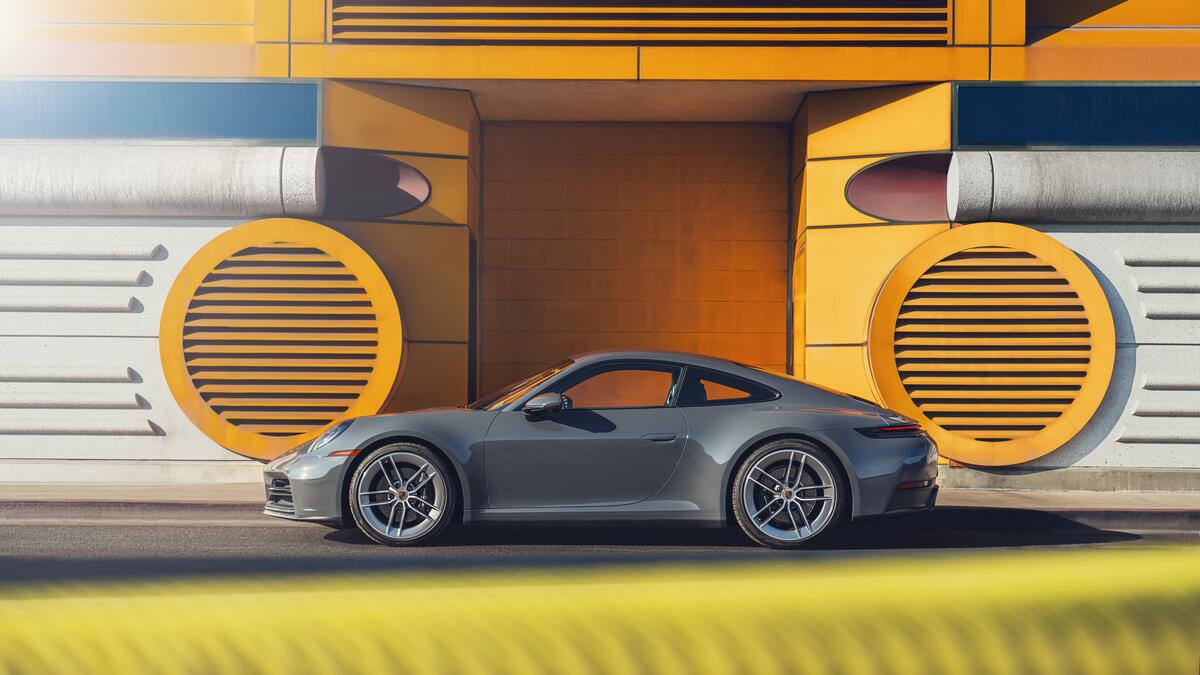
Porsche 911
"…the 356 community was really surprised by its design… You went from a four-cylinder engine to a six-cylinder engine… And beyond that, it was much more expensive and it handled completely different."
The Porsche 911 is the iconic model most people think of when they think “Porsche.” In this discussion, the 911 is described as a big change from the earlier 356, which is why some fans questioned it at first.
The Porsche 911 is defined by its rear-mounted flat-six engine and its distinctive silhouette, which marked a major shift from earlier Porsches. Here, the hosts explain that when the 911 debuted, it surprised the 356 community with a new layout, new shape, and a different driving feel—so some people initially questioned whether it was “really” a Porsche.
four-cylinder engine
"You went from a four-cylinder engine to a six-cylinder engine with a very much different shape than the bubble-like shape or bathtub-like shape of a 356."
An engine’s “cylinders” are the individual chambers where fuel is burned. Here, they’re pointing out that the earlier car used a four-cylinder design, and the later one moved to six cylinders.
A four-cylinder engine is an engine with four combustion cylinders, typically used in smaller or earlier designs. The hosts contrast it with the later six-cylinder setup to explain why the 911 felt like a major departure from the earlier 356.
six-cylinder engine
"You went from a four-cylinder engine to a six-cylinder engine with a very much different shape…"
More cylinders usually means the engine can run more smoothly. The hosts are using the shift to a six-cylinder engine to explain why the 911 didn’t feel like the same kind of Porsche as the older 356.
A six-cylinder engine has six combustion cylinders, which generally allows smoother power delivery and different packaging than a four-cylinder. The segment uses this change to highlight why the 911’s arrival felt radically different compared with the 356.
bathtub-like shape
"…than the bubble-like shape or bathtub-like shape of a 356."
This is a nickname for the older 356’s body shape—low and rounded. The hosts are contrasting it with the 911 to show how big the visual change was.
“Bathtub-like shape” is another styling description for the 356’s early body form—low and rounded, like the shape of a bathtub. In the segment, it’s used to contrast the 356’s look with the 911’s more distinct design language.
bubble-like shape
"…with a very much different shape than the bubble-like shape or bathtub-like shape of a 356."
This is just a visual description of how the older 356 looked—more rounded. The point is that the 911 looked very different, which surprised long-time fans.
“Bubble-like shape” is a descriptive way to refer to the 356’s early body styling, which is visually rounded compared with later Porsche designs. The hosts use it to emphasize that the 911’s appearance was a major departure from what the 356 crowd expected.

Porsche 918 Spyder
"...mparing the McLaren, I think P1 maybe against the 918 Spider. Anyways, Jeremy Clarkson was in favor of ..."
The 918 Spyder is a very high-end Porsche supercar. It uses a hybrid system, meaning it can run on more than one kind of power. The podcast brings it up when comparing it to other supercars.
The Porsche 918 Spyder is a high-performance plug-in hybrid supercar built for extreme performance and advanced technology. In the podcast, it’s referenced in a comparison discussion about supercars and who might be “in favor” of certain choices. The mention places it among the most dramatic, top-tier Porsche offerings.
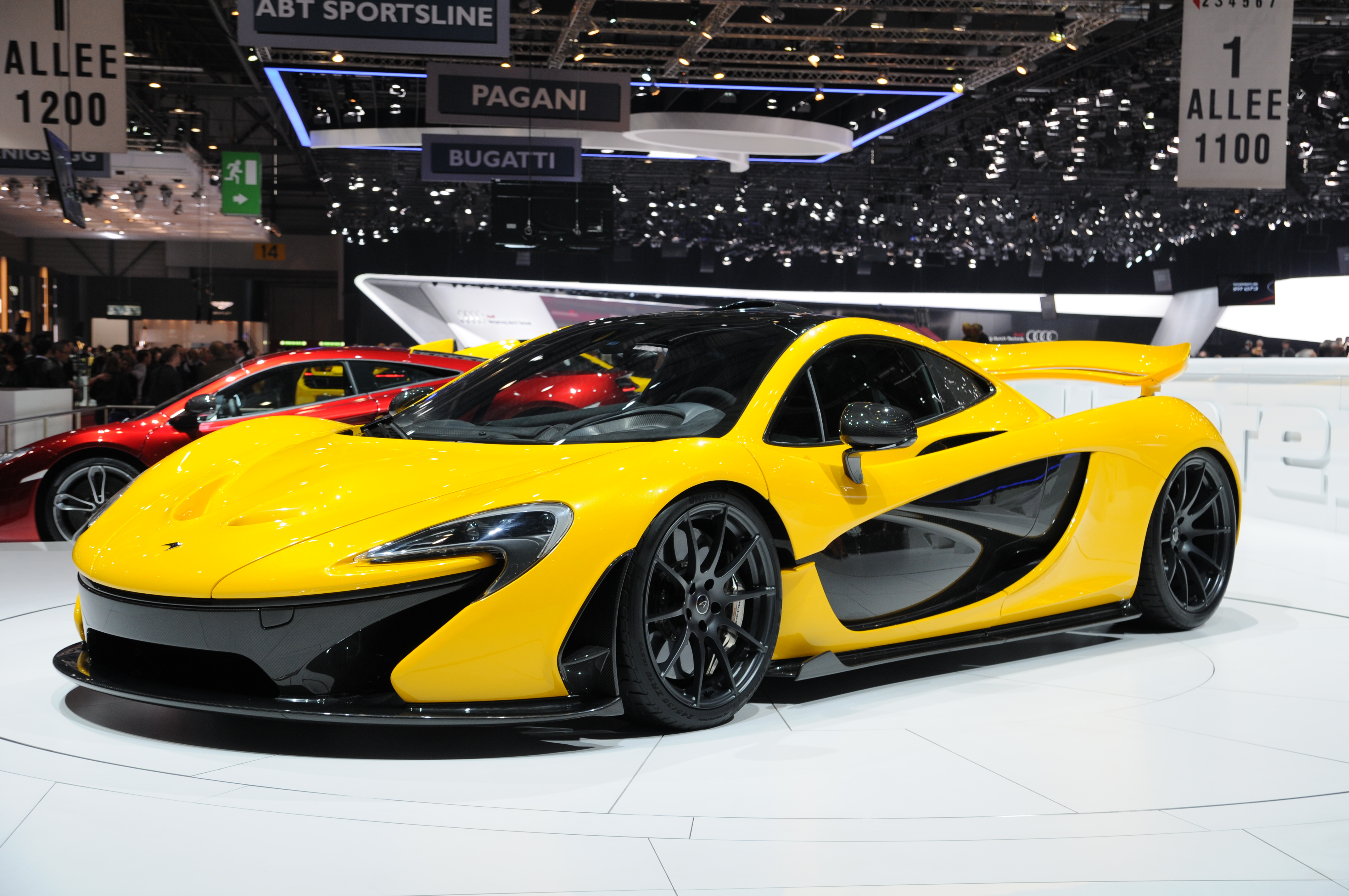
McLaren P1
"and they were comparing the McLaren, I think P1 maybe against the 918 Spider."
The McLaren P1 is a very high-end supercar with advanced hybrid technology. Here it’s mentioned because the hosts are comparing it to Porsche’s 918 Spider when talking about what people consider a “real” Porsche.
The McLaren P1 is a modern supercar built around a hybrid powertrain, known for its track-focused aerodynamics and high-tech carbon-fiber construction. In this segment, it’s used as a comparison point to Porsche’s 918 Spider when discussing the “not a real Porsche” label and brand identity.
Volkswagen
"He goes, but who is your car? Who is Porsche owned by? And you see Richard Hammond look down and say Volkswagen."
Volkswagen is the company that, through the Volkswagen Group, has been connected to Porsche for a long time. The point here is that Porsche isn’t isolated—it shares corporate roots and sometimes components with Volkswagen.
Volkswagen is the parent-brand in the wider Volkswagen Group that has owned Porsche for decades, which is why Porsche parts and platforms can trace back to Volkswagen engineering. The hosts use this relationship to explain why some people react strongly to the idea of “Porsche” being tied to Volkswagen.

Porsche 914
"But the 914, I think what hurt the 914 was that in Europe, it was sold in BW dealerships and had a lot of BW markings."
The Porsche 914 is an older Porsche that enthusiasts argue about. The reason is that it shared a lot with Volkswagen, so some people thought it was “not really Porsche,” which is exactly what the hosts are debating here.
The Porsche 914 is a mid-engine Porsche from the 1960s/1970s era that’s often debated among enthusiasts because of its shared development and parts with Volkswagen. In this segment, it’s central to the “NARP” conversation: people in North America associated it with Volkswagen branding and assumed it wasn’t a “real Porsche.”
Audi
"if you notice every time they do partnerships, it's with Volkswagen or Audi or somebody from the Volkswagen family."
Audi is part of the same big corporate group as Volkswagen. The hosts mention it to illustrate that Porsche often teams up with brands from that same family.
Audi is another brand within the Volkswagen Group, which is why Porsche partnerships and shared corporate relationships often involve Audi. The segment uses Audi as an example of “Volkswagen family” connections that people notice when discussing whether Porsche is truly independent.
Toyota
"So I want to hear people say they should team up with Toyota. I'm like, it's never going to happen."
Toyota is brought up as a “what if” partner for Porsche. The host is basically saying Porsche usually sticks with its own corporate family, so a Toyota partnership is unlikely.
Toyota is mentioned as a hypothetical partner for Porsche, reflecting the idea that Porsche tends to collaborate within the Volkswagen Group rather than with outside automakers. The host’s point is about brand-family boundaries and how partnerships shape public perception of “real Porsche” identity.

Toyota MR2
"Well, if we really stretch it, they have done stuff with Toyota just not regarding their cars, right? With the Kaizen production line of things. So we can hold out hope that MR2 will become."
The Toyota MR2 is a small sports car that’s known for being fun and relatively affordable. The host is hoping the MR2 (or a new one) would happen without Porsche getting involved.
The Toyota MR2 is a lightweight, mid-engine sports car line known for being a relatively affordable entry into the “driver’s car” world. Here, it’s used as a wishful example of a future Toyota model that could stand on its own—without needing Porsche’s involvement.
Kaizen production line
"Well, if we really stretch it, they have done stuff with Toyota just not regarding their cars, right? With the Kaizen production line of things."
Kaizen is a way of running a factory where you constantly look for small improvements. The host is saying Toyota has helped with production ideas, even if it hasn’t teamed up with Porsche on cars.
Kaizen is a lean-manufacturing philosophy focused on continuous improvement, often applied to production processes. In this segment, the host mentions Toyota’s Kaizen approach to explain that Toyota has influenced manufacturing methods, even if not through Porsche-style car partnerships.
handling
"…specific ideas about what performance should be, whether it be handling or horsepower. I think over the years, we've departed a lot more from handling to the horsepower…"
Handling is how the car feels when you turn—how well it sticks to the road and how smoothly it responds. It’s a big part of why drivers judge whether a car is “fun” or “sharp.”
Handling refers to how a car behaves when you steer—its balance, grip, steering response, and how predictable it feels in corners. The speaker contrasts handling-focused expectations with horsepower-focused expectations, framing how Porsche owners’ opinions have shifted over time.
horsepower
"…specific ideas about what performance should be, whether it be handling or horsepower. I think over the years, we've departed a lot more from handling to the horsepower…"
Horsepower is basically how strong the engine is. More horsepower usually helps the car feel quicker, especially when you accelerate.
Horsepower is a measure of engine output—how much work the engine can do over time. In enthusiast discussions, “more horsepower” usually means stronger acceleration and a higher ceiling for performance, which is why it comes up alongside handling when people argue what a Porsche “should” be.
performance expectations are much higher
"So when you look at that, the expectation from these new owners is a little bit different than previously, and the performance expectations are much higher."
They’re saying that today’s Porsche buyers expect more than they used to—faster acceleration and stronger overall performance, not just a fun driving feel. So older cars can get judged differently than they did back then.
The hosts are describing a shift in what buyers expect from Porsche over time: modern buyers often assume the car should be extremely fast, have lots of power, and also handle precisely. That expectation changes how people judge whether a given Porsche (like a 1970s 914) “counts” as the real thing.

Porsche Cayman
"If you take all their cars in the stock form in which they were introduced, take it a 356, a 911, a Cayman, and just look at pure stats."
The Porsche Cayman is a Porsche sports car with its engine placed more in the middle of the car. The host uses it to show that Porsche’s “DNA” shows up across different models, not just the 911.
The Porsche Cayman is Porsche’s mid-engine sports car line, positioned as a more compact, driver-focused alternative to the 911. In the segment, it’s grouped with the 356 and 911 to support the idea that Porsche’s driving character and design DNA stay consistent across different layouts.
stock form
"If you take all their cars in the stock form in which they were introduced, take it a 356, a 911, a Cayman, and just look at pure stats."
“Stock form” means the car is basically as the factory built it. The host is saying they’re talking about the original, unmodified versions when comparing performance and character.
“Stock form” means the car is considered in its factory configuration, without aftermarket modifications. The host is using this to compare how Porsches performed when they were originally introduced, rather than how modified examples might perform today.
EVs
"Yeah. When we talk about EVs, and I'll ask people, have you driven a Porsche EV? And a lot of them will say no."
EVs are electric cars that run on a battery and electric motor instead of gas. The host is saying you should drive a Porsche EV because it can still feel like a Porsche, not just a generic electric car.
EVs are electric vehicles, meaning they use electric motors powered by a battery instead of a gasoline engine. The host’s point is that even in an EV, Porsche’s steering feel and overall driving dynamics can still feel distinctly Porsche.
propulsion power
"And I said, well, you really owe it to yourself to drive it because what you're going to feel is you're going to say, yes, this is a Porsche. The propulsion power isn't as important as that when you get behind the wheel of the car."
Propulsion power is the amount of driving force an electric motor system can deliver to move the car. The host argues that, for Porsche identity, the sensation of driving (steering, balance, and feel) matters more than raw propulsion power numbers.

Porsche Taycan
"And that goes from a 50 horsepower, 356, all the way to the 1139 turbo GT Taycan. It gives you that feeling of a Porsche."
The Porsche Taycan is Porsche’s electric car. The host’s point is that even though it’s electric, it still drives like a Porsche—so it doesn’t feel like a generic EV.
The Porsche Taycan is Porsche’s electric performance sedan, and in this segment it’s used to make the point that Porsche identity isn’t only about engine power. The host argues that when you drive a Taycan, the steering, layout, and overall “feel” still read as unmistakably Porsche.

Chevrolet Corvette C8
"Other cars, as much as you might love a Honda, Toyota or whatever, sometimes when they introduce a model, it's so shockingly different. Like there is no connection. Like you take a C was the C8 Corvette versus like you don't see the DNA..."
The Chevrolet Corvette C8 is a newer Corvette generation where the engine sits more in the middle of the car. The host is using it as an example of a model that looks and feels like a bigger change than Porsche’s more gradual evolution.
The Chevrolet Corvette C8 is the eighth-generation Corvette, notable for moving the engine to a mid-engine layout. The host contrasts it with Porsche’s design continuity, saying other brands can make a model that feels like a bigger break from the past.
mid-engine package
"You have a very 70s looking design with a mid-engine package, 924, a front-engined trans-axle car, a water-cooled car, and they were complete departures"
“Mid-engine” means the engine sits closer to the middle of the car rather than at the front or the back. That can change how the car feels when turning and how it balances.
A mid-engine package means the engine is placed near the center of the car, typically behind the front seats but ahead of the rear axle. That layout changes weight distribution and handling balance compared with the classic rear-engine Porsche approach.
trans-axle
"924, a front-engined trans-axle car, a water-cooled car, and they were complete departures"
A trans-axle is a drivetrain unit that combines the gearbox and the final-drive/differential in one assembly. It helps the car fit the powertrain in a certain layout, especially on front-engine cars.
A trans-axle is a combined transmission and differential assembly, usually mounted as a unit to help package the drivetrain efficiently. In a front-engined trans-axle car, it’s part of how power is routed to the wheels while keeping the vehicle’s layout compact.
water-cooled
"924, a front-engined trans-axle car, a water-cooled car, and they were complete departures"
“Water-cooled” means the engine uses coolant fluid to carry heat away, usually through a radiator. The episode contrasts this with air-cooled engines that cool using airflow instead.
Water-cooled means the engine uses a liquid coolant circulated through passages and a radiator to manage operating temperature. This is contrasted in the episode with air-cooled designs, which rely on airflow and fins instead of a radiator-based system.
air-cooled
"that the 914 is not a real Porsche, and that the 924 is not a real Porsche because it lacks that heritage, it's not air-cooled"
“Air-cooled” means the engine is cooled mainly by air flowing over it, not by coolant through a radiator. In the episode, people use this as a sign of “classic Porsche” heritage.
Air-cooled refers to an engine cooling system that uses airflow over the engine’s fins to remove heat, rather than circulating coolant through a radiator. The episode uses “air-cooled” as a key part of what purists consider Porsche heritage.
evolutionary line of design
"it lacks that heritage, it's not air-cooled, or it doesn't have those lines, that evolutionary line of design like you just mentioned."
“Evolutionary line of design” here means the idea that Porsche’s styling and engineering should progress in a recognizable, continuous way from earlier models. The episode frames the NARP label as a reaction to cars that break that visual/engineering continuity.

Porsche 924
"I mean, the 914 sold over 115,000 examples, the 924 sold over 153,000 examples, and it's fairly well-known and obviously documented that the 944, in its era, saved Porsche, and then later on, when the company was in dire straits, the Boxster saved Porsche from oblivion,"
The Porsche 924 is an older Porsche that was more affordable than the classic 911. The hosts discuss it because some people call it “not a real Porsche,” but it sold in big numbers and played a real role for the brand.
The Porsche 924 is an entry-level Porsche from the late 1970s era that used a front-engine layout and helped keep Porsche financially afloat. In this episode, it’s central to the “NARP” debate because the speaker points to its high sales as proof it was a real, meaningful Porsche product.
Porsche 911S C Sunroof Coupe
"I sold it in 1980, and I bought a 1978 Petrol Blue 911S C Sunroof Coupe. It was a gorgeous car. But he's written articles about how the dealer hacked up his whole interior, putting this air conditioning in."
This is a 1978 Porsche 911S coupe with a sunroof. The 911 is the model most people think of as “the real Porsche,” which is why it comes up in the argument.
This is a 1978 Porsche 911S “C” coupe with a sunroof, which places it in the classic 911 family known for the rear-mounted flat-six layout. In the transcript, it’s also the “real Porsche” alternative the other person wanted instead of the 924.
dealer installed
"But he's written articles about how the dealer hacked up his whole interior, putting this air conditioning in. Back then, they were dealer installed. The 924 dealer?"
“Dealer installed” means the car didn’t come with that feature from the factory. The dealership added it later, which can sometimes lead to messy or non-original-looking work.
“Dealer installed” means the car left the factory without the feature, and the dealership added it afterward. In this case, the air conditioning was added by the dealer rather than being factory-installed.
air conditioning unit
"So I went to the dealership, and I can tell you the dealership because it's long since gone. Bob Miller, Porsche Audi in Austin, Texas, and I had them put an air conditioning unit. I thought it was going to be factory air."
An air conditioning unit is the part that cools the car’s cabin. The speaker is saying he expected the factory-style setup, but the dealership installed a different unit instead.
An air conditioning unit is the HVAC system component that cools the cabin. Here it’s discussed as an aftermarket/dealer-installed unit, and the speaker contrasts expecting “factory air” with what the dealer actually installed.
Vopo unit
"it's known as the Vopo unit, and they just carved up the dash, and it did not look great at all."
“Vopo unit” sounds like a nickname for an aftermarket gadget someone added to the car. The host is saying it required cutting up the dash, and that kind of modification usually makes the interior look worse and can be a pain to live with.
“Vopo unit” is enthusiast slang for a specific aftermarket electronics/ignition-related setup that some owners installed in older cars. In this context, it’s tied to the dash being “carved up,” implying the car was modified with non-factory wiring/controls that can hurt originality and usability.
air-cold
"But I think that car, when the 924 came out, I think it also separated the generations where you had the people who were diehard, air-cold people, and that's all they knew was air-cold."
“Air-cold” is the idea of cooling the engine using air flow, not coolant. The host is saying some Porsche fans were strongly attached to the older air-cooled way of doing things.
“Air-cold” here refers to Porsche’s air-cooled engine identity—engines that rely on airflow over the cylinders instead of liquid coolant. The speaker contrasts that with the 924’s water-cooled approach, framing it as a cultural shift for Porsche fans.
water-cold
"And suddenly, Porsche comes out with the engine in the front, water-cold, and they were like, this is the end of Porsche, as we know it."
“Water-cold” means the engine uses liquid coolant to stay cool. The host is pointing out that the 924 used this approach, which felt like a big change to traditional Porsche fans.
“Water-cold” refers to water-cooled engines that use liquid coolant circulating through the engine and radiator. The speaker uses this as a key difference between the 924 and earlier air-cooled Porsches, arguing it changed how new buyers viewed the brand.
consigned
"No, it wasn't. It was for sale. It was consigned, right? It was consigned to a VW repair restoration facility."
Consigned means the car is being sold through a dealer, but it’s not necessarily the dealer’s car. The owner usually still has control until the car actually sells.
“Consigned” means the owner (or an intermediary) places the car with a dealer or auction for sale, but the seller typically retains ownership until it sells. That’s why the car can be “for sale” at a dealership without being broken down roadside.
VW repair restoration facility
"It was consigned, right? It was consigned to a VW repair restoration facility. And it was actually owned by a German national."
They’re saying the car was sent to a shop that does repair and restoration work for Volkswagen cars. It’s basically a specialized service place, not a random dealer lot.
The speaker mentions a “VW repair restoration facility,” indicating a shop focused on Volkswagen repairs and restoration work. In the context of a Porsche 924 being consigned there, it suggests the car was handled by a specialist that works on VWs and restoration projects.
reverse
"And we lost first gear, and we lost reverse at that parade. And Ellen was pushing me around at the rally, and she will never let me forget that one. Never leave that woman."
Reverse is the gear that lets you back up. They’re saying the car couldn’t go into reverse, so they had to push it to change direction.
“Reverse” is the gear used to move the car backward, typically requiring a specific gear selection path in the transmission. The hosts describe losing reverse at a parade and needing someone to push the car to turn it around, which underscores how serious the transmission issue was.
first gear
"The first time we campaigned that car to parade was the 2010 parade at St. Charles. And we lost first gear, and we lost reverse at that parade."
First gear is the lowest gear used to get the car moving from a stop. They’re saying the car stopped being able to use that gear during the parade.
“First gear” is the lowest gear ratio in a manual transmission, used for starting and low-speed driving. The speaker says they “lost first gear” during a 2010 parade, implying a mechanical failure that prevented normal low-speed operation.
St. Charles
"The first time we campaigned that car to parade was the 2010 parade at St. Charles. And we lost first gear, and we lost reverse at that parade."
They’re talking about a parade event held in St. Charles, where they drove their car for a rally/campaign. It’s part of the story about what happened to the car during that event.
St. Charles is referenced as the location of a parade where the hosts campaigned the car. The mention is tied to their rally/parade experience and the transmission issue they encountered there.
one-off option features
"It's a very cool car, very unique with one-off option features that make it really distinctive. So much so that we've been invited to several national concours..."
This means the car has special, unusual features that aren’t found on most other cars like it. Those rare details are part of what makes it exciting to show at top car shows.
“One-off option features” refers to unique, non-standard factory or special-order equipment that makes a particular car different from other examples of the same model. In collector circles, these rare configurations are a big part of why a car gets invited to concours events.
national concours
"So much so that we've been invited to several national concours to show the car, which is a great honor to have that little 924 in some of the national concours..."
A concours is a fancy car show where cars are judged on how correct, clean, and well-kept they are. They’re saying their Porsche 924 was invited because it’s special and in great shape.
“Concours” refers to formal, judged car shows focused on originality, condition, and presentation—often with high standards for collector cars. The hosts mention being invited to national concours to show their Porsche 924, highlighting the car’s collector value and preservation.
HVAC vents
"The dash is starting to just go a little bit. The cracks in the dash start forming in the HVAC vents right in front by the windshield."
HVAC vents are the air outlets for the car’s heating and air-conditioning. The hosts say the dashboard cracks start near those vents, which suggests that heat and airflow over time can damage the dashboard material there.
HVAC vents are the openings in a car’s dashboard that direct heating and air-conditioning airflow into the cabin. In this segment, the dash cracks begin forming at the HVAC vent area near the windshield, which points to heat cycling and material aging concentrating stress in that region.
retrofit
"No, the new dash that I have is from the 87, 88, 924. So, it is a retrofit. You can retrofit that dash."
A retrofit means adding a newer or different part to your car so it works like you want. In this case, they’re saying they can fit a dashboard from later 924 years onto an earlier car to address cracking.
A retrofit is when you install parts from a different model year or configuration onto your existing car to achieve a desired fix or improvement. Here, the speaker says the replacement dash they have is from an 87/88 924 and that it can be retrofitted onto their car, implying fitment is possible even if it’s not the original dash design.
direct sunlight
"One of the crazy things I do now... is you have to protect the dash all the time, particularly from just direct sunlight and from heat. I mean, heat and direct sunlight just destroy that dash."
Direct sunlight can make the inside of a car get very hot. That heat can damage dashboard materials over time, so the speaker covers the dash to reduce sun exposure and keep it cooler.
Direct sunlight is a major contributor to interior heat soak, which accelerates aging of plastics and vinyl used in dashboards. The speaker ties dash cracking risk to both direct sunlight and heat, describing a routine of covering the dash to reduce exposure and thermal cycling.
heat soak
"have to protect the dash all the time, particularly from just direct sunlight and from heat. I mean, heat and direct sunlight just destroy that dash."
Heat soak is when a car’s interior materials absorb heat and stay hot for a long time, even after you stop driving. In this segment, the hosts connect heat soak from sun exposure to dashboard deterioration, which is why they use towels/covers to limit heat buildup on the dash.
air cool to water cool
"is that when there's [1720.1s] four cylinders to six cylinder, air cool to water cool, you're always going to hear that."
Engines can be cooled in different ways. Air-cooled engines use airflow to keep things from overheating, while water-cooled engines use coolant flowing through the engine and a radiator.
“Air-cooled” and “water-cooled” describe how an engine sheds heat. Air-cooled engines rely on airflow and fins to remove heat, while water-cooled engines use a liquid coolant loop and radiator to manage temperatures.
four cylinders to six cylinder
"is that when there's [1720.1s] four cylinders to six cylinder, air cool to water cool, you're always going to hear that."
An engine can have different numbers of cylinders. More cylinders often change how smooth and how the engine sounds and feels, and the host is saying people get too focused on that when judging Porsches.
“Four-cylinder” vs “six-cylinder” refers to the number of cylinders in an engine, which strongly affects engine smoothness, sound, and how the power delivery feels. The host uses this as part of the broader argument that people fixate on engine specs when debating what “counts” as a real Porsche.
Not A Real Porsche
"That's when the people always come out [1733.1s] and start saying or traditional enthusiasts that it's not a real Porsche. It's not what I want [1739.2s] or anything like that."
Some car fans argue that certain Porsches don’t count as “real” Porsches. The host disagrees and says the real Porsche feel comes from how the car drives—especially steering and how it rides—more than from what engine it has.
“Not A Real Porsche” is an enthusiast label used to dismiss certain Porsche models as less “authentic” to the brand. In this segment, the host argues that the debate is misguided because the “true Porsche feeling” comes from how the car communicates through steering, suspension, and the overall driver inputs—not just the powertrain or gearbox/shifter.

Porsche 944 S2
"And I'll be the first one to say that my 944 S2, when I drove it, I loved it and it had [1779.9s] amazing steering compared to the car that I drove through high school, the way the suspension [1786.5s] handled turns or went over bumps."
The Porsche 944 S2 is an older Porsche that’s famous for how it drives. The host’s point is that it feels like a Porsche mainly because of the steering and how the suspension behaves over bumps, not just because of the engine.
The Porsche 944 S2 is a 1980s/early-1990s Porsche sports coupe known for its front-engine, rear-transaxle layout and sharp steering feel. Here, the host highlights that the “Porsche feeling” comes through the steering and suspension behavior—specifically how it handles bumps and turns—rather than just the engine or cooling type.

US only 912E
"I never owned this third car, which is the US only 912E, one year only. And this was a car that was like a bridge between the 914 and the 924."
The Porsche 912E is a special Porsche variant that was sold only in the U.S. The episode calls it a “NARP” because it’s kind of a mix—built between other Porsche models. People argue about whether it feels like a “real” Porsche because of how it was put together.
The Porsche 912E is a U.S.-only variant of the classic 911/912-era lineup, built as a bridge between the 914 and the 924. In this episode, it’s discussed as the “NARP” type car—because enthusiasts see it as a hybrid of parts/identity rather than a “pure” Porsche. The hosts also call out the specific engine swap logic that fuels the label.
Porsche 924 Sebring
"We are not. We've been asked to bring the 924. Sebring to parade. So the Sebring will be in the historic display."
The Porsche 924 Sebring is a particular Porsche model tied to the 924 family and Sebring racing history. In this segment, it’s mentioned because the hosts are planning to display it at an event. It’s basically a named, recognizable Porsche variant they’re proud to show off.
The Porsche 924 Sebring is a specific variant of the 924 line associated with the Sebring racing heritage, and it’s mentioned here as a car the group will bring to a parade/historic display. The hosts say the Sebring will be shown in the historic display, highlighting its identity as a recognizable Porsche model within the transaxle-era story they’re telling. It’s not the main technical focus, but it’s a concrete model name used for event context.
zinc coated
"Now, 911, the suspension, transmission, it was zinc coated, so much less rust."
“Zinc coated” means the metal gets a protective zinc layer to slow down rust. The hosts are pointing out that this kind of protection can make a big difference in how long the car stays solid.
“Zinc coated” refers to corrosion protection where zinc is used as a coating on metal parts. In this segment, the hosts say the 911’s zinc coating helps reduce rust, which is a key part of why the 912/911 hybrid idea sounded “perfect” at first.
short hood
"And this is the only 912 that was a short hood 912. Correct. Not a long hood."
“Short hood” means the front hood is shorter than on the more common version. The hosts are using it to point out that this particular 912 is a rare configuration.
“Short hood” describes a 912 body configuration with a shorter front hood than the more common long-hood layout. In this segment, it’s used to highlight rarity and to identify the specific 912 variant being discussed.
Type 4 VW engine
"This is a G-body 911 with a type 4 VW engine in it."
This means the car uses a Volkswagen flat-four engine design. The hosts are saying that engine choice is a big reason the car drives differently—often smoother and easier to manage than a classic 911.
A “Type 4 VW engine” is a Volkswagen flat-four engine family (commonly associated with the Type 4 platform) that differs from the air-cooled 911 flat-six. Here, the hosts use it to explain the 912E/short-hood 912’s character—smoothness and tractability—despite having much lower output than a typical 911 engine.

Porsche 912 V
"A 912 V is much more forgiving and a very smooth car. ... You’re not necessarily focused on the engine and worrying about RPMs and that sort of thing."
The Porsche 912 V is described as easier to drive and smoother than the older 911s the hosts are comparing it to. In rallying, they say it lets you concentrate on the road and not constantly worry about the engine.
The Porsche 912 V is discussed as the more forgiving, smoother alternative to the “nervous” feel of certain 911-era cars. The hosts connect that drivability to rally use—specifically that you can focus on driving rather than constantly managing engine behavior and RPMs.
RPMs
"You can focus on the rally. You’re not necessarily focused on the engine and worrying about RPMs and that sort of thing."
RPMs tell you how fast the engine is spinning. The hosts are saying the 912 V is easier because you don’t have to constantly watch and manage that engine speed while driving hard.
RPMs means “revolutions per minute,” a measure of how fast the engine is spinning. The hosts use it to describe why the 912 V is relaxing in rally driving: you don’t have to constantly monitor RPMs to keep the engine in the right zone.
sunroof cars
"What I always thought was interesting was, and I still say this, in the books, it tells you that they only made 500 sunroof cars and the rest were non-sunroof."
“Sunroof cars” just means cars that came with a factory roof opening. The hosts are talking about how few of those were made compared with the cars without a sunroof.
“Sunroof cars” refers to vehicles equipped with a factory sunroof option, which can create a distinct subset when counting production numbers. The hosts use this to discuss how rare certain 912 configurations are (sunroof vs non-sunroof).
steel wheels
"so rare, everybody in his brother has a sunroof car, but this car not only had no sunroof, [2111.1s] it had steel wheels. I guess he must have told one of the writers and it ended up in this coming"
Steel wheels are wheels made from steel instead of lighter alloy materials. They’re usually a more basic, original-style option on older cars. In this story, it’s part of what makes this Porsche 912 V stand out as a rare configuration.
“Steel wheels” are wheels made primarily from steel rather than lighter alloys. In classic-car discussions, mentioning steel wheels often signals a more basic or original-spec configuration, which can affect weight and sometimes the car’s visual “period correctness.” Here, the hosts use it to highlight how unusual this particular Porsche 912 V is compared with many sunroof-equipped examples.
NPCA
"And the previous owner, Sherry Vieth, was a very active NPCA [2237.9s] back in the day. And she more or less tapped us on the shoulders and basically said, I'd like you"
NPCA is the Porsche Club of America. It’s a group for Porsche owners that organizes events and helps people stay connected with other enthusiasts. The episode mentions it to show the car’s previous owner was deeply involved in the Porsche community.
NPCA refers to the Porsche Club of America, a member organization that supports Porsche owners through events, community, and technical knowledge. In the segment, the previous owner is described as being active in NPCA, which helps explain how the car’s history is tied to the enthusiast community. That context supports why the car’s provenance and stewardship matter to the hosts.
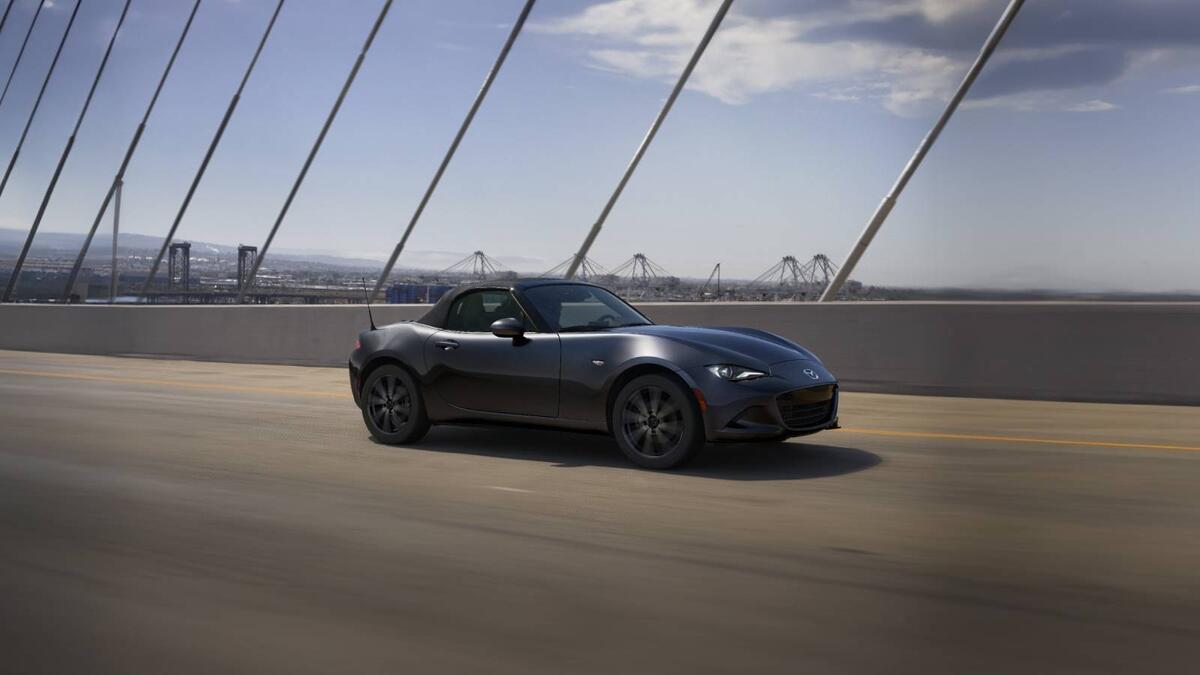
Mazda MX-5 / Miata
"...se it was like on an engine. Kind of looks like a Miata ish. I mean, it's a convertible. I mean, that's, ..."
The Miata (MX-5) is a small, lightweight convertible made by Mazda. It’s known for being easy to drive and fun for everyday trips. In the podcast, it’s used as a quick visual and layout comparison.
The Mazda MX-5, commonly called the Miata, is a lightweight, affordable roadster focused on simple, fun driving. It’s brought up in the podcast because its shape and convertible layout are easy reference points when describing another car’s look or feel. The mention is brief and used mainly as a comparison for what the car resembles.

Boxster
"said, Hey, I can bring the Boxster over and you guys can all take it for a test drive at the meeting. [2428.5s] I said, That is awesome. And no one said it's a Narp or it's a secretary's car."
The Porsche Boxster is a Porsche roadster with the engine placed in the middle of the car. People sometimes argue about whether it “counts” as a real Porsche, but it’s still a genuine Porsche model. In the episode, they talk about how opinions changed when stronger versions like the Boxster S arrived.
The Porsche Boxster is Porsche’s mid-engine, two-seat roadster built around balance and handling rather than brute force. In this segment, the hosts discuss how some people dismiss it as “not a real Porsche,” even though it’s still a Porsche-designed model. They also reference the Boxster S as a turning point in how enthusiasts talk about the car.
two seat spider
"Everyone's just [2436.5s] thrilled about this new two seat spider type of car. And, you know, you drove it and you said,"
A “spider” is just a roadster—an open-top car. “Two-seat spider” means it’s designed for two people and focuses on open-air driving. The speaker uses it to describe what people were excited about when the Boxster arrived.
“Spider” is a common automotive term for an open-top roadster, typically with a soft top. “Two-seat spider” describes a lightweight, open-air configuration aimed at driving feel and style rather than practicality. In this segment it’s used to characterize the Boxster’s body style and why people were excited about it.
VW transmission
"And David's point, [2507.2s] it is 100% Porsche. Yeah. And everything about that car is designed by Porsche, [2512.2s] engine, transmission, it's unique to that car. And yet, because some writers wrote that it's [2521.4s] not a Porsche of standards, I will say the transmission in those early cars and including"
The speaker is saying that some early Porsche Boxster/Cayman cars used a transmission design that came from Volkswagen (VW). That matters because people argue about whether the Boxster is “really” a Porsche. The point is that some major parts were shared, even if the overall car is still Porsche-engineered.
The speaker claims that early Boxster/Cayman cars used a Volkswagen (VW) transmission, which is a notable detail because it challenges the idea that the Boxster is “less Porsche” purely due to shared components. In practice, Porsche and VW have historically shared parts across the group, but the key point here is that the transmission is not unique to Porsche. That’s why it comes up in the “NARP” debate.
six speed
"including [2526.4s] in my Cayman is a VW transmission. But I will say it's what a good 50 pounds lighter than the six [2533.6s] speed."
“Six-speed” means the car has six forward gear ratios. In this segment, it’s mentioned while comparing how heavy different transmission setups are. More gears can help the car keep the engine in a better range while driving.
“Six-speed” refers to the number of forward gears in a manual transmission (or sometimes a gearbox with six ratios). Here it’s used in a comparison about weight—contrasting the transmission mentioned earlier with a “six speed” setup that’s about 50 pounds lighter. Gear count matters because it affects how the car delivers acceleration and how it cruises.
Boxer
"Now, Bob, why did you never buy a Boxer? [2570.6s] He did, but he got a very special one. We did. Oh, well, that's a spider. Yeah. [2574.9s] Yeah. He's very good at picking these cars."
“Boxer” describes the engine shape. Instead of cylinders moving up and down in a straight line, the pistons move opposite directions, which helps the engine sit low in the car and can make the car feel more balanced.
“Boxer” is Porsche’s term for an engine layout where two banks of cylinders move in opposite directions, creating a distinctive flat, low center-of-gravity design. In Porsche context, it’s often used to describe the feel and character of the car—especially the balance you get from the flat engine architecture.
Umbridge
"And she told me to tell you guys that the Boxer spider is every bit of Porsche [2591.1s] and a Boxer is every bit of Porsche. Like, like many, like, I think a lot of, a lot of women, [2597.0s] and hopefully a lot of men take Umbridge with this whole secretary car, secretary's car thing."
“Take umbridge” just means “get offended” or “feel upset.” In this conversation, they’re saying they’re really bothered by the labels people use for certain Porsches.
“Take umbridge” is an idiom meaning to feel offended or resentful about something. Here, the speaker uses it to describe how strongly they react to the “secretary car” and “NARP” stereotyping.
torque
"I would ask them, have you driven one? Have you felt the torque of this? Most of them were just never rehashing what a journalist wrote."
Torque is the engine’s pulling force that helps the car move quickly, especially when you accelerate. The host’s point is that people who call it “not a real Porsche” should drive it and feel how the torque comes on.
Torque is the engine’s twisting force, and it strongly influences how quickly a car accelerates and how it feels in everyday driving. The host argues that critics of the “NARPE” label often hadn’t driven the car or felt its torque, implying the driving experience can’t be judged purely by sound comparisons or journalist summaries.
Carmen
"The fact that Carmen was basically welding hard tops on the cabriolet bodies and putting together a car, almost like a Frankenstein car..."
The host mentions “Carmen” as the person involved in early Porsche 356 work—physically modifying bodies by welding parts together. The takeaway is that Porsche’s early cars weren’t always “perfectly traditional,” and people still argued about the results.
“Carmen” is referenced as the person doing fabrication work—welding hard tops onto cabriolet bodies—during the Porsche 356’s early-1960s production. In the episode’s context, this supports the story that early Porsche development involved unconventional solutions and that critics existed even then.
notchbacks
"wherein they, the notchbacks were made and were like, considered a partspin car back in the day and they were considered ugly during the day."
A “notchback” is a car body shape where the roof and trunk look like they’re clearly separated (a stepped profile). The host is saying that when Porsche made the 356 in this style, people didn’t like the new look.
A “notchback” is a body style where the roofline and trunk form a distinct step, creating a more traditional, separated silhouette. The host uses the Porsche 356 notchback example to show that when Porsche introduced a new shape, many people considered it ugly compared with the classic form.
stop-gap measure
"I think where Porsche is really hit hard is when they do a new design so radical and so different, along with the stop-gap measure, an entry-level car, so to speak..."
A “stop-gap measure” means a temporary solution. The hosts are saying Porsche used an entry-level model as a bridge, and some fans reacted negatively to that idea.
A “stop-gap measure” is a temporary product strategy—something Porsche offers to bridge the gap until a more complete or fully developed direction arrives. Here, it’s used to explain why an entry-level model like the 912V triggered backlash from some fans.
Porsche 944 Turbo
"I mean, I think Boxsters are now the new 944, 944 Turbo for GEs and track events, right? A lot of people are using them and modifying them for track."
The Porsche 944 Turbo is an older Porsche that came with a turbocharger. Enthusiasts have long used it as a budget-friendly track car, and the host is saying Boxsters are filling that same niche now.
The Porsche 944 Turbo is a turbocharged front-engine Porsche from the 1980s/early 1990s era, and it’s become a benchmark “cheap-ish” track platform for enthusiasts. Here, the host compares the Boxster’s current track popularity to the 944 Turbo’s earlier role in track and club racing.
buyers guide
"But when Damon and I went over to Porsche Owings Mills to do a buyers guide on the 718, I remember going there and I was telling Damon..."
A buyers guide is a checklist-style discussion for people shopping for a car. It helps you know what to watch out for and what matters most.
A “buyers guide” is a structured rundown of what to look for when shopping for a specific car model—typically including common issues, what to prioritize, and how to evaluate condition. Here it’s tied to the hosts’ research on the Porsche 718.
flat six
"People, their first thoughts are like, I want a flat six, I don't want a four-cylinder."
A “flat six” is an engine where six cylinders sit in a sideways layout. The host mentions it because some people expect that classic Porsche engine shape and sound.
“Flat six” refers to an engine layout where six cylinders are arranged horizontally in two banks of three, like a boxer. Porsche is strongly associated with flat-six engines, so the term shows up here as the traditional benchmark people use to decide whether something “feels” like a real Porsche.

Porsche 718
"And I still remember the first time I drove a 718... Third lap, he says, hard to believe this is a four-cylinder... it was turbocharged because I didn't probably felt any lag..."
The Porsche 718 is a Porsche that uses a four-cylinder engine instead of the classic flat-six. The host is arguing that even with a smaller engine, it can still drive and feel like a true Porsche.
The Porsche 718 is notable because it’s a Porsche with a four-cylinder engine (often turbocharged), which challenges the traditional “flat-six only” mindset. The host’s point is that, despite the four-cylinder, the 718 can still feel like a real Porsche—especially in how it responds and drives.
Mosport
"It was at Mosport and I was with somebody Porsche in the right seat and I'm driving..."
Mosport is a race track in Canada. The host is saying he tested the car there, so his opinion is based on real driving, not just impressions.
Mosport is a Canadian road course (officially Canadian Tire Motorsport Park) known for technical corners and elevation changes. The host uses it as the setting for his first 718 drive, emphasizing how the car felt on track rather than just in a showroom or static review.
turbocharged
"I had no idea. First of all, it was turbocharged because I didn't probably felt any lag and it certainly with the top down, I didn't hear the turbo whine at all."
Turbocharged means the engine has a device that forces more air into the cylinders to make more power. The host is saying the car still feels quick and doesn’t feel “slow” or laggy.
Turbocharged means the engine uses a turbocharger to compress incoming air, allowing more power from a smaller displacement engine. Here it’s relevant because the host says the 718 felt responsive with little perceived lag and didn’t even produce much audible turbo sound with the top down.
Le Mans
"At that parade, they actually had t-shirts made that said to hell with Le Mans, we're building SUVs. Not Porsche."
Le Mans is a world-famous endurance race. The hosts mention it because Porsche is known for racing, and some people felt SUVs didn’t match that image.
Le Mans refers to the famous endurance racing event that Porsche has historically targeted with factory racing programs. In the transcript, it’s used as a symbol of Porsche’s racing identity, contrasted with the backlash when Porsche announced it would build SUVs.

Porsche Cayenne
"program so they could focus all their resources on the Cayenne. Porsche was not anywhere near the size they were today. But part of the reason that a lot of people said it wasn't a real Porsche"
The Porsche Cayenne is Porsche’s SUV. People argued it wasn’t a “real Porsche” because it was built with Volkswagen and shared a lot of the same underpinnings as the Touareg. The point here is that it’s related, but not identical—Porsche still made it feel and spec differently.
The Porsche Cayenne is Porsche’s SUV that became a flashpoint for the “Not A Real Porsche” (NARP) debate because it was developed with Volkswagen. In this segment, the hosts discuss how the Cayenne’s platform and engineering overlap with the Volkswagen Touareg, but also how Porsche-specific tuning and equipment can make it feel and perform differently.
direct partnership
"was because once again, they were doing this in direct partnership with Volkswagen to share the cost."
“Direct partnership” means Porsche and Volkswagen worked together closely on the SUV project. The criticism in this segment is that sharing costs and development made the Porsche feel too similar to a Volkswagen. The hosts argue it’s related, but not identical.
“Direct partnership” here refers to Porsche and Volkswagen collaborating closely on the SUV program, including sharing development and costs. This is central to the NARP argument: critics felt Porsche was effectively selling a branded version of a Volkswagen-derived vehicle rather than a fully unique Porsche product.

Volkswagen Touareg
"And a lot of people said screw the Cayenne. I'm buying a Touareg. I'll save the money. It's the same car. And of course, it wasn't the same car, but word gets out"
The Volkswagen Touareg is Volkswagen’s big SUV. In this episode it’s used as the comparison point for the Porsche Cayenne because they’re closely related under the skin. The speaker explains that even though they share a lot, the engines and how they feel can be different.
The Volkswagen Touareg is the German brand’s large SUV that shares a platform with the Porsche Cayenne, which is why it gets brought up in the NARP discussion. Here, the speaker compares Touareg trims and engines (including TDI diesels and VR6/base variants) to Cayenne versions, emphasizing that while the underlying layout is similar, the driving feel and powertrains differ.
TDI
"So we've owned two Touareg diesels, the TDI diesels. The first one was a Sport. The second one was a Luxe."
TDI is a type of diesel engine. It uses a turbo to help the engine breathe better and injects fuel directly into the engine. In this segment, it’s mentioned because the speaker owned Touareg diesels with this setup.
TDI stands for “Turbocharged Direct Injection,” a diesel engine technology where fuel is injected directly into the combustion chamber and a turbocharger boosts air intake. The speaker specifically mentions owning Touareg TDI diesels, using that as part of their comparison versus Cayenne diesel and gasoline variants.
platform
"But the Touareg is a, I mean, it's the same platform. So in many respects, the handling is same."
Here, “platform” means the shared basic structure underneath the car. If two SUVs share a platform, they can feel similar because the bones and layout are related. But the final tuning and parts can still make them different.
In this context, “platform” means the shared underlying engineering architecture—things like the chassis structure, mounting points, and major layout—that multiple vehicles can use. The speaker argues that the Cayenne and Touareg share the same platform, which is why handling can feel similar even when the cars aren’t identical.
VR6
"No, the engines are actually different as well, except for the VR6 and the base Cayenne."
VR6 is a special Volkswagen engine design. It’s built to fit in a smaller engine bay than a typical wide V6, while still behaving like a V6. Here it’s mentioned because one engine option is similar between the Touareg and Cayenne.
VR6 is Volkswagen’s distinctive engine configuration that combines features of both V-type and inline engines, using a narrow-angle “V” to fit in a compact space. The speaker notes that engines are different between the Cayenne and Touareg, “except for the VR6,” implying that this particular engine family is shared or similar across some variants.
Ferdinand Pieck
"I'll also point out here that the Cayenne and Touareg were both developed during Ferdinand Pieck's reign, for lack of a better word, at VW."
Ferdinand Piech was an important leader at Volkswagen. The speaker brings him up to explain the “why” behind the engineering approach used on the Cayenne and Touareg—basically, that the cars were developed during a time when the company was willing to build them very thoroughly.
Ferdinand Piech (often spelled “Piech”) was a key Volkswagen executive whose leadership period overlaps with the development of the Cayenne and Touareg. The speaker uses his reign to frame why the cars were engineered heavily—suggesting the group’s priorities at the time favored complex, overbuilt engineering.

Porsche Macan
"that has to be the Makon. ...Porsche sent someone over to talk to us about the new Makon... ...the Audi was front-wheel drive biased, but they needed to make it rear-wheel drive biased so they reversed everything... 80% goes to the rear wheels"
The Porsche Macan is Porsche’s smaller SUV. Here they’re talking about how Porsche tuned it to feel more like a Porsche to drive—especially by sending most of the power to the rear wheels instead of the front.
The Porsche Macan is Porsche’s smaller SUV, and this segment frames it as a “Porsche-feeling” transformation of a shared platform. They discuss how Porsche adjusted the drivetrain behavior so it’s rear-wheel-drive biased (about 80% to the rear), which is meant to give the driver a more Porsche-like handling feel.
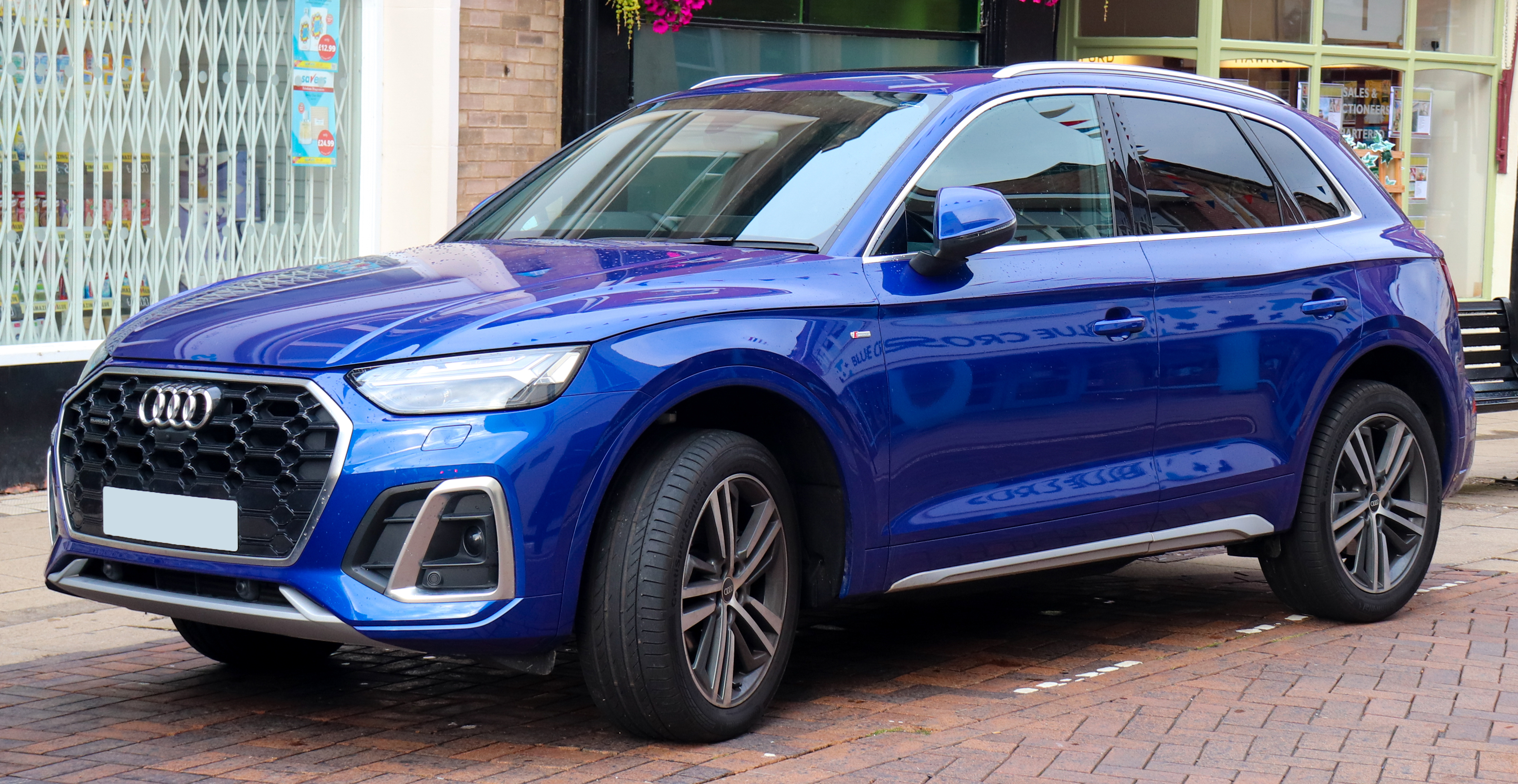
Audi Q5
"We saw the, you know, Porsche sent someone over to talk to us about the new Makon when it we should have developed our own chassis because we changed the Q5 so much... ...this wasn't an Audi that just put a badge on. This was a car that they had to transform into a car that felt like a Porsche."
The Audi Q5 is an Audi SUV. In this discussion, they’re saying Porsche based the Macan on that general platform, but Porsche changed it enough that it should drive and feel like a Porsche, not just a rebranded Audi.
The Audi Q5 is an Audi compact luxury SUV platform that Porsche used as a starting point for the Macan. The hosts argue that it wasn’t just “an Audi with a badge,” but that Porsche had to significantly transform the driving feel to make it feel like a Porsche.
chassis
"when it we should have developed our own chassis because we changed the Q5 so much"
A chassis is the main “frame” of the car that everything else mounts to. They’re discussing whether Porsche should have built a new frame or just modified the existing one from the Audi platform.
A chassis is the vehicle’s structural foundation—what the suspension, steering, and drivetrain attach to. The hosts debate whether Porsche should have developed its own chassis versus heavily modifying the Audi Q5-based one to achieve a Porsche-like driving feel.
front-wheel drive biased
"And one of the things they did immediately was the Audi was front-wheel drive biased, but they needed to make it rear-wheel drive biased so they reversed everything."
This means the car sends more power to the front wheels than the back. The hosts say Porsche changed that balance so the rear wheels get more of the work, which can make the car feel more agile and “Porsche-like.”
“Front-wheel drive biased” describes how a car’s drivetrain sends more of the available traction or torque to the front wheels than the rear. In this segment, they say the Audi setup was biased toward the front, and Porsche changed the Macan so it became rear-wheel-drive biased for a more Porsche-like feel.
rear-wheel drive biased
"but they needed to make it rear-wheel drive biased so they reversed everything. And if anyone owns a Makon and you see the little gauge you see, that thing is 80% goes to the rear wheels"
This means the car sends most of its power to the rear wheels. They say it’s roughly 80% to the rear, which helps the car handle more like a traditional rear-driven sports car.
“Rear-wheel drive biased” means the car’s torque/traction is weighted toward the rear wheels rather than the front. They even quantify it here: the gauge shows about 80% going to the rear wheels, which is intended to improve handling balance and driver feel.
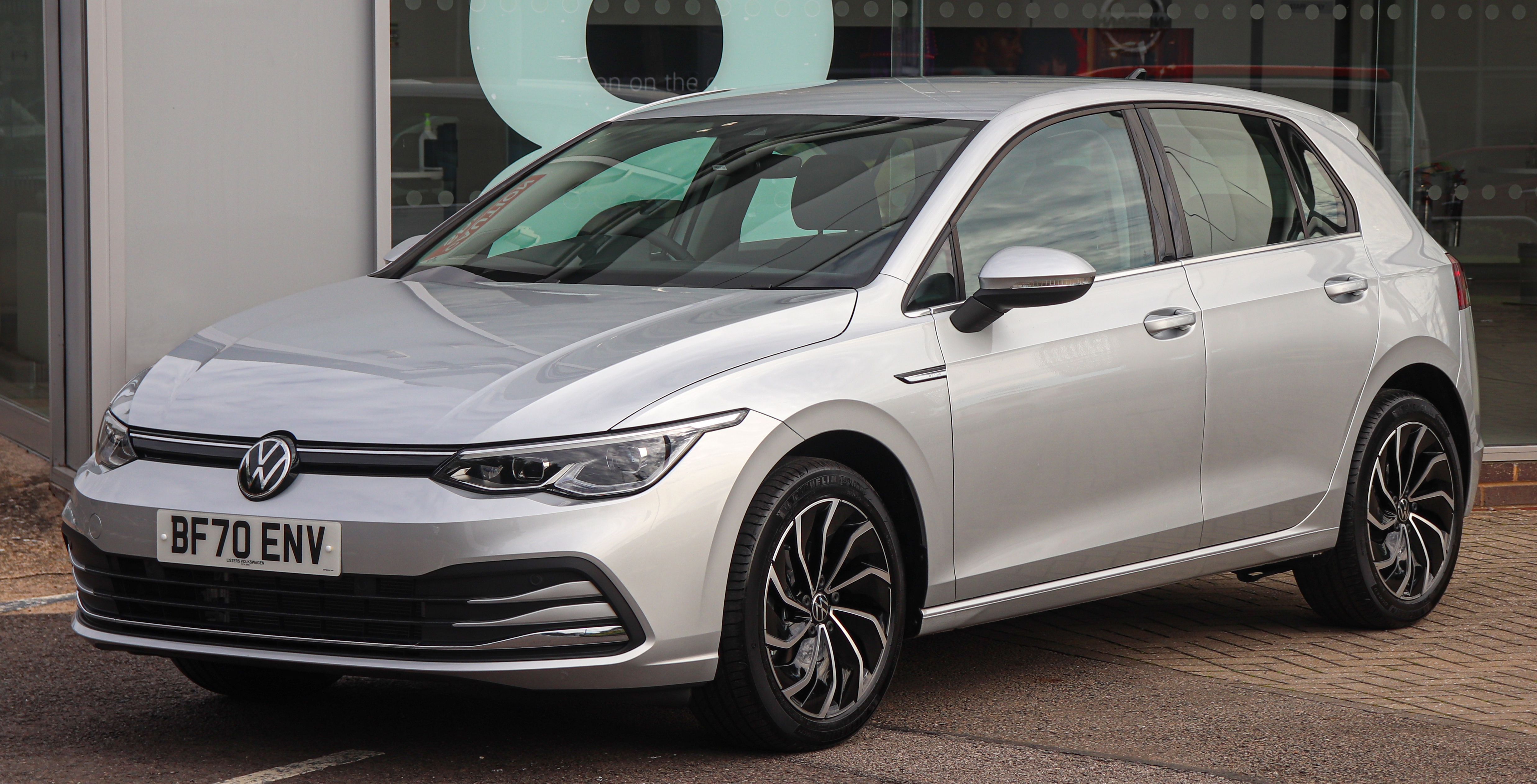
Volkswagen Vw Gti
"... got a lot of hate because it's straight from the VW GTI. And a lot of people say it's underpowered. I arg..."
The Golf is a compact car from Volkswagen. In the podcast, people talk about it getting criticism because some versions are seen as related to the GTI and because they may feel underpowered. The point is that the car’s reputation affects how people judge it.
The Volkswagen Golf is a mainstream compact car, and in the podcast it’s brought up because some people associate certain Golf versions with being less exciting or less powerful than expected. The context suggests the Golf gets “a lot of hate” and is criticized for its connection to a GTI and for feeling underpowered. It’s mentioned to illustrate how reputation and expectations can shape opinions about a car.
suspension
"because she hits for that left lane and goes to town because the Makon inspires so much confidence with the suspension and the brakes."
Suspension is the system of springs, dampers, and linkages that controls how a car rides and how its tires stay planted over bumps and during cornering. The speaker credits the Macan’s suspension (and brakes) for inspiring confidence, which is why they think the base engine isn’t the whole story.
brakes
"because the Makon inspires so much confidence with the suspension and the brakes."
Brakes are what slow the car down. The speaker is saying the Macan’s braking feel is part of why it feels confident and easy to drive quickly.
Brakes are the components that slow the car by converting motion into heat through friction at the pads/rotors. In this segment, the host pairs “suspension and brakes” to explain why the Macan feels confidence-inspiring—strong, predictable braking helps drivers trust the car at speed.
base model
"The base model Makon I think is reminiscent of the hot hatches... But the base model, the T's, they are plenty of power for tooling around."
“Base model” is the basic version of a car, usually with fewer upgrades than the higher trims. The speaker is saying you don’t automatically need the top engine to enjoy the car.
“Base model” means the lowest trim level in a model lineup, typically with fewer performance upgrades and less equipment than S/GTS variants. The host uses this to argue that the base Macan (and specifically the T) can still be a satisfying, “enough” choice for many drivers.
hot hatches
"The base model Makon I think is reminiscent of the hot hatches of the GTIs of back in the day. I had one as a loner and I just hopped in it."
“Hot hatches” are small hatchback cars that are tuned to be quicker and more fun to drive than regular versions. The speaker is saying the base Macan feels similar—nimble and engaging.
“Hot hatches” are performance-oriented versions of compact hatchbacks, usually tuned for quicker acceleration and sharper handling than a normal commuter hatch. The host compares the base Macan’s feel to the GTI-era hot hatch vibe, implying it’s lively and nimble rather than sluggish.

Porsche Panamera
"... I said, at one point, I think we had every model Panamera here at the office that Porsche has sent for some..."
The Panamera is Porsche’s four-door car, meaning it has room for more than just two people. It’s built to drive more like a sports car than a typical family sedan. The podcast mentions it because they had multiple Panameras available to look at or test.
The Porsche Panamera is Porsche’s four-door performance sedan, designed to blend daily usability with sports-car driving dynamics. It’s mentioned in the podcast as part of the lineup Porsche sends to an office, showing how common and varied the model range is. The context suggests it’s a notable part of Porsche ownership and evaluation in real-world settings.
daily driver
"And this is clearly a Porsche that is not only embraced by enthusiasts, but also by people who are looking for a very solid, well-performing, utilitarian SUV... A daily driver in sovereignty, giving them good performance and good value."
A “daily driver” is the car you use most days for normal life—work, errands, and commuting. Here, the point is that the Porsche SUV can handle everyday use.
A “daily driver” is a vehicle you use regularly for everyday errands and commuting, not a special-purpose car. In this segment, the host uses it to emphasize that the Macan/Cayenne choice is about real-world practicality as well as driving enjoyment.
McCons
"I think, three year, four year old McCons with, you know, if they say 30, 40,000 miles, CPO'd for like 35 to 40."
The transcript says “McCons,” but it doesn’t sound like a real car model name. The speaker is talking about a used car that’s certified pre-owned, and they mention the engine is shared across Audi and Volkswagen cars.
“McCons” appears to be a mis-transcription of a car model name. In this segment, the speaker immediately ties it to a CPO (certified pre-owned) purchase and then says the engine is shared with Audi and VW models, including the GTI, which strongly suggests a Volkswagen Group product rather than a Porsche.
Request an Explanation
Heard something you'd like explained? We'll add it to this episode.
Sign in to request explanations for terms you heard.
Want to learn more?
Browse our glossary for plain-English explanations of automotive terms, jargon, and concepts.
Help improve this episode
See something that's not quite right? Our annotations are AI-generated and can sometimes miss the mark. Click the flag icon on any annotation to suggest a correction.
1 community members have helped improve this episode.