
Dialed In Podcast: June 5th, 2026
About this episode
Dialed In Podcast (June 5th, 2026) bounces between shop updates and obsessive car-care. The host waits on a Brembo carbon-ceramic kit for a Tesla Model S, while a Honda Type R is “totally dialed” and repainted. The S2000 gets ozone-based odor remediation and build planning (including an OE Mugen intake and dyno talk). A new 1999 Civic Si Electron Blue Pearl joins the lineup with a B18C swap target near 210 wheel horsepower. Later, they compare Tesla driving feel, detail wash-bay plans, and discuss SEMA hall strategy.
In this episode of Dialed In, Matt shares updates on the growing fleet of project cars, including the Tesla Model S, Honda S2000 build, the E46 M3, and a newly acquired Civic Si. He also talks about overcoming driving anxiety, getting off medication, and reaching a point where he's driving more than he has in over a decade. Plus, Matt dives into the future of Obsessed Garage, upcoming product launches, the new outdoor wash bay project, and the vision that's shaping the next chapter of the company.
debadging
"I was working on taking the debadging, the test, I got sticky crap all over my fingers. But Model S needs to get polished and coated."
Debadging means taking off the brand/model stickers on a car. People do it to make the car look cleaner, but you have to remove the glue carefully so you don’t hurt the paint.
Debadging is removing factory badges and emblems from a car’s body to create a cleaner, more minimalist look. It’s usually done by carefully removing the badge and adhesive residue so the paint isn’t damaged.
carbon ceramic kit
"Let's see. I ordered the carbon ceramic kit. And so they're Brembo caliper and ceramic rotors and pads."
A carbon ceramic brake kit is an upgrade to the car’s brakes using special ceramic rotors. It’s meant to resist heat and fade better when you drive hard or brake repeatedly.
A carbon ceramic kit refers to a brake upgrade using carbon-ceramic brake rotors (and usually matching pads and calipers). Carbon-ceramic brakes can handle high heat better than conventional setups and are often chosen for track use or aggressive driving.
Brembo
"I ordered the carbon ceramic kit. And so they're Brembo caliper and ceramic rotors and pads. And I haven't seen anything from them yet."
Brembo makes high-performance brake parts. In this case, the host is using Brembo calipers with ceramic brake components.
Brembo is a well-known performance brake brand that supplies calipers and brake components to many sports cars and racing programs. Here, the host is using Brembo calipers as part of a carbon-ceramic brake upgrade.
ceramic rotors
"And so they're Brembo caliper and ceramic rotors and pads. And I haven't seen anything from them yet. Just check my tracking file here."
Ceramic rotors are special brake discs made from ceramic material. They’re designed to handle heat better, especially if you brake hard a lot.
Ceramic rotors are brake discs made from ceramic composite materials rather than cast iron. They’re valued for heat resistance and reduced brake fade, but they can require specific pads and careful bedding-in to perform well.

Honda Type R
"So anyway, as I was saying, my type R is down getting painted"
Honda’s Type R is a high-performance version of a Honda, built to feel more “race car” than normal models. Here, the host is saying theirs is in the shop getting repainted, usually to fix damage or refresh the look.
The Honda Type R is a performance-focused trim known for track-oriented tuning and strong driver feedback. In this segment, the host says their Type R is down getting painted, which is a common bodywork step when refreshing or repairing exterior surfaces.

BMW E46
"Let's see, I got my brakes for my E46 I need to put on."
The BMW E46 is a specific generation of the BMW 3 Series that a lot of car fans like. The host is talking about brake work on it, which is a normal part of keeping an older enthusiast car running well.
The BMW E46 is the 3 Series generation (late-1990s to early-2000s) that’s especially popular with enthusiasts for its balanced chassis and strong aftermarket support. The host mentions getting brakes for their E46, which points to ongoing maintenance and upgrades on a platform many owners keep for years.

Tesla Model S
"as soon as I finish polishing and getting the model S on the road."
The Tesla Model S is an electric car. The host is saying they’re working to get it ready so they can drive it again.
The Tesla Model S is an all-electric luxury sedan known for strong performance and long-range capability. The host says they’re getting the Model S on the road, which suggests it’s currently off the road for work or preparation before daily use.

Honda S2000
"My S2000 is down at LHT... they're building my exhaust right now, putting the header on. We did the brakes, suspension, all of that."
The Honda S2000 is a lightweight Honda sports car known for revving really high and feeling fun to drive. The host is describing shop work on it—an exhaust setup (including a header) and suspension/brake work.
The Honda S2000 is famous for its high-revving naturally aspirated engine and lightweight, balanced handling—an enthusiast icon. Here, the host says it’s at LHT for exhaust work, including installing a header and doing brakes and suspension, plus more suspension parts planned.
header
"they're building my exhaust right now, putting the header on."
A header is an exhaust component that collects exhaust gases from the engine and routes them into the rest of the exhaust system. Aftermarket headers are often used to improve exhaust flow and can change the engine’s sound and sometimes its power characteristics.
upper control arms
"So I'm probably gonna find some different, some different upper control arms."
Upper control arms are suspension parts that connect the wheel to the car. If they’re worn or you’re upgrading the suspension, replacing them can help the wheels sit and move correctly for better handling.
Upper control arms are suspension links that help locate the wheel and control its movement and alignment. Swapping them can be part of correcting wear, restoring proper geometry, or improving handling on a suspension build.
Mugen intake
"I did get an OE original Mugen intake. We'll just kind of see. If I love the air box the way it is, I'll just leave it alone."
An intake is the path air takes to get into the engine. Mugen is a well-known performance brand, and the host is using a Mugen intake to see if it improves how the car breathes without needing to change everything else.
An intake (air intake system) controls how air flows into the engine, which can affect throttle response and—depending on the setup—power. An OE original Mugen intake is a Mugen-branded part intended to match a more performance-oriented airflow design, and the host is deciding whether to keep the stock airbox configuration or change it.
air box
"If I love the air box the way it is, I'll just leave it alone. But the car diner to 208 horsepower at the wheels"
The air box is where the air filter sits and where air is guided before it goes into the engine. Changing it can change how the engine feels, so the host is deciding whether the current setup is already good.
The air box (airbox) is the enclosure that houses the air filter and shapes airflow into the intake system. Its volume and internal design can influence intake resonance and how consistently the engine gets the right airflow across different RPM ranges.
wheels
"But the car diner to 208 horsepower at the wheels and it'll probably do somewhere around high 230s, low 240s."
“At the wheels” means the power measured on a dyno after the drivetrain has done its job. It’s a practical number because it shows what the tires are actually getting.
“At the wheels” refers to dyno-measured horsepower at the drivetrain output, after losses through the transmission and differential. It’s commonly used by enthusiasts because it reflects what the car actually delivers to the ground, not just engine output.
stroker kits
"So the F series, the F22, John's cracked those open and done stroker kits and cams and those engines just don't,"
A stroker kit is a modification that makes the engine’s internal dimensions change so it can move more air/fuel. It’s often used to make more torque, but it’s not cheap and it has to be done carefully to avoid reliability problems.
A stroker kit increases engine displacement by changing crankshaft stroke (often with matching pistons/connecting rods). It can raise torque and change the engine’s character, but it also adds complexity and cost, and can affect reliability if the rest of the engine isn’t set up correctly.
cams
"John's cracked those open and done stroker kits and cams and those engines just don't,"
Cams are parts inside the engine that control when the valves open and how much they open. Changing them can change where the engine makes power—like making it pull harder at higher RPMs.
Cams (camshafts) control valve timing and lift, which strongly affects how an engine makes power across the RPM range. In performance builds, cam selection is a major part of matching airflow and fuel delivery to the engine’s intended use.
Vortex Supercharger
"So I learned my lesson on that car and I went too far with the Vortex Supercharger"
A supercharger forces extra air into the engine so it can make more power. The host is saying they pushed their setup too hard with a Vortex supercharger and learned from it.
A supercharger is a forced-induction device that increases engine power by pushing more air into the cylinders. The host mentions the Vortex Supercharger as a modification they went “too far” with, implying they learned that aggressive boost/power targets can create reliability or drivability issues if supporting systems and calibration aren’t handled properly.
naturally aspirated
"You know, I want a naturally aspirated car [359.1s] with a really cool interior and nice wheels."
Naturally aspirated means the engine doesn’t use a turbo or supercharger. It breathes in air using normal engine suction.
A naturally aspirated engine makes power without a turbocharger or supercharger. Instead, it relies on atmospheric pressure and engine design to pull air into the cylinders.
shave the fenders
"So I do have a set of bronze Mugen and black Mugen wheels [368.2s] and we'll have to shave the fenders [370.5s] and do all that kind of stuff."
“Shaving the fenders” means removing material from the fender edges to create clearance. It’s commonly done when wheels/tires sit wider or sit closer to the body than stock.
door cards
"but I took the seats out, door cards out, [387.3s] sun visors off, carpeting out."
Door cards are the interior panels you see on the inside of the door. Taking them off helps you reach the parts behind the trim.
Door cards are the interior trim panels on the inside of car doors. Removing them gives access to wiring, speakers, window regulators, and the rest of the door’s inner structure.
sun visors
"door cards out, [387.3s] sun visors off, carpeting out. [389.9s] So we took the entire interior parts center console out."
Sun visors are the flip-down panels that block sunlight. They can be removed when you’re taking the interior apart for deeper cleaning.
Sun visors are the fold-down panels above the windshield used to block glare. Removing them is a common step when stripping interior trim for cleaning or odor remediation.
center console
"So we took the entire interior parts center console out. [393.7s] I took the leathers off of the seats."
The center console is the part between the seats with controls and storage. Taking it out helps you reach things underneath the interior.
The center console is the structure between the front seats that typically houses controls, storage, and sometimes the shifter/armrest area. Removing it allows access to wiring and mounting points under the interior trim.
Ozone machine
"I opened up the car capsule, [421.3s] I put the Rainbow 2000, the Ozone machine,"
An ozone machine makes ozone gas that can help eliminate stubborn smells. It’s usually used when the car is empty, because the gas isn’t safe to breathe.
An ozone machine generates ozone gas to break down odor-causing compounds in enclosed spaces. It’s often used for “deep clean” odor removal, but it must be used carefully because ozone is irritating and can be harmful in occupied areas.
causticness
"And then we can run some tests and see what is the actual causticness of it and how much damage, how long would it take to damage something?"
“Causticness” means how aggressively a chemical can burn or damage things. The host is basically saying they tested how strong it is and how long it would take to cause damage.
“Causticness” refers to how strongly a chemical can react with and damage materials—often by being corrosive or harsh on surfaces. The host is describing testing how damaging the chemical is and how long it would take to cause harm if used in a real-world situation.
overnight
"Could you run it overnight in your car or something like that if you really needed to?"
Using a chemical “overnight” is a practical way to test worst-case exposure time—leaving it on a surface long enough to see whether it causes discoloration, corrosion, or other damage. In this segment, the host is considering whether extended contact time would be safe for a car interior or materials.

99 Civic SI
"But at 99 Civic SI, Electron Blue Pearl, [665.0s] so the blue popped up and I bought it"
They’re talking about a 1999 Honda Civic Si. It’s a common car for enthusiasts to modify because there are lots of parts available.
The host is buying a 1999 Honda Civic Si, which is part of the 6th-generation Civic lineup. This is a popular enthusiast platform because it’s relatively light and has a strong aftermarket for suspension, wheels, and engine swaps.
Electron Blue Pearl
"But at 99 Civic SI, Electron Blue Pearl, [665.0s] so the blue popped up and I bought it"
Electron Blue Pearl is a specific Honda paint color. It’s a bright blue that looks especially striking in the sun.
Electron Blue Pearl is a Honda factory paint color. It’s known for its vivid blue tone that can “pop” in sunlight, which is why the host specifically calls out that the color is what caught their eye.
TE37s
"So that car, I'm gonna do some SR3 Ricaros in blue [686.2s] and I'm gonna find some TE37s in gun metal to put on it."
TE37s are a popular brand/model of aftermarket wheels. People like them because they’re strong and relatively light, and they give the car a classic enthusiast style.
TE37s refers to the Rays Engineering TE37 wheel line, a well-known lightweight, motorsport-inspired wheel. Enthusiasts choose TE37s for their strength-to-weight and because they’re a common “look” for Honda builds.
SR3 Ricaros
"So that car, I'm gonna do some SR3 Ricaros in blue [686.2s] and I'm gonna find some TE37s in gun metal to put on it."
“SR3” refers to Recaro’s SR3 seat model, which is a motorsport-style bucket seat. The host is planning to swap to these seats to improve driver support and reduce weight compared to many stock seats.
defenders
"We'll, you know, we'll shave the defenders on that as well. [696.6s] I'll do KWV3s."
They’re talking about trimming the parts around the wheel so the new wheels/tires don’t rub. It’s a common mod when you change wheel fitment.
In this context, “defenders” likely means the wheel-arch trim or fender liners/guards that can interfere with tire fitment. The host says they’ll “shave” them, which is a common step when fitting wider or different-offset wheels/tires to prevent rubbing.
KWV3s
"[696.6s] I'll do KWV3s. [699.0s] So I won't do the same thing I did, you know,"
KW V3s are aftermarket suspension parts (coilovers) from KW. They let you lower the car and fine-tune how it rides and handles.
“KWV3s” is almost certainly KW’s V3 coilover suspension setup (KW is a German suspension brand). Coilovers let you adjust ride height and damping, which is why they’re a go-to upgrade for track-focused or stance/handling-balanced builds.
B18C swap
"but I'm gonna do a B18C swap on that again. [716.8s] And we'll do a little bit more aggressive cams and tuning."
A B18C swap means putting a different Honda engine (the B18C) into the car. People do it to make the car faster and easier to tune than the stock setup.
A “B18C swap” means replacing the car’s original engine with Honda’s B18C engine (from the Integra Type R family). Swaps like this are done to get a more performance-oriented engine and a stronger tuning/parts ecosystem for Civic builds.
210 wheel horsepower
"So it'll be target right on 210, you know, 210, [723.5s] 5, 210 wheel horsepower."
Wheel horsepower is how much power the car actually delivers to the wheels. It’s usually measured on a dyno, and it’s a practical number for comparing builds.
“Wheel horsepower” is the engine’s power measured at the wheels after drivetrain losses, typically on a dyno. Targeting ~210 wheel horsepower is a common way enthusiasts talk about real-world output from a specific build rather than just advertised crank horsepower.
CSL XO
"So I would coat it with CSL XO [791.3s] and I would do that on all the matte parts [793.7s] and the wheels and the whole thing."
CSL XO is likely a spray-on or wipe-on protective product used when detailing a car. People use it to help keep the paint and wheels cleaner and easier to wash.
CSL XO sounds like a coating product used for detailing, applied to surfaces like matte panels and wheels. In practice, people use it to add a protective layer and improve how the finish resists dirt and water.

Tesla Model 3
"...hand. SK80, Saurus says, for the agile lip on the Model 3, did you use double-sided tape"
The Tesla Model 3 is an electric car that uses a battery instead of a gas engine. It’s popular partly because it’s modern and has lots of electronics. The episode is talking about adding an exterior accessory and how it was attached.
The Tesla Model 3 is a compact electric sedan designed to be more accessible than larger Tesla models while still offering strong performance and a tech-heavy interior. It’s frequently discussed because owners customize small exterior details and because many functions are managed through software. The podcast mention focuses on a practical question about installing an “agile lip” accessory and whether double-sided tape was used.
double-sided tape
"SK80, Saurus says, for the agile lip on the Model 3, [821.0s] did you use double-sided tape [822.6s] and then a couple of screws on the tabs on the underside?"
Double-sided tape is tape with adhesive on both sides. Car people use it to attach parts like trim or lips without drilling holes, but it only works well if the surface is cleaned properly.
Double-sided tape in automotive use is typically a high-strength adhesive tape meant to bond trim or aero pieces to painted surfaces. It’s often used to avoid drilling, but the tape choice and surface prep matter a lot for long-term adhesion.
VHB tape
"And so I bought a bunch of my own VHB tape [846.4s] and so I taped the same thing they did [849.6s] that so the extreme corners, [852.4s] I taped and added two layers of tape on the front."
VHB tape is a very strong double-sided tape. It’s used to stick car parts on securely without needing traditional fasteners.
VHB tape is a brand-name class of high-bond acrylic foam tape used to attach trim and aerodynamic parts without drilling. It’s popular in automotive detailing and exterior mods because it can hold strong, even with vibration and temperature changes.
3M adhesion promoter
"I bought some 3M adhesion promoter. So, and make sure that everything was clean."
A 3M adhesion promoter is a surface-prep chemical used to improve how well an adhesive or coating bonds to a substrate. It’s commonly used before installing trim, protectors, or other bonded parts so the attachment holds up better to heat, moisture, and vibration.
self-tapping type screws
"I didn't have the screws so I just drove two self-tapping type, type screws up through the bottom, right through the plastic and it's bulletproof."
Self-tapping screws cut their own threads as they’re driven in, so you can fasten into plastic or thin metal without pre-tapping. In this segment, the host uses them to secure a plastic piece from underneath, describing it as “bulletproof.”
lip protector underneath
"So you might wanna buy that, what's that stuff that IND sells? That's the lip protector underneath because it's gonna get scraped."
A lip protector underneath is a sacrificial piece (often plastic or rubber) that helps protect the front lip or lower body trim from scraping. The host connects it to lowering the car—when the car sits closer to the ground, the lip is more likely to hit curbs/ramps and get damaged.
IND
"So you might wanna buy that, what's that stuff that IND sells? That's the lip protector underneath"
IND is referenced as a vendor that sells an underneath lip protector. In enthusiast circles, IND commonly supplies aftermarket appearance and protection parts for Honda/Acura platforms.
Civic Type R
"Recaro SR3s, you know, Civic Type R seats and Integra Type R seats in it. And there's, I found some set on eBay"
The Honda Civic Type R is a sporty, track-oriented version of the Civic. Here, the host is talking about upgrading the seats and planning an engine build for their Type R.
The Honda Civic Type R is a front-wheel-drive hot hatch built for track-focused performance, known for its high-revving turbocharged engine and aggressive chassis tuning. In this segment, it’s specifically mentioned as the car that will get Recaro SR3 seats and a planned B18-based engine setup.

Acura Integra
"Recaro SR3s, you know, Civic Type R seats and Integra Type R seats in it. And there's, I found some set on eBay"
The Acura Integra Type R is a sporty, enthusiast-loved version of the Integra. In this segment, it’s part of the seat and car plans the host is considering.
The Acura Integra Type R is a performance-focused compact from Acura’s lineup, famous among enthusiasts for its high-revving character and track-ready reputation. The host mentions Integra Type R seats and later says they want a USDM Integra Type R, tying it to their broader plan for a B18-style build.
Cold Air Intake
"We'll do Cold Air Intake, Bees B18, you know, with cammed, you know, built B18. We will do,"
A cold air intake is a modification that helps the engine breathe cooler air. Cooler air can make the engine run better and sometimes adds a bit of power.
A cold air intake is an aftermarket intake system designed to pull cooler, denser air into the engine. Cooler intake air can improve combustion and throttle response, and it’s commonly paired with other engine mods when building a Honda for more power.
B20
"I wonder if we do a slight stroker and make it like a B20. Do like the B18."
“B20” refers to a larger-displacement configuration within Honda’s B-series family, typically achieved by stroker-style changes or specific parts combinations. The host is using it as a target outcome—making their B18 behave like a B20 in terms of displacement.
waterless, rinseless wash
"This is a new built hammer, waterless, rinseless wash. I can't really think of anything else that's of interest that I'm looking to change."
A waterless, rinseless wash cleans your car using products that loosen dirt without needing a lot of water. It’s often used when you want a quicker clean with less mess and less water.
A waterless, rinseless wash is a car-cleaning method that uses special chemicals to lift dirt without needing a full rinse. It’s popular for enthusiasts because it can reduce water usage and help minimize the risk of introducing new scratches compared with some traditional wash routines.
built hammer
"I mean, the new built hammer, which should be here any minute. This is a new built hammer, waterless, rinseless wash."
“Built Hammer” sounds like the name of a car-cleaning product. The host is saying they’re getting ready to use it for detailing.
“Built Hammer” appears here as the name of a detailing product the host is trying. In car-care circles, product names like this usually refer to specific formulas for tasks like washing, decontamination, or drying.

Tesla My Model
"...am like dangerously close, I just drove up 441 in my Model 3 with no, no, in like 9 a.m. traffic,"
wash bay
"But I paid the deposit to build the wash bay out back. The Ritech door deposit's paid. And so the Ritech door is coming in about five weeks..."
A wash bay is a specific spot—like a small car-wash area—where you can clean vehicles. It’s useful if you plan to wash cars often or test different cleaning products.
A wash bay is a dedicated area for washing vehicles, often with plumbing, drainage, and sometimes specialized equipment. In enthusiast contexts, it’s commonly used to support frequent detailing and product testing in a controlled setup.
Ritech door
"The Ritech door deposit's paid. And so the Ritech door is coming in about five weeks. And then the outdoor wash bay probably in about eight weeks."
“Ritech” sounds like the company making the door for the wash bay. The door is important because it needs to work well with a wet, frequently used space.
“Ritech” appears to be a brand of garage/industrial doors. If you’re building a wash bay, the door choice matters for fit, insulation, durability, and how well it seals against water and weather.
Slon front chassis reinforcement
"I have the Slon front chassis reinforcement to do. I've got the Slon rear brace to do."
Front chassis reinforcement is a structural upgrade intended to reduce flex and improve rigidity. On an E46 convertible, added bracing can help the body stay more stable, which can translate into sharper steering feel and better suspension effectiveness.
Slon rear brace
"I've got the Slon rear brace to do. I'm still waiting on my cash or exhaust"
A rear brace is another chassis-stiffness component that works with front reinforcement to reduce body movement. Together, front and rear bracing can improve how the suspension loads the chassis, especially on a convertible where torsional rigidity is typically lower than a coupe.
spacers
"Barry was waiting on a couple of spacers or something like that from 3DM to get my suspension."
Spacers are small parts that move the wheels slightly outward. People use them to fit the wheels better or get the look/clearance they want, but they should be installed correctly.
Wheel spacers are hardware used to move the wheel mounting position outward, changing track width and wheel fitment. They’re often used to correct clearance issues or achieve a desired stance, but they can affect bearing loads and require proper installation.
3DM
"Barry was waiting on a couple of spacers or something like that from 3DM to get my suspension."
3DM sounds like a parts supplier the host is using for suspension-related items. The key point is that they’re providing the specific hardware needed to get the suspension installed.
3DM is referenced as a supplier of suspension-related parts for the E46 build. In enthusiast circles, vendors like this typically provide fitment-specific components (like spacers or hardware) that make suspension swaps work correctly.
wheel tire holder that pivots swivels
"you have a wheel tire holder that pivots swivels and you use it for detailing and coating with the ceramic coating."
This sounds like a stand or rack for wheels that can rotate and swivel. It makes it easier to clean and coat the whole wheel evenly without constantly moving it by hand.
A wheel/tire holder that pivots and swivels is a detailing tool used to position wheels at convenient angles while cleaning or applying coatings. The rotating motion helps you reach all sides evenly for more consistent prep and application.
ceramic coating
"you have a wheel tire holder that pivots swivels and you use it for detailing and coating with the ceramic coating."
Ceramic coating is a protective layer you apply to your car’s paint. It helps keep the paint cleaner and easier to wash because grime and water don’t stick as much.
Ceramic coating is a liquid polymer (often silica-based) applied to a car’s paint to form a protective layer. It’s meant to improve chemical resistance and make dirt and water bead off more easily than bare paint.
Obsess Engineering
"And so we're going to make our own version. It's on the list with Obsess Engineering. So we're going to have something like that built here"
Obsess Engineering is referenced as the engineering effort behind the planned comparable wheel/detailing solution. In this context, it’s a brand/company name tied to designing and building the tool they want to produce.
water seals
"Jeff Jr. says, will you be stocking any parts [1369.7s] of the Active 2.0, especially the water seals? [1372.5s] Yeah, we should have parts."
Water seals are rubber or gasket parts that stop coolant or water from leaking. If they fail, you can lose cooling fluid and the engine can overheat.
In an automotive context, “water seals” are gaskets/seals designed to keep coolant or water-based fluids from leaking. They’re especially important on cooling-system components and any part that sees constant wet operation and pressure cycling.
LID48
"Spencer says, after keeping an eye out for used LAD48s, [1388.0s] I've given up and I think I'm okay [1385.9s] to spend money on the new ones. [1388.0s] What's the difference between the LID5 [1389.6s] or PSB options versus the LID48s? [1394.9s] So LID5 is a five inch driver, one inch tweeter. [1407.3s] The LID48 is a three way design."
“LID48” refers to a speaker setup with multiple speaker sizes working together. The idea is that different parts handle different frequencies, so you get more complete sound and usually more volume.
In the LID speaker line, “LID48” is described as a three-way design, meaning it splits sound duties across multiple driver types. The host explains it uses a three-inch woofer, a mid-bass driver, and a tweeter, plus extra amplification channels to power the mid-bass driver—aiming for fuller range and more output.
LID5
"What's the difference between the LID5 [1389.6s] or PSB options versus the LID48s? [1394.9s] So LID5 is a five inch driver, one inch tweeter. [1399.3s] Then the LID7 is a seven inch driver, one inch tweeter."
“LID5” is a speaker option that uses a five-inch speaker for the main sound and a one-inch tweeter for the high notes. It’s a simpler setup than the three-way LID48.
“LID5” is described as a two-driver configuration: a five-inch driver paired with a one-inch tweeter. Compared to the LID48’s three-way layout, this implies fewer dedicated driver roles and typically a narrower “full range” coverage.
LID7
"So LID5 is a five inch driver, one inch tweeter. [1399.3s] Then the LID7 is a seven inch driver, one inch tweeter. [1403.0s] The LID8 is an eight inch driver, one inch tweeter."
“LID7” is a speaker option with a seven-inch woofer for the main sound and a one-inch tweeter for highs. It’s positioned as a step up from the LID5.
“LID7” is described as a seven-inch driver with a one-inch tweeter. In the host’s comparison, it sits between the smaller LID5 and the more complex LID48 three-way design.
LID8
"Then the LID7 is a seven inch driver, one inch tweeter. [1403.0s] The LID8 is an eight inch driver, one inch tweeter. [1407.3s] The LID48 is a three way design."
“LID8” is a speaker option with an eight-inch woofer and a one-inch tweeter. It’s meant to produce strong midrange and bass compared with smaller driver sizes.
“LID8” is described as an eight-inch driver paired with a one-inch tweeter. In the host’s lineup, it’s the larger two-driver option before the LID48’s three-way design.
three way design
"The LID48 is a three way design. [1410.0s] So it has a three inch woofer. [1412.9s] So it has a mid base driver, one inch tweeter."
A “three-way design” in car audio splits the sound spectrum into three frequency ranges, each handled by a different driver type (for example, woofer, mid-bass, and tweeter). This can improve clarity and output because each driver is optimized for its frequency band.
amplification
"and they have an extra channel [1424.3s] of amplification to power that mid base driver. [1427.9s] And so it's just a more complete, [1430.9s] fuller range speaker, which it just has more output."
“Amplification” here means the power that makes the speakers play louder and with more control. More channels can mean the system drives each speaker part more effectively.
In this context, “amplification” refers to the power electronics that drive the speaker drivers. The host notes the LID48 has an extra amplification channel to power the mid-bass driver, which supports higher output and fuller-range performance.

TR7
"The one that I have with the digital display is a TR7 DR7. I don't notice any difference,"
The TR7 is an older sports car. In this episode, the speaker is talking about a version with a digital display and whether it feels different from another setup. They’re basically saying they don’t notice a difference.
The TR7 is a classic British sports car, and in the podcast it’s specifically referenced as having a digital display setup (“TR7 DR7”). The discussion suggests the speaker is comparing or checking whether there’s a noticeable difference between configurations. This kind of mention is common when owners are troubleshooting, upgrading, or verifying how a particular instrument setup behaves.
dual SF7004s
"and I'm doing the dual SF7004s, [1533.0s] one in electric and one in gas,"
They say they’re using two of something called “SF7004s.” It sounds like a specific device or setup, but this snippet doesn’t explain what it is.
“SF7004s” appears to be a specific, named device or setup the host is using in duplicate (“dual”). The segment doesn’t define what SF7004 is, so the listener would need context from earlier in the episode or a product link to understand what it does.
Maxflow M-Pro
"So the Maxflow M-Pro with the new digital tuning [1588.2s] is all set up."
“Maxflow M-Pro” sounds like a specific device they’re using to adjust settings on a car. They say it’s set up and ready, but this snippet doesn’t explain exactly what it changes.
“Maxflow M-Pro” is a named product the host is using for “digital tuning.” In this segment, it’s presented as already set up, implying it’s part of the process for configuring or calibrating a vehicle system (likely related to engine management or performance settings).
digital tuning
"So the Maxflow M-Pro with the new digital tuning [1588.2s] is all set up."
“Digital tuning” means using a computer to change how the car’s electronics run. It can adjust things like how the engine responds, usually to improve how the car drives.
“Digital tuning” refers to using software and electronic calibration tools to adjust how a vehicle’s control systems behave. In practice, it often means changing engine/drive parameters (such as fueling and throttle response) to match a goal like performance, drivability, or compatibility with modifications.
Liquid Elements T2000
"Let's see, Liquid Elements T2000. [1842.3s] I don't see it available."
Liquid Elements T2000 is a specific car-care product. The host is basically saying they’re looking for that exact product but can’t find it available.
Liquid Elements T2000 is a specific detailing product (a chemical) used for paint or surface preparation/finishing. In this segment, it’s mentioned as a particular option the host is checking availability for.
Rupes
"So if you want quartered 3-inch, [1854.3s] I'd probably buy the Rupes of the Griots."
Rupes is a brand that makes car detailing tools. The host is recommending it if you want a particular size polishing setup.
Rupes is a well-known detailing brand, especially for paint-polishing machines used for correction and finishing. Here, it’s suggested as the likely choice if the listener wants a specific “3-inch” polishing setup.
Griots
"So if you want quartered 3-inch, [1854.3s] I'd probably buy the Rupes of the Griots."
Griot’s is a car-detailing brand that sells products and tools for polishing paint. The host is comparing it to another brand for a specific polishing setup size.
Griot’s Garage (often shortened to “Griots”) is a detailing brand known for polishes, pads, and polishing machines. In this segment, it’s mentioned as an alternative to Rupes for a “3-inch” polishing setup.
cordless
"If you want to go cordless, [1860.9s] you could do Bosch or America."
“Cordless” means the tool runs on a battery instead of plugging into the wall. It’s mainly about convenience while you’re polishing.
In detailing, “cordless” refers to battery-powered polishers that don’t require a plug. Cordless tools are often chosen for convenience and mobility, especially when working around a garage or driveway.
Bosch
"If you want to go cordless, [1860.9s] you could do Bosch or America. [1863.7s] I'm gonna be using the Bosch polishers"
Bosch makes power tools, and in this case the host is using Bosch polishers for car paint. They’re planning to polish the whole Tesla Model S with them.
Bosch is a major tool brand, and here it’s referenced for “polishers” used in paint polishing. The host says they’ll use Bosch polishers to polish the entire Tesla Model S.
one-up
"Hugh says, looking for a new bike rack, [1898.8s] quick R or one-up, why did you decide to go with the quick R? [1904.5s] I wanted a single bike."
OneUp makes bike racks. The host already has a dual-bike OneUp rack, but they wanted something configured for just one bike.
OneUp is a bike rack brand, referenced here in the context of choosing between rack systems. The host says they already have a OneUp dual-bike setup and wanted a single-bike rack instead.
quick R
"Hugh says, looking for a new bike rack, [1898.8s] quick R or one-up, why did you decide to go with the quick R?"
Quick Rack is a brand of bike rack. The host chose it because they only wanted to carry one bike and keep it as light as possible for their Tesla.
Quick Rack (often spoken as “quick R”) is a brand/model line of bike racks. The host is explaining why they chose that rack for carrying a single bike on their Tesla.
dry mode
"I don't think the dry mode is going to be for you. [2099.8s] It's only for dirty cars used like other rinse lists."
“Dry mode” is a car-wash setting that changes how the system rinses and/or dries the vehicle, typically aiming to reduce water spotting and streaking. In detailing terms, it’s usually meant for cars that aren’t heavily soiled, because it’s not designed to do the heavy lifting of removing grime.
GTeknik
"It's very good, but GTeknik might be better. [2106.6s] Interesting."
GTeknik sounds like a car-wash or detailing product/service. The speaker is basically saying one setup might work better than another depending on how dirty the car is.
GTeknik is referenced as an alternative option to the “Built Hammer” rinse list, implying it’s a product or service used for car washing/detailing routines. The key point is that different rinse-list presets can change how well the process works for different levels of dirt.

Audi R8
"Have you seen the new R8 successor? [2135.8s] It definitely looks interesting."
The Audi R8 is a famous supercar. When someone says “R8 successor,” they mean the next new version that will replace it. It matters because it hints at what Audi will do next with that kind of supercar.
The Audi R8 is a mid-engine supercar, and the “R8 successor” refers to the next-generation replacement for that model line. Audi’s next R8 is a big deal because it typically signals the brand’s direction on mid-engine design and powertrain choices.
Stormtrooper look
"Stormtrooper look always, Stormtrooper look always looks good or great on them. Yeah, I really like it."
“Stormtrooper look” is just a nickname people use for a sleek, clean, mostly light-colored futuristic style. They’re saying that look looks great on these Teslas.
“Stormtrooper look” is a fan nickname for the clean, bright, minimalist white/gray styling that can make a car resemble the armor of Star Wars stormtroopers. Here it’s used to describe the visual design of the Tesla interior/exterior theme.
fit and finish
"The only fit and finish like on the 2022, there's like buttons on the bottom, like on where the cell phone tray is for like drive and park."
“Fit and finish” means how neatly things are put together and how nice the materials and details feel. They’re using it to talk about differences in the Tesla interior.
“Fit and finish” describes how well interior or exterior parts line up (fit) and how high-quality the surfaces and assembly feel (finish). In this segment, it’s used to compare how the Tesla’s interior controls and trim feel between model years.
drive and park
"like on where the cell phone tray is for like drive and park. I guess that was the thing in the original Tesla."
“Drive” and “Park” are the two main modes that tell the car whether it should move or stay locked. They’re talking about where those controls/buttons are located inside the Tesla.
“Drive” and “Park” are the transmission gear states that control whether the car is ready to move or locked in place. The speaker is pointing out that Tesla’s 2022-era control/buttons for these states are located near the center console/phone tray area.
performance seats
"I'm taking it down to get the performance seats put in next week. So I bought those. It's so funny listening to Tesla people on the forums,"
Performance seats are aftermarket (or upgraded) seats meant to keep you more firmly in place when you drive hard. They’re getting new seats installed to improve support.
“Performance seats” are upgraded seats designed to hold you better during spirited driving, often with more supportive bolsters and sometimes different cushioning or materials. The speaker says they’re taking the car in to have performance seats installed next week.

Chrysler 300
"Maybe they're coming from, I don't know, Chrysler 300 or something, where they got some big bubbly bench seat or something."
The Chrysler 300 is a larger, older-school sedan. They’re using it as an example of a car whose seats might feel softer or bulkier compared with Tesla seats.
The Chrysler 300 is a full-size sedan known for a more traditional, cushioned “bench-like” feel in many trims. The speaker uses it as a comparison point for why some Tesla owners might find Model 3 seats uncomfortable.
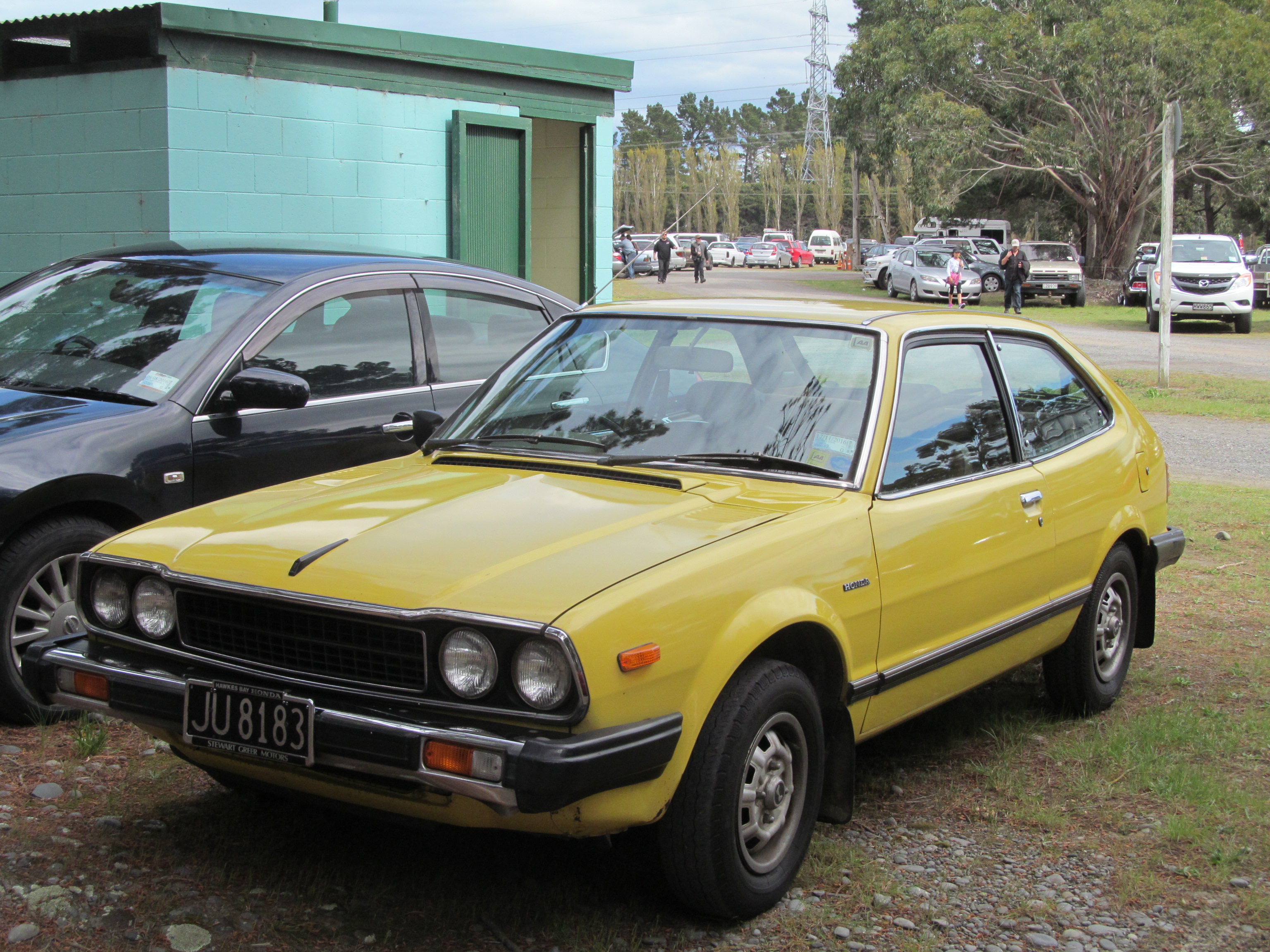
Honda Accord
"like my ex-business partner at Merrill Lynch [2241.2s] was always complaining about like, [2242.5s] his Honda Accord seats being uncomfortable."
The Honda Accord is a very common everyday family car. Here it’s mentioned because someone complained that its seats felt uncomfortable.
The Honda Accord is a mainstream midsize sedan known for being comfortable and practical for everyday driving. In this segment, it’s used as an example of a car whose seats someone found uncomfortable, contrasting with the host’s own experience.
dehumidifier
"“what dehumidifier for a three car garage would you choose?”"
A dehumidifier is a machine that pulls extra moisture out of the air. In a garage, that can help prevent rust and damp smells, especially when cars are parked for long periods.
A dehumidifier removes moisture from the air, which helps prevent condensation and musty odors in enclosed spaces like garages. In car-enthusiast use, lowering humidity can reduce corrosion risk and help keep stored cars and tools in better condition.
temporary PPF
"“any experience with track armor, temporary PPF?”"
PPF is a clear protective film that helps keep your car’s paint from getting chipped. “Temporary PPF” is a removable version meant for shorter-term protection, but it can be tricky to remove without residue.
PPF (paint protection film) is a clear protective layer applied to a car’s paint to guard against chips and light abrasion. “Temporary PPF” refers to short-term, removable versions that are easier to take off but may not protect as well or may be harder to remove cleanly.
track armor
"“any experience with track armor, temporary PPF?”"
Track Armor is a brand that makes removable protective film for car paint. The host says it can get messy and may not come off as cleanly as you’d hope.
Track Armor is a brand associated with temporary paint-protection products, including removable PPF used for events or track days. The host’s comments suggest it can leave residue and be difficult to remove from tight areas.
digital rear view mirror
"Okay, Matt, I replaced the stock rear view mirror on my Model 3 performance with the digital rear view mirror from OptiMotion. Highly recommend."
A digital rear-view mirror is a screen that shows what’s behind you using a camera. Since it’s not a normal mirror, you usually have to add wiring and a rear camera.
A digital rear-view mirror replaces the traditional reflective mirror with a screen that displays a camera image from the rear of the car. Because it’s camera-based, installation often involves running wiring for power and mounting an additional rear camera.
OptiMotion
"Okay, Matt, I replaced the stock rear view mirror on my Model 3 performance with the digital rear view mirror from OptiMotion."
OptiMotion is the company that makes the digital rear-view mirror kit being installed. It uses a camera feed instead of a traditional mirror.
OptiMotion is the aftermarket supplier mentioned for a digital rear-view mirror system. The key detail here is that it replaces the factory mirror with a screen-based setup that typically uses a camera feed.
full HD
"Highly recommend. It's a full HD."
Full HD means the camera image is high resolution. That can make the picture clearer on the screen, especially for small details behind you.
Full HD refers to a high-definition video resolution (typically 1920×1080) for the camera feed shown on the digital mirror. Higher resolution can make it easier to read details like lane markings or vehicles at a distance.
recoat
"But I, um, I'm sure it would be better. Hey Matt, how do you prep plastics and headlights when you recoat after two years? Yeah, I mean, that's a tricky part."
Recoat means putting a new protective layer on top of an older one. The idea is to clean the surfaces so the new layer sticks and lasts.
Recoat means applying a fresh layer of protective coating after the previous one has aged. In the segment, the host is asking about prepping plastics and headlights before reapplying coating, and the answer emphasizes cleaning without polishing so the new coating will adhere.
plastics and headlights
"Hey Matt, how do you prep plastics and headlights when you recoat after two years? Yeah, I mean, that's a tricky part."
Headlights are usually made of plastic, and they can get cloudy over time. If you’re adding a new coating, you have to prep them so the coating bonds properly.
Headlight lenses are often plastic and can haze or yellow over time, which is why they’re commonly coated or refinished. The segment treats plastics and headlights as surfaces that need special prep so the coating doesn’t reject or peel.

BMW M3
"What's your opinion on the 991.2 Carrera T versus a G80 M3? Uh, I've dialed in my 25 G80 and thinking within the next few years of upgrading to a manual Carrera T."
This refers to the BMW M3 in the G80 generation. It’s a fast, sporty BMW sedan, but the speaker says it feels too large for their taste. They’re comparing that experience to a Porsche 911 Carrera T.
The BMW G80 M3 is the current-generation M3 (at the time of its release) and is known for being a modern, high-performance sports sedan with strong power and a more “dailyable” feel than many older M cars. The speaker specifically says they’ve “dialed in” a G80 and doesn’t like it because it feels too big, which frames the comparison against the lighter Porsche 991.2 Carrera T.

Porsche Carrera T
"...ticulous garage? What's your opinion on the 991.2 Carrera T versus a G80 M3? Uh, I've dialed in my 25 G80 and..."
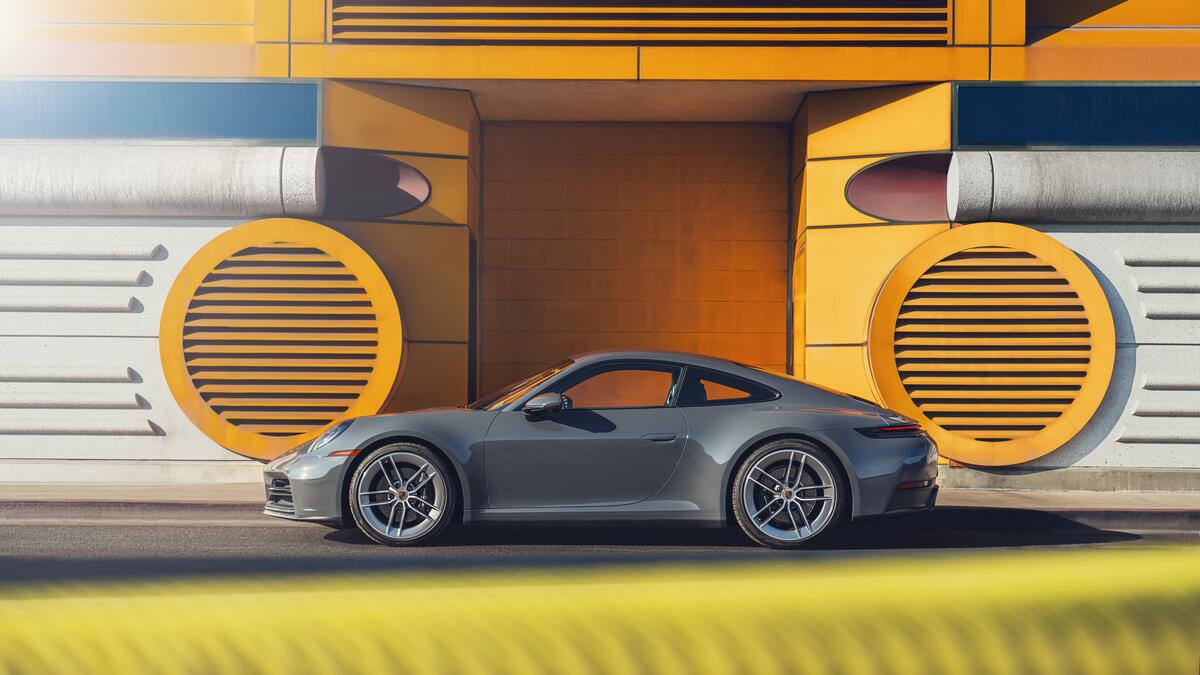
991.2 Carrera T
"What's your opinion on the 991.2 Carrera T versus a G80 M3? Uh, I've dialed in my 25 G80 and thinking within the next few years of upgrading to a manual Carrera T."
This is a special Porsche 911 variant called the Carrera T. It’s meant to feel more focused and less “luxury,” so it’s often chosen by people who want a more engaging drive. Here, the host is weighing it against a BMW M3.
The Porsche 991.2 Carrera T is a lighter, more driver-focused version of the 911, built around the idea of removing weight and dialing back comfort features for sharper feel. In this segment, it’s being compared directly against a BMW M3 to discuss which “dialed-in” experience fits the owner’s preferences.
manual Carrera T
"Uh, I've dialed in my 25 G80 and thinking within the next few years of upgrading to a manual Carrera T."
A manual Carrera T refers to the Porsche 911 Carrera T configured with a traditional stick shift instead of an automatic. Enthusiasts often prefer manuals because they give more direct control over engine speed and driving feel, which is part of why this is used as a “dialed-in” upgrade goal in the conversation.
get it out of your system
"Uh, the G80 is just so big. You know, the G80 is one of those things like you have to get it out of your system. For me, it was 30 miles and it was out of my system."
They mean they tried the car long enough to know how it feels for them. After that, they’re saying it probably won’t be something they’ll want again later. In their case, the size is the main issue.
“Get it out of your system” is being used to describe a common car-enthusiast decision pattern: trying a car (or idea) long enough to satisfy curiosity, then deciding whether it truly fits your preferences. Here, the speaker implies the G80’s size is a deal-breaker and that they don’t expect to “come back” to it later.
MSRP
"Um, the problem with that car is that they sell it like MSRP, which kind of stinks. Um, but yeah, I mean, I think that's a logical move."
MSRP is the “sticker price” the manufacturer lists for the car. If you have to pay MSRP, you usually aren’t getting a discount.
MSRP (Manufacturer’s Suggested Retail Price) is the sticker price a carmaker sets for a vehicle. When a dealer sells at MSRP, there’s typically little or no discount versus negotiating below sticker.
manuals
"because you can get a 991.2 Carrera S, you know, because the manuals are available. It's only, only until 991 or 992.2 where the manuals have gone away."
Here, “manuals” means a stick shift. Instead of the car changing gears for you, you do it yourself. The host is saying that later 911 versions stopped offering the stick shift.
In this context, “manuals” means manual transmissions—cars where you shift gears yourself instead of using an automatic gearbox. The host is pointing out that manual availability changes by 911 generation, which affects how desirable a given 911 is for enthusiasts.
center lock
"Uh, Shane says, I purchased a high torque from you. [3080.8s] Uh, do you have to, to set it for the center lock each time you power up? [3086.4s] Or does it stay in the mode once you use the menu to get there?"
“Center lock” sounds like a setting that locks something in a centered position. They’re asking whether you have to set that mode every time you turn the device on, or if it stays set.
“Center lock” here refers to a locking mode on a device that can be switched using a menu and then toggled forward/backward. The key point is whether the device remembers the selected mode after power-up, which affects how often you need to reconfigure it.
high torque
"Uh, Shane says, I purchased a high torque from you. [3080.8s] Uh, do you have to, to set it for the center lock each time you power up?"
“High torque” means the tool can apply more twisting force. They’re talking about a high-torque unit they bought and how it behaves when you turn it on and use its settings.
“High torque” means the tool/device is designed to deliver more rotational twisting force than a standard version. In this context, they’re discussing a device they bought from the host and how its locking mode behaves, suggesting it’s a power tool or similar hardware rather than a vehicle component.
Request an Explanation
Heard something you'd like explained? We'll add it to this episode.
Sign in to request explanations for terms you heard.
Want to learn more?
Browse our glossary for plain-English explanations of automotive terms, jargon, and concepts.
Help improve this episode
See something that's not quite right? Our annotations are AI-generated and can sometimes miss the mark. Click the flag icon on any annotation to suggest a correction.