
Dialed In Podcast: July 17th, 2026
About this episode
Garage plans and car-care deep dives collide as the host bounces between a BMW E46 build, wheel fitment, and performance parts like an intake, basic exhaust, and a Spoon header. They map out what’s next—Type R timing, starting on the 1M, and sending a Bronco to APG—while also answering detailing and shop questions (soap dilution, wheel coating brake dust, vacuum suction, and garage drainage). The conversation widens to radar detectors, SUV practicality, and even bike-building lessons.
stock wheels
"I just put that video up and then I finished the the stock wheels and I was planning on rocking the stock wheels for a little while..."
Stock wheels are the wheels that came with the car from the factory. People swap them out to change the look or how the car feels on the road.
“Stock wheels” are the factory wheel design and size that came on the car when it was new. Enthusiasts often swap them for different styles or sizes to change fitment, appearance, and sometimes ride/handling.
16 inch
"and then I found a set of 16 inch TE's tees Sonics so not quite ideal."
Wheel size matters for tire choice and ride/handling. A “16 inch” wheel typically pairs with a specific tire profile, and changing wheel diameter can affect steering feel and how the car absorbs bumps.
concave face
"The Sonics are a different spoke so it's not it's not a flat face it's more of a concave face..."
A concave wheel face means the wheel’s surface curves inward. It’s mostly about the look, though wheel shape can also affect fitment with brakes and suspension.
A “concave face” describes a wheel design where the spokes/face curve inward toward the center. This affects how the wheel looks from the side and can also influence clearance and how the tire sits visually.
suspension
"and I'm like well you know this thing is up on stilts I really need a suspension it'd be a lot more fun if I had an intake..."
Suspension is what helps the car ride smoothly and stay stable over bumps and turns. If it’s not set up right, the car can feel awkward and not handle well.
Suspension is the system that connects the car to its wheels and controls ride quality and handling. When the host says the car is “up on stilts” and needs suspension, they’re describing poor stance/geometry that can make the car feel less stable and less fun to drive.
intake
"it'd be a lot more fun if I had an intake and at least a basic exhaust and so I basically ordered everything for it and so everything's starting to show up my spoon header"
An intake is the part that brings air into the engine. Upgrading it can help the engine breathe better and sometimes makes the car sound more exciting.
An “intake” in performance terms usually means an aftermarket air intake system that improves airflow to the engine. Enthusiasts often pair it with other mods because it can change throttle response and engine sound, though gains depend on the exact setup.
basic exhaust
"it'd be a lot more fun if I had an intake and at least a basic exhaust and so I basically ordered everything for it..."
A basic exhaust upgrade is an aftermarket exhaust system meant to change the sound and sometimes improve flow. It’s usually one of the easier performance mods to feel right away.
A “basic exhaust” typically refers to a simpler aftermarket exhaust upgrade (often a cat-back or header + exhaust) aimed at improving sound and reducing restrictions. It’s usually one of the first mods people do because it’s straightforward and noticeable.
spoon header
"and so everything's starting to show up my spoon header"
A header is part of the exhaust system that helps gases leave the engine more efficiently. “Spoon” is a performance brand, and their headers are a common upgrade for Honda enthusiasts.
A “Spoon header” refers to an aftermarket exhaust header made by Spoon (a Japanese performance brand). Headers replace the factory exhaust manifold to improve exhaust flow, which can help engine breathing and change the exhaust note—especially on Honda engines.

Honda Civic Type R
"and you know rock it around for a little while I get my Type R back soon by the time I'm done with the Civic then the Type R will be back put the interior in that"
The Honda Civic Type R is a sporty version of the Civic, made to drive hard. It’s the “performance” trim, and the host is saying they’ll have it back soon after finishing other work.
The Honda Civic Type R is a hot hatch built around a high-revving turbocharged engine and front-wheel-drive grip, tuned for track-style driving. In this segment, the host is timing when the Type R will be back after working on the Civic, making it a key part of their garage plan.

BMW 1M
"put the interior in that and I'm gonna start on the 1M here shortly and hopefully I've got a sort of mandate to myself"
The BMW 1M is a special, limited BMW that’s meant for drivers who like to feel the car. It’s rear-wheel drive and has a strong turbo engine, and the host plans to work on it next.
The BMW 1M is a limited-production performance coupe based on the 1 Series, known for its turbocharged inline-six and rear-wheel-drive, enthusiast-focused character. Here, the host says they’re starting on the 1M shortly, indicating it’s part of their current wrenching and driving progression.

Ford Bronco
"so the Broncos getting sent back to to APG to get I tried getting the springs and boots and and new axles put on here locally but it's kind of jank so I'm gonna send it out to them"
The Ford Bronco is an off-road SUV that people often upgrade for tougher driving. In this segment, the host is saying they’re sending it out to get suspension and axle-related parts sorted, plus other upgrades while it’s there.
The Ford Bronco is a modern off-road SUV platform that’s commonly modified with suspension and drivetrain upgrades for durability and trail performance. The host mentions sending it out for work after trying to source springs, boots, and axles locally, implying a suspension/drive-axle refresh and additional upgrades while it’s in the shop.
springs and boots
"I tried getting the springs and boots and and new axles put on here locally but it's kind of jank so I'm gonna send it out to them"
Springs are part of the suspension that help the car ride smoothly and handle bumps. Boots are protective covers that keep key moving parts clean and protected—if they tear, the joint can wear out faster.
“Springs” are suspension components that support the vehicle and control ride height and how it absorbs bumps. “Boots” usually refers to protective rubber covers (often for steering or axle joints) that keep dirt and moisture out; when they fail, the joint can wear quickly.
new axles
"I tried getting the springs and boots and and new axles put on here locally but it's kind of jank so I'm gonna send it out to them and we're gonna do some upgrades while it's out there"
Axles are the parts that send power from the drivetrain out to the wheels. If they’re worn or damaged, the car can feel rough or make noises, so replacing them can restore smooth driving.
Axles are the shafts that transmit power from the transmission to the wheels. Replacing “axles” typically means worn or damaged drive shafts or joints, which can cause vibration, clicking, or loss of smooth power delivery.
white knuckle
"and then earlier mornings for a while where there's less traffic and just you know man up and go you know just white knuckle it through through some drives"
“White knuckle” just means you’re holding the steering wheel really tightly because the drive feels intense or scary. The host is saying they want to get used to that feeling over time.
“White knuckle” is a driving expression meaning you’re gripping the steering wheel tightly because the car feels intense, unpredictable, or stressful. In this context, it’s about pushing through a period of learning/desensitizing to more aggressive driving.
detailing
"I'm not gonna get into the fray anymore of of the minutia of detailing and detailing reviews and all that bullcrap I never really did"
Detailing means giving a car a deeper clean and finish than a quick wash. It can include cleaning wheels, polishing paint, and adding protection so it stays nicer longer.
Detailing is the process of thoroughly cleaning, polishing, and protecting a vehicle’s surfaces beyond a basic wash. It can include wheel cleaning, paint correction, and applying protective products like sealants or coatings.
pressure washers
"I always got sucked into it with like pressure washers and fittings and guns this is the best soap I love it"
A pressure washer is a machine that sprays water at very high pressure. Detailers use it to blast off dirt before they wash, polish, or protect the car.
A pressure washer is a cleaning tool that uses a high-pressure water jet to remove dirt and grime from surfaces. In detailing, it’s often used for wheels, wheel wells, and exterior panels before applying soap or coatings.
soap
"This is the best soap I love it you should love it and a story"
In car detailing, “soap” usually refers to a dedicated automotive wash product formulated to lift dirt while reducing the risk of scratching. Many detailing soaps are designed to be used with a specific wash method (often two-bucket or foam-based) to keep grit from grinding into paint.
one liter
"it's like 35 or 40 bucks for a one liter but you're using you know about half of what"
A “one liter” is just how much product you’re buying. Detailing chemicals are usually mixed/diluted, so the price per liter helps you judge whether it’s worth it.
A “one liter” is a volume measurement used to describe how much concentrate you’re buying for detailing chemicals. Detailing products are often sold by volume, and the cost per liter matters because concentrates are diluted and used repeatedly.
GSF
"you're using you know about half of what I was using in GSF so I'm pretty pretty pleased"
“GSF” here is shorthand for something the host used before—likely a specific car-wash product or wash setup. The key point is they’re comparing how much they use and the cost.
“GSF” is being used as a shorthand for a prior product or method the speaker was using before switching to the soap they’re discussing. In detailing communities, abbreviations like this often refer to a specific wash concentrate, foam setup, or brand/product line.
sur f X HD
"I was using some surf X HD and it really sort of transforming a really banged up wheel and polishing it"
“Surf X HD” sounds like a specialized cleaner for wheels. The host is saying it helped turn a dirty, damaged wheel into something that looked better and was ready for the next step.
“Surf X HD” appears to be a wheel-cleaning chemical used to remove grime and oxidation from wheels. Products like this are typically stronger than basic car shampoo and are meant to restore a cleaner, more uniform surface before polishing or coating.
wheel cleanup and coating
"I have let's see the civic wheel cleanup and coating of the factory stuff I was using some surf X HD"
This means cleaning the wheels really well and then adding a protective product. After that, brake dust and dirt tend to come off more easily next time.
Wheel cleanup and coating refers to cleaning wheels thoroughly and then applying a protective layer to make future dirt removal easier. Wheel coatings are designed to resist brake dust staining and improve how easily grime washes off.
factory stuff
"civic wheel cleanup and coating of the factory stuff I was using some surf X HD"
“Factory stuff” means whatever the car already had from the factory. The host is saying they cleaned and improved that original finish before applying new work.
“Factory stuff” is a casual way to refer to the original surface finish or factory-applied protection on a car (for example, the original wheel finish or existing coating). In detailing, it often means you’re working with what the car came with before adding new products.

Ford Mustang
"...o take care of it would love to see you back in a Mustang maybe a GT 500 I don't think I'd do a GT 500 just..."
The Ford Mustang is a sports car that’s popular with people who like driving and working on cars. A “GT500” is a higher-performance version of the Mustang. The podcast mentions it because the speaker is talking about possibly getting back into one.
The Ford Mustang is a classic American sports car known for its performance options and strong enthusiast culture. The podcast references wanting to see someone back in a Mustang, specifically mentioning a GT500 as a possibility, which highlights how the model range is often part of owner conversations. It comes up because Mustangs are frequently discussed as project cars and as upgrades from one generation to another.

Shelby GT500
"as the nickel wood over time because it's black you just got to take care of it would love to see you back in a Mustang maybe a GT 500 I don't think I'd do a GT 500 just because I mean you can't get met in a"
The Shelby GT500 is a very powerful version of the Ford Mustang. It’s meant for people who want more performance than a standard Mustang. The podcast mentions it because the speaker is deciding whether that level of car is what they want.
The Shelby GT500 is a high-performance Mustang variant focused on strong acceleration and track-capable power. The podcast mentions it as something the speaker might consider, but also suggests hesitation about choosing it. It’s discussed because the GT500 is a notable step up in performance and ownership responsibility compared with more basic Mustang trims.
JDM
"I don't have any plans to buy anything I was dangerously close I don't know if [457.6s] you guys saw the the contempt oh something or other Japanese JDM dealer [465.0s] they have a 4400 kilometer yellow with red you know civic type R"
JDM means “Japanese cars for the Japanese market.” These are often imported and can have different features than versions sold elsewhere.
JDM stands for Japanese Domestic Market, meaning cars that were originally sold in Japan and often have different specs than what’s common in other countries. The host references a JDM dealer selling a restored Civic Type R.
OE parts
"they have a 4400 kilometer yellow with red you know civic type R that they've [474.0s] totally restored with all OE parts but they want 112,000 bucks for it 880,000 [481.3s] Hong Kong whatever Hong Kong dollars"
OE parts are the same type of parts the car maker used originally. Using OE parts usually means the restoration is more “factory-correct.”
OE parts means Original Equipment parts—components made to match what the manufacturer installed on the car when it was new. The host emphasizes that the Civic Type R was restored using OE parts, which typically helps preserve correctness and value.
vacuum
"Eric says Matt [512.3s] looking at the OG vacuum curious if you see any suction loss over a 50 foot run [517.1s] with hi-to hose also any problems with attic heat no I no attic heat issues"
Here “vacuum” means suction—like how strongly air is being pulled through a hose. They’re discussing whether that suction weakens over a long hose run and whether heat in the attic makes it worse.
In this context, “vacuum” refers to suction pressure used to pull air (or material) through a hose run. The host is asking about suction loss over a long distance and whether attic heat affects that suction performance.
50 foot run
"Eric says Matt [512.3s] looking at the OG vacuum curious if you see any suction loss over a 50 foot run [517.1s] with hi-to hose also any problems with attic heat"
A “50 foot run” just means the hose is about 50 feet long. Longer hoses can make suction weaker, so they’re checking if that happens.
A “50 foot run” describes the hose length over which suction is expected to remain effective. Longer hose runs can increase resistance and reduce airflow/suction, which is why the host is testing for suction loss.
hi-to hose
"[517.1s] with hi-to hose also any problems with attic heat no I no attic heat issues [523.1s] I didn't notice any and when I had it in the Darlington attic and nope you get"
“Hi-to hose” sounds like a particular kind of hose they’re using with the vacuum. They’re asking if that hose changes how strong the suction stays over distance.
“Hi-to hose” appears to be a specific hose type or brand used for the vacuum/suction setup. The host is asking whether that hose material or design affects suction performance over a long run.
Darlington attic
"I didn't notice any and when I had it in the Darlington attic and nope you get [528.2s] probably more suction with that with the 50 foot run I feel like it I"
This is just a specific attic location the speaker is referencing. They’re saying they tried the setup there and didn’t see heat causing suction problems.
“Darlington attic” refers to a specific attic space where the speaker previously ran the setup. It’s used as real-world context to say they didn’t notice heat-related suction problems there.
dyne in pedals
"I like the dyne in pedals I mean I doubt they're the best performing but I think they're the best looking"
They’re talking about a particular brand of aftermarket pedals they like. In this segment, it’s mostly about how they look and how the setup feels.
“Dyne in” is being referenced as a specific aftermarket pedal brand/line the host prefers for BMWs. The discussion is about aesthetics and the host’s personal preference rather than measured performance.
mugen pedals
"I always do dyne in pedals in my BMWs I did mugen pedals in the Civic"
They mention Mugen as another brand of aftermarket pedals they’ve tried. It’s being used as a comparison point to the pedals they prefer.
“Mugen” is referenced as another aftermarket pedal option the host has used. Mugen is known in the enthusiast world for performance-oriented parts, and here it’s part of a comparison of pedal choices.
Bosch three inch polishers
"Jeff says how does the Bosch 3 inch polisher compared to the Mirka on sound and vibration"
A 3-inch polisher is a paint-cleaning/polishing tool with a 3-inch pad area. They’re comparing how loud it is and how much it vibrates, plus how well it’s controlled.
A “3 inch polisher” is a handheld detailing machine sized by its backing plate/abrasive diameter, which affects how it works on paint. The host compares the Bosch’s sound/vibration and control features to another polisher, focusing on usability during polishing.
Mirka
"Jeff says how does the Bosch 3 inch polisher compared to the Mirka on sound and vibration ... the Mirka is the best in the world"
Mirka is another brand of polishing machine they’re comparing against Bosch. The host says Mirka feels more precise and vibrates less.
Mirka is the competing tool brand in the host’s comparison of polishers. The host claims Mirka’s trigger control and vibration behavior are superior, and that it’s “more accurate” for polishing work.
speed calibration
"you only have what five or is it five settings or six settings on the on the Bosch ... the speed calibration and ability to adjust the Mirka is far superior"
Speed calibration is how accurately the tool’s speed setting matches what the tool actually does. They’re saying Mirka’s speed control is more consistent.
“Speed calibration” refers to how accurately and consistently a polisher’s selected speed matches its actual output. The host argues Mirka’s speed adjustment is better, which matters for controlling heat and finish during paint correction.
trigger lock
"I like the speed range and trigger lock of the Bosch ... the Bosch has the mechanical trigger lock it where the Mirka doesn't"
A trigger lock is a switch feature that lets the tool keep running without you constantly holding the trigger. They’re comparing how that affects convenience while polishing.
A “trigger lock” is a control feature on a power tool that lets you hold the trigger in a fixed operating state. The host compares Bosch’s mechanical trigger lock to Mirka’s lack of the same feature, tying it to how the tool is used during polishing.
time capsule
"[789.6s] miles it's a time capsule I'm the only owner wings West kid DC sports head or"
A “time capsule” car is one that’s been kept in very original, well-preserved condition. It’s the kind of car that feels like it’s still from the day it left the factory.
“Time capsule” is collector slang for a car that’s preserved in near-original condition, with minimal wear and often low mileage. Enthusiasts use it to signal the vehicle hasn’t been heavily modified or abused.
cat back
"[795.1s] wings West kid DC sports head or a and cold air intake ready cat ready cat back pioneer DVD player"
A cat-back exhaust is an aftermarket exhaust system that starts after the catalytic converter. It’s often done to change the sound and improve exhaust flow.
A cat-back exhaust replaces the exhaust section from the catalytic converter rearward. It’s a common upgrade because it can change sound and flow characteristics without replacing the catalytic converter itself.
enclosed
"but you just find yourself a broker and tell them what you're looking for you want enclosed and if you want to be sure"
“Enclosed” transport means your car rides inside a covered trailer. It’s safer from rain, dirt, and road grime than an open trailer.
In car transport, “enclosed” means the vehicle is hauled inside a covered trailer rather than on an open carrier. This protects the car from weather, road debris, and UV exposure, which matters especially for collector cars or freshly restored vehicles.
reliable carriers
"and you don't want to take that risk you do reliable carriers would be the way to go"
A “carrier” is the company that physically transports the car. “Reliable carriers” means you’re trying to pick a company that’s less likely to cause problems like delays or damage.
“Carriers” are the trucking companies that actually move the vehicle, while brokers coordinate the shipment. Choosing “reliable carriers” is about reducing the risk of delays, damage, or poor communication during transport.
0 to 10 volts
"the H.E. Williams with Lutron and 0 to 10 volts and you know all the parts and pieces you need"
“0 to 10 volts” is a control method for dimming lights. A controller sends a small electrical signal to tell the lights how bright to be.
“0 to 10 volts” refers to an analog control signal used to dim or regulate lighting systems. In practice, it lets a lighting controller smoothly adjust brightness by sending a voltage level from 0V (off) up to 10V (full output).
CRI
"should have substantially more output watt per lumen at the same you know 90 plus CRI it's gonna be incredible"
CRI is a number that tells you how true-to-life colors look under a light. Higher CRI (like 90+) usually means colors look more natural and accurate.
CRI (Color Rendering Index) measures how accurately a light source reveals colors compared to a reference. A “90+ CRI” rating generally indicates better color accuracy, which is useful in garages for judging paint, finishes, and interior materials.
watt per lumen
"should have substantially more output watt per lumen at the same you know 90 plus CRI"
“Watt per lumen” is how efficient a light is. Less power per unit of brightness usually means the light is more efficient.
“Watt per lumen” describes lighting efficiency: how many watts are needed to produce a given amount of light. Lower watt-per-lumen typically means the lights produce more usable brightness while using less power.

2020 BMW X5 40i
"Dylan says would you pick a 2020 x5 40 I or a 2020 Tahoe RST as a daily yeah"
This is a 2020 BMW X5, and the “40i” is the more performance-focused version. The hosts are comparing it to a bigger SUV to decide what makes more sense for daily life and space.
The BMW X5 40i is a mid-size luxury SUV known for its strong on-road manners and the 40i’s performance-oriented engine tune. In this discussion, it’s being weighed against a full-size SUV for daily practicality and family needs.

2020 Chevrolet Tahoe RST
"Dylan says would you pick a 2020 x5 40 I or a 2020 Tahoe RST as a daily yeah I mean I did think it depends if you you know if you big family"
This is a 2020 Chevrolet Tahoe, and “RST” is a trim level. It’s the bigger, roomier option, which is why it’s being considered if you have a large family or need lots of cargo space.
The Chevrolet Tahoe RST is a full-size SUV trim that prioritizes space and family practicality over the more compact feel of mid-size crossovers. Here it’s contrasted with the BMW X5 40i based on room needs and how much “real” space you actually use day to day.

BMW X7
"the x5 isn't that much bigger than a car you know you'd have to go I think you would compare more the x7 to the Tahoe"
The BMW X7 is a bigger BMW SUV than the X5. They mention it because it’s closer in size to a full-size SUV like the Tahoe.
The BMW X7 is BMW’s large, full-size-leaning luxury SUV that sits closer in size to a Tahoe than the smaller X5. The host uses it as the more appropriate comparison point when discussing how much space you’d really need.

Porsche Cayenne
"Cayenne x5 certainly not Macan you know the small small SUVs I would just much"
The Porsche Cayenne is Porsche’s SUV. They bring it up while talking about which SUV sizes they like or don’t like.
The Porsche Cayenne is Porsche’s SUV model, known for bringing Porsche-like driving feel to a family-sized package. It’s mentioned here as part of the lineup of small-to-mid SUVs the host personally doesn’t prefer.

Porsche Macan
"Cayenne x5 certainly not Macan you know the small small SUVs I would just much"
The Porsche Macan is Porsche’s smaller SUV. They mention it as an example of the kind of SUV they personally don’t like as much.
The Porsche Macan is Porsche’s smaller SUV, positioned as a sportier alternative to typical family crossovers. The host groups it with other “small SUVs” they’d rather avoid in favor of sedans or hatchbacks.

Honda S2000
"by the Tahoe waiting for your reaction video driving s2000 yeah I need the seats so it's sitting in the garage back there"
The Honda S2000 is a classic two-seat roadster known for revving very high and feeling fun to drive. They’re talking about it like a garage car that’s waiting on parts.
The Honda S2000 is a lightweight, rear-wheel-drive roadster famous for its high-revving engine and driver-focused feel. The host mentions it in the context of needing the seats and having it stored in the garage, highlighting it as a project/enthusiast car rather than a daily.

Porsche 911 GT3 RS
"probably four weeks hey Matt how's hope you doing well how's the GT3 RS coming it's not it's sitting on the parking lift waiting for my type R to get done"
The Porsche 911 GT3 RS is one of Porsche’s most track-focused versions of the 911. They’re talking about it being up on a lift while they finish other work.
The Porsche 911 GT3 RS is a track-focused 911 variant known for its high-downforce aero and extreme performance tuning. In this segment it’s treated like an active project car—sitting on a parking lift while other work is completed.
building a shop / spec house garage
"Brian says considering building a shop a spec house garage is too small the one he has recommendations for a metal structure in flora size concrete depth thinking new spawn lift wall mount pressure washer and tool cabinets"
They talk about building a garage/shop for car projects. It’s about what kind of building to make and what features to include.
The hosts discuss planning a garage/shop setup, including structure type and how they want to use it for car work. This is a practical “how to build your own space” topic rather than a vehicle technical deep dive.
spawn lift
"thinking new spawn lift wall mount pressure washer and tool cabinets yeah I mean there's tons and tons of"
This sounds like they mean a car lift for the garage—something that raises the vehicle so you can work underneath. The transcript likely misheard the exact lift type.
“Spawn lift” appears to be a transcription error for a vehicle lift (commonly a “scissor lift” or “spider lift” depending on context). The host is describing adding a lift to the garage so they can raise cars for work.
slab
"I would just do a standard you know five inch slab and then I would just do like if I was going to do a new spawn recessed"
A slab is the thick concrete floor base poured to support structures and equipment. Here it’s discussed in the context of building a reinforced garage/wash bay floor that can support a vehicle lift and heavy use.
two-post
"if you're going to do a two-post you can want to do some a section that's that's reinforced that's safe you know 18 inches thick or so"
A two-post lift is a garage hoist that raises a car using two upright posts. The speaker is saying you need the floor built strong enough so the lift can be installed safely.
A two-post lift is a vehicle hoist that supports the car using two vertical posts at the front and rear (or sides) of the vehicle. In this segment, it’s discussed as something you may need to plan for in a slab thickness and reinforcement so the lift is safe and stable.
5,000 psi concrete
"but yeah I would do you know say 5,000 psi capable say five inch slab of 5,000 psi concrete which might cost you 30% more"
“5,000 psi concrete” means the concrete is designed to be very strong. They’re talking about using a stronger slab so the floor can handle heavy loads like a lift.
“5,000 psi concrete” refers to a specified compressive strength of concrete measured in pounds per square inch (psi). The speaker is using it to argue for a stronger slab for a garage/wash bay setup, noting it can cost more than a lower-strength option.
Porsche 911 GT3
"and then he had the purple GT3 manual 992 he likes the 992s"
The Porsche 911 GT3 is the more track-oriented version of the 911. Mentioning it as a manual highlights that it’s meant to be driven hard and enjoyed by the driver.
The Porsche 911 GT3 is a track-focused 911 variant built around high-performance naturally aspirated power and motorsport-style tuning. Here it’s specifically called out as a manual car the owner had, which signals a preference for driver-focused, less “grand touring” character.
rinse-less wash
"combination is to do a 2250 to one pre-treat at that sorry why am I yawning 250 to one pretreat and then a 250 to one you know bucket rinseless wash I haven't done any of the dry on version yet but it certainly is cleaning better than pretty much anything I've ever used"
A rinseless wash is a way to clean your car without doing a full rinse with water. You spray or apply the cleaner and wipe it off with a microfiber towel, which can be handy when you don’t have easy access to water.
A rinseless wash is a car-cleaning method that cleans the paint using a special chemical and a microfiber towel, without needing a full rinse of water. It’s often used for quick detailing or when water access is limited, and the chemistry is designed to safely lift dirt while reducing the chance of scratching.

Audi RS5
"then when I go back and watch the videos I don't want it to clip let's see here let's see what does and Kyle mean what are your thoughts on the new Audi RS5 I haven't seen it let's look at it new Audi RS5 you know I want to like Audi's but you just don't want to drive one"
The Audi RS5 is a sporty, performance-focused Audi. Here, the speaker says it looks great, but they think it’s heavy and not very fun to drive.
The Audi RS5 is a high-performance version of Audi’s A5, known for its sporty tuning and typically strong acceleration and grip. In this segment, the host’s take is that the newer RS5 feels “big” and “heavy,” and they don’t find it fun to drive compared with lighter, more driver-focused cars.
Blizzak
"if I was up north I would probably be inclined to get one of them you know and put some put some blizzaks on it and roll through all the snow and stuff"
“Blizzaks” are winter tires made by Bridgestone. They’re designed to work better in cold weather and snow so the car grips more safely.
“Blizzaks” refers to Bridgestone’s Blizzak winter tires, which are designed to provide grip in cold temperatures and on snow or ice. The speaker mentions putting them on the Audi RS5 to handle winter driving and snow better.
armor wheel coating
"John says I recently coated my wheels with armor wheel coating easy to clean so seems like a great coating but now the brake dust sticks to them like crazy"
This is a protective coating you put on your wheels. It’s meant to make brake dust and dirt easier to wash off, so you don’t have to scrub as much.
An “armor wheel coating” is a protective surface treatment applied to wheels to make them easier to clean and more resistant to grime. The idea is that brake dust and road film should release more easily, reducing scrubbing and helping the wheels stay looking cleaner.
brake dust
"so seems like a great coating but now the brake dust sticks to them like crazy ... almost all of my brake dust just washes off with the pressure washer"
Brake dust is the gritty powder that forms when your brakes are used. It can stick to the wheels and make them look dirty unless you wash it off.
Brake dust is the fine particulate created when brake pads clamp onto the brake rotors. It’s a mix of pad material and contaminants, and it tends to cling to wheel surfaces—especially if the wheel has texture or if the dust isn’t cleaned soon after driving.
epoxy
"any issues washing in a garage without a drain I have epoxy that ended up installing swish tracks over it I'm concerned about standing water as the epoxy doesn't absorb like concrete"
Epoxy is a tough coating you put on concrete floors. It helps protect the floor and can prevent stains, but it can also affect how water sits on top of the surface.
Epoxy is a resin-based coating used on concrete floors to create a hard, sealed surface. Because it doesn’t absorb water like concrete, it can reduce staining and limit moisture penetration, but it also changes how standing water behaves on the surface.
swish tracks
"I have epoxy that ended up installing swish tracks over it I'm concerned about standing water as the epoxy doesn't absorb like concrete"
“Swish tracks” sounds like a drainage channel setup in the garage floor. The goal is to give water a place to go so it doesn’t pool.
“Swish tracks” appears to refer to a drainage channel system installed in the garage floor. The discussion suggests it’s meant to provide a path for water to run under/along the installed area so it doesn’t pool.
standing water
"I'm concerned about standing water as the epoxy doesn't absorb like concrete yeah I mean what's the standing water gonna do you know it's gonna evaporate up through the tiles first of all your garage should be sloped outward"
Standing water is water that doesn’t drain and just stays put. In a garage it can cause problems like slippery floors, stains, or freezing in winter.
Standing water is water that remains in place rather than draining away. On garage floors, it can contribute to staining, slippery conditions, and in cold weather, freeze risk—so drainage design and floor slope matter.
E3 customs
"Jose paint it and it went down to get the interior done by [1739.4s] E3 customs and the stereo you know they did stereo down there as well so yeah"
E3 customs sounds like a shop that worked on the car’s interior and audio. They’re mentioned as the place that did the custom work.
E3 customs is referenced as the shop that handled the interior work and stereo installation. In this segment, it functions as a local customization/restoration vendor.
AG
"but Drew and you know my buddies at the AG maybe [1755.6s] someday we'll do one together I like to do a hybrid because I like to do some"
“AG” is a group of friends/people involved in car work. The speaker is saying they might do a project together with them someday.
“AG” is mentioned as the speaker’s buddies’ group/shop connected to the restoration/customization scene. The exact company name isn’t provided in this excerpt, so it’s best treated as an unidentified local collaborator.
Dynaudio
"let's see yeah you should buy some [1769.9s] Dynaudio speakers or something I don't know what's going on last name Kamur"
Dynaudio makes premium speakers. They’re suggesting it as a good choice if you want better sound in your car.
Dynaudio is an audio brand known for high-end car and home speakers. The host is suggesting Dynaudio speakers as an upgrade for sound quality.
pants coating
"says Kumar says what are you gonna try pants coating I'm generally impressed [1781.8s] with it for its durability but to hand but to the hand CSL XO feels nicer"
“Pants coating” is probably the name of a paint-protection product. They’re talking about how durable it is and how it behaves when applied.
“pants coating” appears to be a mishearing/variant of a paint-coating brand or product name. The context is clearly about how a coating performs and how it feels/applies on paint.
CSL XO
"says what are you gonna try pants coating I'm generally impressed [1781.8s] with it for its durability but to hand but to the hand CSL XO feels nicer"
“CSL XO” is likely a specific type of car paint protection product. It’s meant to help the paint resist damage and stay easier to clean.
“CSL XO” sounds like a specific paint-protection coating product. In detailing, these coatings are applied to paint to improve durability and make contaminants easier to remove.
drying and use
"I just don't have [1795.6s] a need for a new coating the one thing I've run into with Fatnude is that you're [1801.9s] not using an additional drying and use you need a secondary towel once the [1806.6s] primary towel gets saturated otherwise you can leave residue"
They’re talking about the wiping/finishing steps after applying a protective coating. If you don’t use the right towel(s), you can leave residue or streaks on the paint.
“drying and use” in this context refers to the process steps for applying a coating—specifically needing an additional drying/finishing towel. The speaker warns that without the right wipe-down method, residue can remain.
secondary towel
"you're [1801.9s] not using an additional drying and use you need a secondary towel once the [1806.6s] primary towel gets saturated otherwise you can leave residue yeah I noticed that"
A “secondary towel” means using a second microfiber cloth. It helps you wipe off the coating cleanly without smearing or leaving streaks.
A “secondary towel” is an extra microfiber towel used during coating application/removal. The idea is to prevent the first towel from becoming saturated, which can cause streaking or leftover residue.
residue
"otherwise you can leave residue yeah I noticed that [1810.2s] same thing is I did need a follow towel it doesn't flash some of it flashes but"
“Residue” is leftover product that didn’t get wiped off completely. It can dry into streaks or spots on the paint.
“Residue” here means leftover coating material that wasn’t fully wiped/removed. In detailing, residue can show up as streaks or hazy spots after the coating flashes.
flash
"yeah I noticed that [1810.2s] same thing is I did need a follow towel it doesn't flash some of it flashes but [1816.1s] like the wettest spots will flash and leave like a little streak"
“Flash” means the coating starts drying very fast on the paint. If it dries before you wipe it off correctly, it can leave streaks.
In coating/drying terminology, “flash” refers to the coating partially drying quickly on the surface. If some areas flash before they’re properly wiped, they can leave streaks or uneven finish.
50 to 1
"it was [1821.3s] really bad when we did the yeah it was really bad when we when I did the 50 to [1830.4s] 1 it's just too concentrated let's see can Bradley blend something similar to"
“50 to 1” sounds like a mixing ratio for a product. They’re saying their mix was too strong, which made the finish come out worse.
“50 to 1” likely refers to a dilution ratio for a product used in the detailing process. The speaker says it was “too concentrated,” implying the mix strength affects how the coating flashes and leaves streaks.
pressure switch
"it again doesn't have a pressure switch it has the sort of the ECU driven or electronically driven that's total stop mechanism"
A pressure switch is a device that turns something on or off when pressure hits a certain level. Here, they’re saying this setup doesn’t use that kind of trigger.
A pressure switch is a sensor that triggers a change in operation when fluid or air pressure reaches a set threshold. The speaker contrasts it with an ECU/electronic control approach, implying the stop behavior is not purely pressure-threshold based.
ECU driven stop mechanism
"it again doesn't have a pressure switch it has the sort of the ECU driven or electronically driven that's total stop mechanism so what they did they did install the same software that I requested where it turns off in like a second or two"
Instead of using a simple pressure switch to decide when to stop, the car’s computer (ECU) tells the system when to shut off. That can make the timing more consistent.
An ECU-driven stop mechanism means the car’s engine control unit commands when a system shuts off, rather than relying on a simple manual or pressure-based switch. In this context, it’s describing how the device/system is controlled electronically for a timed shutoff.
Honda Civic
"I mean the E36 is at my limit of oldness my Civic is about as old as I can handle"
The Honda Civic is a very common, dependable compact car. The speaker is using it as a reference point for how old they’re willing to go when buying a car.
The Honda Civic is a long-running compact car line known for being practical and widely supported with parts and maintenance. In this segment, the speaker uses their Civic’s age as a personal threshold for how old a car they’re willing to own.
DI water
"does it matter if I use DI water when foaming the car other than going through resin potentially quicker"
DI water is water that’s been cleaned to remove minerals. That can help prevent spots or residue from minerals drying on the car.
DI water (deionized water) has had ions removed, so it contains very few dissolved minerals. The speaker discusses whether using DI water changes outcomes when foaming a car, especially compared with water that could leave mineral residue.
resin
"does it matter if I use DI water when foaming the car other than going through resin potentially quicker"
Resin here is the filter material inside a DI water system. It grabs minerals out of the water, and using DI water can change how fast that filter medium wears out.
In car-washing setups, resin typically refers to the ion-exchange medium inside a DI water filter. It removes remaining dissolved minerals from water, and the speaker notes that DI water use may affect how quickly the resin gets consumed.
pH neutral
"I mean it doesn't hurt or help you other than you know the soap will especially using pH neutral so the soap is going to neutralize mineral content in the water"
pH neutral means the cleaner is formulated to be gentle and not overly acidic or basic. The idea is it won’t be harsh on surfaces and it helps with how minerals in water behave.
pH neutral refers to a soap/cleaner formulated to be close to neutral acidity (around pH 7). The speaker connects this to reducing the risk of reacting with or stripping materials, and to how the chemistry interacts with mineral content in water.
GPM
"let's see how does the power knob on the DDM effect output I presume it affects both psi and flow but any insight into how much GPM can be dropped"
GPM tells you how much liquid comes out per minute. If you turn a knob down, you might reduce the flow rate, and they’re asking how much.
GPM (gallons per minute) is a flow-rate measurement for how much liquid a pump or sprayer moves. The speaker is asking how the DDM power knob affects both pressure (psi) and flow, and specifically how much GPM can be reduced.
timing belt
"have you checked the timing belt on the SI no it needs to be done so I need to do the timing belt"
The timing belt is a belt inside the engine that keeps the moving parts in sync. If it’s old or breaks, the engine can be seriously damaged, so it’s important to replace on schedule.
A timing belt synchronizes the crankshaft and camshaft(s) so the engine’s valves open at the correct time. If it’s due (or fails), the engine can suffer severe damage, which is why the speaker treats it as a must-do maintenance item.
steering racks
"it seems that the steering rack is leaking so I'll probably do a new"
The steering rack is the part that turns your steering wheel input into the wheels actually turning. If it’s leaking, it often means worn seals and you may need to replace it to keep steering working properly.
The steering rack is the gear mechanism that converts the steering wheel’s rotation into left/right movement of the tie rods. A leaking steering rack usually means the seals are worn, and it can lead to loss of power-assist fluid and degraded steering feel.
engine swap
"I'm probably gonna engine swap it so that's why I'm not in any dire rush you know if that engine blows up no big deal"
An engine swap means putting a different engine into the car instead of keeping the original one. Here, the speaker is saying they plan to do that anyway, so an engine problem isn’t as urgent.
An engine swap is replacing the original engine with a different engine (often from the same model family or a compatible donor). The speaker implies they’re planning a swap, so they’re less worried about immediate engine failure because the car is already on a path to be rebuilt.
red line
"I wonder if a car like that has it ever even been a red line so I took it the red line the other day"
The red line is the top safe RPM range for the engine. Going near it is a way to see how the engine has been treated, because it’s where you’re pushing the motor.
The red line is the maximum safe engine speed range (RPM) where the manufacturer warns against sustained operation. The speaker is checking whether the car has ever been driven hard by taking it up to the red line.
hawk pads
"ordered me some some DBA rotors and hawk pads"
Hawk pads are brake pads—part of the braking system that squeezes onto the rotor to stop the car. Upgrading pads can change how the brakes feel and how well they handle repeated hard stops.
Hawk pads refers to brake pads made by Hawk Performance. Brake pads are the friction material that clamps onto the rotor to slow the car, and different pad compounds are tuned for street use, track use, or specific temperature ranges.
DBA rotors
"so I just told John at LHT ordered me some some DBA rotors and hawk pads"
DBA rotors are upgraded brake discs. They’re part of the braking system, and better rotors can help the brakes work more consistently when you drive harder.
DBA rotors are aftermarket brake rotors made by DBA, typically known for performance-oriented rotor designs. Rotors are the discs the brake pads clamp onto, and upgrading them can improve braking consistency and heat handling.
Spoon calipers
"I got a fine a set of spoon calipers so my my you know all the parts are gonna start rolling in here"
Spoon calipers are upgraded brake clamp units. They squeeze the brake pads against the rotors, and better calipers can improve braking response and consistency.
Spoon calipers are performance brake calipers associated with Spoon Sports, a Japanese tuning brand. Calipers house the pistons that squeeze the brake pads, and upgrading calipers is often done to improve clamping force, pad compatibility, and brake feel.
oil change
"I do need to do timing belt the oil change manual transmission change you know"
An oil change is when you replace the engine oil so the engine stays lubricated and clean. It’s a routine maintenance step the speaker is planning to do.
An oil change is the scheduled replacement of engine oil and typically the oil filter to remove contaminants and maintain lubrication. The speaker lists it as part of a broader refresh plan alongside other fluids.
Courad radiator
"but I got a Courad radiator so I'll swap that fluid in or the coolant anyway"
A radiator helps keep the engine from overheating by cooling the coolant. Here, the speaker mentions a Courad radiator as the cooling upgrade they’ll use.
A Courad radiator is an aftermarket radiator upgrade the speaker plans to install or use as part of their cooling refresh. A radiator’s job is to shed heat from the coolant, and upgrades are often chosen for better cooling capacity or reliability under spirited driving.
coolant flush
"just do all the coolant flush all that kind of stuff"
A coolant flush replaces the old antifreeze/coolant. It helps keep the engine from overheating and can remove buildup inside the cooling system.
A coolant flush replaces old coolant and helps remove corrosion and deposits from the cooling system. The speaker pairs it with other fluid work, suggesting they want the cooling system refreshed before driving the car harder.
LED
"are they LEDs I don't think bugs are attracted LEDs"
LEDs are a modern type of light bulb. The speaker is wondering if LED lights attract fewer bugs when working in the evening.
LEDs are light-emitting diodes, a type of lighting technology used in modern headlights and work lights. The speaker is considering whether LED lighting attracts fewer bugs than other light sources.
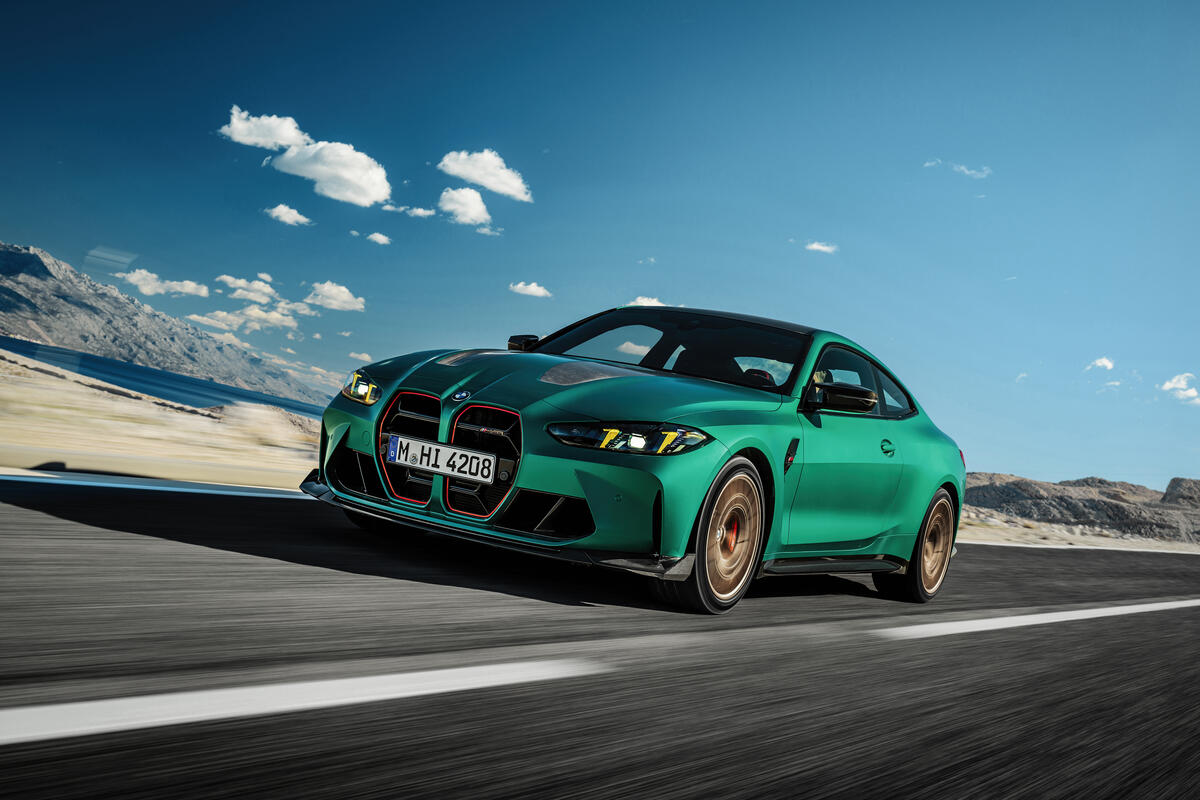
Alpine White M4 GTS
"let's see let's see teasing Matt out of Alpine White M4 GTS was collection yeah I may I just think the M4s are so ugly but the GTS is cool"
This is a special BMW M4 made to feel more like a track car than a normal one. The host is basically saying it’s cool and worth considering, especially compared to other M4 options.
The BMW M4 GTS is a track-focused version of the BMW M4, known for lightweight construction and a more aggressive setup than a standard M4. In this segment, the host is talking about the car’s look and why it’s appealing compared with other M4 variants.
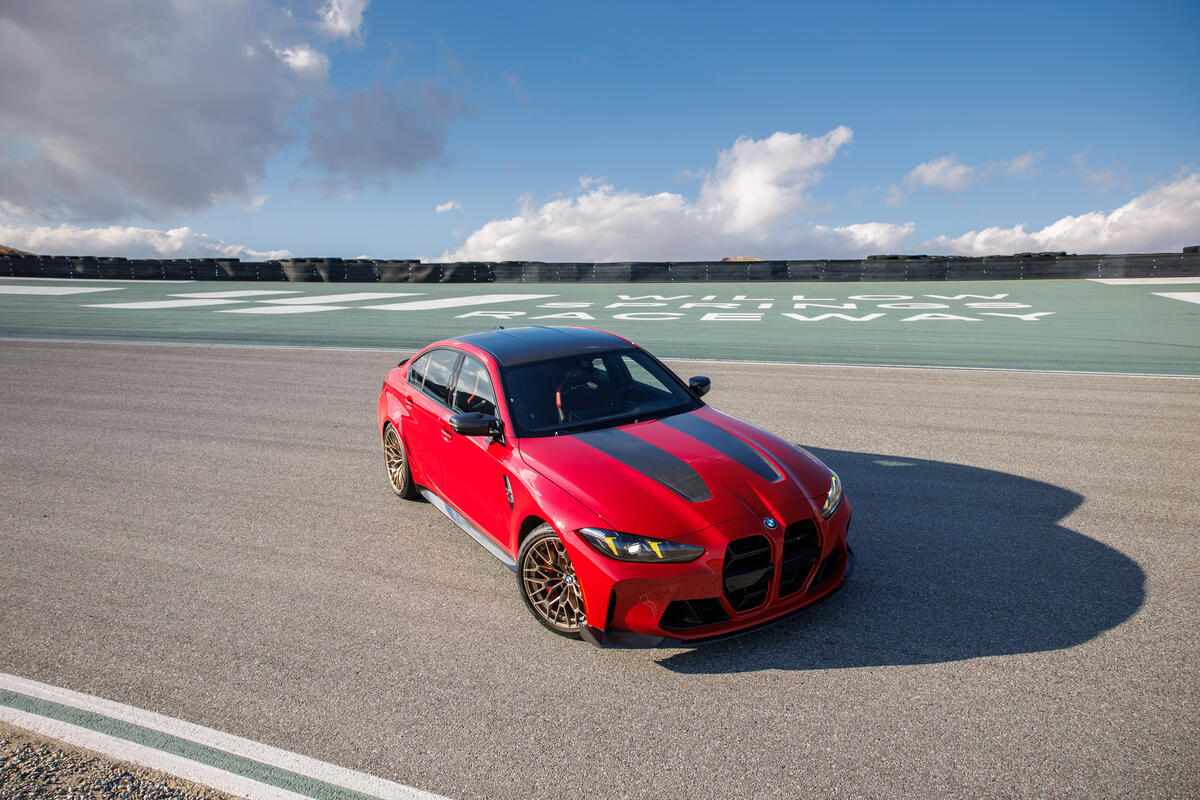
BMW M3
"the other problem with GTS is that you know that of course it's the you know that the F80 and it sounds terrible but I think I probably want one moment my collection but I'm torn do I should just get an F80 M3"
This is a specific BMW M3 generation (the F80). The host is weighing it against the more extreme M4 GTS and talking about how it feels/sounds compared to that other option.
The BMW F80 M3 refers to the 2014–2016 generation of the M3, built on the F8x 3 Series/4 Series platform. The host contrasts it with the M4 GTS and mentions it “sounds terrible,” which is a common enthusiast debate about exhaust note and character on different M cars.
steering wheel repair kit
"and do that or you know what I rather do a GTS looking to buy the leader max steering wheel repair kit but I haven't found any tutorials on it"
It’s a kit you buy to fix up a steering wheel that’s getting worn out. Instead of replacing the whole wheel, you can often repair the surface or covering yourself.
A steering wheel repair kit is an aftermarket or DIY set used to restore a worn steering wheel—commonly to fix peeling leather, cracked surfaces, or damaged grips. The host is specifically considering one for a “leader” (likely a brand/model) but hasn’t found tutorials yet.
complete sets of cars
"I kind of like this idea of having these like complete sets of cars of the best versions of cars are ones that I like"
They’re talking about a collecting mindset—trying to own a full set of the most desirable versions of certain cars. Instead of random purchases, it’s about having a matched, intentional lineup.
The host is describing a collecting philosophy: building “complete sets” of a model line by choosing the “best versions” across generations or markets. In enthusiast circles, this often means chasing specific trims/variants (like Type R or JDM versions) to create a coherent collection rather than just buying whatever is available.

Integra type R
"I've got the having the four Hondas Civic type R, EM1SI, Integra type R, USDM type R, JDM type R"
The Integra Type R is Honda’s sporty Integra model that enthusiasts really like. The host is listing it as one of the key cars they want to own.
The Honda Integra Type R is a performance variant of the Integra, famous in enthusiast circles for its high-revving character and track-oriented tuning. The host is treating it as part of a “best versions” collection alongside Civic Type R and other Type R variants.
USDM type R
"I've got the having the four Hondas Civic type R, EM1SI, Integra type R, USDM type R, JDM type R"
USDM means the version of the car that was sold in the United States. “USDM Type R” means the Type R model that matches the U.S. spec.
USDM stands for “U.S. Domestic Market,” meaning the version of a car sold in the United States. When someone says “USDM Type R,” they’re usually referring to the Type R variant that was homologated and sold for the U.S., which can differ from other regional versions.

Acura Integra
"...t the having the four Hondas Civic type R, EM1SI, Integra type R, USDM type R, JDM type R and then the Inte..."
The Acura Integra is a compact car, and some versions are built to be more performance-focused. The podcast mentions it while talking about different “Type R” style cars. That’s why it’s grouped with other enthusiast models people like to compare.
The Acura Integra is a compact performance-oriented car that has been offered in multiple “Type R” style trims known for driving-focused character. In the podcast, it’s mentioned alongside several other “Type R” and Civic-related models, indicating a comparison of enthusiast hot hatches and their appeal. It comes up because Integra Type R models are often discussed as collectible, track-capable versions of everyday cars.

NSX
"then S2000 I mean maybe that would then if I get bored and run out of cars to buy then I would go down the NSX route but you know the NSX people always asking about that"
The NSX is Honda’s mid-engine supercar. The host is saying they didn’t really want one earlier because it seemed too expensive, even though it’s a cool car.
The Honda NSX is a mid-engine supercar that became a benchmark for everyday usability combined with exotic performance. The host says they didn’t have a “practical desire” for it when younger because it felt too expensive and out of reach, and they also mention that NSX owners often ask about it.
amp
"many says the DDM 15 amp is doing 980 psi at 3 GPM and then at 20 amps it's doing 1200 psi at 3.3 ish"
Amps measure how much electrical current the device is drawing. In this setup, changing amps changes how strongly the system performs.
“Amp” refers to amperage, a measure of electrical current. The speaker is describing how changing current affects the system’s pressure and flow output.
Request an Explanation
Heard something you'd like explained? We'll add it to this episode.
Sign in to request explanations for terms you heard.
Want to learn more?
Browse our glossary for plain-English explanations of automotive terms, jargon, and concepts.
Help improve this episode
See something that's not quite right? Our annotations are AI-generated and can sometimes miss the mark. Click the flag icon on any annotation to suggest a correction.