
DirtyFest BMX event, Roush race car collection for sale, RAM’s Tacoma T-Shirt and more.
About this episode
Racing and road-trip talk kicks off with a rumored Ferrari electric SUV, the Luce—priced at “$640,000” and criticized for not being an “entry-level” Ferrari. The hosts then swap to Monterey Car Week costs, Quail’s restrictions, and what they’ve seen, including a McLaren F1. From there it’s Roush Museum highlights (including a 1995 Mustang Cobra’s 351-based build) and auction details about “dirty” Daytona bodies. The show ends with Dirty Fest BMX coverage and a roast of a Ram Tacoma-inspired AI T-shirt, plus Fuelfest date and venue.
Follow @motorator
Follow @bradley_fanshaw
Hosted by Simplecast, an AdsWizz company. See pcm.adswizz.com for information about our collection and use of personal data for advertising.

Ford Bronco
"...he's a car guy too. I think he's got like an icon Bronco and a couple of other things that are really cool..."
The Ford Bronco is a type of SUV made to handle rough roads and trails. People talk about it a lot because it’s a well-known, collectible off-road vehicle. It may be mentioned because it’s an “icon” car that stands out in a collection.
The Ford Bronco is a rugged SUV built for off-road driving, known for its go-anywhere reputation and strong enthusiast following. It’s often discussed as an “icon” because it represents a classic era of trail-capable SUVs and has become a popular platform for collectors and restorations. In a car podcast, it commonly comes up when talking about standout, memorable vehicles in someone’s collection.
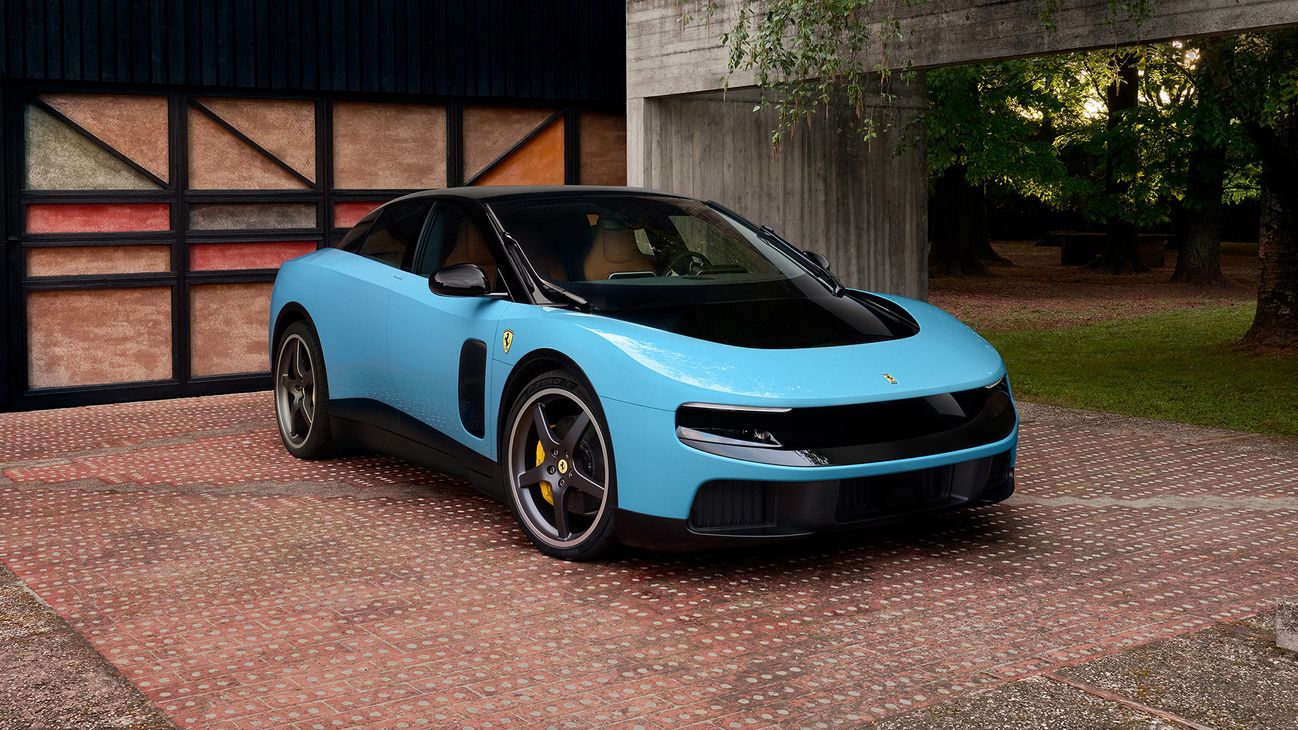
Ferrari Luce
"Maybe did you guys hear about this? It's a Ferrari Luce. Oh, did they come out with a new car? [190.1s] It hasn't been in the press yet, I guess, or I would have known about it."
They’re talking about a rumored/just-announced Ferrari electric vehicle called the Luce. The big point is that it’s an expensive “super SUV,” so people’s opinions are strongly tied to the price.
Ferrari Luce is being discussed as a new Ferrari-branded electric vehicle, framed as an all-electric super SUV. The hosts focus on how the model’s pricing and positioning affect how people react to it.
Lucid
"Now, the performance numbers are super interesting. I don't necessarily hate it as, [242.5s] like if you said this is Lucid's new all-electric super SUV, I'd be go, okay, well,"
Lucid is an EV company that makes electric cars. Here, the host is basically saying: if this were clearly a Lucid EV, it would make more sense than it being positioned like a Ferrari.
Lucid is an electric-vehicle brand known for high-performance EVs and large battery packs. In this segment, the host contrasts what they’d expect from a Lucid EV versus what they’re seeing/expecting from a Ferrari-branded electric SUV.
all-electric super SUV
"Now, the performance numbers are super interesting. I don't necessarily hate it as, [242.5s] like if you said this is Lucid's new all-electric super SUV, I'd be go, okay, well,"
“All-electric” means it’s powered by electricity only, using a battery. “Super SUV” is a way of saying it’s an ultra-premium, high-performance SUV—more like a luxury halo car than a normal SUV.
“All-electric” means the vehicle runs only on an electric motor powered by a battery, with no gasoline engine. “Super SUV” is an enthusiast term for a very high-end, high-performance SUV that’s priced and engineered like a halo model.
Edmunds
"on CarCast, Alastair and I, and for those of you who don't know, he's the editor-in-chief of Edmunds, [273.7s] we were saying, interesting approach that Ferrari didn't try to make this as the new entry-level"
Edmunds is a car website that helps people research and compare vehicles. They’re mentioned because the host is quoting or referencing what Edmunds’ editor thinks about the strategy.
Edmunds is an automotive media and car-shopping information company that publishes reviews, pricing guidance, and buying advice. The host mentions its editor-in-chief to frame the discussion as informed by mainstream car research.
entry-level vehicle to Ferrari
"on CarCast, Alastair and I, and for those of you who don't know, he's the editor-in-chief of Edmunds, [273.7s] we were saying, interesting approach that Ferrari didn't try to make this as the new entry-level [281.2s] vehicle to Ferrari."
They’re talking about how car brands sometimes create a cheaper “starter” model to get more people into the brand. The point here is Ferrari supposedly didn’t do that with this EV, so the lineup strategy affects how people judge it.
The hosts discuss “entry-level” positioning—how a brand chooses a lower-priced model to bring in new buyers. They argue Ferrari didn’t try to make this EV the cheapest way into the Ferrari lineup, instead keeping higher-priced models as the more “prestigious” tier.
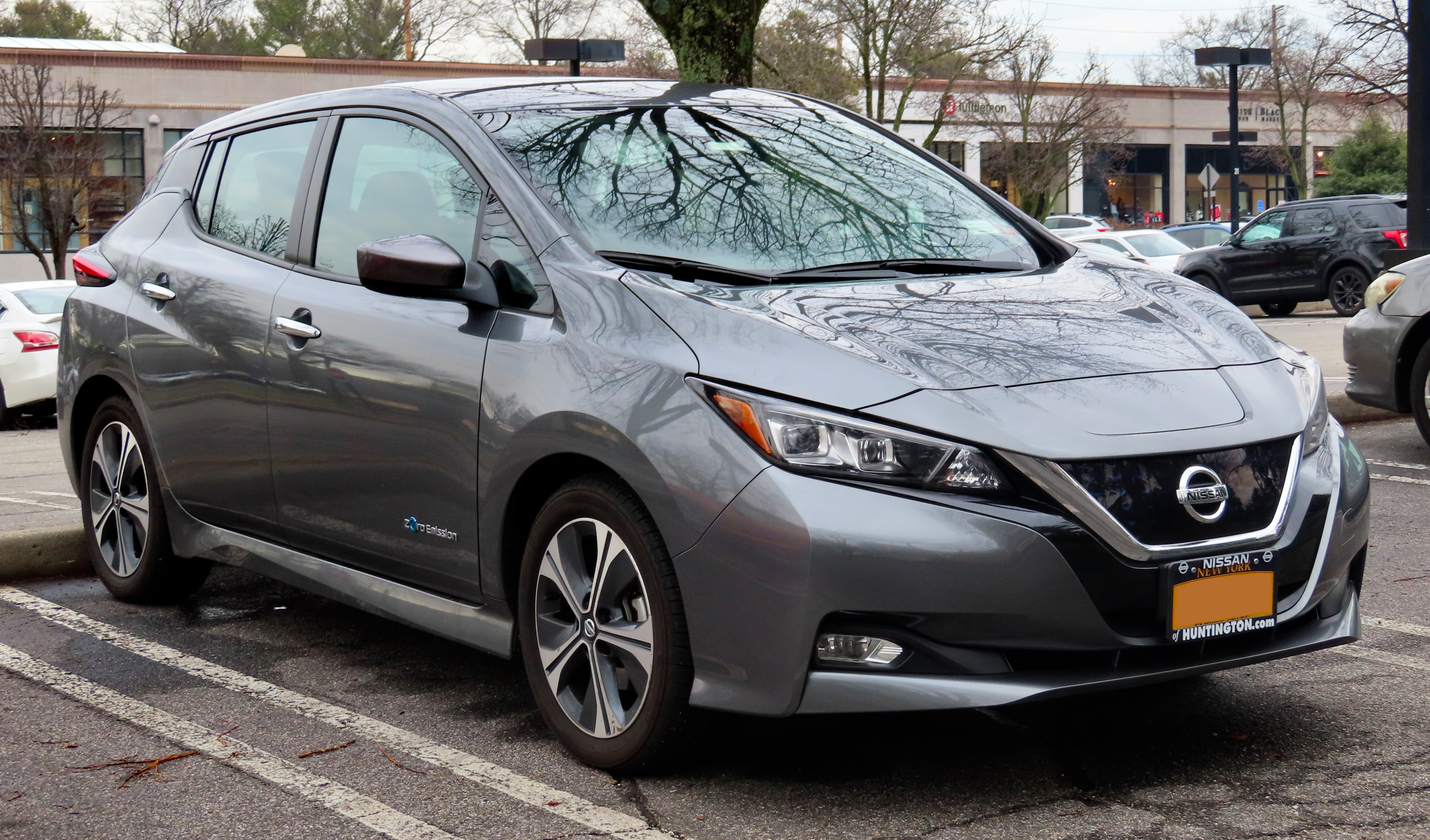
Nissan Leaf
"It kind of looks like the new Nissan Leaf. And it wasn't Nissan USA, but it was like Nissan of Europe posted photo of the Leaf and the Luce."
The Nissan Leaf is an electric car. In this segment, the host uses it as a quick comparison for the Luce’s styling.
The Nissan Leaf is an all-electric compact hatchback, and here it’s used as a visual reference for how the Ferrari Luce “kind of looks.” That kind of comparison is common when discussing new designs, especially when the shape resembles a modern EV silhouette.
Monterey Car Week
"already. I was asking about Monterey Car Week because it's likely we will see it up there."
Monterey Car Week is a big annual set of car events in California. It’s where people go to see and buy rare cars, and the host says it’s gotten really expensive.
Monterey Car Week is a multi-day cluster of high-profile automotive events around the Monterey Peninsula, including auctions and display events. The host focuses on how expensive it’s become and how the crowds and social-media presence have changed the vibe.

Mclaren F1
"I'm standing next to it. This is a McLaren F1. There's a lot of that and also some dangerous things."
The McLaren F1 is a famous supercar made by McLaren. It’s known for being very special and rare, and people get excited when one shows up at big car events.
The McLaren F1 is a landmark supercar from McLaren, famous for its lightweight carbon-fiber construction and a driver-centric layout. It’s especially known for its three-seat configuration and high-revving performance, which is why it tends to draw huge attention at collector events.
Spiker
"Another interesting thing is Spiker is back and they're rushing to get the car back up there."
Spiker is a car brand mentioned as being “back” and actively working to get a car returned to the Monterey Car Week area. The host discusses how the brand might stage a launch or display, and where it could be located.
Pebble Beach
"It was when you walked from the auction area at Pebble Beach towards the hotel area, you go through that little kind of vending area."
Pebble Beach is a famous place on the Monterey Peninsula where big car events happen. People go there to see rare cars and attend auctions.
Pebble Beach is the Monterey Peninsula area that hosts one of the most prestigious automotive weeks in the U.S., with auctions and concours-style events. In this segment, the host describes how people move between the auction area and nearby hotel areas during the event.
Quail
"Or do you think they're going to launch at the quail? Do you think they're going to make that investment because they're back?"
“Quail” is one of the events during Monterey Car Week. The host says it costs a lot and has rules about what you can and can’t do.
“Quail” refers to Quail, a well-known Monterey Car Week event venue/experience that’s associated with high-end car displays and strict access rules. The host mentions it as expensive and restrictive, contrasting it with other ways to participate.
Rolex, the Motorsports reunion
"Japanese race cars are going to be one of the featured marks at the Rolex, the Motorsports reunion at the track. Oh, is that what it is this year?"
This is a historic racing event at a track, sponsored by Rolex. The hosts are saying it’s where you’ll see classic Japanese race cars and BRE cars on display.
The Rolex Motorsports Reunion is a track event focused on historic racing cars and drivers. In this segment, it’s the venue where the Japanese race-car display and BRE-related cars are expected to show up.
Pete Brock
"Oh, is that what it is this year? They're going to have, Pete Brock is going to be there. I think he's going to be a grand marshal and Adam is going to be bringing, we've got a handful of cars that we're bringing. So he's racing the BRE 510, the Datsun 510, ... Pete Brock designed it, but it's the yellow and white car."
Pete Brock was a famous racing designer who helped create some of the most iconic cars in American motorsports history. Here, they mention him because he designed the Shelby Daytona Coupe and also worked on BRE’s racing cars.
Pete Brock was a major American motorsports designer and team leader, strongly associated with Brock Racing Enterprises (BRE). In this segment, he’s credited with designing the Shelby Daytona Coupe and the Corvette “63 split window Coupe,” and with creating the BRE-liveried 510/roadster projects.
grand marshal
"Oh, is that what it is this year? They're going to have, Pete Brock is going to be there. I think he's going to be a grand marshal and Adam is going to be bringing, we've got a handful of cars that we're bringing."
A grand marshal is an official ceremonial role at an event, typically given to a prominent person who represents the event’s heritage or theme. Here, Pete Brock is expected to serve in that capacity at the reunion.

Datsun 510
"So he's racing the BRE 510, the Datsun 510, but we're going to be bringing, we're still kind of working out the details, but the BRE Hino Transporter truck, the Privateer BRE 510, it's not fully built, but we've got it done and painted just no engine in it yet."
The Datsun 510 is a classic Japanese compact car that racers liked because it was easy to modify and could be made fast. Here, they’re talking about the racing version connected to BRE’s famous 510 cars.
The Datsun 510 is a compact Japanese sedan that became a standout in racing because it was light, tunable, and had a strong aftermarket. In this episode, it’s specifically referenced alongside BRE, tying it to the historic BRE 510 race-car story.

Hino Transporter truck
"So he's racing the BRE 510, the Datsun 510, but we're going to be bringing, we're still kind of working out the details, but the BRE Hino Transporter truck, the Privateer BRE 510, it's not fully built, but we've got it done and painted just no engine in it yet."
The Hino Transporter truck is a Japanese truck they’re bringing for the BRE-themed show. They’re highlighting it like part of the racing story, not just as a random vehicle.
The Hino Transporter truck is a Japanese commercial truck that’s being brought as part of the BRE-themed display. It’s notable here because it’s being treated like a race-era “support” vehicle with the same BRE graphics and identity as the cars.

Shelby Cobra
"... designed the Shelby Daytona Coupe. They wanted a Cobra that was faster at Le Mans, and he designed the C..."
The Shelby Cobra is a high-performance sports car made for racing and fast driving. It’s famous because it was designed with speed in mind, including for major endurance races. In the podcast, it’s mentioned as part of the story of how Shelby race cars were developed to be faster.
The Shelby Cobra is a legendary American sports car known for its lightweight design and powerful engine, built to deliver high performance. It’s especially significant historically because it’s tied to racing goals—designers aimed to create a Cobra that could be faster in endurance events like Le Mans. That’s why it comes up when discussing the evolution of Shelby’s race-focused cars and their performance ambitions.
Shelby Daytona Coupe
"He was a designer at Shelby. He designed the Shelby Daytona Coupe. They wanted a Cobra that was faster at Le Mans, and he designed the Corvette, the 63 split window Coupe."
The Shelby Daytona Coupe is a famous old race car from the 1960s. It’s known for its special aerodynamic shape, and the episode credits Pete Brock with designing it.
The Shelby Daytona Coupe is a legendary endurance-racing car built by Shelby American for the 1960s, best known for its aerodynamic “Daytona” bodywork. The host ties Pete Brock to its design, and frames it as part of why Brock is a big deal at the reunion.

Chevrolet Corvette
"They wanted a Cobra that was faster at Le Mans, and he designed the Corvette, the 63 split window Coupe. Yeah. Yeah, which he has original like framed in his house from back in the day, which are really, really cool."
This is a 1963 Corvette, and “split window” means the rear window area is shaped in a split pattern. It’s a well-known styling feature that helps people recognize the exact Corvette year.
The “63 split window Coupe” refers to a 1963 Chevrolet Corvette with the distinctive split rear window design. It’s a highly recognizable styling detail that enthusiasts use to identify that specific Corvette year and body style.

Mazda Rx7
"has an RX-7. And the chicken car. He has a chicken car, but that's not Japanese. I, Japanese like chicken an awful lot."
The RX-7 is a Mazda sports car. What makes it special is that it uses a rotary engine, which is different from the usual piston engines most cars have.
The Mazda RX-7 is a famous sports car known for its Wankel rotary engine, which spins rather than using pistons. In enthusiast circles it’s often discussed alongside other “weird” or distinctive cars because of that rotary layout and its motorsport history.
Henry Ford Museum
"We were doing a screening of that with a Q&A session at the Henry Ford Museum. And also during that time, like the Peterson Checkered Flag 200 Club planned"
The Henry Ford Museum is a big museum in the Detroit area. Here, it’s where the hosts did a talk/Q&A connected to an automotive documentary.
The Henry Ford Museum is a major Detroit-area museum that hosts automotive and industrial history exhibits. In this segment, it’s mentioned as the venue for a Q&A tied to a Ford-vs-Ferrari documentary screening.

Ford Mustang
"Then we went to the museum and some very, very cool stuff in there, especially if you're a Mustang fan. But one of the cars that was in there was a 1995 Mustang Cobra racing car. So the Cobra didn't have the modular motor. It was like a, it was a 351 punched out to like 6.1 liter"
This is a 1995 Ford Mustang Cobra race car. The important part is the engine choice—it wasn’t the newer “modular” engine, and it used a 351 V8 that was bored out to make more displacement.
The 1995 Ford Mustang Cobra (in this case, a racing car) is notable because it represents a specific era of Mustang performance and track competition. The host points out a key detail: it didn’t use the modular engine family, instead using a Windsor-based 351 V8 bored out toward a larger displacement.

Ford F150S
"I don't know, for like pennies on the dollar. So we visited Roush Performance. So we saw the cars and trucks that they're building, the new cars, Mustangs F-150s and some other building. Then we went to the museum and some very, very cool stuff in there, especially if you're a Mustang"
The Ford F-150 is a large pickup truck. It’s used for hauling and everyday driving, and it’s also a popular starting point for performance modifications. It comes up in podcasts when people visit shops that build upgraded trucks.
The Ford F-150 is a full-size pickup truck that’s widely used for work and everyday driving, and it’s also a common base for performance upgrades. In the context of visiting Roush Performance, it makes sense because tuners and builders often modify F-150s alongside other high-profile vehicles. It’s discussed because it’s a major platform for new builds and performance packages.
modular motor
"But one of the cars that was in there was a 1995 Mustang Cobra racing car. So the Cobra didn't have the modular motor. It was like a, it was a 351 punched out to like 6.1 liter"
A “modular motor” is Ford’s name for a certain family of engines they built to be shared across different cars. Here, the point is that the race Mustang Cobra didn’t use that engine family.
“Modular motor” refers to Ford’s modular engine family—an engine design used across multiple Ford models. In this segment, the host contrasts it with the race car’s 351 V8, emphasizing that the Cobra didn’t use the modular architecture.
351 punched out to like 6.1 liter
"didn't have the modular motor. It was like a, it was a 351 punched out to like 6.1 liter"
“Punched out” means the engine cylinders were bored bigger. That increases the engine’s size (displacement), which can help it make more power for racing.
“Punched out” describes boring an engine’s cylinders to increase displacement. The host is saying the 351 V8 was modified to approximate a much larger displacement (around 6.1 liters), which is a common way to build a high-output race engine.
movie livery
"That movie, they scraped up a little bit of money from the studio to run the movie livery on that car. And he won, I think he won his class at the 24 hours of Daytona"
A livery is the car’s paint and graphics scheme—basically how it’s “decorated.” “Movie livery” means it was made to look like the version used in the movie.
A livery is the car’s visual branding—paint, graphics, and sponsor-style markings. “Movie livery” here means the car was dressed in the specific look used in the film, tying the racing car’s identity to the movie’s branding.
won his class
"And he won, I think he won his class at the 24 hours of Daytona and like third or something overall"
Endurance races often split cars into groups (classes). “Won his class” means he was the best in his group, even if he wasn’t necessarily first overall.
In endurance racing, cars compete in multiple classes based on rules like engine size, modifications, or vehicle type. “Won his class” means the driver finished first among the cars in that specific class, even if the overall race winner was different.

Roush Mustang Cobra
"Yeah. And one of the other cars was in there. So that was the 95 Roush Mustang Cobra, but the 97 Roush Mustang Cobra, which is the Tommy Kendall championship car where he won something like 11 of 15 races in that car."
This is a special racing Mustang made by Roush. The host is talking about a specific competition car that Tommy Kendall used to win a lot of races.
Roush Mustang Cobra refers to a performance Mustang built by Roush, specifically a race-prepped “Cobra” variant used in competition. In this segment it’s described as Tommy Kendall’s championship car, highlighting how Roush prepared a Mustang for endurance-style racing success.
PPF'd
"So it's very, there is. I don't know if they like PPF'd it or did anything because when I was at Goodwood years ago and Goodwood was right after Le Mans"
PPF (paint protection film) is a clear protective layer applied to a car’s paint to help prevent chips, scratches, and minor abrasions. When the host says the car may have been “PPF’d,” they mean it might have had this film installed to preserve the finish after racing.
Le Mans
"from Le Mans to Goodwood. And they said, right when we took it off the track, we just put PPF"
Le Mans refers to the famous French endurance racing venue, associated with the 24 Hours of Le Mans. In this context, it’s used as a reference point for where the car has been before being protected and displayed.
Goodwood
"from Le Mans to Goodwood. And they said, right when we took it off the track, we just put PPF"
Goodwood is a famous motorsports venue in the UK. The host is saying the car went from a big race event to Goodwood and then got protected.
Goodwood is shorthand for the Goodwood estate and its motorsport events in the UK. The host is describing the car’s journey from Le Mans to Goodwood, then how it was protected after track time.
paint protection film
"because there wasn't a PPF. It wasn't a paint protection film in 1995, right?"
Paint protection film is the clear sheet that protects a car’s paint. It’s meant to stop small damage from things like bugs and road debris.
Paint protection film is the full name for PPF, a clear protective layer that helps prevent paint damage from debris and environmental exposure. The host notes that PPF wasn’t common in 1995, which is why they’re speculating about what protection method was used back then.
patina
"So that patina to it. Yeah, it's there."
Patina is the natural look a car gets as it ages—like discoloration or wear from use. In this case, they’re saying the aged look is still there and part of the appeal.
Patina is the visible wear, discoloration, and surface aging that builds up over time. Here, the host is connecting the preserved “dirty” look to patina, implying the car’s aged appearance is part of what makes it interesting to display or race.
Barrett-Jackson auction
"Are you going to the Barrett Jackson auction? Well, yeah, I'm going [1428.7s] to that. I always go to that. No, I mean the new one."
Barrett-Jackson is a big car auction where people bid on collector cars. The host is talking about going to one of those auctions while traveling.
Barrett-Jackson is a well-known collector-car auction brand in the U.S., where enthusiasts bid on everything from classic cars to modern exotics. The host mentions attending the auction in Columbus, Ohio, as part of their travel plans.
Moab
"and I'm going to go to all the Utah type places and see all the national parks and go to all those really cool places [1481.0s] that are up there, Moab and like that."
Moab is a popular travel spot in Utah, known for national parks and outdoor trips. The host is planning to stay there during their road trip.
Moab is a city in Utah known for outdoor recreation and road-trip routes, especially around national parks. The host uses it as a destination for their vacation plans in this segment.
Grand Canyon
"And then I'm going to swing across and back down and come back down through the Grand Canyon"
The Grand Canyon is a famous national park in Arizona. The host is saying their trip will loop back through there.
The Grand Canyon is a major national landmark in Arizona, referenced here as part of the host’s road-trip route. It’s not an automotive topic, but it’s a specific place mentioned in the travel planning portion.
V10
"[1580.6s] What did you rent? Do you know what the coach is going to be? [1584.4s] I rented a 30-foot motor home that has a V10 in it, and it looks nice in the photos. [1597.2s] But I'm going to go the extra-trestial highway and look for aliens."
A “V10” is an engine with 10 cylinders. The cylinders are arranged in a V shape, and it usually gives the vehicle plenty of power for driving long distances.
“V10” means an engine with 10 cylinders arranged in a V shape (two banks of cylinders). In a motor home, it’s typically chosen for smoothness and strong power for highway cruising and towing.
drive-thru pads
"[1632.9s] I don't have to coordinate or do anything. I just go up. Because he knew stuff like, oh yeah, well, [1639.6s] we want to go to parks that are what they call drive-thru pads. You just pull in and park. You [1645.5s] don't have to back in or anything like that. And some of them are size restrictions."
“Drive-thru pads” are campground/parking spots designed so you can pull in and park without backing up. For larger motor homes, this reduces the difficulty of maneuvering and lowers the risk of getting stuck or scraping equipment.
Ram
"I'm disappointed in is I didn't pick up one of those new Ram Truck T-shirts because I can't wear that."
Ram is a truck brand. They’re talking about a Ram T-shirt design that’s based on the look of another truck (a Tacoma).
Ram is the truck brand within Stellantis, best known for its lineup of pickups and related accessories. In this segment, “Ram” is central because the hosts are discussing a Ram Truck T-shirt design that borrows the look of a Toyota Tacoma.
AI
"So somebody in marketing decided they could do a shirt just like the designers could only. They forgot that AI, if you're not careful with it, doesn't do a very good job and their American flag had way too many stars"
AI here refers to automated image-generation or design tools that can create graphics from prompts. The hosts criticize the result as inaccurate—specifically mentioning the American flag having “way too many stars.”
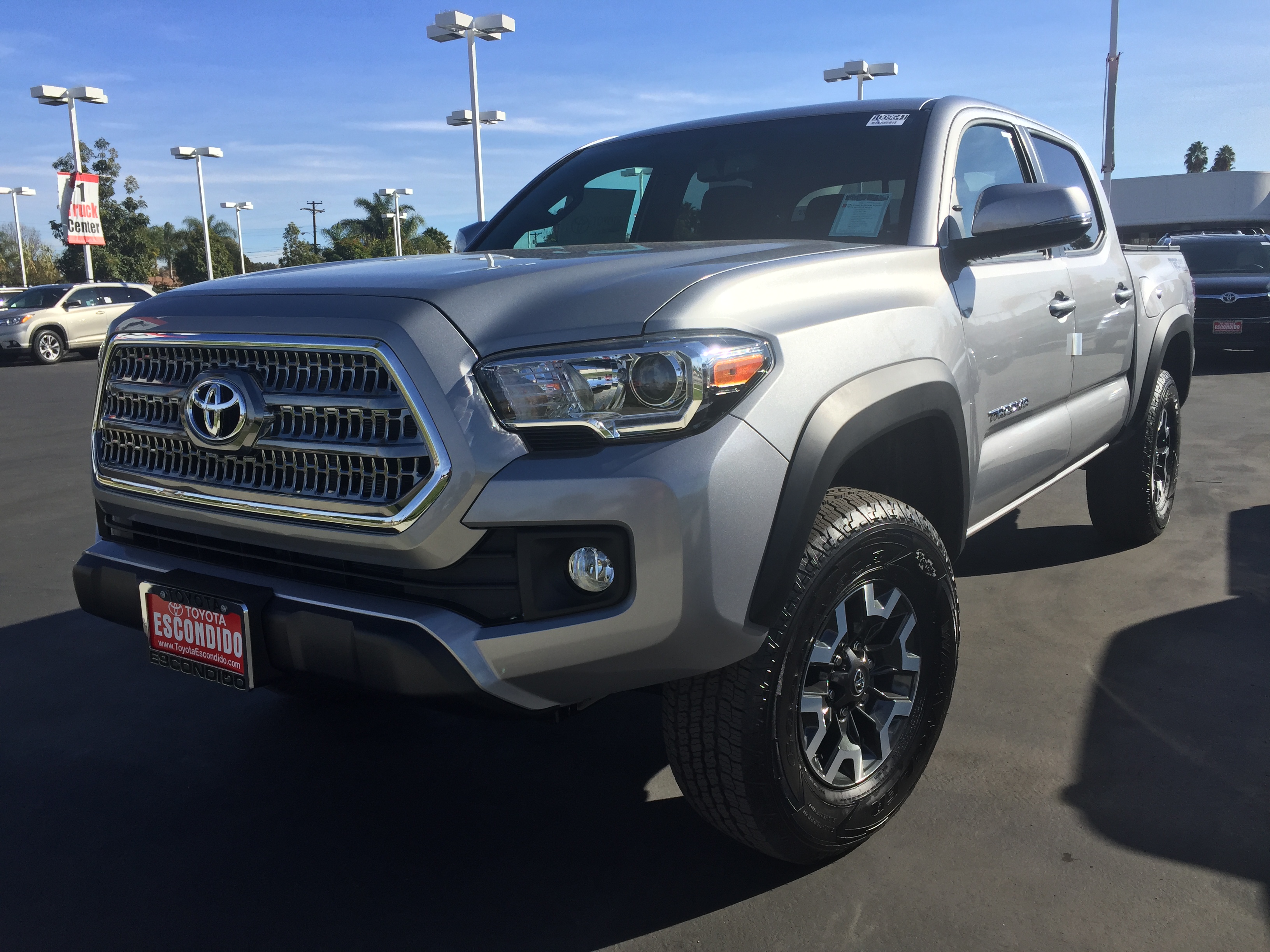
Toyota Tacoma
"the biggest thing was that the truck looked like a Toyota Tacoma with a Ram grille and they actually printed them, put them up on their site and then someone pointed it out."
The Toyota Tacoma is a popular pickup truck. Here, they’re joking about a T-shirt design that looks like a Tacoma but swaps in a Ram-style front grille.
The Toyota Tacoma is a midsize pickup truck known for its off-road capability and popularity in North America. In this segment, it’s used as the base vehicle look for a Ram-themed T-shirt graphic, specifically described as “a Toyota Tacoma with a Ram grille.”
Fuelfest
"Fuelfest is coming up. It is. Southern California Fuelfest is coming up and it's in your town, Orange County Fairgrounds in Costa Mesa, June 13th."
Fuelfest is a car-themed event in Southern California. It includes car shows and drifting, plus concerts and other activities.
Fuelfest is a Southern California car event that combines car shows, drifting, and live entertainment. The host specifically points listeners to the Orange County Fairgrounds in Costa Mesa for the upcoming June 13th edition.
Orange County Fairgrounds in Costa Mesa
"Orange County Fairgrounds in Costa Mesa, June 13th. It's usually an afternoon and night event, 2pm to night pm."
That’s the specific location where Fuelfest is happening. It’s in Costa Mesa at the Orange County Fairgrounds.
Orange County Fairgrounds in Costa Mesa is the venue the host names for the upcoming Fuelfest. It’s a common Southern California location for large public events, including automotive gatherings.
drifting
"There's going to be car shows, going to be drifting. There's a concert series that's going on."
Drifting is when a driver intentionally makes the car slide sideways while still steering and controlling it. It’s a popular motorsport-style activity at car shows.
Drifting is a driving style where the car intentionally oversteers so the rear tires slide while the driver maintains control through steering and throttle. It’s often featured at car events because it’s visually dramatic and skill-dependent.

Chevrolet Impala
"...incoln Continental there used. There's a bunch of Impalas and a bunch of really cool cars that are just sta..."
The Chevrolet Impala is a full-size car made by Chevrolet. It’s popular with collectors, so you might see a lot of them at car events or in collections. In the episode, it’s mentioned because there are many Impalas and they’re considered interesting classic cars.
The Chevrolet Impala is a full-size car that has been produced across many decades, with a long history and a strong collector presence. It’s often mentioned in car-show or collection contexts because there are many examples, and they’re known for being part of classic American car culture. In the podcast snippet, it’s referenced as one of the cool cars you might see in a large lineup of used classics.
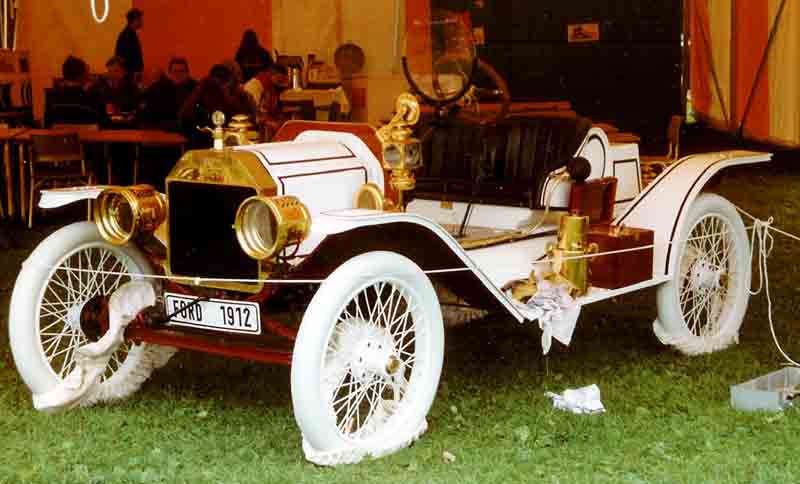
Ford Model T
"like that. There was this one gas station that I used to go to and they had cut a hill away to put the gas station in and you could see Model T's in the dirt. It was so wild and I think, now, God, I wish I would have taken a picture of that because it was just so cool that they were"
motor oil
"they used to take motor oil and the states would go around and collect all the motor oil from the places like the garages and stuff, and they would spray it on dirt roads to keep the dust down in the summertime."
Motor oil is the liquid that keeps an engine’s moving parts from grinding against each other. Here, people also used it on dirt roads to help keep dust down.
Motor oil is the lubricant used inside an engine to reduce friction between moving parts and carry heat away. In this story, it’s also being used as a dust-suppression spray on dirt roads.
LS motor
"hopefully they're bringing some good technology for our cars, you know. We know how to make that car put out 2000 horsepower, that LS motor."
An “LS motor” is a GM V8 engine family that a lot of car people like to modify. It’s known for being strong and easy to tune, which is why people talk about huge horsepower numbers with it.
“LS motor” refers to General Motors’ LS-series V8 engine family, known for being compact, durable, and popular for swaps and tuning. The host mentions it in the context of making very high power (like “2000 horsepower”), which is a common enthusiast talking point for the LS platform.
Request an Explanation
Heard something you'd like explained? We'll add it to this episode.
Sign in to request explanations for terms you heard.
Want to learn more?
Browse our glossary for plain-English explanations of automotive terms, jargon, and concepts.
Help improve this episode
See something that's not quite right? Our annotations are AI-generated and can sometimes miss the mark. Click the flag icon on any annotation to suggest a correction.