Amanda Gutierrez, vice president for auto restoration at McPherson College, shares insights on the college's renowned automotive restoration program celebrating its 50th anniversary. Highlights include the student-led restoration of a Mercedes-Benz that won second in class at Pebble Beach, national media attention, and plans for facility expansion. Amanda discusses the unique blend of liberal arts and technical skills in the program, student adventures like the Route 66 rally, and strong industry connections leading to high job placement. The episode also covers upcoming events like the annual car show and ways to support the program.
Brett and Mark welcome McPherson College Auto Restoration Program Vice President Amanda Gutierrez to discuss the fiftieth anniversary of the program, the Second Place class win for the 1953 Mercedes-Benz 300S Cabriolet at the Pebble Beach Concours d'Elegance, and the C.A.R.S. Show in May. All this and much more on Driven Radio Show!
""Hey, speaking of four-barrel carburetors. Yeah, the ongoing. OK, I did work on it this weekend. OK, I took all these stuff off.""
A four-barrel carburetor is a part of an engine that mixes air and fuel to help the car run better. It has four openings to let more fuel and air in, which can make the engine stronger.
A four-barrel carburetor is a type of carburetor with four separate barrels or venturis that mix air and fuel for internal combustion engines. It allows for greater fuel flow and improved engine performance, especially at higher speeds or loads.
"So you don't need a throttle, but you do need big breaks. Yeah, big breaks."
Big brakes help your car stop faster and safer, especially if it's going fast or carrying a lot of weight.
Big brakes refer to larger or upgraded braking components that provide better stopping power and heat dissipation, often used in performance or heavy vehicles.
"I've adjusted the the throttle screw or the idle screw. That ain't doing nothing."
The throttle screw helps control how fast your engine runs when your car is just sitting still. Turning it changes how much air gets in at idle.
The throttle screw is an adjustable component on a carburetor or throttle body that controls the idle speed of the engine by regulating how much the throttle plate stays open at idle.
"I've adjusted the the throttle screw or the idle screw. That ain't doing nothing."
The idle screw lets you change how fast the engine runs when your car is stopped, so it doesn't stall or run too fast.
The idle screw is used to adjust the engine's idle speed by controlling the throttle plate position or fuel mixture at idle, helping maintain smooth engine operation when the car is not moving.
"A video that's about how you work with your electric choke to get it to this and that. And back it off. It's a video from Holly."
An electric choke helps your car start better when it's cold by controlling how much air and fuel mix goes into the engine automatically.
An electric choke is a device on carbureted engines that automatically adjusts the choke valve using an electric heating element, helping the engine start and warm up more easily in cold conditions.
"You do have that fire extinguisher I gave you for Christmas on the wall. Dude, it's on the wall. OK. It's ready to go."
A fire extinguisher is a tool that helps you stop fires quickly to keep you and your car safe.
A fire extinguisher is a safety device used to put out small fires, especially important in garages or workshops where vehicles are repaired or worked on.
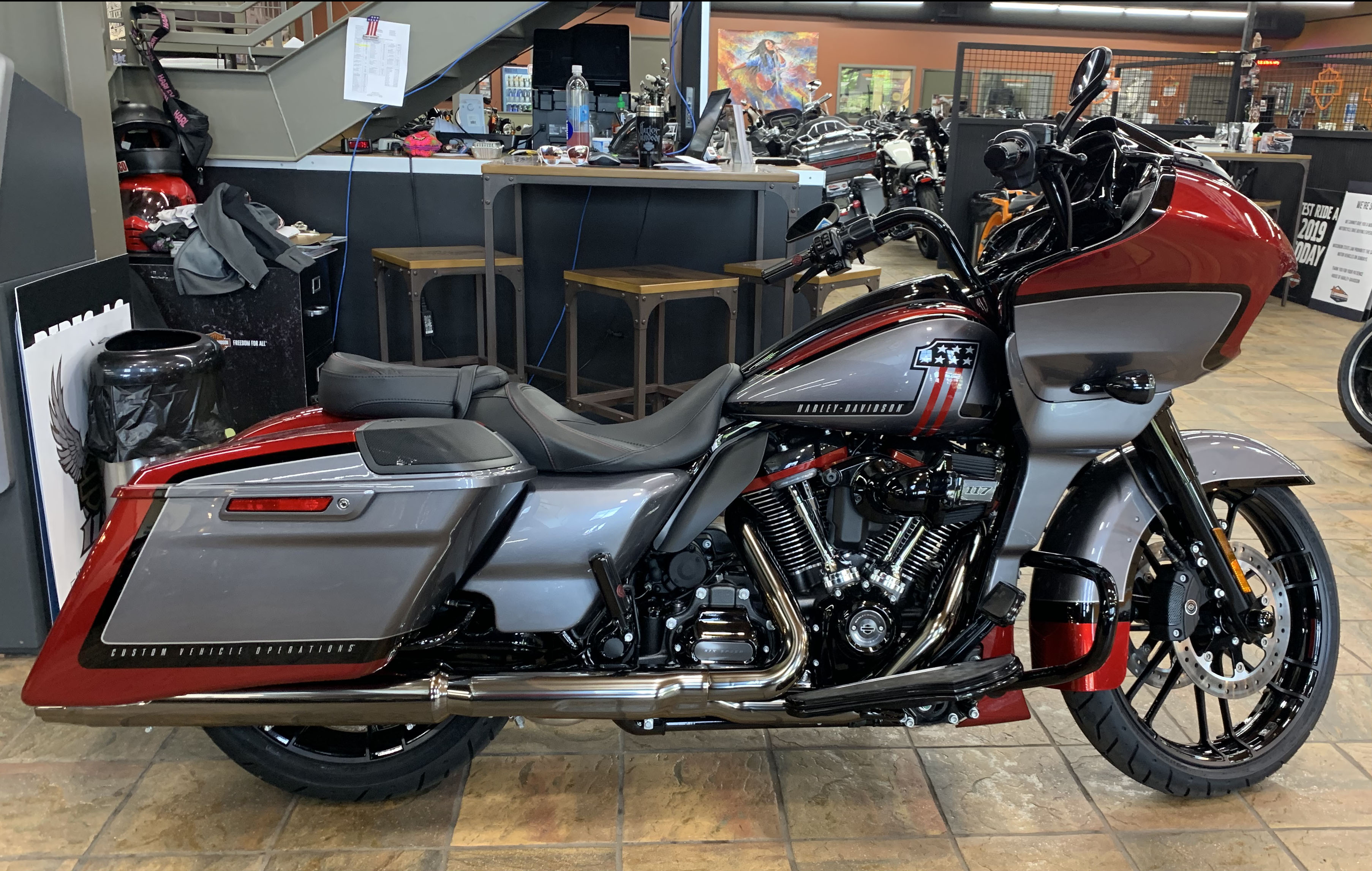
""And it's that big blue road glide. And that thing is going to be a fun bike. But it desperately needs a difference that I handle bar.""
The Road Glide is a type of Harley motorcycle made for long rides. It has a special front part that helps with wind and makes riding more comfortable.
The Harley-Davidson Road Glide is a touring motorcycle known for its distinctive frame-mounted fairing and comfortable long-distance riding capabilities. It is popular among riders who want a blend of style and touring functionality.
""But it desperately needs a difference that I handle bar. I don't know the guy who owned this before me must have been about four foot tall and had knuckles that just drug on the ground. Because those bars are super low, man.""
Handlebars are the bars you hold when riding a motorcycle. They help you steer and control where the bike goes.
The handlebar is the part of a motorcycle that the rider holds onto to steer and control the bike. Different styles and heights of handlebars can significantly affect riding comfort and posture.
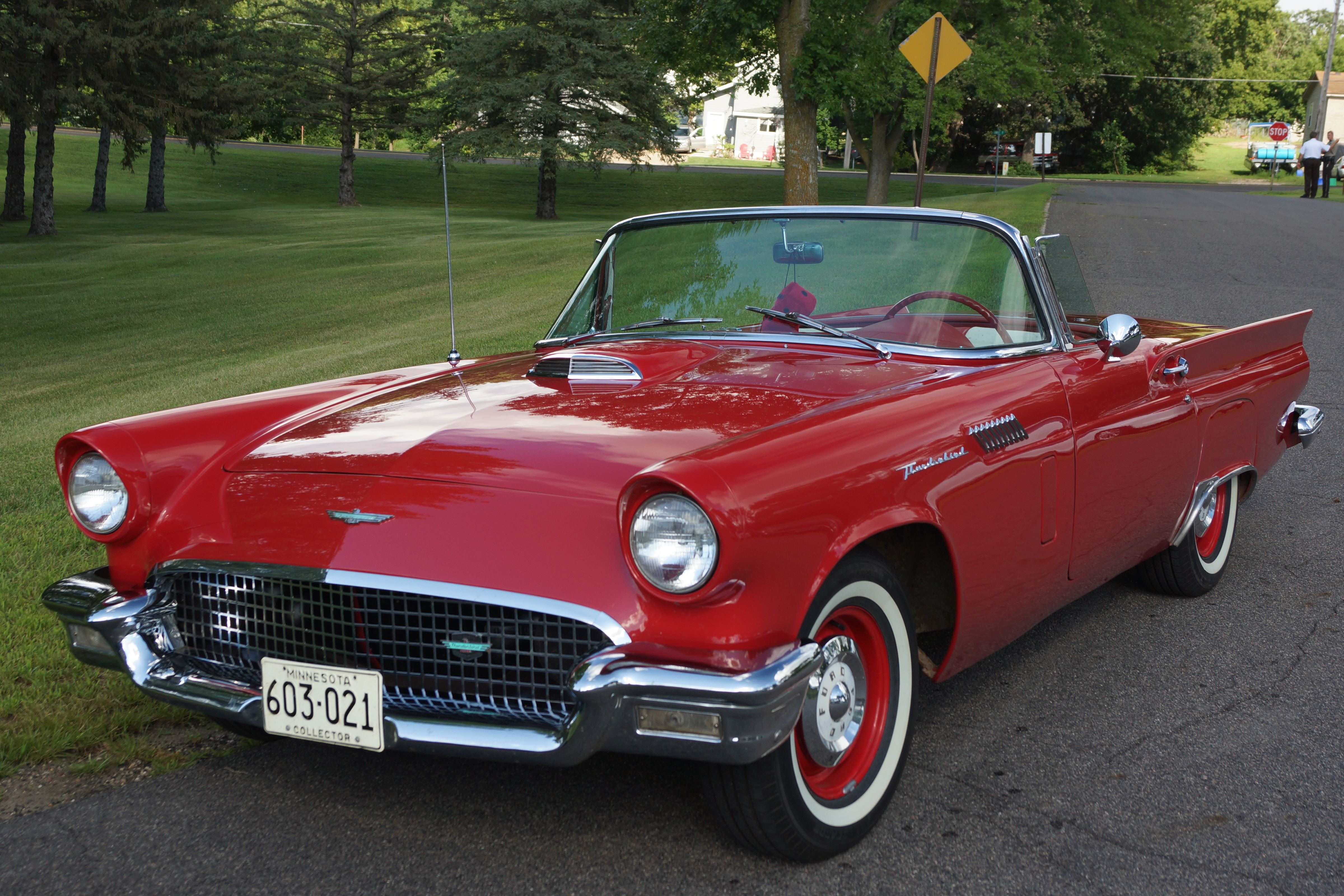
"And I've got the original one from the T bird. And then I've got the one that the other guy had on the T bird that sucked."
The Ford Thunderbird is a well-known old car made by Ford. It was popular for its cool looks and strong engines. People like to restore and work on these cars because they are special.
The Ford Thunderbird is a classic American car known for its distinctive style and historical significance. It was produced in various generations starting from the 1950s and is often noted for its V8 engines and luxury features for its time.
"Well, I do need to do some bearings in the front end. So yeah, I can come over and cry."
Bearings are small parts that help wheels and other parts turn easily without rubbing too much. If they get bad, your car might make noise or not drive well, so they need to be fixed or changed.
Bearings in a car are components that allow parts like wheels or the front end to rotate smoothly with minimal friction. Worn bearings can cause noise and affect handling, so replacing them is important for safety and performance.
"...from drag racing, a 63 Corvette to driving in events such as the Colorado..."
Drag racing is a race where two cars go straight ahead as fast as they can to see who wins. It's all about how quickly the cars can speed up.
Drag racing is a type of motor racing where two vehicles compete to be the first to cross a set finish line over a short, straight distance, typically a quarter-mile. It emphasizes acceleration and vehicle power.
"...really has been focused a lot on on the things that we're doing with with the college with the automotive restoration program and and looking toward the future..."
An automotive restoration program is a school class where people learn how to fix up old cars and make them look and work like new again.
An automotive restoration program is an educational course or curriculum focused on teaching students how to restore classic and vintage vehicles to their original or improved condition. It covers skills such as bodywork, mechanical repairs, and historical research.
"And so we have two cars hanging in in from the three story atrium. There we've got a Ferrari and we've got an Austin Healy 100 M."
The Austin Healey 100 M is an old British sports car that was made faster and better than the regular version. People like it because it's a cool classic car from the 1950s.
The Austin Healey 100 M is a classic British sports car produced in the 1950s, known for its performance enhancements over the standard 100 model. It is a sought-after collector's car and a symbol of mid-century British motoring.
"Why don't you have a red and white Corvette in there? Nobody's given us one yet."
The Corvette is a famous American sports car made by Chevrolet. It's known for being fast and looking cool.
The Chevrolet Corvette is an iconic American sports car known for its performance and distinctive design. The mention refers to a red and white Corvette that is not currently part of the display.
"We had a couple of students who finished the Austin Healy engine as a senior project."
A senior project is a big school assignment that students do in their last year. It usually involves working on something important to show what they've learned.
A senior project is a significant academic assignment typically completed by students in their final year, often involving practical application of learned skills. Here, students completed engine work on the Austin Healey as part of their senior project.
"I think the last time we talked may have been right after the 53 Mercedes Benz 300 S Cabrio took second in class at Pebble Beach Concorde Delegance in Monterey."
The Mercedes-Benz 300 S Cabriolet is an old fancy car with a roof that can fold down. People really like it because it looks nice and was special when it was made.
The Mercedes-Benz 300 S Cabriolet is a luxury convertible model from the early 1950s known for its elegant design and advanced engineering for its time. It is a highly collectible classic car often seen at prestigious automotive events.
"the 53 Mercedes Benz 300 S Cabrio took second in class at Pebble Beach Concorde Delegance in Monterey. How extraordinary is it to have the car accepted to the Concorde on a first effort, much less receive an award?"
Pebble Beach Concours d'Elegance is a big fancy car show where people bring very old and special cars to be judged on how nice and original they are.
The Pebble Beach Concours d'Elegance is a prestigious annual car show held in Monterey, California, showcasing rare and classic automobiles judged for their historical accuracy, condition, and elegance.
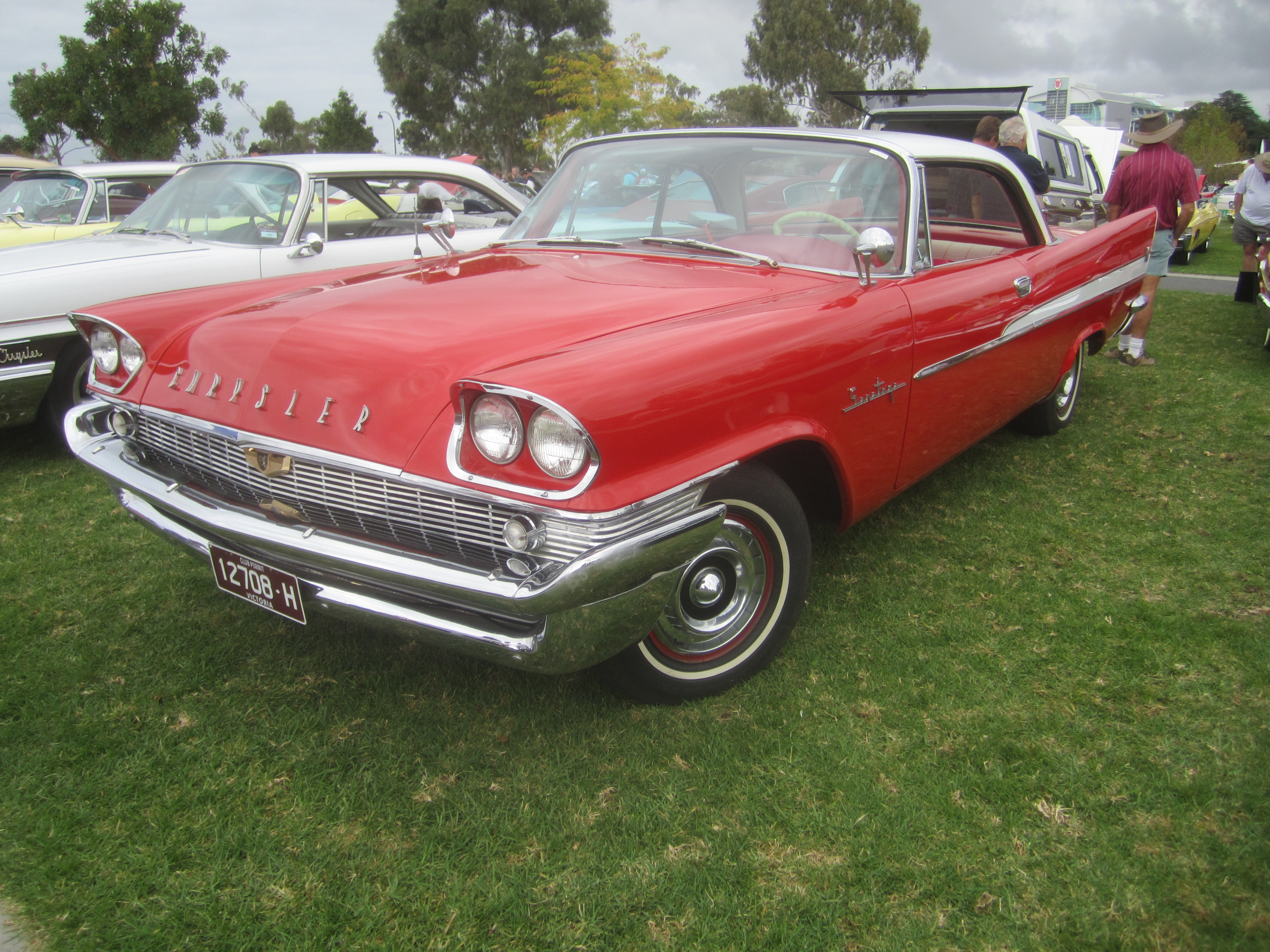
"...this year. We'll be sending it to New York to the Saratoga Museum. It'll be on display there as a celebrati..."
The Chrysler Saratoga is an old, fancy car made a long time ago. It was designed to be comfortable and powerful, and now some are shown in museums.
The Chrysler Saratoga was a full-size luxury car produced during various periods from the 1930s to the early 1950s. It was known for combining performance with upscale features, making it a notable model in Chrysler's lineup. Its historical significance often leads to its display in automotive museums, such as the Saratoga Museum mentioned.
"how auto restoration fits into the liberal arts, why those two are paired together and really put McPherson College on the map."
Auto restoration means fixing up old cars to make them look and work like new again. People do this to save special cars and keep them around for a long time.
Auto restoration is the process of repairing and refurbishing classic or vintage cars to bring them back to their original or improved condition. It often involves mechanical, bodywork, and interior work to preserve automotive history.
""Trustees was on campus, we presented them with a concept for an expansion and remodel renovation of Templeton Hall, which is our restoration facility that would almost double the teachable space that we have in Templeton Hall.""
A restoration facility is a special place where old cars are fixed and made to look like new again.
A restoration facility is a specialized workshop or building equipped for restoring vehicles, often classic or vintage cars, where students or professionals work on repairing, refurbishing, and preserving automobiles.
""We'll have some a fab lab over there, like a maker space where students can have hand tools to build things and create ideas. And so we have some big projects coming up.""
A fab lab is a place where people can use tools and machines to build and make things by hand or with computers.
A fab lab (fabrication laboratory) is a small-scale workshop offering digital fabrication tools and hand tools for designing and creating physical objects. It supports hands-on learning and prototyping in engineering and design.
"he's a restoration student he rides motorcycles it was just this really interesting combination of our students are so much more than what people think they are"
A restoration student learns how to fix old cars or motorcycles to look and work like new again, keeping their original style and parts.
A restoration student studies the process of repairing and returning classic or antique vehicles to their original condition, preserving historical accuracy and craftsmanship.
"they think gearhead uh grease monkey what you know they think of all of these it's all they want to do is wrench on cars but they're so interesting"
A gearhead is a person who really loves cars and likes to work on them or learn about how they work.
Gearhead is a slang term for someone who is very passionate about cars and automotive mechanics, often enjoying working on vehicles as a hobby or profession.
"Owen Phillips who's one of the students in the restoration program dreamed up this scheme that he and some buddies were going to take a spring break trip"
A car restoration program teaches students how to fix and bring old cars back to life so they look and work like new again.
A car restoration program is an educational course where students learn how to repair and restore classic and vintage cars to their original condition or better. It involves skills like bodywork, mechanical repairs, and historical research.
"they're going to take a spring break trip along route 66 from McPherson... this year since it's an anniversary of route 66 they're going to do it again but they're going to go all the way to the Santa Monica pier"
Route 66 is an old famous road in America that people like to drive on for fun, especially with old cars. It goes from Chicago all the way to the beach in Santa Monica.
Route 66 is a historic highway in the United States that originally ran from Chicago to Santa Monica. It is famous for its cultural significance and is often associated with classic American road trips and vintage cars.
"I actually had Owen and Owen and another student Jack were out with me in California for a car auction and they were telling me about this plan"
A car auction is like a big sale where people bid money to buy cars, sometimes rare or old ones.
A car auction is an event where vehicles are sold to the highest bidder. These auctions can include classic, vintage, and collector cars, and are often attended by enthusiasts and dealers looking for special vehicles.
"lots of bailing twine and duct tape will be had by all the garlic bar boy the sun would be down it'd be dark and they'd have their flashlights out working on their cars"
Bailing twine is a strong string and duct tape is sticky tape; both are used to quickly fix things on cars when you don't have proper tools.
Bailing twine and duct tape are common makeshift repair materials often used by car enthusiasts during road trips or restorations to temporarily fix or hold parts together until proper repairs can be made.
"which is fun and varied and what is there will have GM will be bringing cars again they always bring some concept cars for us"
GM is a big car company in America that makes many kinds of cars and trucks. Some of their famous brands are Chevrolet and Cadillac.
GM, or General Motors, is a major American automotive manufacturer known for brands like Chevrolet, GMC, Cadillac, and Buick. They produce a wide range of vehicles including passenger cars, trucks, and SUVs.
"it's got fresh spark plugs got a fresh uh carburetor on it and the great thing was it wasn't even four all on the same side"
Spark plugs are small parts in a car's engine that help start the fire inside so the car can move. They need to be clean and working well.
Spark plugs are components in gasoline engines that ignite the air-fuel mixture inside the engine cylinders by producing a spark. They are essential for engine combustion and performance.
Select text to request an explanation
Quiet and I'm Skulls, I'm Broadcastin'. Hey, all you gearheads and car fiends, welcome
to Driven Radio Show, your weekly automotive happy hour. I am Brett Hatfield, here with
my co-host and engineer extraordinaire, Mr. Mark Groves.
That's me.
Coming to you from Driven Radio Studios, where it was...
What did we just skip, Sprangman?
Well, you know, it's gonna tag back. It does this now, it seems to be the going thing.
We're gonna have a couple of nice days. Two lips are getting ready to bloom, a little
John Cools are getting ready to bloom, and then it's gonna snow like a mother.
Yeah, so we're gonna get a blizzard.
We should get one more really good ice so it can kill every bud possible, and then you
can go back to Lowe's and buy all those plants again.
Welcome to Kansas, where you don't put your sweaters away until June, and you never put
your shorts away, because there's gonna be that odd day where you can throw them on.
I love it. Come on, bring it on.
Walking around today in my G-string and half shirt.
Wow, it was 83 degrees today. Isn't that crazy?
Yeah, well, yesterday I had all the windows open. You know, I worked from home on Mondays
and Fridays, but all the windows open, nice breeze blowing through the house. It was
pretty sweet.
We started that this morning, and it was too hot.
Yeah, I did notice that when we got down here to the studio du jour, it was cold. It was just cold.
The AC is on.
Yes, it is.
Holy crap, man.
You know, and back in the day, our ancestors used to come out here and broadcast from
mud hunts.
They would dig a hole in the ground, put a bunch of sod on top of it, and make that
there on their studio.
Well, I had to shoot can in a piece of string.
I had a Conestoga wagon that I souped up and put a four-barrel holly on.
With a big antenna on top of it.
Hey, speaking of four-barrel carburetors.
Yeah, the ongoing.
OK, I did work on it this weekend.
OK, I took all these stuff off.
I got enough of my parts in.
I made a Conestoga wagon.
Yeah, basically, I ran the tubes to all the right things.
It's running.
It's just idling.
Wait, wait, wait. Back up.
You jumped the shark.
Yeah. Oh, did I?
It's running. It's running.
It's running. Yeah.
It actually gets gas to it and it will start like on its own without me having to pour gas
down the carb. OK, terrific new.
But it's it idols at about 60 to 70 miles an hour.
So I've got further adjustments to do.
And God bless all my friends.
Seriously, on Facebook, I love you.
And that's why I put stuff out there because I sound like a whiny ass on Facebook, too.
But it's I'm fishing for help.
So you don't need a throttle, but you do need big breaks.
Yeah, big breaks.
I need a, you know, cast iron, a tranny.
But the, you know, I've adjusted the the throttle screw or the idle screw.
That ain't doing nothing.
So Luke, even and I glanced over that video before.
But Luke, a channel from McPherson College sent me a link to a video
that's about how you work with your electric choke to get it to this and that.
And back it off. It's a video from Holly.
So I'm going to give that a shot.
Fantastic that it's running.
Look at you. Yeah.
Look at you learning and doing.
Yeah. And, you know, nothing's caught fire blown up yet.
So yeah, that yeah, yeah.
Yeah. So that's at least a start.
I am. You do have that fire extinguisher.
I gave you for Christmas on the wall.
Dude, it's on the wall.
OK. It's ready to go.
And I I've got a number of things to take back to UPS to send back via Amazon.
But that's why I bought a number of those things off Amazon with the free returns.
Well, she's Amazon will let you return.
Got a lesson, too, because otherwise there'd just be a pissed off delivery guy.
Yeah, of course.
Alrighty, well, for my end, it has been really nice for a few days.
And so what am I going to do except get out two wheeled stuff
that I haven't been able to ride for a while?
Working on Harleys can really be frustrating.
Yeah. And I and I got one that is just fighting me all the way.
But I'm going to get the sucker figured out
because I can tell what's lying underneath.
And it's that big blue road glide.
And that thing is going to be a fun bike.
But it desperately needs a difference that I handle bar.
I don't know the guy who owned this before me must have been about four foot tall
and had knuckles that just drug on the ground.
Because those bars are super low, man.
And I rode that thing over to Hot Rod Express and back in Blue Springs
yesterday by the time I got back, my lower back was really upset with me.
Well, he liked being bent over like a cafe racer,
but didn't want to have to build one.
So yeah, you well, that's not the bike to do that on.
No, no, no, 900 pound cafe racer.
No, it does not work.
But funny, I got a lot of Harley parts left from other Harleys I've worked on.
I think I got some of the problems.
I just need some garage time to be able to I have solutions.
I have solutions.
You know, it's the leftovers that are kind of cool.
I have now two carburetors because about that holly.
And I've got the original one from the T bird.
And then I've got the one that the other guy had on the T bird that sucked.
So you could have a multi carb setup, but it would be the world's worst.
It would be awful, you know, could maybe do two, two four packs.
But no, what do you mean you need two different kinds?
I'm going to what I'm going to do is take the oldest one and not to jump in the
middle of your story, but I'm going to take the old one, buy a kit and learn
myself how to tear one down and build it up.
So I'm not so freaked out and more power to you.
Yeah, you know, and that way it's old.
It's nasty. It looks like it's been under water.
And if I eff it all up, hot diggity, no, no harm, no foul.
You can come over here when you're done with that and help me figure out how
to swap the front end to dual discs and calipers.
Well, I do need to do some bearings in the front end.
So yeah, I can come over and cry.
OK, sounds good deal.
Hey, our special guest this week is Amanda Gutierrez.
Yay, Amanda's back.
She is vice president for auto restoration in McPherson College growing up
around motorcycles and motocross.
Amanda remains engaged in the automotive culture through experiences ranging
from drag racing, a 63 Corvette to driving in events such as the Colorado
Grand and and Sports Car Market 1000.
Yay, Sports Car Market.
Yes, she's also spent nearly 20 years at McPherson College across two
10 years and also served on the college's board of trustees.
Amanda, welcome back to Driven Radio.
Thanks. It's great to be back with you.
It's been too long.
I've been trying to wrangle you for a while.
And it's your fault.
And it's certainly not your fault.
We just seems like we both always have a lot of stuff going on.
It's been quite a while since we've had you back two and a half years to be exact.
So what is new in your life?
How are things going?
Are you still in school?
No, I'm not still in school.
That's another story, but I'm pursuing other interests.
So, you know, it's been I was thinking about two and a half years.
It's been a really long time.
And and what have I been doing in two and a half years?
And, you know, there's that saying that do what you love
and you'll never work a day in your life.
No, I don't agree with that.
Do what you love and you'll be working all the time.
Thank you. Yes, Mark.
That's exactly.
And I thought, my gosh, that two and a half years has gone really quickly.
And there's been a lot happening.
There's always stuff going on.
I hate to be that person that says, oh, I'm so busy at work.
But, you know, really, we're we're just never stopping.
And that's kind of exciting to be at a place that doesn't just settle back and say,
yeah, this is good enough. We'll we'll write it out.
And so really has been focused a lot on on the things that we're doing
with with the college with the automotive restoration program
and and looking toward the future and figuring out what's next.
So that's been fun and and it's kept me busy.
I'd love to make a great segue out of looking toward the future,
but it's it's going to be kind of clunky.
So let's just go with what's new in the restoration program.
Well, celebrating our 50th anniversary of the program.
We're celebrating it right now.
It'll kind of be a big celebration at our car show in May.
We're collecting videos.
Brett Hatfield, thank you very much for submitting
a video for our 50th anniversary.
I don't know if you've seen that yet or not, but it's out on social media.
Oh, no, I was I didn't want to look at that.
No, it's great. I appreciate you doing it.
I need you to peer pressure some other people to tell their stories
from the time at the college, because we just really in this digital world,
it should be easier for people to tell their stories.
And we want to be able to share those.
And so we've got a lot that's going on that's new in the program.
Well, I'm sure we'll get to that the more that we talk.
But I always say the program.
I talk about the program and and really it's the people, right?
It's we have the program, the academic program, but the students,
the alumni, faculty, staff, advisors, all of those people.
And that's really kind of the heart of the program.
And so when we talk about what's new and what's going on,
it often focuses on them and what they're doing and what they're doing
for the program to move us ahead.
There are an awful lot of interesting stories
out there from people who came out of the program.
And I got to tell you, I would I would say that it's the cars.
The key is coming back, but it isn't.
You keep coming back to see all the people, you know, who are involved,
both instructors and students.
And I've I've said this more times than I can count on this show.
Cars show weekend is my favorite weekend of the year.
And I'm always really excited when it starts getting close,
the anticipation and everything.
And I'm thinking, oh, cool, it's almost here.
And then it happens in the weekend after I'm kind of, oh, man,
I got to wait a whole another year to have my weekend again.
It's 62 days away.
Yeah, it's but it's the people.
It keeps you coming back. Absolutely.
It's such a great event.
And another thing when I think about the people, it's when we restored
the Mercedes Benz and with car show and these big things that we do.
And we talk about student restored car.
We talk about car show student led.
And that's absolutely true.
Those are student led projects, but they don't happen
without somebody who's supporting that.
Right. And so I think about this great weekend that we've had
for more than 20 years of car show and Chris Paulson is the champion of that.
Chris just kind of quietly behind the scenes.
He puts up with every year a new group of students trying to figure out
where are we going to have parking?
How are we going to make it different this year for us to put our signature on it?
How do we communicate out with people?
And so, you know, we've got a lot of dedicated faculty and staff
that that really support our students.
And that's pretty cool.
And it all comes together at that car show.
Hey, that that reminds me.
Do you know who the the students who are leading the charge this year?
Because I'm going to have to have them on soon and ask them
about all the cool stuff that's going on.
Yeah, I'll send you their contact information.
Terrific. Thank you.
You have cars hanging in buildings now.
We do. Have you been here?
Have you seen it yet?
Not seen it online.
I've seen it online.
I haven't seen it in the flesh yet.
You'll see it in May.
We built a new campus commons called the Wise Campus Commons,
named after a local person here in McPherson, who just was an alum
and just really a huge champion for McPherson College.
And he passed away and his family and friends stepped together
and made the naming gift for that that building.
And we decided how do we pay homage to this restoration program
that is so different than anything you can find anywhere else?
And we wanted to have that front and center, not just for restoration
students and car enthusiasts, but for everybody to see.
And so we have two cars hanging in in from the three story atrium.
There we've got a Ferrari and we've got an Austin Healy 100 M.
And they're both at different levels.
And so when you go up the glass elevators, you can see the cars.
When you walk in, you're one end, you're kind of under the Ferrari.
And you see the Austin Healy across the way, vice versa, when you when you
come in the other doors.
And so it's pretty spectacular.
And we have people all the time.
It's become like a tourist attraction.
I'll be over there for a meeting and, you know, there will be people
that taking the elevator up and pointing.
They just came to McPherson to look at these cars hanging from the ceiling.
So that's pretty fun.
Why don't you have a red and white Corvette in there?
Nobody's given us one yet.
Oh, well, we may have to discuss that.
Oh, that would be so that'd be so cool.
School colors. That's right.
That'd be. Yeah. That's right.
We're going to change those cars out, you know, every couple of years, maybe
we don't really have the timeline yet.
But like right now, the engines are out of both of those cars.
We had a couple of students who finished the Austin Healy engine as a senior project.
We've got others working on the Ferrari engine.
And so it seems like a good time to hang those cars from the ceiling.
Well, maybe I could lend you a Corvette for a couple of years.
That would be fantastic.
I also understand you have a freshly minted professor.
How can we congratulate Professor Plow?
Which is what he said we can call him now.
I have some ideas, but
I'm not sure I want to know why he's called that.
But yes, Luke Channel was recently actually just this last weekend.
We had our board of trustee meetings on campus and Luke's
promotion to full professor was
was affirmed as well as Kurt Goodwin and Chris Paulson.
So we have three of our restoration faculty who who were promoted to full professor.
And so that's really great.
There's a process they have to go through over several years to get to that point.
And then it has to go through faculty committee.
You know, all the has to go through faculty committee
and then eventually it goes to the president and then to the board.
And so that's quite an accomplishment.
So we're proud of that.
That is Professor Plow, because every time it snows more than a dusting.
Luke's either got riding lawnmower or a big tractor with a blade on it.
And he volunteers to clear any driveway of anybody who asks him
and good on him for being such a kind soul and doing all that.
But he he said on social media that we can all refer to him now as Professor Plow.
I'm sure he did it with the most innocent of intentions
and meant nothing untoward by it.
The program has been getting well deserved attention from national media.
Can you tell us where you've been featured and what topics they were?
Was it just the program in general?
Yes. So starting with when we first really publicly launched
the idea that we were going to compete at Pubble Beach,
when we when our car got accepted into the Pubble Beach Concourse for 2023,
there was a hard press on on reaching out to national media,
pitching the story only school to do this car restored by students,
seven year process, all of that.
So we had a lot of features.
Bloomberg did a piece on the college,
but it took a real slant toward toward auto restoration
when we took the reporter over there and started walking her through.
She wasn't really a car person.
But as we started walking through and opening doors on things
and showing her different cars, she got really excited about it.
So that was fun. That's where the.
I'm careful is that publication
or another one that came out with the the Harvard of Automobile Education.
That's what they had to refer to MacPherson College, so we love that.
We were also recently on Fox Business.
They came out and did some live segments and threw them back.
And that was really great.
The guys that came out here travel all over the world and do these stories.
And so it was fun.
They really got to know our students and our professors.
And then probably the big one for us was CBS Sunday morning.
We had Lee Cowan, who's a correspondent.
He fills in for Jane Pauley when she's gone.
But Lee Cowan is just an incredibly kind and bright individual.
And he and Michelle Kethel, who was the producer and the cameraman,
came out here and spent a couple of days with us here.
They were out with us at Emilia Island as well.
Interviewing students, interviewing faculty and staff.
And that's a big deal for this college in Kansas to be on CBS Sunday morning.
And it went it went everywhere.
People were emailing, calling, congratulating.
So that was pretty exciting to see the work of our faculty and staff
from that way and lifting up our students and what they're doing.
Isn't it fun to see non-car people respond to
the facility and the cars as they're being completed
and see what really goes into it?
It is. They really don't until they have a chance
to experience the car in some way, they don't understand what they're looking at.
And so one of the things I love, I mean, generally speaking,
we don't want people to just touch our cars, especially if they don't know what they're doing.
But it's really neat to today.
I had a gentleman on campus and I was showing him our Mercedes
and to open that door and show them the interior and they can smell the leather
and they can look at the wood grain and they and then you close that door
and that click of the door and you talk about the details.
And and all of a sudden they have a connection with it that
they don't have if they just see a photo of it.
They have to experience it in some way.
And I think that's one of the really key pieces for keeping young people engaged
with cars, because sometimes you'll have somebody from a car club who will say,
you know, these young kids, they don't care about these cars.
Well, have they had a chance to experience them?
So so how do we engage people and even people who don't identify themselves
as being a car enthusiast, they have a car story.
And when you start digging at that, you know, maybe it's a family road trip
or a time they got stuck in a snow bank and they had to dig their car
out with their buddies in high school or so.
You know, there's there's a story somewhere around a car for almost everybody.
Sure. I think the last time we talked may have been right after the 53 Mercedes
Benz 300 S Cabrio took second in class at Pebble Beach Concorde Delegance
in Monterey. How extraordinary is it to have the car accepted to the Concorde
on a first effort, much less receive an award?
It was pretty unreal in the moment, I think, even leading up to it.
In fact, I we have on a real the the path of Pebble documentary
up in our new Welcome Center.
And I was watching that the other day.
And that that moment when President Schneider and I went over and told
the students, the car got accepted to Pebble Beach and there was silence.
The students had been working on this car.
They were exhausted, you know, and they just kind of crickets
because they realized, oh, gosh, this is really going to happen.
We're going to have to push through the end, which I have no doubt they would have anyway.
So that whole experience is never far away.
But it's still a little unbelievable, even even what are we almost three years later?
It's just it's really remarkable.
And I don't think we should lose sight of the fact that there was a group of students
that learned together on this car that struggled with it, that ultimately did
exquisite work on it, that was at a world class level and it was recognized at that level.
It's it still kind of blows my mind when I think about it.
Well, furthermore, it was a seven year effort.
So it wasn't one class of kids.
It was multiple classes of people who worked on that car and managed to maintain
that same level of work product throughout the process.
So I mean, it's it's extraordinary if a private shop finishes a car and the craftsmanship
is of such caliber that they get accepted.
But we're talking about this thing passing through a bunch of different hands
and still getting accepted.
The other thing is that the other question I thought of while you were talking was
so you and Michael Schneider walked over to Templeton and told everybody that the car got
accepted. What was the response between the two of you? Were you just giddy walking over there?
We were. So I got the notification first and I was trying to decide who do I tell because I knew
we needed to time it out when the students were there and it was so Michael and I were the first
to know. You didn't call Ken? I didn't call Ken. I didn't call Luke. I didn't call any of them.
It was a well kept secret for a while. We wanted to have a camera crew here because we knew we
were doing this documentary. We wanted to have a camera crew here to capture the response of the
students that were working on the car at the time. Oh, they had to know something was up when you
walked in with cameras. Well, we told them that we were just doing some filming for the documentary
but they didn't know that it was coming or we were doing because they had been on camera at that
point a lot for years. They've been on camera a lot. They were really good at it. So we wanted to
capture that first response and it's priceless in our documentary. Congratulations. You're going
silence. Do you think anybody had that moment of, oh God, what have we gotten ourselves into?
Absolutely. I mean, I think there were times throughout that seven years we all felt that way
and probably nobody more than Brian Martin who was the consistency in that program or in that
project all those years. He was the one that dealt with students graduating or deciding they're too
busy that semester or bringing new people on. Yeah, and I think that that pressure never left him
and I think as we got closer to that deadline that the students were carrying that as well.
I think we all were but the ones who were doing the work, those are the ones that
they were in the trenches and they knew it was riding on the work that they were doing
and that's a lot of pressure. Yeah, but think about the ones who really did a lot of work on it
and were very involved. All of those students got to leave and the first shop they interviewed with
got to look at their resume and say, oh yeah, I worked on a project that went to Pebble Beach and
won. I would like to pay you a lot. Will you come work for me? That'll work. One of the things that's
really special about that too is that particularly that final team that did the final push
and because it got to the point where we tried to get a lot of students involved early on but
as you get to that deadline you need people who are committed, know what they're doing,
they're dialed in on the project and so there was a small group that was that last
push and they became like family. So since that time several of them have been married,
they all fly back from wherever they are in the country to go to each other's weddings and when
they're together they are like siblings. I mean there is a bond there that developed through that
project that it'll never be broken and it's really something to see. It's pretty special.
Like siblings, like in my family, fighting and bickering? No, not at all. Like siblings in my
family, I guess I should say, siblings in my family. You know, they have fun with each other and they
love each other deeply, they respect each other, they tease each other. It's great,
it's really neat to see. The other question that occurred to me while we were talking about this
is now, granted, all the people who were involved had to be equal parts relieved and maybe a little
panicked. Oh geez, now we really have to turn it on. We have to make sure this thing is concord
ready but there was another person who was involved from the very beginning and he found the car and
I know that he's on the board and he's probably given lots of helpful advice. What did Paul Russell
say? Paul Russell is one of those people who thinks before he speaks very different than me.
I tend to just burst out. Paul followed that progress and was involved in advising throughout.
He and several people were and so he and other members of our advisory board in particular
really watched and encouraged and asked questions. They were used as a sounding board for what we
did. That happened to be a year that Paul wasn't at Pebble Beach. He had another commitment that
he needed to be present for it but he watched with pride. I sent him photos the entire day.
He was the first person I think that I texted after we found out second in class and he was
overjoyed. He's been committed to this program as have many. I don't want to diminish the work of
others as well. For a couple of decades they've been a part of guiding this program, advising us,
helping us see where the market's going, what we need to be considering, craftsmanship.
Just all of those elements that go into the education of students. Paul was very proud.
I'm sure that he was. Yeah, it was pretty exciting to get to share that with him.
So what has happened with the car since then and what has happened with the program as a result
of that when? We've taken the car to a few shows. We've been at Amelia Island, Hilton Head,
Audrey. We have a museum about 30 miles north of McPherson called The Garage in Salina, Kansas.
We've had it there as well as part of a display there. Then we'll be sending it right after
Car Show this year. We'll be sending it to New York to the Saratoga Museum. It'll be on display
there as a celebration of Mercedes-Benz anniversary. We'll be there with several other significant
cars. We're really excited to be able to feature McPherson College in that setting.
It is 120 years or 140 years from Mercedes this year, isn't it?
So they're doing a big exhibit there and we were invited to be a part of it and are excited about
that. What positive has happened with the program as a result of that second place in class when?
One of the objectives of that vision to begin with was to really build the brand of McPherson
College, make it more recognizable, educate people on what the college is about, how
auto restoration fits into the liberal arts, why those two are paired together and really
put McPherson College on the map. I would say we were very successful in that,
not only with the media coverage that we saw, but also with how it came out on social media.
We've seen a significant increase in the number of students who are interested in being in our
program. We're assessing how do we grow this program, keep it selective, but really open
it up to the students who are interested and committed. We've had people who have just called
and said, you know, followed your college for a few years, saw you on the podium at Pebble Beach,
and we're thinking that we'd like to make a gift, and we've had some really significant gifts that
have come out of people being aware and thinking about, yeah, this is a place that it suits,
I love education, I love cars, this makes sense for us to invest in, and so it's had all positive
results for us, I think. The biggest challenge that we have is that we have so much interest,
we need space to accommodate it, and that's a pretty good problem to have.
There was a terrific documentary made about restoring the Mercedes and the trip to Pebble
Beach and the subsequent win. Please tell us about the documentary. Who made it? How was it made?
Did anyone think the end result would be a second in class
win? Because I know the documentary process started before the car was accepted,
and the documentary itself won an award. We knew going into this, there was a possibility we might
not even be accepted to Pebble Beach, but we weren't willing to really think about that.
And if you're not going to fight to compete, why even be in the fight, right? So, I mean,
our vision was compete to win, and that was the attitude that we took, and so the documentary
was important. One, because I think it, regardless of the outcome at Pebble Beach, the effort and
the experience, the demonstration, not only of skills, but of communication, critical thinking,
collaboration, the very culture of the car on our campus, all of those things were captured in that,
regardless of where we would have placed at Pebble Beach. I think that those were important
things that we wanted to make sure that we documented, because it was an extraordinary process.
We had Brian Lundberg, who's our marketing director here. He really took the lead on that.
He worked with a company out of Wichita, Kansas, called Digital Brand. We had a production team
in Kansas. We had one in California when we were at Pebble Beach. So, it was really a great
group effort on putting that together. Jay Leno narrated it for us, which was great, because,
as I've said repeatedly, this program wouldn't be here if Jay Leno hadn't saved it
when the board of trustees was thinking about closing it down. Jay Leno heard about us through
a student at that time, Garrett Green, who's now one of our professors, just celebrated 25
years teaching in our program. Garrett was a student and through a connection with a friend,
with Randy Ema, a friend of Jay Leno's, Jay Leno found out about McPherson College.
He's the reason, his interest in the college is the reason that we didn't close it down
20, what, 25 years ago, maybe? And so, to have Jay narrate it was especially
poignant, I think, because I wonder what would have happened if that connection hadn't been
made and, you know, where would the program be? Would it even be in existence? And so, that
documentary won at the 2024 Grand Motoring Film Festival at Hilton Head. It won Best Documentary,
Short Film. That was another exciting piece and there was just, there were so many things going
around related to this car and that was, it was fun to see all the people who celebrated it with us
and, and we're a part of that. And I was about to sit down with Amanda and watch this at car show
a couple of years ago and I had to jump up and run off because somebody ran into my wife's car
and told it. Oh, that was then. That was right. I remember that. We were sitting right next to each
other and you had your popcorn and I was excited and I was holding her hand. I was like, this is so
cool. And then I got a phone call and I had to split and I didn't get to see it until much,
much later. I was really disappointing. I wanted to sit there and watch it with Amanda that I,
I didn't get to, which, that sucks. We'll relive that moment another time. Yeah, well,
I don't want to relive the moment of finding out that some dumb girl shot, shot a stop sign and,
and killed Rhonda's car and thankfully didn't kill Rhonda. But anyway, are there plans to take
another car to Pebble Beach? And if so, has a car been selected? Not soon. They're not plans for that.
So the strategic plan that we set out in 2013 with the idea that we wanted to compete to win at
Pebble Beach, that was about really demonstrating the skills of our students, the knowledge of our
professors that they impart to these students and, and the ability that this future generation has
within the automotive industry. And so when we accomplished that, we started to think about,
so everybody was asking us what's next before we were even off the field, saying what's next.
And what we really decided is important is that we need to invest in the facilities
where teaching and learning is happening. We have not done any major overhaul of that space
in 20 years at least that I've been here. And so as interest has grown in the program,
the classes have gotten bigger, but the classrooms have not, the labs and shop spaces have not. So
our trim lab, our engines lab, these places are cramped. And in some cases, it's really difficult
if we need a full car into one of the labs, it's hard to get them in and out. And so
our current strategic plan has us focused on becoming an automotive destination community
built around heritage and restoration. And so we're focused on right now. And if you come to the
car show, you'll get a sneak peek of our plans. What do you mean if I come? You mean everybody
in general? Yes. Yes. Yes. I would be disappointed if you weren't there. I have to be there. I cook
there. I'm needed. Damn it. And you have barbecue to cook. So this last weekend when the Board of
Trustees was on campus, we presented them with a concept for an expansion and remodel renovation
of Templeton Hall, which is our restoration facility that would almost double the teachable
space that we have in Templeton Hall. It would be a completely renewed building. So what you see
now is not anything like what it will look like when it's done. We're also expanding into engineering.
So our former Hoffman Student Union will become a space for engineering. We'll have some a fab
lab over there, like a maker space where students can have hand tools to build things and create
ideas. And so we have some big projects coming up. And in May, we're going to be unveiling
what that new facility will look like and launching a fundraising effort to make sure that we can get
that built and ready for our students and our faculty to make the most of. I'm really excited
to see that and Templeton has needed it for a while. It really does deserve a big expansion
and a bit of remodeling, I might add. I'm going to gush now and you have to sit there and take it.
You've been a magnificent ambassador and champion of the program for years. And I've told you this a
lot of times and you always kind of brush it off. But now you have to take it because we're
we're on air and you don't get a brush it off. Aside from all of the stuff you've already said,
what is so exceptional about the McPherson College Auto Restoration Program?
I was visiting with somebody today and was telling him I've spent the majority of my
professional career at McPherson College and I started out not connected to the restoration
program but that was where I've spent now the majority of my time at McPherson College.
And I think there is a personality to McPherson that is both of course in our car culture,
I think that's really unique. But this combination of the liberal arts and technology and the kinds
of students that it attracts creates a really interesting dynamic on our campus. So the other
night we had we have six or seven students and I took our motorcycles over to a local grade school
and it was they had just read a book called The Mouse and the Motorcycle which has been
around a long time. My dad read me that when I was little so yeah. So one of the local grade
schools had done a community read every grade read it with their families and they were doing a
celebration asked us to bring our motorcycles over and one little girl came outside to where
our motorcycles were parked and she walked up to this to a Honda it was one of the multiple
Hondas were there but they walked up to one of the Hondas and she said this is my favorite
and then she turned around and she looked at the student who owned it and she said I know you
and he said you do and she said yeah you were in the musical at the college that I went to
and I thought where else can you go that there's a student in the musical and the children's
musical on our campus he's a restoration student he rides motorcycles it was just this really
interesting combination of our students are so much more than what people think they are
they think gearhead uh grease monkey what you know they think of all of these it's all they
want to do is wrench on cars but they're so interesting and they impact we hear from faculty
across campus how much they like having our students in class and there's something compelling
about these students who are interested in cars and motorcycles and go karts and tractors
and typewriters and bicycles beer making cooking baking you know that just all of these things that
to me that is what makes it so exceptional is that they're so much more than what people expect
and I think if I can tell a quick story that the gentleman who started who gave the initial
gift and gave a bunch of his cars for us to sell in in the mid 70s to start this program his name
was gains blue but he went by smokey and the other day I was visiting with some people who
happened to have his business card and I thought and it's it's kind of funny and some of it's
I won't read all of it but when he's got this list of things that he does classical and antique cars
See something that's not quite right? Our annotations are AI-generated and can sometimes miss the mark.
Click the flag icon on any annotation to suggest a correction.