
EP 359 Bill Talks summer events, Magazine & Old VW inventions.
About this episode
Bill and the crew kick off with summer event updates, from a VW Trends–sponsored car show and pinball rally at Captain’s Arcade in Anaheim to Baja-focused weekends in Las Vegas and air-cooled festivals like Luft Ziegen at Santa Anita Park. They also dig into classic VW magazine culture—how features lag behind build timelines—and compare old “one-time inventions” to what feels new today. The conversation blends event planning, engine/gear tech, and magazine history.
On this episode Bill reviews the latest shows coming up for this summer in the never-ending SoCal weekend festival of shows throughout the entire summer. Lol I talk about the shows I will be at which is gonna be Luft Zegen and also Empy 70th anniversary happening June 20th. Also discuss the passing of Takashi Komori of Flat 4, Japan. I didn't get a chance to mention before I finish the recording the passing of legend Fred Simpson from performance technologies I'd like to get some people on to do a special podcast just for him. Also, I discuss some of the unique features you could find and some of the early issues of the magazine and some wild inventions, which will be a new feature coming up. also couple magazine reviews
use disocount code LTD10 for 10% off any purchase ar Ross Wulf
Ross Wolf
"Ross Wolf high quality aftermarket parts built for enthusiasts by enthusiasts Ross Wolf has come out with some of the new [127.0s] Axles leaking on your Volkswagen they've come out with a new and improved proper [131.2s] Axle seal kit to stop those leaks"
Ross Wolf sells aftermarket parts for Volkswagen cars. Here they’re talking about parts meant to stop axle leaks.
Ross Wolf is an aftermarket parts brand that makes enthusiast-focused components for Volkswagen owners. In this segment, they’re specifically promoting an axle seal kit aimed at fixing axle leaks.
Axle seal kit
"if you're tired of those [127.0s] Axles leaking on your Volkswagen they've come out with a new and improved proper [131.2s] Axle seal kit to stop those leaks"
An axle seal kit is a set of seals that help stop oil from leaking around the axle. If your Volkswagen is dripping from the axle area, this is the kind of repair kit people use.
An axle seal kit replaces the seals that keep differential/axle oil from leaking at the axle ends. On older Volkswagens, worn seals can lead to visible drips and oil loss, so a seal kit is a targeted fix rather than a whole axle replacement.
Viton gaskets
"They have from their anodized [145.2s] Stacks to their really awesome [148.4s] Viton gaskets and their mini sump plates."
Viton gaskets are made from a rubber that holds up better to heat and oil. That makes them useful for sealing parts in the engine area.
Viton is a brand of high-performance rubber (a fluoroelastomer) known for resisting heat, oil, and chemicals. Using Viton gaskets helps them seal reliably in engine-bay conditions where regular rubber might harden or fail.
mini sump plates
"They have from their anodized [145.2s] Stacks to their really awesome [148.4s] Viton gaskets and their mini sump plates."
Mini sump plates are small plates used around the oil pan/sump area. They’re meant to help manage oil and sealing so you get fewer oil leaks.
Mini sump plates are aftermarket oil-sump-related components used to improve oil control and sealing on certain Volkswagen setups. They’re typically part of a leak-prevention or oiling-system upgrade, especially for engines that see frequent maintenance or modifications.
shift rod bushing couplers
"Well, your bus got a jacked-up deck lid you name it. It's got it get it together [158.0s] Don't forget the shift rod bushing couplers get your shift together"
These parts help connect the shifter linkage and keep it moving smoothly. When they wear out, the shifter can feel loose or notchy.
Shift rod bushing couplers are drivetrain linkage parts that connect and support the shift mechanism. If these bushings/couplers wear out, you can get sloppy shifter feel, vague engagement, or increased play in the linkage.
Icon pistons
"Also icon pistons new update from icon pistons the greatest Volkswagen pistons available [174.1s] Icon pistons now have a 90.5 and you can check those out."
Icon Pistons makes aftermarket pistons for engine builds. In this segment they’re promoting a 90.5 piston set for a Volkswagen engine.
Icon Pistons is an aftermarket piston brand that supplies performance-focused internal engine parts for Volkswagen builds. Here, they’re advertising specific piston sizing (90.5) that’s intended for a Volkswagen engine application.

Baja bug
"But what's happening this year the feature vehicle this year is gonna be the Baja bug. So there's a couple Baja bugs being built for one crazy weekend and what we're adding to this weekend's event"
A “Baja bug” is a Volkswagen Beetle turned into an off-road desert-style car. People build them to survive bumps and dirt roads, usually with bigger tires and suspension changes.
The “Baja bug” refers to the Volkswagen Beetle-based off-road build that’s associated with the Baja California race culture. It’s typically set up with off-road tires, extra ground clearance, and suspension/brake upgrades so it can handle rough desert trails.
trail ride
"Friday morning, we're gonna gather all the Baja's up together and we're gonna take a trail ride now."
A trail ride is when a group drives on a dirt trail instead of normal roads. Off-road cars handle it differently because the surface is rough and you have to pick your path carefully.
A trail ride is a group drive along a designated path—often dirt, gravel, or desert trails—rather than a paved road. For off-road cars like Baja-style Volkswagens, it usually means slower speeds, more traction management, and careful line choice around obstacles.
off-road rally
"So we're gonna be having an off-road Out an off-road rally. So we're gonna do the road to Good Springs"
An off-road rally is an organized driving event where participants follow a route that includes unpaved or rough terrain. Unlike a track day, the emphasis is on navigating the course and keeping the car moving over obstacles like ruts, rocks, and washboard roads.
power line road
"That's an off-road and it's about a 20 mile off-road excursion that is kind of a power a power line road, but it's been"
A power line road is a rough service road near electricity lines. It’s usually not a smooth paved road, so it can be bumpy or rutted—good for off-road driving.
A power line road is an access track that runs alongside electrical transmission lines, often maintained only enough for utility access. These routes can be sandy, rocky, or rutted, which is why they’re commonly used for off-road excursions.
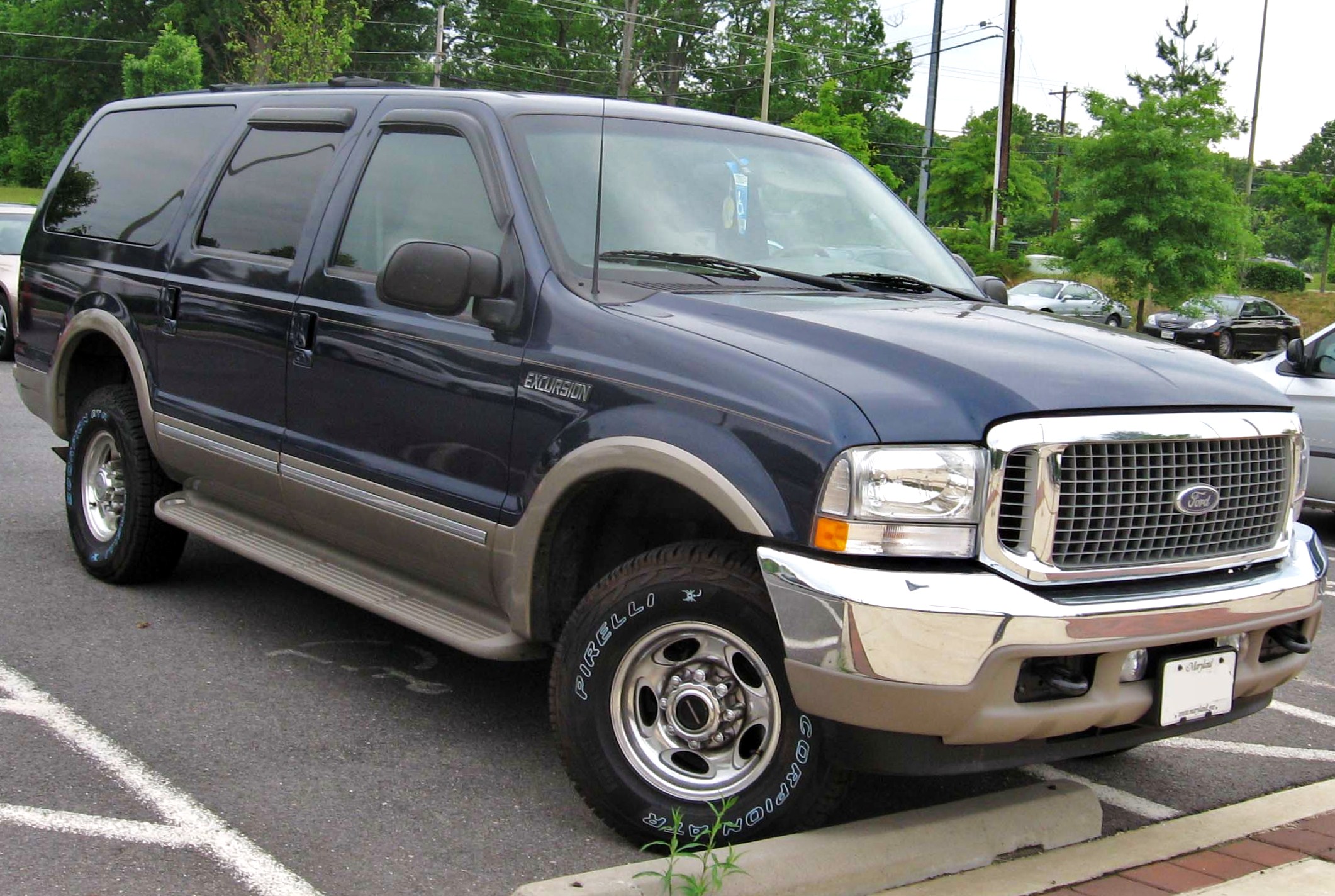
Ford Excursion
"...t's an off-road and it's about a 20 mile off-road excursion that is Kind of a power a power line road, but it..."
The Ford Excursion is a big SUV that’s built like a truck, with a strong frame underneath. It’s meant for heavy-duty driving, including towing and rough roads. The podcast mentions it in connection with an off-road trip.
The Ford Excursion is a large, body-on-frame SUV built on a truck platform, designed for towing and off-road-capable use. It’s often discussed because of its size and durability, making it a popular choice for people who want a serious vehicle for rough roads and long trips. In the podcast context, it sounds like it’s being referenced for an off-road route or “excursion” experience.
Road to Good Springs (I-15 route and off-road track)
"And we'll take the road to Good Springs. So we'll go all the way out to Good Springs, Nevada We'll meet up at this really cool Pioneer saloon super old place... So we've been taking a trail to Good Springs about 20 mile off-road track"
They’re talking about the meetup and drive plan to Good Springs, including an off-road trail and timing the day for other events. They also mention test-running the route first.
This segment lays out the event logistics for the “Road to Good Springs,” including meeting at Pioneer Saloon, then heading back via I-15 to make the bowling tournament. It also describes a ~20-mile off-road track and how they’ll test-run it before the group goes.
off-road capable
"Bring it but it has to be off-road capable because some of these roads a little rutted out And you're gonna definitely need to be able to drive"
“Off-road capable” just means the car can handle rough dirt/sand roads. The host warns that the route is rutted, so you need something that can deal with that.
“Off-road capable” means the vehicle is set up to handle traction loss, uneven surfaces, and obstacles like ruts. In this segment, the host emphasizes it because the route includes rough, rutted-out roads where a street-only car would struggle.
Beetle Volkswagen Bugs
"...great time. Nothing cooler than seeing a bunch of Volkswagen bugs out there Cruising through the desert headed out ..."
The Volkswagen Beetle is a classic car with a simple, rounded shape that many people recognize. It’s known for being popular with collectors and fans, so you often see them in groups at car events. The podcast is describing a drive where lots of Beetles were together.
The Volkswagen Beetle is a classic, air-cooled Volkswagen model that became one of the most recognizable cars ever made. It’s significant in car culture because it has a long history and a huge enthusiast following, which is why you’ll often see them gathered at events. In the podcast, it’s mentioned as part of a group of Volkswagen “bugs” cruising together through the desert.
air-cooled
"Summer air-cooled event featuring a kid zone awards raffles and an 80s BMX bicycle and scale model VW Porsche display"
Air-cooled engines don’t use coolant like many modern cars. They shed heat using airflow and special metal fins on the engine.
An air-cooled engine relies on airflow over the engine’s fins to remove heat, instead of using a liquid coolant system. That’s why air-cooled Volkswagens are strongly associated with classic VW culture and events.
Luft Ziegen
"That's Luft Ziegen this year. There's still time to register your car So you guys can check the QR code in the latest June issue of hot VWs magazine or visit the foot online for ticketing under Luft Ziegen"
Luft Ziegen is the name of a local car event. The host is telling listeners when it is and how to register.
Luft Ziegen is the name of a specific Southern California car event the host is promoting. In this context it’s tied to air-cooled/old VW culture and registration/ticketing details.
MP 70th anniversary open house
"After that event the next event that I'm gonna be headed to Is gonna be June 20th, that's the MP 70th anniversary open house"
This is an open house event celebrating MP’s 70th year. The host says there will be lots of activities there.
The “MP 70th anniversary open house” is a company-hosted event celebrating MP’s 70 years in business. The host frames it as an open house with activities like an engine battle.
engine battle
"There's gonna be so much stuff to do They're gonna have the engine battle again, and I will be emcee in the engine battle this time like last year"
An “engine battle” is an event segment where people show off their engines. It’s usually competitive and centered on engine builds and how they run or sound.
An “engine battle” at car events is typically a head-to-head competition focused on engine performance, sound, or build quality. In this segment, the host says they’ll be emceeing the engine battle and references “just talking engines,” indicating it’s a structured showcase for engine builds.

Volkswagen Bus
"...uddy Chris Vukovic now Chris Vukovic has had that bus Mickey the bus that they built Shoot that photo s..."
The Volkswagen Bus is a classic van made by Volkswagen. It’s known for carrying people and gear comfortably and for having a very recognizable shape. The podcast is talking about a particular bus and a photo connected to it.
The Volkswagen Bus (often called a Microbus or Type 2) is an iconic Volkswagen van known for its spacious interior and distinctive look. It’s a major part of classic Volkswagen culture and is frequently featured in photos and shows because of its strong community and customization scene. In the podcast, it sounds like a specific bus—“Mickey the bus”—and a photo moment are being discussed.
23 window
"It's his wife's bus and it's [934.6s] 23 window that they converted, you know builds 23 window out of an early panel"
“23 window” means the bus has a lot of windows along the side—23 of them. People in the VW world really like that specific look, so some buses are converted to match it.
“23 window” refers to a Volkswagen Type 2 bus body style with 23 side windows, a layout that’s especially sought after in the classic VW community. Conversions that create a “23-window” look typically involve starting with an earlier panel/van body and modifying the window configuration to match the iconic late-’50s/early-’60s style.
Cosmic
"Super rad really nice bus and it's sitting on some og Cosmic, so that was one of the features in there"
“Cosmic” is the name of a wheel style people use on classic VWs. Saying it’s on Cosmic wheels is basically describing the bus’s look.
“Cosmic” here is referring to a specific style of classic VW wheel/aftermarket wheel design that’s popular in the vintage scene. When someone says a bus is “sitting on” Cosmic wheels, they mean the stance and look are finished with that particular wheel style.
quarter mile
"I mean that you know and also the car if you've seen it that runs that fast in a quarter mile It also actually it has like a six-speed transmission too."
The “quarter mile” is a drag-racing track length—about 400 meters. People use it to compare how quickly cars accelerate in a straight line.
The “quarter mile” is a drag-racing distance (about 402 meters) used to measure acceleration performance. When someone says a car “runs a quarter mile,” they’re usually referring to its elapsed time and trap speed over that straight-line sprint.
sequential
"It also actually it has like a six-speed transmission too. I think it's a sequential A sequential"
“Sequential” means the gearbox shifts one gear at a time in order. It’s often used in racing because it can make shifting quicker and more controlled.
A sequential transmission lets you shift in order (typically up/down one gear at a time) rather than using an H-pattern. That kind of gearbox is common in drag racing and other motorsports because it can make gear changes faster and more consistent under hard acceleration.
Mendiola box
"A sequential Mendiola box, I think it's like a sd SD6 or something like that."
A “Mendiola box” is a racing-style gearbox made by Mendiola. It’s the kind of transmission you’d see on cars built for fast, repeated acceleration runs.
A “Mendiola box” refers to a Mendiola sequential gearbox used in motorsport applications. Mendiola is known for purpose-built racing transmissions, and in this context it’s being linked to a quarter-mile car that runs very fast.
horsepower
"And it was 1600 I think and it's putting out like 200 and change With respect to Horsepower which is pretty impressive"
Horsepower is a way to describe how much power the engine makes. More horsepower usually helps a car accelerate harder, especially in racing.
Horsepower is a unit that describes engine power output—how much work the engine can do over time. In performance discussions, higher horsepower generally means stronger acceleration potential, especially when paired with the right gearing and traction.
cow look
"So it's called the erranton homes car the famous cow look cover car for the february 75 issue of the cow look Hot vw's"
“Cow look” is a nickname for a particular classic VW style. It’s the kind of look people recognize from magazine covers and car shows, not just a general “cool Beetle” idea.
“Cow look” refers to a specific early VW styling trend associated with the lowered, wide-tire, show-car Beetle look. In this segment it’s used in the context of magazine covers and bumper/trim debates, meaning it’s more than a generic “style”—it’s a recognizable subculture aesthetic.
nerf bars
"The cow look diagram nerf bars or bumpers brms or this these type of bumpers or no bumpers trim or no trim"
Nerf bars are aftermarket side steps/impact bars mounted along the lower rocker area. In classic VW circles, they often show up as part of the “checklist” of period-correct or era-specific exterior modifications.
brms
"…or bumpers brms or this these type of bumpers or no bumpers trim or no trim"
“BRMs” here is referring to a specific style/brand of wheels that show up on classic VW builds. They’re mentioned as part of the overall look people try to replicate.
“BRMs” is a wheel brand/model reference commonly associated with classic VW and hot VW styling. In this context it’s part of the exterior “diagram” of what people consider the right look—wheels, bumpers, and trim choices.

Volkswagen split-window
"There's the green car that was it was mike mac mike mahaffey's split window, right? Which is a pretty famous split window and it was like an m&m green color … when it was featured in the first issue of vw trends there was a feature on that car"
A “split-window” is a classic Volkswagen Beetle shape where the rear window is split into two parts. They’re talking about a famous one owned by Mike Mahaffey and how it was shown in a magazine feature.
A “split-window” Volkswagen is a classic Beetle-era body style where the rear window is divided into two sections. In this segment, the hosts specifically tie that split-window to Mike Mahaffey’s car and discuss how it was presented in early VW Trends magazine, highlighting its influence on the look people chase.
gold eight spokes
"It was a green split. It was on gold eight spokes And as jim and I were talking we were talking about"
They’re describing the wheels: eight-spoke design, painted gold. In classic VW culture, wheel style and color are part of what makes a car’s look recognizable.
“Eight spokes” describes a wheel design with eight distinct spokes, and “gold” specifies the finish color. The hosts use it to pinpoint the exact visual details of the split-window car’s magazine photo, which matters because wheel choice is a big part of the vintage VW look.
vw hobby
"But I really believe like the picture that captures the essence of vw hobby is"
The “VW hobby” means the community of people who are into classic Volkswagens. The host is saying some photos represent what that community is all about.
The “VW hobby” refers to the enthusiast community around Volkswagen classics—especially air-cooled VWs and their history, styling, and ownership culture. The host is describing how certain photos capture the community’s identity.
auto haas
"But he also had uh one of the franchises of of uh auto haas which we just recently lost ron rose veer"
“Auto Haas” sounds like the name of a local automotive business. The host is using it to explain part of Ed Craig’s VW-related career and connections.
“Auto Haas” is referenced as a VW-related business franchise connected to Ed Craig’s story. In this context, it’s a brand identity for a local automotive operation rather than a generic auto service term.
hop up mods
"Baha, so you'd get your 40 horse and you'd put a few You know hop up mods on it and stuff like that."
“Hop up mods” are upgrades people add to a car to make it faster or more fun to drive. With classic VWs, it usually means changing parts to get more power.
“Hop up mods” are aftermarket modifications intended to make an engine or drivetrain produce more power or respond better. In classic VW circles, this often means swapping parts like carburetion, ignition, or exhaust to wake up older air-cooled engines.
Dual cv axles
"1979 february issue of hot vw's and chennaworth has [2117.0s] Dual cv axles similar to like a corvair would have had"
“Dual CV axles” are axle shafts with CV joints that let the wheels move up and down while still transferring power. It helps keep the drive smooth when the suspension moves.
“Dual CV axles” means using two constant-velocity (CV) axle shafts to transmit power to the wheels while allowing for suspension movement. CV joints keep torque delivery smooth even as the suspension travels and angles change.

Chevrolet Corvair
"has Dual cv axles similar to like a corvair would have had And that's kind of what they did f..."
The Chevrolet Corvair is an older car with a unique layout compared to many others. The podcast mentions it because it uses a drivetrain setup that includes dual CV axles. That’s the kind of detail people talk about when comparing mechanical designs.
The Chevrolet Corvair is a classic American car that’s known for its rear-mounted, air-cooled design and distinctive engineering choices. In the podcast context, it’s being referenced for having dual CV axles, which suggests the discussion is about drivetrain or suspension/axle design similarities. That makes it relevant to enthusiasts comparing how different cars solve similar mechanical problems.
IRS
"And that's kind of what they did for heavy-duty race axles when you go irs on drag cars and so [2126.9s] You know 15 years ago"
IRS means the rear wheels can move independently. That can help the tires stay in better contact with the road, which is useful for faster launches.
IRS stands for “independent rear suspension,” a rear suspension design where each rear wheel moves independently. On drag and performance VWs, IRS can help with traction and wheel control compared with older rear suspension layouts.
swing axle
"With the bucks box and all this kind of stuff in your swing axle car [2135.6s] But you know, they've been doing it for quite a while"
A “swing axle” is an older style rear suspension where the axle swings as the wheel goes up and down. Some people prefer newer suspension designs because they can handle more predictably.
“Swing axle” refers to an older Volkswagen rear suspension design where the axle pivots as the suspension moves. It’s known for having less predictable handling behavior under load changes compared with later independent rear suspension setups.
new shocks
"Well rough country had [2149.1s] new shocks for vw specifically made for vw's that they were advertising in hot vw's [2154.0s] And just a lot of little cool niche things that I see like that that"
“New shocks” means swapping the suspension dampers. That can change how the car rides and how well the tires stay planted over bumps.
“New shocks” refers to replacing the suspension dampers to change how the car controls body motion and wheel movement. In the context of classic VWs, magazine ads for VW-specific shocks were a common way to improve ride control and handling feel.
trans axle
"It's inside the huling gearbox [2172.9s] You know jim bar boat desert racing performance built my first trans axle and he had given me huling gears"
A transaxle is a combined gearbox-and-differential unit. It’s used to send power to the wheels, and on some Volkswagens it’s part of what makes the car’s rear-engine layout work well.
A transaxle combines the transmission and the differential into one unit. On many Volkswagen designs (especially classic rear-engine cars), it helps package power to the rear wheels efficiently and can be built in performance versions for racing use.
close ratio
"built my first trans axle and he had given me huling gears [2179.9s] For the close ratio of trans and those were straight cut gears and like you have straight cut gears in a motor"
Close ratio means the gears are spaced closer together. That helps the engine stay in its “sweet spot” more often when you’re accelerating hard.
A close-ratio gearbox keeps the spacing between gear ratios smaller than normal. That means the engine stays closer to its power band during acceleration, which is especially useful for racing where you want fewer big drops in RPM between shifts.
straight cut gears
"For the close ratio of trans and those were straight cut gears and like you have straight cut gears in a motor [2184.9s] I'll tell you what you put straight cut gears in a trans axle"
Straight-cut gears have teeth that are cut straight, not angled. They’re often used in race setups because they can handle hard use, but they tend to be louder.
Straight-cut gears have teeth cut straight across the gear, rather than angled. They’re common in racing because they can be strong and efficient under load, but they’re also louder and can produce more gear whine than helical gears.
flash in the pan inventions
"Looking at these flash in the pan inventions these one time, you know the the oil adapter we [2247.2s] We had kent on here a couple weeks ago with the oil adapter"
“Flash in the pan inventions” refers to one-off or short-lived automotive ideas that don’t become widely adopted. In classic VW history, it often describes experimental aftermarket solutions that appeared for a moment, then faded as better parts or proven designs took over.
oil adapter
"Looking at these flash in the pan inventions these one time, you know the the oil adapter we [2247.2s] We had kent on here a couple weeks ago with the oil adapter"
An oil adapter is a part that changes how oil flows through the engine. People use them to support upgrades—like better cooling or different oil/filter setups—especially on older performance builds.
An oil adapter is a custom fitting or housing that reroutes or interfaces with an engine’s oiling system. In air-cooled and classic VW performance circles, these are often used to support upgrades like additional oil cooling, different filter setups, or specialty lubrication paths.
oil filler
"The manual oil cans that you speared from the top with your oil filler"
The oil filler is the opening where you pour in engine oil. It’s where you add oil without spilling it all over the engine.
The oil filler is the opening on an engine where you add engine oil. In air-cooled and many classic VW setups, it’s typically reached from above and is designed to accept a specific type of oil can or funnel so you don’t spill oil onto hot engine parts.
center mount shrouds
"Some center mount shrouds being uh designed. There was a carbon fiber one done that"
Center mount shrouds are covers/ducts that help guide cooling air around the engine. On air-cooled VWs, that airflow is what keeps the engine from overheating.
Center mount shrouds are aerodynamic/ducting pieces used around the cooling fan area to help direct airflow where it’s needed. On air-cooled Volkswagens, shrouds are important because the engine relies on fan-driven airflow to manage head and oil temperatures.
carbon fiber
"There was a carbon fiber one done that [2289.9s] Danny and those guys the Ramirez brothers had"
Carbon fiber is a strong, lightweight material made from fibers. People use it for car parts when they want something light but still sturdy.
Carbon fiber is a lightweight, stiff composite material often used for performance parts. In this context, a carbon fiber shroud is being used to reduce weight and potentially improve packaging while still managing airflow for cooling.
cooling fan
"I'm looking at the we're cooling fan [2322.0s] It's on in page 78 in your [2326.4s] February 79 hot vw's this thing looks like a saw blade."
The cooling fan is the fan assembly that moves air through an air-cooled engine’s fins and around key components. The host describes a “saw blade”-looking generator fan setup on the front of the generator fan, emphasizing how it’s intended to cool the engine compartment and help manage head and oil temperatures.
engine compartment
"it says cools your engine compartment reduces [2338.1s] Head and oil temperatures"
The engine compartment is the space under the hood where the engine and related components sit. Cooling-related parts are often designed to improve airflow through this area so temperatures don’t build up around the engine and accessories.
head and oil temperatures
"it says cools your engine compartment reduces [2338.1s] Head and oil temperatures improves carburetion and performance"
“Head temperature” refers to how hot the cylinder heads get, while “oil temperature” is how hot the engine oil becomes. Both matter on air-cooled engines because overheating can reduce performance and accelerate wear, and oil temperature also affects lubrication quality.
carburetion
"Head and oil temperatures improves carburetion and performance"
Carburetion is how the engine mixes fuel and air. If the engine runs too hot, that mixture can get off, so cooling can help it run right.
Carburetion is the process of mixing fuel and air in a carburetor before it enters the engine. On classic air-cooled Volkswagens with carburetors, airflow and temperature can change how the mixture forms, which is why cooling improvements are often linked to better carburetion.
upright engines
"fine with air scoops all vw's upright engines machine cast them"
“Upright” just means the engine is positioned more vertically. That affects how cooling air is routed around it.
“Upright engines” refers to an engine orientation where the cylinders are positioned more vertically, as opposed to laid-down or transverse layouts. Classic air-cooled Volkswagens are often described this way, and the cooling airflow design is closely tied to that orientation.
one-off things
"But it's like there's all these crazy one-off things [2363.6s] that I see"
“One-off” means a custom part that’s made for a specific setup, not something you’d find in a normal catalog. It’s usually built in small numbers or just once.
“One-off” refers to custom, one-time, or very limited fabrication rather than mass-produced parts. The host is pointing out that classic VW communities often experiment with unique cooling and airflow hardware that may only exist as a prototype or small batch.
Volkswagen flatback pickup truck
"And it's the flatback conversion. So transform Your volkswagen into a flatback pickup truck."
A “flatback” is a custom conversion where people modify a Volkswagen so it looks and works more like a pickup truck. The rear gets changed so you can carry things in a bed instead of the original body shape.
A “flatback” conversion is a custom body modification that turns a Volkswagen into a pickup-style vehicle by changing the rear body shape and adding a bed. In this segment, Bill frames it as a DIY/scene invention that highlights how flexible the Volkswagen platform was for custom builds.
narrowed beam
"Larry rick that's got the uh did the first narrowed beam in 19 1925 jim kurlinski had me there's their slettin capers They were the first ones to have a narrowed beam"
A “narrowed beam” is when builders modify the front suspension/axle assembly to make the car sit narrower. People do it to change the look and handling/steering feel of classic Volkswagens.
A “narrowed beam” is a suspension modification where the front beam (the axle/beam assembly used on many classic Volkswagens) is narrowed to reduce track width. This changes steering geometry and stance, and it’s a common hot-rod/customization technique in the VW scene.
nitrous
"this car has got a nitrous a 1776 that's on the squeeze"
Nitrous is a performance “boost” system. It adds a gas that makes the engine produce more power for a short time, usually for quick bursts rather than all the time.
Nitrous (nitrous oxide) is an add-on performance system that injects gas into the engine to temporarily increase power. It’s typically used in short bursts because it stresses components and requires the right fuel/engine setup to do safely.
lone wolf
"scott smith's car was the uh lone wolf was the original Feature on it's actually in 67 cowlick special in this issue"
“Lone wolf” sounds like a nickname for Scott Smith’s VW. It’s the name Bill uses to refer to that particular car/build in the magazine history.
“Lone wolf” is being used as a nickname/title for Scott Smith’s VW feature car. In enthusiast magazines, these kinds of nicknames often become part of how the community remembers and categorizes specific builds.
empty accessories
"he was the card that I would say was the first one that had a lot of the original empty accessories on it"
Bill is describing a specific style of add-on parts on Scott Smith’s VW. He means the car had a notable set of accessories that made it stand out in the magazine.
“Empty accessories” appears to be enthusiast shorthand for a particular look/parts theme—likely a curated set of period-correct or original-style accessories on the car. In VW magazine culture, these kinds of accessory setups are often used to define a build’s identity and authenticity.
1776
"Mike smith's red 67 [2582.0s] Runs 11 seconds and has a 1776 in it. So [2586.5s] that's uh [2588.1s] That's a car we want to get the story on, you know, so we'll be having mike smith on hopefully soon in the future"
“1776” is the engine size they built for the VW—about 1.8 liters. Bigger displacement like this is often done to make the car pull harder and run faster.
“1776” refers to engine displacement—about 1.776 liters—used in many Volkswagen air-cooled builds. In VW circles, it usually means a stroker-style or otherwise modified engine meant to make more torque than stock and to support faster drag-strip times.
Runs 11 seconds
"Mike smith's red 67 [2582.0s] Runs 11 seconds and has a 1776 in it. So [2586.5s] that's uh [2600.6s] Definitely one of the cars I want to hear a lot about because when you got a car with a 1776 running"
“Runs 11 seconds” means the car is very quick in drag racing terms. It’s usually referring to how fast it can complete a timed race run (often a quarter-mile).
“Runs 11 seconds” is drag-racing shorthand for a very fast elapsed time (ET), typically measured over a quarter-mile. The hosts use it to set expectations—many people assume you need a much larger engine to reach that kind of ET, but this car is doing it with a 1776.
wring its neck
"But get some more info like that because a lot of us think like to run 11s you got to have [2617.3s] You know 2.2 liter plus, but sometimes you can do it if you can wring its neck, I guess"
It means pushing the engine really hard—revving it and using it at the top of its power. The point here is that you can still get fast times even without a huge engine if you tune and drive it hard.
“Wring its neck” is a motorsports expression meaning to push an engine very hard—rev it aggressively and keep it in its power band. In this context, it’s used to explain how a smaller-displacement VW can still reach quick times if it’s tuned and driven aggressively.
Louis Zegan on the 13th of June
"Yeah, that's uh, that's the update for now guys. Don't forget. We're gonna be at the louis zegan on the 13th of june [2632.3s] Go check it out. Go to the folk. Look them up register for the show"
They’re talking about an upcoming event on June 13. They’re telling people to sign up soon because spots are almost gone.
This is a discussion about a specific upcoming summer event date and location details. The hosts are encouraging listeners to register early because it’s close to selling out.
San Anita Raceway Park in the infield
"that's going to be in san anita [2650.3s] Raceway park in the infield and then after that imps 70th anniversary."
They’re saying the event will be at San Anita Raceway Park, and they’ll be in the infield area. The infield is the space inside the track where cars and activities are usually located.
The hosts mention where the event is happening—San Anita Raceway Park—and that they’ll be in the infield area. “Infield” is the track-side area inside the oval/loop where events and parking are often set up.
engine dyno
"And check out all the cool stuff plus do the engine [2663.8s] the engine dyno"
An engine dyno is a machine that tests an engine on a stand. It helps measure how much power and torque the engine makes, so people can compare different builds.
An engine dyno is a test stand that measures how an engine performs under controlled conditions. It’s commonly used to quantify power and torque curves, so builders can compare setups like cam, heads, and fuel changes.
torque
"But I think this year they're going for who can make the most amount of torque. So [2669.8s] We'll see whoever brings the type four wins."
Torque is the engine’s twisting force. More torque usually means the car feels stronger when you accelerate, especially at lower speeds.
Torque is the twisting force an engine produces, and it strongly influences how quickly a car accelerates, especially at lower speeds. When the hosts say they’re “going for” torque, they mean they want the engine build to make the most twist force on the dyno.
Request an Explanation
Heard something you'd like explained? We'll add it to this episode.
Sign in to request explanations for terms you heard.
Want to learn more?
Browse our glossary for plain-English explanations of automotive terms, jargon, and concepts.
Help improve this episode
See something that's not quite right? Our annotations are AI-generated and can sometimes miss the mark. Click the flag icon on any annotation to suggest a correction.