
Episode #224 - Getting Jacked with Muscle Cars
About this episode
Muscle cars are “coming back,” but the hosts debate what “back” really means—peak pricing in the early 2000s, then a dip as imports and Fast & Furious stole attention. They swap stories on buying smarter (lower-spec cars, patina, avoiding “numbers matching” obsession) and building tastefully with restomod upgrades, engine swaps, and even budget hot-rod approaches. The conversation also turns practical: rust, parts availability, pre-smog constraints, and real-world troubleshooting during a project.
Is the classic muscle car actually dead? The fellas debate whether or not we will see a return of American steel and sex appeal. Time to get jacked (off?) with muscle car talk.
homage
"I'm simply, this is an homage. Oh."
An “homage” here means a respectful nod to something older or classic. It’s like saying the look or vibe is inspired by a past car or style.
In car culture, an “homage” is a deliberate styling or branding nod to a previous era, model, or theme. It’s often used when someone builds or displays something that’s meant to reference a classic.

Focus SVT
"I mean, I always love your background art, whether it be a Chevy Sprint Turbo or a Focus SVT lately, I am super digging the barracuda, bro."
The Focus SVT is a more performance-oriented version of the Ford Focus. “SVT” is Ford’s in-house performance program that made certain Focus models quicker and more driver-focused.
Ford Focus SVT refers to the performance-focused SVT (Special Vehicle Team) version of the Ford Focus. SVT trims were tuned and equipped for sharper handling and stronger performance than the standard model.
YouTube background car footage
"Jump on YouTube. If you're listening on Spotify, just fucking take out your phone and watch YouTube while you drive because Frank's Barracuda is in the background."
They’re talking about watching the podcast on YouTube so you can see the car in the background. The Barracuda is part of what you’ll notice visually.
The hosts discuss using YouTube to watch the podcast visually, specifically pointing out that Frank’s Barracuda appears in the background. It’s a segment about the visual “background art” and how viewers can see the car.
muscle car
"And can you get any more mechanically simpler than a muscle car? …I went through a muscle car phase…"
A muscle car is an older-school American performance car meant to feel powerful and fun. The idea is usually big engine power and a straightforward, no-nonsense driving experience.
A muscle car is an American performance car formula built around strong engine output and a relatively simple, direct driving experience. The hosts frame it as “mechanically simpler” than many other performance options, emphasizing the classic muscle-car identity.

air cooled Volkswagen Beetle
"I mean, maybe, maybe air cooled Volkswagen. If you're talking like a beetle, sure."
This is the classic VW Beetle, and “air-cooled” means the engine is cooled by air moving over it instead of coolant. That can make it feel and behave differently than most modern cars.
The Volkswagen Beetle is known for its air-cooled engine layout, which uses airflow over the engine instead of a liquid cooling system. That design changes how the car feels and how it’s maintained compared with most water-cooled cars.
Mopar
"Really all Mopars, I've only ever owned Mopar muscle. …it's Mopar or no car yeah."
“Mopar” is a car-enthusiast term for Chrysler’s muscle-car world, mostly Dodge and Plymouth. People use it like a shorthand for “that kind of American performance car.”
Mopar is the enthusiast nickname for Chrysler’s performance and parts ecosystem—especially the brands like Dodge and Plymouth. When someone says “Mopar muscle,” they’re usually talking about that family of American muscle cars and their parts culture.
Massively overpowered asphalt ripper
"Well, that's other reasons, but it's Mopar or no car yeah. Massively overpowered asphalt ripper."
That phrase is just hype-speak for a super-powerful street car. It means it’s built to feel fast and strong on regular roads.
“Overpowered asphalt ripper” is a slang description for a very powerful car that’s meant to dominate grip and acceleration on pavement. It’s not a technical term, but it reflects the muscle-car stereotype of high power and aggressive street performance.
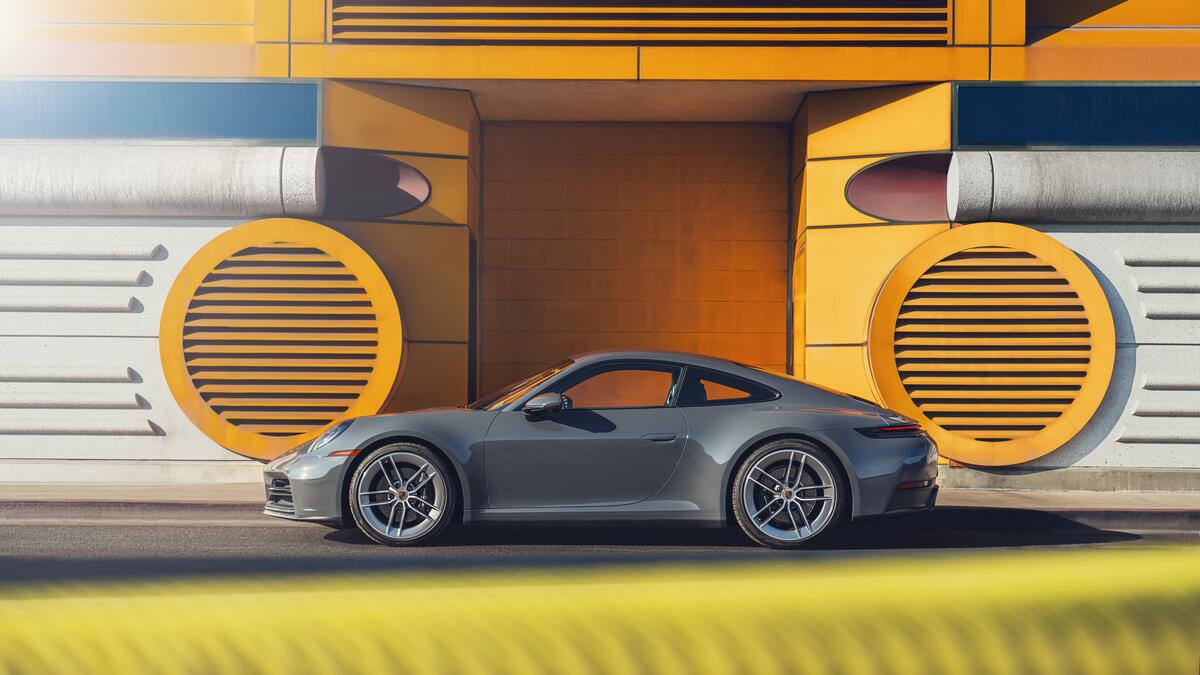
Porsche 911
"Like they're really starting to get kind of come back. I don't know if that is like just like reflexive. Like trying to be different than Aircool 911s and E30s and and and Honda's."
They’re talking about older Porsche 911s with engines cooled by air instead of liquid. That’s a big part of why the older 911s feel and sound different.
The phrase “Aircool 911s” is almost certainly referring to Porsche 911s with air-cooled engines. Classic Porsche 911s are known for their air-cooled flat-six layout, which helped define the feel and sound of older 911s.

BMW E30S
"Like they're really starting to get kind of come back. I don't know if that is like just like reflexive. Like trying to be different than Aircool 911s and E30s and and and Honda's."
“E30” is BMW’s internal code for a specific generation of the 3 Series. People love it because it’s a classic, easy-to-mod car with a strong enthusiast following.
“E30s” refers to the BMW 3 Series generation with the E30 chassis code. The E30 is a classic enthusiast platform—especially in the way it’s associated with simple, mechanical driving feel and aftermarket support.

Dodge Magnum SRT
"I had a Magnum SRT, I would, I would definitely throw down that. That's a modern muscle car for sure."
The Dodge Magnum SRT is a performance version of the Magnum that uses a strong V8. The hosts are using it as an example of a modern muscle car that still feels like the old-school formula.
The Dodge Magnum SRT is a modern-era muscle car/“muscle wagon” built around a high-output V8 and a performance-focused trim. In this segment, it’s used as an example of a contemporary muscle-car recipe that still relies on classic engine fundamentals.
push rod V8
"And the recipe is the same. That thing was still using a push rod V8."
A pushrod V8 is a type of V8 engine where the camshaft operates the valves using rods. It’s a classic engine design that tends to be simpler and more old-school in how it works.
A pushrod V8 is an engine design where the camshaft uses pushrods to actuate the valves. It’s a traditional layout that’s often associated with a straightforward, durable mechanical feel compared with more complex overhead-cam designs.
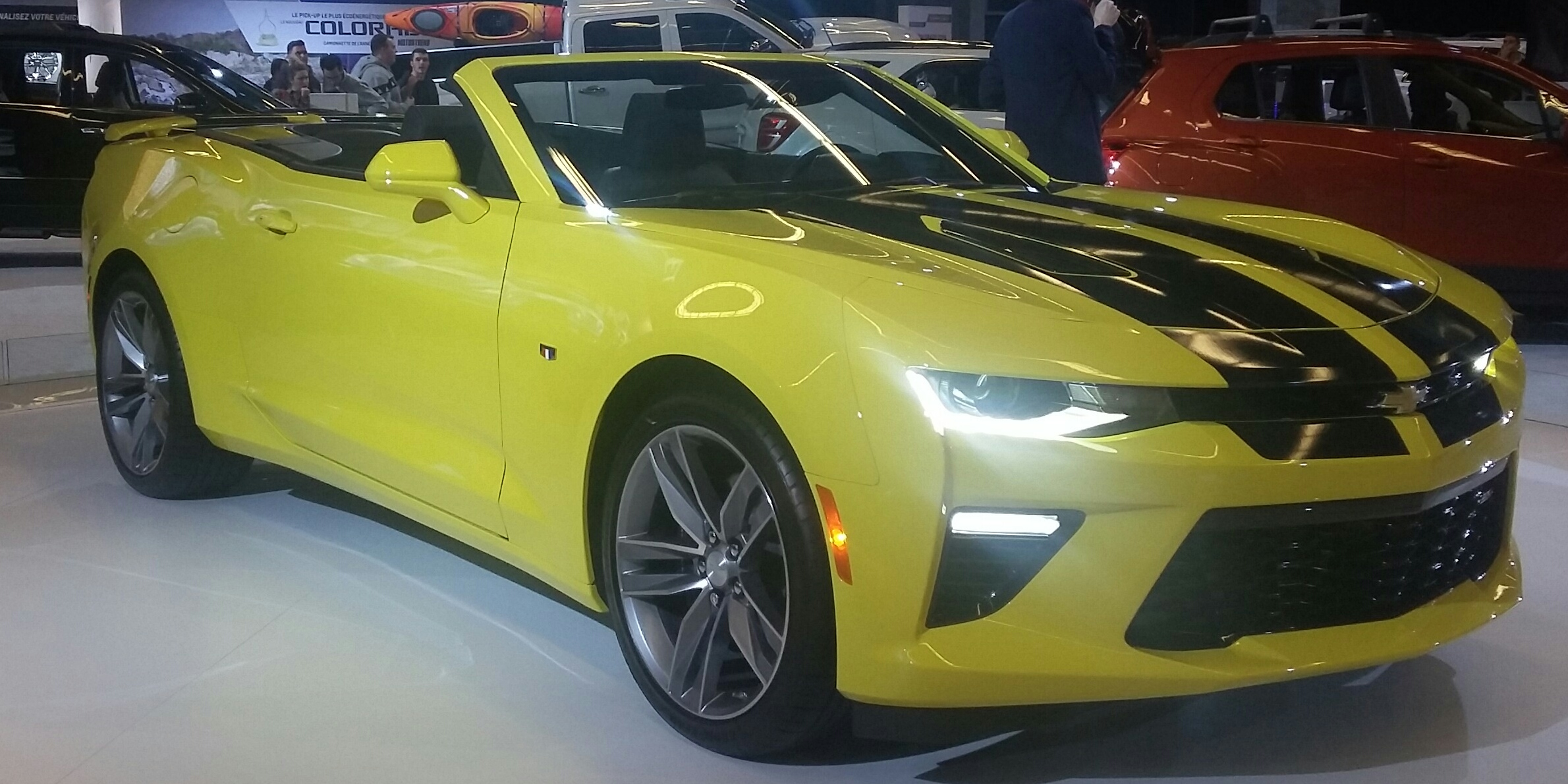
Chevrolet Camaro
"...ig name stuff. If you're looking for like a Yanco Camaro or something, you're going to pay insane amounts ..."
The Chevrolet Camaro is a sports car from Chevrolet. It’s made in different versions, including more powerful ones. Some models can be very expensive because people really want them.
The Chevrolet Camaro is an American pony car known for its performance options and strong enthusiast following. It often gets discussed in the same breath as other pony cars, but the Camaro’s identity is tied to its styling and variety of powertrains. The podcast mention about paying “insane amounts” points to how collectible or desirable some specific Camaro variants can be.

Dacia Duster
"... spoil it here, but I've always wanted a Plymouth Duster from the early seventies, like a 70, 72 with a 34..."
The Dacia Duster is a compact SUV. It’s made to be practical for everyday driving, including rougher roads. In the podcast, it’s brought up mainly because the name sounds similar to another car people talk about.
The Dacia Duster is a compact SUV known for offering practical features at a relatively accessible price point. In the podcast, it’s mentioned in a way that connects it to the idea of wanting a different classic car name (“Plymouth Duster”), which highlights how the name can be confused or compared. The Duster name itself is what makes it stand out in that conversation.
340
"…I've always wanted a Plymouth Duster from the early seventies, like a 70, [580.8s] 72 with a 340 of course."
“340” is the engine size, meaning the car has a 340-cubic-inch V8. Muscle-car people use numbers like this to quickly say how big and how powerful the engine is.
“340” refers to the engine displacement: a 340 cubic-inch V8. In muscle-car culture, engine size like 340 is shorthand for a specific high-performance factory option and helps distinguish the car’s power and collectability.

340 Duster
"especially if you get something like a 340 Duster is a fairly desirable car, it's not the most, right?"
A “340 Duster” is a Dodge muscle car version with a 340 V8 engine. People like it because it’s a real performance model, but it’s not always the most famous or expensive muscle car choice.
The Dodge Duster 340 is a classic American muscle car variant built around a 340 cubic-inch V8, which is part of why it’s so sought after. In the transcript, it’s used as an example of a desirable E-body-era Mopar that’s not as iconic as the biggest-ticket options.
Yanko Camaro
"Hemi, E-Body Barracuda or Yanko Camaro or anything like that, right?"
A “Yanko Camaro” is a Camaro associated with Don Yenko’s performance reputation. Collectors see it as a special, higher-performance version with a famous name attached.
“Yanko” refers to the Yenko Camaro brand identity—cars associated with dealer/independent performance work by Don Yenko. In muscle-car culture, Yenko/Yanko cars are treated as special because they’re tied to factory-like performance packages and a distinct collector story.
air cool, nine, 11s
"When you start looking at, you know, what other people are spending for air cool, nine, 11s and things like that, like you can get, no, it's going to drive far different, but if you can, if you're okay with that."
Those numbers are drag-racing time targets—how fast the car runs a short race. “9s” means very quick, and “11s” is slower, but still fast enough to be exciting.
“9s and 11s” is shorthand for quarter-mile elapsed times in the “9-second” or “11-second” range, which are common drag-racing benchmarks. The speaker is comparing how expensive it can be to chase very fast times versus building something that’s still fun but not necessarily record-level.
original parts matching car
"Do we talk about bringing stuff back to stock? Is that still like, cause that was the money move before, right? To have an original parts matching car"
This means keeping a classic car as original as possible, with the right parts that match what it came with. Collectors like it because it’s more authentic and can be worth more.
An “original parts matching car” is a collector-focused approach where the vehicle is kept as close as possible to how it left the factory, including using the correct original components. In muscle-car circles, this often matters because it can affect authenticity, valuation, and how “correct” the car is judged to be.
restome modding
"To have an original parts matching car, or do we explore this more modern thing of restome modding, which the, the, the technology in the restome mod communities has gotten so good that you can make these cars, mirror modern car driving dynamics"
Restomod (spoken here as “restome modding”) is the practice of updating a classic car with modern engineering while keeping its vintage look. The idea is to improve drivability—like steering, braking, and suspension behavior—so it can feel closer to a modern car without losing the classic vibe.
restome mods
"And you can get those pretty cheap and then do some restome mods. Hot rod brakes. Yeah."
A restomod is a classic car that’s been updated with newer parts. The idea is to keep the old-school style, but make it drive and stop better like a newer car.
“Restome mods” is shorthand for restomod modifications—upgrading a classic car with modernized parts while keeping the original look and vibe. The goal is usually improved drivability, reliability, and sometimes braking/handling, without turning it into a totally different car.
Hot rod brakes
"Hot rod brakes. Yeah. Dude, that could be the fun part is like doing the hot rod shit."
Hot rod brakes means improving a car’s stopping power. It usually involves better brake parts so the car can slow down more confidently, especially after performance upgrades.
“Hot rod brakes” refers to upgrading the braking system beyond stock—often with better pads, rotors, calipers, and sometimes a different master cylinder or brake lines. Muscle cars and engine swaps can make the car faster, so stronger brakes are a common safety and performance upgrade.
numbers matching
"[761.9s] I've never, I've never been a big fan of the, oh, it's got to be numbers matching. [767.2s] Oh, and it's got to have the correct, you know, oh, you know, that's off of a,"
“Numbers matching” means the car’s key parts still have the same serial numbers they had when it was new. Collectors like it because it proves the car is more original and can be worth more.
“Numbers matching” means the car’s major components (like the engine and transmission) still have the same identifying numbers as when the vehicle left the factory. Muscle-car buyers care because it can affect originality, authenticity, and resale value.
turn indicator bulb
"[775.4s] So your bumpers incorrect. [776.9s] And so that's, oh yeah, you're using the wrong turn indicator bulb, uh, that negative [782.4s] point's there."
The turn indicator bulb is the light that flashes when you signal left or right. For older cars, using the wrong one can mean the car isn’t put together with the exact correct parts.
A turn indicator bulb is the light used for the car’s left/right signaling. In classic-car judging, the correct bulb type and placement matter because small exterior lighting differences can indicate incorrect parts or mismatched components.
burnouts
"Like put the bigger motor in, put the louder exhaust in, do, do hot, do hot rod shit with it, right? Like, go out, do make burnouts, be noisy."
A burnout is when you spin the tires on purpose to make them smoke and show off. People do it because it feels powerful and looks dramatic.
A burnout is when the driver spins the tires while the car is stationary or moving very slowly, using engine torque to heat up and sometimes “clean” the tires. Muscle-car culture often treats burnouts as a showy way to demonstrate power and traction.

Mercury Comet
"but yeah, go get a 71, 71 mercury comet, right? And, and, and put a three, put a hot 302 in it"
A Mercury Comet is an older American car. Here, the point is you can buy one for relatively cheap and modify it with a bigger engine and better suspension to make it feel like a real muscle car.
The Mercury Comet is a classic American muscle-era car from the Mercury brand. In this segment, it’s being discussed as a base for a budget build—swap in a stronger engine and add performance suspension to make it do “muscle car things.”

hot 302
"mercury comet, right? And, and, and put a three, put a hot 302 in it and some like, you know, Mustang two suspension"
“302” is a Ford V8 engine size people swap into older cars. Calling it “hot” means it’s set up for more power than stock, so the car feels faster and more exciting.
“302” here refers to the Ford 302 V8 (a 5.0-liter small-block) being used as a “hot” performance swap. The idea is to replace the Comet’s original engine with a more powerful Ford V8 so the car can deliver classic muscle-car acceleration and sound.
junkyard parts
"whatever, like get junkyard shit and some rest of them odd shit and put it together and have something that's rad for not a lot of money and does all the muscle car things."
“Junkyard parts” are used components pulled from salvage yards, often at much lower cost than new or remanufactured items. In the segment, the host argues that using junkyard parts is a practical way to build a fun muscle car without spending “a lot of money.”
handling components
"but you say, fuck all that, you get a rough example and you just, like you said, throw junkyard parts at it, throw handling components at it and"
Handling components are parts that help the car grip the road and steer more confidently. The point is you can upgrade those parts to make the car feel better to drive, even on a budget.
Handling components are parts that improve how a car steers, grips, and stays stable—like suspension and related hardware. The segment suggests “throwing handling components at it” as a way to make a budget muscle build drive better, not just look or sound good.
pre smog
"and just get a valiant, strip it out, pre smog, put, you know, if it doesn't have a 340"
“Pre smog” means the car is from before strict emissions rules. Those older cars often have fewer emissions parts, so it’s usually easier to modify the engine for more power.
“Pre smog” refers to vehicles built before modern emissions regulations became widespread. Older cars typically had fewer emissions controls, which can make engine swaps and performance tuning easier (and sometimes cheaper) than on later, emissions-heavy cars.
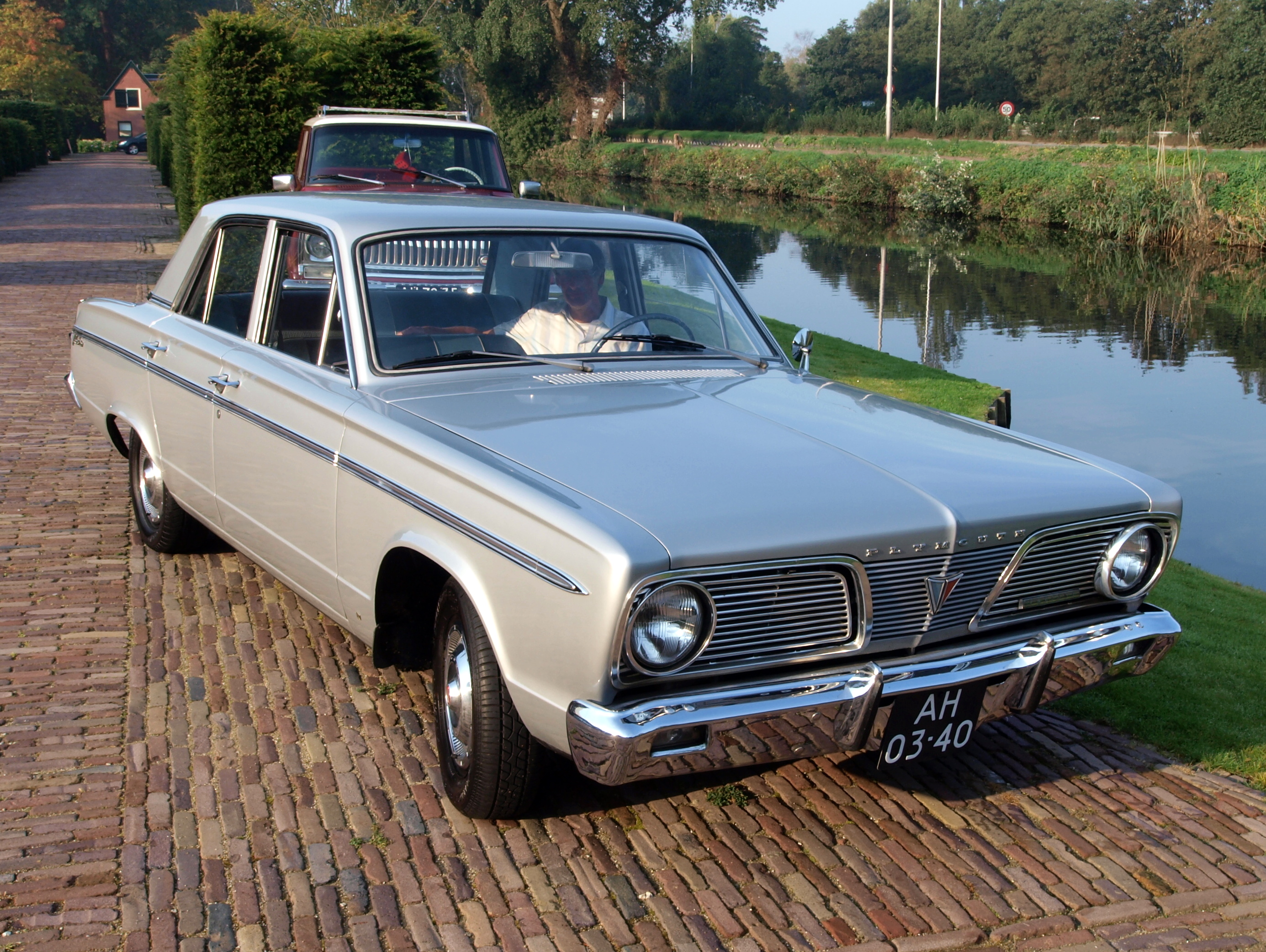
Plymouth Valiant
"and just get a valiant, strip it out, pre smog, put, you know, if it doesn't have a 340, put a 340 in it"
The Plymouth Valiant is an older Mopar that people sometimes modify for a fun, low-cost performance build. The host is basically saying you can start with something like this and upgrade it.
The Plymouth Valiant is another classic Mopar that can be turned into a budget hot rod. In this segment, it’s mentioned as a candidate to strip down and build for performance rather than buying a more expensive muscle car.
grippy ass tires
"if it doesn't have a 340, put a 340 in it and just grippy ass tires, brake suspension and just go"
Tires with more grip help the car put power down and stop better. If you’re building a muscle car, good tires can make it feel way faster and more controllable.
“Grippy” tires are high-traction tires that improve how much grip the car has during acceleration, braking, and cornering. In muscle-car builds, upgrading tires is one of the quickest ways to make power feel usable.

Dodge Road Runner
"...n't have to go, oh, I'm going to go find myself a road runner or a 454 Chevelle, you know, right?"
The Dodge Road Runner is an older muscle-car model name. It’s known for being a performance-focused car from the classic era. The podcast mentions it as something people might want to find or own.
The Dodge Road Runner is a classic muscle-car name that’s often associated with the performance era and the broader “Road Runner” lineup. In the podcast, it’s mentioned alongside other high-performance classics, suggesting it’s part of the same enthusiast wish-list conversation. The key point is that it’s a performance-oriented model name people recognize from that era.

Plymouth Road Runner
"You don't have to go, oh, I'm going to go find myself a road runner or a 454 Chevelle, you know, right?"
The Plymouth Road Runner is a well-known old muscle car. The host is basically saying you can skip the expensive “name” car and build something similar for less.
The Plymouth Road Runner is a classic Mopar muscle car known for its straight-line attitude and big-engine options. Here it’s mentioned as an example of a more expensive “dream” muscle car that you don’t have to buy to get the experience.

Chevrolet Chevelle
"You don't have to go, oh, I'm going to go find myself a road runner or a 454 Chevelle, you know, right?"
The Chevrolet Chevelle is a famous old muscle car. The host is saying you don’t necessarily have to buy a Chevelle to get that muscle-car experience.
The Chevrolet Chevelle is a landmark American muscle car, especially in the mid-1960s and early-1970s eras. The host uses it as a reference point for the “feel” people want, then argues you can get similar vibes from other, cheaper platforms.
Plymouth Tempest
"Like, okay, you want it, you want something that's close to a Chevelle, like go find a fucking Plymouth Tempest with a 326 and just like put a cam in it and just like do some hot rod shit"
A Plymouth Tempest is an older Mopar car that people like to modify. Here, the idea is to buy one that already has a 326 engine and then add performance parts to make it feel like a bigger muscle car.
The Plymouth Tempest is a classic Mopar muscle-car platform that’s often used as a base for upgrades. In this segment, the host suggests finding one with a 326 V8 and then modifying it for a hot-rod style build.

Chevrolet Impala SS
"You don't need it. You don't need an Impala SS, right?"
The Impala SS is a more performance-focused version of the Impala. The host is saying you don’t have to buy one specifically to get a fun muscle-car project going.
The Chevrolet Impala SS is a performance-oriented trim of the Impala, associated with big-engine muscle-era builds. The host mentions it as a car you don’t “need” if your goal is to build a fun muscle car without spending enormous money.

Plymouth Sport Fury
"You don't just, just go find a sport fury or a Chrysler New Yorker even."
The Plymouth Sport Fury is an older Mopar muscle car. The host is listing options to show that there are multiple ways to get a fun build without overpaying.
The Plymouth Sport Fury is a classic Mopar that can be a solid base for a hot-rod build. In this segment it’s used as another example of a muscle-era car you could choose, but the host’s main message is that you can go cheaper and still get the experience.

Chrysler New Yorker
"You don't just, just go find a sport fury or a Chrysler New Yorker even. Go find a, go find a galaxy with a 390"
The Chrysler New Yorker is a big, older Chrysler. The host is saying you can even start with a car like that and turn it into something more fun and fast.
The Chrysler New Yorker is a full-size Chrysler model that, in muscle-car discussions, is often brought up as a surprising platform for performance builds. The host mentions it alongside other cars to emphasize that you can hot-rod many different body styles.

Ford Galaxie
"Go find a, go find a galaxy with a 390 and like that do some hot rod shit."
The Ford Galaxie is an older Ford muscle-era car. Here they’re talking about finding one with a 390 engine and then doing hot-rod style upgrades.
The Ford Galaxie is a classic Ford full-size muscle-era car, often associated with big-displacement engines. The host specifically references a Galaxie with a 390, pointing to the idea of building power on a budget.
hold value
"But people are aged, I can get these cars now, don't care about any of that shit. [1008.8s] So I think those cars are going to, they'll hold value for a while. [1011.6s] But I think the real play is, yeah, get the, get the lower spec thing,"
“Hold value” means the car doesn’t lose its price as fast as other cars. Some older muscle cars stay desirable, so buyers keep paying similar money.
In car collecting, “hold value” refers to how well a vehicle retains its price over time compared with other cars. Older muscle cars can keep value longer when demand stays strong and parts/condition matter to buyers.
throw a big motor in it
"But I think the real play is, yeah, get the, get the lower spec thing, [1015.6s] throw a big motor in it or just toss a cam at it. [1018.1s] Like they made parts for these cars for fucking ever."
They’re talking about buying a less powerful version of a muscle car, then putting a stronger engine into it. It can make the car more exciting, but it has to be done properly to work well and not ruin the car.
This describes an engine swap strategy: buying a cheaper “lower spec” muscle car and installing a more powerful engine to increase performance and desirability. In older cars, parts availability can make swaps feasible, but the result depends heavily on fitment, wiring, and whether the swap is done cleanly.
frame rust
"We're both in California, right? [1032.8s] So rust isn't the thing. [1034.0s] So we don't really, I look at rut back in the day, I'm from, I'm from the Northeast. [1039.9s] It's seven years in most cars have frame rust."
Frame rust means the metal structure under the car is corroding. It can be dangerous and costly to fix, and it’s more common in places that use road salt in winter.
Frame rust is corrosion in the car’s structural frame or underbody structure, which can compromise safety and make repairs expensive. The speaker contrasts regions: in the Northeast, road salt and winter conditions can accelerate frame rust on older cars.
damage that was repaired
"And these things were built to resist rust like modern cars, not that [1057.7s] modern cars are perfect, but you're going to, you got to learn to look at [1060.6s] like damage that was repaired."
They’re saying you have to learn to recognize signs that a car was damaged before and then repaired. A bad repair can look fine at first but cause problems later.
The speaker is emphasizing that with older muscle cars, you need to learn how to spot prior damage and how it was repaired. Poor repairs can hide structural issues or lead to future rust, even if the car looks “perfect” on the outside.
SRS systems
"You don't have to worry about, um, SRS systems or, or whatever, right? Monitor readiness."
SRS stands for Supplemental Restraint System, which is the network of airbags and related sensors/controls. If an SRS system has faults, the airbag warning light can stay on and airbags may not deploy correctly in a crash.
Monitor readiness
"You don't have to worry about, um, SRS systems or, or whatever, right? Monitor readiness."
Cars have computer checks that verify emissions-related systems are working. “Readiness” means those checks have run successfully, which can matter for passing an emissions test.
“Monitor readiness” refers to whether a car’s onboard emissions diagnostics have completed their self-checks. Emissions tests often require certain readiness monitors to be “ready,” otherwise the vehicle may fail or be retested even if it’s running fine.

AMC Marlin
"Cause if it's been on the road for 50 to 60 years, there are going to be skeletons in its closet. Oh, always. ... depending on the car too, my car's a little on the obscure side. You know, if you go about, go about and buy an AMC Marlin, there's going to be shit that you won't be able to find parts for."
The AMC Marlin is a pretty rare older muscle-era car. If it’s not common, it can be tough to find replacement parts when something breaks.
The AMC Marlin is a niche, mid- to late-1960s personal-luxury muscle-era car from AMC. Because it’s obscure, parts availability can be limited compared with more common models, which can make ownership and repairs harder.
unobtainium
"Like you said, there can be some parts that just unobtainium, right? Yeah."
“Unobtainium” is a funny way to say a part is basically impossible to get. It usually means it’s rare, discontinued, or costs way more than you’d expect.
“Unobtainium” is a joking term for parts that are extremely hard or impossible to source. Muscle-car owners use it when certain trim-specific or model-specific components are rare, discontinued, or too expensive to find.
platform
"And like it's funny, you mentioned a Nova, like a lot of these cars were like some of them, right? Mustang wasn't really platform chair. I mean, it was, right? It's, it's the underpinnings were Falcon."
Here, “platform” means the basic skeleton the car is built on. If two cars share a platform, they often share major parts and engineering underneath.
In this context, “platform” refers to the shared underlying architecture—like the chassis and major structural design—that multiple models are built on. When the speaker says the Mustang’s underpinnings were Falcon, they’re pointing to shared engineering foundations.

Ford Falcon
"I mean, it was, right? It's, it's the underpinnings were Falcon."
The Ford Falcon is an older Ford car. The speaker is saying the Mustang’s basic structure was based on the Falcon, so they’re related underneath.
The Ford Falcon is an earlier Ford model whose “underpinnings” were used as the foundation for the Mustang mentioned in the segment. That shared foundation is why some parts and engineering concepts can overlap between the cars.

71 Nova
"“You, you want that Nova, right? Like, oh, I want a 71 Nova.”"
A 1971 Nova is a classic Chevy muscle car. Some years get more attention from collectors, so they can cost a lot more than other similar Novas.
A 1971 Chevrolet Nova is a classic American muscle car platform that enthusiasts chase for its styling and drag-strip heritage. In the used market, specific model years can command big premiums because demand concentrates on the most desirable years and trims.
Chevelle Ss Chevelle
"...y, okay, I would love a Chevelle. I would love an SS Chevelle. Hmm."
A Chevelle is an older Chevrolet muscle car. Some versions, like the SS, are known for being more performance-oriented. People mention it because it’s a classic car that many enthusiasts want to own.
“Chevelle” refers to the Chevrolet Chevelle line, a classic American muscle car that became popular for its range of trims and engine choices. The podcast’s “I would love an SS Chevelle” highlights how the SS version is especially desired among enthusiasts. It’s discussed as a dream car because it represents that era’s big-performance appeal.

Buick Gs
"“Is it a Buick GS? Is it just a base-ass Skylark?”"
A Buick GS is a Buick muscle-car style model. Here, they’re saying it could be a cheaper alternative if you don’t want to pay Chevelle SS money.
A Buick GS is a performance-oriented trim/series from Buick that competed in the same muscle-car era as models like the Chevelle. In this context, it’s being suggested as an alternative to an expensive Chevelle SS—basically a different badge with similar “muscle car” appeal.

Buick Skylark
"“Is it a Buick GS? Is it just a base-ass Skylark?”"
The Buick Skylark is another classic American model name from Buick that can be found in both base and more performance-focused trims. The speaker contrasts it with a Buick GS, implying that base Skylarks may be cheaper ways to get the look and feel of the era without paying top-dollar for the most sought-after variants.

Chevrolet Vega
"“Um, I've got the Chevy Vega parked over here. Why don't you go ahead and price shop that?”"
The Chevrolet Vega is a much smaller, cheaper Chevrolet from the 1970s. They’re mentioning it to make the point that there are cheaper options than expensive muscle cars.
The Chevrolet Vega is a compact car from Chevrolet’s 1970s lineup, and it’s being name-dropped here as a “parked over here” example. In a muscle-car discussion, bringing up a Vega highlights how you can pivot from big-budget muscle to something much cheaper—though it’s a very different kind of car.
NOS
"100 shot, 100 shot of NOS on your, on your 200 Falcon Ford Falcon."
NOS usually means a nitrous oxide kit. It adds a burst of extra power by injecting a gas into the engine so it can burn more fuel for a short time.
NOS is a common shorthand for nitrous oxide systems used to temporarily add power. Nitrous oxide is injected into the engine to increase oxygen availability, which lets the engine burn more fuel and make a short burst of extra horsepower.

65 Mustang fastback
"That was, that was, you know, the, the first gen Camaro or, you know, a 65 [1421.4s] Mustang fastback, those were the cars that people, oh, that's, that's a sharp looking car, a 67 GTX is a sharp looking car."
A 1965 Ford Mustang fastback is a classic American muscle car body style known for its distinctive sloping roofline. The speaker uses it as a reference point for how earlier muscle cars were often viewed as good-looking.

Plymouth GTX
"a 67 GTX is a sharp looking car."
The 1967 GTX is a classic muscle car model from Plymouth. They’re using it as an example of a car that many people considered good-looking back then.
The 1967 Plymouth GTX is a performance-oriented muscle car from the late-’60s era. The speaker mentions it as an example of a “sharp looking” car, tying it to the broader discussion about how aesthetics of muscle cars have changed over time.

E-type
"they're like, holy shit, it's an e-type, right? Or a Riviera, a bowtail Riviera or like, there's all, there's a bunch of stuff."
The Jaguar E-Type is a famous 1960s sports car. People can often spot it quickly because of its iconic shape, especially the way the back looks.
The Jaguar E-Type is a classic British sports car from the 1960s, famous for its long hood, sleek body, and big-cat styling. In this segment, it’s used as a quick identifier because people recognize the distinctive rear glass/body shape when the car is in good condition.
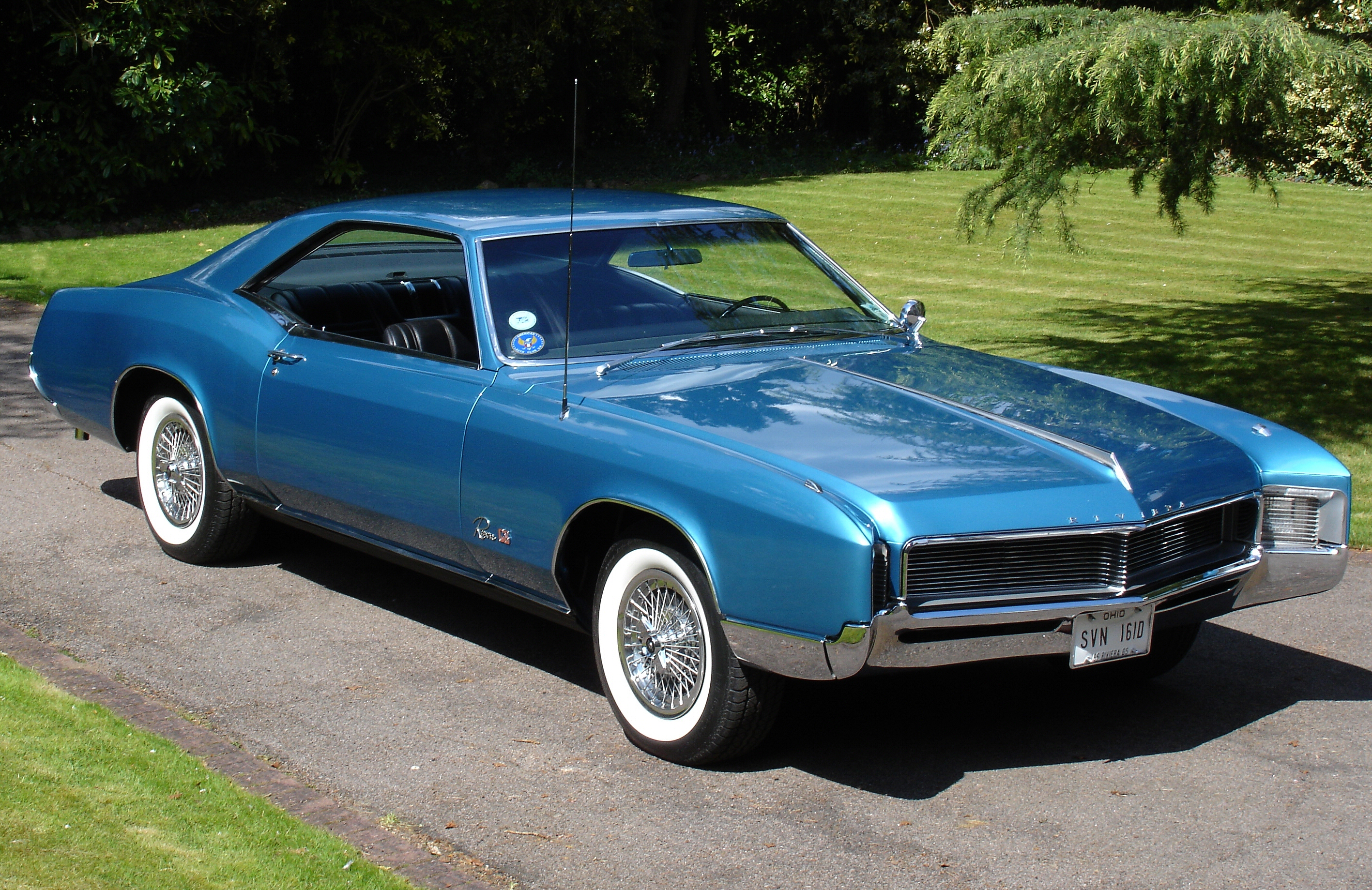
Riviera
"they're like, holy shit, it's an e-type, right? Or a Riviera, a bowtail Riviera or like, there's all, there's a bunch of stuff."
The Buick Riviera is a classic 1960s coupe. The “bowtail” look is a particular style of the rear end that helps people identify it quickly.
The Buick Riviera is a personal luxury coupe from the 1960s, known for its long, low styling and distinctive rear-end design. Here, the host mentions a “bowtail Riviera,” which points to a specific late-’60s styling cue that makes the car recognizable at a glance.
wind tunnel
"Like, well, it's because it's the error of design over science, right? Like, fuck a wind tunnel. Yeah, definitely safety."
A wind tunnel is a place where engineers test how air moves around a car. It helps them make the car cut through the air more efficiently.
A wind tunnel is a testing facility where engineers measure how air flows around a car. The host’s point is that some 1960s designs prioritized styling “over science,” implying they didn’t chase aerodynamic efficiency as aggressively as modern design processes.
form over function
"It was, it was actually form over function, right? For a lot of these designs."
“Form over function” means the design looks mattered more than the practical side. The host is saying a lot of 1960s cars were built to look great, even if they weren’t optimized for every real-world requirement.
“Form over function” means choosing appearance and styling as the priority, even if it’s not the most practical or efficient solution. The host uses it to describe how many 1960s car designs leaned into looks first, which is part of why they still feel “instantly cool” today.
monochromatic SUVs
"So I think, I think that's something we dig on because let's be brutally honest. We live now in a time of monochromatic SUVs."
The host is talking about how many modern SUVs look similar and come in mostly one-color choices. They’re saying older cars were more visually distinct, so they got attention faster.
“Monochromatic SUVs” refers to the modern trend of SUVs being sold in mostly one-color palettes, often with similar styling cues across brands. The host is contrasting today’s uniform look with the more visually distinctive 1960s cars that stand out immediately.
cafe
"For, for cafe and, and, and emission standards. [1518.1s] And it wins the day."
CAFE is a government rule that pushes car companies to make their overall fleet use less fuel. It’s based on averages across all the cars a company sells.
“CAFE” refers to Corporate Average Fuel Economy, a U.S. regulation that sets fleet-wide fuel-economy targets for automakers. Because it’s based on averages across a company’s lineup, automakers use aerodynamics, engine efficiency, and vehicle design choices to meet the numbers.
emission standards
"For, for cafe and, and, and emission standards. [1518.1s] And it wins the day."
Emission standards are rules about how much pollution a car is allowed to put into the air. Car makers have to build engines and systems that keep exhaust cleaner to meet those rules.
Emission standards are government limits on how much pollution a vehicle can produce, typically measured through exhaust gases and evaporative emissions. Automakers must design engines and aftertreatment systems to comply, which can affect performance and packaging.
billet aluminum alternator
"It doesn't justify you putting a billet aluminum alternator in your muscle [1564.4s] car just for shits and giggles though."
The alternator is what keeps your battery charged and runs the car’s electrical stuff. A billet aluminum alternator is an aftermarket version made from solid aluminum, usually for style or small weight changes—not because it’s required for better driving.
An alternator is the charging component that powers the car’s electrical system and recharges the battery while the engine runs. A “billet aluminum” alternator refers to a high-end aftermarket unit machined from a solid block of aluminum—often marketed for looks or weight savings, but it doesn’t automatically improve real-world performance.
Boyd Coddington
"Like the billet, um, really, at this point, any, um, Boyd Coddington wheels or the, um, like the billet, like the bat wing shaped, like steering wheel, you know, um, so bad."
Boyd Coddington is a company name that makes custom wheels. The mention here is about a particular “showy” wheel style people put on classic American cars.
Boyd Coddington is a wheel brand name associated with custom hot-rod and muscle-car styling. When the hosts mention “Boyd Coddington wheels,” they’re pointing at a specific look—often big, showy rims—commonly seen on older American custom builds.
anodized
"Yeah. Yeah. Um, anodized this or that, but no, um, I don't know. Outside of, you mentioned the, the duster."
Anodized is a process that coats metal to protect it and sometimes add color. It’s commonly used on aluminum parts so they don’t corrode as easily and still look nice.
Anodized is a surface treatment that grows a protective oxide layer on aluminum (and some other metals). In the context of “billet” parts, anodizing is often used to add color and improve corrosion resistance while keeping the machined look.
grippy fat tires
"Like a fucking grippy fat tires, modern suspension. [1664.8s] Right."
That phrase means using wider tires that stick to the road better. Wider, grippier tires help the car turn and stop more confidently.
“Grippy fat tires” refers to wider, stickier tires that increase the tire’s contact patch with the road. More grip helps the car accelerate, brake, and corner with less slip—especially when paired with better suspension.
modern suspension
"Like a fucking grippy fat tires, modern suspension. [1664.8s] Right."
Modern suspension means upgrading the parts that control how the wheels move. It’s done to make the car handle better and feel more stable.
“Modern suspension” means updating the car’s suspension components and geometry with newer designs. The goal is usually better handling—more predictable steering response, improved ride control, and better tire contact compared with older factory setups.
direct bolt on
"Let me, let me Google suspension options that are direct bolt on for Corvair real quick."
“Direct bolt on” means the part is made to fit your car with normal bolts, not custom welding or major modifications. It’s the easiest kind of upgrade to install.
“Direct bolt on” means an aftermarket part is designed to install using the factory mounting points and hardware, without major cutting, welding, or fabrication. The host is checking whether Corvair suspension upgrades exist that can be installed this way.

Corvair
"Let me, let me Google suspension options that are direct bolt on for Corvair real quick. ... I'm so into that Corvair."
The Corvair is a classic Chevrolet with its engine in the back, and it’s built in a way that makes swaps and upgrades different from most cars. That’s why the hosts are discussing whether you can fit a bigger engine and what problems might show up.
The Chevrolet Corvair is an unusual 1960s-era American car known for its air-cooled, rear-mounted engine layout. In this segment, the hosts talk about how that layout affects suspension and what kind of engine swaps (like fitting a V8) are physically possible.
counterclockwise
"I want to say the engines, the motors on those spin, like counterclockwise or something, they're like a different, it's like super low."
Engines can spin in different directions. If you’re swapping parts or engines, the direction can matter because some components are built to work with a specific rotation.
Engine rotation direction matters for accessories and fitment in swaps, because components like the starter, alternator, and some pulleys may be designed for a specific crankshaft rotation. The host is speculating that the Corvair’s engine rotation is unusual (counterclockwise), which can affect how a swap is planned.
engine swap
"I've seen it where they try to put a muscle, like a big block or something, like a V8 and the oil pan is it becomes a concern because it's so awesome, baby."
An engine swap means putting a different engine into a car than it originally came with. The hard part is making everything fit—like clearance for the oil pan—so it can be a lot of work.
An engine swap is replacing the original engine with a different one, usually to gain power or change character. In this segment, they discuss swapping in a large V8 (“big block”) into a Corvair and how packaging issues like the oil pan clearance can become a major problem.
oil pan
"I've seen it where they try to put a muscle, like a big block or something, like a V8 and the oil pan is it becomes a concern because it's so awesome, baby."
The oil pan is where the engine oil sits. If you put a different engine in, the oil pan might not clear the car’s frame parts, so you may need to modify or replace it.
The oil pan is the lower reservoir that holds engine oil and helps lubricate the engine. When doing an engine swap, the oil pan’s shape and position can interfere with the chassis or crossmembers, so clearance becomes a key fitment constraint.
big block
"I've seen it where they try to put a muscle, like a big block or something, like a V8 and the oil pan is it becomes a concern because it's so awesome, baby."
“Big block” is slang for a large V8 engine. It’s typically bigger and heavier than smaller engines, so it can be harder to fit into a different car.
“Big block” refers to a family of large-displacement V8 engines (commonly associated with classic American muscle cars). In swap discussions, it usually implies a physically larger engine that can be harder to fit, especially in cars with tight packaging like the Corvair.
build
"That could be a fun build. Either way you do it. Oh, God, let's go Porsche power train."
A “build” here means a planned car project where you modify a car on purpose. Think of it like customizing it with specific parts to reach a goal.
In car culture, a “build” means a planned modification project—choosing a donor car/parts, setting a target goal (power, handling, stance), and then assembling the parts to achieve it. It’s more than routine maintenance; it’s an intentional customization plan.

Subaru Svx Subaru
"Oh, God, let's go Porsche power train. Like that dude, SVX Subaru motor. Oh, in the rear."
“SVX” refers to a Subaru model that had a rare flat-six engine. A “swap” idea here means taking that engine and putting it into another car to make a custom build.
The Subaru SVX used a Subaru flat-six engine, which is unusual because most Subarus are known for boxer four-cylinders. In a swap context, people mean using that SVX flat-six as a donor powerplant for a different chassis.

AMC Matador
"God, like nobody, nobody, nobody fucks with AMC stuff. And I think a Javelin or like a, like a 74 Matador coupe, which is a weird deal."
The AMC Matador is an older American muscle-era car made by AMC. Mentioning a “74 Matador coupe” means they’re talking about the 1974 two-door version as a possible weird/custom choice.
The AMC Matador is a mid-size muscle-era car from American Motors Corporation (AMC), and the “74 Matador coupe” points to the 1974 model year. It’s a less common alternative to the usual Mopar/Ford/Chevy picks, which is why it stands out in a custom-build discussion.

AMC Javelin
"God, like nobody, nobody, nobody fucks with AMC stuff. And I think a Javelin or like a, like a 74 Matador coupe, which is a weird deal."
The Javelin is an AMC muscle car—another older American performance model. Here it’s mentioned as a less typical option for someone’s custom project.
The AMC Javelin is another AMC muscle car, often discussed alongside the Matador as part of the brand’s late-60s/early-70s performance lineup. In this segment, it’s being floated as an alternative “weird deal” pick for a build rather than the more common Mopar choices.

AMC Rebel SST
"It would be dope AMC stuff, AMC, like Rebel SST. Yeah. Now you want to talk about a car for races."
The AMC Rebel SST is an older muscle car from AMC. It’s the kind of car people like because it’s a little more unusual than the most famous muscle cars.
The AMC Rebel SST is a muscle-era model from American Motors Corporation (AMC), known for its bold styling and availability with V8 engines. In enthusiast circles, it’s a “dope AMC” pick because it’s less common than the big-name Detroit muscle brands.

1963 Pontiac Tempest
"Like I would love like a, like a 63, like a 63 Tempest. Yeah. With a 326."
A 1963 Pontiac Tempest is an early-60s Pontiac that people like to modify. In this conversation, they’re talking about putting a 326 engine in it, which is a very period-correct kind of upgrade.
A 1963 Pontiac Tempest is a first-generation Tempest-era Pontiac that’s popular as a base for muscle-car builds because it’s relatively lightweight and has strong V8 swap potential. Here, the host specifically imagines one with a 326 engine, which is a classic displacement for that period.

Pontiac Ventura
"Like, you know, I mentioned the Pontiac Ventura and the World's Omega, but like, there's some of that stuff."
The Pontiac Ventura is a classic Pontiac from the muscle-car era, often discussed as part of the broader “hidden gem” lineup compared with more famous models. In this segment, it’s mentioned as one of the kinds of cars people would want to talk about or build for that period look.
motor swaps
"I don't know. I feel like swaps become such a thing. If it's pre-smog here that you have to do it."
A motor swap means putting a different engine into a car. People do it to get the kind of engine they want, but sometimes laws or emissions rules decide what you can get away with.
A motor swap is when you replace a car’s original engine with a different engine, often from another model or generation. In muscle-car culture, swaps are common because they let owners chase a desired displacement, power level, or “period-correct” look—though regulations can affect what’s legal.
LS swap
"So you go in like LS swap or, I think, yeah, I think of, or like, if we were to do Mopar, I really do like those old SRT 86 ones."
An LS swap is when someone puts a GM LS V8 engine from one car into a different car. People do it because those engines are common and there are lots of parts and guides to make it work.
An LS swap means installing a GM LS-series V8 (the common modern small-block family) into a different vehicle. Enthusiasts like it because the engines are plentiful, relatively affordable, and make strong power with good aftermarket support.

Barracuda swaps
"And I've seen, I've seen a lot of like Barracuda swaps and other things with that motor in it."
A Barracuda is a classic Mopar muscle car. “Barracuda swaps” means people often put different engines into a Barracuda to make it faster or easier to drive.
The Barracuda is a classic Mopar muscle car (Dodge Barracuda) that’s commonly used as a swap platform. When people talk about “Barracuda swaps,” they usually mean swapping in a different engine to improve power and drivability while keeping the car’s muscle-car character.
420 horsepower
"And the output is like 420 horsepower. You can't, that's your starting and then no smog emission stuff."
Horsepower is a measure of how much power the engine can make. The speaker is saying this engine starts around that number and can make more as you build it.
“Horsepower” is the engine’s power output, and the speaker is quoting a baseline figure for the engine they’re discussing. They’re also implying that the power can increase quickly after the swap because the engine has strong potential.
smog emission stuff
"You can't, that's your starting and then no smog emission stuff. That power just goes up real quick."
Smog emissions stuff is the equipment and settings that help an engine meet pollution rules. The speaker is saying removing that kind of constraint can free up power.
“Smog emission stuff” refers to emissions-control equipment and calibration used to reduce pollutants for legal compliance. The speaker is contrasting an engine setup without those constraints versus one that’s tuned/limited to meet emissions requirements.
limited slip diff
"Like it's like too easy, right? Six-speed manual, good, you know, limited slip diff, big, big diff and put down some grippy grippies and some handling."
A limited-slip diff helps both drive wheels work together instead of one spinning uselessly. It improves traction, especially when the road surface isn’t consistent.
A limited-slip differential (often shortened to “limited slip diff”) helps the driven wheels maintain traction by reducing how much they can spin independently. It’s especially useful in a swap build because it improves acceleration and stability when grip is uneven.
grippy grippies
"Six-speed manual, good, you know, limited slip diff, big, big diff and put down some grippy grippies and some handling."
“Grippy grippies” is slang for high-traction tires that provide more grip in corners and during acceleration. In a swap build, tire choice is crucial because it determines how much of the engine’s power you can actually use.
ECU
"Well, you would, but you're really just changing motor mounts. And if you are swapping over, yeah, but you're swapping the whole ECU and everything, just try it."
The ECU is the car’s main computer for the engine. If you swap it, you often have to swap other electronics too so everything talks to each other correctly.
ECU stands for engine control unit. It’s the car’s computer that controls things like fuel delivery and ignition timing, so swapping an ECU usually means the rest of the car’s electronics must match.
harness
"just try it. If you can get a whole harness and everything."
A wiring harness is the car’s wire bundle that connects all the engine sensors and computers. If you’re swapping electronics, you may need the matching harness so the plugs and signals work correctly.
In this context, a wiring harness is the bundled set of wires that connects sensors, the ECU, and other modules. Swapping a harness is often required when converting or swapping electronics so the connectors and circuits line up.
Can bus
"fuck little work. Can bus. Yeah, but. Oh, it doesn't, it's, it doesn't read the neutral safety switch brick or whatever."
CAN bus is how the car’s computers communicate with each other. If a required switch signal isn’t recognized, the car may not behave correctly—like refusing to start or run the way it should.
CAN bus (controller area network) is a standardized communication network used in modern cars so modules can talk to each other. When someone says it “doesn’t read” something like a neutral safety switch, they mean the ECU/other modules may not get the expected signal, which can block starting or proper operation.
neutral safety switch
"Oh, it doesn't, it's, it doesn't read the neutral safety switch brick or whatever. Like can't like, I'm, I'm, I'm an, I'm an idiot."
The neutral safety switch is a safety sensor that confirms the car is in the right gear to start. If the computer can’t see that signal after a swap, the car may not start or may act weird.
The neutral safety switch is a safety input that tells the car’s electronics whether the transmission is in a safe position to start (typically neutral or park). If the ECU can’t read that signal—especially during swaps or conversions—starting and some drivetrain logic can fail.
carburetor
"There is something for me that's appealing about, you know, just throwing a carburetor at it and like, right, me have fuel, me dump fuel and like, like really cave man, hot rod shit."
A carburetor is an older-style way to feed fuel into the engine. It can be simpler to work with for hot-rod projects, but it usually takes tuning and may not run as smoothly as modern fuel injection.
A carburetor is a fuel-delivery device that mixes air and fuel mechanically (rather than using modern electronic fuel injection). The appeal here is simplicity—“cave man” hot-rod style—but the tradeoff is that carburetors can be harder to tune precisely and may be less consistent across conditions.
elevation
"Um, and all the good and bad that comes with it. Yeah. Me have elevation."
Elevation changes how much oxygen is in the air. Higher up, the engine may need different fuel settings, especially with carburetors, to run right.
Elevation affects air density: at higher altitudes there’s less oxygen per volume of air. That changes the air-fuel mixture requirements, which is why carburetors often need jetting/tuning when you drive or build for different elevations.
ambient temperature change
"Um, ambient temperature change, big, big shifted temperature. Me switch carb again."
Changes in outside temperature can make a car run differently because the air and fuel behave differently. Older carbureted setups can be more sensitive to those changes.
Ambient temperature change affects how fuel vaporizes and how air density behaves, which can shift the ideal air-fuel mixture. Carbureted engines are especially sensitive to weather swings, elevation, and heat soak.
idle for 45 minutes
"Me switch carb again. Yeah. Me need idle for 45 minutes before moving. Um, yeah."
Letting the car idle for a long time can help it warm up so it runs smoothly. Older engines—especially carbureted ones—can be picky when they’re cold.
Extended idling is sometimes used to bring an older, carbureted engine up to stable operating temperature. With carburetors, temperature changes can noticeably affect fuel/air mixture and drivability.
gaskets disappearing
"But like. Part of that was just like gaskets disappearing and things. That'll do it."
“Gaskets disappearing” is a colloquial way to describe gaskets failing or blowing out, which can cause vacuum leaks or fuel/air leaks. In carbureted engines, leaks can make the mixture wrong and lead to rough running or hard starting.
points
"something goes, oh, it's not running quite right. And you're like, like, I don't want to fuck with points. Like I'm not going that far down, but like, you know, carburetor,"
“Points” are part of an older ignition system that helps the engine spark at the right time. If they get worn or out of adjustment, the car can run poorly or not start.
“Points” usually refers to ignition contact points in older distributor-based ignition systems. They open and close to control when the ignition coil fires; wear or misadjustment can cause hard starting, misfires, or poor running.
mechanical fuel pump
"Like I'm not going that far down, but like, you know, carburetor, mechanical fuel pump, um, some of like just kind of basic gas goes in. Exhaust comes out type shit."
A mechanical fuel pump is a pump that’s powered by the engine to move gas from the tank to the carburetor. It’s common on older cars that don’t use an electric fuel pump.
A mechanical fuel pump is driven by the engine (often via a camshaft or crank mechanism) to push fuel from the tank to the carburetor. Because it’s engine-driven, it typically works only when the engine is running.
Request an Explanation
Heard something you'd like explained? We'll add it to this episode.
Sign in to request explanations for terms you heard.
Want to learn more?
Browse our glossary for plain-English explanations of automotive terms, jargon, and concepts.
Help improve this episode
See something that's not quite right? Our annotations are AI-generated and can sometimes miss the mark. Click the flag icon on any annotation to suggest a correction.