
Episode 447: 2026 Kia EV4, 2026 Lexus TX
About this episode
The conversation opens with the Kia EV4 as a striking example of how tariffs are reshaping EV availability, then turns into a surprisingly strong endorsement of the car’s value, range, and everyday usability despite its awkward styling and capped charging speed. From there, the hosts move to the 2026 Lexus TX, treating it as a rare luxury three-row that can genuinely carry seven people, but also questioning whether it beats a Grand Highlander on value. The back half focuses on family practicality, cargo space, and the limits of luxury SUVs as true people-movers.
Benjamin's 2026 Kia EV4 review may leave our American listeners confused since it isn't coming the the US market, but the Canadians get to enjoy this weird looking EV and its several positives. It looks good, has pretty good range and an attractive pricetag, so whats the catch?
Then Sami reviews the 2026 Lexus TX with seven seats, and he gets to use all seven of those luxury-lined seats. The review leaves Benjamin and Sami wondering what other true three-row luxury crossovers are out there, and which ones can compete at the TX's price point. Thanks for listening!
tariffs
"...one of the first vehicles from the first new vehicles that is not going to be sold to the United States due to tariffs."
Tariffs are extra taxes on imported products. If a car is imported, tariffs can raise its price and discourage selling it in that market.
Tariffs are taxes the government adds to imported goods. In automotive terms, tariffs can make imported vehicles or components more expensive, which can change which models are offered in a country.
trade
"...the way the United States is approaching its I would say trade and its automotive industry specifically from like a regulatory standpoint."
“Trade” means the rules for buying and selling between countries. Those rules can affect whether certain cars can be imported and sold in the U.S.
“Trade” here refers to government policies that affect cross-border buying and selling, including how countries regulate imports and exports. For cars, trade policy can directly determine whether certain vehicles are allowed or economically viable to sell in a market.
regulatory standpoint
"...from like a regulatory standpoint. EVs are no longer something that are important for the federal government."
A “regulatory standpoint” just means the government rules side of things. Here, they’re talking about how regulations are influencing what automakers are encouraged to build.
A “regulatory standpoint” means looking at how laws and government rules are written and enforced. In this segment, it’s about how U.S. regulation is shaping the auto industry’s direction, especially for electric vehicles.
fuel mileage restrictions
"They're they're loosening fuel mileage restrictions. They are making it harder to import EVs..."
Fuel mileage restrictions are rules about how efficient cars have to be. If those rules get relaxed, automakers may feel less pressure to make cars extremely efficient.
Fuel mileage restrictions are government rules that require vehicles to meet certain efficiency targets. Loosening them can reduce pressure on automakers to prioritize fuel economy improvements and can shift investment away from some electrification strategies.
import EVs
"They are making it harder to import EVs, not only EVs that are produced elsewhere like the EV for the reason it's not coming to the US..."
“Import EVs” refers to electric vehicles brought into the U.S. from other countries. The segment ties import difficulty to policy and manufacturing location, explaining why some EV models are available while others are not.
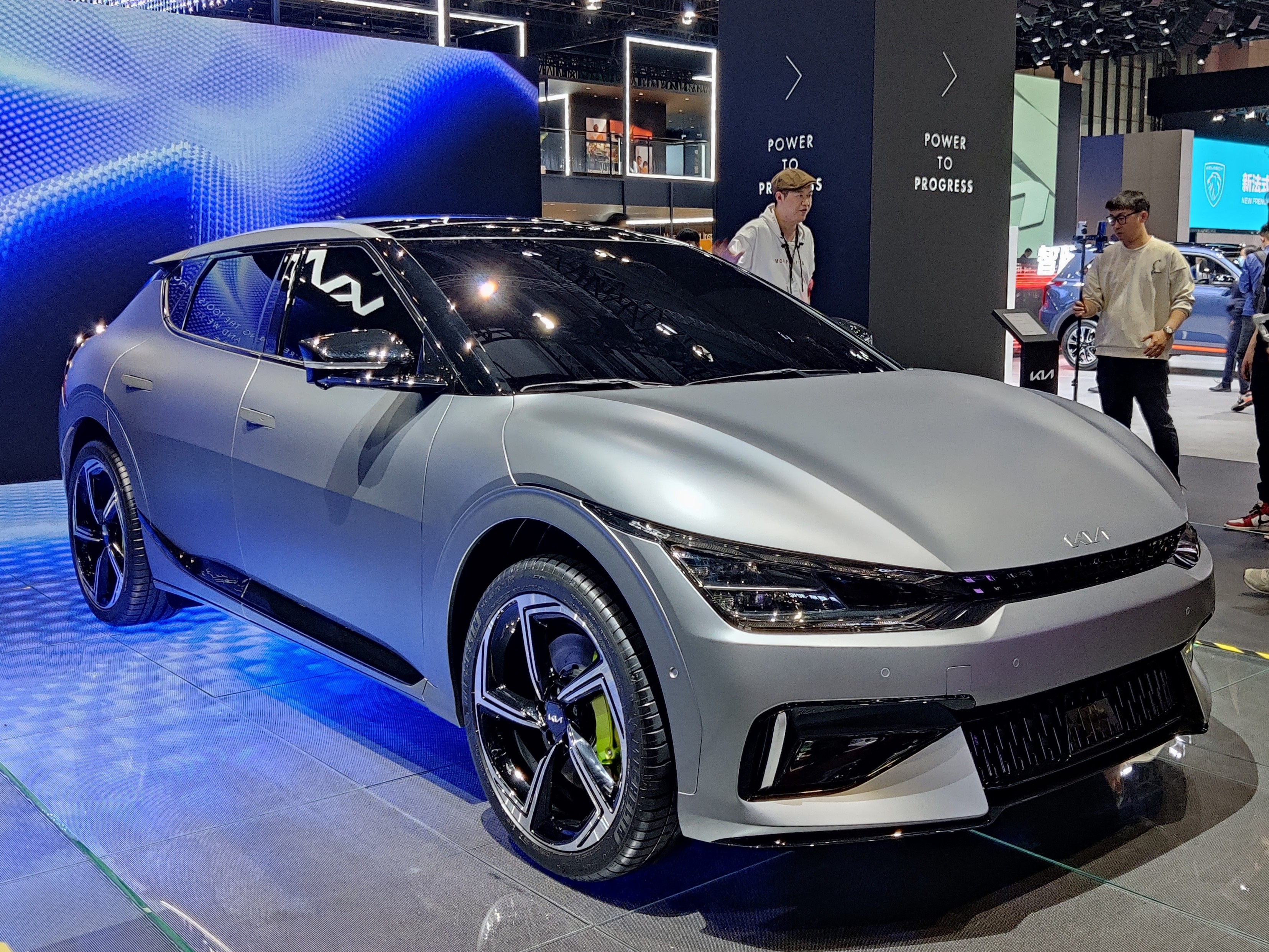
EV6 GT
"But the EV six GT, which is the high performance version, is no longer available there because that one was still built in Korea."
The Kia EV6 GT is the sporty, higher-output version of the EV6 electric Kia. The hosts are saying it won’t be sold in the U.S. here because of where it’s manufactured, even though other EV6 models can still be sold.
The Kia EV6 GT is the high-performance variant of the EV6 electric crossover. In this segment, the key point is that the EV6 GT is not available in the U.S. because it was built in Korea, while other EV6 versions are still sold when they’re built in the U.S.
supply chain
"But more than just total models that are being available in the United States from from electric car manufacturers, the supply chain itself has become"
The supply chain is the network of factories, parts suppliers, shipping, and logistics that gets vehicles built and delivered. The hosts suggest that beyond model-by-model availability, the broader supply chain is being affected by policy and trade conditions.
electric cars
"We're we're in an era where the American car industry is whether through choice or being forced by regulations, moving away from electric cars while the rest of the world is doing the exact opposite."
Electric cars are cars that mainly run on electricity stored in a battery. The hosts are talking about how different countries may be moving toward (or away from) that technology.
“Electric cars” here refers to battery-electric vehicles (BEVs) that run primarily on electricity from a battery pack. The discussion contrasts a potential shift in the U.S. away from EVs versus other regions accelerating EV adoption.
peak ICE
"I mean, peak ICE, peak internal combustion engine sales were in 2018 globally."
ICE means regular gas or diesel engines. “Peak ICE sales” is basically the time when the most gas-powered cars were sold worldwide before EVs started growing faster.
“ICE” stands for internal combustion engine. “Peak ICE sales” means the highest point in global sales for cars powered by gasoline/diesel engines, after which EVs start taking a larger share of the market.
plug-in hybrids
"the rest of the world is is emphasizing... fuel efficient and and electrified vehicles, not necessarily all fully Vs, but like plug in hybrids and hybrid hybrid vehicles as well."
A plug-in hybrid can drive using electricity like an EV, but it also has a gas engine if you need it. You charge it by plugging it in, and it can help reduce gas use.
Plug-in hybrids (PHEVs) are vehicles that can run on electricity from a battery, but also have an internal combustion engine for longer trips. They’re often used as a bridge between fully gas-powered cars and fully electric vehicles.
hybrid vehicles
"...plug in hybrids and hybrid hybrid vehicles as well. I know you said you did say that they're being like North American companies are being encouraged to make more combustion engines."
Hybrid cars use two power sources: a gas engine and an electric system. Some hybrids can’t be plugged in and instead recharge the battery while driving.
Hybrid vehicles use both an internal combustion engine and an electric motor/battery system. Depending on the type, they may not be able to plug in (often called “non-plug-in” hybrids) and instead rely on regenerative braking and the engine to recharge.
combustion engines
"I know you said you did say that they're being like North American companies are being encouraged to make more combustion engines. I don't know."
Combustion engines are the traditional gas/diesel engines that burn fuel to make power. The hosts are discussing whether policy is encouraging more of these engines instead of EVs.
“Combustion engines” refers to internal combustion engines that produce power by burning fuel (gasoline or diesel). The segment suggests regulations or policy pressures may be pushing North American automakers toward making more of these engines.
federal tax benefit for buying EVs
"They're being encouraged by the fact that there's no longer any type of federal tax benefit for buying EVs. And there's no longer any miles per gallon restrictions on cars are going away."
Governments sometimes give money back (or reduce taxes) when you buy an electric car. If that help goes away, EVs can cost more, so fewer people may buy them.
The federal tax benefit is a government incentive that reduces the cost of buying an electric vehicle (EV). When it’s removed or reduced, EV pricing becomes less subsidized, which can change consumer demand and automaker strategy.
miles per gallon restrictions
"And there's no longer any miles per gallon restrictions on cars are going away. So why would you not do the cheapest thing if you're a car company?"
MPG rules are government requirements that push carmakers to make cars use less gas. If those rules go away, carmakers may not feel as much pressure to improve gas cars.
“Miles per gallon” (MPG) restrictions refer to fuel-economy rules that limit how much fuel a vehicle can consume. If these requirements are removed or weakened, automakers may face less pressure to improve efficiency in gasoline vehicles, which can affect how quickly they shift resources toward EVs.
Hyundai
"you will get your lunch eaten by large companies that have stayed in the global game like Hyundai, like Toyota, like Mercedes Benz, like I stress, I'm not going to say BMW"
Hyundai is a car company that sells in many countries. The speaker is saying that being in lots of markets helps a company keep growing.
Hyundai is referenced as a global automaker that operates in multiple markets. The point being made is that companies with broader global reach can keep selling and investing even if the U.S. market becomes harder for certain vehicle types.
Toyota
"like Hyundai, like Toyota, like Mercedes Benz, like I stress, I'm not going to say BMW because they're not really a huge player"
Toyota is a major carmaker that sells worldwide. The speaker is using it as an example of a company that can keep selling even if one region gets tougher.
Toyota is mentioned as an example of a large automaker that competes across global markets. The speaker’s argument is that global presence supports continued investment and product development.
Mercedes Benz
"like Hyundai, like Toyota, like Mercedes Benz, like I stress, I'm not going to say BMW because they're not really a huge player"
Mercedes-Benz is a car brand/company that sells in many countries. The speaker is saying that selling in multiple places helps companies stay competitive.
Mercedes-Benz is cited as another automaker that operates in multiple markets. The speaker contrasts this with U.S.-focused strategies, arguing that global companies can sell their cars more widely.
fuel-efficient vehicles
"And I'm sure that customers are looking for if they can't get, you know, relief at the pump from the gas stations, they might consider like more fuel-efficient vehicles, too."
They’re talking about cars that cost less to run because they use less energy. With gas getting expensive, people may want a more efficient car to save money.
“Fuel-efficient vehicles” refers to cars that use less energy per mile than alternatives. In an EV context, the idea is that customers may look for vehicles that reduce ongoing energy costs compared with gasoline.

Kia EV4
"Yeah. What if you can't buy them? What if you, because the EV4 is exactly that and it's not available? So, OK, let's move on from the, the, did we talk that this is the EV4? We're talking about the EV4."
The EV4 is an upcoming Kia electric car. They’re saying that when gas gets expensive, people want to switch to electric cars—but in this case, the EV4 isn’t available when people want it.
The EV4 is Kia’s upcoming electric vehicle model. In this segment, the hosts connect rising fuel costs to customer interest in fuel-efficient EVs, then point out an availability problem with the EV4 specifically.

Kia EV5
"There's also, I think there's another Kia that is Canadian only coming called the EV5, which is more of like a. ... And I'm just like, just staring at it. ... It was Canadian only at first, but we don't have it here yet. Apparently it is."
The Kia EV5 is an all-electric Kia crossover. The hosts are talking about where it’s sold—starting in Canada and possibly coming to the U.S. later.
The Kia EV5 is an electric crossover that Kia has discussed for different markets. In this segment, the hosts are debating whether it’s Canada-only at first and when/if it reaches the U.S. market.
Kia EV6
"Because, like I said, the EV6 is built in the in the United States. Yes. OK, in January, it will, it will, the EV5 might come to the US, ..."
The Kia EV6 is an all-electric Kia crossover. They mention it’s built in the U.S., which can affect how quickly it shows up in local dealerships.
The Kia EV6 is a battery-electric crossover whose production location matters for availability and pricing. Here, the hosts note that the EV6 is built in the United States, contrasting it with other EV models that may be delayed by market-specific supply.

Kia EV9
"I thought I saw one the other day and it was just an EV9. You know what? That's true because the EV9 hides its size really well. And I, and I feel the same way. I'm like, that EV9 looks kind of small."
The Kia EV9 is Kia’s bigger electric SUV, and it can be hard to judge its size at a glance. The hosts say it looks smaller than it really is.
The Kia EV9 is Kia’s larger, three-row electric SUV. The hosts discuss how the EV9’s styling makes it look smaller than it is, which is a common real-world impression for boxier large SUVs.
all electric vehicle
"OK, so talk to me about this EV4. I obviously it's an all electric vehicle. What I want to why I did that whole preamble..."
An all-electric vehicle is a car that doesn’t use gasoline. It runs on a battery you charge, and how far it can go depends on the battery and driving conditions.
An all-electric vehicle (EV) runs only on electricity stored in a battery, rather than using gasoline. That typically means charging at home or at public charging stations, and the driving range depends on battery size and conditions.

Bolt
"we are big fans of the Bolt on this podcast, which was kind of that year, the original bolt, not the new bolt... But again, this is a larger, more capable car with more range. What Hyundai and Kia have done..."
The Bolt is a popular affordable electric car (from Chevrolet). The hosts are comparing how the EV4 stacks up against the Bolt in price and how far it can drive.
The “Bolt” refers to the Chevrolet Bolt EV, which the hosts use as a benchmark for affordability and overall EV value. They distinguish between the original Bolt and a newer “Bolt” they haven’t tried yet, then compare the EV4’s expected range and capability to the Bolt’s starting price.

Hyundai Ioniq
"What Hyundai and Kia have done is taken everything they know about how to make a great electric car we've seen in the the Ioniq series"
The Ioniq series is Hyundai’s line of electric cars. The hosts are saying Kia and Hyundai are using lessons from those EVs to make the EV4 better.
The Hyundai Ioniq series is Hyundai’s family of electric vehicles, used here as a reference point for what the company has learned about making good EVs. The hosts suggest Kia/Hyundai are applying that experience to the EV4.
front wheel drive only
"First of all, it's front wheel drive only, single motor, 201 horsepower, two hundred and nine, two hundred and nine pound feet of torque."
Front-wheel drive only means the engine/motor power goes just to the front wheels. That can change how the car feels in turns and how it puts power down on slippery roads.
“Front wheel drive only” means the car sends power only to the front wheels. Many EVs can be configured with one motor (often front) or with motors driving both axles; this setup affects traction, handling feel, and packaging.
single motor
"First of all, it's front wheel drive only, single motor, 201 horsepower, two hundred and nine, two hundred and nine pound feet of torque."
A single-motor EV uses one electric motor to move the car. It’s often simpler than dual-motor setups and can be cheaper, but it may not feel as “all-wheel-drive capable” in every situation.
A “single motor” EV uses one electric motor to drive the wheels (in this case, the front wheels). Compared with dual-motor EVs, it’s typically simpler and can be cheaper, but it may offer less traction/handling flexibility.
torque
"201 horsepower, two hundred and nine, two hundred and nine pound feet of torque."
Torque is the “pulling power” the motor makes. Higher torque usually helps the car accelerate quickly, especially from a stop.
Torque is the twisting force the motor produces, and it strongly influences how quickly a car accelerates from a stop. EVs often have high torque available immediately, which is why they can feel responsive even without high horsepower.

Honda Civic
"It's roughly the same as what you would get from like a Honda Civic hybrid, which has a little bit more torque."
They’re comparing the EV’s acceleration feel to a Honda Civic hybrid. The point is that the EV’s “pull” is comparable to what you’d expect from a compact hybrid.
The Honda Civic hybrid is used here as a benchmark for typical compact-car power and torque. The speaker notes the EV’s torque is in a similar ballpark to what you might see from a Civic hybrid, with slightly different characteristics.

Hyundai Ioniq 5
"So it's not a high performance EV in the sense that, you know, the Ioniq 5 was or the EV6 was."
The Hyundai Ioniq 5 is referenced as an example of a more performance-oriented EV than the one being discussed. The speaker contrasts its character with the smaller, more affordable EV’s strengths (responsiveness and efficiency) rather than outright performance.
aerodynamic shape
"It is not very heavy and it has a very aerodynamic shape. So you end up with a car that drives well."
Aerodynamic shape means the car is shaped to push through the air more easily. That can help it use less energy and feel smoother when driving.
An aerodynamic shape reduces drag, helping an EV maintain efficiency and stability at speed. Lower drag can improve real-world range and make the car feel smoother as it accelerates and cruises.
0-60 time
"Acceleration is good. It's like seven point seven seconds to 60."
0-60 time is a simple acceleration test: how fast the car goes from 0 to 60 mph. Lower numbers mean quicker acceleration.
“0-60 time” is how many seconds it takes a car to accelerate from 0 mph to 60 mph. It’s a common way to compare real-world acceleration between cars, especially when discussing EV responsiveness.
entry level trim
"That's only on one trim, the entry level trim. That gets you 240 miles of driving, I believe."
A “trim” is the version of the car with a particular set of features. “Entry level” usually means the basic version with fewer extras.
A “trim” is a specific equipment level/package offered for a model, and “entry level” means the base version with fewer features. They’re tying the smaller battery/power setup to the entry-level trim in this segment.
kilowatt hour battery
"But every other trim comes with an eighty one point four kilowatt hour battery. Holy moly, that's yeah, holy cow."
A kilowatt-hour (kWh) is basically how much “energy” the EV battery can store. More kWh usually means you can go farther, but how you drive and weather still matter.
A kilowatt-hour (kWh) is the unit used to measure the size of an EV’s battery pack. A larger kWh battery generally allows for more total energy storage, which can translate to longer range—though real-world range also depends on efficiency and driving conditions.
usable
"Of that, it's seventy seventy eight kilowatt hours are usable. And that gives you five hundred and fifty two kilometers in the most frugal trim that is three hundred and fifty miles, three hundred and forty miles."
Not all of the battery’s stored energy is meant to be used. The car keeps a portion in reserve to help protect the battery, so “usable” is what you can actually drive with.
“Usable” refers to the portion of the battery’s total capacity that the car actually allows you to use for driving. Manufacturers reserve some capacity for battery protection and longevity, so usable energy is less than the battery’s full rated size.
kilowatt hours per hundred kilometers
"we were talking about the BZ and how I was getting something like twenty five kilowatt hours per hundred kilometers, which was really not that efficient."
This is a way to measure how efficiently an electric car uses electricity. If the number is lower, the car goes farther on the same amount of battery energy.
“Kilowatt-hours per hundred kilometers” (kWh/100 km) is an EV efficiency metric that tells you how much electricity the car uses to travel 100 km. Lower numbers mean the car is more efficient; higher numbers mean it’s consuming more energy for the same distance.
roll bar
"So I had a day last week where I I recently had a roll bar installed in my Datsun and we'll talk about that on another podcast."
A roll bar is a metal safety frame inside the car. If the car flips, it helps protect you by giving the cabin extra strength.
A roll bar is a structural safety frame installed inside a vehicle to help protect occupants during a rollover. In many cars it’s also used to stiffen the chassis, but it’s primarily about crash protection.
sway bar
"I know I've been watching this whole sway bar installation process on the way home, on the way home,"
A sway bar helps keep the car from leaning too much when you turn. It connects the suspension on both sides so the car feels steadier.
A sway bar (anti-roll bar) connects the left and right sides of the suspension to reduce body roll during cornering. Installing or upgrading one can make the car feel more stable and responsive in turns.
electrical system in the car died
"the electrical system in the car died and I had to get it towed. And this meant going back and forth to Montreal like four times."
They’re saying the car’s electronics stopped working properly. With modern cars, that can mean the car won’t run normally, so they had to tow it.
When an EV’s or hybrid’s electrical system “dies,” it usually means a fault in the car’s high-voltage or 12-volt electronics that prevents normal operation. The result can be a no-start condition or loss of critical functions, sometimes requiring towing.
kilowatt hours per 100 kilometers
"I got 17 kilowatt hours per 100 kilometers, which when you when you put it up against the battery, it makes it about, I think, 300 kilometers,"
This is how much electricity the car uses to drive 100 kilometers. Less electricity per 100 km means better efficiency.
“Kilowatt-hours per 100 kilometers” (kWh/100 km) is an efficiency measure for EVs and plug-in hybrids. Lower numbers mean the car uses less electricity to travel the same distance.
range in the real world
"put it up against the battery, it makes it about, I think, 300 kilometers, 300 miles of range in the real world."
Real-world range is how far the EV goes in normal driving, not in ideal lab testing. Things like highway speed can reduce the distance you get.
“Real-world range” is the distance an EV actually goes under everyday driving conditions, which can differ from official test-cycle estimates. Factors like speed, temperature, and driving style strongly affect it.
full charge
"And this is like on a full charge on that one day, I drove 400 kilometers without recharging and I still had like 18 percent or 20 percent of the battery left."
“Full charge” means the battery is topped up before you start driving. People use it to compare how far the car can go on one complete battery charge.
A “full charge” means the battery is charged to its maximum usable level before driving. Range estimates and real-world efficiency are often discussed relative to how far the car goes after starting from a full charge.
AC
"Like this is what the AC going and that high speed. So the car has the goods, it does everything you need it to do."
Here “AC” means the car’s air conditioning. Using it takes energy from the battery, which can slightly reduce how far you can drive.
In EV discussions, “AC” refers to the air conditioning system, which can draw power from the battery. The speaker implies that running AC at higher speed affected (or at least was part of) the efficiency/range they observed.
GT line trim
"And I also want to point out the vehicle I drove was the GT line trim, which is the highest trim level, which has large 19 inch rims, which is going to impact the range as well."
“GT line” means a higher equipment version of the car. It often adds nicer features and styling, and here the speaker says it also comes with bigger wheels that can reduce range.
“GT line” is a trim level that typically adds sportier styling and higher-end features compared with lower trims. In this case, the speaker links the GT line to larger wheels, which can affect aerodynamic efficiency and range.
19 inch rims
"...which is the highest trim level, which has large 19 inch rims, which is going to impact the range as well."
Bigger wheels can make an EV go a little less far on a charge. The tires and wheel shape can create extra resistance, so the battery doesn’t last as long.
Larger wheels (like 19-inch rims) can reduce electric range because they often come with lower-profile tires and can increase rolling resistance and aerodynamic drag. The speaker explicitly connects the 19-inch wheels to range impact.
efficiency
"OK, so if I was on like a mid trim with the big battery, I would have gotten even better efficiency. This car never stopped impressing me."
“Efficiency” means how economically the EV uses its battery. If it’s more efficient, you can usually drive farther on the same charge.
Efficiency in an EV context describes how effectively the car converts battery energy into driving distance. Higher efficiency means you use less energy per kilometer/mile, which typically improves range.
ventilated seats
"There's like rear seat heaters, ventilated seats up front. It's got decent infotainment."
Ventilated seats blow air through the seat to help keep you cool. They use electricity, but they can make the car feel much more comfortable.
Ventilated seats use fans and airflow channels to cool occupants, especially in hot weather. Like other comfort features, they consume some battery power, but they can significantly improve comfort.
rear seat heaters
"There's like rear seat heaters, ventilated seats up front. It's got decent infotainment."
Rear seat heaters warm the back seats for passengers. They use electricity, so they can slightly affect battery use, but they’re usually comfortable in cold weather.
Rear seat heaters are heating elements built into the back seats to warm passengers in the rear. In EVs, heated seats can be more efficient than heating the entire cabin, but they still draw power from the battery.
infotainment
"It’s got decent infotainment. The trunk had enough room for like three checked bags on an airport run without any issues."
Infotainment is the car’s main screen system for things like music, navigation, and settings. They’re saying it works well enough.
Infotainment is the car’s combined media and information system—typically the touchscreen, navigation, audio controls, and connectivity features. The speaker says the Kia EV4’s infotainment is “decent.”
EV
"The Onyx, the Ioniq six is like my favorite EV style. Ioniq six. This looks better. ...Like no preface there, no foreign EV, you know, like there's no need to justify"
EV just means an electric car. Instead of using gasoline, it runs on electricity stored in a battery.
EV stands for electric vehicle, meaning the car is powered primarily by an electric motor and a battery rather than a gasoline engine. The speaker contrasts “foreign EV” with their preferred EV styling, implying they’re talking about electric cars in general.
800 volt architecture
"[1141.9s] I think one other thing I want to talk about with the car, one of the other [1145.7s] ways they help keep costs down. [1146.8s] This does not have the 800 volt architecture that is found in so many [1150.5s] other key as in Hyundai's."
Some EVs are built around a higher-voltage electrical system. That can help them charge faster because the car can take in more power more efficiently.
“800 volt architecture” refers to an electric-vehicle electrical system designed around a higher voltage level. Higher voltage can reduce current for the same power, which often enables faster charging and smaller/thinner high-current components.
400 volts
"[1146.8s] This does not have the 800 volt architecture that is found in so many [1150.5s] other key as in Hyundai's. [1151.7s] How interesting 400 volts. [1153.9s] The charging is capped at 125 kilowatts."
Some EVs use a lower-voltage battery system (like 400 volts). Lower voltage can mean the car may not charge as quickly as higher-voltage EVs.
“400 volts” is the lower-voltage electrical system level used by some EVs. Compared with 800-volt designs, 400-volt systems often charge a bit slower at the same charger power because they typically need higher current to deliver similar power.
charging is capped at 125 kilowatts
"[1151.7s] How interesting 400 volts. [1153.9s] The charging is capped at 125 kilowatts. [1157.5s] So that is an area where they were able to save some money. [1161.0s] And I think of the real world, like I plugged in at a public charger"
This means the car can only accept up to 125 kW from a fast charger. If the charger can do more, the car still won’t take it—so charging won’t be as fast as a higher-capacity EV.
“Charging is capped at 125 kilowatts” means the car’s onboard charging system will limit how much power it can accept from a fast charger. Even if a charger can deliver more, the EV will only take up to that maximum, which directly affects real-world charging time.
flow
"Shout out to flow, a company that has never not let me down when I am charging"
Flow is a charging network/company the host is praising. They’re saying it worked well when they tried to charge.
Flow is mentioned as a charging company the host trusts. The context suggests it provided reliable charging performance during their experience.

Ioniq six
"the really interesting thing to me about the EV4 is that it is not really an Ioniq six equivalent to it."
The Hyundai Ioniq 6 is another EV model used here as a comparison. The host’s point is that the Kia EV4 isn’t just a copy of the Ioniq 6—it’s different in how it’s set up and how it looks.
Hyundai Ioniq 6 is mentioned as a benchmark for what the EV4 is “equivalent” to. The host argues the EV4 is not really a direct match to the Ioniq 6, implying differences in design and positioning.

Kona
"But like you can't get an 80 kilowatt hour battery with that power train in something like a like a Kona or a Niro or something like that."
The Hyundai Kona is a small SUV/crossover that also comes as an electric car. The hosts are comparing it to the Kia EV4 to see whether the battery size and setup are similar.
The Hyundai Kona is a compact crossover that’s offered in EV form (among other powertrains). Here, it’s used as a comparison point for the EV4’s battery/powertrain value proposition.
power train
"But like you can't get an 80 kilowatt hour battery with that power train in something like a like a Kona or a Niro or something like that."
A powertrain is the car’s “moving system.” In an electric car, it mainly means the battery and electric drive parts working together.
A powertrain is the set of components that generate and deliver motion—such as the motor(s), battery, and (in non-EVs) engine/transmission. In EV discussions, it often refers to how the battery and electric drive system are packaged and tuned.

Niro EV
"Is the Niro EV still on the market? I thought so. I don't know why they had taken it off and kept the hybrid."
“Niro EV” means the electric version of the Kia Niro. They’re talking about whether Kia still sells it and what that means for the new EV4.
“Niro EV” refers specifically to the electric version of the Kia Niro. The hosts discuss whether it’s still available for sale and how that impacts the competitive landscape for an entry-level EV like the EV4.

Kona EV
"Yeah. And I think they kept the Kona EV and not the Niro one. Although, if you go to Kia dot com, they apparently have it."
The Kona EV is Kia’s fully electric version of the Kona. They’re talking about whether Kia is still selling it versus other EVs.
The Kia Kona EV is the fully electric version of the Kona crossover. In this segment, the hosts are comparing which EV models Kia keeps available in different markets.
shadow launched
"So in the U.S., it's like it's like shadow launched. Maybe they just maybe they just pulled it in Canada because they had the before coming."
“Shadow launched” means something goes live quietly—like it’s available or listed, but not fully announced. Here, they’re saying the car might be showing up online in a limited way.
“Shadow launched” describes a product being made available or listed in a limited way before a full public rollout. In this context, the hosts suggest the EV model is present in the U.S. online experience but not fully advertised or widely offered.
hatchback
"Is it so again, like EV cars are like in a particular and I would call this more of a car than like, like, I don't know, a hatchback or a notchback or a it's totally a car."
A hatchback has a back door that opens upward and gives access to the trunk area. They’re debating whether the car’s shape counts as a hatchback.
A hatchback is a car with a rear door that swings upward and provides access to the cargo area. The hosts contrast hatchback styling with what they believe the car actually is, emphasizing how the rear design affects classification.
fastback
"They're very rare. It's a fastback. You would call it because it has that like notch trunk."
A fastback is a car shape where the roof flows in one smooth line toward the back. It usually looks sleeker than a typical sedan roof.
A fastback is a body style where the roof slopes smoothly down toward the rear, often with a more aerodynamic profile than a traditional sedan. The hosts are using the term to describe the car’s silhouette and rear shape.
notch trunk
"It's a fastback. You would call it because it has that like notch trunk."
A “notch trunk” means the roof and trunk look separated, like a classic sedan shape. They’re saying the car’s rear design looks more like a sedan than a hatchback.
A “notch trunk” describes a traditional sedan-like rear shape where the trunk lid is separated from the roofline by a distinct step (a “notch”). The hosts use it to argue the car’s body style is closer to a sedan than a hatchback.
charging speed
"So the compromises come, though, with that with that charging speed."
Charging speed means how fast the car can recharge at a charger. Faster charging usually means less time waiting, especially on longer trips.
Charging speed is how quickly an EV can add energy to its battery while plugged in. It’s usually limited by the car’s onboard charging hardware and the charging station’s power output, and it affects how long road trips take.

Chevrolet Orlando
"...bizarre things that like number like the Chevy Orlando. [1585.8s] What else is another Canadian specific car?"

Chevrolet Bolt
"[1602.2s] I love it when car companies commit to delivering the car [1606.3s] they've been designing, you know, Honda, like and Chevrolet with the bolt. [1610.7s] But I guess those are American made and they won't they just can't sell them."
The Chevrolet Bolt is an electric car that Chevrolet sold in the U.S. The discussion is using it as an example of how EVs can be affected by where they’re built and what rules apply.
The Chevrolet Bolt is a mass-market electric car (EV) that Chevrolet has offered in the U.S. The hosts bring it up as an example of an EV program that was tied to production and market realities.
fuselage styling
"Like the last thing I want to say about the EV4 is it has a little bit of like 1970s fuselage Chrysler styling in it. If you look at it from certain angles, which I think is interesting."
“Fuselage styling” means the car’s shape looks smooth and streamlined, like the body of an airplane. They’re using that idea to describe the EV4’s retro-looking body lines.
“Fuselage styling” is a design description borrowed from aircraft: it suggests smooth, flowing body shapes that visually “wrap” around the car like an aircraft fuselage. In this segment, it’s used to compare the EV4’s body proportions to 1970s Chrysler design cues.
Chrysler
"Yeah, because then you said Chevrolet and I'm like, what's going on? Chevy killed the bolt in advance of it being out. Like the last thing I want to say about the EV4 is it has a little bit of like 1970s fuselage Chrysler styling in it."
Chrysler is a car brand. The speakers are using it as a style reference for what the car’s body lines remind them of.
Chrysler is a major American automaker known for distinctive 1970s-era design language. Here, the hosts use “Chrysler styling” as a reference point to describe the EV4’s door and quarter-panel shape.
quarter panel
"I really hope that a listener will call you out on this because look at it from the angle. This is the most bizarre thing I've ever heard and there is Chrysler fuselage styling in those doors and that quarter panel at the back."
A quarter panel is part of the car’s body on the rear side. It’s the panel you can see behind the rear door, and they’re saying its shape looks like a certain older style.
A quarter panel is the body section at the rear side of a car, between the rear door and the rear bumper area. The hosts point to the EV4’s quarter-panel shape as part of what makes it look like that older “Chrysler” styling reference.

Lexus TX
"This is the Lexus TX and this is a three row crossover that we've tested in the past and been."
The Lexus TX is a Lexus family SUV with three rows of seats. It’s meant for people who need room for kids and passengers, and they’re comparing it to a similar Toyota to see if it’s really better.
The Lexus TX is a three-row crossover SUV from Lexus, aimed at families who need extra seating and cargo space. In this segment, the hosts discuss how it compares to a closely related Toyota model and whether the higher price is worth it.
three-row crossover for families
"This is the Lexus TX and this is a three row crossover... as a family vehicle, splurging on the fancy stuff doesn't really get you anything because kids make a mess out of everything..."
They’re talking about what makes a family SUV with three rows a good choice. The point is that kids can be hard on cars, so spending extra for luxury doesn’t always pay off.
This segment focuses on whether a three-row crossover is a good family vehicle and how luxury upgrades factor into real-world family use. The hosts emphasize that kids can quickly overwhelm “fancy” interiors and that value matters when recommending a vehicle for families.

Toyota Grand Highlander
"I found that the Toyota Grand Highlander is a far better purchase for families because it's essentially the same car as a Lexus TX..."
The Toyota Grand Highlander is a bigger Toyota SUV with three rows, built for families. The hosts say it’s a better deal than the Lexus TX because it’s very similar underneath but costs less.
The Toyota Grand Highlander is a three-row family crossover positioned as a value-focused alternative to pricier luxury options. Here, the hosts argue it’s the better purchase because it’s essentially the same underlying vehicle as the Lexus TX, just with a lower cost.
essentially the same car
"...because it's essentially the same car as a Lexus TX or at least the other way around, Lexus TX is the same car as a Toyota Grand Highlander, just more expensive and fancier..."
They’re saying the Lexus and Toyota are very closely related—built on the same basic design. So the driving feel and layout are similar, and the main differences are usually the features and how “fancy” it is.
When the hosts say the Lexus TX and Toyota Grand Highlander are “essentially the same car,” they’re referring to shared platform/engineering between a luxury brand and its mainstream counterpart. In practice, that often means similar dimensions, powertrain options, and ride/handling fundamentals, with differences mainly in trim, features, and tuning.

LX
"Like, yeah, they tried to tell us that like a GX, a GX or an LX are three row vehicles, but they're really just like big old SUVs and the interior is usually pretty compromised in a body on frame."
The Lexus LX is a big Lexus SUV with three rows of seats. The hosts mention it to explain that, in their view, some of these larger Lexus SUVs don’t feel as comfortable or well-designed for families as the TX.
The Lexus LX is a large, three-row SUV that’s built with a more traditional, truck-like approach. In this segment, the hosts use the LX as a comparison to argue that some Lexus “three-row” models feel less ideal for interior comfort and packaging than the TX.

GX
"Like, yeah, they tried to tell us that like a GX, a GX or an LX are three row vehicles, but they're really just like big old SUVs and the interior is usually pretty compromised in a body on frame."
The Lexus GX is a larger Lexus SUV that’s built more like a truck. In this conversation, it’s brought up as a comparison point for how well it works as a family vehicle.
The Lexus GX is a three-row-capable SUV (depending on configuration) known for its truck-like construction and off-road orientation. Here, it’s mentioned as an example of a large Lexus SUV that the speaker feels is not as well-suited to family comfort as the TX.
body on frame
"...they tried to tell us that like a GX, a GX or an LX are three row vehicles, but they're really just like big old SUVs and the interior is usually pretty compromised in a body on frame."
“Body on frame” means the car’s body sits on a separate heavy frame, like many trucks and older-style SUVs. Some people feel it can make the ride and interior layout less refined than newer designs.
Body-on-frame is a vehicle construction method where the body is mounted on a separate ladder-like frame. It’s common on traditional large SUVs and trucks, but it can lead to a less refined ride and a more “compromised” interior packaging compared with unibody designs.
third-row seating in three-row SUVs
"Now, typically adults are treated really poorly in the third rows of these three row SUVs. The friend of mine that was sitting back there was pleasantly surprised and happy with the space back there."
The back row in many big family SUVs can be tight for adults. If you’re tall, you may not fit comfortably, especially for long rides.
In many three-row SUVs, the third row is cramped and less comfortable for adults, especially on longer trips. The hosts are discussing how legroom and headroom can vary a lot depending on your height and the specific vehicle’s packaging.
power-fold/tilt access for second-row seats
"The other thing I wanted to point out is getting into the third row when a car seat is installed. I thought we've made some progress in this area because some three rows... have a button that will lean the car, the second row seats a little bit forward, like hinging them at the bottom"
Many SUVs have a feature that lets you move the middle seats forward to reach the back row more easily. That’s especially helpful when there’s a child car seat installed.
Some three-row SUVs use a button-controlled mechanism to move or tilt the second-row seats forward to make it easier to reach the third row. This matters even more when a child seat is installed, because you need extra clearance and less awkward maneuvering.

Hyundai Palisade
"...mistaken, but it might be the pilot or maybe the palisade, have a button that will lean the car, the secon..."
The Hyundai Palisade is a larger SUV with three rows of seats, meant for families or groups. It has comfort and convenience features that can be adjusted with buttons. People may bring it up when discussing how those features work in real use.
The Hyundai Palisade is a midsize three-row SUV built for families who want a comfortable ride and lots of interior space. It often comes up in discussions about convenience features and how easy it is to live with day to day, including controls that affect how the vehicle sits or adjusts. That’s why it could be mentioned alongside talk about a “button” that changes the car’s stance or behavior.
sliding mechanism
"[1987.3s] And it can't fold anything when there's a car seat there. [1989.9s] So you just have to rely on the sliding mechanism in order to get in the back. [1993.3s] So it's not like as advanced as other three rows that I've been in"
This means the third-row seat can move on rails to make room. The host is saying it’s the main way to get into the back when a child seat blocks other seat movements.
A sliding mechanism is the seat hardware that lets the seat move along tracks to create space for passengers to enter or exit. In this context, the host says the TX depends on sliding because the seat can’t fold when a car seat is installed.
three row vehicles
"[2000.1s] And it's also worth pointing out that there's not a lot of like, [2002.7s] and I mean, we've mentioned this before, but like three row vehicles, [2005.3s] whether or not an entertainment system is a useful function in three row vehicles"
A three-row vehicle is a family-sized car with seats in three rows. The host is talking about whether entertainment in the back is actually helpful on long trips with lots of passengers.
“Three-row vehicles” are SUVs or minivans with seating for up to seven or eight people. The host is discussing how useful rear entertainment screens can be on road trips, especially when the vehicle is full.
entertainment system
"[2005.3s] whether or not an entertainment system is a useful function in three row vehicles, [2010.5s] especially when you're going on road trips, especially when they're loaded up with seven passengers. [2014.8s] This doesn't have any cameras or, I mean, any screens in the back."
A vehicle entertainment system is the stuff that plays movies or music for passengers, usually in the back seats. The host is saying this car doesn’t have rear screens, but it still has audio and ways to charge devices.
An entertainment system in a vehicle typically refers to rear-seat audio/video features such as screens, media playback, and sometimes wireless or wired connections. Here, the host notes the third row lacks cameras/screens but does have audio and charging options.
USB cables
"[2014.8s] This doesn't have any cameras or, I mean, any screens in the back. [2018.1s] There are a lot of USB cables for people to charge their devices, even in the third row. [2022.2s] And there's also a pretty powerful speaker in the third row."
USB cables are how you plug in and charge your phone or tablet. The host is pointing out that the third-row passengers can charge their devices too.
USB cables are used to power and charge devices like phones and tablets from the vehicle’s ports. The host highlights that even the third row has USB charging access for passengers.
speaker
"[2022.2s] And there's also a pretty powerful speaker in the third row. [2028.2s] In fact, my passenger in the third row was always like, [2031.4s] I could hear every song you were playing as if I was treated to the best sounds."
A speaker is what plays the audio in the car. Here, the host is saying the third row has its own speaker so back-seat passengers can hear the music.
A speaker is part of the vehicle’s audio system that outputs sound from the entertainment source. The host specifically mentions a third-row speaker and says it was loud enough for the passenger in the back to clearly hear the music.
turbocharged
"but the performance here kind of really like took me, it took me down a notch because I've got a turbocharged 2.4 liter four cylinder engine that makes 275 horsepower."
A turbocharged engine has a device that squeezes extra air into the engine. More air helps the engine make more power, even if the engine is smaller.
“Turbocharged” means the engine uses a turbocharger to force more air into the cylinders. That extra air lets the engine burn more fuel and produce more power than a non-turbo engine of the same size.
turbocharger
"I've got a turbocharged 2.4 liter four cylinder engine that makes 275 horsepower."
A turbocharger uses the car’s exhaust to spin a small fan. That fan pushes extra air into the engine so it can feel stronger.
A turbocharger is a forced-induction device that uses exhaust gases to spin a turbine. It compresses incoming air so the engine can make more power and respond more strongly.
four cylinder engine
"I've got a turbocharged 2.4 liter four cylinder engine that makes 275 horsepower."
A four-cylinder engine has four “power chambers” inside it. It’s a common design because it can be efficient, and how strong it feels depends on the specific engine.
A four-cylinder engine is an engine with four combustion chambers (cylinders). It’s a common layout because it balances efficiency and cost, though power output depends heavily on tuning and whether it’s turbocharged.
horsepower
"No, it is called that and they might, the one makes 366 horsepower and the other one makes 404 horsepower. [2248.5s] I would, I would say that that's a pretty healthy improvement over the 275 horsepower in this TX 350."
Horsepower is a way to describe how strong a car’s engine is. Higher horsepower usually means the car can accelerate more easily.
Horsepower is a measure of an engine’s power output—how much work it can do over time. The hosts use horsepower numbers to explain why one TX version feels stronger than another.
Lexus TX 350
"No, it is called that and they might, the one makes 366 horsepower and the other one makes 404 horsepower. [2248.5s] I would, I would say that that's a pretty healthy improvement over the 275 horsepower in this TX 350."
The Lexus TX 350 is a specific version of the Lexus TX. They’re comparing how strong it feels compared with other TX versions.
The Lexus TX 350 is a trim/engine variant of the Lexus TX three-row SUV. In the segment, it’s used as the baseline for comparing horsepower and how the vehicle feels during driving.
seven seater
"[2274.4s] With a seven seater, a fully loaded seven seater. [2277.4s] So maybe it's just good enough, but I felt like I was in a lumbering minivan at times..."
A seven-seater means the car can seat up to seven people. They’re saying that when it’s full, it can feel slower or less nimble.
A seven-seater is a vehicle configured with three rows of seats to carry up to seven passengers. The hosts connect this to how the TX feels when fully loaded—describing it as more “lumbering” when you have a lot of people onboard.
trim levels
"[2295.7s] With that engine. [2296.9s] It's, it is a base model with the engine, but there are just a couple of trim levels here. ... [2305.3s] I think they call it luxury in Canada. [2306.9s] It's called the seven seater executive, I believe."
Trim levels are different packages of the same car. They usually change what features you get, and sometimes which engine options are available.
Trim levels are different versions of the same model that vary by included features and sometimes by available powertrains. The hosts mention that the TX has a base model plus a couple of trim levels, including one they believe is called the “seven seater executive.”

Honda Odyssey
"[2317.4s] So I'm wondering if there's like a world where people are cross shopping this against an Odyssey, like a fully loaded. [2322.9s] Yeah."
The Honda Odyssey is a popular family minivan. They’re wondering if shoppers will compare the new vehicle to an Odyssey when both are fully optioned.
The Honda Odyssey is a mainstream minivan known for family-focused packaging and comfort. In this segment, it’s brought up as a likely competitor for a new, expensive minivan-like option, especially when shoppers consider fully loaded trims.

Chrysler Pacifica
"Do you remember when I, when I was in like what seemed like, what was it? [2327.2s] It was like an $80,000 Chrysler Pacifica all wheel drive or something. [2331.5s] Yeah."
The Chrysler Pacifica is a minivan. The host is saying people might compare the Lexus TX to a pricey, fully loaded Pacifica.
The Chrysler Pacifica is a minivan model that’s often compared directly with other three-row family vehicles. Here, it’s mentioned as a cross-shopping target—specifically an all-wheel-drive, fully loaded example that the speaker recalls being very expensive.
all wheel drive
"[2327.2s] It was like an $80,000 Chrysler Pacifica all wheel drive or something. [2331.5s] Yeah."
All-wheel drive means the car can send power to all four wheels. It helps with grip, especially on wet or snowy roads.
All-wheel drive (AWD) is a drivetrain setup that sends power to all four wheels for better traction in slippery conditions. The speaker recalls an $80,000 Chrysler Pacifica AWD as an example of how expensive fully loaded minivans can get.

Kia Carnival
"And it's so hard to find a real luxury minivan. I think the best one is the Kia Carnival with those funky second row seats."
The Kia Carnival is a minivan made by Kia. The hosts are saying it’s one of the best choices if you want something that feels more upscale than a typical minivan, including its special second-row seats.
The Kia Carnival is a modern minivan from Kia. In this segment, it’s highlighted as a standout “luxury minivan” option, especially because of its distinctive second-row seating layout.
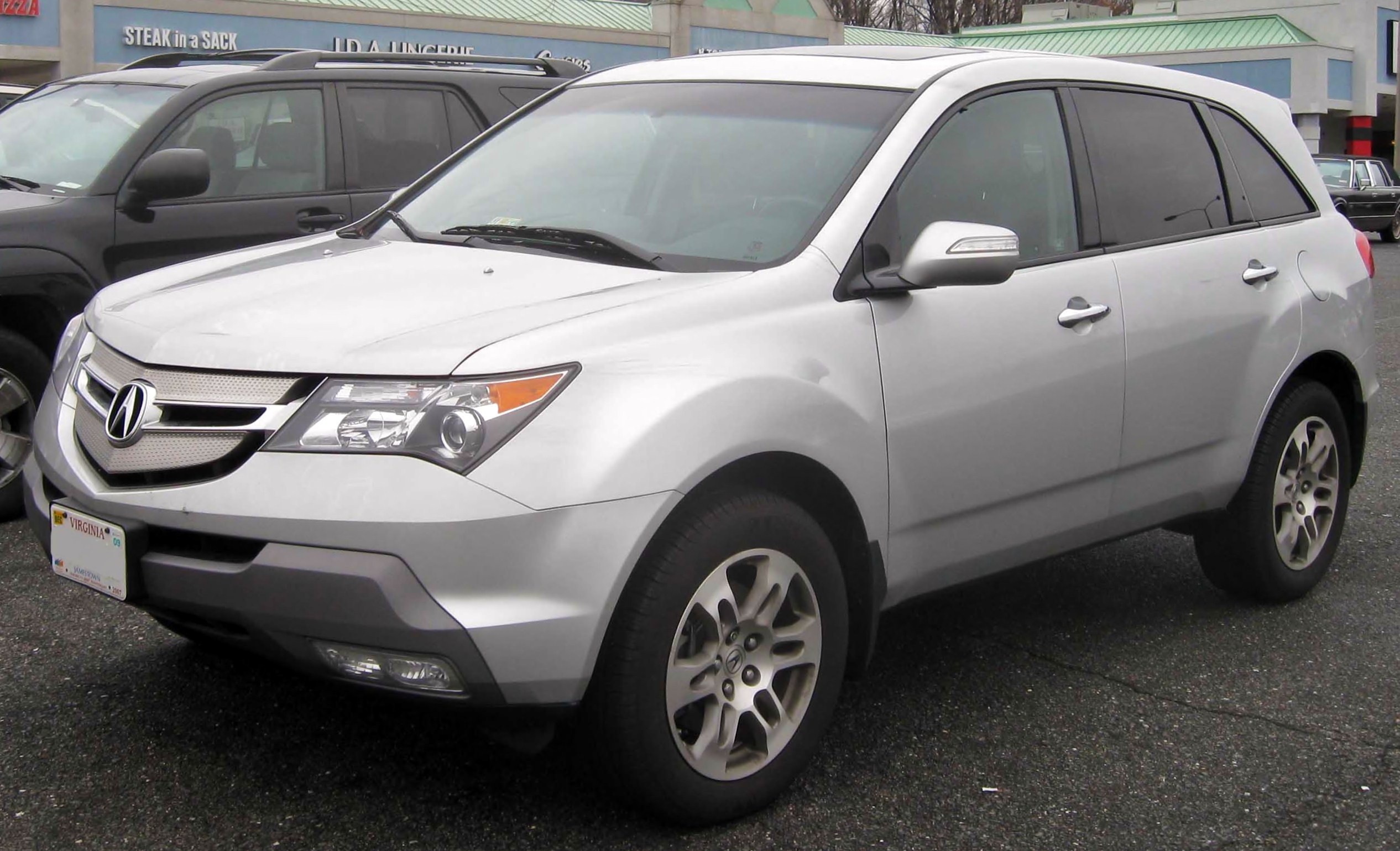
Honda MDX
"...hat this is actually up against. Is this like an MDX fighter or like. I would say MDX is a really goo..."
The Honda MDX is a three-row SUV that’s positioned as a more upscale option than basic family SUVs. It’s designed to carry passengers comfortably and still feel refined to drive. It comes up in comparisons because it’s a common benchmark for what a three-row luxury SUV should be.
The Honda MDX is a three-row luxury SUV that’s often discussed as a strong option for buyers who want a more upscale feel while still carrying a full family. In the podcast context, it’s framed as a “fighter” or direct comparison point, meaning the conversation is likely about how it stacks up against another three-row SUV. That’s why it’s mentioned when evaluating overall packaging, features, and driving character.

Cadillac XT6
"[2462.3s] So that's a significant jump. [2464.2s] But I mean, because the XT6 is, I don't know if it's hanging on. [2468.5s] No, I don't think so either."
“XT6” is likely the Cadillac XT6. It’s a larger family SUV with three rows, so it’s the kind of vehicle people compare when talking about fitting seven passengers.
The host mentions the “XT6” as a comparison point. The Cadillac XT6 is a midsize three-row crossover, so it’s relevant to the conversation about which vehicles can best handle seven-seat family use.

Aviator
"[2474.0s] Yeah, I like it and no one else likes it. [2475.8s] I would say Aviator is the other one that's worth mentioning. [2479.0s] But I think Aviator is starting to feel a little long in the tooth."
“Aviator” refers to the Lincoln Aviator, which is a luxury SUV with three rows. They’re basically saying it’s starting to feel a bit outdated compared to newer options.
“Aviator” is referenced as another vehicle worth mentioning, but the host says it’s starting to feel “long in the tooth.” The Lincoln Aviator is a luxury three-row SUV, so it fits the same comparison set for buyers who need more seats.
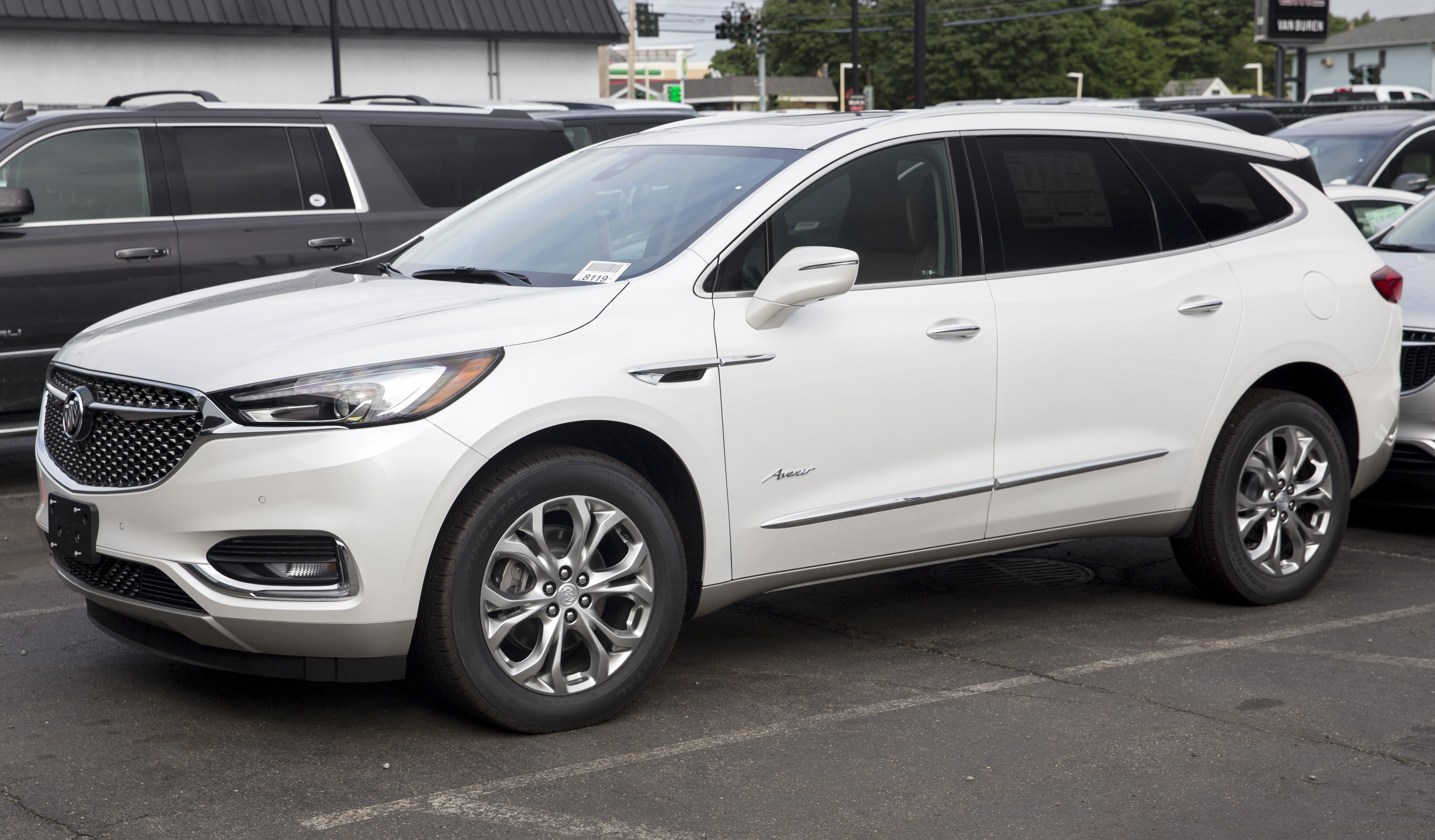
Buick Enclave
"[2481.7s] And I don't think Aviator can pull off seven seats as well as Alexis. [2485.1s] What about the enclave? [2488.1s] That's a GM. [2489.2s] That's a Buick."
They’re talking about the Buick Enclave. It’s a family SUV with three rows of seats, and they’re using it as another example in the “how many seats can it really do?” conversation.
The host asks about the “enclave,” and immediately clarifies it’s a GM model and specifically a Buick. The Buick Enclave is a midsize three-row crossover, which again ties into the discussion about seven-seat practicality.
GM
"[2485.1s] What about the enclave? [2488.1s] That's a GM. [2489.2s] That's a Buick."
“GM” means General Motors, the big car company that owns multiple brands. Here, they’re saying the Buick Enclave is part of GM.
“GM” refers to General Motors, the automaker behind brands like Buick. In this segment, the host is using it to identify the Enclave’s corporate ownership.
Request an Explanation
Heard something you'd like explained? We'll add it to this episode.
Sign in to request explanations for terms you heard.
Want to learn more?
Browse our glossary for plain-English explanations of automotive terms, jargon, and concepts.
Help improve this episode
See something that's not quite right? Our annotations are AI-generated and can sometimes miss the mark. Click the flag icon on any annotation to suggest a correction.