
Expert Car Repair Advice to Help You Cut Costs Effectively Live Answers
About this episode
Listeners get live, practical car-repair guidance focused on saving money and diagnosing problems before replacing parts. Calls cover a low-voice audio issue during the show, then dive into real-world fixes: whether to do a transmission drain-and-fill on a modified 2017 Ram 1500, how to troubleshoot multiple inoperative power windows on a 1997 Honda (switch vs door-jam wiring), and what to test when a truck won’t start after sitting (voltage drop, parasitic drain, and battery safety). Other topics include checking alternator belt slip, AFM “dongles” on a high-mileage GMC, and whether a higher-output alternator can be “too much.”
We have the expert advice! Call our show live 866-594-4150 and get help on the live show. Looking to save money on car repairs? Tune in to our latest episode of Under The Hood for practical automotive advice that can help you avoid costly repairs. Here are todays callers. 1. 6.2 Chevy what oil to use and do I use and additive? 2. 16 Accord Timing Chain rattle 3. 98 F700 coolant leak 4. 55 Chevy broken valve spring 5. 2000 Dakota crank no start condition.
HomeServe
"That's when HomeServe is here. For $4.99 a month, you're never alone. Just call their 24-7 hotline and the local pro is on the way."
HomeServe sells a service plan for home repairs. If something breaks unexpectedly, you call their hotline and they help connect you with a local repair pro.
HomeServe is a home service plan provider that markets 24/7 hotline support and dispatching a local pro when covered home systems fail. In this segment, it’s used as an example of “peace of mind” during urgent, inconvenient breakdowns like burst pipes or heater failures.
CarMax
"Do you want to find a stress-free way to buy your next car? Start at CarMax and shop your way. If you want to browse with confidence, get pre-qualified online with no impact on your credit score and shop cars within your budget."
CarMax is a car dealership that sells used cars. They encourage shoppers to get pre-qualified online and then choose cars that fit their budget.
CarMax is a used-car retailer known for an online shopping experience and in-store inventory. Here, the hosts position it as a way to buy a next car with less stress by using pre-qualification and budgeting tools.
pre-qualified online
"If you want to browse with confidence, get pre-qualified online with no impact on your credit score and shop cars within your budget."
Pre-qualifying is like getting a rough idea of what financing you might be offered. It’s usually a lighter check than a full loan application, so it may not hurt your credit as much.
Pre-qualification is an initial financing check that estimates what loan terms you may qualify for without fully committing to a specific application. The segment highlights that it can be done online and may not affect your credit score the same way a full credit application does.
collector car insurance
"Berkeley One Classics, your key to collector car insurance. And road ready wheels."
Collector car insurance is for classic cars that aren’t driven like everyday vehicles. It usually considers the car’s special value, not just what a normal car would cost to replace.
Collector car insurance is coverage designed for classic or enthusiast vehicles, which may be driven less often and valued differently than regular cars. Policies often account for agreed-upon value or specialized valuation methods rather than standard market pricing.
Replica OEM wheels
"And road ready wheels. Replica OEM wheels add huge savings. Use the offer code hoody for even more."
Replica OEM wheels are replacement wheels made by other companies, but they’re designed to match the original factory wheel look. They’re often cheaper than true factory wheels.
Replica OEM wheels are aftermarket wheels designed to look like original equipment manufacturer (OEM) wheels. They can reduce cost compared with buying genuine OEM wheels, while still matching the original style and fitment.
car dash part
"And by car dash part, over 200 million used parts ready to ship to you fast."
They’re talking about a place that sells car parts. The point is that they have lots of used parts ready to ship.
“Car dash part” appears to refer to a parts retailer or marketplace for automotive components. The sponsor message emphasizes large volumes of used parts available for shipping.
electrical drain while parked
"I'm thinking a dead battery after it sits a couple days. Okay."
If a problem shows up after the car sits, something may be using power even when the car is off. That “drain” can empty the battery, so the fix is usually finding what’s staying on.
When a car develops issues after sitting for a couple days, it often points to an electrical drain (an accessory or circuit drawing power when the car is off). This can be caused by failing modules, stuck relays, or aftermarket add-ons, and it’s different from a battery that simply wears out.
dead battery
"I'm thinking a dead battery after it sits a couple days. Okay."
A dead battery is when the battery doesn’t have enough power left to run the car. If the car sits for a few days and then won’t start (or acts weird), the battery or something draining it overnight is often the culprit.
A “dead battery” usually means the battery can’t provide enough electrical power to start the car or keep systems running after the car sits. Common causes include age, a weak battery, or a small electrical draw that drains it over a couple days.
decibel level
"And the decibel level is exactly the same as, actually it's higher than you two because I've got it turned up."
Decibels tell you how loud something is. If road noise is loud (high decibels), it can drown out what you’re trying to hear in the cabin.
A decibel (dB) level is a measurement of sound intensity. In cars, higher dB from road noise can make it harder to hear speech or music, even if the audio system is working normally.
road noise
"So when you're in a car and the road noise is going and I'm going then you don't hear it."
Road noise is the sound your tires and the road make that gets into the car. If it’s strong, you’ll feel like the radio or voice sounds worse even if the audio system is fine.
Road noise is the sound entering the cabin from tires, suspension, and the road surface. It’s a major factor in perceived audio quality because it competes with voice and music frequencies.
aftermarket
"And in my old car, I had a button right on the front of my aftermarket that was for voice or music."
Aftermarket just means “not from the factory.” It’s usually an add-on or upgrade that someone installs to change how the car’s audio or controls work.
Aftermarket means parts or accessories made by companies other than the original manufacturer. In this context, an aftermarket button/audio feature suggests the car’s audio or voice controls were modified beyond factory equipment.
subwoofer
"But yeah, the way I have my car set now with subwoofer"
A subwoofer is the part of your car audio that plays the deep bass. It can make music sound richer, but if it’s set up wrong it can also make everything feel less clear.
A subwoofer is a speaker designed to reproduce low-frequency bass. Adding or tuning a subwoofer can change how “full” the audio sounds, but it can also affect perceived clarity depending on how the system is set up.
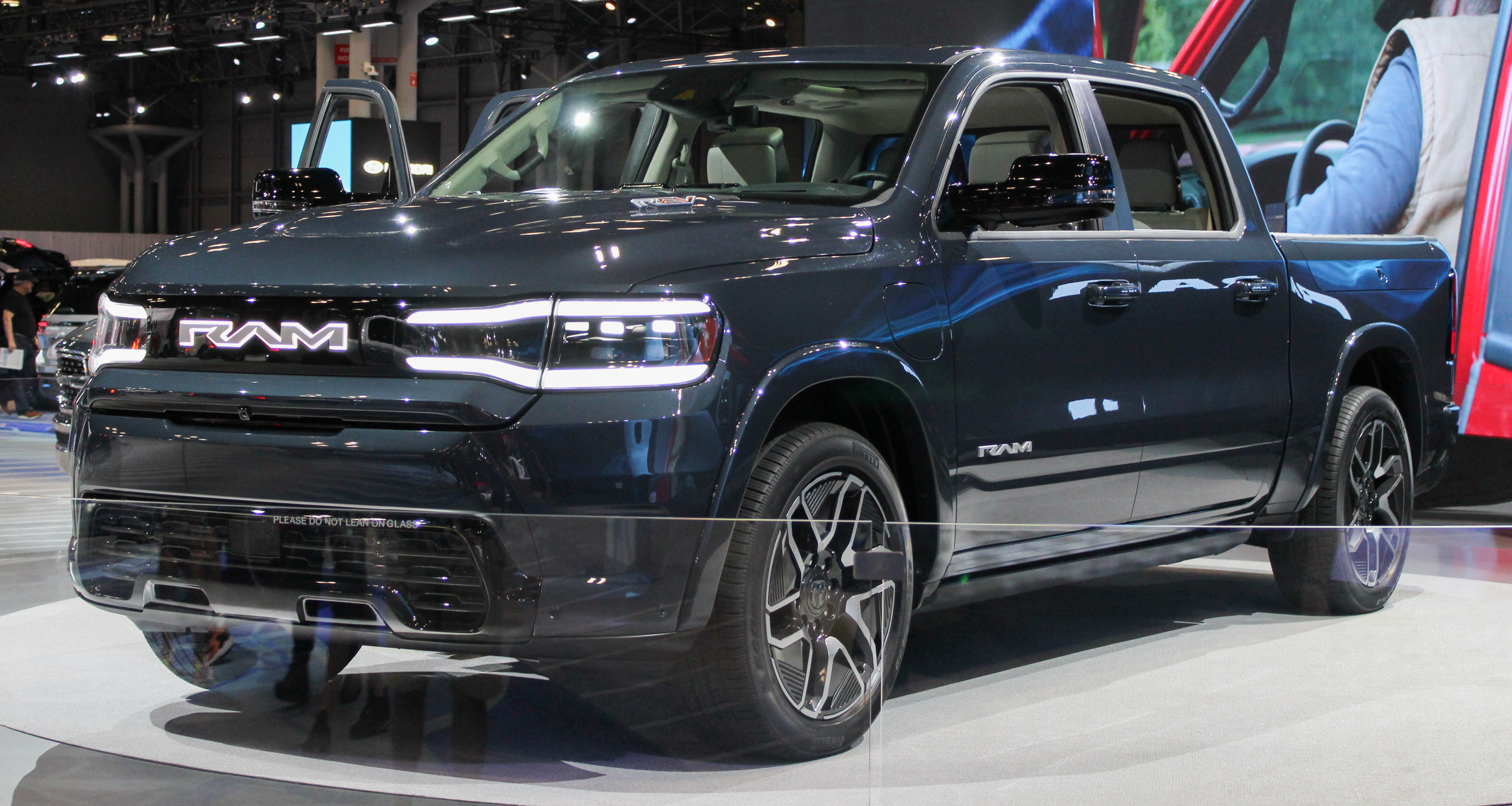
2017 Ram 1500
"Anyways, I take care of his 2017 Ram 1500 with the 5.7 Hemi that has an AFE cold air intake"
A Ram 1500 is a big pickup truck. Here, the caller says they maintain a 2017 model, and they’re talking about the engine and an air-intake upgrade on it.
The Ram 1500 is a full-size pickup truck, and the 2017 model is part of the 4th-generation Ram 1500 era. In this segment, it’s the owner’s truck that’s being maintained and modified for better performance or sound.
AFE cold air intake
"Anyways, I take care of his 2017 Ram 1500 with the 5.7 Hemi that has an AFE cold air intake"
A cold air intake is an upgrade that helps the engine get cooler air. Cooler air can help the engine run more efficiently, but it’s not magic—how much you notice depends on the setup.
A cold air intake is an aftermarket intake system that routes air from a cooler location and replaces restrictive factory intake components. The goal is usually improved airflow (and sometimes better throttle response), but results depend on the specific engine and whether the vehicle is tuned appropriately.
JVA long tube headers
"JVA long tube headers no Cadillac converter 2.5 inch"
Headers are parts that help move exhaust gases out of the engine. “Long-tube” headers use longer pipes, which can help the engine breathe better, but they may also make the exhaust louder and can affect emissions.
Long-tube headers replace the factory exhaust manifolds and route exhaust gases through longer pipes before they reach the rest of the exhaust system. This can improve exhaust flow and potentially add power, but it also changes exhaust sound and emissions equipment requirements.
true dual exhaust
"2.5 inch true dual exhaust using Magnaflow"
True dual exhaust means there are two separate exhaust routes instead of one shared path. It can improve flow and usually makes the truck sound different.
True dual exhaust means the system uses two separate exhaust paths from the engine to the rear, typically with two mufflers and two pipes. Compared with a “single” or “dual” setup that shares sections, true duals can reduce backpressure and change the sound.
Magnaflow
"using Magnaflow Magna Magna pack"
Magnaflow is a company that makes aftermarket exhaust parts like mufflers. People choose it because it’s designed to flow well and sound a certain way.
Magnaflow is an aftermarket exhaust brand known for mufflers and catalytic converters. In exhaust builds, the brand often matters because materials, flow design, and fitment can affect sound, drone, and durability.

Nissan Pulsar
"mufflers and a Holley Pulsar inline performance tuner"
The Nissan Pulsar is a small car made by Nissan for everyday driving. People may modify it with parts like an exhaust (mufflers) and a tuning device to change how it runs and how it sounds. The podcast is likely talking about those changes and what they’re meant to improve.
The Nissan Pulsar is a compact car line known for being a practical everyday vehicle that also has a history of aftermarket support. In a podcast context mentioning “mufflers” and a “Holley Pulsar inline performance tuner,” it’s likely being discussed for how exhaust and tuning changes can affect sound and drivability. That kind of setup is often brought up to explain what modifications do and why owners choose them.
inline performance tuner
"Pulsar inline performance tuner set to 87 octane"
A performance tuner is a gadget that changes how the engine runs. It can make the truck feel stronger or smoother, but it has to be set up properly so it doesn’t cause problems.
An inline performance tuner is a device that plugs into the vehicle’s electronics to adjust engine parameters such as fueling and ignition timing. These tuners can change drivability and sometimes fuel economy, but they must be used correctly for the vehicle and fuel type.
87 octane
"inline performance tuner set to 87 octane fuel economy"
Octane is how resistant the fuel is to knocking. If the tuner is set for 87, it’s trying to keep the engine happy and safe when you use regular gas.
Octane rating is a measure of fuel’s resistance to knocking (premature combustion). Setting a tuner to 87 octane means the calibration is designed to run safely on that lower-octane fuel, which can affect power and how aggressively the engine can be tuned.
fuel economy
"set to 87 octane fuel economy to tune and MDS"
Fuel economy is how far the truck can go on a gallon of gas. Tuning and engine settings can change it.
Fuel economy is how efficiently a vehicle uses fuel, usually measured as miles per gallon (MPG). In tuning discussions, it often comes up because changes to exhaust, fueling, and cylinder management (like MDS) can shift MPG up or down.
MDS
"to tune and MDS turned off the truck has 120,000 miles"
MDS typically refers to a cylinder deactivation system that shuts down some cylinders under light load to improve fuel economy. Turning it off can change how the engine feels and may increase fuel use, but it can also prevent certain drivability quirks some owners dislike.
120,000 miles
"the truck has 120,000 miles and runs and drives just fine"
Mileage tells you how much the vehicle has been used. Here it’s being used to show the truck is still healthy and not falling apart.
Mileage is a key indicator of wear and maintenance needs. The speaker uses the 120,000-mile figure to support that the truck is still running well despite the modifications and that maintenance has been consistent.
spark plugs
"We never have done anything other than new spark plugs and coils at 80,000 miles"
Spark plugs ignite the air-fuel mixture in the engine. Replacing them at the right interval helps maintain smooth operation, proper combustion, and can prevent issues like misfires that hurt performance and fuel economy.
coils
"new spark plugs and coils at 80,000 miles and oil changes"
Ignition coils provide the electricity to make the spark. If a coil starts failing, the engine may misfire and throw warning lights.
Coils (often ignition coils) generate the high voltage needed to fire the spark plugs. Coil failures can cause misfires, rough running, and check-engine lights, so replacing them as part of maintenance can keep the engine stable.
oil changes every 3500 to 4000 miles
"and oil changes every 3500 to 4000 miles"
Oil changes keep the engine lubricated and help remove dirt from the oil. Changing it every 3,500–4,000 miles is a stricter schedule to help the engine last longer.
Frequent oil changes help keep engine oil clean and maintain lubrication, especially if the vehicle sees heavy use or performance driving. The 3,500–4,000 mile interval suggests a conservative maintenance schedule aimed at protecting engine wear.
synthetic oil
"with synthetic oil. He wants us to do a transmission flush"
Synthetic oil is a higher-performance type of lubricant. In transmission talk, it matters because the car may require a specific fluid type to work correctly.
Synthetic oil refers to a refined, engineered lubricant designed to resist breakdown and maintain viscosity better than conventional oil. In the context of transmissions, “synthetic” can be relevant because some manufacturers specify certain fluid types and additives.
transmission flush
"He wants us to do a transmission flush but listening to the podcast he has the taste to do so. Should we do a flush"
A transmission flush is when a shop replaces the transmission fluid more aggressively than a normal oil change. The goal is to get rid of old, dirty fluid, but it can sometimes stir up problems in a transmission that’s been neglected.
A transmission flush is a service where fluid is forced through the transmission system to remove old fluid and contaminants. It’s different from a simple drain-and-fill because it can move more debris through the system.
closed system
"Should we do a flush and since it's a closed system how can we check the fluid to see its conditions"
A “closed system” means the transmission is sealed up and you don’t normally open it to check fluid. So checking the fluid condition usually means using the dipstick (if the car has one) or having the shop test it.
Many transmissions are treated as a “closed system,” meaning fluid is contained and not meant to be routinely opened or topped off like engine oil. That affects how you can inspect fluid condition—often you rely on a dipstick (if equipped) or a professional fluid check rather than opening the system.
fluid conditions
"how can we check the fluid to see its conditions see its conditions also anything else you'd recommend to check or keep an eye on"
When people say “check the fluid conditions,” they mean making sure the transmission fluid isn’t worn out or contaminated. Bad fluid can cause rough shifting and can speed up damage inside the transmission.
Checking “fluid conditions” usually means evaluating whether the transmission fluid is still healthy—often by looking at color/odor and sometimes by measuring properties. Healthy fluid helps lubrication and cooling; degraded fluid can lead to shifting issues and wear.
transmission fluid
"[497.5s] and so this question about the transmission fluid [500.8s] is a common question that we get [502.4s] and that transmission fluid [504.4s] is reaching the age where it should [506.8s] be looked at you know you've got a truck that is [509.0s] you know suddenly [510.2s] 9 years old"
Transmission fluid is the “oil” that keeps the transmission working smoothly. If it gets old, the shifts can feel worse and parts can wear out faster, so it’s worth checking on an older truck.
Transmission fluid lubricates internal transmission components and helps transfer hydraulic pressure for shifting. Over time it can degrade, reducing shift quality and increasing wear, which is why checking or servicing it at the right interval matters—especially on older vehicles.
fluid age/maintenance interval (9 years old)
"[506.8s] be looked at you know you've got a truck that is [509.0s] you know suddenly [510.2s] 9 years old [511.8s] and that fluid is 9 years old [514.1s] and you know I'm assuming it's been"
They’re saying that even if you don’t drive a ton, fluids can still get old. So a truck that’s around 9 years old may need its transmission fluid checked because the fluid can wear out over time.
The host frames transmission fluid service as an age-based maintenance issue: if the fluid is around 9 years old, it may be time to inspect or replace it. This highlights how “time” can matter as much as mileage, since fluid can degrade even if the vehicle isn’t driven constantly.
tune-up items / driving harder after modifications
"[514.1s] and you know I'm assuming it's been [516.2s] maybe run a little bit harder with all those [518.4s] tune up items on there somebody probably made it [520.3s] feel good it usually works harder [522.7s] when they sound good"
They’re implying that if someone adds performance parts or makes the truck run better, they may also drive it more aggressively. That extra stress can make fluids wear out faster.
The host suggests that tune-up items and other changes can lead to the vehicle being driven harder, which increases stress on the drivetrain and can accelerate fluid wear. It’s a reminder that how a truck is used (and modified) affects maintenance needs.
exhaust work
"[522.7s] when they sound good [523.7s] with all that exhaust work [525.6s] and things like that"
Exhaust work means changing parts of the exhaust system. It can change the sound and sometimes how the engine breathes, and the host is tying that to the idea that people often drive harder when the truck sounds better.
“Exhaust work” refers to modifications to the exhaust system (like headers, cat-back systems, or other changes) that can alter engine sound and backpressure. The host connects exhaust changes to how the truck “sounds good,” which can correlate with more spirited driving and additional load on the drivetrain.
fluid change
"you start planning for that fluid change and as far as checking it out"
A fluid change is when you replace old fluid with fresh fluid. Old fluid can wear out and stop protecting the moving parts as well. Doing it on time can help you avoid bigger, more expensive repairs later.
A fluid change is scheduled replacement of transmission fluid (or other service fluids) to maintain lubrication and cooling. Over time, fluid breaks down and can lose its ability to protect internal components. Planning the service interval helps prevent expensive failures and can reduce long-term costs.
drain and fill
"it's not a flush it's a drain and fill on those you gotta pull the pan off the pan"
Drain-and-fill means you drain some of the old fluid and add new fluid back in. It’s usually gentler than a full “flush” that pushes fluid through the system. Many shops prefer it because it can be easier on the vehicle and cheaper.
A drain-and-fill service replaces a portion of the fluid by draining it and refilling with fresh fluid. It’s often contrasted with a full flush, which can circulate old fluid and debris through the system. For many transmissions, drain-and-fill is considered a safer, lower-cost maintenance approach.
pull the pan off
"you gotta pull the pan off the pan has a filter built into it"
Pulling the pan off typically refers to removing the transmission oil pan to access the filter and internal fluid passages. This is common on many automatic transmissions where the filter is mounted inside the pan. It’s a labor-intensive step, which is why parts choice (like a cheaper pan) can matter for cost.
filter built into it
"has a filter built into it and what we suggest is when you"
On some transmissions, the filter is built into the bottom pan. To replace the filter, you usually have to remove that pan first. That can make the job more expensive than vehicles with a separate filter.
Some transmission setups use a filter that’s integrated into the oil pan assembly. When the filter is built into the pan, service often requires removing the pan to replace the filter. That design can increase parts and labor costs compared with systems that have an external, easily serviced filter.
dormant
"we use our dormant products pan from our partner at dormant"
They’re talking about an aftermarket company that makes a cheaper replacement pan. The important part is that it lets you replace the filter later without buying the whole expensive factory assembly. If you’re considering it, double-check it fits your exact transmission.
The speaker mentions a “dormant products pan” from a partner at “dormant,” implying an aftermarket supplier offering a lower-cost alternative to an expensive factory pan. In this context, the key value is that the aftermarket pan includes a removable, replaceable filter. Listeners should treat this as a brand/partner reference and verify compatibility with their specific transmission model.
removable filter
"and it has a removable filter that's replaceable the next time so once it's"
A removable filter means you can take the filter out and put a new one in later. That usually costs less than replacing the whole pan. It also makes regular maintenance simpler.
A removable filter means the filter element can be replaced without replacing the entire pan assembly. That typically reduces future service costs because you can buy only the filter next time. It also supports a maintenance schedule that’s easier to stick to.
drain plug
"use the drain plug on the bottom now it'll have a drain plug you can drain it"
Adding or using a drain plug allows future fluid services to be done by draining from the bottom instead of removing the pan again. That can reduce labor time and mess, and it helps keep the service interval practical. The speaker’s point is that once the aftermarket pan is installed, routine drain-and-fill becomes easier.
buy a filter only
"when you take it down but then you just buy a filter only you don't have to buy"
“Buy a filter only” highlights a cost-saving maintenance strategy: replacing just the filter element rather than the entire pan/filter assembly. This is only possible when the filter is designed to be serviceable (e.g., removable filter in an aftermarket pan). It reduces parts cost and can encourage more consistent maintenance.
fill plug
"usually if you if you have the vehicle warm and you take the fill plug out of the side of the transmission just for a second and put it back in you can get a little bit out on your hand and see the condition of the fluid"
The fill plug is a small access bolt on the transmission. By removing it, you can check whether the fluid is at the right level and what condition it’s in.
A fill plug is the access point used to check and set the correct fluid level in a transmission. Mechanics typically remove it (with the vehicle at the right temperature/leveling) to confirm the fluid condition and that the level is correct.
8-9 speed fluid
"they call it an 8-9 speed fluid for the Chrysler and it's it's very spendy and it does last a long time"
This is a special type of transmission fluid meant for certain multi-speed transmissions. Using the correct fluid matters, and it can be expensive because it’s designed for that transmission.
“8-9 speed fluid” refers to a transmission fluid specification intended for certain multi-speed automatic transmissions. The key point is that the correct fluid type/spec matters, and the right fluid can be costly but may last longer if it meets the manufacturer’s requirements.
Chrysler
"they call it an 8-9 speed fluid for the Chrysler and it's it's very spendy and it does last a long time"
Chrysler is the car brand being referenced. Different brands and transmissions can require different fluid types, so you want the right one for your exact vehicle.
Chrysler is the vehicle brand referenced here in connection with a specific transmission fluid specification. It’s a reminder that fluid requirements can vary by manufacturer and transmission design, so using the correct spec is important.
service cost shock (labor vs parts)
"it may be a shock it may not be I've had people when I tell them oh that's $800 to do that transmission fluid change... but it's not like a big labor intensive job so you're going to save somebody"
The segment highlights how repair costs can feel like a “shock” because shops often charge for both parts and labor. In this case, the speaker suggests that doing the job at home can reduce labor costs, while professional pricing can be much higher. It also implies that vehicle age and service setup (like additional components) can change the total bill.
upgraded pan
"that include that's the first time with that upgraded pan once you do it it significantly drops the cost"
An upgraded transmission pan is a different cover for the transmission that can make servicing it easier. After switching to it, future fluid changes may cost less because the job is simpler or requires fewer extra steps. The host is saying the first time can be pricey, but later it’s cheaper.
An upgraded transmission pan is an aftermarket replacement that can include features like improved filtration and sometimes a different design that makes future fluid service easier. The speaker notes that after the first time with the upgraded pan, the cost to service the fluid can drop. This suggests the pan changes the workflow or parts needed for later maintenance.
suction gun
"you can buy a $30 suction gun that you use to draw the fluid out of your bucket and then put it into the side of the transmission"
A suction gun is like a powered or hand pump that pulls fluid out. It helps you remove or move transmission fluid without making a huge mess.
A suction gun is a hand tool used to remove fluid from a reservoir or fill point without draining the whole system. In this context, it’s used to draw transmission fluid out and then transfer it for service.
basic tune up
"as far as other things on that ram other than your basic tune up stuff just drive it"
A “tune-up” generally refers to routine maintenance items that keep an engine running correctly, such as ignition and air/fuel system checks. While the transcript doesn’t list specifics, it’s positioned as part of the broader cost-saving maintenance routine.

1997 Honda Accord
"my beautiful 97 accord had been setting for a few months because I was working on my watch 07 accord which runs great now ... the electric window on my 97 driver's door driver's window goes up and down fine the other three are in operative"
The Honda Accord is a very common car, so it’s usually easier (and often cheaper) to get parts and service. Here, the caller is talking about their 1997 Accord and some power-window problems.
The Honda Accord is a mainstream midsize sedan known for reliability and wide parts availability. In this call, the owner mentions a 1997 Accord and describes issues with the power windows and how the car has been maintained.
electric window
"the electric window on my 97 the driver's door driver's window goes up and down fine the other three are in operative"
An electric window is the power system that moves the window up and down. If one window works but the other three don’t, the problem is usually with the window motors or the switches rather than the whole car’s power.
An electric window is a power window system that uses a motor and switches to raise and lower the glass. When only one window works (like the driver’s) but the others don’t, it often points to issues with the window motors, regulators, or the master switch/control circuit.
air conditioner
"[781.6s] the air conditioner works great [782.9s] so how do I"
Your car’s air conditioner is what makes the inside cool. If it’s working well, that usually means the cooling system is fine, and the problem you’re chasing is probably something else.
The air conditioner (A/C) is the system that cools the cabin by moving refrigerant through a compressor, condenser, and evaporator. If it “works great,” it suggests the cooling system is functioning, so the issue you’re troubleshooting is likely unrelated to climate control.
diagnosing multiple power windows (checking each window and switch)
"[784.8s] go about analyzing [786.5s] the problem with these three [789.6s] unworking [791.1s] windows [792.5s] and they have you [794.4s] checked them at each door to see if [796.9s] they work individually ... [802.4s] check them at the doors first [803.7s] see if they work from those doors [805.5s] the driver's door"
If more than one power window isn’t working, you don’t want to guess. The smart way is to test each window and its door switch one at a time so you can figure out whether it’s the switch, the window motor, or wiring.
When multiple power windows aren’t working, a common repair approach is to isolate whether the fault is in the window switches, the window motors/regulators, or the shared control wiring. Checking each window individually—starting at the driver’s door switches and then the other door switches—helps pinpoint whether one component is failing or if there’s a common electrical issue.
window switches
"[792.5s] and they have you [794.4s] checked them at each door to see if [796.9s] they work individually ... [808.7s] has the four switches [810.5s] right but check the other ones [812.5s] and see where they're at ... [819.1s] but check each one of those and see if those switches [821.9s] do any [823.7s] any good"
The window switch is the button you press to move the window. If some switches work and others don’t, it helps narrow down whether the problem is the switch itself or something deeper in the window system.
Window switches are the electrical controls in each door that send power to the window motor/regulator. If one switch works but another doesn’t, it points toward a localized switch or wiring issue rather than a single shared failure.
window motors
"[813.8s] it's very unlikely that all three windows [815.9s] failed at the same time but check the [818.1s] as far as motors [819.1s] but check each one of those and see if those switches"
The window motor is the part that actually moves the window up and down. If the switches don’t seem to do anything, the motor might be bad—or the power might not be getting to it.
Window motors (part of the window regulator assembly) provide the mechanical force to raise and lower the glass. If switches test poorly or power isn’t reaching the motor, the motor/regulator may be the culprit; if power reaches the motor but it doesn’t move, that’s a strong sign the motor/regulator has failed.
driver's switch
"if they don't work from the driver's switch we can eliminate the lockout that locks out those separate switches if you told me that those three windows didn't work but the driver does"
The driver’s switch is the main button panel for the windows. If the driver can control the windows but the other switches can’t, that usually means the problem is with the other switch or the wiring to that door.
The “driver’s switch” is the main power-window control on the driver’s door. The host uses it as a diagnostic clue: if the driver can operate the windows but the individual door switches can’t, the fault is more likely in the passenger switch or its wiring.
lockout
"we can eliminate the lockout that locks out those separate switches if you told me that those three windows didn't"
A lockout is a feature that stops other people from controlling the windows. If it’s not working right, it can make the window controls behave strangely, so checking it helps find the real problem.
A “lockout” in power-window systems prevents the passenger-side switches from operating the windows. When the lockout is faulty or bypassed, it can change which switches work and helps narrow down whether the issue is in the switch assembly or wiring.
lock button is probably broken in the switch
"if you told me that those three windows didn't work but the driver does then I'd say the lock button is probably broken in the switch if you've already tried it"
They’re saying the button that locks/unlocks the window controls is likely worn out. If that button fails, the windows may not respond from the other switches even though the system is otherwise working.
This points to the “lock” button within the window switch assembly as the likely failure. Switches can wear out internally, causing intermittent or total loss of function even when the window motors and main wiring are otherwise okay.
broken wires in the door jam
"then the most common issue on those is a problem with the switch the second problem is broken wires in the door jam they can both happen"
The wires that connect the door to the car body can break over time. When that happens, the window controls for that door may stop working even if the window motor is fine.
“Broken wires in the door jam” refers to wiring that runs through the rubber boot area between the door and the body. Repeated door opening/closing can fatigue and break those wires, leading to window switch functions failing for that door.
kick panel
"you take the tube pull it back pull the wiring out by taking the kick panel"
The kick panel is the plastic trim by your feet. Taking it off can help you reach the wiring so you can check for broken connections.
The “kick panel” is the interior trim panel near the driver/passenger footwell. Removing it can provide access to wiring and connectors so you can pull the wiring through the door-to-body tube/boot area for inspection or repair.
heat shrink connectors
"[882.9s] we usually use heat shrink connectors [884.9s] so we cut out the part that's broken [887.9s] which is going to be the brittle part"
These are special wire connectors that get tight and seal up when you heat them. They keep water out of the splice so the repair lasts longer.
Heat shrink connectors are electrical splice parts that seal the joint when heated. They help protect the connection from moisture and vibration, which reduces the chance of repeat failures.
brittle part
"[884.9s] so we cut out the part that's broken [887.9s] which is going to be the brittle part [889.1s] where the bend was"
When a wire bends a lot, the damaged spot can become weak and crack easily. That’s why you usually cut out the bad section instead of just covering it.
The “brittle part” refers to the section of wire that has been damaged by repeated bending or fatigue. Once the conductor insulation and/or conductor itself is compromised, it can fail again even after a simple rewrap, so the damaged section needs to be cut out.
heat shrink butt connector
"[895.3s] so we put a heat shrink butt connector in there [898.5s] and then put the cover over them [900.1s] without taping them all together"
A butt connector is a straight splice that joins two wire ends. With the heat-shrink version, the sleeve tightens around the wires to insulate and protect the repair.
A heat shrink butt connector is a specific style of splice that joins two wire ends in-line. The heat-shrink sleeve provides insulation and strain relief, which is why it’s often preferred over bulky tape.
electrical tape
"[901.6s] I've seen people put the heat shrink on [903.4s] which protects the wire from water [905.3s] you don't need a big wad of electrical tape over the top"
Tape can insulate wires, but if you wrap it too thickly, the repair can become stiff. When the car vibrates, that stiffness can cause the wire to crack again.
Electrical tape is commonly used to insulate wire repairs, but thick layers can make the splice area stiff. That stiffness can concentrate stress at the joint, increasing the chance the wire breaks again.
single power feed for the whole system
"[915.2s] but those are the two things to check [916.8s] and usually that takes care of it [918.5s] there is only one power for the whole system [924.0s] you have power for everything"
The speaker is describing a common automotive electrical layout: one main power source supplies an entire subsystem. If one component (like the driver’s window) has power, it strongly suggests the upstream power feed and fuses are likely intact, narrowing the fault to downstream wiring or switches.
circuit breaker
"so it's not going to be a fuse or a circuit breaker it's going to be"
A circuit breaker is an automatic safety switch for electricity. If there’s a problem like too much current, it shuts off the power to protect the system.
A circuit breaker is an electrical switch that automatically opens when it detects an overload or short. Unlike a fuse, many circuit breakers can be reset, but repeated trips usually point to an underlying wiring or component issue.
fuse
"so it's not going to be a fuse or a circuit breaker it's going to be"
A fuse is like a protective plug for an electrical system. If something is drawing too much power, the fuse breaks the circuit to prevent damage or a fire.
A fuse is a safety device that protects a circuit by melting when too much current flows. If a fuse blows, it usually means there’s an electrical fault somewhere downstream that needs diagnosis.
door switches
"it's not going to be all three door switches it's going to be either in that master switch or in the wiring"
Door switches are the buttons in each door that control that door’s features. If one door works but others don’t, it can tell you where the problem is.
Door switches are the individual controls mounted in each door that operate that door’s functions (commonly power windows). If one door’s controls work independently, it helps narrow the fault to wiring or the master control rather than every door switch.
master switch
"it's not going to be all three door switches it's going to be either in that master switch or in the wiring"
The master switch is the main control—usually the driver’s switch—that can run multiple functions at once. If several things stop working together, that main switch or its wiring may be the problem.
A master switch is the main control (often the driver’s switch panel) that can command multiple related functions, like power windows for all doors. If several windows act together, the master switch or its feed wiring is a common diagnostic starting point.
power loop
"[1038.6s] yeah, there's a power loop there [1040.4s] that must be not working right [1042.0s] or a grown loop, one of the two"
A “power loop” is just the path electricity takes to reach something in the car. If part of that path is damaged or loose, the car’s electrical system may work sometimes and fail other times.
A “power loop” in this context likely means a circuit path that supplies power to a component through switches and wiring. If that loop isn’t working correctly, the symptom can be intermittent because the circuit may be open (broken connection) or shorted depending on how the wiring is positioned.
low battery
"[1062.8s] when I went to start it [1064.3s] it started but it was really a low battery [1068.4s] Sunday, Monday, Tuesday"
A “low battery” means there isn’t enough electrical power to start the truck. If it keeps happening, it’s often either the battery is wearing out or the truck isn’t charging it properly.
“Low battery” usually means the battery voltage is too low to crank the engine or power the vehicle’s electronics. When the car starts sometimes but not other times, it can indicate a battery that’s failing under load, or a charging/connection issue that prevents the battery from getting fully recharged.
intermittent no-start / battery symptoms
"[1068.4s] Sunday, Monday, Tuesday [1069.8s] well, yesterday there wasn't [1071.4s] any battery and this morning [1073.6s] there wasn't any battery [1075.3s] but when I drive it through the day [1077.2s] you can turn it off [1079.5s] and start it back up"
This is the pattern where the truck won’t start reliably, but it might start later. That usually means the battery power level or the charging/connection system is acting up, not that the engine itself is always broken.
Intermittent starting problems—where the vehicle sometimes has enough power to start but later doesn’t—often suggest something that changes with time or driving, like battery state-of-charge, a loose/dirty connection, or a charging-system fault. The fact that it can start after being driven and then restarted points toward a charging or connection issue rather than a purely mechanical failure.
Napa
"I took it to Napa where I bought the battery and they tested it and they said, well chose corrosion"
NAPA is a store that sells car parts and can also test things like your battery. They checked the battery and gave a diagnosis about what might be causing the problem.
NAPA is an automotive parts retailer and service network that often offers battery testing and related diagnostics. In this segment, they tested the battery and helped interpret what the test results mean for the vehicle’s electrical system.
corrosion
"and they said, well chose corrosion we took just battery cables off of the battery and they're not a post they're those little flat bolt on things and everything there was clean and he said, well what my tester tells me is that there's corrosion in the system some way"
Corrosion is gunk or oxidation on the battery terminals and cable ends. It can stop electricity from flowing well, so the car may act like the battery is bad even when it isn’t.
Corrosion in a car’s electrical system usually refers to oxidation and buildup on battery terminals and cable connections. It increases resistance, which can cause hard starting, voltage drops, and misleading battery test results.
battery cables
"we took just battery cables off of the battery and they're not a post they're those little flat bolt on things and everything there was clean"
Battery cables are the thick wires that carry power from the battery to the car. If the ends are dirty or corroded, the car may not start reliably, so checking and cleaning them can help.
Battery cables are the heavy-gauge wires that connect the battery to the vehicle’s electrical system. Removing and cleaning them (and their connection points) is a common step when diagnosing charging or starting issues caused by poor contact.
battery terminals
"and they're not a post they're those little flat bolt on things and everything there was clean"
Battery terminals are where the battery cables clamp or bolt onto the battery. If they’re corroded or not tight, electricity can’t flow properly.
Battery terminals are the connection points where the cables attach to the battery. Some batteries use bolt-on “flat” terminals rather than traditional post-style terminals, and the connection style can affect how corrosion forms and how you clean/secure the fit.
tested it in the vehicle
"was he testing the battery in the vehicle or on the bench? in the vehicle we tested it in the vehicle and then we also took the connections loose and tested just the battery itself"
Testing the battery in the car checks how it behaves when the vehicle’s systems are actually connected. That helps catch issues like bad connections or charging problems that a simple bench test might not show.
Testing a battery “in the vehicle” checks performance under real electrical load and system conditions (like the starter circuit and charging system). This can reveal problems caused by connection resistance or charging faults that a bench test might miss.
bench test
"was he testing the battery in the vehicle or on the bench? in the vehicle we tested it in the vehicle and then we also took the connections loose and tested just the battery itself"
A bench test checks the battery by itself, outside the car. It tells you if the battery is weak, but it won’t show problems caused by dirty or loose connections in the vehicle.
A bench test checks battery health while the battery is removed from the vehicle. It’s useful for determining if the battery itself is failing, but it can miss issues caused by corroded connections or charging-system problems in the car.
connections loose
"and then we also took the connections loose and tested just the battery itself but Wala was still in the pickup"
This means they loosened the battery cable connections to check them more carefully. If the car starts or tests better after that, the issue is often a bad connection or corrosion at the terminals.
“Connections loose” refers to removing or loosening the cable-to-terminal connections to isolate whether the battery is good and whether the vehicle-side wiring/connectors are the problem. If performance improves after cleaning/tightening, the root cause is often connection resistance or corrosion.
cold crank
"it was an 850 cold crank and it showed 923 or something"
Cold crank is a battery’s ability to start the car when it’s cold outside. If the battery can’t provide enough power, the engine may crank slowly or not start.
“Cold crank” refers to how well a battery can deliver power when the engine is started in cold conditions. Battery testers often estimate or measure cold-cranking performance to predict whether the battery will crank the engine reliably.
cells
"he said this will tell me if any of the cells are bad and he said they weren't nothing's bad"
A car battery is made of multiple internal sections called cells. If one cell goes bad, the whole battery may start the car poorly or fail under load.
Battery “cells” are the individual electrochemical units inside a lead-acid battery. If one or more cells fail or degrade, the battery can still show partial performance but may not deliver consistent cranking power.
voltage drop
"you know you could have a drop you need to check for a voltage drop I've never heard of a battery tester that says corrosion in the system"
A voltage drop test looks for weak spots in the electrical path—like dirty or loose connections. If too much voltage is lost, the car may have trouble starting even with a good battery.
A “voltage drop” test checks for excessive resistance in wiring, grounds, and connections by measuring how much voltage is lost under load (like during cranking). High voltage drop can point to corroded terminals, loose connections, or failing cables even if the battery itself tests okay.
battery tester
"I've never heard of a battery tester that says corrosion in the system I just haven't seen that they test the battery they can test the starter and things like that"
A battery tester checks whether your battery is healthy and can provide enough power. Different testers use different methods, so the results can be misleading if the test isn’t done the right way.
A battery tester evaluates battery health and starting/charging capability, often using load testing and internal resistance measurements. Some testers can also estimate related components (like starter draw) or flag patterns, but results can depend on how the test is performed and interpreted.
volt meter
"you need to get a volt meter out go directly to the starter terminal right at the starter"
A volt meter is a tool that measures voltage in a car’s electrical system. Here it’s used to see whether the voltage at the starter stays strong when you crank the engine.
A volt meter (multimeter) measures electrical potential (voltage) between two points. In this procedure, it’s used to compare voltage at the starter terminal versus the battery negative while cranking.
starter terminal
"go directly to the starter terminal right at the starter put the other one on the negative of the battery"
The starter terminal is where power goes into the starter motor. If the voltage at that point drops a lot while cranking, the starter isn’t getting enough power due to wiring or connection issues.
The starter terminal is the connection point on the starter where high current is delivered to crank the engine. Measuring voltage at the starter terminal during cranking helps reveal if the cables or connections are dropping too much voltage before it reaches the starter.
negative of the battery
"put the other one on the negative of the battery and then you crank it and see what your voltage is"
The battery negative is used as the “reference” point for the measurement. This helps the meter tell you how much voltage is being lost in the wiring when you crank the engine.
Using the battery negative as the reference point lets the technician measure voltage differences accurately while the system is under load. In a voltage drop test, the meter’s two leads are placed at specific points to quantify losses across cables and connections.
crank it
"and then you crank it and see what your voltage is and make sure you don't have a big voltage drop"
“Crank it” means turning the engine over using the starter motor. During cranking, voltage drop testing is most informative because the electrical system is drawing heavy current.
negative terminal
"cranking slow and you've got that negative terminal your meter right on the negative of the battery that means we've got the loss in the positive side of the battery"
Your car battery has two main connections: positive and negative. The negative terminal is the “ground” side, and if it’s dirty or corroded, the starter may not get enough power.
The negative terminal is the battery’s ground connection (often connected to the vehicle’s chassis/engine). Measuring voltage at the negative terminal helps diagnose whether the battery’s power is being lost through the ground/cable path during cranking.
corroded
"we know it's on the negative side we've got one of those two cables is corroded damaged worn out high resistance"
Corrosion on battery cables or terminals increases electrical resistance, which causes voltage drop under heavy starter load. That resistance can make the starter crank slowly even if the battery itself is still “okay” at rest.
high resistance
"we've got one of those two cables is corroded damaged worn out high resistance we need to find out which one of those two cables is causing this loss"
If a connection is loose, dirty, or damaged, electricity has a harder time getting through. That “extra resistance” can stop the starter from getting the power it needs.
High resistance in a cable or connection means less current can flow to the starter, leading to slow cranking and measurable voltage loss. The diagnostic approach here is to identify whether the resistance is on the positive cable path or the ground/negative cable path.
Redfin
"but actually landing it that's where redfin comes in redfin has over 2200 agents with local expertise"
Redfin is a website/app for finding houses and setting up tours. Here, they’re using it as an example of how quickly you can move when a listing shows up.
Redfin is a real-estate platform and brokerage that provides tools for finding homes and booking tours. In this segment, it’s mentioned as a way to quickly act on listings and connect with local agents.
car-part.com
"If you need parts, whether it be for a brand new car or going back about 20 years, it doesn't matter check out car-part.com it's fast and it's easy"
Car-part.com is a website where you can search for car parts, often from junkyards. It can be helpful if you’re fixing an older car or need something that’s not easy to find new.
Car-part.com is an online marketplace for sourcing automotive parts, including used parts from salvage yards. It’s commonly used when you need hard-to-find components or parts for older vehicles.
Road Ready Wheels
"Our partner at Road Ready Wheels has wheels. Thousands of wheels. Affordable in stock and ready to ship to you... Use your factory TPMS sensors and caps too."
Road Ready Wheels sells replacement wheels for your car, often at lower prices than the dealer. They also suggest using your existing tire-pressure sensors so you don’t have to buy new ones.
Road Ready Wheels is a wheel retailer focused on affordable replacements that look like OEM (factory) wheels. The segment highlights using an online vehicle fitment tool and reusing factory TPMS sensors to reduce extra costs.
winter tires
"Maybe steel is the way to go for you to mount a second set of winter tires or you just don't like the aluminum look."
Winter tires are specialized tires designed for cold temperatures and snow/ice, typically using softer rubber compounds and tread patterns that perform better in winter conditions. The segment suggests using a second wheel/tire set so swapping seasons is easier and can protect tire wear.
steel wheels
"Replace or upgrade your damaged or plain steel factory wheels with new OEM looking road-ready wheels. Maybe steel is the way to go for you to mount a second set of winter tires..."
Steel wheels are usually less expensive than aluminum wheels. They can also be a practical choice for winter because they’re tough and work well for a second tire set.
Steel wheels are typically heavier than many aluminum wheels but are often cheaper and can be more durable for rough winter use. The hosts mention steel as a practical choice for mounting a second set of winter tires.
TPMS sensors
"Many of those from Road Ready Wheels are about half of that saving you some serious cash. Use your factory TPMS sensors and caps too."
TPMS sensors are what tell your car if a tire’s pressure is too low. If you’re changing wheels, you may be able to keep your existing sensors so you don’t pay for new ones.
TPMS sensors are the small devices in your wheels that monitor tire pressure and alert you when a tire is under- or over-inflated. When swapping wheels, you can often reuse the factory TPMS sensors and caps if they’re compatible with the new wheel setup.
motor medics
"That's roadreadywheels.com. Welcome back everybody. It's time to get back under the hood with our motor medics. 866-594-4150."
“Motor Medics” is the part of the show where the hosts help listeners with car problems. It’s basically the live advice section.
“Motor Medics” appears to be the show’s live call-in or advice segment where listeners get help with vehicle repair questions. It’s a structural marker for the episode’s transition back to listener support.
Berkeley One Classics
"Like Janelle Larson congratulations from our friends over at Berkeley One Classics. They're celebrating over 50 years of collector car coverage."
They’re a company the hosts mention as being involved with collector car insurance. The key idea is that collector car coverage can be set up so you know what you’re covered for if the car is totaled.
Berkeley One Classics is referenced as a sponsor connected to collector car insurance coverage. In this context, they’re being credited for “over 50 years” of collector car coverage, which ties into how classic/collector policies handle claims and agreed value.
agreed value
"We're going to protect people's cars. We're going to give them agreed value. So if they have a total loss they they know what they're covered for."
Agreed value means the insurance company and you agree on a price for the car upfront. If the car is totaled, you don’t have to argue about what it’s worth later.
“Agreed value” is an insurance approach where you and the insurer settle on a specific value for the car ahead of time. If the car is totaled, the payout is based on that agreed figure rather than a fresh estimate of what the car is “worth” at the time of loss.
total loss
"So if they have a total loss they they know what they're covered for. They don't have to guess. They're not going to come out and say well we need to do an estimate and see what your car is worth all that."
A “total loss” is when an insurer determines the cost to repair the vehicle is high enough that it’s not worth fixing. That’s why agreed value matters here: it affects what the owner receives after the insurer declares the car totaled.
Request an Explanation
Heard something you'd like explained? We'll add it to this episode.
Sign in to request explanations for terms you heard.
Want to learn more?
Browse our glossary for plain-English explanations of automotive terms, jargon, and concepts.
Help improve this episode
See something that's not quite right? Our annotations are AI-generated and can sometimes miss the mark. Click the flag icon on any annotation to suggest a correction.