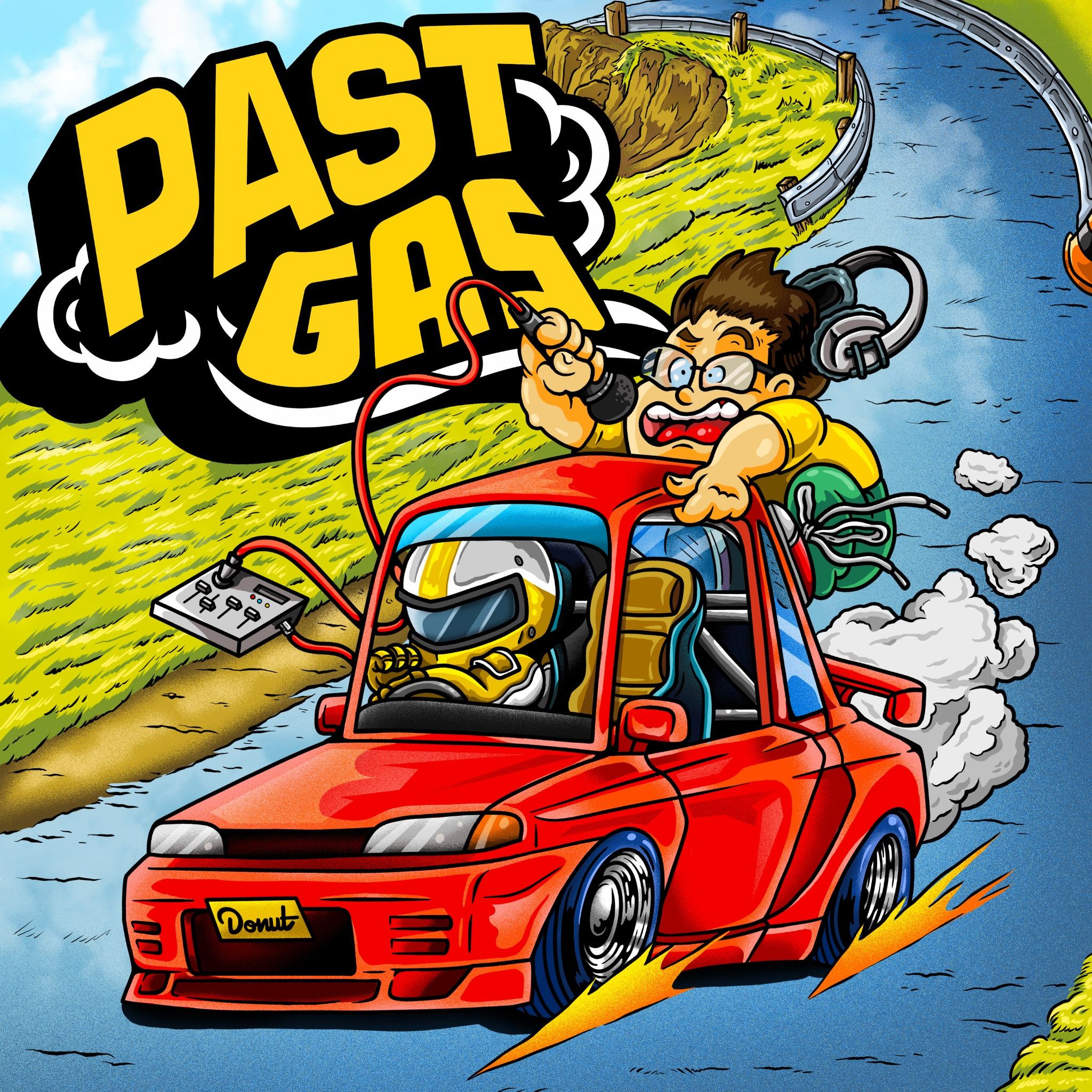
Enzo Ferrari's journey from a humble upbringing to becoming a legendary figure in motorsport is explored in this episode. It delves into his early life, the impact of World War I, and the personal losses that shaped his relentless drive for speed and success. The episode highlights his initial racing experiences, the formation of Scuderia Ferrari, and the challenges he faced during the rise of fascism in Italy. The narrative sets the stage for understanding how Enzo's complex character and tumultuous times influenced the creation of one of the most iconic automotive brands in history.
Thanks to Allstate for sponsoring today’s episode! Click here [https://bit.ly/4mgo1jE] to check Allstate first and see how much you could save on car insurance.
Thanks to Indeed for sponsoring this episode. Listeners of this show will get a $75 SPONSORED JOB CREDIT to help get your job the premium status it deserves. Go to https://indeed.com/PASTGAS right now and support our show by saying you heard about Indeed on this podcast.
Also thanks to Aura Frames for sponsoring this episode. Exclusive $35 off Carver Mat at https://on.auraframes.com/GAS. Promo Code GAS
This week on Past Gas, we’re diving into Ferrari — and the surprising, emotional origin of its most famous symbol. The Prancing Horse didn’t start with Enzo Ferrari, or even with cars at all. In Part 1 of our two-part season finale, we trace the logo’s roots back to a World War I Italian flying ace, and the chain of events that turned a wartime emblem into the most iconic badge in automotive history. From Alfa Romeo and early racing to Enzo Ferrari’s rise as a team manager, we explore how Ferrari built its identity long before it ever built a road car.
Learn more about your ad choices. Visit podcastchoices.com/adchoices
"...k. It's part one of our two-parter on the life of Enzo Ferrari, a very complicated guy, loved racing, duh. Let's..."
The Ferrari Enzo is a very fast and expensive sports car made by the famous Italian company Ferrari. It was built to showcase the latest technology and design in cars, and many people admire it for its speed and style. It's often talked about because it's a dream car for many enthusiasts.
The Ferrari Enzo is a high-performance supercar produced by Ferrari between 2002 and 2004, named after the company's founder, Enzo Ferrari. It is significant for its advanced technology, including a carbon-fiber body and a powerful V12 engine, making it a symbol of automotive excellence and innovation. The Enzo is often discussed for its impact on the supercar segment and its status as a collector's item.
"In the chaos of post-war Italy, Enzo Ferrari built something that would come to define excellence."
Post-war Italy is the time after World War II when Italy was rebuilding and changing. It was important for the car industry, leading to the creation of famous brands like Ferrari.
Post-war Italy refers to the period following World War II, characterized by significant economic and social changes. This era saw the rise of the automotive industry in Italy, with companies like Ferrari emerging as symbols of national pride and innovation.
"...to running the most legendary team in racing history."
Racing history is about the important events and people in car racing over time. Enzo Ferrari played a big role in making Ferrari one of the best racing teams ever.
Racing history encompasses the development and evolution of motorsport, including significant events, teams, and personalities that have shaped the sport. Enzo Ferrari's contributions to racing history are notable, as he established Ferrari as a dominant force in various racing series.
"I feel like I'm hunched over with the story of Enzo Ferrari versus Ford, Ford versus Ferrari. That was the first like four episode arc here on the show."
'Ford versus Ferrari' is a famous competition between two car companies, Ford from America and Ferrari from Italy. It became well-known because of a big race in the 1960s where Ford tried to beat Ferrari, and it was made into a movie.
The 'Ford versus Ferrari' rivalry refers to the competition between the American automaker Ford and the Italian sports car manufacturer Ferrari during the 1960s, particularly highlighted by the 1966 24 Hours of Le Mans race. This rivalry is famously depicted in the film 'Ford v Ferrari' and showcases the clash of corporate and racing cultures.
"...that moment came in 1908 when Enzo was just 10 years old. His father took him to see Felice Nazzaro compete in the circuito de Bologna."
The circuito de Bologna is a famous race track in Italy where car races took place. It was important for car racing history and inspired many drivers.
The circuito de Bologna is a historic racing circuit in Italy, known for hosting various motorsport events, particularly in the early 20th century. It played a significant role in the development of motorsport in Italy and influenced many future racers.
"...secondhand light trucks like the Lancia Zeta. Giovanni's operation was simple. Remove the bodies, keep the chassis..."
The Lancia Zeta is a type of van made by the Lancia company. It's used for carrying things or people and is known for being useful and practical.
The Lancia Zeta is a light commercial vehicle produced by the Italian automaker Lancia. It is known for its practical design and versatility, often used for transporting goods and passengers.
"...keep the chassis, and sell them to coach builders. Enzo became a link in the chain..."
Coach builders are people or companies that make special bodies for cars. They take the basic frame of a vehicle and create a unique outer design, often for luxury or custom cars.
Coach builders are companies or craftsmen who design and manufacture custom bodies for vehicles, often creating unique or luxury designs that differ from standard production models.
"...There, these skeletal remains were reborn into something beautiful. Torpedo-bodied cars, streamlined and striking..."
Torpedo-bodied cars are a type of car design that looks smooth and rounded, like a torpedo. They were popular in the early 1900s because they looked nice and helped the car move through the air better.
Torpedo-bodied cars are a style of automobile design characterized by a streamlined shape, often featuring a rounded front and a tapering rear, reminiscent of a torpedo. This design was popular in the early 20th century for its aesthetic appeal and aerodynamic properties.
"...where he was working as chief test driver for a company called CMN, or Costruzione Meccaniche Nazionale. CMN had once made four-wheel drive tractors for artillery used during the war,..."
CMN is a company that used to make tractors but started making cars after the war. They used old engines from another car brand to build new vehicles.
CMN, or Costruzione Meccaniche Nazionale, was a company that transitioned from manufacturing four-wheel drive tractors to producing automobiles after World War II. They utilized surplus engines from Isotta Fraschini to create new car chassis.
"...repurposing surplus three-liter four-cylinder monoblock engines from Isotta Fraschini into new chassis. Enzo decided to take the leap."
Isotta Fraschini is a brand that made luxury cars in Italy a long time ago. Their engines were so good that other companies used them to build new cars.
Isotta Fraschini was an Italian luxury automobile manufacturer known for its high-quality cars in the early 20th century. Their engines were used in various applications, including military vehicles and later repurposed for civilian cars.
"...but he made an impression by finishing fourth, which gained attention from more experienced racers and team directors. Later that year he entered the legendary Targa Florio,..."
Ferrari is a famous car brand from Italy that makes fast and expensive sports cars. They are also known for their success in car racing.
Ferrari is a renowned Italian luxury sports car manufacturer founded by Enzo Ferrari. Known for its high-performance vehicles and success in motorsport, particularly Formula 1, Ferrari has become an iconic brand in the automotive world.
"...which gained attention from more experienced racers and team directors. Later that year he entered the legendary Targa Florio,..."
The Targa Florio is a famous car race that takes place on narrow, twisty roads in Sicily. It's known for being very difficult and has a long history in motorsport.
The Targa Florio is one of the oldest and most prestigious automobile races in the world, held on the winding mountain roads of Sicily. It was known for its challenging course and attracted many famous drivers and manufacturers, including Ferrari.
"Enzo's car developed a leaking fuel tank midway through the race, a problem that would have ended the race for many, but he pressed on..."
The fuel tank is where the car's fuel is stored. If it leaks, the car can run out of fuel or become dangerous.
A fuel tank is a container that holds fuel for a vehicle's engine. In racing, a leaking fuel tank can be a critical issue, potentially leading to a loss of power or even a fire.
"...the Count offered him permission to adopt the symbol himself. And so, the prancing horse would rise again."
The prancing horse is the logo of Ferrari, a famous car brand. It symbolizes speed and racing success.
The prancing horse is a symbol associated with Ferrari, representing speed and performance. It originated from Enzo Ferrari's early racing days and has become iconic in the automotive world.
"...including wins at the Copa Acerbo in Pascara and races in Ravenna and Policine. He would go on to place in 11 of the 41 Grand Prix races he entered."
Copa Acerbo was a famous car race in Italy. It was important in the early days of racing and had many well-known drivers competing in it.
Copa Acerbo was an automobile race held in Italy, known for its challenging course and significance in early motorsport history. It attracted many prominent drivers and teams during its time.
"...place in 11 of the 41 Grand Prix races he entered."
Grand Prix is a term used for important car races. These races are usually very competitive and feature some of the best drivers and cars in the world.
Grand Prix refers to a series of prestigious automobile races held worldwide, often featuring the fastest cars and top drivers. The term is associated with high-level motorsport competitions.
".... That day came in 1932 with the birth of Alfredo Dino Ferrari. Enzo kept his promise. He stepped away from raci..."
The Ferrari Dino 208 GT4 is a sporty car made by Ferrari in the 1970s, named after Enzo Ferrari's son. It has a smaller engine than most Ferraris, which makes it different and special. People talk about it because it's a unique part of Ferrari's history.
The Ferrari Dino 208 GT4 is a mid-engine sports car produced from 1974 to 1980, named after Enzo Ferrari's late son, Alfredo 'Dino' Ferrari. It is notable for being one of the first Ferraris to feature a V6 engine, which was a departure from the traditional V8s and V12s associated with the brand. The Dino 208 GT4 is often discussed for its unique design and its role in expanding Ferrari's lineup.
"...he stepped away from racing and transitioned into a managerial role at Alfa Romeo. Alfa's Giorgio Romini, head of sales and racing, had previously encouraged Enzo to build his own team within the brand."
Alfa Romeo is a famous Italian car brand that makes sporty cars. Enzo Ferrari worked there before he started his own racing team.
Alfa Romeo is an Italian luxury car manufacturer known for its sporty vehicles and rich motorsport heritage. Enzo Ferrari worked with Alfa Romeo before establishing his own racing team, Scuderia Ferrari.
"...ild his own team within the brand. The result was Scuderia Ferrari, a semi-independent racing division formed in 192..."
The Ferrari Scuderia Spider 16M is a special version of a Ferrari sports car that can be driven with the top down. It was made to celebrate Ferrari's success in racing and is known for being very fast and exciting to drive. Car lovers talk about it because it's rare and has a strong connection to racing.
The Ferrari Scuderia Spider 16M is a limited-edition convertible sports car introduced in 2009 to celebrate Ferrari's 16th Formula 1 Constructors' Championship. It features a lightweight design and a powerful V8 engine, emphasizing performance and driving experience. The Scuderia Spider 16M is often discussed for its racing heritage and exclusivity among collectors.
"Yeah. With Alfa's Tipo P3 cars and a deep roster of talent deeper than the Dodgers. Ferrari's team became nearly unbeatable."
The Alfa Romeo Tipo P3 is a race car from the 1930s that was very successful in competitions. It was known for being well-designed and fast.
The Alfa Romeo Tipo P3 was a racing car designed in the 1930s, known for its advanced engineering and success in motorsport, particularly in Grand Prix racing.
"In secret, Ferrari began designing a new car. By 1940, when World War Two is beginning to engulf the continent, Enzo had produced two prototypes of the AAC Tipo 815 named for their 1.5 liter eight cylinder engines."
The Ferrari AAC Tipo 815 was a race car made by Ferrari in 1940. It had a special engine and was built for racing, but it didn't finish the race it entered.
The Ferrari AAC Tipo 815 was a prototype car designed by Ferrari during World War II, featuring a 1.5-liter eight-cylinder engine. It was part of Ferrari's early racing efforts.
"Scuderia Ferrari, which was still operational in a support capacity and even entered into the Mille Miglia, a brutal thousand mile endurance race across northern Italy."
The Mille Miglia is a famous car race in Italy that is about 1,000 miles long. It was very tough and many cars raced in it.
The Mille Miglia is a historic endurance race that took place in Italy, covering a distance of approximately 1,000 miles. It is known for its challenging routes and has a rich history in motorsport.
"...would later become hallowed ground. The Fiorano test track, the very heartbeat of Ferrari's racing research and development..."
The Fiorano test track is a special racetrack where Ferrari tests their cars. It's important for making sure their cars perform well before they are sold or used in races.
The Fiorano test track is a private racing circuit owned by Ferrari, located near their headquarters in Maranello, Italy. It is used for testing and developing Ferrari's road and race cars, playing a crucial role in their engineering and performance optimization.
"...olleague Enrico Nardi, Enzo was introduced to one Corrado Gatti, a machine tool dealer from Turin. Gatti ne..."
The Volkswagen Corrado is a small, sporty car made by Volkswagen in the late 80s and early 90s. It's known for being fun to drive and has a unique look that many people like. Car enthusiasts often talk about it because it's a classic that still has fans today.
The Volkswagen Corrado is a compact sports coupe produced from 1988 to 1995, known for its distinctive design and sporty performance. It was praised for its handling and engineering, featuring a range of engines including a supercharged variant. The Corrado is often discussed for its cult following and its place in Volkswagen's history as a fun-to-drive vehicle.
"Eduardo Weber, inventor of the iconic Weber carburetor, also vanished without a trace."
A carburetor is a part of an engine that mixes air and fuel together so the engine can run. It's mostly found in older cars now, as newer cars use a different system.
A carburetor is a device in an internal combustion engine that mixes air with a fine spray of liquid fuel. It was commonly used in older vehicles before fuel injection systems became standard.
"Eduardo Weber, inventor of the iconic Weber carburetor, also vanished without a trace."
Weber is a company that makes carburetors, which are parts that help engines mix air and fuel for combustion. They are popular in many performance cars.
Weber is a well-known manufacturer of carburetors, particularly famous for their performance carburetors used in many classic and performance cars. Their products are highly regarded in the automotive community.
"Driving a borrowed 1938 Lancia Aprilia saloon, Enzo carried Menzotti as he hid under a blanket through roadblocks and checkpoints in the moonlit Italian countryside, delivering him to a safe house near Ferrara."
The Lancia Aprilia is a small car made by the Italian company Lancia in the late 1930s. It was designed to be light and easy to handle, making it popular during its time.
The Lancia Aprilia is a compact car produced by the Italian manufacturer Lancia from 1936 to 1949. It is known for its innovative design and advanced engineering for its time, including a lightweight body and independent front suspension.
"...he renamed the company Auto Construzioni Ferrari, signaling a new era and a return to his first love, competition."
Auto Construzioni Ferrari is the name of the company founded by Enzo Ferrari after World War II. It was important because it showed that he wanted to get back into making race cars.
Auto Construzioni Ferrari was the name Enzo Ferrari adopted for his company after buying out his partners in Scuderia Ferrari. This marked a significant turning point in the company's history as it shifted focus back to competition and race car design.
"...the first creation of the reborn factory was the 1.5-liter Tipo 125."
The Ferrari Tipo 125 was the first race car made by Ferrari after the war. It had a 1.5-liter engine and was important for the company's comeback in racing.
The Ferrari Tipo 125 was the first car produced by the reborn Ferrari factory after World War II. It featured a 1.5-liter engine and marked the company's return to competitive racing.
Select text to request an explanation
All right, y'all, gather round, because Monae exchanged from sibling rivalries here with an announcement.
This episode of the podcast is brought to you by Google Gemini. Now, listen, the girls over at Google said,
Monae, tell the children, so I'm telling you. U.S. college students get Google Gemini's pro plan
free for one year. Use the best model in the world for multimodal understanding, so whether you're
uploading a video to get feedback on your presentation, uploading a photo of your homework
to ask for help or transcribing notes from a lecture you missed, Gemini 3 Pro can help. And baby,
if I had this in college, oh, she would have been unstoppable. Picture it. Monae exchanged in the
library, uploading a picture of my music theory homework like, Gemini, please help Adiva out.
Or recording my rehearsal videos for feedback instead of crying at the practice room for three
hours. This would have been a life changing. Now, back to the goods. Sign up to get more
access to Google's most accurate model Gemini 3 Pro unlimited image uploads, pro level image
editing, higher limits in notebook LM, Gemini and Gmail and docs, two terabytes of storage and more.
You heard me, two terabytes. That's enough space to store every vocal warm up, drag race look,
and every photo your aunt sends you of her plans. Visit Gemini.Google slash students
to learn more and sign up terms apply. This podcast is brought to you by Indeed. Hiring,
Indeed is all you need. Join the 1.6 million companies that sponsor their jobs with Indeed.
Spend more time interviewing candidates who check all your boxes. Less stress, less time,
more results now with Indeed sponsored jobs. And listeners of this show will get a $75
sponsored job credit to help your job get the premium status it deserves at Indeed.com
slash past gas. Just go to Indeed.com slash past gas right now and support our show by saying you
heard about Indeed on this podcast. Indeed.com slash past gas terms and conditions apply. Hiring,
do it the right way with Indeed. This podcast is brought to you by Aura Frames. I really
love these Aura Frames. They're a great gift for anyone and everyone. If you don't know
what to get someone, it's a perfect gift. And for a limited time, save on the perfect
gift by visiting Aura Frames.com to get $35 off Aura's best-selling Carver Mat frames
named number one by Wirecutter by using promo code gas at checkout. That's Aura Frames.com promo
code gas. This deal is exclusive to listeners and frames sell out fast. So order yours now
to get it in time for the holidays. Support the show by mentioning us at checkout terms
and conditions apply. Hey, how you doing? Welcome back to past gas this week. It's part one
of our two-parter on the life of Enzo Ferrari, a very complicated guy, loved racing, duh. Let's
just get into it. Let's just read the dang story. How about that? No more preamble.
Before the red paint, before the prancing horse, before the name Ferrari meant anything at all,
there was just a man, a man with a dream and a chip on his shoulder the size of Modena.
Enzo Ferrari didn't grow up rich or with connections. What he had instead was obsession,
a burning desire to go fast and to win. Winning was at the heart of every decision he made.
Every race was a battle and every loss was personal. In the chaos of post-war Italy,
Enzo Ferrari built something that would come to define excellence. A stubborn kid from outside
Bologna who went from sweeping garage floors to running the most legendary team in racing history.
What Italian car maker gave young Enzo his first shot? How did he prove himself behind the wheel?
And what events led to him retiring from racing? Today on past gas,
we're diving into the early days of the godfather of speed, it's Enzo Ferrari.
That's how it goes, right?
I really think impressions come from the face rather than like that sound, right?
Because you're doing like the Marlin Brando godfather.
Oh, cotton, that's what he did. I think so, cotton balls.
No, just teeth.
Just your teeth? Yeah.
Nice. Well, welcome back to past gas, everybody. My name is Nolan Sykes.
Those voices you heard across from me, it's Bart Bidlingmeyer.
Hi, happy to be here. Thanks for having me. I don't think they heard my voice yet though.
I thought you commented on, you just said cotton balls.
Oh, I did say cotton balls. It was my nickname in high school.
Cotton balls and I was Cotton Eye Joe.
And that's Cotton Eye Joe Weber. Hello, everybody.
Hey, how's it going? I'm doing great, actually.
Good.
I'm feeling good.
Good, good.
I actually got sleep last night.
I've been sleeping terribly recently.
I've been like waking up, like sure you wake up in the middle of the night, that happens,
but then like kind of, God, I can't sleep.
And then I kind of, you know, move around and then I'm like,
why can't I get back to sleep?
But I'm then like, oh, but I did just have a dream.
I must have fallen asleep for a minute.
You know, like it's just, but I don't feel like I'd slept, you know?
Yeah. Yeah.
That's the worst.
So we're coming full circle here today. We started past gas with the story.
I feel like I'm hunched over with the story of Enzo Ferrari versus Ford, Ford versus Ferrari.
That was the first like four episode arc here on the show.
And now we are covering Enzo Ferrari's life in more detail on this episode in these,
this two-part episode.
This is a two-part episode to round out season one of past gas.
That's right.
320 episodes.
Insane with no break, basically.
And we're going to, you know, have a nice little holiday.
We're in a regroup and we're coming back in 2026 with such a cool season arc, JDM,
golden era arc.
It's going to be really cool.
Yeah. So very excited for that.
So we thought it'd be appropriate to kind of come full circle here and talk about
one of the most influential legendary figures in car history here.
Before we start, I just really want to thank everyone who listened over the years.
It's been cool to see how people respond to this kind of stuff.
And what started as an experiment kind of grew into this bigger,
actually huge thing that just kept on going.
And we wouldn't have kept doing it if you guys didn't comment and
DM us and respond and come to our live show.
Our one live show that somehow took years to produce.
But yeah, thank you guys from the bottom of our hearts.
It's been really fun and we're really excited for the next chapter.
And we hope that you stay tuned.
Yeah, absolutely.
I mean, it was so fun, so amazing just adding on to what Joe just said.
When we're shooting big trip going across the country,
you know, we ran into people who worked a ton of different kinds of jobs from
trucking to running like a gun shop to, you know, working in warehouses, all that kind of stuff,
like just such a wide spectrum of people who listened to the show all the way through
on their on their work day.
And this means so much.
And, you know, I'm just looking forward to the next stage of the show.
I will say that podcast fans are way cooler to talk to.
I'm only talking for my own reasons.
Podcast fans are like, oh, yeah, you know, a little site like a specific thing that we talked
about in a random episode.
It's always a great conversation.
And I feel like podcast people really pay attention.
For sure.
Absolutely.
So we thank you.
And with that, shall we do it?
Yeah, let's let's shout.
Let's talk about Enzo Ferrari.
Enzo and Selmo Giuseppe Maria Ferrari was born on February 18th, 1898 in Modena, Italy.
Did you say Maria or Mario?
Maria, you know, is I didn't know that.
Although some initial records said otherwise, a blizzard had swept across northern Italy that
week, isolating towns and freezing railways.
The storm was so severe that his father and the midwife couldn't even report his
birth until days later.
Did you know that the top of Italy is the latitudinal equivalent of parts of Canada?
Really?
Yeah.
And the bottom of it is like just around New York City ish.
Wow.
That's way higher than I thought.
Man, once this Gulfstream starts messing up a little bit, Europe's going to be kind of
f***ed, isn't it?
So in the confusion, officials recorded his birthday as February 20th,
even though he was born two days earlier.
I see.
Yeah.
Enzo Ferrari didn't come from a family.
Why didn't they just record that?
I don't know.
You didn't believe him.
Yeah.
Enzo Ferrari didn't come from a family of nobility or wealth.
His father, Alfredo, ran a metalworking shop out of the basement of their home.
It was modest work.
At the turn of the 20th century, Italy's economy offered little in the way of
upward mobility.
If Enzo had followed the path in front of him, he might have lived out his
days as a blacksmith, hammering steel like his dad before him.
Or a fettuccine minor.
But even as a boy.
Is that where they get that?
Yeah.
Deep in the mountains of Sicily.
But even as a boy, Enzo wanted more.
His childhood dreams took strange shapes.
First, he wanted to be like a foozily.
First, he wanted to be an opera singer, then a sports writer.
It was only after a life-changing experience that he realized he was meant to be
a racecar driver.
That moment came in 1908 when Enzo was just 10 years old.
His father took him to see Felice Nazzaro compete in the circuito de Bologna.
Nazzaro was already a legend.
He was a charismatic, fearless, and elegant driver behind the wheel.
That day, he drove to victory in front of a roaring crowd.
Throughout this race.
By elegant, they meant he like wore a, he wore like a scarf.
Yeah.
A rim with dark glasses, big dark glasses.
Then he waved like this.
Yeah.
Throughout the race, as the cars approached the circuit's most dangerous corners,
Enzo noticed that the race organizers had taken a peculiar safety measure.
They had flooded the ground alongside the road to a depth of one foot for nearly 40 yards.
The idea was simple.
If a car veered off the course, the water would slow it down, protecting the spectators.
This minor detail meant to preserve life revealed something profound to young Enzo,
the planning and foresight that went into it all, the risk and the reverence for danger.
That day, Enzo Ferrari discovered something that would live inside him forever.
A tapeworm.
With just one encounter with the world of racing, he was hooked, much like a hookworm.
Yeah.
It's funny that a safety feature was the thing that got him like, oh, maybe just to think about it.
Yeah, it made him think.
Yeah.
Yeah.
That's crazy though.
Someone told me, because I didn't really care about sports when I was a kid.
And this kid, that was like an amazing athlete, but didn't really want to play sports that
much.
But his dad was like forcing him to be a quarterback and play baseball and stuff.
He was like, yeah, I don't really like sports, but I'll find one thing to focus on
that I think is impressive.
And now I'll get kind of open the door for the sport.
And I started thinking about sports in that way.
I was like, well, it is really hard to do a pick and roll.
That's kind of what I feel for Enzo, because I do that with sports.
I would ask, I was going to ask what you think the most hardest thing to do in sports is.
Definitely hit, I mean, this is my bias showing, but hit a baseball with a bat.
Hit a round ball with a round bat and be able to place it where you want.
I think that's been, it's a huge discussion on Instagram right now.
If you listen to the podcast, all the smoke with Matt Barnes, and they have all these sport
stars on, and most of them agree that hitting a baseball is the hardest thing to do in sports.
Yeah. So I guess it's not that bad that I was terrible at baseball when I was a kid.
Huh? Dad?
Dad? Give him a, give him slack, Scott.
Give me some slack.
He actually had to stop coaching me in baseball because he was,
he was taking it too seriously.
You came in hit balls for our practice and you were doing good.
Thanks, man.
Yeah. Yeah.
You had fun and then you were like, I did.
I'm going to come back.
And then that was six years ago.
Yeah, that was, that was on Burbank.
I know.
So far away.
I do remember the other time we were hitting balls on West LA in the old office.
With red pad.
Like through my shoulder out.
Oh man.
Yeah.
Yeah.
I do like baseball.
Bar was in our league.
Yeah.
That's actually where we cut our teeth together.
We are, and also tore the hamstring.
Do you remember I had a wrap in my car?
Yeah.
Yeah.
I wonder if Mark's behind the board going, I don't know, no one was hitting.
Wait a minute.
Can we utilize this guy?
Okay, anyway.
In the early 20th century, Italy's political unrest and economic strain found itself being
compounded by war, first against the Ottoman Empire, then against Austria-Hungary in the
First World War.
Like so many young men of his generation, Enzo Ferrari enlisted without hesitation.
He joined Italy's Third Mountain Artillery Regiment, a unit tasked with defending the
rugged terrain of Northern Italy.
Isn't like the Alps up there too?
Yeah.
There's Italian Alps.
Isn't them Alps up there?
There's the Dolomites on the west side, and I think the Alps that border up with Switzerland.
Okay.
War hardened Enzo, but even more than the combat, it was the loss of those close to him that
would prove to be more defining.
In 1916, while Enzo was still a teenager, the Spanish flu swept across Europe like
wildfire.
It took his father first.
Then it took his older brother, his only sibling, Alfredo Jr.
Enzo was left alone, young, and grief-stricken.
Amid the chaos and devastation of those brutal years, Enzo Ferrari found an anchor in the bond
he shared with a mentor and friend, one Francesco Baracca.
A national hero and one of Italy's most revered fighter pilots, Baracca embodied the traits
Enzo admired most.
He was courageous, well-disciplined, and always carried with him an unshakable sense
of purpose.
But it wasn't just Baracca's prowess in the skies that left the lasting impression.
Around his neck, he wore a necklace crafted by his mother, adorned with the image of a horse
reared up on its hind legs.
He's actually the reason that machine guns on planes sound like Baracca.
That was dumb.
Enzo saw in that emblem a kind of spiritual defiance.
It would leave a mark on him far deeper than the battlefield ever could.
Its significance would only strengthen with the passing of Francesco Baracca in 1918.
His plane was shot down by an Austrian fighter.
The necklace was never recovered.
Enzo fell gravely ill in the final months of the war,
his body wrecked by the same virus that had taken his family.
Doctors feared he wouldn't make it.
But somehow, whether by strength, luck, or sheer refusal, Enzo pulled through.
He emerged from the war gaunt, wounded, and haunted, and yet he was alive.
He had no family left, no obvious future.
But he did have one thing.
A desire to do something with his life that would bring him joy.
He turned to the only thing that made sense in the aftermath of death, movement.
The automobile industry in post-World War I Italy was still fledgling,
but it offered him something no other line of work could, speed, precision, and control.
In the roar of an engine, he found the chaos of his mind quieted.
In the act of assembling metal into machinery, he rediscovered his purpose.
He threw himself into cars with obsessive focus, not only repairing them,
but envisioning a future where he was behind the wheel.
I'm just realizing how history keeps repeating itself, where this is early on in the auto industry,
but young guys coming back from war, this is their therapy,
and then they end up making some of the coolest machines and doing some of the daring
shit that gives them the adrenaline they had during the war.
And then that repeats with World War II, and every country you see that,
like the Bosozoku, the Hell's Angels, all that shit is tied to PTSD, basically.
Because guys will do anything but go to therapy.
Driving? That's my therapy. Actually, no, I started going to therapy,
and it's been quite helpful.
Therapy? That's my therapy.
It's a good bumper sticker.
Therapy's my driving.
I don't drive. I don't drive. I take taxis.
Bart walked here.
After being discharged from the army, Enzo carried with him a letter of recommendation
from his colonel. It was addressed to Fiat, the powerhouse of Italy's early auto industry,
over in Turin. For Enzo, this was the golden ticket. He saw it as proof that his service and
his resilience might earn him a place in something bigger. Enzo traveled to Fiat headquarters,
full of hope, ready to prove himself. There he met with the head engineer,
one Diego Soria. But the meeting was brief. Soria explained that hundreds of ex-servicemen
just like Enzo were applying, Fiat couldn't possibly hire them all. There was just
no place for Enzo. And like that, the door was closed.
That's such a shitty thing to say to somebody. It's like, we can't hire y'all. It's like,
I don't care. Just hire me. Like, what do you mean? I know you can't hire everybody.
You can hire me.
It's a compelling case.
You just stare at them too and they'll crumble.
Okay.
With no job and no family to fall back on, Enzo spent the winter of 1918 broke, cold,
and utterly alone. He wandered the streets of Turin in the snow, aimless. Most days he would
sit quietly in Valentino Park watching strangers pass by. He cried there, sometimes from the cold,
sometimes from hunger, and sometimes from the weight of everything he had lost. Good lord.
He's pretty young at this point. And yeah, he's a little young to be a pigeon guy.
A pigeon guy.
You just sit in the park and feed the pigeons.
Sometimes you got to do what you got to do.
In the wake of personal tragedy and wartime failure, Enzo Ferrari found luck in a not-so-glamorous gig.
His first real job came through a man named Giovanni, who dealt in stripped-down,
secondhand light trucks like the Lancia Zeta. Giovanni's operation was simple.
Remove the bodies, keep the chassis, and sell them to coach builders.
Enzo became a link in the chain. He tested and retested these frames before delivering them to
Corazza Ria Italo Argentina in Milan. There, these skeletal remains were reborn into something
beautiful. Torpedo-bodied cars, streamlined and striking, coveted by the era's upper crust.
It's kind of got the torpedo shape, but it's got big running boards on the bottom.
It's your classic early 1920s look.
Because, again, they're working with truck frames.
It wasn't glamorous work, but for Enzo, it was something to keep his hands and his mind busy.
Testing the chassis meant understanding feel, balance, and strength.
It was his first real taste of what machines were capable of when pushed, refined, and perfected.
When he wasn't working, Enzo could be found lingering at the bar del Nord near Porta Nueva
in Turin. There, among coffee cups and cigarette smoke, he mingled with the fringes of Italy's
racing and engineering scene. One key figure he met was one Romolo Bonaccini, a well-regarded
mechanic and former flight engineer who had worked with Brock Papa, one of Italy's
pioneering aviators. Bonaccini took an interest in the young Ferrari. He mentored him,
not just in mechanics, but in philosophy, in how to think like an engineer and a competitor.
Later in life, Enzo would say that what Bonaccini taught him was more important than
any formal schooling he might have missed. As the money left to him after his father's
passing began to dry up, Enzo needed something more substantial. Salvation came in the form
of a new friend, one Ugo Savocci. Ugo was a former cyclist who had transitioned in a motor racing
and testing. The two met at Bar Vittorio Emanuele, a kind of sporting fraternity for young men with
a taste for automobiles and machinery. Ugo Savocci convinced Enzo to leave Turin and come to Milan,
where he was working as chief test driver for a company called CMN, or Constozione Mechanice
Nazionale. CMN had once made four-wheel drive tractors for artillery used during the war,
but with peacetime they pivoted to cars, repurposing surplus three-liter four-cylinder monoblock engines
from Isota Frascini into new chassis. Enzo decided to take the leap. At CMN, Ferrari finally got his
foot in the door. His first job was as a test driver, putting the resurrected vehicles
through their paces. In addition to testing cars, Enzo
rode along with CMN motorcycles during races, carrying fuel and tools to support the riders.
This made him a presence in the racing world even before he had the chance to compete himself,
but that chance would come soon. In 1919, at the age of just 21,
Enzo Ferrari officially entered the world of competition. His first race was the
Parmopoggio di Bocceto hill climb and narrow and winding ascent through the Apennine countryside.
It was the perfect arena for a raw but determined young driver. He didn't win,
but he made an impression by finishing fourth, which gained attention from more
experienced racers and team directors. Later that year he entered the legendary Targa Florio,
who was a brutal, unforgiving race through the mountainous terrain of Sicily.
Enzo's car developed a leaking fuel tank midway through the race,
a problem that would have ended the race for many, but he pressed on and still managed
to finish ninth in a field of professionals. After several seasons of racing and working
alongside Hugo Savucci, the two made the leap together to Alfa Romeo, which was a team on the
rise. Enzo became a full-time driver for Alfa, assigned car number 14. His first major victory
came in 1923 at the Savio circuit in Ravenna, a winding track where he first encountered
one Count Enrico Baraka, father of Francesco, the fallen fighter pilot whose leaping horse
had once captivated Enzo during the war. It was here that the Count offered him permission
to adopt the symbol himself. And so, the prancing horse would rise again.
We'll be right back after these messages.
All right y'all, gather round because Monae exchanged from sibling rivalries here
with an announcement. This episode of the podcast is brought to you by Google Gemini.
Now listen, the girls over at Google said, Monae, tell the children, so I'm telling you.
US college students get Google Gemini's pro plan free for one year. Use the best model in the
world for multimodal understanding. So whether you're uploading a video to get feedback on your
presentation, uploading a photo of your homework to ask for help, or transcribing notes from
a lecture you missed, Gemini 3 Pro can help. And baby, if I had this in college, oh, she would
have been unstoppable. Picture it. Monae exchanged in the library, uploading a picture of my music
theory homework like, Gemini, please help Adiva out. Or recording my rehearsal videos for feedback
instead of crying at the practice room for three hours. This would have been life-changing.
Now back to the goods. Sign up to get more access to Google's most accurate model,
See something that's not quite right? Our annotations are AI-generated and can sometimes miss the mark.
Click the flag icon on any annotation to suggest a correction.