Russ Evans and Shannon Nordstrom tackle a variety of listener car questions, providing expert advice on issues ranging from four-wheel drive problems in a Chevy Suburban to maintenance tips for a 2015 diesel truck. They discuss the importance of regular maintenance, especially for older vehicles, and share insights on how to handle common issues like oil leaks and brake problems. The episode also features discussions on collector car insurance and the value of maintaining classic vehicles, making it a practical resource for car enthusiasts and everyday drivers alike.
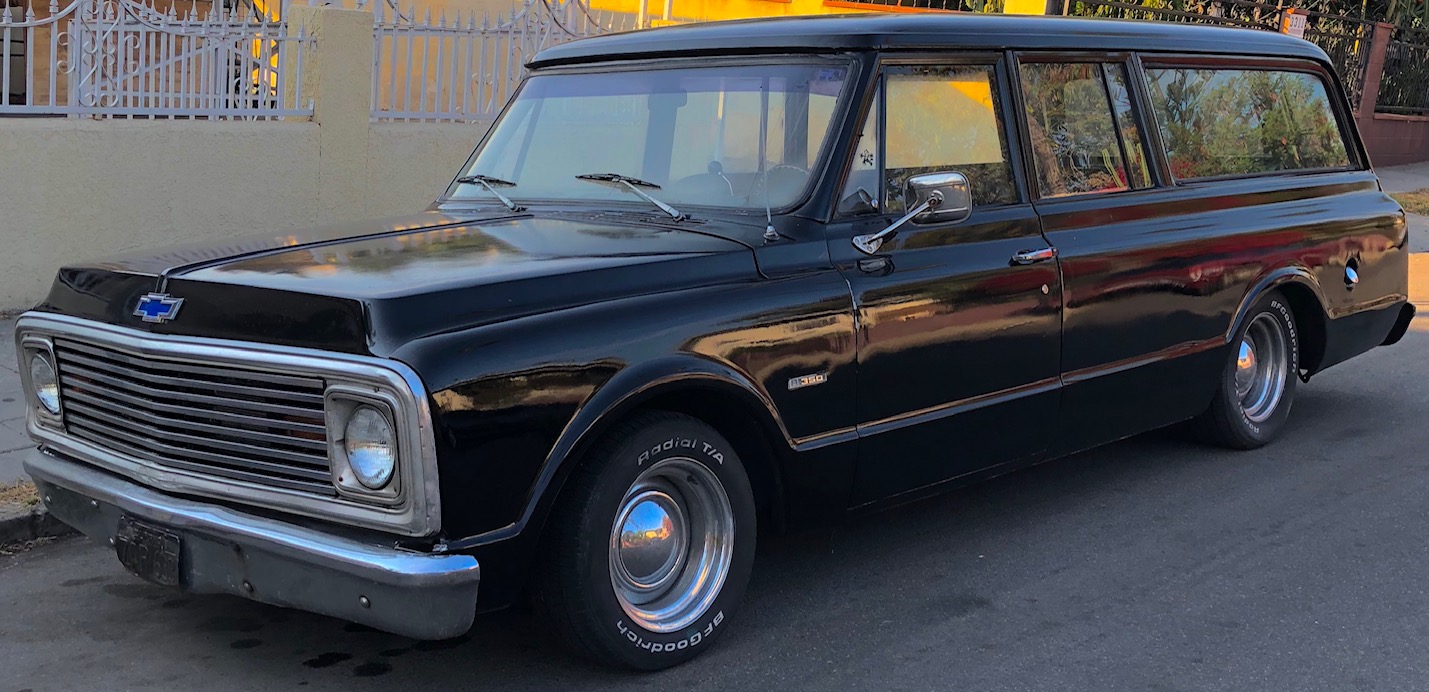
""Gary's got a O2 Chevy Suburban. How you doing, Gary? You're pretty good.""
The Suburban is a big, family‑friendly SUV from Chevrolet that can carry lots of people and gear. It’s been around for a long time and is popular in the U.S.
The Chevrolet Suburban is a full‑size SUV that has been produced since 1935. It’s known for its large cargo space and off‑road capability.
"Same thing goes for power windows. If you don't operate power windows, a lot of people find their back windows don't go up and down to the passenger window."
Instead of turning a wheel to open or close the window, you press a button and the window moves for you. It’s common in most cars today.
Power windows are electrically operated window mechanisms that allow the driver or passengers to raise and lower a vehicle’s windows with a button, rather than manually crank them.
"One of them. Yeah, that's got relays built into the motor. It's a weird duck for sure."
Think of a relay as a tiny switch that lets the car’s low-power electronics control a bigger power device, like the window motor. It protects the small circuits from heavy current.
A relay is an electrically operated switch that allows a low-current circuit to control a higher-current load, such as a motor. In this context, the relay inside the power window motor helps manage the electrical current needed to move the window.
"I'm guessing if it was a fleet vehicle, they probably had a very good maintenance routine on it."
A fleet vehicle is a car that a company owns and uses for work, like delivery trucks or taxis. Because they’re used a lot, companies usually keep them well maintained.
A fleet vehicle is a car or truck that belongs to a company or organization and is used for business purposes, such as delivery or transportation. Fleet vehicles often receive rigorous maintenance schedules to keep them operational.
"Some good spirited drives every once in a while with that diesel to get it good and warm..."
Diesel engines use a special kind of fuel called diesel, which is thicker than gasoline. They’re great for trucks and big cars because they give a lot of power when you need it.
Diesel refers to an internal combustion engine that runs on diesel fuel, which is heavier and more energy-dense than gasoline. Diesel engines are known for their torque output and fuel efficiency, especially in heavy-duty or long-haul applications.
"BG products has a emission system cleaning kit that will really help decarbon that and get the soda out of it."
This kit helps clean the parts inside the car that can get dirty over time. Cleaning them keeps the engine running smoother and cleaner.
An emission system cleaning kit is a set of chemicals and tools designed to remove carbon deposits from components like fuel injectors, intake valves, and catalytic converters. By cleaning these parts, the engine runs more efficiently and emits fewer pollutants.
"Yeah, good maintenance. Get it out for some spirited drives every once in a while to get some good temperature put through it. Mission system cleaner, something to look at."
A special liquid you pour into a car’s gearbox to help keep it running smoothly by cleaning out old grease and dirt.
A fluid additive used to clean the transmission’s internal components, removing sludge and improving shifting performance.
"I was watching a YouTube video where a guy made a snowblower and mounted it on the front of a car. They used a little car engine, a three-cylinder geo-metro engine and they've made a snowblower out of it."
It’s a way to put a snow-clearing machine on the front of a car so you can drive through snow and it clears the road for you. You have to make sure it’s secure so it doesn’t fall off.
Mounting a snowblower on the front of a vehicle involves attaching the machine to the bumper or chassis, allowing it to clear snow while driving. This setup requires careful weight distribution and safety considerations.
"Look at the valve cover gasket, the back one for sure closely. Also check the oil pressure sending unit."
The valve cover gasket is a small rubber or metal seal that keeps engine oil from leaking where the top part of the engine meets the cover. If it’s damaged, oil can drip onto the engine and create a mess.
The valve cover gasket seals the joint between the engine block and the valve cover, preventing oil from leaking out of the cylinder head area.
"Also check the oil pressure sending unit. The sending unit will leak run down the side of the block to the pan and make it look like you've got an oil pan leak."
This small device sits on the engine and tells your car how hard the oil is moving. If it leaks, it can make it look like there’s an oil leak elsewhere.
An oil pressure sending unit is a sensor that measures engine oil pressure and sends the data to the dashboard gauge or computer.
"The sending unit will leak run down the side of the block to the pan and make it look like you've got an oil pan leak and we have replaced those sending units."
It’s a seal that sits between the engine block and the oil pan. If it’s worn, oil can leak onto the ground or create a mess inside the engine.
The oil pan gasket seals the bottom of the engine’s oil pan to the engine block, keeping oil from leaking out.
"It's hard to see up in there because of the crankshaft fully. How often does that crankshaft seal leak?"
It’s a small rubber ring that sits where the crankshaft sticks out of the engine. If it wears out, oil can drip from that spot.
A crankshaft seal prevents oil from leaking out of the engine where the crankshaft exits the block, typically at the front or rear of the engine.
Concept
snowblower type: auger vs paddle wheel
"What's the best way to clean the carbs? You said it's a yard machine. Is this a paddle wheel snowblower or an auger type snowblower with a big metal auger in the front."
There are two main kinds of machines for clearing snow: one that spins a big screw to push the snow, and another that uses big blades to shove it away.
Snowblowers come in two main styles: auger snowblowers use a rotating metal screw to move snow, while paddle wheel models push snow with large blades.
"Or let's say you've got a eight horsepower Briggs and Stratton engine. You type in eight horsepower Briggs and Stratton carburetor."
Briggs & Stratton makes small gasoline engines that power things like lawn mowers and generators. They’re common because they’re reliable and many parts are easy to find.
Briggs & Stratton is a well-known manufacturer of small engines used in lawn mowers, generators, and other outdoor power equipment. Their engines are popular for their durability and widespread aftermarket support.
"A new set of roadready wheels will stop the leaks. ... Over 40,000 wheels with free shipping available and returns with a one year warranty under the hood listeners save 10%."
RoadReady Wheels makes replacement wheels that look like the ones your car came with, but usually cost less and fit right out of the box.
RoadReady Wheels is a brand that offers aftermarket wheels designed to match the appearance and fitment of factory aluminum wheels, often marketed as a cost‑effective upgrade for many vehicles.
"These wheels are a direct fit so your factory caps and TPMS sensors will fit."
TPMS sensors sit on your tires and tell the car if a tire is too flat or overinflated, so you can keep your car safe and fuel‑efficient.
TPMS (Tire Pressure Monitoring System) sensors are small electronic devices mounted on each wheel that continuously report tire pressure to the vehicle’s computer, helping drivers maintain optimal inflation.
"For 50 years, Berkeley One Classics has ensured a wide range of vehicles from sports cars and rare exotic cars to antique vehicles including cars, trucks, tractors, military vehicles and motorcycles."
Berkeley One Classics is a company that sells insurance for old and rare cars, trucks, and other vehicles. They help people keep their valuable vehicles safe.
Berkeley One Classics is a specialty insurance provider that offers coverage for classic, exotic, and antique vehicles, including cars, trucks, motorcycles, and even military vehicles. They focus on protecting high-value collectibles with tailored policies.
"Is that just a simple master cylinder or with all that analog is a bit of a problem?"
When you press the brake pedal, a small pump called the master cylinder turns that push into liquid pressure. That pressure travels through brake lines to stop your car.
The master cylinder is a hydraulic component that converts the force you apply to the brake pedal into fluid pressure, which then activates the brakes at each wheel.
"If it's solid and does not sink on its own, then your problem may have been in that ABS module,"
The ABS module is a small computer that helps your brakes work better by stopping the wheels from locking up when you brake hard. It tells the car how much pressure to put on each wheel.
The ABS (Anti‑Lock Braking System) module controls the electronic braking logic that prevents wheel lockup during hard stops. It monitors wheel speed sensors and modulates brake pressure via the ABS pump.
"I'd probably lean to my own personal preference would be not to do the turbo engine just to do the good old V8 hemi."
A turbo engine is a car engine that has a small turbine (the turbo) which pushes extra air into the engine, making it stronger and faster.
A turbo engine uses a turbine-driven compressor to force more air into the combustion chamber, increasing power output. The added pressure allows more fuel to be burned efficiently.
"It could be an injector that had the problem that could also cause the misfire."
Think of an injector like a tiny spray nozzle that drops fuel into the engine. It helps the engine run smoothly and efficiently.
An injector is a device that sprays fuel into the engine’s combustion chamber. It controls how much fuel enters each cylinder, affecting power and efficiency.
"BG products, that's the company that has the maintenance for the diesels and gas."
BG Products makes cleaning and maintenance supplies that help keep diesel trucks in good shape, especially for companies that use many vehicles.
BG Products is a company that specializes in maintenance products and services for diesel and gasoline-powered vehicles, often used by fleets to keep their trucks running smoothly.
"But we also have a specific time for changing their fluids and their differentials, their transfer cases, transmissions, coolant, all that stuff."
A differential is a part of a car that lets the wheels on one axle spin at different speeds, which helps the car turn smoothly. It also sends power from the engine to those wheels.
Differentials are gear assemblies that allow wheels on the same axle to rotate at different speeds, essential for turning and handling. They also distribute power from the transmission to the wheels.
"But we also have a specific time for changing their fluids and their differentials, their transfer cases, transmissions, coolant, all that stuff."
A transfer case is a part that sends power from the engine to both the front and rear wheels in four‑wheel‑drive cars. It also lets the car shift into a low gear for tough driving.
Transfer cases are components in four-wheel-drive vehicles that split power between the front and rear axles, enabling all‑wheel traction. They also provide low‑range gearing for off‑road or heavy‑load situations.
"But we also have a specific time for changing their fluids and their differentials, their transfer cases, transmissions, coolant, all that stuff."
A transmission is the part of a car that changes how fast or strong the engine’s power is sent to the wheels, letting you speed up, slow down, or drive in different gears.
Transmissions are gearboxes that control the torque and speed sent from the engine to the wheels. They allow drivers to shift between gears for acceleration, cruising, or low‑speed torque.
"But we also have a specific time for changing their fluids and their differentials, their transfer cases, transmissions, coolant, all that stuff."
Coolant is a liquid that runs through the engine to keep it from getting too hot. It also stops the engine from freezing when it’s very cold.
Coolant, also known as antifreeze, circulates through the engine to absorb and dissipate heat, preventing overheating. It also protects against freezing in cold climates.
"[2610.8s] well, we pull a big fifth wheel camper."
A fifth wheel camper is a big house on wheels that attaches to the back of a truck using a special hitch. It’s popular for long trips because it can be larger and easier to pull than other trailers.
A fifth wheel camper is a type of travel trailer that mounts to the rear of a pickup truck or other vehicle using a large central hitch, called a fifth wheel. It allows for larger living spaces and easier maneuvering compared to conventional trailers.
Select text to request an explanation
Hey, welcome to the Into the Hood Show Podcast. I am Russ Evans along with Shannon Nordstrom and Chris. He's playing hooky for a good reason. It's just me and just Shannon. And we're going to talk cars like we always do. And as usual, Into the Hood is brought to you by Berkeley One Classics. Your key to collector car insurance, celebrating 50 years in business.
Here's the code hoodie to save even more on your aftermarket OEM look like wheels. Now, here's the podcast. This is Into the Hood. Welcome to the Into the Hood Show. I am Russ Evans along with Shannon Nordstrom. Welcome hoodies. Thanks for tuning in so we can help you tune up. And Brian and Shelley from Berkeley One Classics, 866-594-4150. This is Under the Hood. You have car questions. We have answers. We're going to jump right into
and get started in already and talk to Gary in North Dakota. Gary's got a O2 Chevy Suburban. How you doing, Gary? You're pretty good. Thanks for calling me. You bet. Yeah, O2 Chevy Suburban. Periodically, that's happened like three times. We're kind of in winter here for a month already. I bet. In North Dakota, service all will drive in the message center comes up.
Everything seems to be working fine. Is that would that code be stored? I don't think so. But I heard I Googled it. Maybe the switch or a few other components on the tranny or transfer case. Any issues with that mold units that you're aware of. I'm sure you know.
Is this a just a pretty straight O2 Suburban halftone with the four four button switch on it? Correct. On the left side. Yeah. Okay. That's got an auto button. It does. Four button. MP8. Yep. And that that I tell you what, we had way less problems with the O2, O1, O0. Then we did with the O3. The O3 up when those are the ones that kind of drive you crazy. We're still fixing those. Yeah.
They seem to be a lot more problematic. Well, I'm a little more optimistic that you probably have a component that's giving you a warning signal on this one possibly. But you think it's still shifting just fine. It does. It seems like when the light was on that day, I drove. I wasn't even locked in at the time when the message come up. I was in too high. And it's like, oh, message. It said, yeah, service all will drive four will drive system. There we go.
Okay. So then I actually played with it, locked it in and unlocked it. Still was on. So then I Googled it went online and they say that switch GM had a little trouble with the contacts in that switch. That's for button switch up there. So it's like, well, that'd be the simplest thing. I haven't done nothing yet. It hasn't. I haven't seen the light in about three weeks. You know.
What I'm saying, I did use it last weekend for hunting. I had to get through some snow and section line. Everything worked fine. So I'm sure I'll see the light again here.
See the light. Well, yeah. So there's a couple things, preventative maintenance on these things. You need to turn that four wheel drive. You need to switch. You need to move the switch several times here, like and it's getting longer. So even more every once a month.
Headed down the road, hit the auto button, hit the two wheel drive button, hit the four wheel drive button, put it back into good.
Do that to keep it moving. Thank you, because this is it to lot in the summer. Yeah. So I think that's your problem. So in the case, the reason the lights probably been off now for a few weeks is because you used it and you switched it in that transfer case in the motor. There are some little wipers that move and they may contact with a plate.
And once they sit for a while, they corrode up a little bit and they don't make a good connection and then it doesn't it doesn't register correctly. And when the computer that runs that under the dash can't register, it gives you the service.
Sure. That's the most common thing. But if you operate that, it can save you from having to put a new motor on that time and it's cold. You don't want to crawl into there and replace that in the cold.
Absolutely. Well, yeah, I do have a shop to pull it in the dinker with it. But yeah, all good. That sounds good. And I have been driving it here the last two weeks here. But yeah.
Because there's like there's like four components in that system that are not wiring. You've got a actuator on the front differential. I mean that that is a potential for a problem area.
You've got the encoder motor or the switch motor that switches it on the transfer case. You've got the four bucks switch on the dash that you can see in touch. And then behind it, there's an electronic module that that monitors the system and make sure everything's working correctly.
So they, like I said, in O2, that stuff was a little more hardwired in O3. They went to a closed area network. And then it became more like a computer network. And it got more finicky.
So the O2 is more than likely. I think Russ is right on the money. I think one of your components when you first turned it on said, like if you didn't move your leg every day for whole year. And then all of a sudden you decided to move your leg. I probably wouldn't move very well.
And so inside of there, it's kind of doing the same thing. So I like you on it. And if nothing comes back up, I wouldn't worry about it.
Yeah, good deal. I like your answer. I like it. All right. Because I don't want to put no money in it. It's got a little over 200 on it. We don't want to put nothing in.
It's running great. Just operate and see what it does. Thanks Gary. Happy hunting. I hope you see the light. Take care.
Yeah, that sometimes the easiest repair is no repair, but just use it. That was done in Chris's honor. Yeah, don't pay no money. Put a bandage on it.
Same thing goes for power windows. If you don't operate power windows, a lot of people find their back windows don't go up and down to the passenger window. Like that's weird. It doesn't go down. What do I do? Open the door, hold the button in the down position and slam the door pretty good. Don't break anything. But slam it while you're holding the button down. And it may take off.
I have one of my classics that I have to do that fairly regularly. It's a transaction. One of them. Yeah, that's got relays built into the motor. It's a weird duck for sure. But if you can do that and then just operate once I use it a little bit, then it doesn't do it for.
Yeah, it'll be fine. So I mean, that's that's what we do. We're going to go back to the phones with a 2015 diesel. How you doing, Mark?
Good. How are you doing? How's it going guys? Good. How are you up here up here on the Idaho Montana border? Okay.
So Montana cold. So here's here's my question. I have a seven three diesel.
I pretty much know everything about it. It's been great. Then I decided to I wanted to get somebody because the diesel, the seven three, you're always had a plug it in. It just never starts up in the cold.
So I bought this 15, 344,000 miles on it. And I think I don't know for sure. I think it came from Wyoming.
From one of the maybe the gas companies over there or something. Look like just with all the buttons under the dash and everything they used to have.
So I think that they maintenance it and everything. But so here's my question. Starts up great in the cold. And I mean it gets cold up here.
Yeah. But what is the things on the 15 on that that motor is there is there things that I can do to the longevity of it? You know what I mean?
Because I got a good deal on it. But I think what you can do motor going to last Mark what you can do is whatever they did to get it to 350,000 keep doing it.
And that's regular maintenance. I'm guessing if it was a fleet vehicle, they probably had a very good maintenance routine on it.
Some some good spirited drives every once in a while with that diesel to get it good and warm to make sure all the coolers get plenty of temperature in them and cleaned out.
And clean it out BG products has a emission system cleaning kit that will really help decarbon that and get the soda out of it. If you keep it clean, it will last longer.
If you don't keep it clean, it's going to be a problem. And as possible, the previous owner has been doing a routine service to keep it clean and running that long.
Did you get service records with it at all? Or you probably didn't base on what you said talked about it.
I bought it. I bought it from a personal guy out of Idaho that was just using it to haul snowmobiles and dirt bikes with but then DOT said, hey, you need to.
You need one tons for doing this stuff so he's in the truck just sat there forever. So I got it and it's been good and it and it had the.
It had the blue death on it and so then my son one of the day was telling me is like you need to get rid of that.
And so I got it deleted the other day didn't have any crazy things, but I don't I'm not into all the black smoke and all that stuff runs right clean.
But there's I mean, what is there is there's certain things on that motor like obviously changing the field filters out. I went and did that.
Here's another question. I had the guy that did the delete on it for me. Tell me he says, listen, don't go change out the transmission filters down there. If you do, he goes every single one that I heard people talk about.
The packing everything that was in there, he says the transmission starts to slip on him. So I'm like, oh, now do I just change the regular filter out and not hold the main filter down from the pan.
You can just be careful, but you don't need to change that filter. If the pressures are good, if you do a flush on it and the pressures look good on the machine when you're flushing it, you don't need to change that filter.
That's the way we do it. We replace spin on filters on the outside, but we don't replace the internal fit unless we see.
And if you're seeing an issue with pressures, it means that you know, the filter is clogging. There's a problem with transmission. Most manufacturers just put in screens in there.
It's great. Everything's good that way. I'm just like, I know a lot about the Cummings. I know a lot about the seven trees, but I these newer ones, I don't.
I'm assuming this is a six seven Ford. You bought another Ford. It is. Yeah, it's a six seven. Yeah, you'll be you'll be good with it. Those last a long time.
Yeah, good maintenance. Get it out for some spirited drives every once in a while to get some good temperature put through it. Mission system cleaner, something to look at.
And you've already unchoked it a little bit. I think she's going to go a long time. My brother laws got a truck like that and he's he's a diesel mechanic and he does just good solid maintenance and that thing just keeps on going.
So help you out, Mark. Yeah, what about the oil filter? You see a lot of those add-ons. Now they're saying, hey, you can put a cat one on its bigger flow more. Is it worth doing something like that too or not?
I would. If you're going to tell with it now, and then I definitely would. That's a good idea. Yep. Yeah, I told snowmobiles and stuff all the time up here. So yeah, I definitely do that.
Are you listening on KID right now?
I am. Yes, sir. Thank you. Hello, everybody at KID. That's a great station for us. That people are listening up.
Yeah, they're listening in Canada on KID up there. It's great. They go out a long way. Really? Oh, yeah. Wow. Thanks for the call, Mark.
Yeah. Hey, thank you. Have a good day. You too. Take care. 866-594-4150. I'm Russ Evans, along with Shannon Orson and our guests in the studio from Berkeley One Classics today. If you have a classic car question, we can answer that for you.
Like we always do. But you can get on the air as well. Ask us any question about any vehicle, tractor, boat, airplane. I don't care what it is. We, you know, we, we answered.
We're going to go to Josh and Minnesota with an 01 Chrysler town and country and a snowblower. There you go. Snowblower call. How you doing, Josh?
Not too bad yourself. Pretty good. But I got to know, is the snowblower mounted on the 01 town and country? Or is this two separate? I'm guessing two separate, right?
Two separate, but that would be pretty bomb.
I was watching a YouTube video where a guy made a snowblower and mounted it on the front of a car. They used a little car engine, a three-cylinder geo-metro engine and they've made a snowblower out of it. They mounted it to the front of the car.
That's awkward, but it worked. Tell us about the country.
Yeah, the town of country's medical vehicle. The question I guess I got is that I've noticed that it's the oil pan gasket leaks unethane. It's not a huge leak.
It leaks over time and I can just add oil for the moment being, but I wonder how hard of a job that is to drive you something I do in the summer but to pull that pan and put a new gasket and what the likelihood of being able to stop the leaking would be.
Which engine is in the town and country?
That one has the 3.3 liter V6.
3.3, you're better. Yeah, you can do that.
And that could be leaking two places.
Yeah, I see. Make sure it's definitely coming from there and not just dripping from there from another leak.
Look at the valve cover gasket, the back one for sure closely. Also check the oil pressure sending unit.
The sending unit will leak run down the side of the block to the pan and make it look like you've got an oil pan leak and we have replaced those sending units.
For a very low cost and repaired that whole issue without doing the pan.
We sell them to a pan on one of these vehicles. It's usually the valve cover in the back leaking or it is an oil pressure sending unit front covers occasionally, but that's pretty rare.
I will have to double check the back cover. I know the sending unit replaced a few months ago when I bought it there because that was leaking, but the still continues to be wet right around the oil pan gasket.
It's hard to see up in there because of the crankshaft fully. How often does that crankshaft seal leak?
I don't know that we've ever put one in. They can leak like any car, but I can't recall putting one in.
We do hundreds of cars a month, so it's hard to say, but I think I'd remember that.
I'm also going to be doing brakes, front brakes on that vehicle. Would you recommend replacing the calipers or just to the pads and rollers?
When you're removing these old brakes, look at the inspect closely. The slides on the calipers make sure they slide freely back and forth.
Also, look at the inside pad compared to the outside pad. If the caliper slides freely, but one side is worn out noticeably more than the other.
Put calipers on it and brake hoses. How many miles are on it?
94.
The calipers are probably still good, but like I said, if those calipers slides are moving easily and you either have a trouble pushing the piston back into the caliper or the inside pads worn out a lot more on the outside, then replace the calipers.
You can get calipers and brake hoses probably for 100 bucks aside. They're not too bad at all.
Then you know it's fixed, but if we ever do a caliper, we do a hose for sure. There's a hose that can hang up and make it look like you've got a sticking caliper.
There you go.
And then on the stilth lower question there is just a little it's a yard machine tech you the staff. I don't know if they make trouble or not, but had a fired up but a week or two ago ran okay.
And then I got to the point after running for a while where it would fire right up and you try to blow some snow and it would just kind of bog down.
Sure.
And then you try to play with the choke to make it run and that would help a little bit and then it would just bog and quit.
I was wondering if the tank was empty when I started for the year, filled it up. It's got a fuel shut off. The fuel shut off must not be working very well because it was still leaked probably the better part of half the tank through the bottom of the carburetor.
So I plan to replace the fuel lines, put a new filter in there and a new shut off.
What's the best way to clean the carbs? You said it's a yard machine. Is this a paddle wheel snowblower or an auger type snowblower with a big metal auger in the front.
Big metal auger out in the front.
Okay. For you, for this one, I would probably suggest looking at the carburetor. See if it's got a number on it. It might be a tile. It's in on there.
Amazon by a whole carburetor. It's probably going to cost you 35, 40 bucks. Put it on there. Yeah, they're cheap. They're junk. They may last three or four years.
But hey, under 100 bucks, that cheap, save you the chemicals on your hands and breathing that from cleaning it. And it's going to work.
I put a lot of those on. A lot of small engine shops do that. They just swap the carb and it fixes it. A factory carb for that is going to be like for a briggs or to come so it's going to be expensive.
A few hundred bucks. Just put the cheap carburetor on it. You'll be glad you did. It'll be like brand new.
I had a generator and a pressure washer that had sat in a garage for a long time for that we got from someone and couldn't keep either one running very well.
And that's finally what I did. I just got on Amazon. And I looked up the model number of the unit itself of the unit. And then they said, here's the carburetor.
I looked at the pictures. Yep, that's the exact carburetor on this thing.
That's one of the few things you can buy there that actually works. Yeah, now with terrorists, who knows what the prices are, but they're pretty affordable.
And just set the other one aside and and go blow some snow. And that part number would be like right on the carburetor itself.
Oh, yeah. Yeah. Or let's say you've got a you've got a eight horsepower Briggs and Stratton engine. You type in eight horsepower Briggs and Stratton carburetor.
And they have to link it up. And it may show you four different carburetors, but they're going to be so different. You're going to know which one it is.
And like, oh, that's the one I have up draft side draft down draft, whatever it is, you're going to see which one it is and you'll be able to purchase it and bolt it on there and you'll be a lot happier.
And that fuel valve, you could probably buy one of those while you're at it.
Well, when I worked on those other two units of mine, they sold there was a couple of companies that bundled it together and you got the carburetor.
The fuel shut off valve, the rubber hose and a filter and it all came in a little kit for like 36 bucks or something pretty pretty cheap.
There you go. I got a couple of lawyers that I'm planning to repair and sell in the spring. You recommend just doing the same thing if they're not running.
Oh, yeah, because they're going to start up run good and you'll be able to sell them quickly with them working properly.
Yes, I appreciate the advice.
You bet. Thanks, Josh.
Yes, thank you.
Take care.
Onto the hood is brought to you by Berkeley1classics.com. Your key to collector car insurance.
And by Kardashpart.com, over 200 million recycled originally couldn't use parts ready to ship to you fast.
And by roadreadywheels.com, use the code hoodie to save even more on your aftermarket OEM look like wheels.
This is for those of you who need a new wheel or a set of wheels due to damage or leaks.
You've heard people call our show with wheels that are constantly leaking air have been damaged in some way.
Maybe that person is you or maybe you want a set of spare wheels that you can install on your vehicle over the winter months with snow tires to avoid damaging your nice summer wheels.
Roadready wheels has replacement wheels for many OEM manufacturers at substantial cost savings.
These wheels look and perform like OEM wheels so save money and go with roadready wheels when you need a replacement.
Are you tired of needing to add air to your tires every few days because your wheels have been eaten away by road salt and corrosion?
A new set of wheels from roadready wheels is the cost saving way to go.
A new set of roadready wheels will stop the leaks.
Do you have factory steel wheels and have shopped in the seemingly endless and expensive aftermarket wheels seen not knowing what to get?
But you want a better look, roadready wheels can help you upgrade to factory looking OEM aluminum wheels.
Over 40,000 wheels with free shipping available and returns with a one year warranty under the hood listeners save 10%.
When you use the code hoodie, check out.
These wheels are a direct fit so your factory caps and TPMS sensors will fit. Find out more in order yours at roadreadywheels.com.
Hey, it's Chris Carter with Ross Evans and Shannon Nordstrom under the hood.
When you need great coverage for your ride, Berkeley One Classics is here for you.
They'll work with you to help determine the amount of coverage a vehicle like yours should have and that coverage is a greed value coverage.
So there's no disagreement on what your vehicle is covered for.
They also have discounts for car club members.
For 50 years, Berkeley One Classics has ensured a wide range of vehicles from sports cars and rare exotic cars to antique vehicles including cars, trucks, tractors, military vehicles and motorcycles.
Over 50,000 of them a year, they give you confidence in your vehicle's protection.
Find Berkeley One Classics on the web at Berkeleyclassics.com.
Get a free quote and find out firsthand what they can save you and how well they can cover your valuable investment.
It takes just a few minutes using their easy online quote tool.
Berkeleyclassics.com or call 1-800-603-3330.
That's 800-603-3330.
When you need parts for your car, finding them is half the battle and we have a great source for you to find those parts you need.
If you need parts, whether it be for a brand new car or going back about 20 years, it doesn't matter.
Check out car-part.com. It's fast and it's easy.
Over 200 million parts strong all across North America.
Over 4,000 recyclers to choose from giving you the largest selection available.
Whether it's an engine, transmission, doors, seats or wheels, you can find them on car-part.com.
We even let you know what parts from other models and years fit your car.
Many recyclers supply pictures of their parts, too. We even have a mobile app.
Search US and Canada or buy from your local independent recycler.
Whichever you choose, buying recycled is good for the environment and good for your wallet.
If you're a repair shop, there is a professional version available for you at no charge.
That's car-part.com.
Car-part.com. Check it out today.
Welcome back everybody. It's time to get back under the hood with our motor medics.
What would we be without Chris? Well, we'd be here doing it just by ourselves.
Lonely, sad, solid tune.
Little less funny jokes, little less not wanting to fix something.
It's a whole, it's a missing spot.
But Chris is out doing the radio thong today for Children's Miracle Network.
We're very proud of him when he does that.
Miracle Treat Day is a close second with that.
Goes to the same pot, but it's more delicious for us.
Because he usually brings us treats.
We even get to choose usually what we want.
But right now, what we choose to do is go to the phones and talk to Dave.
Dave's got a 2012 300.
How you doing, Dave?
Doing pretty good. Sitting here watching it.
No, I'm in late business, so I'm in the same weather you are.
Cold and yucky.
Yeah, I'm his car. It's a voice car.
And he informed me last night that all of a sudden when he stepped on the brake,
the pedal goes to the floor and I just went out to check the reservoirs pole.
I took it out for a spin in the snow and it appears the analog is working.
But yeah, you pretty much got to push the pedal all the way to the floor itself.
Is that just a simple master cylinder or with all that analog is a bit of a problem?
What does the fluid look like?
Has the fluid gone down at all or is it still say full?
No, it still says full.
Okay, that's good because I get concerned with a 2012 that you have a brake leak.
A big big problem with those.
But if it's full, you're all right.
So if it's gone to the floor, the first thing we want to do is start the car up,
pump that pedal four or five times and then hold it.
If it's solid and does not sink on its own, then your problem may have been in that ABS module,
which is a little more trouble you'd have to replace it.
If it sinks to the floor slowly, that's usually a master cylinder issue where it's leaking internally
and bleeding down.
If you pump it up again and it's solid, but then it goes down to the floor every few seconds,
that's usually along the lines of a master cylinder.
But the leak is where we first look to make sure we don't lose any fluid.
Don't have a lot of problems with the ABS modules and pumps on these vehicles,
but we do with the master cylinder leaking internally.
So I'd kind of lean that direction.
And it's probably the more affordable component.
Yeah, as far as replacing something.
It's really tough down in there.
It looks like it's kind of a problem to get in and get it in and out of there.
Yeah, it's not real fun, but that cowl comes off under the windshield wipers.
You pull that off, pull the wipers off, pull the cowl off, and that little gasket,
and you'll be able to get in there pretty easily from the top.
That'll make it easier for no doubt.
Well, thank you guys for asking one of the quick questions.
Sure.
What's your thoughts?
Will it be seen on this new hurricane engine that Graham's got?
You know what?
They've used that engine in the big jeeps and the grand wagon ears and some of those.
And it is a good, torquy, powerful engine.
But I was just recently reading an article that said,
okay, we got that engine available, but they got the VAT too.
The tenor of the article was basically, it's hard to beat the hemi
with the way that you use a truck.
But it's proven to be a pretty solid engine.
We haven't seen a ton of failures on them in our world as far as that goes.
We had a few of those engines that we acquired on surplus and they
wasn't like they sold right away.
I think the ones that sold were problems where somebody forgot to put an oil plugin
or things that ruined it on purpose by accident.
But so far we've seen good results from them.
They got a lot of power.
I think at the end of the day when you're looking at how you're going to use the truck
is going to really matter.
If you're a person that pulls at least something semi-heavy every once in a while,
I'd probably lean to my own personal preference would be not to do the turbo engine
just to do the good old V8 hemi.
And because you just build up so much heat when you start working those turbos
and you're just under the hood temperature heats up.
You're cylinder temperatures heat up.
But they're not awful.
My daughter's got a wagon ear with the turbo engine and they love it.
They pull a big camper with it and all the kids and it's so far.
It's been great.
I've been watching that one close because I'm nervous about it.
We haven't seen a lot of issues but when it comes down to it,
I still prefer the big V8 engine.
It's tested.
That's me right now.
I found really nice 25 that is a very attractive price on it.
And like I said, the hurricane has not proved itself like the hemi has over the last 27 years.
No, but you take a look at it.
It's all relative.
I mean, we replaced a lot of hemi motors too.
We replaced a lot of, you know, we talk about the eco boosts,
not being the best for pulling unless it's truly got the heavy duty toy.
The heavy duty towing package on it like on the fours.
So we replaced some of that.
But we also replaced five fours.
Oh, yeah.
You know, it's just, it's all relative on how they're maintained,
how they're used and how attentive you are to the vehicle.
The hemi's we've over the years had many of them with cams go out of them.
And I mean, there's just different things that can happen.
But the hemi though is excited.
Over time has proven itself pretty well in that truck.
Is that help you?
I've got a 19 that I love.
Yeah.
And there was a lot of people are really nervous when they said they were going to stop putting the hemi's in
and stop making them.
But that's all kind of changed again.
All right.
Thanks, Dave.
Thank you.
Take care.
We're going to jump over and talk to Paul and Arizona.
Who's got a 16 serrento.
How you doing, Paul?
Not too bad.
Thanks, fellas.
We're taking the call.
Oh, you're welcome.
Thanks for calling.
Yeah.
This is a 16 with a 2.0 turbo GDI.
Okay.
I had a friend of mine, a widow woman.
And she was having it was using all kinds of burning a lot of oil.
And she had a 95 after 95,000 the original engine took a crap on her.
And so she had to put a new one in and she had it done by the dealer.
And so after 20, 20, 21,000, it started using oil again.
And so they said, well, it's out of warranty.
You know, so we can't do anything.
So anyway, I got it and I changed the oil and put the valve in restore in it.
And it seemed to take care of that problem.
The oil was just dirtier than dirty.
And after you changed it and it ran a while, you know, it all stayed clean.
And so I changed the oil twice like that with the restore.
And then she took it back to the dealer.
They said because it was a had a code of one cylinder misfiring.
And so they said, well, we can't do anything about that unless we have the vehicle.
So she took it back down to them at Scottsdale.
And they kept it for three, four weeks and it never pulled a code or anything.
So she sent it back to her.
And so now it's using, it's not using oil, but it's over full with oil.
And oil looks very thin to me.
I don't have a very good nose, so I can't smell whether it's gas in it or what the deal is.
But I just wondered if maybe it's got 130,000 on it now.
So you know, 35,000 on that new new end.
So I just wondered what might be injectors.
I told her she should have got rid of that thing a lot.
Well, the oil change, you know, that's super important on this car.
You will burn oil.
But a lot of these cars, they, yes, they had oil problems with consumption and ring sticking.
But a lot of it was brought on by the owner of the vehicle, not changing oil.
Because some people are coming in.
They're like, oh, I change it every 10,000.
You're going to kill it.
So if you change that oil and it was that dirty, you, and it fixed the problem.
No, she was changing it.
She was changing it at, you know, having it changed by a shop, you know, every 3500.
That's, that's pretty sure.
You will need to go that low.
I says 5,000 would be fine, you know.
That's too much.
She, she, it 5,000.
And now I change it again.
And it was, it wasn't then use any oil.
But now it's over being over full.
And it's, and it's really thin.
The oil is thin.
It could be gas.
Yeah.
It could be an injector that had the problem that could also cause the misfire.
And it will, it will thin the oil out.
It could make it dirtier, cleaning it out real well.
And it could thin it out.
It could actually fix the oil burning problem if it cleans rings out.
But water, you know, coolant in there will cause it to be discolored.
If it's just darker and not white and milky, then it's probably gas.
Oh, it's, it's a, it's a, it's a, it's clean.
The oil is clean.
It's not milky or, you know, it's clean and thin.
It's usually gas.
Right.
So what's the fix?
An injector.
If it's in it, you've got to find out which one it is.
But if you've got, let's say, cylinder three or four that's missing,
that's probably a good idea to where to start looking for that injector that's out.
Usually what we'll do is we'll run the car, shut it off for about five minutes,
and then just restart it enough just to get it to fire and shut it right off,
and then pull out the plugs and read them.
Look at each one.
And if one of them's wet compared to the rest, that's probably a cylinder that's,
that's got to leak an injector, especially if it's the one that,
if cylinder three was misfiring and three is the one that's wet compared to the rest of them,
or darker colored, you know, followed with gasoline, black.
That's probably the one that's leaking.
But those injectors on, on these directed cars are, are big problem.
You got to use the top tier fuel.
You got to use an injector cleaner in them, or they will start to have issues with them.
Well, this thing hasn't had anything done to the injectors for the 130,000.
Yeah, and that's super important on these cars.
Would it be smart to just change all four of them?
Oh, yeah.
If you find one that's bad, the other ones are shortly behind.
Aren't they quite expensive in those though, Russ?
Well, to change all four compared to the one that,
I see them on the internet using four of them for 110 bucks.
It's the labor to do it.
So if you're doing four, you might as well do four labor-wise as compared to one.
And be careful what you buy because some of those internet injectors are junk.
Some of them are good, but some over or not.
So read the reviews and make sure there are plenty of them.
And they're real.
Not just one.
Yeah, read the reviews down past the fold.
Yeah, there's two five star reviews.
And all they have is three reviews.
That's not a good one.
But if there's 5,000 reviews and they're all 4.6, that's the way to go.
Watch those close.
These were like 4.3 reviews, so.
All right.
You know, but is it I can do or should I real mechanic in there and do it?
You need a mechanic to do that because they've got it with the seals on them.
You want to make sure mechanic does that?
Yeah.
And is it just the seals?
The seals part of the injector.
But when you do it, is it just the injectors?
Is that all you need to put in?
Right.
It comes with new seals.
But when you're doing them, you want to make sure mechanics doing that for you.
So what about if if it's that oil?
How long should you use that oiler?
You got to get it out of there.
If you're getting gas in there, you got to get it out.
Yeah, I know.
Get it out right away.
Yep.
Or it'll eat up the bearings if you don't.
It'll be too thin.
So yeah, you want to change it.
Change it right now, even before you do the injectors.
For sure.
And see if somebody wants to smell it for you.
Unless when it was at the shop, they had changed the oil and somebody overfilled it.
When they used a different oil.
Yep.
That would be another thing.
So have you had a known oil change that since that shop visit to make sure it wasn't just overfilled?
No, no.
When she got it back, I checked the oil.
It was a little over full.
But now it seems it's a little more over full, but the oil is really thin.
Yeah.
That's got to be something getting in it.
And gas is the number one culprit if it's that way.
For sure.
All right, Paul.
Especially with those big to high-powered turbos, right?
For sure.
Yeah, high-powered.
There you go.
I only got a lot of pressure in the cylinders.
Yeah.
That was what I was doing.
Yeah, sure.
I have a lot of power.
I mean, I drove it.
It'll snap your neck back.
You know, it goes.
But it's just junk.
I think that's in the 16th gear.
It's junk.
That's what I told her.
Good transportation.
You're taking it to that dealer.
They've charged her so much money.
It's unreal.
That's crazy.
Thanks for the call, Paul.
Take care.
I'll take you guys.
Yeah.
Yeah, some of those keys.
I tell you that they're good basic transportation.
And a lot of people love them.
They fix them.
They keep going.
But you've really got to change that oil.
We tell people 3,000 miles, 3 months on those.
And I know that, you know, if you don't,
those are the cars that are coming in that are having issues
in our shop.
The engines we're putting in most of them have not been
not been changed.
The ones that are changing them regularly.
We've got like some of our road guys.
They've got 300,000 miles on these things.
It's crazy.
866-594-415-0.
This is under the hood.
And we're going to jump right back into the phones.
And we're going to talk with Ron in Wyoming.
Ron's got a 13 F 350.
How you doing, Ron?
I'm doing great.
This is mainly a maintenance question.
This is a 6.7.
Okay.
It's got about 197,000 on it.
I don't know much of the history.
It was an oil field vehicle.
And I think the local dealership get pretty good routine maintenance on it.
I could check with them, see what's been done.
But I don't know if the differentials have been flushed or drained or reflued
or whether the antifreeze needs flushed and replaced.
And I heard you mention the BZ supplement stuff,
a guy that had a 2016 you were talking to earlier.
I want to keep this baby alive.
I really like it.
I wonder if you guys got your trucks from the same place.
Because he had bought one that he thought was a fleet truck possibly out in that area
that came from Wyoming that had quite a few miles on it.
But look good, work good.
Yeah.
There's a lot of that stuff that can, boy, they're used and regularly maintained
and dependent on how many miles a day they got put on them.
They can be really good trucks.
Like I said, I mentioned the same with the other column.
My brother-in-law got one that had a bunch of miles on it.
It's been a great truck for them.
BG products, that's the company that has the maintenance for the diesels and gas.
But they do the diesels.
And a lot of fleets will use that to keep their vehicles cleaned out and running.
But on this one, I definitely would check those differentials.
Depending on what relationship the company has with their mechanic,
they may be checking the differentials, servicing them, servicing the transfer cases
and the transmission and the oil as well and the cooling system,
or they may just be changing the oil and the thing.
They may not be doing anything at all to it.
And it may be the heavy driving every day that's full warm-ups that's keeping the vehicle in good shape,
which can also occur.
But you got to keep them.
We have a delivery driver fleet that we work on so much
that we change the oil in their vehicles every week at 6,000 miles.
And they have hundreds of thousand miles on these vehicles,
onto CRVs, some Tahos.
Now that's a very specific situation because these guys are getting on the road
and they're driving 600 miles on a run.
But we also have a specific time for changing their fluids and their differentials,
their transfer cases, transmissions, coolant, all that stuff.
It all gets done.
That way, they're maintained and running.
And I would venture to say that most of their vehicles are probably in better shape
with 400,000 miles and a lot of people with 90,000 that have never done anything
to their daily and town driver.
It's just a lot cleaner and better shape.
So Russ, if this was your vehicle and you didn't know much about it,
would you go through all the things?
Do you need to drain and refill the differentials and flush the transmission?
No filter.
But I would flush the transmission, do 100% flush with the machine on it,
drain and refill the front and rear differential, the transfer case,
put some new fuel filters on it, put new coolant in it,
put the coolant additive in the diesel that's required by Ford,
and then run it.
Then you know where you're starting and keep track of the mileage on these things.
They'll need to be done at different times so that you don't spend all that money.
Every time it comes up, you won't have to do everything.
You can do certain items and space them out over the years.
But then you know, if it's already been done.
Yeah, if you have access to the service records, it's definitely worth checking into that
to see what the program has been if it's available.
And if you're doing it yourself, they do make pumps you can get to take the fill plug out
and stick down in the very bottom of the differential.
There's nothing wrong with pulling all the fluid out that way
instead of trying to remove those covers and reseal them on the front rear differential.
You're still going to get it all out of there.
The same way you're just vacuuming it out and then refill it if you're doing it at home.
That's a little tip you can use and the pumps are about 30 bucks.
They're pretty cheap.
That's the way we do them with boats and everything too.
I would start over.
Let's say they did all these fluids a week, a day before you bought it.
Well, you didn't spend that money.
So if you're trying to maintain it, you're not out anything.
But also when you pull the plug or if you take a little bit of fluid out of those differentials,
you're going to, oh, this looks and smells like brand new.
Maybe I'll wait a year.
But if you start taking it out, it's dirty in the least bit.
It's been in there a while.
There's nothing in there to generate dirt except for heat turning the fluid into carbon.
So if you have a front or rear differential that's dirty, it's been run in a while and toned.
Same way with a transfer case, it's not an automatic case.
It was an automatic, you got clutches to wear.
If it's a manual transfer case with just a four-low, four-high, two-wheel drive,
that case doesn't have any clutches.
There's nothing to turn that fluid dark except for time and heat.
So if it's dark, it needs to be changed.
It hasn't been done.
But if it's still really nice red or clear, depending on the fluid, there's no reason to change it.
So you'll know.
But you can almost bet that they haven't done the coolant in the engine.
So that helped you out.
Yeah, I'll check what the Ford Deer is.
Yeah, it does.
One other quick thing I know I'm up against the time here, but I just use this mainly to,
well, we pull a big fifth wheel camper.
And I notice when I take off now lately from the stops, if I push too hard to get kind of a,
and I thought it was the center of carrier bearing was probably going out,
but it doesn't seem to be too bad.
So I don't know if you have a quick suggestion on that or not.
It probably is.
That's that's very common that carrier bearing in there.
Look at it, the hanger bearing.
See if you can push it up and down from underneath the car.
If you can rock it up and down.
Yeah.
Oh, yeah.
Then it's definitely worn.
And you want to get that replace before it gives out while you're towing in the summer,
because that's when it's usually going to fail.
Yeah, but yeah, that changes fun to fun.
Yeah.
Okay.
I'll let you go.
Thanks guys.
Appreciate you watching you on YouTube now.
Thank you.
Take care.
All right.
Bye.
Bye.
We're going to jump over and talk to Tom and Nebraska,
who has a question about his 1996 Toyota Paseo.
How you doing, Tom?
I have an insurance question.
Okay.
So it's kind of a question about under insurance.
This, the car was bought by me in 2001 for my daughter,
who was in college at the time.
She only had 55,000 miles on.
It was in very nice condition at the time.
Her job works from home.
So she doesn't have to drive the car.
The car is garage.
It has been garage since pretty much since we got her.
She got it.
It's only got 131,000 miles on today.
It's in showroom condition.
The problem is the book value of this thing is $2,000 to $3,000.
And the question is,
it's worth a lot more than that.
In fact, it began using oil probably because it had been driven so little.
And we rebuilt the engine, so we've got a lot of money in it.
And if something were to happen, accident-wise,
there's no way we would recover the value of this thing.
So I understand.
It's not a classic or anything like that,
but it is a rare car and it is in showroom condition.
Okay.
Well, I got some ideas for you here that we're going to take you on the after show here
because we are running up against the clock.
Like you said there.
I see that.
And if you want to hang on,
we will put you on hold and we'll get right back to you on the after show here on YouTube.
And for some people who are listening,
you want to follow along and jump on to YouTube
and you can follow this conversation once we get off of our break here.
And we will address this.
But some of the things that you've got to understand that a lot of people
don't always think about.
If you spend money to make a vehicle run again,
it's no fun to spend the money,
but it doesn't always directly affect what you can ensure the value for.
We run into this a lot just even with salvage vehicles.
There's a lot more about this after the break.
But we're glad you're calling the show and we'll see if we can help you out.
All right.
We're back on under the hood.
This is the after show on YouTube and Facebook today too.
So, the question we have here from Tom is 96.
He spent a lot of money on it, Toyota Paseo.
It's a little tiny subcompact car.
So it's, if it's in showroom condition,
it's probably worth more realistically.
If you wanted to sell this thing, Tom,
you could probably get top dollar for it
if somebody's looking for this type of car.
I can't imagine that there's a nicer one around.
I mean, obviously,
here's a few things when you were telling me,
so this is your daughter's car, correct?
Yes.
Is this when she does need a car to drive?
Is it her only form of transportation?
Well,
does she have two other cars or another car?
No, no.
This is her car, her only car.
Got it.
And she does drive it.
She does drive it when she needs to go someplace.
Okay.
She needs to go to the store.
I got you.
So she's, yeah.
She needs to go shop into the store.
She's going to, this is her car.
She had to go into work if she wasn't working from home.
Okay.
Yes.
That's correct.
It gets driven once in a while, but sell them.
I mean, it'll sit there for a week
or sometimes more at a time in the garage.
Okay.
Well, here's how it works.
It doesn't get many miles.
With collector car coverage,
let's say I have
five collector vehicles.
And
of those five collector vehicles,
I drive them maybe
once or twice a summer I drive them to work.
Because it's a nice day.
I'm taking off early.
I just want to go for a cruise and keep running.
And then I park them in my garage.
Or I take them out to a parade.
And I drive them in a parade.
Or I go cruise around on a weekend
or a weeknight after work.
Because I'm just enjoying my car.
Those are collectors.
And they're not being used for
daily drivers to work to go to a grocery store
where they could be exposed to
more events that could happen.
But if in addition to my five collectors,
I have a
super nice
85 trans Am
that sits in the garage.
And I only drive a thousand miles a year.
But when I drive it,
I decide I'm going to drive it to work three days.
I'm going to take it to the mall to go shopping.
I'm going to park it there.
It's not a pleasure cruise.
Or it's just a cool car I like to take out.
Now I know it's not
insured for what it's worth.
Because I've got way more into it
than what I probably should
for an old car like that.
It's still not a collector.
So there's some lines.
We've had some beautiful cars
that we know are worth more
than what the book value is
and what they'd be paid out, unfortunately,
if there was a collision with them.
But they don't fit quite in the
collector car realm.
So therefore, I have some that are collectors
and some that aren't.
In this case, I don't think this
sale would be.
But what I would ask for you,
talk to the insurance agent you have.
Some will work with you on,
not some won't, some may just say,
you know, XYZ company says,
no, we give you the book value and that's it.
We don't even suggest that you put
full coverage or comp on this car.
Just put liability on it and risk it
as little as you drive it.
The risk is very low that probably
nothing's going to happen to it.
But if it did, you're there.
I mean, save your premium
and put that in the account
in case something does happen.
But there are some companies
that will, it's minimal.
But like my truck,
my truck wasn't a collector.
I drove that thing every day.
But there was a 10-year period.
I was stuck in between a greed value
and what they wanted.
They said that truck was worth
$7,000 by wrecked it.
And you know Shannon, somebody hit it.
And we had this discussion.
And I was able for a smaller
amount of money but still an amount of money
to get them to cover my truck
for $15,000 in case it was wrecked.
Now it really wasn't an agreed value.
They just bumped it up to
what they did.
They looked at conditions
and they said,
this truck's trade-in value is this.
This truck's retail value is this.
This retail on a dealer lot is this.
They pushed it up
to the retail value of the dealer
with a lot of work on my pictures
and mileage and what I'd done.
So they might be able to do that
with your company.
I'm just going to say, I'm willing to
to put that in writing.
When you do it with any company,
every insurance company out there,
I can tell you what,
insurance companies,
I think they do have is lots of things in writing.
It's either going to be in writing
or it's not.
If you don't have it in your hand,
I'm going to have to get it in writing
because that's the only way you're going to get it.
I've lived this experience myself.
It's kind of the reason that I'm calling
because I had a 96 or,
again, one of my kids had a 96
vehicle of saber in the family.
Gorgeous car.
We spent a lot of money getting it.
It needed nothing as far as mechanically.
It got hit by a distracted driver in total.
I mean, we probably had $8,000,000 invested in this thing
and the insurance coverage was nothing.
I mean, it was a couple thousand dollars.
I think they were able to get.
I'm with you there.
Fortunately, nobody was hurt
but financially we took a big hit.
I don't want that to happen to my other daughter
with this paseo because I know
you couldn't replace it.
I'd have done an online look
and there was one in California
or something they were asking $8,000, $9,000 for it.
That's realistic for that car in mint condition
because the car is,
I mean, it's the value of the dollars
down cars or what they are.
You know, when you've got a collector,
you can be assured,
especially if you're working with Berkeley One Classics.
If you get a car and it's insured for a dollar
or a million dollars,
that is what they're going to pay.
It's very spelled out in writing
but not every car can be insured.
And I went on with that with my truck
because I had a truck that I probably had $30,000 of investment
in with many, many, many repaired parts
and customizations.
And yet they set up.
It's worth $7,000.
So we had to negotiate.
And now it's a different story.
It gets a little older.
It falls into that classic realm.
But yeah, with the paseo,
that's going to be hard.
And it's just one of those things
that you're in.
I hope that that car doesn't meet with that fate.
But right now you've got a car
that's in really super nice condition
that you can enjoy when you need to enjoy it.
She loves the car.
That's why we didn't get rid of it.
Or she didn't get rid of it.
She just loves the car.
One example that I'd give you
if we talk about this just a little bit more,
we can go around and around
and just think about this.
But if someone has a 2015 Ford pickup
and they blow the engine up in it
without an engine in it,
that truck is probably worth $5,000, $7,000.
Right.
It's a nice shape.
If you put a brand new engine in it,
you're going to spend,
if you bought a brand new engine
and they're going to spend over $10,000
about a long ways.
Good reason.
Good reason engine,
you're going to spend $8,000 or $9,000.
It doesn't make that F-15 F-150 worth
a bunch more money when you wreck it.
It's still only-
It's just not worth less.
It's not exactly.
It's just not worth less.
And so that is a hard argument sometimes
because when you do replace an engine,
those sort of things,
when it comes time to valuation
with a standard insurance company,
those are the records that you keep.
Those are the information you keep
so you can have a little debate back and forth
on that ACV.
But if the car is brought into a situation
where it meets the qualifications
for a collector vehicle insurance,
which is Paseo would not,
if it's the only vehicle that they have most likely,
the underwriters decide that.
But once they make that decision to say yes,
we believe we can cover this
that's when you go and say,
all right, here's what I think the value is
and they're going to either say yes,
I think that's not too far off
or no, you're punting a little further
than you should here.
And we think that car is only worth $5,000.
And that's all we're willing to ensure it for.
If you don't like that,
this is what we're willing to do and put in writing.
But those are kind of how those negotiations go.
And it's went the other way too,
or somebody's went in and they said,
I'd like to ensure this.
And they'll say, well, this car is worth $50,000.
Well, I only want to ensure it for $25,000,
because that's what I paid for.
And I'm just comfortable to get my money back
and I'll save the premium dollars
versus paying for the $50,000 of insurance.
Not probably the smartest move in the world,
but people do that.
Everybody's got their way of doing things,
but that's the way about the agreed value policies.
Like I said, I'm quite confident
this would not qualify for that.
And I think you know that too,
based on the comment you made early in the call.
Right.
But it is first.
The person have to get higher up the food chain node.
An insurance agent can't really get into those kind of negotiations
and have it.
I don't think you're going to get anybody
to have a deep conversation about a 96-per-seo.
Right.
That's the challenge.
But when it comes down to it,
the agents are the backbone
and the bread and butter of the companies.
They're trained.
They go to schools.
They go to training to know what the company does
and they are the ones that are authorized
to follow the rules set by the company in the book.
They're very clear on what they are.
I know I've got a sister who's been in insurance
like my father was forever.
And there's no middle ground.
They know what they can do.
And they don't hold anything back and say,
oh, well, we'll give you this coverage.
Are you this coverage?
It's the same way our parts counter people are here at Nordstroms.
When you call and get a price on an engine,
every one of our eight salespeople
or plus or minus will give you the same price for that engine.
One won't cut you a little deal
and one won't give you, you know, charge you a little more.
They're all going to give you the same thing.
So it's standard.
The same thing with insurance.
They have, you know, at Berkeley One Classics,
they have great coverage, great rates,
and they give you the same price to everybody
depending on the amount of coverage in the vehicle.
So I wouldn't worry about that with your own agent.
They're going to be the same way no matter what company it is.
They're going to give you what they have available.
So hopefully that helped you out.
I ran into the same situation with property values,
property tax assessments.
And you can take that argument there too.
But if I chose to overbuild my neighborhood
and put gold bricks on the front of my house,
that doesn't mean that I can sell that house in that neighborhood.
Not going to happen.
For what I've got invested in it.
There's some things that just you don't get re-numerated from,
but you do it because it's what you wanted to do for your own value.
But it doesn't mean that somebody else is going to value it that way.
That's true.
With the cards kind of a replacement value issue,
if a person had to replace it, there's no way we're going to be able to get a
anywhere near comparable replacement based on the insurance.
And there you go.
So with my truck as an example, when it was damaged,
they wanted to total the vehicle and give me X amount of dollars.
And I said, okay, that's what you want to give me.
If you can find me one example of a truck of my age with my miles
in comparable condition, we can talk.
They were not able to find any.
They found three within a hundred miles of us in our local market
that were three times the value for sale.
In this case, you were hit by someone else.
You were on the ability claim.
And we were the same company.
Both of us had the same company.
So when they looked at that, then you have a like to stand on.
So in your case, you probably have to wait until there's an issue.
But if you can show that you can find a half a dozen, 96 Toyota piseos
that are all currently for sale and selling for X amount of dollars,
you can negotiate with a regular standard coverage insurance company.
But you've got to be able to prove that.
Now, if they go back and they show you three comparables for $3,000, you're in trouble.
Thanks, Tom.
We've got to wrap this up.
We'll appreciate your time and information.
Take care.
Yeah, there's a lot of things that can happen out there.
But I'm glad that I know for myself, like with my Model T,
I used to be scared to drive that thing on the road because I didn't want to look.
It's got sentimental value.
I mean, that's that can never be covered.
I mean, no matter you could probably burn that thing to the ground and roll it up into a ball
and I'd still want to buy it back after it was total because that's my vehicle.
And Berkeley One Classics knows, so there's a couple of things going on.
They know that you've got a collector that you don't want to lose.
But they also know you're going to go to great lengths to take care of your own vehicle.
You don't want it to get hurt.
Where's the daily driver parking lot thing?
It's going to happen, right?
You know, you're out driving in the salt.
It's winter.
No, not with my collector.
No, I'm waiting for the conditions to be perfect before I take my 79 transient out.
And there's no, I'm waiting to make sure I got everything thought of before I even take it out of the garage.
And you don't want to lose it.
But when you're driving it, you know that if it gets hit hard,
at least you're not going to be really sick because you know I'm out the money.
I'm out the car.
Now what?
You know, gets standard coverage.
Thanks everybody.
This has been another episode of Under the Hood.
We'll see you again next week.
And Chris, we'll be back.
866-594-4150.
Take care everybody.
With Russ Evans, this is Shannon Nords from Thank You for tuning into the Nords from Under the Hood Show.
Have a great day and remember, P-T-L-A.
The opinions heard on this program, based on the many years of experience of Russ and Shannon,
are offered for entertainment value only and as a guide to your repair needs.
No claim to repair or cause is given or implied.
Always consult with your own certified technician and follow all safety procedures
before attempting any repair.
To be a part of the show, call 866-594-4150.
Find out more by visiting UnderTheHoodShow.com.
Under The Hood is produced by Prairie House Productions.
All content is the property of Nordstrom's Automotive Incorporated
and may not be used without our permission.
Copyright Nordstrom's Automotive Inc.
Request an explanation for:
1 cars
1 cars featured
Request an Explanation
Heard something you'd like explained? We'll add it to this episode.
Sign in to request explanations for terms you heard.
Want to learn more?
Browse our glossary for plain-English explanations of automotive terms, jargon, and concepts.
See something that's not quite right? Our annotations are AI-generated and can sometimes miss the mark.
Click the flag icon on any annotation to suggest a correction.