The latest V8 Radio episode dives into a mix of automotive trivia and personal stories, starting with the curious case of the 1957 Nash Ambassador, which became illegal in 11 states due to its quad headlight design. Hosts Kevin and Mike engage in lively discussions about car builds, including a unique 66 Chevelle restoration and the challenges of engine work on a GTO. They also share insights from their experiences at car shows and the importance of connecting with the automotive community. The episode is filled with humor, nostalgia, and valuable lessons for car enthusiasts.
Tune in to the latest episode of the V8 Radio Podcast with hosts Kevin Oeste and Mike "Q-Ball" Clarke – it's an "illuminating" ride full of classic car chat, trivia, and shop stories. Whether you're wrenching on your ride or just dreaming about it, this one's a must-listen!
In This V8 Radio Podcast Episode:
Automotive trivia bombs: Why was the 1957 Nash Ambassador illegal in 11 states? And what's unique about 1968-1970 Firebird window stickers?
Behind-the-scenes at V8 Speed & Resto Shop: From building a stunning '66 Chevelle SS (aka "Tropical Freeze") to the latest engine carnage update on Q's GTO.
Fun shop tales: Impromptu car club tours, student success stories, and prepping for the 2025 SEMA show.
Funny moment:
Kevin's deadpan rage-baiting about "LS-swapping" everything – even though he secretly knows it's sometimes the smart move. 😂 Don't miss Q's reaction!
Listen now on your favorite podcast app, subscribe for more, and share with your car buddies. What's your wildest engine fail story? Drop it in the comments! #V8Radio #ClassicCars #MuscleCars #Podcast
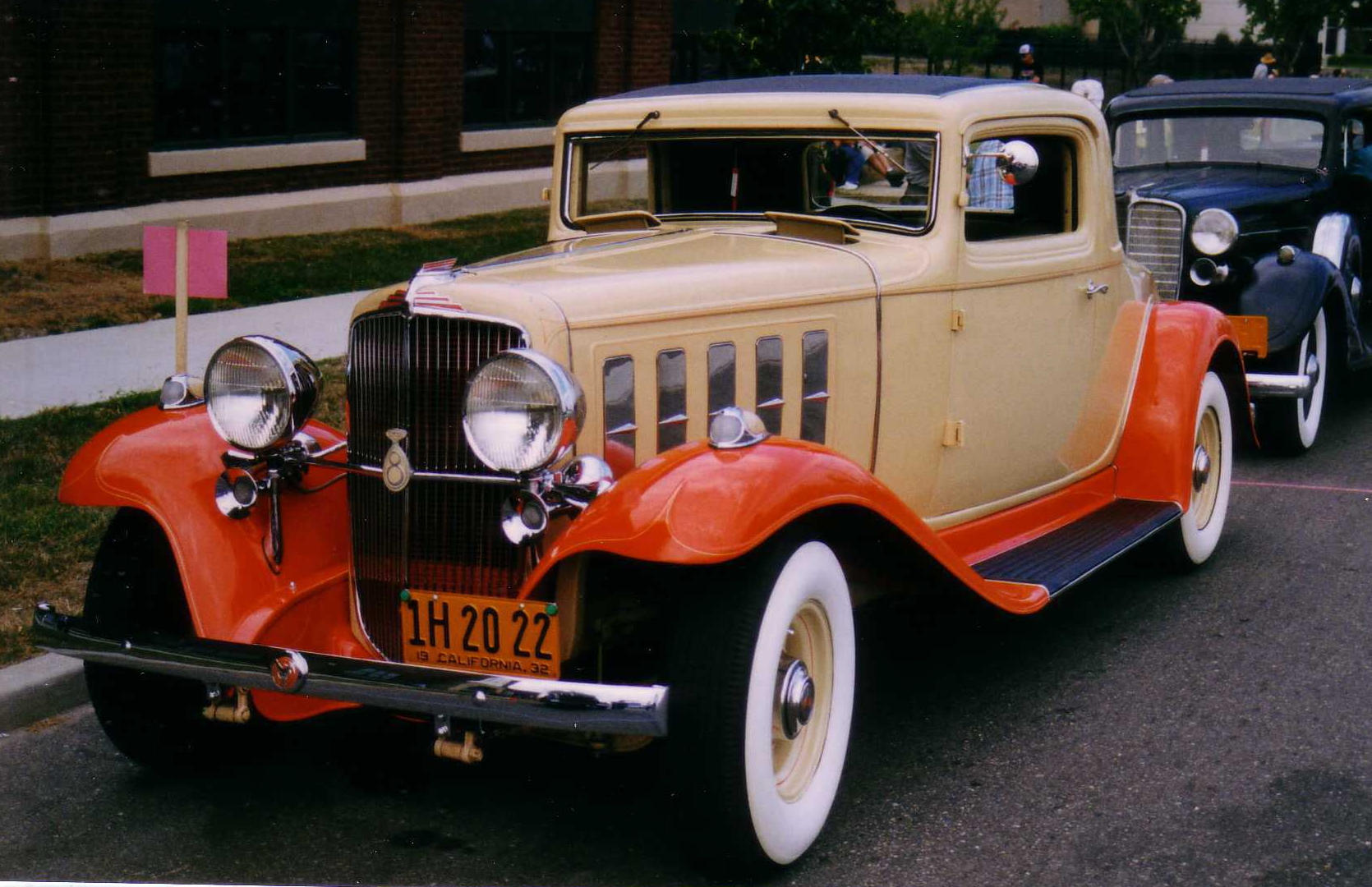
"So Kevin, in 1957, our friends at the Nash Motor Company debuted the ambassador. They did. And when and when that happened, it immediately became illegal to drive in 11 states."
The Nash Ambassador is a car that was made by the Nash Motor Company in 1957. It became illegal to drive in some states for reasons related to its design or safety regulations.
The Nash Ambassador was a full-size car produced by Nash Motors from 1950 to 1970. The 1957 model is notable for its design and features, but it also faced legal issues in several states shortly after its release.
"So my guess is that our friends at Nash pushed the envelope and put a quad headlight system in violating the laws of 11 states."
A quad headlight system means a car has four headlights instead of the usual two. This was done to make the car brighter and safer to drive at night, but it sometimes broke the rules in certain places.
A quad headlight system refers to a vehicle design that incorporates four headlights, typically two on each side, to enhance visibility and illumination. This design was more common in older vehicles and was sometimes used to push the boundaries of automotive regulations regarding headlight configurations.
"...but the 58 model lineup, we started to see four headlights and the Impala and Cadillacs and Corvettes."
The Chevrolet Impala is a large car made by Chevrolet, known for being comfortable and having a lot of space inside. It has been around since the late 1950s and is a well-known model.
The Chevrolet Impala is a full-size car that has been produced by Chevrolet since 1958. It is known for its spacious interior and smooth ride, making it a popular choice among families and car enthusiasts alike.
"In 1967, Pontiac was starting to ship the brand new Firebird to dealers all over the country, all over the world. And something was interesting about the window stickers on the Pontiac Firebird..."
The Pontiac Firebird is a classic American car that was first made in 1967. It was known for being fast and stylish, and it was a competitor to other famous cars like the Ford Mustang.
The Pontiac Firebird was a popular American muscle car introduced in 1967, known for its performance and distinctive styling. It competed with other muscle cars of the era, like the Ford Mustang and Chevrolet Camaro.
"...one of the oldest cars and coffee type events in the world, I guess, originating from Adam's..."
Cars and coffee is a casual meet-up for people who love cars. They come together to show off their vehicles and chat over coffee, usually on weekends.
Cars and coffee events are informal gatherings where car enthusiasts meet to showcase their vehicles, share stories, and enjoy coffee together. These events often feature a wide variety of cars, from classic models to modern supercars.
"...your shop V8 speed and rest though, you guys built that loose change Camaro a long time ago, right? And I said, yeah, we did."
The Chevrolet Camaro is a popular sports car that has been around for many years. It's known for being fast and stylish, often seen as a rival to the Ford Mustang.
The Chevrolet Camaro is a classic American muscle car that has been in production since 1966. It is known for its performance and sporty design, often competing with the Ford Mustang.
"...finally released the video build of that, uh, 66 Chevelle SS 396 Resto we did."
The Chevrolet Chevelle SS 396 is a famous American muscle car from 1966. It's known for being fast and powerful, with a special version called 'SS' that means it has extra sporty features.
The Chevrolet Chevelle SS 396 is a classic muscle car known for its powerful V8 engine and performance-oriented features. The 'SS' stands for 'Super Sport', indicating a higher performance trim level.
"...it's not a true restoration, but it's not a typical Resto mod or. Touring car or, you know, a day two car, it kind of pulls from a lot of different stuff and, uh, and it works..."
Restomod means taking an old car and fixing it up with new parts to make it better. It's like giving a classic car a modern upgrade while keeping its original look.
A restomod is a vehicle that has been restored to a certain degree but also modified with modern components for improved performance, comfort, or technology. This approach allows classic cars to retain their vintage appeal while benefiting from contemporary advancements.
"...full roller, three and eighty six and a, a Doug Nash five speed."
A Doug Nash five speed is a special kind of manual gearbox that helps cars shift gears more smoothly and quickly, making them perform better, especially in sports cars.
The Doug Nash five speed is a type of manual transmission known for its durability and performance, often used in high-performance vehicles. It features a unique design that allows for smooth shifting and better power delivery.
"...it's got all new sheet metal, basically from OPGI."
OPGI is a company that sells parts for old cars, especially those made by General Motors. They help car owners find the right pieces to fix or restore their classic vehicles.
OPGI, or Original Parts Group Inc., specializes in providing restoration parts and accessories for classic cars, particularly those from the GM lineup. They are known for their high-quality reproduction parts that help maintain the authenticity of vintage vehicles.
"And then I would, you know, body works and prep, wet sand, seal, mask, wipe down, tack cloth, the whole thing and spray it."
Wet sanding is when you sand a surface while it's wet, which helps make it smoother and cleaner for painting. It prevents dust from getting everywhere and gives a better finish.
Wet sanding is a technique used in automotive painting to smooth out surfaces and prepare them for painting. It involves using water as a lubricant while sanding to reduce dust and improve the finish.
"But the first few that I did, I shot in enamel because I thought I kind of looked at like what some body shops were using."
Enamel paint is a strong type of paint that dries hard and shiny. It's often used on cars because it looks good and lasts a long time.
Enamel paint is a type of paint that dries to a hard, durable finish and is often used in automotive applications for its glossy appearance and resistance to wear and weather.
"Well, these body shops had baking spray boots. Oh, I'm air drying in a garage."
A baking spray booth is a special room where cars are painted, and it gets hot inside to help the paint dry faster and better. It keeps dust away too.
A baking spray booth is a controlled environment used in automotive painting where heat is applied to speed up the drying process of paint. This helps achieve a smoother finish and reduces dust contamination.
"And you could cocktail in some hardener and some, you know, activators to help it speed up."
A hardener is something you mix with paint to help it dry quicker and make it stronger. It helps the paint last longer on the car.
A hardener is a chemical additive used in paint and coatings to accelerate the curing process, making the paint dry faster and achieve a more durable finish.
"The problem with lacquer is, you know, a high wind will blow it off the car. Hmm. It just doesn't have any of the the body strength of a urethane..."
Lacquer is a shiny paint that dries fast, but it's not very strong and can easily chip or blow off in the wind.
Lacquer is a type of paint that dries quickly and has a high-gloss finish, often used for automotive applications. However, it is known for being brittle and less durable compared to modern paints like urethane.
"So got away from that and then started shooting the urethanes. The thing about the urethanes, you breathe the stuff, you'll die."
Urethane is a stronger type of paint used on cars that lasts longer than lacquer, but it's important to be careful with it because the fumes can be harmful.
Urethane is a type of paint that is more flexible and durable than lacquer, making it a popular choice for automotive finishes. It provides better protection against environmental factors but requires careful handling due to its toxic fumes.
"It's amazing what kind of damage can be done inside of a cylinder. Yeah. Good observation."
A cylinder is a part of the engine where the fuel burns to create power. If it's damaged, the engine might not work properly.
A cylinder is a key component of an internal combustion engine where fuel and air mix and burn to produce power. Damage to the cylinder can significantly affect engine performance and reliability.
"the piston itself has a has a full crack and is separated slightly all across it."
A piston is a part that moves up and down inside the engine's cylinder. It helps create power by compressing fuel and air. If it's damaged, the engine might not run well.
The piston is a cylindrical component that moves up and down within the cylinder, compressing the fuel-air mixture and transferring the force from combustion to the crankshaft. Damage to the piston can lead to engine failure.
"Yeah. I found the valve head, you know, the the the big end of the valve and a part of the valve stem was in there."
The valve head is a key part of the engine that helps control the flow of air and fuel. It opens and closes to let these gases in and out, which is important for the engine to run properly.
The valve head is the part of the valve that opens and closes to allow air and fuel into the combustion chamber and exhaust gases out. It's crucial for engine performance and efficiency.
"because the piston was near top dead center. If I rotate the engine backwards, I can get down close to low bottom dead center before the engine would kind of lock up on itself again."
Top dead center is when a piston in the engine is at its highest point. It's an important position for the engine's timing and how it runs.
Top dead center (TDC) refers to the position of a piston in an engine when it is at its highest point in the cylinder. This is a critical reference point for timing and engine performance.
"I can get down close to low bottom dead center before the engine would kind of lock up on itself again."
Bottom dead center is when a piston in the engine is at its lowest point. This position is important for how the engine operates and cycles through its movements.
Bottom dead center (BDC) is the position of a piston in an engine when it is at its lowest point in the cylinder. It is essential for understanding the engine's cycle and performance.
"I think a rod is maybe they're interfering with each other as the crankshaft's coming around. I pray it's just a rod and not the crankshaft itself because forged cranks aren't cheap."
The crankshaft is a part of the engine that helps turn the engine's power into movement. If it gets broken, it can be very expensive to fix.
The crankshaft is a critical component of an engine that converts the linear motion of the pistons into rotational motion, which ultimately powers the vehicle. If damaged, it can lead to significant engine issues and costly repairs.
"I pray it's just a rod and not the crankshaft itself because forged cranks aren't cheap."
A forged crank is a type of crankshaft that is made to be stronger and last longer. It's often used in powerful engines because it can handle more stress.
A forged crank is a crankshaft that has been made through a forging process, which typically results in a stronger and more durable component compared to cast cranks. They are often used in high-performance engines.
"...or they don't extend all the way down into the water jacket near the bottom of the cylinder, then we can probably get away with an eighth inch sleeve..."
The water jacket is a part of the engine that helps keep it cool by allowing coolant to flow around it. If it's broken, the engine can get too hot and stop working properly.
A water jacket is a passage in an engine block that allows coolant to circulate around the engine to maintain optimal operating temperatures. If the water jacket is damaged, it can lead to overheating and engine failure.
"...if that top deck is cracked, you know, and we'll magnet flux it and, you know, see exactly where everything is..."
Magnet flux testing is a way to check for cracks in metal parts without damaging them. It uses magnets to find any hidden problems that could cause the part to fail.
Magnet flux testing is a non-destructive testing method used to detect cracks and defects in metal components. It involves applying a magnetic field and observing the flow of magnetic particles to identify any discontinuities.
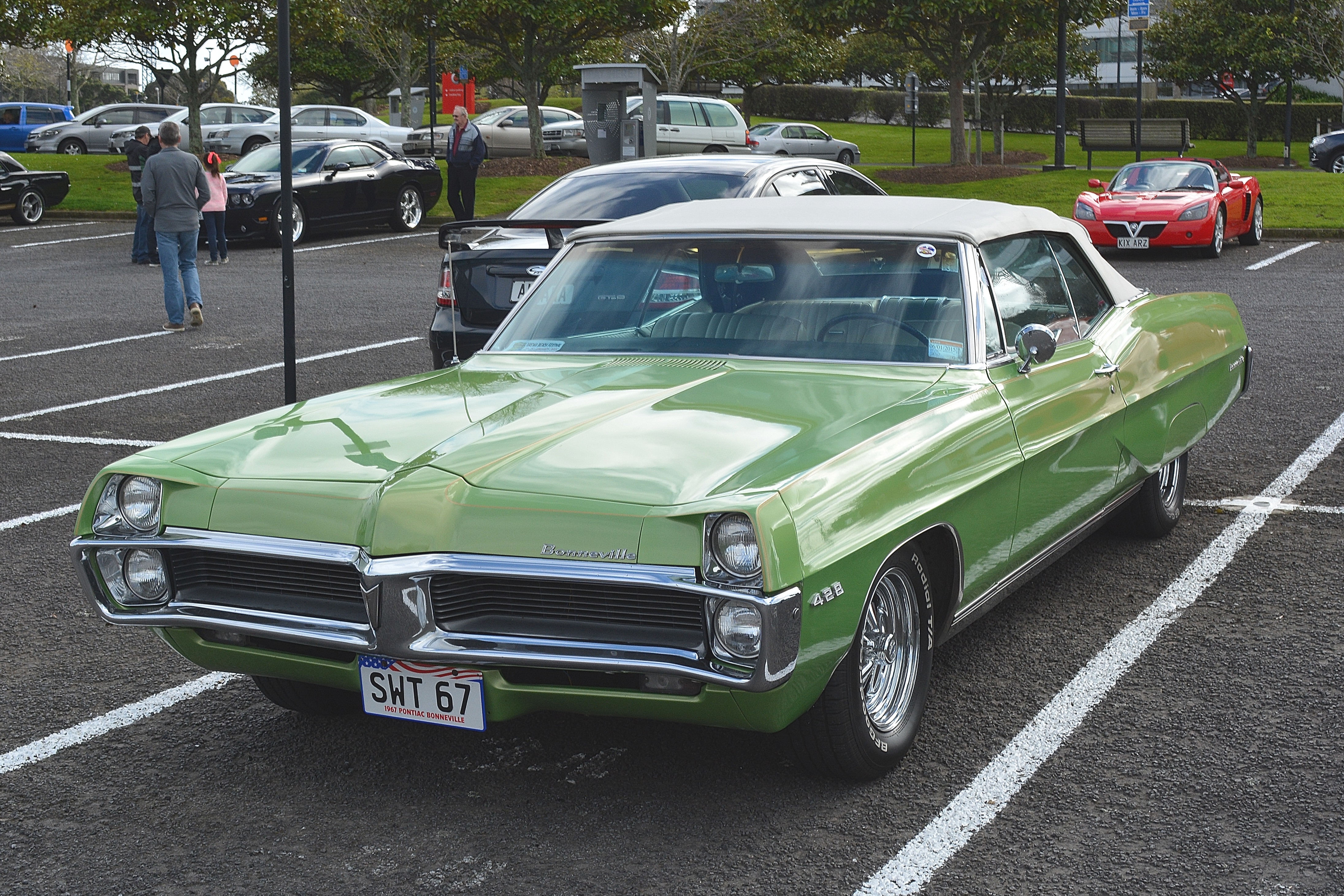
"...we had that 428 Pontiac block that had crack at the freeze plug site or when the expansion plugs, rather, and we're able to do a cold repair on that."
The Pontiac 428 is a powerful V8 engine from the 1960s, commonly found in muscle cars. It was designed for speed and performance, making it popular among car enthusiasts.
The Pontiac 428 is a V8 engine produced by Pontiac in the 1960s, known for its performance in muscle cars. It was part of the larger trend of high-displacement engines during that era, often used in performance-oriented vehicles.
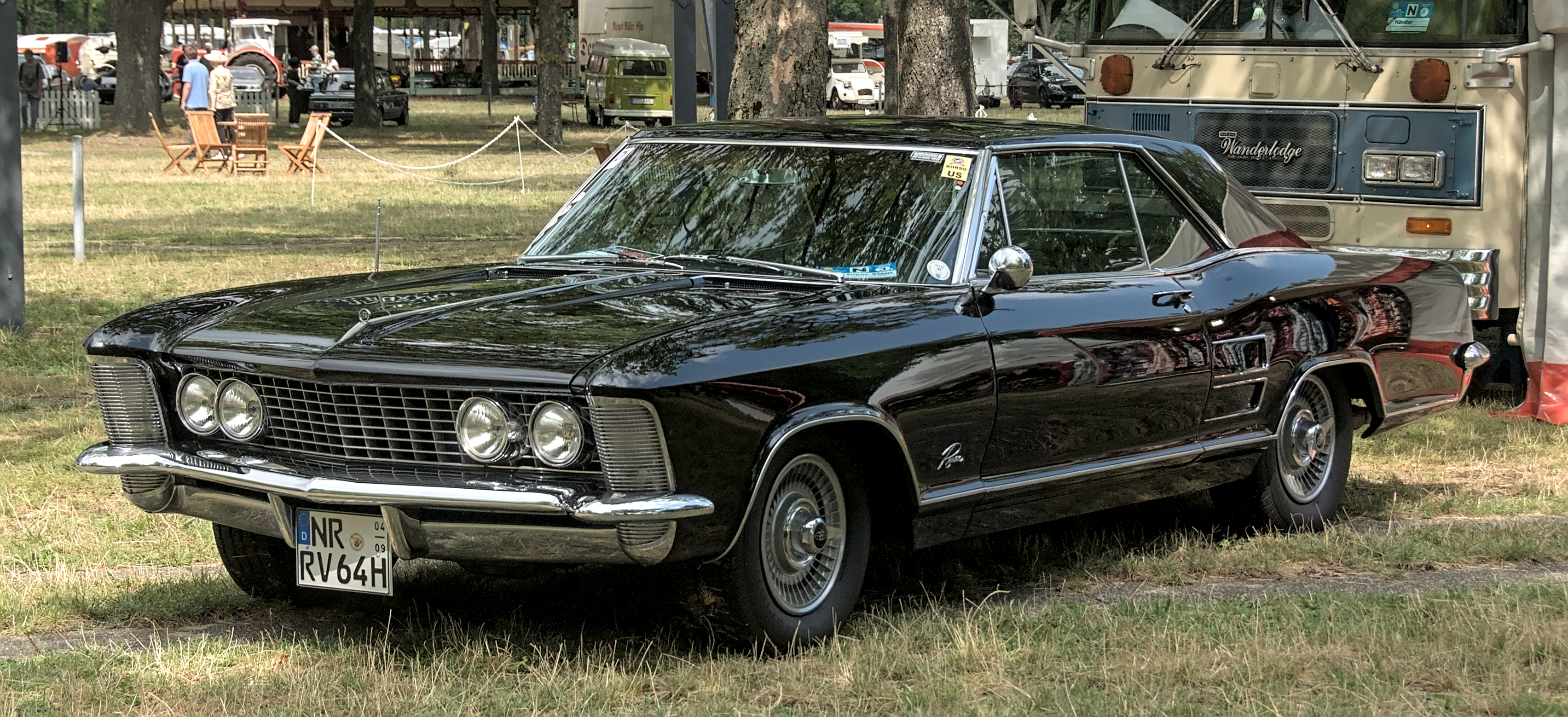
"I had a Buick 455 that I was building for my first Riviera. And that one didn't need to be sleeved."
The Buick Riviera is a stylish car made by Buick, known for being luxurious and powerful. It was popular in the 1960s and 70s.
The Buick Riviera is a personal luxury car that was produced by Buick from 1963 to 1999. It is known for its distinctive styling and performance, particularly in the earlier generations.
"...we said, forget it, because it was too risky, because you can split the block in half. Oh, wow."
A sleeve is a part that helps fix an engine's cylinder when it gets worn out. It fits inside the cylinder to make it usable again.
A sleeve in engine rebuilding refers to a cylindrical insert that is placed inside a cylinder to restore its original size and shape, often used when the cylinder is worn or damaged.
"...He bought a 68 Impala with a big block. So we're chatting about that."
A big block is a powerful type of engine that is bigger than regular engines. It helps cars go faster and gives them more strength, which is why many car enthusiasts like them.
A big block refers to a type of engine with a larger displacement than standard engines, typically providing more power and torque. These engines are often used in performance and muscle cars.
"And he wanted to make like four or five hundred horsepower and was wondering, should I rebuild the engine that's in it?"
Horsepower is a way to measure how powerful an engine is. The more horsepower an engine has, the faster and stronger it can make a car go.
Horsepower is a unit of measurement for power, commonly used to describe the output of engines. It indicates how much work an engine can perform over time, and higher horsepower typically means better performance.
"with the block that's in that car, it's a it's a weaker block that Pontiac made in, you know, 78, 79, and you're not going to get a reliable 500 horsepower out of it."
A weaker block is an engine part that isn't very strong, which means it can't handle a lot of power without breaking. It's important to know this when trying to make a car faster.
A weaker block refers to an engine block that has lower structural integrity or is made from less durable materials, making it less capable of handling high power outputs without failure.
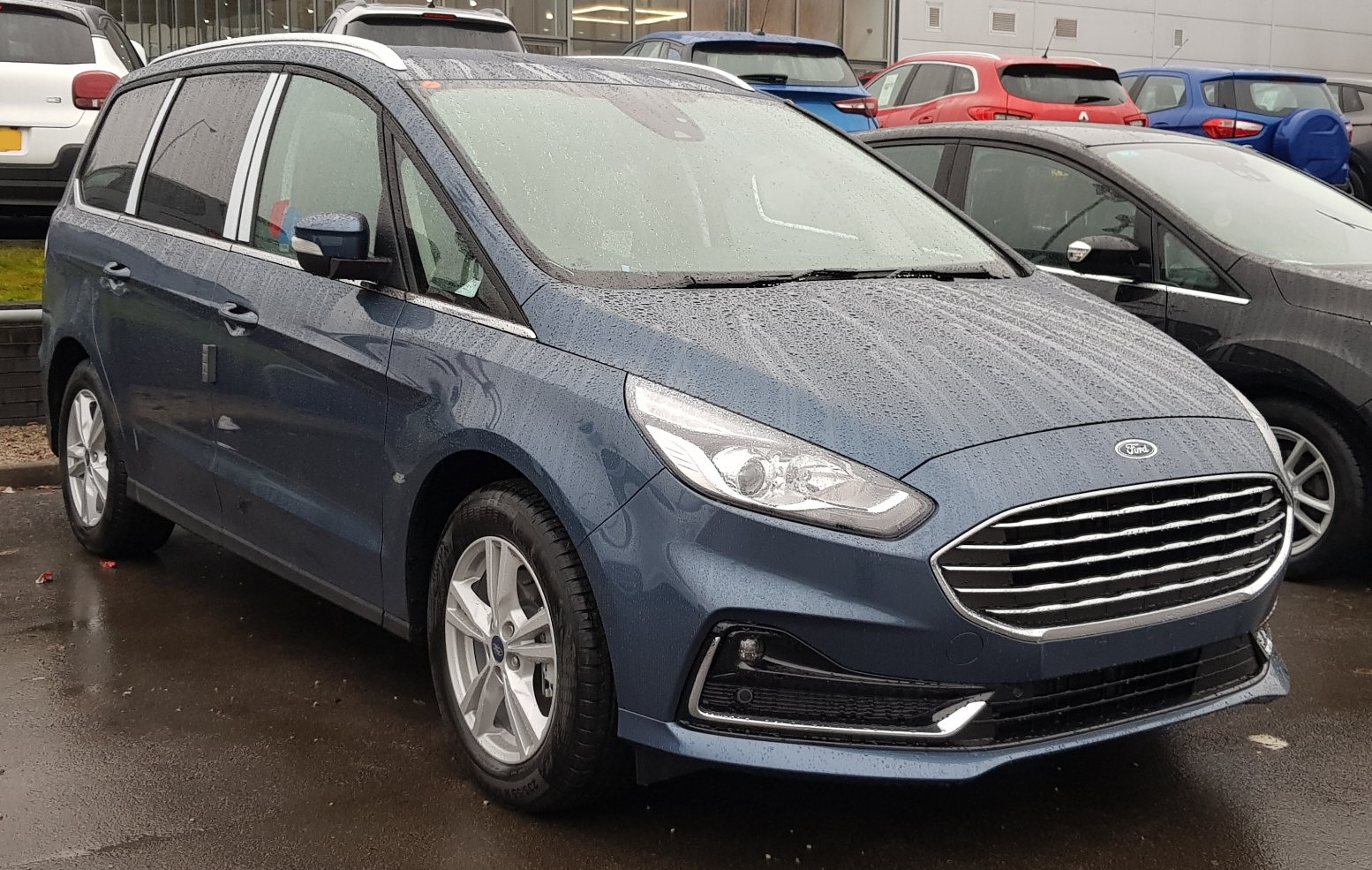
"... out by now. So in my case, my 351 Windsor in the galaxy has a dog bone style roller because it is a Ford..."
The Ford Galaxy is a large family car that can carry many people and their stuff. It's great for families because it has a lot of space inside and can be used for road trips or everyday driving.
The Ford Galaxy is a full-size MPV (multi-purpose vehicle) that has been popular in Europe since its introduction in 1995. Known for its spacious interior and versatility, the Galaxy is often discussed for its family-friendly features and practicality.
"... sudden there's try five Chevy's pulling up and a Cougar and a cool truck and all that. I mean, we got 25..."
The Mercury Cougar is a car that was made by a company called Mercury, and it was known for being a bit fancier than the Mustang. It has a cool design and is popular among people who like classic cars.
The Mercury Cougar was a mid-size car produced by Ford's Mercury division from 1967 to 2002. Initially designed as a luxury version of the Mustang, the Cougar is often discussed for its unique styling and performance, particularly in the classic car community.
"...of her tenure, she actually rewired an entire 69 Mustang. Get out of here right now. And made part of a cu..."
The Ford Mustang is a famous sports car that started being sold in the 1960s. It's known for being fast and stylish, and many people love it because it represents a fun and adventurous driving experience.
The Ford Mustang is an iconic American muscle car that was first introduced in 1964. Known for its powerful performance and distinctive design, the Mustang has become a symbol of freedom and rebellion in automotive culture, making it a frequent topic of discussion among car enthusiasts.
Select text to request an explanation
All righty, ladies and gentlemen, automotive enthusiast friends from all around planet
earth and maybe beyond, I don't know.
You did it again.
You mustered up enough gumption to push go on yet another Kevin, another illuminating
episode of V8 radio.
All right, an illuminating episode.
I'm your host of the V8 radio podcast.
Kevin Osti joined as always by our esteemed co-host, Mr.
Mike Q. Ball Clark, who's always illuminating.
I feel illuminating right now.
Yeah, raising up the airwaves.
Yes, is a bright, bright day.
Therefore, the airwaves are bright as well.
Nice, right on.
Well, at least you are, you know, the famous line from the Blues Brothers as they
are finally getting gas in the Blues Mobile in that gas station.
And, you know, Jake Blues has just downed a bottle of Thunderbird wine or
Ripple or something.
And Elwood comes out and says, you better get bright.
We've got a show to do right on.
So here we are.
Here we are.
So we know that our repeat listeners, who we are very grateful for, we appreciate
everybody tuning in once again, and they're all ready for the inevitable V8
radio automotive trivia question, right?
Indeed, indeed.
We drop these bombs in the beginning of the show and let them just kind of simmer
until the end where we reveal the riveting answer.
Where we shovel up all the damage.
All right.
All right.
Here we go.
All right.
So Kevin, in 1957, our friends at the Nash Motor Company debuted the ambassador.
They did.
They did.
And when and when that happened, it immediately became illegal to drive in
11 states.
Why was that?
1957, Nash ambassador became illegal in 11 states.
Correct.
I will take a stab at this one.
Stab later.
My guess is that it has everything to do with illumination.
I'm going to say that back in 1957, there were laws in place for the number of
headlights you could have forward facing on a vehicle in those 11 states,
restricting it to one headlight per side of the car.
So my guess is that our friends at Nash pushed the envelope and put a quad
headlight system in violating the laws of 11 states.
Boy, that was a reach, man.
That's my guess.
That was quite interesting.
All right.
Well, there's evidence floating around.
You know, all the fit the rest of 57 American model lineup all had two headlights,
one per side, but the 58 model lineup, we started to see four headlights and the
Impala and Cadillacs and Corvettes.
So I think the legislation was in process or there's a legend out there that an
automaker actually went to bat to change the laws.
And it might have been because of the Nash ambassador.
But also this is an illuminating episode.
It is that it is that that's my guess.
All right.
All right, my man.
Final answer.
Final answer.
All right.
Duly noted.
All right.
Well, that was a good one.
What do you got for me?
All right.
In 1967, Pontiac was starting to ship the brand new Firebird to dealers all over
the country, all over the world.
And something was interesting about the window stickers on the Pontiac Firebird
when they applied them to the car, which prompted a change in the window sticker
for 68 and nine.
So what was?
Oh,
actually, up and through the 68 and nine and into 1970.
So the trivia question becomes, what is unique about the window sticker of a 68,
nine and 70 Firebird?
In relation to the 67?
67 revealed, you know, much like in 57, they said, we need more headlights.
Right.
In 67, in 67, there was something amiss about the window sticker.
Inspiring a change that occurred for the 68, nine and 70 model.
Gosh.
All right.
Oh, we, that is, that is deep in the archives, isn't it?
Okay.
Um, I will take a stab at this.
All right.
So, good gravy.
Um, gravy can be good.
Gravy is good.
Um, let's be clear about that.
Um, yeah.
Come on, Michael.
Um, enough Hem and Hawn here.
Um,
Note to listeners, this section could possibly be edited for brevity.
Yet will not.
All right.
So in 68 through 70, window sticker, gosh, it had the
I'm just going to take a stab and say it showed the VIN number of the car
where 67, it did not.
Yeah.
I, you know, it's a quite a reach, but, uh, that's, that's what I'm going with.
All right.
Yeah.
That's your final answer?
That is the final answer.
It is early morning when we're recording this.
Okay.
Yeah.
VIN number.
I don't, I don't know.
It's nothing else that's coming to mind.
We'll find out.
Yeah.
Yeah.
I can't wish for this one.
All right.
You're going to have to.
Yep.
Uh, all right.
Well, that was fun.
Yeah.
And, uh, yeah, you did note that this is a, uh, uh, today's episode, uh, comes to
you by, uh, the day of Saturday and the time of morning.
Yes.
And, uh, little, little peek behind the scenes.
We generally record these after hours in the evening time on a weekday.
And sometimes, you know, you come home and you're kind of smoked.
Well, in my case, I'm always home, but yet I am smoked.
Yeah.
There you go.
But we thought, Hey, let's do a nice Saturday morning thing.
The weather's still beautiful.
We are technically kind of creeping into fall here.
Yep.
And, uh, so I'm in the garage.
The doors are open.
It's beautiful out.
Uh, I was streaming the live stream from the doughnut derelicts a little while ago.
Oh, cool.
Yeah.
Uh, doughnut derelicts, of course, is a, uh, it's one of the oldest
cars and coffee type events in the world, I guess, uh, originating from Adam's
doughnuts in Huntington Beach, California.
And, uh, that one starts pretty early, you know, cars around there at six.
Oh man.
And, uh, it's all gone by, you know, eight, eight, 30, you know, California time.
So, um, there's a gentleman who is there pretty much every week, uh, with his,
with his iPhone camera and he walks around and streams it live.
So, uh, I've been to the doughnut derelicts, um, many, many times.
Always enjoy it when I go there and visit in Southern Cal.
And, uh, it was kind of fun.
Uh, I don't know, two years ago, Kelly and I were out in Southern Cal for the SEMA
leaders and legends gala event, which is a Friday.
So Saturday morning, got up early, buzzed down to doughnuts, met up with some
friends, saw our buddy, uh, Ross Berlanga from, from Taylor interiors.
Cool.
Ross is awesome.
Yeah.
Ross, a good dude, good friend.
Um, but it was fun.
This guy comes up to me and he says, Hey, uh, you're that guy.
And I'm, you know, that, that could be a loaded question.
You owe me money.
Yeah, I'm not, maybe I'm the guy, uh, but he said, your shop V8 speed and
rest though, you guys built that loose change Camaro a long time ago, right?
And I said, yeah, we did.
He's like, well, come on over to the other side of the parking lot.
I want to show you my version cause I modeled mine after yours.
No kidding.
Yeah.
He's truly inspired by what we did and did his own take on a lot of the little
tweaks that we did on, on the loose change Camaro 69 Camaro and incorporated him
into his own bill that I'm, you know, you pull stuff from everywhere.
It's not like he was, you know, right?
Me, the copy copy, but yeah.
Yeah.
And, and even if he did, that's, that's fine.
I'm not saying there was like any kind of a rights issue.
No, can't do that.
Absolutely not.
Sir, you must change that immediately.
Right.
And everything we did on that car was influenced by somebody else too.
You know, that's just how it is.
Right.
Yeah.
But it was, it was kind of fun to think, you know, people actually watch this stuff
and they see these cars and they listen and, and it's sunk in.
So that was pretty cool.
Right on, man.
I dig that.
I dig that.
Huh.
So, uh, every Saturday morning when I get the chance, I pop the live stream on at
least and hang out with our friends at the donuts.
If I can't actually, good deal.
It's like you're, it's like you are there.
You know, it is.
Mm hmm.
Mm hmm.
And then you can go back and watch it later too.
So, uh, very cool.
Very cool.
So, as being of watching, we've been releasing a lot of car build videos on our
channels recently, which is fun.
Yeah.
It's been great.
I've been sharing the Jeepers out of that stuff.
Oh, is that where all the Jeepers went?
That is, that is where all the Jeepers have gone.
I was looking for a, looking for a Jeeper and there was nothing to be had.
For a gaggle of Jeepers yesterday to do something.
Sorry, that was me.
All right on.
Yeah, but it's cool.
Uh, we mentioned, I think we mentioned last time our old friend, uh, Ben Koopman
rejoined the team on the marketing side and he's been very busy cleaning up some
of the, uh, long term projects that we've had kind of floating around that I've
been delinquent on releasing.
So, uh, last week released the, finally released the video build of that, uh, 66
Chevelle SS 396 Resto we did.
Right.
Yeah.
Good friend, Mr.
Larry freeze.
Yeah.
Yeah.
And that was, uh, that was an interesting one because it, I recommend checking
the video out if you haven't seen it because the cars, it's different.
It's not a true restoration, but it's not a typical Resto mod or.
Touring car or, you know, a day two car, it kind of pulls from a lot of different
stuff and, uh, and it works and people, people really seem to dig it.
That is, yeah, I dig it.
Yeah.
I mean, it's, it is, I mean, the color is gorgeous.
That, uh, our, our painter, Jeff Whitlick, uh, dreamed up and, uh, put on there.
And then the interior colors, the, uh, what was it?
Metallic cardboard.
Yeah.
That's what it was called.
The exterior, the exterior is tropical freeze.
You're right.
The owner's last name is freeze and the interior is metallic cardboard.
It looks better than it sounds.
No, but it was kind of funny how that happened because, so the color is, it's
not a GM color, but it could be from the day.
I mean, you had, you know, a lot of your turquoise, a G and aquas and the, you
know, marina blues, you know, a lot of those, I love those colors.
Those sixties blues and greens are amazing.
Yeah.
Uh, but Larry wanted something a little bit different.
And, and at the time we were concerned that we didn't want this car to look like
a mid nineties Chrysler midi van.
Remember, because there was, it would be rough.
There was a time when those colors came back in the nineties, but there
were the darker shades of Emerald turquoise and, uh, and they all had, you
know, the matching green or gray interior.
And it was like, ooh, and, and not that they were bad colors, but, you know, the
way my mind works, if I associate a particular color with a car, unfortunately,
sometimes my mental vision defaults to like the worst possible example, like a
minivan with a bumper falling off and the windows are blown out.
You know, I lived in Chicago at that time and that's what you had.
Everything rusted within five minutes.
So when Larry's like, yeah, I'm thinking about this kind of turquoise, kind of
green, I'm like, oh, Larry, we got to talk.
Well, and then I'm, so I, I immediately mentally went to a, just a stark white
interior.
I thought this would be just, that would pop against that tropical freeze.
For sure.
It really would have.
And he's like, well, I, I like, I like the white interior, but my wife doesn't.
And I'm like, oh, okay, we have to accommodate for sure.
So what does she like?
And he's like, well, she likes the, you know, the tans and, and there was a GM
interior called fawn and, and like, oh, yeah, a couple of tans.
And he wanted to do that.
And then I'm thinking, oh, okay, I'm not sure how that's going to look
against the turquoise tropical freeze.
And then we had to land on the interior steel pieces.
So the actual dashboard itself and the top of the doors and all that's
Larry and Jeff, the painter, we're having a conversation and Jeff's like,
oh, what are you thinking, you know, for the color?
And Larry literally looks around.
He's like, well, I don't know.
Um, do you see that cardboard box?
Make it that color.
And Jeff's like, okay, so that's where metallic cardboard came from.
Oh my gosh, that's hilarious.
And it works wonderfully.
The interior is awesome.
It's beautiful.
It really is.
I mean, it's crisp and the colors look great.
Even, you know, against the tropical freeze color.
It's, it was a home run.
It was a real hit.
So, and it's different.
And that's what, that's what I like.
Sure.
For sure.
But the rest of it is full on.
I mean, it's a full roller, three and eighty six and a, a Doug Nash five speed.
Don't see those.
Get out of here.
Yeah.
Yeah.
And then it's on air at air rides.
Suspension, right?
So it's got some street ride stuff.
It's got some hot ride stuff.
That's what I'm saying.
It's kind of a different mix.
Yeah.
Is Larry called it a day three car, correct?
Yeah, right.
That was a good explanation.
Yeah.
Yeah.
Very cool.
Yeah.
It turned out real nice.
And, uh, he had it back at the shop for a little touch up or something recently.
And, uh, when I happened to be down there for my, uh, my monthly visit, um, and it
just looks as good as the day was finished.
Yeah.
And it was finished a few years ago.
Um, and the reason why we waited so long to release the video series on this is
that, uh, it, it left our shop like 96% finished.
And Larry was going to take care of some of the interior details on his own.
And, and, you know, which is all fine and good, but I needed to see the final car
for camera, for video and for photography.
And we just never connected on getting it back to the, to the shop and, and getting
that imagery.
So when I heard it was coming back for a little touch up, um, and the other things
he wanted done to it, I'm like, yeah, we're going to, we're going to hang onto
this for an extra couple of days.
So we took the time to shoot the video on it.
Uh, I, that car is so straight.
It really is.
It's gorgeous.
Yeah.
And it's got all new sheet metal, basically from OPGI.
It's got door skins.
It's got quarters, the deck lid floors and our metal team just knocked it out of
the park and then, uh, the body shop guys killed it on that one too.
And a few years ago, we had a friend of ours that was working in our shop
named Matt, uh, Ella Brock.
And he actually lived in the, in a different state.
You live in Iowa and commuted basically to Illinois to, to work for us.
They're in the week and then we'd commute back home and, and unfortunately
that arrangement just didn't, you know, work out long-term for his family.
But, uh, it was great having him around.
He, he remains a good friend of ours and it was fun to see him working on
that car in the video too.
Yeah.
I got to meet him once.
Cool guy, real nice guy.
Is a nice guy.
Yeah.
Good dude.
And then the evolution of that was, uh, Tim Day, our lead body magician
currently who's been here since then, uh, Tim and Matt, mostly Tim worked on
the blue GTO that we had at the McCacken show, uh, which is kind of a,
the same level as that Chevelle, as far as being arrow, perfect straight.
Yeah.
Gosh darn it.
That looks nice.
You know, I got to say one thing that we've been very fortunate with is to
be able to consistently put out really, really nice body work, metal body and paint
finishes on the build, the full bill cars that we do.
Yeah.
Agreed.
No argument for me, man.
I don't, I'm not looking for a pad on the back here.
I can't do it.
I've done body work.
I've done metal work.
I've painted probably 20, 20 some cars in my life and I know enough to screw things
up.
I don't even know that much.
Well, and part of it, I think today I might be better at it than I was.
I haven't sprayed anything in at least, at least 15 years.
And the last car I did was 20 years ago, over 20 years ago.
Wow.
And I was always impatient.
Sure.
You know, I want this done like now.
Yeah.
And you got to have that mastery of control of your time and focus.
Yes, I do not have that.
I am as impatient as you are.
I am twice as impatient.
I just, I will mess it up something fierce.
I, I painted when I replaced the dash wiring harness in the GTO, I had the whole
dash bezel out and everything and, and it was looking pretty, pretty rough.
It's been a lot of years since anything happened to it.
So I'm like, I'm going to sand this down, smooth it out, and I'm going to shoot
it with some color again, get it black again and get it really nice.
And I did that.
And I did try to take my time, but I didn't wait for it to full.
It was really humid when I was doing.
Oh, yeah.
So the paint just stayed kind of tacky and didn't fully dry.
And I'm handling it and I'm just getting my fingerprints all in it and it's terrible.
I'm like, I'm not doing this again.
So I put it in as it is.
It's hard to see because, because it is black and it's, you know, on the near
the bottom side of it and it's shadowy and you can't really tell on us.
You really get a light on it and look, but I know it's like that.
Judges didn't say it.
No, no kidding.
Yeah, it might have cost me an award.
But yeah, I get really impatient.
I just want it done.
I mean, it, it works for me when I'm doing mechanical work because, you know,
you put something together, you bolt it and you're good to go pretty much.
And, and you get the instant gratification.
But, you know, when you're sanding and painting and you got to wait, I'm like,
God dang it, I just want to keep going with this.
Now we got to wait.
This is terrible.
So well, and that's a huge part of it.
And, and what I've learned is, you know, kind of the definition of experience
to me is not to be able to do the task.
It's to have enough knowledge all the way around the task to fix anything
that comes up during the task.
Right.
So in the old days, I knew how to spray, you know, I mean, again, I painted
some completes, you know, essentially cars on the frame.
I've taken it when I was in just out of high school, you know, I helped
on some frame offs and all that.
And that kind of got my feet wet and all this stuff.
But in my parents' garage, I did the classic magazine style plastic paint
booth with the fans and everything in the furnace filters.
And heck, yeah, you know, all that stuff and painted some cars.
And I was using, you know, in my mind, I saw the paint gun.
I saw the paint.
I saw the reducers.
I had my mixing stick so I could get the right ratio.
I would go talk to the paint guy.
Hey, what do I need to know here?
Hey, this stuff does that or this.
And then I would, you know, body works and prep, wet sand, seal, mask,
wipe down, tack cloth, the whole thing and spray it.
But the first few that I did, I shot in enamel because I thought I kind of
looked at like what some body shops were using.
And and they were, they were having good success.
Well, these body shops had baking spray boots.
Oh, I'm air drying in a garage.
And enamel took forever to dry, boy, especially just letting it sit.
And you could cocktail in some hardener and some, you know,
activators to help it speed up.
But so the first few cars, the enamel was nice because it would flow out.
And and if you had a little bit of a surface texture from an air pressure
problem or something in the gun, it would kind of smooth out and self level.
And it would look great.
And then it was sticky for 24 hours.
Lovely to your point.
You know, here comes every winged animal in the neighborhood.
Smelling that, I guess.
You got a dragonfly swarm coming through.
Oh my gosh, you know, just dive bomb right into it.
Right.
And you can't fix it.
Look at this, guys.
Yeah, you can't fix it.
It was a single stage.
It wasn't clear.
So it was like, all right, move past that, moved into spraying urethanes.
Two stage is clear.
Urethane dries right away.
Actually started spraying lacquer, which was sweet and and lacquer
would dry instantly and it was shiny and you could buff it and it looked like
a mirror. Yeah.
The problem with lacquer is, you know, a high wind will blow it off the car.
Hmm.
It just doesn't have any of the the body strength of a urethane
plastic based pain, lacquer is it's like very brittle, very thin.
Sure.
So got away from that and then started shooting the urethanes.
And the thing about the urethanes, you breathe the stuff, you'll die.
You know, you can't do that.
Well, that's unfortunate.
Yeah. Right.
Isocyanates and the in the chemistry and all that stuff.
But I, you know, the the weird thing that always threw me is on a two stage,
a base and a clear, you spray the base and it's really hard to see if you have
uniform coverage because there is no gloss to it.
It lays out. Oh. Sat knee.
Sure. But inconsistently.
So it's not like a uniform satin where you can look to the side and go, yeah,
I got the right amount of pain and all that.
It's like a little blotchier, a little darker over here or not.
Even if the color is right, it's just the way it kind of lays down.
Sometimes it looks funky and I could never tell.
Like, do I have enough on or should I put more?
Or did I overdo it?
Or does the is the metallic pattern all screwed up?
And then once you clear it, everything kind of comes to life and you can see
right away what's going on.
But my problem was always not having enough experience spraying clear
to know the timing of how the clear wanted to sit on the car.
Because if depends on temperature, depends on your mix ratio,
depends on your air pressure, depends on how far you have the gun,
depends on how much material you have going through the gun adjustment,
depends on your fan spray, depends on all this stuff.
And you might start off, you know, I used to have a thing on the wall,
a piece of paper, I'd spray some on the wall and, you know, dial the gun
and then turn it to the car.
And the speed you move your arm across that that first initial trigger
pull, you'll learn right away like, oh, this is going to sag and run down
the whole car too much.
Or I'm going too fast and I just put this little weird mist on and it's not enough.
And those who have experienced know that, you know, they're going to hit
this right away correctly out of the box.
Yep.
And or know the repair, if it does sag or how to use a flashlight
or different things to look to make sure you've got the right coverage.
And, you know, that's where the experience comes through.
Pointing a spray gun at a car is not hard.
It's all the other things.
The dialing it in and making sure that your conditions are correct.
That's the real trick.
Yeah.
And then, you know, so you can do a decent paint job without having ever done
this before, just by following instructions and reading stuff and whatever.
But to do a great paint job takes years, years of experience.
Sure.
And our team's got it down.
So yeah, my head's off to those guys.
Well, even, I mean, you know, Jeff, our painter has his daughter, Meg,
working there now and she has just she's almost like a superhero in how
her skill set is improving over just the last year.
It's incredible the job she's doing.
She inherited a lot of Jeff's knowledge somehow.
Somehow.
Yep.
And it's funny because like, you know, people talk about biology and they're
like, yeah, every every new kid's a clean slate.
You know, is it nature or nurture or whatever?
No, Meg was born with some skills.
I'm telling you, because Jeff, Jeff has developed such a high level of skills
over his career that they they transferred through.
I get it.
Yeah, some kind of osmosis is going on over there or something.
But yeah, she is she is just murdering it.
She's so good.
My goodness.
It was last week, this past week, Brittany and our administrative team is a
pretty artistic person and she likes cool stuff.
And she wanted to learn how to pinstripe traditional brush.
Oh, cool and done pinch driving.
Yeah, right.
Very cool.
So they organized this, this little after work pinstripe party.
And it was it was very cool because a lot of our guys are into that stuff.
And so so Chad and our Chad's kind of an all around guy.
When it comes to body assembly, disassembly, he can do a lot of different stuff.
He's also a painter and has done a lot of pinstriping and he brought in some cool
books with pinstripe art and actually some templates.
And I'd never had never thought to do this, but they took some like document
frame, like eight by 10 document frame glass.
And you put it over the pinstripe template and you paint on the glass.
Oh, OK.
And if you don't like it, you wipe it off, you know, scrape it off.
So they had some of these, you know, squirrel hair, knife brushes and some,
you know, one shot paint and some of these glasses.
And it was Brittany and it was Jeff's daughter, Meg, and it was Chad.
And then Tim, our body guy is also a big traditional hot rod fanatic.
So he came out, Mike Bass, one of our senior mechanic technicians is also
pretty artistic. He came out.
So they all kind of got set up and just started kind of messing around.
And I was able to FaceTime in a good friend of mine from the West Coast,
Mr. Brad King, who's a tremendous paint pinstriper and lettering guy.
And he actually did some, you know, face to face time
pointers and training and, you know, help Brittany learn how to hold the brush
at a certain angle and and how, you know, we can dilute it with, you know,
that's that is a mammal.
Also a little, you know, an animal reducer, mineral spirits, whatever,
and gave everybody some pointers on how to pull a straight line.
And it was a really cool thing going.
I had to jump off before it was all finished,
but I came back the next day to see some of the artwork they did.
And for a bunch of people that really don't, like a few of them have never done
this before, I mean, they're really good. It was cool.
Good deal. Did you, I'd love to see some of that.
Did you take any pics and maybe you can share it?
Yep. I got a few photos.
We'll probably do a Facebook post on it next week.
So if you know, make sure you hit the V8 speed shop Facebook account
or we'll throw it up on the V8 radio one also. But cool. Yeah.
Good deal. Yeah. I'm looking forward to seeing that.
I remember the chatter in the internal communications about that.
I'm like, oh, that'll be pretty cool to see that. Yeah, it was.
Yeah. Good deal. Good deal.
I don't know where we left off on our last episode with the GTO,
but I made a little progress on that.
Well, that's good. Yeah.
I don't know if I had had the head pulled off or not when we talked, when we spoke last.
Well, just a quick recap is a drop to valve drop to valve.
Yeah. And carnage ensued.
So at the time, I couldn't rotate the engine at all,
even with a socket on the crankshaft bolt pulled.
I thought maybe that valve stem was kind of wedged in between the top of the head
and the piston head, you know, preventing any movement from happening.
I ended up pulling that driver's side head off and holy cow.
It's amazing what kind of damage can be done inside of a cylinder.
Yeah. Good observation.
Yeah. So the right the piston itself has a has a full crack and is separated
slightly all across it.
There are two big cracks in the cylinder walls.
The top of the piston is just beat blazes.
Yeah. I found the valve head, you know, the the the big end of the valve
and a part of the valve stem was in there.
The rest of it's just gone.
It's probably sitting in the muffler right now.
So, yeah, but I could I can rotate the engine if I went backwards
because the piston was near top dead center.
If I rotate the engine backwards, I can get down close to low bottom dead center
before the engine would kind of lock up on itself again,
or something was interfering.
So I can go back and forth, but I can't make a full rotation.
I think I tweaked a rod.
I think a rod is maybe they're interfering with each other as the crankshaft's
coming around. I pray it's just a rod and not the crankshaft itself
because forged cranks aren't cheap.
Well, yeah.
And depending on how much resistance you put on it,
you could have some of the valve junk like locking a ring against the
yeah, you know, cylinder wall in which it would go down, but not up or I don't know.
Right. I don't know, maybe.
But there's a a chunk of a little chunk of the piston top was missing as well.
And you can see the ring in there.
And it was I mean, it just really beat it up there, too.
I mean, it's crazy.
Yeah, it's not the not the greatest news.
But so I got like I've both heads off right now.
And I just borrowed my buddy Randy's engine hoist and engine stand.
And I'm real close to being able to pull everything out.
And my my plan is on my next visit down south to bring it all with me
and have it evaluated by our engine machine shop staff and see what they think.
I sent them some pictures and say, hey, just based on what you see,
do you think this block is salvageable?
And Kerry Kelly, who's has 30 some odd years of machine shop experience,
said, well, if if the cracks are limited to what you see and they don't go all the
way up into the the deck or they don't extend all the way down into the water
jacket near the bottom of the cylinder, then we can probably get away with an
eighth inch sleeve and you'll be good to go.
But if they do, if that top deck is cracked, you know, and we'll magnet
flux it and, you know, see exactly where everything is.
But if the top deck or bottom end of there is cracked, then you're probably
looking at at a boat anchor.
So yeah, so I'm I'm holding out hope that I can reuse this block.
But I'm, you know, just trying to manage expectations at this point.
Well, our engine shop team has has worked some some magic on fixing blocks.
Yeah, they have.
Yeah, we had that 428 Pontiac block that had crack at the freeze plug site or
when the expansion plugs, rather, and we're able to do a cold repair on that.
And it's it's you can't even tell it's it's gorgeous.
It's a beautiful repair.
And sleeves seem to be a daily occurrence.
Yeah, right.
We did eight sleeves in one block at one point and it's great.
I mean, yeah.
And that's the thing I remember, you know, I guess the technology has evolved.
And of course, getting back to people who know what they're doing are doing
the work on it.
I remember sleeving like being like a last ditch Hail Mary, right.
But this is 30 years ago.
Sure.
I had a Buick 455 that I was building for my first Riviera.
And that one didn't need to be sleeved.
Thankfully, it just needed a little shave and a haircut.
But I remember talking to the machinist because they had another one in there
at the time at my local machine shop.
And back in those days, it was in the back of a parts store, you know,
that's where we went to.
And the guys like, yeah, you know, we're talking about putting a sleeve
in this other Buick block.
But then we said, forget it, because it was too risky,
because you can split the block in half.
Oh, wow.
You know, and all this stuff.
So to me, a sleeve was like, oh, yeah, let's not do that.
And then today it's like, no, we're able to fix a lot of stuff.
Yeah, I think that the sleeve technology and again,
people that know what they're doing, I can't I can't relay the entire
industry on that one opinion I got from some yahoo that worked at a parts store.
Right. Yeah, for sure.
But that's where we get our knowledge, you know, as you get into this stuff,
somebody tells you something and you stick with it.
And it might not be right.
And, you know, part of our job is to share other possibilities.
There's a there's a John Hyatt song where he there's a lyric where he says,
you know, somebody told you you couldn't dance and you've been holding that forever.
Right.
Maybe you can, but just that person was it was an idiot.
Maybe, maybe, maybe you can't and you shouldn't care, you know, whatever.
Yeah. But, you know, to have a guy like
Kerry Kelly on the team again, with over three decades of of engine
building experience, go, yeah, you know.
So really, it just becomes a matter of feasibility.
Like, right, we can do you want to.
Right. Yeah, for sure.
Yeah. If, you know, I'll, you know, when I get it down there, I'll try to make
an unemotional decision and just do what's what's right.
And so in that try on L.S.
Like the trivia question, I can edit that out.
Yeah.
L.S.
You know, you are breaking my heart, man.
So that's the funny thing, our friend Paul, who's been on this show.
Yeah.
Came down to Vizel last weekend.
Right on.
And he brought his 60 drove a 62 Buick convertible down from,
you know, from your neck of the woods.
So I don't know, 320 mile each way, nice road trip to come visit for the weekend
or for basically for 24 hours.
It came in and we hung out.
And if you've ever heard another of the podcast that Mike and I have done,
that I do, the stubborn German podcast, which originates from the stubborn
German brewing company in the town where I live.
Stubborn had their stubborn Fest, which is their version of the October Fest.
So Paul came down for that and we had a good time.
And Chris Ron, the proprietor of the stubborn German brewing company
has recently picked up a project car.
He bought a 68 Impala with a big block.
So we're chatting about that.
Pretty cool.
Good deal.
The reason why I brought this up is Paul listened to one of our recent
podcasts on the way down and he's like, every time you say L.S.
man, that guy just loses it.
It's a sterk.
You know, I would never do that to the car.
You know, I just like it's funny.
I just like rage baiting him.
That's all. Yeah, you know, make sure you stop listening.
Yeah, yeah, yeah.
It's funny.
Actually, I caught a little bit of grief when a customer
called into the shop who has a 78 Firebird, a 79 Firebird,
and was looking for advice on what to do with his engine.
And he wanted to make like four or five hundred horsepower
and was wondering, should I rebuild the engine that's in it?
Or should I less it?
Or what should I do?
And, you know, I had to put my personal biases aside and say,
well, with the block that's in that car, it's a it's a weaker
block that Pontiac made in, you know, 78, 79, and you're not
going to get a reliable 500 horsepower out of it.
The mains are too thin and they're prone to cracking.
And with, you know, I had to take a breath and say, your best bet
is to, you know, put an LS crate motor in it and and then go to town.
He's like, OK, let's do it.
And then, you know, Brian and both Brian and Trevor at the shop
were like, I can't believe he told that guy to LS his Firebird.
I'm like, well, it's not my car and it's not my deal.
It's what it's what's best for the consumer.
So well, and but that's the truth, you know, our our mission statement
is to connect people to the best times of their lives through things with wheels.
And if that means the priority is 500 reliable horsepower,
maybe he doesn't care how he gets there. Right.
And, you know, people hear you kind of again, from your personal
project, not wanting to go LS route, that's fine.
But am I going to put an LS in my 62 Ford?
No, no. But if I had, you know, a second gen Firebird,
that was a 77, 78 that needed to perform the way that car looks
and the way that car deserves to perform, especially with the suspension
upgrades that we can do on these things. That's like an easy answer.
Yeah, you want to put an LS three in it. Sure.
And then you're going to have so much fun with the car
that you're not you're not you're never going to look back.
And a lot of times, you know, we've built a lot of those second gen
platforms in that manner. And there are other considerations.
Again, a lot of them might not have had the original engine in them.
And plus they made they made like, you know, 250,000 of those things in 79.
So they're they're not a super rare car
that we're devaluing, you know, right corner of the marketplace by doing this.
And we always, you know, we'll we don't throw that engine in the trash.
You know, we'll take the original engine out, you know, generally send it home
with the customer. But if they don't want it, then, you know, we'll we'll
be home at somewhere else. Right. But so I don't want to I appreciate
you're able to walk the company line of what's best for the for the customer.
Because if you get some kermudge in there that is only steering people in one
direction, that they should have a carbureted, you know, 400 and everything.
You're right. You're denying a lot of people the opportunity to enjoy what they want.
Yeah, for sure. For sure. Yeah.
But, you know, you got to do what you got to do.
Yeah, your own stuff is your own stuff.
Yeah, exactly. Exactly. Your own stuff is your own stuff.
So so personal biases aside.
Yeah, so I threw, you know, Paul being a big American convertible fan like myself,
he drove his Buick down and that's that's refreshed stock suspension.
And that one, you know, actually has a Chevy small block in it instead of the
old nail head, which I gave him a bunch of crap for 20, 25 years ago when he did
it or 23 years ago, because I'm like, build the nail head.
But at the time the nail head was beyond his means and whatever.
So you do what you do.
So anyway, it's got a carbureted small block in it and stock steering and all that stuff.
So I threw him the keys to the galaxy and he drove that around feeling that
bogus and box upside sway bars and the, you know, the decent, not great,
but decent shocks and the disc brakes and everything.
And he's got disc on his, but I got the hydro boost and all that stuff and the
till column and the seats and he gets out had a similar reaction that you did.
He looks at me and he goes, I hate you.
This car is too cool.
Now my car sucks.
Well, and so here's a funny one is I said, the recipe is fairly simple.
Again, just the right sway bar, the right shock, the steering, blah, blah, blah, the brakes.
So he went home, he drove it home and his car has a, a wander to it where we joke
about it.
Mine had the same problem.
You feel like you have to preload the steering before you make a turn.
Yes.
Yes, exactly.
You know, you got to kind of get the wheel and the whole chassis, like on the right
side of the road, the right side of the slop in the box.
So when you turn, it moves exactly.
And, and so when you turn the first five degrees of turning input motion
aren't just nothing and then boom, you hit the, the internal stop or whatever.
So anyway, he's like, does Borgesson make a box from, from my car?
And I'm like, I don't, I don't know.
I mean, you can find out because that Buick is kind of a weird one.
So he called them and said, I got the 62 Buick and I drove my friend's galaxy.
And it's, I'm looking to see if you guys do a box.
Well, Jeff Grantmeyer, the VP of sales from Borgesson sends me a text and Paul actually
sent me a screenshot.
So the guy at Borgesson said, Hey, are you friends with Kevin Oste?
No way.
Was it his galaxy?
Oh, I love it.
I love it.
So I am not endorsed.
I have to clarify.
I'm not endorsed by our friends at Borgesson.
I just kind of dig their steering box.
And unfortunately they don't do enough of the shelf part for Paul.
Oh, darn it.
So we've been doing a little research and I think there's a Delphi box that was
like 90s Impala SS.
Oh, okay.
That might go in his, in his car.
Okay, cool.
And if we get a rebuild by, so when we do rebuilt steering boxes, we like to use layers.
Yeah.
As a manufacturer, remanufacturer and layers has an Impala box, they usually have those on the shelf.
So that's going to be his next call, I guess.
But it's kind of funny.
That is kind of funny.
Yeah, I, that is high on my list of, I mean, after, after I get this thing running again,
that is, I would love to upgrade that box because, yeah, that's just too nice.
So too nice.
Getting back to the, the GTO engine.
So if it's going to be a sleeve and everything else is cool,
you had suggested that maybe you do change a few other things in the recipe while it's apart.
That's correct.
Yeah.
So I had that engine machined at a, at a machine shop a long time ago.
And he, the machinist picked the, I told him what I wanted.
He picked the actual pieces.
He picked the pistons, the rods, the crank and all that.
And the pistons he chose sit down in the hole about 29,000s.
And it's just a little too deep for me.
So, and I was kind of honked off by that, but I didn't really have a lot of records.
It took forever because the block was bored 35 over and a 35 over piston is not really
off the shelf.
It was custom made.
It took forever and I didn't want to wait another six months for another set of pistons
to be a little bit more correct.
So, so what I'm going to do now, I'll probably have to bore, I want to go to 40 over.
And I think that's a more standard size.
I can get a better pistons.
I already, I already did the research.
It's already on my hub sheet.
How about that, Jim?
Yeah.
Something that's going to sit maybe, I think maybe 10,000 in the hole and I can maybe deck
the block to get that extra five that I want.
Because I really want just to be 5,000 in the hole and get the right head gasket on there.
And I also want to get a set of aluminum heads.
I can get that, get a little bit of a compression ratio bump.
I can get a little more power.
It'll have better flow and it'll really wake up, wake it up to where I wanted it to be initially.
Not that it was a slouch to begin with.
It made a lot of great power.
But if there's more to be had, I want all of it.
You know what I mean?
Yeah, for sure.
And you'll be double checking the piston to valve clearance.
Oh yeah.
I'll be double checking all that stuff.
Yeah.
Keep the same cam?
Yeah.
If it's eligible, yeah, I'll definitely keep the same cam.
It's a great grind.
We use the same one in that 428 Pontiac we built.
And it sounds amazing.
So it's really cool.
I'll definitely change the lifters to something a little less noisy.
I know Comp has the evolution lifters that we've put in a couple of builds and they sound really good.
Didn't have much clatter at all, if any at all.
So I might go with those.
There's also some other Pontiac tricks people out there in the community have come up with.
To get away from the link bar style lifters.
And I've been looking at that.
I'm not sure if I'll do it, but keep taking a closer look at it.
So is it a dog bone style?
Yeah, it's a dog bone style.
The Ford dog bone style, you got to section it to get it to fit over.
And you have to grind away on the inside of the dog bone itself to fit down in there
over the lifters correctly.
And they're using LS7 lifters, a stock LS7 lifter.
And one guy has done a lot of research to verify that when the lifters at the top of the cam lobe
at the tip that the oil hole isn't exposed.
And conversely, when it's on the base circle, that it's not exposed.
And he tried different brands of lifters that should fit and really zeroed in on what the
correct one would be.
So I've been looking at that quite a bit as well.
So there's a few things going on there, right?
So a typical old style flat tapit lifter spins on the cam lobe as the engine's running.
And that's one of the reasons why these flat tapit cams were failing
is because people were claiming that the crown on the bottom of the lifter was improperly machined.
And it was in fact flat, which was not inducing a spin.
And then you'd have a hotspot that would just metal on metal grind away.
A flat tapit camshaft is not compatible with a roller because the lobes are cut with an angle on
them so that they also spin that lifter.
So then when you get to a roller lifter, roller lifters, they roll on a wheel.
And the wheel has to be oriented a certain way.
So a roller lifter cannot spin in the lifter bore.
So in order to keep them from spinning, one way to do it is a link bar,
which ties two lifters together next to each other and keeps them from rotating.
The problem with the link bar is for the link to work properly,
it has a slot on each end of it to take up the play of when one lifters down and one is up and
the other is down and the other is up. And that slot action makes noise when it's running.
Clickety-clackety, clickety-clack.
Now, a dog bone style doesn't connect the two lifters.
It puts a thing over two lifters that looks like a dog bone and just connects two together
with this brace. So there is no monkey motion involved with those of a bar going up and down.
The lifters have slots in them that, flat sides in them that allow them to be clocked
in the correct position. And then they slide up and down inside that dog bone without turning.
And the oil hole thing is lifters are oiled through the block
or through the push rod and you want to keep the oil in the right place.
And people have done retrofits where they found that the relief, the pressure relief holes in
the side of the lifter on a tall camshaft or the wrong lifter, they come up higher than the
lifter bore and squirt that oil into the middle of the block and lose that oil, lose that oil
pressure and create all kinds of other problems. So you've got to make sure somebody has to go
through the motion to see that that oil hole is not revealed out to free air. So this guy's
doing the homework. I will say of all those LS engines that had problems, the LS7 lifters
were the first ones. Of course they were. That's great. Well, there was a lot of recalls on them,
but this is going back a long time now. This is like, you know, 09 or 10 or whatever that LS7 came
out. So I think that's figured out by now. So in my case, my 351 Windsor in the galaxy has
a dog bone style roller because it is a Ford and it's using that exact piece that you're talking
about. There's this, they're the dog bones and there's a thing called a spider. And the spider
bolts down inside the middle of the block and literally puts a metal finger on each one of
those dog bones to keep them in place. So they don't bounce up and down. And the physical
dimension of a Ford small block is shorter and narrower than a Pontiac. So I see where they
have to lengthen the spider to keep it to reach all the right places. But mine rattles too.
And I think most of my valve train noise is coming from either the lifter, the roller itself, or
the roller rocker trunnion. And there's a roller tip on that as well. Everything's roller on that.
And I did an experiment last year and I think I mentioned it. I dumped some 2050
oil in it and it cut the volume in half. That's incredible. Well, you know,
I read the instructions on the engine 25 years after putting it in. Because a Ford Crate motor
and then the specs, it's like this has been designed to run with 2050 racing oil based on the specs
of the cam main bearings. Okay. And I was always like, put the thinnest stuff you can in and get
the most power out of it, right? Right. But by dumping as a test, I just did an organic,
you know, non synthetic anyway, 2050. And I didn't see to the pants dyno showed no difference in power.
Fuel economy numbers did not change. So it really didn't make a difference to go from
in my seat of the pants dyno. And if I was doing the math, I know I've done it. I've done the math
in the past. I know synthetic and lower viscosity engine oils do definitely have an impact on power
and fuel economy. But for going to the sandwich shop and back on Saturdays, right? Yeah, I think
we're good. Yeah, the sound of, you know, the drive with the valve train ejecting
this experience experiment is telling me that it's okay to run the higher viscosity oil. So my
next oil change, I think I'm going to run the driven 2050 that's made for the
they they have, they've got kind of a street rod oil. You're closer to the part number off the
top of your head than I am. I don't remember which one it is, but there's a driven 2050
street oil that I'm going to go with next. Cool. Very cool. I think I'll go with that as well.
When, when I, when I get this thing back on the road again, I was running like a
2040 or 1040, no, 2040 was what I was running. So I'll probably go with the 2050. That's a weird
one. Yeah. Yeah, it was, oh, I forget the name of the brand, but Buddy Randy runs that in his
and he likes it. So he turned me on to it. So I ran it and it was fine. I mean, it was, I had a valve,
I had a lot of L train noise. I think from one particular lifter, I think it was causing it.
And I didn't really care for it, but I'm looking forward to a quieter engine future.
I think at one point as a test, I put either 015 or 5520 in my galaxy ones. It was, you know, full
on modern European car oil. And just to kind of see what it would do. And it was a, it was a royal
purple synthetic. So I wasn't really worried about its ability to, to be there as a lubricant.
But the thing sounded like a sewing machine. I mean, it was like, yeah, the driven GP1 2050
synthetic blend racing oil is part number one nine five zero six for all those out there who
want to try it. He says off the top of his head. Yeah, I brought up my little fluids matrix here
that I use. Yeah. So everybody needs a fluids matrix. They do. They really do. Yeah. So that's
what I got going on with in my world here, just trying to get this, pick up the pieces and,
and carry on here. So we had a kind of a fun impromptu tour come through the shop yesterday.
Oh, did we? Yeah. That's exactly what I said.
I was unaware that they were coming. And it was a local car club came through and many this,
this group has toured the shop before, but it's been a few years ago. And I, Kelly and I came out
to go to lunch and our shop lunch happens at from noon to 1230, basically. So 12 o'clock,
everybody, you know, is leaving the building to walk down the street to get a sandwich or go into
lunchroom or whatever. And all of a sudden there's try five Chevy's pulling up and a Cougar and a
cool truck and all that. I mean, we got 25 cars show up and it's like, whoa. And Joe, our sales
customer relations dude gave him the big tour and I'm kind of nosing around and Kelly's like,
do you know what's going on here? And I'm like, I have no idea. So I peeked in and they're like,
hey. So of course, reconnecting with some acquaintances and friends and whatever. And Joe's
like, oh yeah. So for those of you who are asking for Kevin, here he is. Yeah, which was fine.
It was fun to stand there and chat with people and tell the story a little bit about, you know,
how we started and who works here. And I don't know if we ever shared one of the ladies on the
tour said, do you guys do much with vocational students? Oh, do we? Which we do quite a bit.
And it reminded me of one of the, the more interesting success stories. I don't know,
seven, eight years ago, we had a gal that was a student at a local community technical college,
Lewis and Clark Community College. And she was studying engineering and she came to work at
our shop for the summer. And we're like, okay, you know, and I think Trevor tasked her with
drilling some holes in a plate on a drill press, you know, so here's the piece of steel,
there's the drill bits, there's the safety glasses, there's the drill go to town. And she walked over
and kind of set it down. And then she came back over and said, I've never, I've never used a drill
press. So can you help me out here? Right. So our first thought was, Oh, actually, she was in an
automotive program at the school. And we later learned that it wasn't a deficiency on the,
the school, the school actually didn't didn't really involve fabrication and involve repair
stuff. So okay. But so Trevor showed, he's like, okay, I mean, I guess I'll just show you how to
do this. So he showed her how and she handled the task quite well. And okay. So we were also
looking at each other, like, is this person in the right place? You know, granted, she's just a
summer intern. But do we have this? Is it going to, is she going to require a lot of extra attention,
a lot of extra training, you know, safety, you have all these concerns. But she was sharp, you
know, she was able to figure this stuff out. So task by task, we then learned to say, okay,
next, we're going to have you do this. Let me show you how to do it real fast, and then go. And then
she would totally get it, you know. And by the end of her tenure, she actually rewired an entire 69
Mustang. Get out of here right now. And made part of a custom fuel injection harness for it.
So pretty high level stuff. And did it perfectly. That car's out running on tracks all over the
place today. She ended up leaving us to continue on with her education. We fast forward to today.
And she's a legit fallen engineer at GM in Detroit. Wow. Holy cats. Yeah, it was incredible. Yeah.
These are things that they're not top of mind, but somebody asks you about them. And you're like,
yeah, yeah, we do a little bit with students for sure. You know, right? Here's a here's a great
fun story of what can happen. And I think to the credit to the team and to Kelly,
it would have been very easy to dismiss her right in the beginning. Right. And say like,
you don't know how to use a drill bit, a drill, press get out of here. Yeah, you're in the wrong
place, hun. For sure. And what could that have done to her potential career trajectory? Because
she loves cars and and you know, she's a very smart academic person on the on the math and
engineering side. But you know, could that have really been a limitation? And or did it go the
other way? And did this really help light that fuse? You know, right? Yeah, hopefully it's the
latter. Yeah. And we're still friends with her. She stops by, you know, whenever she's around.
And it's cool. So cool, man. So anyway, having that nice little tour come through yesterday was
kind of a fun reminder. And we mentioned, you mentioned comp cams before, scooter brothers who
you know, was basically the founder of comp cams said in a seminar a long time ago that
one of the most important things a business can do is to just continuously tell your story.
At the time, I was like, yeah, that's what I want to do. You know,
I want to stand there and talk about me all day long or the business or shop. But what he was
saying is that as time progresses, you know, you don't want to forget those little milestone
things that that happened that add up to who you are now, and also help define the set of
standards that you maintain today and the the hows and whys of why you do things the way you do.
Because we've all walked into, as employees, we've walked into jobs where somebody says,
here, do this and don't ask any questions. Yeah, you've been there. Yeah, for sure, for sure.
Yeah, we you have, I mean, we kind of tell our story on the website at vhspeechop.com.
You have the whole V8 TV productions and V8 speed and rest of shop history timeline that
really goes into how we got to where we are today. Yeah. And that's that's worth a look. I was
kind of perusing through that the other day. I'm like, oh, yeah, oh, I remember this. Oh, yeah,
that was cool. I didn't know that that's that was a it's it's pretty cool how you have that set up.
And it's it's worth it for people to go look at that. And if they're curious about how we,
you know, got to be the V8 speed and rest of shop is really outlined at all. So yeah, that's a
that's a good point. That was a long term project, for sure, because, you know, things happen real
time. But it's it is a timeline. And I remember looking for some software, it's like, timeline
software plugin for your website. And all the examples, there were like, you can put up to
five things on this. Oh, wow. Five whole things. That's great. I think we have 50 milestones
or so, you know, just like, at least. And it's all the way from like, the day our first TV show aired
to the day we hit a million views on YouTube. It starts where where you were on the power
tour and you met Kelly. Yeah, way back is where it where it kicks off. And what I like is that
you're you're keeping it updated. Because you even have the part where Ziggy joined the team.
Yeah. And in fact, I have to update that again, because this past week, our VATV YouTube channel
turned 18 years old. Holy cow. Really? Gee whiz. Are you like the first channel?
Well, not the first channel, but early on, all evidence suggests that we did the first
video blog of a car build. Wow. The Royal Sport Camaro. Oh, yeah. And it was it actually
predates YouTube or our YouTube presence, because I remember how this went. I remember when, you
know, so we were producing our VATV television show during the day when I say we it was basically me.
And we're building the the the Royal Sport Camaro. So Kelly and her brother and family and
anybody we could get to hold a wrench was put in the car together thrashing for SEMA for 2006.
And when at that point, our website was hosted by another company, and they came to us and said,
hey, we now have the ability to put video on our website. And you guys are doing television.
Maybe you can put your TV stuff on the website. At that point, I'm like, I don't know if I have
the rights to do that. And we certainly didn't have the technology and the bandwidth to do this.
And you got to remember in those days, video on the web was a posted stamp size, you know,
little. Yeah, right. Screen HD. Yeah, for Pete's sake, at best.
Yeah, it was it was terrible. So but I thought it was pretty cool. And I thought, well, maybe we
could do this deal or we shoot our regular footage of the build. But then periodically,
like maybe every night I just do a quick little walk around talk to the camera
and do an update, which it's funny, I hated that, because it wasn't lit. It didn't have
good microphones. It didn't have a tripod. It was very low production quality, which is what
we're used to now. It was grassroots, man. It was very organic. Yeah. But and it's funny,
thinking back, my justification to say that that was okay, was if you remember the TV show
Extreme Home Makeover with Ty Pennington. Oh, yeah, I remember that. He used to talk to the
camera every once in a while. And they would cut that in, he'd walk around with a little.
Oh, right, right, right. Yeah. Right. So I was kind of doing the same thing. And I thought,
and it's just a little poster stamp size screen on the website. You know, nobody's gonna,
hopefully they don't fault me for it. Because I was really trying to portray that we had some
production value on the TV show side. I got you. So meanwhile, we shoot the last month,
you know, basically every night of building this car. And this is in 2006. Well, our YouTube
channel went online in 07. And one of the first things we did, I was putting those earlier videos
just on the website, not on any sort of a platform outside of V8. And back then it was VATV.net.
And when YouTube launched, I'm like, well, maybe we'll give this a try. And it took until 07 for
me to kind of get it together. And that's when I started putting up those build blogs. So they're
already a year old when they hit YouTube. Okay. But they were still some of the very first build
blogs on YouTube. So we preceded that even by a year from when we actually went, I don't know,
it's just historical trivia for us. But that was that time. Pretty cool. Considering me,
I mean, YouTube is only 20 years old and your channel is 18 years old. I mean, that's pretty
early on. You're an early adopter. For sure. Yeah. Yeah. We did have over the years, we've had several
you know, in those days, when you when you logged on to YouTube, the home screen was not
tailored to you. It was a generic, everybody sees the same landing page. And then of course,
they got more sophisticated and tailored the content to you. But back in those days,
everybody got the same homepage. And there was times when they picked our videos to be on those
homepages from the automotive side, which was kind of cool. It's cool. Right on, man. Yeah. Yeah.
Cool. It's fun to think about. But and along the YouTube line, this past week, again, we got
I got an email from some group, I don't even know who it is. But they ranked us the top number one
classic automotive channel on YouTube. Is that right? Yeah. I don't know who these people are
or whatever. And I'm not there's a billion channels. I'm not saying we are worthy of any
number one anything. But I thought that was kind of funny. And I always look at these like,
what's the marketing thing? Do you want me to buy a t-shirt or something from you that says, Hey,
I'm number one. And they just send this to everybody with a channel. Yeah, for real. By our merch.
Yeah. But I didn't I didn't find that. And I definitely didn't find that with that
million podcast thing that put us ranked pretty highly. That that's legit. So that was pretty
cool. But yeah, that is pretty cool. Yeah, it is kind of funny. All right. Well, I have a feeling
everybody wants to know what's going on with these Pontiac Firebird window stickers. Yeah. And
these and these this illegal 57 Nash. All right. So I asked you Kevin in 57, when our friends at
Nash Motors put out the ambassador, why it was immediately illegal to drive in 11 states. And
you had guessed that it had something to do with illumination. And the fact that it had
quad headlights, where everybody else had just single headlights on each side. And you would be
right. It was because of in 1957, the law had passed that allowed quad headlights, but had not
been adopted in these 11 states. So it was technically illegal to drive in those 11 states.
Politicians are slacking. Yeah, they were slacking. But in 58, then you saw the big deluge of
quad headlights coming come to the market. But Nash was the the the early adopter of that.
Nice. So yeah. And the ambassador. Yeah. Yeah, the Nash ambassador. Yep. Which was their high
line sedan. But it was actually what I learned through my research of this question is that
Chrysler, I forget what the model was, but they had a particular model that you could get in either
single or or quad headlight configuration based on the engine or based on the state that the car
was sold in in 1957. Wow. Yeah. So in those states, and it looked kind of funny, because you could
kind of tell on the single headlamp, you could tell there should have been a spot for another
headlamp, but it just wasn't there. It's kind of like a knockoff was there. And other ones
had had a single headlight, but they had like a running light that looked like a smaller headlight
that was next to it. So it wasn't technically a headlight, but it had that quad headlight look.
A blank. Yeah. So yeah. It's really interesting. I wonder if it was like a Seneca or what it was.
But here's my other question. So the story that I always heard is that Cadillac,
being the global standard of excellence, basically threw up a middle finger to the US
government and the 57 El Dorado has quad headlights. Ooh. And they basically said, we know, we don't
care. I think that should the same thing. Yeah. Interesting. So maybe that those cars were both
released on the assumption that it's going to turn over and all the rest. Yeah. Well, that it is
turning over. So or it did. And it's just up to them, the states to get their stuff together.
Get their act together. Yeah. Yeah. That's interesting. Yeah, that is interesting. But yeah,
I kind of like that question. And I like that you caught the tie in with the overselling adjective.
It doesn't happen often. No, it doesn't. It took a page out of the,
the Chris Ron book of the German Word of the Day. At the Stubborn German podcast. Yeah. And you
know what he's done is he's now divorced the Stubborn German Word of the Day. Really? With the
theme. Yes. Oh, yeah. Because everyone's getting it. Yeah. We'll have a guest who is a, you know,
a brewer from a different city. And then the German Word of the Day was like, you know,
a German thing of that same town and do the math and figure it out. Well, now he just, it's all
random. Dang it. Yeah. Yeah. We had a great time at the Stubborn Fest, by the way. I bet you did.
You did the ceremonial cake tap. I did. Yeah. Yeah. It was 3pm on Friday to kick the whole
thing off. Nice. Pound the tap into the keg and have the first beer and kick it all off. And
I will say real fast that the entertainment, he normally has, you know, some authentic German
bands and some other kind of fun German theme music. This band called the Bulls and Beer Band
was there. And they're like, they're like, they're like a polka band, but also kind of a punk polka.
No, interesting. They're not loud, but it's just fun and goofy and, you know, kind of crazy and
everybody having a good time real loose. But the evening entertainment on Friday was Steve Ewing.
And he is the front man for the famous 90s and 2000s rock alternative band called the Urge.
Oh, okay. With the Urge. Urge is local to the St. Louis area where the bar is. And Steve still
plays with the Urge, but he also has the Steve Ewing band, which does a lot of covers and different
rock and roll stuff. And they killed it. It was so much fun. Nice. Had a great time. Good.
Half the town was there. I mean, it was a huge deal. A lot of fun. Let's kick it out on the
calendar for next October 3rd and 4th. October 3rd and 4th, Southern Fest. I'll time my visit down
to the shop to coincide about that. Well, maybe that's maybe you drive the GTO. Oh, that would be
nice. That would be nice. I was going to say a springtime, you know, road trip debut again,
but springtime comes fast. So this will give you that. Yeah. Yeah. It's there.
All right. It's going to happen now. Now I have a goal. All right. That's it. That's what it takes.
All right. Good deal. Goal is set in the books. One of the very first events at that brewery,
Chris actually had a little wagon, like a kid's wagon, with a beer keg on it that was pulled by
a goat walking around the brewery. Get out of here. Oh, man.
So, you know, there's a tie in here. There's a thing. Look, it's huge CTO. Yeah. The goat returns.
Very nice. I love it.
Damn it, Ron. Yeah. No goats were harmed, but he could never do that again, by the way. That
never happened again. No. I didn't see anything. I know nothing. Yeah. Are you nothing? Nothing?
Okay. So my question to you was about window stickers on 68, 9, and 70 firebirds,
somehow different from the seven. And you said they showed the vin on the car,
where in 67 they did not. That is what I said. Yeah. I think every window sticker has the vin.
Yeah, probably. I just didn't know what else to guess. But allow me to share a little story.
All right. Please do. So 1967 firebirds are on their way to Pontiac dealers. And on the side
glass is the factory window sticker. Now, traditionally Pontiac would put their window
stickers on the quarter glass so that you could test drive the car and see out the side window.
Okay. But the standard 67 Pontiac window sticker was too large to fit in the Firebird
quarter window. So Pontiac attached the 67 window sticker to the side glass. But for 68,
Pontiac created a special reduced size window sticker that would fit in the quarter glass
on the new 68 firebirds. And what they also learned is that you could rack up enough
options on your Firebird that it would overflow that and create a two page window sticker. Oh,
my. But that reduced size window sticker would be found on 68, 69, and 70 firebirds,
even though much like our legislators with the Quad headlight law, Pontiac realized that 70
firebird, you know, they don't, they don't have a quarter window and the side glass on a second
chance huge. So they were able to go back to their standard in 71. They didn't need to continue. So
that's the story on the 68, nine and 70 fire window stickers. They were smaller. And I guess
if you're going to go for some ultra concor showing, you probably should put it on the quarter
glass. Well, well, well, that is, that is a good question. I never knew. Yeah, it's trivial, but cool.
That's a new tagline. V8 radio, trivial, but cool. Sure, sure is trivial.
Oh, Lord. That's great. That's great. Good question, though. I learned something today.
And it was Pontiac related. And it was, it was. See how I care. You do. Now, did that coincide with
the Camaro as well? Tune in next week. Oh, here we go. I would say yes, I would gather yes,
I don't know. But because, you know, in those days, the source I had was really a Pontiac thing.
Okay. And the divisions were still pretty separate. You know, they had a brand.
Yeah, they're doing their own thing. They want it to be unique. But I would just think by the
logic of it, you know, you don't want to, you don't want a window sticker right in the guy's face,
you know, or whoever's test driving the car. So I don't know, maybe maybe somebody could find out
and post that on our socials and let us know. There we go. All right. You all have a task now.
Homework. All right. Well, this is fun. So it's fun, man. Perhaps our next episode might be a either
right before SEMA or right after SEMA. Oh, yeah, that is coming up. Full steam. Yeah, right around
the corner. Yeah. So you'll have plenty of work to do, I'm sure. I have plenty of work. We have a
car going. Do we? Yeah, the 69 Corvette Roadster. Oh, right, right, right. Oh, my gosh. I knew that.
That was featured at the Muscle Car and Corvette Nationals this past year.
Is going to be shown in the Coker tire booth wearing a prototype set of Coker tires. Yeah,
the Jayhawk Blue 1969 Corvette Roadster. Beautiful, beautiful, beautiful car.
Yeah, I learned this past week the tires just arrived at Coker. These literally are the only
set and they are prototypes. And the car is going to be wearing two different tires. The left side
is going to have a raised white letter and the right side is going to have a red line. So showing
the different options of tires that are available. This is a prime example of what a SEMA car should
be. Right. It's there to show off products, right? Yeah. In context on something cool.
So we're very fortunate to have a V8 Speed and Resto shop car on display there again.
Good deal. When's the last time we had one on display? It's been a few years. I think the last
was the, well, the reloaded Camaro made two appearances out there. So it's second appearance
and then Mr. Chevy, speaking of our front bearing freeze, Mr. Chevy 55 Chevy Gasser
on the hauler. We're parked out in front. That was a cool one. So our thanks to our friends at
Coker. They're actually managing the transport and everything. They're taking care of that for us,
which is great because the car is not at our shop right now. It's halfway there already at the
customer's house. Right. So that's pretty cool. And Ben, our marketing director and I,
marketing manager and I, we're chatting about kind of a different form of SEMA video coverage
that we've never done. And that is, he's like, maybe I just kind of follow you around for a
little bit and we get what, what Oste's SEMA looks like compared to the rest of the world.
Oh, I like that idea. Yeah. And I'm thinking, I don't know, might be interesting. And so from
Monday morning, I'm physically shooting videos of cars for the Hot Rod Industry Alliance
reception for Wednesday night. And these videos are shown on the big screen on stage.
So I have to shoot and edit those over two days and get them on the stage. And then Tuesday morning
is the kickoff breakfast. And I write that script. And then Tuesday all day is SEMA central. I'm
doing interviews and Wednesday at lunch. I'm emceeing the TMI trim award. And then Wednesday
night is that HRA reception that I also emcee. And then Thursday is back to SEMA central Thursday
lunch. I emcee the SEMA Hall of Fame luncheon Thursday night is the SEMA banquet. And I
think I got a little piece of that one this year. Good Lord. Friday is back to SEMA central and
Friday afternoon is the SEMA cruise that I emcee with Joe. Joe Superhandio. Yeah. So Ben's like,
yeah, if we capture a little bit of all that stuff, you know, it'd be cool. A little behind the scenes
documentary. Well, I started to make that list. I'm like, holy cats, it's a lot, a lot of stuff.
Yeah, they get their money's worth out of you. That's for sure.
Yeah, I don't really, I guess I never really looked at it like, if I was to take that workload and
assign it to somebody, I'd be like, okay, yeah, you got a lot to do. In my case, I'm just like,
okay, let's go. You know, I got, it's just, we're just going to go do this. I enjoy doing that stuff.
I don't think of it as work. I just think of it as like appointments I got to make, you know.
Sure. For sure. Well, I'm looking forward to seeing that. That'd be cool.
Yeah, hopefully we can pull that off because I think that'd be
somebody pointed out that that is a view of the SEMA show that nobody else has.
That is, that is correct. And we're always looking for different ways to share different
angles of things. So, so yeah, that's, that's part. So now we just add into the whole workload of
doing a week long documentary. There we go. I mean, no big deal, right? See how it goes,
you just pile more on. Yeah. Oh, perfect. Just do it all. Who needs to sleep?
And there's also the Hemmings party that we got invited to and there's
another SEMA political action committee pack reception thing and, you know,
a never ending source of stuff. So if you want to get involved and you're not involved, if you're
going to that show, it's kind of your own fault because there's so many things to do.
I mean, I'm trying to get involved. I mean, I am a communication subcommittee member of the HRIA
now. This is true. And you need to have a quick chat about that because there's stuff to do.
All right. Let's get to getting, man. Got a meeting this week. All right. Let's do it.
All right. Well, this was fun. This was fun. I like the Saturday morning. I'm fresh. I don't have a
workload to try to work against, you know, and keep my head straight. This is good. I like it.
I can replay the cars and coffee video now and hang out in the garage and get some other stuff
done. So good deal. All right, friends. Well, if you enjoyed the show and how could you not?
I mean, cue balls on it. This is your chance to quickly like and subscribe and share with your
friends and think about that for a second. I know at some point, if you listened all the way,
you probably went, oh, yeah, that reminds my friend Dave did the same thing. Well, yeah,
maybe send it to Dave. Maybe Dave needs to hear this as well. Share it around and like,
subscribe. And we appreciate it. And for Mr. Mike, cue ball, Clark, I'm Kevin Oste,
reminding you to keep the shiny side up and we will talk to you next time on the V8 Radio podcast.
Request an explanation for:
11 cars
Scroll for more
11 cars featured
Request an Explanation
Heard something you'd like explained? We'll add it to this episode.
Sign in to request explanations for terms you heard.
Want to learn more?
Browse our glossary for plain-English explanations of automotive terms, jargon, and concepts.
See something that's not quite right? Our annotations are AI-generated and can sometimes miss the mark.
Click the flag icon on any annotation to suggest a correction.