
A lively discussion unfolds as Russ and Shannon tackle various listener car troubles, including a Dodge pickup with starting issues, a BMW facing catalytic converter dilemmas, and a Mazda Miata's air-fuel mixture tuning. They share insights on diagnosing problems, the importance of proper fuel pressure, and the challenges of intermittent vehicle issues. The hosts also emphasize the significance of using quality parts and staying proactive with maintenance. With humor and expertise, they guide callers through automotive conundrums, making for an engaging and informative episode.
"Each shop has charged me for a fuel pump, they've charged me, they've changed out the crank sensor..."
The fuel pump helps send gas from the tank to the engine. If it doesn't work, the car might not start or run well.
A fuel pump is a critical component in a vehicle's fuel system that pumps gasoline from the fuel tank to the engine. If it fails, the engine may not receive the necessary fuel to run properly.
"they've changed out the crank sensor, they've changed out all they've gotten into the injector..."
The crank sensor helps the engine know how fast it's turning. If it's broken, the engine might have trouble starting or running smoothly.
The crank sensor monitors the position and speed of the crankshaft, which is essential for the engine's timing and fuel injection. A faulty crank sensor can lead to starting issues or poor engine performance.
"they've changed out all they've gotten into the injector or whatever."
Injectors spray fuel into the engine to help it run. If they don't work right, the car can have problems like using too much gas or not running smoothly.
Fuel injectors are responsible for delivering fuel into the engine's combustion chamber in precise amounts. If they malfunction, it can cause poor fuel economy, rough idling, or engine misfires.
"if you got out and got some starting fluid and tried to start it, it would turn over, you know, and they've changed the fuel pump twice."
Starting fluid is a special spray that helps engines start when they have trouble. It's very flammable and can help get the engine going when there's not enough fuel.
Starting fluid is a highly volatile substance used to help engines start, especially in cold conditions or when there are fuel delivery issues. It ignites easily and can temporarily substitute for fuel to get an engine running.
"When I shut it off, I wanna read what the engine temperature is and the intake air temperature sensor and make sure they're correct."
Engine temperature is how hot or cold the engine is while it's running. It needs to be at the right level to work properly.
Engine temperature refers to the heat level of the engine, which is crucial for optimal performance. If the engine is too hot or too cold, it can affect starting and overall functionality.
"...and the intake air temperature sensor and make sure they're correct."
The intake air temperature sensor checks how hot or cold the air is that goes into the engine. This helps the engine run better by adjusting how much fuel it gets.
The intake air temperature sensor measures the temperature of the air entering the engine. This information helps the engine control unit adjust fuel delivery for optimal performance.
"...does my engine coolant temperature read the same? If it reads hotter or colder by a significant amount, it will not start very easily."
Engine coolant temperature tells us how hot the liquid that cools the engine is. It needs to be just right for the engine to start and run well.
Engine coolant temperature indicates how hot the coolant is, which helps regulate the engine's temperature. If the coolant is too hot or too cold, it can lead to starting issues and engine damage.
"Typically that shuts the injectors off and clears the fuel out for a flood mode but what it'll also do is put it into open loop mode for a second"
Flood mode is when there's too much fuel in the engine, which can prevent it from starting. It's like when you pour too much gas into a fire—it won't ignite properly.
Flood mode refers to a condition where too much fuel enters the engine, making it difficult to start. This often happens when the engine is cranked for too long without starting, causing the fuel injectors to deliver excess fuel.
"but what it'll also do is put it into open loop mode for a second and then it goes back to close just for a second"
Open loop mode means the engine is running without checking how much fuel it needs based on the air it gets. It's like cooking without tasting the food to see if it needs more salt.
Open loop mode is a state in which the engine management system operates without using feedback from the oxygen sensors. This is typically used during initial startup or when certain conditions are met, allowing the engine to run on predetermined settings.
"and then it goes back to close just for a second and put some gas in it when you let up on it"
Closed loop mode means the engine is checking how much fuel it needs based on the air it gets. It's like adjusting a recipe while you're cooking to make sure it tastes just right.
Closed loop mode is when the engine management system uses feedback from the oxygen sensors to adjust the air-fuel mixture for optimal combustion. This helps improve efficiency and reduce emissions.
"because it's an O3, it said distributor cap. Let's see."
The distributor cap helps send electricity to the engine's spark plugs, which makes the engine run. It's important for older cars with traditional ignition systems.
The distributor cap is a component of the ignition system in older vehicles that directs high voltage from the ignition coil to the correct cylinder. It plays a crucial role in ensuring the engine fires correctly.
An ignition coil is a part that helps create the spark needed to start the engine. It takes the battery's power and makes it strong enough to ignite the fuel.
The ignition coil transforms the battery's low voltage into the high voltage needed to create a spark at the spark plugs, igniting the air-fuel mixture in the engine's cylinders.
"Hello, John. Tell us about your O5 BMW 330i. I love this car."
The BMW 3 Series is a small luxury car that is fun to drive and has a nice interior. The 2005 model, like the 330i, is known for being sporty and comfortable, making it a popular choice for people who enjoy driving. It's a great mix of style and performance.
The BMW 3 Series, particularly the 2005 330i model, is a compact executive car known for its sporty performance and luxurious interior. It has a reputation for delivering a dynamic driving experience, making it a favorite among driving enthusiasts. The 3 Series is significant for its blend of comfort, technology, and performance.
"...not being able to generate any power above 4,000 RPM. And I found that merging onto a four lane highway..."
RPM means how many times the engine's parts spin in one minute. It's important because it helps you know when the engine is working best to give you power.
RPM stands for revolutions per minute, a measure of how fast an engine's crankshaft is spinning. It is crucial for understanding engine performance, as different engines have optimal RPM ranges for power and efficiency.
"...and told me my primary catalytic converters... And that I needed to replace them both."
Catalytic converters help reduce pollution from cars by changing harmful gases in the exhaust into safer ones. They are important for keeping the air cleaner.
Catalytic converters are essential components of a vehicle's exhaust system that convert harmful gases into less harmful emissions before they exit the exhaust. They play a critical role in meeting environmental regulations and ensuring cleaner air.
"...the cost for OEM equipment is an eye-popping 10 grand. And my question to you is they did offer me an aftermarket..."
OEM equipment means parts made by the same company that built your car. They are usually more expensive but are guaranteed to fit and work well.
OEM stands for Original Equipment Manufacturer, referring to parts made by the original manufacturer of the vehicle. These parts are designed to fit and function exactly like the original components, ensuring quality and reliability.
"...they did offer me an aftermarket, but they could not warranty it."
Aftermarket parts are made by other companies, not the original car maker. They can save you money, but their quality might not always match the original parts.
Aftermarket parts are components made by companies other than the original manufacturer. They can be less expensive than OEM parts but may vary in quality and fit.
"...as soon as the converters are on, we're going to check the fuel trims and make sure they're near zero. So we don't have a rich condition or a lean condition."
Fuel trims help the engine run smoothly by adjusting how much fuel is mixed with air. If the fuel trims are off, it can mean the engine is getting too much or too little fuel, which can cause problems.
Fuel trims are adjustments made by the engine control unit (ECU) to the air-fuel mixture in order to maintain optimal combustion. They indicate how much the ECU is compensating for changes in fuel delivery or air intake, which can affect engine performance and emissions.
"O2 is the one's closest to the engine because there's no there's no restriction. You're going from the engine to the converter."
An O2 sensor is a part that checks how much oxygen is in the exhaust gases. It helps the car's computer decide how much fuel to use for better performance and cleaner emissions.
An O2 sensor, or oxygen sensor, measures the amount of oxygen in the exhaust gases. It helps the engine control module adjust the air-fuel mixture for optimal combustion and emissions control.
"through the 3000 mile oil change or five, whatever you're doing. If you're saying, oh, well, I put about a quart and a half oil in every time."
An oil change is when you replace the old oil in your car's engine with new oil. This is important to keep the engine running smoothly and to prevent damage.
An oil change is a routine maintenance procedure where old engine oil is replaced with new oil. This helps maintain engine performance and longevity by ensuring proper lubrication and reducing wear.
"Well, that's probably what happened to your, your, your engine. You know, you, you were burning oil and that was causing your, your problem."
Burning oil happens when your car's engine uses up oil as fuel, which can cause problems. It usually means there are issues with parts of the engine that need fixing.
Burning oil refers to the process where engine oil is consumed in the combustion chamber, leading to a decrease in oil levels and potential engine damage. This can be caused by worn piston rings, valve seals, or other engine issues.
"Antifreeze is even worse than oil. Oil turns to soot and carbon and builds up slowly, plugs it up, but coolant, that gets in there."
Antifreeze is a special liquid that helps keep your car's engine from getting too hot or too cold. It prevents freezing in winter and overheating in summer, which can damage the engine.
Antifreeze is a liquid used in vehicles to lower the freezing point and raise the boiling point of the coolant, preventing the engine from overheating or freezing. It helps protect the engine and cooling system from corrosion and damage.
"The end of the hood show podcast is brought to you by exclusive sponsors like Berkeley One Classics, celebrating 50 years, your key to collector car insurance."
Berkeley One Classics is a company that offers insurance specifically for classic cars. They help people protect their valuable old cars from damage or loss.
Berkeley One Classics is a company that specializes in providing insurance for collector cars, helping owners protect their valuable investments. They have been in the industry for 50 years, offering tailored coverage for classic and vintage vehicles.
"...and by car dash part.com with over 200 million parts. Find them online at car dash part.com..."
Car Dash Part.com is a website where you can find a huge selection of car parts. They have millions of parts available, making it easier to get what you need for fixing or maintaining your car.
Car Dash Part.com is an online platform that provides access to a vast inventory of automotive parts, making it easier for consumers and mechanics to find the parts they need for repairs and maintenance. They boast over 200 million parts available for various vehicles.
Road Ready Wheels is a company that makes replacement wheels for cars. Their wheels look like the original ones that came with the car, so you can replace a damaged wheel without changing the look of your vehicle.
Road Ready Wheels is a company that specializes in providing OEM replica wheels, which are wheels designed to match the original equipment manufacturer specifications. This allows vehicle owners to replace damaged wheels with high-quality replicas that fit their cars perfectly.
"...Maybe steel is the way to go for you to mount a second set of winter tires or you just don't like the aluminum look..."
Steel wheels are strong wheels made from steel. They are usually cheaper than aluminum wheels and are often used for winter tires or on budget cars.
Steel wheels are a type of wheel made from steel, known for their durability and cost-effectiveness. They are often used on vehicles for winter tires or as a more affordable alternative to aluminum wheels.
"Mercedes Cadillac Ford Chevy Chrysler and many more with the OEM fit and look that you want."
Chevy is a nickname for Chevrolet, a car brand that makes many different kinds of vehicles, including trucks and sports cars. They are known for models like the Chevy Silverado truck.
Chevy, short for Chevrolet, is a well-known automotive brand that produces a diverse range of vehicles, including cars, trucks, and SUVs. It is part of General Motors and is recognized for popular models like the Chevrolet Silverado and Camaro.
"Mercedes Cadillac Ford Chevy Chrysler and many more with the OEM fit and look that you want."
Mercedes is a famous car brand that makes luxury cars. They are known for their stylish designs and advanced technology.
Mercedes-Benz is a well-known luxury automotive brand that produces a range of vehicles, including sedans, SUVs, and sports cars. The brand is recognized for its high-quality engineering and innovative technology.
"Mercedes Cadillac Ford Chevy Chrysler and many more with the OEM fit and look that you want."
Ford is a popular car company in America that makes many types of vehicles, including trucks and cars. They are well-known for models like the Ford F-150 truck.
Ford is a major American automotive manufacturer known for producing a wide variety of vehicles, including trucks, SUVs, and cars. The brand has a long history and is recognized for models like the Ford F-150 and Mustang.
"...th Shannon Nordstrom and Patrick with a 25 Nissan Rogue. How you doing Patrick?"
The Nissan Rogue is a type of car called an SUV, which means it's bigger than a regular car and can carry more people and stuff. It's known for being comfortable and good on gas, making it a great choice for families or anyone who needs a lot of space. The 2025 version has some cool safety features that help keep you safe while driving.
The Nissan Rogue is a compact SUV that offers a comfortable ride, spacious interior, and good fuel efficiency. It has become a popular choice for families and individuals looking for a versatile vehicle for daily use. The 2025 model year is noted for its modern features and advanced safety technology.
A Chevy one ton is a type of truck made by Chevrolet that can carry a lot of weight, specifically up to one ton. It's built for heavy-duty tasks.
The Chevy one ton is a heavy-duty truck model from Chevrolet, designed for carrying heavy loads. The 'one ton' designation indicates its payload capacity.
"Thank you. So I had a 2020 Cadillac escalate. It's got about 75,000 miles on it."
The Cadillac Escalade is a big, fancy SUV that has a lot of room inside and comes with lots of luxury features. It's great for families or anyone who wants a comfortable ride with a lot of space. The 2020 model is popular and known for being powerful and stylish.
The Cadillac Escalade is a full-size luxury SUV that is known for its spacious interior, high-end features, and powerful performance. The 2020 model, with around 75,000 miles, is significant for its blend of luxury and capability, making it a popular choice among those seeking a premium vehicle. It often serves as a status symbol due to its size and luxury branding.
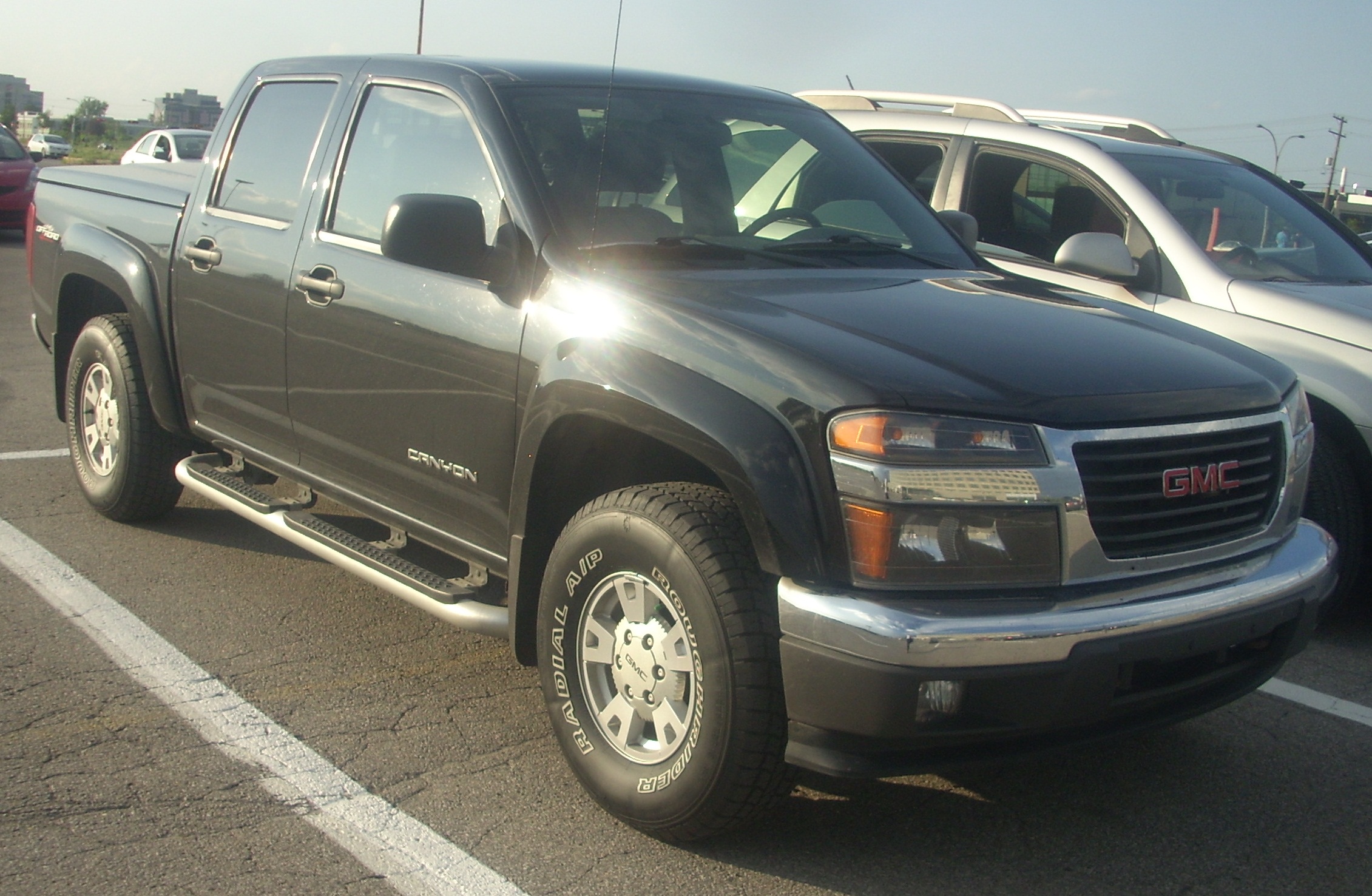
"Pretty good. Uh, 2018 GMC Canyon, 23,000 miles on and about, uh, this screen on t..."
The GMC Canyon Crew Cab is a medium-sized truck that can carry people and cargo easily. The 2018 version is known for being comfortable inside and having good technology features, making it great for both work and everyday use. It's also good for towing and off-roading if you need that kind of capability.
The GMC Canyon Crew Cab is a midsize pickup truck that offers a balance of utility and comfort, making it suitable for both work and everyday driving. The 2018 model is appreciated for its spacious interior and advanced technology features, appealing to those who need a versatile vehicle. It stands out for its towing capacity and off-road capabilities.
Select text to request an explanation
Hey, welcome to the end of the hood show podcast.
I am Russ Evans along with Shannon Nordstrom and Chris.
He's playing hooky for a good reason.
It's just me and just Shannon.
And we're going to talk cars like we always do.
And as usual, Under the Hood is brought to you
by Berkeley One Classics, your key to collector car insurance
celebrating 50 years in business.
And by car-part.com, over 200 million recycled originally
climate use parts ready to ship to you fast.
And by roadreadywheels.com, use the code hoodie to save even
more on your aftermarket OEM lookalike wheels.
Now, here's the podcast.
This is Under the Hood.
Welcome back to the Under the Hood show.
I am Russ Evans along with Shannon Nordstrom.
Welcome, hoodies.
Thanks for tuning in so we can help you tune up.
You can reach us today and get your car questions answered
for free, 866-594-4150.
We'd be glad to help you out.
So, Mr. Nordstrom, don't Chris today.
That's all right.
It's always more fun with Chris.
It is, it is.
Well, we miss him.
Like I said, we're setting the last show.
We're gonna have to get him a personal masseuse.
If we get like big money out of this deal someday,
we're gonna have somebody just follow him around
and be his handler, just keep his back feeling good.
That would be good for him, wouldn't it?
Yeah, he'd be up for that, I think,
and he's sitting there right now.
I don't know, do you think he would pick a show car
or a masseuse?
Today, the masseuse.
Because he can't drive the car very well today,
so I'm thinking he'd go for that.
But this afternoon, he'd be back to the car thing again.
I need that car.
Hopefully he can get that little twin straightened out
so he can get back with us here again.
Right now, we're going to call Adrian in Kansas.
We're gonna call him, we're gonna get him.
He's called, it's phoned, it's right there.
Anyways, hi, Adrian, how you doing?
I'm glad you took my call there, I appreciate that.
Try to be real quick as possible here.
I got an O3 Dodge pickup that it started struggling
at a stoplight.
I mean, when you go to take off,
it would, the first 10 or 20 feet,
you really had to put your foot in it and it wouldn't,
it just barely moved and all of a sudden, it would lunge.
Then all of a sudden, it would lunge
and take off and run fine.
Well, then it got worse
and then all of a sudden, it wouldn't start.
So you wait about an hour and it would start.
So I've taken it to about three or four different shops.
Each shop has charged me for a fuel pump,
they've charged me, they've changed out the crank sensor,
they've changed out all they've gotten into the injector
or whatever.
Anyway, the problem is right now,
it runs fine when it runs and you can shut it off
that periodically about every half dozen times,
you shut it off and then you gotta let it sit
for about an hour.
It'll crank over, but it'll, you know,
if you got out and got some starting fluid
and tried to start it, it would turn over, you know,
and they've changed the fuel pump twice.
Starting fluid will fire it up every time?
Yeah, yeah.
Okay.
Well, then let's go ahead.
I have seen injector issues with these trucks.
As they get older, they can stick, you shut them down
and there's wet fuel in there, you shut it down, it's hot.
They tend to stick as the body of that injector
changes a little bit and then they have to completely cool
in order to restart.
There's some ignition things that can do the same symptoms
if you're listening out there and you've got an ignition
issue where starting fluid doesn't help it,
but when the starting fluid kicks it off,
I mean, injectors, that's one thing.
The other thing you wanna look at is,
I would have a scan tool plugged into it.
When I shut it off, I wanna read what the engine temperature
is and the intake air temperature sensor
and make sure they're correct.
If I know the engines at 200 degrees,
does my engine coolant temperature read the same?
If it reads hotter or colder by a significant amount,
it will not start very easily.
That can make it difficult.
The other thing you might try is to hold the accelerator
pedal all the way to the floor, crank the vehicle
and then as you're cranking it, let it up completely.
Typically that shuts the injectors off
and clears the fuel out for a flood mode
like an old choked vehicle with a choking on a carburetor,
but what it'll also do is put it
into open loop mode for a second
and then it goes back to close just for a second
and put some gas in it when you let up on it
and goes back to normal.
If that kicks off like that, it's gonna indicate
that you've got a sensor issue going on in there somewhere.
Yeah.
Might even be a map sensor issue.
Yeah, they said that the last time I talked to them,
they said they changed out a module.
I guess it has something.
And they said on the indicator that they have
that it shows that it was up and down
and the fluctuation of the, I don't know if it's a fuel map
or what is going on there.
But yeah, the thing, if you let it sit, when it won't start,
if you let it sit for 30 minutes to an hour,
it'll start up like nothing's happened.
But it only does that about every five or 10 times.
That's the hardest part.
When you can't go into a shop and tell them
it's gonna do this every single time.
I've got one in the shop right now, they brought it in
and they said, yeah, it's doing it all the time.
And I haven't got it to do it once.
I know.
Three days with all my equipment hooked up
and it's not acting up.
But we got an idea, we think we know what it is
because we think it's something different
than the way we received the description of it.
Because sometimes, you know, if you tell a person,
oh, my car does this, well, in their head,
this means what it's doing.
Whereas we would describe it a completely different way.
When a person-
Yeah, well, like I said before,
before when it would act like it was trying to stall
or to stop light or you'd go to take off
and it wouldn't, it kind of sluggish,
that's when away, you know,
when they changed the fuel pump
or whatever else they did, you know, that's when away.
But now it's turned into this issue
and it went right into this issue after the,
but now, you know, once you get it going,
it runs like it wants to go down the drag strip,
you know, it runs good, you know.
I think that since he hasn't been able to figure this out
and I'm going to roll the diagnostic dice.
He's been playing parts darts.
They've been putting lots of parts on it and given ideas.
How much money have you spent?
I feel bad.
1,000, 1,500 between the three different places.
Has anybody had it fail while it's there?
Yes.
And they were able to capture some data or not?
No, no, the only thing they said bank,
seems like they said bank two or if I remember right,
that showed a code, a fault code or something like that.
But yeah, I took it to the shop and said,
hey, it's been working fine, blah, blah, blah.
We walked out there and talked a little bit
and I got in the truck and it wouldn't start.
It just sat there and crank over and it's like,
wait a minute.
Oh, he should have ran inside and grabbed his scanner
right then.
Yep, for sure.
I'm going to roll the diagnostic dice, Rush.
It says, well, I know it's not that
because it's an O3, it said distributor cap.
Let's see.
We've got ignition coil, no?
No, because he's putting fuel in it.
It's got to be a fuel one.
Yeah, no, diagnostic dice slide this time, the dice slide.
We nailed that other one though, new transmission.
They tried two different crank sensors.
They've tried two different fuel pumps.
Oh boy, it's like, yeah.
Well, they're, there's going to be a point
where it's going to do it and stay like that, unfortunately.
Yeah, yeah, yeah.
Well, I haven't had the hiccups been gone
for at least a month.
It's not longer, you know, and one of these days
I'm going to call and let you all know what it is.
Do it.
Don't spend any more money unless it fails more frequently
and they really feel like they've got a beat on it.
Thanks, Adrian.
I'm right.
Take care.
Right, thank you for your time.
866-594-4150, that's how you call under the hood.
And we're going to talk to John in Indiana with an O5 BMW.
Hello, John.
Tell us about your O5 BMW 330i.
I love this car.
I have 270 some thousand miles on it.
And I've spent a lot of money in cutting out rust.
When I have a great, I have a great mechanic
who's taken really good care of me.
And it's now a second generation owner and son
is the chip off the old block of the old man.
And anyhow, I recently was surprised by not being able
to generate any power above 4,000 RPM.
And I found that merging onto a four lane highway
where I really needed to get going in a hurry.
And it started sputtering at about 4,200 RPM.
And, you know, I'm looking in the rear view mirror
and a lot of trucks coming down.
Cause for a lot of concern.
Anyhow, I took it in and the guys checked it out
and told me my primary catalytic converters
were shot as well as the secondary.
And that I needed to replace them both.
And the cost for OEM equipment is an eye-popping 10 grand.
And my question to you is they did offer me an aftermarket,
but they could not warranty it.
Them, they themselves couldn't warranty any part of it.
And they said it had a very limited warranty,
but I had to foot the bill for all installation costs
and so forth.
But it was a, excuse me here.
I'll move out of the dogs domain.
And any rate.
The dog's just mad about the price.
So how much was that aftermarket price?
It was $5,700.
That's still a lot of money.
That's a lot of money for converters.
Now, how many miles are on this again?
200 and something?
270.
Yeah, I'm concerned that the converters all failed
because the engine's burning oil.
Is it using any oil?
No.
Oh good, because if it was using oil or coolant,
you're going to buy new converters again.
So that's the first step.
We check to make sure there's no coolant use,
no use of oil.
And then as soon as the converters are on,
we're going to check the fuel trims
and make sure they're near zero.
So we don't have a rich condition or a lean condition.
If we do, we want to fix that,
whether it's injector sticking or what,
they check all that.
They mentioned that, the mechanic mentioned that
as a potential downstream problem.
He says that when you get an OEM unit
or anything, he says that they'll not warranty
something like an injector failure
that would burn out the catalytic converter.
So they were upfront with me about that.
And they're good enough, these guys are good enough
that I think they would be on to checking those things.
But I don't know how to anticipate
something like that happening.
I'm going to replace the thing.
I'm going to bite the bullet on the expense
and I've chosen the OEM.
John, I got a thought for you here.
Before you spend that money,
maybe I missed this in what you guys
were going back and forth on.
Make sure that they do just basically a flow test
on making sure that they,
they could pull the O2 sensors out
and just see if that problem goes away
so that you actually have the power
is going to be loud and obnoxious.
I don't know how tight of an area is
if there's going to be a heat issue,
if you burn something, we got to be careful.
But they can find out if that does make it run right.
And like I said, they sound like they're good people
and you trust them,
but you kind of want to make sure
before you spend that kind of money.
The other thing I'm going to get on
a little bit of a soapbox here
is that just came back from a strategic advisory council
for the automotive recycling industry.
I'm the president of that group.
It's been around since 1943.
And I know that one of the things
that we are pushing hard on is to get the code changed
that the ruling that was made at one time
that said you cannot reuse a-
Right.
Recycled, used, catalytic converter.
It's just, it's the craziest thing
since the cars began to be able to test themselves.
It's, you put it on and if it works, it works.
And if it doesn't, you get another one.
You know, in a state that has emissions testing,
if you put it on and it doesn't pass the test,
guess what?
It's not good.
You don't get to use it.
So we're working on that right now.
It's going to take a bit.
We feel like we've got an audience now
that we can have to work on that.
It's not like we're trying to do anything.
We're trying to use the original equipment manufacturers part
and put it back on another car.
And what happens because of that?
We get clean emissions.
And that's the goal of a catalytic converter
is to have clean emissions.
So we want to help with that and also help people like you
that, John, that's crazy money.
I mean, I know you're in love with that car,
but that is crazy money.
Even for the aftermarket, that sounds like a lot of money.
Yeah, you should be able to pick that up
at a recycling facility.
You know, if we had something like that
and we're allowed to sell it, it might be, you know,
at that price, it could be 2,000 bucks.
But still 2,000 compared to that.
And you get it.
You get the same warranty as you would on the cheap aftermarket.
I do.
Yeah, I went on.
I went online and saw the saw the units.
And I mean, they're these are the catalytic converters
that are in the headers.
Yep.
And they were they were relatively inexpensive.
But my mechanic said they can't they can't do it.
They'll get in trouble.
Yep.
Right.
And so they said, if you find somebody to do it,
well, I'm not going to I don't want to go do that.
I trust these guys.
They've done a good job for me over years.
Well, here's the thing.
Russ would give you the same answer.
Well, yeah, a shop, you can put a used converter on it.
There's no law that says we can't put a used converter on it.
As long as it works, right, we just can't buy one.
We can't purchase it from a recycling facility.
That's the problem.
So we can't take it off or cut it off and leave it off
because that's under the rules of defeating any mission's device.
But if we're not defeating it, we're fine.
You bring in one of the bad one and say, I've got this one off my other car
that I scrapped a year ago.
All right, we'll put that on, you know, we're we're not defeating the emissions.
I've got a friend of mine that I met.
I literally just talked to him a half hour before the show started.
And he's developed one of the only companies in the country.
I think there's another one working on it now, but one of the only companies
in the country that actually has a testing facility they've created
that meets the muster of what the EPA has signaled is correct.
And so they sell a reef, I want to call refurbished, but a tested
with a badge welded to it, a used converter.
And this model is quite unique, but I'd be interested to contact them
and see if they have that.
If not, I might have an idea.
I'm going to have producer Doug take your phone number.
And OK, I'm going to just going to check on something and see if I can help you.
And so we'll all right that we'll get you.
I'm going to have you talk to somebody and we'll see if we can help you with something.
All right, I would appreciate that very much.
And my mechanics open to that that the old man was, I mean, he would he would pull
stuff out of recs, you know, computers and stuff like that.
And the cost was so much lower.
He said, if this if this one fails, you're still ahead.
If you've got to buy two or three more.
Yeah, exactly right.
And your car is special to you and you want to keep it running.
So let's see if we can help you do that.
I appreciate that, fellas.
Thank you.
So the two things I'm coming away with is to ask him to check that they check
the O2 flow or check pull the O2 sensors and then see if it runs better.
Right.
The other thing is that if we can find a place that can provide me,
I'll buy the used converter and then give it to my mechanic, what they put it on.
Right.
That's that's what I'm coming away with.
Great. I'll look forward to hearing from your guy.
Thank you. Sounds good.
Yeah, with with catalytic converters, you need to check back pressure.
That's that's easy.
You pull out the front.
O2 is the one's closest to the engine because there's no there's no restriction.
You're going from the engine to the converter.
So you want the O2 that's between those two.
You pull those out there like spark plugs, and then you put a gauge in there
and it manually checks.
You got to do a manual physical check of the back pressure.
How much pressure do we have?
Should be like near zero.
If you're holding it a steady 2000 RPM on a warmed up car,
we see less than a half a pound.
But when you have a failed one there, usually when they're failed enough
that they're causing the car to run poorly, we see them at four to five,
maybe nine, 10 pounds up and we're like, well, that's too much.
So at that point, then we've got to, you know, we're taking it off.
We're getting a camera in there.
We're looking at it to see if the secondary converters are plugged up as well.
A lot of times it's just the front ones and not the back ones.
And sometimes though, like in these European cars, they're all welded
and built in one big contraption.
Yep.
So you, you, you can't, you've got to replace them, you know, as one unit
or left side or right side, but you want to verify for a fact that they're bad
because if you go just replacing them, well, what if you didn't need to?
And also while you're doing this diagnostic test, you need to find out,
are we burning oil?
Are we burning coolant?
It's like, well, how do I know?
Are you losing any coolant?
Is it stayed exactly the same line cold when you started every morning?
Exactly.
And because it won't evaporate and does the oil stay exactly where it's at
through the 3000 mile oil change or five, whatever you're doing.
If you're saying, oh, well, I put about a quart and a half oil in every time.
Well, that's probably what happened to your, your, your engine.
You know, you, you were burning oil and that was causing your, your problem.
And you don't want that.
Antifreeze is even worse than oil.
Oil turns to soot and carbon and builds up slowly, plugs it up, but coolant,
that gets in there.
You got a hot converter that's, you know, 1000 degrees and you drop cold,
you know, are cooling into it and it's steam and it'll, it'll crack that
thing and damage it and it'll break up pretty quick.
The end of the hood show podcast is brought to you by exclusive sponsors
like Berkeley one classics, celebrating 50 years, your key to collector car
insurance and by car dash part.com with over 200 million parts.
Find them online at car dash part.com and by road ready wheels, OEM replica
wheels at a huge savings road ready wheels.com.
Thanks for listening to the under the hood show podcast.
What would your vehicle be without wheels?
Our partner at road ready wheels has wheels, thousands of wheels, affordable
in stock and ready to ship to you.
Replace or upgrade your damage or plain steel factory wheels with new OEM
looking road ready wheels.
Maybe steel is the way to go for you to mount a second set of winter tires or
you just don't like the aluminum look.
Road ready wheels has many choices for you.
Go to road ready wheels.com and use their online vehicle selection tool to
help you find the wheels that fit your vehicle.
Mercedes Cadillac Ford Chevy Chrysler and many more with the OEM fit and look
that you want.
Save 10% at checkout when you use the code hoodie for being a loyal under the
hood show listener.
New OEM wheels can be expensive with some wheels that cost 500 or more from the
dealer. Many of those from road ready wheels are about half of that saving you
some serious cash.
Use your factory TPMS sensors and caps to go to road ready wheels.com to find
out more. That's road ready wheels.com.
If you need parts, whether it be for a brand new car or going back about 20
years, it doesn't matter.
Check out car-part.com.
It's fast and it's easy.
Over 200 million parts strong all across North America.
Over 4,000 recyclers to choose from, giving you the largest selection available.
Whether it's an engine, transmission, doors, seats or wheels, you can find them
on car-part.com.
We even let you know what parts from other models and years fit your car.
Many recyclers supply pictures of their parts too.
We even have a mobile app.
Search US and Canada or buy from your local independent recycler.
Whichever you choose, buying recycled is good for the environment and good for
your wallet. If you're a repair shop, there is a professional version available
for you at no charge.
That's car-part.com.
Car-part.com.
Check it out today.
I'm Russ Evans with Shannon Nordstrom and Chris Carter.
When we needed protection for our own personal collectibles and performance
vehicles, we turned to Berkeley One Classics and here's why.
Berkeley One Classics has over 50 years experience and they're dedicated to
serving their customers.
They will work with you to help determine the amount of coverage a vehicle like
yours should have.
And that coverage is agreed-valued coverage.
So there is no disagreement on what your vehicle is covered for.
They also have discounts for car club members.
Berkeley Classics ensures a wide range of vehicles from sports cars and rare
exotic cars to antique vehicles including cars, trucks, tractors, military
vehicles and antique motorcycles.
Over 50,000 of them a year.
Visit BerkeleyClassics.com today and get a free quote and find out first hand
what they can save you and how well they can cover your valuable investment.
It takes just a few minutes using their easy online quote tool on their website.
Visit BerkeleyClassics.com.
That's BerkeleyClassics.com.
Our call 800-603-3330.
That's 800-603-3330.
Welcome back everybody.
It's time to get back under the hood with the motor medics.
866-594-4150.
I'm Russ Evans along with Shannon Nordstrom and Patrick with a 25 Nissan Rogue.
How you doing Patrick?
Not too bad guys y'all.
Very well, very well, but how about the Rogue?
How's it doing?
Well, I've been in it for just shy of a month now, long-term corporate rental.
And this one has been pretty good until last night.
Uh-oh.
Yep.
It's definitely electronic thing.
Um, so last night I got in the car and the date and time had changed themselves.
It had gone to 2001 for the year and the time was showing like 3, 3.30 a.m.
It was nine o'clock in the evening.
Um, didn't really think much of it.
It's no battery issue.
You know, started just fine.
Then this morning when I went to leave the hotel, the, um, you know, auto start didn't
want to work.
I get in the car and it's showing four o'clock in the morning, but now it's saying 2052.
So not even a consistent, just like hard reset to the earliest date like most resets do.
So it just kind of threw me for a loop and this is going to be the fourth rental from
Enterprise that I'm returning with.
What the heck guys?
Well, have you noticed any major changes in your hairline or maybe your, your, your
physical fitness between these date changes?
Has anything physically changed with you?
You think he's been parking by a nuclear power plant?
What do you do for a living?
Oh, I'm a nuclear specialist.
Uh, I park inside.
Some sort of time continuum continuum going on here.
I don't know.
We're a little nervous about this too.
Oh, that's right.
No, well, last night it was in Brookings and this morning it was right by the airport to
fall.
So I'm not even a locational, uh, consistency.
Yeah.
Cause we have had some people call us in front of the last 20 days, we have had some people
call with certain trucks that have had problems at certain gas stations.
Yeah.
And so we, there is things like that that are location based that have happened weird.
We've had, had, uh, found out about, but this is, uh, this is something different.
That's weird.
Well, I think, I think for sure something, something is wrong with the radio because
even if you kill the power to it and hook it back up, it will, you know, it can, it
can lose the station presets, but it's not going to change the time the way that thing
has changed the time.
It's not going to switch from 24 hour time to 12 hour time.
So you've definitely got a problem in the radio.
If it doesn't have a check engine light, well, in all the stations are there,
you know, like everything's normal for now, the auto start does not consistently work.
That's the only thing that's consistently interesting.
Well, if you don't have a check engine light on, then the other thing that could be
causing this would be that radio corrupting the data line.
So if you've got a problem with the data on that radio, the way it's acting it, you
could definitely have an issue with that can bus that the radio is corrupting it,
shorting it or adding power to it, but 12 volts.
Uh, so I think the radio is just shot and we see so many radios are just, they're
almost junk these days.
We see so many that fail.
And, and I'm talking to newer ones like 2019 and 20 on up.
They're just not made good quality.
I see as many, it's almost as bad as that old Takata airbag recall.
There was a, you put one in and it was bad, then they recall it, put another one in.
Well, that one's bad too.
Now he needs to be recalled with these radios.
I've seen people put three or four radios in cars under warranty.
And then they're saying, well, what do I do when it's broken again in another six
months and it's out of warranty?
Well, you're going to have to buy one.
It's like, I'm not going to buy one that's broken.
Maybe I'll buy one.
If you give me one with a five year warranty on it so I can have some confidence
that it's not going to break again, but they're just not, they're just not putting
the quality into those that they used to.
And nobody's going to take any accountability for it.
They're just saying, well, as long as it makes it out of our warranty, we don't care.
It's sad, that's the way it is.
And like the gentleman earlier with the, all the, everything being integrated
into all right, it's a, I won't buy anything newer than 2018 personally anymore.
Yeah.
You just not willing to, it makes it very difficult when everything's integrated
like that to do anything.
You can't, if it goes out, we have people that say, well, my radio went out, my Jeep.
Okay.
Well, they're like, I don't want to spend $1,500 of the dealer to have it replaced.
Well, I don't blame you, but if I don't replace it, I don't have any, I can't
adjust my heat, my heated seats, my dash defrost, nothing can be adjusted
because it's not on the, the screen.
Well, the default when it's broken is supposed to default to the windshield
to keep it clean, but guess what these don't, there's no way to adjust it.
Wherever it broke, that's where it's going to stay.
So in that case, they could pull the old safety recall thing and force them to fix it.
You get the highway traffic safety people into it.
Nope, they'll pull a recall because that is a safety concern.
But for everybody else, it just doesn't have the convenience of turning their
seat heaters on or playing their favorite station.
They're just out of luck, unfortunately.
And that's where I know a lot of times yours is going to be under warranty yet
with the rental, they're going to go back to the company and obviously get it
taken care of most likely, but the others that are out there for some of these
situations, car dash part becomes a great resource and you can get another unit
at a use price.
Now you just want to make sure it's got a good warranty on it because it, it can
break just like a new one can, but we do have a good success replacing radios.
And sometimes we get one that we take it out and we can see it's been
replaced once already and it's a fresh reload, but car dash part is a place
people can locate some of those components.
Like earlier, that person that called with the Honda pilot, I'm sure they could
find another used one on there pretty not going to say easily.
And the market will dictate what the price is based on demand for sure.
Thanks for the call, Patrick.
Well, thank you.
866-594-415.
Oh, the end of the hood show is brought to you by Berkeley.
One classic celebrating 50 years of collector car coverage and Universal
Technical Institute, UTI.edu.
Check them out.
They're giving out campuses all over the country.
Now they're opening new ones all the time.
They just opened another couple and you can get into all sorts of them.
We've had a couple of listeners get a hold of us and let us know that
they have either gone there or they're planning on going there.
And they were really impressed with what they saw.
UTI.edu.
We're going to jump over and we're going to talk to Bill with a 98 Chevy truck.
Hey, I got a 98 Chevy one ton with a 454 in it.
When I bought the thing like three years ago, the guy told me it had a vacuum.
Okay.
Well, I've traced around on it and I did find one, but what it does, when you
first started, it runs decent, but then it starts surging back and forth and it
starts running bad and they'll even backfire.
So what I did was here a few weeks ago, I pulled all the spark plugs out of it and
the right bank were all black.
The left bank were fine.
So I pulled the intake and the top part of the intake on it.
And there was raw fuel in the valley.
So I went ahead and I was like, well, it's the injector.
So I changed injectors and the spark plugs in it and it's still done.
So I thought, well, I talked to a friend of mine.
He said it might be O2 sensors.
So I put O2 sensors in it and I've cleaned the math air flow sensor, but it
still does it when it's really cold and you start it, it runs decent run real
good for just a little bit, but then it starts it's doing what it does.
Hmm.
Does that one still have the EGR on it on that 98?
Yeah.
Yes, sir.
Because the EGR on these caused all sorts of issues.
The ones that do it, some have it, some don't, depending on the, the GVW of the,
of the truck, but with that big block in there, the ones that do the valves tend
to clog up sometimes the vent on it that were the pintle vents.
And then the solenoid, the controls that would hang up and wouldn't vent off either.
So it would open that valve slightly and cause it to run poorly when the valve
shouldn't be open.
It should only be open at higher loads and higher RPMs to flow that exhaust
through there and keep cylinder temps down and things like that to control emissions.
But yeah, it's just hard to say other than that.
But so you had, are you still getting raw fuel in the valley of that truck?
Well, I don't know.
I haven't worked back down, but do you, do you, are you smelling raw fuel?
Yes, you can smell, you can smell it.
If you can smell it, it's probably leaking and the line set where they connect
in the back of that fuel rail, they had a huge problem with those leaking.
We replaced a lot of line sets on those.
I don't even know if they sell them anymore, but they did.
And we put on, and I know personally, I put on at least a dozen of them over
the years because they would get little pinholes in them or they would seep
around where the metal fuel rail connected to the plastic part of the line.
And it would, it would seep there.
So they made some repair kits too.
You could use to press that line on there and, and the raw fuel was just on, on the
right side, just on one side.
And that could be coming out of either coming out of a seal on the, where
the injector meets the rail, the rail could be cracked or the injector could be bad.
And either one of, any one of those things, if it's got any kind of leak at
all, it could cause it to run poorly.
Is there any chance of fuel pressure regulator, Russ?
Is there a, is there a pressure regulator on that system yet in 98 that could be
caused a problem?
But if that would affect one side, so all four of the spark plugs are wet.
No, they're just black.
Black.
Well, they did check for spark on them and they do have sparks all four.
Okay.
Um, yeah, all four black on one side.
Now that can also be caused by a, a bad oxygen sensor.
One bad oxygen sensor on one side is going to make it run horribly.
And it's going to cause, you know, either a lot of fuel or no fuel.
So it's either super rich or super lean on that one side.
That wouldn't equate for, oh yeah, just on, just on one side.
It could do that.
If you've got 98 should have two sensors up there, one on each bank on a 98.
And I think it's just got one downstream of bank, you know, the downstream
Oh, two, at least just got one upstream and one downstream.
It just has the one on the one side on the driver side.
Okay.
Then it's got heavy duty emissions.
So no, that wouldn't affect that at all.
That's got to either be an issue with vacuum or a fuel issue like an injector on
there, but I would, you know, if you've got the leak, I would first look and find
out where that leaks coming from.
And hopefully fixing that leak fixes this other problem.
If it's not a line, if it's something coming out of injector, that could be
causing it by itself.
So I'll put all new injectors in it.
Then you shouldn't have an injector leaking.
Again, you need to find that leak.
You need to pull that intake and find out where that leaks at.
And because if you've got a leak, that's a great indicator that you've got a,
you know, something causing something going on.
And it's a lot of times when we fix one problem like that, it cures all our other
problems.
So we would start with that.
Okay.
Let me, let me ask you this.
If I pull the top of that intake off cause them injectors underneath of plenty of
them, and I turned the key on, will that show me where the leak is?
Well, it'll pressurize the system for a couple of seconds.
Then you can shut the key off for a few seconds, try it again and do that a few
times and keep your eye on it with flashlight and see where you see that
leak at.
That would be a great way to, to try to discover where that leaks at.
And then you can address it from there.
Okay.
I was sure hoping for an easy fix.
Well, taking that intake off is not an easy fix, but you guys got to do what
you got to do.
No, that's a lot of fun.
Thanks, Bill.
But I, okay, thank you guys.
I bet.
Take care.
We're going to jump over to Minnesota and talk to Roger with a 99 Mazda.
How you doing, Roger?
Good.
Good.
Thanks for taking my call.
This one's a little bit off the wall, maybe from normal calls, but it's a 99
Mazda Miata and it's a race car.
And, um, my questions is about air fuel mixture.
So the, it's basically a totally stock car with the exception of it's running a
38 millimeter restrictor and I do have an adjustable timing plate on it and
adjustable fuel pressure regulator.
Um, the other, I did some work on the engine and I took it over to the dyno a
couple of weeks ago and, um, I saw some results I didn't really expect.
And that is that, um, uh, we're trying to tune in the air fuel mixture on it.
And, um, we ended up at 59 pounds.
Well, sorry, we ended up anyway.
And at the lower RPMs, like at 2000 RPMs, we had maybe around 14 for the air
fuel mixture and, uh, the 59 pounds.
And by the time we got up to 7,000 full load on the car, we were down to 48, uh,
pounds pressure on the fuel and, um, in the, but the air fuel was down around 12.
So it was getting richer.
Um, and the reason I'm calling, I guess, is that, uh, earlier in the show, you
said that, uh, one of your callers, you said that you, um, put in a pressure
gauge on the car and then you take it out to a drive for a drive.
And when you got a heavy load on it, if you saw the fuel pressure drop, uh, it
would, uh, mean that it needs a new, likely you need a new fuel pump and, but
my question, are you real?
Yeah, exactly.
So, well, my real question is because my, it's getting richer and richer, even
though the fuel pressure is dropping, uh, I, that shouldn't indicate anything weird,
right?
Right.
Because drop, what's your look at yours is getting richer as the fuel
pressure is dropping just a little bit.
That's not much of a pressure drop for that kind of car and what you're
doing with the performance.
Uh, but if you, I'd be worried if you were get running lean, I'd
say we need more pressure if we're running lean at that, but it sounds like
it's just a, it's a tuning issue.
They need to do it electronically.
The fuel delivery at wide open throttle is, is wrong.
They need to adjust it.
It should, and they can do that easily.
They'll look at the fuel map and say, okay, the O2 sensor gets richer at this,
the RPM and this load, we need to lean it out.
We need to tell the computer when I'm at this load and this RPM, we want
to back that off a couple of points to, to lean it down until you're, you know,
closer to that 14, seven to one.
So I think that's what's going on.
Is there just, just need a little more fine tuning, but you're not far off.
So I think you're, I think you're on the right track.
Okay.
Yeah, that, that's good.
And that's what I kind of thought.
The, the rules don't allow you to mess with the, uh, ECU.
Yeah, but, and so it's kind of, those are, those you got timing and fuel
pressures, basically all you have.
Okay.
Then you're, you're kind of maxed out.
Yeah.
Yeah.
And that's, I've just wanted to, it was just more of a sanity check that I'm not
missing something here because I thought with, you know, maxing out the fuel
pressure and still getting richer, I'm okay.
Yeah.
I think you're right on.
Thanks for the call, Roger.
Okay.
Very good.
Thank you.
This is the end of the hood show.
We're going to take a quick break and we'll be back in just a second.
Welcome back to the end of the hood show, eight, six, six, five, nine, four, four,
one, five, oh, we're going to go right back to the phones and talk to Joe in
New Jersey with an escalate.
How are you doing, Joe?
Good.
How are you guys doing today?
Very well.
Thank you.
So I had a 2020 Cadillac escalate.
It's got about 75,000 miles on it.
Um, it's got the six two with the 10 speed and I was looking to do a transmission
service.
Um, so do you guys recommend flushing it?
Do you guys recommend just like a drop in fill and what fluid should be used in that?
Complete flush and refill on that where you hook the machine up, you flush it all
out, clean it out, make sure the fluid's not too dark or it's, it's too late to flush.
If it's just a dark, you know, reddish orange color, you're still good.
If it's black, you just want to leave it and start budgeting for a transmission
because it's probably going to stop moving if you put it in.
And we've had a lot of problems with those transmissions.
So you want to get those serviced earlier if you own one of those.
I think he's in a good spot though.
If it's working good, he's at 70,000 miles.
You're doing the right thing.
Um, I use.
Sure.
On those, uh, when we flush those out, we either use a Schaefer fluid or the
valvaline fluid that's made for these vehicles.
It's a higher end fluid than the factory, uh, Dextron that they sell for it.
It tries to, it works really well when you're trying to.
Prevent the chattering and shaking and things that a lot of these transmissions
have had, uh, once they've already done it and it's in bad shape, there's nothing
you can do by changing the fluid, but it's helps to prevent that from happening
in the first place and, and keep some running longer.
So yeah, we would do the complete flush on it.
And is that that you will be fluid?
Yeah, it, well, you got to go by what's on that vehicle.
I believe that one is the, is the ULV, which you've, you've got to only go
with what is recommended from the factory, whether it be the valvaline or the
Schaefer's or any of the aftermarket ones like that.
It's got to meet the factory specs, um, for whether it's ULV or LV, it's
got to meet those minimum and, you know, and on up.
And how, how would I figure out what's in it?
Uh, you need to do some factory service manual.
Yep.
Consult the factory service manual on that.
And they'll be able to tell you to, they'll be able to tell you at the
parts store, if you call, um, a parts, sorry, you call, call advanced auto.
Uh, they'll, they'll be able to tell you, Hey, I need to buy fluid for this
escalate.
What does it take?
And they can pull it up on their screen and it'll show you what it takes.
They're subscribed to the factory manual.
So they know that's how they can sell that stuff easier.
Cause they'd be, they'd be, they'd be wrong if they didn't know.
Yeah.
Would you guys recommend changing the filter as well?
We never change the filters.
The pressures will tell us when we hook up the machine to it.
And I've never had one that was, was plugged.
It's a lot of them just use screens now and in a lot of transmissions because
they, it's only catching metal filings that would come out to prevent
failure of the transmission.
If you got a clogged filter, you got a transmission that's burned up.
It's a lot of filter area in there.
Sounds good.
All right.
Take care.
It'll help.
We're going to talk to Joe with an 18 Canyon.
How are you doing, Joe?
Hello.
How are you gentlemen doing?
Thanks for taking my call.
Pretty good.
Uh, 2018 GMC Canyon, 23,000 miles on and about, uh, this
screen on the right hand side of my dash seems to want to just move around.
It's clicking as if I'm touching it.
I'm not, have you guys heard of anything like that?
It keeps changing the radio station.
It keeps changing the settings in my dash also by the steering wheel.
Yeah.
So on that screen, if the screen itself is you have normally have to touch
that screen to make it activate.
If it's doing that by itself, it needs a new screen.
That's what there's a problem with that.
Yeah.
And a lot of times, you know, if it's, and there's settings on there that you
can activate from the radio to change dash settings and things like that.
That's a problem.
They call that a, uh, that, that haptic feedback user interface.
I don't know.
They just call it a U UI something.
Anyways, that, that user interface there, when the screens go bad, they just, they'll
pick up static or whatever and they'll start doing weird stuff.
Like a ghost is pushing buttons.
So we say that at Ford's are horrible about that, but we've seen them in the
canyons a lot too.
They've got to be replaced.
Well, you have, you have, well, you have seen that.
Oh yeah.
I suppose I'll be making a call to North or for news use.
Well, you could pick up a use when we'd appreciate that.
Check it out.
All right.
This has been the end of the hood show.
Thank you very much.
Oh, and we're back.
Here we are.
See how fast that was as quick.
Yeah, it was fat.
Let's, uh, we still got, we still got callers here.
So we're going to jump on and just keep going here for a bit and we'll take what
we got as far as calls.
If you still call in, we'll use it in a, another show at some point, but for
right now, we're going to still try to help you with your calls here.
Pat, what do you got for your 20 F 150?
Uh, 2020 F 150, 5.0 coyote.
Automatic 132,000 miles.
Um, it hesitates when I take off and you get into the gas, there'll be a two or
three second hesitation before it'll power up intermittently.
Oh, no.
Good luck with that.
If it's, if it's doing it all the time, you could point towards something like a
thing's like that, but if it's, if it only does it every once in a while,
that's bad, that's bad karma.
Once every week, I know once every week or two, something like that.
So does it have anything to do with the adaptive learning tables for the
transmission?
No, it's just to do with the, not the software.
Well, when you say it hesitates before it takes off, it loses engine power or it
loses, won't pull transmission, don't move.
It just, it doesn't, it doesn't rev up.
Okay.
Doesn't rev up.
That's not, that's not transmission.
Yeah.
Yeah.
I didn't think so, but, uh,
I wish your intermittent problem was not, not every two weeks.
If it, if it was doing it, you know, every 10th start, I mean, you could take it out
on a, on a test drive and hopefully replicate it with the equipment on it and
see what went away.
And like Russ was just saying, you know, you're, you're pretty clear that it's a
engine, not accelerating issue, not a transmission, not propelling issue.
And so you got to figure out, of course, what's, what's it missing at that time?
Why is it doing that?
I mean, that's why you called us.
I understand that, but boy, that is, that is, you know, not that we can't figure
out intermittent problems, but most people aren't willing to stay the course and
the bill that's connected when you have to start driving something.
Any, any, any suggestions on what I could look into.
I mean, I've got, uh, I've got shareware monitoring software.
It works pretty well.
I don't know if you guys want me to say the name on the radio or not.
We don't mind.
What is it?
What do you have?
Uh, horse scan.
I've seen that online.
Yeah.
So we're, uh, I like it.
I've been using it for a long time.
No codes at all.
Uh, it's through, I changed the PCV valve, a couple thousand miles ago, and it
threw a misfire on number eight code right after that.
But I think I might have had a, a vacuum week when I did that.
Okay.
So it did it once, I cleared the code and never happened again.
Okay.
Yeah.
Then yeah, I don't get, I don't get any codes.
You're probably going to have to wait until it gets worse until something
breaks or it's doing it all the time where it can be checked.
It's just one of those things where it's, you know, I guess I've said before I
run into a problem in my truck where it would only do it, you know, every, maybe
every couple of weeks it would act up and it did that for, I don't know, five
years or whatever.
And I finally was able to catch it when it would do it every few days.
And then I did some looking, but it's, uh, even for a good mechanic.
It's something you can't always find.
Have you had your monitoring software on there when it happened?
No, I haven't.
Okay.
And see, that's the same challenge that I didn't have any.
A professional is going to have, you know, it's just, it's just the timing of it.
It's just crazy.
I know where you're going.
Can I ask one more question about that truck?
Yes, most definitely.
What do you think of the 10 speed transmission?
You know what the transmissions when I'm going to, I'm going to say when they
work well, they're smooth.
I've got, I've got the 10 speed in my, my Chevrolet, which is a similar
transmission.
They're, they're kind of a joint venture transmission program differently with
the different manufacturers.
And, but, you know, in those eras, we do sell a lot of them because there's just a
lot of those trucks out there, but it's a good smooth operating transmission.
I mean, the people have found them to be quite superior, just the way they feel
and work compared to the earlier eight speed that was so problematic.
And so we feel good about them, but we do sell a fair number of them yet.
That's for sure.
Okay.
Well, I have cleared the adaptive learning channel or the tail.
I don't want, because I was getting some odd shifting and did the relearn on
the transmission and that fixed the issue.
So I was just wondering if you had any thoughts.
No, I just make sure if your transmission's working good and the fluid's in
good shape, make sure you're servicing that transmission.
And you probably already have at 130, but if you haven't and it's still in good
shape, you need to do that.
You know, keep that, keep that fluid fresh and keep the detergents that are in
there and stuff fresh.
It's very, very important.
Those VEL bodies in all of these newer transmissions are extremely finicky as far
as, you know, to debris and materials that can cause problems because you got,
just got a lot more going on in there with the 10 speeds.
There's just a lot happening within those electronic control units inside the transmission.
It's all, it's all so fluid dependent.
It's just very, very important that you keep that package clean.
Okay.
All right.
Well, thanks for your feedback.
You bet.
No, thanks for being a hoodie.
Thanks for listening to the show.
We really appreciate it.
Take care.
Yeah, I do.
I listen as often as I can.
Well, thank you.
All right.
We'll see you next week.
Give us a call in the meantime, 866-594-4150 and we will talk to you then.
Yeah.
Thanks everybody for tuning in and letting us help you out and we get to listen to your
problems and sometimes they're like really problematic ones and sometimes it's like
you can give somebody some really solid advice and it's just fun to see what different
people have done already and their ideas.
Like that last call we just had with Pat, you know, in first talking to him and this
is just you, sometimes you make assumptions when you get onto a call, but when someone
goes deeper and we don't always have time to, you know, to chat for 15 minutes, but
someone goes deeper and then you find out, all right, they've got more knowledge on
this.
They've, they've, they've hooked monitoring equipment to and they've done these things.
So some of the questions we start asking, if you never get to that point, they're
probably like, well, I've already done all that, but we got to start somewhere.
It's kind of how this rolls, but I enjoy that when you get somebody on and then you
find out, now they're actually digging into this.
They, they're, they're trying to figure this out.
They're trying to learn.
They want to be smarter about their vehicle and that together we can do that.
I tell you what, listen to them when Russ talks to people.
I'm, I'm learning from these calls all the time too, because I'm not doing this stuff
all day long anymore.
We're working on the different systems of the, the business operation, working with
the dismantlers, working with the people in the production hub, seeing the parts,
talking about the parts, being involved in the interchange, but it's way different
than the, the technicians and the people that are out there actually putting their
hands on it and, and you know, having the problems and finding the solution.
So I'm always, I'm always intrigued and impressed.
So I'm, I'm, thank you Russ for what you're able to do here.
That's for sure.
All right, everybody.
See you next week with Russ Evans.
This is Shannon Nortz from thanking you for tuning into the Nordstrom's Under the
Hood Show. Have a great day and remember PTLA.
All content is the property of Nordstrom's Automotive Incorporated and may not be used
without our permission.
Copyright Nordstrom's Automotive, Inc.
Request an explanation for:
5 cars
5 cars featured
Request an Explanation
Heard something you'd like explained? We'll add it to this episode.
Sign in to request explanations for terms you heard.
Want to learn more?
Browse our glossary for plain-English explanations of automotive terms, jargon, and concepts.
See something that's not quite right? Our annotations are AI-generated and can sometimes miss the mark.
Click the flag icon on any annotation to suggest a correction.